
Category: Movies

  • ‘Wildlife’ review — Paul Dano’s directoral debut is a career high for Carey Mulligan

    ‘Wildlife’ review — Paul Dano’s directoral debut is a career high for Carey Mulligan

    Paul Dano’s directorial debut Wildlife is a quiet but powerful tale of self-destruction with a masterful performance by Carey Mulligan.

    Wildlife has all the workings of a classic kitchen sink drama. However, instead of the poor industrial towns of England, actor Paul Dano’s directorial debut moves the setting to 1960s Montana and follows a working-class family as they struggle through economic hardships.

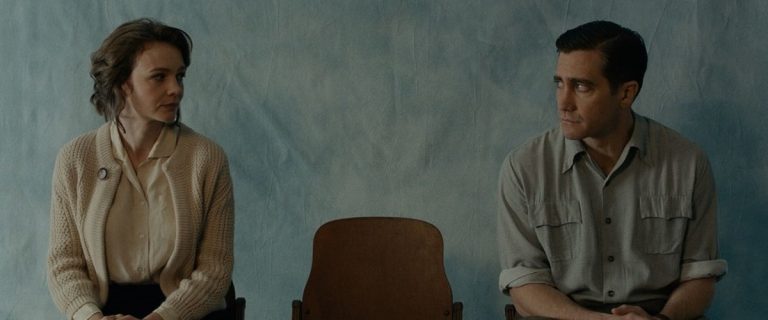
    However, Wildlife subverts the expectation of having a disenfranchised “angry young man” at the center of it. There is a man that fits that description in the story. Jake Gyllenhaal plays the patriarch of the family Jerry Brinson, a greenkeeper at a local country club who is fired because, according to him, he is “just too well liked.”

    But he isn’t the center of the story. That would be his wife Jeanette (Carey Mulligan), a classic 60s housewife who is denied her full potential because that’s not what is in society’s expectations of her, and their 14-year-old son Joe (Ed Oxenbould), who serves as our point-of-view for the film.

    After losing his job, Jerry’s pride is clearly wounded. He came to Montana looking for quick success, but his dreams are quickly dashed away. That’s mostly because he thinks he is entitled to his dreams. “I thought it was that easy,” he says. 

    Instead of demeaning himself by taking his old job back after they offer it to him, or any job in the town for that matter, he takes a job battling wildfires that are threatening the Canadian border. It’s dangerous and low-paying work, much to Jeanette’s dismay, but he’d rather face that than his failure. 
    wildlife
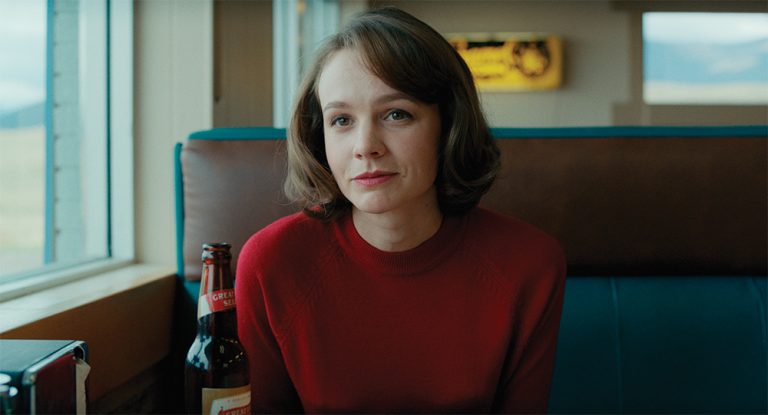
    Carey Mulligan appears in Wildlife by Paul Dano, an official selection of the U.S. Dramatic Competition at the 2018 Sundance Film Festival. Courtesy of Sundance Institute.

    From there, we watch as Jeanette struggles through life horrified that her husband chose to nurse his pride rather than support his family. But this isn’t a story about a woman sulking and yearning after her brave husband away protecting them from the fires.

    No, the screenplay, written by Dano and actress-writer Zoe Kazan (from last year’s The Big Sick), paint Jeanette as a real and complex woman who is abandoned by her husband without discussion or conversation. All the while, Joe is in the periphery absorbing what is happening—he’s not always understanding it, but always seeing it. 

    The screenplay is quite a marvel and Dano, adept in his direction, knows how to extract the meaning out of every beat and line. Even the most unassuming lines have an impact. One of my favorites come after Jeanette goes to the local YMCA looking for a job, but being turned away after the secretary job she was applying for was no longer available. She briefly walks out of frame away from the woman working at the front desk, then comes back and says, “do you have any work for a man?” 

    As one of my favorite movies of the year Annihilation puts forward, one destroys themselves so that they can become something new. Jeanette wears new clothes, drinks more heavily, and begins cozying herself up to a wealthy man named Warren (Bill Camp) all in front of her son. 
    wildlife
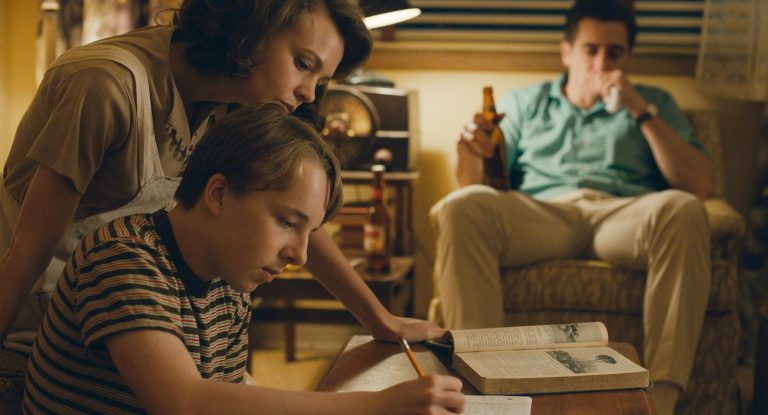
    Carey Mulligan, Ed Oxenbould, and Jake Gyllenhaal in Paul Dano’s directorial debut Wildlife.

    In the eyes of another director or writing pair, Jeanette might have been the villain. But in Wildlife, she isn’t necessarily the hero. She’s just a human dealing with life. That’s a lesson that Joe quickly has to learn as both of his parents deal with their troubles in drastic ways. 

    Oxenbould has to tackle the challenging job of being an observer to the action without reacting to it in any over-the-top way and succeeds. Gyllenhaal does great work with what he has, as well—he’s not in the film as much as you’d expect.

    However, this is Mulligan’s film. She tackles the web of emotions that Jeanette has to navigate with empathy and makes you understand her even when what she does doesn’t make sense. It’s an impressive triumph of a performance.

    There are a few films that are made by their final shot and Wildlife is one of them. It’s no wonder that it is splashed on every poster for the film. And it emphasizes what makes the movie great. Dano relishes in the silences as much as he does in the dialogue. They both hold equal power.

    In the final seconds after the last line of dialogue and we’re just looking at the characters, you can trace how that self-destruction has changed each of them, for better or worse.

    Wildlife is playing in theaters in limited release.

    Karl’s rating:

  • ‘Science Fair’ review — A moving and funny doc about the love of science

    ‘Science Fair’ review — A moving and funny doc about the love of science

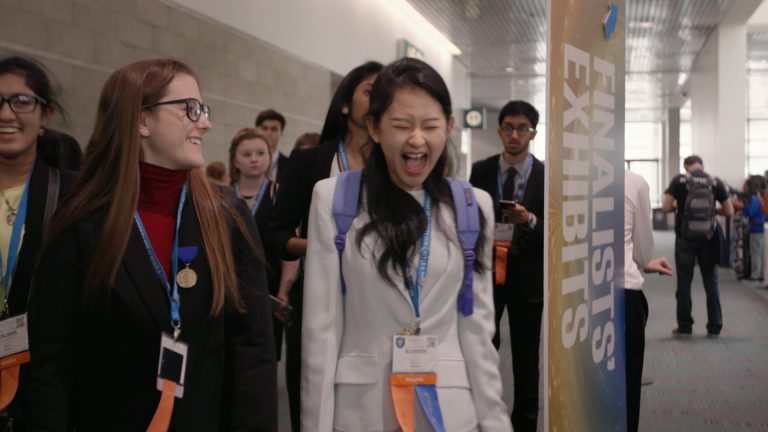
    Science Fair documents the profound and entertaining journey of nine students competing against 1,700 of the world’s brightest young minds

    This is not your typical science fair. Directors Cristina Costantini and Darren Foster’s film about the classic school tradition have young high school students with foam poster board talking about their projects. But instead of papier-mâché volcano’s and powering a light bulb from a potato, these kids are solving real-world problems like curing Zika and preventing cancer—not an exaggeration.

    “Every year my nerve level goes up a little bit. I think when I was younger I didn’t realize the stakes were as high as they are,” one student says during a regional science fair to qualify for the International Science and Engineering Fair (ISEF)—the world’s most prestigious science fair.

    Mind you, the student that said this is no older than 16-years-old. This is how seriously these students—and the nine subjects of the film—take science fairs. And the movie often covers it to comical effect. Science Fair feels like a teen dramedy in the highest praise possible. It’s an incredibly charismatic documentary. 

    However, Science Fair isn’t really about science fairs. It’s about the participants, their circumstances, where they grew up, and how that shapes their motivations. Eventually, after meeting each subject and learning about their journey to get to ISEF, it becomes apparent that this film is more than its surface charms.

    Kashfia Rahman fitting the brain sensors on test subject in the school library in Science Fair.
    Kashfia Rahman fitting the brain sensors on test subject in the school library in Science Fair.

    The film in Kentucky at a school where students focusing on STEM are treated like football stars and the science fair is their championship game. As we follow the students—mainy the team of Ryan Folz, Harsha Paladugu, and Abraham Riedel-Mishaan, who are creating a stethoscope that can detect heart arrhythmia—there are shots of the affluent suburban neighborhoods that they live in. Large houses and kids with their own cars.

    Then, we cut to a very different place—Brookings, South Dakota. Here, sports are the main focus despite the football team going 0-9 last season. Still, 16-year-old junior Kashfia Rahman persists in her effort to pursue STEM. 

    However, Kashfia’s journey also touches on another theme that Science Fair tackles. She talks about living as a Muslim girl who wears a hijab in a red state small town in the United States.

    She talks about how she feels out of place in a Walmart having to “not look scary” to passersby—it’s heartbreaking. At one point the filmmaker’s go around to other students asking them if they know Kashfia and most of them say no while one says, “we have one of those people here?” Whether he’s referring to her being a successful science champion or her religion isn’t specified.

    While everything about the actual journey to ISEF is charming and often funny, the main through-line across all the subjects of Science Fair is that they all are from underrepresented groups in STEM, many them without the resources to help them pursue their passions.

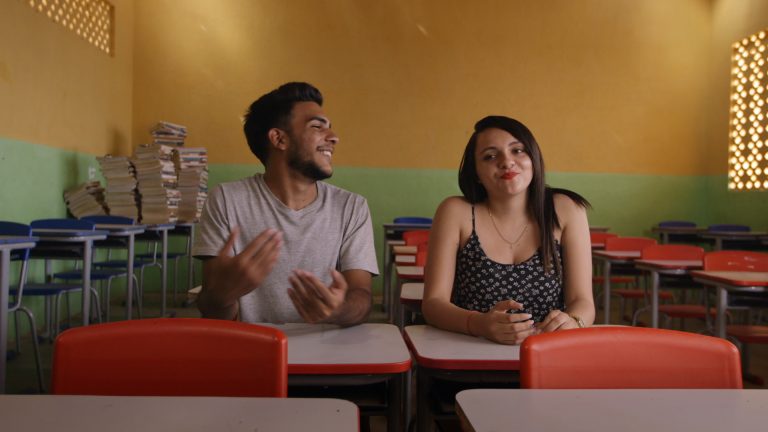
    Myllena Braz De Silva and Gabriel De Moura Martins in Science Fair
    Myllena Braz De Silva and Gabriel De Moura Martins in Science Fair.

    From Shenandoah Junction, West Virginia to Lorch, Germany to Iracema, Brazil, each student has a story and a struggle. At one point, Myllena Braz De Silva‘s—a finalist from Brazil—mother says emotionally, “she really has to get out of here to grow.”

    The balance that Science Fair strikes between its subjects is what makes it so successful. It drives a lot of its messages without directly addressing them. The film uses the juxtaposition between each student to make its commentary, which allows it to be entertaining and crowd-pleasing but profound.

    Science Fair has so much to say without making it feel like its preaching. Jericho, New York science teacher Dr. Serena McCalla, the daughter of Jamaican immigrants, talks about how so many American advances in STEM have come from people who are not natural born citizens. 

    Still, those people aren’t getting the attention they deserve, which is what Science Fair sets out to change through its young subjects. It’s entertaining, funny, and uplifting to watch each young scientist, engineer, and mathematician speak with so much confidence about their passions. Science Fair is so of our time without having to say it. It’s one of the best documentaries of the year.  

    Science Fair is available to buy or rent on Amazon

    Karl’s rating:

  • ‘Free Solo’ review — Rock climbing and relationships without a rope

    ‘Free Solo’ review — Rock climbing and relationships without a rope

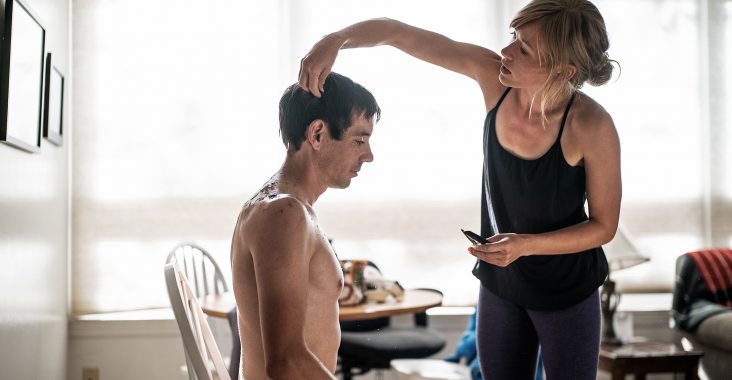
    Free Solo follows climber Alex Honnold as he prepares mentally and physically to climb a 3,000-foot rock wall… without a rope.

    Free Solo is about obsession. The subject at the center of the film, Alex Honnold, is obsessed with free soloing, a sport where a climber traverses a mountain without any ropes or harnesses. Just their hands and feet on tiny divets and grooves in the rock prevent them from falling to their death.

    When Alex speaks about free soloing he talks about it being scary. However, I don’t think he refers to fear the same way that normal people do. In a bit of a humorous segment, he goes to a doctor who gives him an MRI that reveals that his amygdala needs extreme circumstances to register fear.

    That part of his character, coupled with his obsession and inability to process emotion, make Free Solo a riveting character study. Husband and wife team Elizabeth Chai Vasarhelyi and Jimmy Chin, who are friends of Alex, capture his mental journey as much as his physical one as he prepares for his hardest—and most dangerous—free soloing project yet.

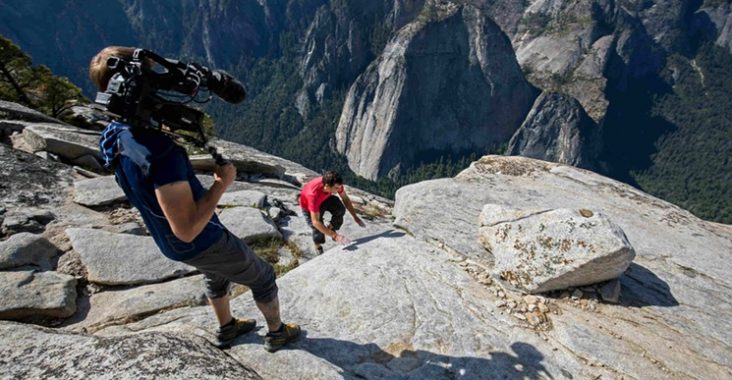
    Alex is bent on conquering El Capitan, a 3,000-foot tall granite rock wall in Yosemite National Park. Through interviews with the film crew chronicling his journey, a history lesson in the dangers of soloing, and a storyline following Alex’s new relationship with Sanni McCandless—she met Alex at one of his book signings—we see exactly how his mind works and how his choice of career affects the people around him.

    Free Solo
    Alex Honnold and Sanni McCandless in Free Solo.

    Free Solo didn’t have as much impact on me initially. For a movie about someone who is embarking on what most of us would define as a suicide mission, there wasn’t as much tension as I thought there would be. It’s difficult to translate danger when you know the outcome, but I was hoping that there would be more stakes.

    But in the coming days, I found myself thinking about the movie. Not about the rock climbing—though all those scenes are shot with vertigo-inducing wide shots and impressive close-ups of every precariously small foothold and grip. Instead, I found myself thinking about Alex—his motivations, the inner-workings of his mind, and his relationship with Sanni.

    Free Solo is a character study through and through. We get to know Alex and why he’s comfortable taking the risk of dying doing what he loves over a girl that he may or may not love—his feelings toward Sanni are an enigma throughout the film.

    Does he love her? Does he even understand love? Why does she stay in a relationship where she isn’t a factor in decisions that involve whether he lives or dies? That is the driving conflict behind Free Solo even more than whether or not he’ll conquer El Capitan.

    Free Solo
    Alex Honnold in Free Solo.

    What also adds to that accomplishment is that Free Solo contests its existence as a film. The filmmakers creating the project struggle with the possibility that they could be capturing the demise of their friend. Even Alex struggles with the reason he’s having a film crew following him.

    Still, what you come to Free Solo for is the rock climbing. And rock climbing there is. The film ends with an incredibly captured climbing sequence that is rooted in character. Before that, in another sequence, Alex explains in detail what makes soloing El Capitan so difficult and runs through with technical precision exactly what you have to do at each section, put bluntly, to not die.

    For Alex, soloing just makes sense. If anything, it confuses him why there aren’t more people tempting fate. He says at one point that you can die any day, so why not do something like soloing. From Sanni’s perspective, it’s because you should maximize your lifespan to spend it with people that you love. At the end of the movie, we don’t know if Alex understands that. We can only hope.

    Free Solo is available to buy or rent on Amazon

    Karl’s rating:

  • The Beguiled review — A darkly funny southern gothic tale

    The Beguiled review — A darkly funny southern gothic tale

    The 1971 southern gothic tale The Beguiled has been reimagined with a sharp, witty tone that delivers some darkly funny laughs.

    Some of the greatest facets of a southern gothic tale — equivocal gender roles, a decaying setting, social alienation — all appear in both adaptations of Thomas P. Cullinan’s novel A Painted Devil, renamed The Beguiled. However, unlike the clear male gaze of the original 1971 version, which was directed by Don Siegel and starred Clint Eastwood, Sofia Coppola’s The Beguiled is set firmly from the female point of view. But, it’s not just a single view. Instead, she looks at female desire from four different viewpoints. That change elevates this new version of The Beguiled to surprising new heights while also streamlining the narrative to be more deep and effective than before.

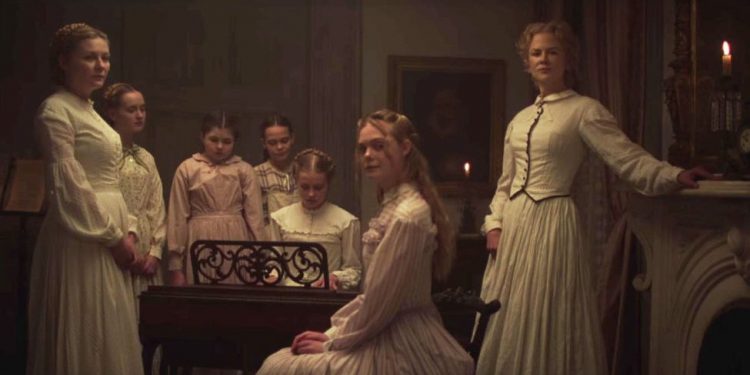
    In 1864 Virginia, a few students and teachers remain in the Farnsworth Seminary run by Martha Farnsworth (Nicole Kidman). From the school, you can see smoke and hear canon fire as a reminder that the Civil War still rages on.


    While searching for mushrooms in the woods in deep Virginia, Amy (a delightful Oona Laurence) stumbles upon a Union soldier Corporal John McBurney (Colin Farrell), who injured his leg. Amy helps him back to the school where he passes out. Martha decides to take him in and nurse him back to health before handing him over to Confederate troops. However, there’s a noticeable shift in the air when Corporal John McBurney arrives. Teacher Edwina Morrow (Kirsten Dunst), teenage student Alicia (Elle Fanning), Martha, and the other students begin fighting for McBurney’s attention often slipping into his room, which he is locked in, to even just steal a glance of him. However, they all have different motives.

    Coppola smartly strips the movie of any obvious subtext and instead allows us to derive meaning from each characters’ actions. It’s less about the possible threat of McBurney and more about each woman’s reaction to his presence. And all of their reactions can be summed up in desire. Martha sees John as a companion. Unlike her complicated backstory in the original adaptation, it’s simply hinted at that Martha lost her husband at some point during the war. She sees John as a way to fill that void. Edwina, on the other hand, wants John as an escape. It’s clear that she’s unhappy with the way her life has gone, but she never had the means to leave it. To her, John is her chance to be free. Alicia, the eldest of the girls at the school, lusts after John. Her repressed sexuality suddenly has an outlet when John appears. And lastly, Amy, who doesn’t quite fit in with the other girls, want John to be a friend or even brother.

    What is most surprising about The Beguiled, though, is that it is a delight to watch. Not that I didn’t think it was going to be enjoyable. But it’s surprisingly funny in its own dark way. In one scene, the girls, particularly dressed up for their first dinner with McBurney, slyly fight over the apple pie that McBurney just complimented. The polite, but pointed, banter is a hilarious reminder that none of these women have felt the attention of a man in quite some time.

    However, there is a noticeable hole in terms of race. There has been a lengthy discussion about a black female slave character being cut from film — she appeared in both the book and the 1971 version. For a movie so closely tied to the Civil War, it was disappointing to not have that commentary. Especially considering this is a movie about desires. A woman in that position would have a very interesting perspective on the situation. It is addressed with a throwaway line early in the movie. Still, for such a lean narrative, one would wonder why they couldn’t fit in such an important conversation.


    The Beguiled is a practice minimalistic storytelling. We rarely leave the overgrown grounds of the school — the growing weeds are a small reminder of the absence of slaves — the characters don’t say more than is needed, and the plot doesn’t stray far from the main thread. However, it is still a charming and engrossing, albeit quiet, movie. Though she certainly has Farrell, who delivers a constantly shifting performance that keeps you guessing, and Kidman, who is powerful in her otherwise reserved role, to thank for that. The Beguiled isn’t your typical summer thriller. However, one of the best things on a hot summer day is a dose of melodrama. And that, like revenge, is served up ice cold.

    ★★★½ out of 5


    Watch The Beguiled on Amazon!

  • ‘Hereditary’ review — An unsettling and unforgettable horror debut

    ‘Hereditary’ review — An unsettling and unforgettable horror debut

    Hereditary may be slow-burn, but it burns bright and intense. With some of the most unsettling horror images and setpieces, it is one of the best horror movies in recent memory.

    When horror is done right, terrifying, heart-stopping horror, it grabs every one of your senses and makes you hyper-aware of all of them. It lays in wait, biding its time and revealing just enough throughout until the story comes crashing together at the end. It has a grounding in something real and human so that the horror feels even more imminent. Considering that definition, it’s not an exaggeration to say that Hereditary is horror done perfectly.

    Director Ari Aster joins the ranks of Robert Eggers (The Witch), Jordan Peele (Get Out), and Jennifer Kent (The Babadook) who all made their feature film debut with stunning horror movies. However, what they all also have in common is that they challenge the constraints of the genre. The Witch is a period piece, Get Out is a social satire, and The Babadook is a psychological drama. With Hereditary, Aster again blurs the line of horror to create a twisted, horribly remarkable film.

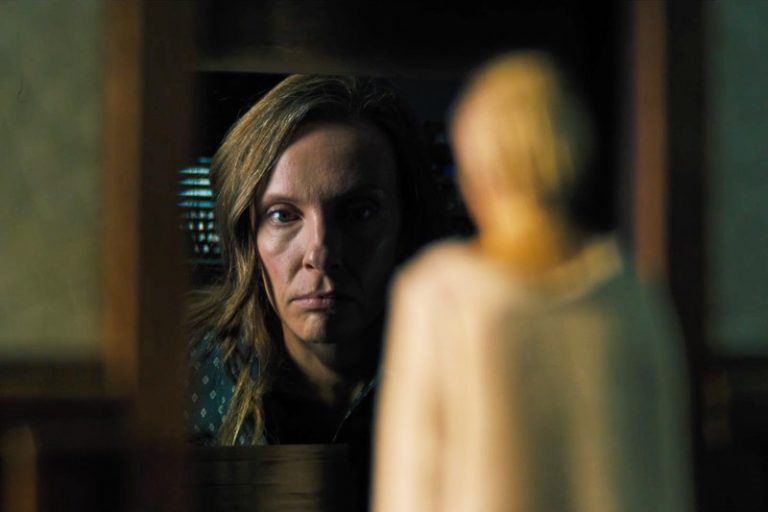
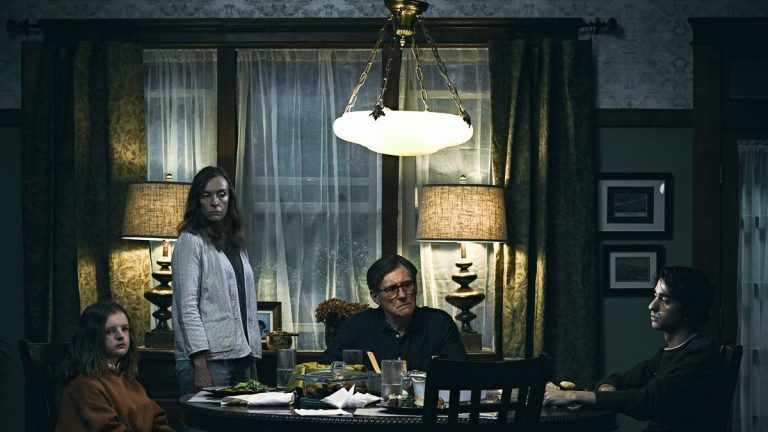
    Hereditary does a great job of not letting its audience on to what kind of movie it is for much of its running time. It’s not even until it’s final moments that you truly know what kind of movie it was. At the center of the movie is the Graham family. Annie (Toni Collette) is an artist who focuses on creating miniatures, particularly inspired by her life. Her husband Steve (the fantastic Gabriel Byrne) is a stoic professional-type. Together they have two kids, Peter (strongly performed by Alex Wolff), a typical teenager, and 13-year-old daughter Charlie (played by Milly Shapiro in a remarkable film debut).

    Annie is dealing with the recent loss of her mother—the movie begins on the day of her funeral. She explains during her eulogy that her mother was a secretive woman and someone she had a complicated relationship with. However, who did have a strong relationship with Annie’s mother was Charlie. It’s well-established that Charlie is not your typical 13-year-old. She doesn’t seem to understand basic social norms. She spends much of her time with her nose in a sketchbook drawing the people around her. At one point, she does something so bizarre that the entire audience recoiled at it.

    All of these things point to Hereditary being one type of movie. A creepy child, an emotionally vulnerable mother, and an isolated house in the woods sounds like something familiar. However, something happens. Something truly shocking and remarkable happens. It’s a moment that will be engrained in the rest of the movie and in your mind long after the credits roll. Hereditary is made up of moments like that. However, it starts at this point. The movie is recontextualized and where it ends up is almost impossible to parse out.

    Michelle Yeoh, Henry Golding, and Constance Wu in Crazy Rich Asians

    And although the movie is wholly original, it feels like a culmination of this new golden age of horror that we’re in. The aptest comparison is probably to The Babadook. The main success of that movie is that the horror is wrapped around something familiar in all of us—grief and loss. A lot of the slow-burning first hour of Hereditary is spent exploring grief and loss, particularly in Annie’s character. Collette is remarkable as she navigates her emotions following this event. She plays Annie like someone who bears the weight of all the events that led to this point in her life on her shoulders. You empathize with her. So as she falls further down the rabbit hole of possible insanity, you can’t help but be heartbroken.

    However, the emotional elements of the movie aren’t the most impressive thing about it. I can say, without qualification, that Hereditary is the most horrifying and upsetting movies I’ve seen in theaters. There’s an impressive sense of dread that sits on top of the movie similarly to The Conjuring. You’re constantly trying to parse out what is going to wrong, but Aster makes it nearly impossible to do that. The movie takes a few sharp turns that always make sense, but are also completely unexpected. And those turns are stitched together with horrifying images and set pieces that don’t rely on jump scares or sudden spikes in the score—composer Colin Stetson does a fantastic job underscoring the dread and tension—but rather leveraging our own fears and insecurities against us.

    There are parts where you’re not even sure what the horrifying thing is, then you hear a wave of gasps and whispers as the audience eventually discovers it. Aster brilliantly frames and stages set pieces by going with the least obvious route to affect the audience. It’s those kinds of scares, combined with the unpredictability of the storytelling that makes Hereditary an experience like no other.

    It’s hard to recommend Hereditary without divulging exactly what kind of movie it is. But this feels like broad horror combined with arthouse. It has the oppressive dark energy of The Conjuring, the patient enigmatic storytelling of The Witch, the emotional heft of The Babadook, and the horrifying visceral imagery of The Shining. It’s a horror fan’s dream.

    It’s shocking that this is a debut. It’s assured in its style and meticulously plotted. Repeat viewings will be rewarded. Collette’s Oscar-worthy performance grounds us in the reality of grief and loss while the story and plot unravel something a lot more sinister. At its core, Hereditary is perhaps a haunted house story. But a more apt description might be a haunted family story. Psychologically haunted or supernaturally haunted aside, Hereditary will creep its way into your nightmares. Good luck sleeping. *tongue click*

    Hereditary is available to watch on Amazon →

    ★★★★½ out of five


  • ‘Train to Busan’ review — A surprisingly unique and entertaining zombie flick

    ‘Train to Busan’ review — A surprisingly unique and entertaining zombie flick

    Train to Busan is a heart-pounding, armrest-gripping, teeth clenching zombie flick that breathes new life into the genre.

    Just when the zombie genre seemed on its way out, then along rolls in Train to BusanThis South Korean production breathes a new life into the genre without straying too far out of its confines. The rules set in place in this world are a little updated from the usual and refreshingly there are no guns. Not only does that raise the stakes, it makes for action like no other zombie movie I’ve seen. It is one of the best, if not the best, zombie movie since 28 Days Later.

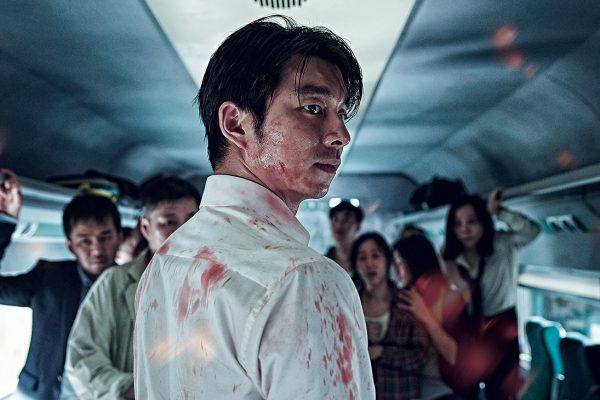
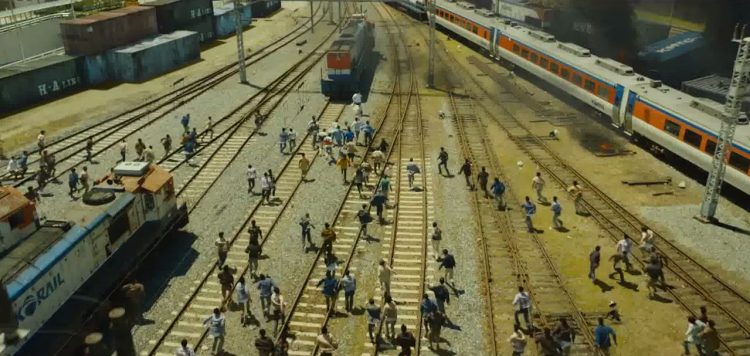
    Taking place in Seoul, South Korea, Train to Busan follows Seok-Woo (Gong Yoo), a fund manager, and father to Soo-an (Kim Su-an). In typical horror movie fashion, he’s a terrible father. So terrible that he gives his daughter a birthday present she already has while she begs to see her mother in Busan the next day to celebrate. Looking to appease his daughter, early the next morning he takes her on a KTX bullet train to Busan. Little do they know a chemical spill nearby has caused a wave of infected people. Little do they know, an infected person made it on the train. This swift and quick setup is not only refreshing but integral to setting the pace of the story.  As the lower class cars fall to the zombie outbreak, the forward class cabins fight to keep the undead out and escape.

    Train to Busan is such an interesting study on the application of a genre. All the facets of a zombie horror movie are there – the absentee dad, the plot-point child, a pregnant woman, a more than capable fighter. However, the way that the movie applies these characters and throws them into the story is quite interesting. The first 45 minutes of the movie can’t help but draw comparisons to 2013’s Snowpiercer. Both movies take place on a train, involve commentary on class warfare, and involve fighting to get to the front of the train. Except, Train to Busan replaces rebels with zombies. However, both have a similar forward momentum that feels fast, efficient, and damn right thrilling.

    Train to Busan

    One of the most refreshing aspects of the movie is its update of the traditional rules of zombie movies. While they are sensitive to sound, they are also more affected by their vision. At one point, a character puts newspaper over a window and the zombies instantly stop their pursuit. It’s a fun rule that’s put to great use a few times. It’s also very refreshing to have zombie movie where there aren’t any guns. At one point, a group of characters makes an all out dash for another car, the all-out assault on the zombies in their way is not only impressive but incredibly entertaining. The creature design is also really marvelous and terrifying. It perfectly compliments the violence of the transformation into a zombie, which we get to witness a few times. What the movie does pull directly from other moviesWorld War Z to be specific—is the flood of zombies. However, here it’s done on a smaller scale, which makes it look more realistic and all the more terrifying.

    While yes, Train to Busan does eventually give into genre cliches – slow reaction times, horror movie logic—the first half of the movie is strong enough to plow through them. Even though some characters feel familiar, you come to actually care about the right people. By the end of the movie, you become so attached that the tension is almost unbearable. But that’s what we’re looking for, right?

    The amount of energy that director Yeon Sang-ho is able to infuse into Train to Busan is a welcome change from the stop and go nature of recent entries in the genre. Some wonky translations and frustrating decisions aside, the movie invigorates a genre on the way out. Sure, it completely owes a lot of itself to movies that came before it—World War Z, 28 Days Later—but it does enough on its own to warrant respect all on its own. Needless to say, I am all onboard with Train to Busan. 

    ★★★★ out of five

    Train to Busan is available to rent and buy on Amazon!

  • Lady Bird review —  A quintessential coming-of-age dramedy

    Lady Bird review — A quintessential coming-of-age dramedy

    Hilarious and poignant, Lady Bird announces Greta Gerwig as one of the most exciting new filmmakers and solidifies Soarsie Ronan as a major star

    The vast number of themes Greta Gerwig tackles in her directorial debut Lady Bird would lead you to believe that it’s an overstuffed, melodramatic dramedy that tries to say something without making a point. However, it’s far from that. Actually, it hits every point it’s trying to make with a stinging poignancy that it’s almost impossible not to relate in some degree to each one. Parenting, love, hate, socioeconomic relations are just a few themes that the movie tackles. But what would most easily sum this up is that Lady Bird is the definitive teen movie of the post 9/11 era.

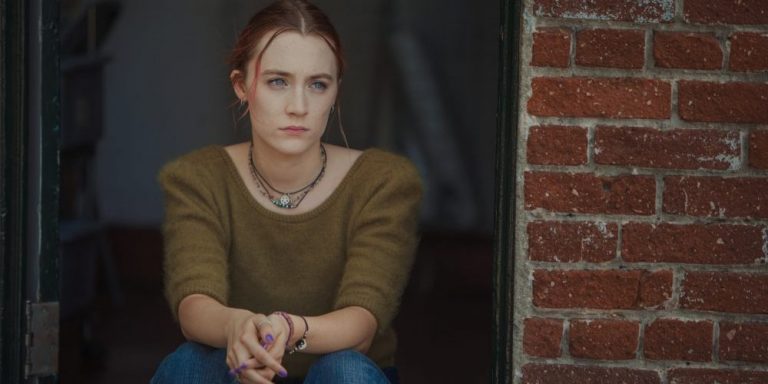
    Christine McPherson (Soarsie Ronan) — she goes by the name Lady Bird because “it’s given to me, by me,” as she says — is a senior at a girls’ Catholic high school in Sacremento, California. Lady Bird’s indictment of her hometown is summed up in the movie’s opening quote: “Anybody who talks about California hedonism has never spent a Christmas in Sacramento.” However, she’s not your typical pink haired teen rebel. Unlike most teen movie leads, Lady Bird isn’t handicapped by her quirkiness nor taken down by her high opinion of herself compared to her hometown. She is simply a girl with dreams bigger than where she lives. More specifically of New York City.


    However, for the next year, she’s stuck at home dealing with boys, college applications, school plays, and her family as she navigates the murky waters of her relationship with her mother, Marion (Laurie Metcalf). We view the movie through Lady Bird’s limited perspective, which makes our view of other characters extremely narrow. But that seems to be Gerwig’s intention. At one point, Lady Bird is cast as an ensemble member in the school musical. Her friend Julie tries to reassure her by saying that she still got cast in the play. However, Lady Bird feels like it’s not being cast at all. For her, it’s the starring role or nothing. We all remember the feeling of our own problems being the biggest in the world. Lady Bird understands that and portrays it subtly, but effectively.

    Gerwig captures the feeling of being a high schooler so perfectly that it’s nearly impossible to not identify with one of the characters in some way. You have Lady Bird as an ambitious misfit, her friend Julia (Beanie Feldstein — a breakthrough performance) is an endearing nerd, Lucas Hedges’ Danny is an overachieving prodigal son, Timothee Chalamet‘s (Call Me By Your Name) Kyle is a “fight the system” rebel. However, none of them turn into archetypes. They’re lived in characters that have their own backstories that inform their decisions. Even if we don’t get to explore those, they’re present.

    That goes for the older characters too. Everyone from Lady Bird’s father, Larry (Tracey Letts), to her adopted brother Miguel (Jordan Rodrigues) and his girlfriend Shelley (Marielle Scott) have lived experiences that have affected who they are when we meet them in the movie.

    Because of the way the movie is set up, every character gets their moment to shine. However, among the male supporting cast, Letts and Hedges are clear standouts. Letts’ quite and supportive father character is a character that we’ve seen before, but he injects a lingering dourness that makes the outcome of certain scenes all the more profound. And Hedges, who received his first Oscar nomination last year for Manchester by the Sea, makes Danny sweet and filled with a natural teenage awkwardness that is masked by a confidence that only theater kids could understand.


    However, the centerpiece of the film is Lady Bird’s relationship with Marion. Like most mother/daughter relationships, it’s one that can completely turn around at just a wrong word. No scene better portrays this than when Lady Bird and Marion, on a road trip visiting colleges, cry together after completing an audio version of The Grapes of Wrath, which is then followed by just a few lines of dialogue that cause Lady Bird to jump out of the moving car. While the relationship is played for laughs during their first couple scenes together, later scenes give way to a heartbreaking dynamic that is too familiar for any teen that grew up during the 2000s. Ronan and Metcalf give Oscar worthy performances that are sure to become iconic in the near future.

    The true thematic depth of Lady Bird is only rewarded after repeat viewings. When I say it runs the gauntlet of teenage problems, it truly covers a multitude of them. But the reason for it is justified. Lady Bird is an extraordinary character who is so firmly the lead her own movie that every supporting plot falls to the wayside — until they don’t. In a telling scene, Lady Bird encounters one character who she finds crying. We don’t know why. We don’t know how long she’s been crying. It feels like there was a completely different scene or movie preceding this one that we didn’t see since we’re so stuck in a Lady Bird’s point of view. When she asks the person why they are crying, they simply reply, “some people aren’t built happy, you know?”

    ★★★★½ out of 5


    Watch Lady Bird on Amazon!

  • Logan Lucky review — A southern wannabe Ocean’s Eleven

    Logan Lucky review — A southern wannabe Ocean’s Eleven

    Logan Lucky makes an attempt at recreating the charm of Soderbergh’s earlier heist movies, but ultimately misses the mark.

    Logan Lucky is being touted as a red state Ocean’s Eleven, which is a lofty comparison considering the latter movie is considered THE heist movie of the 21st century. However, if any director is going to pull it off, it’s Ocean’s director Steven Soderbergh, whose self-imposed retirement seems to have been premature. And while Logan Lucky certainly has its moments, any comparisons to its iconic predecessor yield disappointment.


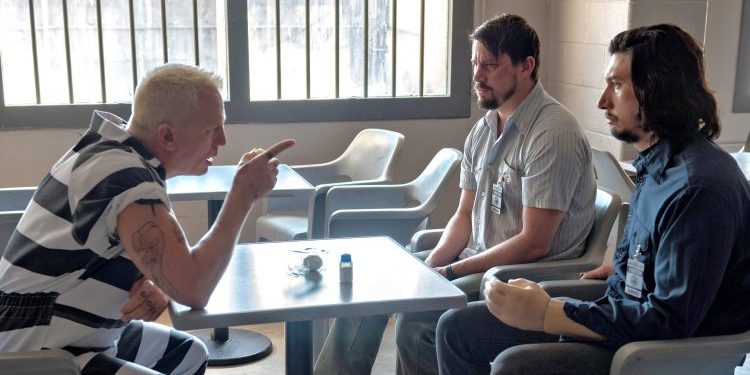
    Featuring an all-star cast, Logan Lucky tells the story of the generally unlucky Logan brothers Jimmy (Channing Tatum) and Clyde (Adam Driver). When Jimmy is let go from his job, he enlists Clyde into a scheme that is sure to go down in hillbilly history. The brothers plan to rob Charlotte Motor Speedway, where Jimmy was working construction under the stadium. They enlist the help of their sister Mellie (Riley Keough, who stunned in It Comes At Night earlier this year), Joe Bang (a juicy Daniel Craig), an explosives expert, his brothers to help on the scheme.

    The overarching problem with Logan Lucky is that nothing is developed enough. The characters, no matter how talented the actors are, just never have the depth required to make you care about them. Although, Keough, Craig, and particularly, Driver certainly make the most of what they have. The plot is also half-baked at best. Though the actual heist has its fun moments, the lack of stakes, ingenuity, and panache make the final reveal fall flat. It doesn’t have the rhythm or charm of the Ocean’s movies. It’s something that you’ll sorely miss by the end of the film.


    The moments of humor do hit sometimes — an extended Game of Thrones joke is easily the best part of the movie. However, so much of the movie relies on the performances to elevate it past its bland direction. Craig, playing against type, has moments of pure comedic genius. He’s the typical comedic scene stealer. But the best performance is easily Adam Driver’s dry, yet sensitive Clyde. It’s in his moments of silence that the brilliance of his performance comes through. At one point, he searches for his prosthetic arm with an air of both desperation and anger that plays perfectly. It’s unfortunate that the writing doesn’t allow the other actors much room to stretch their talents.

    Logan Lucky feels like a movie that Soderbergh just couldn’t decide what he wanted be. It has moments of more ridiculous humor that pokes fun at its subjects, then moments that tries to pay respect to them. The moments of heart — there’s a subplot with Jimmy’s daughter Sadie (Farrah Mackenzie) — that just don’t fit and a half-hearted FBI investigation led by Hilary Swank and Macon Blair that feels like an afterthought. I really wanted this movie to be good. For the cast, for Soderbergh. But there’s more disappointing moments than satisfying. Save yourself some time and just rewatch Ocean’s Eleven.

    ★★ out of 5


    Watch Logan Lucky on Amazon!

  • The Blackcoat’s Daughter Movie Review — A dark and gloomy psychological thriller

    The Blackcoat’s Daughter Movie Review — A dark and gloomy psychological thriller

    The Blackcoat’s Daughter, Oz Perkins’ debut film, is a tense and twisting psychological thriller that keeps you guessing until the very end.

    Director Oz Perkins, son of actor Anthony Perkins (yes, Norman Bates), seems to have really been inspired by his father’s most famous role. What makes Psycho such an enduring horror classic is the pervasive slow burn that keeps his cards close to its chest that by the final act you’re still left guessing. The Blackcoat’s Daughter, Perkins’ debut film as a director has the same quality. It’s Hitchcockian in style, however, the thrills are doused in dread to create a surprisingly effective horror movie.

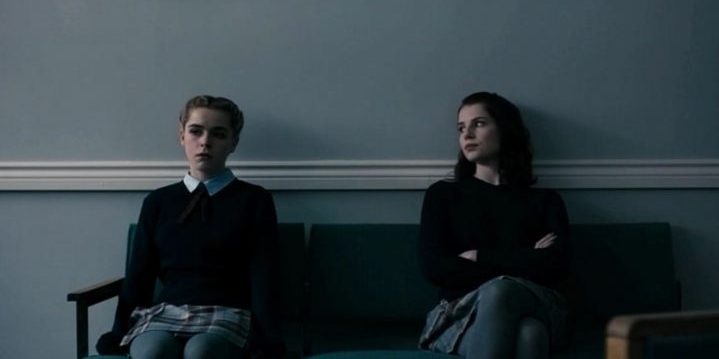
    Kiernan Shipka, fresh off a successful run on Mad Men, plays Kat, a quiet girl living at a Catholic boarding school in Upstate New York. At the beginning of the film, she experiences a dream of her father in a black coat showing her their family car destroyed. She wakes up on the day that her parents are meant to arrive, however the fail to show up. Rose (Lucy Boynton, from Sing Street) tells the school’s headmaster that she told her parents the wrong date to pick here up. This leaves the two girls alone with two odd female teachers in the dark and snowy environment of the school. Elsewhere, a mysterious girl, Joan (Emma Roberts), hitches a ride with a couple (James Remar and Lauren Holly) to an unknown destination.


    The dark passages of the Bramford, the school where the film takes place, are beautifully captured by cinematography Julie Kirkwood. She uses the natural shadows of the space to unnerve you and question what’s coming around the next corner. The oppressive score, composed by the director’s brother Elvis, makes every conversation as tense as an eerie trip down a dark hallway. It’s that kind of relentless dread that makes the movie such an effective horror.

    The payoff, in the end, isn’t quite as satisfying as the rest of the movie would suggest. If there were just another ten minutes dedicated to fleshing out the lore of the story, it would work. However, what does sell it are the performances, particularly by Shipka and Roberts. Perkins draws a lot of inspiration from horror and psychological thrillers past. But he doesn’t imitate. His visual style is classic, but serves the story and the setting well. For any filmmaker, that is the main task. I’m sure he made his father proud.

    ★★★½

    The Blackcoat’s Daughter is streaming for free on Amazon Prime Video!

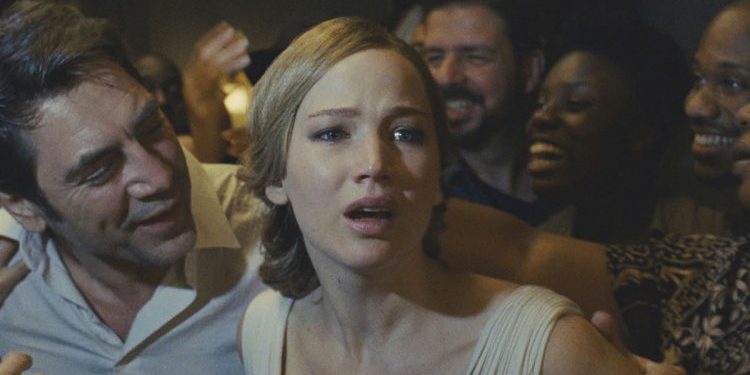
  • Mother! review  — Chaos reigns and comes for Jennifer Lawrence

    Mother! review — Chaos reigns and comes for Jennifer Lawrence

    mother! is a cinematic experience like no other and features Jennifer Lawrence’s best role to date and a story that’s as crazy as they can get.

    There’s a point about halfway through Darren Aronofsky’s mother! where you’re still in the dark on what the film is about, a bit confused, and ultimately weirded out by the film. But wait, it gets weirder. Someone once said that every movie is secretly about their director. And if mother! is any reflection of Aronofsky, then I’m very worried for his well-being. This is art with a capital “A,” but it’s the kind of glorious, messy, chaotic art that makes you want to dissect every image, sound, and word.


    Luckily for us, our audience surrogate is Jennifer Lawrence, whose unnamed character is only credited as mother. She spends her days renovating her and her husband’s (Javier Bardem, also unnamed and credited as him) country estate while he compulsively tries to write his second book of poems. Of course, he has debilitating writer’s block that seems to only be aggravated by his wife’s presence. While it’s not a perfect existence, it’s a comfortable one for them. That is until an unwelcome visitor (Ed Harris) unexpectedly stops by the couple’s home mistaking it for a bed and breakfast. To mother’s surprise and dismay, her husband invites the visitor to stay with them. Eventually, the visitor’s wife arrives (Michelle Pfeiffer, who’s never been better) and immediately butts heads with mother. From there, chaos ensues. But, I promise you, it’s not in a way that you’d ever imagine.

    But what is mother! about? The only answer is the pretentious one. It’s about anything you want it to be about. Art, marriage, celebrity, chaos, religion, good, evil, all of those things, none of those things. To try and unpack what mother! is trying to say is probably a means to a good cry and a bottle of wine. That’s because for as unsubtle the movie is, its themes are kept under wraps. At times, it reveals itself and revels in it. But it doesn’t matter. Because trying to interpret mother! for other people is like trying to tell someone what their favorite color is. You can’t force the answer on them, so I’m not going to force my interpretation on you.

    However, I’ll say this. Aronofsky is a filmmaker that knows how to capture a person under extreme pressure. His films like Black Swan, The Wrestler, and Requiem For A Dream all look into the lives of people that are being crushed under the weight of their own humanity. In mother! he uses crushing close-ups on Lawrence — the camera rarely moves away from her — to fully communicate the claustrophobia of the chaos that she endures. Even when the movie becomes enormous, he stays tight on her. It also helps that she’s giving one of the best performances of her career. Though, Bardem and especially Pfeiffer give performances that elevate the movie, as well.


    Aronofsky immaculately orchestrated the film, but in areas that are sometimes neglected. The production design, in particular, is perfect. The minimally decorated house with all it’s awkward angles, endless doorways, and rustic charm work together to make the perfect setting for the film — we never leave the house. The sound design is also a feat of technical wizardry. We hear every sounds with a distinct sharpness. Even when the chaos reaches its peak, we can isolate every sound. That’s because we’re filtering them through mother.

    It’s hard to do this movie justice in words. It’s bold and breathtaking filmmaking that signals a new era of studio filmmaking — yes, this was a studio film. One that’s unafraid to take risks, ask incredible things of its actors, and ultimately tell a story that not everyone will get, but the select few who do will be rewarded. Take from the harrowing experience what you will, but the most important thing to remember is that mother! is an experience. An all out assault on your senses. And one you will have been happy to endure.

    ★★★★ out of 5


    Watch Mother! on Amazon!

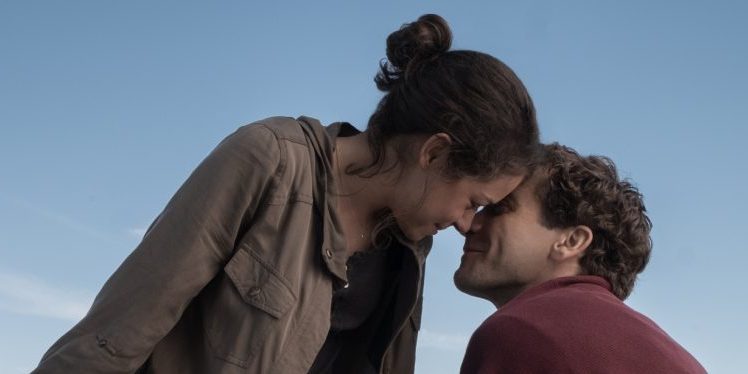
  • Stronger review — Jake Gyllenhaal shines in this bold and uplifting drama

    Stronger review — Jake Gyllenhaal shines in this bold and uplifting drama

    Subverting genre tropes, Stronger is a humanist story about triumph over adversity with stellar performances by Jake Gyllenhaal and Tatiana Maslany.

    Jeff Bauman’s story feels like one that Hollywood would consume into its “based on a true story” formula and spit out an emotionally manipulative story of triumph over adversity. Stronger is not one of those movies. That’s because it doesn’t focus on the physical obstacles that so many of these kinds of movies zero in on — though it certainly has its share of scenes covering Jeff’s rehabilitation. Instead, Stronger focuses on the emotional and psychological trauma that comes with the physical pain.

    Jeff (Jake Gyllenhaal) is your typical blue-collar Bostonian — beer is his water, the bar is his church, and the Red Sox are his savior. He’s the kind of persistent and goofy guys that you date for a while then cut off much like Erin Hurley (Tatiana Maslany) does to Jeff. Director David Gordon Green doesn’t sanctify Jeff. He shows him as the true man he is flaws and all. The first 10 minutes or so of the film give us some breezy exposition about Jeff, his history with Erin, and his brash, but loving, family. In an effort to win Erin back — she’s tried to break up with him three times at this point — Jeff plants himself at the finish line of the 2013 Boston Marathon with a homemade sign to cheer Erin on. You know what happens next.


    Green shows us the bombing from Erin’s perspective, one of many genius directorial moves that maximize the emotional impact of the story. We learn later that Jeff lost both of his legs just above the knee. We see the historical events of the bombing — the hunt for the bombers and their eventual deaths — from a distance even though Jeff was instrumental in the search. That’s not what Stronger is concerned with. This is Jeff’s story.

    For such an intimate movie, Green, and cinematographer Sean Bobbitt make the movie so much more cinematic than it could have been. In an early scene, doctors are replacing Jeff’s leg bandages for the first time. Instead of inciting a physical response from the audience by closing in on the actual changing, the camera focuses on Gyllenhaal in the foreground as the pain overcomes him — the procedure occurs out of focus in the background. The medical team coaches him through while Erin stands by unsure of her place in the procedure. The single take is effective in portraying the physical pain but also sets up Erin and Jeff’s story as well.

    Gyllenhaal is such a physical actor that it’s a wonder it has taken him this long to do this type of story. However, it’s one that he’s born to play. He knows how to emote huge emotions without feeling overwrought. It’s one of the best performances of his career and one that I think will earn him his long overdue Oscar. However, Maslany keeps up with him beat for beat. Erin is a strong character, which Maslany is sure to show at the beginning, however, that just makes her times of vulnerability more jarring. The pair is breathtaking. Oscars, pay attention.

    After some expected scenes of the physical anguish experienced by amputees, the movie shifts to a wholly unique perspective of a man thrust into heroism, even though he’s reluctant. “Boston Strong” became a phrase often used following the attack and Jeff became a symbol of that phrase. However, the weight of it takes a toll on him, especially when PTSD begins to settle in. That’s not helped when his hard drinking and smoking mother (Miranda Richardson, a delight here) starts to push Jeff further into the spotlight, which just draws him into himself. All the while, Maslany plays the role of the long-suffering sidekick, who is given time to flesh out her own character’s journey.


    Stronger touches on a lot of points that make Jeff’s emotional recovering all the more daunting — countless appearances, 9/11 truther types. However, it never forgets its focus — Jeff and Erin. Both characters are going through an intense psychological journey that eventually comes to a head one night in a scene that I’m sure will be played at the Oscars if both actors are rightfully nominated. We watch them grow, grow apart before both of them learn how to live for themselves and for each other. It’s the kind of intelligent adult drama that we need to see more of.

    Stronger surprised me in the best way possible. It’s filmmaking at its finest. Green takes a seemingly uncinematic story and turns it into a poetic film that begs to be watched. It’s about struggle and the love that we have to finally accept to overcome that struggle. It doesn’t take the easy route to portray that. Instead, what we get is a cinematically bold and emotionally rich story that’s inspirational without feeling self-important. Stronger is about the human spirit. And that no matter how much you bend or warp it, it’s almost impossible to break. It’s the kind of humanist drama we need right now. One that is doused in hope and love.

    ★★★★ out of 5


    Watch Stronger on Amazon!

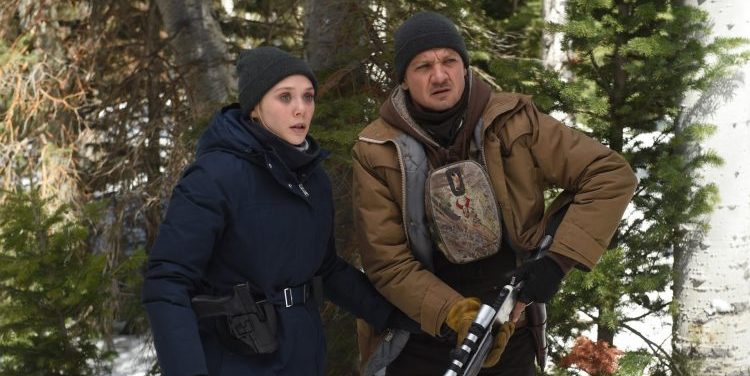
  • Wind River review — Taylor Sheridan steps into the director’s chair

    Wind River review — Taylor Sheridan steps into the director’s chair

    Wind River finds screenwriter Taylor Sheridan taking the director’s chair with thrilling results and stellar performances from Elizabeth Olsen and Jeremy Renner.

    Wind River opens with a terrifying shot of a woman running barefoot through the snowy and isolated landscape of Wyoming. She falls to her knees. We never see who or what is chasing her. All we know is that whatever she’s running from must be terrifying enough for her to endure this frozen hellscape.

    Of the three screenplays in Sheridan’s impressive career, Wind River is certainly the darkest. Though Sicario and Hell or High Water are certainly intense, they have their moments of levity. He creates characters with quirks and gives them breezy dialogue to carry you through the exposition. However, with Wind River, he strips the screenplay down to the bare bones to create an efficient, slow-burning, humanist crime drama.


    While on a hunt for a predator that has been killing his father-in-law’s cattle, Cory Lambert (Jeremy Renner, great as usual) stumbles upon the body of the young woman we see in the movie’s opening. Her identity is revealed to be 18-year old Natalie Hanson (Kelsey Chow), a resident of the reservation, which causes tribal police — in the form of police chief Ben (Graham Greene, an absolute delight) — and FBI agent Jane Banner (Elizabeth Olsen). Banner is motivated but clearly inexperienced in the job — she doesn’t even come prepared with a coat for the subzero temperatures.

    Eventually, it’s uncovered that Natalie was assaulted and murdered. Realizing that she may be in over her head, Banner enlists the help of Lambert and Ben. However, it’s quickly apparent that the case is more complicated than it seems and added emotional stakes make it even harder on the trio. Those stakes mostly come from a brief, but powerful performance from Gil Birmingham as Natalie’s father.

    By taking place on a Native American Reservation, Wind River could have gone one of two ways. It could have simply taken advantage of the people and environment to just be a “case of the week” procedural in a different setting. Instead, it went the other way and became, from my limited perspective, a balanced crime drama that is of its time and setting. The movie is as much about the crime as it is about the experience of being a Native American in this country — from the complicated jurisdictions to drug abuse rates.

    At one point, one of the Native American characters — I’ll leave them unnamed to preserve the plot — is performing a ritual. When asked how they knew how to do the face paint, they respond, “I made it up. There’s no one left to teach me.” I think one of Sheridan’s greatest talents as a screenwriter is coming up with lines of dialogue that punch you in the gut. Well, that line is a prizefighter throwing a right jab straight at your heart. Though there is a murder at the middle of Wind River, the real crime is the one our country continues to treat the people we took this land from.


    The characters Sheridan creates in Wind River aren’t his most interesting. However, Renner and Olsen breathe life into Banner and Lambert and move them past just being two-dimensional archetypes. In particular, though, Olsen strikes an emotional chord by balancing her character’s conflicting motivations: the chip on her shoulder as an FBI agent and her disgust at the cruelty of life and humanity. It’s one of the best performances of her already stellar career.

    Wind River is as much of a gritty crime thriller as it is a character study. While the former sometimes suffers in service of the latter, the film is, in the end, greater than the sum of its parts. Between Sicario, Hell or High Water, and now, Wind River, Taylor Sheridan has proved himself one of the most exciting screenwriters working today. However, this movie also proves that with some growth, her can also be one of the most exciting directors. What he pulled off with Wind River was no easy feat. He’s one to watch.

    ★★★½ out of 5


    Watch Wind River on Amazon!

  • Blade Runner 2049 review — An instant classic worthy of the original

    Blade Runner 2049 review — An instant classic worthy of the original

    Denis Villeneuve’s Blade Runner 2049 is a visually stunning and emotionally rich sequel that stands equally with the 1982 original

    Blade Runner 2049 is an all-out assault on your senses. Famed cinematographer Roger Deakins does some of his best work to date in the film — a statement that could be applied to each one of his films. He douses the familiar grey landscapes of the 1982 original with sweeping amber tones and bright neons that contrast the movie’s darker tone. More importantly, the dazzling visuals coupled with stunning CGI help totally immerse you in the Blade Runner universe. It’s almost overwhelming but also begs to be seen on the biggest screen possible.

    With the world already set up beautifully in the 1982 original, Director Denis Villeneuve doesn’t have to do anything but apply a new story to explore the existential themes that Ridley Scott started. However, refreshingly, the movie doesn’t lean on the original. The nods to the original will be enough to stave the appetite of the Blade Runner-purists. But it surely stands on its own similar to the way Aliens and Terminator II build on the original rather than become bogged down by it.


    The last four films by Villeneuve have made my best-of-the-year list for their respective years and more likely than not, he’ll be making a return this year as well. As a filmmaker, he’s refined, stylish, and cerebral much like Christopher Nolan. However, unlike early Nolan films, Villeneuve has always been a humanist. So, a story about the meaning of humanity — similar to the story about parenthood and morality in Arrival — is a perfect canvas for him to paint with.

    Taking place 30 years after the original, Blade Runner 2049 portrays the world as one that has progressed from the point we last saw it — or better or worse. The oceans have risen, Los Angeles has somehow become even more overpopulated, and San Diego has turned into a literal garbage dump. More importantly, though, Androids have made a return to the planet. The new Nexus 9 model replicants, which are designed by the Wallace Corporation to obey like never before, are legal on the planet due to a limited-lifespan determined by their owner. Some are used to retire older models. They’re still called blade runners. K (Ryan Gosling) is a replicant blade runner — this is not a spoiler, it’s revealed almost immediately — who works for the LAPD under Luitenent Joshi (Robin Wright — perfectly cast here).

    Though much of K’s storyline has to do with a plot point that I won’t discuss — the spoiler prevention on this movie was marvelous — a huge interest is placed on his relationship with Joi (Ana de Armas), his holographic girlfriend. Through her, the movie explores a lot of the character motivations that drove the replicants in the original: the desire to be human. As real as she may seem and intimate as their interactions become, there’s always that slight transparency — literally and figuratively — that reminds K that it isn’t all real. But what if it is? That’s the question that this film — and the original — always pondered: do android dream of electric sheep?

    That question — it’s also the title of the Phillip K. Dick novel the original was based on — is what makes Blade Runner 2049 a great movie. All great sci-fi ponders some existential question. However, Blade Runner 2049 is hypnotic in its exploration. Some scenes — like one where K has sex with Joi via a hired prostitute similarly to the scene in Her. That Spike Jonze movie is actually an adept comparison to some parts of the movie. Specifically with the scenes between Joi and K. de Armas, like Scarlett Johansson in Her, gives her non-human character the most humanity out anyone else in the movie, mostly with her voice. There is warmth and depth that emulates genuine care for K. It’s a breakout performance.


    Like the original, Blade Runner 2049 explores the company that creates the replicants. Niander Wallace (Jared Leto — he gives quite an impressive performance), though, unlike Eldon Tyrell, his aspirations are terrifying. He functions almost like a Frankenstein-like mad scientist with a God-complex that has never been put in check. In two pivotal scenes, Leto essentially gives an extended “evil plan monologue” that would give any Bond villain a run for his money. More terrifying is his replicant assistant Luv (Sylvia Hoeks — her performance harkens back to Rutger Hauer’s in the original) who is tasked with carrying out that plan. But even though the Wallace Corporation is the big villain of the story, the more emotional and human elements are the real foundation of success for the film.

    Every year, more and more sequels and reboots have popped up with aspirations for easy money with huge opening weekends. So, it’s incredibly refreshing to see a sequel that is actually trying to challenge its audience. With a nearly three-hour running time, it certainly puts up a fight. However, leaving the theater following the final shots is a euphoric experience. To call Blade Runner 2049 a satisfying experience would be an understatement. It’s the reason we go to movies, to feel something — whether its the rumble of Hans Zimmer and Benjamin Wallfisch’s score or the soaring emotions when we finally see Harrison Ford‘s Decker back on the screen. It’s an experience from beginning to end. And the end feels like a beginning in the best way possible.

    ★★★★½ out of 5


    Watch Blade Runner 2049 on Amazon!

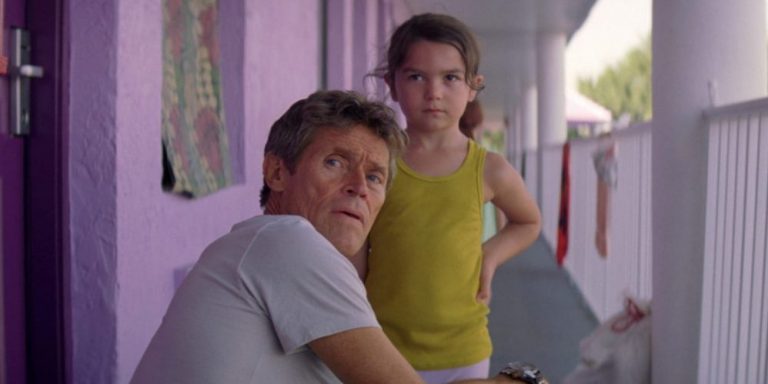
  • The Florida Project review — A heart filled look at childhood

    The Florida Project review — A heart filled look at childhood

    The Florida Project is a warm, sun-drenched look at the magic and darkness of childhood in America’s poverty stricken areas

    At the end of The Florida Project, Sean Baker’s follow-up to his acclaimed 2015 film Tangerine, I just sat in the dark theater watching the silent end credits roll by. So did most of the people in the theater. It’s the kind of ending that hits you like a ton of bricks. It’s surprising considering the movie’s opening credits play against a pastel pink wall and scored with Kool & the Gang’s “Celebration.” The first half of the movie as a whole is splashed with colorful pastels, bright blue skies, and whimsical cinematography that would make Wes Anderson blush. However, as the story progresses around our young protagonist, those colors seem a little less bright, the skies give way to rain, and we begin to tighten in with hyper focus on our characters.

    Taking place in the Kissimmee, FL, which is basically the underbelly of the tourist and theme park areas of Orlando, Baker, similarly to Tangerine, explores the people that the rest of America has forgotten. In this case, it’s the residents of a strip of seedy motels that stand in the shadow of the mega resorts. Though an occasional tourist passes through, the motel is mostly inhabited by poor families including Moonee (Brooklynn Prince) and her mother chronically unemployed mother Halley (Bria Vinaite — a great debut performance). Moonee runs through the overgrown landscape with her friends tormenting the residents and tourists, yet are blissfully unaware of how truly devastating the area and people are. To them the motel — named “Magic Castle” no relation to the Magic Kingdom — is truly magical.


    However, Moonee’s life of getting food from Halley’s friend Ashley’s diner job or churches and helping her mom sell perfume to tourists outside upscale resorts is anything but magical. Though we’re completely aware of the life the Moonee is living, Baker does an incredible job portraying the kind of ignorance only a child experiences. One that shields them from the hardships around them, even when they’re so close to home. The first half of the film is largely episodic. We watch Moonee and her friend Scooty (Christopher Rivera) and later Jancey (Valeria Cotto) as they beg for money outside an ice cream shop, run through abandoned condos, and torment the motel’s manager Bobby (Willem Dafoe — a solid performance by the veteran actor).

    But like all good things, it has to come to an end. However, the brilliance of The Florida Project is that Moonee, like most kids, is so unaware of how bad things are that nothing ever seems different. Of course, for Halley, desperation sets in as money runs dry and each passing day reveals a new challenge to get through. Moments of joy like watching fireworks in a field or flipping of helicopters full of tourists are unsecured with dread. That partially has to be credited to Baker, but also to Vinaite, who makes Halley more than a one-note incapable young mother.

    For that reason, Bobby takes a particular interest in helping Halley and Moonee. Especially since his relationship with his son (Caleb Landry Jones who was seen earlier this year in Get Out) is strained at best. He works hard to bring some relief to the pair’s plights. Though, they run deeper than he even imagines. Baker proved that he was a director that understands characters and their growth with Tangerine, but with The Florida Project he shows that he’s a subtly innovative filmmaker. In one heartbreaking sequence we watch as Moonee takes a bath on three separate occasions. The first seems joyful and innocent enough. The second feels more empty. And the third is gut-wrenching. But he’s not obvious with the progression. In many instances you don’t realize the path he’s going down until you’re at the end. But then it all seems more brilliant for it. An extended sequence where Moonee eats breakfast at one of the upscale resorts — they sneak in of course — focuses completely on the joy that she’s feeling. But in a single cut, we realize that the joy is only in Moonee’s point of view. And that there’s real darkness behind it.


    Prince gives one of the best performances by a young actor in recent memory. Like Jacob Tremblay in Room, she is able to tap into the well of emotions that kids feel, but don’t completely understand. But outside of that, she also shows the wonder in the simplest things without feeling like she’s performing. She’s remarkable. She also makes the movie a complete joy to watch. Even though with each passing scene you know that things aren’t as bright as they seem, your adventures with the kids are a sun-drenched romp through their kingdom.

    The Florida Project isn’t a critique on the poor or an indictment of the system that makes it rampant in this country. Instead, it’s a portrait of one slice of poverty in the United States and the difficulties that come along with it. More specifically, it explores adolescence in one of those situations. But the way that Sean Baker explores it is so innovative and exciting that it has to be one of the best directorial efforts of the year. Kids are blissfully ignorant — until they’re not. The final minutes of The Florida Project so beautifully show that in one of the best movie endings I’ve seen this year. It’s one filled with hope and warmth, as is the rest of the movie. If you take anything away from The Florida Project, it’s that there is magic in childhood and it’s one of the most important things to happen to you in life.

    ★★★★½ out of 5


    Watch The Florida Project on Amazon!

  • Wonder review — Get ready to laugh and cry during this feel-good movie

    Wonder review — Get ready to laugh and cry during this feel-good movie

    Wonder will win over audience’s affection with its charming take on R.J. Palacio’s novel of the same name.

    Wonder is an inspirational poster of a movie, which I say in the least cynical way possible. Like director Stephen Chomsky’s last movie The Perks of Being a Wallflower, Wonder knows how to emotionally invest its audience in its characters and story. You cheer when it wants you to cheer, laugh when it wants you to laugh, and cry when it wants you to cry. In a lesser movie, it might have felt like manipulation or washed with sentimentally. But Wonder earns the emotions it makes you feel, even if it has to push you just a tad.

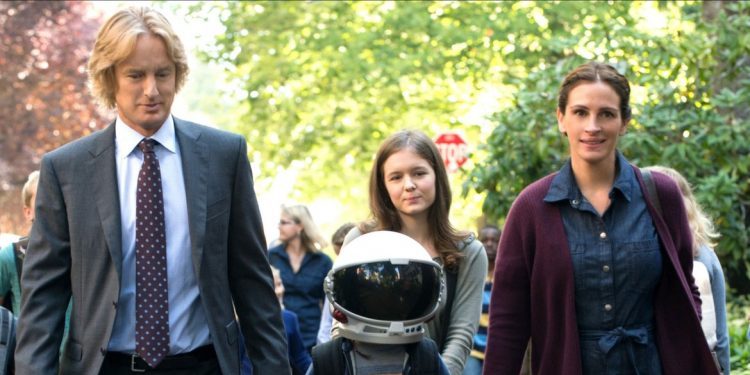
    Based on J.C. Palacio’s novel of the same name, Wonder follows 10-year-old August “Auggie” Pullman (Room’s Jacob Tremblay) as he navigates his first year of middle school after being homeschooled by his mother, Isabel (Julia Roberts). That in itself already sounds like the plot of a movie. But there’s one thing complicating Auggie’s transition into a “real school.” Auggie was born with a facial deformity that required 27 corrective surgeries. Still, he looks anything but ordinary. But Auggie is just a normal kid, a fact that he tries to emphasize in his narration — he loves Star Wars and video games and wants to be an astronaut. The other kids just don’t know it yet. Up until now, Auggie has worn a space helmet whenever he was in public. So, the jump from near isolation to school is anything but easy for him. However, it’s a decision that Isabel and Auggie’s father Nate (Owen Wilson) had to make sooner or later.


    When starting school, Auggie has some allies — affable school principal Mr. Tushman, Daveed Diggs’ supportive and insightful Mr. Browne, and Jack Will (Noah Jupe), who becomes the first student to truly befriend Auggie — and some enemies — mainly the school bully Julian (Bryce Gheisar). Wonder makes you incredibly sympathetic to Auggie’s plights. Not just because of what is happening to him on screen, but because of the Tremblay’s incredible effective performance. His quiet, downturned expression and high, quiet voice make it incredibly easy to sympathize with him. But more importantly his defeatist attitude towards the cruelty from kids, which he is hurt by, but fully expected, makes you empathize with his loneliness. Even if the movie is an amplified version of it.

    And while the movie starts off solidly in Auggie’s point of view, it shifts to his sister Via’s (Izabela Vidovic) point-of-view. Similarly to Lady Bird, we quickly realize that this movie is not only about Auggie, but the people surrounding him. Via knows that Auggie is the center of her parents’ universe, but she’s okay with that. She’s learned to deal with her own struggles on her own, but as she approaches this new year of school, it becomes harder for her, especially since her best friend Miranda (Danielle Rose Russell) has suddenly stopped talking to her.


    Wonder, the book and the movie, is targeted at kids. And this shifting point-of-view — we eventually get stories from the perspective of Via, Miranda, and Jack Will — is a clearly a way to help kids learn the lesson of empathy. Chomsky’s The Perks of Being A Wallflower is so effective because he has an understanding of the way that young people think and feel. Particularly the feeling of loneliness. In Perks, the main character’s aching longing for connection is palpable and so is Auggie’s. And like Perks, the way that the people around the main character interact is almost as important as the main character’s journey.

    I don’t want to say that if you didn’t like Wonder, then you don’t have a heart. But this is really one of those movies that can cheer anyone’s day up. It’s really the feel-good movie of the year. That’s not to take away its cinematic achievement. Chomsky is a good director with an ability to imbue emotion on his audience. And just when you think it couldn’t get any better, the movie ends with a Passion Pit song.

    ★★★½ out of 5


    Wonder is available on Amazon!