Category: Movies

  • The Invitation Movie Review — Easily one of the best thrillers of the decade

    The Invitation Movie Review — Easily one of the best thrillers of the decade

    Atmospheric and suspenseful, The Invitation is a blast to watch and easily one of the best movies of the year so far

    If you haven’t watched The Invitation yet, open up Amazon or iTunes and watch it right now. I’ve said it about other movies, but if I had to choose one movie for you to not know a single thing about before watching, it is this movie. You’ve been warned.

    I’m going to just come right out and say it. The Invitation is easily one of the best, if not the best movie of the year so far and one of the best thrillers in years. Nearly all the thanks has to be given to Karyn Kusama’s careful and increasingly tightening direction of the material. Starting with the opening. We open completely silent on Will (Logan Marshall-Greene) driving up a winding mountain road. As the sound slowly seeps back into the scene, we hear Kira (Emayatzu Corinealdi) telling him that they don’t actually have to go the dinner party they were invited to. They admitted to themselves that it was odd that they were invited considering they haven’t seen the hosts in a couple years. In a jump, Will hits a coyote and puts it out of its misery. However, it is shown in this gorgeously composed and claustrophobic shot before Theodore Shapiro’s Hitchcockian score suddenly breaks the silence.

    Once the couple reaches their destination, Will is immediately taken aback. The first part of the film really plays on an interesting look at grief and really makes you question what Will, and therefore you, are seeing. Since Kusama presents the film through Will’s lens, when the rest of the party stops seeing what he does you become frustrated like him. You support him, but in the back of your mind nags you that maybe Will is letting his grief get to him.

    Kusama is extremely patient. She doesn’t give too much. She isn’t one for theatrics. Instead, she uses strong imagery to make you feel off-centered. We have been wired to expect something explosive from a movie of this premise. We expect a moment where everything goes to shit. That puts you on edge. Whether it is Pruitt (John Carroll Lynch) carefully skulking in the background of a shot or a door being locked, nearly every beat that Kusama puts in makes you flinch because you have no idea what is going to happen. She plays her cards extremely close to her chest until she slaps them down on the table and then flips it. That’s how good the third act reveal is.

    Brian and I watched this movie purposely without watching the trailer or reading any plot description more than a sentence. During the movie, it led to a great discussion what we think is the end game. We were both completely thrown.

    In this new horror renaissance, it’s been established that you don’t need jump scare after jump scare to make an effective horror movie. Movies like It Follows, The Babadook, and The Witch prove that all you need is an atmosphere that unsettles you and makes you feel the anticipation of that big scare or terrifying image. That’s what The Invitation does so effectively. It waits and makes you question what kind of movie it is until it finally reveals itself in a beautiful finale. That’s what makes it truly one of the best movies of the year.

    ★★★★½ out of 5


    Watch “The Invitation” on Amazon!

  • Sing Street Movie Review — A fun musical romp with an emotional punch

    Sing Street Movie Review — A fun musical romp with an emotional punch

    Packed with fun musical numbers and flashes of humor, Sing Street is enjoyable on both a superficial and emotional level.

    John Carney is obsessed with the power of music. It’s what his last three films, including Sing Street, are about. Once talks about how music can communicate emotion and is a universal language. Begin Again explores the healing power of music. Carney is interested in how music is used to escape from your life with Sing Street.

    This is perhaps the closest he’s gotten to a musical so far in his career. It’s the first time he has tackled a period piece. Part of the film’s success has to be due to its ability to immerse you in the 80s. Everything from the fashion to the music to the society is there. The production is quite impressive. The costumes, in particular, are a highlight. Much of the main character Conor’s (Ferdia Walsh-Peelo) knowledge of music comes from his brother – Duran Duran to the Sex Pistols – and that fashion is what they replicate to some success.


    Sing Street tells the story of Conor Lalor. During the 80s, Ireland is racked with unemployment and a crumbling economy. His parents are forced to move him to the free state school Synge Street to cut costs. Of course, Brother Baxter, a dictator-like principal, runs the school and sets his sights on Conor for not wearing black shoes no less. The transition to our equivalent of a public school is hard on Conor. He is exposed to violent – possibly sociopathic – teenage boys. On top of that (yes, there’s more), his parents are on the verge of splitting up. Though the movie sounds like a kitchen sink drama, we’re spared from the melodramatics.

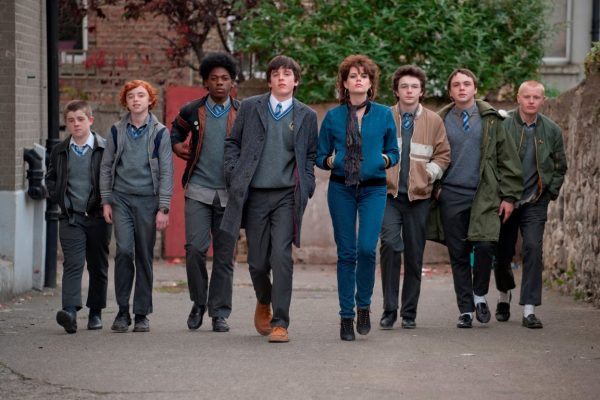
    After a few days of torture (both physical and mental) at Synge Street, he sets his eyes on Raphina (Lucy Boynton). She’s the object of any 80s teen with big hair, flashy makeup, and a gaze that’ll burn right through you. Conor asks her to appear in a music video for his band. The problem is that he doesn’t have a band. Cue the making the band montage. Conor teams up with Eamon (Mark McKenna), whose dad is in a traveling cover band, and recruits a keyboardist, drummer, bassist, and manager. Together, they form the band Sing Street.

    Sing Street

    However, underneath the fun musical numbers and making-the-band fantasies is a surprisingly real drama. There’s a scene about a third of the way through when Raphina takes her makeup off while she listens to Conor’s newest song. This is when the movie goes from a piece of the genre to something more. A lot like La La Land, it’s about this dream world that you use to escape the harsh realities of life. However, Sing Street feels a lot more real. It has experiences that more of us know.

    Even Brendan, Conor’s freewheeling, music-loving brother, has an internal darkness that’s eventually revealed. It all comes to a head in the scene when they record the video for “Drive It Like You Stole It.” It’s the closest the movie gets to fantasy. And it’s an enthralling scene. Though, the end leaves you heartbroken. It’s a culmination of the harsh realities that Conor faces and his desire for them to simply disappear. Of course, it’s just a facade. “Drive it Like You Stole It” may be the best song from a movie last year. Sorry, La La Land. However, in general, the 80s infused score is not only pitch-perfect but so damn catchy.


    Despite its dark undertone, Sing Street is incredibly entertaining. I had so much fun watching this movie. That’s something that you don’t get to say as often anymore. All the characters are likable and come with their own kind of charm. You can believe the relationship at the center of the movie. But what makes the movie truly enjoyable is that you feel the journey that Conor takes. My one quibble with the film is the ending. At first viewing, it felt out of place and unearned. However, an interview with director John Carney quickly assuaged that feeling.

    It’s hard to pinpoint the one reason Sing Street works so well. It could be the musical numbers or the direction. Plus, the cast and characters are charming. However, I think it works simply because all these pieces fall together seamlessly. Yes, the drama can feel a bit contrived. But it’s delivered and packaged in such an entertaining way with memorable characters. It easily lands amongst the best films of the year for me.

    ★★★★ out of 5


    Sing Street is available on DVD, Blu-Ray, and digital on Amazon!

  • Jersey Boys Movie Review — Strong Performances and Flashy Musical Numbers Can’t Make Up for Weak Direction

    Jersey Boys Movie Review — Strong Performances and Flashy Musical Numbers Can’t Make Up for Weak Direction

    jerseyboysmovieimage

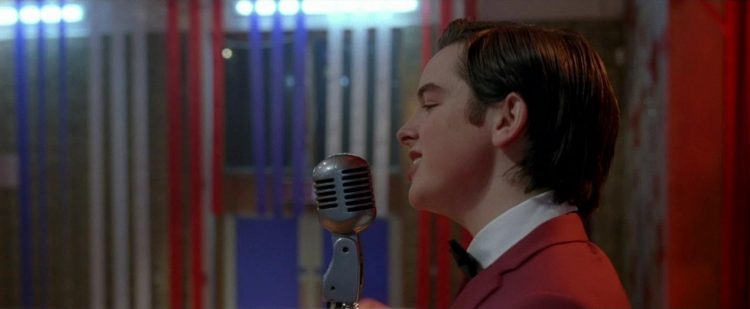
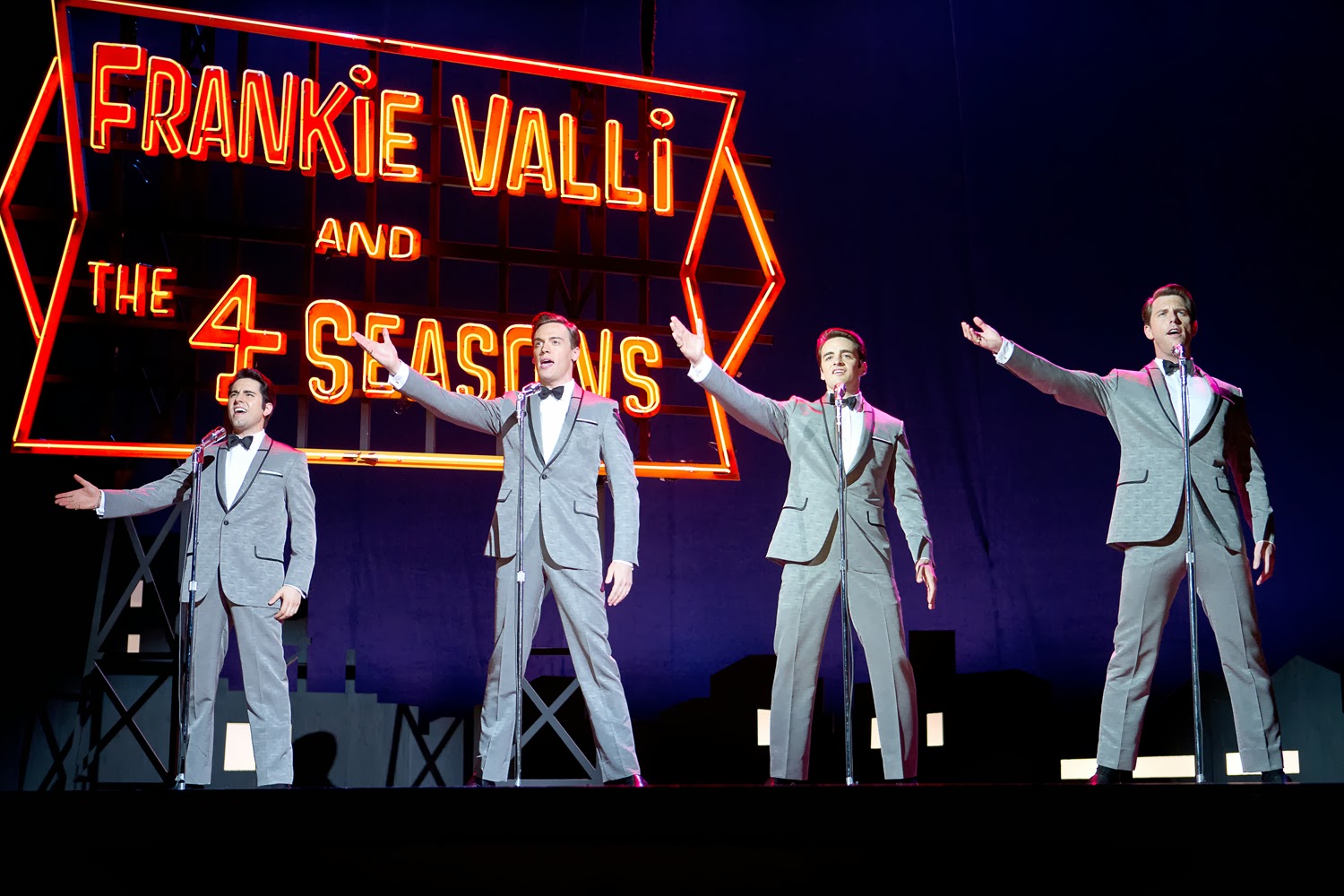
    It’s funny. The movie that I wanted Jersey Boys to be ended up appearing during the end credits when the cast got together to do a reprise of “Sherry” and “December, 1963”. It was fun, energetic, and so wonderfully campy. However, the movie preceding this end credits scene never gains the momentum it needs to sustain a two hour plus movie. While the film finds its footing during its musical numbers, they’re always followed up with less than thrilling character scenes that kill any traction it seems to find.

    This is all coming from a guy who has seen and loved the Broadway musical the film is based on. The entire movie/musical is framed by the quote: “you ask four guys, you get four different answers.” The entire story is told from the perspective of the original Four Seasons. Tommy DeVito tells the story of how the group came to be and established Tommy as the hothead of the group. While his determination is admirable, his methods are questionable. He champions Frankie (John Lloyd Young) who sees Tommy as his mentor. Tommy’s ways quickly catch up with him. When he is introduced as our first narrator, who directly addresses the camera much like the musical addresses the audience, he gives us a tour of the “old neighborhood” like he’s trying to schmooze us into buying his version of the story. Vincent Piazza turns in the kind of performance that begs an Oscar, but eventually the character’s antics become monotonous before he drops out of the film all together.

    By the time we get to Bob Gaudio’s (Erich Bergen) section of the story we already have a bad taste in our mouth from the poorly paced first act. However, his narrated parts have the most charm. Partially because the character is so endearing, but also because his section moves so much of the story forward. With the inevitable falling apart beginning in this section the characters become more interesting and the relationships more interesting. Sadly, it doesn’t last.

    The third part of the film is told from the perspective of Nick Massi (Michael Lomenda), the quietest one of the group. While he spends much of the film in the background, this section brings us much of the deep character drama of the story. From Nick’s perspective the story seems dark. Not because of the actual events, but because of how personal the gripes between the characters seem.

    When we get to the third act of the film there’s a sense of fatigue. It’s almost as if there’s no reason for us to continue watching. Even the writing and characters get tired. However, the final twenty minutes offer us some salvation and gives John Lloyd Young, who won a Tony for his performance in the musical, the opportunity to give a fully affecting performance. The film is filled with fine performances from Christopher Walken, Mike Doyle, and Renee Marino, but it’s John Lloyd Young, Vincent Piazza, Erich Bergen, and Michael Lomenda who give the film so much life.

    Jersey Boys is almost frustrating in a way. The entire time we are aching for the film to wow us. Sadly, it never really does. While the musical numbers are entertaining and the performances are fantastic, the movie never really allows them to truly take off. Of course, the musical version had the luxury of staging musical numbers as “book” scenes, but the film could have taken a different route than a straight bio-pic approach. It must be said that some of the film’s downfalls come from its close adaptation to the musical’s tedious plot structure, but it could have been easily avoided.

    The greatest downfall of the film, however, comes from Clint Eastwood himself. While the extended musical numbers are a welcome relief from the main storyline, they seem like the only salvation from his cut and dry direction. I’m not saying that it’s a terrible choice, but a story like this begs for something more extravagant or at least inventive. His presentation is very straight forward and old-fashioned, which is always an odd choice for a musical film. However, from the perspective of a bio-pic, Jersey Boys gets the job done.

    I realize that so much of this review sounds negative, but I will say that I was thoroughly entertained by the film. No matter what, it’s a compelling story that is littered with great performances and fantastic musical numbers. You can’t help but smile when that familiar tune starts to play. While I think it’s one of the lesser movies in the Eastwood canon, you can’t help but feel complete happiness when you leave the theater.

  • Beauty and the Beast review — The animated classic is given new life in the live-action remake

    Beauty and the Beast review — The animated classic is given new life in the live-action remake

    The live-action remake of Beauty and the Beast doesn’t do much to add to the 1992 classic, but it has enough magic and charm to make you fall in love all over again.

    The latest entry in Disney’s saga to do a live-action remake of every one of their classic movies is Beauty and the Beast. The 1992 version has the distinction of being the first animated movie to be nominated for Best Picture at the Oscars — a get only repeated twice. It simply is a masterpiece in animation. So, the remake not only had to justify its existence but also live up to its predecessor. While it first the former and miss the latter, it’s simply a magical piece that really feels like a tale as old as time.

    Director Bill Condon surprisingly doesn’t have the most impressive directorial credits. His most noted and lauded work has probably been Gods and Monsters and Dreamgirls. The latter is the only musical he has directed to date and the reason it is so successful is because of his grasp of what makes stage musicals so fun to watch — their glitz, camp, and the heightened sense of reality. He recreates his success with Beauty and the Beast by embracing those very things in a different way. He gives the film a rhythm. It moves in a fluid motion from scene to scene and location to location. It makes the seemingly hefty 2-hour running time go by in a flash — save for the new Beast soliloquy added to the third act, which stunts some of the momentum.


    Condon simply justifies the film’s existence by adding things that weren’t possible the first time. The more obvious is the sometimes dazzling visual effects. The furniture characters, in particular, is designed and realized beautifully — Lumiere (Ewan McGregor) and Cogsworth (Ian McKellan), in particular. However, I was both impressed and disappointed with the CGI of the Beast. Dan Stevens’ motion capture performance is quite good and transfers well in close-up. But anytime was see a full-body shot of the Beast or are further away, the effect is less convincing. It’s surprising following the groundbreaking work in Disney’s last live-action film, The Jungle Book. He also makes the film a lot more progressive with Le Fou’s (Josh Gad) “gay moment” as it has been called and various interracial couples. In our current environment, it’s refreshing to see such a huge movie give us small moments that normalize things that should have been considered normal in film years ago.

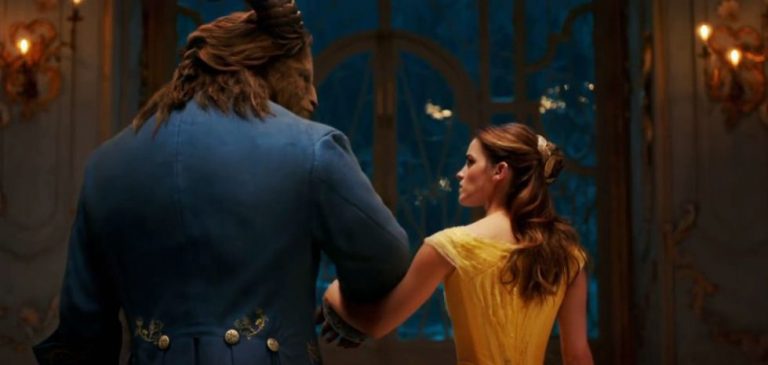
    As for the live-action facets of the film, the costume design by Jacqueline Durran pulls beautifully from the animated film while adding depth and texture. The iconic yellow dress is instantly recognizable, as is Belle’s blue dress from the opening. Although the production design by Sarah Greenwood doesn’t build too much on the design from the animated film, she still impressively creates the sets of the village and the castle with a whimsical flair.

    However, it’s the performances from the cast that really make the world come to life. Within his first few minutes on screen, Luke Evans established himself as the standout of the cast by stepping into the role of Gaston with utter perfection. His physicality, his voice, and line delivery flawlessly portrayed what anyone would expect from a live-action Gaston. Plus, his singing voice is easily the strongest among the cast except for Audra McDonald in a small, but fun role as Madame de Garderobe. The voice performances from McGregor, Stewart, and Emma Thompson were also highlights. However, something that was quickly apparent was that Emma Watson was a bit over her head. While she steps into Belle quite beautifully physically, her performance didn’t impress me the way that it should have. After all, she’s playing one of the most iconic Disney princesses. I also had a hard time ignoring the autotune used on her singing voice. It’s especially apparent when you judge it against Evans and McGregor, who both come from theater backgrounds. It would have been a better choice to cast a Broadway veteran like Samantha Barks in the role.


    Overall, Beauty and the Beast doesn’t do too much to build off the original — except perhaps closing some of the plot holes that many people have faulted the film with. However, it justifies its existence by telling the story with resources that weren’t available in 1992. Condon imbues so much charm and wonderment into the film that you forget about the politics or whether it should have been remade and just enjoy the film. The film makes you feel pure joy. Go in without any preconceptions about the movie. Don’t think about it as a remake. Just laugh, cry, and cheer as you remember why the original Beauty and the Beast was a pure masterpiece.

     ★★★★ out of 5


    Beauty and the Beast (2017) is available on Digital HD on Amazon!

  • Frank review — A celebration of weirdness and papier-mâché heads

    Frank review — A celebration of weirdness and papier-mâché heads

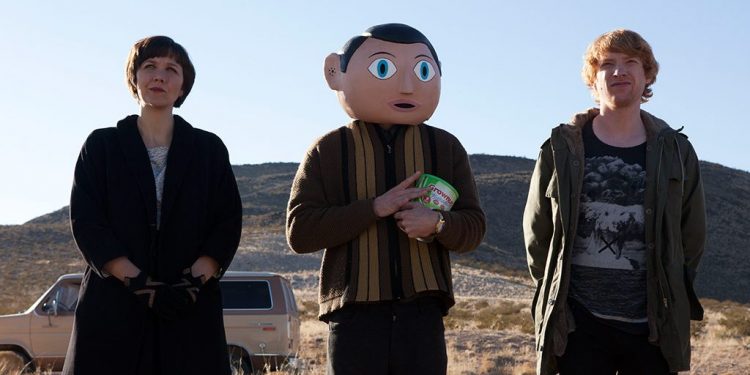
    Michael Fassbender is fascinating as the papier-mâché headed lead singer in Frank, which celebrates weirdness and understands mental illness

    Frank is just about as quirky and surreal as you’d imagine a movie about an experimental indie band with a lead singer who constantly wears a giant papier-mâché head would be. However, surprisingly, the character of Frank (Michael Fassbender) — who dons that giant head for the entire 90-minute running time — isn’t the weirdest character in this movie. And that is one of the many reasons that this movie triumphs. Although this is a pretty sharp satire of the creative process, particularly that of the new wave of pretentious indie artists that seem to think that building an audience is a threat to their artistic integrity, it also has an appreciation for the same people and has a firm step in reality. It begs interesting questions, even if the way it ponders them can only be described as eccentric.


    Jon (Domhnall Gleeson, in yet another strong, but under appreciated performance) is a down-on-his-luck wannabe musician who is tolling his days in his cubicle or walking down the street piecing together lyrics based on his observations. One day, as he’s walking down the beach, he witnesses a man being pulled out of the ocean by paramedics. As the man is being attended to, he encounters Don (Scoot McNairy), who reveals that the man was drowning himself and was the keyboardist in the band Soronprfbs — no one actually knows how to pronounce it. When Jon mentions that he is a keyboardist, Don, the manager of the band, invites him to fill in at their gig that night. When Jon shows up, the rest of the band is reluctant except for Frank.

    This first performance with the band, with all the disparate electronic sounds, nonsensical lyrics being talk-sung by Frank, and lack of melody, is surprisingly charming. That’s mostly due to the fact that Frank, thanks to Fassbender, is as whimsical as the enormous papier-mâché head he wears — the head is oblong and smooth with enormous eyes that constantly feel like they’re judging you. After the performance, which goes well until it doesn’t, Frank invites Jon to become a full-time member of the band and to join them in Ireland and record the band’s first album. The band, particularly Clara (Maggie Gyllenhaal), has a strong disdain for Jon whose mainstream tastes rub them the wrong way.

    Eventually, after explicit hot tub sex, a Viking funeral, and a lesson on YouTube, Jon reveals that he has been sharing videos of the band rehearsing online and that they’ve been invited to the South by Southwest festival. It takes a while for the movie to get to its main points, but it ponders them vigorously until the very end. Who is art for? The artist or the audience? In the case of Frank, there is the added storyline of mental illness. The way you react to the tonal switch in the third act will determine how you react to this movie as a whole.

    On the two sides of the aisle are Jon and Clara. Jon, who is more concerned with his social media followers, is encouraging Frank as an artist to share their music with the world. Clara, on the other hand, recognizes the fragility of Frank’s psyche. She understands that for Frank the music is art and medicine. In director Lenny Abrahamson’s able hands, the shift from quirky comedy to character study is jarring, but a welcome relief. Though watching the band set in the woods painstakingly use various household objects to make disparate noises to use on their album is hilarious, there isn’t necessarily a way that you can see the movie wrapping up successfully on that tone.


    Gleeson’s character is set up to be the “straight man” of the group, though his social awkwardness certainly gives him comedy points. Seeing the movie through his eyes give us a chance to view Frank mythically, then as misunderstood. Fassbender, on the other hand, gives us a surprisingly grounded view of a character as weird as Frank before giving us a view into his world. Mind you, Fassbender is doing this all without ever showing his face — he even wears it in the shower with a plastic bag protecting it — though his character does announce his expression periodically throughout the movie. Just through his physicality, you can witness the journey Frank goes through. It’s remarkable how much he emotes just through his body. More than that, though, he makes Frank more than just his papier-mâché head.

    Banksy — another enigmatic artist whose identity has yet to be revealed — once said, “Art should comfort the disturbed and disturb the comfortable.” It’s hard to grasp that quote unless you’re an artist. What screenwriters Jon Ronson and Peter Straughan were able to do was give us a look into the mind of an auteur — the screenplay is based on several musicians including Frank Sidebottom and Daniel Johnston — for better or worse. The first part of the movie, which is as entertaining as they come, lets us in on the better. The final act, the worse. However, you leave the movie with a different understanding of art, mental illness, and what it means to be different. For the disturbed, you will be comforted. For the comfortable, get ready to get disturbed.

    ★★★★ out of 5


    Frank is available to stream on Netflix and for rental on Amazon and iTunes

  • Oculus Movie Review — A Stylish, Well-Acted Psychological Horror

    Oculus Movie Review — A Stylish, Well-Acted Psychological Horror

    Though it doesn’t quite reach the potential of its premise, Oculus packs in enough tension to make it a solid horror movie

    Yet another entry in the psychological horror rooted in childhood emotional trauma genre. Running in two different timelines, Oculus follows a brother and sister as they try to destroy a mirror that contained the ghosts that haunted them in their childhood.

    Although it is void of any big scares that would have made it the movie horror fans were looking for, Oculus targets something far more terrifying. Your mind. Mike Flanagan’s focus on the feeling of dread and underlying darkness will take you, chill you to the bone, and make you reevaluate your own sanity, which is all we can ask for when it comes to the horror of today.

    The premise of Oculus is simple and neatly explained in its tagline: “you see what it wants you to see.” The aforementioned “it” being a mirror in this case. However, it has been told in many forms throughout the years. A music box, a haunted doll, the line of haunted object movies is endless, but Oculus is more successful than these entries because of its clear focus.


    The film begins with Tim Russell (Brenton Thwaites) just before he is released from a psychiatric hospital. Eleven years prior his father murdered their mother under the influence of a malevolent supernatural force, however through intensive therapy doctors were able to convince Tim that it was solely his father who tormented the family.

    Shortly after his release, he meets with his older sister Kaylie (Karen Gillan), who his doctors warn did not have the benefit of therapy following their childhood trauma, which shows. Through her work at an auction house, Kaylie is able to track down the mirror that tormented them in their youth. Almost immediately after her brother’s release (and when I say immediately I mean at lunch on the way home from the hospital) Kaylie reveals her plan to document the mirror’s evil intentions and powers before finally destroying it. Not the best idea ever.

    The mirror is able to change your perception of reality. So when a man thinks he is taking off his band-aid with a staple remover, he is actually digging into his flesh. Isn’t it a lovely image? However, it isn’t the gore that is terrifying, it is the idea of not being in control.

    The siblings return to their childhood home armed with cameras, timers (reminding them to eat and drink), thermometers, and an enormous anchor designed to destroy the mirror should anything happen to the pair. Kaylie even has her boyfriend Michael (James Lafferty) call them every hour to ensure they are still alive, although he does this under the impression that she is fearful of her brother. Nice. It’s clear Kaylie has been planning this for a while. Eventually, the film spirals into a dark pit of disturbing images that make the siblings question their own sanity.

    Throughout the ordeal, the film flashes back to the siblings’ childhood and the events that started their torment. The screenwriters didn’t do much to differentiate their “dad’s an assh**le because he was possessed by a ghost and is probably going to kill us” premise from other movies like The Shining and The Amityville Horror. However, unlike these movies we don’t have an emotional connection to either their father Alan (Rory Cochrane) or their mother (Katee Sackoff in a wonderful performance). The story felt contrived and familiar without any deep rooted baggage to go along with the insidious darkness that consumes them. However, the saving grace were the fine performances by Annalise Bassoa and Garrett Ryan as the young Kaylie and Tim.


    Despite this setback, the beauty of Oculus lies in its unnerving ability to get you to question the sanity of the two leads. In turn, we question our eyes. What we see on screen isn’t necessarily real either. The result is the questioning of our own sanity. It’s the perpetual unnerving dread of the film that creates most of the horror. Even in light, there is an insidious darkness lurking.

    But where the film finally does fail is where countless horror and psychological thrillers fail. Once you are able to forgive the screenwriters, who also must be blamed for some clunky dialogue, for the well-realized yet terribly feigned procession of scenes that build up to the climax, we are let down by an inevitable final act twist that we can see coming a mile away.

    In the end, Oculus doesn’t become the film we wanted it to be. Its brilliant first two acts suggest that there may be something new and fresh hidden underneath, but it is never fully realized. Either way, the final product is a beautifully shot and wonderful acted entry in the never-ending pool of niche horror movies looking to shock, scare, and unnerve.

    6.5/10

    Oculus is available on Digital HD on Amazon!

  • A Most Violent Year Movie Review — Smart and gripping, one of the best films of the year

    A Most Violent Year Movie Review — Smart and gripping, one of the best films of the year

    A great homage to the 70s crime films, A Most Violent Year doesn’t need flash to be an intense thriller

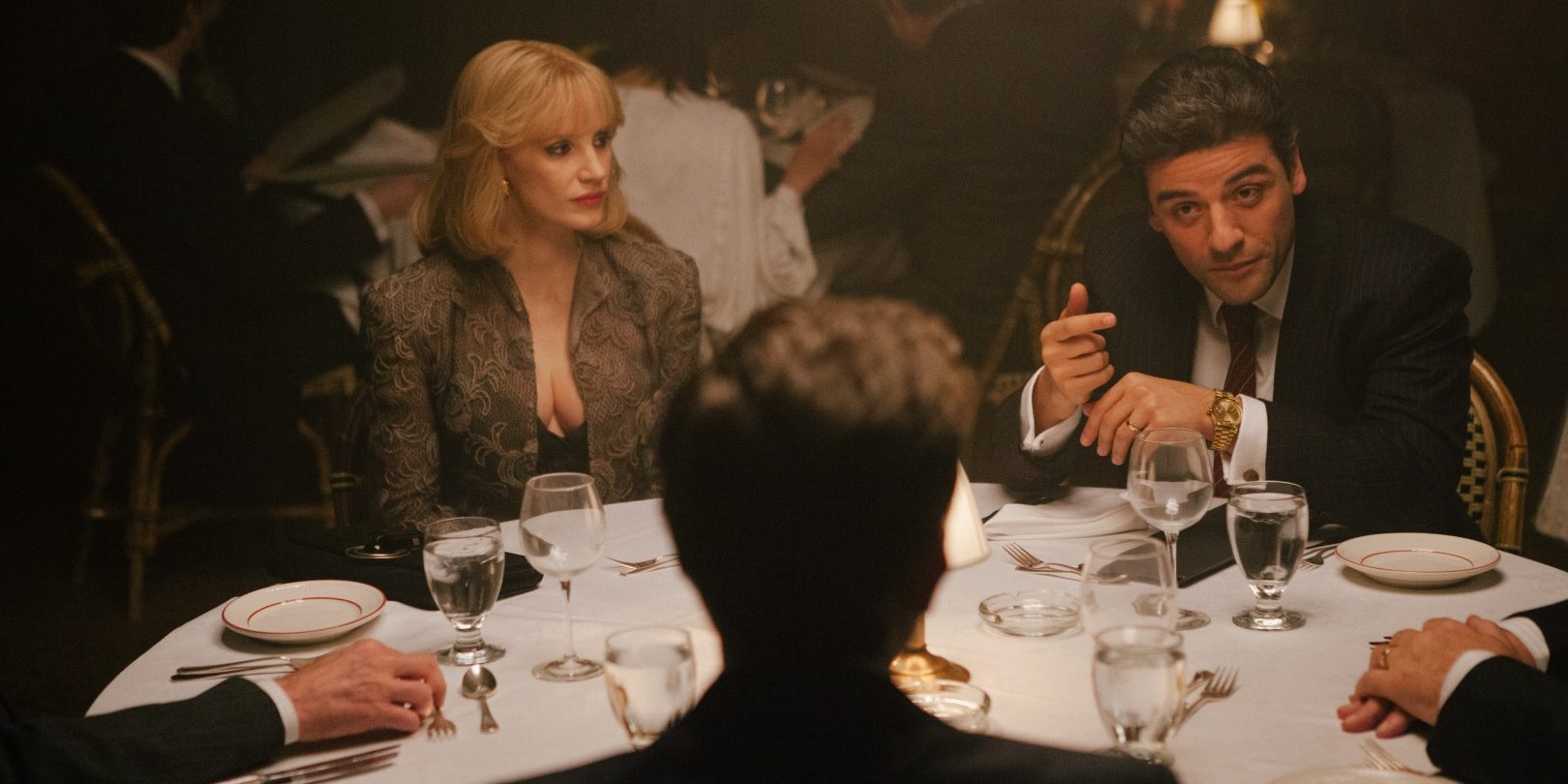
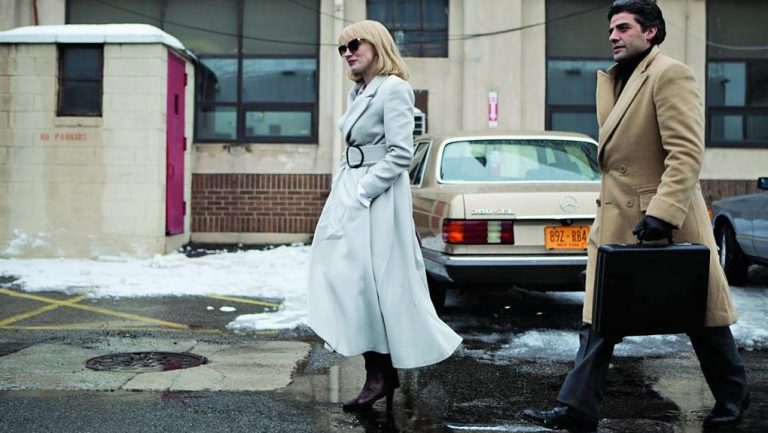
    a-most-violent-year.32422There’s a scene about a third of the way through A Most Violent Year that outlines exactly what the movie is about. After striking a deer on their way home from a dinner, Abel (Oscar Isaac) gets out of the car to put the animal out of its misery. He stares at the helpless creature for a couple seconds before gun shots are heard. His wife Anna (Jessica Chastain) shot the deer, possibly to excess, while Abel just stood aside. It’s a simple scene, but you don’t really know its purpose until after it’s over. That is the beauty of the film and J.C. Chandor as a screenwriter and director. He gives enough exposition to his audience to ensure that they can follow the story at hand, but he maintains an ambiguity that keeps us hooked. He keeps us at arms length to let us decide for ourselves what his films are really about.

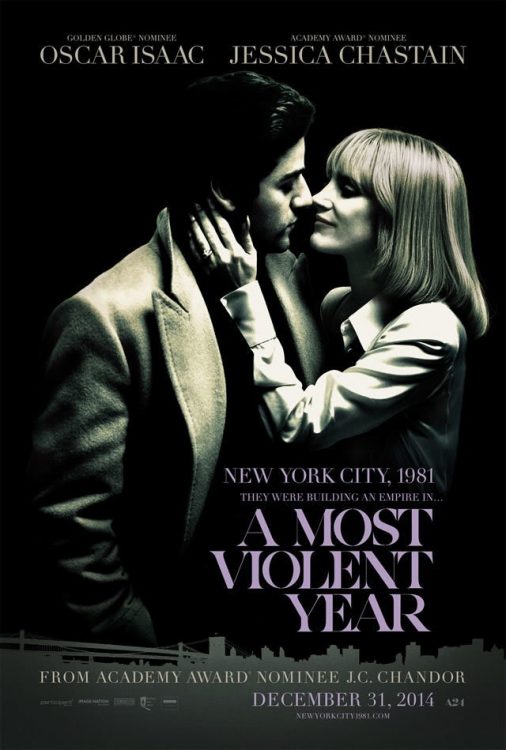
    A Most Violent Year will be best enjoyed if you know little about the plot of the film. I say this about a lot of movies, but I highly urge you to maybe skip reading the synopsis on this one. Why? It so adroitly sets up its story, characters, and plot that if you know anything ahead of time part of the charm is taken away. All you need to know is that 1981 was one of the most violent years in the history of New York City and Abel Morales (Oscar Isaac), his wife Anna (Jessica Chastain), and their heating business are being dragged into it.


    The film takes place at a very specific time in both period and style. It may be set in 1981, a time when New York was a lot more gritty (I know, it’s hard to imagine) and unforgiving than now, but the film is stylistically very similar to films of the 70s, one of the greatest decades for cinema. The decade produced some of the best films of all time, however films like The Godfather and Taxi Driver are some of the most memorable. It was a time when the subject matter was as dark as the films’ dimly lit sets and their muted color palettes relied on tones only the earth could provide. The mafia ruled the screens and honor and tradition were the main points of conflict. This is why A Most Violent Year succeeds. It is able to so adroitly replicate the slow, but emotional taxing, burn of those films.

    Yes, the film may be slow, but you’ll never be jaded. J.C Chandor controls the screen with his gripping atmosphere that keeps you guessing. You can never truly rest because the stakes are never lessened, the threats never dissipated, and the enemies never eliminated. What I’ve continually noticed from Chandor is that he doesn’t need a lot to speak thousands in his films. He thrives on the simplicity of dialogue and the simplicity of direction. However, he never shies away from the occasional moments of high intensity action.

    a-most-violent-year-review.lead-xlargeIf Chandor is responsible for the body of the film, then the head and heart belong to the Oscar-worthy performances by Oscar Isaac and Jessica Chastain. There aren’t many dramatics in the film. The characters are very calculating in all their actions, as are the actors. Isaac has the makings of a young Robert DeNiro or Al Pacino, but so many lines come very close to a “you come into my house on the day my daughter is to be married” type delivery on some lines of dialogue that you could even say some Marlon Brando comes through.

    I’m hesitant to call the movie a “gangster film” since Abel spends so much of the movie trying to dodge the title, so instead I’m going to consider a social commentary on violence. Between Isaac’s Abel and Chastain’s Ana we get two very specific opinions on its use, however the film goes so much further than that. Like I said, it’s what you make of it.


    What I thought the film was trying to say is going to be different from what you think. In my opinion, when you throw in David Oyelowo’s Lawrence and Elyes Gabel’s Julian, the film becomes a look at success and what will be done to obtain it. It looks at the cruelty of the “American dream.” There’s an immigrant Abel who worked an honest living to obtain his father-in-law’s company. Julian, also an immigrant, who thinks that he’s entitled to the American dream. Then Lawrence, who’s true motivations I’m going to hold off on.

    A Most Violent Year is going to go over some people’s heads. What they will see on screen is a boring crime film that doesn’t even have real gangsters in it. They’ll be looking for The Sopranos, but they’ll get something completely different. It’s when you realize that under the dimly lit sets and the bleak color palettes that you realize the movie is as manipulative as its characters.

  • 8 Best Romance Movies of the Decade

    8 Best Romance Movies of the Decade

    From the moments that make us swoon to the ones that break our hearts, here are the best romance movies of the decade (so far)!

    With Valentine’s Day coming up, it’s time to cuddle up with your significant other or your best Valentine’s day friends and binge romantic movies. However, these aren’t your typical romantic comedies. These romances talk about the highs and lows of relationships in a way that your typical rom-com wouldn’t.

    So, here are the 8 best romance movies of the decade (so far)!

    Beginners (2010)

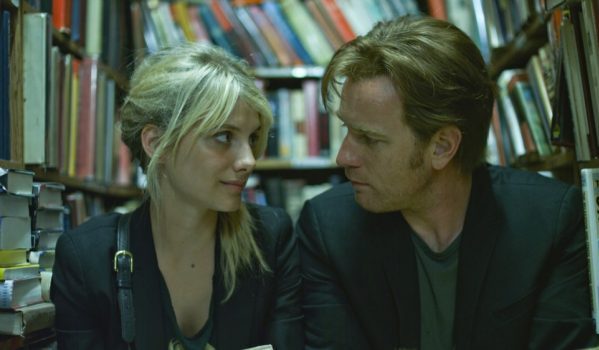
    Melanie Laurent and Ewan McGregor in Beginners

    “You point, I’ll drive.” It’s a moment that feels ripped out of the indie romance playbook. However, in just a few scenes, Mike Mills makes the moment feel like the most important interaction in Oliver’s (Ewan McGregor) life. Stylish without being unsentimental, Beginners is a beautiful look at love at the beginning and end of life. However, more than a romance, what Beginners is really about is how the people in our lives and the people in their lives and the people in their lives affect who we are and what we become. Luckily for us, it’s filled with touching moments, clever banter, and all the things that make us swoon about romances. Rent Beginners on Amazon >>>

    Brooklyn (2015)

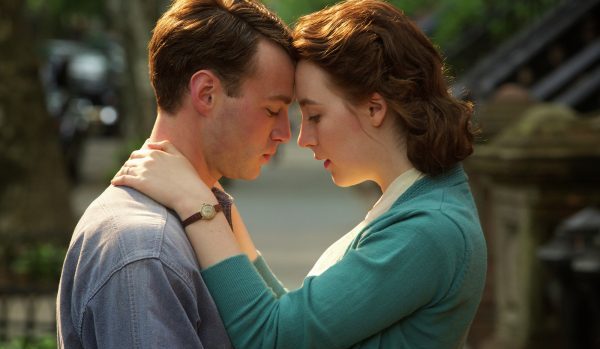
    Saoirse Ronan in Brooklyn

    The book that John Crowley’s 1950s romance is based on is a cold look at homesickness. Essentially, all the romantic potential of the plot is sucked out. However, the movie adaptation grabs all the potential (and more) and spins it into a whirling cross-continental love story. While Ellis (Saoirse Ronan) isn’t exactly the love-stricken, romantic protagonist we hope for in a movie, Tony (Emory Cohen) certainly is. And his baseball loving, Brooklyn-accented ways will charm you to no end. So, when Ellis has to make the trip back to Ireland, your heart breaks just a little with Tony’s. However, it is just a means for the couple to earn their ending — and quite an ending it is. Rent Brooklyn on Amazon >>>

    Her (2013)

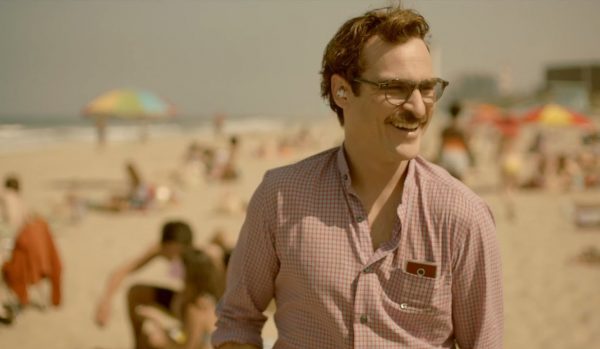
    Jaoquin Phoenix in Her

    I realize that this is a love story between a man and a computer but stay with me here. Spike Jonze’s Her is possibly one of the best-written movies of the decade. Much of the genius comes from the long two-way conversations between Theodore (Joaquin Phoenix) and Sarah (Scarlet Johansson). It is an interesting look at what it exactly is to love. Without a body, there is no sexual attraction between the two. Their love comes from their complexities and how they compliment each other. If not for the relationship between the two, watch Her for one of the best voice-over performances in a movie by Johansson. Rent Her on Amazon >>>

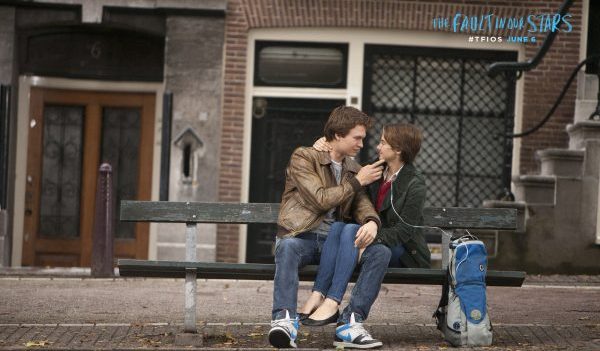
    The Fault in Our Stars (2014)

    Shailene Woodley and Ansel Elgort in The Fault in Our Stars

    Screenwriters Scott Neustadter and Michael H. Weber have pretty much changed the course of the romance genre. While their two most famous movies — 500 Days of Summer and The Fault In Our Stars are drenched in some of the worst facets of the genre — overt cynicism, grand romantic moments, a plot soaked in irony — they make it work. John Green’s novel, which the movie is based on, captured the hearts and minds of the world by delivering a young adult novel that feels wholly grounded. But the adaptation adds something more to it. The irony and cynicism are there, but they feel natural with the characters of Augustus (Ansel Elgort) and Hazel (Shailene Woodley). Watch The Fault in Our Stars on Amazon >>>

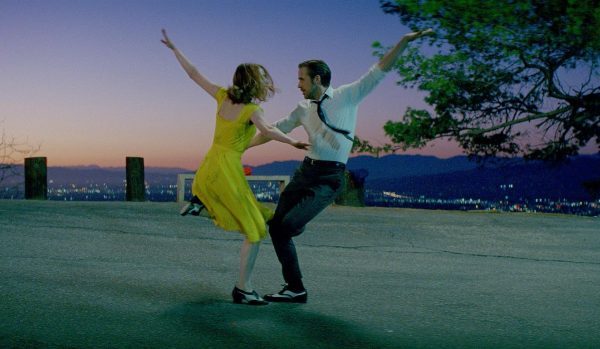
    La La Land (2016)

    Emma Stone and Ryan Gosling in La La Land

    If you didn’t swoon over the romance between Mia (Emma Stone) and Sebastian (Ryan Gosling), then I don’t know where your heart went. Damien Chazelle’s love letter to Hollywood musicals has all the moments that you love. The clever banter, honeymoon stage montage, and a dance in the stars (literally). However, what lands La La Land on this list is its ability to tap into our generation’s stance on love. At what point does love for another person lose out to your dreams. It perfectly sums up the age of alienation we’re in. While parts could be heartbreaking, the heart-stopping musical numbers are more than enough to make up for it. Check out our full review of La La Land >>>

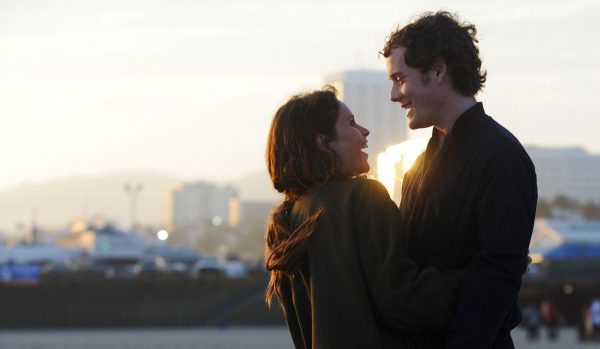
    Like Crazy (2011)

    Anton Yelchin and Felicity Jones in Like Crazy

    Of all the movies on this list, Drake Doremus’ Like Crazy is probably the most overlooked and under appreciated. However, what the creators were able to make for a measly $250k is astonishing. While yes, pieces of the plot are improbable — I don’t think the American visa system works like that — it is a means for some pretty deep introspection on relationships, particularly long-distance. Anton Yelchin as Jacob and Felicity Huffman as Anna are astonishing in their portrayal as the young couple. It’s even more astonishing when you consider almost all the dialogue in the film was improvised. It makes for an experience like none other in a romantic movie. Their connection feels genuine. That’s all we can ask for in the genre. Rent Like Crazy on Amazon >>>

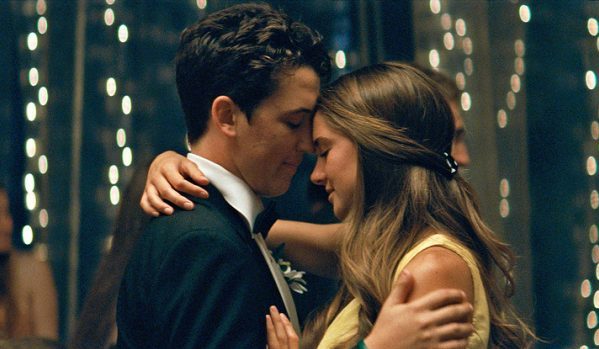
    The Spectacular Now (2013)

    Miles Teller and Shailene Woodley in The Spectacular Now

    I mentioned Scott Neustadter and Michal H. Webb earlier for The Fault in Our Stars. As I explained they’ve nailed this genre by embracing its worst elements. However, with The Spectacular Now, they subvert our expectations by serving an understated look at the senior year relationship between certified asshole Sutter (Miles Teller) and the sweet girl-next-door Aimee (Shailene Woodley). The great Robert Ebert put it best. “here is a lovely film about two high school seniors who look, speak and feel like real 18-year-old middle-American human beings. Do you have any idea how rare that is? They aren’t crippled by irony. They aren’t speeded up into cartoons. Their sex lives aren’t insulted by scenes that treat them cheaply […] What an affecting film this is.”

    Weekend (2011)

    Tom Cullen and Chris New in Weekend

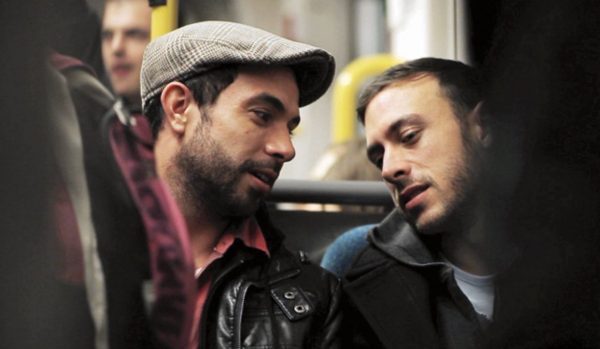
    Two characters, one set, and a weekend. That is the simple setting for Andrew Haigh’s near masterpiece Weekend. For years, Brokeback Mountain was the representative for gay romances. However, Weekend feels more timely. The premise is simple, Russell (Tom Cullen) and Glen (Chris New) meet at a club and have an immediate connection. However, with just the weekend to decide whether they want to become something more, the movie breaks off into an epic two-person conversation about love, identity, and fear of the unknown. It’s romantic without being sentimental, realistic yet poetic, small but endlessly complex. It’s that movie that comes along once in a while that feels intimate, yet endlessly important.

  • The Revenant Movie Review — A flawed, but well-crafted survival

    The Revenant Movie Review — A flawed, but well-crafted survival

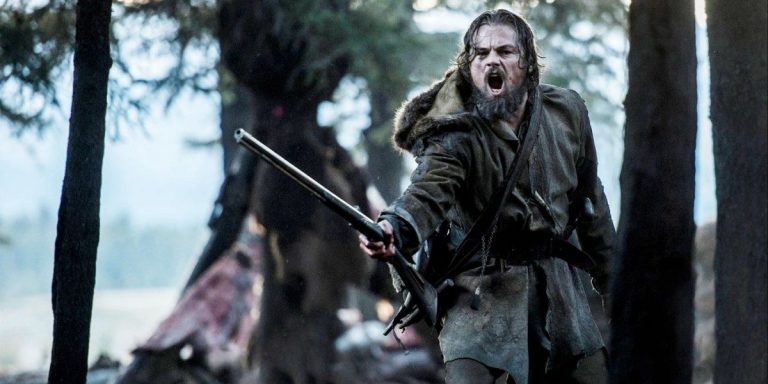
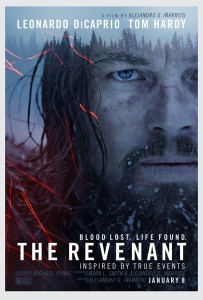
    revenant-leoThere’s something to say for good filmmaking, and that’s what The Revenant is — good filmmaking. It is a film that comes alive in its cinematography, editing, and sound. However, I think it’s the restraint on these factors that takes it to great, and at times, impossible filmmaking. Starring Leonardo DiCaprio and directed by last year’s Oscar winner for Best Director Alejandro González Iñárritu, The Revenant follows the true story of Hugh Glass (DiCaprio), who goes on a journey of survival and revenge. There are films that really shouldn’t be researched before watching, and this is one of them. However, because of the high-profile nature of the film — thanks to the fact that Leo might actually finally win an Oscar — that has largely been impossible. If you can’t bear it, take a look at the trailer, however, if you were somehow able to dodge anything about the movie, I would go in with fresh eyes.
    Despite my plea in the last paragraph, I am going to talk about a scene in the film. The first one to be exact. It covers a battle between a Native American tribe and the group of hunters and trappers that Glass is working with. The film opens with a steady, but off-putting shot of pristine wilderness. Off-putting because of its calmness — a feeling you’ll be grasping for throughout the movie — and because of the fact that most of the movie was filmed using natural light.


    With all respect due to DiCaprio, the real star of this film is the cinematography by two-time Oscar winner Emmanuelle Lubezki whose work in the film rivals his own in “The Tree of Life.” While his work in his two winning films — “Gravity” and “Birdman” — are truly outstanding, his work in this film is the kind that will be taught to future generations of filmmakers. Battling with a frigid temperatures, Lubezki decided to film solely with natural light.

    “We wanted to make a movie that was immersive and visceral… The idea of using natural light came because we wanted the audience to feel, I hope, that this stuff is really happening.”

    -Emmanuelle Lubezki

    This decision alone elevated the film to not only become a story of revenge, but that of an appreciation and fear of nature’s force. It heightened the stakes and helped enhance the performances by letting them take the forefront, rather than hiding expressions behind studio lights.

    Not only does this scene establish beautifully the stylistic tone of the film, it shows reverence for nature, which is both a beast and ally in the movie. That is until it is disturbed by Glass and his son. We then jump to the campsite where the rest of the group is camped out. An eeriness hushes over the group when they catch wind that they are about to be attacked. So begins an epic one-take shot of the battle that rivals Lubezki’s own work in “Gravity.” It’s this tension, followed by pure and unadulterated violence, documented in a sure and gorgeously directed manner that perfectly sets up the film.

    So begins a tale of survival, revenge, spirituality, life, and death.

    Despite the absolutely thrilling first two acts, the film loses its footing in the third — which could be attributed to the fact that the film almost wasn’t done in the first place. Where the first two acts flowed with sweeping one-take shots, natures own white noise, and the gripping expanse of both the plot and the environment, the last feels clumsy, spastic, and over-produced.

    There are performances, then there is what DiCaprio did, which is dedicate himself to his art. His performance is one of brute force that is only enhanced by the fact that he has very little dialogue, which is spoken in two languages. In very few films has DiCaprio disappeared into a role, but this is the first that he has truly been immersed.


    That is not to take away from the phenomenal work done by Tom Hardy, Will Poulter, and Domhnall Gleeson (who is having an amazing year with “Brooklyn,” “Ex Machina,” and “Star Wars” on his filmography.

    My biggest criticism of “The Revenant” is that the overall plot is really not there. It’s emotionally flat and other than the revenge aspect, there’s very little to follow. When the film actually does show any semblance of a plot, it feels clunky, which is why the third act fell so badly.

    “The Revenant” can be seen in many ways. A period piece, a revenge film, a survival film, a “bro” film. However, the one vein that runs through all of these classifications is its level of difficulty and its level of success despite. Seemingly impossible one-take shots, a surprisingly emotional arc, and gorgeously realized design, “The Revenant” is one of those films that you leave the theater not being able to speak until you leave out of respect.

    It has its flaws. Its grand visuals are sometimes bogged down by self-important emotional drives, its restraint sometimes wasted in repetitive indulgence, and its last third rushed. However, it’s easy to get lost in story, mostly thanks to DiCaprio’s performance. Will you leave the theater as satisfied as you’d hope? Most likely not. Its epic scope is somewhat squandered towards the end and what should be an emotionally resonant story ends up feeling flat.

    6/10

    Buy or Rent The Revenant on Amazon!

  • 10 Cloverfield Lane Movie Review — A Hitchcockian thriller with a twist

    10 Cloverfield Lane Movie Review — A Hitchcockian thriller with a twist

    10 Cloverfield Lane easily one of the best early movies of the year with nail-biting tension that rivals Hitchcock himself

    I think Cloverfield is a movie that got better with age. Despite the questionable decisions of characters and odd editing choices, it was a generally entertaining disaster movie. However, its “spiritual sequel” is changing the way we see franchises. 10 Cloverfield Lane has the same DNA as Cloverfield. It has the same mood, but it is not found footage or directly connected to the original in any way. It is simply placed in the same universe. However, I wouldn’t call 10 Cloverfield Lane a monster movie.

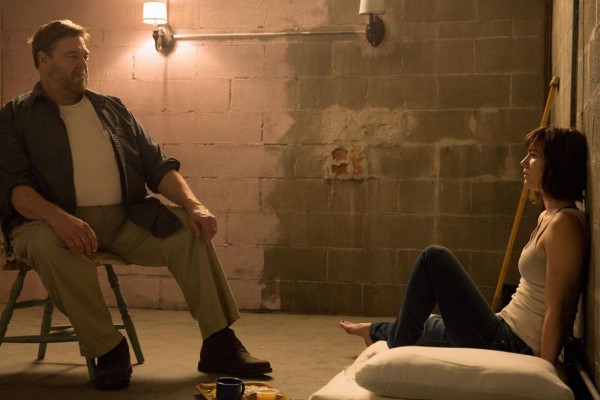
    10 Cloverfield Lane tells the story of Michelle (Mary Elizabeth Winstead), a young woman who never seems to stop running away from her problems, as she leaves New Orleans after an argument with her boyfriend. She gets into a horrifying car crash (and I truly mean horrifying) and wakes up shackled to a bed in a concrete cell. She is told by her captor, Howard (John Goodman) that the country has been attacked and that the air is toxic. He pulled her from the wreck and brought her to his fallout bunker that he has been developing for years. He also casually drops that they may be in there for 1-2 years. From there, trust is a currency between Michelle, Howard, and the bunker’s third occupant, Emmett (John Gallagher Jr.). The latter two are trying to determine whether Howard is telling the truth or whether he is a crazed man that is head deep in his own delusions.

    That last sentence is just one comparison to draw to Hitchcock’s Psycho. Outside the obvious fact that both films follow a woman who is running away from her problems, stylistically director Dan Trachtenberg heavily borrows from Hitchcock. The opening scene is the best example. The first 15 minutes or so of the movie is almost completely devoid of dialogue and the first five is scored with an epic, sweeping orchestral overture by Bear McCreary, who is best known for his work in television. The entire story is told through visuals. We don’t know why Michelle is running away right at the beginning, but we know she’s frantic. It’s not until we hear a call from her boyfriend (voiced by Bradley Cooper), that we know why she’s running away.


    Also, just like Hitchcock, Trachtenberg pays as much attention to sound as he does the absence of sound, which is best exemplified in the opening sequence when the music drops out as Michelle stops at a gas station. She knows something is off and so do we.

    The movie is structured like a three-actor play. It was filmed chronologically, which I think added to the performances. Mary Elizabeth Winstead seems to elevate the material she’s given. With movies like “Final Destination 3” and “The Thing” on her resume, she’s easily the best part of either of those movies. So when she’s given great material like in this movie or in the Sundance movie “Smashed,” she really shows her skills as an actress. She show’s Michelle’s insecurities, but also hints at moments of bravery. She’s the best kind of protagonist because you root before because you truly care about her rather than being forced to care about her. It’s also refreshing to not have to yell at the screen when your main character does something stupid.

    John Goodman, the greatest supporting actor as some have called him, perhaps gives one of the best performances of his career. So much of the film hinges on whether or not you trust Howard. And trust me, Goodman does an incredible job making you question yourself. He is legitimately terrifying but has enough depth for you to understand his internal struggle. He grabs you, shakes you, and leaves you still questioning what happened to Howard to make him this way.

    With two heavy hitters to contend with, John Gallagher Jr. held up as the heart of the group. Emmett, whose journey into the bunker seems almost as hectic as Michelle’s, demonstrates the movie’s ability to balance so many genres. His line, “I live my life in a 40-mile radius,” sums up this theme of regret that runs through the character study vein of the movie.


    However, the movie itself is hard to classify. Yes, it’s a character study, but it also works as a psychological thriller, horror, and sometimes even a comedy if you look at the camp of it. 10 Cloverfield Lane is one of the few great early year movies. However, there’s so much in play that made it that. Its adaptation from its original screenplay that was titled “The Cellar” also stripped away some of the inevitable twists that are so often engrained in psychological thrillers and opts instead to use its characters to ratchet up tension. Is the Cloverfield connection really necessary? No. Not by a long shot. But that’s what makes the movie even more satisfying in the end. “10 Cloverfield Lane” shows that sequels can truly standalone without anything owed to its predecessor. Take note, Hollywood.

    8.5/10

    10 Cloverfield Lane is available on DVD, Blu-Ray, and digital on Amazon!

  • Hush Movie Review — Another slam dunk for Blumhouse

    Hush Movie Review — Another slam dunk for Blumhouse

    Mike Flanagan follows-up Oculus with an equally menacing and thrilling movie in Hush

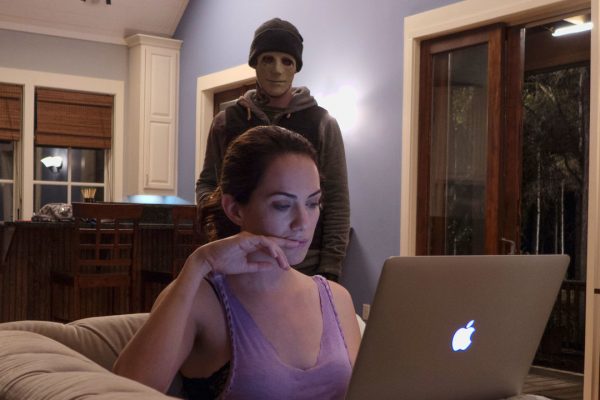
    Blumhouse Pictures has become a horror-movie machine and the latest one off the conveyor belt is Mike Flanagan’s Hush. Most people were probably introduced to Flanagan after his second feature Oculus, a movie that we loved. While Hush strips out the supernatural elements that Oculus had, what it maintains is the dread that made it so successful. Both take place in pretty much a single-setting with limited characters, but it’s that aching that there’s something around the corner or behind you that make both must-watches.

    Hush introduces us to Maddie (Kate Siegel), a deaf and mute author living in the woods writing her next novel. She is essentially isolated save for her cat (appropriately named “bitch”) and her neighbor and friend Sarah. It is the perfect location for a psychopathic murderer with a bow and arrow to stalk his prey and that’s exactly what Maddie’s unnamed assailant (John Gallagher Jr.) does (I’ll be calling him “The Man” from here on out).

    However, what makers this movie different from You’re Next, another home invasion movie that I love, is that the man would easily be able to get into the house, but doesn’t. Instead, he toys with her.Unlike You’re Next or Aubrey Hepburn’s Wait Until Dark, the man isn’t seeking anything. He assaults her both physically and psychologically. He is simply there to terrorize, which makes him all the more terrifying. He is a simply psychopath.


    Hush is not the most original in its concept. However, what it lacks in originality it makes up for in pure technical achievement. The editing and cinematography assist in the film’s goal to set unease and the production design makes you fear that this could happen in the most peaceful of places. Yet, it’s the sound design that really elevates the craft. Since Maddie is deaf, it’s expected that the movie would lack dialogue. But what Flanagan does instead is play with noise. For example, we watch the opening in two perspectives. First, with sound and what we would normally expect when someone is cooking a dinner. Then, we hear it from Maddie’s perspective, which is unsettling and reminds us of her isolation and disadvantage in the situation.

    Although it would have been great to have a deaf actress play the lead role, co-writer Kate Siegel is alluring enough to put us on her side and actually cheer whenever she has a victory, no matter how small. However, the clear revelation here is John Gallagher Jr. who turns in yet another great performance this year after stunning me in 10 Cloverfield LaneDespite his average stature, he towers as a psychopathic villain, which is refreshing after his string of nice guy performances.

    Hush isn’t reinventing the wheel, but it is proving that the genre still has legs. If you’re looking for an entertaining and knuckle-whitening thriller, then you won’t be disappointed.

    6.5/10

  • Eye in the Sky Movie Review — A Taut Political Thriller and One of the Best Films of the Year

    Eye in the Sky Movie Review — A Taut Political Thriller and One of the Best Films of the Year

    A pitch-perfect cast, screenplay, and story make Eye in the Sky one of the best — if not the best — movie of the year

    There are thrillers, and then there are thrillers like Eye in the Sky. What kind of thriller? It’s one that’s not just a treat for the eye but for the brain. It’s one that understands that less is more. It’s one that doesn’t compromise story for dramatics. It’s one that is so effective that not only did it keep me on the edge of my seat, it kept Brian and I in a morality debate after the movie that mirrored the debacle that the characters themselves were having.

    Told in what is essentially real time, Eye in the Sky follows the multiple people involved in making the decision to launch a drone strike on a compound containing numbers two, four, and five on the British most wanted list in Africa. However, to complicate matters, a little girl is standing within the blast zone. Even worse, the occupants of the compound are preparing for a suicide bombing. From the government to military to the drone pilot himself, everyone has a hand in deciding whether or not to risk the life of one to save the life of many. It’s a classic morality tale, but it’s told in a way that will even make you question your judgment.


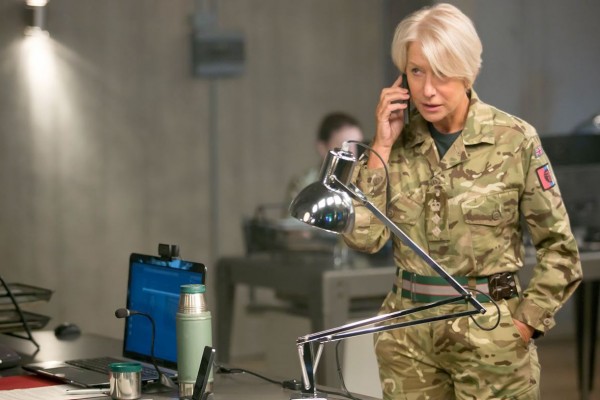
    In all, the large ensemble can be split up into two camps: the military and the government. On the military side, Colonel Katherine Powell (Helen Mirren) is in charge of an intelligence division that is tracking two British citizens and one American citizen who have become radicalized Islamic extremists in Kenya and members of Al-Shabaab. With the help of American 2nd Lieutenant Steve Watts (Aaron Paul), who is piloting an unmanned drone, she tracks them down to a safe house where they are preparing for a suicide bombing.

    Originally a capture only mission, Powell realizes the only way to prevent a suicide bombing and stop the these terrorists is to elevate the mission to a kill order. However, like any drone strike, there is a long chain of higher-ups that have to have a say in deciding. This brings in the other half of the ensemble, which is led by Lieutenant General Frank Benson (Alan Rickman in one of his last performances). Along with members of COBRA (England’s equivalent of our war room), he must determine whether the collateral damage is legal and politically maneuverable — will they be able to control the propaganda war?

    The decision seems clear. That is until a little girl makes her way into the blast zone.

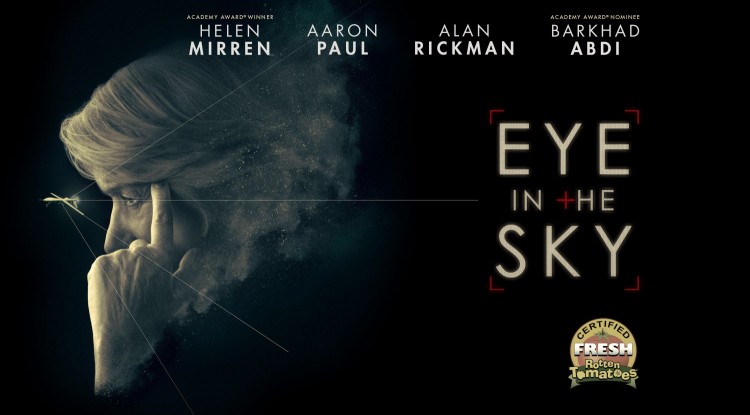
    Eye in the Sky poster

    This little girl’s name is Alia. Throughout the movie, we watch her and her family go throughout their daily lives. Obviously, it was a smart move to humanize Alia and her family without treating her as actual collateral damage. What Eye in the Sky does so intelligently is contextualize her in the world she’s living in. Any filmmaker would have humanized her. Not every filmmaker would show that she is affected by the war in a way that we couldn’t even imagine.

    We are treated to an incredible and lengthy decision-making process that affects everyone involved in different ways. Heart, brain, morals, ethics — all are considered. Colonel Powell is an interesting character, in particular, because she has the attitude of shoot first, ask questions later. For her, there isn’t a question of the risk. She sees her target, one that has affected her personally, and will do anything in her power to stop it. On a side note, it’s refreshing because her gender doesn’t come into play here. The part could have easily been played by a man and still worked just the same. It’s gender-blind casting at its best.

    Then, there is Lieutenant Watts and his US Air Force colleague Carrie Gershon come from the place of the heart. They are the trigger. However, they are almost powerless to the decision that comes from the brain, COBRA. They come from more political motivations, but morality comes into play as well. It’s an intricate puzzle of characters that create one of the greatest discussions ever committed to film.


    The screenplay, which is by BAFTA winner Guy Hibbert, is an exercise in efficient storytelling. He doesn’t bog down the story with unnecessary personal details — except for one involving Rickman’s character which greatly affects your perception of his character. The dialogue is fast and smart, and the characters are explored so deeply, despite spending little time with each. We know their motivations, and we know why they are making the decisions they are making. The cast, in particular, Mirren, Paul, Rickman, and Fox, does much of the heavy lifting on that part. And director Gavin Hood does a beautiful job capturing the moments in the film that truly matter and stitching together the narrative (that involves footage from the drone and surveillance cameras) in a way that makes it move a mile a minute.

    Nevertheless, what makes Eye in the Sky so brilliant is not the tight screenplay or the ambitious narrative or the phenomenal performances across the board; it’s the careful study of this one decision from multiple points of view that makes it one of the best — if not the best — movie of the year. A lesser director or screenwriter might have fumbled their opportunity to make this plot meaningful without being condescending. Instead, the team behind Eye in the Sky adeptly blur the line between good and evil and what constitutes a necessary evil.

    It’s unfortunate that this movie didn’t get in front of the audience it deserved. If it did, I’d imagine that it’d be a shoo-in for a Best Picture nomination and several others. However, it does please me to know that this level of filmmaking still exists, and that this type of storytelling is one that hasn’t been quite abandoned. It’s entertaining as both a political and war drama. But it’s the movie’s balancing of both that elevates it to a level that few movies are able to achieve. In the end, the movie leaves the question with you: how far do you go when it comes to war. 

    9/10

    Eye in the Sky is available on DVD, Blu-Ray, and digital on Amazon!

  • Hell or High Water Movie Review — A modern western with four great lead performances

    Hell or High Water Movie Review — A modern western with four great lead performances

    Hell or High Water is an entertaining visit into the western that has a modern flair and characters to make it a memorable entry.

    Hell or High Water is an interesting movie it’s not really a crime thriller. In fact, the heist scenes felt like an afterthought — save for the centerpiece climax. What it’s really about is relationships, how we interact with the people around us, and how are actions are indicative of our experiences. Led by four truly fantastic performances, Hell or High Water is a modern western that feels so in and of its time. Though, it also feels like its roots are dug deep into the genre.

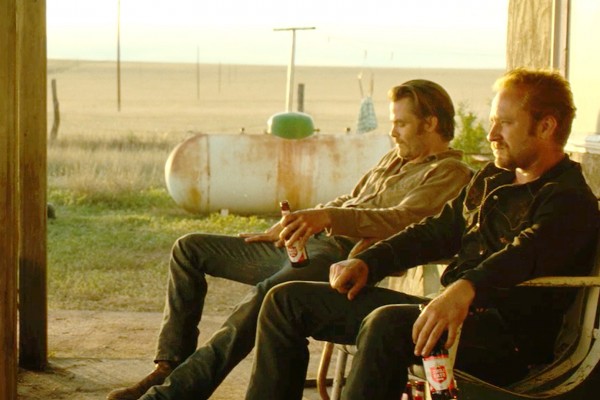
    Hell or High Water tells the story of brothers Toby (Chris Pine) and Tanner Howard (Ben Foster). Their family farm is being threatened with foreclosure following their mother’s passing because of a reverse mortgage that was given out by Texas Midlands bank. With only a few days until the bank seizes the property, the brothers go on a series of bank robberies – Texas Midlands banks to be precise – to pay off the mortgage. However, close on their tail are Texas Rangers Marcus Hamilton (Jeff Bridges) and Alberto Parker (Gil Birmingham).

    Check Out: “La La Land” Movie Review: A surprisingly profound story about dreams and disappointments


    What makes Hell or High Water so endearing is that it carefully treads on the line of satire. I’ve never been to West Texas, but if I had to imagine what it was like, it would probably be this ridiculous version. People say things like “if I can find a rope short enough” and “you’re not even Mexicans!” Even more hilariously, literally every single person has a gun.

    Another element that takes Hell or High Water from entertaining to a smart piece of film is it’s not so subtle subtext about recession-era America. Small towns, big banks, and unpayable mortgages have become the key actors in the housing bubble burst. Just ask Margot Robbie while she sits in a bathtub. While this is every bit a crime movie, that theme shines through.

    However, this is also where my criticism lies. While subtlety usually isn’t the forte of westerns, Hell or High Water really hits you over the head with its themes. From giant flashy bankruptcy billboards to lines that all but say “stick it to the man,” the film doesn’t leave much to the imagination.

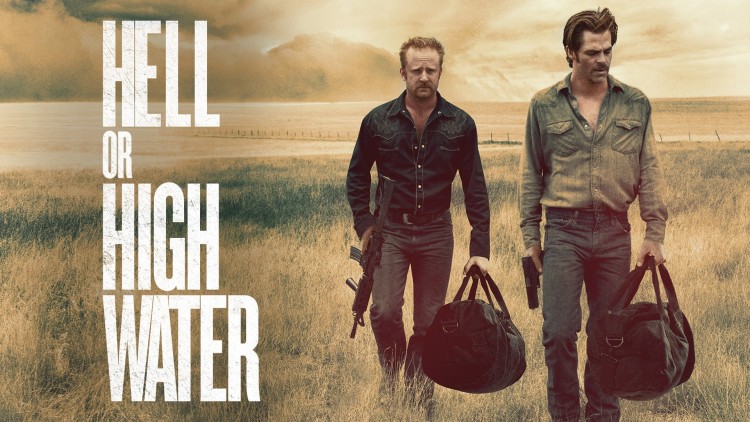
    hell or high water movie review

    What does show a little subtlety are the scenes between characters. After all, this is a movie about two partnerships. The relationship between Toby and Tanner isn’t one built on their experiences together. If anything, this spree of bank robberies is their first experience that really brings them together. Their bond is more instinctual. Tanner knows he has to protect his younger brother. He knows the part that he plays in their story.

    The relationship between Marcus and Alberto is both more complex and interesting. Like any western, ball-busting is expected. But the banter between these two, which is sometimes openly racist, doesn’t let on the care that these two have for each other. Though we only see a few days of their lives, the care they have for each other runs deep. You can tell that their collective experiences together have bonded them in the same way brothers are.  While much of Jeff Bridges’ performance is this outlandish stereotypical sheriff, there are some scenes of nuance.

    Taylor Sheridan, whose screenwriting debut was last year’s Sicario, isn’t the striking new screenwriter around. But there’s something endearing about the stories and characters he creates. Look at Emily Blunt’s play-it-by-the-book FBI agent who is out of her depth or Jeff Bridges’ cantankerous cop on the edge of retirement. They’re two completely different characters, but Sheridan instills a quality that feels real in both of them. That carries over to other characters in Hell or High Water, even those with little screentime. Sheridan and director David Mackenzie make the characters feel lived in. Everyone from the four main roles to the waitress at the diner felt like fleshed out people with lives outside of the timeline of the movie.

    Check Out: “Loving” Movie Review: Joel Edgerton and Ruth Negga are quietly powerful


    That being said, so much of the success of the movie has to be accredited to the four main actors. Ben Foster’s dedicated performance seems one-note, but small moments like seeing his mother’s hospital bed adds complexity. Chris Pine has never seemed like an actor in the business for the art. I don’t know if that’s true, but it seems like he took the time to perfect the character. Gil Birmingham has the hard role of playing the straight man to Bridges’ outlandish Texas Ranger. However, he handles himself with ease. But, it is really Jeff Bridges in the role that he was born to play that steals the entire movie. Long drawn out shots of his face hint at something more sincere in his tough guy facade.

    Overall, Hell or High Water works as a modern western because it is just that. It takes the elements of the genre – the cat-and-mouse chase, shootouts – and applies it to a timely setting. Unlike earlier entries in the genre, the movie blurs the line between good and bad and right and wrong. While it’s completely entertaining, it’s that added layer that makes Hell or High Water completely satisfying.

    8.5/10

    Get Hell or High Water on DVD, Blu-Ray, or digital on Amazon!

  • The Big Sick review — Funny, romantic, and one of the best comedies in years

    The Big Sick review — Funny, romantic, and one of the best comedies in years

    Real life story The Big Sick looks and feels like a romantic comedy, but is so much more thanks to its masterful writing and performances.

    “So, what’s your stance on 9/11?”

    Yes, that’s an actual line that’s uttered in the Kumail Nanjiani and Emily V. Gordon written film The Big Sick. However, in this movie, which takes a deep look at the cultural clash that often occurs for minorities in this country, the line comes off as endearing. So much of the movie is about learning about other people, their pasts, and what drives them. It’s just that in the case of The Big Sick it’s an ex-boyfriend and his ex’s parents that are doing the learning.


    Love always comes with baggage. However, it’s the way we deal with that baggage that often determines the fate of relationships. But what if you couldn’t confront that baggage head-on? Nanjiani, who plays himself in this movie, meets Emily Gardner (Zoe Kazan) after one of his stand-up gigs in Chicago — Bo Burnham, SNL’s Aidy Bryant, and Kurt Braunohler play his friends and fellow comedians. The two instantly hit it off. Kumail’s self-deprecating confidence and Emily’s youthful energy mesh perfectly. However, after spending the night together, Emily says that she can’t get involved in a serious relationship — she’s getting her masters in psychology. Of course, Kumail woos his way back into her life. There are no big romantic gestures or unrealistic proclamations of love. Still, you find yourself grinning your way through the first part of the movie.

    All the while, Kumail’s traditional Pakistani parents — his father, Naveed (Adeel Akhtar) and mother, Sharmeen (Zenobia Shroff), both actors are standouts — present him with a plethora of often comical women for marriage. As Kumail puts it in one of his sets, “In Pakistan, arranged marriage is just called, marriage.” These scenes feel isolated from the rest of the movie until Kumail’s two worlds come crashing together. It’s refreshing to see a romantic lead with a different background and different set of difficulties when it comes to family and romance.

    Eventually, Emily wonders why she hasn’t met Kumail’s family as Kumail tries his hardest to keep her and his family as far away apart as possible — his parents don’t know about her and are still presenting him with potential wives. When it all becomes too much for Emily, the pair breaks up. Things are complicated, however, when the eponymous “big sick” comes for Emily and she goes into a medically induced coma. Since no one else can, Kumail is the one that informs her parents and is there when they arrived. It goes about as well as meeting your ex-girlfriend’s parents when she has just slipped into a coma could go. Not well.

    The movie makes its shift from romance to dramedy focusing on very different people forced together by a tough situation beautifully thanks to director Michael Showalter’s masterful handling of the tone and the two best performances in the movie. Ray Romano and Holly Hunter as Emily’s parents are the kinds of supporting performances that feel so much larger than they are because they control every minute of screen time they have. As Kumail and Emily’s parents circle each other like cowboys preparing for a shootout, there are moments of understanding and education. In the most memorable scene of the film, a racist heckler disrupts one of Kumail’s sets while Emily’s parents watch on. Beth, Emily’s mom, confronts the heckler in a way that you can only imagine a bereaved mother can. Kumail looks on with surprise at her gusto, while later Emily’s parents marvel at the fact that Kumail has to deal with that kind of behavior.


    As the movie goes on, different obstacles are put into place and are handled often hilariously. And in a show of strong directing, even the smallest roles make a big impact. Akhtar and Shroff, Nanjiani’s parents in the film, are more cartoonish versions of what you’d expect his parents to be like, but it’s delightful and makes their payoff at the end of the movie even better. Burnham delivers one-liners like no other. Even roles as small as one of Emily’s nurses (Myra Lucretia Taylor) have their moments. Still, the emotional, and comedic, core of the movie still lie with Nanjiani, Hunter, and Romano. They play characters that are naturally funny so that even in serious moments they can make you laugh and cry at the same time. They, along with Showalter and Kazan, have to be credited with getting you emotionally invested in the outcome of the story, even if you know what happens in the end.

    Too often do people say a movie “saves” a genre. Mad Max: Fury Road “saved” action movies. The Cabin in the Woods “saved” horror. However, the same way it’s wrong to say The Dark Knight saved comic book movies, it’s a disservice to say The Big Sick saves romantic comedies. The Big Sick isn’t a romantic comedy. However, it doesn’t really fit into any other category either. For once, a movie wasn’t made to fit any marketing campaign. It was made to service a story. And a hell of a story it is.

    ★★★★ out of 5


    The Big Sick is streaming on Amazon Prime Video!

  • Don’t Breathe Movie Review — A tense, incredibly crafted thriller

    Don’t Breathe Movie Review — A tense, incredibly crafted thriller

    Don’t Breathe boasts impressive cinematography and direction that makes the tension almost unbearable, but makes you want to instantly watch it again.

    2016 has been quite the year for genre films with strong entries ranging from Green Room to Hushbut the one that truly unnerved me was Fede Alvarez’s Don’t BreatheIt’s a story that feels familiar. It’s a home invasion movie, except told from the perspective of the robbers. The twist, which sets it apart from the similarly premised Wait Until Dark, is that the blind man they are robbing is a fearsome war veteran with more than a few tricks up his sleeves.

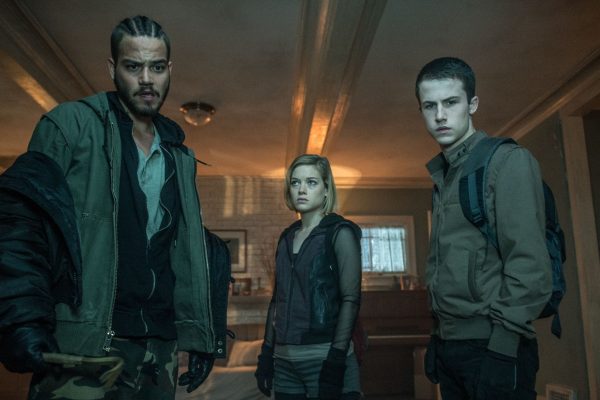
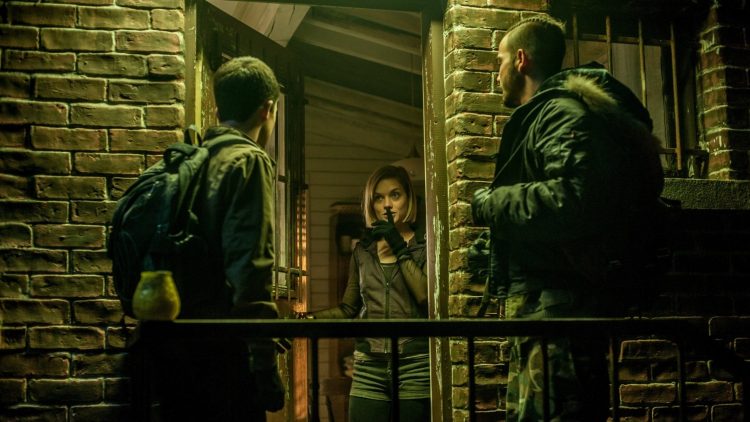
    Don’t Breathe opens with a beautifully directed scene of our three main characters breaking into a house. I love movies that can effortlessly introduce us to its characters without telling us who they are or how we are supposed to feel about them. We quickly realize that Money (Daniel Zovatto) is the young, immature leader of the group. Alex (Dylan Minnette) is more reserved and seems to be in it for the thrill rather than the actual money. Rocky (Jane Levy) imagines the upper-class lifestyle of their targets. And this is all we learn in the first thirty seconds without any dialogue.


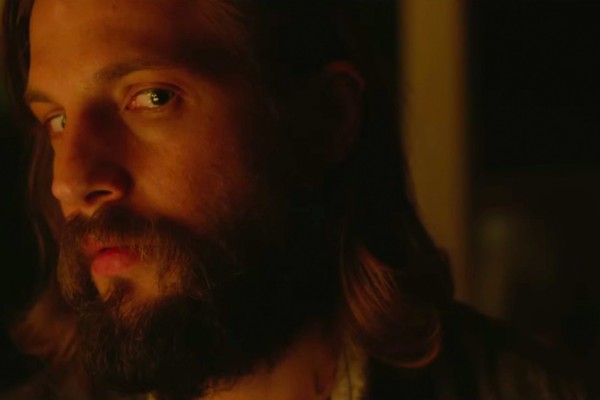
    We learn that the three are targeting houses that are protected by Alex’s father’s security company. Money sells the stolen items to a friend. After not making enough on the last hit, he suggests hitting a house in a deserted section of Detroit. However, the house is occupied by a man known as the Blind Man (Steven Lang), a war veteran that apparently has a large sum of money as a settlement. That night, after subduing his fearsome dog, the trio make it into the house. What they find is something much more terrifying than they expected – a blind man that could fight back. From there, the story is flipped on the robbers as they fight to escape the house with their lives.

    Fede Alvarez, whose feature film debut was the remake of Evil Dead, shows that he is a more than competent director. This movie got to me. The title must refer to what the movie makes the audience do. To say this movie was suspenseful is an understatement. The patience that he demonstrates is incredible. He holds shots and moments as long as he can to truly make you uncomfortable. There are some moments that the tension is almost unbearable. While it’s uncomfortable watch, the fact that he was able to make you feel that way is an incredible testament to his direction. Not only that, the jump scares in this movie aren’t outlined with egregious music cues. He allows the content to speak for itself.

    Jane Levy, Dylan Minnette, and Daniel Zovatto in Don't Breathe
    Jane Levy, Dylan Minnette, and Daniel Zovatto in Don’t Breathe.

    However, I think it’s easy to say what nearly steals all of Don’t Breathe is its classic, yet singular cinematography by Pedro Luque. The reason a lot of horror cinematography seems to fall to the wayside is that it has to serve the scares. That’s why shots that show an apparition lurking over someone’s shoulder or in the mirror have been so common. It’s so rare for a horror movie to stand out. However, what Luque does in Don’t Breathe is seamlessly merge the needs of the movie with breathtaking craft. In particular, a three-minute one-take shot – with an assist from CGI – is really the centerpiece of the film. Not only does it set up the “field of play” for the entire movie, it begins the mounting tension that the movie never truly releases. It’s very reminiscent of a similar shot in David Fincher’s Panic Room. However, while that shot feels more for the art of it, this is more intentional.

    Another scene, which has been highly publicized in the trailer, is when the Blind Man turns off the lights in a pitch black basement. Similarly to the tunnel scene in Sicario, it makes marvelous use of night vision camera – like the way they used heat vision cameras – to make the scene feel claustrophobic. The lack of music underscores the tension. It’s an incredible practice in patience and suspense.


    My small issue with the movie is mostly in the character Rocky. She quickly comes to the forefront of the movie and is our main focus. I wasn’t completely sold on her motivations for robbing the house. There are small moments where she will do something risky to get the money that came off as reckless rather than admirable. I think that it is more of an issue with the performance by Jane Levy, which is otherwise really strong. I just think that she doesn’t come off as a “good person” like Dylan Minnette makes Alex. On the other hand, Daniel Zovatto does a fantastic job as the dirtbag Money.

    Don’t Breathe is a gorgeous exercise in great directing that expertly ratchets up tension. However, it’s more complex than that. Some unbelievable and inventive cinematography immediately sets it apart from other genre films. You can even dive in further and talk about its commentary on the economic desolation of Detroit. Nonetheless, taking it at face value shows that it’s a thriller that does exactly what it’s supposed to do: leave you on the edge of your seat while you white knuckle the arm rest. Just remember, don’t forget to breathe.

    8.5/10

    Don’t Breathe is available on DVD, Blu-Ray, and digital on Amazon!