NYFF 2023 | Foe follows the fallout after a young couple receives news that one of them will be sent to space with a clone to keep the other company
The collective star power ofAcademy Award nominees Saoirse Ronan and Paul Mescal isn’t enough to save this sweaty (both literally and figuratively) lo-fi sci-fi melodrama from its own ambitions. Despite intriguing heady themes like the ethical dilemma of artificial intelligence, the moral ambiguity of cloning and rumination on relationship dynamics, its distrust in the intelligence of its audience leaves it as its own worst enemy.
The year is 2065 and the Earth is irreparably damaged. Young couple Junior (Paul Mescal) and Hen (Saoirse Ronan) are approached by even keeled and enigmatic Terrance (Aaron Pierre). He tells the couple that in an effort to save the human race, a mysterious combination of the government and private companies is sending a group of people into space for two years to understand how to survive. Junior is selected as a part of that group, which will require him to leave Hen alone for two years. But fear not, a nearly identical biomechanical clone will be left to keep her company. What could possibly go wrong?
ADVERTISEMENT
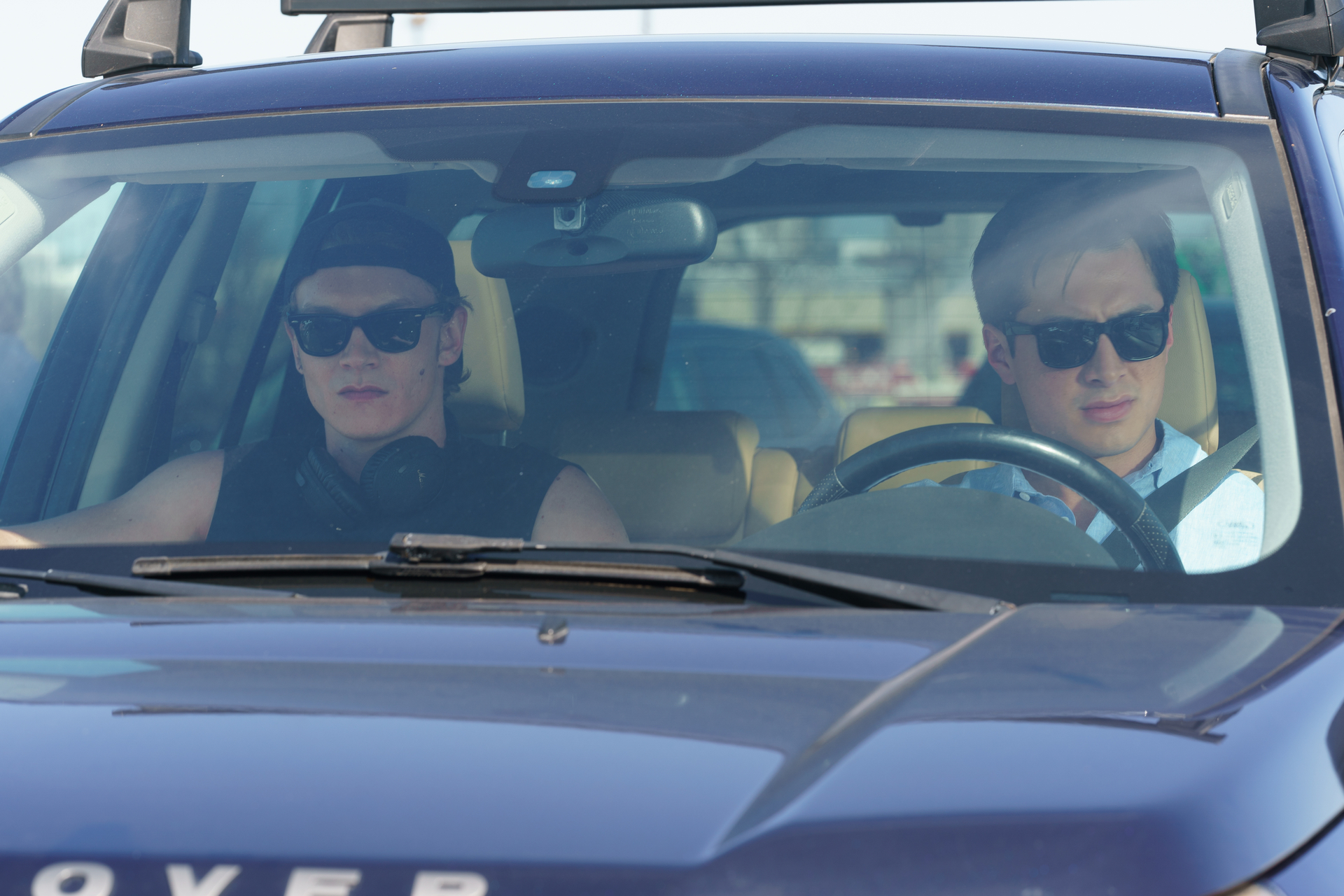
Bringing together critical darlings Saoirse Ronan (Lady Bird, Little Women) and Paul Mescal (All of Us Strangers) should’ve been a boon for writer-director Garth Davis’s Foe. Putting the star power and screen presence of two of the hottest young actors working today in a single-location barn-burner relationship drama seems like a recipe for success. I mean, a handful of morality science fiction from Blade Runner, a dash of marriage dynamics from A Streetcar Named Desire and a pinch of Hitchcockian psychological pastiche is enough to whet any appetite. But when the movie feels the need to spoon-feed you each plot point, emotion and moral dilemma with a heavy hand, you quickly lose your appetite.
It’s unfortunate considering the story, which was adapted from Ian Reid’s novel of the same name, is intriguing on its own. Reid co-wrote the screenplay with Davis. But where Reid is unafraid to be obtuse with his storytelling, like his first novel I’m Thinking of Ending Things which was adapted into a stellar psychological thriller by Charlie Kaufman, in translating the story to screen the movie over explains itself. It’s unclear whether it is a choice or for fear that the audience wouldn’t get the tale. But the fun of a twisty psychological thriller is… well, the twist. In an effort to not alienate the audience, it undercuts the narrative’s effectiveness.
ADVERTISEMENT
There’s clearly a lot on Reid’s mind. The ethical dilemma of artificial intelligence, the moral ambiguity of cloning and rumination on relationship dynamics could make for an interesting story. And taken outside of Davis’s heavy-handed direction, perhaps those themes could thrive. What we get is a sweaty (both literally and figuratively) melodramatic messy clone of a story already told well. While Mescal and Ronan are chewing the scenery with bombastic performances—screaming, crying, the works—it feels out of place in a story that could’ve been meditative speculative fiction (see: After Yang).
When Foe finally reveals itself, a reveal you probably saw coming a mile away, it’s worn you down with its overwrought anguish. Perhaps there’s some so-bad-its-good replay value to it, but why watch a clone when you can watch the better original thing.
From Beyoncé and Bernstein to Godzilla and Frankenstein, here are the best movies of 2023 that made us, as Nicole Kidman said, laugh, cry and care.
After watching over a hundred new movies in 2023, I’ve narrowed down the list to the 10 best movies of 2023. Well, perhaps not the best movies, but the ones that have stayed with me in one way or another. This year found a comfortable place in the uncomfortable, where filmmakers felt that they were able to tackle themes and stories that were once taboo in ways that are increasingly tailored to our ever-evolving hunger for unique perspectives and bizarre storytelling. My list reflects that.
To see every movie I watched in 2023 racked, go over to Letterboxd.
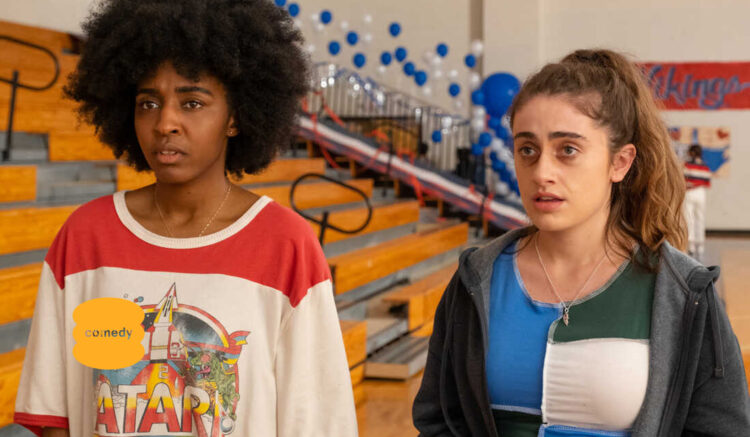
To explain Bottoms, I need to spoil it just a tiny bit. The final shot of the movie, a baroque painting if I’ve ever seen one, pulls from a classic 90s / early aughts high school comedy trope. The school football team triumphantly raises the school’s quarterback. Students rush the field dancing with joy. Our best friend protagonists make up and hold each other. However, a few added details make this unlike any high school comedy we’ve seen. The field is littered with incapacitated (and possibly dead) players and our ragtag group of protagonists are covered in blood (both their own and others’). In the background, a tree burns after recently being blown up with a homemade device. Welcome to the wonderfully weird and wacky world of writer/director Emma Seligman‘s Bottoms.
Seligman’s vision of high school in Bottoms is equal parts satiric and surreal. Like if Luis Buñel directed The Breakfast Club or Andrei Tarkovsky directed Clueless. It’s a tricky tone that Rachel Sennottand Ayo Edebiri nail with perfectly pitched performances as woefully lame high schoolers PJ and Josie. All they need is a mission. And like any good high school raunchy comedy, this mission involves getting laid: “Do you want to be the only girl virgin at Sarah Lawrence?” Best friends that stick together get laid together. At least that’s their prerogative. The absolute absurdity never relents, yet Bottoms manages to pull at the heart strings. That’s what makes it the best comedy of the year and one of the best movies of 2023.
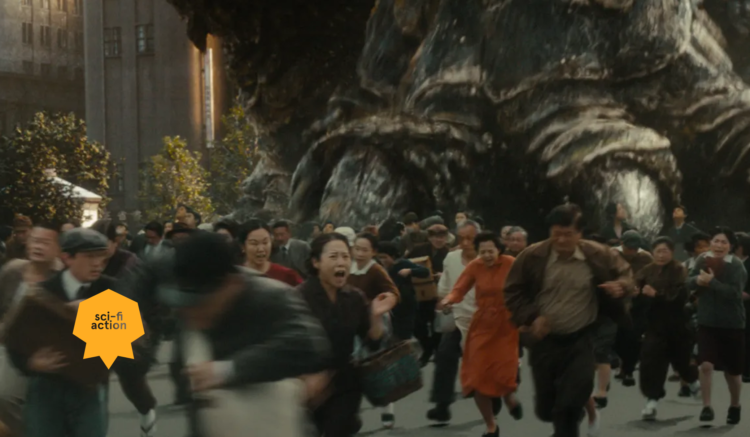
A clip from Godzilla Minus One. Courtesy of Toho Studios.
Hey, Hollywood? This is how you do a blockbuster. Just when we thought the action blockbuster was dead in 2023, Godzilla Minus One came roaring in at the final moment to save the genre. And while the spectacular giant monster destruction in the forefront has you leaning forward in your seat with bated breath — like a remix of Jaws where our ragtag group of heroes is dealing with a much much larger shark — the character drama grabs for your heart and makes the action all the more tense.
Though it’s a prequel to Shin Godzilla, the first film in Toho Studios’ reboot of the franchise, Minus One is more like a drama that happens to have a giant monster than a full-blown Kaiju movie as it follows failed Kamikaze pilot Kōichi (Ryunosuke Kamiki) coping with the fallout of the war. While some deal with the grief and trauma by looking to the future — like young suddenly-single mother Kimiko (Minami Hamabe) — Kōichi constantly looks to the past with regret. He gets the chance to right his perceived wrongs when Godzilla takes aim at the already battered country. Part-war epic, part-classic Kaiju, part-found family drama, Minus One is the perfect crowd-pleasing action movie we were craving this year.
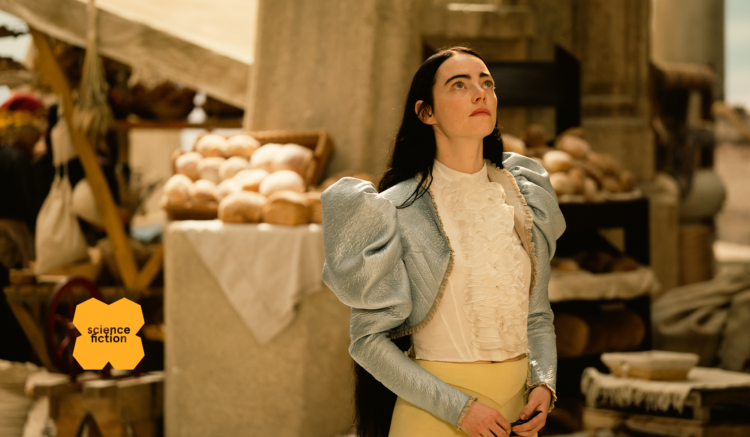
Writer-director Yorgos Lanthimos has always played in magical realism, but with his first foray into full fantasy he is able to flex his world-building like never before — and the result is as magnificent and deeply weird as we hoped.Cribbing the tale of Frankenstein, Poor Things takes place in our world (with familiar locations like Victorian-era London and Portugal), but Lanthimos imagines it as a colorful storybook full of childlike wonder that mirrors protagonist Bella’s (Emma Stone) state of mind as she comes of age after being created by Dr. Godwin Baxter (Willem Dafoe) whom she affectionally calls “God.” In classic Lanthimos fashion, Bella’s creation is deeply disturbing as Dr. Baxter uses the brain of an infant to reanimate the corpse of an adult woman. Of course, that disturbing premise isn’t without reason.
Poor Things spins up a tale of discovery both of the self and the world. As Bella comes into herself and into her sexuality, the movie doesn’t shy away from the ugliness of the patriarchal world — represented by a devilishly delightful villain turn by Mark Ruffalo — but also the pure joy it can bring to live a life unburdened by societal norms. The result is a wonderfully batshit epic that is as heartbreaking as it is uplifting.
ADVERTISEMENT
Passages
Franz Rogowski and Adèle Exarchopoulos appear in Passages by Ira Sachs, an official selection of the Premieres program at the 2023 Sundance Film Festival. Courtesy of Sundance Institute | photo by Guy Ferrandis / SBS PRODUCTIONS
When we first meet German filmmaker Tomas (Franz Rogowski), he is directing the final scene of his latest movie. We watch him as he instructs an actor to enter the scene down a flight of stairs. Then he makes him do it again… and again. Each time he notices something else wrong with the way he enters the scene. We’ll see Tomas do something similar throughout Passages, except this time to the people in his life — specifically his long-suffering husband (Ben Whishaw) and new lover (Adèle Exarchopoulos). That is expecting them to act one way— the way that is best for him and his wants — and getting frustrated when they don’t follow the script he’s written for them in his head.
Eventually, the magnetism that draws people to Tomas begins to repulse them and the gravity that kept them in orbit becomes weaker. Essentially, his life goes off script and he’s not good at improv. While Passages could have easily relied to melodramatics, Sachs keeps each character and interaction grounded. Writer-director Ira Sachs introduces us to the characters of Passages when their lives intersect and tangle into a mess of complications. By the end, Whishaw, whose remarkable portrayal of a gay man finding his strength and independence, untangles the knot and leaves us (and Tomas) flooded with emotion.
In recent years, Japanese writer-director Hirokazu Kore-eda has been interested in stories about misunderstood people from the found families of Shopliftersand Brokeror the complicated parents of The Truth or After the Storm. He continues that trend with the three points-of-view that make up his latest feature Monster as he plays with our expectations of each of the characters. The core story seems straightforward. We start from the perspective of a single mother (Sakura Ando) concerned about her son’s (Sōya Kurokawa) increasingly erratic behavior who goes on a warpath when she discovers his teacher (Eita Nagayama) may be responsible.
Kore-eda is so skilled at presenting his characters with so much depth that it’s almost impossible not to see the story from their point-of-view and think their actions are justified. In the mother’s chapter, for example, seethe with the same anger that she feels when the school brushes off her initial complaints — in a surprising bit of dark humor. But then, when we discover more through the next chapter, the seemingly uncaring school administration becomes human. Through each chapter of the triptych, our own allegiances shift, but especially in the final perspective that is as heartwarming as it is heartbreaking. Taken as three individual stories, Monster is already impressive. As a whole, it’s a gorgeous tapestry of mystery, suspense, drama and romance that begs to be rewatched.
ADVERTISEMENT
Renaissance: A Film by Beyoncé
A clip from Renaissance: A Film by Beyoncé
The brilliance of Renaissance: A Flim by Beyoncé, a nearly three-hour epic concert documentary, becomes clear just 25 minutes in. And despite the reputation (say hey) Ms. Carter has made for herself as a perfectionist, a moment of imperfection stands out. As we catapult from “Cozy” into Beyhive-favorite “Alien Superstar” the audio suddenly cuts out — and no, it’s not yet time for the mute challenge. We see as the crew, donned in shimmering silver jumpsuits jump into action. Beyoncé is unphased and even decides to gag the crowd by changing her outfit during the short three-minute interruption.
However, because we watched a vignette of the crew putting the stage together with a voiceover by Bey herself explaining the complexity of the show, we know exactly the stakes involved and the people that ultimately save the day. It’s this structure where we’re treated to some background about the tour, the album or Beyoncé herself followed by a part of the show that is directly inspired or impacted by it that makes Renaissance such a satisfying documentary. Oh yeah, and Beyoncé is the performer of our generation. There’s that too.
Sandra Hüller and Milo Machado-Graner in Anatomy of a Fall.
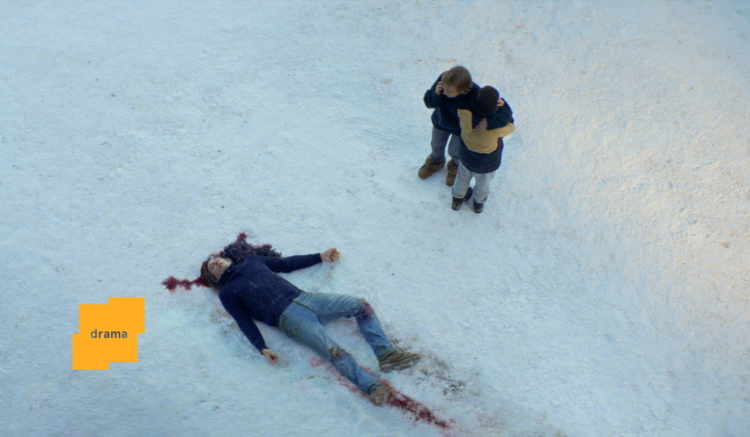
Don’t blink. You’re not going to want to miss a thing in Justine Triet’s Anatomy of a Fall. While the movie sets itself up as an episode of Law & Order: French Edition as we unravel the case of the mysterious fall of a husband and father. Was it an accident? Or did his wife Sandra (Sandra Hüller) or young son Daniel (Milo Machado-Graner) have something to do with it? As we sweep from investigation to trial, Triet gives us nearly all the clues to solve the case. However, it is still up to the audience to decide who to believe. Hüller’s remarkable performance will sway you in either direction with the smallest inflection or glance.
While structured like a standard procedural, Anatomy of a Fall pays attention to every detail. There is never a shot or line that doesn’t have a purpose, which makes the robust runtime fly by. More impressively, though, Triet is also able to throw in astute observations about marriage, parenthood and even the French judicial system — which if you don’t know is messy messy — that add to the richness of the movie. While the movie has a definitive end, rewatches can uncover something you missed that might change your interpretation of the case. It’s that staying power that makes it one of the best movies of 2023.
ADVERTISEMENT
Perfect Days
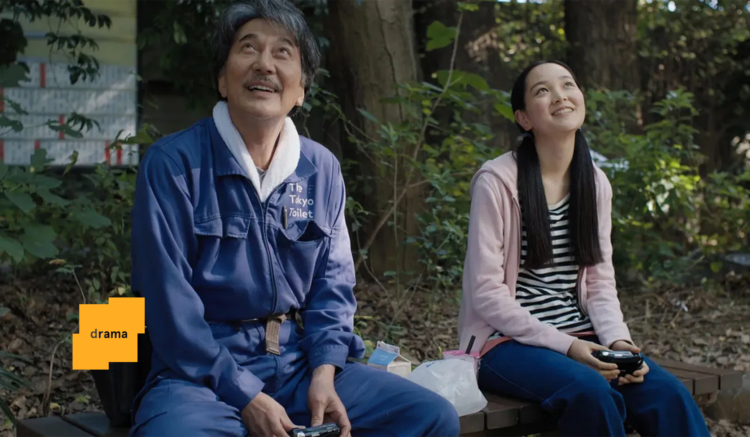
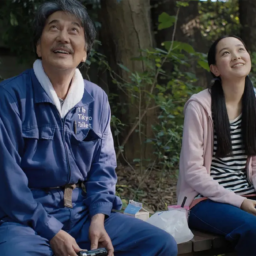
Koji Yakusho and Arisa Nakano in Wim Wenders’ Perfect Days | Courtesy of TIFF
The subgenre of day-in-the-life movies where nothing really happens yet everything is happening will get me every time — and Wim Wenders’ Perfect Days is… well, a perfect example. The way Wenders shows us Hirayama’s (Kōji Yakusho) daily routine is so comforting — the cinematic equivalent of a weighted blanket. Each morning, he wakes up in his modest apartment, makes his bed, carefully waters his plants, steps out donning blue coveralls with “The Tokyo Toilet” scrawled on the back, grabs his morning coffee and sets out on his job cleaning the city’s vast network of public toilets.
However, the magic of Perfect Days comes in the little diversions from his routine like when Mama (revered enka singer Sayuri Ishikawa) trills out a Japanese rendition of “House of the Rising Sun” or his niece arriving at his tiny apartment unannounced. These detours give us a small insight into Hirayama’s interior life, which he seems to have locked away behind his quiet contentment. We may not know much more about his world by the movie’s stunning ending, but we do learn his philosophy. And that may be the greater gift.
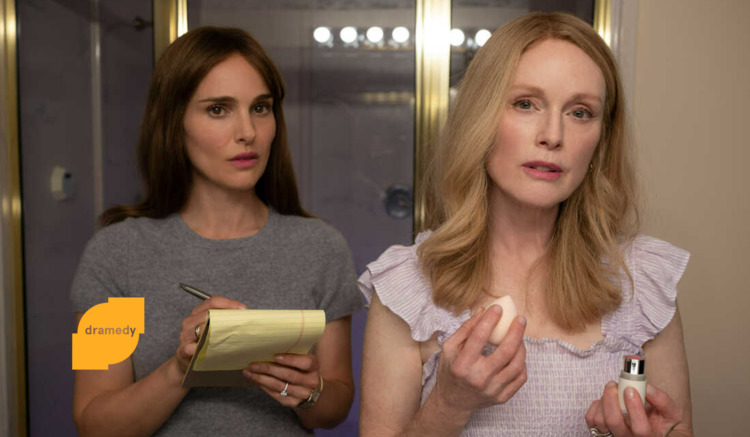
Natalie Portman and Julianne Moore in Todd Haynes’ May December. Courtesy of Netflix.
From the second Julianne Moore’s Gracie opens a refrigerator and dramatically says over a discordant chord, “I don’t think we have enough hot dogs” you understand exactly what kind of movie May December is. However, while it is a 70s melodrama on its surface filled with darkly comedic verbal and psychological sparring between Natalie Portman’s B-list actress Elizabethand Moore’s notorious tabloid subject, it never shies away from the darkness of its story.
On the surface, May December shouldn’t work with its contrasting tones of dark comedy mixed with near-parody satirical elements and sentimental dramatics that deal with trauma, grooming and sensationalism. Still it manages to find balance in a way that allows you to enjoy it without letting you get too comfortable with the sensitive situation.
Like with all of his movies, writer-director Todd Haynes allows his characters to show you their character rather than telling you. While there are emotionally resonant moments of insight like Charles Melton’s performance as a young father having a heart to hear with his own son, something as small as the way Melton carries himself that is just as affecting.
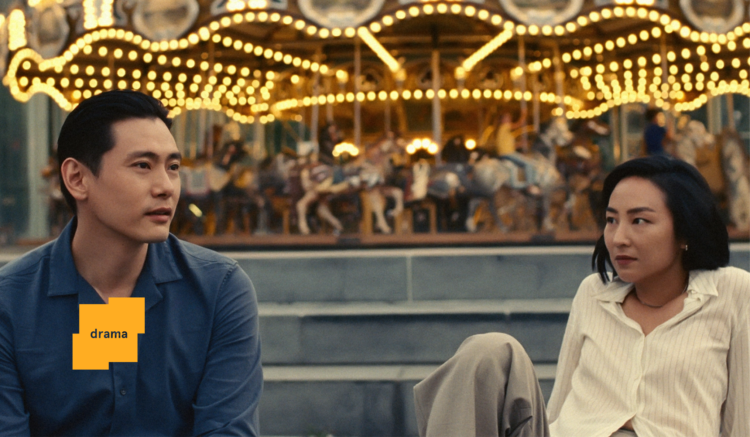
Greta Lee and Teo Yoo in Past Lives. Courtesy of A24.
Celine Song’s Past Lives has held the top spot on my best movies of 2023 list since seeing it back in January at the Sundance Film Festival — and that’s partially the movie’s own intention. Though the movie is rich in its story and characters as it follows old childhood crushes that reconnect twelve and then twenty-four years later, it’s the memories of it that linger.
While Nora and Hae Sung’s story, brought to life with stellar performances by Greta Lee and Teo Yoo, is presented as a decades-long “will-they-won’t-they” romance — complete with swoon-worthy conversations and charmingly comical banter, it’s really a story about one person stubbornly chasing a future she’s decided for herself and another avoiding a future by constantly looking back. And while the dialogue Song uses to communicate their feelings is poetic (she is a playwright after all), it’s the visual language that is the most impressive.
Song doesn’t present any easy answers, which is why the movie stays with you long after its stunning heart-wrenching but cathartic final scene. Is looking to the past avoiding the future? Is staying resolute on your future ignoring your inner child? The answer is perhaps hidden in a line from the third member of the trio Arthur (John Magaro), “You make my life so much bigger. I’m just wondering if I do the same.” Past Lives somehow achieves the same effect on its audience and that’s why it is the best movie of 2023.
NYFF 2023 | A Tokyo toilet cleaner enjoys his routine-driven simple life. But unexpected detours force him to face what is simple and what is safe.
Perfect Days is a slight but entertaining and profound day-in-the-life romp through Tokyo that meditates on the dignity of making a living, protecting your peace, and both the beauty and trappings of routine. With an impressive watershed performance by Kōji Hashimoto and Wim Wenders’ sensitive direction, Perfect Days is a simple near-masterpiece.
There’s something about the way Wim Wenders’ Perfect Days shows us a day in the life of the its middle-aged hero Hirayama (Kōji Hashimoto) that is so comforting — the cinematic equivalent of a weighted blanket. Each morning, he wakes up in his modest apartment, makes his bed, carefully waters his plants, steps out donning blue coveralls with “The Tokyo Toilet” scrawled on the back, grabs his morning coffee and sets out on his job cleaning the city’s vast network of public toilets — something the people of Tokyo have always taken pride in. His work is also something Hirayama takes pride in. His coworker Takashi (Emoto Tokio) even marvels that he brings his own equipment to work. “How can you put so much in a job like this?” he asks. Like most of their exchanges, Hirayama is quiet.
ADVERTISEMENT
But that doesn’t mean that he’s silent. There are moments of pure bliss. Like when he steps out of his apartment and looks at the clear sky or teaches a British woman how to use the high tech bathroom — the glass opaques when you lock the door! — a soft smile finds his way to his face. Even when things aren’t great he seems content — a drunk business man knocking over the “Wet Floor” sign or an angry mother snubbing him when he finds her lost son. And the movie continues on that way for a large portion of its runtime introducing new elements to his daily routine that slowly unlock the mystery of Hirayama’s past.
But it’s never boring. The same way that Kelly Reichardt finds texture in the slow burn of her movies — particularly First Cow — Wenders finds small moments of magic in Hirayama’s days. One of the most impactful is his nightly drink at a local bar run by a woman affectionately known as Mama (revered enka singer Sayuri Ishikawa) trills out a Japanese rendition of “House of the Rising Sun” that punctuates the melancholic tone to the movie.
It’s in these diversions from his routine where Perfect Days fully captures you. One day, Takashi’s “girlfriend” (Aoi Yamada) comes to visit him at work (“A real ten out of ten”) as he would say. But after his motorcycle fails to start he convinces Hirayama to let them drive his van to the bar… with Hirayama in the van. The two young would-be lovers are fascinated by him and his collection of American cassettes ranging from Van Morrison to Lou Reed, which provide a perfect vibey soundtrack. But it’s when Takashi lets slip “being alone at your age” before trailing off. Hirayama doesn’t take much from it, but we do.
However, the movie takes its biggest turn when Hirayama’s precocious teen niece (Arisa Nakano) shows up at his door step. It’s a bit of a shock for us as he comes off a detached loner. To learn he has family just adds to his depth. We’ll learn a bit more about why he chose this life of protected peace. His niece, a mirror to himself in some ways, forces him to look at his life and choices from a birds eye view and allows us to do the same. But it also gives us insight to his philosophy as he tells her, “Next time is next time. Now is now.”
The final shot is a marvel — and puts Hashitomo’s performance in contention for one of the best of the year. Like the rest of the movie everything and nothing is happening at the same time. Wenders captures the feeling of walking or driving through your city at golden hour. Everything is the same but looks different. It feels nostalgic, melancholic but — and maybe this is Wenders’ point — meaningful. As Nina Simone croons out “Feeling Good” over an unbroken long shot of Hirayama’s face illuminated by the sun a sense of satisfaction creeps over us — like when you reach the final perfect line of a simple poem. Perfect Days is a well-constructed meditation. Simple, relatable but will follow you for the rest of your day.
Crossing follows a retired schoolteacher who enlists the help of a young 20-something to find her trans niece who disappeared years ago.
Crossing is a sweet, sensitive and effortlessly charming found family drama that follows three vastly different people as the grapple with the truths of their pasts, presents and futures. In just 105 minutes, writer-director Levan Akin so firmly wins you over that you’ll miss the characters as soon as it cuts to black. Filled with joy (particularly queer joy) amongst the realities of the world, Crossing is a beautiful and moving testament to change and one of the best movies of the year.
Crossing will be released in select theaters on July 19. It will stream worldwide on MUBI on August 30.
In the final scenes of Crossing, the new film from Georgian director Levan Akin, we say goodbye to each of the three characters we’ve been following over the course of a fateful week. One by one, we watch them step into an uncertain but hopeful future. And yet my heart ached. Not for the trio, they find themselves in a better place than we found them having been profoundly changed by the events of the film. Rather I was going to miss spending time with them in their world, like when your favorite TV show airs for the final time. It’s an impressive feat for 105 minutes but a testament to Akin’s ability to pour empathy through the screen—a reason it is one of the best films of the year.
ADVERTISEMENT
While we spend equal time with each of the three characters the story begins with Lia (Mzia Arabuli), a retired school teacher who we meet on a mission to find her trans niece Tekla as a promise to her dying sister. On that journey, she quickly meets Achi (Lucas Kankava), a quick-tongued 20-something living on the outskirts of the Georgian capital Batumi with his less-than-agreeable older brother (“put a shirt on around my wife,” he nags). When he meets Lia, she sees her as his way out, which is convenient as he says he knew her niece and where she lives in Istanbul just across the Turkish border.
There’s an easy charm between Arabuli’s old curmudgeon Lia and Kankava’s young eager Achi—not unlike Paul Giamatti and Dominic Sessa recently in The Holdovers—as it turns into a road trip movie complete with quippy banter and unexpected snafus—like when Achi books them into a seedy hostel, much to Lia’s dismay. Their search for Tekla hits a dead end when the people in the apartment complex where Achi believes she lived, which is tucked in a rundown neighborhood where much of the city’s LGBTQ+ community resides, don’t recognize her name.
Deniz Dumanlı in Crossing. Courtesy of MUBI.
ADVERTISEMENT
Left to wander and search an unfamiliar city, Lia and Achi find themselves on separate journeys of discovery—Lia, an older woman of the past reckoning with a newfound present, and Achi, a boy of the present looking for a future. However, there’s a third variation of this journey. Intercut with Lia and Achi’s story is trans NGO lawyer Evrim’s (Deniz Dumanlı). Her journey is one of a woman of the future living in the present. As we follow her day-to-day interacting with friends, going on a date with a handsome taxi driver and trying to change her gender to female on her government documents (“you have to get this form signed by every department in the building,” a clerk tells her, which she happily does despite its ridiculousness) we get a deeper understanding of her way of life—and that of many queer people in Turkey.
And while it doesn’t shy away from the hard truths of being queer in a country where LGBTQ rights are actively diminished, Akin lets Evrim experience her life with joy and triumph—even if it has to be done largely in the shadows. Dumanli breezes through each scene with lived-in confidence that feels like safety for the audience. It puts Lia and Achi’s own turbulent journeys into perspective although they get to experience their moments of joy too.
As Achi wanders the streets of Istanbul looking for work—and a way to stay in the country—he encounters a group of young people who show him companionship and kindness—and more importantly help feed his seemingly endless appetite. Lia encounters moments that remind of her past and the free woman she used to be. On one night, where she leans too heavily on her alcohol vice that we see throughout the movie, she recounts how she used to be the best dancer in her village before twirling in the street amongst the crowd. Where she usually has a scowl we finally see a smile and Achi understands her just a bit more. It seems understanding is Akin’s goal with the entire movie.
ADVERTISEMENT
It’s the small moments of intimacy that bring Crossing to greatness like Achi bringing Lia a pastry after he disappeared for a night, Lia dancing in the street with a group of strangers or Evrim bringing a small local boy to get his haircut. They’re small gestures that speak to the movie’s humanity.
In many ways, Crossing falls into the familiar “chosen family” dramedy genre with movies like Short Term 12 or Hirokazu Kore-eda’s brilliant Shoplifters. Each character’s effortless charm wins you over while their stories move you with profound emotion. At the end, Lia finds Tekla, but perhaps not in the way that you’d expect. It’s in those stunning final scenes that you realize Akin has deep knowledge of the story he’s telling and the redemption that his characters are after.
A young FBI agent tasked with tracking down a mysterious serial killer called Longlegs is taken down a dark hole that she might not be able to crawl out of.
Something feels off in Longlegs. Like if someone shifted all the furniture in your house over one inch without you knowing. It’s barely noticeable, but it makes you uncomfortable because you don’t understand what it is. That’s exactly how director Oz Perkins gets under your skin. Every shot leaves too much empty space around the characters—an open doorway or long empty hallway—like there’s something lurking. Watching. The camera moves a bit too steady with a bit too wide of a frame giving off the sensation of vertigo. Then there’s the sound. Sometimes it’ll be a nearly inaudible drone, but just enough to make your hair stand on end, and other times a discordant throng that sends shivers down your spine.
ADVERTISEMENT
Longlegs has an unrelenting creeping dread that will keep you glued to your seat but aching to turn away. It harkens back to a time when the anticipation of the scare was worse than what actually came. Easy comparisons can be made to the disturbing imagery of The Silence of the Lambs or casual cruelty of Seven because of the detective story at the center, but Longlegs finds a way to set itself apart. Unfortunately it’s in those moments that you realize there was nothing to be afraid of all along.
Lee Harker (Maika Monroe), an FBI agent name if I’ve ever heard one, is relatively green but as she canvases house to house in an idyllic suburban neighborhood with her partner something tells her that the criminal they’re looking for is in a very specific house. Perkins captures her partners walk to the house with a wide-angle lens that just barely makes the edges of the frame appear distorted. Her partner, wary of her “instinct,” knocks on the door. BANG. As she breathlessly chases the shooter through the house we’re filled with anxiety. Nearly as much as Harper as she’s surprised by her own accuracy.
It’s that ability that leads her chief Agent Carter (Blair Underwood) to assign her to a case about a string of seemingly random murder-suicides. All the victims were families with a kid. All were perpetrated by the father. All without sign of forced entry other than a letter signed “Longlegs” somewhere in the house. The case disturbs Harker, not just because of the grisly details, but because it seems like it is coming to life all around her. In one of the best sequences, a loud knock disturbs her research into the case in her isolated cabin home. When a mysterious figure draws her outside, behind her in her house we see the same figure lurking. It’s these masterful moments of suspense, using every tactic in the book that has given Longlegs its reputation as a terrifying piece of cinema.
ADVERTISEMENT
We get glimpses of the eponymous Longlegs, played by a nearly unrecognizable Nicolas Cage whose vocal performance sounds like a cross between Peewee Herman and the Gingerbread Man from Shrek (“not the gumdrop buttons!!”). Perkins takes care to frame him just far enough away from the camera or just slightly out of frame to allow our imaginations to run wild and let our own nightmares fill in the rest. Unfortunately, that just means that the reveal is nothing short of disappointing.
It is the same reason that the way the plot unfolds leaves us wanting for more. Perkins ratchets up the tension to such an unbearable level that when he finally lets the spool unravel you expect chaos. Instead, the movie goes out with a whimper. Like a balloon slowly leaking air and all the fear is hot air. As the case hits very close to home, Harker has to deal with her and her mother’s (Alicia Witt) religious trauma in a thematic throughline that never quite comes together in service of a horrifying atmosphere that while entertaining for a time add up to an empty web.
Earlier in the year The First Omen stunned with its own dread-filled brand of satanic panic and Late Night with the Devil conjured its own innovative take. And while those movies felt like singular entries pushing the genre in new directions, Longlegs is an amalgamation of better told stories that came before it. Perkins has a mastery for horror and suspense that is worth of his namesake—his father Anthony Perkins played Norman Bates in Psycho—but his stories lack the same gravity to live up to the classics he evokes. Just cue up The Silence of the Lambs.
An aging Hollywood starlet gets another chance at stardom when she discovers a mysterious serum that generates a younger more beautiful version of yourself in The Substance.
Even if I told you where Coralie Fargeat’s Palme d’Or-competing The Substance ends up, you’d probably order a psych evaluation before believing me. It’s impossible to understate how audacious, disturbing but ultimately satisfying the conclusion to this twist on The Picture of Dorian Gray by way of Sunset Boulevard by way of a bloody body horror—think The Fly or The Thing or Julia Ducournau’s Palme-winning Titane. The movie lures us in with a straightforward satire on Hollywood beauty standards and actresses’ shamefully short “shelf life” before transforming and twisting itself into a completely different monster (this is foreshadowing).
ADVERTISEMENT
The movie begins with a time-lapse of Elisabeth Sparkle’s (Demi Moore) star on the Hollywood Walk of Fame going from newly minted and adored by fans to cracks forming on the surface and passersby noting “She was in that one movie.” It highlights one of the many inspired choices Fargeat made with The Substance‘s conception. By casting Moore in the leading role, whose physical image blanked Hollywood for the better part of a decade but now “past her prime” by industry standards, she’s turned the movie into a meta-commentary that grounds you—that won’t last.
Elizabeth’s time is now spent hosting a morning workout TV show—think Jane Fonda circa 1982—in neon spandex and her signature long black hair. She looks terrific—for any age. But not to her intentionally-named eccentric producer Harvey (Dennis Quaid) who breaks the news that the network wants to go in a fresh direction. Read between the lines: younger and hotter. After getting into a brutal car accident after the news, the attractive male nurse gives her a flash drive that contains an advertisement for something called “The Substance.”
ADVERTISEMENT
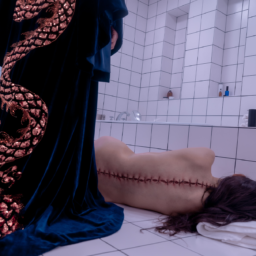
A mysterious phone call leads her to an abandoned warehouse where she finds a package—beautifully designed like the best DTC companies—with three pouches (it’s easy as 1-2-3, if you will). The first is “The Activator,” the second is “The Stabalizer,” and the third is “The Switch.” After injecting herself with the neon green “Activator” serum, Elisabeth’s body convulses violently before her spine begins to rip open and… something crawls out. That something is a younger body who names herself Sue (Margaret Qualley). She stares in the mirror the same way Elisabeth did before injecting herself. Where Elisabeth noted the imperfections, Sue noted her perfections.
Sue sews Elisabeth’s gaping wound with the provided needle and thread and hooks her up to the included IV food supply to give her nutrients while Sue lives in the world. We’re thrust into the colorful world of Hollywood through Sue’s eyes where she is instantly adored for her good looks, bubbly personality and impressive flexibility. Of course, though, there’s a catch. The newly matched Jekyll and Hyde pair must switch every week for a week, which we learn is because without “The Stabalizer,” which is essentially Elisabeth’s spinal fluid, Sue begins to deteriorate.
Thus begins the push-pull relationship between Elisabeth, who is enjoying her second shot at stardom but isn’t able to enjoy any of it, and Sue, who gets addicted to the adoration, but is beholden to the deal of only seven days at a time. Naturally, complications arise, which catapults the movie into full-on diabolically grotesque body horror that I will leave unspoiled but assure are as satisfyingly shocking as you could imagine.
ADVERTISEMENT
At one point, I began questioning the movie’s treatment of Elisabeth. Did she deserve this kind of punishment for a mindset that is simply out of her control? But that is until the movie takes its full third act turn that clears up Fargeat’s intentions. While there is an obvious message splashed on the surface of the neon surface of the movie, this is a body horror exploitation through and through. One that isn’t meant to be picked at and examined but rather enjoyed for its surface-level pleasures—perhaps another meta-commentary or perhaps a plea to make movies fun again.
The number of homages in The Substance is almost impossible to quantify. At a story level, there are shades of the duality of Dr. Jekyll and Mr. Hyde, the obsession with image (and its ensuing deterioration) from The Picture of Dorian Gray, a sendup of the Hollywood system much like Sunset Boulevard. Then there are its roots in body horror like the magnificent (and practical) special effects makeup of The Thing and playing god with science as in Cronenberg’s The Fly. There’s even direct homages like a devilish sequence set to the score of 2001: A Space Odyssey or a near-recreation of the prom scene from Carrie. It is a filled to the brim with stylistic and story choices that would destroy most other movies. Instead, all those mismatching debauched pieces come together to form a Frankenstein’s monster of a diabolically delightful B-movie that brings laughs, thrills and blood… lots and lots of blood.
Amidst the First World War, The Girl with the Needle follows a young Danish woman forced to make difficult decisions when she discovers she’s pregnant unaware of the dark secrets that lurk.
The Girl with the Needle is a bleak, dread-filled film that blends psychological horror with real horror, highlighted by disturbing imagery and an ominous discordant score.
The narrative follows Karoline, a young impoverished woman in WWI-era Copenhagen, as she makes difficult decisions after discovering she’s pregnant.
Directed by Magnus von Horn with a style reminiscent of Andrei Tarkovsky, the film transforms from a period drama to a psychological thriller, presenting its dark true-crime story with visceral, emotional impact and even flashes of macabre humor.
The Girl with the Needlepremieredin competition at the 2024 Cannes Film Festival.
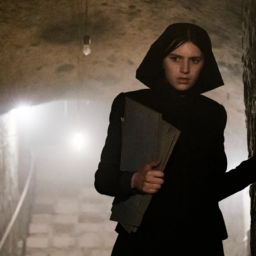
There’s a reveal in The Girl with the Needle so heinous and disturbing you’d think you were watching a horror—and at times it feels like it is. With its ominous discordant score and disturbing imagery—like the extended opening sequence where we watch a face (perhaps multiple) distorting and blending into one another—director Magnus von Horn treats the story of one of Denmark’s most infamous crimes with the bleakness and dread it deserves. The movie’s descent into psychological horror (and real horror) isn’t linear though, it takes time to build its narrative in a slow burn that never disengages so that when you’re sucked in, it’s too late.
ADVERTISEMENT
The eponymous “girl with the needle” is Karoline (Vic Carmen Sonne), a young woman living in Copenhagen during the First World War. With her soldier husband missing in action, she’s fallen behind in rent, which she pays for with a factory job sewing uniforms. When her landlord brings a mother and her young daughter as prospective tenants, Karoline does her best to deter them by talking about the smokey stove and rats that crawl in her bed at night. The daughter throws a fear-fueled tantrum at the prospect which causes her mother to slap her, without abandon. The sudden shock of violence isn’t the last instance of mother-inflicted trauma.
After finding a shabby one-windowed attic covered in bird feces to live in, she falls into an affair with Jørgen (Joachim Fjelstrup) the aristocratic owner of the factory who sympathizes with her plight. The swirling romance is cut short when Karoline realizes she’s pregnant, which forces his mother to threaten his inheritance causing a breakup (and Karoline to lose her job). Now with child and nowhere to turn, she turns to desperate measures. She brings one of her knitting needles to the local bathhouse to give herself an abortion. Director and co-writer Magnus von Horn captures the act without sensationalizing it, but it doesn’t make it less effective. He presents it as a visceral bit of body horror that only adds to the dread-filled atmosphere—and eventually his ultimate message.
ADVERTISEMENT
There’s a constant sense of impending doom driven by Frederikke Hoffmeier’s discordant score—like a baseball bat smashing into a piano—even as Karoline is unaware of the plots happening in the background. Even when jovial Dagmar (Trine Dyrholm), an older woman at the bathhouse with her curiously young toddler daughter Erena (Avo Knox Martin), helps Karoline after her failed attempt the darkness remains.
Dagmar offers her a service she provides out of the back of her candy shop. She allows would-be mothers to drop off their unwanted children for her to find them a home with a family unable to have their own—or looking to help an orphan. The mission, though illegal, is so admirable to Karoline that she asks Dagmar to take her in as her apprentice and help care for Erena. From there, The Girl with the Needle takes twists and turns that are better left unspoiled but are made even more impactful when the final title card labeling the story as based on true events drops onto the screen.
ADVERTISEMENT
Von Horn’s direction evokes Tarkovsky’s expressionist style, particularly Persona, with striking crisp black-and-white that suggests horror rather than showing it outright—though it certainly has its moments. As the slow-burn marches towards each of its reveals, it transforms itself from period drama to psychological thriller in a way that is as satisfying as it is shocking. It helps that Vic Carmen Sonne and Trine Dyrholm are giving perfectly pitched performances that transform with the movie.
For a story as dark as The Girl with the Needle, there’s something so enticing about how it presents itself—a storyline involving Karoline’s ex-husband is grotesque in a macabre way but captures you like a sideshow. There are even flashes of the pitchest black humor as Karoline navigates her new situation. Whether you’d consider it a part of the true crime genre is up to you, but if it is then von Horn is pushing the genre to new limits. It is visceral, emotional and relevant without guiding its audience’s hand. Shocking without malice and engrossing without insincerity, it is a highlight of the 2024 Cannes Film Festival.
Challengers follows a decade-long love triangle between three would-be tennis stars that culminates in a match nearly as intense as their entanglement.
Challengers tells the story of a decade-long deliciously messy love triangle that is as quick and thrilling as a tennis match and crazy, sexy, cool as the best erotic thrillers. Rapidly volleying between the past and present, director Luca Guadagnino keeps a light and fun tone thanks to a stellar heart-pumping score and clever editing even as the competition (both tennis and for the heart) gets heated. With a trio of perfectly-matched performances with Zendaya further cementing her start status and Josh O’Connor and Mike Faist building on their already impressive work, Challengers is as engrossing, entertaining and delightful as they come. A crowd-pleaser that’ll have you on your feet asking for more.
To call Challengers a romance would be both apt — it is about love and relationships after all — and underplaying just how deliciously messy the love triangle at its center becomes. The plot isn’t particularly shocking, unless you consider a well-placed drop shot a twist. But the increasingly debauched ways that each of the three corners of the triangle tangle, using their pasts and understanding of their psychologies against each other, are constantly satisfying even if you know what’s coming.
ADVERTISEMENT
That’s because Challengers builds to every moment with incredible precision knowing exactly where to hit and how hard for maximum effect.
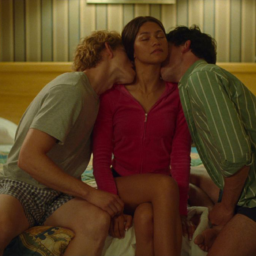
So when Zendaya’s tennis prodigy Tashi Duncan turns a three-way make-out with best friends and tennis partners Art Donaldson (Mike Faist) and Patrick Zweig (Josh O’Connor) in a dingy motel room during the 2006 Junior U.S. Open Championships into a two-way make-out between the two boys, it’s not only devilishly sweet, it’s exactly where we wanted them to end up.
It all comes back to Justin Kuritzkes’s ingenious screenplay that frames the rocky history between the three would-be tennis stars with what should be a low-stakes match between Art and Patrick that instead becomes a metaphor for their volatile friendship. Each time a point is scored during the match or there’s a particularly intense volley, the movie flashes back to a moment in the entanglement that has the exact same result. Except rather than a point they win Tashi.
ADVERTISEMENT
It’s not pedantic as it sounds, but the feeling it evokes has all the intensity and suspense of any tennis match.
When we first meet Tashi and Art they are married. He a tennis pro in a rut and Tashi his scrupulous coach. To help him gain his confidence back, she enters him into a U.S. Open Qualifier hilariously sponsored by Phil’s Tire Town in the very unglamorous town of New Rochelle, New York. It should be a walk in the park for Art, that is until he realizes that Patrick is also in the challenger.
In flashbacks, Art is portrayed as the more serious of the two. He sees tennis as a serious sport. Something to be mastered. Patrick, on the other hand, with a sly grin often laying back with manspreading as wide as possible, believes you either have it or you don’t. It’s that kind of teenaged dirtbag posturing (the he never really shakes even as an adult) that pushes him to unabashedly pursue Tashi at a post-tournament party at the 2006 Junior Opens. However, Tashi, as tactical and strategic in love as she is on the court, can immediately pick up on the dynamic between the pair — and exploits that by pitting them against each other. Both psychologically and literally when she says she’ll give her number to whoever wins the Men’s Singles Final during the tournament.
ADVERTISEMENT
Zendaya plays Tashi with an easy confidence that captures you as much as it it captures the boys. Her charisma mixed a knowing wit is irresistible.
Her performance is as much of a technical marvel as the well-captured tennis matches. From the start of the triangle, she is in complete control. Not because she wants to be, but because she knows she can. It’s what’s fascinating aboutthe underlying fascination Challengers has with relationships. Like last year’s Fair Play, the movie presupposes that relationships are as much about power as they are emotion. Whether or not there is actually love between Tashi, Art and Patrick isn’t the question. It’s how the tension — both sexual and psychological — drives their decisions.
In the present, Art is on the precipice of retiring at a low point in his career. An emasculating decision that puts strain on his relationship with Tashi as both wife and coach. With so much of their relationship tied up in tennis, how can they go on without it? The subtext: how can she love him without it? On the other hand, Patrick’s unpredictability, that makes him less malleable for Tashi’s uses, also makes him more attractive. It’s those opposing and attracting forces that make the movie drives the movie’s tension through the roof. Even without sex scenes — most end before or pick up after — the eroticism is palpable.
ADVERTISEMENT
However, Guadagnino brilliantly uses the visceral and immersive tennis scenes as the movie’s proxy for sex.
He captures sweat falling, muscles flexing and strained grunting in glorious high definition slow motion that is as captivating as it is gorgeous to look at — for more reasons than one. Guadagnino wrings out the proverbial cinematic rag and switches from player POVs to slow-motion to quick cuts to a stunning tennis ball POV that has the audience literally volleyed between the two players. All the while, Trent Reznor and Atticus Ross‘s thumping electronic score — their best since The Social Network — keeps the momentum going. Along with the crispest ball hitting racket sounds, Challengers is an immersive cinematic experience worthy of seeing on the biggest screen possible (find your local IMAX or Dolby Theater immediately).
However, every single shot is charged. Even though Art and Patrick’s relationship is platonic, there’s something so romantic and even erotic about the way they taunt and chide each other — and of course hit balls.
Challengers feels like a movie we haven’t seen before, or at least in recent memory. One that doesn’t feel bogged down by its self-importance nor trying so hard to be shocking or camp (I’m looking at you, Saltburn). Guadagnino simply has fun with Justin Kuritzkes’s brilliant screenplay and uses each of his three actors exactly as they should. Zendaya is the movie star of a generation. Mike Faist is the steady straight man. Josh O’Connor is a scene-stealer with one of the most complex storylines of all. And at the very least, it’s a blast.
A group of journalists and war photographers trek from New York to Washington, D.C. while the United States is in the throes of a civil war
Writer-director Alex Garland’s Civil War is an all-out assault on the senses that immerses you in a war zone that isn’t just close to home, it is home. When it focuses on the sheer terror and brutality of war — graphic images mixed with the worst of human tendencies — and the emotional and moral complexities of being a war photographer, the movie is nothing short of engrossing. However, whenever it deigns to say anything specific about the current state of society and culture in the United States it feels misguided. Mixed with opaque characters and uneven writing, Civil War feels at war with itself.
Civil War is in theaters now.
The first shot of Alex Garland’s Civil War is of the President of the United States, played by Nick Offerman, in extreme closeup. He says, “We are closer than ever to,” then pauses. You assume he’s going to say “civil war.” Instead, he says, “to victory.” It’s perhaps Garland’s cheeky way of quickly setting up the movie as a cautionary tale. The United States is closer than it ever has been to civil war, especially when he wrote this film four years ago. And it’s clear that Garland came up with this story as a response to what he was seeing around him in this country, even if the movie itself takes place in a somewhat fictional dystopia.
ADVERTISEMENT
While he keeps many of the specifics of what led to the war and how we got to the point that rebellion forces are on the precipice of toppling Washington, D.C. we get a vague understanding of the state of play. The Western Forces are a coalition of states allied with California and Texas that have seceded from the nation and presumably were fed up with a president that dismantled the FBI, sought and won a third term and used drones on American civilians. I’m sure you can imagine who he’s referring to.
It’s part of the fallacy of Civil War. While Garland avoids specifics as a means to focus in on the general themes, he includes enough for us to understand that the story misunderstands what it’s saying.
It’s the trouble of setting an allegory like this in a real-life environment. The benefit is that it adds a layer of relatability and terror at the prospect of an event like this hitting so close to home. Graphic images of war and violence on the streets of New York City or Washington, D.C. are a chilling reminder of what is going on in the day-to-day lives of some around the world. When the movie hones in on the unabashed brutality of war and the complexity of being a war correspondent, the movie’s transparency enhances all of those feelings. But whenever it attempts to bring in real-world artifacts — a line that mentions a fictional “antifa massacre” is particularly jarring — it immediately takes you out of the movie.
But if the mechanics of its world take you out, the story pulls you in and doesn’t let go. Kirsten Dunst plays Lee Smith, a renowned war photographer on the hunt for the holy grail: a photo of the president. Along with her journalist colleague Joe (Wagner Moura), her mentor Sammy (Lady Bird‘s Stephen McKinley Henderson) and aspiring young photographer Jessie (Priscilla‘s Cailee Spaeny) she makes the long, dangerous trek through war-torn land and raging battles from New York City to the nation’s capital.
Along the way, they encounter the monstrosities of war including a suicide bombing that nearly takes both Lee and Jessie out — of course, a second after getting her bearings Lee is up taking photos of the carnage — and a shootout between rebel forces and the U.S. military.
Both scenes are violent, graphic and immersive. Like you’re being surrounded on all sides by gunfire, smoke and the smell of death. Interestingly, Garland doesn’t sensationalize these images. Even when we watch people dying, the image is objective — just as Lee sees them. That isn’t to say she doesn’t care, she believes that the work is a necessity.
As they continue to make their way through the country, encountering people fighting for both sides and those caught in the middle, we learn what drives each of the characters. However, the screenplay never allows us too close. Almost like we’re just seeing them in a still photograph without the context of what come before or what is happening around them. Perhaps it’s an intentional choice. However, it left me unable to become emotionally invested in their journeys.
When barnburner scenes come along like an encounter with a group of soldiers that goes awry — led by Jesse Plemmons in yet another role that proves he’s one of the great character actors working today — there’s suspense because of the situation, but not because we’re afraid for our characters. As Plemmons’s unnamed soldier goes down the line of our hero journalists asking what state they’re from, there’s a palpable amount of tension. It’s moments like it when Civil War fully meets expectations. But then it immediately fades away because we’re not emotionally connected to the characters enough to have actually cared about the outcome.
When Civil War is great, it is magnificent. Especially the climactic final assault on the White House by rebel forces that could’ve been a short film in itself. Though it’s chaotic, Garland guides us through the carnage to tell us a nearly wordless story about the pursuit of the truth, the melancholic thrill of destruction and even the out-of-touch way that our leaders see the country — like their actions have no consequences. It is one of the best action scenes in a war movie in recent memory and shows he trusts the audience enough to understand what he’s trying to tell us. However, when it starts to tell instead of show, Civil War feels at war with itself.
Preceding the 1976 classic, The First Omen follows a young nun-to-be who discovers an insidious plot to bring about the antichrist
Unlike other recent “requels” that are simply retreads of their originals, The First Omen mostly stands on its own as an homage to the original — and the Giallo horrors of the 70s — while feeling fresh and modern. With devilishly delectable imagery as beautiful as it is horrifying, it trades cheap jumpscares for dread-filled tension that gets under your skin and delivers a diabolical thrill that lasts after the credits roll.
The First Omenis in theaters now.
Some horror movies bill themselves as cheap thrills. A fun ride that gives you a temporary rush that ends the second it’s over. Other movies are slower. They methodically sink into your skin. Biding their time so that when you realize how far they’ve sunken in it’s too late. That’s how The First Omen feels. A true blasphemous religious horror that may not feel immediately scary, but the way it presents its story of possession is so deeply disturbing that the walk home from the theater is just as terrifying as the movie itself. It’s the kind of horror that makes you feel dirty after watching it. Like you just saw something you shouldn’t. And that’s real horror.
ADVERTISEMENT
It’s a surprise considering the recent spell of so-called horror “requels” — sequels or prequels to classic movies that are both a continuation and retread of the original — have felt like cheap gags or clear money grabs that rely on fan service ranging from great (Luca Guadagnino’s Supiria) to fine (David Gordon Green’s Halloween) to downright detestable (David Blue Garcia’s Texas Chainsaw Massacre). The First Omen manages to be an homage to the original — and the Giallo horrors of the 70s — while feeling fresh and modern. It stands without any knowledge of the original 1976 The Omen. In some ways, it weaponizes your knowledge of the original against you.
The movie also begins in Rome where Father Brennan (Ralph Ineson) presses Father Harris (Game of Thrones’s Charles Dance) on an ominous photo of a child with the name “Scianna” scrawled on the back. Harris is visibly disturbed by the question but says, “It was an unnatural birth.” Right then, in slow motion stained glass begins falling around the men. Cinematographer Aaron Morton’s naturalistic lighting and grainy compositions are as beautiful as it is eerie. While disaster seems to be averted, when Father Harris turns to leave Brennan realizes a chunk of his skull is missing.
ADVERTISEMENT
It’s the kind of quiet visceral terror that sets The First Omen apart from most modern horror. It’s not the surprise of the scare. It’s the unholiness of the image.
American nun-to-be Margaret Daino (Nell Tiger Free) arrives at Vizzardeli Orphanage to take her vows. She’s bright-eyed and optimistic about her new future but quickly realizes that things might not be as idyllic as she originally thought. Especially when she realizes that one of the children Carlita (Nicole Sorace) is not only ostracized by the other children but feared and mistreated by the nuns who often lock her in the ominously named “bad room” for her erratic behavior like when she inexplicably licks Margaret’s face. Director Arkasha Stevenson maintains a dread-filled atmosphere rather than continually hitting us with unnecessary jump scares. Scenes like Margaret witnessing childbirth rely on what we don’t see as much as on what we see — blood, a dilated pupil, and… is that a demon hand coming out of her?!
In another sequence where Margaret’s roommate and fellow nun-to-be Luz (Maria Caballero) convinces her to go out for one last night of debauchery where she meets Paolo (Andrea Arcangeli). When she follows him onto the dance floor, the strobe lights begin to obscure the image alternating between light and dark. But in those split seconds that we can see small gestures like Paolo pulling her hair back or a hand reaching for flesh feel disturbing until it culminates with Margaret licking his face just as Carlita did to her. The horror is in the image and in the parallel even if it isn’t shocking.
ADVERTISEMENT
Margaret’s journey will take her down a dark path that involves mutilations, freak accidents and, of course, a public suicide just like in the original. However, none of it feels cheap even when the story at times feels like it’s trying too hard to shock you. When it leans in on its dark atmosphere The First Omen fully pulls you in. Even as an atheist, my Catholic upbringing had me reeling at some of the imagery that felt nothing short of evil. The kind of thrill I chase in my horror.
The First Omen is one of the great horror movies of the year against all odds. Sit back and bask in the sinful delight.
Dev Patel’s directorial debut Monkey Man follows an Indian man on a mission for revenge against the people and politics that wronged him
Dev Patel plays triple duty as action hero star and writer-director of his ultraviolent revenge fable Monkey Man. With action sensibilities akin to John Wick and a politically charged narrative deeply embedded in Indian culture and society, the movie is a roaring crowd-pleaser that is as thrilling as it is emotionally resonant. Though its ambitious plot can feel overstuffed at times, Patel’s magnetic screen presence and assured vision keep you hooked from beginning to end.
Monkey Man is in theaters on Friday, April 5.
When the eponymous “Monkey Man” — simply billed as “Kid” and played by Dev Patel — goes to a black market weapons dealer to buy a small concealable weapon the man jokes he’s like John Wick. It’s an apt comparison in many ways. Both The Kid and Wick spend their movies seeking revenge on people who wronged them in stunning, brutal, and neon-lit fashion. However, that’s where the comparisons end. Where John Wick opted for simplicity in its story and complexity in its world, Monkey Man takes place in our world using themes that feel familiar to us while telling a story that we may not be privy to but can relate to.
ADVERTISEMENT
The first time we meet The Kid he’s donning a monkey mask much like the Hindu legend Hanuman, a monkey whose strength and courage helps him rescue the wife of the deity Rama. He learned the story as a child (Jatin Malik) from his mother (Adithi Kalkunte). However, The Kid is no Hanuman. Instead of a battlefield, he’s waging his war in an underground fight club run by a greedy MC (Sharlto Copley) where his skinny frame is no match for the hulking figures he’s meant to fight who more often than not defeat him in the ring. It doesn’t matter to The Kid though, he’s just doing this and various odd jobs to gather money.
For nearly the first hour, exactly what The Kid’s mission is or why he’s on it is unclear. All we know is that the next step is to get a job at a VIP club run by Queenie (Ashwini Kalsekar), a sharp-tongued businesswoman in stilettos. He finds his way in by orchestrating the stealing of her purse in a kinetic sequence that puts Patel’s directorial skills at the forefront. The purse goes from hand to hand across the fictional Indian city Yatana until it reaches Patel where he uses “finding” it to leverage a job at the club. The sequence drives home that the city is split between the upper echelon and the streets — a theme that continues throughout the film.
ADVERTISEMENT
The club’s clientele is exactly who The Kid is targeting, particularly police chief Rana (Sikandar Kher) who we learn through a series of flashbacks murdered his mother and destroyed the community he called home in favor of further development of the sprawling city. We breezily move between the past and the present with little to slow the narrative down even with diversions to The Kid’s unwitting accomplice Alphonso (Pitobash) and an escort called Sita (Sobhita Dhulipala) who works in the club. When he finally hatches his plan, the movie erupts into a flurry of violence that is captured with the kind of singular Bollywood maximalism that Patel said he was inspired by.
Much of the DNA of Monkey Man feels rooted in Patel’s desire to explore his homeland (he was raised in the U.K. by Kenyan-born Indian parents). That extends to the background of The Kid’s mission and the political corruption that is plaguing the country, represented by faux-spiritual figure Baba Shakti (Makarand Deshpande) who uses his benevolent demeanor to hide his oppression of the poor — including the order to remove The Kid’s community that ended with his mother’s death. There’s almost too much on Patel’s mind to get to everything he wants. Another storyline that involves a group of hirja, a tribe of third-gender people, led by Alpha (Vipin Sharma) displaced by Shakti’s policies feels shirked based on its importance in the movie’s final act.
ADVERTISEMENT
However, Patel’s heart is certainly in the right place. As transgender people worldwide fight for their place, it’s encouraging to see this storyline featured. That can be said for much of what Patel is doing with Monkey Man. While it has the mistakes we often see with first-time directors, and especially actors-turned-directors, the sheer ambition is admirable. It’s best on display in the movie’s stunning final act where we get to see the fruits of The Kid’s journey and Patel’s.
The result is the rip-roaring, white-knuckling action filmmaking that is impossible not to be taken by. With kinetic fight choreography and kinetic cinematography from Sharon Meir, it’s a great omen for Dev Patel’s future as a filmmaker.
A 70s late-night show goes awry when it invites a suspected possession case onto the show in Late Night With the Devil. Nothing like an exorcism to boost ratings.
Late Night with the Devil is one of the best exorcism horror movies in years. With keen 70s aesthetics, a dread-filled atmosphere and career-best performance by character actor David Dastmalchian, this found footage horror transmits its sinister airwaves through the screen resulting in a devilishly fun slow-burn romp.
Late Night With the Devilis in theaters now
Other than a 70s-era 20/20 cold open describing the events of Halloween night 1977 on the Night Owls with Jack Delroy show, Late Night With The Devil plays in real time over the course of the filming of the episode flipping between “actual” footage and behind-the-scenes content during the commercial breaks where we learn how the show is coming together — and falling apart. During his opening monologue, Jack assures the live studio audience along with his sidekick Gus (Rhys Auteri)that the night will be one to remember as they investigate the occult. This is the 70s after all and nothing like a little satanic panic to boost ratings.
ADVERTISEMENT
Among his guests are renowned psychic Christou (Fayssal Bazzi), magician turned skeptic Carmichael (Ian Bliss), and parapsychologist Rose (Laura Gordon). However, the centerpiece of the whole episode is Lilly, a young teen recently rescued from a demon-worshipping cult with whom Rose has been working. Writer-directors Colin and Cameron Cairnes (real-life brothers) wanted to “[recreate] that slightly dangerous, live television atmosphere.” And from the moment Lilly enters the movie, the danger feels real. Despite the “found footage” presentation of the movie, the Cairnes find ways to communicate a dread-filled atmosphere on-screen. Most effectively, Lilly seems to always be staring straight into the camera — and into your soul.
As the night progresses, weird happenings plague the studio before culminating in a chilling exorcism setpiece that will send chills down your spine. However, much like Ti West’s underrated The House of the Devil, the movie never overindulges. It keeps to its grounded 70s aesthetic and maintains a constantly uncomfortable slow burn as the night unfolds. It reminds me of how The Blair Witch Projectapproaches its found footage aspect with an eerily believable realism. The horror isn’t what is on the screen, it’s what’s happening just off of it. The movie relies on the reactions of the characters to communicate the danger, which is why it’s David Dastmalchian’s performance that is the most impressive facet.
ADVERTISEMENT
You might not know Dastmalchian’s name, but you might recognize his face from some of your favorite movies. Perhaps as the creepy bank robber in The Dark Knight or the creepy kidnapping suspect in Prisoners or the creepy Polka-Dot Man in The Suicide Squad. In Late Night With The Devil he proves that he’s one of the most exciting chameleonic character actors working today. His embodiment of an era-accurate late-night show host (think a 70s Conan O’Brien), while never losing sight of his character’s past narrative is impressive to watch and key to the movie’s ultimate success. Believing his motivations — and his own misguided hope that what’s happening is real — sells the horror to the audience. While late-night hosts are meant to make their audience feel safe, Delroy’s desperation makes us worried about what’s coming next.
Late Night With the Devil like The House of the Devil and The Love Witch is an homage to the horror of the period while injecting modern cinematic sensibilities. The result is a spine-tingling and inventive found footage that grabs your attention and never lets go. But that’s just TV, baby.
After a homophobic attack, a gay man sets out for revenge on his assailant when he discovers he is closeted in Femme
Anchored by stellar performances by Nathan Stewart-Jarrett and George MacKay, Femme is a tense, sexy and engrossing queer revenge thriller that feels for us and by us. Subverting the classic “femme fatale” erotic thriller trope and archetype, directors Sam H. Freeman and Ng Choon Ping create a morally ambiguous face-off between two queer men that blurs the line between good and evil and right and wrong. One of the best movies of the year so far.
While the inciting incident of first-time directors Sam H. Freeman and Ng Choon Ping’s Femme is a brutal outburst of homophobic violence, I felt an unexpected feeling of relief after it was over. Erotic thrillers like Brian de Palma’s Dressed to Kill or Paul Verhoven’s Basic Instinct and Elle can at times feel exploitative in their use of violence, sex and sexuality as a plot device. And like those films, as the title implies, Femme centers on a “femme fatale” whose sexuality is front and center. However, instead of feeling like the movie is admonishing our fatale or punishing them for the indiscretions it empowers them. The incident while visceral and vicious doesn’t feel lingered on.
ADVERTISEMENT
It’s helpful that unlike the de Palma or Verhoven movies, Freeman and Ping have the utmost respect for their protagonist, drag queen Aphrodite Banks (Nathan Stewart-Jarrett).
When we first meet her, they’re performing a surprisingly high production number for a drag club. After her number, Aphrodite notices tattooed and toned Preston (George MacKay) outside the venue watching intently. Jules catches his gaze that she returns with a charismatic smile — he sulks off. Later in the night, Aphrodite is at a bodega when Preston and his friends enter, posturing as men do.
When they start verbally harassing Aphrodite, there’s a moment where it seems she’s going to try to ignore it and shrink back. But like a switch ticked off in her brain, she decides to take space up as any queer person would and reads them down. Especially Preston who she calls out for checking her out at the club. It’s what leads to Preston’s assault that leaves Aphrodite beaten and naked on the street.
ADVERTISEMENT
Three months later, the incident has left Jules, who has given up his Aphrodite drag persona much to the chagrin of his roommates Alicia (Asha Reid) and Toby (John McCrea), completely withdrawn from the world. That’s until one day he finds himself in a gay bathhouse where he once again encounters Preston who is cruising. For our straight friends, cruising is when you go to a public space looking for someone to have sex with. It’s not helpful that he lashes out at any forward man with a hearty f-slur. “We’re all faggots here,” someone cheekily responds.
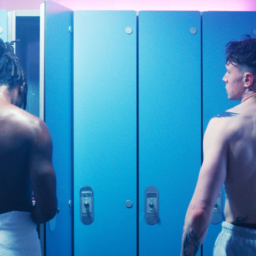
Both horrified and intrigued, Jules follows Preston to the locker room. Unaware of who Jules is, Preston invites him back to his apartment for sex. Behind Jules’ eyes — and a testament to Stewart-Jarrett’s quietly powerful and emotive performance — is panic, interest and, horrifyingly to himself and the us, lust. Preston is dominant and very clearly knows what he wants to which Jules obliges, but right as they’re about to have sex, his rowdy and drunk roommates return. Panicked and left alone in the room, Jules makes a last minute decision to don the hoodie that Preston wore when he assaulted him and leave the room.
The risky move pays off when Jules is able to pass himself off as an old friend of Preston’s and is able to slip out. Angered yet impressed by the move, Preston asks to see Jules again saying he’ll text him when he needs him.
ADVERTISEMENT
Fueled by his performance in the apartment, Jules hatches a plan to get revenge on Preston by weaponizing his sexuality against him and secretly recording a revenge sex tape to out him to the world.
This is where Femme takes a hard firm turn towards a dark and brooding erotic thriller. Jules sets out to lure Preston — like a queer femme fatale — before enacting his revenge. The cat-and-mouse game, that is unbeknownst to Preston, occurs as a series of encounters between the pair that challenge our assumptions of what we know of them. To Jules’ surprise, their first meeting after the bathhouse and apartment incident is an intimate dinner where Preston takes care to make Jules comfortable — like a real date. And while the conversation begins to unwrap the mystery, it eventually devolves into a rough sex scene in the woods where Preston leaves Jules to get home on his own.
There’s a distinct queerness to the entire story and the way each of the characters functions in Femme.
It feels like it’s derived from lived experience. Something that the erotic thrillers of the 90s that it sends up doesn’t have with its female characters — those movies are by and large written and directed by men. There isn’t good or evil. The rights are as morally ambiguous as the wrongs. While our sympathies at first lie with Jules, the more we learn about Preston gives us an understanding — albeit opaque — of his own queer trauma that he’s experiencing. While we never fully dive into his backstory, MacKay’s bombastic performance that oscillates between a put on machismo and tender longing tells us everything we need to know about the character — like his tatted skin is a literal armor for his sexuality.
ADVERTISEMENT
Then there’s Jules, who in the pursuit of much-deserved vengeance, has to grapple with the vulnerability and intimacy that he begins to feel towards Preston as he carries out his plan. While the movie never loses its sense of danger and Preston is always presented as a violent figure that could lash out at any moment — especially in an incident when Jules is caught trying to film one of their backseat rendezvous — the focus is very much on a study of the characters. It makes Stewart-Jarrett’s performance all the more impressive as he has to communicate Jules’ thought process with few words rather furtive glances and body language.
And while Femme has empathy for its characters, it doesn’t ask us to forgive them for their sins. That moral ambiguity is what makes the character dynamics as engrossing as the suspense.
As the movie careens to its conclusion, there’s a sense of romance. A sense that perhaps a lesser movie would give into. Instead, Femme understands its characters but isn’t afraid to leave them as imperfect beings. Perhaps they’re capable of change, but that isn’t the story that Freeman and Ping are telling. Instead, they’re interested in what it is to be unapologetically queer in a space that isn’t made for us, how masculinity is a prison that even we sometimes can’t escape and how our feelings, as powerful and magnetic as they are, are messy and can lead us down paths we shouldn’t follow.
Femme is as messy and beautiful and complicated as we are. It’s the kind of queer thriller we deserve.
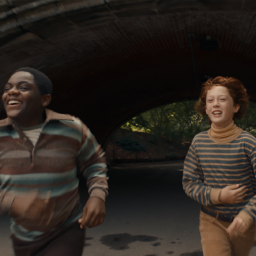
Director James Gray analyzes his own family in his autobiographical drama Armageddon Time, set during his childhood in a pre-Reagan New York City
Armageddon Time isn’t the first drama in recent memory where a filmmaker reckoned with a formative time in their childhood. But many don’t feel as immediately relevant — perhaps a little too on the nose — as James Gray’s exploration of his “liberal” family’s navigation of a pre-Reagan America in New York City. While presenting itself as a fun childhood romp through the dawn of the 1980s, it quickly turns into a biting indictment of privilege, generational racism, and the white-washing of the American dream.
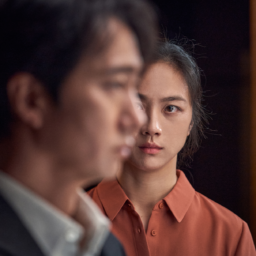
In Decision to Leave, a picture-perfect detective’s murder investigation slowly goes off the rails when he finds himself fascinated by the victim’s enigmatic wife
Decision to Leave finds South Korean director Park Chan-wook at the absolute top of his game as he breathes new life into a not-so-classic detective story. The fiercely paced first half is a twisting police procedural that engrosses you with its clever editing and a brilliant score by Jo Yeong-wook before pivoting to a romantic exploration of two people trapped in life patterns finding liberation with each other. While it’s not as subversive as his last film The Handmaiden, Park has a knack for using genre movies to explore deeper themes whilst never being less than entertaining. Park Hae-il’s performance as Inspector Hae-jun joines the pantheon of great detectives while Chinese actress Tang Wei gives the performance of a lifetime. The Oscars should keep an eye on them.
Full review coming soon. Sign up for our newsletter to see it first.