Category: Movies

  • 2016 Emmy Predictions: Supporting Actress in a Drama Series

    2016 Emmy Predictions: Supporting Actress in a Drama Series

    Supporting Actress in a Drama Series is going to be easy to predict the nominees, but the winner is going to be harder to guess

    I think Supporting Actress in a Drama Series is going to be one of the easier categories to predict. Only one spot is opening up with Christina Hendricks (Mad Men) out and I think the other five are pretty strong to come back.

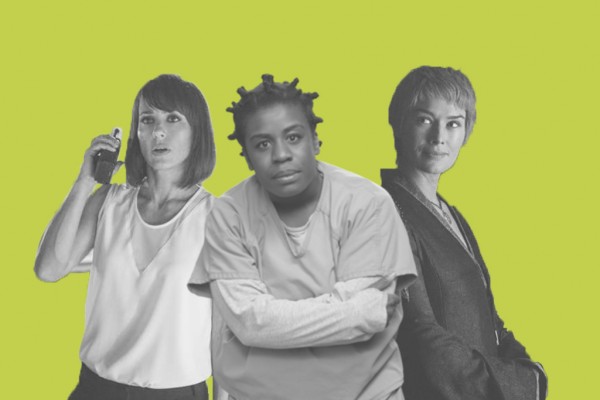
    At the top of that list is Uzo Aduba (Orange is the New Black). Though I don’t think her show is really going to make an impact on the Emmys this year, Aduba is one element that I think will always hold on. She’s incredibly popular and is a strong representative for the show’s ensemble.

    After her, Christine Baranski (The Good Wife) will definitely be back for her final turn in The Good Wife (though she’s coming back for her own show as Diane Lockhart). Further than that though, I think she can finally win. She has a really meaty role this season and it feels so odd to think she leaves the series without a single win.

    From this point on we have to mainly piece together last year’s nominees with the potential new openings. I think of the two Game of Throne actresses, Lena Headey (Game of Thrones) is more likely to come back than Emilia Clarke (Games of Thrones). However, I think both are pretty solid to be nominated following the huge buzzed about season they’re coming out of. However, I think Headey had the stronger material this year and last year. This will make her very competitive for the win.

    I think the last couple spots are going to be a toss-up between two previous nominees and two newcomers. Dame Maggie Smith (Downton Abbey) was shockingly passed over for her co-star Joanne Froggatt. Though the final season received relatively good reviews, I don’t think that both are getting in. The smart money would be to go with Smith, but there was a reason Froggatt was nominated over Smith. While Smith is legendary, her role is one-note while Froggatt has some difficult dramatic material to tackle. I think she’s in.

    So that leaves one last spot to be battles out between Smith and two newcomers. The first, Rhea Seahorn (Better Call Saul) has the power of her show behind her and the potential to be taken along in a nominations sweep. And while she has done great work that she’s being lauded for, Constance Zimmer (unREAL) is really the supporting player in this category that was the true breakout on her show.

    Like with the last two spots in the comedy series category, it’s a fight between my head and my gut. My head says go with Seahorn, my gut with Zimmer. Also like comedy series, I’m going with my gut on this one. Plus, with the new ballot shake up, she’s going to be at the top of half the ballots.

    Check out my 2016 Emmy Predictions!

    My Predictions:

    Uzo Aduba (Orange is the New Black)
    Christine Baranski (The Good Wife)***
    Emilia Clarke (Game of Thrones)
    Joanne Froggatt (Downton Abbey)
    Lena Headey (Game of Thrones)
    Constance Zimmer (unREAL)

    ***Predicted winner

  • Top 5 Most Anticipated Films Based on Books

    Top 5 Most Anticipated Films Based on Books

    book adaptations

    This week on What’s Next Wednesday we’re taking a look at 5 films coming out this year that are based on books. I’ve excluded the obvious choices of The Fault in Our Stars and If I Stay since they appear on our Top 10 Most Anticipated Summer Movies of 2014.

    WildCoverFromAuthorsWebsite5. Wild (Directed by Jean-Marc Valiée | Starring Reese Witherspoon | Release Date: TBD)
    Based on “Wild: From Lost to Found on the Pacific Crest Trail” by Cheryl Strayed

    I’m thinking of this book as a female version of Into the Wild, which could honestly be something amazing. The book is a memoir about Strayed’s travels on the Pacific Crest trail where she faces physical challenges and makes existential realization following hardships in her life. First of all, I can see this being a vehicle for Reese Witherspoon to potentially pick up her second Oscar nomination. More importantly, I can see this being a heartbreaking and emotional character study about the human spirit. Yeah, I’ll have that. With Nick Hornsby writing the script and Jean-Mark Valiée at the helm, I can see this film being something great.

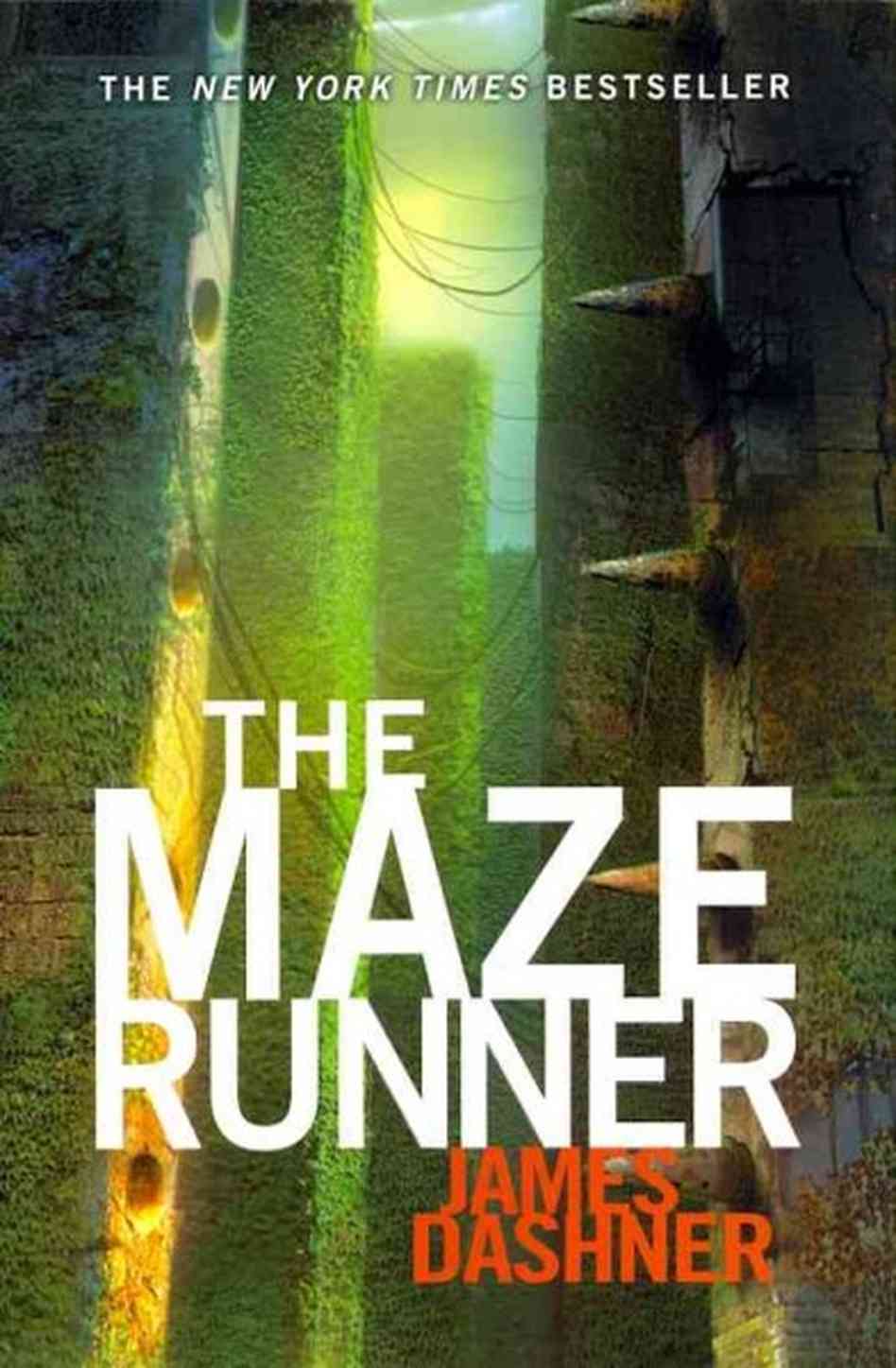
    9780385737951_custom-bc4950410127829105beca80a18b38977882d9ef-s6-c304. The Maze Runner (Directed by Wes Ball | Starring Dylan O’Brien, Kaya Scodelario, and Thomas Sangster | Release Date: September 19, 2014)
    Based on “The Maze Runner” by James Dashner

    Yes, young adult dystopian novels being turned into movies is getting a little old (I’m looking at you The Hunger Games and Divergent), but The Maze Runner has something really going for it. While it maintains the mysterious teenagers in some dire situation motif and involves the main character changing the ways that have been set for years, it has a wholly unique premise involving a mysterious maze that these teens are trapped in, hence the title. I haven’t read the book, but with reviews calling it thrilling and heart-pounding, I can’t wait to see what this movie can do.

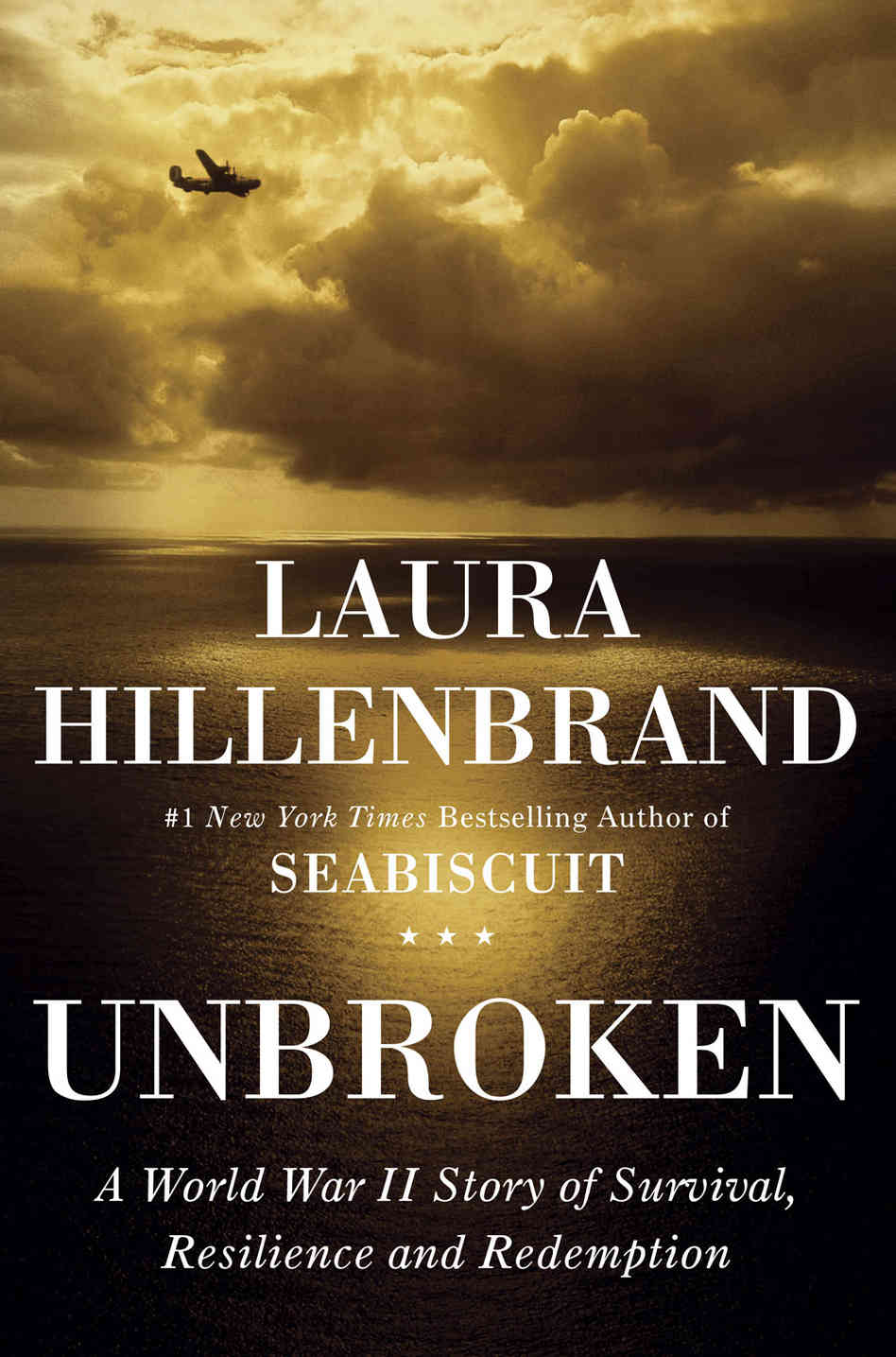
    unbroken-cover_custom-0a55df2637ae96369dd0302be5ad4de816c6b0ab-s6-c303. Unbroken (Directed by Angelina Jolie | Starring Garrett Hedlund, Jai Courtney, and Domhnall Gleeson | Release Date: December 25, 2014)
    Based on “Unbroken” by Laura Hillenbrand

    Historical World War II drama? Check. Survival in the open sea? Check. Survival in an internment camp? Check. Angelina Jolie? Check. In A Land of Blood and Honey, Jolie’s directorial debut, she was able to prove that she is more than a pretty face. Her control of atmosphere and mood was surprising and refreshing, so when I heard she was directing another film that would require just that type of touch I got excited. Unbroken tells the true story of Louis Zamperini, an olympic athlete who fights in World War II who spent 47 days in the ocean following a plane crash. To make matters worse he is captured by the Japanese and held prisoner for 2 and half years. It also probably doesn’t hurt that the Coen brothers are penning the film. Yeah, I hope it’s as good as it sounds too.

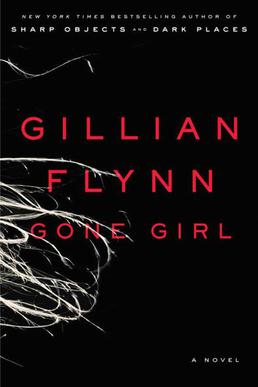
    Gone_Girl_(Flynn_novel)2. Gone Girl (Directed by David Fincher | Starring Ben Affleck and Rosamund Pike | Release Date: October 3, 2014)
    Based on “Gone Girl” by Gillian Flynn

    Amy Dunne mysteriously disappears on her and her husband Nick’s fifth wedding anniversary. Simple enough, but Flynn’s book takes us through twists and turns as evidence builds against Nick. The book is particularly successful due to its use of an unreliable narrator which would usually be difficult for a film, but with David Fincher at the helm I can see no wrong being done.

    https://www.youtube.com/watch?v=2OSgeD7k6I0

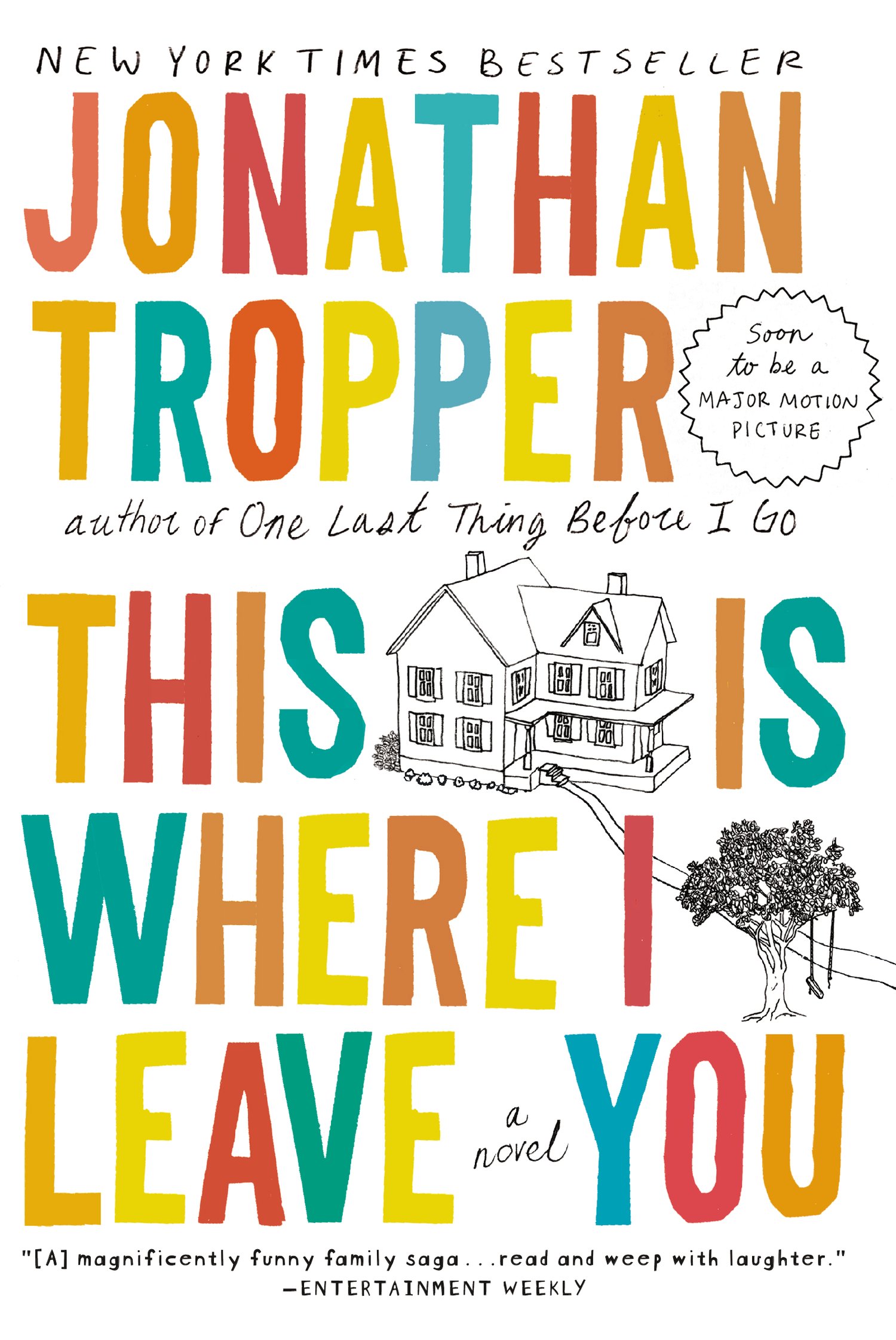
    8151T3gZFOL1. This is Where I Leave You (Directed by Shawn Levy | Starring Jason Bateman, Jane Fonda, Tina Fey, Adam Driver, Corey Stoll, Connie Britton, and Rose Byrne | Release Date: September 12, 2014)
    Based on “This is Where I Leave You” by Jonathan Tropper

    Tropper’s dark comedy is one of my favorite books of all time. Just take the humor of Arrested Development and merge with a disjointed and dysfunctional family sitting shiva in the wake of their father’s death. The result? Hilarity, drama, and whole lot of screaming. The fact that the film is being written by the book’s author, directed by comedy genius Shawn Levy, and starring a host of A-list stars gives this movie the makings of something absolutely great. The book will make you laugh, cry, scream, reevaluate your family dynamics and if the film can do the same, then it is set.

    What book to film adaptations are you excited for?

  • The Scour: “internet lust” – bbrainz

    The Scour: “internet lust” – bbrainz

    a3363395156_16

    Hey guys, I’m Christopher Hopkins and welcome to The Scour, where I look for new music in every possible region to give you guys hidden gems that could rival the big releases this year. Today, we’ve got a heavily sampled album out of Argentina that is part of a recent art movement called vaporwave.

    I’ve listened to my fair share of experimental music, but when a friend introduced me to this genre about a year ago, I was a bit skeptical at first. I thought it was a ripoff of all the classics from my childhood that I held dear to me. The samples from Sade and Art of Noise slowed down to make this odd soul vacuum of misplaced nostalgia was rubbish at first, but then, the more I listened, the more I explored. This intriguing area is full of dedicated musicians whose main ideal is based off of their golden age of music, the late 80s and early 90s, and their manipulation of the media is one to be admired.

    Combining the chilled out elevator music of smooth jazz and sometimes the sensual stylings of R&B, vaporwave is in its own niche of slowed-down dreams and memories of a bygone era. One such musician I’ve found and grown a fondness for is bbrainz, a teen from Argentina who uses these old recordings in their original masters, constructs some distortion and, voila! this release has a dissonant but relaxing feel of neon lights and dark city streets (rendered just about as well as a Donkey Kong arcade cabinet).

    internet lust is a relatively short album, with each song ending around the 2 minute mark, but these constant, airy grooves only make you want more, to loop indefinitely while working on some big project (or a music review, perhaps). “online”, “atlantico”, and “reflections” all hold some pretty solid samples while the big show-stopper in the beginning of the album has to be “home design” with collaborative work from .casting. If you do enjoy this music, you’ve already got someone else to look out for. “私の魂のデータ” (which translates to “my soul of data” seems like a funky jungle groove and slows down at just to right moment to fade you out. “vice city shopping mall” will seem like exactly that, an old shopping mall that you used to frequent before it was upgraded with the aesthetic of the 2000s. If it wasn’t weird enough, you’ve got the noisy “hotline” with its distorted and fuzzed out moans and subtle melodies. Nonetheless, it puts you in a nighttime trance.

    If you’re a bit more daring when it comes to your musical ventures, take a look at internet lust by bbrainz. I would say it’s for fans of ambient music, but also psychedelic rock, lo-fi music like Blank Dogs and Ariel Pink. Fans of the original samples will also have fun in trying to remember that song from their childhood and probably can’t wait to Google it. Take a listen, and hopefully I’ve turned you on to something you like. I’m going back to scouring the endless sea of music and bringing it to you.

    Check out bbarainz over on bandcamp!

  • Film Review: Southpaw

    Film Review: Southpaw

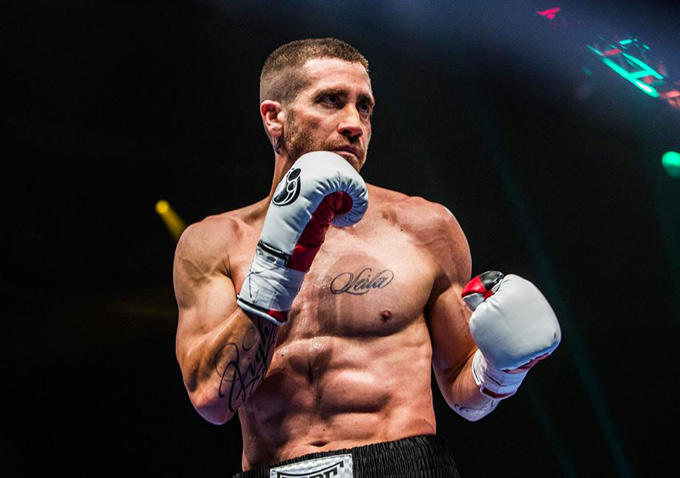
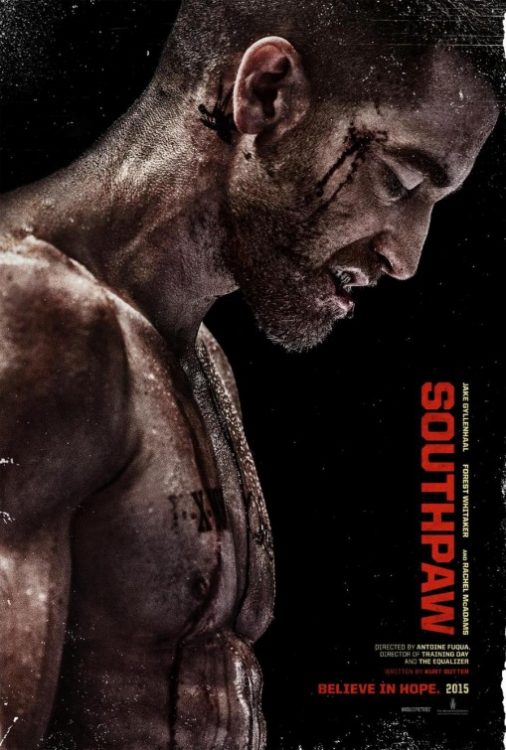
    southpawSouthpaw is the Jake Gyllenhaal movie you did not know you needed. It is a fantastic motivational sports movie, filled with drama and suspense. In my opinion, Southpaw is the best boxing movie since Million Dollar Baby, which Clint Eastwood starred and directed. This movie will leave you on the edge of your seat and make you seriously contemplate boxing lessons.

    Billy Hope (Jake Gyllenhaal) is currently holding an outstanding undefeated record of 43-0 and is the Light Heavyweight champion of the world. His only flaw is that he does not seem to understand the concept of defense because all of his fights leave him bleeding on himself and everything around him. In the ring, he regularly allows jabs to his face.

    He has a typical rags to riches story and spent his young life in Hell’s Kitchen Orphanage. The bright side of his time spent in an orphanage is that he learned to box as an outlet and where he met his beautiful wife, Maureen (Rachel McAdams). Maureen attends all of Billy’s matches and clearly loves him. The tender love scenes between Maureen and Billy are sweet and realistic. Maureen wants Billy to stop boxing, she is tired of seeing him get beat up in the ring and wants him to spend more time with her and their young daughter, Leila (Oona Laurence). Their life right now is impressive, but everything soon falls apart.

    At a charity dinner, where Billy gives a speech about his life in Hell’s Kitchen Orphanage, Maureen is killed. A rival of Billy Hope, Miguel Escobar (Miguel Gomez), indirectly caused her death.

    Very quickly, everything goes downhill. Billy Hope cannot pull himself together after Maureen’s death and loses his home and all of his possessions. His daughter is taken away by Child Protective Services and his once trusted agent (Curtis “50 Cent” Jackson), leaves him to be a manager for Miguel instead. Billy ends up desperately needing a job and finds himself at the gym of Tick Wills (Forest Whitaker) who teaches Billy a method of fighting that includes shielding your face.

    Jake Gyllenhaal trained for four months and put on 15 pounds of muscle for the role of Billy. He delivers an excellent performance that went way beyond the typical sports movie character. He put his whole heart into creating a character with great physical and emotional strength. His emotional scenes are just as powerful as the fight scenes.

    The director, Antoine Fuqua (Training Day, The Equalizer) must have invested a lot of energy into making sure that the scenes shot in the ring were genuine because it felt like being part of the audience of a real boxing match. His cinematographer Mauro Fiore, a winner of several Academy Awards, shines in every scene. From the vivid fight in Madison Square Garden to the final battle between two talented boxers in Vegas and all the emotional bits in between, Fiore proves his worth, as does the film editor, John Refoua.

    Eminem’s song “Phenomenal” is a song about struggle and Eminem’s own fight with entering the rap world. It is a fitting song for the movie and is played during Billy Hope’s training sessions with Tick Wills. Eminem was originally signed on to star in Southpaw back in 2010, but he decided to leave and focus on his music instead. He still wanted to be involved with the movie, so he chose to be the executive producer for the soundtrack.

    Southpaw is a movie about rising from the ashes and coming out on top. Jake Gyllenhaal’s performance is mesmerizing and Rachel McAdams has never been better. This movie is rated R so it’s not suitable for children. It is a must see for anyone who is a fan of sports, Jake Gyllenhaal, or feeling motivated.

  • Film Review: “Terminator Genisys”

    Film Review: “Terminator Genisys”

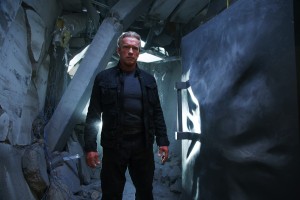
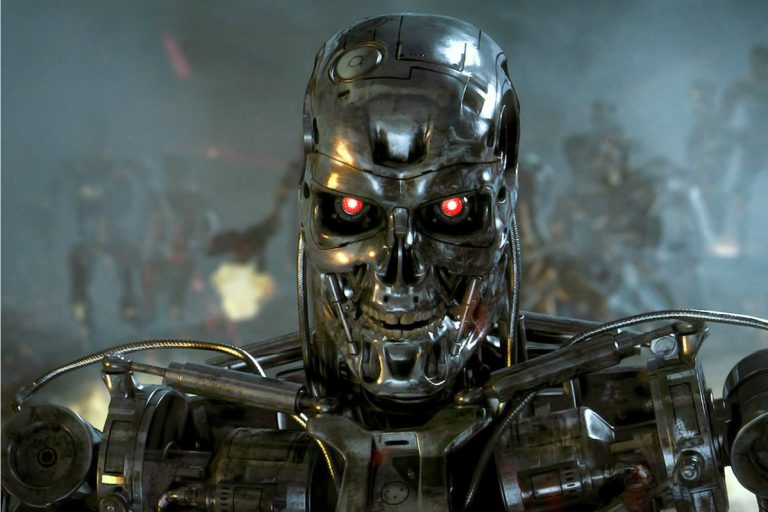
    Terminator Genisys review 2In the age of movie reboots such as Poltergeist, Jurassic World, and Robocop, Terminator Genisys has relaunched the Terminator series. Terminator, directed by James Cameron and released in 1984, was an instant hit. Arnold Schwarzenegger went from a professional bodybuilder to a cyborg assassin who famously said, “I’ll be back.”

    The last two chapters in the Terminator series were very disappointing and were not nearly as popular or as profitable as the first two installments. Sensibly, Terminator Genisys disregards the previous two movies and, instead, brings in bits of plot from the beloved Terminator and Terminator 2 classics.terminator G review

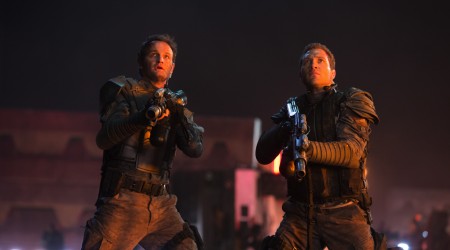
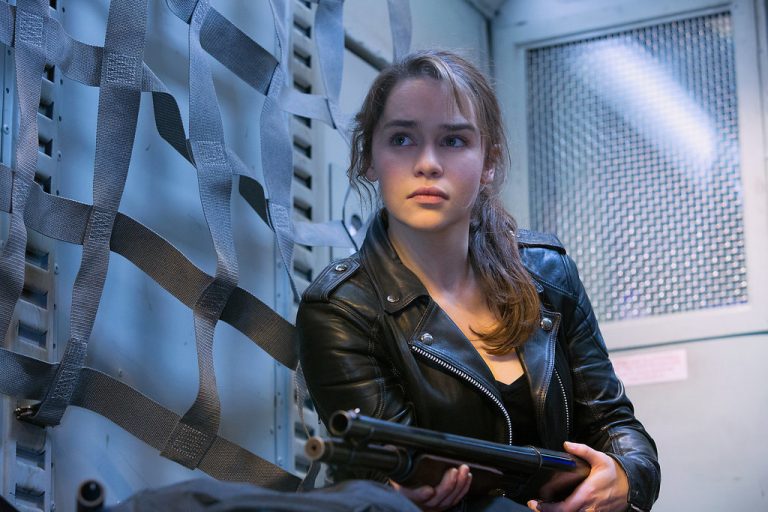
    With a low rating from Rotten Tomatoes at 27% and a rating of 7.1 out of 10 on IMBD.com, Terminator Genisys is either very entertaining or boring with plot holes, depending on whom you ask. My vote is for very enjoyable. John Connor (Jason Clarke), the director of the human resistance, leads a battle against Skynet to bring it down once and for all, but things do not go as planned. Kyle Reese (Jai Courtney) is sent by John to 1984 to protect John’s mother, Sarah Connor (Emilia Clarke). Kyle expects to find a scared waitress, but because of an altered timeline, Sarah is protected by the less technologically advanced T-800 (Arnold Schwarzenegger), which is ffectionately called “Pops” by Sarah. Together they travel to the future to terminate Skynet before it is launched.

    Arnold Schwarzenegger’s character says throughout the movie “I’m old, but not obsolete,” and it’s true. As Sarah explains, Schwarzenegger’s skin is made from humans so he ages just as everyone else does. He is at a disadvantage when fighting the newer and more efficient cyborgs, but he still manages to eradicate his adversaries with the help of Kyle and Sarah. The T-800 cyborg is a welcome return for the many fans of the original Terminator series.

    terminator G 3Technically, Sarah and Kyle are supposed to fall in love during the movie, but do not expect any big romantic scenes. There is barely any chemistry between Emilia and Jai’s characters, and every time they talk about love, it seems forced, contrived, and awkward. Jai Courtney is a very bland and unemotional actor in this installment. Also, Emilia Clarke did not have the most convincing American accent, at points. But overall she does a fantastic job portraying Sarah Connor in this latest adaptation.

    Terminator Genisys does not quite recapture the cherished charm of the original series like Jurassic World did, but it is still an entertaining science fiction film with an abundance of action and superb fight scenes. It is perfect for fans of Terminator, Terminator 2, and for newcomers to the sci-fi series.

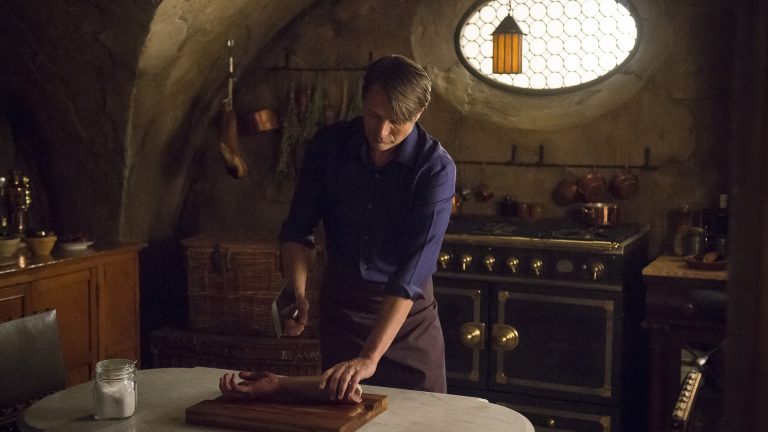
  • Hannibal Review: “Aperitivo” (3×04)

    Hannibal Review: “Aperitivo” (3×04)

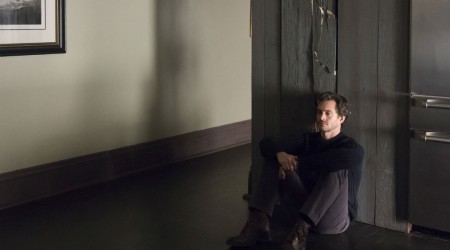
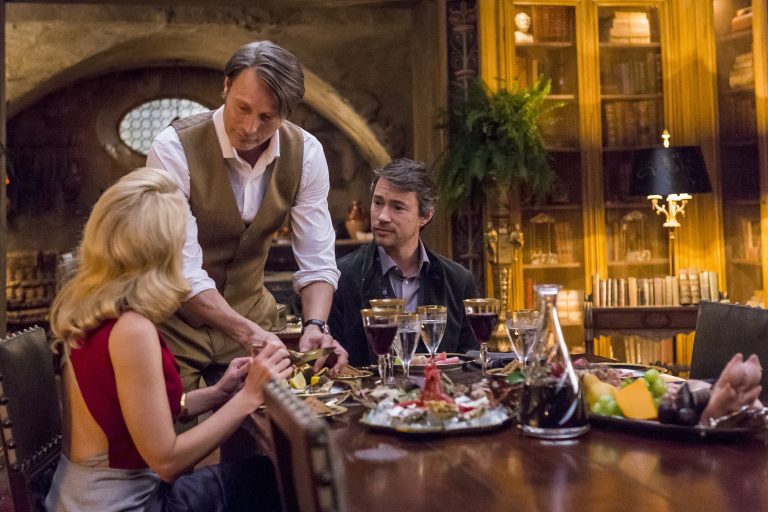
    hannibal aperIt’s a little odd yet fitting that “Aperitivo” is the fourth episode of the season. It’s odd because, in Italian dining, the aperitivo is the drink that precedes the meal; it’s meant to whet the appetite and to break the ice in social situations. It’s a precursor to not just to the main course, but the meal itself.

    Despite the fact that “Aperitivo” arrives three hours in to the meal that is Hannibal season three, it performs many of these functions. It (finally) connects the dots between the ending of season two and the events of the previous three episodes, and then it spends much of its time setting the table for the middle act of this season, which will bring us, one presumes, to the status quo of Red Dragon. With some minor deviations, of course.

    But for all of the (some might say overdue) explanations and resolutions “Aperitivo” offers, there’s no skating around the fact that it halts the momentum that Hannibal has so far achieved precisely by skipping past all that exposition. This episode is tracing its own steps for much of its running time, and, frankly, after three episodes, I’m more invested in what’s going on across the Atlantic.

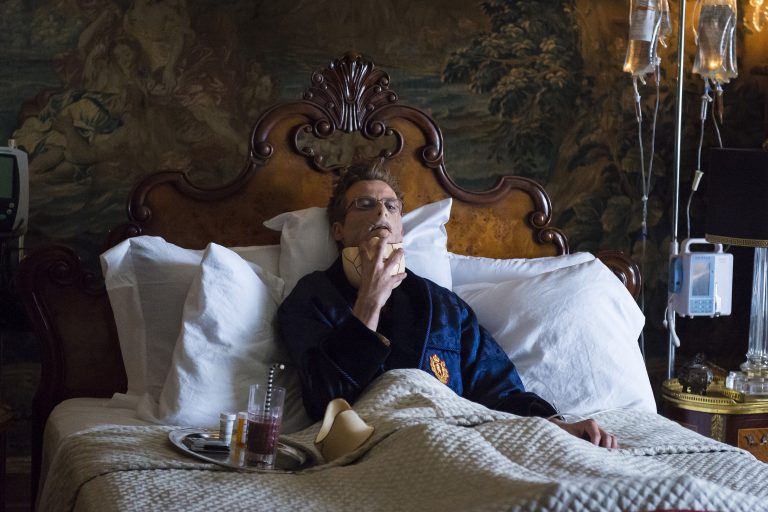
    Fortunately for us at home, even a somewhat disappointing episode of Hannibal is still better than most anything else on television, and “Aperitivo” is full of the little delights that we have come to expect. The opening scene between Chilton (who has cheated death again!) and Mason Verger is a master class in grotesquery, as they strip off their masks to reform the deformities with which Hannibal Lecter has left them. It’s one of the weirder scenes the show has done—which is saying something—that are full of weird sexual overtones that never quite resolve themselves.

    Weird sexual overtones persist into yet another reflection back on that night at Hannibal’s, though now we visit it in another new context, after Bedelia’s bombshell that, maybe, Hannibal is literally in love with Will. The constant flashing back may eventually become tiresome—maybe it already has—but I love that the show affords this sequence its proper weight. For all of these characters, this is the most fucked up night of their lives, bar none, and that impact is fully felt each time we revisit the scene from another perspective.

    It’s after these opening scenes that the episode begins to flag, if only a little. We see Will meet with Jack, prior to taking off to Europe to chase after Hannibal. He admits to Jack that he wanted Hannibal to run, and that he, in fact, wanted to go with him—so basically he almost found himself in exactly the same position in which Bedelia now finds herself. “Friendship with Hannibal is blackmail elevated to the level of love,” after all.

    We also catch up with Alana, who had her own flirtation with Hannibal in the previous season. Now, with a fancy new cane and an apparently murderous new attitude, she’s providing therapy to Mason Verger and also maybe convincing him to form a supervillain team with Chilton in order to get revenge on Hannibal. I don’t yet know what to make of this development in Alana’s character—she is so changed from the source material, where Alan Bloom is a minor character, and yet her development in the series so far has been so contingent on her relationship to the other characters that it’s hard to gauge how far she’s snapped, or if it’s even believable that she would. The jury is out here.

    Finally, we spend some actual quality time with Jack, as he finally decides to give Bella the peaceful death she desires. How much is his reasoning for this linked to his experience at Hannibal’s? It’s purposely vague. But Jack’s decision here is firmly entrenched in the context of the previous episodes this season. In the matter of Bella’s final days, is he observing or participating? (Hannibal sends him condolences because he is a giant prick.)

    The episode is slower than I’d like. It spends a lot of time connecting dots that the audience has already done intuitively, but it’s still necessary plot work. It’s understandable why Fuller and company waited until now to do it, too. If “Secondo” was a reflection on cause and effect, on the context for horror, then this hour is a reflection on grief, death, and on the aftermath of said horror. We see how Jack, Alana, and Will dealt with that immediate aftermath, and how they arrive at the point where Will is going at it alone in Lithuania. In the grand scheme of things, this episode is shoe leather, connective tissue between the ultra-arty thematic work that came before and the falling dominoes that are about to come. There’s nothing inherently wrong with that, but I’m glad to be past it nonetheless.


    Stray Observations

    • Outside of flashbacks and the note that Hannibal sends Jack, this is a Hannibal-free episode. This may or may not contribute to the perceived lack of momentum.
    • Also, how demented is that gorgeous dream sequence in which Will and Hannibal murder Jack at dinner? There is so much to unpack in that image, and I really hope that we revisit it as the season wears on.
    • Chilton copyrighted “Hannibal the Cannibal” because of course he did.
    • Hannibal may be taking over from Mad Men as the stealth funniest show on television. Lots of black humor in this episode.
    • “If my brother offers you chocolate? Politely refuse.”
    • “I’ve always enjoyed the word defenestration, and now I get to use it in casual conversation.”
    • Hannibal Revival Rumor Watch: Rumors all over the place this week. Hulu maybe wants the show but can’t have it because of Amazon’s contract, which Amazon may or may not make good on? And it might not matter at all because the show’s international backers might demand network involvement? Also, maybe A&E is interested? Look, if there’s more Hannibal to be had, I will watch it literally anywhere Bryan Fuller asks me to.
  • Hannibal Review: “Secondo” (3×03)

    Hannibal Review: “Secondo” (3×03)

    hannibal 3x03The secondo is the heaviest course of the Italian meal; it may include different sorts of meats or fish. Here’s the most interesting part: according to Wikipedia (I do a lot of hardcore research for these reviews, you know…) either the primo or the secondo may be considered more important, depending on the locality and the situation. Depending, in other words, on the context. “Secondo” is all about exploring that context. The question of which is more important in a continuing succession of pairs—cause and effect, Will and Hannibal, eater or eaten—is left to the viewer.

    Exploring the context of Hannibal Lecter means that we delve into Hannibal Rising, source material with which I am only glancingly familiar, by which I mean I am familiar with the fact that the source material blows and have therefore avoided it. Will visits the Lecter estate in Lithuania, which is a literal Dracula’s castle. The gothic nature of the setting is a perfect match for the visual aesthetic that Fuller has cultivated. Roughly the first half of Will’s time in Lithuania is extremely light on plot but heavy on creepy images and atmosphere, as he stalks Chiyoh, a mysterious woman hanging about the Lecter grounds who is keeping a prisoner.

    Meanwhile Hannibal and Bedelia continue their increasingly perverse game of house. They have Professor Sogliato over for dinner, and Hannibal casually murders him at the dinner table. Then he and Bedelia casually observe, trading barbs, as the man dies in a most darkly comic fashion, until Bedelia pulls the knife from his brain and spares him. . “That may have been impulsive” and “technically, you killed him” are both surprising laugh lines. In fact, throughout the episode, these two bicker with an unexpected humor.

    But the context is key. Bedelia is horrified by Hannibal’s actions, but only for a moment, until her horror is replaced by her fascination. “You are going to be caught,” she warns him. Later: “You’re drawing them to you, aren’t you?” She’s thoroughly chilling, and, moreover, she’s much more interested in understanding Hannibal than she should be—she’s fascinated by him. Consider context: what’s more important? Understanding the reason for Hannibal? Or understanding what he is and getting the hell out of dodge as quickly as your feet will carry you?

    The trap of understanding, of needing to find meaning, is one that Jack and Will and company have fallen into, and one into which Bedelia has more or less dived head first. In a way, Chiyoh is trapped, as well, though her trap is one of her own making. All roads, as always, lead to Hannibal, and soon the episode’s central question—the context it provides, the dichotomy it presents—is between Will and Hannibal. How alike are they? Who is crazy and who is sane? How should we even define the two extremes?

    It’s only fitting, then, that the writing and editing as the episode continues begins to interweave Hannibal and Will’s stories, showing us Will’s discovery of Hannibal’s past, as Hannibal shares a version of the same with Bedelia. The big reveal of the episode, insofar as Hannibal trades in big reveals, is that of Mischa, Hannibal’s young sister. But as Will says, “Mischa doesn’t explain Hannibal.” There is no easy explanation, no dot to connect. One or the other thing might be important; maybe cause, maybe effect. Maybe it doesn’t matter at all. “All sorrow can be borne, if you put them in a story.” Maybe the whole thing is trying to foist meaning onto a horror that has none; a man who kills and eats for the power it gives him over his victims. After all, we have Hannibal’s version of the same story: “Nothing happened to me. I happened.” Chiyoh’s version of the story is that her prisoner ate Mischa, which set Hannibal on his path. Bedelia catches on more quickly, as she asks Hannibal bluntly how Mischa tasted.

    It’s no accident that Bedelia sinks into that murky bath once again this week. This time as Hannibal shampoos her hair for her—he might as well be drowning her himself. But has Hannibal happened to Bedelia after all? Hasn’t she made, willingly, every decision that led her to this point? Is she not a participant after all?

    It seems that Will is. He frees Chiyoh’s prisoner, who summarily attempts to kill Chiyoh, forcing her to kill him instead. Chiyoh, at least, is sorry for what she has to do. Will isn’t. Hannibal was once curious whether Chiyoh would kill. Is Will equally curious? He strings up Chiyoh’s victim in a pose that would make Hannibal proud.

    I’ve filled this review with questions because the whole of “Secondo” is questions at its core. Even Jack gets in on the game, talking with the inspector about the nature of faith, understanding, and imagination. And yet Jack still has faith—still imagines—that Will understands Hannibal. That there is something there to be understood. That it isn’t all entropy, sliding slowly into pure chaos.

    “Secondo” is by far the best of this opening set of episodes. Visually, it is a fabulously murky episode. Everything in Lithuania is in dark blacks and blues. The very setting threatening to swallow Will and Chiyoh whole. Even the scenes in Hannibal’s stolen apartment are burnt orange, with none of the warmth that implies. The edits between scenes are slow dissolves, cross cuts, and fades in and out. Everything is of a piece; everything is of a design. Even if that design is a broken tea cup or a shattered bottle of wine. Narratively, the episode is the same; a fractured set of fairy tales and ponderings about the stories we tell ourselves and each other in order to bear the horrors we must live. It’s been a slow, purposeful start, but with the closing scenes of “Secondo,” the stage is set—sooner rather than later—for reckoning.


    Stray Observations:

    One of the episode’s neatest visual flourishes is the recurring, luxurious shots of snails. As Abel Gideon said so succinctly, “The snail doesn’t know it’s being eaten.” Hannibal sees everyone around him as snails, anyway, and maybe they are, for as susceptible to his machinations as they tend to be. Or maybe it’s that the knowledge of it doesn’t change their behavior.

    As an experiment, I am going to watch Hannibal Rising and see how it compares. (I expect the answer will be “not favorably,” but my expectations are nil anyway.)

    I try not to put too much weight on the previews, as the marketing monkeys responsible at NBC know how to twist and contort any episode beyond recognition. (RIP Parenthood.) But YO NEXT WEEK LOOKS SO GREAT.

    Well, as you all have learned by now, NBC has not renewed Hannibal for a fourth season. I’m not going to eulogize the show just yet because I’m pretty confident that some online streaming service or another will resurrect it for at least one more go. It remains to be seen whether that would even be worth it, given the difficulty with getting the rights for Silence of the Lambs and considering that the end of Red Dragon is a fine stopping point for the characters we’ve come to know. As much as I’ll miss Hannibal should this be the last season, you can’t really blame NBC for this one. They’ve given the show more than a chance against pretty much all reason.

  • Hannibal Review: “Primavera” (3×02)

    Hannibal Review: “Primavera” (3×02)

    hannibalAfter totally neglecting the cliffhanger ending of its second season, this week Hannibal brings us up to speed—at least somewhat—reacquainting us with Will Graham after what’s revealed to be a six month gap since that hellish night at Hannibal Lecter’s house. But first, “Primavera” takes us all the way back to that night, presenting the final moments of season two in the new context of this third season. At the time, it was a tragic crescendo, a cacophony of destruction raining down upon our heroes; now, the scene is framed as a tragic echo. Hannibal recalls the loss of the man who was his one, true friend. “Fate and circumstance have returned us to this moment,” Hannibal says, then and now. The stag lies dead, too. An ocean of blood spilling from it and drowning Will. The teacup shatters, again, only to reconstruct itself as Will awakens in hospital.
    Yes, the first several minutes of “Primavera” are composed of scenes we’ve already seen, but the new context they are afforded in following “Antipasto” is invaluable. They’re also no less gorgeous than they were the first time around—with a monochromatic grey that is shot through with deep, red blood, spurting in geysers and flooding the frame around the characters. The teacup, shattering is such a vital, recurring image throughout the previous season, reassembles itself here once more. This suggests something of Will’s mental state and sets up the dream logic that dictates much of the episode to follow.

    “Primavera” only slowly reveals its true nature. We should know better. After all, we are, by this point, more than familiar with Will Graham as an unreliable narrator. When a silhouette that might be Alana Bloom’s turns out instead to be that of Abigail Hobbs, it should be an obvious trick. And yet, somehow, it’s not. It helps that Abigail has cheated death on this show before; and the parallel of the relationship between Hannibal and Bedelia to that between Will and Abigail is intriguing enough to justify her giving death the slip one more time.

    But as the episode unfolds, much of Will’s reality comes into question. “Primavera” plays out like some sort of lurid fever dream, chiefly concerned with putting Hannibal and Will’s relationship in new relief (in light of what each views as the betrayal of the other) and exploring the past that Hannibal has attempted to abandon, whether it’s his crimes of the distant past (as the historical Il Mostro) or his more recent abuses toward Will and company.

    As with “Antipasto,” the very best thing about Hannibal this week is its utter indifference to the conventions of plot and narrative. In bucking what would be expected of the early season here, Hannibal presents an infinitely more exciting narrative instead. The show is doling out its familiar characters and rhythms only very slowly, and, for the most part, these have been abandoned or transformed beyond recognition. We are thrown one familiar bone, as Will investigates a murder committed by Hannibal Lecter, but rather than alongside Jack and Alana, he’s with Detective Pazzi and an imagined Abigail. We are robbed even of the pendulum swing that normally signals Will’s practiced use of his empathic abilities.

    And then there is the extended finale sequence, which is a master class in visual storytelling. It begins with Will’s study of the corpse Hannibal has left for him. Is it a gift? A trail of breadcrumbs? A warning? Or, perhaps, as is often the case, it is at once all and none of these. What it becomes for Will is a nightmare revisited, as the stag that was slain is reborn, in gloriously grotesque fashion, before his eyes, and in a church, of all places. The effects work here is excellent, and the way the corpse bends and breaks itself is a horrifying sight for Will and the audience alike.

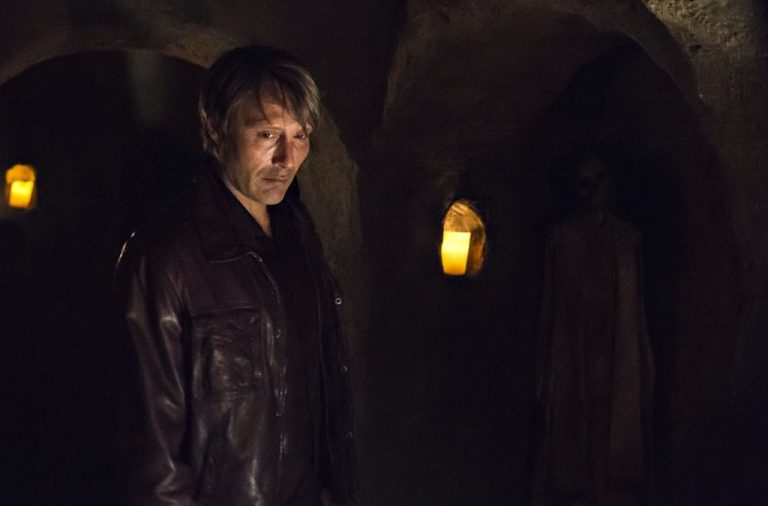
    And so, with Moby Dick newly revealed to his Ahab, Will hunts through the catacombs beneath the church, certain that he has caught a glimpse of Hannibal, and that he is somewhere here, lurking in wait. This is, of course, a gorgeous sequence, but is also delightfully tense, even as it serves the sole purpose of marking time as the surviving cast slowly assembles in Italy to finally bring Hannibal to justice. What excellent camerawork throughout. Hannibal is nowhere, yet he is around each corner. And then he is there, looking for all the world like Bela Lugosi or Christopher Lee. He and Will have several near misses. In fact, they may be nowhere near each other, as the episode never feels more dreamlike than it does in this sequence, and Hannibal and Will each fade in and out of the murky shadow in tandem. Will’s whispered, “I forgive you,” so reminiscent of Bedelia’s still-stunning “I believe you,” may be whispered to thin air—though it certainly seems as though Hannibal is there to hear him, after all.

    “Primavera” presents in may ways the first part of a long mystery narrative. The final manhunt for Hannibal Lecter, and it’s impossible, at this stage, to know what is real and what is not or who is real and who is not. Good and evil, like observation and participation, are obfuscated to the point of meaninglessness. In other words, we are right where Hannibal and Hannibal wants us to be.


    Stray Observations:

    • The show pretty unambiguously names Hannibal as the real-life serial killer Il Mostro, a tack that the novel and the film Hannibal  (in deleted scenes) hinted at, as well.
    • There is continued, overt discussion of religion in this episode. The idea of evil as the Devil-with-a-capital-D or, alternatively, of playing God, has always been on the fringes. Just last week, Abel Gideon called Hannibal the literal Devil.
    • What an awful last year of life Abigail Hobbs lived, when you think about it.
    • The title isn’t as structurally clever as “Antipasto”, which is disappointing—instead, it references Botticelli’s painting of the same name.


  • Hannibal Review: “Antipasto” (3×01)

    Hannibal Review: “Antipasto” (3×01)

    antipasto hannibal review

    What I love best about the titling scheme Bryan Fuller has chosen for Hannibal—this season, each episode is named after an Italian course; the previous seasons were French and Japanese, respectively—is how it at once constitutes gimmickry and structural importance. Not every episode is perfectly aligned with its title, but many come pretty close. “Antipasto” is such an episode. It’s a peculiar episode. There is not even the remotest doubt that Will, Jack, and Alana survived the bloodshed of season two’s finale (not least, their names are in the credits), and so, assuming that its audience is not necessarily on pincushions waiting to find out what’s happened to them, “Antipasto” is instead thoroughly unconcerned in addressing the cliffhanger at all. This serves to generate considerably more suspense than the cliffhanger itself, such as it was, ever did. We are launched several months into the future, and our first glimpse of Will and company doesn’t come until the preview for next week. The question becomes not if they survived, but how on earth they managed it.

    Imagine an alternate premiere, a perfunctory episode of television that picks up right where we left off and doles out, piece by piece, the process that brought our maimed heroes back to life. It’s boring, and moreover, it’s uncharacteristic of Hannibal as a series. What a relief, then, to see in “Antipasto” that Bryan Fuller retains a full understanding of the sort of show he’s making, and how that sort of show works. Very little actually happens in “Antipasto”, and yet every second is engrossing; every shot, every frame, is dense with meaning. This is a show that begs to be savored.

    The episode wastes no time throwing us right back into the stylized glory that is Bryan Fuller’s vision of the Hannibal Lecter story. When we meet Hannibal in the season premiere, he is wandering around a party, floating adrift from frame to frame. He is newly unknown, freed not just from the weight of the Chesapeake Ripper, but freed from the reputation of Hannibal Lecter himself. Not that he doesn’t fall quickly into old habits. A new name and a new companion don’t change the fundamental aspects of his character.

    So Hannibal and Bedelia are trotting around the continent, stealing identities and living perfectly frivolous lives among the French, then Italian elite. One of their acquaintances happens upon in both countries, and twigs to their scheme. Suddenly Hannibal falls into the cat and mouse rhythm he developed so thoroughly with Will. Meanwhile, Bedelia du Maurier spends the episode becoming increasingly unraveled, despite her deceptively cool exterior. Gillian Anderson plays her as a reckless, curious woman, in way over her head (and she plays her brilliantly, at that. I have never been happier with opening credits than to see Gillian Anderson’s name added to this week’s).

    The episode climaxes (or perhaps, the antipasto cleared away, and the main course glimpsed) when, suddenly, Hannibal is bludgeoning his new friend to death, just as Bedelia tries to run away. Is she observing or participating? Hannibal asks this question of her implicitly throughout the episode, and explicitly here, as he calmly murders the poor man, and Bedelia looks down helplessly as he deconstructs her carefully considered rationalization. She has been participating all along; passivity is not an excuse. The game of cat and mouse has been with her all along.

    The relationship between Hannibal and Bedelia is fascinating, giving the episode a driving energy that more than serves in the absence of the show’s typical characters and rhythms. Her interest in him darts back and forth from intrigue to wariness. She discusses his murderous, cannibalistic habits frankly, not as scared of them as she should be—and that is what scares her most. There are many shots of blood flowing in “Antipasto”, being washed off the bodies of our intrepid Eurotrippers, or dripping off the corpse of a freshly killed rabbit hanging from a butcher shop. But there is no washing away the blood they’ve spilt. There’s no getting around the fact that Hannibal is, as Abel Gideon says tonight in flashback, truly the devil. He has an uncanny gift for brining out the worst in all around him, and Bedelia is no exception, as much as she’d like to think he is. The phrase “professional curiosity” comes about again; before this was the rationalization Alana used to justify her interest in Will Graham. Yet another parallel is drawn.

    The story, then, is excellent, a brilliant first course as we set the stage for, at last, the adaptation of Red Dragon proper. But as always the real main course here is the visual experience. The episode’s pace is deliberately languorous, as Fuller chooses instead to immerse us, slowly, in the new lives that Hannibal and Bedelia have established for themselves. As he does so, he lets us sink slowly back into the cinematography, the visual rules and motifs that govern Hannibal’s cinematic language. “Ethics become aesthetics,” Hannibal and Bedelia conclude in their philosophical exchange. No longer is the show interested, necessarily, in portraying Hannibal’s crimes as murders, as evil. That’s for granted now; now, the interest lies in portraying the nature of evil.

    There is of course the recurring visual of blood running, dripping, splashing, but there are a few other choice shots as well. For instance there is a striking contrast between the composed formality not just of Hannibal as a character, but of the settings and the framings that contains him, and the brutality with which he mains and murders. As the camera moves and wavers in the open sequence, it will be interesting to watch if the formal aspects of the show become increasingly unhinged as Hannibal does the same.

    There are also some black and white flashbacks with Abel Gideon, that serve to paint Hannibal’s previous life in a different, separate light. But the shot of the episode this week is the sequence of Bedelia, slowly sinking into the black murk of her bath, the depth of which for a moment becomes that of an ocean. What a stunning visual representation of her journey. Fuller describes this season in various interviews as a trashy ‘80s art film, and he’s not wrong; I just think his modesty oversells exactly what he’s managed to achieve. Hannibal is arguably one of the greatest dramas on the air, period, but it is inarguably the best-looking show on television right now.

    “Antipasto” is slow and atmospheric, setting the table for the rest of the season, and doing just enough to whet its audience’s collective appetite. In other words it does just what it’s meant to. Bring on the next course.

    Stray Observations:

    • “Antipasto” is also, for me, a bit of a palate cleanser. I’m thrilled to be writing about this amazing show, and I’m looking forward to being a sight more positive than I got to be about Scandal and American Horror Story. (I hope I haven’t jinxed it.)
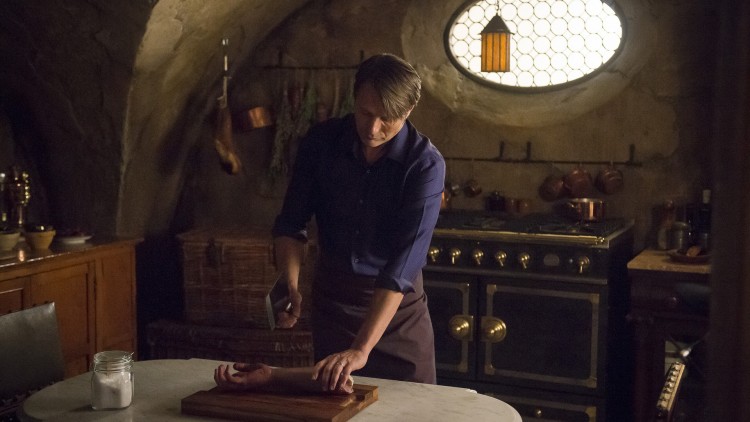
    • As always, the greatest guilty pleasure of Hannibal is THE FOOD. Every dish looks magnificently appetizing—even the dishes that we know for a fact are people. It is this show’s greatest trick.
    • Yo, how insane was season two of Hannibal? That previously on is just a mashup of crazy shit.
  • Top 10 Most Anticipated Movies of the Summer

    Top 10 Most Anticipated Movies of the Summer

    jurassic world most anticipated films of the summer

    The days are long, the weather hot, and the movies big. That’s right it’s summer and that means that the winter freeze on movies is over and we can look forward to the popcorn flicks, raunchy comedies, and the first of the Oscar contenders in theaters. Last year we saw huge sleeper hits like Guardians of the Galaxy, Best Picture winner Birdman, and the unfortunate blockbuster Transformers: Age of Extinction, what does 2015 have in store? Here’s our Top 10 most anticipated movies of the summer!

    Love & Mercy | Dir. Bill Pohland | June 5

    Bill Pohland has produced critically acclaimed and Oscar winning movies like Brokeback Mountain, Food Inc., 12 Years A Slave, and The Tree of Life. However, Love & Mercy, a biopic about Beach Boys leader Brian Wilson, is his directorial debut. The film had a highly acclaimed premiere at Toronto, which brought the film a standing ovation and praise for Paul Dano and John Cusack’s performances as the young and old Wilson. Critics from Hit Fix, Variety, and The Hollywood Reporter all lauded the film for being unique from most biopics. If all that doesn’t get you in the seats, maybe the dark and twisting story of Wilson will. From psychedelic experiences to scattered voices in his head, the film is as bold as it is entertaining.

    Jurassic World | Dir. Colin Trevorrow | June 12

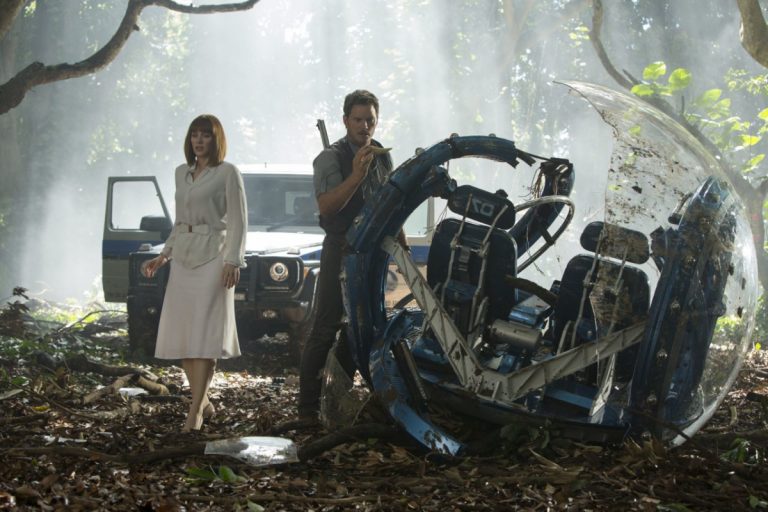
    If you couldn’t tell from my incessant fan-girling in my review of the trailer, I’m excited for this movie. Not only is it reviving an instant classic from the 90s, it’s also stacked with incredible talent from Chris Pratt to Bryce Dallas Howard to Irfan Kahn. Plus, if that wasn’t enough, the park is actually open! John Hammond’s crazy and misguided vision actually became an actuality. The original movie became the highest grossing movie of all time when it was released in 1993, and while this reboot is probably not going to reach that success, I’m sure we have a blockbuster hit on our hands.

    Inside Out | Dir. Pete Docter | June 19

    There’s very little Pixar can do wrong (the very little is probably just anything to do with Cars), but Pete Docter has yet to do wrong for Pixar. After massive hits in Monsters, Inc and Up, he’s following up his successes with Inside Out, a film about what goes on inside your brain and why you make the decisions you make. The film had a roaring reception at Cannes this year with some critics calling it Pixar’s best film of the decade. From it’s inventive storyline and concept to the all-star cast and crew, Inside Out is looking to be the breakout animated film of the year.

    Dope | Dir. Rick Famuyiwa | June 19

    With a cast that boasts up and coming actors, a model, and a couple rappers, Dope sounds like it could either be an incredible and entertaining film or an experiment that has gone awry. However with incredibly promising reviews coming out of Cannes, including a 5-star rave review from The Guardian, the film proves itself to be more than a comedy with A$AP Rocky playing a drug dealer. Plus, with a cast that is mostly made up of minorities assuming the roles of a high school comedy formula that are often filled by white actors is refreshing. No disrespect to John Hughes, but there are more than just wealthy white kids dealing with teen issues.

    Come back next month to see our picks for July!

    Come back next month to see our picks for July!

    Come back soon to see our picks for August!

  • Shameless Review: “South Side Rules” (5×10)

    Shameless Review: “South Side Rules” (5×10)

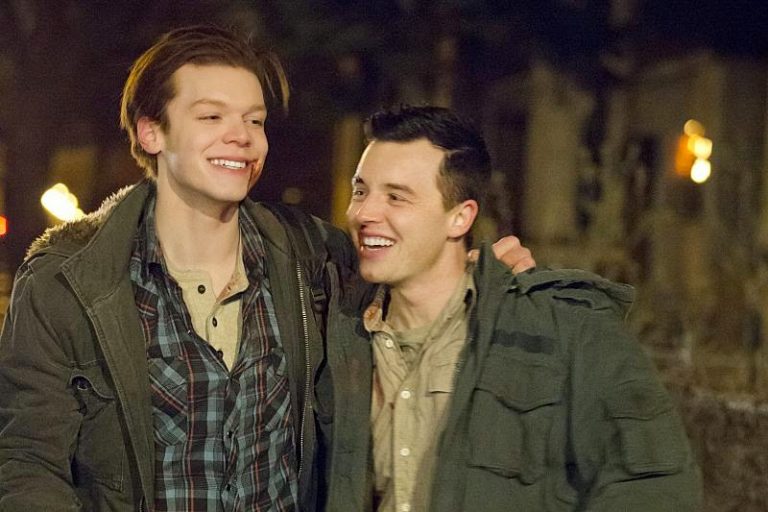
    Shameless South Side RulesThere’s really no way to even begin talking about “South Side Rules” without mentioning that knockout of an ending. Looking back on it, it’s a classic bait-and-switch. Ian and Mickey are too happy—seriously, how adorable is their drunken “Love Is a Battlefield” sing along—and that should be the first sign that something is about to go horribly wrong. But who really expected Sammi to go so far in her vengeance quest against the Gallaghers who have so shunned her? It’s the first truly tremendous closer the show has had all season, and it comes not a moment too soon.

    Here’s the thing: Sammi believes everything she says to Ian, incongruous as it may seem, before turning him over the United States Army. She doesn’t bear any ill will toward Ian at all; he’s just a way to jab at Fiona and repay her for what she sees as her complicity in Chuckie’s jail stint. And you know? She’s not wrong. There’s been just one empirically provable consequence of these so-called South Side Rules, and it’s that, sooner or later, they wreak as much havoc as possible.

    South Side Rules are also total bullshit, as Professor Wallace correctly calls Lip out on. The Gallaghers use them constantly, against all reason, to rationalize their bad decisions and their bad habits. Lip covers for Kevin: South Side Rules. Fiona comforts Sean despite that oh-so-obvious impending kiss: South Side Rules. And, yeah, Sammie throws down, an eye for an eye: that’s South Side Rules, too.

    From the perspective of a non-Gallagher, it’s way past time to call the Gallaghers out on their bullshit. Is it likely that lip will take Wallace’s admonition to heart? Nope. She’s already making her own bullshit rationalizations, putting a great tenured position on the line for—well, okay, I’ll give her Jeremy Allen White, but still—and beside, Lip’s similarly underprivileged resident decides not to rat him out. We might see the wreckage that “South Side Rules” wreaks, but for the Gallaghers, the system works. At least, for now.

    And yet there’s one Gallagher for whom South Side Rules seems truly to work, against all odds, spitting in the face of God and fairness and all and sundry, and that’s Frank. Bianca first tries to distance herself from Frank after their bender, but before long she’s right back in his orbit again. He really is what she needs in her life right now. Somehow. And there’s somehow something truly genuine in his feelings for her. Granted he’s trying to have sex with her, and the story is a hair’s breadth from becoming super fucking gross. But right now it’s actually kind of sweet.

    A lot of the value of “South Side Rules” comes from its shock ending, but the episode does a great job both building up to its cliffhanger and cleverly distracting from it. At first it seems curious that, after last week’s ending, we don’t check in with Carl and Chuckie in juvie. But in retrospect it makes sense—we need to not be thinking about Chuckie’s fate in order for Sammi’s decision to have the maximum impact. Meanwhile the other characters slowly dig their heels in: so we are more concerned that Fiona will find a way to betray Gus’s trust again, that Lip is going to squander the gifts that life is quite literally showering him with at this point, and that poor Debbie is going to get herself pregnant.

    In fact for everything that happens in it, “South Side Rules” is a relatively non-chaotic episode by Shameless’s usual standards. So often the various characters are in total free fall, and this episode is unafraid to hit the pause button, at least briefly. Check out the lovely shots of Fiona cleaning Gus’s empty apartment when she’s so used to tending to a house full of crazy siblings. This relationship is taking way too much effort on her part, and she knows it. She knows she is just going through the motions. It’s part of what draws her to Sean—he’s got her number, and she knows that, too.

    It’s not all gloom and doom, though. Really, “South Side Rules” does perhaps the best job this season of balancing the show’s more serious side with its sillier indulgences. Plenty of laughs, heartfelt moments, and yes, an emotional gut punch at the end—it may not be a series best, but it’s textbook Shameless done well enough.


    Stray Observations:

    – Debbie just steamrolls right over Derek’s total non-response to her too-soon “I love you.” Abs will do that to a girl.

    – “Cheap weed!” Honestly, Kevin and Lip selling drugs in the dorm was a bad enough idea without having the weed turn out to be weird drugs instead.

    – The dynamic between Lip and Amanda is exceedingly odd, isn’t it?

    – I feel like there would be absolutely nothing appealing about Skype sex, so Fiona and Gus probably lucked out there.


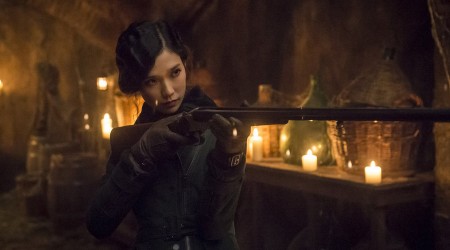
  • Penny Dreadful Review: “Night Work” (Pilot)

    Penny Dreadful Review: “Night Work” (Pilot)

    3789755-6137169289-Penny

    Penny Dreadful has been a show shrouded in as much mystery as its storyline. All we had to go off of was its name. A penny dreadful was a work of fiction that was usually written in an extremely graphic fashion that was released over a course of a few weeks, costing a penny. Whatever that meant for show I had no idea, but as the pilot episode “Night Work” unfolded, I realized the sinister intentions of the show.

    The show begins on a… well, dreadful note. The cold open shows a woman and her child being attacked by something. Then, following a fittingly creepy opening credits sequence (somewhat reminiscent of an American Horror Story opening credits) we are introduced to a frightened woman praying to a cross who is possessed by… well, something. See a pattern here?

    I haven’t even heard one line of expositional dialogue and I could already tell that this is going to be a bats**t crazy show.

    The praying woman, whose name is Vanessa Ives (played by Eva Green), offers gunslinger and performer Ethan Chandler (Josh Hartnett) some night work in London. Being the daring man he is, Chandler accepts.

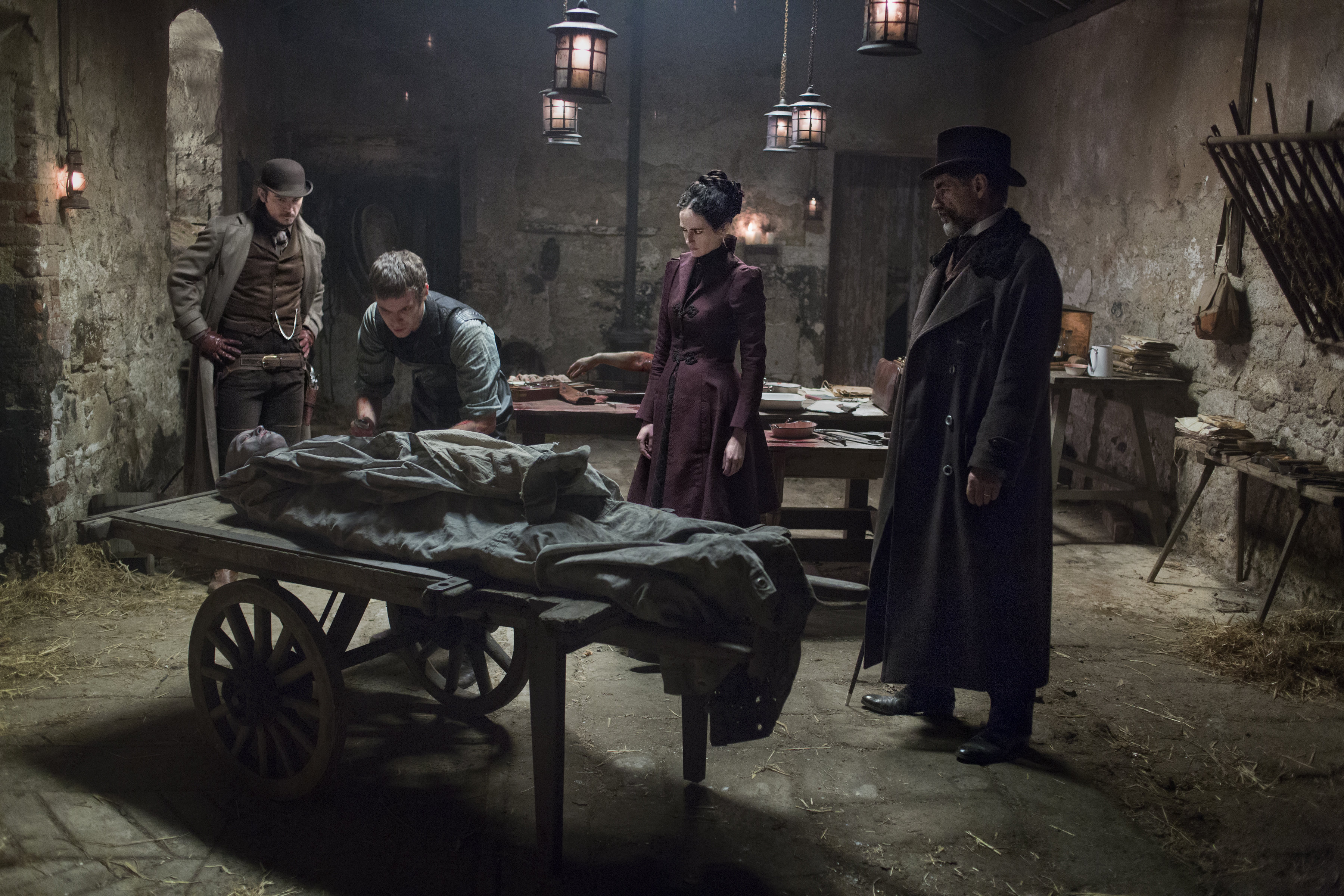
    He meets Vanessa in a dark and gloomy London where he meets Sir Malcolm Murray (Timothy Dalton). The trio goes to a dark passage where we get our first encounter of the creatures of Penny Dreadul. I would characterize these things as vampires, but according to a scientist (played by Harry Treadaway), it is either a man with hardened skin etched with hieroglyphics, sharpened teeth, and an exoskeleton or something else. SIDE NOTE: If I were you, I wouldn’t look at anything regarding the series or this character until you watch the episode.

    While in the passage, which Vanessa describes it as a “half world between what we think and what we feel,” these monsters attack the group, which unsettles Chandler. Vanessa tells him that one of the creatures took Murray’s daughter and they are trying to find her. She asks if he will continue on with them. “A wiser man would say no,” but Chandler isn’t a wise man.

    Eva Green kills it as Vanessa Ives. She has the character’s expression and underlying sexuality so refined that it feels like she has been playing the character for years. She is truly phenomenal.

    Terrifying in its storytelling, beautiful in its portrayal, and intriguing in its premise, this show is a strong addition to Showtime’s line up. The series is meant to terrify you, plain and simple. Not with jump scares (although there are a few), not only its unflinching depiction of the horrors in the world, but with its ability to make you think about what is known and unknown and life itself.

    Penny Dreadful is definitely a series that will keep you coming back for more solely for its story and its mysteries. However, its impeccable style, strong writing, and masterfully acted characters (the ensemble is something to marvel at) will take it from being a guilty pleasure to a truly captivating series.


  • Film Review: “Men, Women, and Children”

    Film Review: “Men, Women, and Children”

    Men, women, and childrenJason Reitman, of Thank You for Smoking and Juno, brings us his latest comment on modern society: Men, Women, and Children.

    This film follows the lives of several teenagers and their parents, befitting the title. It focuses on the constraints of our technological world, loss of human connection, with an overarching theme of insignificance. The cast is extensive, including Adam Sandler, Jennifer Garner, Dean Norris (Hank of Breaking Bad), and Ansel Elgort (The Fault in Our Stars). Emma Thompson voices over the film occasionally.

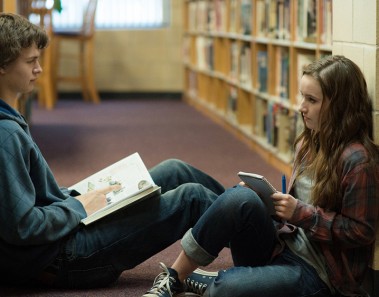
    Men, Women, and Children focuses on four families. Don and Helen Truby (Adam Sandler and Rosemarie DeWitt) have a troubled marriage which leads them both to infidelity. Their son, Chris (Travis Tope) struggles with an addiction to internet porn and resulting impotence. Chris’ love interest is Hannah Clint (Olivia Crocicchia), who is an aspiring actress and model. Hannah‘s friend, Allison Doss (Elena Kampouri), struggles with an eating disorder. Hannah’s mother, Joan (Judy Greer), was also once a struggling actress who hopes to give her daughter the opportunities she never had. To help jumpstart Hannah’s career Joan sets up a website to display headshots and occasionally takes photo request from (sketchy) online fans. Joan’s love interest is Kent Mooney (Dean Norris). Kent’s wife abandoned their family to move to California. His son, Tim (Ansel Elgort), recently gave up his high-school football career in favor of video games and existentialism. His growing depression is apparent throughout the film. Tim’s love interest, Brandy Beltmeyer (Kaitlyn Dever), has a mother, Patricia (Jennifer Garner), who tracks her on social media. Patricia checks her daughter’s computer and phone every night, reading messages and scanning for unwholesome behavior or unwanted attention.

    The biggest problem in Men, Women, and Children is the lack of cohesion. The themes are scattered and dull. On the surface, it attempts to attack technology and its effect on our generation and our parents’. It might succeed at doing so if it stuck to one story line. Some of the problems faced by the characters cannot possibly be traced back to their cell phone. Don and Helen have grown tired of their lives and each other. This is a simple plot adding very little to the movie as a whole. There is a lot of that in this movie: extra. Extra characters, extra storylines, extra voices, extra themes…

    Emma Thompson narrates this film, sometimes over a scene and sometimes coupled with the image of a satellite hurling through space. The narration and imagery are equally useless and poorly executed. The images of space draw in yet another, not-so-subtle, theme. Life is meaningless. Earth is inconsequential. The voiceover undermines the film’s brooding tone.  Ansel Elgort’s character brings the themes of technology and meaninglessness together. He has an obsession with video games and questions his existence. This theme has not only been done before, but done much better. In addition to the loathsome space scenes the production quality of the rest of the film is sub-par. The incorporation of technology into the scenes (i.e. text bubbles over people’s heads to depict what they’re seeing on their phone) is not graceful. The intention is obvious, but not well executed. It looks clunky and a little silly, detracting from the film’s dark tone. The acting is standard, nothing horrible, and nothing groundbreaking. The abundance of characters leaves each with little screen time, but also little time to mess things up which works to the movie’s advantage.

    Men, Women, and Children’s lack of direction, plethora of storylines, and absurd Stranger Than Fiction-esque voiceover leaves the film with little substance or clear endpoint. The themes are confusing. The acting is just okay.  The plots are too many and too contrived. The narration doesn’t fit. Everything seems forced, like it could be out of an after school special on PBS or Lifetime.

  • Film Review: “Nightcrawler”

    Film Review: “Nightcrawler”

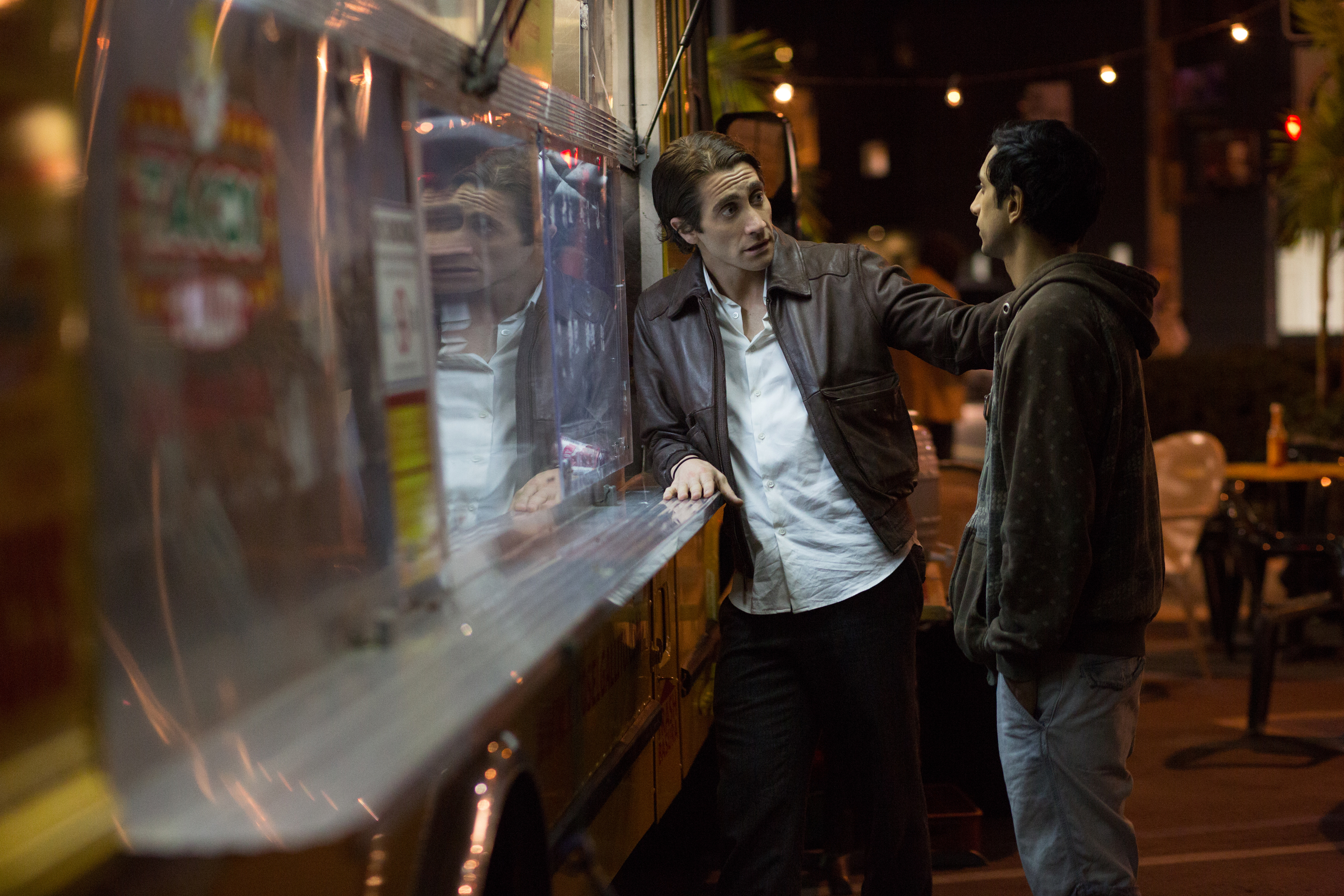
    nightcrawlerDan Gilroy makes his directorial debut with Nightcrawler, which he also penned, starring Jake Gyllenhaal. A gripping psychological thriller, Nightcrawler follows Louis Bloom (Gyllenhall), a persistent young man eager to break into the world of L.A. crime journalism. Having first screened on the Toronto International Film Festival, Nightcrawler claims a Halloween release date, a fitting day for this twisted insight into the mind of sociopath.

    Louis Bloom seems like everyone else. He’s handsome, well-read, driven, generally a normal guy trying to make money where he can. Louis scrapes up cash here and there. He commits a string of petty burglaries in lieu of a steady job. When he happens upon a car accident on the interstate Louis discovers his passion: the whirl of excitement, the flutter of suspense and the thrill of crime reporting in the heart of Los Angeles. He decides to buy a video camera and police scanner and throw himself into the action. It takes time for him to get on his feet but soon he shoves his way to the head of the pack, beating even the police to the crime scenes. Louis is highly motivated and tenacious, but he does have flaws. He’s a high-functioning sociopath highly skilled in manipulation. He lacks empathy and a sense of right and wrong. Pretty much, he drags dead bodies across asphalt so his shot will be more balanced. He “charms” his pseudo-coworker Nina, played by Rene Russo, and establishes an exclusive relationship with her news station. His footage is the best because he goes to insurmountable lengths to get it, filming crimes as they happen and withholding evidence from the police in order to break the story first. His obsession with power and recognition would become too much for most people, but not Louis. Nightcrawler is a journey into the mind of a sociopath and the cutthroat nature of success.

    [Tweet “Jake Gyllenhaal gives an Oscar worthy performance in “Nightcrawler””]

    Louis speaks matter-of-factly. Often the things he says seem prepared or as if they’re being read off out of a self-help book for aspiring entrepreneurs. He mentions that he spends a lot of time on his computer, researching all kinds of things. It only makes his character more convincing. His interactions with others are well-rehearsed and calculated. He uses others to his own benefit, to the extreme, threatening and blackmailing with a subtle charm that convinces you that there’s no choice. He clearly doesn’t feel regret or form any real connections with other characters.

    Gyllenhaal’s performance is by far the most riveting aspect of this movie. He balances the characteristics of a sociopath so well; acting irrational when he’s after something, laughing things off when most would cringe, and using is charming craziness to manipulate others. Often threatening others or bargaining when he has no leverage, but always coming out the victor. Gyllenhaal gives a stunning performance. His dialogue is sharp and his movements, unnerving. The best way to describe his character is unsettling; a guy who’s not quite weird enough to turn heads, but weird enough to send a chill down your spine. His portrayal is strangely hypnotic, balancing empty stares with endless rambling while charming his prey. He’s backed up by solid performances from Rene Russo and Bill Paxton, who plays a fellow driver, as well as Riz Ahmed who plays his assistant. Although the performances put this film over the top, the rest of the production was quality. There were a few car chase scenes that could have come off hokey, but were done in such a way as to emphasize the protagonist’s unpredictability. For a first-time direction, Gilroy did an incredible job.

  • Film Review: “The Babadook”

    Film Review: “The Babadook”

    the babadook

    Jennifer Kent wrote and directed the Australian horror film, The Babadook. Based on the short film, also by Kent, The Babadook rose to critical acclaim after being premiered at the Sundance Film Festival. This is Kent’s debut feature film, drawing inspiration from early horror, fairy tales, and magic. Kent puts a hand-crafted twist on a traditional tale. The Babadook explores real-life horrors through well-timed scares and psychological suspense.

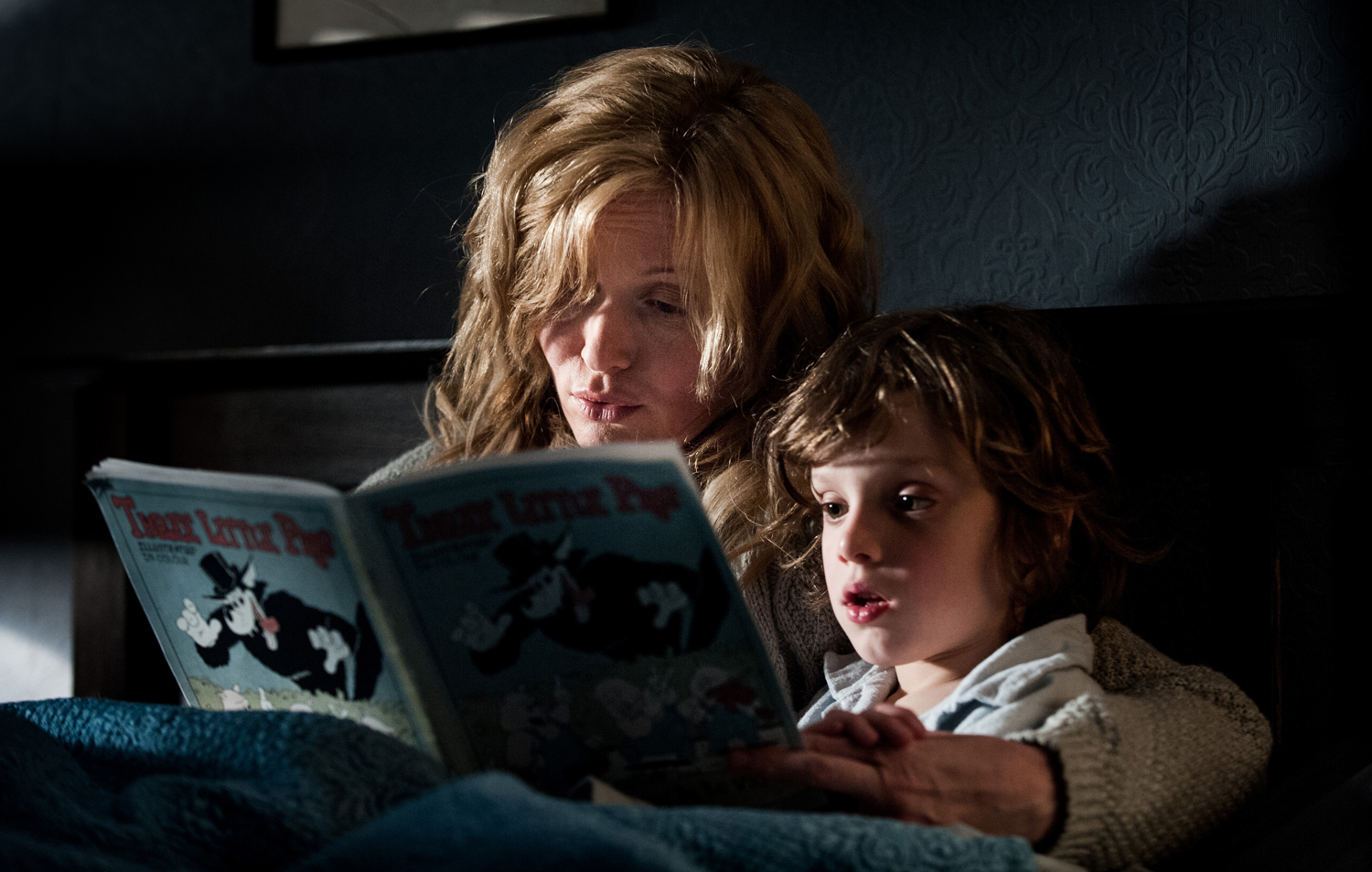
    The film takes place in the two weeks before Samuel’s (Noah Wiseman) seventh birthday, which coincides with the anniversary of his father’s death. He often tells the story when he meets someone knew: his father died driving his mother, Amelia (Essie Davis), to the hospital to give birth to him. Sam is fascinated with his father, but Amelia refuses to speak of him; she hasn’t been quite the same since. She gave up writing to support her son as an orderly. Her detachment is obvious. Sam loves his mother unconditionally but notices her shortcomings and tries his best to help her. They are close but Amelia’s baggage is clearly weighing on the pair.

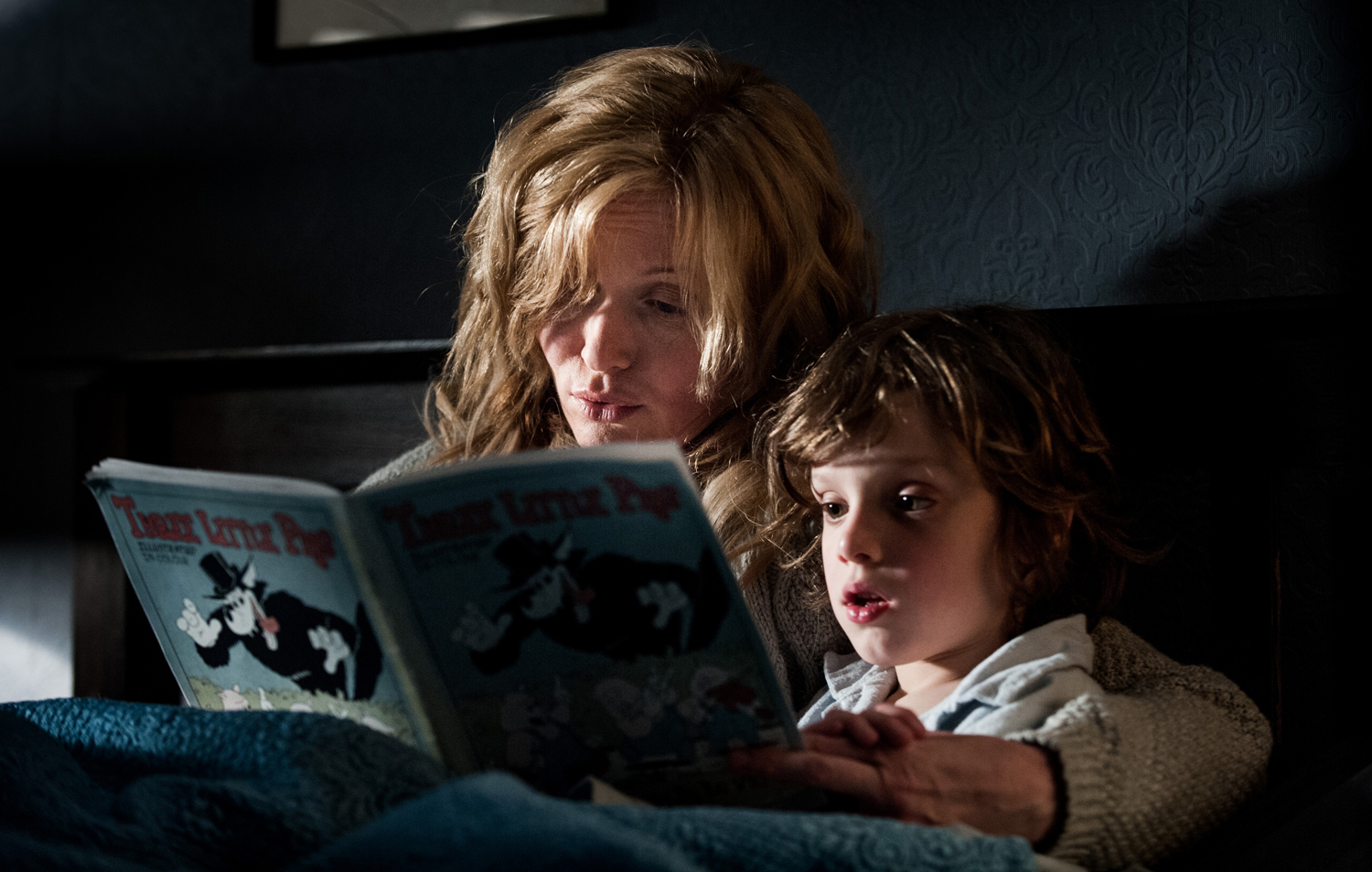
    One night, Sam chooses a new bedtime book from his shelf, Mister Babadook. It is unfamiliar to him and his mother but they start to read. As the children’s book grows dark, Sam and Amelia become unsettled. The book seems to be speaking to them specifically, trying to convince them to let Mister Babadook in. Sam grows frightened and can’t seem to shake it. The book is gone but the damage has been done. He acts out causing Amelia to take him out of school, for fear of his safety and others. As her stress level rises and the date of Sam’s birthday draws nearer, Amelia begins to unravel. The book reappears and nightmares become real. You can’t get rid of the Babadook…

    Resembling the pop-up book from which it is titled, this film plays with visual design to invoke a sense of mourning. Kent uses old-fashioned shadow play and sound effects to convey the sense of dread in the characters’ lives. The Babadook is an externalization of Amelia’s grief; it’s easier to confront a ghoul than her own reality. “If it’s in a word or in a look. You can’t get rid of the Babadook. I’ll wager with you. I’ll make you a bet. The more you deny, the stronger I get. The Babadook is growing right under your skin.” The parallels between the Babadook and Amelia’s mourning are ingenious.

    This analogy is really brilliant. Amelia’s begins by denying the Babadook’s existence, as she has done with her feelings of despair. But, Sam can see through her charade and insists the Babadook is real. He is shown only in shadows and without a true form. At times he appears as Amelia’s deceased husband, asking for the boy. Amelia eventually experiences the Babadook, admitting to herself that her mourning has never ended. She is overtaken by the demon as she tries to take back control of her emotions. During her possession, her neighbor and son express their love for her despite her perceived unlovable feelings. This is the encouragement she needs to expel the Babadook. It flees to the basement. Amelia’s grief has a home where she can visit. She soothes the Babadook, regaining control.

    Although this film uses many familiar horror techniques, Kent puts her spin on them by adding this giant metaphor to the whole thing. The Babadook is expelled through Amelia vomiting up some kind of black good, which has become synonymous with dark forces in today’s horror. Kent also pays homage to classic horror. She employs a lo-fi technique to depict the Babadook, using stop motion for the monster’s appearances. Although Kent’s production choices set The Babadook apart, the performances of the lead actors are remarkable. This is Wiseman’s debut. His character is intense and well-acted, managing to shock audience while still keeping them emotionally invested. Davis’ character could seem unlikeable but her performance allows the audience to sympathize and understand her plight. The Babadook is a refreshingly impactful horror film in a sea of cheap scares. With impressive production quality and meaningful analogy, the real terror of the Babadook lies deep within.