Category: Movies

  • Film Review: “Wild”

    Film Review: “Wild”

    wild film review
    Jean-Marc Vallee directs the biographical film written by Nick Hornby, Wild. This film is based on the memoir, Wild: From Lost to Found on the Pacific Crest Trail, written by Cheryl Strayed. Vallee’s Dallas Buyers Club last year elicited two Oscar-winning performances, setting a high standard for Reese Witherspoon in the lead role and Laura Dern as supporting. However, with the help of Vallee’s cunning direction, the actors give award-worthy performances and the story ascends one of self-awareness and acceptance of the things we cannot change. It highlights the struggles of finding our identity in the shadow of tragedy. But most of all, it highlights the talent of Witherspoon and Vallee.

    Wild follows Cheryl Strayed (Witherspoon) as she travels the Pacific Crest Trail searching for a meaning to her tangled life. Divorce from Cheryl’s abusive father leaves her mother (Dern) struggling to regain the years she has lost. She is working to get her GED and put their life back together as she is struck with the news of terminal cancer. This leaves Cheryl to step into her mother’s role and abandon the success to which she is striving. After the death of her mother and the responsibilities become too much, Cheryl’s life plunges into chaos. She descends into a life of drug use and, despite her marriage, promiscuity. As Cheryl lets go of the cares of life, her relationships begin to deteriorate, particularly with her husband. Although it is clear that they care for each other, Cheryl’s emotional absence leads them to divorce. This is the turning point at which she decides to change something. She decides to trek the thousand miles across all types of terrain through the PCT. She encounters others with similar journeys and comes face to face with some of her own demons.

    Wild is packed with powerful metaphors. Cheryl literally carries around her baggage on her back, in the form of an enormous backpack filled with hiking supplies. As she begins her journey, her pack is completely full. She struggles to even get it off the ground. Her baggage is so overwhelming she has to lie down to even attempt to pick it up. She walks, with the highway at her side at first. With surrender so close, Cheryl pushes on carrying her pack. When she approaches her first check point on the trail, she receives a warm welcome. Some of the more experienced hikers help her unload her bag and pick out the things she can leave behind, thus ridding her of some of the weight and making it easier to withstand. Along with her pack and fellow hikers, the animals she encounters on her journey also play an important role, all representing certain struggles and challenging Cheryl to overcome them. Like a fox that she meets several times taunting her along her journey.

    The stand-out achievement of Wild is the career-defining performances given by Reese Witherspoon and Laura Dern. Their talent, combined with Vallee’s, allow this film to reach its full potential. Witherspoon delivers her most powerful performance, capturing the plights of Cheryl with ferocity, compassion, and grit. The unabashed honesty, with which the story is told, elevates Wild into Oscar contention. Although a film about a woman walking through the desert may seem dull, Witherspoon has no problem holding the attention of her audience. The sweeping landscapes and flashbacks add to help the story flow. Instead of a linear story about how Cheryl wound up at the PCT, we start with her already in the thick of it and go back to find out more. The star of the flashbacks is definitely Dern. She delivers an impactful and dignified performance. Wild is introspective and engaging, giving Witherspoon and Vallee space to flex their impressive talents.


  • Film Review: “Big Eyes”

    Film Review: “Big Eyes”

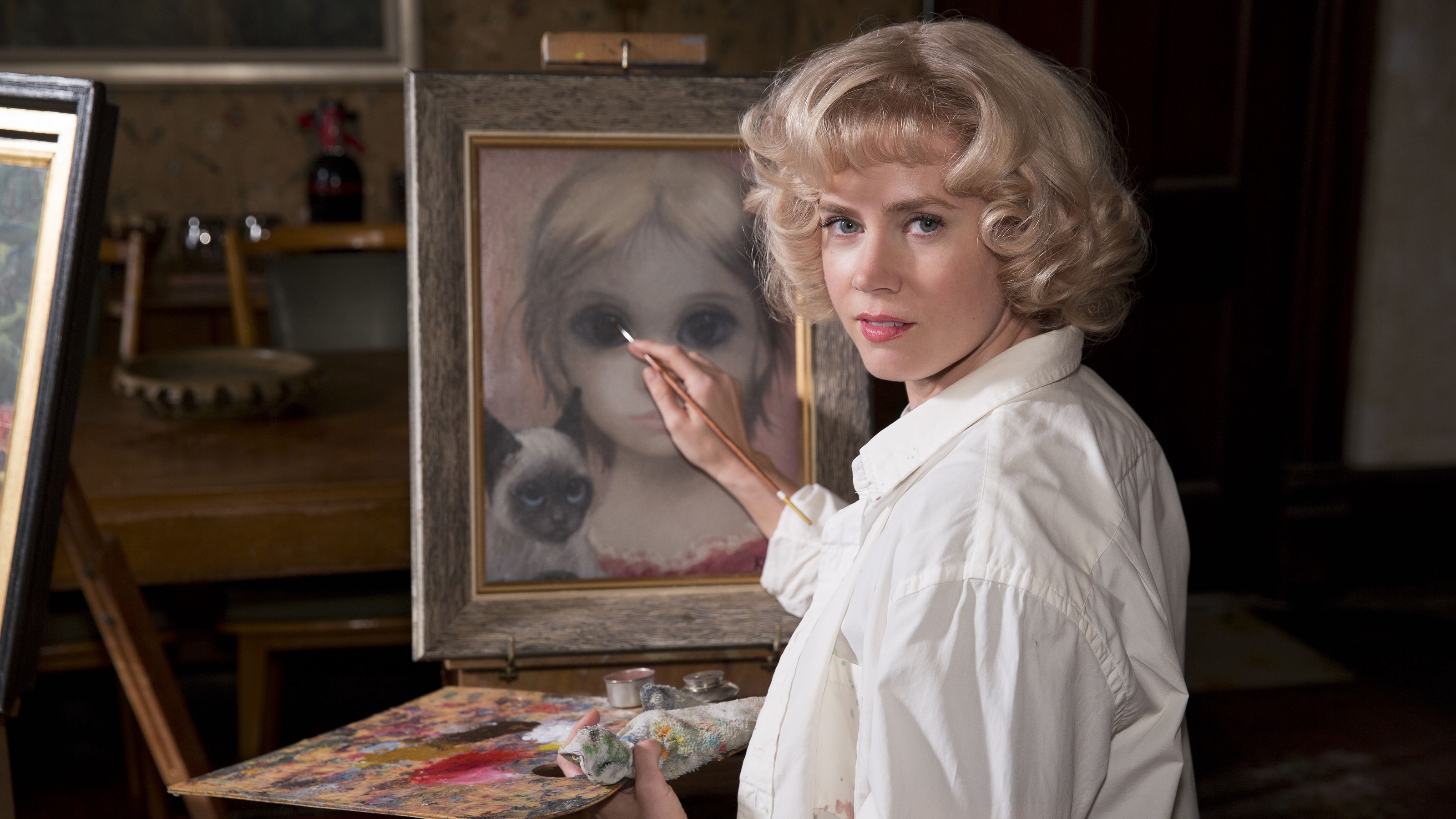
    Big eyesTim Burton has given us gothic classics that will last us throughout our lives. From the spook-inducing and gorgeously crafted Nightmare Before Christmas, to the satire of suburbia and tale of acceptance of Edward Scissorhands, he’s produced and influenced a multitude of works that started strong. However, in recent years it has become more a niche thing that is mocked as an outlet for Hot Topic teenagers to showcase how emo is still relevant. (Hint: it’s not). His latest movies has followed a formula, by taking something dark in its subtleties and making it dark all around (i.e., Alice in Wonderland, Dark Shadows) or going back to something that worked once and seeing if he could do it again by bringing it into post-2000s cinema (i.e., Frankenweenie, Corpse Bride). This all changes for Big Eyes where, the more normal that he is opens up more doors than he could possibly imagine.

    The film follows the real life events of Walter and Margaret Keane, both painters who are starving artists and find love amongst themselves. When Walter notices that Margaret’s paintings of large-eyed children could be the hottest thing since sliced bread, he decides to take all of the credit (being in the 50s, his reasoning is that no one wants to buy women’s art), and begins to make more than enough money to provide for Margaret and her daughter for another marriage. Things start to turn sour in the art world though, when Walter continues to take the credit and Margaret perpetuating the lie with her silence and we watch to see how this will resolve with the credibility of the artist in a world that is against her.

    First off, the casting choices are perfect, almost seeming like a Wes Anderson film more than a Tim Burton film. Amy Adams is the soft-spoken, kind-hearted but determined Margaret Keane. Christoph Waltz is the charming, yet devious Walter Keane. Krysten Ritter as Margaret’s friend, Dee-Ann, Jason Shwartzman as Reuben, the pretentious art gallery curator and Danny Houston as Dick Nolan, a gossip reporter and the narrator. The acting is very well played out, with every scene getting a little more tense each time. Some may call it predictable, but we want and do see Margaret grow in her attempts to showing off her art. Christoph Waltz is an entertaining antagonist where his psychological breakdowns of Amy Adams makes you love to hate him. However, during the climax, he goes from being charming and cunning to an all-out cartoon character. He’s very over the top, not necessarily convincing the audience that he painted all of the big eyes, but more so trying to prove it to himself.

    The cinematography is gorgeous, there are shots of pure symmetry (again, like Wes Anderson), but just a little off-kilter to add a little spice. The shots where there is just pure solid color in the background are marvelous and really add to the theme of knowing where your inspiration and color come from. The close-ups are intimate and never feel forced, and the setpieces of 50s San Francisco are stunning. Everything from the neon to the color of the galleries pop. The apartment to the new house are both eye-catching in the morning, afternoon, and night. The sequence where Margaret finds her inspiration was very well done and give you that whole “Uncanny Valley” feeling. You know that they eyes are off, but you can’t stop staring at those windows to the soul. The music is also unlike anything that we’ve heard from Danny Elfman. There are times where it feels a little stereotypical, when going to Hawaii or showing a fancy ball, the choices kind of shout out “HEY, WE’RE IN THIS LOCATION NOW, CAN YOU TELL?!”

    Overall, this a decent film that has aspects of a Burton production, but not necessarily pushed in your face for jaw-dropping effect. It’s not very loud, it’s subtle, the big eyes do all the work. For any art lover, you focus more on the paintings than on the shots, both of which leave you breathless. Another thing that hit home for me was the representation of Jehovah’s Witnesses in the movie. When I was a member of the faith I did the EXACT same thing that these actors did and they captured it perfectly. Big Eyes does have the prospect of creating a new movement in Burton films. Others may say that he’s a little late to the indie party with all of the pastels and the Anderson flair, but to see him something other than what he was mostly good at is a gift to the eyes.

  • American Horror Story: Freak Show: “Show Stoppers” (4×12)

    American Horror Story: Freak Show: “Show Stoppers” (4×12)

    ahs freakshow show stoppers
    If nothing else, “Show Stoppers” is proof positive that Freak Show, if not the whole concept of American Horror Story altogether, is far beyond the point of course correction. Because on its face this is a pretty solid penultimate episode, just in terms of stuff that happens and what it sets up. The problem is that at almost no point has the show bothered to give two shits that this is the moment its been building to. The freaks rebelling first against society, then against the interlopers that threaten their well-being, and lastly against their “mother” who is The Real Monster Within, is a fine arc for the season. It’s just not the one that we’ve been following all this time.

    Coven was guilty of this too; it began and ended as the search for the titular coven’s next leader, and a bunch of truly inconsequential shit happened in between. I don’t think that problem has been as pronounced this season, but it’s certainly still there, and as a result what should be some of the season’s crowning moments instead fall disappointingly flat.

    Take the opening dinner sequence. Props to the cast and crew behind this one—it at the very least achieves the tone of aberrant freakishness that has been too lacking so far. But Stanley getting his comeuppance is only fun or satisfying insofar as Denis O’Hare has truly hammed it up in the past few episodes. He doesn’t have an existing relationship with anyone at that table beside Elsa, and maybe Maggie, but Maggie barely even registers as a character at this point, so it’s moot.

    Ditto the eventual realization among the freaks, many of whom I still cannot even name, despite watching each episode multiple times and taking copious notes, that Elsa is responsible for Ethel’s death, and their subsequent decision to kill her as well, because why not, they’re killing people left and right anyway. But none of these characters exist as anything more than vehicles for a thin plot that really doesn’t need any of them to get where it’s going. What makes Paul tick, other than banging Grace Gummer the Fork-tongued Tattoo Monster? Why does Desiree have absolutely no thoughts at all about Elsa blowing a hole through her husband’s head? (In fact, why doesn’t anyone?) Ethel died weeks ago; isn’t it a bit late to be dealing with this? What was the hold up?

    The freaks haven’t ever been portrayed to be particularly violent—the earlier encounter with the police was portrayed as an aberration, and in the very beginning of the season they seemed downright disturbed by the notion that they were immediately blamed for Twisty’s misdeeds. (Remember Twisty?) Where on earth does the sudden spate of violence come from?

    Have the freaks been corrupted by Stanley and Elsa? I don’t know, maybe? But if that’s the case, it’s not there on the screen, because we’ve spent all our time with Stanley and Elsa, and not with the characters whose journey we are now being asked to care about. Or, worse, we’re spending entirely too much time with Neil Patrick fucking Harris and his stupid doll. It is entirely too late in the game to spend so much time on this tertiary character, especially when his story this episode is a near scene-for-scene retread of last week’s.

    Or how about Jimmy Darling? He at least has had a semi-developed emotional arc this whole time—seeing him so dejected, robbed of the only things that had ever given his life meaning, is legitimately moving. But it’s tethered to Maggie, who is the flattest character in a show full of them. She’s always loved him? They can move to New York, like they’d always planned? When? What show are these writers watching? Maggie’s death this episode isn’t tragic, it’s a snoozefest, and Jimmy’s reaction to it is bland and forceless as a result.

    When the episode is over, Elsa has skipped town, tipped off by Bette and Dot (another instance of a relationship being abandoned for episodes on end, then being resurrected to diminishing returns). In her stead is Dandy—Elsa has somehow managed to sell the show twice, although it helps that Chester is an idiot. Dandy’s cocky stride into the tents elicits nothing more than a meh. Remember when this guy was a violent serial killer? Anyone?

    For all its faults, though, this really is a beautiful show. There are some truly great compositions this week. I particularly loved the shot of Elsa reuniting with Massimo, all washed out in sunlight inside the empty tent. The music this week is also pretty excellent, featuring a simple melody that carries the weight of emotion in the scenes it scores.

    But still. It’s endgame time now, and everything just kind of is. Freak Show doesn’t even have the decency to be abysmal; it’s just a rote, sloppily told story. Actually, let me take that back—the last scene is one worthy of American Horror Story’s legacy of absurdity, as Jimmy shows the audience his new fake lobster hands and everyone “awwws” at how his deformity made him special. Give me a fucking break, is literally what I yelled at my television as I turned it off in mild disgust. Mild disgust, I tell you—this is the strongest emotion I can muster at this point.

    At any rate, next week things will happen and we will close the book on another season of American Horror Story. There will probably be yet another tenuous connection to earlier, better seasons of this show, and then we’ll all be back next fall for more abuse at the hands of Ryan Murphy, which is its own American horror story.


    Stray Observations:

    This week in dumb callbacks I don’t care about: a young Hans Grouper had something to do with Elsa’s disfigurement, apparently? Whatever, show.

    At that dinner scene the cast starts summarizing basically the entire plot of Freaks, which, yeah, we get it.

    Grace Gummer the Fork-tongued Tattoo Monster! You’re alive, and you remain my favorite thing about this season.

    Seriously, no one so much as bats an eye over Dell this week. That strains credulity more than even this show can get away with.

    The freaks torture Stanley by turning him (somewhat implausibly) into a little Meep creature, which is a darkly hilarious one-off gag, in a blink-and-you’ll-miss-it shot .


  • Please Subscribe: The 10 Best YouTube Channels of 2014

    Please Subscribe: The 10 Best YouTube Channels of 2014

    best youtube channels

    I can go on and on about how YouTube is the new frontier of media and how television is slowly deteriorating in creativity and quality, but that’s not the point of this article. The point is to tell you the 10 Best YouTube Channels of 2014. There’s no criteria here. These are basically 10 channels that I admire, watch regularly, and am thoroughly entertained by. Will you necessarily enjoy them? No. But you might as well give them a try, for me. Or not for me. I don’t really care. You do you.

    Honorable Mentions: MyHartoThe Fine Bros, Smosh Games, ScottBradleeLovesYa

    10. 3éme Gauche

    ebd972c3954b1912d23bdd13814f72c5Want countless acoustic sessions from your favorite indie bands? Well, this channel has got you covered. The French based peeps have brought in names like Family of the Year, Bastille, Imagine Dragons, and Hozier to bring gorgeously shot and mixed acoustic sessions in some of the most beautiful locations in France. However, the best part of the channel has quickly become the quintessential sound check clap at the beginning of each video.

    9. Jack Howard

    photoTake the content of Elite Daily, add a hilarious British man, and you’ve got Jack Howard. His general rantings and musings seem random and pointless sometimes, but there’s always meaning behind them in the end. It takes real talent to be that funny and entertaining, while still educating an audience about something that they sometimes might not get: life. The best part is that he’s not trying to teach you anything. You take from it what you want to take from it. It’s what makes his channel great.

    8. Geek & Sundry

    flog on geek and sundryJust the fact that the Queen of Geek Felicia Day runs this channel means you should be watching, but hilarious shows like Co-Optitude, Tabletop, Spooked, and Space Janitors will make you come back for more. Even better, it’s place where you can celebrate your geekdom and realize that you’re not the only obsessed fan out there. Magic: The Gathering, Retro Games, Settlers of Catan. Did I also mention that it’s Felicia Day? I did. Well, remember it. Always.

    7. Cinema Sins

    photo.jpgYou know those small things that annoy you in every movie? The cliches, editing mistakes, cringe worthy dialogue. Cinema Sins points them all out and more in a hilarious fashion and delivered on point by the narrator. For me, the channel is my go to whenever I need to kill 15 minutes or so. There isn’t a bad video. Every sin is on point and you’ll find yourself grateful that someone is calling out Hollywood’s utter bullshit.

    6. Vsauce3

    7a40d65562a8781eac09371d4afc24ceRemember when I was talking about celebrating your geekdom with Geek & Sundry? Well, feed it over at Vsauce3. Basically geeky question you’ve ever asked, every conversation you wanted to ask, and every piece of merch you wanted to buy is addressed by the ever so charming Jake. I personally recommend watching the show Game LÜT. Just be warned that you may spend your entire life savings on all the amazing things. I mean, a Darth Vader toaster that toasts the Star Wars logo in to the bread. COME ON!

    5. Sorted Food

    The_Crew_and_SORTED_productsAttractive British men? Check. Food? Check. Simple ways to make this food? Check. Sorted food is pretty much everything you want in a food show. It’s funny, quick, and simple. The guys over at Sorted make it easy and fun to learn to make the dishes YOU want. That’s right. They take your requests and tips to make everything on their channel. That means everything you get is everything you want. What can be better than that?

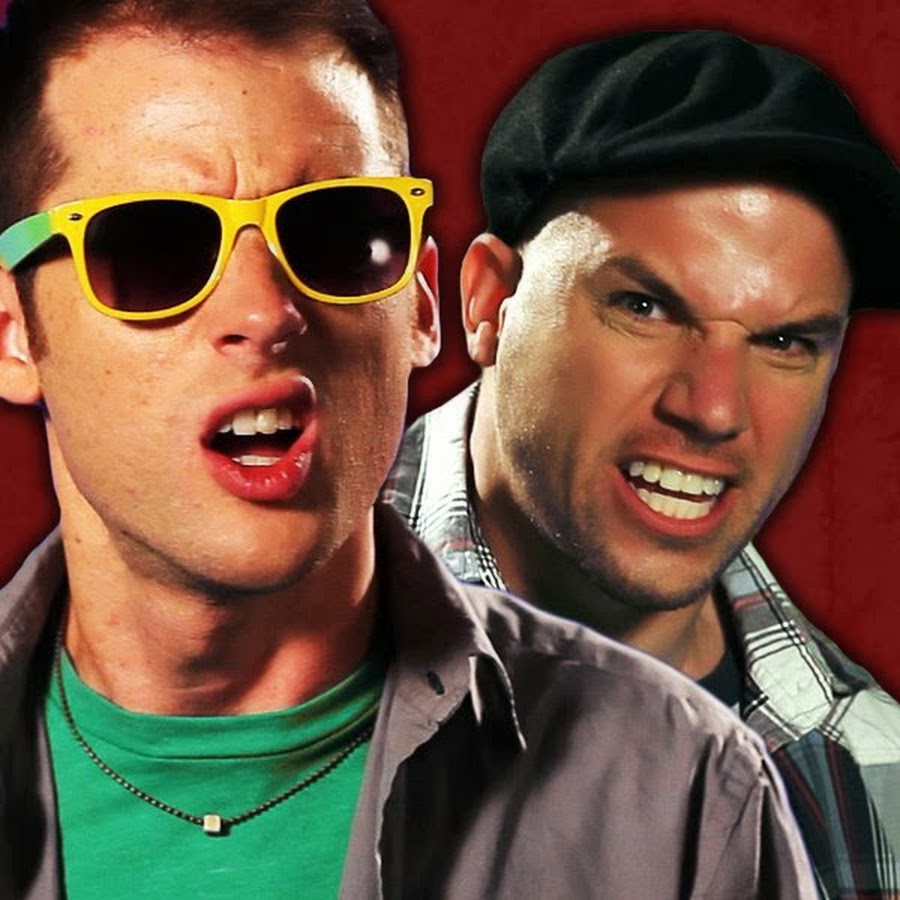
    4. Epic Rap Battles of History

    epic rap battles of historyPeople both real and fictional rap battling with insults that cut so deep they’re going to need stitches? I don’t really need to say much more. There’s a reason that this channel was YouTube’s most popular this year and that is because of the sheer talent of Nice Peter and Epic Lloyd, who are the masterminds behind the madness. Whether it’s Romeo & Juliet vs. Bonnie and Clyde or Oprah vs. Ellen, every single rap is witty, sharp, and damn catchy.

    3. Bobby Burns

    bobby burnsCinephiles unite! I may be developing a mild crush on Bobby Burns. First of all, he’s hilarious. Second of all, he’s a film geek. Third of all, he uses his film geekdom and hilariousness for good. Mainly bringing us videos like How to Make a Slasher Film, The Home Alone Horror Trailer, and Why Predators Sucks. Any person that loves film, and more than that, loves criticizing film will not only appreciate this channel, they will get addicted.

    2. It’s Grace

    photo-2Half the time I spend watching Grace Helbig videos I just beg the question: “why?” But does it matter? No. You just take it for what it is. A truly quirky girl doing some truly quirky things. The reincarnated Daily Grace brings us a spontaneity that gives us even more intimacy than ever before. Whether she is trying to get her friends to laugh with farts or just “reviewing” Taylor Swift’s 1989, it comes with her unique humor that may not be everyone’s cup of tea, but just makes you fall in love with her every single time you watch a video.

    1. You Deserve A Drink/Mametown

    photo-1I’m going to set the record straight. Mamrie Hart is one of the funniest comedians on YouTube. If you don’t see that, then I don’t know if we can be friends. She’s embodies everything a funny person should be. She’s fast, witty, sharp, but isn’t afraid to dip down low to throw in some fart and sex jokes. In You Deserve a Drink she uses that trademark humor to do God’s work: getting you drunk. The show is so perfectly imperfect that in the end you watch it over and over, not for the recipes, but for Mamrie herself. Mametown takes her ridiculousness even further to give you sometimes legitimate and sometimes absurd advice, musings, and general shenanigans about life.
    Obviously I missed a bunch of awesome channels. YouTube is an endless tunnel of talent and entertainment, so what are your favorite YouTube channels?

  • The Park is Open in the First Trailer for “Jurassic World”

    The Park is Open in the First Trailer for “Jurassic World”

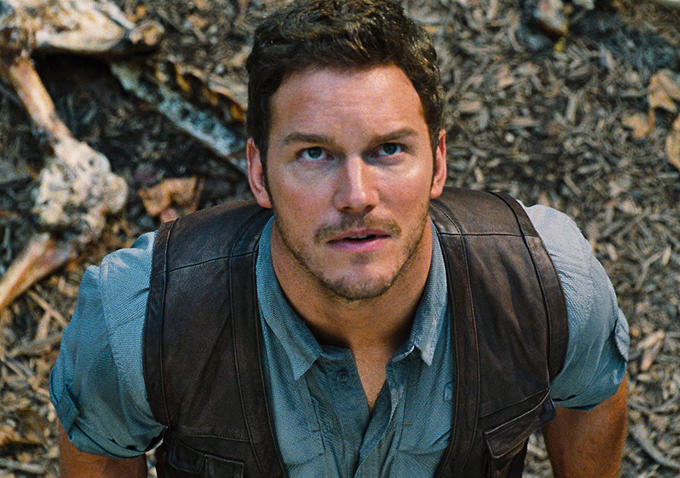
    jurassic worldI know you shouldn’t judge a movie by its trailer, but when it’s this good there’s no way to ignore it. Such is the case of the much-anticipated and slightly dreaded reboot of the Jurassic Park series with the June 2015 release Jurassic World. I dare you to find me someone who wasn’t blown away the first time they watched Steven Spielberg’s original Jurassic Park. From the iconic score to the groundbreaking visuals to the heart-pounding thrills, the film was the quintessential blockbuster. So, when they announced a reboot I was a bit skeptical, but all of that went away today with the official release of the trailer. The concept set in place is really the only place they could have taken the series. The park is officially open and curiously resembles SeaWorld, splash zone seating and all. Of course, there has to be the conflict, which goes back to the roots of the series: playing God. The scientists at the park have created a new Dinosaur that begins terrorizing the park. It looks thrilling, gorgeously put together, and Chris Pratt doesn’t look bad either. It’s just the combination that we needed.

    The reboot is set up for success with Bryce Dallas Howard, Jake Johnson, Judy Greer, Omar Sy, and Irrfan Khan joining Pratt and Planet of the Apes reboot scribes Rick Jaffa and Amanda Silver penning the screenplay.

    Jurassic World will be released on June 12, 2015. Are you ready to return to the park?

  • Box Office Results: “Mockingjay” dominates with “Penguins” in tow (Black Friday)

    Box Office Results: “Mockingjay” dominates with “Penguins” in tow (Black Friday)

    mockingjay box office

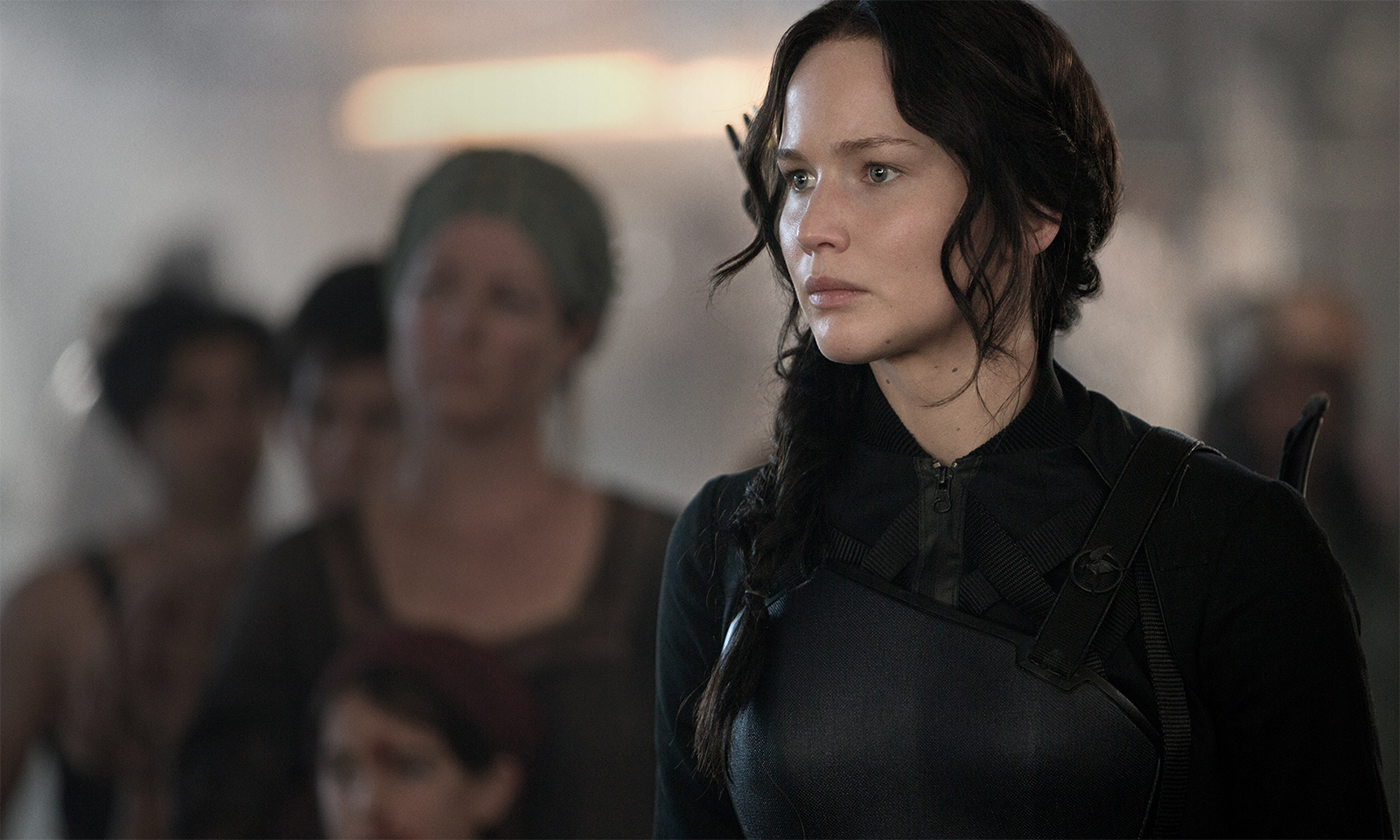
    As expected, The Hunger Games: Mockingjay – Part 1 dominated the box office this black Friday adding an estimated $24,100,000 to its $168,608,000 haul from its first week in theaters. This is after a disappointing opening weekend which was the largest of 2014, but the smallest in the franchise history.

    The third installment also took in $11.1 on Turkey Day, however it’s still behind “Catching Fire” and its record setting $110 million meal (haha, get it?) during last year’s five-day weekend.

    A spin-off film came in second on Friday. Penguins of Madagascar (a dark horse contender for the Best Animated Feature Oscar) took in $10.5 million, which puts it on track to miss the estimated weekend gross. Some estimates put it as high as grossing $44 million. The series’ first three films have grossed $1.8 billion worldwide in total.

    Returning for its 4th weekend in theaters is Big Hero 6, which finished in a respectable third. The film took in $7,742,000 to bring its total gross to $156,181,000. Not only is the film a strong competitor in the box office, it may also grab an Oscar along the way.

    Interstellar grossed an additional $6.6 million, mostly thanks (heh) to its IMAX showings. This brought its domestic total to $137,890,000.

    Rounding off the top 5 is R-rated comedy Horrible Bosses 2, which stars Jason Sudeikis, Jennifer Aniston, Charlie Day, Jason Bateman, Chris Pine, and Christoph Waltz, also had a disappointing opening with a gross of $6.2 million on Friday. The film is now expected to gross around $23 million by close of business on Sunday, which puts it far below its expected $35 million haul.

    Check out the full top 10 from Black Friday:

    1. The Hunger Games: Mockingjay – Part 1: $24,100,000 (4,151 theaters)
    2. Penguins of Madagascar: $10,500,00 (3,764 theaters)
    3. Big Hero 6: $7,742,000 (3,365 theaters)
    4. Interstellar: $6,600,000 (3,066 theaters)
    5. Horrible Bosses: $6,200,000 (3,375 theaters)
    6. Dumb and Dumber To: $3,400,000 (3,130 theaters)
    7. The Theory of Everything: $1,900,000 (802 theaters)
    8. Gone Girl: $1,000,000 (1,174 theaters)
    9. Birdman: $735,000 (710 theaters)
    10. St. Vincent: $719,000 (1,256 theaters)
  • ‘Star Wars Episode VII’ finally gets its name

    ‘Star Wars Episode VII’ finally gets its name

    star wars episode VIIIf you’ve been living under a rock with not WiFi for the past year, you’ve at least heard one person screaming down the street about the new Star Wars movie being released, which will pick up 30 years after 1983’s Return of the Jedi. The film, slated for released in December 2015, will not only feature an incredible group of actors returning from the original trilogy including Harrison Ford (Hans Solo), Carrie Fisher (Princess Leia), Mark Hamill (Luke Skywalker), and Peter Mayhew (Chewbacca), it will also add up and comers like Oscar winner Lupita Nyong’o (12 Years a Slave), Gwendolyn Christie (Game of Thrones), and Oscar Isaac (Inside Llewyn Davis).
    Finally on November 6th, the last day of production, the name for the sequel received its name. Drumroll ple– okay I’ll get to it:

    Star Wars Episode VII: The Force Awakens.

    Get the full story on Entertainment Weekly. 

  • Jump Cuts: Marvel Announcements, Daniel Radcliffe Rapping, & More

    Jump Cuts: Marvel Announcements, Daniel Radcliffe Rapping, & More

    Jump Cuts 1In our newest columns, we report the most important stories in the pop culture world and give them to you in our classic Smash Cut fashion. If you would like to suggest a story to add to Jump Cuts, just tweet at us with #JumpCuts


    Happy Halloween Smashers! Here are the biggest Entertainment stories from this past week:

    Marvel Announces Movies through 2020

    Following DC Comics’ announcement last week, Marvel has set their film slate and release dates through the year 2020. Some of the highlights include a Black Panther movie (played by Chadwick Boseman), a Captain Marvel movie, and the two part third Avengers movie. As previously announced, Iron Man will play a major role in Captain America: Civil War, however it was now announced that Boseman’s Black Panther will also appear in the movie. One major release date change came for Guardians of the Galaxy 2 which will now be released in May 2017. Read the full story on The Huffington Post.

    Lily Rabe will reprise AHS: Asylum character on Freak Show

    In an interesting move, Lily Rabe will be reprising her role as Sister Eunice on season 2 Asylum in this season’s 10th episode. With two characters from Asylum now appearing in Freak Show, can we consider this an Anthology series still? Read the full story on IGN.

    Neil Patrick Harris will join Freak Show

    In other American Horror Story: Freak Show news, the recently crowned oscar host and Gone Girl’s resident creeper Neil Patrick Harris will appear on the show after passing on a role in the first season. He will appear on the 11th and 12th episode of the series as a chameleon salesman. His real life husband, David Burtka, will appear on the 13th episode of the season. For more, go over to TV Line.

    Daniel Radcliffe rapping on The Tonight Show

    Do I even have to say more? Just check it out over on The Huffington Post.

    MTV’s Scream gets a full series order

    Back in May 2013 it was announced that MTV was developing a series based on Wes Carven’s classic 1996 slasher flick. The series follows on the heels of the network’s massive hit Teen Wolf and on the barrage of recent horror TV series like The Walking Dead, American Horror Story, and Grimm. However, it was revealed that Ghost Face will not make an appearance in the series. Check out the full story on Entertainment Weekly.


  • Sharp and funny, “Dear White People” urges discussion on racism

    Sharp and funny, “Dear White People” urges discussion on racism

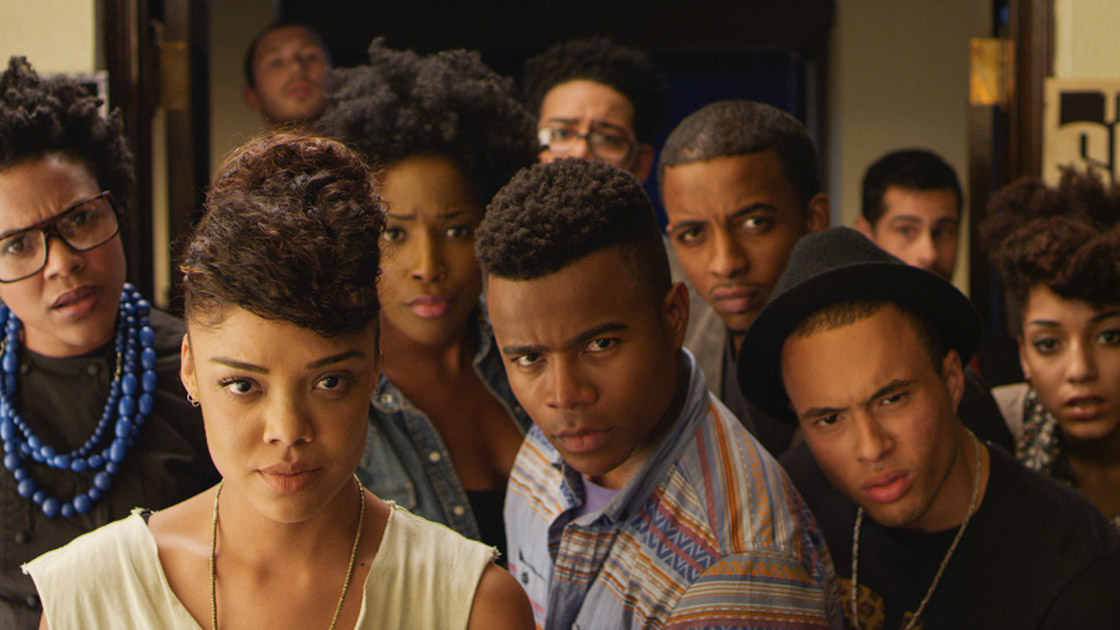
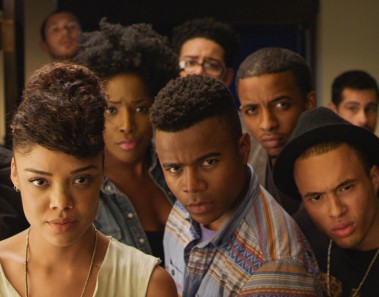
    Dear White People film reviewDirector Justin Simien makes his feature film debut with the satirical drama Dear White People.

    It premiered at the Sundance Film Festival; leaving with the Special Jury Award for Breakthrough Talent, which was certainly deserved. The movie focuses on several students’ experiences at an Ivy League college during a pseudo- race war. Dear White People comments on the presence of racism in the Obama era. Filled with unknowns, it is well-acted and executed effectively, prompting plenty of conversation on the ride home.

    One name you may find familiar in this movie is Tyler James Williams. He has previously starred in the sitcom Everybody Hates Chris. In Dear White People he plays Lionel Higgins, a quiet kid with an afro traveling between residence halls. He’s having trouble finding a place to fit in and is often ostracized when placed somewhere new. When a race war erupts, due to a controversial radio show and upcoming African American themed party, he’s not sure what he believes or how to express it. Tessa Thompson portrays Samantha White, the half-black host of a divisive radio show entitled “Dear White People”, on which she provocatively airs her grievances towards her classmates. Troy Fairbanks (Brandon Bell) is her ex-love interest who is the son of the Dean of Students. He struggles to separate his father’s expectations from his own aspirations. He has a fling with Coco Conners (Teyonah Parris), a student hoping to become famous and distance herself from racial stereotypes.

    We follow these four characters as they experience life at a predominately white institution. Each faces their own obstacles and find themselves divided when a “race war” explodes on campus when the administration attempts to randomize housing. Some black students believe that this randomization is a result of an African American house having developed on campus. They accuse the administration of fearing the group. To exacerbate things, the house associated with white privilege decides to throw a black people themed party for Halloween. Students show up in black face and stereotypical African American costumes. The black community at the college is hurt and outraged, causing the race war to erupt.

    Dear White People is sharply written, exploring black identity in a “post-racial” society. With so many movies portraying the plight of the black man in other time periods (12 Years a Slave, The Butler, Fruitvale Station) recently released, it’s refreshing to get the perspective of the present day. Many foolishly, in the movie and real life, label today’s society as some kind of post-racial utopia. Many foolishly, in the movie and real life, take things too far, reigniting race wars that have long since been resolved. The great thing about this movie is that it acknowledges both extremes and pokes fun at them. There are black people that see racism in everything, like Sam, and there are some that wish to deny it exists at all, as with Coco. There are white people that ignorantly mock racism and there are those that believe it is harder to be white, equally as ignorant. Kyle Gallner’s character, Kurt Fletcher, portrays this white stereotype too well. He is the son of the president of the college, epitomizing white privilege.

    The most shocking part of Dear White People is its sincerity. As you’re watching, you draw examples from your own life. You’ve heard the words in the film spoken in real life and it’s frightening. It’s a stunning commentary on the subtle racism existing in today’s society. It provokes discussion and calls us out on our own behavior. It has flaws, often vying for more than it can produce, but overall it meets its goal. It opens up a lane of communication that is often dismissed as being old-fashioned. With thoughtful performances, a sharply funny script, and smart production, Dear White People exposes our flaws and prompts discussions on racism in the Obama era.

  • "The Rocky Horror Picture Show" remains a must-see Halloween treat

    "The Rocky Horror Picture Show" remains a must-see Halloween treat

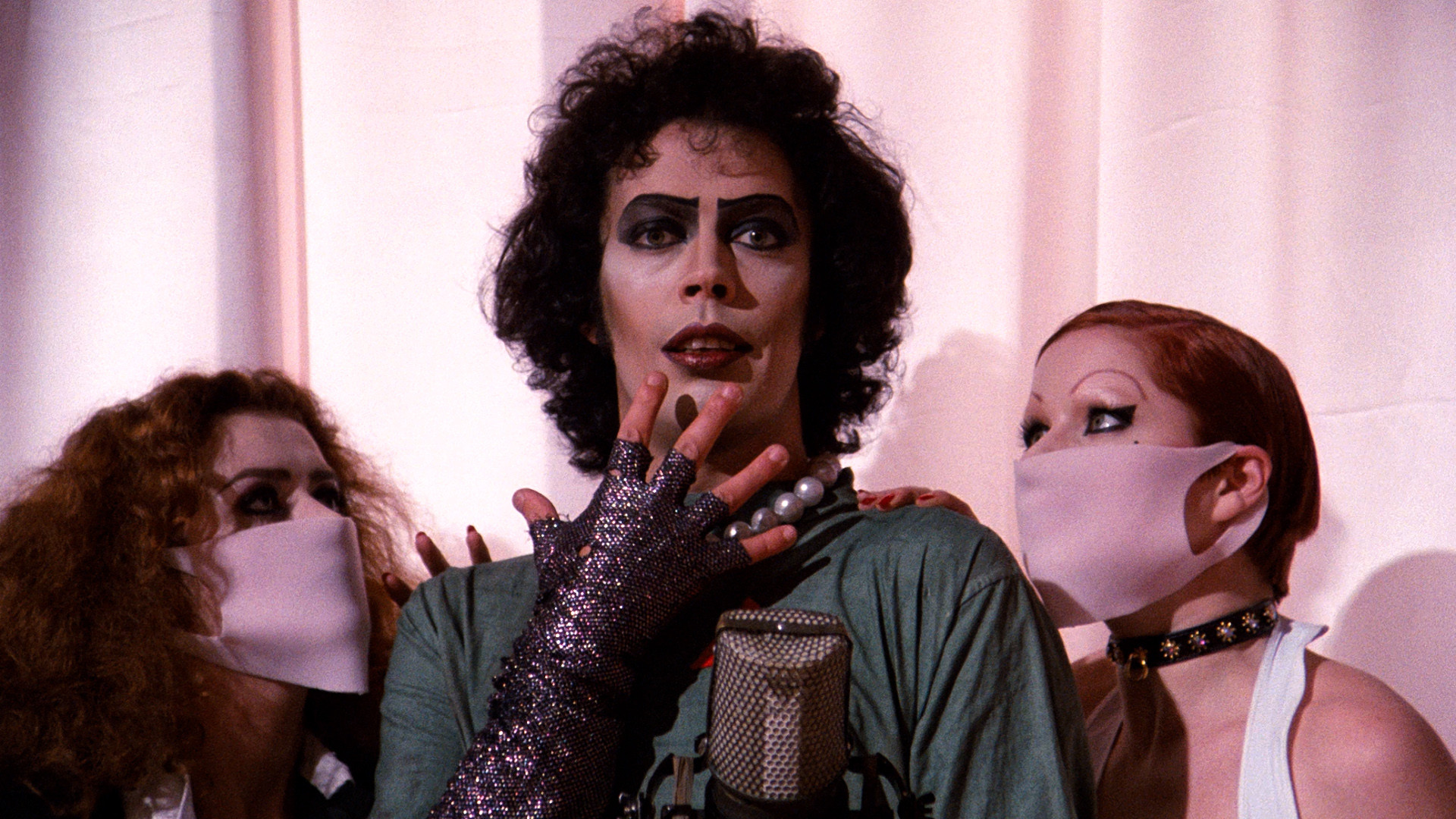
    rocky horror picture showIn the spirit of Halloween, I found it fitting to discuss one of the greatest horror cult classics of all time: The Rocky Horror Picture Show. If you haven’t already been exposed to this ostentatious parody now is the time. With exceptional music and campy feel, Rocky Horror is the perfect flick for movie-lovers and fun-seekers alike.

    Jim Sharman directs this this musical horror parody starring Susan Sarandon, Barry Bostwick, and Tim Curry. Based on the 1973 stage show, Rocky Horror was the first feature film for nearly every actor involved, excluding Sarandon. Richard O’Brien, who wrote the original play and music, costars as Riff Raff. Susan Saradon and Barry Bostwick play Brad and Janet, a couple whose car breaks down on their way to inform an old professor of their engagement. But, Tim Curry is the main attraction, as a transvestite alien scientist named Dr. Frank N Furter. Rocky himself is played by Peter Hinwood, who has since retired from acting. He doesn’t have any lines except for a song upon his first creation. Meat Loaf makes a special appearance as Eddie, one of Frank N Furter’s former flings. Patricia Quinn and Nell Campbell also costar as Magenta and Columbia, a maid and a groupie.

    The movie opens with Brad Majors and Janet Weiss at a friend’s wedding. Brad proposes to Janet in a nearby graveyard and they share a duet about their love for one another. They decide to go and visit the professor that introduced them, that also happens to be Eddie’s uncle, and share the good news. On the way there it beings to pour and their car breaks down, forcing them to seek refuge in Dr. Frank N Furter’s castle. Right away Brad and Janet feel out of place. Everyone they encounter is odd, only topped by Frank N Furter’s grand entrance and rendition of “Sweet Transvestite”. He explains to them that he has created a man in his laboratory and invites them to the unveiling of the creature, Rocky. Eventually, Brad and Janet are seduced by the doctor and within hours of their engagement have each tasted forbidden fruit. As chaos ensues it is revealed that the doctor, Magenta, and Riff Raff are aliens from Transsexual Transylvania.

    Although it’s hard to find deeper meaning in Rocky Horror it can be seen as an allegory for America’s transformation during the 1970’s. It parodies- or pays homage to- 50’s rock ‘n roll, B horror movies, and science fiction. The unintentional humor of bad horror is apparent throughout Rocky Horror. The plot is completely ridiculous, coupled with hokey dialogue and over-the-top performances; this film is nothing if not fun. It takes conventional ideas and gives them a 70’s twist. Brad and Janet leave behind their ordinary lives in favor of experimentation and an uncertain future.

    Rocky Horror teeters on the edge of socially acceptable sensuality. The 70’s saw a sexual awakening, as experienced by Brad and Janet. Several songs in the film push this boundary. This isn’t the first gender-bender film but it is the most in your face. Dr. Frank N Furter alludes to having had relations with just about every in the movie, men and women alike. Brad and Janet each give themselves to the doctor after having only been in the castle for a few hours. This lights a fire under Janet, who then seduces Rocky and sings her controversial “Touch-A, Touch-A, Touch Me”. Sex is a huge theme in this movie, but it also plays with a deeper meaning. After Frank N Furter has destroyed himself the voiceover’s last verse is heard– “crawling on the planet’s face, some insects called the human race, lost in time, and lost in space, and meaning”.=

  • American Horror Story: Freak Show Review: "Edward Mordrake (Part 1)"

    American Horror Story: Freak Show Review: "Edward Mordrake (Part 1)"

    edward mordrake (part 1)

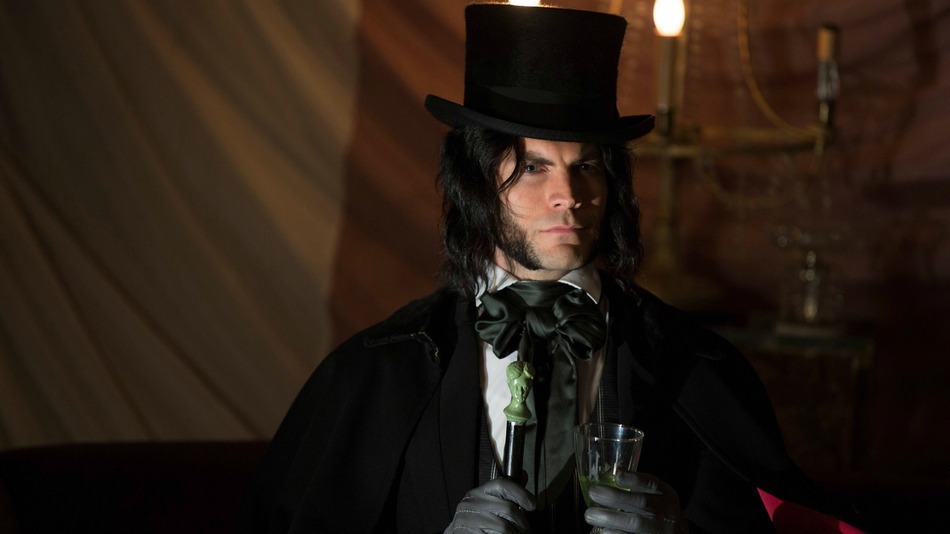
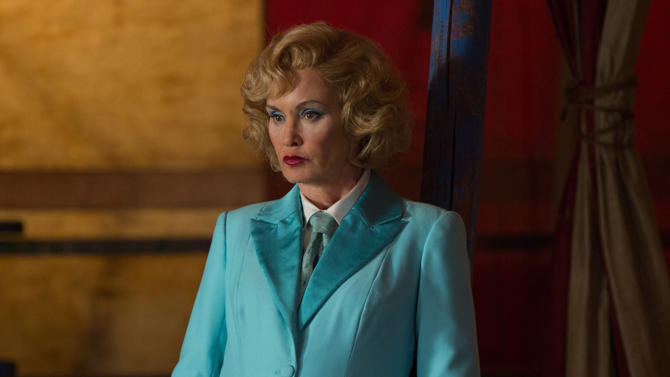
    In what’s become something of a tradition for American Horror Story, Halloween marks a two-part episode delving into the supernatural or superstitious (Coven broke with this tradition, but then, Coven also broke with the tradition of being a good television show). This time it’s Edward Mordrake, a deceased carny with two faces, a la Harry Potter’s Professor Quirrel/Voldemort combo. If any of the freaks performs on Halloween, so the legend goes, they will summon Mordrake’s murderous spirit. Ethel, Jimmy and the rest are appropriately cowed, but not Elsa Mars, who gets up on stage and performs Lana Del Rey’s “Gods and Monsters,” even if only for herself and the twins, whom she now more than ever fears will usurp, thanks to the meddling of faux-psychic con artist Maggie Esmeralda (yes, really).

    If you’re getting the sense that things are getting over-stuffed in here, well, you’re not wrong. “Edward Mordrake (Part 1)” incrementally furthers the plots already in motion, while introducing both Stanley and Maggie, while also injecting the show with its first supernatural element in Mordrake himself. That’s a lot of balls in the air, and with not a lot of plot to catch them all. Freak Show’s biggest sin so far is the one that has plagued American Horror Story all along—it’s a collection of characters and events, some scary, some funny, some moving, but a collection that never comes together under any overarching theme or purpose. The show is scattered, and there’s no clear indication of what unites any of these things, beyond the fact that they’re occurring in the same general space and time.

    For the first two episodes it appeared that the murder investigation would be a driving plot force, but that’s all but forgotten in this episode. Twisty the Clown continues his kidnapping rampage in the background, but that remains unknown to anyone else on the show. Ditto Dandy, who has briefly crossed paths with the Cabinet of Curiosities, but is now off in his own corner of the show with his mother and a wonderfully sassy Patti LaBelle. This week finally lets us get to know Ethel a little better, but even that exposition is saddled with the appearance of Edward Mordrake’s ghost.

    It’s obvious that Freak Show wants to be more concerned with the characters than with the plot, and while that’s a nice thought, the characterizations themselves are too broad and obvious for that approach to work. Dot’s deference to Meep is a barely-concealed attempt to further ingratiate herself with Jimmy. Her “All About Eve” triangle with Bette and Elsa is a tale older than that film, with only the presence of a conjoined twin to mark it distinct. Even the cinematography this week belies the derivative nature of the story so far, with several shots lifted directly from the film Halloween; yes, they’re homage rather than theft, but all the same.

    Mostly, “Edward Mordrake, Part 1” has me wondering why on earth this is a two-part story. The episode runs more than ten minutes long, but there doesn’t seem to be a particular reason for that. Perhaps the writers would like to keep the Mordrake material contained, but 1) I’ll believe that when I see it, and 2) most of the material this episode has nothing at all to do with Mordrake. And come to think of it, 3) the non-Mordrake material is the best the show has to offer this week.

    Specifically, I’m thinking of quieter scenes, like the one that Ethel and Dell share outside Ethel’s tent, over a glass of hooch that neither of them should be drinking. The writing and, especially, their great performances, strips away the freak-like nature of their appearances and leaves just two people, damaged by their pasts, just like any of us. It’s not just the quiet moments, though; more bombastic elements are working as well. I won’t go so far as to call Twisty the Clown scary, but certainly his appearance is unsettling, and Dandy Mott’s apprenticeship under him neatly walks the line between over-the-top and cloying and legitimately unnerving behavior.

    These are characters and stories that, for now at least, I’m invested in, and I’m curious to see how they play out. I’m less interested in Elsa’s mostly-imagined rivalry with Dot and Bette, but at least that too is rooted in the pilot and the premise of the series. But with its supernatural elements, “Edward Mordrake, Part 1” also introduces a bevy of other elements into the mix, and it’s that ribald willingness to throw anything and everything at the wall, without even a care as to what sticks, that has threatened to undo this show in the past, and that completely undid Coven. Worse, this season commits a sin that even Coven did not—for large stretches, it is boring. It’s like Ryan Murphy and company have taken half a lesson from criticisms of last season, toning down the campiness and insanity, but leaving the same number of cooks in the kitchen. This episode marks the third straight week of teasing and set-up; we’re still introducing regular characters and setting up conflicts and backstory; and yet we’ve time to take a detour into freak show urban legends. Basically, we’ve been down this road before, and it’s a bumpy one. Freak Show needs to pick up the pace, but without throwing the show into total disarray, and right now, I’m more curious to see if it can do that at all than I am to see what lies on the other side of “To Be Continued…”.


    Stray Observations:

    – This week also marks the third straight week of musical numbers. At this point it’s safe to assume these will be a regular occurrence. I think so far they’ve done a good enough job of remaining relevant to plot and/or character, but they could easily become unnecessary distractions, too. But if they’re here to stay, are there any songs you’re hoping to see pop up?

    – Dennis O’Hare arrives in this episode as well, as Maggie’s partner Stanley. Other than that he’s gay (or at least, enjoys sex with men dressed like Thor, which, who doesn’t?) and that he’s a con man, we learn little about him. They’re in town to collect a specimen that they can sell to a museum of oddities.

    – Mordrake appears to Ethel and it turns into an impromptu therapy session. The backstory is welcome, and the scene where she gives birth to Jimmy in front of a throng of paying customers is horrifying in the cultural sense, the way that, say, Lana’s “therapy” in Asylum was. As she points out too literally, Jimmy Darling has been exploited since the very moment he was born.

  • Film Review: “The Skeleton Twins”

    Film Review: “The Skeleton Twins”

    the-skeleton-twins02

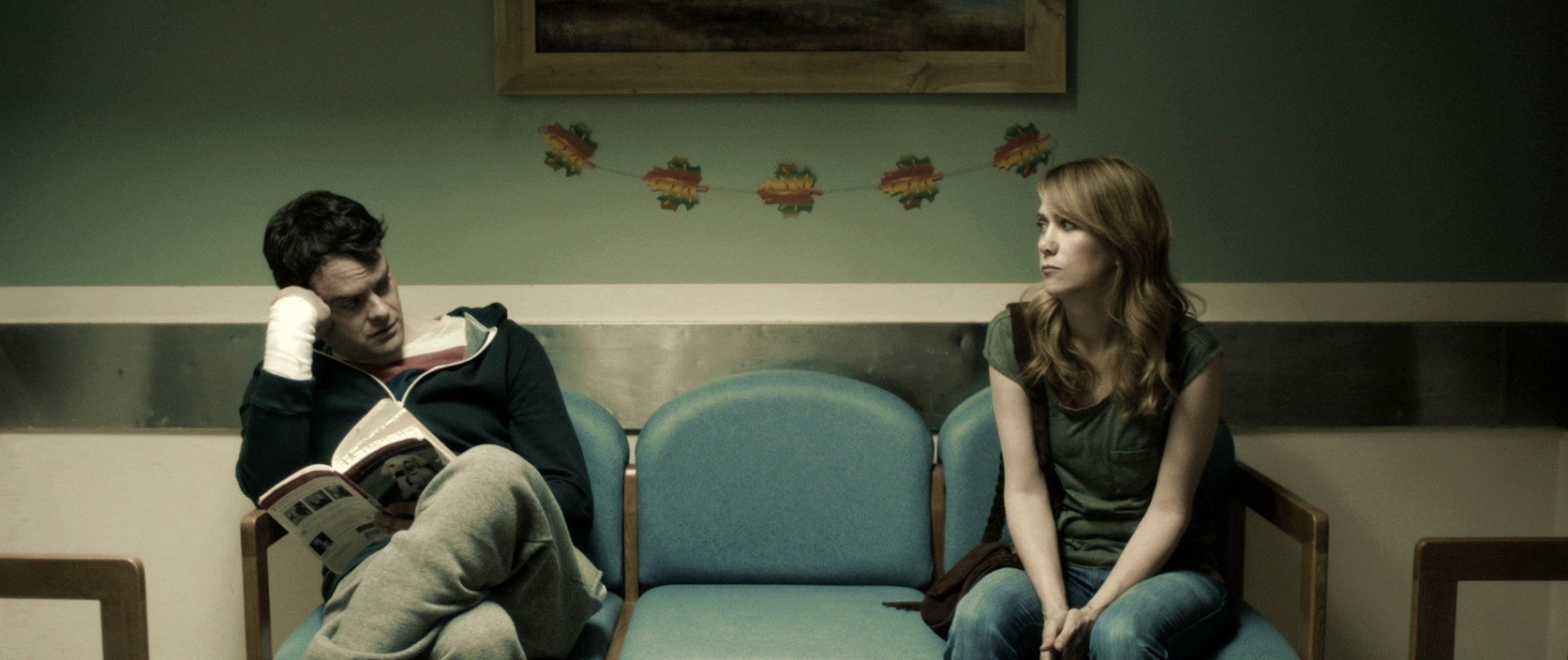
    Craig Johnson takes the directorial reigns of his second film with the dark family dramedy, The Skeleton Twins. Having debuted at the Sundance Film Festival and won the Waldo Salt Screenwriting Award, this film offers a gorgeous commentary on the strength of blood and revival of hope. Former SNL costars, Bill Hader and Kristen Wiig, share the screen and prove to us that they can do more than comedy and do it well.

    Estranged siblings, Milo (Bill Hader) and Maggie (Kristen Wiig), are brought together through unusual circumstances in The Skeleton Twins. The film opens with Milo in the bathtub having just written an informal suicide note. Blood stains the water as we cut to Maggie, whom we learn is his twin sister. She is holding a fistful of pills staring into herself as the phone rings and informs her of Milo’s attempted suicide. They haven’t spoken in a decade. The meeting is tense and awkward but Maggie convinces her brother to stay with her and her husband Lance (Luke Wilson), a loveable simpleton with whom Maggie is dissatisfied. Milo’s relationships consist of one-night stands and an infatuation with his high school English teacher (Ty Burrell) who he had an affair with as a teenager. Together, the siblings explore the root of their unhappiness and rediscover what it’s like to have someone to confide in.

    Bill Hader and Kristen Wiig give outstanding dramatic performances. The film is darkly funny and deeply encouraging. Yon won’t see any cameos by Gilly or Stefon, but you will get glimpses of the comedic geniuses behind these characters. The Skeleton Twins will have you smirking through the tears. Johnson’s subtle direction leaves Wiig and Hader to their own devices, drawing on their strong chemistry and ability to play off of each other. Strong supporting actors create a well-rounded film. Ty Burrell passes through the comedic threshold to deliver a stunningly creepy performance, while Luke Wilson is unremarkable in the most charming way. The Skeleton Twins is a film that will leave you asking the big questions and warrant some deep thinking; a film that forces you to feel to the highest extent and leaves you impressed by your favorite comedic duo.

  • American Horror Story: Freak Show Review: “Massacres and Matinees” (4×02)

    American Horror Story: Freak Show Review: “Massacres and Matinees” (4×02)

    massacres and matinees

    As we make our way through the second hour of Freak Show, it becomes very clear (if it wasn’t already) that this season is much more concerned with establishing atmosphere than it necessarily is with accelerating the plot (or even with having one in the first place). The plot beats are pretty basic, but it’s the setting and the colorful cast that makes this particular version of the story one worth telling. In this early stage of the overall story, that kind of investment in world building can be invaluable.

    That’s not to say it works flawlessly here. The freak metaphor is a double-edged sword, and while a much more straightforward allegory helps streamline the season’s themes and make them immediately coherent (as opposed to the scattered storytelling of Coven), depictions of “freaks” and outcasts is well-worn territory for this show and for Ryan Murphy in general. The kind of on-the-nose metaphor that’s employed this season is genre-appropriate, but that doesn’t stop some scenes from landing with a thud. Any time a character (usually Jimmy Darling) admonishes someone with a stern, “Don’t call us freaks!”, the show feels like a fractured after school special. These are pat themes, addressed in a pat way.

    Or rather they would be, except for the wild characters and the psychotic clown on the loose. Atmosphere is so important to the show right now because it’s the one thing distinguishing it from the rest of the American Horror Story repertoire, as well as Murphy’s work in general, and most other shows about oppressed minorities or angst-ridden teenagers. Director Alfonso Gomez-Rejon, a regular in the Murphy stable, pulls out all the stops to give this episode the creepy, unsettling edge it needs, especially since the story itself is, well, a little boring. The opening bit in the toy store is predictable, but the tracking shots and blocking provide tension, while the framing in the Mott’s dining room accentuates Gloria and Dandy’s truly bizarre dinner conversation.

    That scene in particular is a showcase for the episode. It is supremely weird, but also instantly quotable. The Motts are odd people, and both Frances Conroy and Finn Wittrock make the most of the deeply strange material they’re given. (“I am simply protecting your from a life of degradation and opprobrium!”) It’s perhaps too obvious to do the bit where “the ‘normal’ people are even weirder than the freaks”, but again, it’s highly stylized enough here that, for now, it’s working. Now, with the sudden revelation that Dandy is now a deputy murder clown? That development comes with zero explanation, and is not followed up on in this episode. That’s the American Horror Story we all know and love (to hate).

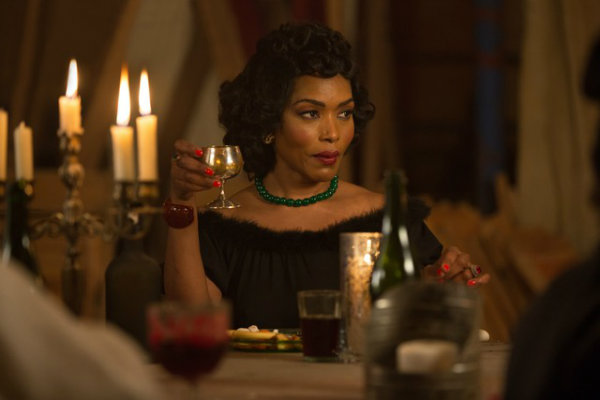
    The episode does make some moves in the larger story of the season, and introduces some much needed conflict within the camp, as well as without it. Michael Chiklis and Angela Bassett join the cast, as strong man Dell Toledo and his wife, Desiree Dupree, an intersex woman with three breasts. The pair of them inject instant conflict into the camp setting, as Dell begins giving orders and calling the shots with regards to Elsa’s show. Jimmy’s plan to frame him for murder is both poorly thought out by the character and poorly displayed by the show, and it ends in the murder of Meep in a group prison cell. In case this story wasn’t clichéd enough already, Evan Peters ends the episode with a despairing yell into the night sky.

    At the end of the day, too much of this is familiar, and in a show about “freaks,” it seems that everything should have a bit more verve and originality. Even Twisty the Clown is a standard, uninventive serial killer story, dressed up in (extremely creepy) clown clothes. Elsa’s character has so far been cobbled together from various previous Jessica Lange characters, and her arc so far is identical to Fiona’s in Coven, with hints of Sister Jude as well. Both scenes with Bette and Dot singing are ripped directly from the pages of Glee, especially the first, where Jimmy encourages Bette to sing, which might as well be a speech from Finn Hudson. Ditto Jimmy’s trip to the diner with the rest of the freak show, which plays out only on the most superficial level. It’s a horror standard to apply metaphor to the violent proceedings, but since this show so rarely does straight horror, instead straddling the line between horror and drama, it needs to inject a little more oomph into the storytelling to keep things engaging.

    The same goes for the players. Even though there are a wide variety of characters, they so far are all very one-dimensional, with only Jimmy Darling showing any signs of depth (and since those depths appear to be mostly a quickness to violence inherited from his father, we’ll see how that ends up affecting everyone else). The flash and panache of the show’s circus setting will only carry it so far. I’m all for slow burn storytelling, and god knows Ryan Murphy could do with a little restraint, but at the same time, I can’t help but feel this is moving more slowly than it needs to be.


    Stray Observations:

    – Of course, next week apparently the ghost of freak shows past is coming to haunt the circus or whatever, so who the hell knows.

    – “Unless you got pony legs under those trousers or a double ding dong.” “No, but I do know the entire Cole Porter canon.”

    – So Twisty is missing the lower half of his face, if you weren’t creeped out enough. Related: Sure, Gloria Mott is not quite with the program most of the time, but how on earth does anyone really take a look at Twisty and think, “Oh, what a perfectly normal looking clown!”

    – “Amuse me, clown!” See what I mean? Although maybe Dandy knows more than it seems at first.

    – Bette and Dot singing “Criminal”? OK. I’m wondering if the musical numbers are going to be a weekly occurrence here.

    – Apparently Kathy Bates is doing a Baltimore accent? She sounds like literally no person I have ever heard.

  • Film Review: “Annabelle”

    Film Review: “Annabelle”

    annabelle
    Annabelle is the prequel to 2013’s The Conjuring, directed by James Wan, which received generally favorable reviews.  James Wan handed the directorial baton over to his cinematographer, John R. Leonetti, whose previous experience includes Mortal Kombat: Annihilation and The Butterfly Effect 2; safe to say that this may not have been a wise choice.

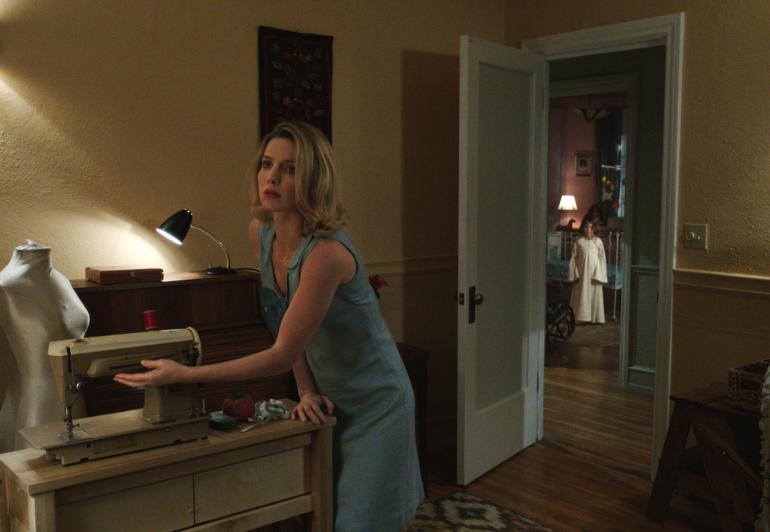
    The film opens with a scene from The Conjuring describing the Annabelle doll and its alleged possession by a murderous demon by a couple of young nurses to Ed and Lorraine Warren. One year earlier, Annabelle centers on a young couple, John (Ward Horton) and Mia (Annabelle Wallis) Form, expecting their first child. Mia collects antique dolls. Husband John surprises her with a new rare collectible doll to add to her assortment in the baby’s nursery. Soon after the doll arrives Mia awakens to screams next door. Their neighbors are being murdered by their deranged daughter Annabelle and her boyfriend. They are members of a satanic cult making a sacrifice to Lucifer. John goes to investigate the screams next door, leaving pregnant Mia alone in the house. The assailants make their way to Mia and assault her. Before things escalate any further, the police arrive and gun down the intruders. Annabelle is holding the new doll as a single drop of her blood is absorbed through the doll’s eye socket.

    This plot is promising enough. The association with The Conjuring makes Annabelle even more alluring. Unfortunately, Annabelle does not even come close to its predecessor’s quality. The scariest part of this movie is the acting. Annabelle Wallis shares the name of the antagonist. She also shares the doll’s level of acting skills. Wallis is an English actress best known for Showtime’s The Tudors. I don’t know if that show requires facial expressions, but I’m going to guess that it does. In that case, I’m going to assume she doesn’t perform much better on TV. She refuses to put any sort of enthusiasm into her performance. Ward Horton, however, provides us with plenty of generic emotions. Together, this couple is unbelievable, as in it’s impossible to get stitched into this story. Not for a second do you believe anything Annabelle is trying to sell you.

    The production style of this film is reminiscent of The Conjuring which is mildly enjoyable. The score is also similar, except for the addition of cheesy melodramatic ballads which gives certain scenes the feel of a soap opera. There are a few jump scares, but even these aren’t effective because you can see them a mile away. The shot is framed in such a way that the character is on one side and a long hall or doorway is in full view. The wide shot enables the audience to anticipate the scares minutes before they happen; thus negating them all together. You see the devil in this movie, literally the face of the devil, horns and all. It is the least frightening representation of Satan you will ever encounter. Nothing is hidden. There’s no mystery or spookiness to the character at all. Also, he’s not really worked into the story. It goes from the doll being possessed by a small child to Annabelle to a possible demon to Satan without any explanation. There is a priest, of course, that attempts to provide answers, but he is generic and uninformative.

    There is one scary scene in Annabelle in which Mia is trying to take the elevator from the basement up to her apartment after being spooked. However, the apartment keeps opening up to the same eerie storage cellar. This scene is well shot and actually invokes some anticipation. However, this scene alone is not enough to redeem Annabelle. This movie combines lackluster scares with uninspired acting to create a prequel far less ambitious than the original.

  • Movie Review: The Giver

    Movie Review: The Giver

    Screen-Shot-2014-06-25-at-1.30.21-PM

    I first read Lois Lowry’s The Giver in eighth grade, at which time the YA classic was already ten years old. I have not read it since, and I purposely did not re-read it in advance of watching Philip Noyce’s film adaptation for this review. That said, the book had on me, like it did on so many, a very strong impact. In many ways The Giver is the progenitor of the modern YA novel, and indeed it shares many of the characteristics of later works such as The Hunger Games.

    My goal in not re-reading it, then, was to go in to this film with as little expectation as possible. I have a strong emotional memory of the book, but many of the specifics have long been lost on me. I therefore suspect that I enjoyed the film more than most, because despite my limited memory of the source material, I also suspect that the adaptation here is by and large one giant missed opportunity.

    For whatever reason, one specific moment from the novel stands out in my memory: Jonas uses the word “starving” to indicate the degree of his hunger, and is scolded by an authority figure (precisely whom, I don’t remember)—after all, in this world no one is starving, and the Elders have worked very hard to ensure that. For Jonas to say that he is starving is therefore flippant, and totally disregards the effort that attained this utopia. While in the film, Katie Holmes’s Mother admonishes Jonas multiple times for his “precision of language,” this specific scene is entirely absent, along with almost any world-building that I certainly remember being in the book.

    We are told constantly how perfect and idealized the world of The Giver is, but the screenplay doesn’t go to many lengths to actually demonstrate this bizarre society. We are launched right into Jonas’s “graduation,” with little sense of his friendship with Fiona (Odeya Rush) and Asher (Cameron Monaghan), or of his home life with Mother and Father (Alexander Skarsgård), or of how society functions in this world, beyond the most superficial level. From there we move too quickly into Jonas’s training, where the film then spends the bulk of its second act.

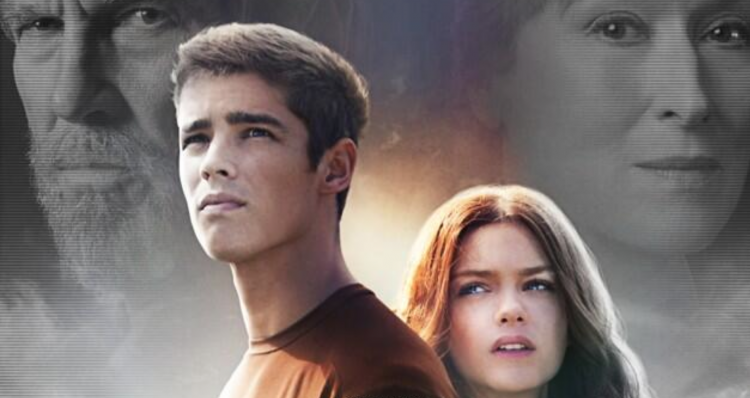
    Fortunately the second act is also the film’s best, owing in large part to Jeff Bridges’ performance as the Giver. You see, Jonas is special among his peers, and is selected not for one the many standard occupations assigned to new adults, but instead is selected to be the “Receiver of Memory.” What this means is that, eventually, Jonas will be solely entrusted with the knowledge of human history, and therefore with the reason for the Community’s very strictly regulated society. So it’s down to the previous Receiver to train Jonas for this very important role. We learn along the way that there was a Receiver in between, Rosemary, who is played by Taylor Swift, but appears so briefly as to make very little impact on the plot or on the audience. Rosemary is a symbol, of the Giver’s grief, and of the cruelty of what Jonas is being asked to do—but she is not a character, and Swift is asked to do very little acting.

    Jonas’ training is depicted through flashbacks, intercut with conversations between him and the Giver. Jeff Bridges and Brenton Thwaites (about whom more in a moment) have an easy chemistry here, and their mentor/learner relationship is a vivid and ultimately moving one. When toward the end of the film, the Giver tells Jonas that he loves him, we feel that, and so does Thwaites, who gives a remarkably understated reaction, mixing pride, relief, sadness, and admiration in a most beautiful way. This is the central relationship of the film, and so we need to spend as much time on as it as we do. In fact, I’d have liked to see much more of it.

    Beyond Jonas’s slow discovery of the things that have been removed from society—colors, music, love, envy, war, violence—the plot of the film is rather thin, centering on an infant, Gabriel, who has been designated “uncertain”, meaning that he will not immediately be assigned to a family unit. What this really means, as we and Jonas eventually learn, is that Gabriel will be killed. This understandably is the last straw for Jonas, who leaves his training early and travels with Gabriel beyond what is called “the boundary of memory,” both to save the infants life, and to restore memory to all of society.

    In other words, this is fairly typical, dystopian YA stuff—a young protagonist singled out from his peers, given responsibility undue his age, who rises to the challenge, uncovers misdeeds among the establishment, and rebels. It was revolutionary in 1993, but now it seems a pale imitation of The Hunger Games. That’s mainly because of the screenplay, which does not do nearly enough to explore the themes and emotions that the source material engages with. Bridges, along with Meryl Streep as the Chief Elder, lend the film an appropriate sense of gravity, but neither is able to save a script that is seemingly unwilling to challenge its audience with any truly tough ideas. There is an attempt here to boil the material down to a “love conquers all” sort of story, and that’s just weak. Given Bridges’s long involvement with this project and his reported passion for the novel, one wonders why more of that does not translate to the screen.

    It’s a shame, too, because the movie is certainly competently made, and at times is truly beautiful. Philip Noyce has an elegant way of staging scenes, especially during the long middle section that is comprised mainly of Jonas and the Giver talking to each other. The film’s use of color, extremely important to the narrative, is nothing short of fantastic, as the lack or presence of color becomes narrative shorthand that is used to great effect, especially toward the film’s climax. Similarly, the flashes of memories that Jonas experiences benefit from the transition to the screen, as Noyce employs real-world history to demonstrate both humanity’s capacity for violence and our capacity for love and triumph over adversity. Marco Beltrami’s score is not particularly inventive, but it does a great job of underscoring the film’s most emotional scenes.

    Which brings us to the rest of the acting. It’s standard of the YA film adaptation genre—because at this point it really is its own genre—to pepper the supporting cast with recognizable, talented adult actors, and that’s the case here as well. Bridges, Streep, Skarsgård, and Holmes each play their parts effectively, but none save Bridges have quite enough material to give the characters any dimension, despite their best efforts. But they’re only there to support the film’s true stars, typically a trio or more of teenagers (or approximations thereof).

    Here, the film’s undoubted lead role is that of Jonas, played here by Brenton Thwaites, who is sure to become a household name sooner or later based on his striking good looks if nothing else. He carries the role admirably enough, but is essentially playing the same note, that of wide-eyed wonderment, throughout. It’s a good note, and appropriate enough to the character, but again, one wishes for a slightly deeper dive into the character. There are a few moments where Thwaites does excel however, mainly with Bridges as his scene partner. He’s also a gifted comedian—I would watch him make faces at babies all day long—but understandably is not given many opportunities to exercise that particular acting muscle here. Similarly, Rush and Monaghan’s characters have very specific narrative roles to fill, and beyond acting out those requirements, there is nothing else done with Fiona or Asher.

    That’s really the problem with the whole film—it’s paint-by-numbers YA, when it should feel as revelatory and revolutionary as Lowry’s novel did, and still does. It’s difficult to know to what extent to fault the actors, to what extend to fault the script, and to what extent we should simply fault the Weinsteins. An examination of a utopian society that nonetheless murders babies who aren’t up to snuff is inherently fascinating—here it’s almost boring. And while the ending is mostly faithful to the novel as I recall it, the film doesn’t earn its ambiguity, especially as it also doesn’t make any sense. It achieves its emotional goal well enough, but why on earth should Jonas’s action have the effect it does? The best science fiction explains its technology, but here we’re asked to assume an awful lot. I’m not sure how Lowry handles this in the novel, and maybe it goes unexplained there as well, but here in the film, it’s one of those endings that works just until you give it even the slightest thought.

    The Giver, as a novel, remains an essential treatise on the complexities of the world, and of growing up, of the importance of feelings even when they are bad or destructive. It is for many readers their first exposure to the idea that passion is a double-edged sword, but that to have either edge you must have both. It is impossible to eliminate the bad from this world, and in the attempt to do so, you risk becoming that bad yourself. The film gestures at all of these ideas, but it does so in the most streamlined, Hollywood-ized way possible, without giving the ideas proper weight or consideration, the way I know its source material does, even years after reading it.

    The movie’s hovering around 28% on Rotten Tomatoes as I write this. It’s not as bad as all that. As a film, The Giver’s biggest crime is that it does not live up to the promise of its concept. That’s a pretty central failure, though, and so it spills out and poisons other aspects of the production, as well. You’ll undoubtedly enjoy it as you watch it, especially if you are nostalgic for the book, as even I am. But it will not stay with you for very long after you leave the theatre. Unlike a film like Catching Fire, which vastly improves upon and elevates its source material, The Giver stumbles, simplifying concepts that resist simplification, and making a very forgettable film as a result.