Category: Movies

  • ‘Spoiler Alert’ review: Love, loss, and smurfs make a perfect rom-com

    ‘Spoiler Alert’ review: Love, loss, and smurfs make a perfect rom-com

    Spoiler Alert follows Michael and Kit’s imperfect romance through various ups and down before they’re faced with a crisis that tests the bounds of their love


    Spoiler Alert is the kind of realistic romantic tragicomedy that makes you feel nearly every emotion at once. Funny but not forced. Tragic but not overwrought. Romantic but not unrealistic. It hits all the beats in each of its genres while delivering a satisfying albeit devastating rom-com that says love is worth the pain. Am I romantic now?? I think so.

    Spoiler alert: This romantic comedy is actually a tragedy. But it wants you to know that. Spoiler Alert opens with a shot of Michael Ausiello (Jim Parsons) lying across from his husband Kit Cowan (Ben Aldridge) in a hospital bed, clearly in his last moments, before flashing back to the pair meeting for the first time thirteen years earlier. Why, though, does the story spoil its tragic ending? Isn’t it enough that the couple doesn’t get their happily ever after? Instead, we’re forced to watch in dread knowing their fate. Well, that’s by design. While there are flashes of the romantic comedy tropes we’ve come to know and fall for time and time again, Spoiler Alert is grounded in realism — as it should be since it is based on Ausiello’s memoir Spoiler Alert: The Hero Dies: A Memoir of Love, Loss, and Other Four-Letter Words. Still, the way it errs so closely to his actual story is admirable as it doesn’t shy away from the ugly. 


    ADVERTISEMENT


    And not just the ugly of a terminal cancer diagnosis. It doesn’t present Michael and Kit as a glorified picture-perfect gay couple. We’re first introduced to TV-obsessed Michael when he’s a staff writer for TV Guide, a dream job since he was a child. He’s a workaholic, a bit of a prude, and a man of habit (he always needs his diet coke like half the gay men in New York City). That’s why when he meets photographer Kit out at a gay club on “jock night” it is truly a surprise — the only reason he goes is that his friend (Jeffery Self) goads him into it. Despite some initial awkwardness including a cringe Knight Rider reference, Michael and Kit hit it off. 

    They seem like complete opposites. Michael is uncomfortable in his skin in every way and especially as a gay man — it is the early aughts after all. Kit, on the other hand, breezes through like a hurricane — confident, assured, and swoony. The perfect romantic lead. Despite their differences, though, the pair make it to a second date that director Michael Showalter perfectly presents. One of those conversations that just never seems to run out and can go on for hours. Eventually, they make their way back to Kit’s apartment — where they have a hilarious run-in with his monosyllabic lesbian roommate — to extend their night. However, as they’re hooking up, Michael has a fit as he’s about to remove his shirt. Sensing his discomfort, Kit slows down and asks Michael if he’s doing anything wrong. He reveals he is an “FFK” aka Former Fat Kid. Instead of having him leave, Kit asks if he can just hold him. 

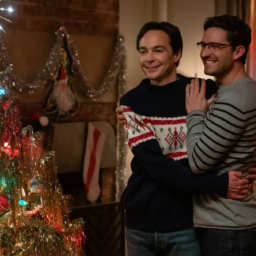
    It’s those moments that make the romance in Spoiler Alert feel so real. Figures since Michael himself said that the movie doesn’t take many creative liberties with the story. Their jagged line to love is imperfect but believable. The story doesn’t shy away from those moments of uncertainty — like when Michael reluctantly hosts Kit at his Jersey City apartment for the first time. I’ll save that reveal for the movie, but let’s just say it leaves them feeling a little blue. In another scene, Kit asks Michael to pretend to be his friend as he hasn’t come out to his parents yet (the charming and hilarious duo of Sally Field and Bill Irwin). It all culminates in a hilarious coming-out scene where three people confess they’re gay at once. Despite the bumps, Kit, who Aldridge plays perfectly as a swoony (and chiseled) romantic lead, sticks around long enough for the pair to move in together and we’re treated to the corny but genuine moments that make us love love — a montage of their Christmases together is warm enough to melt any anti-romance cynic’s heart.


    ADVERTISEMENT


    However, what is so refreshing is that 13 years down the line Michael and Kit are separated and in couple’s counseling drudging up every complaint, big and small, they have about each other. Some are universal and some are specific to the gay experience like being on Grindr (“you can look, but can’t touch”), feeling jealous of the hot gay coworker, missing an episode of Drag Race. It feels similar to director Michael Showalter‘s previous film The Big Sick, which similarly told an imperfect love story.

    Just like that movie, Spoiler Alert takes a turn towards tragicomedy when Kit discovers he has an aggressive type of cancer — get your prostate exam, fellas. And with that, the movie becomes an exploration of regret, grief, trauma, and the boundaries of love. While it doesn’t lose its wit, it does inject understated moments that invoke feelings of loss. In perhaps one of the more quietly impactful scenes, Michael and Kit take photos of each other at a restaurant they’ve frequented — it’s Benny’s Burritos, which recently closed, for you West Village gays. There are no words, but Parsons and Aldridge quietly communicate to us (and each other) the fear, longing, and sadness they both feel. It’s those moments that elevate Spoiler Alert to greatness.

    Sometimes the swings that Spoiler Alert takes don’t completely pan out. Flashbacks to Michael’s childhood that are presented as scenes from a sitcom do little to explain how his mother’s own battle with cancer colors his experience with Kit. There is also an underbaked subplot around Kit’s fidelity during the relationship involving his co-worker Sebastian (Queer Eye‘s Antoni Porowski) that could have been more impactful. Still, it never detracts from the tear-jerky effectiveness of the movie.

    Spoiler Alert is funny but not forced. Tragic but not overwrought. Romantic but not unrealistic. It is the kind of romantic comedy that we gays in New York City can’t roll our eyes at. It wasn’t until Spoiler Alert that I realized the reason so many gay rom-coms fall flat is we’re immune to bullshit. To love who we want to love without prejudice takes years of trauma, therapy, and, eventually, acceptance. We are all too aware that love isn’t like what it is like in the movies — it’s imperfect, messy, and cruel. We want that kind of love. We fought to have that kind of love. The kind of love that even though it’s hard, it’s worth it in the end. Sure, more likely that not the great loves in our lives are not going to end quite as tragically as Michael and Kit’s. At the very least, though, it affirms that through it all life, love, and pain are just a part of the experience. Embrace every moment.


    ADVERTISEMENT


    More movies, less problems


    Hey! I’m Karl. You can find me on Twitter and Letterboxd. I’m also a Tomatometer-approved critic.

    💌 Sign up for our weekly email newsletter with movie recommendations available to stream.


    ADVERTISEMENT

  • ‘The Menu’ review: A delectable dark horror-comedy | TIFF review

    ‘The Menu’ review: A delectable dark horror-comedy | TIFF review

    In The Menu, a group of wealthy diners is invited to an exclusive island restaurant run by a world-renowned chef to experience a once-in-a-lifetime dinner. On the menu: horror.

    As with his Emmy-wining work on Succession, director-writer Mark Mylod brings the same black comedy schadenfreude at the hands of the rich to The Menu.

    Have you ever watched an episode of Netflix’s Chef’s Table and thought, “gee, I wish this was more like a horror movie.” Well, I present to you weirdos The Menu, a deliciously camp (that’s a pun) humble one-room eat the rich satirical horror-comedy about a group of diners at an exclusive isolated island restaurant who think they’re about to be treated to a one-in-a-lifetime multiple-course molecular gastronomy dinner constructed by legendary Chef Julian Slowik (Ralph Fiennes). And they are treated to that meal, more or less. What they don’t know is that they are a part of the menu. However, what is so exciting about The Menu is it’s not in the way you think. This isn’t Raw (if you know, you know). What it is is a hilarious and satiating pitch-black comedy of manners about rich people getting their just desserts from the people meant to serve them—and separately one of the best horror movies and comedies of the year.

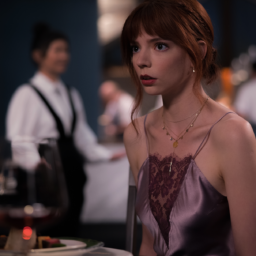
    Director Mark Mylod works in a very similar tone to his Emmy-winning work on HBO’s Succession. The Menu from its opening moments to its explosive finale is tongue-in-cheek and never notions that it is trying to say anything more than what is on its surface like other recent genre movies dealing with class—it’s more Bodies Bodies Bodies than it is Get Out or Parasite. Take Tyler (a delightful Nicholas Hoult), a self-described foodie and super fan of Chef Slowik who has been trying to get a reservation to Hawthorne for months—the restaurant only takes twelve guests a night for $1,250 a seat. When he finally does, he brings along Margot (Anya Taylor-Joy) who he chastises for smoking because it will mess up her palette leaving her unable to appreciate the food.

    They board a ferry that brings them and the ten other guests for the night’s dinner service to the isolated island where the restaurant, including the farm, smokehouse, and staff quarters all reside. The restaurant’s no-nonsense deadpan maître d’hôtel Elsa (Hong Chau) explains that the entire staff lives on the island. “Why would we not?” she asks. She adds, “we’re a family.” Elsa is like the harbinger of a classic horror movie and basically wears a sign that says “you will die.” The guests don’t heed the warning.

    After, the guests are seated in the minimalist seaside restaurant that is open concept with the kitchen flowing straight into the dining room. Throughout the night we slip into and out of the conversations at each table where we learn the backstory of each group, all characters in their own right—much like the eccentric suspects of Knives Out. There’s highfalutin food critic Lillian Bloom (Janet McTeer) and her magazine editor (Paul Adelstein) who try to come up with increasingly pretentious words to describe the food (“it’s thalassic,” Lillian says about the first course of the meal, a single scallop on a rock). A group of finance bros who work for the venture capital firm that funds the restaurant. John Leguizamo plays a movie star who says he’s friends with Chef Slowik and tries to stop his assistant Felicity (Aimee Carrero) from quitting her job.

    Through the multiple courses of his finely tuned dinner—captured with the same delicate mouthwatering cinematography of an episode of Chef’s Table or the cooking scenes in Ang Lee’s Eat Drink Man Woman—he brings his diners on an exploration of flavor, nature, and horror. That itself could have been a hilarious satirical comedy, mainly when he introduces the second course: a “breadless” bread plate—he explains that for aristocracy like the diners, something as simple as bread is beneath them. And while the movie starts as a hilarious satirical

    The first indication that something is not quite what it seems is when Chef Slowik describes the inspiration of his third course, recalling a memory from childhood when he had to protect his mother from his abusive father by stabbing him in the thigh with a pair of scissors—on taco night of all nights. The meal, a deconstructed taco with a chicken thigh stabbed a pair of scissors, is served with tortillas laser drawn on with images further exposing the indiscretions of each the guests. They range from gentle chides—Tyler’s is photos of himself taking photos of the food (which they were instructed not to do at the beginning of the night)—to personal revelations—Anne’s tortillas are printed with photos of Richard with a young woman who looks a lot like Margot—to criminal evidence—let’s just say the venture capitalists’ money took a vacation to the Cayman Islands.

    “What is this?” asks Bryce (Rob Yang), one of the venture capitalists.

    “That is a tortilla deliciosa,” Elsa responds sincerely.


    ADVERTISEMENT


    More movies, less problems


    Hey! I’m Karl. You can find me on Twitter and Letterboxd. I’m also a Tomatometer-approved critic.

    💌 Sign up for our weekly email newsletter with movie recommendations available to stream.


    ADVERTISEMENT


  • ‘Falling For Christmas’ review: Lindsay Lohan is back

    ‘Falling For Christmas’ review: Lindsay Lohan is back

    A spoiled ski resort heiress finds herself in the care of a well-to-do lodge owner after losing her memory in an accident in Falling For Christmas

    Falling For Christmas is in many ways a classic corny holiday-themed romantic-comedy complete with over-the-top camp characters, ridiculous physical comedy, corny but sweet romantic gestures, and a gay awakening with a mountain man named Ralph. Wait a second. Okay, maybe it’s not your classic holiday rom-com. Instead, the Netflix original is a tongue-in-cheek send-up of the genre, something its star Lindsay Lohan is completely dialed into. No one is taking the material too seriously, and that, ladies and gentlemen, is camp.

    A little bit Overboard and a little bit It’s A Wonderful Life, Falling for Christmas is an easy holiday watch for the girls, gays, and theys.

    Sign up for our newsletter to get notified when we publish our full review.


    ADVERTISEMENT


    More movies, less problems


    Hey! I’m Karl. You can find me on Twitter and Letterboxd. I’m also a Tomatometer-approved critic.

    💌 Sign up for our weekly email newsletter with movie recommendations available to stream.


    ADVERTISEMENT


  • ‘Black Panther: Wakanda Forever’ helps us grieve together | review

    ‘Black Panther: Wakanda Forever’ helps us grieve together | review

    Black Panther: Wakanda Forever follows the nation as it navigates grief, politics, and new enemies after the death of King T’Challa.

    • Black Panther: Wakanda Forever is closer to a drama meditating on loss and grief than it is a comic book movie. Even when those elements come in, they’re tied into the plot.
    • The tone of the movie is notably more somber than other Marvel Cinematic Universe movies. Although there are flashes of humor, director Ryan Coogler never strays far from the movie’s darker undertones.
    • The first and last scenes are the most dramatically satisfying and moving in any MCU movie. Letitia Wright, Danai Gurrira and Angela Bassett’s performances become the movie’s heart in Boseman’s stead. Not by replacing him, but by continually reminding us of his impact.
    • Tenoch Huerta is a revelation. A goddamn STAR. His Namor constantly feels dangerous, but finds complexities in his motivations and very existence. Like any good villain (anti-hero?), he very nearly convinces you that he is right. He also very nearly runs away with the movie.
    • The first half has a perfect rhythm. It kept my heart pounding and eyes on the verge of tears. The second loses momentum as it expands its worldly themes. Still, Coogler knows how to keep you in. Along with Chloe Zhao and Sam Raimi, he’s the MCU’s future.

    By the time the Marvel logo came up at the start of Black Panther: Wakanda Forever, this time with a purple background rather than its usual trademark red, I was already on the verge of tears. There’s a melancholy in those opening minutes that we haven’t yet seen in a Marvel Cinematic Universe movie. The real raw human emotion that has mostly gone untapped in the franchise hits you like a gut punch — and we all know why. While director-writer Ryan Coogler was still in the middle of writing the script, star Chadwick Boseman died from colon cancer. Something unknown to Coogler and producer Kevin Feige. There wasn’t a world that they, or we, imagined without Boseman as T’Challa, the Black Panther and King of Wakanda. Now faced with his absence, they had to go back to the drawing board. What they came up with was exactly that: his absence.


    ADVERTISEMENT


    Instead of shying away from his death or recasting the character, Coogler unflinchingly faces grief and loss head-on dealing with each surviving character’s struggles and how they deal with his absence. The details of T’Challa’s death aren’t specific. A mystery illness with no cure that quickly and quietly led to the King’s demise despite his sister Shuri’s (Letitia Wright) attempts to recreate the heart-shaped herb in a last-ditch effort to save him. It’s her grieving process — and guilt — that propels us for the first half of the movie as we learn of the geopolitical implications of T’Challa’s death including the rise of his mother Queen Ramonda (Angela Bassett) as the head of the nation. Seeing an opening, other nations are seeking to share in Wakanda’s supply of vibranium going as far as raiding outposts with the substance. Queen Ramonda gives an impassioned speech in front of the United Nations — one of many stellar moments of Bassett’s performance in typical Waiting to Exhale mic drop car-burning fashion — accusing them of taking advantage of their supposed weakness.

    And she’s right. Shortly after we see an American ship using a machine designed to find vibranium deposits encounter a potential supply at the ocean’s floor. However, before they can even get so much as a glance at it, they are ambushed by a group of blue amphibious humanoids that easily dispatch with the crew before one cloaked in shadow (with wings on his feet) single handedly takes down a helicopter. We come to learn that this is Namor (newcomer Tenoch Huerta). Or as he says with perfect supervillain delivery: “my people call me K’uk’ulkan, the feathered serpent god. My enemies call me Namor.”

    Like the first movie, Wakanda Forever moves rhythmically for the first half. Composer Ludwig Göransson — he won the Oscar for the first movie — expands the score’s musical language to work with Coogler’s melancholy tone and the political intigue of the plot. In some ways, the movie feels like a noir — albeit a brightly lit and action-oriented one. The mystery of Namor and his people, the Talokan, fuel much of the setup. Namor’s introduction — easily breezing into the (nearly) impenetrable Wakanda for a conversation with Queen Ramonda and Princess Shuri — is a showcase for Huerta. He explains to them that Wakanda’s cooperation with the outside world puts his own underwater kingdom at risk, so he tasks them with bringing the scientist responsible for creating the vibranium-detecting machine to him to kill.


    ADVERTISEMENT


    This sets off a series of moral, political, and personal dilemmas as Queen Ramonda looks to protect her nation and Princess Shuri discovers that there’s more in common between her people and her supposed enemy. Throughout the movie, but especially in the first half, Coogler is in the pocket — completely in rhythm with the story he’s telling. Nearly every single element that made the first movie the first (and still only) comic book movie to be nominated for Best Picture at the Oscars is even further elevated, especially the costumes by Ruth E. Carter and production design by Hannah Bechler. Coogler himself is more visually daring, presenting action setpieces and fights that feel dangerous.

    However, Black Panther: Wakanda Forever begins to come apart when it has to consummate its very sensitive exploration of grief with the demands of a comic book movie. And often in the second half, those two elements are in direct opposition to each other. Coogler does his best to use Shuri’s emotional journey to hold the two together, but in the end there are a few jumps the audience needs to make to believe in where the story ends up. The element that is successful at briging those two ideas together is Huerta’s Namor.


    ADVERTISEMENT


    The backstory of the Tatoklan almost begs for its own movie and gives the themes of grief, loss, and trauma structure. Much of this is in thanks to Tenoch Huerta’s revelatory performance. He is a goddamn star. His Namor constantly feels dangerous, even just with his words — especially important as comic book movies become increasingly predictable. However, he finds complexities in his motivations. Like any good villain he very nearly convinces you that he is right. In a way, he’s not even a villain, but an anti-hero in his own story. 

    Black Panther: Wakanda Forever is for better and worse emblematic of the fourth phase of the Marvel Cinematic Universe. Rather than returning to the same formula that made the franchise a success, Coogler pushes the narrative and artistic boundaries to create a flawed but ultimately satisfying chapter.


    ADVERTISEMENT


    More movies, less problems


    Hey! I’m Karl. You can find me on Twitter and Letterboxd. I’m also a Tomatometer-approved critic.

    💌 Sign up for our weekly email newsletter with movie recommendations available to stream.


    ADVERTISEMENT
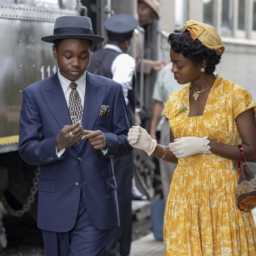

  • ‘Till’ breathes life into American history | movie review

    ‘Till’ breathes life into American history | movie review

    Bringing a piece of American history to life, Till is the story of a mother’s love as a woman fights for justice after her young son is murdered in the 1950s

    The name “Emmett Till” is one that is often thrown around. He is one of a handful of Civil Rights figures (along with Rosa Parks, Martin Luther King Jr., and Malcolm X) that have permeated the culture to the extent that they are mentioned on the half page allocated to the “Civil Rights Movement” in American History textbooks. (He even made his way briefly into my conservative Christian education in rural Michigan). Perhaps you know that he was a 14-year-old Black boy who was lynched in Mississippi. Perhaps you have seen the photos of his body that were used to showcase the horror of racism. But for many, Emmett Till remains a distant historical figure rather than a real human, even though his murder only took place 67 years ago (for context, he’d be the same age as Bernie Sanders and Martha Stewart if he was still alive). Till, Chinonye Chukwu’s film which premiered at the New York Film Festival on October 1, seeks to make Emmett Till a human once again.


    ADVERTISEMENT


    In a Q&A after the press and industry screening of the film Chukwu outlined three non-negotiables she stipulated when she was approached to direct Till. First, she did not want to show violence against Black bodies directly. Second, she wanted the film to begin and end with moments of joy. And third, she wanted to center the story of Emmett Till around his mother Mamie Till-Mobley. All three of these choices contribute to breathing life into a story that has become more myth than real-life, especially for non-POC Americans.

    In recent years we’ve seen an increasing number of films that could be labeled “trauma porn” whether those be brutal depictions of violence against Black people (like in Antebellum), against women (as with Blonde), against queer people (see the recent “Bury Your Gays” trope), or against those with mental health issues (The Son’s manipulative plotting comes to mind). It could have been easy to steer into the horrific, graphic violence committed against Till here with long, grizzly lynching scenes, but Chukwu deftly steers away from that while still presenting a powerful, unflinching portrait of what happened to Till. 


    ADVERTISEMENT


    The casting of the cherubic, exuberant Jalyn Hall as Emmett (who goes by “Bobo”) instantly gives the film a lightness in its early sections, although those are obviously complicated with the dread we as the audience feel knowing what is coming. Hall plays Till as a goofy, sometimes lazy, always sweet, smiley little boy, the type of child we’ve all met, and the type we know can accidentally wander into trouble. Just how quickly things escalate, however, clearly illustrates the dangers that even innocent Black children were subjected to then (and unfortunately still today far too often).

    The centerpiece of the film, of Chukwu’s directing, and of Till’s emotion is Danielle Deadwyler’s portrayal of Emmett’s mother. Deadwyler (who you may know from last year’s The Harder They Fall or Station Eleven, both of which show her dizzying range as an actor), gives one of the most tremendous, full-bodied performances of the year. As Emmett’s loving protective mother early on, as the heartbroken, grief-stricken mourner in the film’s center, and as the persistent, determined fighter in the third act, she builds a mountain of Oscar-worthy moments. Especially in several long takes, Deadwyler proves herself as an actor Hollywood should be watching. The strength and subtlety of her performance is the best thing about the film (and one of the best performances of 2022). The film succeeds largely because of Deadwyler’s performance, and its ability to deliver to the audience the full emotional weight of the lynchings without the graphic violence mostly falls on the shoulders of her portrayal. Some credit for this performance must be given to Chukwu, who captured an equally powerful performance from Alfre Woodard in her 2019 drama Clemency.


    ADVERTISEMENT


    While the true story is one that needs to be told, and the performances are tremendous, they are slightly undercut by the technical elements of the film. Up against a slew of big-budget, artistically nuanced period pieces (Noah Baumbach’s White Noise premiered the day before at NYFF, and The Fabelmans, Empire of Light, and The Women King are all swirling through this year’s awards conversations), Till feels a bit chintzy at times. Some scenes are obviously green screen, the production design is underwhelming, and the sets often feel more like walking into a Cracker Barrell than the 1950s. The film, which was produced by Whoopie Goldberg and documentarian Keith Beauchamp, among others, was not a project to get greenlit do the uncomfortable subject matter, and I would imagine the financing was not on the level of recent productions from behemoths like Netflix or Amazon. One wonders whether the film’s weak spots in the technical areas are a result of filmmaking choices or the movie’s small budget given Hollywood’s longstanding reluctance to financially support projects with Black voices at the center (especially ones that focus on racism). I tend to think the latter, and hope that someday soon we’ll get to see Chukwu work with the budgets given to her white, male counterparts.

    Certainly not a flawless film, but one that triumphs repeatedly in many ways, Till accomplishes much of what it sets out to do. It gives new life to Emmett Till. It showcases the work of his mother as a Civil Rights activist. It delivers a tremendous Oscar-worthy central performance. And it manages to tell a terrible, terrible story without being overly graphic or shying away from the horrors, all while being approachable to a larger audience (a nearly impossible tightrope walk that Chukwu should be commended for walking). Till makes the (too near) past present and full of life, and hopefully reminds viewers that Emmett Till is more than just a name and a series of black and white photographs.


    Hey! I’m Matt. You can find me on Twitter here. I’m also a staff writer at Buzzfeed.


    ADVERTISEMENT


  • In ‘All Quiet on the Western Front’ war has never looked worse and never looked better | TIFF review

    In ‘All Quiet on the Western Front’ war has never looked worse and never looked better | TIFF review

    All Quiet on the Western Front, the second adaptation of the novel of the same name, follows a group of young soldiers that learn the hard way that war is hell

    All Quiet on the Western Front will be released on Netflix on October 28th.

    For whatever reason (schadenfreude? To stare the harshest reality straight in the eye? A fascination with large machines?), for as long as humans have been making movies, they have been making them about war. The first ever Best Picture winner at the Oscars was Wings, a 1928 silent war film about a pair of fighter pilots. The highest-grossing film ever (adjusted for inflation) is Gone with the Wind, set against the backdrop of the Civil War. And Oscar history is littered with wartime films from classics like World War II-set Casablanca and The Bridge on the River Kwai (focused on a British POW camp) to more recent entries like Holocaust tragedy Schindler’s List and Iraq War-set The Hurt Locker. But one story has been a staple in the war film canon since the very beginning: the 1930 Best Picture winner All Quiet on the Western Front


    ADVERTISEMENT


    The film is based on the German novel by Erich Maria Remarque, which follows a young, naive soldier named Paul through events of the First World War. Remarque’s novel, inspired by his experience fighting in the trenches, paints a horrifying, monotonous, and ultimately pointless picture of war. Paul is dispatched to complete various futile tasks on the front, watching his comrades die agonizing deaths with little rhyme or reason. As opposed to the prevalent view of war at the time—honorable, glorifying, heroic—the novel took a definitive anti-war stance. It enraged many readers (especially in Germany where the book was banned during the Nazi era) while delivering harsh truths to a population fueled by propaganda, and with relatively few ways to understand what war actually looked like.

    Now post-Vietnam War, post-Cold War, and post-Iraq War, the anti-war sentiments of All Quiet seem commonplace and even quaint.

    The fact that you were probably assigned the book in a high school English class and that the original film is in black-and-white contribute to the misconception that this is a run-of-the-mill war epic. At the time of the film’s release, however, merely two year’s after the book’s publication in German, and one-year post-English translation (nearly a decade before World War II), All Quiet was revolutionary. 

    Nearly a century after the American film, a German remake, which debuted at the Toronto International Film Festival, feels as timely as ever. In a period of growing nationalism and increased violence, the message of war’s futility and human toll feels like a necessary reminder. Like the novel and the 1930 film, this new adaptation from German director Edward Berger, isn’t terribly concerned with a streamlined plot (because war itself rarely has one). Rather it’s more of a mish-mash of grizzly, muddy, bloody moments covered in rats, in piss, in shrapnel, in severed limbs, and in the ever-present toxic masculinity. 


    ADVERTISEMENT


    While the new film strays from the book in many regards (especially in its eleventh-hour battle sequence), it does stay true to the novel in premise and theme.

    A group of impetuous young German schoolboys, led by Paul (newcomer Felix Kammerer) enlist in giddy excitement, trotting off to certain death while singing upbeat tunes and daydreaming about the glory, wealth, and women who will await their return. A masterful opening sequence that follows the garments of previous German casualties, their uniforms stripped from mangled bodies, stitched up, scrubbed, and handed to the euphoric new recruits, shalacks the film with ominous foreboding from its first scene. The crew is then whittled away one by one in a series of battles, wartime mishaps, and body horrors, cementing for viewers that there is no glory in war. 

    While there may be no glory in war, there is most certainly glory in war movies. Berger’s vision, expertly shot by cinematographer James Friend, is as breathtakingly gorgeous as it is brutal. The haunting, misty vistas (set against an eerie piano score from Volker Bertelmann) are Nat Geo in spooky season. Even as the runtime approaches the 2.5-hour mark, Berger is concocting new ways to artfully depict how goddamn horrible war is. Scenes of tank warfare, of hand-to-hand combat in a bomb crater, and of flamethrower deaths will be branded into my mind for eternity. The film, distributed by Netflix, looks EXPENSIVE, and the practical effects go a long way, much as they did with almost Best Picture winner 1917. However, unlike Sam Mendes’s one-shot masterpiece or Mel Gibson’s Hacksaw Ridge, which presents war as at least somewhat heroic, All Quiet’s beauty is 100% in service of showing how disgusting war is. 


    ADVERTISEMENT


    The 2022 German submission for the Academy Awards, All Quiet is almost guaranteed an Oscar nomination in the Best International Feature category. And as we’ve seen with Drive My Car, Flee, Another Round, Cold War, Roma, and of course Parasite, the increasingly international Academy is not afraid to nominate non-US films in other categories. Cinematography, Score, Sound, Film Editing, Makeup (those yellow teeth!), and even Picture seem within reach, especially since this year seems without an international juggernaut frontrunner to this point. It should be mentioned that Daniel Brühl appears here in a supporting role (as he seems contractually obligated to appear in any movie involving Nazis) relegated to a series of non-battle scenes that add more bleakness to the story. 

    Despite premiering late in the TIFF lineup and being over two hours long, I was engrossed the entire time in this beautiful horror.

    With a Netflix debut at the end of October, All Quiet on the Western Front has the potential for plenty of eyeballs as awards season heats up. It’s one of the most artfully rendered and least “oorah”-shouting war films in recent history—I’m looking at you, Top Gun: Maverick. And while the Germans may have suffered a painful loss in World War I, they have a cinematic triumph here.


    Hey! I’m Matt. You can find me on Twitter here. I’m also a staff writer at Buzzfeed.


    ADVERTISEMENT


  • ‘Haunt’ mini-review — Haunted houses are never fun

    ‘Haunt’ mini-review — Haunted houses are never fun

    In Haunt, a group of college students makes their way to a haunted house in the middle of nowhere seeking thrills — they get more than they bargained for.

    90-second review: I came into Haunt with a great deal of anticipation considering directors Scott Beck and Brian Woods just came off writing—and nearly getting nominated for an Oscar—for A Quiet Place. Not to mention the project was produced by horror maestro Eli Roth. And there are some traces of the talent that made their other projects successful. Unfortunately, covering those traces are layers and layers of bad choices.

    The conceit of Haunt isn’t a new one. Seeking thrills, a group of college students makes their way to the middle of nowhere to go through an extreme haunted house. Of course, as expected, it’s more than they bargained for as the dangers—and monsters—in the house are more real than they could ever imagine. Then, the movie turns into a fight for survival and escape reminiscent of 2015’s Green Room.

    However, one of the biggest problems with Haunt comes before they even get to the haunted house. We meet all our characters but learn nothing about them—save for some of Harper (Katie Stevens), the main protagonist. So, by the time they get picked off one by one, we don’t care about their fates. That could slide if the movie made the scares and haunts that they experience tense or exciting. To their credit, Beck and Woods do build suspense in some moments. But that suspense leads to little payoff too often. Overall, the plot, the characters, and the scares are underbaked. 

    There’s so much potential on the screen too. The design of the haunted house is intriguing and disorienting with wood-slat-lined halls leading to cramped tunnels and dark rooms littered with unseen dangers. If only the actual story were as inventive as the set design. 

    You can maybe derive some genre thrills out of the sticky situations — you’ll get that pun if you watch it — the characters get themselves into. There’s also some great gore and creature design. Still, Haunt is all bark and no bite. 

    Haunt is streaming on AMC+ via Prime Video.


    ADVERTISEMENT


    More movies, less problems


    Hey! I’m Karl. You can find me on Twitter and Letterboxd. I’m also a Tomatometer-approved critic.

    💌 Sign up for our weekly email newsletter with movie recommendations available to stream.


    ADVERTISEMENT


    haunt
    An image from the horror / thriller HAUNT, a Momentum Pictures release. Photo courtesy of Momentum Pictures.
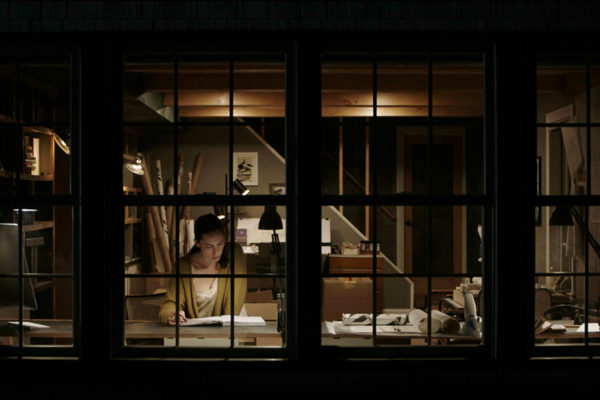
  • 'The Night House' terrifies — Sundance review

    'The Night House' terrifies — Sundance review

    Rebecca Hall plays a widow haunted by her dead husband in their lakehouse in The Night House

    The scares in The Night House come hard and fast, aided by director David Bruckner’s masterful grasp of a dread-filled atmosphere.

    See all our reviews from the 2020 Sundance Film Festival here.

    What does a house feel like when one of its inhabitants is gone? It feels empty. Incomplete. Cold. That’s the feeling that director David Bruckner’s new film The Night House, which premiered as part of the Midnight section of the 2020 Sundance Film Festival, gives off at the start as Beth (Rebecca Hall), a high school teacher, copes with the suicide of her husband Owen (Evan Jonigkeit). As she strolls through their lakeside home, built and designed by Owen, you can feel the vacant space. It probably doesn’t help that the home is filled with large windows opening into the darkness of the woods and lake. However, eventually, like Bruckner’s last film The Ritual, that feeling eventually gives way to a pervasive dread. 

    Owen’s suicide came as a surprise to many, but no one more than Beth. For her, Owen was her rock helping her through depression. Now that he’s gone she begins to self-destruct by drinking too much and pushing those close to her away including her friend and coworker Claire (Sarah Goldberg) and neighbor Mel (Vondie Curtis Hall). She, like many others who lose a loved one to suicide, feels confused and, more intensely, abandoned.

    💌 Sign up for our weekly email newsletter with movie recommendations available to stream.


    ADVERTISEMENT


    However, she’s not alone. One night she hears a heavy knocking at the door — this is where living in an all-glass house isn’t ideal. Then, the basement lights flip on. The next morning she’s not sure if it was real or a dream. Another night, she’s awoken by the stereo blaring her wedding song, startling the silent house. As the haunt becomes more intense with white-knuckling tension and well-earned effective jump scares, Beth starts to suspect her husband may have had secrets — dark secrets. 

    The screenplay, written by Ben Collins and Luke Piotrowski, begins to twist itself into a mystery that sometimes gets overly complicated for its own good — much like their last effort Super Dark Times. As Beth digs deeper she finds that her husband has books on the occult and photos of women that look like her on his computer. The mystery throws Beth into turmoil amidst the haunt. Rebecca Hall’s performance ranks among her best as she balances raw guttural emotions with Beth’s indignance. And while the story threatens to throw the movie off its rails, Bruckner’s strong grip on the mood and atmosphere keeps it on the rails — or keep it from sinking, rather. 

    When the movie finally shows its cards it’s generally satisfying. Without Bruckner’s presentation, I’m not sure how successful it would have been. Still, The Night House is a genuinely terrifying and haunting romp that will have you watching it through your fingers. The scares come so hard and fast and nearly every element is designed to scare you — from the smart production design to the smart, albeit loud, sound design. The entire movie is a maze that you feel trapped in, and that’s why horror fans will love it.


    ADVERTISEMENT


    More movies, less problems


    Hey! I’m Karl. You can find me on Twitter and Letterboxd. I’m also a Tomatometer-approved critic.

    💌 Sign up for our weekly email newsletter with movie recommendations available to stream.


    ADVERTISEMENT
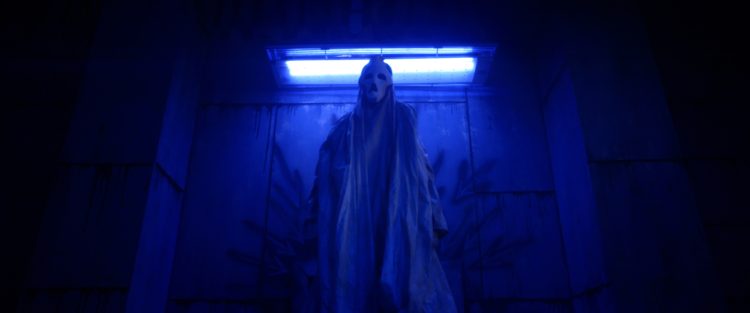

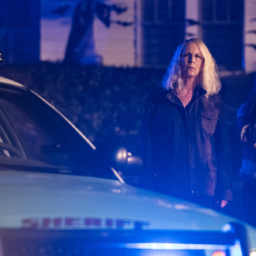
  • ‘Halloween Ends’ is not a Halloween movie (and that’s a good thing) | movie review

    ‘Halloween Ends’ is not a Halloween movie (and that’s a good thing) | movie review

    Forty-four years after Laurie Strode survived Michael Myers’ massacre, she goes up against a familiar enemy in Halloween Ends.

    Halloween Ends shouldn’t work—and almost doesn’t. It’s an absurd and deeply weird interpolation of the Halloween lore that feels less like another installment and more like a story within its world—like Halloween III: Season of the Witch. However, the audacity to take a risk with its story—and to go so far as making it closer to a drama than a horror—is both admirable and surprisingly entertaining. “Fanboys” looking for the movie to up the gore and kills will be disappointed—and perhaps those looking for a satisfying conclusion to Laurie Strode’s saga will too. However, some, like me, will tune into its off-the-wall wavelength and find the good in it. Halloween Ends will divide audiences. However, it will also get people talking—for better or worse.

    Halloween Ends is so absurd and deeply weird that it’s impossible not to at least appreciate its audacity—something that so-called “fanboys” of the original are going to detest. However, as a critic that lists the original 1978 Halloween as one of my favorite movies of all time, I can say that I’m kinda obsessed with how Halloween Ends feels nothing like the rest of the series—like an interpolation of the story rather than a continuation. That’s no more apparent than the movie’s bold 10-minute cold open that begins a year after the events of Halloween Kills as we follow Corey (Rohan Campbell), a directionless young man babysitting the son of a wealthy family in Haddonfield, Illinois. After a few callbacks to the original—including a late-night TV showing of John Carpenter’s The Thing, dark closets, and a wide shot of Corey investigating outside the house—something happens. Something even more shocking than all the unnecessary gratuitous killings in the previous installment.

    Spoiler Alert in 3… 2… 1…


    ADVERTISEMENT


    When the child he is babysitting locks him in the attic, a panicked Corey attempts to kick down the door. What he doesn’t realize is the kid is just on the other side. When the door finally gives it flings the child over the banister crashing down three stories below just as his parents walk in. Cue the title sequence.

    Spoilers over.

    It was always a fool’s errand to continue Laurie Strode and Michael Myers’ saga in a way that respected John Carpenter’s vision for the original.

    That was no more apparent than with 2018’s “just fine” Halloween and 2021’s actively terrible Halloween Kills (evil died that night and so did all my hope). That’s because it’s a movie that was always successful in a vacuum and as an allegory. It was never meant to be a story that continued on—and it famously didn’t with the third installment Season of the Witch, which didn’t even feature Myers. It’s only appropriate that Halloween Ends use the same font for the title card as the third film since, although this does feature Myers, it feels more like its own self-contained story in the same world.

    Another couple years after the events of Corey’s babysitting mishap we catch up with Laurie Strode (Jamie Lee Curtis) sitting at a desk typing what sounds like a soliloquy about her life fighting Michael Myers—I couldn’t help but think of Diane Keaton crying at her laptop as she wrote her newest play in Something’s Gotta Give. She’s settled down in a house with her granddaughter Allyson (Andi Matichak) and attempts to live a normal life. But a city won’t quickly forget the murderous rampage of a supernatural-like serial killer. They also won’t forgive the woman that brought him into their town. Laurie, now labeled as the town “freakshow,” can’t go anywhere without somebody bringing Michael up in the same sentence. The same goes for Corey, who was acquitted of any wrongdoing, yet is still labeled a “psycho” by the town folk. Especially a group of cartoonishly unpleasant teens—who knew band geeks could be so vicious. However, Laurie sees more in him and after an altercation involving Corey, she orchestrates a meet-cute between him and Allyson.


    ADVERTISEMENT


    For nearly half of the runtime, other than the cold open, Halloween Ends plays like a family drama—and even a quirky romantic comedy—about misunderstood people navigating their trauma.

    We watch Corey and Allyson get closer as they bond over the feeling of being unwanted in the town but unable to leave—like Terrence Malick’s Badlands or Arthur Penn’s Bonnie and Clyde. However, at the same time, we also see a change in Corey as a series of incidents—another altercation with the group of teens, a Halloween party gone wrong, a run-in with Allyson’s ex—start to drive him to resent the town and its people. As Norman Bates infamously said, “we all go a little mad sometimes.” In a way, Halloween Ends is a villain origin story.

    You’ll notice I haven’t mentioned two things: Michael Myers and murders. That’s because the movie is more tactful in its approach to both—almost the polar opposite to Halloween Kills and more reminiscent of the original where the body count remained in the single digits. The marketing hasn’t hidden that Myers makes his return and faces off against Laurie, however, he isn’t the main focus of the movie. Instead, his influence (or shape), is the real villain of the movie. Or perhaps, what happens when you call someone a monster enough? Eventually, they become one. 


    ADVERTISEMENT


    Halloween Ends shouldn’t work—and in some ways doesn’t. As a conclusion to the 40-year Halloween saga it leaves a lot to be desired, even if Laurie does get her moment to face Michael.

    However, I’d rather a huge swing and miss than more of the same. Clearly that didn’t work in the last movie. At the very least, I was never less than entertained—whether intentionally or unintentionally—by the lunacy of it all. Did I ever expect there to be a Hallmark-channel version of a Halloween movie about shared trauma with a central romance plot? Definitely not. 


    ADVERTISEMENT


    More movies, less problems


    Hey! I’m Karl. You can find me on Twitter and Letterboxd. I’m also a Tomatometer-approved critic.

    💌 Sign up for our weekly email newsletter with movie recommendations available to stream.


    ADVERTISEMENT

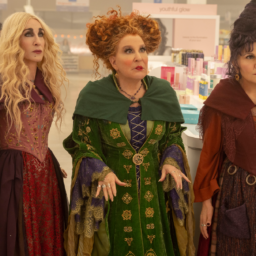
  • ‘Hocus Pocus 2’ is 90s nostalgia done right | movie review

    ‘Hocus Pocus 2’ is 90s nostalgia done right | movie review

    Our three favorite witches are back in Hocus Pocus 2 as they try once again to beat the sunrise (and a group of meddling teens) to attain immortality.

    Like every other 90s kid, I grew up watching Kenny Ortega’s 1993 fantasy comedy Hocus Pocus every Halloween season. My sister and I would buy the Pillsbury precut spooky-themed sugar cookies, light up a fire, and settle in on the couch every year well into adulthood. I’d hazard a guess that we’ve seen the Sanderson Sisters resurrected in modern-day Salem more than I’ve seen any other movie. There’s real magic (pun intended) captured in the movie. It’s like capturing lightning in a bottle. A perfect spooky-not-scary tone, both intentionally and unintentionally hilarious lines, outlandish running gags, and three iconic performances from Bette Midler, Kathy Najimy, and Sarah Jessica Parker came together to make the perfect Halloween classic. To say Hocus Pocus 2 had a lot to live up to is an understatement. However, director Anne Fletcher and screenwriter Jen D’Angelo not only delivered a worthy sequel to the original. They also perfected the 90s nostalgia sequel.


    ADVERTISEMENT


    More often than not, sequels to 90s IP that we have nostalgia for fail—Space Jam: A New Legacy, Ghostbusters: Afterlife, Independence Day: Resurgence (they just love a subtitle).

    There are two reasons. First, because they try to mimic the original—whether out of reverence or an unsubtle attempt at leveraging our nostalgia for money—yet often misunderstand what we loved about it. Second, they try to one-up the original, again resulting in a misinterpretation of what made it good in the first place. Hocus Pocus 2, on the other hand, doesn’t ape the original. It doesn’t try to outdo it either. It completely understands the tongue-in-cheek tone and weaponized it in an updated way without feeling like a grab for relevancy.

    At the same time, it expands the lore of the first movie as it opens with more backstory for our three favorite witches—Winnie (Midler), Mary (Najimy), and Sarah (Parker). We learn that from their youth they have been outcasts, albeit aimless. That is until Mother Witch (Hannah Waddington) gives them the famous booooOOOOOk that gives them their powers—while also warning them against using a magica maxima spell to become all-powerful. In the present day, we meet our own rambunctious group of outcasts, Becca (Whitney Peak), Izzy (Belissa Escobedo), and their recently estranged friend Cassie (Lilia Buckingham). However, unlike Max in the original film, Becca and Izzy are ostracized for being into the occult.

    Well, maybe the other students—including Cassie’s boyfriend Mike (Froy Guttierez)—are onto something.


    ADVERTISEMENT


    That’s because while performing a ritual for Becca’s birthday on sacred ground with a candle they’re gifted from Gilbert, owner of the Olde Salem Magic Shoppe in the Sandersons’ home, they accidentally resurrect the sisters… again. This time, though, they enter with a musical number. Like “I Put A Spell on You” from the original, they sing a version of Elton John’s “The Bitch Is Back” reworked as “The Witch is Back.” As Becca and Izzy are hiding watching the witches sing their song they wonder, “who are they performing for?” That question is answered when Mary suddenly appears beside them and says, “you!” In an attempt to save themselves from the sisters, the girls convince them they are actually 40, witches, and can help them get the souls of children.

    Of course, hijinks ensue. In what is easily my favorite scene of the movie and an instant classic, the Sanderson sisters take on all of our nemesis: a Walgreens.

    Just like the “black river” in the original, Winnie hilariously takes on the automatic door—”the gates parted for her,” she snarls in amazement when Becca walks through—before our young heroines convince the sisters that the beauty products have the souls of children in them to keep them youthful. As they start to eat the product, Sarah delivers my favorite line of the entire movie, “retinol, what a charming name for a child.” And while a lesser movie would try to hit the original’s jokes beat for beat, Hocus Pocus 2 creates its own gags and jokes—including lines I’m going to quote forever.

    However, what this also did is immediately signal to us that this isn’t going to just be a retread of the original’s plot. There’s added complexity including a revenge storyline involving the town’s mayor (Tony Hale), a coming-of-witch plot with Becca, and a reintroduction to our old friend Billy (Doug Jones). While the plot of the original was relatively simple, Hocus Pocus 2 expands the parameter of the world in new ways while maintaining its campy tone.


    ADVERTISEMENT


    ADVERTISEMENT


    That’s not to say there aren’t references back to the original like an onstage performance by the trio—complete with drag queen versions of them played by Kahmora Hall, Ginger Minj, and Kornbred—a trap set up by our teenage heroines, and the sisters’ unconventional broom choices (did Roomba have a sponsorship?). However, the movie doesn’t rely on them to keep the movie interesting. It forges its own way while allowing Bette Midler, Kathy Najimy, and Sarah Jessica Parker to have fun and live in these roles that have been so iconic in their careers.

    Hocus Pocus 2 is nostalgia done right because it doesn’t rely on our nostalgia to keep it afloat.

    Instead, it casts its own set of spells to bewitch us in the same way it did 30 years ago. Watching this movie with my sister decades older in her home in New York City (but still with the cookies) just felt right. Like it fits in with the same routine we’ve been doing for years. I already can’t imagine a Halloween without it. Call me a sap, but this was the sequel my inner child didn’t know it needed—but maybe it’s just really just a bunch of hocus pocus.


    ADVERTISEMENT


    More movies, less problems


    Hey! I’m Karl. You can find me on Twitter and Letterboxd. I’m also a Tomatometer-approved critic.

    💌 Sign up for our weekly email newsletter with movie recommendations available to stream.


    ADVERTISEMENT


  • ‘La La Land’ review: Singing through dreams and disappointments

    ‘La La Land’ review: Singing through dreams and disappointments

    La La Land heartbreakingly portrays the highs and lows of chasing dreams. Though packaged as a high-energy feel-good musical, it contains poignant notes that make it great.

    I didn’t like La La Land when I watched it. Frankly, I was disappointed. I was even shining off a spot in my top ten movies of the year for it. I love musicals and grew going to see Broadway shows. Singin’ In the Rain is one of my favorite movies of all time. Needless to say, I wanted to love this movie. So, when I walked out of the theater less than enthralled I was confused. I couldn’t bring myself to give it a score because I was so sure I missed something. As the week trudged on, I told people how disappointed I was in the movie. I couldn’t understand how it missed my expectations by so much.

    However, then I realized that the tune stuck in my head all week were the opening notes from “Another Day of Sun,” the movie’s opening number. So, I went on Spotify and played the soundtrack. I quickly realized how much I really loved the musical’s first half. But I couldn’t shake the feeling that the second half was a narrative misstep, even though the ending stuck with me. I gave the movie a score — I won’t tell you it, but it’s low — and carried on with my post-La La Land week. Then, I saw a tweet that had the Merriam-Webster definition of the term “La La Land”:

    “A euphoric dreamlike state detached from the harsher realities of life.”


    ADVERTISEMENT


    I smacked myself on the head for my stupidity. I realized that I, in fact, missed something. Finally, I was able to give La La Land a proper score (spoiler: it’s a lot higher than my initial one). But let’s backtrack for a second. Damian Chazelle, who directed Whiplash, my favorite movie of 2014, set out to make a movie-musical that transported audiences back to the genre’s heyday in the 40s and 50s. Though, he was careful to balance its timeless plot with the modern issues that face the artists of our generation.

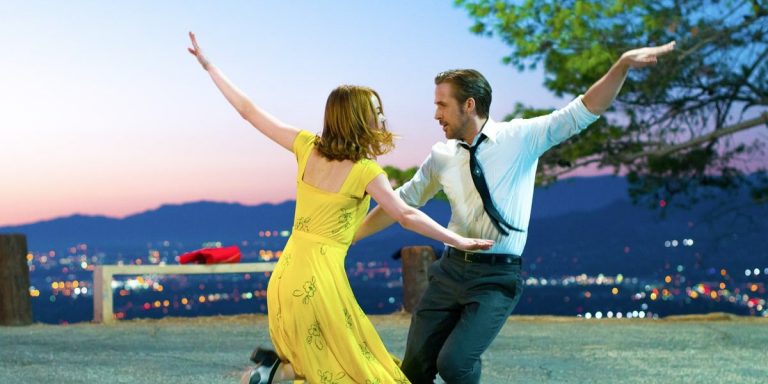
    La La Land tells the story of aspiring actress Mia (Emma Stone). She, like so many people, followed her dreams of stardom to Los Angeles. However, she finds that success isn’t as easy to obtain as the movies say they are. We see her spend her time working at the Starbucks on the Warner Brothers’ studio lot between auditions that often don’t go well — the casting directors couldn’t care less, she’s just one of many of her “type”, someone walks in the room. However, her love for movies is what keeps her going.

    On the other side of things, Sebastian (Ryan Gosling) has dreams of his own. He hopes to own a jazz club one day. His love of jazz runs deep. When someone tells him that they don’t love jazz, like Mia, he sets out to make them appreciate it. However, he has his own problems. Mainly, as a character later in the movie says, jazz is dying… and he has no money. He spends his nights playing Christmas carols in a restaurant under the watchful eye of the owner (J.K. Simmons).


    ADVERTISEMENT


    The movie begins with an absolutely enthralling opening number that takes place on a freeway in the middle of Los Angeles. Yes, an actual freeway. The song, “Another Day of Sun,” perfectly sums up both the disappointment and allure of chasing dreams in a town where everyone is doing the exact same. In one magnificent take, which may possibly one of the best of all time, Chazelle sets the time and place in LA with free runners, salsa dancers, and even a trick bicycle rider in this tightly choreographed number. I don’t know how he was able to pull it off, but it is one of the most magnificent scenes committed to film this year.

    As the film unfolds, we realize that Mia is still in the Honeymoon phase of living in LA. Every day is just another step towards her eventual ascension to the top. Sebastian, alternatively, believes that his true artistry is already there, but yet to be appreciated. When the two bump into each other — at first literally and then coincidentally throughout the movie — they are sure they’re not falling for each other. This is told through “A Lovely Night,” a classic Rogers-Astaire tap dance routine. However, slowly they realize that they are, in fact, falling for each other.

    The first half of the movie plays out like the musicals it’s based on. However, key decisions elevate it to an even higher level. A bright primary color motif is used in the costuming throughout, which gives it a whimsical quality. That coupled with the cinematography that makes strong use of lighting and color, shows us this city where anything is possible that Mia sees. It almost feels like the movie has a rhythm all its own apart from what’s happening on screen. Thanks to editor Tom Cross, who also cut Whiplash, La La Land moves at a lighting pace. That is until we get to Summer — the movie is split up into the four seasons.


    ADVERTISEMENT


    Slowly encouraging each other, Mia and Sebastian start to make moves towards their dreams. Mia, tired of waiting for her perfect part to come, starts to write a one-woman show. Sebastian, looking to raise money for his club, joins a band fronted by former classmate Keith (John Legend). By the time we get to this point the musical scenes start to become few. The bright colors that flooded the costumes and sets fade away. On my first viewing, this is where the movie lost me. I was confused as to why this bright and romantic musical faded away before my eyes. However, this is why the definition of “La La Land” snapped me back to reality. This was completely by design.

    The difference between the two parts is stark. However, it’s essential for Chazelle to suggest that the dreamlike stupor that both Mia and Sebastian were in is gone. Reality sets in, and you know what they say about reality. As they attempt to be together and follow their respective dreams, they learn how trying balancing both is. It all comes to a head in an incredibly emotional scene that is done completely in close-up, which pushes the actors to the edge of their abilities.

    It’s the distinction that I missed. Until I read the definition of the term “La La Land” I thought that the movie just made a tonal misstep. In reality, it was a genius shift from a movie about a couple’s passion for their crafts to one about alienation brought on by our generation’s attitude of never truly doing enough. La La Land is a brilliant study of an entire generation that wants to do it all. We want to be happy and successful and doing what we love. However, La La Land portrays the sad realities.


    ADVERTISEMENT


    As phenomenal as the craft is — nearly every shot, beat, and set is perfect — La La Land would be a lesser movie without Emma Stone and Ryan Gosling. Gosling, who I loved in The Nice Guys earlier this year, again proves his comedic ability. However, it’s his interplay with Stone that makes him great here. He’s there to support her. After all, at a certain point, this becomes her movie. But who is Ginger Rogers without Fred Astaire? Stone, on the other hand, gives one of the best performances of the year and makes it look easy. From perfect comedic timing to crushing the film’s 11 o’clock number, she is an emotional powerhouse. She proves that she is one of the best actresses of our generation. Their partnership and chemistry makes you swoon and then breaks your heart.

    La La Land isn’t going to be for everyone. Some are going to be expecting a straight musical like I did or not completely buy the walk and talk sequences. However, the magic of the on-screen musical will hook you from the beginning. At its core, it’s a romance for our generation. Passion, love, dreams, disappointments, and alienation are its themes. But it never tries to be bigger than it is. Like all the great romances, it starts with the central couple. Mia and Sebastian’s love is one that they need at that time and place. However, like so many modern lovers, the timing never seems right. While La La Land is escapist entertainment for a good chunk, its greatest parts lie in the realities, while not harsh, that plague our dreams. But hey, here’s to the fools who dream.


    ADVERTISEMENT


    More movies, less problems


    Hey! I’m Karl. You can find me on Twitter and Letterboxd. I’m also a Tomatometer-approved critic.

    💌 Sign up for our weekly email newsletter with movie recommendations available to stream.


    ADVERTISEMENT

  • Queer military drama ‘The Inspection’ asks and tells | TIFF review

    Queer military drama ‘The Inspection’ asks and tells | TIFF review

    A homeless young gay man enlists in the Marines as a way out of his struggle in The Inspection. As he goes through boot camp, he grapples with his masculinity and queerness.

    The Inspection is a deeply personal look into a queer Black man’s experience in Marine boot camp and how his struggles lead him to a deeper understanding of his identity. Writer-director Elegance Bratton never lingers on his characters’ misery. Instead, he focuses on their hope and strength. The result is a deeply felt and emotional but ultimately uplifting and entertaining character study of masculinity, queerness, and love. Anchored by an electrifying Oscar-worthy performance from Jeremy Pope, The Inspection is an electrifying introduction to a new voice.

    Among the many emotional scenes in The Inspection, a standout shows Ellis French (Jeremy Pope) comforting Ismail (Eman Esfandi), a fellow Marine recruit, when he breaks down in the bathroom in the midst of boot camp. Ismail, a practicing Muslim, sinks into the embrace of French, who is gay. As Ismail cries about wanting to be home, French stares out into the distance with tears slowly filling his eyes. Two people from two different worlds bonding over their shared trauma as outsiders in a world that is not built for them.


    ADVERTISEMENT


    When we first meet French, he’s staying in a homeless shelter in Trenton, New Jersey. And even then, we can see how writer-director Elegance Bratton is setting this story apart from others of its ilk. Throughout the movie, he never lingers on French’s misery. Rather, he focuses on his hope and strength. As he journeys into New York City to see his estranged mother (Gabrielle Union), we see him say goodbye to his group of friends—an split second insight into how queer friendship gets us through adveristy. We see it again as an elder gay man in the homeless shelter gives him advice “from an old queen to a young one.”

    That energy continues even when we learn that French’s mother strongly disapproves of his sexuality. We see this in actions instead of words—she covers her couch in newspaper before he sits, crucifixes hang on the walls of her small apartment. However, he’s not here to make amends. He’s here to tell her he’s made the decision to become a marine. There’s an odd glimmer of hope in his voice—but as we learn later, it wasn’t exactly a choice. “I’ve been taking care of myself since I was 16,” he tells Laurence Harvey (Raúl Castillo), a sergeant sympathetic to French’s struggles.

    When he arrives at boot camp in South Carolina, he’s greeted with a barrage of questions from the commander of the unit Leland Law (a towering Bokeem Woodbine) including whether or not they are or have been gay—as if it’s something that can just go away. From there, the movie turns into a Full Metal Jacket retelling set in the “don’t ask, don’t tell” era as the members of the unit are subjected to intense physical, mental, and emotional training—or is it abuse?


    ADVERTISEMENT


    While much of it is difficult to watch—Woodbine’s domineering performance easily strikes fear into your heart—the story never makes the pain a focus.

    Rather it’s meant to move the plot forward and characters along in their journey. When French’s queerness is exposed while in the group shower in a gorgeously directed neon-splashed sequence that perfectly captures the sensation of suppressed queer desire, the result is a beating from Harvey (McCaul Lombardi) and a group of recruits at the behest of Commander Law. But even in that brutal moment, Bratton somehow finds the humanity in the sequence—the conflict in Castro’s (Aaron Dominguez) face is a focus of the sequence.

    The movie continues to alternate between those trying moments and moments of victory. While Law—and the actual law of the land—dictate that French can’t be open with his sexuality, he also proves to his fellow recruits that not only is he more than his queerness but that he is more because of it. In a cheer inducing moment, French in preparation for his final evaluation paints the war paint on his face to look more like makeup on a drag queen than that of a soldier, to which Law chides, “French, only you could manage to f*g up war paint.” The audience went wild.


    ADVERTISEMENT


    Bratton, making his feature film directorial debut, based the story on his own life as a gay Marine recruit. And that personal angle to the story is apparent throughout.

    Through the breezy 104-minute runtime, he focuses on specific moments of his journey. The ones that when put together as a tapestry become a fully formed view of the man he becomes at the end of the movie. A man defiant in his queerness, even when it all seems against him. At times, that makes The Inspection seem formulaic. However, I see it as complete. It’s a movie from the perspective of a person that has figured it out. That has inspected his own life to find how his traumas have formed him. 

    In that way, The Inspection is a love letter to Bratton’s experience. That’s why despite his mother’s journey throughout the movie, which finds her at a very similar place to the start, the movie is dedicated to her. That’s the action of a person that is healing.


    ADVERTISEMENT


    More movies, less problems


    Hey! I’m Karl. You can find me on Twitter and Letterboxd. I’m also a Tomatometer-approved critic.

    💌 Sign up for our weekly email newsletter with movie recommendations available to stream.


    ADVERTISEMENT

  • ‘Aristotle and Dante Discover the Secrets of the Universe’ is YA movie goals | TIFF review

    ‘Aristotle and Dante Discover the Secrets of the Universe’ is YA movie goals | TIFF review

    Aristotle and Dante Discover the Secrets of the Universe follows two teen boys growing up in Texas in the 1980s as they uncover their identities through their friendship

    Aristotle and Dante Discover the Secrets of the Universe is what a young adult coming out story should be. Instead of creating a false idealistic world, director Aitch Alberto plants the movie firmly in something realistic, which makes the very personal journey each of the character’s makes all the more poignant. Max Pelayo and Reese Gonzales have perfect chemistry as Aristotle and Dante and make them feel lived in. Effortlessly charming and emotionally satisfying, Aristotle and Dante makes a grab for the heart and doesn’t let go. I also didn’t want it to.

    Notably, the 2012 young adult novel Aristotle and Dante Discover the Secrets of the Universe by Benjamin Alire Sáenz was written and released before the United States Supreme Court legalized same-sex marriage. It’s important to point out because queer media released before comes from a different perspective. A scrappier perspective. One where queer people had a mindset to to protect—and fight. For that reason, watching the movie of the same (very long) title feels like a breath of fresh air among the Love, Simon’s and Heartstoppers of the world. 


    ADVERTISEMENT


    Not that there is anything specifically wrong with either of those projects. They just live in an idealistic version of the queer experience. One where the glass ceiling has been shattered. Aristotle and Dante, on the other hand, takes steps to ground you in a time and place. That time and place: 1987 in El Paso, Texas. Specifically, summer. The hazy, warm cinematography by Akis Konstantakopoulos draws you into a sleepy daze as we meet Aristotle “Ari” Mendoza (Max Pelayo), a Mexican-American high schooler facing down the summer before his junior year the way he usually spends it: alone. That is until he meets Dante Quintana (Reese Gonzales), a fellow teen whose effervescent personality nearly makes him glow in the sun. At least that’s how Ari sees him when he first sees Dante at the pool.

    After Dante offers Ari swimming lessons, the pair become fast friends. It’s largely because Dante is in many ways a foil to Ari. He’s aggressively himself—flamboyant, open, excitable. On the other hand, Ari is trapped in his own silence—something that he chides his father (Eugenio Derbez) about. Dante comes from a wealthier family while Ari poorer. Dante’s parents Sam (Kevin Alejandro) and Soledad (Eva Longoria) are very open and expressive while Ari’s parents Jamie and Liliana (Verónica Falcón) are more subdued—reminiscent of the repression of feelings that many immigrant families display. However, Dante helps bring the real Ari out of himself. He helps him become interested in himself. 

    After a summer of days by the pool, camping trips, and more than one Dante rant about some book or painting, fates separate the two. Something that helps further separate Aristotle and Dante from other young adult stories. It allows the pair time to discover themselves on their own. Ari begins to find his place in his high school and solve the mystery of his parents—this generational trauma storyline is a bit underbaked and I would have loved to spend more time on it. We also see him gaining confidence in himself without Dante by his side. Many people observe that he’s beginning to look like a man. Something that further interrogates why that is a statement to be had.


    ADVERTISEMENT


    As the movie quickly moves through a year, we hear through letters Dante’s journey to understanding his sexuality. He tells Ari how he came to the conclusion after dating a girl and realizing that he was fantasizing about a boy instead. Gonzales is able to communicate his struggle and trepidation about coming out with his voiceover, which Pelayo reacts to with silent emotion. It’s what makes Aristotle and Dante such a successful book-to-movie adaptation. Director Aitch Alberto is okay to live in those introspective silences—something particularly important for a repressed character like Aristotle. 

    Coming out stories are difficult to pull off because they’re such singular experiences that differ from person to person. They’re largely an internal dialogue that we have to have (or not have) with ourselves. Yet, at this point, it feels like we’ve seen so many of the same versions. In that way, Aristotle and Dante Discover the Secrets of the Universe feels like a breath of fresh air—or a clear sky full of stars (with no light pollution). Most obviously because of the focus on two Latino characters—groundbreaking for a genre that is very white-washed. But more importantly because it doesn’t try to pretend that it’s a perfect experience. What it does say is that there is magic to be had—and that you can hold the universe in the palm of your hand. 


    ADVERTISEMENT


    More movies, less problems


    Hey! I’m Karl. You can find me on Twitter and Letterboxd. I’m also a Tomatometer-approved critic.

    💌 Sign up for our weekly email newsletter with movie recommendations available to stream.


    ADVERTISEMENT

  • ‘Don’t Worry Darling’ works (just barely) | movie review

    ‘Don’t Worry Darling’ works (just barely) | movie review

    Don’t Worry Darling follows a 50s housewife begins to suspect that the desert oasis that she and her husband call home may not be as idealistic as it appears

    I’m not going to talk specifically about all the well-documented drama around Don’t Worry Darling in this review (if you just emerged from an underground bunker, here’s a refresher). What I will say is I choose to believe Harry Styles spit on Chris Pine. However, the intrigue around the movie’s production and press tour do color my feelings about the movie. They don’t directly affect them, however, it does supply an explanation. That’s because I don’t think Don’t Worry Darling is a bad movie, as is often the case with projects with feuding creatives. There is a strong vision, and, at least half of the runtime, the movie delivers on that vision. But hearing that director Olivia Wilde was absent for part of the production explains why the vision was never completed. 


    ADVERTISEMENT


    Don’t Worry Darling isn’t exactly a fresh story—it very much feels like an amalgamation of The Stepford Wives, The Village, and an episode of Black Mirror. Refreshingly, though, the movie knows that. Instead of wasting some of its running time trying to trick you into thinking things are normal for the sake of its own magic trick, immediately you know something is off in its world. While Alice (Florence Pugh) and Jack Chambers (Harry Styles) seem like a young, happy couple living in an idyllic dessert company town in the 1950s, Wilde makes it clear with John Powell’s sinister score and quick cuts to a mysterious black-and-white film of synchronized swimmers that things aren’t as they seem. 

    Throughout the first half, tension is slowly ratcheted up as we learn more about the town of Victory, California. Wives wait at home as their husbands leave each day to work on some unspecified project, they’re not allowed to drive or leave town limits, and the town’s creator Frank (Chris Pine) is an omnipresent force in their lives. Of course, they’re also discouraged from asking questions. There’s a satirical quality to the perfect pastel-colored world that Wilde creates, which is punctuated by strong supporting performance from Kate Berlant and Gemma Chan. But it’s Margaret (a wildly underused Kiki Layne, who was last seen in The Old Guard and If Beale Street Could Talk) who starts to break down the illusion for Alice. 


    ADVERTISEMENT


    However, as impressive as that world-building is, what counts is what you do with it—and that’s where Don’t Worry Darling falters. In the second half of the film, after Alice for the first time acknowledges that something is amiss, the movie struggles to be compelling while leaving its sterling world-building patina behind. It’s partially a function of the twist, which you could honestly call during Frank’s first speech to the community about control and order. However, there are a few fun campy reveals (whether intentional or unintentional) that helped bolster the movie from complete boredom. 

    Much of my problem with the second half stems from the movie’s lack of direction (or a director). It felt as if each scene went a little too long yet never furthered the plot or added color to the characters. If the screenplay doesn’t fill in the gaps, it’s up to the director to—and if rumors are to be believed there might not have been one. It’s a shame because Pugh—who has never been less than magnificent in movies like Midsommar and Little Woman—does some of her best work in those scenes. A climactic dinner scene where things finally come out into the open is a particularly impressive acting showcase—and tests the limits of Styles’ acting ability.


    ADVERTISEMENT


    Florence Pugh famously said, “the nature of hiring the most famous pop star in the world, you’re going to have conversations like that.” Those conversations involved the explicit sex scenes scattered throughout the movie. And while Harry Styles’ most-famous-man-in-the-world persona works for some of the movie, when he plays outside of that type his skills as an actor are stretched to their absolute limits. Even my audience filled with Styles’ couldn’t help but laugh out loud at his more emotional moments. 


    ADVERTISEMENT


    More movies, less problems


    Hey! I’m Karl. You can find me on Twitter and Letterboxd. I’m also a Tomatometer-approved critic.

    💌 Sign up for our weekly email newsletter with movie recommendations available to stream.


    ADVERTISEMENT


  • ‘Empire of Light’ is more than a movie about movies | TIFF movie review

    ‘Empire of Light’ is more than a movie about movies | TIFF movie review

    Set on the moody southern coast of England in the 1980s, Empire of Light follows a lonely movie theater worker who finds herself in a whirlwind romance.

    There is something otherworldly about sitting in a movie theater. The artistry. The magic. That indescribable feeling we get when the lights begin to dim, and we go somewhere we’ve never been before. We’re not just entertained, but somehow reborn together. Those dazzling images on a huge silver screen. The sound that we can feel. Somehow, heartbreak feels good in a place like this (and I believe I’m the first person to ever describe the theater this way). Sam Mendes’s ninth feature film Empire of Light, which debuted at Telluride before crossing the border to the Toronto International Film Festival, bottles up this sentiment expressed so eloquently by Nicole Kidman in her AMC ads.

    Mendes—best known for American Beauty, Skyfall, and 1917—solutes cinema as he follows a group of employees working at a movie theater on the southern coast of 1980s Britain. At the center is  Hilary Small (Olivia Colman) a middle-aged concessions counter worker who struggles to find happiness selling popcorn, sweeping out theaters, and regularly jerking off her boss (Colin Firth). As the film progresses we learn that Hilary has previously suffered under bouts of depression and mania. Nevertheless, she returns to her job at the Empire, no matter how mundane, as the one constant in her life. 


    ADVERTISEMENT


    Eventually, however, Hilary’s existence—and the entire atmosphere of the Empire—are brightened by the arrival of a new ticket-taker called Stephen, played by the charming Michael Ward (who you may recognize from Steve McQueen’s Lovers Rock). Stephen is brimming with joie de vivre, and the entire staff is instantly smitten. He strikes up an unlikely friendship/romance with Hilary, he gets chummy with punk-rocker-turned-candy-girl Janine (Hannah Onslow), and even manages to endear himself to the curmudgeonly projectionist Norman (Toby Jones, who is as brilliant as always).

    Hilary and Stephen are two lonely misunderstood souls.

    She because of her age and mental health issues and he as a black man living in a predominately white community. They begin to fall in love, sneaking away to the abandoned second floor of the theater to hook up during shifts. While on the surface this romance may seem unlikely (and some have called it out as unrealistic), anyone who has ever felt adrift and isolated can relate to the yearning for connection and the unexpected places we often find it. 

    As the film swirls into its second act, their idyllic relationship is confronted by outside forces. Hilary’s mental health, the racial tensions of the UK and the rise of the skinhead movement, and confrontations with other employees of the theater all drag the pair back to a harsher reality than exists in their private alcoves. In a Lost in Translation sort of way, however, Empire of Light celebrates their starcrossed romance and the different kinds of relationships that we find comfort in. 


    ADVERTISEMENT


    In the least shocking news to come out of the fall festivals, Olivia Colman is breathtaking as Hilary, delivering a performance that probes new directions for her.

    Come Oscar nomination morning, she will undoubtedly be looking at her fourth nomination in five years. Michael Ward, while given a role that’s not quite as showy, exudes confidence and charm. You can so easily see why Hilary instantly falls for him, and he is every bit as deserving of an Oscar nomination—although his may be an uphill battle this season. 

    Mendes, who proved in 1917 that he knows how to harness the full breadth of the filmmaking craft to create a singular world, has done so again. Cinematographer Roger Deakins showcases his abilities as he breathtakingly captures the rundown Empire Theater. And theater itself, with its dilapidated second floor, is a triumph of set design. All those elements are elevated by Trent Reznor and Atticus Ross’s melancholic score. I’ve been constantly refreshing Spotify since the movie’s TIFF premiere in hopes that the piece played over Hilary’s euphoric movie-watching experience in the film’s final act has been released. 


    ADVERTISEMENT


    Some have called out the screenplay as the singular weak spot in this barrage of masterclass craftsmanship, but I’d argue that the loose threads contribute to the melancholy vignette quality of the film.

    This is not an overly finessed studio film, but one that does make some surprising and uncomfortable moves—and the conclusion is more satisfying for it. While it is certainly a “filmmaker loves films” movie that will appeal to the Academy, I do not think it is as pandering or commercial as the likes of Belfast, King Richard, or CODA. It’s a story of loneliness and the places we go (the beach, the cinema, romance, friendship) to find solace. 

    Perhaps as someone with a degree in English (I was salivating at theseveral full poem readings in the film) and a cinephile, I am an impartial judge. But I found Empire of Light to be extremely poignant—and was lowkey weeping for the last thirty minutes. It was my favorite film of the festival. As a little closeted gay boy growing up in an extremely conservative environment, I have vivid memories of going to see The Curious Case of Benjamin Button alone in theaters to find succor, and Empire of Light taps into that exact feeling. Nowhere has heartbreak ever felt better.


    Hey! I’m Matt. You can find me on Twitter here. I’m also a staff writer at Buzzfeed.


    ADVERTISEMENT