We’re going to the cottage! Plus, the best quotes from episode six of “Heated Rivalry”
This review contains spoilers
“I’m glad you’re here.” “Me too. But also, terrified.”
That’s really the first time Ilya Rosanov has ever fully vocalized his feelings. Well, except for his swoon-worthy but heartbreaking Russian monologue in episode five that was spoken into the void (and a non-Russian-speaking Shane Hollander’s ear). However, in episode six, “The Cottage”, Ilya is coming in loud and clear. And allowing himself to be vulnerable.
Episode five ended with the line heard around the world when Ilya called Shane to say he’s “coming to the cottage.” The line was underlined with the sentiment that this would take the pair’s situationship to another level. And the episode starts by showing us what that other level could be as Scott Hunter wins the Most Valuable Player award at the league’s year-end ceremony and addressed the very large and very gay elephant in the room. Francois Arnaud, arguably the most recognizable actor on the cast, shows why someone of his caliber was hired for the role. His speech touches on the homophobia in sports, loneliness of being in the closet before professing his love loudly and proudly for Kip. Arnaud delivers the monologue with the emotion and charisma it deserves. In The Kingfisher, Kip (Robbie G.K.), along with his friends including ultimate bestie Elena (Nadine Bahabha), watch on.
ADVERTISEMENT
As Shane and Ilya drive to the cottage, there’s a palpable anxiety. There’s the fear of being seen by the public, but also by each other. Over the nearly decade they’ve been seeing each other, they rarely achieved any level of real emotional intimacy despite the sexual fireworks (though there’s tons in the cottage). After a quick, um… house tour, the pair sit down for burgers that, despite years together, feels like a first date. They talk about Shane’s parents and their potential reaction to his coming out, which Shane admits he might have delayed because of Ilya.
They spend time by the fire, where Ilya chides, “we just sit here and look at it?” Soon, a loon wail startles the pair which Ilya hilariously calls a “stupid Canadian wolf bird.” As Ilya lies in Shane’s lap he talks about his family in Russia and the suicide of his mother. “I do not want you to think she was weak,” Ilya says. That line perhaps gives us the most insight into Ilya than any other line all season.
For good measure, the pair have a steamy couch blow job session where Ilya playfully services Shane while he’s on the phone with teammate Hayden before talking later than night about their future. It’s perhaps the one part of the season that doesn’t feel as meticulously planned. They float a few ideas. Ilya suggests he may transfer to a Canadian team since he’s a free agent next season. Shane agrees and suggests Ontario. Ilya talks about potentially marrying Svetlana for citizenship, which terrifies Shane since Ilya is bisexual. He reassures him saying, “I like women and everywhere i go i’m surrounded by beautiful women. But I am always thinking about this slow fucking hockey player with beautiful freckles… and a weak backhand.”
ADVERTISEMENT
The next morning, Shane suggests they start a hockey school for kids and fundraise for mental health organizations in honor of Ilya’s mother. It’s what finally drives him to tell Shane he loves him. The entire sequence is beautiful and gorgeously acted by both Storrie and Williams who subtly show the impact it has on them. However, the solution to their separation feels like it comes too fast and is less satisfying than the other love story feature in the show that got a neat romantic bow.
One wrench is thrown in the plan when Shane’s father David (Dylan Walsh) shows up unexpectedly at the cottage and spots the pair in an intimate moment. They quickly make the decision to head to Shane’s parents’ house to defuse the situation. They suggest they had a parental intuition that Shane was gay but were shocked that he and Ilya have been seeing each other since their rookie season. It’s an emotional scene, especially when Shane’s mother Yuna (Christina Chang) begs her son for forgiveness for not making him feel comfortable enough to come out.
On the note, and with a plan for the future, the season ends with Shane and Ilya driving off into the sunset. It perhaps is more of a setup for a second season than it is a completion of their storyline. And as long as that is a promise of the more Shane and Ilya, I’m okay with that.
The best quotes from “Heated Rivalry”episode six, “The Cottage”
“When I was a teenage I… I realized I may be that thing that hockey players like to throw around as an insult. The kind of language I heard in the locker room and on the ice was a constant reminder that I was different.” — Scott Hunter
“When you have a secret that you work as hard as I did to protect… it’s exhausting. It’s a non-stop effort. It’s also really really lonely. Thankfully, I found the person who changes everything. And he gave me the confidence and strength and the need to be honest about who I am. Fear is a powerful thing. But then I found the one thing that is more powerful. So I share this honor with my teammates and my coaches. But I also share it with you, Kip. You have made me better in every conceivable way. I love you.” — Scott Hunter
“It’s not a Jeep. It’s British. Practical.” — Shane Hollander
“What the fuck is McGill? Is it a town?” — Ilya Rosanov
“Stupid Canadian wolf bird.” — Ilya Rosanov
“Good morning. I like you.” — Ilya Rosanov
“But I am always thinking about this slow fucking hockey player with beautiful freckles… and a weak backhand.” — Ilya Rosanov
“And maybe one day, when we both retire, we can be together… for real.” — Shane Hollander
“She would have loved you, like I love you.” — Ilya Rosanov “Say it again in Russian, please.” — Shane Hollander
“I’m sorry that I made you feel like you couldn’t tell me. I’m so so proud of you. Please forgive me.” — Yuna Hollander
“Heated Rivalry” takes a break from Ilya and Shane to follow another player who also has a simmering undercover romance.
After two solid episodes to start the series, “Heated Rivalry” keeps the momentum going by breaking it. Rather than continuing Ilya and Shane’s simmering years-long affair, Scott Hunter (Francois Arnaud) and Kip (Robbie G.K.), a smoothie shop employee (do we have a name for those? Berr-istas?), take the roles of our dashing superhero-built romantic leads for episode three: “Hunter”.
It’s a bold move for a show to completely ignore its main storyline just three episodes in, but showrunner Jacob Tierney clearly has a mind for pacing a season. The episode breaks up the complex emotional push and pull between Ilya and Shane (it allows us to actually experience the timeline of their affair) and elicits different feelings of yearning that both recontextualizes all that’s come before it.
“Heated Rivalry” is streaming on HBO Max.
In many ways, “Hunter” plays like a typical rom-com. Scott, the captain of the New York Admirals (in many ways a literal Captain America), is in a slump. He’s in the latter stages of his career and has city and reputation weighing on his shoulders. Perhaps a change of routine is in order? Enter Straw+Berry. Actually, Scott enters Straw+Berry to find Kip adorably napping behind the counter holding a book on art history (we love a man that takes his passions seriously!). There’s some swoon-worthy back and forth banter before Kip hands him his smoothie (with extra super secret ingredient… banana!) and Scott’s off, which is when Kip’s coworker Maria (Bianca Nugara), watching the interaction slack-jawed from the back, screams a gay battle cry, “girl!?”
ADVERTISEMENT
Those side characters are a huge part of the success of this episode of “Heated Rivalry” which up to this point felt staid whenever Ilya and Shane weren’t together on screen. “Hunter” often feels like an episode of “Friends”. We meet more people in Kip’s orbit like his friend and sometimes boss Shawn (Brandon Ash-Mohammed), his highly supportive dad (Matt Gordon), and the bartender at a gay bar he frequents Kyle (Matthew Finlan who was terrific in “Orphan: First Kill”a few years ago). This more fully-inhabited outside world feels so dynamic and colorful.
After some kiki-ing with his friends teasing him about the encounter and a few more adorable encounters with Scott at the Smoothie shop, Kip is invited to a game with his no-nonsense, girl’s girl, face card never declined friend Elena (a sensational Nadine Bhabha). Bhabha is one of the actors in the first three episodes that goes toe to toe with any of the now four leads of the show. She has more agency and, despite not knowing much of her backstory, feels lived and three-dimensional. It is largely her encouragement that convinces Kip that Scott is interested in some way. Another meet-cute between the pair at a fundraising event Kip is working (how he has time to maintain that body we may never know), and a series of happy mishaps, land the pair in Scott’s apartment where he hilariously takes off his clothes unbeknownst to Kip and mutters, “Do you want the full tour now or…?” Kip picks the latter. Based on the first two episodes, we know exactly what that means.
ADVERTISEMENT
It’s a lighter episode than the first two. It is a different but refreshing energy that is perhaps closer to what I expected when starting the show. It doesn’t take itself quite as seriously with witty banter replacing the sexually-charged back and forth between Ilya and Shane. For this short respite in the season, you feel warmth as the pair live in domestic bliss in Scott’s penthouse apartment. Yes, the basically Uhaul after the first date. That is until Kip and Scott remember that he’s a famous hockey player in a league without an openly gay player.
Arnaud and G.K.’s playful chemistry keeps you hooked, even if the writing sometimes veers into rom-com tropes. Arnaud in particular, physically imposing and brooding, finds lightness in Scott, similar to Connor Storrie’s performance as Ilya. When the romantic mirage of their courtship starts to break, it makes fallout all the more devastating. The weight of the secret dawns on Kip and, thanks to Elena’s intervention at a fundraiser in a standout scene for Bhabha, Scott. It leads to a quiet but heartbreaking confrontation where Kip invites Scott to his birthday party but refuses afraid he’ll be outed. He offers that in a few years after he retires they can be like “normal people.” Devastating for anyone, but particularly queer people.
ADVERTISEMENT
The episode ends on a stunning directorial note from Tierney as the camera pulls out of the bar where all his friends and dad surround Kip with a single cupcake a candle to reveal Scott watching from outside. While episodes one and two give you all the sexually-charged energy you want from a show with this premise, “Hunter” expands the more sustainable possibilities for the world and confirms Tierney understands the story he’s telling. Had we been introduced to Scott and Kip as a proper B-plot in previous epsiodes, the isolation Ilya and Shane feel as, so far as they think, the only two gay players would be undercut. This allows the show’s slow burn and emotional core to remain intact. Now, how will the pair return? I guess we’ll have to wait and find out.
Beef starts as a road rage revenge comedy that quickly careens into a dark but profoundly complex character study of the Asian-American experience
Beef is a delightfully unhinged road rage revenge dark comedy that careens into a complex character study of the American Dream and two different people united by their dissatisfaction with life — and enraged by the people around them. Steven Yeun and Ali Wong are sublime anti-heroes.
Beef begins streaming on Netflixon April 6th.
While the inciting incident of Netflix’s new series Beef is dramatic, it’s perhaps not quite as dramatic as you’d expect. When we are first introduced to Danny Cho (Steven Yeun) he’s in line at a home improvement store called Forsters suspiciously returning three portable grills and a carbon monoxide alarm. “You’ve tried to return these three times before,” the cashier quips before Danny sulks back to his car. However, as he backs out of his parking spot he nearly hits a white Mercedes SUV. The driver honks their horn a touch too long, which annoys the already aggravated Danny. To make matters worse, they stop, roll down their window, and flip Danny the bird.
The ensuing chase is reckless as Danny tries to get a look at the driver. Flower beds are destroyed, red lights are run, and near crashes abound. However, they never come face to face. Instead, Danny memorizes the license plate and vows to track her down. The cold open is so concise and sharp. Without the context of the participants it’s shocking. However, as “The Birds Don’t Sing, They Screech in Pain” goes on, we learn exactly why Danny and Amy’s (Ali Wong) reactions make sense and how it careens both of them into an existential tail spin — that’s where the real dramatics start.
When you’re at the edge of a cliff, the smallest nudge will send you plummeting over the edge.
We’re introduced to both of our protagonists’ — or are they antagonists? (only time will tell) — inner circles. There’s Amy’s house husband George (Joseph Lee), a paragon of the wealthy Los Angelean holistic bohemian, who instead of asking Amy what’s troubling her when she returns home tells her to take a deep breath and focus on the positive — “let’s fill out our gratitude journals,” he suggests. On the other side, Danny’s brother Paul (Young Mazino) is a man-child who spends his days playing video games and trading crypto instead of working with Danny on his contractor business. While both characters fill archetypes — as does all of the supporting cast — the series progressively challenges our assumptions about them each episode.
https://www.youtube.com/watch?v=AFPIMHBzGDs
Amy, a successful entrepreneur who founded a luxury plant brand, is in the throes of a deal with Jordana Forster (Maria Bello), the egregiously wealthy owner of the Forster line of home improvement stores. Wong’s portrayal of Amy as a product of the #girlboss generation is instantly intriguing as she makes sure to show the cracks in the facade. Glimmers of her 1,000-watt smile fading tell us everything we need to know about her — she has to remain in control but is slowly losing it. Even in couples therapy where Amy and George are working through his penchant for liking her employee’s thirst trap pictures on Instagram — “Baby I can explain, I’m just saving the captions” — she has a rehearsed, well-studied response that is designed to appease anyone with a psych degree. It doesn’t. Eventually someone under that much pressure will eventually crack.
However, there are moments when Amy shows her hand. Like when she lets slip about her mother, “she thought that talking about your feelings is the same as complaining.” It’s those flashes of biting commentary about the first generation Asian-American experience that surprise you amongst the nearly slapstick chaos of Beef. Danny, seemingly a chronic failure to start, would rather lie and tear the people around him down to make them than seem like he’s failed again. Amy, a workaholic, can’t seem to let go of the ladder that she’s been climbing for decades, one that she doesn’t seem to want to climb, even if it means leaving those she cares about on the ground.
ADVERTISEMENT
The eponymous beef between Danny and Amy gives them both purpose. Even if that purpose is to win at all costs. What’s incredible about Beef‘s trajectory, is that when blood is spilled in the final episodes, we almost forget what exactly they were beefing about in the first place.
In “The Drama of Original Choice,” we learn more about both Amy and Danny’s pasts as Beef further digs into its exploration of the Asian diaspora. However, we don’t just see their pasts, we see their parents’. We see the hope and dreams that they put upon their kids — just like the bagel in Everything Everywhere All At Once — and the sacrifice they had to make to give them the opportunity. That amount of pressure will cause anything to break, even if it becomes a diamond first like Amy.
By series end, all the periphery characters become victims of both Danny and Amy’s own pride — and their beef. No one makes it out unscathed or unchanged. Whether it’s Paul who lives constantly in Danny’s shadow (and unwanted protection) or Amy’s husband George who has to find validation from his mother Fumi (Patti Yasutake) rather than his own wife. There’s Amy’s neighbor and Jordana’s confidant Naomi (Ashley Park), whose seemingly idealistic housewife life is threatened by Amy’s success — “I work,” she tells Amy, “I have my non-profit.”Beef is about trauma and our response to it. But the road rage incident isn’t the trauma. It’s the inciting incident of Danny and Amy’s reckoning with their pasts, how it affects their presents, and their paths for the future. It is one of the most incisive deconstructions of the first generation Asian-American experience.
In the series’ most-powerful moment — and Ali Wong’s future Emmys clip — Amy asks her therapist, “do you think love could really be unconditional?” The series answers that question in its own way. Even if things need to be destroyed to get there.
Each week I am ranking the maxi-challenge performances and runways each episode of RuPaul’s Drag Race season 15. Here’s the rankings for “One Night Only”.
RuPaul’s Drag Race is back with its biggest season yet. Sixteen drag queens are vying for the title of America’s Next Drag Superstar and a cash prize of $200k, the largest in the show’s herstory.
30-second episode review
After season 12’s redefining premiere “I’m That Bitch” with queen Nicki Minaj, Drag Race has struggled with their premieres as the casts and episode count have ballooned. However, season 15’s “One Night Only” seems to have found the solution—a supersized episode with a slightly different format than we’re used to. While we do have split entrances, having them all in one episode allows us to meet all the queens in one week but have some time to get to know them separately before the marathon of a maxi-challenge. In my opinion, the talent show should be reserved for All Star seasons, but this was a solid entry with a lot of good performances and three great performances. Sure, there were a lot of lip syncs, but for as many safe boring ones there were a slew of exciting unique ones.
The show was also paced really well. Despite there being a record sixteen queens I felt I was able to get to know a little about each one. Even those that weren’t one of the main characters of the episode like Aura or Robin.
The Maxi-Challenge
In a rare alignment, I agreed with the tops and the bottoms this episode (but I’m still anticipating some buffoonery very soon). The only change I would have made is critiquing eight girls—four tops (ouch) and four bottoms (a nightmare)—so more of the massive cast could get feedback.
The Tops
Anetra: Give her an Emmy, Grammy, Oscar and Tony. One of the best talent show performances in Drag Race herstory. I laughed, I cried, I gagged. What I loved about the number (similarly to Pangina Heals’ on UK vs The World) is the breadth and pacing. She hit multiple talents back to back (comedy, voguing, jiu jitsu!) so there isn’t a moment to rest in those sixty seconds—not a second wasted. And she was smart for not telling the girls about the jiu jitsu. The gag when she hit that first board was palpable.
Marcia Marcia Marcia: While she is a beautiful and graceful dancer (you betta werk that BFA), often more sincere performances don’t do well in the talent show (Gia Gunn was robbed!). Which is why it was brilliant of Marcia to frame her performance around a teenage girl worshipping her “teen” idol Ross Matthews. It was stupid (complimentary). It was impressive. It was drag.
Jax: If you’re going to do a lip sync, this.. is how… you do it. The impressive stunts aside—three back handsprings and then landing on your titties!—bringing out a jump made of braided hair ATTACHED TO YOUR HAIR is what we call high drag. Elevated. I pity the fool who has to lip sync against her.
The Bottoms (from best to worst)
Loosey: I agreed with Loosey’s low placement based on the performance (girl… unless you sound like Jan or Monet don’t even try it), but even the audacity to sing live saves her for me. Unlike Jaremi FKA Phi Phi O’Hara and Adore Delano before her, I think everything around her performance was solid (song choice, look). It’s just the actual performing that was her downfall. I think her look saves her too.
Amethyst: Such a terrific concept that was bungled in execution. The judges were completely right in that she delivered the punchline way too soon. The wine should have been the first joke, then the baby reveal at the end. It would have been nice if she had some set-pieces like the other girls that she could search around. Instead, it just looked like an actual mother walking through the park.
Irene Dubois: In concept, this is a killer idea. But this (ironically) would have made a terrific TikTok video. Sketches and standup don’t do well in the talent show because they’re low energy and often lack levels, Irene took that to the next level. If she had done this as a song like Trinity the Tuck in All Stars 4, then maybe it would’ve gone over better.
The Runways
The cast of RuPaul’s Drag Race season 15
The runway category is “Who is she?” I was looking for pieces that clearly communicated who the queen is, their personal style of drag, and, of course, a well put together garment. Overall, the runway was a bit underwhelming especially for a category as broad as this. I wish I saw more inventiveness or interesting concepts. Here’s my ranking:
Sasha Colby: Icons being icons. This is Vegas showgirl elegance after dark. I love the maroon and black color palette and how the somewhat understated dress lets the headpiece do the talking. Sasha, the fashion girl of the season? TOOT.
Sugar: The more I look at this look the more I love it. While I was skeptical when she walked out and it was a clear Belle reference, the way she elevated it with the corset and asymmetrical skirt that had a fun belt detailing up top. TOOT.
Mistress Isabelle Brooks: For a runway titled “Who is she?” Mistress understood the assignment. If I knew nothing about her I would know she’s a DRAG QUEEN from Texas. Rhinestoned and fringed on every inch with a perfectly proportion-ized body. Mistress is teaching the children (or at least Sugar and Spice). TOOT.
Luxx Noir London: It’s a bit reminiscent of Drag Race Season 10 winner Aquaria’s evil twin runway, but the color palette compliments her skin so beautifully (she is oiled for the gods). And she’s right, does anyone still wear a hat? They should. TOOT.
Loosey LaDuca: Body-ody-ody. Loosey’s silhouette is correct. The definition of hourglass. The second she stepped out I got the Britney reference, but what I love is the dress stands on its own. This is drag, mama.
Malaysia Babydoll Foxx: And this is drag, baby(doll). A classic silhouette, pristine white and dripping in glittering rhinestones. You could see her even if the lights were off. Not only that, but the body was correct. TOOT.
Spice: Similarly to Sugar (I’m hoping this isn’t a recurring theme, though), I love the elevated Disney princess vibe. What made this slightly less successful than her twin is the color. Obviously you couldn’t really get around it with the Ariel reference, but I think you lose some of the detailing that stood out in Sugar’s look. Still I clocked the ostrich feathers. TOOT.
Robin Fierce: Sure it’s a body suit, but it’s a beautiful sparkly body suit with a tearaway! There were some fit issues at the top of the garment, but I really enjoyed that hair which was reminiscent of the bagel from Everything Everywhere All At Once. If you know, you know. TOOT.
Anetra: It’s giving C-3PHo and I’m living for it. I don’t love the black bulletproof vest, but the fact that she made this gives me confidence that she’ll kill design challenges. TOOT.
Jax: I might be biased because I live in the East Village (and have stepped on a rat in Tompkins), but I loved this 80s/90s retro NYC look. It reminded me of an elevated version of Asttina Mandella’s infamous ASOS jacket runway from UK Season 2. Like that runway, the girls that get it get. And I got it. TOOT.
Irene Dubois: I’m a horror gay, so I immediately understood and loved the reference to Alien. I do wish there was something trailing off of it, whether a cape or a train (or a tail). The bottom just feels a little bare. But still gorg. TOOT.
Marcia Marcia Marcia: It’s clean, well-done, and on-brand. Still, it left me underwhelmed for a first runway, especially since it’s so similar to her entrance look. I’m hoping to see more um… versatility from her as the season progresses. TOOT.
Salina Estitties: After her entrance and performance looks I was nervous for Salina, but I liked her deconstructed West Coast Latina getup. The jacket/vest give a shoutout to her culture while the draggy pants elevate it and tie it all together. But that hat and shirt… still, TOOT.
Amethyst: I like this vague pastel K-pop girlie-inspired look, but it also feels a bit like the outfit is wearing her (ironically, I hate when the judges use this critique). It looks well-made and she styled it well, but something wasn’t clicking for me. Still, not bad. TOOT.
Princess Poppy: I was… underwhelmed. While it’s certainly pretty and I liked the shape of the tutu, something in the bodice wasn’t quite right. Whether it was the nude illusion or the shape I’m bot sure, but this wasn’t doing it for me. BOOT.
Aura Mayari: Baby… you can’t come in with that much confidence and then present this on the runway. The bottom half looks like a design challenge gone wrong—it’s just a piece of fabric wrapped around her waist—while the top half is lost completely on the stage. BOOT.
My Top 3 Power Rankings
Each week, I will rank who I think is going to be in the top 3 and those that are in the hunt. Here are my current predictions:
Anetra: Few queens have dominated an episode of Drag Race as much as Anetra did this one. We see mixed results for queens who win the premiere (it seems either you make it to the finale or flame out midway through).
Sasha Colby: I mean… like Sasha said in her entrance: period. She’s a legend, which usually doesn’t mean much on Drag Race. However, she’s a legend still in her prime. Plus, there doesn’t seem to be anything she can’t do.
Mistress Isabelle Brooks: The narrator/commentator of the season usually doesn’t make the finale (see: Katya), but Mistress is shaping up to be more of a main character rather than a supporting role. She seems to be representing the traditional drag queen (as opposed to the TikTok queens) which I think gives her fuel.
Schitt’s Creek went from underrated gem to an instant comedic classic. Here are our 10 favorite episodes to laugh, cry and swoon at.
Schitt’s Creek wrapped up its final season last month and officially cemented itself as one of the greatest sitcoms of the modern era. With memorable characters, iconic lines and some of the sweetest moments in an otherwise absurd comedy, it has gone from an underrated gem to a full-blown instant comedy classic.
It’s almost impossible to choose a favorite episode from the bunch — it’s like picking a favorite bébé, but after a dozen or so rewatches of the full series, I’ve come to a top ten best episodes of Schitt’s Creek. Here we go:
“Happy Anniversary” (season 2, episode 13)
Catherine O’Hara, Dan Levy, Annie Murphy, Dustin Milligan, Eugene Levy, Emily Hampshire, and Chris Elliott in the Schitt’s Creek episode “Happy Anniversary”
“Actually, those boys did burn a bridge last summer. Luckily they don’t get as bored as they used to.”
— Twyla
As you’ll see, almost every season finale made it on this list and it’s not hard to see why. Schitt’s Creek is at its best when pivots from absurdist comedy to heartwarming character study. And while the first two seasons lean on a comedy of manners for its storylines, “Happy Anniversary” starts to see the heartwarming edge that has made Schitt’s Creek so addicting.
Schitt’s Creek is a story about broken people realizing they’re broken and slowly healing and we begin to see that healing in this episode. The ending, which is one of those uplifting moments that fill you up with hope, finds the Roses breaking down their hard surfaces and finally letting themselves admit their love for each other, which is one of three times David (Dan Levy) has said: “I love you,” as he mentions in “Singles Week” (see below).
Best moment: In the first of many heartwarming scenes in the show’s history, the entire cast dancing together in Mutt’s barn is one of Schitt’s Creek‘s great moments.
ADVERTISEMENT
“Meet the Parents” (season 5, episode 11)
Noah Reid in the Schitt’s Creek episode “Meet the Parents”
“But there will be a safe word in case the gaggle of asymmetrical faces becomes too much.”
— Moira
Very few episodes revolve around a single storyline, but when it does happen they tend to be great. “Meet the Parents” starts off with a classic misunderstanding that triggers a perfect setup to explore sexuality, acceptance, and coming out.
Patrick’s (Noah Reid) coming out is so refreshing because the show is careful to remove any risk for the viewers by letting us know that it will all work out in the end. However, it doesn’t stop the show from teaching us a very important lesson. Coming out is a very personal journey that should be done on a person’s own terms. Schitt’s Creek greatest strength is teaching us those lessons without every feeling like it’s teaching us anything.
Best moment: Patrick’s coming out scene is one of the show’s best moments.
“The Hike” (season 5, episode 13)
Dan Levy and Noah Reid in the Schitt’s Creek episode “The Hike”
“Ew, Ted. What am I? Thirty-two?”
— Alexis
“The Hike” has three storylines that never cross, but fundamentally test the relationship each character has to each other. There’s Moira (Catherine O’Hara) and Stevie (Emily Hampshire) who deal with Johnny’s (Eugene Levy) health scare — and as we know Moira doesn’t deal with pressure well, Ted (Dustin Milligan) and Alexis (Annie Murphy) discussing their future, and, of course, David and Patrick taking the next step in their relationship.
And while some very serious conversations and events happen in the episode, it never loses its hilarious slapstick comedy that makes the show a delight to watch. Of course, though, it’s the pivot from those moments to moments of genuine growth and emotion that make the show great and David and Patrick’s picnic is one of the best.
Best moment: Is that even a question? Look above.
ADVERTISEMENT
“Happy Ending” (season 6, episode 14)
“Don’t answer that! Was it? Don’t.”
— Patrick
What makes a great series finale? For me, it’s a mix of smart callbacks, classic setups that feel familiar to the show, and an ending that says life goes on. In that case, “Happy Ending” is a perfect series finale. Without hounding us with awkward fan service and instead intelligently reminding us of our favorite moments, Schitt’s Creek gives us a chance to say goodbye to every one of our favorite characters while bidding them farewell to hopeful futures.
However, what makes it a truly great finale is that it feels like the best version of an episode of the show. It deals with comical misunderstandings, the best Moira-sims, Johnny troubleshooting an issue, and a classic Schitt’s Creek tender moment of love. You laugh, you cry, you swoon, and you cheer. That’s what this show does best.
Best moment: I don’t think I’ve laughed harder at anything than Moira’s entrance into the wedding.
ADVERTISEMENT
“Open Mic” (season 4, episode 6)
Noah Reid in the Schitt’s Creek episode “Open Mic”
“Okay, no, worst case scenario I watch improve.”
— David
“Open Mic” contains one of most iconic, if not the most, iconic moments in Schitt’s Creek as Patrick serenades David with a cover of Tina Turner’s “Simply the Best.” And the reason that moment is so iconic is that so many queer stories and romances are told through the lens of tragedy and sacrifice. This scene lets us see ourselves as the romantic leads in our own rom-com like any other kind of couple. It’s truly a watershed moment in queer television history.
However, “Open Mic” makes it onto this list because all three storylines harmonize into a hilarious episode filled with classic sitcom setups that also find a way to subtly move the story for each character forward.
Best moment:
“Housewarming” (season 5, episode 5)
Noah Reid, Dan Levy, Emily Hampshire, and Dustin Milligan in the Schitt’s Creek episode “Housewarming”
“Oh my god, John! Don’t forget to wash its hands.”
— Moira
While most of the entries on this list have some of the show’s most noteworthy or heartwarming moments, it’s the episodes that are just having silly fun I come back to most. No episode is a better example than “Housewarming,” which puts all the Roses and their respective partners in uncomfortable situations.
Moira and Johnny are tasked with caring for Jocelyn and Roland’s bébé, which leads to some of the funniest lines and line deliveries in the show’s history. It also gives Eugene Levy and Catherine O’Hara a chance to show why their partnership has endured for so many years. In the other storyline, we get a perfectly orchestrated sitcom setup when a game of spin to bottle leads to an awkward moment that is pitch-perfect every step of the way.
Best moment: Moira and Johnny trying to change Roland Jr.’s diaper is a masterclass in comedic delivery. So many of my favorite lines from the show come from this scene.
ADVERTISEMENT
“Singles Week” (season 5, episode 12)
Sarah Levy, Annie Murphy, and Dustin Milligan in the Schitt’s Creek episode “Singles Week”
“Don’t start without me you little frippet! You don’t have the media training.”
— Moira
Throughout the series, Alexis perhaps makes the biggest 180 of the Rose family by going from selfish and entitled rich girl to a full empathetic and giving woman. After two seasons of making decisions that benefit her, she finally does the most unselfish thing: she lets someone she loves go. That act of selflessness almost demands that she get some satisfaction, which pays off in the most romantic and swoonworthy way in the “Singles Week.”
However, what makes the episode truly great is other storylines. In one mismatched pairing, David helps Ted through his feelings for Alexis and delivers some much needed advice, despite feeling uncomfortable (in the most David-way possible). In the other, Moira brings an in-labor Jocelyn to the hospital threatening her time in the spotlight resulting in this iconic line:
Best moment: Ted’s big romantic gesture is as heartwarming as they come.
ADVERTISEMENT
“Life is a Cabaret” (season 5, episode 14)
Annie Murphy, Noah Reid, and Sarah Levy in the Schitt’s Creek episode “Life is a Cabaret”
“Jocelyn! I’m the one standing on the chair!”
— David
An episode of Schitt’s Creek rarely focuses on someone outside the Rose family, but in “Life is a Cabaret” Emily Hampshire‘s Stevie is front and center — both literally and figuratively. In one of the show’s most fruitful storylines, Stevie finds herself playing Sally Bowles in Moira’s community theater production of Cabaret. And while the idea of Moira directing the show that launched her career is hilarious, it also gives Stevie a chance to reflect on her own life, choices, and desires.
Using the iconic “Maybe it’s Time” number as an “I want” song for the character, we explore her feeling of directionless. As Stevie says, “I just wish I wasn’t watching it all happen from behind the desk.” It’s as profound as the show gets and gives Catherine O’Hara the chance to show a softer side of Moira. All the while, David’s engagement news is a hilarious through-line that connects it all.
Best moment: Emily Hampshire deserved an Emmy nomination for her performance of “Maybe it’s Time.” It would do Liza Minelli proud.
ADVERTISEMENT
“Start Spreading the News” (season 6, episode 13)
“What was I going to say? I just won $92 million?”
— Twyla
While there are certainly plenty of laughs in “Start Spreading the News,” the penultimate episode of Schitt’s Creek, it’s largely the dramatic fare that makes the episode one of the best of the series. As the series reaches its final episodes, each of the Roses and the people around them are beginning to make progress towards their futures, except for David. For him, his future has always been tied to his old life despite the happiness he’s found in this new life. In this episode, we watch him accept with the person he’s become and, more importantly, accept happiness.
Moira, Alexis, and David also find a way to acknowledge the relationships they’ve built in Schitt’s Creek. Specifically the Jazzagals, Twyla, and Stevie. “Start Spreading the News” doesn’t deliver any specific answers about each of the characters’ futures. Instead, it assures us that they will be okay, which is even more profound.
Best moment: There are so many small heartwarming moments in this episode, but none as fully emotional and intelligent as David and Stevie’s conversation in front of the house that looks like Kate Winslet’s cottage in The Holiday.
ADVERTISEMENT
“Grad Night” (season 3, episode 13)
Dan Levy and Noah Reid in the episode “Grad Night” of Schitt’s Creek
“Maybe there’s a job out there that I’m better suited for. And some other like gorgeous, slightly under-qualified girl is sitting at my desk asking herself the same question.”
— Alexis
“Grad Night” is perhaps one of the most important episodes in Schitt’s Creek history as it propels the show into its final three seasons. Alexis finally graduates from high school, which is impressive considering she’s ten years older than her classmates. More importantly, it begins Alexis on a path to finally find a calling all her own. Moira often underestimates (and sometimes forgets) Alexis, which makes her act of love at the graduation all the more heartwarming and the first crack in her absurd facade.
Meanwhile, this is also the episode that launches our favorite couple into the stratosphere. Patrick and David’s storyline in this episode so subtly explores sexuality and how it’s a constant discovery process in your own life. Patrick’s line, “I’ve never done that before… with a guy,” cuts warmly into your heart and is the perfect starting point to their love story.
Best moment: This is a tight race between Moira’s surprise performance at Alexis’ graduation and David and Patrick’s first kiss. I’m going to give a slight edge to the kiss because it is an elegant and heartwarming way for Patrick to come out.
Honorable mentions
There are so many episodes that were painful to leave off, the first of which is “Family Dinner” which has one of my favorite comedic scenes (pictured above). Then, of course, there’s David’s iconic “Simply the Best” lipsync in “The Olive Branch” which could have easily landed it in the top ten.
There are several episodes that feature Catherine O’Hara giving one of the best comedic performances of all time including “Wine and Roses,““Pregnancy Test” and “RIP Moira Rose”. And lastly, more than one episode that has the show’s patented heart-tugging moments like “Presidential Suite” and “Girls Night.”
The Haunting of Hill House is a near-perfect miniseries. Here’s how we would rank each episode of the first season.
The Haunting of Hill House is yet another triumph in horror for director Mike Flanagan who in recent years has delivered movies like supernatural horror Oculus, home invasion thriller Hush, and the second movie in the Ouija franchise.
With the series, he delves into the lives of the Craine family, who in the 90s lived in the infamous Hill House, which was haunted and eventually claimed the life of their mother.
As they navigate the trauma of their childhood, another trauma comes forcing them to come to terms with exactly what happened in the house. Every episode feels like a short film that balances horror and a family drama perfectly.
The Haunting of Hill House takes full advantage of its miniseries form. It has a solid driving plot that is well-paced throughout the series, but it uses the extra time it has over the episodes to dig deep into its themes and characters without feeling like it’s dragging. It truly blurs the line between movie and series. Here’s how we would rank each episode of the first season:
“The Twin Thing” (Episode 4)
For the first five episodes of The Haunting of Hill House, each of the five Craine siblings has an episode dedicated to their storyline. With Luke’s, more than any other, it feels disconnected from the main storyline. His drug addiction feels litigated within the first three episode and while there are some important plot points, thematically and tonally it feels a bit off from the rest of the series to that point.
ADVERTISEMENT
“Witness Marks” (Episode 8)
After the powerhouse sixth episode and profoundly sad seventh episode—we’ll mention both later on—”Witness Marks” feels like a step back. It feels like an episode that is meant to connect act two of the season to the final act, which makes it less exciting than other episodes. It still deals with some interesting character dynamics and has the best scare of the entire season, but it lacks the emotional strength and oppressive atmosphere of the other episodes.
“Open Casket” (Episode 2)
When kids are exposed to death at a young age there’s a struggle to help them process and understand it. The Haunting of Hill House portrays that struggle to process it beautifully with “Open Casket.” It also begins to work through the show’s theme of grief. However, it doesn’t delve into the theme as profoundly as other episodes, which is what prevents it from being truly great.
ADVERTISEMENT
“Touch” (Episode 3)
Of the episodes that focus on one of the Craine kids, “Touch” has the most successful B-plot as Theo deals with a case as a child psychologist. Both that plot and the main plot add a layer of how kids compartmentalize trauma as a theme, which elevates the entire episode as a whole. Plus, it successfully continues to explore the theme grief that the first few episodes touch on.
“Eulogy” (Episode 7)
“Eulogy” probably has the least horror of all the episodes of The Haunting at HillHouse. And that’s because the plot lends to that lack of horror. The episode is an opportunity for Hugh to get some much-needed redemption as his character is framed as the villain for much of the first few episodes. And the form that the series brings that about it beautiful and heartbreaking. Plus, Mr. Dudley’s monologue is a high point for the series as a whole.
💌 Sign up for our weekly email newsletter with movie recommendations available to stream.
ADVERTISEMENT
“Silence Lay Steadily” (Episode 10)
The season finale of The Haunting at Hill House is an encapsulation of everything that is good about the series. “Silence Lay Steadily” has effective tension-based horror, strong character interactions and growth, and a deep exploration of its themes of grief, parenting, and trauma. It is a satisfying finale that I wish had more of an epilogue, but overall its a great wrap-up to a great series.
“The Bent-Neck Lady” (Episode 5)
What makes The Haunting of Hill House so successful is its balance of horror with a family drama, specifically about grief. And that’s what makes episode five of the season one of the best. Not only does it propel the main narrative forward and offer genuinely chilling scares. It delves deeper into the theme of grief and adds a layer of dealing with mental illness and how family can offer a safe space from the real-life horror of it.
ADVERTISEMENT
“Steven Sees A Ghost” (Episode 1)
The first episode of The Haunting of Hill House sets up the tone and mood for the entire series without feeling like it’s bogged down by exposition. The family dynamics, both past and present, are outlined clearly and the central mystery of it all is setup. Plus, the horror in it is atmospheric and tense and genuinely terrifying. It’s a well-balanced and nearly flawless pilot.
“Screaming Meemies” (Episode 9)
Olivia is at the center of the mystery of The Haunting of Hill House and in “Screaming Meemies” we finally get to see the events of the house from her perspective. It’s exciting to finally learn exactly what happened “that night,” but the heartbreaking truth of it (and Carla Gugino’s Emmy-worthy performance) make this episode more than just horror. It shows the disintegration of a strong woman and how her husband failed her.
“Two Storms” (Episode 6)
“Two Storms” is not only the best episode of The Haunting of Hill House, it may be one of the best episodes for drama ever made. Told in what is essentially four single takes spanning both the past and the present. It’s a technical marvel and the staging is impressive, but what makes this episode so successful is that it is so rooted in its characters and allows them to just litigate the past.
The episode doesn’t further the plot, but it furthers the characters and becomes a turning point for the season. Not to mention the pure tension from both the horror and family drama that makes it impossible to turn from the screen. “Two Storms” is where The Haunting of Hill House goes from good to great.
How would you rank the episodes of The Haunting of Hill House? What was your favorite moment of the season?
Neil Gaiman’s novel American Gods is adapted with care, but “The Bone Orchard” takes digressions that just make the series more timely and exciting than imagined.
The first third of the book American Gods is an incredible exercise in world-building. It’s the kind of world-building that lends itself to a television show. It’s what made Game of Thrones such prime source material for HBO. So, as a fan of the book — though I certainly have my issues, I was really looking for the show to breathe life into some of its most iconic characters. And, thanks to its incredible cast, “The Bone Orchard” did that and then some.
“The Bone Orchard” opens on a later chapter in the book where a group of Vikings arrives on the shores of America expecting to find prosperity. Instead, all they find is desolation and pain. It’s a violent and potentially polarizing way to start an already weird series, but I think it was an important decision to the success of this episode and, ultimately, of the series. American Gods is a book that lives in a subtext about why we worship and why we abandon who and what we worship. The Vikings’ plight on American soil tells us thematically what this series is going to be about. This first scene also sets the tone for the series — violent, dark, but also darkly funny. The majority of “The Bone Orchard” feels like a graphic novel. There are shots you can pull out and put onto a comic panel and this scene more than any enhances that.
When we first see the series’ main protagonist Shadow Moon (Ricky Whittle) — a prisoner just days from release who discovers his wife has died, all I could think is that they nailed the casting. Shadow is one of the weaker elements of the book for me. He feels too defined by the recent events in his life. In this adaptation, Whittle brings some much-needed personality to the character. However, the star of these short prison scenes is Shadow’s fellow inmate Low Key Lyesmith (Jonathan Tucker). Tucker has a single monologue that tells you everything you need to know about the character while giving off a creepy vibe that carries on through the rest of the episode. If the opening scene set the series up thematically, then this scene sets the series up tonally.
Shadow’s interactions with Mr. Wednesday (the perfectly cast Ian McShane) and Mad Sweeney (Pablo Schreiber), though iconic in their own right, end up fading into the background of the more exciting elements of the episode. Though, it must be said that The Crocodile Bar scene was meticulously and beautiful realized all the way down to the jukebox. However, what stands out to me in these earlier scenes is Shadow’s interaction with his friend Robbie’s widow Audrey (Betty Gilpin). Although she is a minor character in the book and especially in the funeral scenes, she is larger than life in the series — possibly due to a Klonopin-induced stupor. Gilpin is a standout in an episode full of great performances. Her manic emotional swings are an essential juxtaposition to Shadow’s steely reaction to his wife’s death and revealed infidelity. The extended cemetery scene between Shadow and Audrey bring out the emotional turmoil that Shadow is going through more distinctly than the book. This emotional beat — in addition Gilpin’s performance — help us understand Shadow’s state of mind. He’s a man that is untethered to the world he knew.
Brian Fuller and Michael Green, who created the series and co-wrote “The Bone Orchard”, made the essential decision to tackle two iconic scenes in this episode — the introductions of Bilquis and Technical Boy. So, let’s break it down starting with the Bilquis scene. In the book, this scene is the first interlude from the main story. It’s an incredible exercise in the genre elements of the book and Gaiman tackles it with so much poetic detail that it stands out as one of the more memorable scenes of the novel. Well, director David Slade brings the scene to life with the same finesse. The intimacy and pure sexual energy that were essential to the scene are both present here thanks to the performances by Yetide Badaki as Bilquis and Joel Murray as her suitor. However, David Slade’s lens frames this explicitly sexual scene with reverence for its purpose. It’s our first glimpse into the world of the gods and the idea of worship and it’s done intimately with bold choices that make the scene intense, but still a tender moment.
Technical Boy’s introduction, on the other hand, is an intense and kinetic scene that finds Shadow attacked by a virtual reality helmet (similar to the way the face hugger in Alien attaches itself to its host). This digression from the book — in addition to the small detail of Bilquis finding her suitor on a dating app — updates the series in an essential way. While David Slade is the driving force behind the Bilquis scene, Bruce Langley brings Technical Boy to life in a way that deviates from the book by updating him to become the modern internet troll. Granted the production design has to be lauded. The conceptualization of his limo is somewhere I wouldn’t think to take it, but appropriate for the story and character. The scene ends up being more brutal than the book — Technical Boy’s henchmen The Children beat Shadow and string him up before he finally escapes. However, every change feels necessary, which is often difficult to defend to fans of the source material — just ask The Walking Dead.
In Italian cuisine the digestivo is had last, and its purpose is right there in the name: essentially a nightcap. It’s a small drink used to aid digestion of the meal. “Digestivo” is more a binge than a nightcap, but it does such a beautiful job of synthesizing not just the preceding season, but the entire series, that one would like nothing more than to become intoxicated by it again and again. It is a grand finale, reaching even further operatic heights than “Masumono,” ratcheting up not just the violence and gore, but the psychologically terrifying ways in which that violence is carried out. That the episode after all that should then end on a comparatively quiet flourish is fitting. The meal is done; now, we digest.
For all intents and purposes, “Digestivo” is the final episode of Hannibal proper. The best proof of this is in the title of the next episode, “The Great Red Dragon,” which abandons the culinary titling scheme the series has used thus far. Moreover, the final episodes of the show are effectively a Red Dragon miniseries, and while they will certainly call back to and develop on what we’ve seen so far, expect these episodes to function more as a sequel than as a part of what, with “Digestivo,” has become a pretty tremendous whole.
“Digestivo” operates on two levels. There’s the surface level: the operatic, Grand, Guignol-esque, terrific violence that punctuates the conclusions of the characters’ journeys to date (except, strangely, for Jack, who mainly sits this one out, perhaps having already had his big moment two episodes ago). Then there is the interpersonal level: the emotional stuff that underlies all the bloodspray. Both levels work independently of the other (spectacularly so), but they also intertwine so effectively that neither feels egregious or out of place.
This is a feat because there is plenty here that could be considered, on a lesser show, to be egregious. For instance, Mason Verger stole Margot’s uterus, implanted into it a baby born of his sperm and her eggs, and further implanted the uterus into a surrogate mother he keeps at his farm. That surrogate? Is a pig. And Alana and Margot, upon discovering this, cut the stillborn baby from the very pregnant pig’s womb, in excruciating detail. (And NBC couldn’t market this show!) This is the most horrifying thing that happens in the episode, but not without some tough competition.
After all, “Digestivo” also features their revenge-by-eel upon Mason. And a Face/Off style surgery in which Mason plans to cut off Will’s face and wear it as his own, while he eats Hannibal Lecter. (That Will voices his realization of this in what is basically a joke line is an indication of how twisted these people’s lives have become by this point.)
As I say, this is basically a series finale, and so it’s hard not to view the episode as a laundry list of loose end tying. In a lot of ways, it is just so. But the tying is done so satisfactorily. The knots are just tight enough to provide resolution but are loose enough to give the audience a thirst for more. Fortunately, a taste more is exactly what we get. But with “Digestivo,” I am more at peace than I have yet been with Hannibal’s impending end. In point of fact the show might as well already be over.
After all, what more need be said than what is so artfully depicted in that final scene between Hannibal and Will? Will saves him from Cordell and Mason, and he takes him to his home. Will wakes up, and teacup shatters again, never to come back together. He has what is more or less a literal break-up scene with Hannibal, and Hannibal takes the goodbye just as hard. This is the worst defeat Will can inflict upon Hannibal: to let him go. To not chase him, not find him, not think about him or care about him at all. Not to worry about forgiveness or blame. To let the teacup stay where it is in fragments on the floor.
This is the only way that whatever this thing is between them can end, and it removes, even if for a moment, all of Hannibal’s desire to keep playing the game. Mads Mikkelsen is at his best in this scene, playing a muted, vulnerable Hannibal for perhaps the first time in the series. No longer is there any need, any desire even, to eat Will. The fascination with Will, the love for him, morphs in an instant into a desire to strike back at the one who hurt him. “We are a zero-sum game,” Hannibal puts it so simply. And so he turns himself in to Jack, so that Will may always know where he is and exactly how to find him. Chiyoh has him in her sniper rifle’s sights, but she doesn’t take her shot. For her, Hannibal belongs in a cage, and a cage is where he will stay.
This could be the end. It would be a tremendous end. Even with the Red Dragon arc to come, I have a hard time treating this as anything but a finale to the series. That it is a nearly perfect one is all the better.
Stray Observations:
Joe Anderson is more than fine as Mason, but he really is missing some of the spark that ignited Michael Pitt’s performance, even as some of his lines are truly delightful: “No. I drink martinis made with tears.”
Will bites off Cordell’s cheek at Mason’s unbelievably creepy dinner party, and Hannibal looks so very proud of him.
There’s lots of talk about literal dick eating this week, in terms of subtext becoming text.
Alana’s arc is still one of the few weak points of the season for me. She releases Hannibal from Verger’s trap with the following explanation: “I was trying to save Will from you, but right now, you’re the only one that can save him.” This, along with her conversation with Will, is the best explanation we can get for her various actions, but they never felt tethered to a theme the way that Hannibal’s, Will’s, or even Bedelia’s similarly nebulous decision-making processes were.
Is it wrong that Cordell’s recipe for Hannibal’s tongue sounds delicious?
As the season (and series) begins to wind down, I imagined “Dolce” to be a sure shot; obviously Hannibal was on the ropes, and Will and Jack would close in on him once and for all, setting the stage for the adaptation proper of Red Dragon that will close out the show. There would be some kinks along the way—what role would Chiyoh ultimately play, for instance? Would Alana and the Vergers aid or hamper the effort?—but ultimately, the resolution was clear cut and in sight. I am both sorry and delighted to realize that I have underestimated this little show that could. Dolce is, of course, the dessert, a sweet course to be eaten before the final drinks and coffee.
HANNIBAL — “Dolce” Episode 306 — Pictured: Tao Okamoto as Chiyoh — (Photo by: Ian Watson/NBC)
“Dolce” is plenty sweet, a reward both to viewers of the series and long-time fans of the source material. Cleverly feinting toward resolution, “Dolce,” instead, pulls a sharp left, repurposing even more of the Hannibal novel and film in the lead up to one of the most batshit, insane final sequences the show has attempted (and yes, I am including the oft-invoked, blood-soaked finale of “Mizumono” in this estimation).
So before we get to Red Dragon, we’ve got Will, Hannibal, and Jack seated at a dinner table, much as Hannibal fantasized earlier. And Hannibal is cutting Will’s head open with a circular saw. We don’t get to see what happens next—one hopes that “Digestivo,” airing this week (about which more below) will fill in some blanks—before Will, Hannibal, and not Jack, are hanging by their feet in Mason Verger’s meat locker.
Thomas Harris’s Hannibal is perhaps the most luridly purple of the Hannibal Lecter works. The novel and film are both somewhat over-the-top; the event ill-suited to the stories being told. That’s not so here. “Dolce” is delightfully, unabashedly weird. Bedelia du Maurier, with whom I am officially obsessed, spends the first half of the episode stitching up Hannibal, while subsequently taunting him—his inevitable capture, his inability to turn her into a meal. And the second half she is doped up on heroin; the better to sell herself as helpless captive to Jack and Will. Early in season two, Bedelia played mind games with Will, too, and Will echoes that chilling whisper back to her here: “I. Don’t. Believe. You.” Gillian Anderson is the MVP of the episode, and it’s exciting to know that Bedelia will be sticking around into the Red Dragon arc.
HANNIBAL — “Dolce” Episode 306 — Pictured: Caroline Dhavernas as Alana Bloom — (Photo by: Ian Watson/NBC)
The best thing about “Dolce” is how it gets so close to the end of the story, waiting until the last second to divert. Will and Hannibal meet. Their faces practically identical in their scars and dried blood. Throughout this season, subtext has become text, and here, the apotheosis. “You and I have begun to blur,“ Will says. “Isn’t that how you found me?” Hannibal replies. Hannibal goes with Will willingly (no pun intended); it’s oddly poetic. This really all has been a game for Hannibal, and Will a worthy adversary. Incarceration is merely the next round; a slightly different set of rules.
But then Chiyoh shoots Will in order to set Hannibal free. It’s one of the hilarious ironies of this last arc. All parties involved want Hannibal defeated, but they each want it done on their own terms. So they end up in competition with each other, while the true enemy slips away, even if just for one more day. The greatest trick the devil ever pulled.
As Hannibal cares for Will, not unlike how Bedelia cared for Hannibal at the episode’s opening, their strange, pseudo-romantic dynamic comes to the forefront. (“Just make out already,” you may or may not have shouted at your screen during this scene.) Of course, Hannibal does to those he loves the same thing he does to those he does not: he eats them. There is a difference in context, in preparation, but these nuances are known only to psychopaths. How do our intrepid heroes, if we can still call them such at this point, get out of this mess? If it’s anything resembling its source material, we’re in for one hell of a “Digestivo.”
Stray Observations
“How is Chiyoh?” “Oh, she pushed me off a train.” There’s still a buddy-cop sitcom brewing somewhere in here, if we’re looking for ways to save the show from certain doom.
Evil Alana is oddly similar to Chilton in mannerism and, also, in oddly significant cane-leaning. Intentional? Almost certainly. It also lends further to the episode’s general aura of the bizarre.
Margot Verger’s new hair is awful.
Holy suggestive sensuality, Batman. Margot and Alana get it on in a sea of kaleidoscopic vagina imagery. Most importantly, this makes Alana Eskimo buddies with Will—twice over, depending how much you want to read into all that Will/Hannibal subtext.
As a matter of fact, there are many hazy, murky, fluid images in this episode, and many are drug induced, as though drugs are the only way to make any kind of visual sense of the horrors these people have perpetrated upon each other.
Hannibal Renewal Watch: Amazon passed, the contracts are up, and, insult to injury, the show will finish its run on Saturdays. It is, sadly, time to retire the Hannibal Renewal Watch. We hardly knew ye.
SPOILERS! If you haven’t watched this episode of Penny Dreadful, I highly suggest you stop reading now!
MVP: Eva Green
Penny Dreadful’s second episode titled “Seance” scaled back the scares and focused more on character development and the overall darkness of the series, but there’s no denying that this was one phenomenal hour of television. Everything we thought we knew about the series is ripped from us in literally a matter of seconds as the series continues to be unflinching in its portrayal of the gothic fiction meant to horrify and shock us.
Let me start off by saying that if we didn’t know what was going on before, then we are really in the dark now. The series knows that they have hooked us to what essentially is a basic knowledge of the world, which puts them in a position of power. They can do whatever they want with us and we would buy into it, that’s what made the final shock of the episode so heartbreaking and exciting at the same time.
Just when I was ready to call Victor and his monster Proteus the best couple of the television season, we are deprived of what seemed like one of the more pleasant storylines introduced to us in the Pilot. Much of the episode focused on Victor’s efforts to teach his new monster, who chose the name Proteus, and help him piece together his history before his demise. It was wonderful to watch this relationship between monster and creator develop. Every time we cut to them it was a welcome release from the tensions of the rest of the episode.
Just at the end, when we have thoroughly been duped into loving Frankenstein’s Proteus, especially when he declares he hopes to have as many as ten friends, he is torn into two pieces by a true monster. This monster refers to himself as Frankenstein’s first creation and is closer to the nightmarish creature that we were thinking about when the identity of the doctor was revealed. Now, the question becomes what now? Is the monster responsible for the ripper killings that were referred to in the last episode and the cold open? Will Frankenstein protect his creation?
This storyline was also a welcome indicator for the rest of the series. As confused as we may be right now about the intentions of each character and the direction of each storyline, it revealed to us that this is a show that is unflinching. The writers aren’t afraid to kill off a, however brief, beloved character or show a graphic sex scene with a prostitute with tuberculosis.
One of series’ more intriguing characters, which is saying a lot, is introduced in this episode. The classic story of Dorian Gray is mixed into the darkness that is Penny Dreadful and let me tell you, this is not your Angela Lansbury version. Reeve Carney plays a modernized version of the classic English literature character with apparently the same shaky moral grounds as the Oscar Wilde version, but Carney is able to infuse the character with such charm and sexual energy that he makes you just want to jump in the sack with him.
His storyline begins with a rather racy sex scene with a prostitute suffering from tuberculosis. Despite her spitting up blood, coughing, and wheezing, it seemed Mr. Gray enjoyed himself. He even became more aggressive when she coughed blood onto his face. All the while he had pictures being taken, which would point to him being some recluse, but the next time we see him he is dancing with Vanessa at a party.
The seance mentioned in the title occurs at said party thrown by Lyle. Despite the psychic’s clearly fake possession it seemed that Vanessa was possessed by something much darker. Something that targeted Sir Malcom’s history. The scene was probably one of the best scenes of television in the past year. It was terrifying, powerful, and… well, dreadful. From the entity we learned that Sir Malcolm left his dying son Peter to go on an expedition.
Whatever was possessing Vanessa knew its stuff, but when something more insidious entered her, that’s when things got really interesting. The entity accused Sir Malcolm of lusting over his own daughter saying he she saw him having sex with someone. It was a bit confusing, but the horror of the scene wasn’t lost. It ended with a classic demonic back bend as Vanessa left the party leaving the guests horrified.
Usually the first four episodes of a series are rough. It seems that the writers and directors don’t know what kind of show they’re making, but if this episode is any indication, it is clear that the Penny Dreadful crew is pointed in the right direction. Dread, horror, gore, repeat. That’s the pattern we’re looking at and I wouldn’t have it any other way.
HANNIBAL — “The Number of the Beast is 666” Episode 312 — Pictured: (l-r) Raul Esparza as Dr. Chilton, Hugh Dancy as Will Graham — (Photo by: Brooke Palmer/NBC)
Let’s get one thing straight immediately: “The Number of the Beast is 666” is a non-stop tour de force, from beginning to end. It is virtuosic in its scope, full of intimate scenes and juicy dialogue arranged around a lurid, stunning centerpiece that takes one of the most iconic, oft-parodied scenes of modern horror and makes it freshly terrifying. Make no mistake, Hannibal’s penultimate episode is perfect. It pains me that we have just one more week to revel in this brilliance.
That’s not hyperbole, either. The opening conversation between Will and Bedelia is, as is any conversation on this show featuring Gillian Anderson’s magnificent, lilting delivery, magnetic. A similar conversation appears later in the episode the episode, and taken together they are revelatory. Subtext has been becoming text for most of this season, but here we officially go there, with Will’s realization, at Bedelia’s suggestion, that Hannibal may in fact be in love with him. Leaving aside how very cool the notion of recasting the Hannibal mythos as a queer story is, the idea that the series has all along been built around, and in fact is building toward the conclusion of, this relationship provides context and weight to this final arc.
The discussion of Bluebeard’s wives, the idea that Hannibal uses Will as his agent in the world, and the return to the notion of participation—the suggestion that Will in fact chooses to be Hannibal’s agent in the world—all serve to recapitulate and to magnify the conflicts that have defined the series. Because with Hannibal behind bars, are not many of these conflicts beside the point? The devil is caged. And yet Jack is still a vengeful, manipulative, deceitful God. Alana is still cold and caustic, a far cry from the warm, nurturing woman we met three seasons ago. Will may very well be the murdering lunatic Freddie Lounds accused him being. Francis Dolarhyde may appear to be a wild card streaking through this assemblage, but it is all Hannibal Lecter’s design.
This is something Bedelia knows first-hand, knows instinctively, and perhaps this is why she seems to take such relish in laying it out for Will. Gillian Anderson’s addition to the cast has paid dividends this season, and her delivery here is as on point as ever; each word is clipped and crisp and fraught with meaning beneath the monotone of her voice. Bedelia is not the only who appears to be enjoying herself, either. Hannibal himself is a delight this episode, as Mads Mikkelsen’s performance edges closer to the rendition of the character with which we are most familiar. He has a permanent smirk plastered across his face, whether he is taunting Jack and Alana with their errors, lambasting Chilton one final time, or even, in a split-second gag shot, slurping up one of Chilton’s disembodied lips.
So much of the momentum here, then, is derived from long-standing character arcs coming to a head; from the continued twisting and turning and repeating of various motifs. Jack has always been manipulative of Will; now Will is aware of it and can call Jack on it, even if he continues to participate. Hannibal ribs at Alana, reminding her that he once tasted her lips, as well. Bedelia alludes to Bluebeard’s wives, but says with emotion that she would have preferred to have been the last (implying instead that she, like all of the others, has suffered some sort of death at Hannibal’s hand).
If the episode had just been a string of these sorts of scenes it would have been a series highlight. But it is the Red Dragon’s contribution to the episode that makes “The Number of the Beast is 666” the pinnacle of the series. (At least, one hopes, to date.) Dolarhyde’s abduction and torture and eventual murder of Chilton occupies an entire, extended twenty minute act of the episode, though it is unfortunately split by a commercial break (to give NBC credit, they did time it with a natural deflation of the tension, at Reba’s appearance). The entire thing is masterful, not least because this is such a recognizable, work-defining sequence. If you are anything like me, you cannot hear “do you see?” and not think first of South Park’s parody. But here we have a marvel of sustained a horror, a writer’s workshop in the slow ratcheting up of dramatic tension. Small scenes within the sequence fade to black and fade back in, mimicking Chilton’s consciousness throughout. Chilton is tied to a chair, shot from below, and above him the Dragon towers, his face obscured by a black mask that is more than a little reminiscent of our old friend, the Wendigo.
The writing and the direction are top-notch, but it is both performances that seal the deal. Raul Esparza plays Chilton with the perfect degree of smarm, but he turns that performance on its head here, parlaying Chilton’s fear into a considerable amount of audience sympathy. As for Richard Armitage, he is terrifying. His performance is so innately physical, from the jerking motions he makes as the Dragon, to the guttural growl the he modulates seemingly from the pit of his stomach. You are, in large part thanks to Armitage, on the edge of your seat for the full sequence, and only when you look up do you realize twenty minutes have gone by.
This is how great television is done, full stop—a textbook example of mood-setting, of dramatic structure, of thoughtful performance.
Stray Observations:
“Quantifiably bitchy!” Chilton gets one last sick burn in before he, well, you know.
“Are you a small or medium? Small, I bet.” Freddie Lounds, national treasure. TattleCrime is still a stupid name, though.
The makeup work this episode is phenomenal, as well; Hannibal has never shied from gore, but the work on Chilton’s lipless face is among the grossest things the show has done.
We have been advised to watch the final through the credits. Will there be a tag teasing Silence of the Lambs? Some other sort of Easter egg? My fingers are crossed for an eleventh hour renewal.
How will Don Draper die? Throughout the final episodes of Mad Men, which aired the second half of its final season this past spring, it was this question, and increasingly speculative answers to it, that dominated so much discussion of the show. As is so often the case with Mad Men, much of that speculation was beside the point. Like with previous similar speculation of the “Megan is surely Sharon Tate” variety, these questions treated Mad Men like a much more conventional, clichéd story than it has ever attempted to be. By the seventh season, you would think we’d know better. But no—we expected Mad Men to submit to conventional narrative tropes straight through to the very end.
This is likely why the conclusion that Matthew Weiner did provide was at first so jarring. Suddenly there are only ten minutes left of Mad Men, and Don Draper is in a share circle at a hippie commune, hugging a strange man and getting his om on. And then, “I’d Like to Buy the World a Coke.”
Weiner likely thought this ending fairly straightforward, and in fact it is. In the world of Mad Men, Don goes to the Mecca of enlightenment, reinvents himself once more, and subverts an entire subculture to sell soda—and he does it while creating arguably the most successful advertising campaign of the era. That there is any debate at all about this outcome is a testament to the complexity of the series, but that doesn’t make the debate any less wrongheaded. Is it a cynical note to end the series on? Certainly. But it is also distinctly Mad Men, a fitting conclusion in its content and in its surface inscrutability.
Mad Men’s final run is as notable for what it did not do as for what it did. It did not run through a laundry list of finale must-haves. (The one instance in which it did do this, with Stan and Peggy’s rom-com moment in the finale, is one of the series’ few bum notes.) It did not concern itself overly with explanation, or with tidiness. The finale does do more than it needs to set up “next acts” for the central characters, but this tidiness is happily subverted in many of the cases. Joan’s business may fail. Pete and Trudy may be just as unhappy when they step off that plane. Roger may divorce again. Latter-day Mad Men devoted a lot of time to making its characters unbelievably materially happy; they all end the series millionaires. But if the millions didn’t make them happy, there’s no guarantee that a new job, a new boyfriend, a new try at marriage, or a new outlook on life will have any more success.
Photo Credit: The Unauthorized Critic
That’s what makes the closing moments so great, and it’s what means that they aren’t, necessarily, as cynical as they appear on their face. That Don returns from his sojourn essentially unchanged is a truism of life, but it doesn’t have to be a cynical one. That humans are fundamentally unchangeable is a core notion of the show. It would have been more cynical for Weiner to, in the eleventh hour, suddenly posit that the characters have finally bettered themselves—this time, it all works out! There is no magic salve for the human condition. We come as we are. Mad Men’s thorough, nuanced, empathic understanding of this truth is its single greatest achievement, and that understanding is on display throughout this last set of episodes.
It’s true of Betty, who, perhaps not entirely unexpectedly, receives the series’ only truly tragic sendoff. Yes, Betty Francis ends the series with a cancer diagnosis, one that comes in the midst of her studies toward a psychology degree. But all the same traits are still there: the stubbornness that leads her to refuse Henry’s insistence on more thorough care; the recklessness that leads her to, even briefly, consider a flirtation with a much older Glenn Bishop; and the hardness toward Sally that, ultimately, expresses itself as a kind of maternal protectiveness, in the lovely final letter that Betty pens to her daughter.
It’s true of Peggy, who continues to climb the corporate ladder throughout this final run. For Peggy happiness is much more easily pinned down than it is for Don, but don’t confuse that with contentedness. Peggy must always be moving; she, like Don, always has the next goal in sight. Part of it is that, for women, the goalposts are positioned rather differently. But part of it is that same hunger, and it’s that hunger that scores her Bert’s weird octopus painting, and it’s that hunger that keeps her at McCann-Erickson, rather than running off to join Joan’s business (which is not to belittle either option). It’s that same hunger that makes her sudden realization of her love for Stan feel, if not wrong, then just a little too pat.
Photo Credit: Us Magazine
And it is, as always, true of Don. He ends the series where he began it, more or less. The penultimate episode finds him at a VFW hall, ever the outsider among these hardened veterans, who are nothing like Don. Secretly he thinks they are beneath him; they are the man he abandoned to become Don Draper. There is the creeping sense of dread, that perhaps Don will finally be found out, brought to task for his original sin—but no, that would be too obvious, and besides, we already knew, have known for some time, that the secret of Don’s identity wouldn’t matter. Bert shrugged it off, way back when. And it’s not that identity that gets Don in trouble here. Instead it’s his readiness to identify a kindred spirit, a ne’er-do-well teenager who cons the vets out of their money. Don tries to talk the kid off his path, and onto a better one, or at least, a different one than the path that Don chose. But people don’t change. We come as we are.
The last set of episodes was more polarizing than perhaps would have been expected. Significant stretches of time were spent on seeming irrelevances; except that nothing is irrelevant in Mad Men’s novelistic approach, should you be willing to take the time to engage it. The show concluded more vehemently denying its medium than ever—and it’s a good thing. In doing so Matthew Weiner has delivered a stunning seven seasons’ worth of consistently A+ drama. I am hard-pressed to think of a bad episode of Mad Men; I don’t know that there is one. But don’t be surprised when Mad Men goes home effectively empty-handed at this year’s Emmys, too. There are sacrifices to be made in denying the medium, and among them are viewership and accolades. Those of us who invested the time, the thought, the energy, though—we know what we’ve experienced, and we know we’re not likely to see anything of its kind again. Maybe that’s hyperbole. Or, maybe, it’s just advertising.
Standout episodes: “Time & Life,” “The Milk & Honey Route,” “Person to Person”
This paragraph is about the Emmys and how Mad Men should win, but probs won’t.
By most measures Amy Schumer is an unlikely It Girl. She is crude and often vulgar. She does not look like or present herself as a vapid, bleached-blond wastrel. She speaks bluntly and frankly about the very system that regularly anoints It Girls, and what she has to say is sharply critical. And yet here we are: Amy Schumer is nominated for an Emmy, is the star of a hit movie, and is a least a weekly headline item. It should go without saying that this is a vastly preferable world, and that it is Amy Schumer’s own body of work that has made her success possible.
Inside Amy Schumer presents its third season for Emmy consideration this year, but this is the first season to truly become such a hot topic of conversation. Schumer’s ascent into the public eye has been nothing shot of meteoric. In fact you can begin to see the backlash phase beginning; pick any comments section on an article about Schumer and you will find at least one comment complaining about the superfluity of articles about Schumer. You don’t need me to tell you that this backlash is largely imagined, the result of the collective undesirables of the Internet-with-a-capital-I, replete with neckbeards and MRA-pamphlets, finding fault with Schumer’s particular brand of feminism.
These neckbeards are Schumer’s bread and butter. Inside Amy is nominated for Outstanding Variety Series (though really, should not these shows be eligible to compete in the “real” comedy category?), but one need only focus on the episodes and sketches singled out for the show’s other six (!) nominations to see exactly what Schumer’s project is, and where she plumbs society’s less fortunate aspects for maximum comedic effect.
Take “Cool With It”, which of the three episodes highlighted by the Television Academy plays things the most straight. In the titular sketch, Amy plays an office worker determined to play it cool with her office-bro co-workers. They go out to a strip club, get drunk, get lap dances, all to Amy’s repeated, increasingly garbled refrain that she’s “cool with it!” Things escalate until Amy is murdering the stripper and burying the body—still cool with it. The sketch ends with a non-sequitur; Amy turns to the camera and pitches equal pay for women. Then she bashes the still-breathing stripper over the head with her shovel.
https://www.youtube.com/watch?v=UOlELxK83pw
It’s easy to see why the sketch appeals to Emmy votes, and why this episode is the one for which Amy is recognized as an actress. On display is her determinedness to weave current social issues into her comedy, but to do so in challenging and unexpected ways. Here the issue is not just equal pay—in fact that is shoehorned in rather weakly—but also the issues that women face in the office and in other social situations. They are expected to conform to such dudebro behavior—think of Gillian Flynn’s “Cool Girl” for this concept taken to its dramatic extreme. Schumer satirizes it expertly, but what is also on display here is her gameness to use her own physicality in service of the satire. Schumer’s leans into her physicality, not afraid to play a silly, drunken slob. Physical comedy is a huge part of what makes these sketches work, and Schumer’s versatility is showcased here.
That Schumer is not afraid to sound drunk, look silly, or go blue is half of her success recipe. The other half is her braininess, and that of her writing team, all of whom are also recognized for an award this year. Again, the individual episodes recognized are clues into what Emmy voters have rightly recognized in the show as a whole. Nominated for Outstanding Original Music is Girl You Don’t Need Makeup, the One Direction parody that also features in “Cool With It.” The song is first and foremost a quality pop track, which isn’t exactly required, but it certainly helps; the production is so top-notch, this could easily be a real One Direction song.
Photo Credit: Salon
The music and lyrics are by staff writer Kyle Dunnigan, and they are, at first, a straight parody of “You Don’t Know You’re Beautiful”, with the same “you’re naturally beautiful!” message, only infinitely more obtuse. (Sample lyric : You’re beautiful and who cares what they think / Now wash that lovely face off in the sink / In the sink, girl.) But things very quickly take a turn for the absurd, a trademark of many of Schumer’s best sketches; the satire begins obviously, but then is turned on its head. After the first chorus, the boy band exhorts Amy to “hold up, girl / we spoke too soon / with this whole no makeup tune / we kinda changed our minds on the makeup thing.” Now they’re extolling the virtues not of makeup, but of the way makeup can make a girl look like a “naturally beautiful girl.” “You’ll be the hottest girl in the nation / with just a touch of foundation” and “I didn’t realize that your lashes were so stubby and pale / Just a little mascara and you’ll look female” drive home the point, and before long the chorus has been revised as well. Amy is still perfect when she wakes up, “just don’t go outside like that, OK? / just a little makeup, some natural-looking makeup / what more do I have to say?” By the end of the song Amy is made up like a clown. Here again is that perfect marriage of verisimilitude, satire and absurdity.
That braininess extends to the other two episodes singled out for Emmy recognition. In the first, “Last Fuckable Day,” the titular sketch features Julia Louis-Dreyfus, Tina Fey, and Patricia Arquette, who are celebrating Julia’s last fuckable today. The thesis is that women in Hollywood reach an arbitrary point at which they are no longer fuckable, and there’s nothing to be done about it. The sketch treats this not just as a tremendous injustice, but as an insurmountable fact. Throughout, the actresses lean into and even celebrate it; now they can eat whatever they want, and fart and belch freely. Unlike many of the other sketches this season, any sort of heightened absurdity isn’t really on display here at all; the sketch is just funny women making pithy jokes about a very real, ongoing situation in Hollywood.
Fuckability is the question at hand in the greatest sketch of the season, as well; and here absurdity is the name of the game. “12 Angry Men Inside Amy Schumer” is an episode-length sketch, which is risk number one; it is a straight, nearly shot-for-shot parody of 12 Angry Men, which is risk number two; and it minimally features Amy herself, which is risk number three. That the thing was made at all is nothing short of a miracle, even with the likes of Jeff Goldblum,Vincent Kartheiser, Kumail Nanjiani, and Paul Giamatti (who is nominated for the episode) lend some star power to proceedings.
Photo Credit: AV Club
They’re all great and they certainly lend to the comedy, but as it turns out they were hardly necessary. The strength of Schumer’s satire more than stands on its own. Up for dispute is a very simple question: is Amy Schumer hot enough to be on television? Given the types of “criticism” that are so often volleyed at Schumer, this episode is most easily read as a more than apt retort to the aforementioned neckbeards of the internet. The comedy lies in the treatment of the issue; all of the actors are incredibly game, discussing degrees of fuckability with straight faces and surprising passion. What if it was late at night and you’re in bed and you squinted at the television? Would she be fuckable then? Some of the jury allows that she would. Eventually the question becomes one of “reasonable chub”; if Amy gets you even a little hard, she gets to be on TV.
This is insane. This is hilarious. And this is how it is to be a woman on television. That Amy Schumer gets weekly to stand before a camera and speak truth to power, and that the reward is, finally, an absurd degree of popularity, visibility, and accolades, is a long overdue recognition of some tremendous work. Not all of her sketches always land—some veer too far in one direction, be that in the direction of satire or of absurdity or of topicality—but when that perfect alchemy is struck, Inside Amy Schumer manages something that a lot of other comedy on television isn’t even attempting.
HANNIBAL — “…and the Beast from the Sea” Episode 311 — Pictured: Hugh Dancy as Will Graham — (Photo by: Ian Watson/NBC)
As Hannibal has adapted Red Dragon proper, it has been as consistently great as we’ve come to expect from the series, but it has also been something new: conventional. Up until now, this final stretch of episodes has been a fairly straightforward adaptation of the source material, and while it has been an undoubtedly skillful adaptation, it has also been something of a transliteration. Given the series’ earlier inventiveness—it’s willingness to subvert and sometimes wholesale alter the source material (a key plot point from Red Dragon, for instance, was exhausted some time ago)—these episodes can feel a little by-the-numbers, even if the quality itself hasn’t dipped.
Perhaps it is this sense of security that lends the middle sequence of “…And the Beast From the Sea” its palpable urgency. Dolarhyde’s attack on Will’s family, as prompted by Hannibal, is, in the novel, a final flourish, one that gives Thomas Harris’s story a typical thriller conclusion, which establishes Hannibal as a lingering, unkillable threat to Will’s well-being. By moving this sequence to the middle of the story, having it occur before Will and company even know who the Tooth Fairy is, Bryan Fuller has deftly moved us back into uncharted territory. The hunt for this new killer is distinctly more personal now. In terms of macro-narrative, the conflict between Will and Hannibal is now, once again, directly related to the plot of the season. Photo By: www.imageupload.co.ukThis is a sort of invention that we expect from Hannibal, and the sort that I hadn’t realized I was missing until that pulse-pounding chase through Will’s darkened house. We may know the general shape of things to come, but the emotional impact on our central characters is properly foregrounded once more. The big shift, the final narrative turn, will no longer bill the capture of Dolarhyde, or even his final, fitful attempt to harm Will as Hannibal’s surrogate—it will instead be the final shift of Hannibal’s relationship with Will, and on what note the show will leave their dynamic.
With that reshuffling in mind, the various pieces of the Red Dragon story fall into clearer relief. As Alana, Jack, and Will discuss Will’s run-in with Dolarhyde, which constitutes the first solid lead they’ve got. The focus is instead on Jack’s less-than-honorable approach to the investigation, as it becomes increasingly obvious that he is repeating the same mistakes that led Will into such a mess in the first place. When Molly takes a bullet, the consequences of Jack’s callous manipulation are all too clear. And yet—and Molly knows this—Will won’t say no anyway. He will always take Jack’s call. He will always go to Hannibal’s cell.
Alana’s arc, too, becomes more about playing the emotional fallout of the preceding series than it is about the particular plot mechanics at play now. When she strips Hannibal of his cell’s various amenities, she isn’t just punishing him for his interference in the investigation. She’s also inflicting on him the same indignities that heHANNIBAL — “…and the Beast from the Sea” Episode 311 — Pictured: Nina Arianda as Molly Graham — (Photo by: Sophie Giraud/NBC) has inflicted upon her, Will, Margot, and upon everyone he has ever come into contact with, to some extent or another. It’s no mistake that this scene, in which Alana’s staff strips Hannibal’s cell bare, is the first to explicitly confirm that the space was never real at all, just a figment of Hannibal’s imprisoned imagination. The constructed relationships between all of these people have collapsed, either under the weight of too much tragedy, or under the stress of being rent totally and purposefully asunder.
All of that brings us back around to Francis Dolarhyde, who in this episode begins his own conflict of identity. The Great Red Dragon begins to manifest itself as its own being, separate from Francis, and it calls into question for Francis his very sanity. This is new for Francis—for all he’s done. His sanity has never been in question. But how can he continue to murder, when he also feels this love for Reba? Hannibal’s solution, of course, is simply to feed the dragon elsewise—this was Hannibal’s solution to his love for Will, as well. In a way it’s a simple analogy: the Great Red Dragon is to Francis Dolarhyde as the Wendigo is to Will Graham. The common thread is Hannibal Lecter.
Stray Observations:
Molly really is a badass. I love that in this adaptation, they’ve given her much more agency than she had in either the novel or in the film.
There is a particularly great shot of Will confronting Hannibal—a clean line dividing them, Hannibal in a field of white, Will succumbing to darkness.
Potential spoilers for the final two episodes: the major plot point of Red Dragon that has previously been exhausted is, of course, Freddie Lounds’s fiery wheelchair death, which was presented in season two as a ruse, but which in the novel leads directly to the discovery of Dolarhyde’s identity. Given that many of the newspaper communication games from the novel have been elided entirely from the show, I imagine that the conclusion will be markedly different from here on out.
Given its parallel title, it should be no surprise that “And the Woman Clothed in Sun” is, more or less, a direct continuation of the preceding episode, even more so than this highly serialized final run of episodes. Mostly, what’s here is further explication of Francis Dolarhyde, specifically and more generally, a further explication of exactly what goes on in the mind of a psychopath. Much of Hannibal has been concerned with the finer points of sanity, ever since Hannibal asked Will to draw a clock. Where does sanity end and insanity begin? How fuzzy is the line? Is it a gradient? a cliff? Are you born into it, or can it be cultivated?
Not that the episode offers any outright answers; in fact, the overarching argument seems to be that there are no answers. But in keeping with its subject matter, what Hannibal does offer is case studies. We spend much time with Dolarhyde this week, as his strange courtship with Reba McClane rounds home base. One of the eeriest scenes from the novel, in which Reba fondles an anaesthetized tiger, junk and all, causing Dolarhyde’s audible arousal, is here basically intact, and it’s lovingly shot, even if it is sometimes a little too obvious that that’s a tiger-patterned rug (maybe). Immediately after, Reba cozies up to Dolarhyde in similar fashion, feeding into his ever-growing ego as the “Red Dragon” begins to possess his mind.
With this continued focus on Dolarhyde, Richard Armitage continues to be a standout member of an already stacked cast. He plays the duality of the character with an unsettling ease. At times, he is vulnerable, even scared; at others, he is menacing. The combined effect is one of confusion and disorientation, which is never more effective than at the episode’s end, when Dolarhyde steals and eats the creepy Blake watercolor from which the novel takes its name. It falls just short of a punchline, which is just where the scene should land for maximum effect.
Another welcome case study is of Bedelia Du Maurier, who makes a triumphant return here as a speaker, capitalizing on her experiences with Hannibal, in which she has recast herself as a victim. Will is obviously unappreciative of this decidedly radical reinterpretation, and their back and forth throughout the episode is a highlight, providing the delightful repartee so many of the pairings on this show share. Bedelia steps almost gleefully into the Hannibal role, poking and prodding at Will as best she can. Hasn’t he learned his lesson? “Or do you just miss him that much?” she teases, raising that homoerotic specter once more. Her best line: “I don’t lie; I obfuscate.” If that isn’t a rationalization right out of Hannibal Lecter’s playbook, I don’t know what is.
The centerpiece of this story is Bedelia’s extended flashback to her first murder, of the patient whom Hannibal “manipulated” her into finding dangerous. The patient is played by Zachary Quinto, who is subdued and effective. It’s no stunt cast; a serious actor is necessary, even for this small role, to give the scene the weight it requires. This scene is beautifully edited, crossing back and forth to her appointment with Will, so that without a careful look at Bedelia’s wardrobe, it’s never clear to whom she’s saying what. This is a moment that we’ve heard about before, but to see it dramatized here, especially in such gory detail, puts a fine point on the dialogue that Bedelia has with Will. She harps about his exceptional empathy, and argues that it is just as empathetic to end a life as it is to save one; in some cases, it is perhaps smarter. Will refuses to believe this, and it’s that basic good nature (or is it naïveté?) that will ultimately undo him.
At the risk of sounding like a broken record, this is a typically excellent episode of a show that is ending far too soon, and yet, I suspect, also at exactly the right time. The themes are coming full circle; the plot, building to a fever pitch. The effect of the Red Dragon arc is to take one of the “killers of the week” and make him a central figure on the show, and by placing Dolarhyde into relief with these other incredibly damaged people, we see the spectrum of sanity of which Bryan Fuller wishes to convince us. It’s all of a piece, and for that thematic consistency to remain as flawless as it now is, the piece must come to completion. Better a little perfection than a lot of mediocrity, and with this episode, we are one step closer to a perfect version of Red Dragon.
Stray Observations:
I love the way this season plays with time and space, in a manner that surely was fueled as much by budgetary concerns as by artistic intent. There are the flashbacks with Bedelia, but throughout the season, characters have been in multiple places and multiple moments simultaneously; each time Hannibal sees himself in his office, rather than his prison, is another little pang, a sense of justice served to a mad man, for now.
Dolarhyde seems himself, like Will, in a fractured mirror.
Will gets more help from Hannibal, and there’s a great shot of them staring at each other through the glass, and Will’s reflection merges with Hannibal’s body
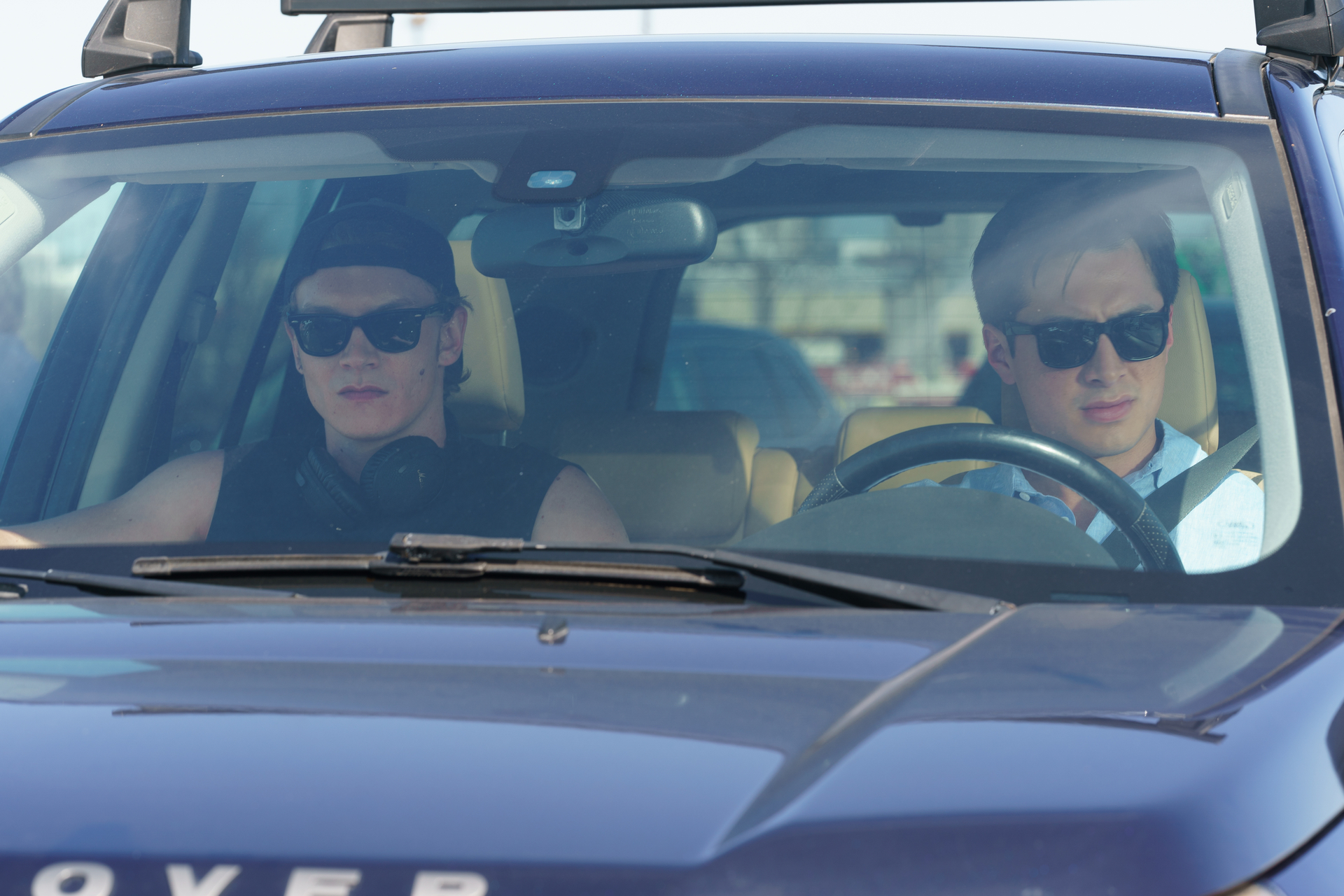




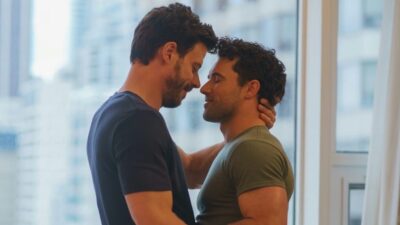
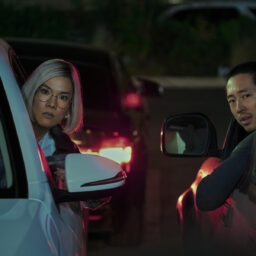
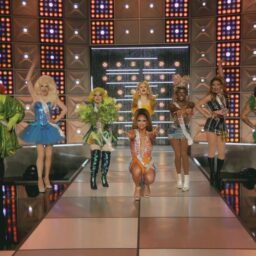
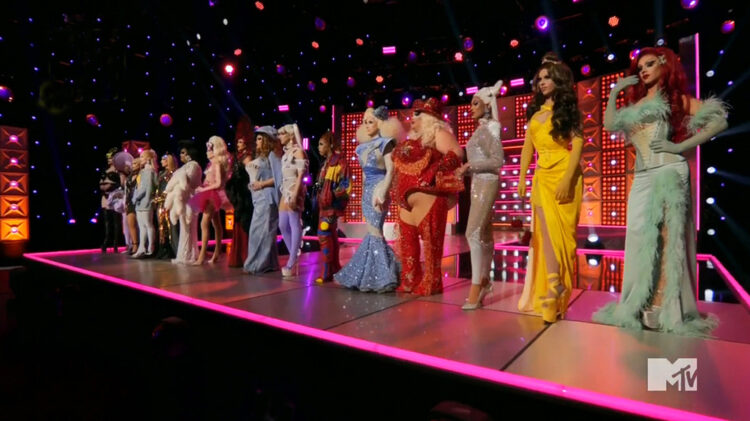

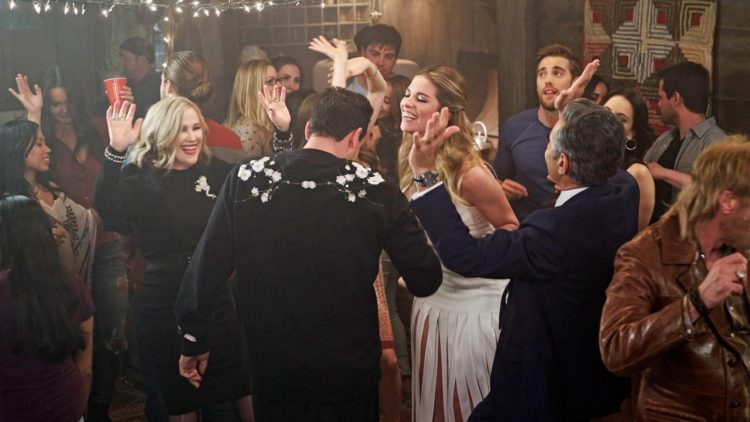

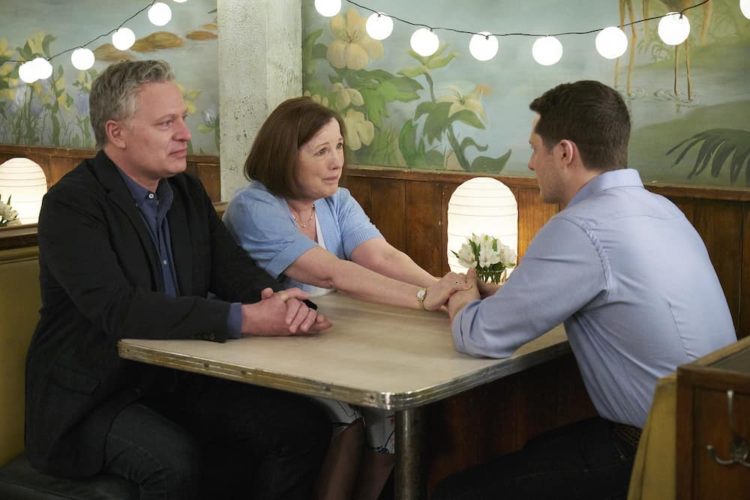

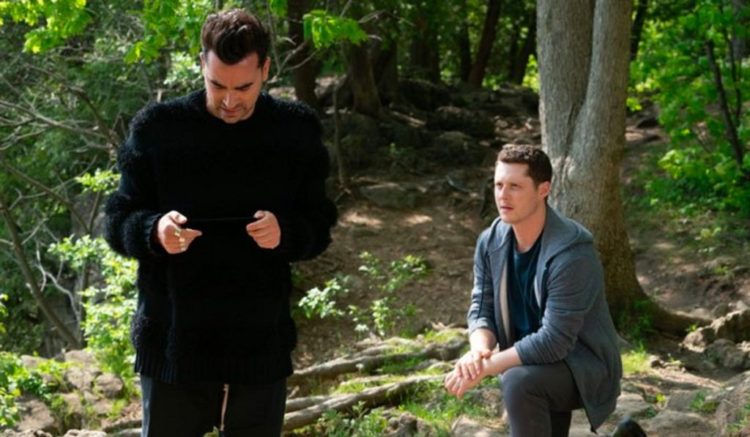

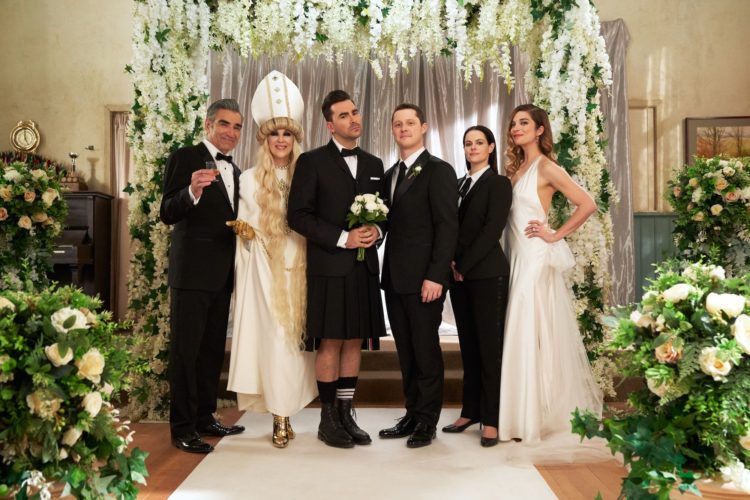

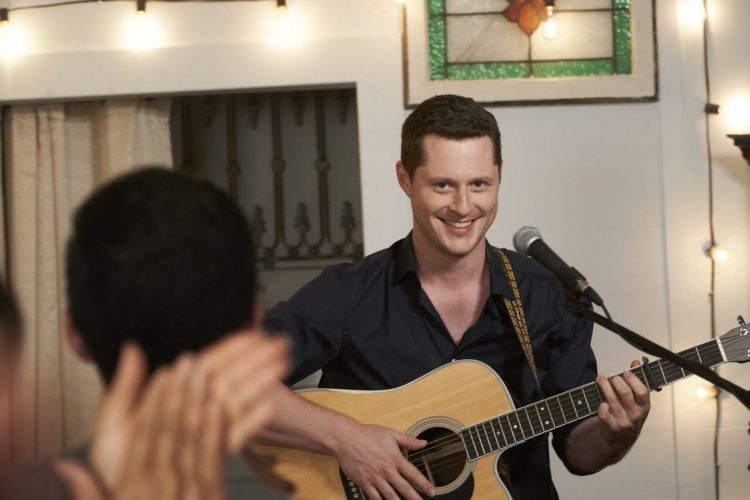

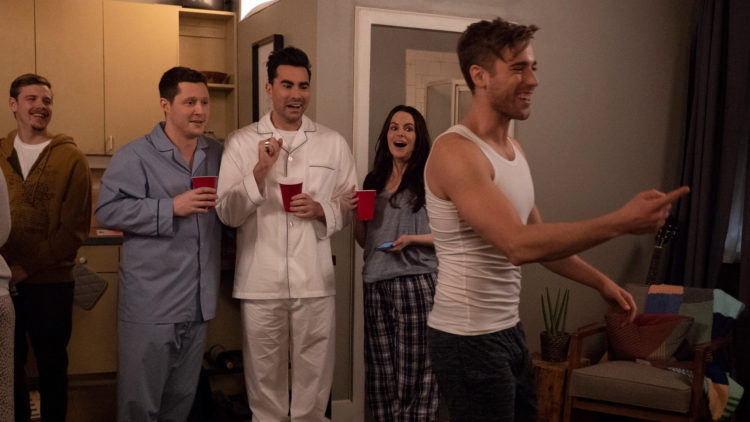

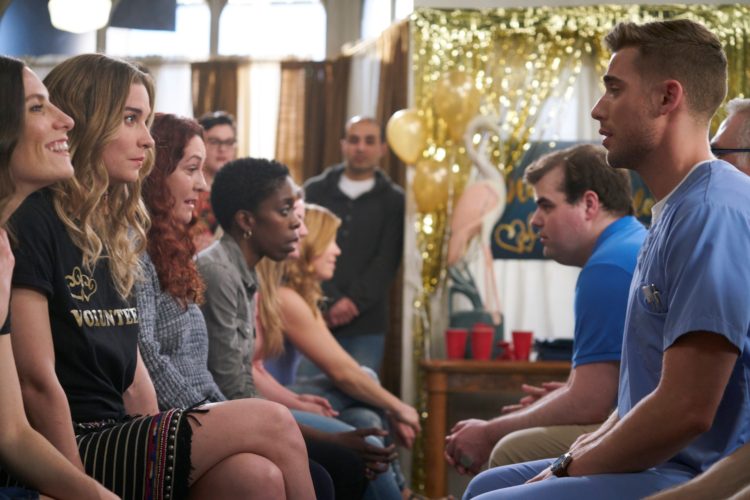

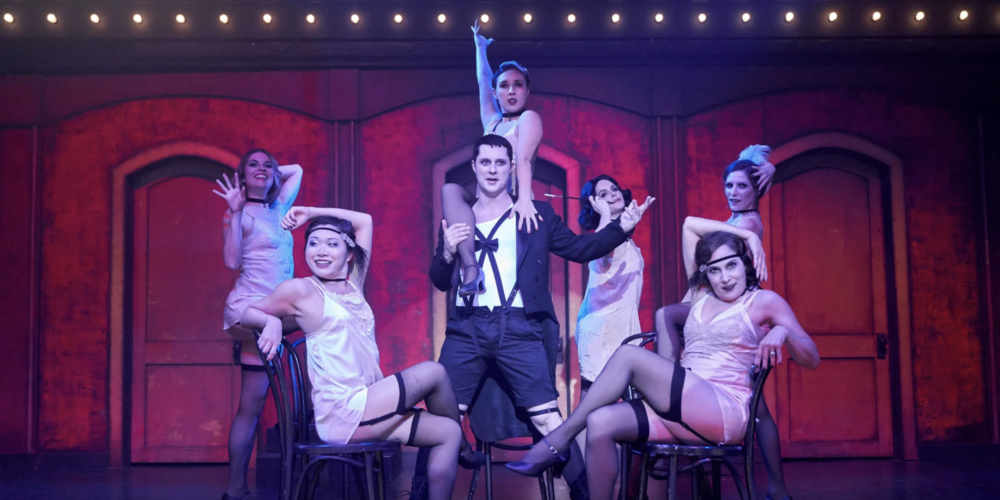

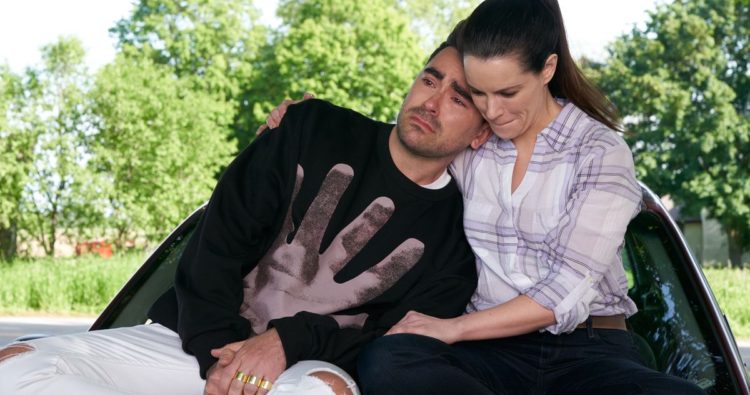

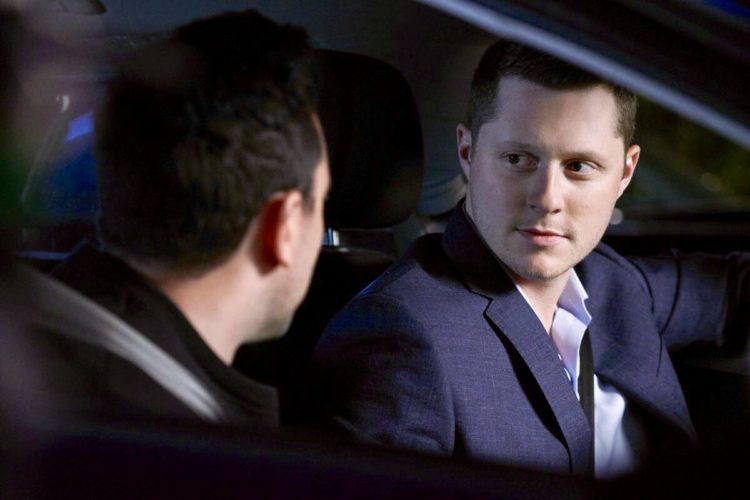

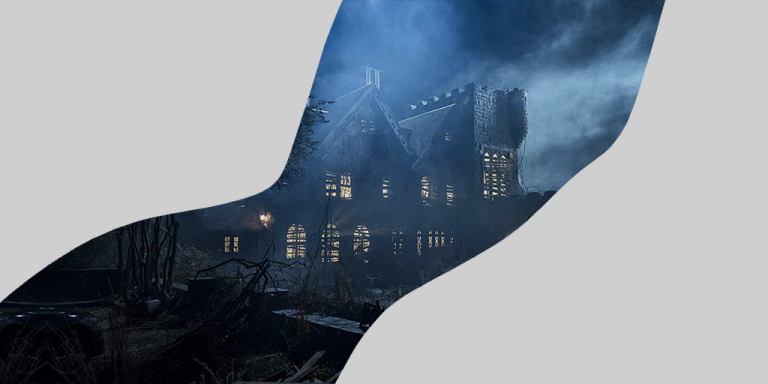



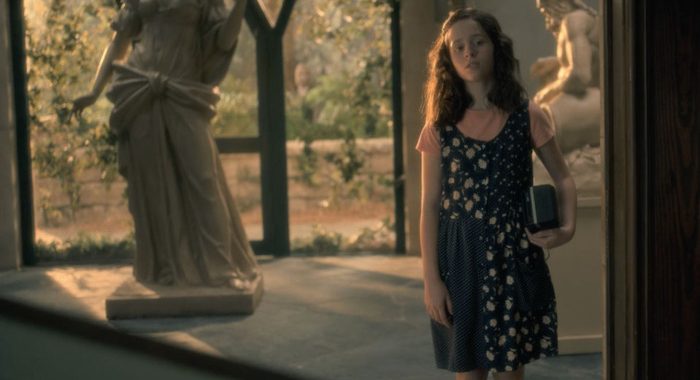

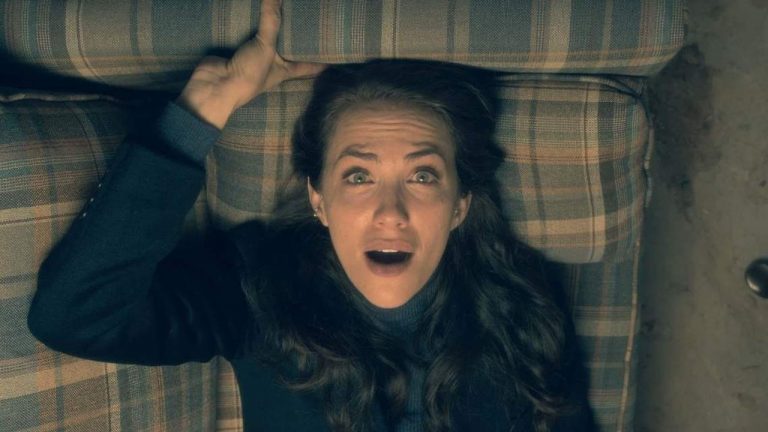

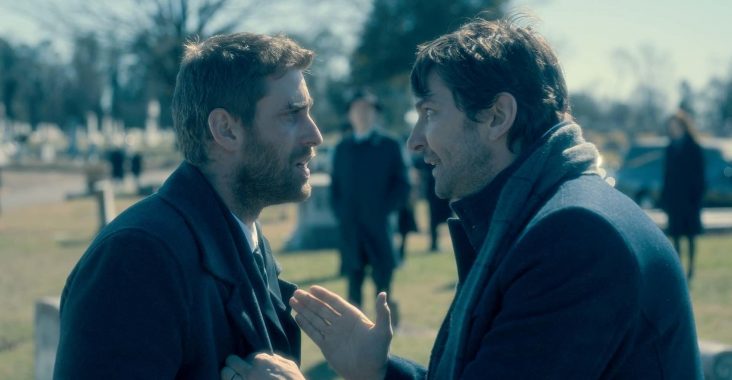

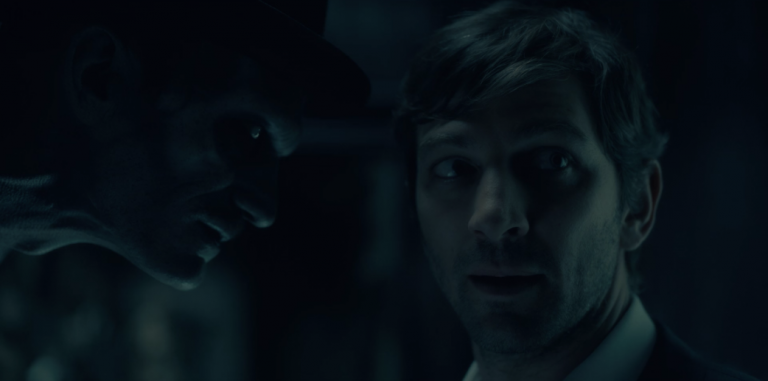

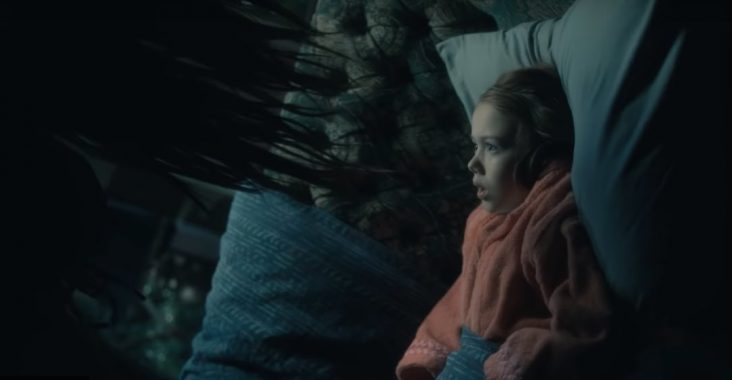

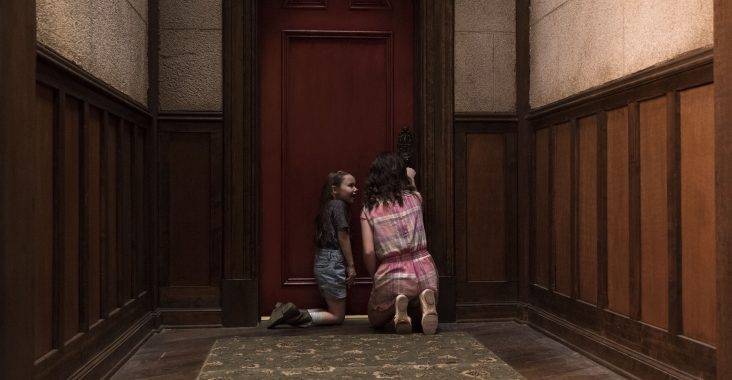

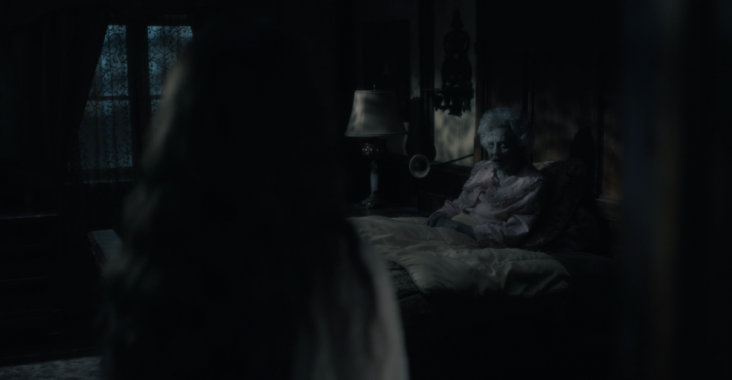

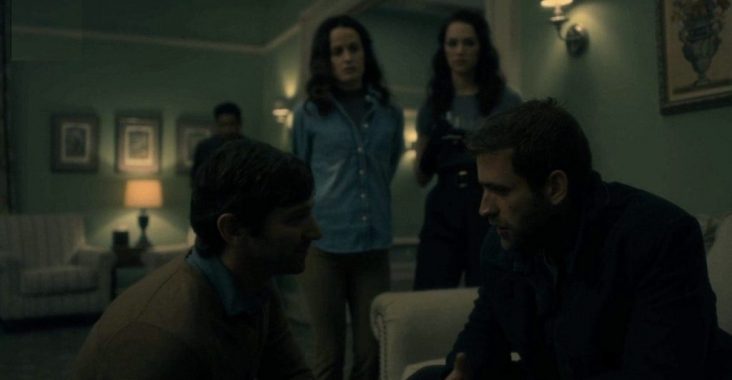

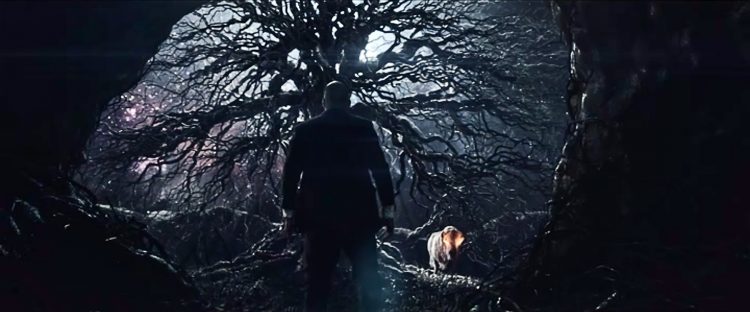
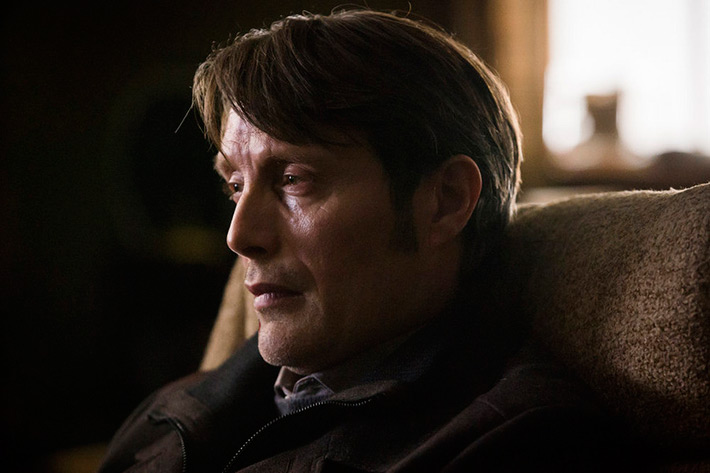
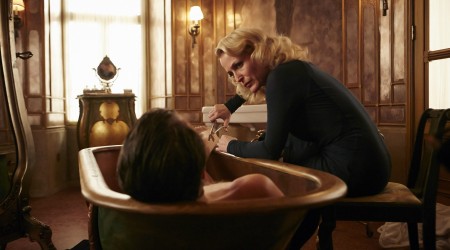
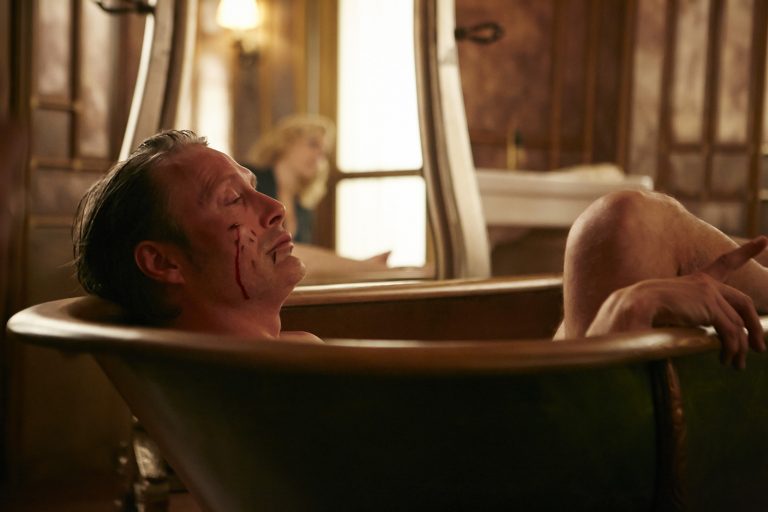
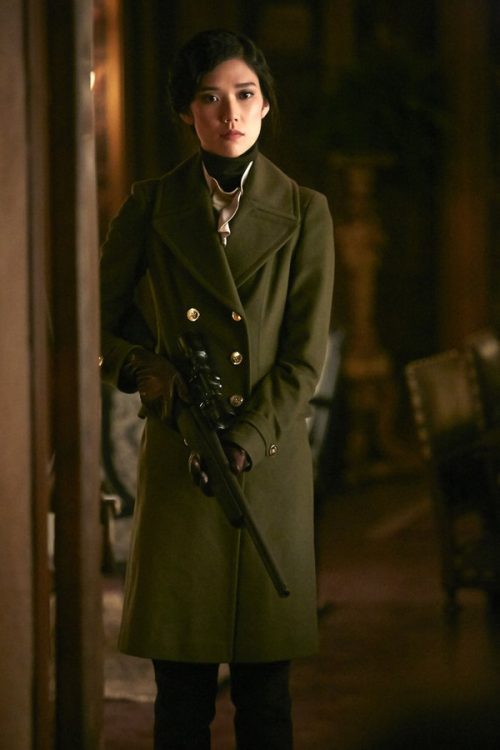
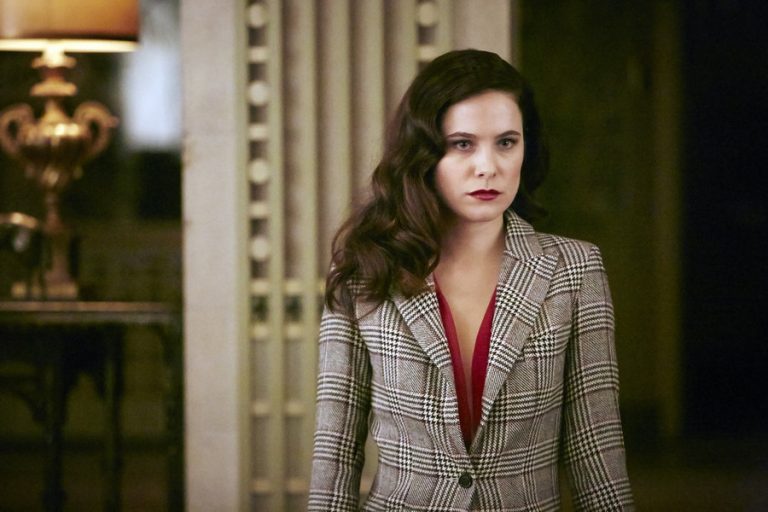
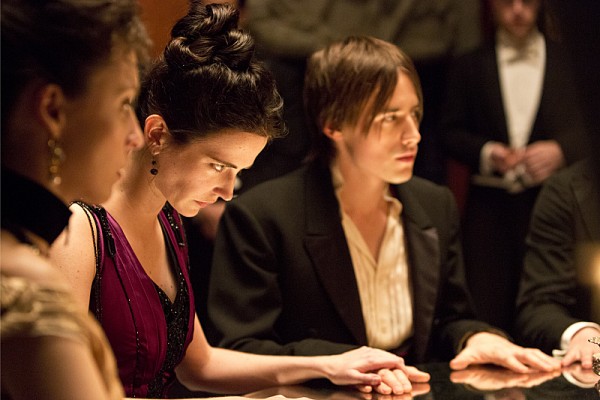
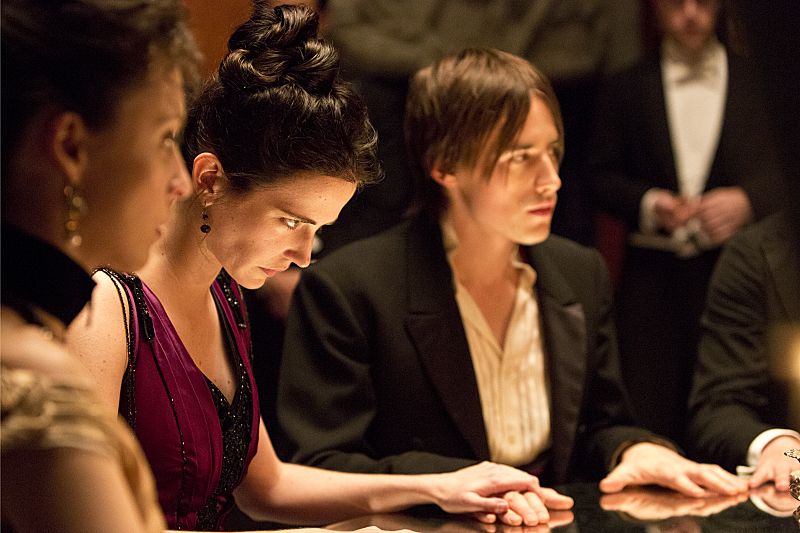

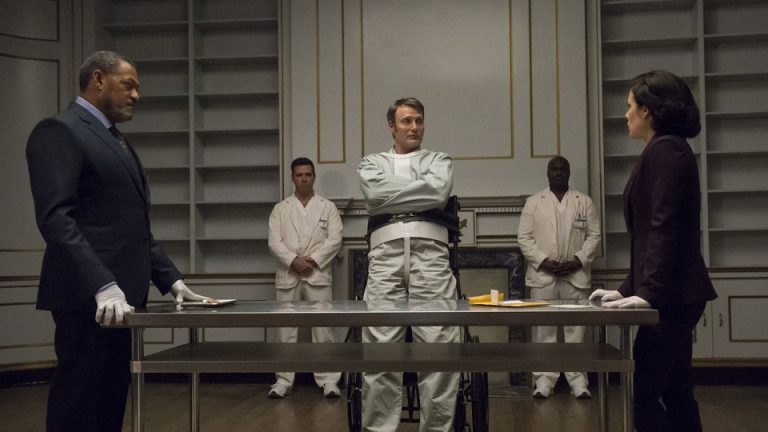
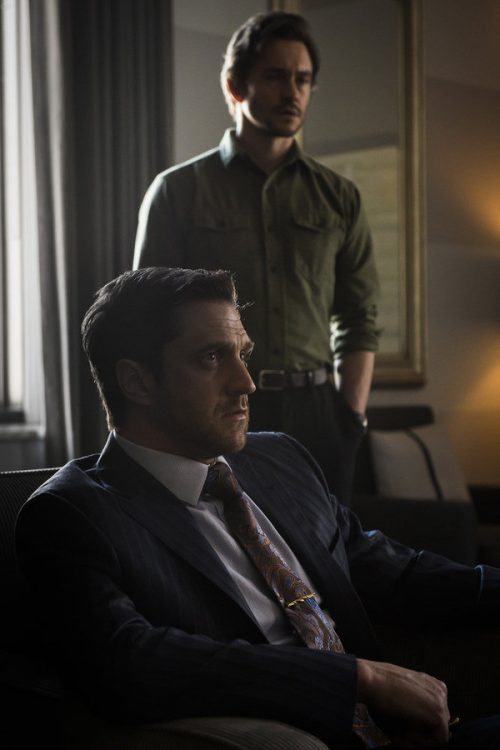
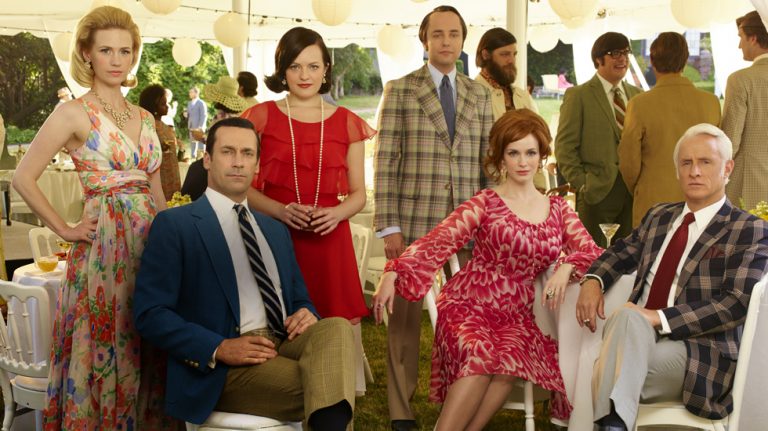
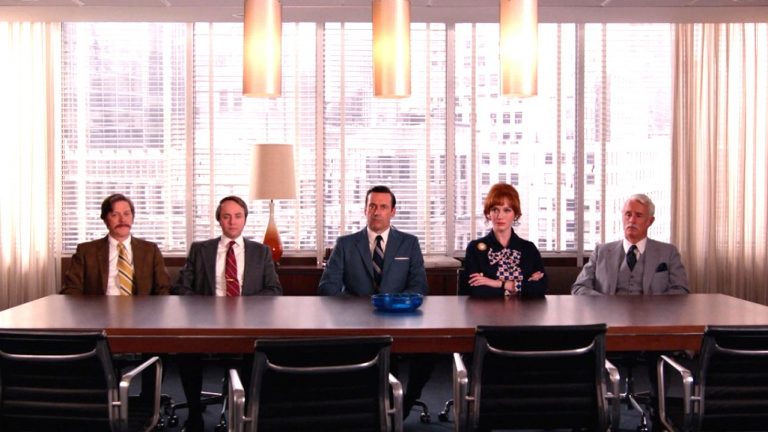
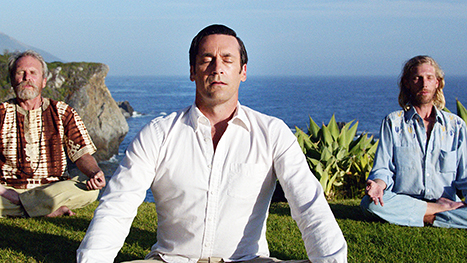
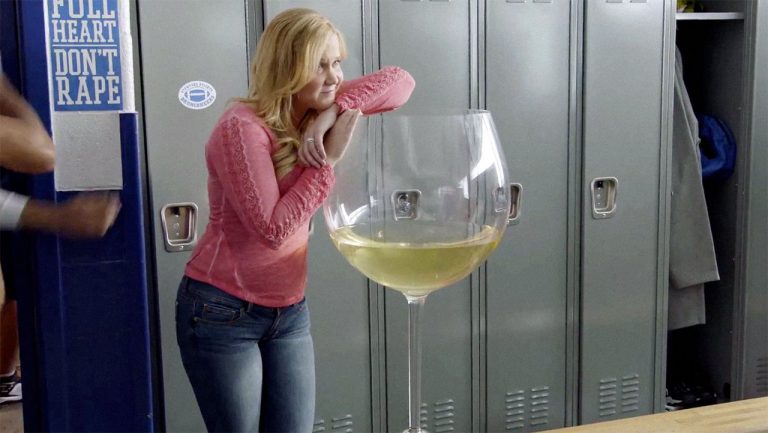
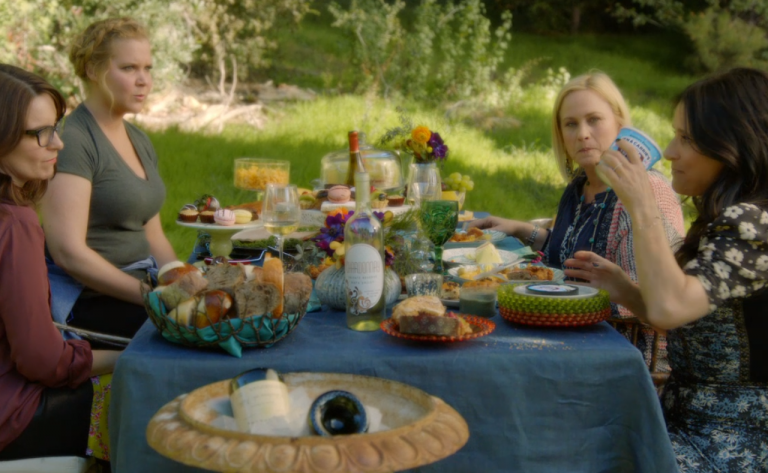
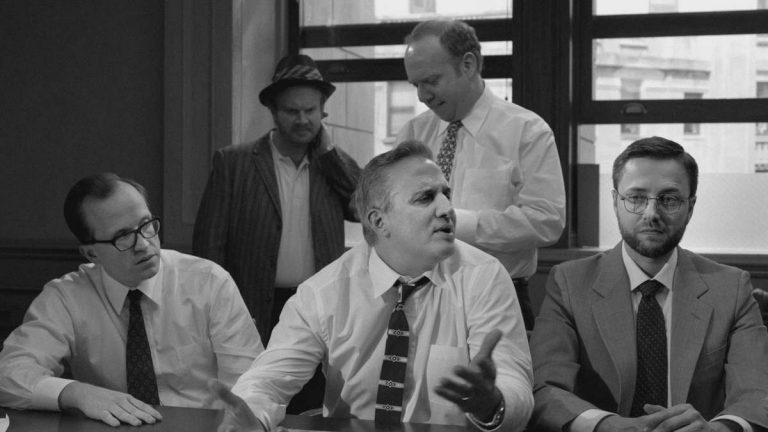
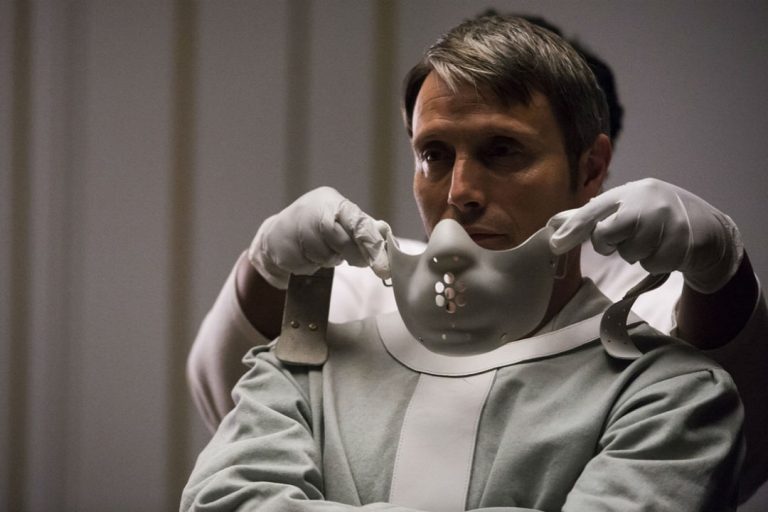
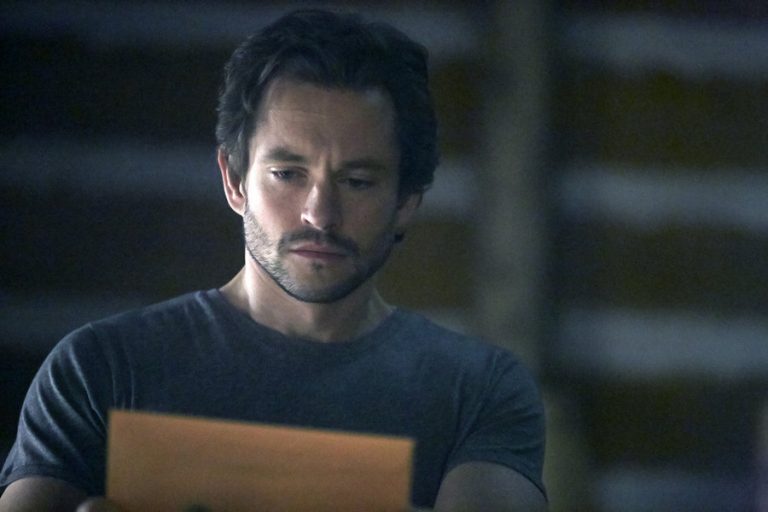
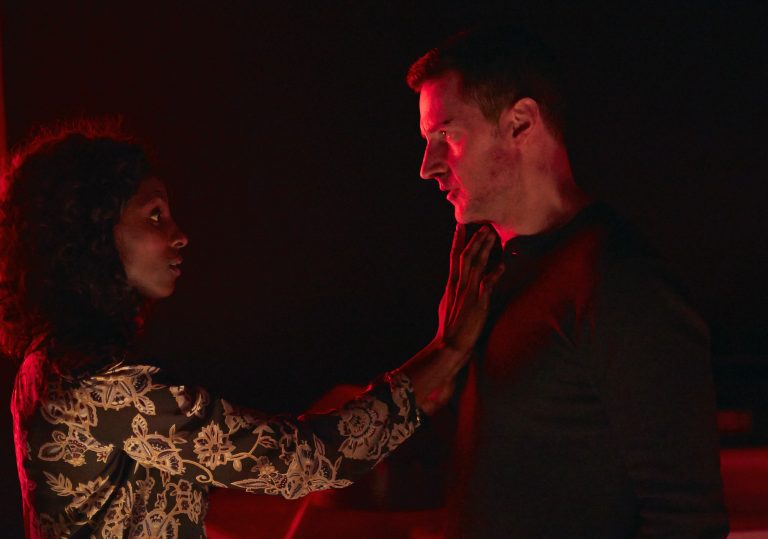
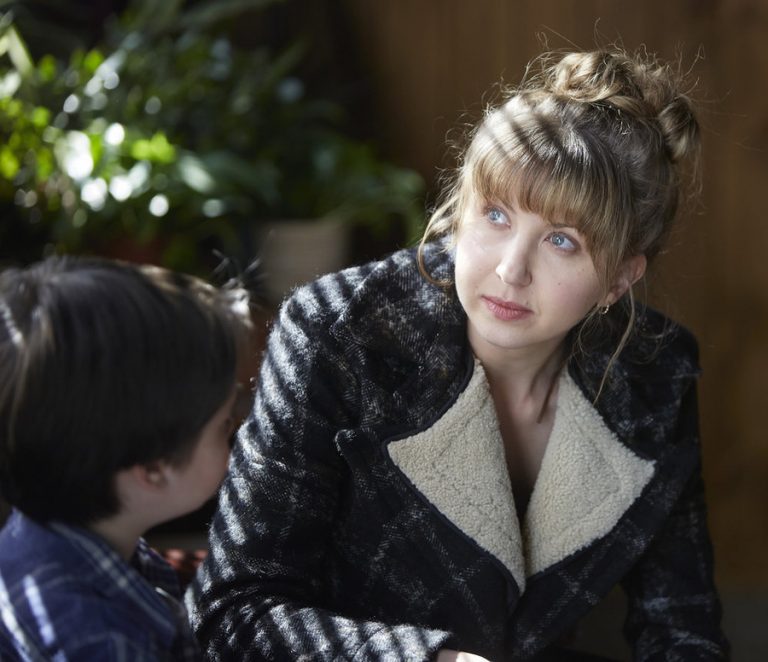
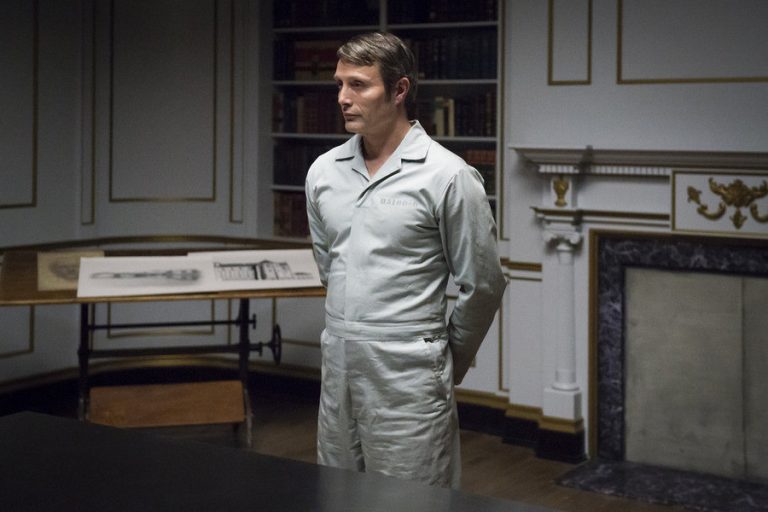
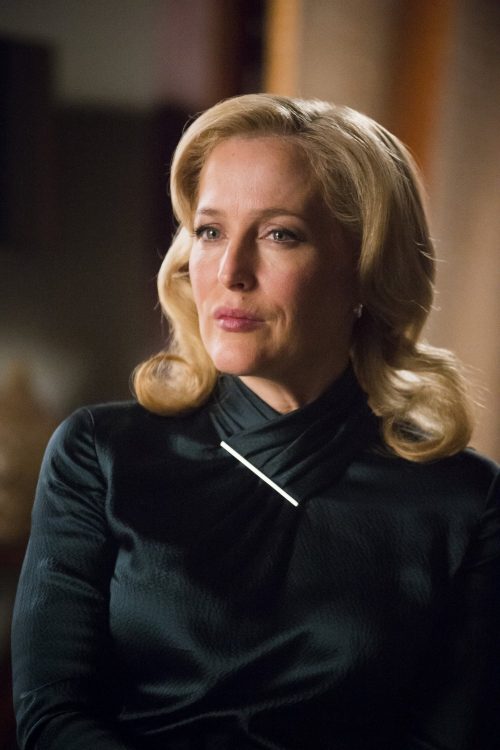
 t before, but to see it dramatized here, especially in such gory detail, puts a fine point on the dialogue that Bedelia has with Will. She harps about his exceptional empathy, and argues that it is just as empathetic to end a life as it is to save one; in some cases, it is perhaps smarter. Will refuses to believe this, and it’s that basic good nature (or is it naïveté?) that will ultimately undo him.