Category: Television

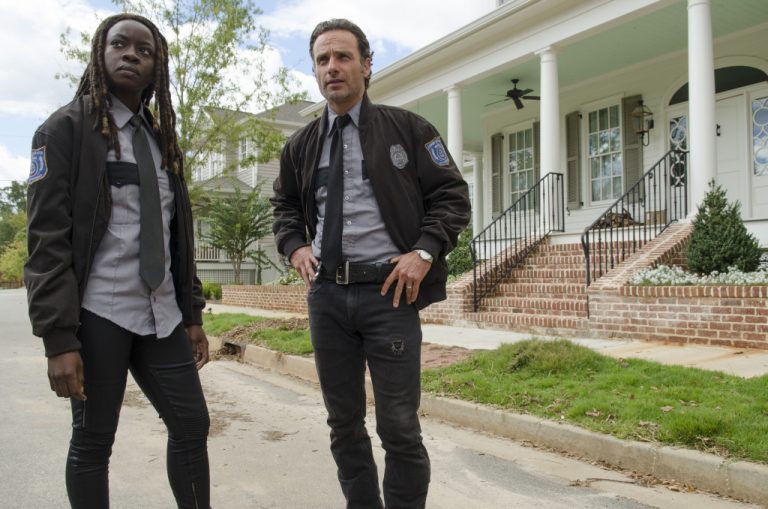
  • The Walking Dead review: “Try” (5×15)

    The Walking Dead review: “Try” (5×15)

    the walking dead try

    Well you guys, I’m frustrated. I’m worked up. I’m anxious. And it’s all because of a damn TV show. Good job “Walking Dead”.

    After last week’s brutal deaths, I wanted Nicholas to be revealed for the coward he truly is. I wanted Deanna to learn how ill-suited her people are for the world. I wanted Rick’s take on survival to resonate with the Alexandrians. I wanted someone to smack Gabriel and toss him out on his ass. But, none of these things happened.

    We see Deanna interview Nicholas (henceforth: Dickolas) about the events leading up to her son’s death. He spins a tall tale of his heroics. A tale where Glenn is a murderer only looking out for his own well-being. She replays the tapes over and over, but she doesn’t have Glenn’s side of the story. Glenn confides in Rick, the truth spoken but not recorded. We will have to hope Deanna isn’t messing around when she tells Dickolas “I see a great deal”. Perhaps she knows he’s a lying son of a bitch and waiting to act on it.

    She certainly knows about Pete beating his wife. Rick confronts her over the issue and she replies “I was hoping it would get better”. Deanna brings up an interesting point that Pete is the only doctor in town, he has saved lives. So, like Dawn from Grady Memorial Hospital, she lets certain things slide for the benefit of the group.

    I could watch Andrew Lincoln and Tovah Feldshuh go at it for an entire episode. Both actors give each respective leader strong convictions as to why their methods are best. “What happens when Pete doesn’t want to do that” Deanna knowingly asks after Rick’s suggestion of separating him from Jessie. “I kill him, we kill him” is the reply. Killing is a fact of life for him. But Deanna is content to exile evil-doers with the hope that the world beyond the walls does the killing for her. Though she says “we don’t kill people here”, she knows exactly how to wash her hands clean of unsavory characters. The content in these Alexandria episodes is fast becoming the most fascinating arc in the history of the show.

    One must wonder what Deanna wanted of Rick and Co. Wouldn’t their tactics and instincts be naturally suited to standing up to an abuser like Pete? Rick can do what Deanna cannot.

    We see just what Rick is capable of when he comes face to face with Pete. A drunken Pete lumbers into the house after Jessie has finally agreed to accept Rick’s help. Pete shouts for him to get out, Rick says lets leave together. It isn’t hard to see where this is going.

    The two men come to blows in what is one of the most intense knock down, drag ’em out fights we’ve seen on the series. I found it a little odd the Pete was an equal match (he was inebriated and this isn’t Rick’s first rodeo), but it provides some great set pieces, with the two of them crashing through the living room window into the streets of Alexandria. Jessie and Carl get smacked while trying to stop the brawl, as the entire town gathers to witness the brutality.

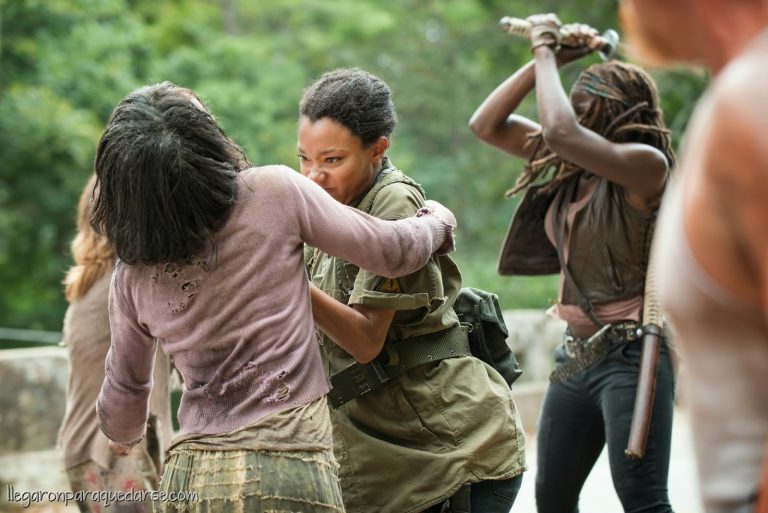
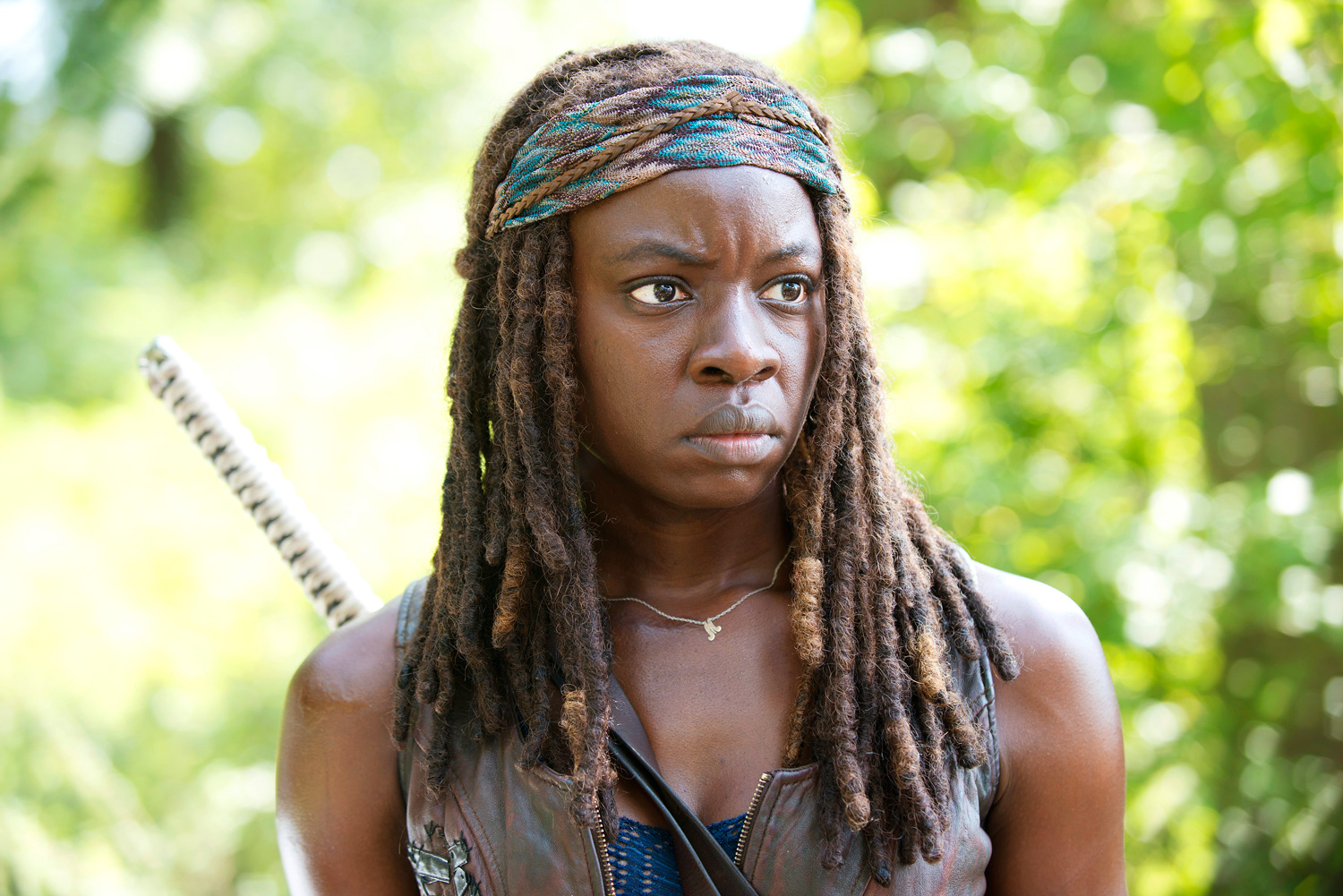
    When Deanna arrives and orders them to stop, Rick hits a breaking point. When Dickolas and other men rush forward to grab him, Rick pulls his gun on the crowd. He is bloodied, a wild look in his eye, gesticulating wildly with the gun. Andrew Lincoln allows himself to become completely unhinged, like a wild animal. “You’re ways of doing things is over” he spits out. “From now on, we need to start living in the real world”. It seems like the gun is going to go off, his rage boiling, and that’s when Michonne swoops in and knocks him out cold. Mic drop Michonne.

    The running theme in every encounter this week was “you fight or you die”. Even inside the walls that keep you safe. Did Rick overstep in his attempt to get his point across. Foaming at the mouth like a mad man is not the best way to gain support, no matter how good the intentions. And after this very public conflict, it seems like Alexandria is poised for some infighting and civil war in the season finale.

    The episode does fall into the trappings of a “set-up” episode in many regards, but it did a great job of making me anxious for the final episode. As the potential for a civil war in Alexandria arises, Daryl and Aaron make horrific discoveries in the wild: Dismembered limbs and woman tied naked to a tree, “W” on her forehead, left as walker food (did someone listen to Carol the Cookie Monster’s plan? Carol you have an admirer!). The light Daryl and Aaron see in the distance implies that the Wolves are coming for Alexandria at the moment they are most divided.

    Other Thoughts

    • I loved the opening with the Nine Inch Nails song from Aiden’s mix CD. Especially Carol baking an “I’m Sorry” casserole for Deanna’s family. Deanna promptly burns the card and leaves the casserole on the doorstep. Tovah Feldshuh has no time for sad casseroles.
    • Sasha is a hot mess. Sonequa Martin-Greene does her best to bring gravity to her story, but the escapade hunting down walkers in the woods mostly served as a catalyst for Michonne. Killing walkers helps her remember what its like to be out in the world, even if she isn’t with her katana. (How many times can the writers use her Katana as a symbol? I think we are done here, let’s move on please).
    • The mystery of the blender-gun is solved! The thief is…Dickolas? Well that doesn’t make much sense right now, but does make me nervous that he is going to shoot someone next week.
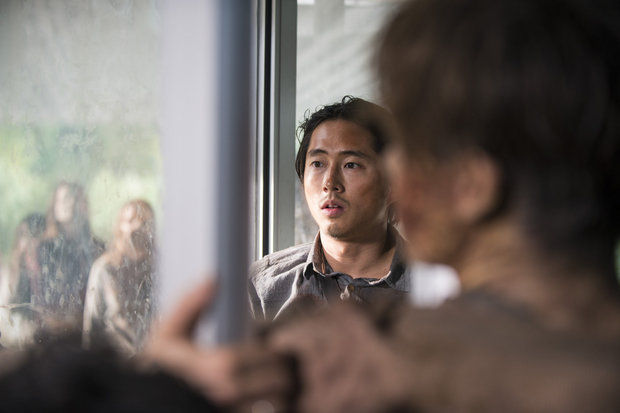
    • Could Glenn be his target? Steven Yeun gets a fantastic scene where he steps up and tells Dickolas that he gets to walk around with the deaths of Noah and Aiden on his back forever. And he forbids him from ever leaving the walls again. “Are you threatening me”, “No” Glenn smirks, “I’m saving you”. Get it Glenn.
    • Enid and Carl have some nice flirtatiousness in the woods that mixed up the pace a bit (though I maintain a hollow tree would be a terrible hiding place). It’s all going fine until Enid takes out a knife and begins carving in a log with her dead mother’s knife. Is she carving a “W”?! Dammit Carl, why didn’t you look at what she’s carving? Enid is totally a “Wolf”, and Carl is totally going to have to put her down.
  • Shameless Review: “Carl’s First Sentencing” (5×09)

    Shameless Review: “Carl’s First Sentencing” (5×09)

    carl's first sentencing shameless

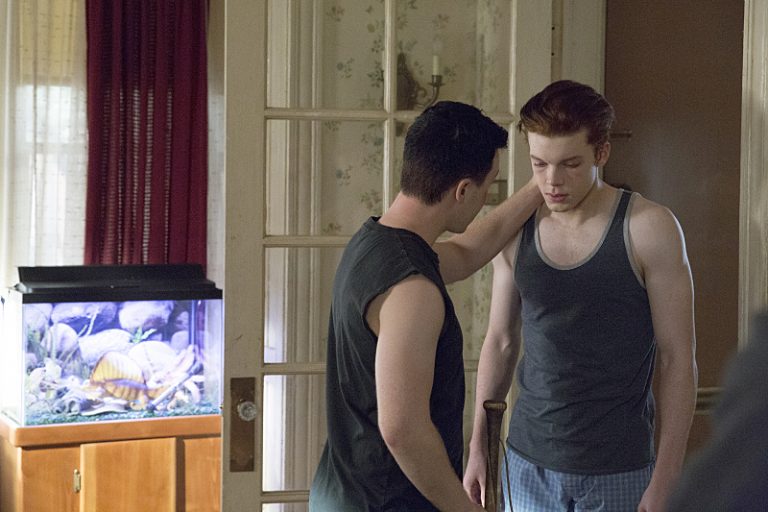
    Even the title of “Carl’s First Sentencing” encapsulates perfectly the waggish sense of irreverence that permeates Shameless. That rebel attitude is on full display in the episode, for better or for worse. But hey—for once, it’s not Frank acting as the dead weight dragging the show down, and for that reason alone I’m pretty taken with this episode.

    I’m still not quite sure how I feel about Carl’s storyline, which is the obvious focus of “Carl’s First Sentencing,” but it’s perhaps for the best that the tack they’ve taken with it is one of full-on comedy (if dark comedy). Take it seriously and the whole endeavor becomes too dark, too wholly depressing for a show that is still ostensibly a comedy (at least if the Emmy categorization panel is to be believed). But give it just the lightest of touch and suddenly CHUCKIE’S IQ IS 71 AND IT’S THE BEST SCORE HE’S EVER GOTTEN I’M DYING—verbatim from my review notes, but seriously, Chuckie as a perennial punching bag is undoubtedly the best joke this show has in its bag of tricks. “Even if he is functionally retarded, he’s getting time,” says the public defender given the thankless task of defending poor Chuckles. That’s a tricky line to walk as far as punch lines go, but all of the chokes at Chuckie’s expense undoubtedly land.

    An eight-year-old getting a four-month sentence for something that is pretty clearly not his doing is a tragic situation. That “juvie” in this instance is an experience on par with something out of Oz, and that Sammie gives her child not comfort or sympathy but advice on avoiding brutal prison rape (the advice is to simply accept less brutal prison rape) and a shiv, should ramp up the tragedy exponentially, but instead, by dialing every aspect of this story to a ludicrous eleven, “Carl’s First Sentencing” gets the laughs it’s going for, instead of the groans that could (should?) have accompanied this plot.

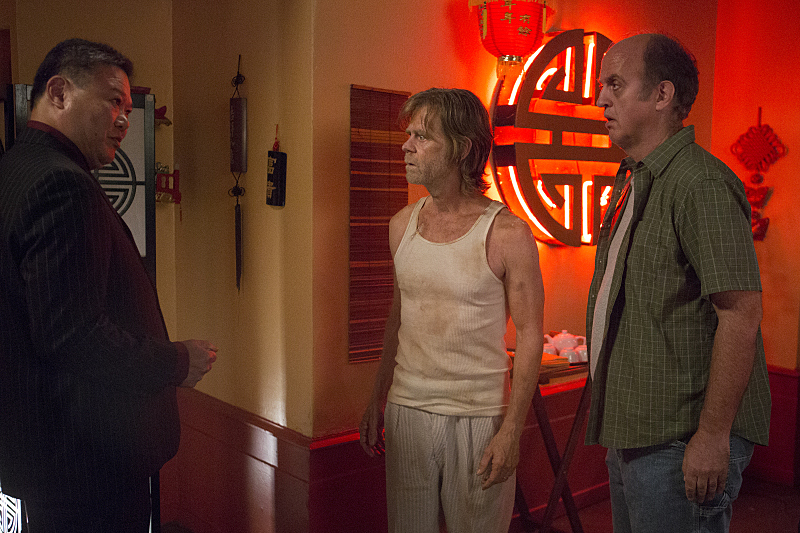
    And then there’s Frank, who spends the episode gallivanting about Chicago with Bianca the ER doctor. She breaks down in the middle of checking up on Frank’s wound—she’s been diagnosed with pancreatic cancer and has little time left to live. Meanwhile Frank shouts at God and lives to fight yet another day. It’s cosmically unfair, and Frank is such a vile character that this feels like a twist of the knife. And yet I don’t hate it! Somehow, against all odds, there is some real power to the time Frank spends with Bianca and the strength he gives her to get through her diagnosis. The lake location they’ve found, and to which Frank returns again to contemplate his and Bianca’s mortality, is gorgeous, and wonderfully shot again here—I’m beginning to think it will never run out of mileage.

    Something that has run out mileage: Kevin and Veronica. I’ve been very patient with this story, hoping with each episode that we’ll get to explore the substance behind their fight. But we haven’t gotten to do that. There is no substance here. Instead we have Kevin roaming the halls of Lip’s school, having started his own business venture as a “Rape Walker”, escorting drunken girls safely to their dorms. This of course turns into Kevin having sex with sober girls, because sure. And it all leads to a coalition of dorm dudes ganging up on him, to assert their dominance or their property or some shit, and the Kevin realizes that he truly loves V and puts all that Rape Walker stuff behind him. It’s insulting and stupid, a contrived character assassination intended to put V and Kev on equal footing in time for a reconciliation; each scene spent on it is an increasing waste of time.

    At least Lip at college is more entertaining. He gets to stay in school thanks to the kindly financial aid officer, who gets an unexpected donation for Lip from his friend who started that topless maid service. It’s the latest in a series of good things to happen to Lip—deus ex boob maid, if you will. I’ve seen grumblings, on reddit and elsewhere, that the continue cavalcade of good fortune is unearned and undramatic, but I think there is definitely a tension here, a tendency for self-destruction that underlies too many of Lip’s actions. He was going to cheat his way back into school, the Gallagher way. He’s fucking a woman who was, then wasn’t, and now is again his professor. He’s the RA of his dorm and he’s selling pot to pay his bills. Carl’s proud of his rap sheet; Ian won’t admit his mental illness; and Lip can’t escape that terrible Gallagher genome, no matter how hard the world pulls him away from it. That’s interesting to me—even if we are waiting to watch it all blow up in Lip’s face.

    Like so many episode’s this season, it’s a little uneven. As always, too much focus on inconsequential characters and jokes, and too little focus on characters who should be at the fore. Ian’s one big scene, where the doctor informs him he will be on medication for basically the rest of his life, is great—but doesn’t the character and the story merit more? And Fiona does, I don’t know, stuff? I guess? She’s used here to prop up Sean and not much else, and there’s no real excuse for that. But also as always, what works, works. And at any rate, at this point I’d watch fifty minutes straight of Chuckie doing hard time, so the show must be doing something right.

    Stray Observations:

    “You’re a robotics engineer, do you own a fucking robot?”

    I’ve been calling Sean “Sam” for a few weeks. I have no clue why, but apologies. (He does look like a Sam to me.)

    Chuckie falls in with neo-Nazis at juvie (because of course) and he has a swastika tattooed on his forehead, which shouldn’t be funny, but is tremendously hysterical anyway.

  • The Walking Dead Review: “Spend” (5×14)

    The Walking Dead Review: “Spend” (5×14)

    the walking dead spend
    If last night’s dynamite episode of “The Walking Dead” taught us anything, it’s that Alexandria is comprised entirely of jackasses and woefully inept survivors. How any of them have survived this long, even taking their big steel walls into account, is beyond comprehension.

    This episode was the most ambitious hour of the season thus far. It juggled five different storylines, each giving a glimpse as to how Rick’s gang and the Alexandrians intermingled. For better or for worse.

    Firmly in the “for worse” column is Father Gabriel . Words fail describing what a piece of garbage he is. The episode begins with him having a meltdown and ripping pages out of his bible. Though he disappears for pretty much the rest of the episode (save for looking at others judgmentally from afar) he reappears with one final act of hypocrisy.

    Completely selling out his saviors to Deanna, he implores her that allowing them inside was a mistake. There’s some contrived biblical babble about Rick being Satan in the disguise of an angel before he suggests the group will put themselves before the citizens of Alexandria. If ever there was a character for Carol to chain up in the woods to be eaten and forgotten about, it’s this guy. Other actors have made morally corrupt characters compelling, but Seth Gilliam has played the same note since his first scene on the series.

    Thankfully the other threads of the story are successful in making the audience care for side characters who have been kept out of the spotlight. Abraham is given a job on Tobin’s construction crew (they’re expanding the city wall). Abe is visibly struggling with the mundane work. So when a walker horde approaches, a thrilling energy rushes over him. “Mother Dick!” he exclaims, happy to be battling the undead again.

    When Tobin orders his group to leave poor Francine for walker bait, Abraham jumps in to clear the fray. He and Francine annihilate all zombies, Tobin gets a right hook to the face from the woman he left to die (Tobin can join Gabriel as one of Carol the Cookie Monster’s victims), and Abraham finds himself the new leader of the construction crew. I find Michael Cudlitz a fascinating actor to watch and I hope these recent developments spell more screen time for Abe.

    Outside the town’s gates, a supply run for spare parts turns tragic. Glenn, Tara, Noah, Aiden, and Nicholas bring Eugene along to a warehouse so the genius/liar can find pieces needed to fix broken solar panels. Aiden is still a hothead, but willing to listen to Glenn’s advice on checking the perimeter before entering the building blind. It also provides a nice lull before the action and a nice interaction between Tara and Eugene. Tara’s eternal warmth is wearing thin with him, and she tells him he needs to buck up and fend for himself.

    The show plays a cruel trick on us once inside. An armored walker in riot gear approaches, and of course the idiotic Aiden fires his rifle at it several times. Why he thinks his bullets will pierce the bullet proof helmet and body armor, we will never know. A bullet hits a grenade on the walker’s belt and the explosion knocks out Tara and impales Aiden on a metal rod.

    Even though Glenn and Noah try to lift him off the rod (his friend Nicholas quickly bails to save his own skin), zombies close in and we are treated to some good old fashioned zombie gore as they rip open his stomach and devour his entrails. The crowd cheers, because we never like this dude anyway.

    But when Glenn and Noah catch up with the fleeing Nicholas, the three become stuck in a revolving door (who the hell invented those deathtraps anyway?) with zombies on either side. After a heroic Eugene lures walkers away with the van and some terrible rap music, Glenn attempts to break the glass to get out. But Nicholas is again only concerned with himself and shoves his way out of the revolving door, exposing poor Noah to the group of zombies behind him. Glenn can only watch in horror as his new friend’s face is ripped off his skull. Game of Thrones’ Oberyn vs. The Mountain moment has nothing on this. I’m also now horrified at myself for cheering at a death just moments before. Noah did nothing wrong and deserved better than to be ripped apart so some coward could live (Hey Carol, I’ve got another woods person for ya!).

    The final story thread with Carol back in Alexandria is quite successful. Her blunt line delivery with Sam is good for a laugh. It mixes up the pacing well when inter-cut with the chaos of the supply run. But when Sam asks for a gun Carol stole the resulting twist provides the most tension of the episode, no undead needed. “Who’s it for” Carol asks, suddenly recognizing signs of abuse in the young cookie fiend. She knows the answer even as Sam runs away without telling her.

    And once again Melissa McBride gets the best line of the episode. Informing Rick of Pete’s abuse towards Jessie, she states with measured voice “there’s only one way it can go. You’re going to need to kill him”. With this brewing conflict, “The Walking Dead” proves it can create compelling drama even with out zombies present.

    Other Thoughts:

    • Lovely moment when Glenn discovers the first page of the late Noah’s diary: “This is the beginning”. It’s devastating because Noah won’t get to experience this new life behind walls, and also echoing the reoccurring theme of the group in uncharted waters with Alexandria life.
    • Loved Eugene’s redemptive arc in the episode. Finally realizes that this group protected him and finds the courage to risk his life for them several times.
    • Deanna is expressing some hesitancy and perhaps regret over giving Rick’s group positions of power. She wanted survivors, but is gradually seeing her grasp on the community slip away. Expertly played by Tovah Feldshuh. I’m expecting fireworks when she discovers her sons is dead next week.
    • Carol’s last line is great, but I’m hoping she is the one to take out Peter instead. Wouldn’t it be a great full circle moment for her if she were to take out an abusive father and save a family the way she couldn’t save hers?
    • Walker Kill of the Week: Aiden’s silly mistake with the grenade. Because it rid us of his presence and displayed the incompetence of most of these Alexandrians. If only Gabriel had found himself in the blast radius.
  • Shameless Review: “Uncle Carl” (5×08)

    Shameless Review: “Uncle Carl” (5×08)

    uncle carl shameless
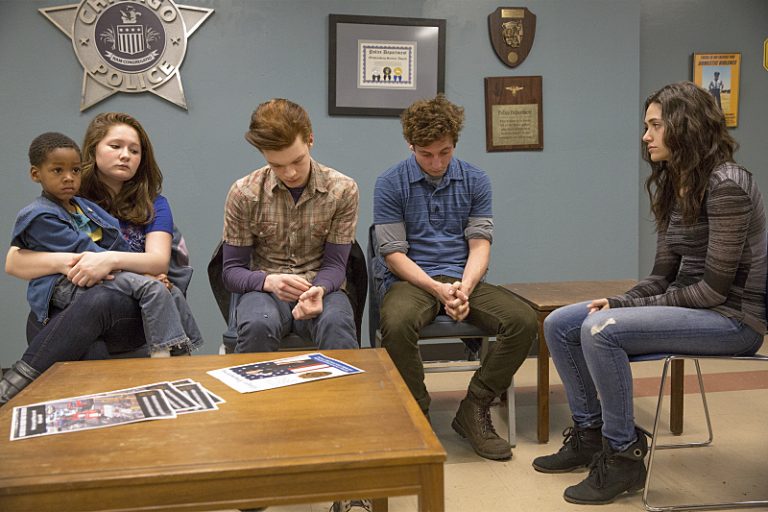
    Gallaghers, right? Our favorite beleaguered South Side family decides their inherited family name is a diagnosis unto itself, or at least it should be, and they’re not wrong. They come to this conclusion while in the jail waiting room; this time they’re waiting on Carl, who has been caught attempting to smuggle, let’s call it way too much heroin, across state lines. Carl has no formal diagnosis to explain his gallivant; then again neither does Fiona. Or Lip, or Debbie. (Liam is yet too young to be quite so fucked up. The jury is probably still out on Sammie.) This idea of “crazy” as a relative thing (pun intended) permeates the episode, and makes for a continued treatise on the idea that this family, maybe, just doesn’t have its shit together because its members are fundamentally incapable of doing so.

    The ghost of Monica hangs over “Uncle Carl,” as Ian returns home a shell of his former self. But he refuses to take his medication, and flushes the entire prescription almost immediately. Ian doesn’t see himself as another Monica. Fiona’s been to jail and Carl’s on his way there; what makes Ian the crazy one? To the audience, of course, the answer is obvious—Ian is cursed with Monica’s specific brain chemistry, whereas his siblings are simply products of their upbringing. But there’s considerably more grey area from Ian’s point of view, and one can hardly blame him for seeing things that way.

    Here’s the thing: Frank and Monica did a number on these kids, genetic predisposition to bipolar disorder notwithstanding. We have seen since day one the effects of Frank’s particular brand of parenting, and in fact he’s still fucking things up for his kids even now. Chuckie and Carl are in jail in large part owing to Frank, who views Carl’s drug dealing as a good work ethic (something Frank wouldn’t know if it bit him in the ass), and who even still essentially called the cops on his own kid when his plan went belly-up. But “Uncle Carl” sheds some new light on Frank as well, as his kids continue to reenact the various aspects of his own youth with Monica. As Mickey drinks himself into depression over Ian’s current state, Debbie informs him that Frank reacted the same way to Monica. It’s not a statement meant to generate sympathy for Frank; rather, it’s a warning to Mickey, that he needs to be there for Ian rather than feel sorry for himself. Despite their horrid childhoods, the kids are (or at least have a shot at being) all right.

    “Uncle Carl” has a lot to recommend it. As Ian’s story calls back to the Gallagher’s collective past, it serves as a lynchpin for the various other adventures the characters are on. The episode strikes a strong balance among its various components through this conceit. Fiona struggles to communicate with Gus because her case study for married life is not a very good one. She can do passion, spur of the moment; getting married on a lark is nothing for Fiona Gallagher. But everything that comes after is hard. Commitment is hard. Complacency is hard, and Fiona isn’t used to that sort of challenge. Even after a big speech and a declaration of love, Gus is still heading off on that tour bus, and Fiona still isn’t going with him.

    Or take Lip, who has so much potential—more, if we’re being honest, than anyone else in his family. But he is so ready to self-sabotage, even in his attempts to stay in school. His decision to turn the dorm for which he is responsible into, basically, a pot dispensary is colossally stupid. But he breaks free of his Gallagher-itis by, at least, being able to acknowledge his propensity for poor decision-making. He knows that if he doesn’t stay at university, he’ll fall right back into his old life. If Ian can grow up like Monica, there’s nothing stopping Lip from growing up like Frank. Jeremy Allen White gets a huge scene with Lip’s financial aid advisor this week, capturing Lip’s perceived helplessness and imbuing the character with a newfound sense of tragedy.

    The specter of their parents hangs over all the Gallagher kids, but at the same time they find it impossible to escape their parents’ influence. As a result, they find themselves constantly in situations that on the one hand, they bring upon themselves; but on the other hand, these situations are more or less inevitable. The difference is that the Gallagher kids feel guilty about their nature, and seek to fix the messes they create (mostly—Carl is either too crazy or too young). Compare to Sammie, who attempts this episode to “train” Frank, but has so far done so by shooting him in the arm and proceeding to manipulate him emotionally—in other words, the usual tricks of the Gallagher trade. It all boils down to the classic nature versus nurture debate that, in some way or another, has run beneath Shameless’s surface this whole time.

    The Gallaghers weekly find themselves in one mess after other, many of their own making. Otherwise we wouldn’t have a show. But the Gallaghers we actually like struggle to make good on their promises, to clean up their messes and fix their mistakes. How long do we have before we’re no longer allowed to fix the things we’ve fucked up? That’s a question the Gallaghers seek to answer, and there’s quite a bit more seeking left to do. By episode’s end, Carl is speaking with a state attorney and the Gallaghers all strongly advise him not to give anything up. Bad advice, maybe, but typically Gallagher. But also by episode’s send, Fiona has re-committed herself to Gus (at least verbally), and Mickey has gotten into bed beside Ian after all. They’re trying.

    Stray Observations:

    • Svetlana extends her fulfillment of wifely duties to Veronica as well, and gives the same explanation practically verbatim, thereby bringing this joke back from creepy all the way back around to hilarious. In general, Svetlana is a font of practical marital wisdom, and I’m enjoying her increased presence on the show.
    • “In my younger days I slept with every member of the Guns n’ Roses cover band Buns n’ Hoses.”
    • So many phenomenal Chuckie gags this week, it’s impossible to pick a favorite. That he sleeps on the floor in a dog bed? Sitting in the middle of a bus stop with pounds of heroin taped around his tummy? Standing in a jail cell, excited that Uncle Carl will be his storytelling neighbor?
    • Debbie and Derek are pretty adorable together.
    • The gentrification runner returns this week after a couple weeks off. The Lisas are building a community garden next to the Gallagher house, and want Fiona to join them for just a two thousand dollar buy in. First of all, that sounds fucking terrible, and second of all, what the hell kind of a garden are they building?
    • Sam’s back too, intentionally throwing wrenches into Fiona’s marriage. This character is all over the place to me, and I’m not convinced the writers have a handle on him either.
  • Scandal Review: “The Testimony of Diego Munoz” (4×15)

    Scandal Review: “The Testimony of Diego Munoz” (4×15)

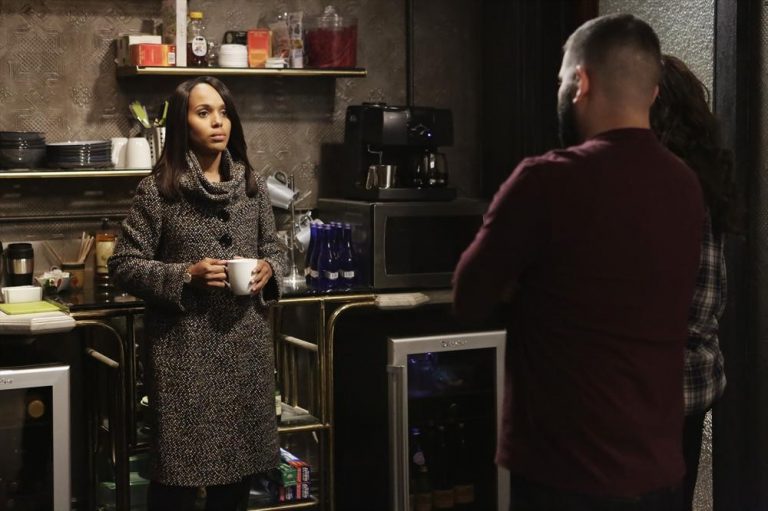
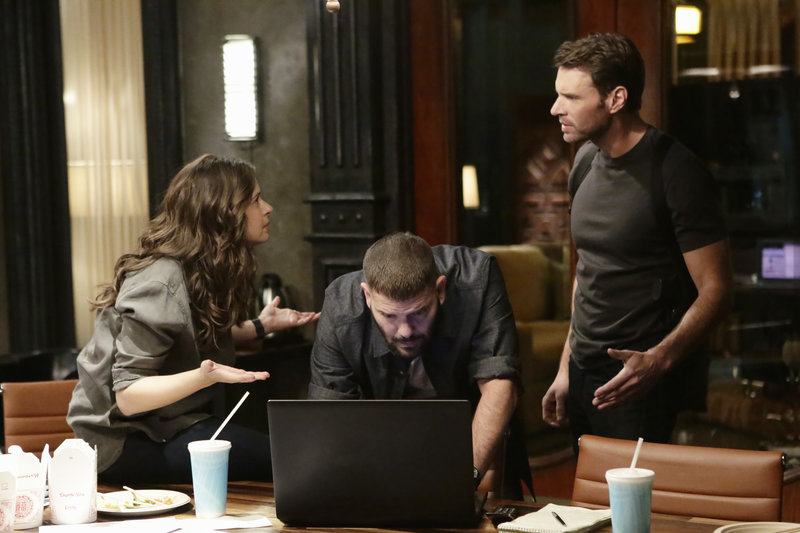
    KERRY WASHINGTON, GUILLERMO DIAZ, KATIE LOWES
    Let me start by saying that while I largely enjoyed this episode, I found it to be sort of all over the place. Take the opening shot, a goofy look at Susan Ross (henceforth Artemis) as she’s prepped to become Vice President. Never mind the outlandish cartoonland politics that are behind this appointment in the first place—outlandish cartoonland politics are Scandal’s bread and butter. What is not generally Scandal’s bread and butter is slapstick humor, and this VP plot is laden with it.

    Contrast that to a scene like Huck’s deposition, or any of Olivia’s interactions with Rose—all high drama and devastating sadness. I’ve used the term “tonal whiplash” before in my television writing, usually about Showtime’s Shameless, but man, does the term ever apply here, on an episodic level as well as on a more macro, season level. Consider: besides a token reference to Olivia’s kidnapping and planting the seeds of Artemis, “The Lawn Chair” took place in isolation from the rest of the season.

    Meanwhile, “The Testimony of Diego Munoz” entirely ignores the events of “The Lawn Chair,” except where it continues the saga of placing Artemis one heartbeat from the presidency. (By the way, I was right last week—that development could absolutely have begun in the episode and brought us to the same exact place, and would have strengthened both episodes.) And within the episode, we are bounced back and forth between Artemis’s wacky hijinks to B-613 Part Two: The Quickening to Olivia and Rose’s veritable sobfest. With this a cast this large and this many plot balls in the air, it’s inevitable that individual episodes may contain more disparate threads than is appropriate, but rarely has an episode of Scandal veered so wildly within itself.

    But concerns about the episode’s structure aside, this is actually pretty entertaining. Like, for as outlandish and out of place as Artemis is in the White House, she’s hilarious, and it’s nice to see the White House crew get to have a little fun for once, rather than being mired in constant drama and espionage. Artemis Pebdani is obviously a gifted comedian, and she steals every scene she’s in. Abby and Leo’s fling gets some play this week too, and while it’s a by-the-numbers office romance plot, it’s still a pleasure to watch. In fact it feels right out The West Wing’s playbook, which is not bad at all.

    If super espionage-y Scandal is more your speed, then the writers have you covered this week with Huck and the return of the return of B-613. Remember those files Huck left his wife Kim? She takes them to David Rosen and a whole ordeal ensues. Long story short, David Rosen has decided, white hat planted firmly on head, that he’ll be taking down Rowan’s organization once and for all. But the meat of this story isn’t really the titular testimony (which is delivered in the exact same, overdone cadence that Guillermo Diaz uses in every single scene on this show), but the emotional hit of watching him try to lie about B-613 while moments of his life with Kim flash before his and our eyes. It’s heartbreaking, and manipulative? Sure. But it works, and at the end of the day that’s all that matters.

    And then there’s Olivia, who is so walled off from the rest of this show still. She spends the episode trying to locate Lois’s body for Rose, the “where’s the black lady?” lady from two weeks back. This is an interesting plot for Olivia—a case of the week to which she already knows the answer. Instead what’s to be handled is finding a body and providing an appropriate lie for poor Rose, who had been Lois’s secret lover across the decades of their lives. Maybe this episode isn’t so removed from last week’s—the more I think about it, the more Olivia’s story with Rose feels like a further examination of her black identity, as well as her feminine identity. This whole idea of Liv as an outsider, in any of the ways one can imagine her as such, is a key component of the back of the season. Rose’s fate is in many ways a glimpse into the future for Olivia—loving someone from a distance only to lose them abruptly and without reason? Check; Olivia can barely even look at Fitz in the White House, until suddenly she’s yelling at him instead. He finally proved he loved her, but he didn’t do it in the right way. He should have let her die, she doesn’t say, but you can tell she wants to. And just as Lois was killed by a random bullet, for being in the wrong place at the wrong time, so it goes for anyone in Liv’s orbit. With the life she lives, everyone is a potential casualty. It’s not her own safety she fears for, at least not solely; it’s everyone else’s.

    So it’s a scattered episode, sure. But it’s one that eases us further into a back half that (hopefully) will permanently rid of us of B-613. More importantly, it’s a back half that’s treating Olivia seriously as a character independent of her romances, something that’s long been missing from the series. We’ve had a bit of a pause; now I look forward to getting back into high gear.

    Stray Observations:

    • Let me chime in on Lena Dunham’s wig, which is completely insane looking. I’m looking forward to watching her play a character that will hopefully be more separated from herself than Hannah Horvath is.
    • Kim is so fucked, you guys. Somehow or some way she is going to be violently murdered before we’re done here. Bets on whether it’s Rowan or Huck himself?
  • Scandal Review: “The Lawn Chair” (4×14)

    Scandal Review: “The Lawn Chair” (4×14)

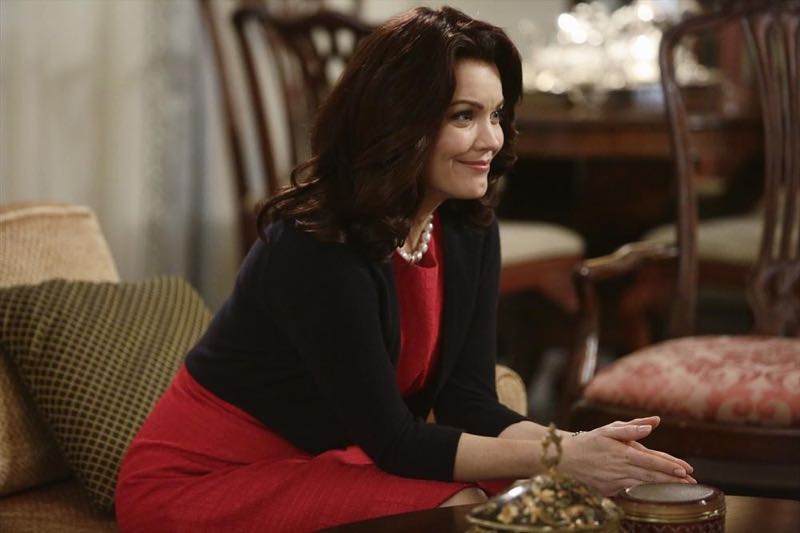
    BELLAMY YOUNG

    Here we have what might once upon a time have been marketed as a Very Special Episode of Scandal. And yes, “The Lawn Chair” is primarily concerned with delivering a message, but I don’t think that it falls into the same traps that so many message episodes can. For instance the message does not come at the expense of the characters. It does come at the expense of the overall series arc, but we’ve just had a long and involved, multi-episode arc—a one-off episode here makes sense, structurally, and why not use it to say something worthwhile?

    That’s the big thing here: “The Lawn Chair” is saying something worthwhile. This is an important episode of television, socially conscious and emotionally gutting; its message is one that Scandal is uniquely suited to deliver in the current television landscape. The fact of Olivia’s blackness has rarely ever been front and center on Scandal. Instead it has been a given, as worth mentioning as Fitz’s whiteness (which is to say, basically unmentioned). But thrown into a situation like the one in this episode, Olivia’s race suddenly becomes the most important thing about her. She might be a black lady (as we were so frequently reminded two episodes ago), but she’s so entrenched in the establishment that she might as well not be, as activist Marcus reminds her here. And so “The Lawn Chair” is more than a moment on the soapbox for Shonda Rhimes (though it is that, and that’s fine); it is a test of character for Olivia Pope unlike any she’s been through before.

    Olivia begins the episode with a new client, who just so happens to be the D.C. Metro police department. They’re in need of Olivia’s services because one of their officers has shot a black teenager dead, in self-defense of course, and they need to control the optics, given the alarming frequency of such incidents across the country. It’s an unsettlingly familiar notion, and it puts Olivia, one would think, into a difficult position. The moment where, mid-way through the episode, she abandons her client and joins the growing group of protestors just outside the crime scene is a moment in which Olivia validates her identity as a black woman, and values it above her identity as Washington’s fixer-in-chief. Good for her.

    Even the structure and craft of “The Lawn Chair” feels just slightly different from previous episodes, because the case of the week here is so intensely personal not just for Olivia, but (one hopes) for the viewers at home. It’s the kind of “ripped from the headlines” story one might find on Law & Order, but it’s not so by-the-numbers formulaic as those episodes tend to be (at least, not at first). At the end of the day, this is a fantasy situation, taking a too-real moment from our world and filtering it through Scandal’s distinctive worldview. But it’s also a call to action. This is an important episode of television. It’s a necessary thing for people who watch ABC on Thursdays at 9 to see, especially if those people have already welcomed Olivia Pope and Annalise Keating into their homes but still don’t “get the big deal” with Ferguson and Trayvon Martin and Tamir Rice and Eric Garner and the nameless, faceless others.

    Even in Scandal’s fantasy, there is no clean solution here, no simple answer. “The Lawn Chair” presents the issue as morally complex; even if the officer who shot Brandon does turn out to be just a vile racist, his boss is not, and most of the police on the force are not. He is an exception, not the rule, and one we need to work together to weed out. On the one hand I wish the episode erred more on the side of moral complexity—the scene where the offending officer explains his thought process, in which he shot an unarmed black boy because the boy was “disrespecting him”, and then proceeded to cover up his crime and frame a dead black boy for attempted assault, is an over-the-top, cartoonishly racist screed. But fuck it. Read any comment on any news story. Hell, maybe read any comment on any review of this particular episode of Scandal. Perhaps a racist screed isn’t so cartoonish.

    There is no happy ending for this episode, which ends still with a shot of Brandon dead and being zipped into a body bag. His murderer is behind bars, but murder is not among the charges. His father is still left alone. But it’s a happier ending than we are afforded in our America, where the murderers of black boys walk free and their crimes go unpunished and even our black president is not permitted to embrace the grieving fathers and mothers.

    I wish that an episode of Scandal could fix our world. It won’t. But it’s one hell of an important start.

    Stray Observations:

    • The episode is ungraded, but suffice to say that I found it to be an incredibly strong, potent episode of television in the Norman Lear tradition.
    • Throughout the episode is a B-plot of Fitz trying to navigate the situation but being unable to say what he really wants to due to his office. This gives way to the search for a new vice president, but since he’s “promised” the next presidency to Mellie, the goal is to find someone totally unelectable. So he and Mellie scheme together, which is a fun new dynamic for them, and they land on none other than Artemis! This story is a minor part of the episode, and there to provide levity even as it connects back to the A-story time and again—I’m just not sure how well the juxtaposition really works, and it may have best been left until next week.
    • I will never not be immediately distracted by the presence of Perd Hapley on this show.
  • Shameless Review: “Tell Me You Fucking Need Me” (5×07)

    Shameless Review: “Tell Me You Fucking Need Me” (5×07)

    tell me you fucking need me shameless

    After a much needed kick in the pants, it’s nice to see Shameless mostly keeping up the momentum. “Tell Me You Fucking Need Me” is perhaps more interesting in concept than it ultimately is in execution, but the concept is so strong, and goes so far in uniting the several disparate elements of the season to date, that it’s sufficient to make a for a satisfying episode.

    Obviously the episode is named for Sammie’s plea to Frank, right after she shoots him in the arm in the middle of the Gallagher living room and starts literally pouring salt in his wounds. This is quite the scene, to put it mildly. On the one hand it is outrageous in the way that Frank stories so often are, but on the other it taps into the unbridled, unabashedly crazy pathos that also often runs beneath the surface of the show. Sammie’s assault on Frank comes after a particularly galling speech in which Frank admonishes Lip on the nature of adulthood and responsibility, which nicely sets up the audience for wanting to see Sammie put a bullet in her dad. Her place on the show has been somewhat extraneous for a while now, but with this latest, absurd development, she brings into relief many of the other conflicts in the show, too. All of the other Gallaghers have moved away from Frank, emotionally speaking, but the same basic needs continue to drive them in their new relationships.

    “Tell me you fucking need me.” Who has been more driven by the need to be needed than Fiona? Until very recently she was the lynchpin of the Gallagher clan, the only thing keeping them together, but now she’s rarely even home, and Sammie has basically usurped her role. Subsequently Fiona is floundering a little bit. To her credit she immediately comes clean with Gus, and they give it an honest attempt at mature discussion. Sure, instead Gus punches Jimmy in the face, but it turns out Jimmy deserved it. The episode ends with Fiona rejecting Jimmy, and, presumably, deciding she’ll finally make it work with Gus in a real way. Has she realized that Gus needs her? Does it feel good for her to need someone else, for once in her life? These are the questions that are worth investigating; they’re the questions that made this latest (and hopefully last) go-around with Jimmy worthwhile.

    “Tell me you fucking need me.” Mickey fucking needs Ian, and he needs Ian to acknowledge that need, and reciprocate it. But Ian is in no shape to verbalize any of that right now, and that inability is crushing Mickey. The scene where Mickey and Fiona visit him is heartbreaking. It’s expertly shot, too, with the camera work mimicking Ian’s utter lack of focus, zipping around the room, zooming on the background, barely registering Fiona and Mickey. It ends with Ian announcing that he’s tired and leaving them, mere minutes after greeting them.

    Sometimes need can be alienating, until we acknowledge it and begin to let it go. Lip has spent this season trying to rid himself of his need for his Gallagher identity, his need to be seen as a specific person, a hood rat made good rather than just a normal college kid with normal problems. He makes a major step in that direction today, after the Gallagher clan’s inability to even forward a simple piece of mail jeopardizes his entire college career, in a deceptively simple way—he opens a P.O. box. Lip is his own man, with his own (almost an) address.

    “Tell me you fucking need me.” Veronica needs Kevin, doesn’t she? But she needs him in a way that she can’t vocalize, because, I think, deep down, she knows that it makes her a shitty person. She can’t deal with the fact that Kevin has prioritized her children over her, without acknowledging that it means she hasn’t prioritized her children over herself. It’s selfish, full stop. I’m still fascinated by the idea of this marriage dynamic, but I think the story has started to fail in the execution. How far can this feud really go? Does V really have no attachment at all to her children? Was she so uninterested in starting a family in the past, and we in the audience just didn’t notice? The obvious answer is no, and I think the show fully intends the answer to be no. But with that being the case, the huge extent to which their fight ahs consumed their relationship becomes pretty unreasonable as far as the narrative is concerned. Svetlana’s introduction to this whole mess exacerbates the issue—if Kevin will accept a blowjob from her, why not just fuck V in the first place? The idea is great, but it’s time to start bringing this story back around to a conclusion.

    More than anything, “Tell Me You Fucking Need Me” slows down the pace a bit after last week’s breakneck caper, and it’s mostly to the show’s credit. I love these deeper dives into the character’s needs, the emotions that drive them and what they need from themselves and from each other. This is a solid character piece, with some questionable plotting but raising questions so engaging that it hardly matters.

    Stray Observations:

    • OF COURSE Chuckie has explosive diarrhea in the mornings. At any rate, Chuckie and Carl attending school together deserves a spin-off. Chuckie is the best visual gag Shameless ever devised, and he gets some choice dialogue this week too: “I painted this! And no one made fun of me! And Uncle Carl made me his slave!”
    • “I got you nunchucks and condoms.” “I know, I got one on right now.”
    • V and Kevin’s babies are fucking adorable.
    • These scenes at the psych ward are ROUGH. Ian is completely out of it—why do we treat mental health patients like they’re in prison? The parallels that Shameless is drawing can’t be coincidental.
    • I will never tire of hearing Mickey self-identify as Ian’s boyfriend.
    • Debbie gets a boyfriend! This story has been slight, but the scene where he kisses her is super cute anyway.
  • The Walking Dead Review: “Remember” (5×12)

    The Walking Dead Review: “Remember” (5×12)

    the walking dead remember

    It’s a welcoming party at Alexandria for Rick and company. Some suburban style bliss awaits them. Or is it? In an episode that is light on action and big on talking, “The Walking Dead” asks its harried group if this idyllic town is too good to be true.

    The smartest part of the episode is the claustrophobic manner they present Alexandria. Unlike the massive expanses of Woodbury or the prison, the rusted steel walls of this community are always in view. The space is secure, but its small size is a constant presence. When the gate closes behind the band of survivors, they appear like caged animals.

    Attempting to welcome the group and manager their doubts is former congresswoman, Deanna Monroe (Tovah Feldshuh). The actress balances both warmth and sternness as the leader of the town.  Her rules for permanent residency include turning over all weapons and sitting for a videotaped interview (yes they have electricity and running water here!).

    Director Greg Nicotero utilizes Deanna’s interviews as a recurring framing device, displaying how each member of the group reacts to their new abode. Some survivors are honest about their experiences. Carl reveals how he killed his mother. Rick warns Deanna that she shouldn’t just let anyone in, and discusses being a sheriff. Carol on the other hand puts on the façade of a happy housewife, completely underplaying her role as the group’s resident Terminator. Watching actress Melissa McBride wax poetically about missing “that man of hers” Ed (who enjoyed beating her to a pulp) as she beams ear to ear is completely unnerving. Daryl displays a different approach to keeping his guard up. It mostly includes sulking at a distance and brooding, which frankly, is getting super old super fast.

    “Becoming soft” and letting one’s guard down became the overarching themes of the week. Deanna reveals that the Alexandria survivors discovered the safe zone early after the outbreak. Most residents have spent the majority of the apocalypse safe from the dangers lurking beyond their borders. Many of Rick’s crew are hesitant to settle down in the same manner. In fact Deanna appears to recognize that her community doesn’t have what it takes to withstand conflict with an outside group. She wants muscle. She wants survivors. Carl points out “I don’t want us to get weak too”.

    The Alexandrians’ short comings in the world beyond their walls are most evident when Glenn, Tara, and Noah accompany Deanna’s son Aidan on a scouting mission. In just one episode Aidan has rocketed up to first place on my “Please-Feed-This-Character-to-a-Zombie-Now” list. Instead of killing a walker that killed his friends, he chained it up to a tree. Because reasons. It escapes and almost takes a bit out of Tara before Glenn puts a knife through its head.

    This leads to a bizarre conflict (I guess you don’t just kill attacking undead in Alexandria?) where Aidan puffs out his chest and confronts Glenn about who is in charge. When the cocky pretty boy lunges at Glenn, he ducks and knocks Aidan to the ground with a single punch. Even the group members on the lower end of the badass spectrum are scrappy and not to be messed with. #TeamGlenn #Aidanisatool

    The show of strength, combined with Rick’s subsequent mediation prompts Deanna to officially establish them as residents. Rick is made Constable (along with Michonne) so he can take up the mantle of who he used to be. Unlike our survivors, who you were before the outbreak is important to Deanna. It may be too early to tell, but our experience on the road has me thinking this belief could be her undoing.

    Which reminds me, I’ve almost forgot the best part of the episode: Clean shaven Rick. Andrew Lincoln’s beard has basically become another character on the show. Watching him shave that man off and suit up in a sheriff uniform is powerful. He almost doesn’t recognize himself, and his group doesn’t either.

    There are other examples of Rick assimilating back into a civilized world (aligning his watch when Deanna announces the time was a nice touch). But is he really going to breath easy and relax? Despite being given two houses, Rick’s group sleeps together in the same room on the first night. Our sheriff stands on his porch with fellow doubters Carol and Daryl wondering what happens if they have mistrusted Deanna and Aaron, and if their new neighbors are too weak to survive. “If they can’t make it, then we’ll just take this place” Rick utters. It seems like the attitude of other ruthless leaders the group has encountered. But, in the world of roaming dead, there’s a fine line between hero and villain.

    Other Thoughts:

    • Rick’s group behaves a bit like PTSD victims, ignoring the comforts of the homes and sleeping on floors all together. It sort of reminded me of the scene in “Cast Away” where Tom Hanks finds himself unable to sleep in a bed after being rescued. It definitely hit home the theme of “family” though.
    • Both Rick and Carl find potential love interests. Jessie (AHS’s Alexandra Breckinridge) is married, but shares awkward sexual tension with him when Rick knocks over her art sculpture. Carl seems to fall for the quiet moody girl Enid.
    • Did anyone else notice the comic book Carl picks up is titled “Wolf Fight”? Is this an easter egg referencing the “wolves” who attacked Noah’s home? The comic belonged to Enid, who was seen snooping outside the walls several time. Could Nicotero be cleverly foreshadowing that she is a spy for sinister forces beyond the walls of Alexandria?
    • Carl had a heartbreaking moment when the other teenagers asked him what he wanted to do, videogames or play pool? Tears start to well up in his eyes and he has no idea how to respond to something that would have seemed so trivial and ridiculous only yesterday. A needed reminder that he hasn’t been able to enjoy the lack of responsibility usually given to children.
    • Andrew Lincoln looks great shaved…but did he really need to shave his chest too? Sigh.
    • The walker fight with Rick and Carl beyond the wall seemed extraneous. The writers should trust their characters enough to know they don’t necessarily need a big battle. Though seeing the glimmer in the father and son pair as walkers approached worked well, they were keeping themselves from being weak. It also raises the question: who stole Rick’s gun from the blender hiding space? (I’m looking at you Enid).
    • Walker Kill of the Week: Not particularly gruesome this week. But I loved Rick’s whispered “Sasha” command, and her resulting spin-aim-headshot move. It immediately set the group apart from the Alexandria residents.
  • The Walking Dead review: “The Distance” (5×11)

    The Walking Dead review: “The Distance” (5×11)

    the walking dead the distance

    Fear and doubt surrounded our struggling group of Survivors this week.  When Maggie and Sasha bring the new “friend” Aaron into the barn at gunpoint, Rick is offered up his most important decision ever for the group. “I have good news” says Aaron. A safe community, with houses and reinforced steel walls awaits them. For the first time in this apocalyptic wasteland, Rick is brought face to face with the chance to give those he cares about a safe life. Hope walks right up to his door.

    And Rick punches that hope in the face. The description and photos of the Alexandria Safe Zone do nothing for Rick. Trust in strangers after dealing with the likes of the Governor is at an all time low. “What would it take!” Aaron inquires after recovering from the right hook. Rick later replies, “I’m not sure if anything could convince me to go in there”. The episode charts the ways in which Rick has reverted back to what Michonne used to be.  A crazed wanderer of the world, cut off, un-trusting and isolated. Michonne by contrast, has emerged as the more level headed thinker of the group. I found myself questioning if Rick was still a suitable leader, and if perhaps he should forfeit the title to the samurai wielding badass.

    Danai Gurira and Andrew Lincoln are excellent in their scenes when the two fiery personalities butt heads. Michonne has pined for a new home for a while now, and can see members of the group fading into her past lifestyle. When Glenn ponders why Aaron would want “people like us”, she puts a positive spin on the group’s past brutality. “People like us saved a crazy lady with a sword. He saw that”.

    The unfortunate side effect of Michonne’s hopeful, pragmatic attitude is that Rick comes off like an stubborn child in several instances. After a scouting party verifies Aaron’s claims of vehicles nearby, they bring back a stock of needed food and supplies. “These are ours now!” the fearless leader screams at Aaron. Uh yeah Rick, you have the dude tied to pole. I think he gets it.

    Rick’s trust issues actually lead the group into a near fatal situation. He fails to heed Aaron’s advice on the best route to take to Alexandria. Rick insists on driving through an alternate highway, one not yet cleared of zombies. And for reasons that can only be explained as “because the director wanted creepy looking cinematography”, they make the drive at night.

    If you always wondered, as I did, how a car would fare if plowing through a horde of the undead; the answer is: not well. Dismembered walker limbs and blood render the engine inoperable. The group abandons the car and flees into the woods. I was thrilled to see “The Walking Dead” tread into genuinely frightening territory in this sequence. Not an easy feat when zombies are a regular occurrence. Walkers are only illuminated by gunfire, so we get just glimpses as to the overwhelming numbers swarming around the group. A clever lighting trick that heightened tension. Glenn also makes a pivotal choice to save the still tied-up Aaron from being walker food, showing that his humanity is still intact.

    The most powerful moment came at the very end, and it made all of Rick’s stubborn decisions worth sitting through. After previously asking Michonne “What did you hear outside of Woodbury?”, she replies”Nothing”. “Outside of Terminus?”. “Nothing”. No matter how good a situation seems, danger has always lurked underneath. But, in a tight shot of Andrew Lincoln’s eyes as the car roles up to Alexandria, the sound of children playing rings gently through the air. His face in one moment begins to melt, and we see a Rick in a state he hasn’t been in since perhaps season one. He hears hope, the sounds of life. And finally we seem him let his guard down. My god Andrew Lincoln is a smart actor.

    As the group prepares to enter the Alexandria Safe Zone, Carol tells Rick “even though you were wrong, you’re still right”. I’m interested to see if Rick can function in an organized society anymore. Will he have it in him to give up the life on the road and relax? We will have to wait until next week to see if Rick’s fears were warranted.

    Final Thoughts

    • Ross Marquand brings a welcome dose of humor as Aaron. I do wonder how he and boyfriend Eric wound up as the recruiters, and how many times he’s had violent dealings with survivors. I mean, “recruiter” has to be the worst job in Alexandria. They must have lost some lottery.
    • Speaking of his boyfriend, Eric is introduced with a broken ankle…which is not a good sign. Especially considering any relationship outside of Maggie and Glenn often results in death.
    • This episode often came across as a live action version of TellTale’s “The Walking Dead: The Game” (If you haven’t played this, download it immediately). Rick seemed to be playing a choose your own adventure story. Feed Judith Aaron’s applesauce? Have Aaron test it first to make sure its not poisoned? Make baby food yourself by smashing nuts? The weight and danger behind each decision was palpable.
    • There was a wonderful shared moment between Rosita and Abraham when DC and the Washington monument come into view. Their relationship has been strained since Eugene’s revelation, and it was sweet to include a mini-arc for them.
    • Walker Kill of the Week: When Rick’s gun runs out of bullets during the night fight, he reaches for Aaron’s flare gun and delivers a head shot that lights up a zombie skull like a Jack O’lantern. Brilliant.
  • Shameless Review: “Crazy Love” (5×06)

    Shameless Review: “Crazy Love” (5×06)

    shameless crazy love

    Better late than never, right? For viewers like myself who were growing restless with Shameless’s fifth season so far, “Crazy Love” is a breath of fresh air. Not only is this handily the best episode of the season, it also sits comfortably among the very best episodes of the series to date. The process of setting up the various plot bombs that go off in this episode has been scattershot and tedious to say the least, but the payoff here is so good that it’s hard to hold a grudge.

    Ian takes center stage this week, as his psychotic break throws most of the rest of the cast into crisis and imbues the episode with a crucial sense of purpose and momentum. It’s probably no coincidence that an episode that skews dramatic is more favorable to me, but man, what I wouldn’t give for Shameless to be consistently on this level. As it stands, this episode is packed with emotional gut punches, and is just astounding on a scene-by-scene basis.

    How good is “Crazy Love”? I’m even amenable to Jimmy/Steve, that’s how good. As annoyed as I’ve been by this character’s continued presence on the show—and even as Fiona quite deservedly beat the shit out of him, I was still rankled by it—his reappearance ultimately serves to force Fiona to come to terms with several of the more complicated aspects of her life, and the resulting conflicts and scenes really are tremendous.

    Emmy Rossum has been wanting for a truly great showcase this year, and “Crazy Love” gives it to her in spades. Her confusion and indecision with regard to Jimmy/Steve belies a fragility to the character that has been on the backburner recently. This is a side of Fiona that she does not let others, or the audience, often see, and so this is yet another way in which Jimmy/Steve brings out the worst in her. And so the pair of sex scenes toward the episode’s end function as two sides of the same coin—or, really, as the same side of the coin. Rossum’s performance as Fiona begins crying at Jimmy to stop fucking her is stunning in its tragic beauty, and her silent sex with Gus is somehow even more affecting. Just really great stuff in the Fiona department this week, as finally her story is firing on all cylinders.

    Speaking of firing on all cylinders: the writing for Ian this year hasn’t done a truly great story justice at all times, but Cameron Monaghan brings it in this episode, and the writing rises to the occasion as well. His trip to Florida with baby Yevgeny has the feel of a darkly comic road trip, but pulls of a pretty amazing narrative feat, becoming more desperately sad with each new incident. Ian’s pit stop at a convenience store is particularly heartbreaking (though one wonders why no one thinks they should call the police at this juncture), and his final freakout at the police is bad news through and through.

    But the real hero of this story is Mickey Milkovich. Noel Fischer has spend the past several seasons earning his promotion to series regular over and over again, and I’m not sure that he has ever made a stronger case than he does in “Crazy Love.” His panicked reaction to Ian’s initial departure, his hesitant acquiescence to bringing the rest of the Gallagher clan in for help, and his final heartbreaking goodbye to Ian as he checks into a mental health facility show so many shades to this wonderfully complex character, and Fischer is constantly revealing a new facet, a new layer, a heretofore unsuspected moment of depth. He carries more than his share of the emotional weight of the episode—I can’t compliment this performance enough.

    If I had to quibble with “Crazy Love,” it would be on two scores. First, I still am not feeling it with Carl this season, and I worry that a story that has been played for laughs thus far (questionably so) will take a sharp dramatic turn that the show is not equipped to handle.

    Second, I really wish the show would have the balls to kill off Frank. His boy is thoroughly rejecting his liver, because he is too irresponsible to take his medicine, and because he is willfully poisoning his body, because he is a selfish prick of a man who, frankly, deserves to die. Instead he gets a third chance at life, and will re-learn the same lessons he has time and again, and presumably will thumb his nose at god at the end of it all anyway. If that’s the story we’re telling, fine, but there’s no value in telling it over and over again the way Shameless has been so determined to.

    Those are quibbles, though, and so much of “Crazy Love” is too arresting to worry much about them. Even the scenes with Frank have a haunting beauty to them. The episode is a visual home run too, with some beautiful shots of the Florida landscape, and a great tracking shot of Ian checking in to the facility that echoes Fiona’s arrival at prison in “Iron City.” In many ways “Crazy Love” feels like the true beginning of the season, and it’s a welcome one indeed.

    Stray Observations:

    • Lip has been such a non-entity this season. I really would like for that to change. But hey, he’s an RA now, so there’s that.
    • Kevin’s scene in the park is played for laughs, but is also a pretty clever riff on his conflict with Veronica. In so many stories their roles would be reverse, and V would complain that Kev was insufficiently devoted to the kids.
    • “Shouldn’t somebody call the police?” Suddenly Jimmy/Steve is reasonable. Of course the Gallaghers all shout “NO!” in unison.
    • Debbie’s first day of high school goes about as expected, as suddenly everyone wants to fight her. This story is on slow burn, but again, I’m so happy for an age appropriate love interest here that I’m fine with things slowing down for poor Debs.
  • The Walking Dead Review: “Them” (5×10)

    The Walking Dead Review: “Them” (5×10)

    the walking dead them

    After the Terrence Malick style fever dream of the midseason premiere it was inevitable that The Walking Dead would simmer down this week. The entire group is featured, but after two traumatic deaths the episode focuses on how Maggie, Sasha, and Daryl deal with their grief.

    Maggie cries alone in the woods, staring blankly at a walker caught in some tree branches. Sasha lashes out at her fellow survivors, resorting to anger in her mourning. A sulking Daryl chooses to become distant and cut off. Normally I am all for the introspective, slower paced episodes the series frequently thrives on. It allows for nuanced character development and gives the actors time to shine. But this episode covers overly familiar territory for most of its run time.

    This episode does highlight an oft forgotten element of supplies, and how fast they are dwindling. In the beginning of the zombie apocalypse, food and ammo were easy to come by. Well over a year in, the world is picked apart. The group is low on food and water and frequent scouting trips for rivers and animals to eat prove fruitless. It doesn’t make their sixty mile trek down a road towards Washington very easy. The survivors closest to the departed Beth and Tyreese begin to wonder if they have the strength left to live in the world. “How long have we got?” Maggie asks, referring not to their destination, but time left to live.

    An early establishing shot clearly defines the group in their current predicament. They walk down the road, haggard and dehydrated, as a pack of walkers stumble behind them in the distance. Death is stalking them, but none have the energy to turn back and clear out the horde. Instead they amble forward as if zombies themselves.

    This is our survivors at their lowest. This is a group who consider themselves lucky that a pack of feral dogs emerge from the woods for them to kill. Lucky, that they get to eat dog while the camera pans to Fido’s bloody collar next to their fire. It is scenes like this that skirt to close to hammering home points already made. Carol tells Daryl “You’re not dead”. Maybe Daryl hasn’t felt this way before but I think we have already covered this emotional beat multiple times with multiple characters over the past few seasons. Michonne is right, they need to find a home quick.

    The “survivors-are-walkers” theme comes to a head as the group takes shelter from a storm in a small barn. Rick recounts asking his grandfather if the Nazi’s ever tried to kill him during the war. His grandfather responded cryptically that he was dead the moment he entered enemy territory, but “after years of pretending he was dead, he finally made it out alive”.  Then Rick does the unthinkable and says the name of the show IN the show: “We tell ourselves we are the walking dead”.

    Andrew Lincoln sells the moment surprisingly well (and I prefer this title drop compared to the way it occurred in the comics). Its actually the most resonant aspect of the episode, and makes the earlier shot of the trailing horde of walkers more symbolic and immediate.

    Daryl is having none of Rick’s assessment on how to to stay alive. And not content with just one title drop, he firmly declares “we ain’t Them”, before moving to the opposite side of the barn for sleeping…and more sulking. This leads into the climactic moment of the episode where an overwhelming number of zombies sneak up on the barn while everyone is asleep. By the dozens, the walkers pour against a weak wooden door attempting to force themselves in. The entire group awakens and presses themselves against the barn door, a very obvious metaphor for keeping “Them” out.

    The sequence is thrillingly shot with a myriad of quick cuts, and it genuinely appears like this could be the end. We don’t see the aftermath until the following morning. The horrors of the night jarringly jump to a pleasant morning with everyone safe and sound (was anyone else confused and thought this was a dream sequence?). Maggie and Sasha step out of the barn to reveal the massive storm felled the entire walker horde with many downed trees. They take in this blessing in disguise and bask in the morning sunrise. Faith is restored now you see. They’ve learned to live again. Are you getting all the symbolism? Are you? In case you aren’t, a broken music box found earlier in the episode suddenly starts playing music in the last frame. Hey writers: we get it.

    Other Thoughts:

    • The mysterious “Friend” introduced in the last scene is Aaron, the series’ first gay male. Comic fans know he will thankfully take the group to their next safe-haven, which is bound to change up the pacing and story.
    • Did anyone notice the angry Sasha slash Abraham’s arm with a bloody knife in the ravine scene? That’s walker blood, girl! Be careful.
    • How on Earth did lil baby Judith survive the long trek with little food or water? Per TV rules, she basically doesn’t cry the entire episode. I sense a time jump at season’s end to grow her up quicker.
    • I thought this episode did a great job at pairing up characters who rarely get scenes with each other. The Michonne vs. Sasha dynamic was great to watch, and the actresses play well off each other.
    • Walker Kill of the Week: This one goes to the storm for the several tree-limb-impaled zombies in that epic wide shot. Good job storm.
  • Shameless Review: “Rites of Passage” (5×05)

    Shameless Review: “Rites of Passage” (5×05)

    shameless rites of passage

    I have to admit that as the season wears on, it is becoming increasingly difficult for me to write about Shameless. It’s still a bridge too far to call the show weak at this stage—in fact I think it’s attempting a number of really interesting things—but there is a spark that, for me at least, has undeniably gone out. Part of that is just simple aging. Shameless is five years old now, and what was one fresh and edgy is now old hat, especially for a series so very reliant on envelope pushing. But part of it is also the show’s refusal to engage fully with its most viable aspects, instead choosing to hold on to things that don’t work anymore simply because it feels like it should.

    I’m obviously talking about two things here primarily, and let’s get the one out of the way right now—I do not care about Jimmy/Steve. Not one bit. The character was always a lukewarm love interest for Fiona, useful insofar as he played straight man to various Gallagher antics. But as we got further acclimated to the Gallagher clan and began to see them not as a motley crew of South Side weirdos but as actual people with actual personalities, that narrative usefulness ran out. That the writers chose to replace it with the batshit incongruous insanity of Jimmy/Steve’s subsequent plots remains, to me, their most baffling decision. When he’d finally seemingly been killed off, it was a dumb but merciful end for a character who had gone way, way off the rails. His return this season (we are, after all, still pretending that the last scene of last season does not exist) shows no signs of being any less contrived, needlessly complicated, and ultimately unnecessary. The season needs a kick in the pants, but this is not what I had in mind by a long shot.

    Fortunately Jimmy/Steve is but a small part of the episode. Unfortunately, our other vestigial character, fucking Frank, is once again front and center for entirely too much time. On the one hand I get it—William H. Macy is a hugely entertaining performer who is capable of some legitimately great stuff in this role. God knows Frank would be completely insufferable in less capable hands. But with the rest of the Gallaghers having shunned him and Sheila having run off, Frank has little to no place in the world of the show, and the haphazard employment of the character becomes more problematic with each episode. I get that Frank’s time with his organ donor’s parents this episode is black comedy, but I’m just not in on the joke here, I guess—or more accurately, there is just one joke here, being beaten senseless into the ground. The father is uncomfortably weird, and doesn’t garner the laughs that the script so clearly expects. Ditto the turn where Frank sleeps with the mother. The whole thing perpetuates the tonal whiplash that is so problematic.

    Frank’s greatest sin, though, is the time he steals from the other, vastly more interesting characters and conflicts. The game of marital chicken that V is playing with Kevin is tremendously stupid, but is a thoroughly fascinating dynamic to explore. Why, then, is it relegated to C-plot status? It’s by far the most compelling aspect of the episode, and of the season, and it’s past time the show starts giving these characters their dramatic due. The same is true of both Ian and Lip, who once were so vital to the show, and who now both feel like afterthoughts to me. Ian’s increasingly wild mood swings have been jotted off carelessly in the margins of the show, making his decision to run off with Mickey’s baby at the end of this episode seem jarring more in a bad way than a good way. The way this story has reversed the emotional roles of Ian and Mickey should be paying way more dividends than it currently is, and it’s because the script is dealing with it in the bare minimum number of scenes possible.

    Lip’s story is also playing out in the margins, and for no discernible reason. The fantastic shot of him standing, alone and slightly off center, in the middle of the empty Gallagher house is more compelling in its brevity and silence than anything that Frank has to offer. The kid has a serious problem—there’s no other way to explain how he ends up with an AK in his hands and running from the cops. Why can’t we delve further into the internal conflict here? There’s an amazing scene between him and Fiona early on in the episode, but then the characters go their separate ways. These two have a wonderful dynamic—take advantage of it!

    The biggest sign of trouble, I think, is that I can get this far in the review and only now mention Fiona. She’s mostly basking in the afterglow of her shotgun wedding here, until her co-worker Jackie ODs on heroin right before the court hearing to retain custody of her daughter. Jackie and Sam are both dark mirrors Fiona can hold up to herself. Maybe her current brand of chaos and destruction is of the meet-cute, let’s get married and damn the haters variety, but it’s really just another side of the same coin, and deep down she knows that. That subtext runs throughout these scenes, but it might be too subtextual.

    Shameless is a show with many, many strengths, and it’s just a shame (no pun) to see them squandered. This Sunday will bring us to the halfway point; in other words, to the point where it will be too late to say, maybe this all has a point. We need an episode with the laser focus of something like “Iron City,” and it can’t come soon enough.

    Stray Observations:

    • Holy shit Kevin’s playground game is absolutely horrid, and is also the episode’s biggest laugh.
    • Mickey’s type: red head, batshit crazy, packing nine inches. Favorite character right here.
    • Gus meeting Chuckie is fantastic, as is everything to do with Chuckie.
  • Scandal Review: “Where’s the Black Lady?” (4×11)

    Scandal Review: “Where’s the Black Lady?” (4×11)

    scandal Where’s the Black Lady

    Perhaps inevitably, “Where’s the Black Lady?” does not quite reach the fever pitch of last week’s “Run,” though it sure tries like hell to. That said, Scandal packs in some really great scenes this week, and guest director Debbie Allen does some uncommonly great work here, as does Tony Goldwyn in what is one of Fitz’s greatest episodes to date.

    Where the episode unequivocally succeeds is in its many smaller (at least, by Scandal standards) scenes and character moments, which are heightened by Allen’s lovely camera work. It is impossible not to marvel at the magnificent shots of Fitz and Mellie at the residence, tight shots of their tense conversation as Mellie airs their dirty laundry left and right and Fitz fears that their every word is recorded. (It’s equally impossible not to marvel at Goldwyn’s acting here, as Fitz’s silencing of Mellie is equal parts anger with her and desperation to get her to shut up for their own safety; Mellie takes it as the former, the audience as the latter, and either [or both] interpretations are valid.) Ditto Allen’s canny use of flashback, along with some spectacular sound mixing, during Fitz’s meeting Abby, Cyrus and David. In other words this is an exceptionally stylish episode of an already pretty stylish show.

    The plot isn’t shabby either, even if it is a little bit shoe-leathery. That’s owing as much to the episode’s placement in the season as it is to any particular aspect of the script. After the rip-roaring yet withholding premiere, “Where’s the Black Lady?” is a veritable info-dump, obligated to catch us up with the rest of the cast and to give greater context to Olivia’s current plight. It’s fairly thankless work, and the episode tends to do it in a circuitous, repetitive manner. Multiple scenes of Huck torturing Liz, for instance, make the same point they could in half the time. There’s a real sense of padding here, of over-explaining, which is never more apparent than in Andrew Nichols’ scenes with Fitz. The Vice President has seemingly overnight become Dick Dastardly, but his constant explication of his Improbable Plot to Kidnap Olivia Pope, And Thereby Ignite War, doesn’t make the plot any less improbable, or any more engaging.

    We already have the emotional stakes necessary for this story, and while this episode does a stellar job of filling in the blanks on Fitz’s side, deceptively little else of import happens here—we end in much the same place as before, save a war in West Angola, of course. In fact I’m not even sure that “too little happens” is the criticism I’m seeking. Ultimately this feels like half an episode, giving information that is necessary in parallel with “Run,” but that can’t help but feel superfluous a week after the fact.

    I’m nitpicking, though—especially considering how very high octane “Run” was. At the end of the day this is solid episode that does a particularly excellent job of tying the more tedious aspects of the conspiracy plot (i.e. most of them) to tangible character moments and conflicts—Cyrus feels boxed out, but really Fitz is shielding him; Fitz is truly in love with Olivia, and will absolutely ignite war if it means saving her; Mellie learns that truth and continues to assert herself accordingly; and so on. Ridiculous things continue to happen, as they always will in this funhouse mirror version of Washington, but it’s all anchored in the very real drama between these characters, which keeps everything with at least one foot firmly planted in reality, and which helps the stakes really land as a result.

    Plus it’s gorgeous to look at. Can we please keep Debbie Allen?

    Stray Observations:

    • We can officially lay this Helen of Troy metaphor to rest. I’m beginning to think that The Iliad is the only thing Tom has ever read.
    • Further potential Helen of Troy inferences: Fitz and Jake cooperating to save Helen? Surely bound to be a lasting partnership.
    • Though Huck’s scenes are largely plot filler, Guillermo Diaz does a nice job portraying Huck’s singular obsession with protecting/avenging Olivia, and does so in a more measured way than he usually performs the more extreme aspects of Huck’s character. (Which, let’s face it, all aspect’s of Huck’s characters are extreme.)
    • How bizarre was that scene of the Secret Service telling Fitz what’s up? On the one hand it almost crossed the line into silliness, but on the other, it starts the episode on truly shaky, uncertain ground, which is a nice touch.
    • Pretty sure Huck repeats the exact line about breadcrumbs twice in this episode, vis a vis the repetitive nature of same.
    • Mellie’s invocation that she “took care of anything” will surely end well for all involved, yes?
  • The Walking Dead Review: “What Happened and What’s Going On” (5×09)

    The Walking Dead Review: “What Happened and What’s Going On” (5×09)

    the walking dead What Happened and What's Going On

    I was aching for an episode featuring the entire group after the break, and must admit I never really latched onto Tyreese. But by the time his inner news radio reached a fever pitch and he told the ghosts to “turn it off”, I was sold.

    WARNING: This article contains spoilers for those not caught up on “The Walking Dead”

    After a long mid-season hiatus, “The Walking Dead” returned with a beautifully disorienting episode. Its structure and story will likely make it one of the most divisive episodes this season.

    In the aftermath of the brutal showdown at Grady Memorial Hospital, the episode opens on our group of survivors at a makeshift funeral mourning their recent loss. Flashes of sobbing and digging are intercut with shots of the group’s past failed home sites.  New recruit Noah informs Rick that the dearly departed songstress Beth Greene wanted to help him get back to his home, a gated community that was fortified when he last left. With the hope of finding a much needed shelter and extra help, Noah leads Rick, Michonne, Carl, Glenn, and Tyreese to scout the location.

    The group quickly discovers that the entire neighborhood has been long ago invaded by a sinister force, with only walkers roaming the area now. After happening upon the breached location in the fence surrounded by dismembered body parts, Michonne desperately pleads with the group to find a place to settle down. “This is what making it looks like now!” she says, knowing too well the effects of spending too much time out in the elements. (Side note: why doesn’t Danai Gurira have an Emmy nomination for this role yet?) They need to find a safe haven and fast.

    The episode, like much of the season, hammers home the themes of day to day survival. More specifically, what types of people are built to survive in a brutal landscape where death stalks you at every moment. Tyreese is someone perhaps not built to withstand the “kill or be killed” mantra of this new world. In an interesting bit of back-story, we learn his father forced him to listen to news radio, in order to learn about all the atrocities in the world. After being exposed to the evils of war and genocide, Tyreese used the news reports as a way to separate himself from those problems.  But now that he lives in the type of world he always wanted to distance himself from, it has begun to wear him down.

    Perhaps that’s why he didn’t notice the young zombie lurking behind him on the trip to Noah’s house. It just took one moment while Noah lamented his dead mother for the walker to attack. It took just one bite for the gentle giant’s fate to be sealed. What followed Tyreese’s walker bite is a dreamlike framing device unlike anything we have seen over the past five seasons.

    Director Greg Nicotero is at his absolute best in this episode. As fever takes over, and Tyreese begins to hallucinate, the action switches between disorienting top-down camera angles and fuzzy POV shots.  Spirits of the dead flood his vision as Beth, Bob, Lizzie, Mika, Martin, and even the freaking Governor beckon him towards death.

    Now normally, having dead characters reappear is a complete cop out. But this time it works beautifully. Tyreese is able to see a part of himself in each of the characters. The Governor chides him for not understanding the cost of living (“The bill must be paid”), Martin reminds him that he couldn’t kill even when baby Judith’s life was in danger, Lizzie and Mika appeal to the kind father within, and Bob disturbingly recites Tyreese’s line from earlier in the episode: “It went the way it had to, the way it was always going to”. Oh, and Beth sings, obviously.

    Chad Coleman is one of the lucky actors on the show to go out with a bang. He has never been better, and gets a gripping monologue to prove it. He refuses to give up his humanity, even in death. His declaration to his ghostly antagonists that “people like me can’t live” is perhaps the truest moment the character has ever seen on the show.   Perhaps this is where giving Tyreese a big goodbye episode falters.

    The character has never been handled well from a writing standpoint. He is unevenly constructed and his actions throughout the past seasons often contradict themselves. It’s a shell of the fully realized comic character. Had this sudden and unfair death occurred to a more beloved survivor, I would have been reeling. But I think it’s safe to say most viewers realized the writer’s painted themselves into a corner with Tyreese. We knew the big softy’s time was up sooner rather than later.

    Coleman’s performance combined with some beautiful cinematography makes up for the low impact death. Hands down one of the coolest shots in “Walking Dead” history is when the Governor steps into the foreground and projections of the train track to Terminus slide over him. Equally as awesome is when the camera becomes Tyreese’s POV as his friends battle to save him from surrounding walkers. Nicotero also got one final payoff moment when we realize the opening funeral scene was not for Beth but Tyreese. Gut. Punched.

    Overall, this was a great episode that dared to experiment with new forms of storytelling for the series. It did feel a little odd being the mid-season premiere. We still didn’t get to check in with most of the characters after the hospital incident. And at least for me, the death was robbed of impact due to previous mishandling of Tyreese. I really appreciated the artistry, but I hope we return to badass Carol and the rest of the gang next week.

    Closing Observations

    • Thank heavens we have finally left Georgia! This is actually the first episode of the series to take place outside of that state. As the group deliberates heading to DC in search of safe infrastructure, they make a passing mention of Richmond, Virginia. It would be a safe bet that the Alexandria Safe-Zone is the next major location for the survivors.
    • The group passes a sign reading “Wolves not far” and the zombie torsos in the crashed car had “W” carved into their foreheads. Is this foreshadowing a new antagonistic group?
    • There was definitely foreshadowing of a certain feared comic book villain with that close-up of Glenn holding the baseball bat. The barbed wire surrounding Shiltwire Estates could also signify his appearance. He has to come across the barbed wire somewhere right?
    • I really appreciated the fact that Danai Gurira’s monologue was so fierce it attracted nearby walkers.
    • Walker Kill of the Week: Rick just barely manages a headshot on a lady-zombie lunging at Noah. Pieces of rotting flesh and blood fly towards the “Tyreese-cam”. Brilliant.
  • Shameless Review: “A Night to Remem—Wait, What?” (5×04)

    Shameless Review: “A Night to Remem—Wait, What?” (5×04)

    A Night to Remem—Wait, What? shameless

    First and foremost, fuck that title, which is a bitch to type and is not clever in the least.

    With that out of the way, while this week’s episode of Shameless shows sparks of promise in a few key areas, it does not deliver on these within the confines of the episode itself, which is a sluggish, overly cartoonish romp that plays up the show’s weakest aspects while giving short shrift to the things the season is actually doing well—in other words, the opposite of a successful strategy. I’ll freely admit that a big part of my issue is that I am partial to the version of Shameless that skews dramatic, and this season has been resolutely not that. But even with that bias acknowledged, there’s no getting around the way that this season has so far been a mish-mash of ideas. Plots careen together without much thought or reason, jokes don’t land, structures don’t hold up; and this episode is more of the same, at the end of the day.

    The bummer of it all is that much of the character work is pretty solid. For instance this episode returns to an idea that the show began seriously toying with toward the end of the last season—namely, that Fiona and Frank are far more similar than Fiona would ever be comfortable admitting. It’s no stretch to draw a parallel between Fiona’s lost week with Gus, one that ends in an impromptu marriage, with Frank’s lost evening of temporarily rich debauchery. This will always be interesting ground for the show to cover, and in fact I wish it would address the similarities more directly than it does here. Even so, the final shot of Fiona speaks volumes on the issue.

    So it’s a shame that the actual storytelling here is so poorly executed. Fiona’s time spent with Gus is sweet for a scene or so, but it drags on forever, and is just bland, boring and predictable, even up through the marriage itself. Gus just isn’t a fully-fledged character, not even to the extent that someone like Mike was, and certainly not the way Jimmy was before the Steve nonsense. What’s of interest here isn’t what’s happening, but how Fiona and, more especially, the rest of the Gallaghers, will react to it, and that’s all withheld from us, save for, again, that closing shot.

    As for Frank, he spends the episode reenacting The Hangover, which is every bit as grating as it sounds. He receives his insurance payout, only to lose it in a massive binge (of course), and so has to re-trace his steps from one ludicrous situation to the next in order to find it again. It turns out he donated the money to a charity for kids in need of prosthetic limbs, which is actually pretty funny, and the fact that Frank decides this is a mistake and wants the money back further highlights how much of a total monster he is (as though we needed reminding). The fact that he blew up his wife’s house and is ostensibly homeless himself goes unmentioned, as does Sammie, which feels like another narrative misstep to me.

    Meanwhile, Lip takes a break from hauling rocks to visit Amanda, and ends up bonding with her dad over engineering. Credit to the writers—this does not immediately cause Amanda to stop liking him, and in fact it seems like Lip may be growing on her. The story is told in pretty broad strokes, and the dad goes from cartoonishly stand-offish to pot-smoking Cool Dad in an insanely short amount of time, but this is such a great direction for the character, and it’s so satisfying to see Lip with a positive male role model for once, that I ended up buying into it this week anyway. As usual, not enough time was spent here, and I wonder if more scenes would have helped everything feel more three-dimensional than it does as is.

    Meanwhile, Debbie takes up boxing after she gets saved from a girl fight by an improbably handsome young man. Age appropriate love interests are always welcome for Debbie, and while there’s not much to this storyline, it’s also nice to see a lighter touch, given that last week she raped a twenty-year old. (The sentences one gets to write when reviewing Shameless!) As for Carl, he starts selling drugs under a bridge, about which the less said, the better. Black humor is Shameless’s bread and butter, yes, but I had a hard time finding the funny with a lot of this story. One exception: Frank teaching Carl “drug fractions”, and Carl studying flashcards on the subject in the tag, had me laughing out loud.

    Overall this is about on the same level as “The Two Lisas”, raising some good ideas and suggesting a direction for the remainder of the season, but not making any real strides in the direction. The episode is content with broad strokes, but since too many of the notes fall flat (to mix metaphors), the overall effect is diminished. As always, a caveat that an episode down the line may bring all of this into focus, but it seems increasingly more likely that the obvious explanation is the correct one: this is all a mess just because this season of Shameless is kind of a mess.


    Stray Observations:

    • Debbie: “Here’s what went down last week on Shameless.” Carl: “Me, a lot.” I laughed.
    • Veronica and Kevin’s marital issues continue, and I like the show’s brutally honest portrayal of post-partum depression here, even if it has yet to label Veronica’s condition as such.
    • Mickey and Ian have a cute moment involving a dildo (which is not nearly as dirty as it sounds), but man, the show is underutilizing these two so far.