Category: Television

  • Sons of Anarchy Review: “Playing With Monsters” (7×03)

    Sons of Anarchy Review: “Playing With Monsters” (7×03)

    sons of anarchy review

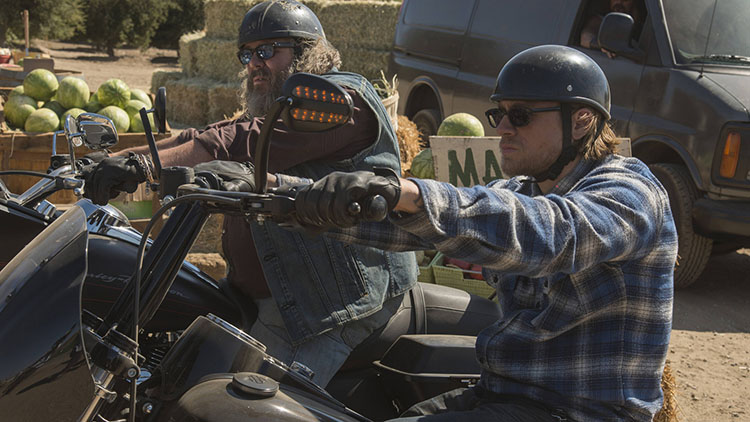
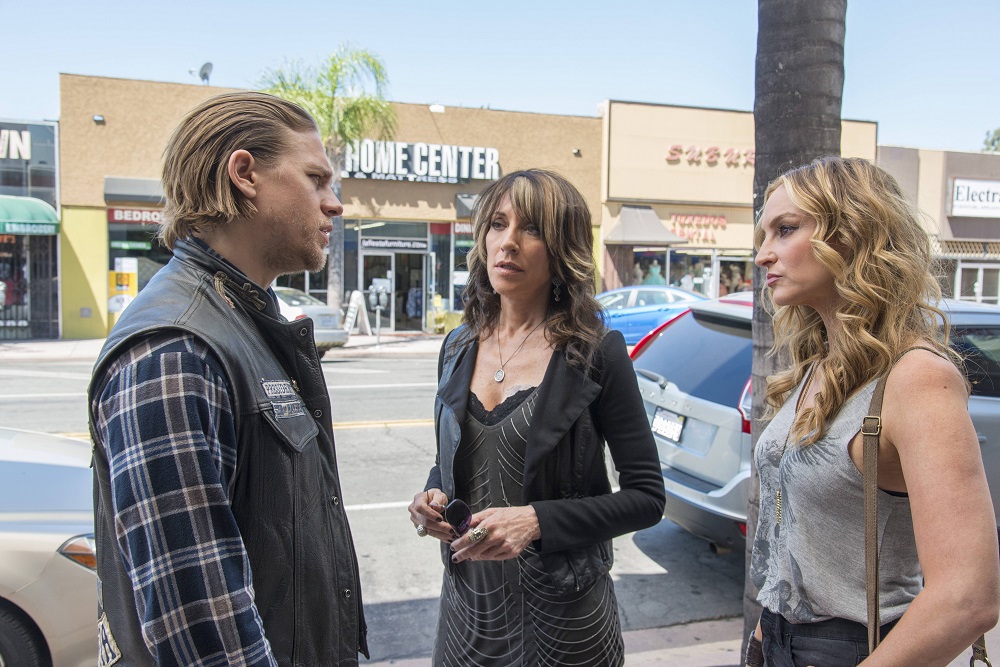
    Nothing much happens this week on Sons of Anarchy, and yet, I can’t help but feel like this is the best episode of the season so far. As things plummet further into darkness, the show gains a surety of narrative that it hasn’t had in a long time. Now that there is no question as to Jax’s villainy and Gemma’s madness, we are back in full-on Hamlet mode. Jax is going to start a war and likely (figuratively) burn Charming to the ground, only to realize that his mother is the monster he’s been seeking. And what’s worse he’ll do it all for Gemma’s sake to begin with.

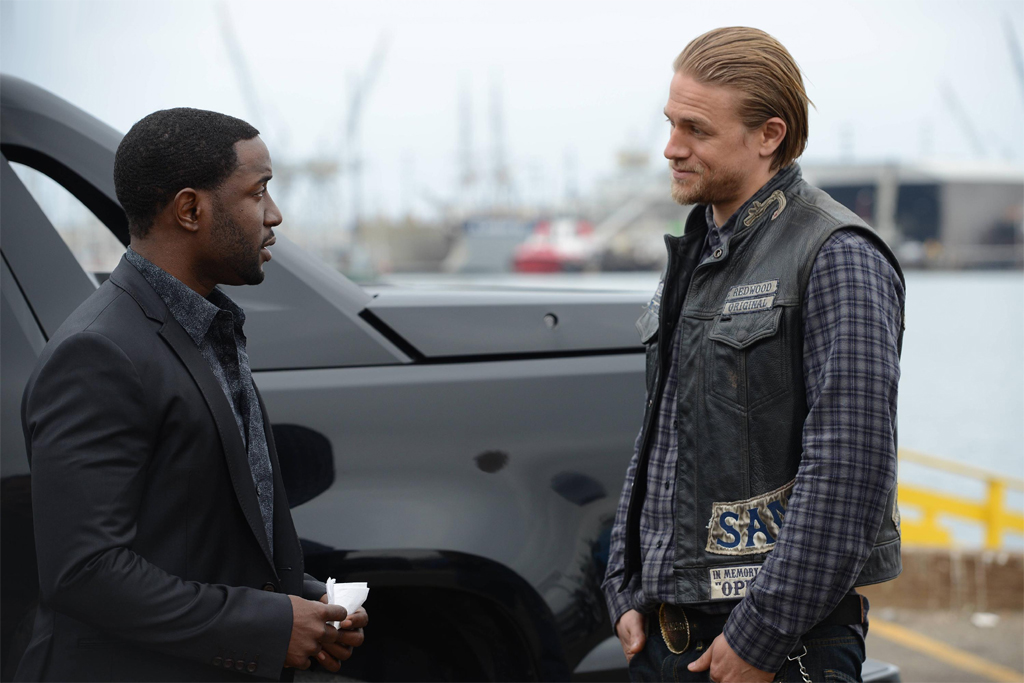
    We are fully in on Jax being a terrible monster, now, and the show makes that statement in a very powerful way, none more so than a neat piece of editing in the middle of the show. Gemma ensures Abel that Jax is a good man, then we cut to Jax immediately after he’s committed yet another cold-blooded murder. Charlie Hunnam answers the phone and says, “Hey, Mom, what’s up?” in this wonderfully flippant way, like he’s a cocky high school kid playing at gangsters. He’s perfectly nonchalant, in a way that suggests not only the extent to which he is cavalier about his actions, but also that he considers it behavior his mother would approve of, and even be proud of. When he answers the phone he’s practically giddy—he’s solving problems the way Gemma told him how. This week’s closing scene it the show’s most toxic portrayal yet of their relationship, but it feels surprisingly vital.

    Even thought he show is just spinning its wheels, this week—Jax continues to enact his revenge, which boils down to “kill them all,” and Juice tries one last time with Chibs before splitting town. The main conflicts are yet to come. But this episode is still a powerhouse, featuring some strong acting, some legitimately good writing, and a tone that embraces the pseudo-Shakespearean tragedy of the plot. In a way these three episodes have been a very long first act, one likely to conclude last week, but since it’s the first act of the last season in the cycle, everything is allowed to feel vital again. Any wheel-spinning here is a legitimate attempt to build tension, and not a desperate grasping of straws for fodder for future seasons.

    It helps, of course, that the attempts to build tension are also successful. The machinations of Jax’s plan concerning the Niners are exciting to watch unfold, and sufficiently dastardly. Yes, we’ve seen this all before, and need no further convincing of the extent of Jax’s villainy. But the show is no longer trying to convince us. There is a gleefulness to Charlie Hunnam’s performance tonight; he makes Jax like a Richard III or a Macbeth, rather than the brooding anti-hero he’s been for too long now.

    Katey Sagal accomplishes the same with Gemma this week. Sagal deserves a lot of credit, because it is her performance above all else that keeps this show afloat. She is digging into Gemma’s arc this year with even more verve and aplomb than usual, and it shows. Gemma has now taken to addressing Tara’s ghost, which on its face is ludicrous, but is so dementedly Shakespearean, and so entrancingly performed by Sagal, that these soliloquies become fascinating illustrations of Gemma’s madness. This kind of stuff is what Sons should be doing more of.

    Juice has his best scenes so far as well. The character is torn between Gemma and Unser, two parental figures in his life, while he loses the third, Chibs, in a heartbreaking scene. Tommy Flanagan hasn’t had as much to do as many others on this show, but he’s always great to watch, and he’s made Chibs such a fully realized character that his cold abandonment of Juice here stings.

    Would it be nice if we’d reached this point a long time ago? Absolutely. And from the previews, it looks like the hammer won’t even begin to fall until next week. The sense that, to an extent, we’re marking time, is unavoidable, and it does linger in this episode still.  But even though this episode retreads so many of the same old Sons twists and motifs, it embraces the usual baggage with such energy that it’s hard not to be pretty happy with it anyway. It’s taken us a while to get to this point, but now that we’re here, the final act proves to have been worth sticking around for after all.

    Stray Observations:

    -Althea Jarry is most reminiscent of Ally Walker’s June Stahl, right down to the corrupt act she pulls to curry favor with Jax and the club. It’s ambiguous at this point how much is an act, but Annabeth Gish is great fun in the role, and Jarry’s flirtatious scene with Chibs was a highlight of the episode.

    – This week in SAMCRO: my DVR cut off the beginning of the episode slightly, and so I was launched immediately into the shooting of the lesbian pornographic masterpiece, Skankenstein. And you know what? That’s hilarious. Point, Sons.


  • Boardwalk Empire Review: “What Jesus Said” (5×03)

    Boardwalk Empire Review: “What Jesus Said” (5×03)

    boardwalk empire what jesus said

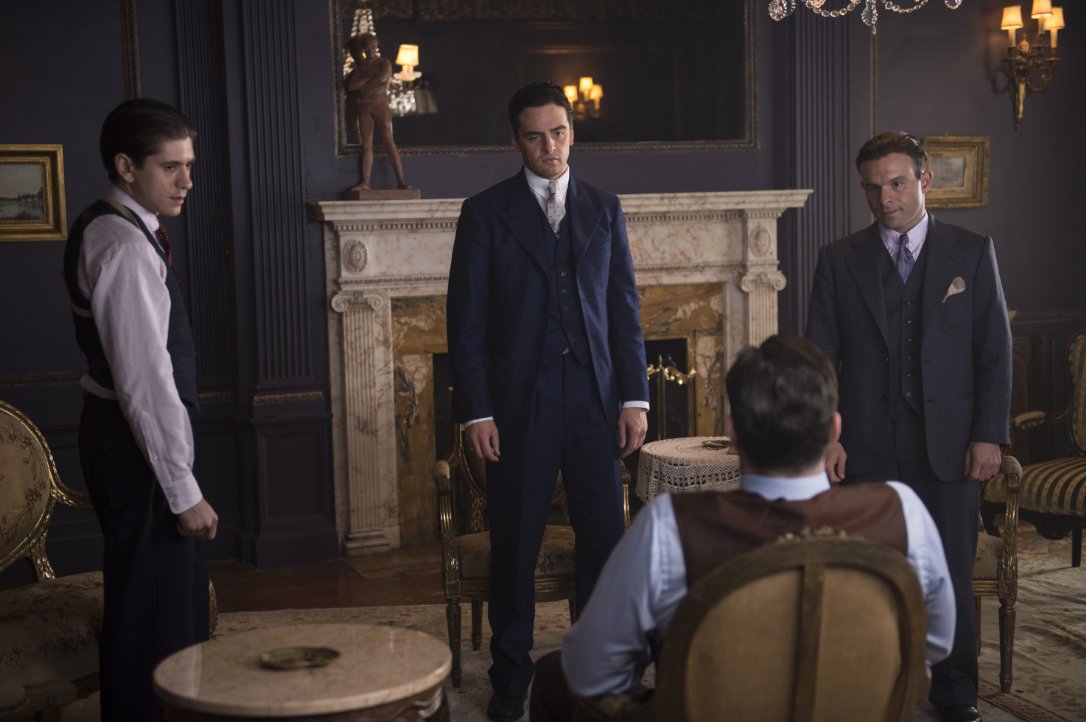
    More than it does anything else, this week’s episode of Boardwalk Empire confirms the show’s storytelling method, remaining entrenched in the series slow (we might instead say “steady”), novelistic approach to telling its story through the accumulation of character-driven scenes, rather than necessarily through developments of the plot. There are plot developments as well, of course—Luciano and Siegel’s murder of several of Doctor Narcisse’s girls this week guarantees a reckoning in the episodes to come, for starters. But, as is always the case with early season episodes, much of what goes on here is place-setting, standing up dominoes that we’ll later have much more fun knocking down.

    You know this already about Boardwalk Empire, and either you’ve bought in or, if you haven’t, you’ve likely stopped watching altogether. So while I wish the show could be a little faster paced, a little lighter on its feet, writing to that effect is fruitless. Instead, the show from week to week rises and falls on the strength of the scenes it chooses to focus on. This week, the focus is on a few key scenes, with some additional characters scattered about for the sake of moving the season along.

    This week, the focus is on Chalky White, and this is good news indeed for the viewer. Chalky and his newfound companion, Milton, break into a house and take the widow and daughter who live there hostage. Milton spied a safe in the home before, and is determined now for its contents. The girl, Fern, and her mother prove pluckier than expected, however, and they stall Milton all day long with lies about where the safe is located, when the man of the house will arrive home, and so forth. The scene is an extended vignette, a sort of pseudo-bottle episode tucked away inside “What Jesus Said,” and it is magnificent, unsettling and exquisitely tense, feeling for all the world like a lost Flannery O’Connor story.

    It’s no great shakes at this point to state how astoundingly talented Michael Kenneth Williams is, but it bears repeating here anyway. Chalky is a silent observer for much of this episode, answering very few questions, and even those cryptically—does his daughter know who he is, Fern asks. Chalky says, “She knew what I was.” But neither Chalky nor Williams needs say anything to be effective. The actor imbues even silent stares, of which this episode has several, with great import. The tension builds and builds, and of course we know, instinctively perhaps, that Chalky will kill Milton. He will act to save this family from being murdered—that will be the bridge too far for him. But when it happens he receives as thanks only a gun leveled at him, and orders to leave the house. Chalky’s experience has been such that he believes himself deserving of little more.

    This is a brilliant scene, and a great breakdown of Chalky’s character at this point, filling in many of the blanks of the premiere, as well as of the gap between seasons. He is still reeling from Maybelle’s death, and it is the event that has led him to lose everything else, as well. He and Nucky are mirrors of each other as ever, but, as we’ve learned time and again, Nucky will always have one advantage Chalky can never have.

    It’s that advantage that allows Nucky to spend the episode gallivanting with Joe Kennedy, despite having committed as many crimes as Chalky and then some. Kennedy is a cracked mirror held up against Nucky (or, more truthfully, Nucky is the one with the cracks). He has a large, happy family; he claims never to have committed a crime in his life; he does not drink. He is exactly the sort of man Nucky pictures himself as, and in seeing him, he is the sort of man who makes Nucky realize that he himself, is not that sort of man. Kennedy prods and pokes, asking Nucky “What are you?” when Nucky attempts to distinguish himself from gangsters. He can’t. He tells white lies about his family, his relationships with wife and brother and nephew and children. And Kennedy sees through them, rejects Nucky’s deal, and pours him a single glass of booze.

    When pressed, Nucky says that the reason for all this, for everything he’s done, is this: “I want to leave something behind.” Which, YAWN. This trite sentiment has become such a cliché of the prestige TV drama as to be annoying and practically comedic. Here it is stripped even of any nuance or additional detail. Kennedy is equally unimpressed, and perhaps the emptiness of such a platitude is an intentional commentary on Nucky’s own emptiness? But if this is the case, the show had better make with another, better reason, and soon.

    As for the flashbacks to young Nucky, they depict his introduction to the seedier side of the Commodore’s business, witnessing first a man who claims to be in love with one of the Commodore’s girls, and then, later, the aftermath of that same man’s murder of that same girl. It’s a hard lesson for a ten-year old. He’s also enamored with a young girl named Mabel Jeffries. The flashbacks continue to become more interesting, especially in the ways the intercut with the present day story (the connection between the Commodore’s girls and the dancer in Nucky’s club is not lost on the camera or the editor).

    The rest of the developments I’ll deal with below in some stray observations. What we have here in this episode chiefly is direction, even if that direction could use some additional nuance. The justification for setting the season in 1931 become ever more obvious as time goes on, and the show begins to move pieces into interesting places, and to set up viable, vital conflicts and character combinations. It could be faster paced, and I especially wish that the balance of characters per episode was a little more even. We’re still very much in the part of the season that will seem more valuable in retrospect—but when even the slow build toward chaos is this beautiful, and this riveting, it’s hard not to be swept away just one more time.


    Stray Observations:

    – Margaret greets Nucky from the darkness in the corner of his living room, which is an extremely cartoonish moment that detracts from the lovely acting that both Kelly Macdonald and Steve Buscemi do in this reunion. There is such a sense of history, grudging respect, and yes, lingering love, between the two, and these are all conveyed nearly entirely wordlessly. If only Margaret weren’t lit like a comic book supervillain.

    – The world surely joins me in demanding a Mickey Doyle spinoff series.

    – Narcisse’s return is almost entirely expository, just as Luciano and Siegel’s massacre on his house at the end is simply a trigger for future stories. There’s the promise of more interesting developments as a result, of course, but it rather bugs to still be doing this kind of seed planting in the third episode of eight.

  • 11 Gifs Explaining Why Breaking Bad Should Win at the Emmys

    11 Gifs Explaining Why Breaking Bad Should Win at the Emmys

    breaking_bad_5b_teaser_poster_0SPOILERS AHEAD!
    Breaking Bad‘s brilliant final season deserves all the accolades coming to it (see our Emmy predictions here), but why? Here are 11 reasons why Breaking Bad should win at the Emmys.

    So Hanks finds out about Walt in the premiere, but instead of lashing out, in true Heisenberg style Walt says:

    aqltj

    When Hank gets a little to close, Walt makes this little ditty.

    aqld4

    After Jesse discovers that Saul stop the ricin from Jesse to give to Brock, we see a very angry Jesse.

    aqm32

    Then when Meth Damon… I mean Creepy Todd… I mean Todd pays Andrea a visit to keep captive Jesse in line, we see sad Jesse.

    aqm15

    But neither of those compare to happy Jesse in the finale. Emmy him, bitch!

    aqn9z

    In the instant classic “Ozymandias” we see the end of ASAC Schrader… I don’t have anything funny to say. That was just plain sad.

    aqlfz

    Poor Walt… not like you caused this or anything.

    aqlh8

    The Skyler becomes a BAMF when Walt tries to get them to leave.

    aqlz6

    However, there is some shred of the Walt we used to know when he protects Skyler with this phone call. Emmys for everyone!

    aqo3p

    Skyler: If I have to hear one more time that you did this for the family–
    Walt: I did it for me.

    aqmav

    Goodbye Heisenberg. We will remember your name.

    aqm7d Check out our Emmy Spotlight of the show here! What were your favorite moments of the final season of Breaking Bad?

  • Sons of Anarchy Review: “Toil and Till” (7×02)

    Sons of Anarchy Review: “Toil and Till” (7×02)

    sons of anarchy toil and till

    With this week’s episode, “Toil and Till,” Sons of Anarchy makes the first compelling case for its unending, unrelenting depiction of misery of the season. In fact, I can’t remember the time I was as invested in or even interested by an episode of this show. Considering where I stood last week, we’ll consider this high praise. I genuinely tried to be more positive about the show this week, and am very happy that those efforts dovetailed with an episode that is worth them.

    Last week’s premiere got a lot of necessary, but not inherently compelling, exposition out of the way, which means we get to spend this episode settling into this new status quo, before the revealed truth of Tara’s death inevitable blows everything to smithereens. And “Toil and Till” does truly go a long way toward bringing some human dimension back to these characters. Consider Gemma’s conversation with Abel: Are you okay, Grandma? he asks her, and what is her perfect response? “Always.” This is such a quiet, well-acted and -directed moment, the sort that justifies running over time (this week, it’s by a perfectly reasonable sixteen minutes), a character-developing scene that is both given sufficient room to breathe and which allows the audience to refocus our empathy toward that character. Gemma is an awful woman, the worst person on this show by almost any measure, but we know enough about her to begin to understand her, and this one scene reinforces so much about the character.

    Similar successes are had this week with Juice and Unser, whose early scene in the episode, while committing the perennial Sons sin of immediately undoing a cliffhanger, is another instance of the show using its history effectively, and allowing small, talky scenes that might otherwise have been cut from the episode, to instead do very important character work. Theo Rossi has gotten me this week to question my judgment of his acting in the premiere. Then, I found him listless and affected; this week I wonder if it’s intentional. Juice as a character is in so far over his head—he’s “basically a child,” according to Unser—and he is posturing at being as ruthless as Jax or Gemma, as being the kind of guy who could kill Unser just to keep a secret. But he’s not that ruthless, and Unser knows it.

    Speaking of Wayne Unser, this is a big week for him! The character feels dramatically relevant for the first time in ages, and to have him back in the mix in some official capacity with the law promises a minefield of conflict in the coming weeks. Dayton Callie is great even when the writing is fumbling, so this week, with several great scenes to play, is a real treat just for his performance.

    That said, the show still has a massive problem, and that’s the way it depicts Jax and the Sons. It is impossible at this point for the show to have its cake and eat it, too: either the Sons are badass, super cool biker badasses, or they are a group of wrongheaded, violent men who doom themselves and everyone around them. You have to pick one. Walking a strange tightrope between these two depictions of the characters and of the world itself causes too many moments where the whole thing is flat—for instance, any moment in which we are subjected to a reading of Jax’s journal entries. Perhaps the way those two stoners so plainly idolize Jax, up until he murders them, too, is a comment on this very issue. But when every episode still features a motorcycle chase set to a rock song, it seems we’re asked to forget just who, exactly, we are watching, if only until the commercial break.

    So when the episode ends on a shot of Jax cradling Abel, a single perfect tear falling down his cheek, while across town, who is Jax’s brother by Jax’s own definition of the word, cradles the dead body of someone he clearly knew and loved more than he suggested to Jax; when the episode ends asking me to appreciate how much of his soul he has lost, well, that falls flat, because Jax is a murderer now, several times over. Any sympathy or desire for redemption that might have once existed for this character is completely gone, but the writing seems completely unaware of this fact. We’re asked to view this violent behavior as a lashing out in the wake of Tara’s death, a single-minded quest for vengeance, but that’s not really a valid request. Jax has been this violent for a very long time now, and he had been knowingly placing Tara’s life in danger since the middle of season four, when his own father-in-law tried to have her killed. That he doesn’t know that his own mother is the most dangerous of all his associates is the only oversight of which Jax can be forgiven at this point. But Tara’s safety? He had already demonstrated a complete lack of concern for that.

    Does this make sense for Jax’s arc? Yes, absolutely. His final story arc taking the shape of a willing dive into the darkness is thematically fitting for the show. But this all needed to follow directly from the season four premiere. Instead, Sutter and team crafted two artificial seasons, that treaded water until the characters could reach this point, but which continued upping the ante on the violence and crime anyway. Jax has been on this level for some time, but only now are we asked to take it seriously and take concern. Taken on its own, it works well, and has the potential for much more, but you’re basically required to jettison most of the past two seasons in order to do so.

    Then again, maybe disregarding the business with Romeo and for some reason Dave Navarro isn’t the worst that could happen.

    Regardless, this is a solid episode of Sons, and hopefully it’s indicative of things to come. The show still needs tighter editing; even though this episode actually doesn’t run that long, I think it could comfortable have been cut to a cable hour. The show would be more exciting if it were more concise in its storytelling, and that’s true on the micro-level of episode structure as well as on the macro-level of: this should have been a five season show. But the episode does strong character work, and more importantly, positions characters interestingly for maximum conflict and fallout at the end of the season. In that sense, at least, the show is still honoring its Shakespearean inspiration. If the series can more effectively grapple with the issues of Jax’s history, and I think that even this will become less of an issue as the conclusion nears, then we are in for some potent drama, and a hopefully fitting finale to the series.


    Stray Observations:

    – The montage at the beginning, which is mercifully silent, actually features some stellar directing and editing, as well as a knowing wink at the show’s unbreakable musical montage addiction. Jax, Gemma and Juice, along with Unser, are positioned as the major players going forward, and that’s a great combination of relationships, so it’s very cool to see them linked visually here, as well as throughout the episode.

    – Annabeth Gish is the new commissioner in town, but it remains to be seen exactly how Althea Jarry will figure in at this stage. I’m much more interested in Unser’s new role as consulting investigator.

    – This is a show where “the porn warehouse” is a real thing that exists, and also is a suitable alibi.

  • Boardwalk Empire Review: “The Good Listener” (5×02)

    Boardwalk Empire Review: “The Good Listener” (5×02)

    boardwalk empire the good listener

    That’s much more like it. “The Good Listener” may be the second episode of the season, but it feels like the first. Certainly it’s the first real indication this season that Terence Winter does, in fact, have some kind of endgame in mind that he’s working toward. This week also provides significantly more, and better, justification for jumping ahead all the way to 1931. What seemed last week to be an arbitrary decision to bookend the series’ treatment of prohibition, this week is revealed to be something entirely different.

    In 1931 we have arrived at a flashpoint, and it’s that flashpoint that gives this episode its newfound verve and urgency. Al Capone is a bona fide celebrity now, giving interviews to Variety and generally trouncing about with the same manic energy that Stephen Graham has gotten so excellent at embodying. He’s also still employing Van Alden and Eli, neither of whom are very well off after these seven years. Luciano, Lansky and Siegel are up to no good together, and one gets the sense that they are in way over their heads. Eli’s son Will is desperate to join the U.S. Attorney’s office—whether this is to take down Nucky, or to get information for him, is left up in the air for now. We even check in on Gillian Darmody, who has been committed to an insane asylum that feels like something out of a retro-Orange is the New Black.

    Gillian’s story this week feels the most out of place, like it’s there for the sake of keeping Gretchen Mol on the payroll, but Mol is excellent, and there is a lingering cloud of uncertainty that hangs over both her performance and the staging of her scenes. Especially in a season that seems determined to expound further on the nature of both the Commodore and Nucky’s youth, I expect we will be exploring much further the specific reasons for Gillian’s institutionalization, as well.

    Where this episode succeeds, and where the premiere more or less failed, is that everything is interesting in its own right, but also is sufficiently related to the central story of Nucky’s return to the alcohol business. We are here, at this moment in time, because this is where the story ends. Already we can see those threads coming together, if slowly. This feels very much like a premiere episode, and one wonders why we didn’t just cut to the chase sooner; but then, if the rest of the season keeps up at this clip, then the plodding-by-comparison premiere might feel like a more natural deep inhale.

    The flashbacks continue, and while they still feel a little gimmicky to me, especially when I’d rather be spending time with the absent members of the ensemble (Narcisse has yet to show up this season, and we don’t follow up with Chalky or Margaret either this week, though I’m only really upset about one of those things), but they do feel more confident this week, and so I feel much more confident about them. As they persist, they accumulate meaning, and begin to develop their own sense of narrative. I’m reminded of nothing more than the flashbacks on Lost, which similarly developed narratives of the characters’ pasts that were meant to reflect their struggles in the present. It might not be the most original way to highlight Nucky as we wind down, but it at least is now showing signs of effectiveness.

    Overall this is a much more entertaining and effective episode, and I’m glad to see the season pick up the pace so early on, considering the shorter episode order. I hope very much that we spend more time with Van Alden and Eli as the weeks go on. Both stories are tinged with tragedy, yet the pairing of characters feels like its own sort of buddy cop movie, with the witty repartee and physical comedy that comes with that territory, and it all works tremendously well. Shea Wigham and Michael Shannon have excellent chemistry, and on a show that very rarely finds justification to pair off many of its central characters, this particular pairing is a real treat.

    As always, the show is much more interesting when all the other characters orbit around Nucky, while Nucky himself rests in stasis at the center of the whole thing. There is very much that sense here, and thanks to the flashbacks, there is a specific request from the show for us to consider Nucky the way we would the Commodore—as a toxic, manipulative, corrosive villain, in too many lives to count. We’ll see if the narrative plays out. The episode leaves us with a shot of Tonino’s open earhole, the first shot in what will likely be a much bloodier war. Nucky’s attempts at outright gangster-ism have landed him in trouble before, and this one is likely to do so again. Thankfully, on the strength of this episode, we have reason to look forward to the playing out.

    Stray Observations:

    – Just a note on the scoring this week: In the Emmy Spotlight series it was useful to highlight acting, directing, and writing as separate categories. Reviewing weekly, though, a lot of these things are consistent from week to week, purposefully so. I’ll call out specific notes of interest in the review, but I’m not breaking the score down into categories, as it requires way too many mathematical gymnastics to get to an appropriate overall score. I’ll still grade the episode out of ten, but it’s going to be much more holistic. I’ll break down a full season score at the end, and that’ll be where we go from here.

  • Sons of Anarchy Review: “Black Widower” (7×01)

    Sons of Anarchy Review: “Black Widower” (7×01)

    sons of anarchy review black widower

    Welcome to season seven (!) of Sons of Anarchy! I hope you are ready to have some fun, because I sure as hell am. If you’ll remember, last season ended with Gemma bashing Tara’s head in with a kitchen fork, followed shortly by Juice shooting the woefully underdeveloped Officer Roosevelt in cold blood to protect Gemma from prosecution. Last season was otherwise pretty uneventful, to be honest—lots of tangents, talking circles, continued poor decisions, and awful scenes of murder and violence, including Clay’s long overdue demise, all culminating with Jax cradling his dead wife’s body in his arms.

    You know, in case you’d forgotten what kind of show this is.

    “Black Widower” opens and closes with a musical montage, because of course it does, and in between are about seventeen hours of scheming, violence, and boredom. Juice does naked pushups, and ends up in hiding from SAMCRO along with Drea Di Matteo. Jax is in prison, mutilating someone, for some reason, by carving a swastika into his torso. Unser, who is somehow still on this show, visits Tara’s grave, and hopefully feels at least some responsibility for her murder, but probably doesn’t. No words are spoken for a solid five minutes and holy shit this is going to be two and a half hours of this nonsense, isn’t it?

    In what is probably the strongest scene of the episode—which comes in the first half hour, so, you know, cause for concern—an impassioned Patterson (played by the absolutely fantastic CCH Pounder) lets loose on Jax, insisting to him that the violence he carries on will destroy what little is left of his family. Then Patterson lets him out of jail, unable to find any evidence to pin Tara’s murder on him. And what is the Verizon blurb summarizing this episode? “Jax makes vengeance a priority for the club following Tara’s murder.” Their shoot first, ask questions later approach leads to the club teaming up with the Grim Bastards, when they accidentally murder a handful of debauched bastards. Upon realizing the mistake, Jax shrugs and murders the last one.

    Jesus Christ.

    This is an empty, disgusting, soulless show. Kurt Sutter and his team constantly posture at having deeper, more meaningful things to say about violence, and its corrosive impact on the lives of the Teller family. But nihilism is not a moral stance. Saying “violence begets more violence,” and using that as an excuse to show a paraplegic man being dragged violently across the street whilst chained to the back of a motorcycle; or to show your show’s hero carving a swastika into a man and slicing out his teeth, just to make an introduction; or to have one of your female leads brutally murder the other, only to never admit, and in fact to baldly lie to her son about it; none of this is justified. None of it has even the remotest artistic value, not anymore, and frankly not since probably season four.

    The last episode of this show I can recall having even the slightest emotional impact on me as a viewer was “Hands,” in which Clay brutally beat Gemma following her attempt to escape the marriage by way of shooting him in the face. The scene is harrowing, fraught with tension that has been earned through several years of careful character work and an intense chemistry between Ron Perlman and Katey Sagal. Everything, literally everything, since that episode has been a steep downhill slide of diminishing returns. Violence for its own sake no longer shocks. Betrayals are now routine. The increasingly convoluted club politics and machinations were never especially interesting, but now are so obtuse and complicated as to be incomprehensible. And at the center of it all is a cast of characters that feel entirely like strangers.

    Are there even any real characters left on this show? Or is everything a set piece for Gemma’s latest manipulation, or else the latest “shocking,” graphic burst of violence that Sutter and company can dream up? Outside of Jax and occasionally Juice, the club is full of ciphers and two-dimensional characters. When is the last time we spent any meaningful time with Chibs, or Tig, or Bobby Elvis? You might even have a hard time just naming all the members anymore. And despite several major character deaths, the cast has gotten larger, adding Di Matteo, Jimmy Smits’ Nero, Pounder, and a cavalcade of guest stars that the show will almost certainly fail to serve.

    But the biggest sin of this show is the ridiculous, faux-weight that it forces upon a plot that is paper-thin, sensational, and lacking any depth. Jax gives a lengthy speech at some point in the interminable middle of this episode, pontificating about his reluctance to “sit in this chair,” lamenting the “direction he tried to take this club in”, and you know, it’s a fucking motorcycle club. Stop fucking shooting people. Leave the damn club. The lesson has been learned, time and again, and every horrible thing that has happened has been brought upon the club by its own actions. Instead Jax gives a speech that affirms the club’s actions. He demands that each man at the table be prepared to “kill and die” for the man next to him. The entire scene is framed as an affirmation of the brotherhood on display, the fraternal connection that is so important to the club and ostensibly to the show.

    In a scene that seems meant to directly mirror it, Gemma tells Juice that she is “the only thread holding this family together,” when every single event of the past several seasons has demonstrated nothing of the sort. She is the titular black widow, a cancer upon everything she touches, and yet you get the sense that the show thinks her a protagonist, especially with Unser and Nero both fawning all over her. Or at least, the narrative gives no opposing figure, no modicum of heroism or even just basic decency to counteract the manipulation and deceit. Everyone is equally awful, and only the rationalizations vary. If the show does eventually give Gemma her comeuppance, and I suspect it will, even that will be robbed of any significance or catharsis, coming as it will several seasons too late.

    When the episode ends, Jax tortures and murders a random Chinese gangster, innocent of Tara’s murder if not of anything else, and the background music intones that “nothing really matters” as Jax literally rubs salt in the man’s wounds. Have truer words been spoken? Everything in the show, it amounts to nothing and less. There is no heart here, just unending violence and gratuitous spectacle, more of the same, over and over, and bloated beyond any reasonable length of narrative. There are no further depths to which the show or its characters can sink. Its continued insistence on reveling in pulp operatic violence does nothing to further its cause, nothing to deepen its thematic value. It does nothing at all. The show is loosely based on Hamlet, which of course deals with similar themes. But Shakespeare does it in about three hours, and with a lot more style and substance than Sons could ever hope to achieve at this point in its long, stupid run.

    Stray Observations:

    – For all its many, many failings, the show does feature some great acting on a consistent basis. CCH Pounder is fantastic as DA Patterson, and one hopes she continues to have an increased presence, as she’s perhaps the only decent character around anymore. Jimmy Smits gives Nero far more gravitas than is present on the page. Gemma is horrid, but Katey Sagal is a captivating screen presence, and she manages somehow to sell the magnetic quality that keeps all of these idiot men in Gemma’s toxic orbit. And Charlie Hunnam does his best with a character that has become increasingly hard to sympathize with or even understand, but even if he does play a good noble leading man, the performance of nobility will only become more grating as Jax’s behavior becomes more deplorable.

    – That said, some of the acting leaves a lot to be desired, especially from Theo Rossi and Drea Di Matteo, who both are very flat throughout this episode–though, given the story Rossi is saddled with, and the almost complete lack of material for Di Matteo, you can hardly blame them.

    – In calculating the acting score below, I’m also accounting for the criminal mismanagement of the show’s ensemble cast in this episode.

    – The episode is also handsomely directed, especially the closing scene in Gemma’s kitchen, where Jax commits a murder that mirrors Gemma’s murder of Tara. But even handsomely directed nihilistic violence is still pretty gross to me.

    – I should also note that I really did like this show, once upon a time, and I took on these reviews in part because I hope to see a return to form before the final scene. So as much fun as it is to write scathing reviews, I’m also pretty disappointed that this is the start we’re off to.

    – One of these days, I hope FX realizes that the way it gives its drama showrunners, and especially Sutter, carte blanche when it comes to running times hurts the shows more than it helps them. The 42-minute hour (closer to 50 for cable) has existed as a format for a very long time for good reason: it works. This premiere is so bloated, taking several scenes to explain and set up scenarios that need little to no explanation or set-up. Indulging the every whim of the show’s writers (any show’s writers, really) is an epically bad idea. I doubt there is a strong story nestled within this episode, but it would at least be a tighter story, and there is so much extraneous material that I have absolutely no doubt that it could be cut to 42 minutes without losing a single essential frame.

    – The closing montage is set to a cover of “Bohemian Rhapsody” that I will never be able to unhear, and which is the episode’s greatest offense.

    – We will not be discussing Anarchy Afterword in these review, unless it is to hope fervently that the fad of post-show discussion shows ends, and soon.

  • Emmy Spotlight: True Detective

    Emmy Spotlight: True Detective

    Matthew-McConaughey

    Can you believe that we’re far enough past True Detective’s finale to have already arrived at the True Detective backlash? Neither can I, but here we are nonetheless. In the words of the ever-quotable Gawker Media, Nic Pizzolatto is a schmuck, and he probably also hates women? Pizzolatto mostly disregards that criticism, and mostly he does this for good reason. True Detective tells a story of violence against women—systemic, socially engrained, physical, sexual, and emotional violence against women. From beginning to end, the implication is that it the capacity for this violence is basically in the soil of the godforsaken Louisiana that the show depicts.

    The crime that sets this whole chain of events in motion, in 1995, is like something out of Hannibal, and is unlike any case Marty Hart or Rust Cohle have worked on before. Their investigation leads them down a dark, twisting path, until they appear to catch their man, and Hart shoots him dead in anger. But in 2002 it becomes clear that this is not the case, and Cohle spends the next decade trying to unravel the mystery. Like the audience he becomes bogged down in mythology, in ideas of the Yellow King and Carcosa, and it drives him half-mad. And in the intervening time, we watch each man in fits and glimpses, always comparing them to each other, watching as the case, or else their inherent natures, chips away bit by bit at their souls.

    It goes without saying, then, that True Detective is relentlessly dark, and not just in terms of the violent crimes that Hart and Cohle investigate. These men have dark lives, as well. Rust Cohle is divorced, and has recently lost his young daughter, and has turned to a Nietzschean, nihilist philosophy, refusing to recognize any meaning to life or the world around him. Marty Hart is a womanizing bastard, a perennial philanderer, and a misogynist hypocrite. Through some awful twist of fate, it is these men who are charged with the investigation of a serial murderer who abducts and horribly maims children. But True Detective is less interested in being a mystery about this killer’s identity than it is in being a portrait of these two men across the nearly two decades that their investigation spans. This doesn’t become immediately obvious to us until the end of the seventh episode, “After You’ve Gone,” when Errol Childress, he of the scarred neck and spaghetti monster ears, is more or less dropped into our laps. Much of the finale, “Form and Void,” is then devoted to Hart and Cohle retracing their steps, explaining how the clues they’ve been presented with do, indeed, lead to the Childress clan. I highly doubt that anyone could have arrived at this conclusion on his own, through careful study of the show, not least because the most essential clues are not given until after the killer’s identity is confirmed.

    If you are watching True Detective expecting the thrill of clues coming together and solving a mystery, then “Form and Void” is your Lost moment, a crushing disappointment at the realization that your expectations not only have not been met, but were in fact way off base to begin with. If you were watching with more interest to form and style, to the performances being given, and to the character studies being carried out, then you perhaps are more pleased with the final product than you would have expected at the beginning. By and large I fall into the second camp, and that is owing to several key components.

    First and foremost is Cary Joji Fukunaga’s wonderful direction. True Detective is a formal rarity in television, with all eight installments by the same writer and director. The result is a consistency of tone and vision that is almost completely unparalleled—the only other example I can think of is Breaking Bad, which is all the more impressive considering it achieves that consistency over many more episodes, with many more writers and directors in the room. There is hardly a shot in these eight episodes that is not utterly breathtaking. More than anything else, Fukunaga achieves the perfect atmosphere for this story, a hard-boiled Southern Gothic detective yarn, with the requisite strong imagery that goes with those vastly different territories. His instinct for framing is unmatched, and there are countless images throughout that will stay with you for a very long time. There are many wide shots, industrialized landscapes with billowing plumes of smog that never seem too symbolic. The lighting, as well, is excellent, leaving everything in murky shadow or else this bitter orange light—and all this is contrasted with the bright, lush green landscapes of the Louisiana swamplands, including the fields where eventually we arrive at Carcosa itself.

    Another component, briefly mentioned before we get to the meat and potatoes here, is T-Bone Burnett’s excellent music curation, along with the opening tune and credit sequence, all of which capture the Creole vibe of the show’s setting, as well as the more haunting aspects of the narrative. Particularly with the songs that close out each episode, Burnett picks some killer cues that keep us thoroughly, emotionally engaged.

    And finally we have the lead actors, Woody Harrelson and Matthew McConaughey, each in his own way thoroughly unlikely to be found in this sort of project, and yet each perfectly suited to his role. McConaughey especially is a revelation here, at the beginning of his so-called “McConnaissance,” imbuing this difficult character with a vital spark of humanity that is necessary to make the constant dorm-room philosophizing remotely bearable, let alone believable. In McConaughey’s hands, Rust Cohle becomes a real man, irreparably damaged by grief, whereas he easily could have become a noir cliché. The same is true of Harrelson, whose Marty Hart is as clichéd a hard-boiled detective as they come, and yet remains relatable to the audience even in his most horrible moments. Both actors commit fully to the idea that they are not portraying good men, and that level of understanding is crucial to the performances they give. This is their show, and they steal it, both rightly nominated for Lead Actor this year.

    As for the rest of the “main cast,” they don’t get much to do. Michael Potts and Tory Kittles play the detectives who have taken over the Carcosa case in 2012, and while they are named, you’ll be hard-pressed to remember the names. Michelle Monaghan has the next-largest role, as Margaret Hart. Credit where it’s due: Maggie is a stronger character than many critics would have you believe, but the fact remains that there simply isn’t enough here to make much of a judgment on her one way or the other, especially toward the end of the season, where she serves only to drive conflict between the two men. The argument here is that this is a closed-perspective show, telling the story from Cohle and Hart’s points of view, to the exclusion of other perspectives. That’s a fine argument, but there are multiple scenes throughout the season that are from Maggie’s point of view, and they sort of torpedo that argument.

    In a story about wanton violence toward women, whether physical or emotional, it’s completely legitimate for female characters to function as objects, or as reference points for the male characters. This is something that happens fairly often in literature—I’m reminded most strongly of James Salter’s short story “American Express”—and it only really becomes problematic here when Pizzolatto opens his mouth about it. (I guess maybe he is a little bit of a schmuck after all.) But I don’t find it to be a fundamental problem with the show the way that other critics, chief among them Emily Nussbaum of The New Yorker, have. When toward the end of the season, Maggie seduces Rust, for the sole purpose of hurting Marty, it’s easy to read Rust’s angered reaction as misogynist, as the narrative reducing Maggie to a sex object. And yes, she is being used to create conflict between the two men. But it’s much more rewarding to read the scene as a damnation of both men, as a way of equating Cohle with Hart, even though Cohle sees himself as better than Hart is. Assuming that Maggie’s portrayal here is negative or misogynist or anti-feminist is, frankly, lazy. Yes, it’s a problem that the character eventually exists only to drive a wedge between Hart and Cohle, but the script, and more so Monaghan’s performance, ensure that it’s the men who are at fault.

    Really, the plot is the weakest part of the whole affair here. It’s overly complicated, especially considering that the human elements of the story are foregrounded in the climax, and it’s all too easy to tune in and out of the (rather convoluted) specifics of Hart and Cohle’s investigation. That Cohle more or less cracks the case off-screen is a big red flag. Each episode has hugely interesting set pieces, especially those concerned with Hart’s home life. His relationship to his wife and daughters is consistently contrasted with the dead girls he investigates, and ideas of virginity and patriarchy are fully explored through Marty’s various experiences and, yes, his bad decisions with regard to women. No one should walk away thinking that True Detective endorses his behavior—but yes, it would be nice if Monaghan had a bit more to work with.

    Basically, the show is at its best when it’s not concerned directly with the detective work, whether that’s when we’re exploring the characters’ lives outside of work, in the fantastically directed chase sequence that closes out “Who Goes There,” a long, unbroken carnage that is certainly the highlight of the season, or in the rip-roaring climax that briefly becomes a supernatural showdown of epic proportions. It’s impossible to overstate how magnificently tense the final confrontation with Childress, there in Carcosa. It’s no stretch to accuse the show of teasing occult or supernatural elements that it never quite delivers on, but in this sequence, those elements are out in full force nonetheless. The set design of Carcosa is staggering, and the way that Hart and Cohle make their way into this literal heart of darkness is a perfect ending to the long, strange journey that has led them there.

    That said, I have a quibble—neither of them dies, despite grievous injuries that probably should have killed one or both of them. That instead both Hart and Cohle survive this long ordeal is somewhat beyond belief, but is nevertheless in line with the story that Pizzolatto ultimately tells. They survive precisely so that they can realize the folly of their actions, of their belief systems. Yes, this is a story in which our heroes, such as they are, are made to learn something. It’s a weirdly warm and fuzzy ending, and while it doesn’t come out of left field—in fact it’s well supported from the very beginning—it does subvert audience expectations, and that can often feel like the same thing. Mostly this is a case of Pizzolatto being a Writer with a capital-W, used to writing a complete work and letting it stand for itself. Television is a different animal, and while we can now in retrospect view it as a creative whole, we’ll always have those six weeks of rabid speculation that was, at best, misguided. At worst, it was an utter waste of time.

    So the show is not perfect. I think at times its reach exceeds its grasp, especially in the later episodes. Moreover, the show ends up telling a simpler story—in which it tracks the progress of two very damaged men over nearly twenty years—than it purports to at first; you can look to the degree of disappointment in the show’s finale as proof positive of this. It certainly would have been helpful if Pizzolatto had tipped his hand earlier with regard to this. Instead, as with The Killing over on AMC, a series of clues turn out to be red herrings, and the mystery itself turns out to be almost beside the point. There’s nothing wrong with that—but when your show is called True Detective and you’re laying out clues like crazy anyway, it might be helpful to give your viewers a heads up.

    But by and large this is a very good series. It starkly portrays the very worst aspects of human nature, and does so unflinchingly, but it also makes a strong argument against nihilism, against the resigned acceptance of this world as a cruel, random place. It leaves us with our notion of good and evil intact, and perhaps even reinforced. You could watch it on mute and it would still be gorgeous, if nothing else. The narrative is long and winding, too much so, with occasionally too inflated a sense of self-importance, but the script is nonetheless effective in its smaller moments, and each episode has several sequences that are truly great television. For the atmospherics and direction alone, True Detective is a stellar achievement; that the other elements all occasionally align as well is even better, and more than enough to forgive its few failures.
  • 2014 in Television (Mid-Year Review Hangout)

    2014 in Television (Mid-Year Review Hangout)

    Screen Shot 2014-08-05 at 9.34.56 PM
    Karl, Brooke, and Craig discuss the year in television so far including on air and on Netflix. They also talk about the upcoming fall lineup and those pesky Emmys!

    http://www.youtube.com/watch?v=PKQNbB-ANis

  • Emmy Spotlight: The Normal Heart

    Emmy Spotlight: The Normal Heart

    the normal heart

    The Normal Heart arrives on HBO with somewhat lofty expectations, and yet, being a Ryan Murphy production, I wouldn’t blame anyone for approaching it with a healthy measure of skepticism, as well. It’s in many ways a spiritual sequel to Angels in America, another adaptation by HBO of another well-regarded period piece about the AIDS crisis. The Normal Heart has quite a bit in common with that miniseries, but where Angels used the religious and the supernatural to underpin the melodrama at its core, The Normal Heart has no such crutch. As a result, and as is unsurprising for a Ryan Murphy joint, what we get is an often uneven, and yet often incredibly moving, piece of melodrama that occasionally transcends those trappings, and becomes plain drama.

    The film is written by Larry Kramer, based on his 1985 play, and many of its issues can be traced back to the source material. Its subject matter is firmly in Murphy’s wheelhouse, and is in many ways perfectly suited to his directorial style. There is a great sense of atmosphere, of time and place; Murphy, with considerable assistance from Kramer, perfectly captures the gay experience of the eighties, and best of all, presents multiple gay perspectives within the film. It’s obviously very personal material for Murphy, and for the most part his best instincts are on display here.

    Like most of his work it tends toward melodrama, and this is not always to the film’s benefit, especially when the script also tends toward the didactic. Much of the dialogue, and at times entire scenes, feel less like drama, and more like actors quoting from Wikipedia. It can at times be overbearing, too over the nose. But at other times, there is a raw power to the material, and at these times, it’s Murphy’s direction that is largely to thank. He is not a showy director here, and is generally content to leave the camera still, to pick a frame and hold it and let the actors do their work. What he does not do is let it feel like a filmed play; there is a filmic quality to the movie, a liveliness and a gravity. When the material isn’t getting in its own way, the direction is quite good, and is some of the best I think we’ve seen from him. I haven’t seen Eat Pray Love, but based solely on this film, I’d be interested in more feature work from Murphy, especially to see him directing other people’s scripts.

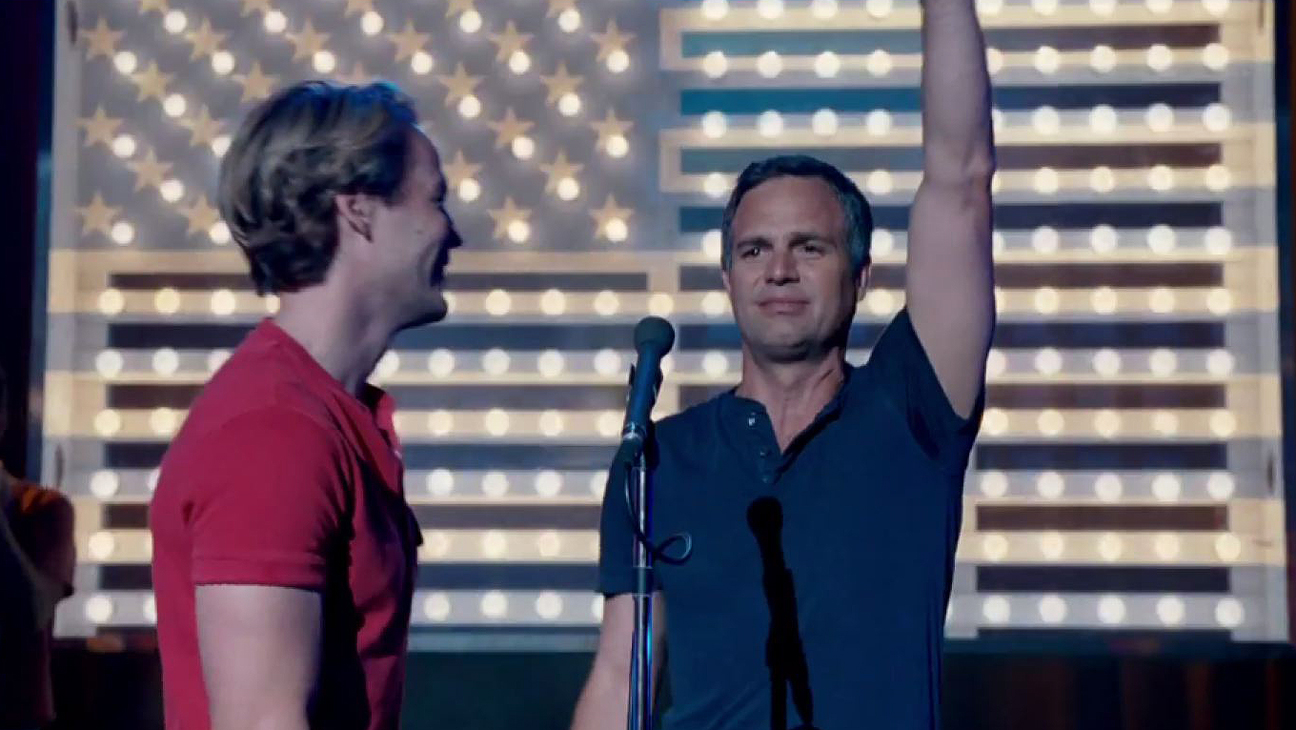
    Since the film is based on a stage play, the big draw here is the actors, and the strength they bring to talky, showy roles. The casting is impeccable and the performances are uniformly strong. Mark Ruffalo plays Ned Weeks, the firebrand gay author at the center of the play, and he is a phenomenal leading man, simply a powerhouse from beginning to end. Ned is a neurotic, almost self-loathing character, but he is also cocky, overbearing, too quick to anger, and too impulsive to really lead the crusade that he thinks he’s leading. He is an extremely difficult character to like, and Ruffalo doesn’t try to make him likeable. Instead he makes him human.

    None of the other actors gets quite so much to do as Ruffalo, but they each shine in one or two showcase scenes. Taylor Kitsch is restrained and barely recognizable as Bruce, the closeted leader of Gay Men’s Health Crisis, while Jim Parsons turns it up to eleven as Tommy, the self-described “Southern bitch”. Both deliver in key emotional scenes, Kitsch especially, when Bruce gets into a fistfight with Ned, then throws a television crew’s camera out the window. Alfred Molina is excellent as Ned’s brother Ben, who nominally wants to be an ally, but who finds it difficult to really understand his gay brother.

    Strangely enough the weakest link in the cast is Julia Roberts, though I would be quicker to blame an underwritten character than her acting ability. She is arresting in her scenes, delivering her lines with a fiery passion, but it’s her scenes more than any others that most cross the line into didactic territory. Her confrontation with the funding panel at the National Institutes of Health towards the film’s end is the most egregious example, as she spouts factoids about the AIDS crisis, her volume ever increasing. It’s meant to be emotionally affecting, a crowning moment for a doomed cause, but it comes off instead as preaching, nearly as pandering, and that damages the overall effect of the scene.

    The true star of the film, however, is Matt Bomer, as Felix Turner. Nestled in among all of the messaging and the melodrama is a brilliant, real, poignant, and moving love story, and it’s this that makes The Normal Heart truly special. Bomer and Ruffalo have tremendous chemistry, but it’s Bomer especially who sells the tragedy of their relationship. Beyond the physical aspects of watching Felix slowly waste away as he succumbs to the disease, Bomer also fully embodies the mental and emotional toll that AIDS takes on the character. There is an undercurrent of fear, of anger, that runs throughout the film, and in that sense, Ned and Felix are essentially two sides of one coin. It makes sense, then, that the larger political story being told revolves around the small love story between them. It’s a smart if risky structural decision, but thanks to Ruffalo and Bomer, that risk pays dividends. The film would not work at all without them.

    Ultimately, The Normal Heart suffers in retrospect because of the progress that has been made with regards to AIDS specifically, and with the gay community in general. In many ways the story it’s telling feels like ancient history; there is an entire subset of the gay community today that has no concept at all of the AIDS crisis, and there is a growing set that has little concept of gay discrimination at all. What was groundbreaking in 1985 is now obvious, and what worked on the stage then doesn’t necessarily play as well on the screen now.

    That said, the story is still important, one that deserves to be told. It’s hard not to grow angry when, after we pan out from Ned, alone at Yale’s “Gay Week,” a title card informs us that Ronald Reagan first publicly mentioned AIDS in 1985, and promised to make it a funding priority, before cutting AIDS funding by 11%; and further, that to date more than 36 million people worldwide have died of HIV/AIDS. Daily, 6,000 people are newly infected. This is a story that needs to be told. It’s a reminder that needs to be made. The Normal Heart wants to be an important film, and while it doesn’t always succeed in that regard, the effort itself is admirable. And even if it does preach too much, even if the education gets in the way of the drama, there is such a strong core in Ned and Felix’s love affair that the scenes that don’t quite work can sort of fall by the wayside. Like most of Murphy’s work, it is best enjoyed in the moment—but what a beautiful moment it is.

    The Normal Heart is nominated for 16 awards including Best TV Movie, Best Lead Actor in a Miniseries/TV Movie (Mark Ruffalo), and Best Supporting Actor in a Miniseries/TV Movie (Matt Bomer).

     
    [maxbutton id=”3″]
     
    Check out our Emmy predictions here!
    Like us on Facebook!

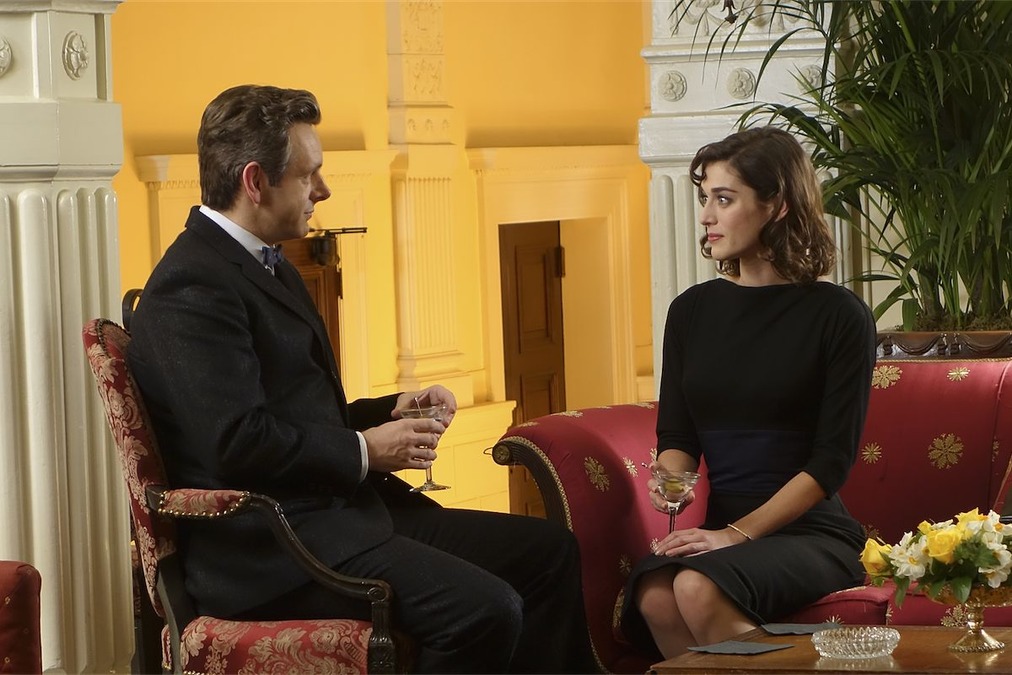
  • Masters of Sex Review: Parallax (2×01)

    Masters of Sex Review: Parallax (2×01)

    masters of sex review: parallax
    I’ve always seen Masters of Sex as a more viewer friendly version of Mad Men. While you had to wait for Mad Men to teach you how to watch it, Masters of Sex was relatively easy for viewer to digest. I’m not saying that’s a bad thing, actually, in the case of the second season premiere it is a very good thing. Both shows are period pieces set during a time that seems so close, yet the ideals so far. Both shows feature difficult men, behind whom are even more difficult women. However, Masters of Sex has a different appeal to it. Whether it’s the pitch black humor, thrilling concept, or intriguing character study, Masters is a show that knows how to hook its audience.

    The magnificent first season of Masters ended with a drenched Dr. Masters telling Virginia that all he needed was her. Then, cut to black. It was simple, quiet, yet enormous cliff hanger that is quickly resolved in the episode. Actually, “Parallax” is framed by two events. That rainy night at the end of season one, an evening in a hotel, and the events following the catastrophic presentation of Bill’s study. All the characters must face a sort of brave new world as they continue on with their lives.

    Part of this brave new world involves Virginia constantly being berated by her male coworkers following the speculation that she was the female subject used in the study. While Virginia attempted to persist through the constant barrage of proposition, innuendos, and criticisms, she seemed to be slowly broken down until she finally went off on a doctor in a parking lot. However, the doctor was simply seeking her advice on his own study. Whether this is going to be a major plot point for Virginia to become her own authority or simply a reminder of her and Masters’ study is yet to be seen. Either way, Virginia is clearly in for a ride this season.

    Especially since she turned down Ethan’s proposal shortly after having sex with Dr. Masters. The night that Bill went to Virginia’s doorstep soaking wet and confessing his need for her was played out several times throughout the episode. This is where the episode title “Parallax” comes into play. While it is the same night in question, the situation changes when you look at it from different perspectives. Such is the concept of parallax. Clever, huh?

    I’m worried to watch the relationship develop. Their tryst in a hotel room under the names of Dr. and Mrs. Holden was way more intense than any sex scene on the show. Their dirty little secret just got a little dirtier. The reason I’m worried is because I love the Bill/Virginia dynamic, but I also love the Libby/Virginia dynamic. To see one of the other crumble would be hard.

    Much of the episode is spent introducing us to the Masters’ new life with a child. Although there were countless scenes that outline their brave new world, the most telling scene of the episode came when Bill was left alone with his newborn. Libby was adamant that he will be fine: “No one knows more about babies than you” she told him. However, when their child was crying he couldn’t help her. He couldn’t let himself. He instead cranked up the record player and drowned it out. What is Bill afraid of?

    Barton goes into treatment for his “disorder” with the assistance of Bill. Watching him go through ECT was shocking (pun intended) and heartbreaking. To think that men and women went through that to correct a problem that didn’t exist was a terrifying thought. His persistence came from his love for Margaret, so when he was unable to perform in bed, it was a blow. Later in the episode, Margaret and their daughter find Barton trying to hang himself. Masters is a dark show, but no moment was as pitch black as this. The fact that the writers are willing to go this far impresses me. I’m excited to see what they can muster up next.

    “Parallax” felt a bit like a season finale. So many of the episode’s story lines seemed to come to a head in this episode, but it’s just the beginning, which makes me extremely excited for this season. I can see a scenario where the show could tread a little too far towards a soap opera, especially with the Libby/Bill relationship intensifying. However, I am confident that the writers will be able to keep the show on track. Overall, a phenomenal premiere.

  • Welcome to Sweden Review: Season One

    Welcome to Sweden Review: Season One

    welcome to sweden review
    To quote one of the comedic greats, “curb your enthusiasm”.

    Welcome to Sweden, part of NBC’s latest offering of sitcoms, is an already tired concept. An American has to figure out how to live in a different country, dealing with the crazy customs and different language that the new country forces upon them. In this show, we have Bruce, an American accountant for the stars, moving to Sweden so that his Swedish girlfriend, Emma, can live closer to her family (who lives in Sweden). Let the culturally based humor ensue.

    The show, created by Greg Poehler (yup, Amy’s sister), does one thing right by making Bruce suffer the consequences of the cultural misunderstanding. The Swedish customs are never the butts of the jokes; on the contrary, they are portrayed as normal practices instead of just a bunch of weird things that the Swedes do. Bruce is the weird one for not being able to fit in. The culture is respected instead of being made fun of, a formula successfully used by similar shows such as Outsourced and Lillehammer (which somewhat awkwardly takes place in the country right next door).

    Each episode features a celebrity cameo, as one of Bruce’s ex-clients coming back to him for various reasons. Yet, in the first two episodes released, they both feel like awkward, forced placement to get the show some extra viewers. It wasn’t really cute seeing Amy Poehler playing opposite her brother as a meaner, fictionalized version of herself. And there was no real point to Will Ferrell being on the show, except to have Will Ferrell on the show. Audrey Plaza’s cameo in the third episode is actually quite funny, but she is unfortunately limited to only about a minute of on-screen time.

    The show’s writing doesn’t do it any favors either. Like any genre of tv or film, there needs to some sort of conflict, the stakes need to be raised. Seinfeld was a show literally about nothing, yet it played off of constant conflict, and raised the stakes high enough to get its characters to do the craziest, funniest, things. Welcome to Sweden has a plot: Bruce needs to learn to be Swedish. But any moment of potential conflict is quickly solved with a hug and a kiss. There is nothing to play off of, which is why most of the jokes fall flat.

    The only big laugh so far came during second episode, in the form of a shocking joke about the Iraq war. The joke itself was brilliant, but it was way too deep, shocking, and dark for a show this lighthearted.

    In addition to not being that funny, the editing is very strange for a sitcom. The scenes are introduced by long establishing shots of pretty scenery, accompanied by the jolly, traditional Swedish music. We then get what feels like a short scene, one that almost always ends in laughter (from the characters themselves) and resolvement of whatever went slightly wrong during the scene. Then, back to the establishing shot and the music before the next scene. Maybe it’s the music, but this makes the show feel like something straight from Nick Jr.

    While Welcome to Sweden certainly has potential to become a much better show, it has a lot of areas that are begging for improvement.

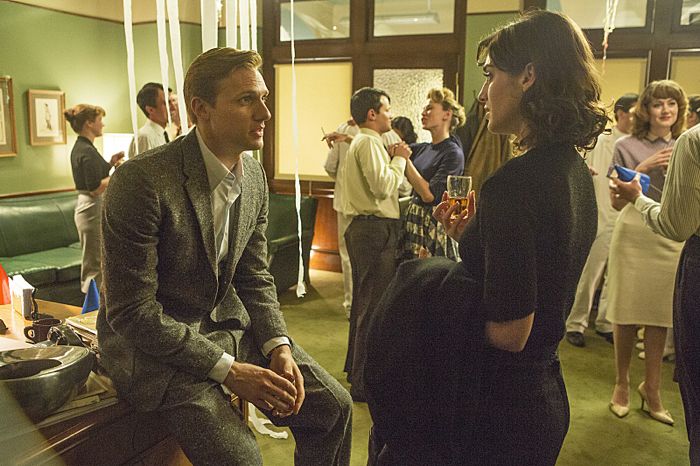
  • Masters of Sex Review: Kyrie Eleison (2×02)

    Masters of Sex Review: Kyrie Eleison (2×02)

    Episode 202

    I don’t want to say this was a filler episode of Masters of Sex, but this was a filler episode of Masters of Sex. That being said, it was a fairly good filler episode. Entitled “Kyrie Eleison”, the episode dealt with a new nanny, a new hospital, a film crew, and a nymphomaniac. Yep, you heard that right. Masters of Sex has always been a show that pushes the limits, and this episode is no exception.

    First of all, I need to define what I see as a filler episode. Obviously it’s an episode that doesn’t have a clear effect on the series’ plot, but I also have to point out that it shouldn’t have a profound effect on any characters or our perception of those characters. While there is some development, like from Betty and Teddy, there isn’t anything that I would say changes too much of the course of the series. Mad Men is a rare show that I would way never had a filler episode. Every single episode and scene contributed to the education of the characters. Although Masters had to fill sometime, I am in no way faulting them for it.

    Starting at his new job, Bill got a rude awakening to the way of the hospital. Unlike Washington University Hospital, politics and money speak a lot louder than the actual morality of medicine. It’s something that Bill isn’t used to. Obviously he’s experienced his fair share of hospital politics at WU, but at least the work always meant more. I mean, at least until he was fired because of it, but that’s besides the point. As Bill deals with a teenage nymphomaniac, who is now on her third lost pregnancy, he gets a taste of those politics. Her parents, benefactors to the hospital, were insistent that she has a hysterectomy to help counter her “whorish” ways. Bill was tepid to the idea and continues to be even when his new boss insisted that he perform the surgery.

    Though this storyline is part of the reason I saw this episode as a filler, unlike Mad Men which arguably never had a filler episode, I found the storyline to be entertaining and quite emotional. Especially when the daughter begged Bill to perform the surgery after accepting her parent’s diagnosis of her as a whore. He was adamant that all perversion are medical illnesses. We got to see a softer side of Bill who was trying to uphold his oath of “do no harm” by introducing her to contraception and telling her that she’s “not what [her} problems are.”

    I probably shouldn’t telling you this, but daddy thought the sun rises and sets with you.
    -Vivian to Bill

    Bill also finally discovered the secret of Barton’s suicide attempt by asking his daughter. After listening intently about the ordeal and offering Vivian some support, Bill went to his car and cries, offering us a rare glimpse of vulnerability that we haven’t seen since the episode “Catherine.”

    Though Virginia spent much of the episode tending to other characters’ storylines, she did have a wonderful and hilarious scene with a throat doctor as she explained the functionality of Ulysses, which ended in quite a… splash. She also had a dance with Dr. Langham who explained to her that they’re “lone wolves, driven from the pack by [their] refusal to conform.”

    In my review of last week’s episode (find the review here) I compared the series to Mad Men. This week, another comparison came in. Betty Draper… I mean, Libby Masters hired a nanny named Coral (played by Keke Palmer) to help with their daughter. When she was able to quiet down the baby after Libby was unable to, Libby decided to belittle her by correcting her grammar and telling her that they should be working as a team. The passive-aggression could be cut with a knife. She even had a cigarette in hand. If that wasn’t a Betty Draper move, then I don’t know what is. Thank god they’re finally giving Caitlin Fitzgerald something else to do.

    Despite their separated storylines, Bill and Virginia both end up at their usual hotel just as the episode faded out. “Kyrie Eleison” was definitely a step down from the wonderful season premiere, but it proved to be an entertaining episode that offered some strong moments. However, I am nervous that the main plot of the series may not be thick enough to fill out a complete roster. This coupled with Showtime’s tendency to keep shows on past their expiration date (I’m looking at you Dexter), I can see this series going south very fast. But, I can only hope that it doesn’t.

  • F**KING TREE CHOPPING (The Leftovers Episode 2 Review)

    F**KING TREE CHOPPING (The Leftovers Episode 2 Review)

    liv.tyler_

    Karl and Jared discuss Episode 2 of HBO’s “The Leftovers” called “Penguin One, Us Zero”. There were a lot of curse words… in the episode.

    http://www.youtube.com/watch?v=34ovLP8VHoQ

  • “The Leftovers” Review: “Pilot” (1×01)

    “The Leftovers” Review: “Pilot” (1×01)

    the leftovers pilot

    Karl, Jared, and Brooke reviewed “The Leftovers” Pilot in a Google Hangout!

    https://www.youtube.com/watch?v=YXKMnxNE-N4

  • Reaction Shot: “The Flash” Leaked Pilot

    Reaction Shot: “The Flash” Leaked Pilot

    the-flash-first-look

    It looks like we have the first leaked Pilot of the fall season. This time, it’s the CW’s The Flash. The show is a spinoff of their highly successful Arrow series, this time following Barry Allen, better known as The Flash. To respect the network I will not be posting a full review until the series premieres, but I will do a quick rundown of what I think worked, didn’t, and whether you should give the series a chance.

    First of all, the series is no where near as dark as its counterpart Arrow. The episode is littered with wonderfully corny one-liners and somewhat ridiculous situations, but it closely follows the superhero origin road map with all the important plot points. The style of writing gets a bit old after a while. It’s hard to appreciate the campiness after a while, but I did find a large majority of it entertaining.

    The series does have wonderful pacing that makes the episode go by in a flash (lame joke of the day). The visual effects are strong and the overall craft is there. I think everything else will come in time.

    While Grant Gustin is an endearing lead and has a wonderful little scene at the end of the episode that allows him to emote, there are some questionable lines that come off a bit amateurish. I think that he’ll eventually settle in, but I did see some weakness there. Actually, overall the acting was underwhelming, but I suppose that was expected. Some of it comes from the campiness of the script, but it did get old after a while.

    As for the question of should you watch it, I will say that if you enjoyed Arrow or even Smallville that this might be a series for you to look at. The stereotypical superhero plot lines still do wonders here and Barry Allen’s awkward charm will reel you in. However, the next few episodes will be a huge test to see how the series sustains those plot lines, while still be surprising.