Category: Musical Reviews

  • Illinoise is Broadway’s best new musical | review

    Illinoise is Broadway’s best new musical | review

    Dance musical Illinoise takes the songs of Sufjan Stevens’s album of the same name and reimagines them as a series of stories told around a campfire culminating in an emotional queer coming-of-age

    Amongst Justin Peck‘s impressive and high energy choreography for Illinoise, the final new musical of the overstuffed and *insert RuPaul “meh” gif here* 2023-24 Broadway season, two men stand on stage hand-in-hand simply stepping to the side, forward, and back. Their hands are on their hearts and slowly their breathing comes in sync. We sit like this for nearly a minute. It’s a quiet moment, one of many in the musical, that catapults it past simply a “dance play”. It’s raw with meaning and drenched in queerness and love and anxiety and hope — a moment that had my inner gay child screaming.

    Illinoise has been a personal project for choreographer-turned-director Justin Peck, who held the prestigious title of Resident Choreographer for the New York City Ballet before transitioning to choreographing for theater and film (he most recently choreographed Steven Spielberg’s West Side Story remake). Like many millennials including yours truly, Sufjan Stevens and his concept album Illinois has been a nostalgic favorite — and regarded by many as one of the best albums of the 2000s. The twenty-two song magnum opus is a collection of stories inspired by people, places and events connected to the eponymous state. 


    ADVERTISEMENT


    That celebration of storytelling is what Peck brought to book writer Jackie Sibblies Drury.

    Together, they envisioned the songs as stories told by a group that found themselves together in an anonymous forest. But rather than using dialogue, the musical uses dance as its storytelling medium of choice.

    The show’s set is a mangle of scaffolding and trees with platforms housing the band and three vocalists above the stage donning butterfly wings (Elijah Lyons, Shara Nova, Tasha Viets-Vanlear) as if they’re a queer Greek chorus narrating what’s happening below (Legally Blonde the Musical, eat your heart out), crooning out Stevens’s music with gorgeous harmonies and orchestral orchestrations by Timo Andres. The twelve-dancer cast is a troop of hikers gathered around a campfire made of lanterns. Their introduction is bright, energetic and joyful as they greet each other (“Come On! Feel the Illnoise!”). The beauty of Peck’s choreography is its ease. Each dancer, though moving with the unit, feels like they’re in their own unique body imbuing their personality into the uniformity. Each of them holds a notebook.


    ADVERTISEMENT


    Ricky Ubeda in Illinoise on Broadway.

    Taking turns, they each tell a story from it set to one of Stevens’s songs, putting it down at the foot of the stage as if activating a new world.

    In “John Wayne Gacy, Jr.”, Alejandro Vargas puts a flashlight under his face like he’s about to tell a ghost story. The stage darkens and we watch as the story of the eponymous serial killer comes to life in front of our eyes before Vargas’s character relates the story to the skeletons in his own closet. When the emotion becomes too much, his fellow storytellers hold him as he calms down. In “Jacksonville”, Rachel Lockhart stomps out a hip-hop-tinged number that eventually adds Byran Tittle tap dancing his way across the stage. As the number goes on, Lockhart begins to mirror his moves. It is an energetic full company showstopper that feels like it has deeper meaning. Perhaps it’s about the lessons we pass down from generation to generation to find ourselves stronger — Jacksonville, Illinois was a stop on the underground railroad, so the choice to have two black dancers lead the number feels intentional. After all, the opening line of the song is:

    I’m not afraid of the black man running
    He’s got it right, he’s got a better life coming

    But the musical never tries too hard to imbue meaning on the numbers. Stevens has always been opaque about the meaning of his music. Peck, who also directs, adds enough context for you to find your own interpretation rather than telling you like many other dance musicals. 


    ADVERTISEMENT


    The dance numbers range from intimate interpretive pieces to full-blown production numbers that are as thrilling and entertaining as any big brassy Broadway musical.

    Lurking in the background, our protagonist Henry (Ricky Ubeda, the season 11 winner of So You Think You Can Dance?) is observing and shirking off the occasional goading to share what is in his notebook. Eventually, he gives in and for the final hour of the musical we see what led him to the campfire in the forest. On the back wall, a bit of graffiti tells us he’s in a small town in the middle of nowhere with his best friend Carl (Ben Cook) and Carl’s girlfriend Shelby (Gaby Diaz). There’s clearly a tension between the three of them as their bodies twist and spin into and out of each other (“Decatur”). After Past Lives, Challengers and Passages love triangle are clearly in. However, the tension between Henry and Carl is palpable.

    As any queer person can attest, in Henry’s mind there’s something potentially romantic between the men. A touch, playful wrestling, a near brush of the lips will send anyone into a spiral negotiating the potential queerness of their straight friend. During the endearing number “Chicago” the pair drive off to… well, Chicago in a swirl of flashlights that become the car and the city passing by before finding themselves in New York City where Henry meets Douglas (Ahmad Simmons). A gay man who sees Henry for who he is. Henry makes the choice to stay while Carl returns to their hometown (“To the Workers of the Rock River Valley Region”).


    ADVERTISEMENT


    Ricky Ubeda and Ben Cook in Illinoise on Broadway.

    The brilliance of Illinoise of using dance to tell this particular story is so much of the queer coming-of-age experience comes from body language.

    Something the choreography uses to great affect. Like each of the dancers are spinning objects intersecting with each other in time and space grasping for something — sometimes literally each other or a ghost that disappears in a bit of stagecraft that I’ll leave unspoiled. Brandon Stirling Baker‘s dynamic lighting design and Adam Rigg‘s minimalistic scenic design add to the ethereal effect. When life takes a turbulent turn, the stage uses the negative space to focus in on the details of the choreography. Not just the way bodies are moving, but how they’re moving together.

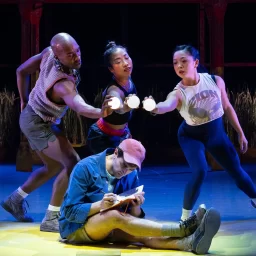
    In the end, Illinoise is about community and relationships. How those around us that we allow to understand our plights can figuratively and literally snap us out of our depressive psyches. Ubeda’s performance, worthy of a Tony nomination, is one of a traumatized man finding those moments of light — and the people he trusts. When he’s first introduced, Henry’s memories are literally represented by orbs held above Carl, Shelby and Douglas’s heads that swirl from Henry’s mind onto the stage (“Three Stars”). His expressiveness in his dance finds its way to his face grasping for empathy that he gets in the form of tears streaming down the faces of the audience (at the very least from a 30-year-old gay man in the second row understanding every emotion). What Illinoise presupposes is that speaking (no matter what the medium) is tantamount to healing. And over a beautiful, engrossing, heart-wrenching but ultimately uplifting 90 minutes, you feel it.


    ADVERTISEMENT


    More movies, less problems


    Hey! I’m Karl. You can find me on Twitter and Letterboxd. I’m also a Tomatometer-approved critic.

    💌 Sign up for our weekly email newsletter with movie recommendations available to stream.


    ADVERTISEMENT

  • Musical Review: “Amazing Grace”

    Musical Review: “Amazing Grace”

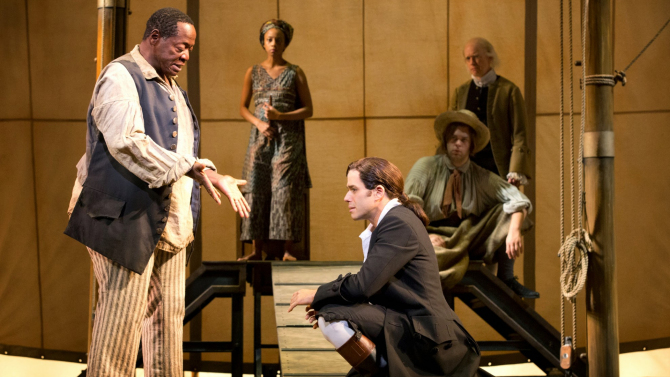
    Chuck Cooper and Josh Young in "Amazing Grace"
    Chuck Cooper and Josh Young in “Amazing Grace”

    When the lights go down at the Nederlander Theatre, Thomas (Chuck Cooper) takes the stage. Thomas, a former slave, tells the audience that they may be familiar with the song “Amazing Grace,” but they probably don’t know the story behind it’s creation. Not to worry: Thomas was there and he is going to tell us all about how John Newton came to write the lyrics to the famous anthem.

    I was quite intrigued at this point. How interesting to get a black slave’s perspective on a story often only told from a white man’s point of view! Unfortunately, Amazing Grace doesn’t live up to this potential. After the opening narration, the musical promptly switches back to the white perspective and is more concerned with telling a love story between the leads. John Newton (Josh Young, perpetually shirtless) works for his father (Tom Hewitt, giving his all to a mostly thankless role), auctioning slaves as soon as they arrive in Chatham, England. His would be love Mary Catlett (Erin Mackey) witnesses the horrors of the slave auction for herself. She takes up with abolitionists, putting herself in direct conflict with her well to do family, John Newton, and aggressive suitor Major Gray (Chris Hoch). In order to have Mary to himself, Major Gray sends John Newton and his servant Thomas into the Navy, on a ship bound for Africa.

    This continent and decade spanning story should be compelling, and some of the history is indeed revelatory. But composer Christopher Smith has broken a cardinal rule of musical theatre: the songs rarely ever move the plot forward or further character development. In any place where a song should be, there is instead a long (usually boring) book scene. Laiona Michelle’s Nana speaks at length to Mary on her horrifying capture at the hands of slavers and resulting loss of her daughter. It’s a powerful story, and one that should have been set to music as emotions reach their fever pitch (thankfully, the actress gets to show off her robust, passionate vocals later in the show). Much of the score consists of nondescript love ballads where the characters ruminate on the action that just took place. So not only does the show fail Musical Theatre 101, but putting the personal love lives of it’s white protagonists ahead of the plight facing its black characters is downright insulting. There’s a whole lot of “white savior” complex going on here.

    To further complicate matters, director Gabriel Barre appears to have coaxed his actors into embodying stereotypical archetypes. For much of the show John Newton is too broadly drawn to really care about, and even Mr. Young’s sterling tenor can’t save the character. Erin Mackey is able to utilize the full range of her impressive singing voice. She has a deep well of emotion to draw from, but most of the ballads she is saddled with have no dramatic oomph. Chuck Cooper provides the performance highlight of the evening with a stirring song “Nowhere Left to Run,” demanding a change of conscience from his master. Cooper’s rich baritone booms through the theatre and demands attention. If only the rest of the songs had this weight.

    On the design front, Toni-Leslie James has created vibrant period gowns and coats that pop off the stage. There are also some striking uses of lighting and silhouette throughout, though I’m unclear as to why so many scenes take place before an ugly, brown plank wall. Given how much of the musical takes place aboard a ship, I give the team credit for many of their stylistic choices (though the “action” scenes with ship battles and fights don’t fare well). There is also a crowd-pleasing underwater effect that closes act one quite impressively…even if we saw the exact same effect in The Little Mermaid.

    The musical does have one ace up it’s sleeve: the title song. The eponymous anthem closes the show and the choral arrangement is so astoundingly beautiful that it almost made me forget how bland the rest of the show was. Amazing Grace desperately wants to join the ranks of previous hit historical epics. But it has neither the sweeping grandness of Les Miserables or the musical complexity of 1776.

    John Newton’s journey from England to Africa and back, and the resulting change of heart towards slavery could make for a compelling tale (though I could really do without this musical’s preachy atheist: bad and Christian: good” conclusion). And there is certainly potential here to explore a complicated part of history from more than a typical white perspective. Unfortunately, this stage incarnation misses the mark as to why the story is compelling and ignores the basics of musical composition itself.

    Amazing Grace
    Nederlander Theatre
    208 West 41st St., Manhattan
    Music and Lyrics: Christopher Smith, Book: Christoper Smith and Arthur Giron
    Directed by: Gabriel Barre
    Choreographer: Christopher Gattelli
    Starring: Josh Young, Erin Mackey, and Chuck Cooper
    Run Time: 2 hours, 30 minutes (w/ 1 intermission)

  • Musical Review: “Something Rotten!”

    Musical Review: “Something Rotten!”

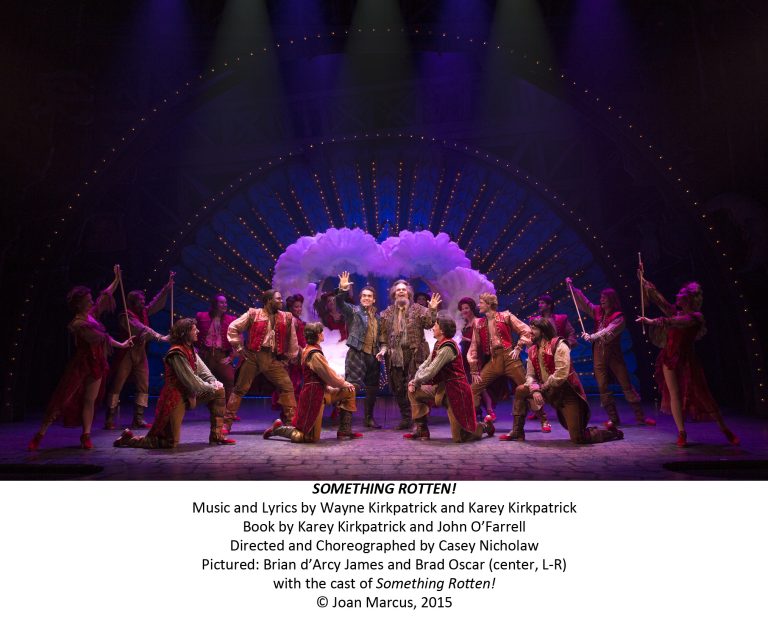
    Something Rotten!
    Hear Ye! Hear Ye! A joyous noise emanates from the St. James Theatre. It’s the sound of uncontrollable laughter and applause. A guaranteed side effect of the funniest Broadway musical in years.

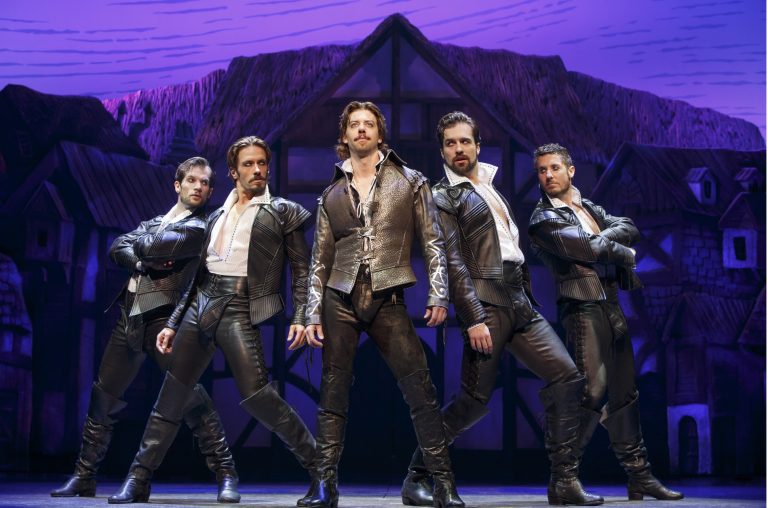
    It’s obvious one has stumbled across something special from the opening moment of Something Rotten!. A minstrel (Michael James Scott, in glorious voice) sings and dances through “Welcome to the Renaissance”. Accompanied by a superb sounding ensemble, the performers detail the new cultural and industrial advancements of the era.

    The setting might be old, but the music by Wayne and Karey Kirkpatrick contrasts with contemporary pop sensibilities, to comedic effect. The costume design from Gregg Barnes features elaborate splashes of color and pizzazz, and Scott Pask’s impressive set conjures signature scenic elements of past Broadway hits. The buoyant opening number ends with a thunderous wall of sound from the singers and the audience responds with rapturous applause. I was all smiles and I was completely hooked.

    The story centers on Nick Bottom (Brian d’Arcy James), a struggling London playwright who constantly feels overshadowed and outdone by Shakespeare (Christian Borle). Nick and his brother Nigel (John Cariani) are in the middle of staging their new show “Richard II” when word arrives that Shakespeare has beat them to the punch. The brothers’ wealthy patron pulls funding and shuts down the play. To make matters worse, Nick’s dutiful wife Bea (Heidi Blickenstaff) reveals she is pregnant. With no income and a family on the way, Nick panics and struggles to find a new idea for a play.

    Nick’s grand scheme involves paying a soothsayer to look into the future and find Shakespeare’s most successful play…and then write and produce it before the Bard gets the chance. The wonderfully zany Brad Oscar, as soothsayer Nostradamus, has been gifted with the showstopper of the season with “A Musical”. As he looks into theatre’s future, Nostradamus discovers an exciting new development: musicals.

    The Kirkpatrick brothers pull out all the stops with witty wordplay and an endless parade of Broadway references. The result is a hysterical, physical performance from Mr. Oscar as he lampoons landmark musicals across Broadway history. No tuner leaves unscathed, from the high-pitched Annie interlude (complete with buckets) to pondering the pointlessness of dance breaks (“Does it further the plot?” “No …it’s entertaining!”).

    Hamlet (Or “Omlette” as Nostradamus misinterprets) is the future hit that Nick chooses to put to song and finally top Shakespeare. And so the first musical is born. To detail the various ways in which he gets the famous story wrong would be to spoil the best jokes in the book. The Kirkpatrick brothers have taken a page out of Mel Brooks’ playbook and written a humorous, winking love letter to Broadway. The ending might feel a bit cliché, but the show is ultimately more about the fun journey than the destination.

    Director/Choreographer Casey Nicholaw has a lot of fun incorporating familiar pastiche into the energetic choreography. He also knows how to coax winning performances from the talented cast, as all the characters instantly pop off the stage from their first lines.

    Christian Borle is having a ball, evoking Tim Curry from his Rocky Horror days, with a preening and self-absorbed take on Shakespeare. Brooks Ashmanskas turns a thinly written Puritan character (Brother Jeremiah) into a meal of a part, transforming some of the book’s weaker jokes into satisfying one liners and fabulous stage exits. John Cariani displays a tender falsetto as Nigel Bottom. His neurotic physicality and sheer awkwardness around the woman he admires provide endless laughs.

    Speaking of women, they are criminally underutilized in this boys club. After hearing Heidi Blickenstaff’s soaring voice on “Right Hand Man”, I wanted more of this feisty woman (her only recurring plot involves her dressing in male drag to attain work). Kate Reindeers is also sublime as Nigel’s love interest (Portia, the Puritan’s daughter of course). It’s great fun watching her explore “sinful” readings of her favorite sonnets and plays. You shouldn’t get used to seeing either lady on stage much, but you’ll welcome their limited presence.

    The night really belongs to Brian d’Arcy James. The actor shows us why he is one of the best leading men of Broadway, with killer vocal chops and a grounded performance that holds up against the flashy characters surrounding him. And while he gets some fun showcases, I was really craving a big 11 o’clock “I want” number where James could truly let loose. Still, Nick Bottom is an engaging protagonist. I rooted for him during disastrous mistakes and through to eventual reconciliation.

    Even if you don’t recognize the various Shakespeare quotes or the subtle Pippin reference, this musical is a joy to behold. What’s most impressive is that we’ve seen this audacious, referential humor all before, but we’ve rarely seen it done so well. From the stellar cast to the dancing eggs (did I mention there are dancing eggs?), this is shameless, outrageous musical comedy at its best.

    Something Rotten!
    St. James Theatre
    246 West 44th Street, Manhattan
    Music and Lyrics: Wayne and Karey Kirkpatrick
    Book: Karey Kirkpatrick and John O’Farrell
    Directed and Choreographed by: Casey Nicholaw
    Starring: Brian d’Arcy James, Christian Borle, John Cariani, Heidi Blickenstaff, Brad Oscar,& Kate Reindeers
    Run Time: 2 Hours and 20 Minutes, including one intermission

  • Musical Review: “Fun Home”

    Musical Review: “Fun Home”

    Fun HomeOne of the most satisfying experiences in musical theatre is when a composer taps into powerful and recognizable emotional moments, and against all odds, finds a way to set these revelations to music. The audience is left wondering: “how did they do that?”. Sometimes it’s a youth overwhelmed with love, as in ‘On the Street Where You Live’ in My Fair Lady. It may be something more impossible, like a demon barber realizing his blood-lust in Sweeney Todd‘s ‘Epiphany’. Well, I’m happy to report that Jeanine Tesori and Lisa Kron have achieved the impossible with Fun Home. I don’t know how they did it.

    On the surface, the story seems impossible to set to music. Based on Alison Bechdel’s autobiographical graphic novel, the show delves into the author’s coming out journey and her closeted father’s suicide. This isn’t a spoiler. As Allison tells us early on, “My Dad and I both grew up in the same small Pennsylvania town and he was gay and I was gay, and he killed himself, and I became a lesbian cartoonist”. The musical, like Allison herself, is less interested about what happened, and more interested in finding out why and how.

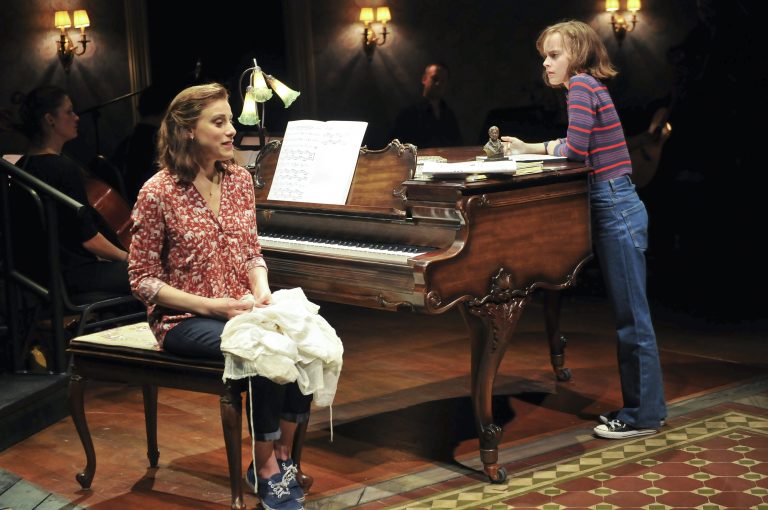
    An adult Alison (Beth Malone) is reliving old memories in order to write her novel. Two other actresses play Allison as a child (Syndey Lucas) and in her college years (Emily Skeggs). Malone is ever-present, hovering around the edges as the narrator of her life. All three Alison’s have a desperate desire to connect with their father Bruce (Michael Cerveris). Bruce has a wife Helen (Judy Kuhn) but is deeply in the closet and has affairs with several men (all played by Joel Perez). Bruce’s pressure to lead a perfect normal life, including running the family business (a funeral fun home), greatly wear on his wife and children. His daughter’s eventual coming out has shocking effects on him.

    Jeanine Tesori is one of the greatest working composers today. Her partnership with book writer and first time lyricist Lisa Kron proves a harmonious match. Together they expertly capture the humanity of each individual in the family with music and dialogue seamlessly woven together. The music also does a sublime job at capturing the frustrations, delights, and unreliability of memory.

    Each Alison does remarkable work. Emily Skeggs is delightful with a hysterical and touching number after her first sexual encounter with her college friend Joan (‘Changing My Major’). Her wild enthusiasm and bold declarations of admiration for her lover’s pillow drool gets the audience laughing with recognition. Malone’s adult Allison sings with desperation and poignancy in ‘Telephone Wire’, attempting to muster up the courage to speak up to her Father on a mostly silent car ride.

    It is the eleven year old Sydney Lucas who gets the best number of the show. ‘Ring of Keys’ describes the inner-workings of Allison’s mind when confronted with an out lesbian, before she even knows what that term means. Upon the sight of a butch delivery woman, Ms. Lucas brings us on a journey of confusion, admiration, and ultimately recognition as she tries to figure out her gravitation to this stranger. With a determined belt and heartbreaking head voice, this young actress successfully sings through the delicate act of processing one’s own sexuality for the first time. It’s not only the best song of the show, it’s one of the most magical stage moments I’ve had the pleasure to witness.

    Director Sam Gold has masterfully re-worked the show for the theatre-in-the-round setting of the Circle in the Square Theatre. Set pieces stealthily emerge and disappear through the floor, creating a seamless dreamlike sensation as Allison walks through her own memories. The lighting design and sparsely staged numbers created an intimate atmosphere where the audience can easily grab hold of the nuances in the actors’ work.

    Most importantly, Gold keeps the piece anchored in humanity and subtlety. All of the aforementioned songs are “showstoppers”, but none require a kick-line or jazz hands. The closest we get to a big ensemble dance number is when, oblivious to the morbidity and oddness of their lyrics, Young Alison and her brothers create a hilarious disco-themed funeral home commercial.

    Gold has directed his actors with a sense of naturalism. I was struck by how effortlessly the actors were able to give powerhouse performances without ever pushing or scene chewing (a refreshingly different take for Broadway). Judy Kuhn proves to be the master of this technique. In ‘Days and Days’ she paints a portrait of a woman quietly breaking as she recounts the sacrifices she made in her marriage.

    I’ve gotten this far and haven’t even mentioned the incomparable Michael Cerveris. His father figure is intensely troubled, scared, and filled with self loathing. Cerveris (a Tony winner for Assassins) nails the inner turmoil of a man who struggles daily to put on a facade, who unleashes his own self loathing on his daughter, and who somehow still enlists empathy from the audience. Though Allison Bechdel was on a long quest to form some connection with a father who remained a stranger,  the saddest part of this true tale is that the man was ultimately a stranger to himself. I can think of no better actor than Cerveris to telegraph these frustrations and fears.

    It has been quite some time since a Broadway show moved me as much as Fun Home. Yet, despite heavy seeming topics, it never ventured too far into depressing territory. This is thanks to Mr. Gold’s direction and Ms. Tesori’s career best music that finds humanity, humor, and pathos in every moment. Fun Home is an instant classic. This is storytelling at it’s best.

    Fun Home
    Circle in the Square Theatre
    Music by: Jeanine Tesori, Book and Lyrics by: Lisa Kron
    Directed by: Sam Gold
    Starring: Michael Cerveris, Beth Malone, Judy Kuhn, Emily Skeggs, and Sydney Lucas
    Runtime: 1 Hour, 45 minute, no intermission

  • Off-Broadway Review: “The Lion”

    Off-Broadway Review: “The Lion”

    the lion

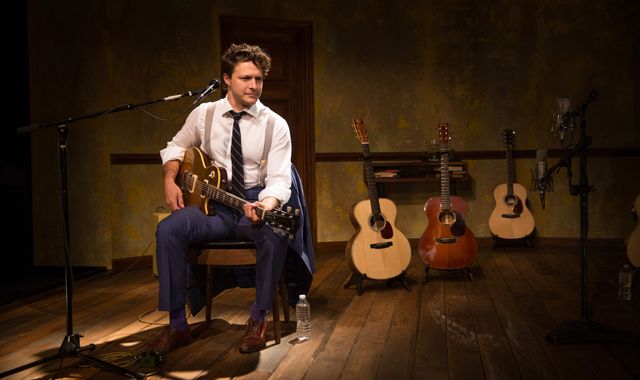
    The writer and star of The Lion, Benjamin Scheuer, enters the stage of the Lynn Redgrave Theatre with a mane of wild, tussled hair. He sits and sings a song about a toy banjo his father made for him. With his pleasant face and the intimate atmosphere, you may think you’re in for a sweet sort of folk music concert. But, you would only be about half right.

    Mr. Scheuer takes us on an autobiographical journey from his childhood to present day, with many demons lurking beneath the friendly surface. The innocence of his first experiences playing guitar with his Dad begin the story. Tensions between father and son set the narrative in motion. Music is their sole connection, and as hints of depression and rage enter the picture, this connection grows uneasy.

    To go into too many plot details would absolutely spoil the fun and heartbreak of experiencing the twists live. The less you know going in the better. But, safe to say that seemingly innocuous moments offer glimpses of a darker side to his family life. He asks one friend “What do you do when your Dad breaks one of your toys?” and the friend “looks at me like I’m insane”. The following tale of hostility, loss, love, sex, and illness carry the audience through depressing lows and triumphant highs. Though his father is not around for his adult life, his presence looms large over Ben and the way he matures.

    A solo performance dealing with heavy themes of the actor’s life has the potential to come off as self indulgent at every turn. Thankfully, Scheuer performs with an openness and gusto that allows the audience in, instead of keeping them at bay during private moments. He possesses a simplicity in style, devoid of pretensions. It allows you to root for him and cry for him.

    Seven different guitars serve as the only instruments of the evening. Each symbolizes a different period of his life, including a hilarious and touching segment on an electric guitar (during his teenage days as an “awesome” angst ridden rocker). Almost more powerful than his sweet and appealing singing voice, is his ability with each ax. The guitar solos in all of his self-penned songs appear to exist as an extension of the performer, with power and emotion rushing out of the guitars like waterfalls. Ben Stanton adds to the atmosphere, creating stunning stage pictures with evocative lighting design.

    “What makes a Lion a Lion” is the refrain asked several times during the musical, from youth to adulthood. As you may probably guess, it is essentially the same as asking “what’s in a man”? At times this theme is a bit too pointed, for the easy going type of storytelling at play. But I was willing to completely forgive it as Scheuer takes us through life’s devastating blows, one after another.

    Becoming a man. Becoming a lion. Whether you choose to look into the symbolism or not, watching Benjamin Scheuer learn how to roar makes for one of the most beautiful nights of theatre you could ask for.

    The Lion
    Lynn Redgrave Theater at Culture Project
    45 Bleecker Street, Manhattan
    Directed by: Sean Daniels
    Written and Performed by: Benjamin Scheuer
    Run Time: 70 minutes, no intermission 

  • Musical Review: “Honeymoon in Vegas”

    Musical Review: “Honeymoon in Vegas”

    honeymoon in vegas

    I recently took a vacation to Las Vegas only to discover it was not for me. Outside of Cirque du Soleil (which is the coolest thing I’ve ever seen); the smoke filled casinos, confusing slot machines, and overpriced everything wore me down. The trip to Vegas I took when I entered the Nederlander Theatre however, was a vastly different and pleasurable experience. I wish the real world locale entertained me as much as Honeymoon in Vegas.

    The charming and funny new tuner from Jason Robert Brown follows the cult comedy film of the same name.  Commitment-phobe Jack (Rob McClure) is in a loving relationship with his dream girl Betsy (Brynn O’Malley).  They adore their New York life together, except that Betsy is desperate for Jack to finally pop the question. Though he is haunted by his mother’s (Nancy Opel) dying wish for him to remain single, Jack finally musters up the courage and decides a spur of the moment trip to Las Vegas will be the perfect way to tie the knot.

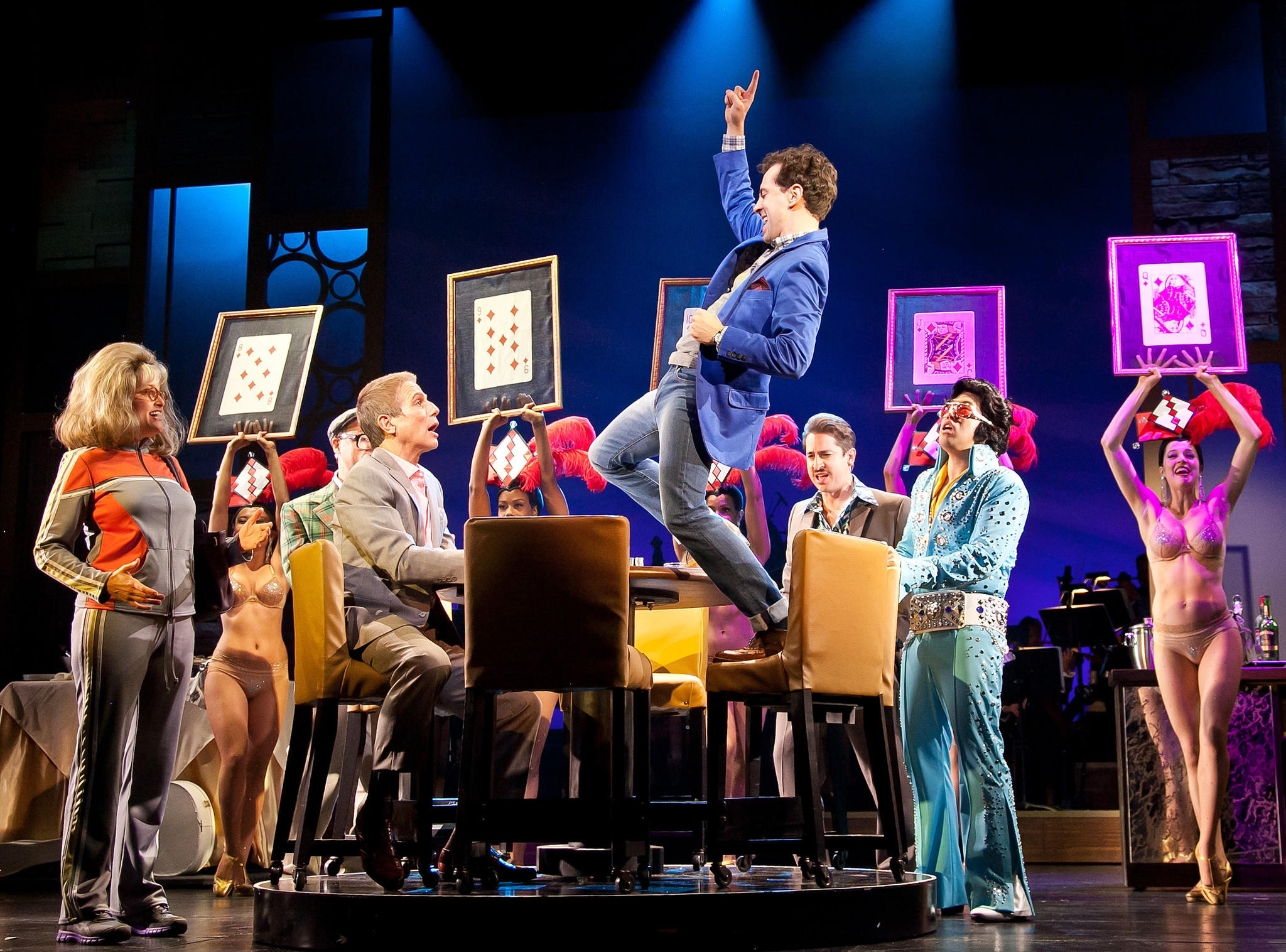
    When they arrive at their sin City hotel, a seedy gambler Tommy Korman (Tony Danza) falls instantly for Betty. Tommy rigs a poker game that forces Jack to lose $58,000. As Jack panics, Tommy pitches a deal: allow him a weekend alone with Betsy and the debt is paid. The plot mostly gets even more absurd from there. A trip to Hawaii, talking totems, and a chorus of Elvis impersonators stand in the way as Jack attempts to win back his fiancée.

    You may be worrying about how ridiculous that summary sounds. But, director Gary Griffin absolutely nails the madcap tone of the story. He quite refreshingly embraces the old fashioned musical comedy style of the piece. It isn’t afraid to go over the top and the book by Andrew Bergman (adapting his original screenplay) mostly serves that purpose, even if some of the jokes don’t land as they should.

    Jason Robert Brown contributes the musical’s score and it’s a complete about face from his previous work. Known for introspective scores about love and loss (The Last Five Years, Bridges of Madison County) Brown surprises with an upbeat song and dance collection. The numbers range from winking innuendo wordplay in “Friki Friki”, to toe tapping anthems like the high energy finale. The music is also spiritedly played by an onstage band that shows off their musicianship to some of the loudest applause of the evening.

    The best decision the creative team made was casting the impossibly likeable Rob McClure as their neurotic leading man. A Tony nominee for the short lived Chaplin, he oozes charm and sincerity. More importantly he knows how to make those qualities work for laughs. The moment he enters the stage in the opening “I Love Betsy” (with a superb singing voice), you’ll want to root for him the entire way through.

    Tony Danza is entertaining, if not outstanding, in his Broadway debut. The actor obviously lacks the vocal chops of a trained singer, which stands out when compared to the cast of talented belters. But Danza has charisma to spare and turns out to be a talented showman. He infuses Tommy with enough sympathy and generosity so as to avoid being a caricature villain. His crooning and ukulele playing on “You Made the Wait Worthwhile” is a tender highlight of the show.

    Elsewhere in the cast, Nancy Opel is predictably hysterical as Jack’s mother. As an apparition she pops out of counters, garbage cans and any other object they could fit her into. She’s a master of musical comedy and I only wish I got to see more of her. Similarly underutilized is the strong voiced Brynn O’Malley. She possesses killer comedic timing but doesn’t get much thrown her way in terms of solo numbers. David Josefsberg turns out to be the scene stealer of the supporting cast, pulling double duty as an omniscient lounge singer and showboating Elvis impersonator.

    Even though the director has united the team to successfully pull off the show’s tone, the staging can be a bit wonky. Not helping matters is the fairly generic set design by Anna Louizos. She seems to have tons of fun creating the absurd elements of the set, but the rest lacks any ingenuity. And if you begin to wonder how often a character or set piece will enter/exit from the same trap door in the stage, SPOILER ALERT: it’s every time.

    Honeymoon in Vegas may not be trying anything daring or new, but it is completely refreshing to see a well crafted musical comedy on Broadway.  It is loads of fun, it doesn’t take itself too seriously, and the bubbly score and charismatic characters are exactly what we need during the cold winter.

    Honeymoon in Vegas
    Nederlander Theatre
    208 West 41st Street, Manhattan
    Music & Lyrics: Jason Robert Brown, Book: Andrew Bergman
    Directed by: Gary Griffin
    Choreography: Denis Jones
    Starring: Rob McClure, Tony Danza, Brynn O’Malley, David Josefsberg, and Nancy Opel
    Run Time: 2 hours and 30 minutes, including 1 intermission

  • Freaks Invade Broadway with “Side Show”

    Freaks Invade Broadway with “Side Show”

    side show

    “Come look at the freaks” beckon the various oddities from the stage at the St. James Theatre. Given how intoxicating the revival of Side Show proves to be, you may want to take in a second or third look.

    The original production of Side Show has become infamous. A flop that barely lasted three months, it went on to become one of the biggest cult hits in the Broadway cannon. Thanks to the cast recording that captured the commanding and star making performances of Alice Ripley and Emily Skinner, theatre nerds everywhere now uphold the musical as some holy entity. It’s a lot to live up to, but the revival is up to the task.

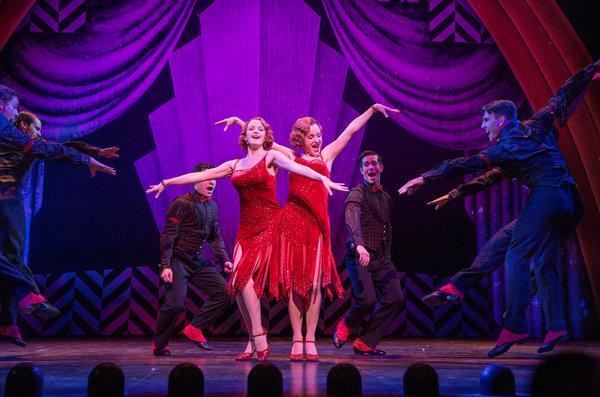
    The story is based on the real life tale of Violet (Erin Davie) and Daisy (Emily Padgett) Hilton; conjoined twin vaudeville stars. Before they launched to stardom with the iconic movie “Freaks”, they made ends meet in seedy side shows. It’s in one such show that an Orpheum Circuit agent Terry (Ryan Silverman) and his assistant Buddy (Matthew Hydzik) discover the twins. After viewing one performance, Terry is certain that the Hilton’s are the next big sensation (and his own shot at fame and success).

    The duo struggles to set the girls free from the side show and groom them into stars. They run into trouble with a man known only as Sir (a deliciously sinister Robert Joy). Sir is the Hilton’s abusive adopted father and emcee of this particular freak circus, and is determined to hold onto his headliner act. The road to freedom/stardom also gets tricky with their protective friend and stage-hand Jake (David St. Louis), who holds secret yearning for Violet. You can likely surmise that a love triangle becomes a central conflict.

    This particular revival has gone through a number of rewrites and tweaking. This includes new songs from the original songwriting team of Bill Russell and Henry Krieger, and a fleshed out book courtesy of director Bill Condon. Most of the updates are designed to help beef up the thinly written supporting roles. There is a fun new vaudeville act for the Hilton sisters and Buddy, to highlight their relationship. Terry has an early number to help establish character motivations.

    One of the best decisions Condon made was actually aesthetic. This time around the “freaks” of the side show are presented in all their deformed glory. The costumes and prosthetic work for the likes of  the Geek, the Half Man/Half Woman, and the Lizard Man are inspired. Costume designer Paul Tazewell has done a marvelous job at combining seediness with glamour. It’s all quite sumptuous to look at.

    It’s unfortunate that for all the revisions, the supporting roles still feel awkward. Character motivations turn on a dime (and often in the same scene). In what feels like under 20 minutes, Buddy insists that he and a certain Hilton are “just friends”, changes his mind and declares that she’s his “other half”, and then a couple of minutes later realizes “oh, I actually don’t love you that way”. Confused? I was. And Terry, despite his new material, still turns villainous almost instantaneously. Luckily Silverman and Hydzik are splendid singers and manage to get by on charm.

    As Jake, David St. Louis isn’t quite able to navigate the tragic arc of his unrequited love . It’s quite understandable, since there isn’t much material thrown his way. But, by the time we reach Jake’s signature number “You Should be Loved”, his crumbling emotional state isn’t justified. The number still gets a roaring response thanks to impressive vocal pyrotechnics from St. Louis and glorious lighting by Jules Fisher and Peggy Eisenhower.

    If nothing else, the production warrants a visit for its two absurdly talented leads. I know many musicals have yet to even debut, but I’m going to say it anyway: Emily Padgett and Erin Davie give one of the best performances you will see this season. As the Hilton sisters, they work together in perfect harmony. The actresses show how simultaneously dependent they are on one another, yet how opposite the two are at their core. Padgett’s Daisy has Hollywood lights in her eyes and a take-on-the-world attitude (with an impeccable sense of comedic timing). Davie’s Violet is more uncertain of living a life as a “freak”. There is an undercurrent of deep pain throughout her performance as her yearnings to be normal bubble to the surface.

    And I haven’t even gotten to the songs. If you’re a fan of the musical, you wont be disappointed with the two famous power ballads. During the act one closer, “Who Will Love me as I Am”, it was all I could do not to jump out of my seat and scream with excitement as the actress’ voices soared through the melody. And with opposite effect, “I Will Never Leave You” left me dumbfounded with my jaw on the floor. The ladies have some serious pipes, and utilize every facet of their voice to tear the songs to shreds. If you miss their performance: you’ll be sorry.

    What I realized is that despite the infamous status as a show that closed too early, it is a far from perfect musical. Lyrics are sometimes corny, and the love triangle depends so heavily on thinly sketched supporting players that it all but collapses on itself in the final moments. Even with the updates and new songs, Side Show is flawed. However, in the days after seeing the show I couldn’t get it out of my head. The stunning opening number, Mr. Condon’s energetic staging, the costumes for the freaks, Davie and Padgett’s voices thundering to the rafters as the lights on the bare stage flourish behind them. I am already itching to go back, flaws and all. It truly doesn’t leave you.

    Side Show

    St James Theatre

    246 West 44th St., Manhattan

    Book and Lyrics by: Bill Russell, with additional book material by: Bill Condon

    Music by: Henry Krieger

    Directed by: Bill Condon

    Starring: Erin Davie and Emily Padgett, with Matthew Hydzik, Robert Joy, Ryan Silverman, and David St. Louis

    Run Time: 2 hours and 30 minutes, with one intermission

  • Broadway Review: “On the Town” Revival

    Broadway Review: “On the Town” Revival

    I have been humming Leonard Bernstein songs on repeat since seeing the current revival of On The Town at the Lyric Theatre. It would be impossible not to hum a few bars, even for the most cynical New Yorker, after being whisked along by the snappy and energetic production of this Broadway classic.

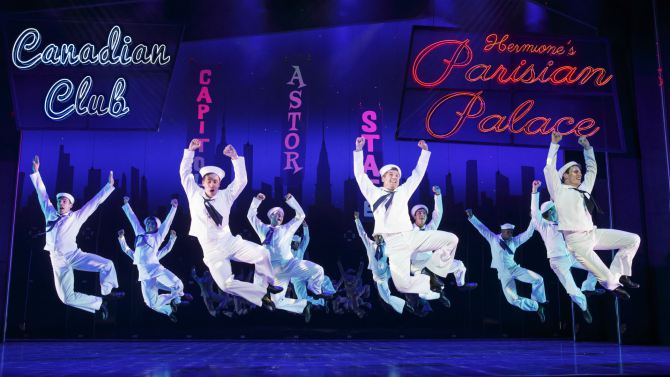
    On the Town provides a simple plot, with elegant music. Three sailors step off their ship with just 24 hours to take in the big city before returning to the Navy. As many tourists do, they plan on packing every sight the city has to offer into their one day visit. But, first on the list is finding girls. When Gabey (Tony Yazbeck) discovers a picture of the newly crowned “Miss Turnstiles” (aka Ivy, Megan Fairchild) on the subway, he instantly falls for her. His fellow Navy-men Ozzie and Chip (Clyde Alves and Jay Armstrong Johnson) are determined to find their friend his dream girl to lift his spirits.

    From the moment the three sailors burst onto the stage, erupting into the famous “New York, New York”, the entire theatre is humming with energy that lasts until the final curtain. Thanks largely to John Rando’s superb direction and knack for comedy; the production is full of buoyant life.

    I may be getting ahead of myself by skipping to the actor’s entrances. The magic actually starts the minute the orchestra tunes up. Experiencing a full 28 piece orchestra at a Broadway show is an unfortunate rarity these days. But this orchestra deserves top billing among the lead players for the grand and lush sound they create. This is how Bernstein’s music is meant to be heard.

    Not that the performers are anything to scoff at. In the demanding role of Gabey, Tony Yazbeck provides an impressive voice. His rendition of “Lonely Town” is stunning and vulnerable. I was glad he didn’t shy away from the more melancholy moments of the show, and Gabey in particular. In a musical that tries extra hard to put the “broad” in Broadway, Yazbeck is a compelling emotional center.

    The supporting characters are all outstanding physical comics with even better voices. As Claire, Elizabeth Stanley shares incredibly manic energy with Mr. Alves, particularly during “Carried Away”. They could both be accurately described as nymphomaniacs and expertly walk the fine line of playing over the top roles without becoming aggravating. Watching Stanley frequently lose her composure in a fit of lust or excitement yields some of the biggest laughs of the evening.

    Alysha Umphress delivers an impressive showing as Hildy. Her confident brassy portrayal could easily swallow the puppy-dogged Armstrong Johnson whole, but the two have found great chemistry. Hildy’s signature “I Can Cook Too” stops the show, and her mix of belting and scatting instantly cemented it as my favorite rendition of the number. If we lived in the days when shouting “encore!” actually resulted in a second helping of a song, Ms. Umphress would likely have to perform this one about five times a night.

    The choreography by Joshua Bergasse ranges from grand to elegant. While he may sometimes stray from the iconic original dances of Jerome Robbins, Bergasse meets the demands of the cavernous Lyric Theatre. He expertly manages both large ensemble pieces with their many moving parts, as well as intimate moments like the Coney Island Pas de Deux.

    It’s in this number that Broadway newcomer Megan Fairchild (principal ballerina of New York City Ballet) gets her time to shine as Ivy. She may have a modest voice compared to her co-stars, but she is an expert technical dancer and her work is thrilling to behold.

    My one great complaint with the production is scenic design that just doesn’t work. While the show as a whole oozes warmth and nostalgia, Beowulf Boritt’s set is cold and modern. The harsh blues and modern interpretations of interiors is distracting and pulls the audience out of the experience. Projections of New York City streets (strangely rendered as solid blue geometric shapes) are also used to ill effect, most notably in the infamous cab scene. Umphress and Johnson are impressive enough on their own here, and don’t need crudely rendered projections to make the song work. Perhaps projections could be put to good use in this scene…but not ones that look this cheap.

    On The Town may not be a perfectly crafted musical. Betty Comden, Adolph Green, and Leonard Bernstein hastily threw the musical together around dances from Jerome Robbins. As such, some characters fairly one note and some scenes are too long (though the hysterical Jackie Hoffman shows up as a variety of cartoons to provide some energy). But this is a wonderful production of a classic piece of musical theatre. If you want old school song and dance, it doesn’t get much better. A helluva show indeed.


    On the Town
    Lyric Theatre
    213 West 42nd Street, Manhattan
    Music by: Leonard Bernstein
    Book & Lyrics by: Betty Comden and Adolph Green
    Directed by: John Rando
    Choreography by: Joshua Bergasse
    Starring: Tony Yazbeck, Jay Armstrong Johnson, Clyde Alves, Megan Fairchild, Alysha Umphress, Elizabeth Stanley, Phillip Boykin, Stephen DeRosa, and Jackie Hoffman

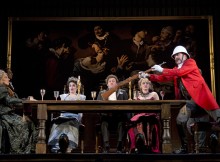
  • “A Gentleman’s Guide to Love and Murder” Review: The Musical Wes Anderson Never Made

    “A Gentleman’s Guide to Love and Murder” Review: The Musical Wes Anderson Never Made

    Gentleman's Guide to Love and Murder, AWalter Kerr Theatre

    When you walk into the Walter Kerr Theatre, home of Best Musical Tony winner A Gentleman’s Guide to Love and Murder, you have to do some preparation. You have to suspend your disbelief, let go of your expectations, and open your mind because the 2 hours and 20 minutes ahead will surprise, entertain, and leave you in stitches by the end.

    A Gentleman’s Guide begins with a warning to the audience: “for those of you of weaker constitution, for those you who may be faint of heart, this is a tale of revenge and retribution.” The story is just that. The musical follows Monty Navarro who upon discovering that he is related to the wealthy D’Ysquith family and is the 9th in line to inherit the title of Earl of Highhurst decides to murder those in front of him in the line of succession. The result is a hilarious off-beat comedy that has as much heart as it does laughs.

    Much of the first act is spent watching Monty in his quest to the family fortune. Murdering each quirky relative (all 8 of whom are played by Jefferson Mays) in increasingly ridiculous ways, Monty slowly changes as a character. I can’t tell you how much I appreciate this. Characters so rarely change in musicals, but his strive for power becomes apparent as much in him as it does the story. On the side, a love triangle ensues between Monty, his lover Sibella, and cousin Phoebe. Yes. It does get as ugly as it sounds. The half is fast-paced, exciting, and laugh-out-loud hilarious.

    The second act slows down a bit. Monty is left with a singular relative to get past, which doesn’t allow the momentum from the first half to carry over. However, the laughs and surprises are all still there.

    Although the score is mostly forgettable and the lyrics simply for exposition, there are some high points like “It’s Better with a Man” and Act two showstopper “I’ve Decided to Marry You,” which exemplifies Darko Tresnjak’s Tony-winning direction. It is simply brilliant. The entire musical plays off like a Wes Anderson film with its off-beat world and characters so finely choreographed and staged in a storybook like setting. He takes the already interesting story and infuses it with an impeccable style that keeps you engaged from beginning to end.

    Speaking of engaging, Bryce Pinkham is sensational as Monty. With rarely a minute off stage it is confounding how he is able to maintain that type of energy throughout. He is completely charming and hilarious, but his physical comedy is what throws him over the type. His slight looks at the audience or his facial expressions while we hear his thoughts are captivating. He is really the unsung hero of the musical.

    The reason I say unsung is because Jefferson Mays gets so much of the absolutely deserved praise for his role as the entire D’Ysquith family. I can’t say more than that he is phenomenal. He doesn’t just play each character, he inhabits them. They all have their own type of humor and style. It is really fascinating to watch. Bonus points to his dressers who assist in what looks like the fastest quick changes in broadway history.

    I can’t say much more. It is a riotously fun night on Broadway. Tresnjak has gone above and beyond the call of duty and the actors are really at the top of their game. There are faults. The second act can’t quite match the momentum of the first and the score doesn’t really do the rest of production justice, but those are small factors to look past when it comes to the overall scope of the musical. Bottom line, come for Mays and Pinkham, stay for a truly wonderful musical.

    BRYCE PINKHAM and JEFFERSON MAYS shoutout Smash Cut!

    https://www.youtube.com/watch?v=Bg7R98B1M28&list=PLA4smGy_kg9WQU-MPl3kXw51IS83HUz9r&index=1

  • “Holler If Ya Hear Me” Review: Broadway Preaches a Ghetto Gospel

    “Holler If Ya Hear Me” Review: Broadway Preaches a Ghetto Gospel

    holler-if-ya-hear-me_6501

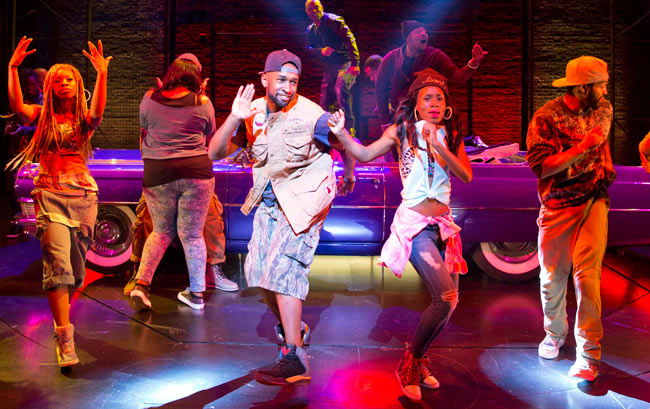
    “They got a n**ga shedding tears/ reminiscin’ on my past fears/Cause shit was hectic for me last year”.   And so marks the beginning of the 2014-2015 Broadway season. As opening lyrics go, it’s about as far from “The hills are alive, with the sound of music” as one can go. And that is precisely what the ambitious, if flawed, Holler If Ya Hear Me intends.

    The first sign that this production is willing to buck tradition greets the audience upon entering the Palace Theatre: Close to 600 seats have been removed from the massive orchestra section. This accommodates an extended stage and stadium seating stretching to the mezzanine. The design pitches the audience into the action onstage.   Those skeptical of this concept should have no fear. It is actually one of the best decisions director Kenny Leon brings to the show, which is a tad too intimate for the house it occupies.

    The songs (and poetry) by Tupac Shakur however, are lyrically rich and hard hitting enough to energize the large crowd. Purist fans will appreciate that the creative team has not shied away from the language or tone of the music in the least. This jukebox musical is not for Baby Boomers, and the show makes no apologies or concessions in this regard.

    In a musical crafted from the themes in the late rapper’s work it is no surprise the story centers on a tragic tale of drugs and violence. The musical opens with John (powerful spoken word artist Saul Williams) returning to city life after a stint in prison. Jail time has spurred him to leave behind the world of drug dealing and instead search for honest work at his friends’ auto shop. Our other central figure is Vertus (Christopher Jackson), who has taken up dealing while John was behind bars. During this time Vertus has also won over John’s once girlfriend Corrine (Saycon Sengbloh, in strong voice).  The neighborhood is quickly thrown into chaos and despair when an (un-seen) gang shoots down Vertus’ brother Benny. Our protagonists gather their neighborhood friends and arm themselves with determination and guns to avenge their fallen friend.

    This is where the trouble starts, for both the characters and the audience. Benny has spoken perhaps two lines in one crowded scene before his off-stage demise. Yet this death is what thrusts the plot into motion. It took me a good ten minutes to figure out who this Benny was that everyone was so upset about. It wasn’t until his mother (a vastly underutilized Tonya Pinkins) emerged in tears, that I realized he was her son and Vertus’ brother. It’s rather difficult for the audience to invest in a character we don’t know and a conflict that unfolds mostly off-stage.

    The book by Todd Kreidler is largely at fault here. It takes the basic themes of Shakur’s lyrics as inspiration for its inner city story, but fails to expand on them with any originality. The result is a rather heavy handed, paint-by-numbers message about the unending cycle of violence in poor, black neighborhoods. Should the group take on the typical “eye for an eye” mentality, or rise above the gang warfare that plagues their surroundings? Character development is also frequently sabotaged in an effort to shoehorn popular songs onto the stage.

    Luckily the vocally robust cast is adept at interpreting Shakur’s rhymes. The smooth voiced Jackson manages to be compelling throughout. Saul Williams is a force of nature when he spits Shakur’s signature lyrics, particularly in the fiery showstopper “Me Against the World”. And even though her character is largely in the play just so “Unconditional Love” can make an appearance, Sengbloh belts the song like it’s her last day on Earth. I wish the story knew what to do with Tonya Pinkins’ mother figure, as the Tony winner lends a much needed dose of gravitas to the proceedings.

    Tony winning director Kenny Leon has shown tremendous skill helming straight plays on the Great White Way. But, his first foray into a musical seems less sure-footed. Some musical numbers inspire awe and thunderous applause. The act one closer (and title song) is a tremendous showcase of ferocity for Saul Williams and the ensemble, with invigorating stage movement. On the flip side, many other moments have no life or stakes in the stage direction. An odd dichotomy emerges between staging that is either truly inspired or mostly forgettable.

    A similar problem is found in the choreography by Wayne Cilento. While expertly performed by talented dancers who are clearly having a blast, it frequently fails to direct the audience’s eyes to where the main action is happening.   There is also a turn table, because…I’m not really sure. Luckily, the lighting design (Mike Baldassari) and projections (Zachary Borovary) are gorgeous and well implemented to aid the storytelling.

    Ultimately, Holler if Ya Hear Me feels like something that needed more time to develop. There is promise of a truly great musical in here. But as it stands, for every flash of brilliance or innovation, there is another of confusion. I applaud the producers and creative team for bringing a rap musical to Broadway and remaining true to the source material. If only the book matched the passion of Tupac’s music.