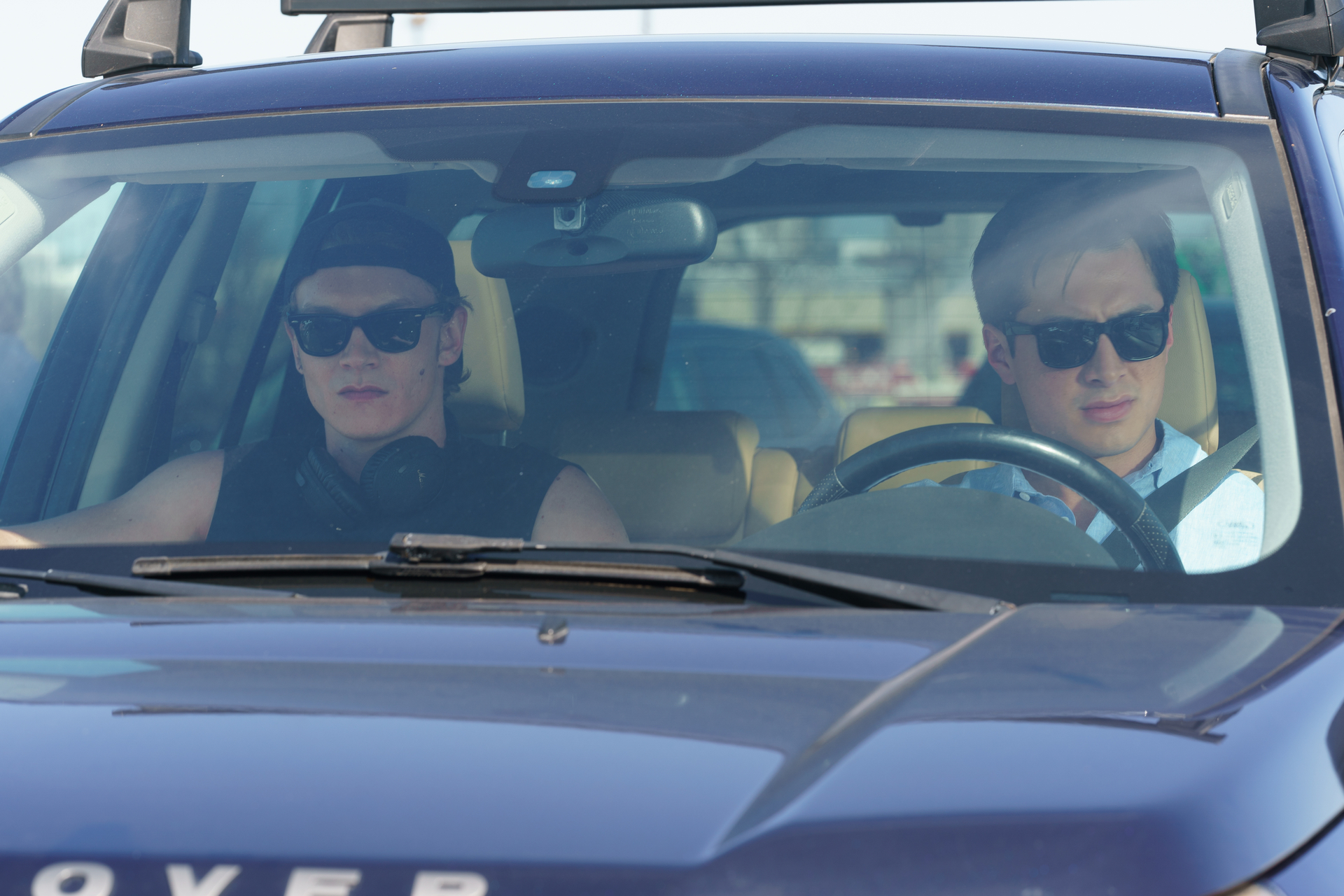
Karl Delossantos

  • ‘John Wick: Chapter 3 — Parabellum’ movie review

    ‘John Wick: Chapter 3 — Parabellum’ movie review

    John Wick: Chapter 3 — Parabellum finds John in his most precarious situation yet — and that’s bad news for anyone that gets in his way.

    30-second review: The reason the unlikely John Wick franchise works is because it understands its audience and, more importantly, trusts them. John Wick: Chapter 3 — Parabellum mercifully leaves the bloated plot of the second installment behind to deliver another lean action-thriller with enough forward momentum to give you the genre thrills you crave. And the action is stunning. It becomes a little too self-aware in its third act to stick the landing, but the journey there is definitely worth it.

    Where to watch John Wick: Chapter 3 — Parabellum: Available to buy or rent on Prime Video.

    Tick tock. Full review below ?


    John Wick: Chapter 3 — Parabellum is brilliant because it’s aware it’s the third film in a franchise. By this point in a lesser franchise, audiences are probably getting jaded and experiencing diminishing returns as they call the shots — in this case, headshots — the movie is going to make before it makes them. But John Wick is no normal franchise.

    Instead of going for a trilogy capper or a callback-filled trip down memory lane, Parabellum is about John Wick (Keanu Reeves) being tired he’s in this movie. Who could blame him? The events of the three movies happen back to back, with this one picking up seconds after the last.

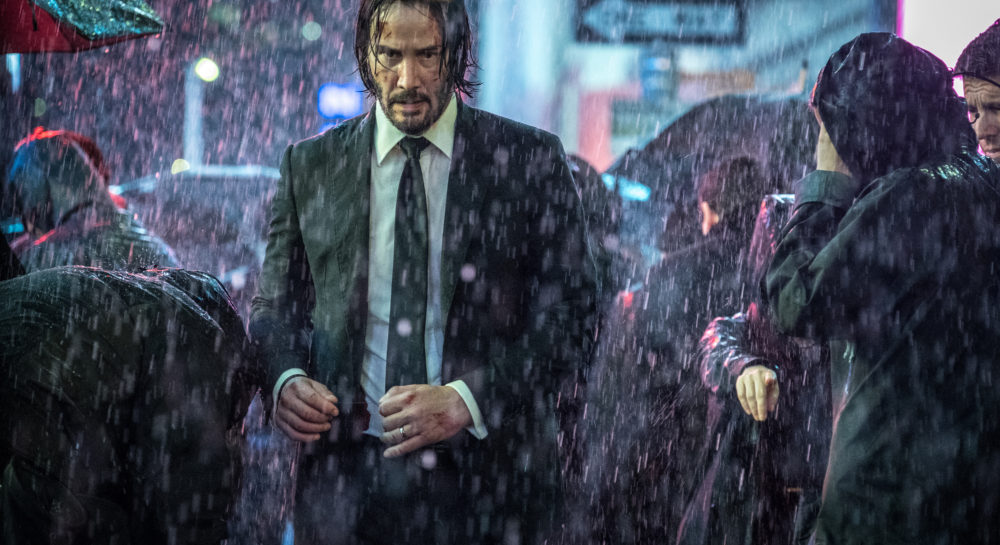
    Wick is deemed “excommunicado” by the High Table — who control the sprawling underground infrastructure for the world of assassins — and placed under a $14 million dollar bounty. With just an hour to prepare himself, John makes an attempt to escape a city that has only one goal — to kill him.

    The first act is a stunning, non-stop action scene that brilliantly cuts between Wick’s journey around the city that has a series of fights that will probably rank among the best of the decade. And despite three movies stuffed with fights, this movie finds a way to not repeat itself. Seriously, the first 30-minutes are spent with a weak and injured John fighting off foes off in increasingly creative ways.

    He goes from the New York Public Library where we see him take down a 7-foot killer with a book to a knife-throwing fight in an antique shop to a stable where he strategically uses horses to take down a squad of assassins. On top of that, there’s a motorcycle chase on horseback.
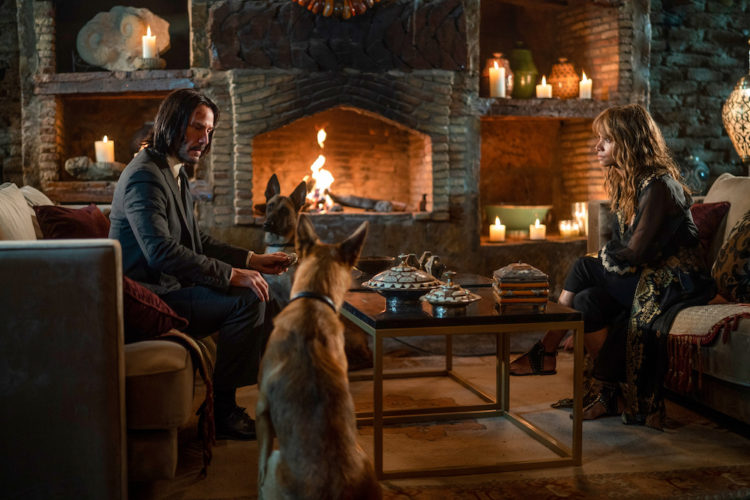
    ohn Wick: Chapter 3 — Parabellum
    John (Keanu Reeves) and Sofia (Halle Berry) in JOHN WICK 3: CHAPTER 3 – PARABELLUM.

    Whereas the action in Chapter 2 leaned heavily on blood and gore, Parabellum makes the violence brutal, but oddly beautiful — something I appreciated about Atomic Blonde. Director Chad Stahelski knows how to stage action, in this movie, he learns how to capture it.

    Take the act two capper that finds John in Casablanca with his old friend Sofia (Halle Berry) fighting off a trove of killers that seem to be coming out of nowhere — just like a video game. However, Stahelski makes the decision to shift the point-of-view of the scene to Sofia, which allows us to see some incredible and dynamic coordination between her and her two tactical attack dogs. I was breathless the entire time.

    Of course, we dig further into the world and meet new characters like a shrewd ballet instructor (Anjelica Houston) who helps John get out of the city, an Adjudicator for the High Table (Asia Kate Dillon playing a revolutionary non-binary character) whose task is to bring down anyone who helped John escape with an assist from an assassin called Zero (Mark Dacascos). And thankfully, we spend more time in the Continental with Winston (Ian McShane) and Charon (Lance Reddick), who become even more instrumental to the story.

    But most importantly, we spend time with a tired and rundown John who is now even more infamous than he once was. This fact influences a third act that feels more like a slapstick comedy than it does an action movie. It’s entertaining but distracting. Still, it’s a bold move considering this movie officially brings the franchise to the mainstream.

    Parabellum doesn’t do much work to make you like it. Truthfully, if you made it this far in the franchise, there’s almost no way you don’t. They’ve laid the groundwork to take this story anywhere and you will follow because John Wick and the world he inhabits will never not be interesting. I thought I’d be jaded with the franchise, but keep them coming.


    ADVERTISEMENT


    More movies, less problems


    Hey! I’m Karl. You can find me on Twitter and Letterboxd. I’m also a Tomatometer-approved critic.

    💌 Sign up for our weekly email newsletter with movie recommendations available to stream.


    ADVERTISEMENT


  • ‘Unicorn Store’ review — Brie Larson’s directorial debut isn’t weird enough

    ‘Unicorn Store’ review — Brie Larson’s directorial debut isn’t weird enough

    Unicorn Store marks the directorial debut of Oscar-winner Brie Larson, who also stars in the Netflix Original.

    30-second review: Unicorn Store has so much going for it — an original premise, terrific cast, directorial debut of one of the best actors working today — but the magic falls flat. That’s no fault of Brie Larson, whose endearing performance and uneven yet promising direction keep the movie afloat. The screenplay just fails to capitalize on the quirkiness of the premise which leaves much to be sought after. 

    Where to watch Unicorn Store: Available to stream on Netflix.


    I can see what Brie Larson saw in Samantha McIntyre‘s screenplay that made her want it to be her directorial debut. The story is a celebration of creativity and weirdness and self-expression. However, not to the fault of Larson’s direction, the screenplay doesn’t offer enough of any of those things to earn its touching ending. Not in its characters or its story. For a movie called Unicorn Store, it wasn’t quite weird enough.

    Kit (Larson) is a failed artist who is forced to move back in with her parents (Joan Cusack and Bradley Whitford) after flunking out of art school. Her colorful works featuring rainbows and unicorns are lost on her fellow artists and professors. After toiling her days away on the couch being bombarded with ads that seem targeted at her failure, she decides to get a temp job at an ad agency. 

    One day, she receives a mysterious letter from a man called The Salesman (Samuel L. Jackson who reunites with Larson after Captain Marvel) who invites her to The Store where he gives her an offer she can’t refuse. If she proves herself worthy by completing a number of tasks, Kit will be gifted a real-live Unicorn — something she’s wanted since childhood. 

    So, with the help of her newly found friend Virgil (Mamoudou Athie) she sets out on her tasks including building a stable fit for a Unicorn and bringing happiness into her home by repairing her relationship with her parents.

    Samuel L. Jackson and Brie Larson in UNICORN STORE

    Larson is great, as usual. She fills Kit out with a childlike wonder that’s endearing while not ignoring the challenges she faces and how they affect her. However, all the other characters around her don’t have the same depth, which is deeply missed. It’s a shame considering great character actors like Cusack, Whitford, and Jackson are in the cast.

    While the premise of Unicorn Store has plenty to offer, it never goes far enough. For a brief moment, Kit questions whether or not The Store and The Salesman are actually real, which would make a compelling plot thread had it been explored for more than a scene. The same can be said for Kit’s childhood, which was clearly not the smoothest. It’s alluded to, but never dug into. 

    There are moments where you can see how this film could work. Particularly in the scene between Jackson and Larson — their chemistry is palpable — and at Kit’s temp job where she has been tasked by the company’s VP (Hamish Linklater) to come up with a vacuum ad. But the movie needed to be weirder or less fanciful. The middle lane it takes wants us to believe magic is real, yet it all feels commonplace. 


    ADVERTISEMENT


    More movies, less problems


    Hey! I’m Karl. You can find me on Twitter and Letterboxd. I’m also a Tomatometer-approved critic.

    💌 Sign up for our weekly email newsletter with movie recommendations available to stream.


    ADVERTISEMENT


  • ‘Plus One’ keeps the rom-com formula fresh — Tribeca review

    ‘Plus One’ keeps the rom-com formula fresh — Tribeca review

    Plus One follows two best friends — and potential love interests — as they try to survive a dreaded summer full of weddings.

    The romantic-comedy works best when it’s character-driven and has a fresh perspective, both of which Plus One has. However, it also helps that the movie is so incredibly funny and filled with sharp one-liners delivered with precision by the leads Maya Erskine and Jack Quaid. But it’s Erskine who really steals the show. That’s thanks to first-time feature directors Jeff Chan and Andrew Rhymer putting trust in their actors’ instincts and allowing them to nail every moment.

    The narrative does drag towards the third act and falls into some genre cliches. But for the most part, Plus One is a hilarious and, dare I say, relatable take on the classic romantic comedy formula with enough gags to keep you hooked from beginning to end.

    Where to stream Plus One:

    Between subversive mainstream hits like Crazy Rich Asians and Love, Simon and a seemingly never-ending parade of Netflix movies including To All the Boys I’ve Loved Before and Set it Up, it’s clear that the romantic comedy is making its triumphant comeback.

    And a new entry in the genre, Plus One — which made its world premiere at the Tribeca Film Festival — is the perfect middle ground between those two groups of films. Directing and screenwriting duo Jeff Chan and Andrew Rhymer tackle a familiar rom-com story by not treating it like a story at all. They let their characters take the lead — and what characters they are. 

    Alice (Maya Erskine) and Ben (Jack Quaid) are decade-long friends who are going through the all too familiar — and dreaded — wedding season single. Alice recently broke up with her long-term boyfriend Nate and Ben has trouble committing. And as anyone that has gone through wedding season stag knows, it sucks. 

    So, just like many other rom-coms, the two hatch out a plan. They will be each other’s plus-ones to every wedding they have to attend that summer — ten in total. From there, the movie is essentially split into chapters, each beginning with the always cringy toast delivered awkwardly by a maid of honor, best man, or parent.

    Plus One Tribeca Film Festival Movie
    Maya Erskine and Jack Quaid in Plus One. Credit: RLJE Films.

    You know the story from there. The pair who are all too perfect each other — sharp-tongued and brash Alice keeps the endearingly awkward and sensitive Ben grounded — skirt around being in an actual relationship until they finally give into their feelings. Eventually, things go awry putting their happily-ever-after at risk. It’s a formula that has worked for decades (including in When Harry Met Sally, which starred Quaid’s mother Meg Ryan). 

    Where Plus One freshens up the formula is its main characters. Specifically, Erskine’s stellar performance — with an assist from the sharp and witty screenplay — is filled quick-fire comedic barbs delivered with precision timing and physical humor that can only be achieved when a director allows their actors to just go with it. And when the dramatic scenes come, she nails them with a powerful intensity without losing what makes the character admirable.

    If anything, the movie’s biggest fault is focusing the third act on Ben’s commitment issues rather than Alice. His story is familiar. Her’s is not. Especially since she comes from an Asian-American family presented in a way that we don’t often see in film — like any other family. There are small nods to the cultural nuances that I, as a first-generation Asian-American, couldn’t help but smile at. This is why diversity in film is important. 

    Plus One works best when it’s just Ben and Alice squaring off in hilarious and sharp banter that is underscored by the romantic tension between them — a late-night argument about cuddling and Alice giving feedback on Ben’s best man speech are highlights. Quaid keeps up with Erskine as his drier delivery matches up perfectly with her harsher tone. They’re both basically classic twenty-something archetypes — and that’s not necessarily a bad thing. 

    It’s authentic and, dare I say, relatable. We don’t like talking about our feelings so we put on sarcastic armor instead of dealing with it. The problems with Plus One come up when it starts dealing with it, but you have to commend it for trying. Come for the diner tilapia, stay for cemetery sex.  

    Where to stream Plus One:


    ADVERTISEMENT


    More movies, less problems


    Hey! I’m Karl. You can find me on Twitter and Letterboxd. I’m also a Tomatometer-approved critic.

    💌 Sign up for our weekly email newsletter with movie recommendations available to stream.


    ADVERTISEMENT
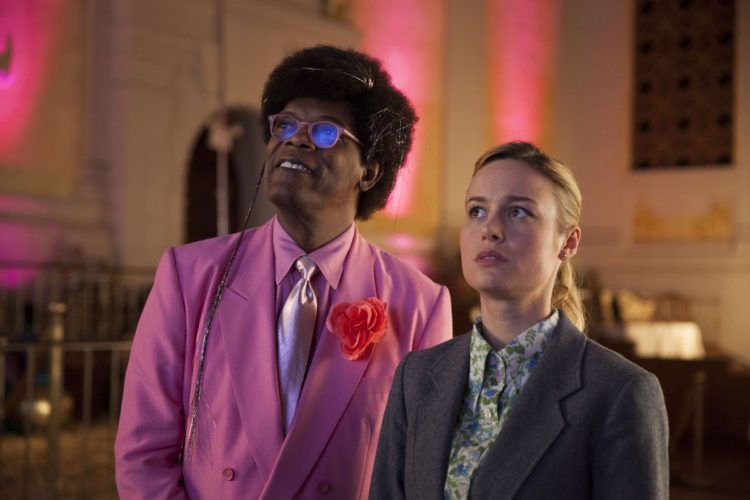

  • ‘Our Time Machine’ Tribeca review — Life, love, and puppets

    ‘Our Time Machine’ Tribeca review — Life, love, and puppets

    Our Time Machine is a funny and moving documentary about an artist’s attempt to cope with his father’s illness by literally and metaphorically creating a time machine. 


    Directed by Yang Sun & S. Leo Chiang

    Written by S. Leo Chiang & Bob Lee

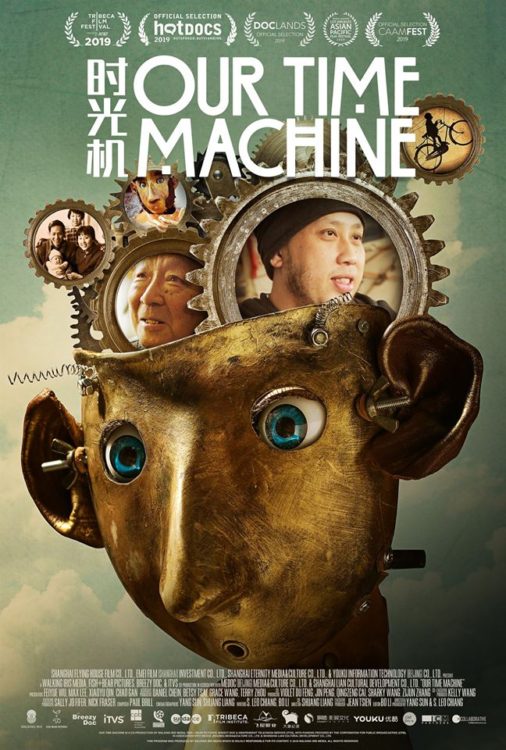
    Synopsis When artist Maleonn realizes that his father suffers from Alzheimer’s disease, he creates “Papa’s Time Machine,” a magical, autobiographical stage performance featuring life-size mechanical puppets. Through the production of this play, the two men confront their mortality before time runs out and memories are lost forever.

    Where to watch Our Time Machine: Premiering at the Tribeca Film Festival

    This post is sponsored by American Gods. Now streaming exclusively on STARZ. Try it for free.


    Our Time Machine — a documentary premiering at the Tribeca Film Festival — begins with a quote by H.G. Wells: “We all have our time machines, don’t we. Those that take us back are memories…And those that carry us forward, are dreams.” For artist turned playwright and director Maleonn, those are one and the same.

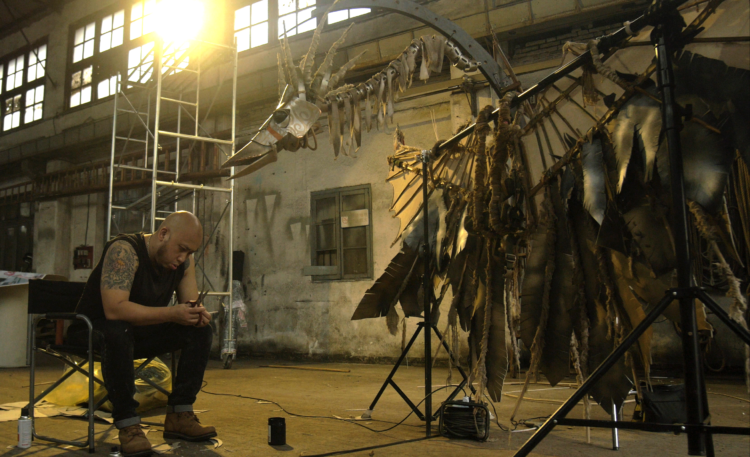
    Over budget and behind schedule, Maleonn, attempts to finish his play called “Papa’s Time Machine.” Through lifesize steampunk puppets carefully constructed with springs and gears and scraps of metal — reminiscent of Mad Max: Fury Road — the play tells the story of a son trying to retrieve memories for his father by building a time machine.

    The play is semi-autobiographical and constructed from memories Maleonn had with his father Ma Ke, who was a director for the Shanghai Chinese Opera Theater and directed over 80 operas. It’s that artistry that Maleonn has always been chasing and has dreamt of working with his father on a project — “Papa’s Time Machine” is that chance.

    Maleonn working on a bird sculpture in OUR TIME MACHINE. Credit: Maleonn Studio

    However, his plan is complicated by the fact that his father has Alzheimer’s and his health is deteriorating quickly. The movie is framed by the production struggling both financially and creatively while scenes of the family’s time together are cut in.

    Documentaries are often as good as its subjects, and Our Time Machine has a wealth of delightfully authentic and often hilarious characters. Ma Ke is so full of life and regret. His wife Ma Duo is a one-liner machine and an almost stereotypical sassy old woman — constantly on her phone and with a quip always ready. And then there’s Maleonn, struggling between pursuing his art as a means to grappling with his father’s illness and being a good son and taking care of his parents.

    It’s difficult to communicate the complexity of real human emotion through the documentary form. You need subjects ready and willing to bare it all. And Our Time Machine achieves that transparency without feeling exploitative or overwrought. For the subjects, particularly Maleonn and Ma Duo, talking to the filmmakers is cathartic.

    Maleonn (right) with his father, Ma Ke (left) in OUR TIME MACHINE. Credit: Maleonn Studio

    The documentary is formless and relatively plotless. Not many “events” happen. We watch Maleonn’s struggle to finish his play, Ma Ke’s frustration with his illness as it intensifies, and see tidbits of memories that Maleonn is trying to retrieve. But all these vignettes come together to create a moving experience filled with some sadness, but also so much life.

    Directors Yang Sun and S. Leo Chiang have so much empathy for their subjects and that comes through in the filmmaking. The same could be said for last year’s Oscar winner for Best Documentary Free Solo. But whereas Elizabeth Chai Vasarhelyi and Jimmy Chin portrayed emotions they have both felt from experience and relationship with their subjects, Our Time Machine taps into a universal human experience.


  • ‘Avengers: Endgame’ is a fitting end to the MCU — movie review

    ‘Avengers: Endgame’ is a fitting end to the MCU — movie review

    Avengers: Endgame is an epic, emotional, spectacle-driven farewell to the Marvel Cinematic Universe as we know it — and it’s perfect in every way. 

    30-second review: Avengers: Endgame is an epic, emotional, spectacle-driven farewell to the Marvel Cinematic Universe as we know it. And the fact that it is so clearly an end is part of the reason it’s so successful. There are many callbacks and moments of familiarity that will make fans cheer, but they don’t feel pandering. Screenwriters Christopher Markus and Steven McFeely took care to earn every one of the moments and often having them based in character.

    It also helps that the movie’s structure is that of an epic balancing multiple story threads and arcs without feeling overstuffed. And it all culminates in a satisfying, glorious end that reminds us why seeing movies with a crowd is so powerful. The MCU is an incredible feat and Avengers: Endgame is the perfect capper to it.

    Where to watch Avengers: Endgame: Available to buy or rent on Amazon.

    Whatever it takes. Full review below ?


    Don’t get it wrong, Avengers: Endgame is the end of the Marvel Cinematic Universe. Yes, these movies will continue. But this is a series finale. And like any good series finale, it’s filled with moments of joy — and fan service (more on that later) — sadness, nostalgia, and, most importantly, a vision for the future. Whatever comes next is something new — and that’s the way it should be.

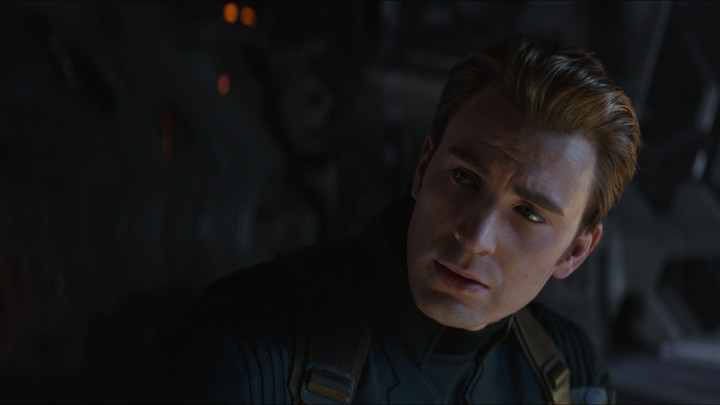
    To the credit of MCU mastermind Kevin Feige and directors Joe and Anthony Russo, this movie is proof that every movie, every moment, and every character along the way mattered. Endgame is a celebration of the journey and the six heroes that began it all — Tony Stark/Iron Man (Robert Downey Jr.), Steve Rogers/Captain America (Chris Evans), Thor (Chris Hemsworth), Natasha Romanoff/Black Widow (Scarlett Johannson), Clive Barton/Hawkeye (Jeremy Renner), and Bruce Banner/The Hulk (Mark Ruffalo). It’s their finale — and what an emotional, surprising, and exciting curtain call it is.

    It’s difficult to talk about Endgame without spoiling any plot details — and yes, avoid spoilers at all costs. I’ll be vague here. Because even if you think you know what’s going to happen, you don’t. We begin about a month after Thanos (Josh Brolin) wiped out half the population of the universe using the six Infinity Stones and the Avengers are at a loss.

    Even though Endgame clocks in at just over 3 hours, it doesn’t drag. Though the first act spends a lot of time with the characters working through their defeat. They have always been the world’s hope. Now, they’re the ones in need of some hope.

    It’s the raw moments with these characters that I missed in Infinity War. That movie had the difficult job of setting up the stakes for this movie and it did that successfully. But what makes the MCU so impressive is its willingness to slow the action down for the sake of character development. So much of Endgame is spent delivering payoffs and callbacks for fans. A large chunk of the movie is a clever and entertaining trip down memory lane. That doesn’t mean that it doesn’t earn the emotional payoffs for its characters — particularly the original six Avengers.

    Eventually, the story shifts to a Hail Mary attempt at reversing the effects of Thanos’ snap that is so ridiculous that it might just work. And the screenplay penned by Christopher Markus and Stephen McFeely keeps things moving. I’ve always praised the original Avengers movie for its brilliant story structure, Endgame is similarly well-paced and focused. It builds to a brilliant final act that can only be described as Earth-shattering. It’s not an exaggeration to say I was physically shaking.

    But that’s what these movies do so well. They get you laughing when they want you to laugh, crying when they want you to cry, cheering when they want you to cheer. If the Russo’s specifically are to be credited with anything it’s that they get you to do those things without feeling like you’ve been manipulated.

    Some of the praise for that has to be given to the performances as well. Chris Evans gives the best performance of his decade-long turn as Captain America while Robert Downey Jr. absolutely nails every emotional beat of Tony’s storyline. On the other hand, Chris Hemsworth and Mark Ruffalo hold down the comedic end. It’s a well-oiled machine that chugs to its incredibly satisfying conclusion.

    Which is good, since this is the end. The MCU will go on, but this is a bittersweet finale this 22-movie run. Storylines come to a end — all well-earned — and characters leave — some die, some move forward to uncertain futures, some stay right where they are. Still, they’re all changed. Every single character is different from when they were first introduced and that’s why no franchise has been able to do what the Marvel Cinematic Universe has been able to do.

    Endgame is a farewell. An epic, emotionally draining, spectacle-driven farewell. And yet, things are just getting started.


    ADVERTISEMENT


    More movies, less problems


    Hey! I’m Karl. You can find me on Twitter and Letterboxd. I’m also a Tomatometer-approved critic.

    💌 Sign up for our weekly email newsletter with movie recommendations available to stream.


    ADVERTISEMENT


  • ‘Little Woods’ review — Tessa Thompson goes against the system

    ‘Little Woods’ review — Tessa Thompson goes against the system

    Little Woods, Nia DaCosta’s directorial debut, finds two sisters going up against a system that doesn’t want them to succeed in

    One sentence review: Little Woods is a quiet, well-directed character-driven drama that features a powerhouse emotional performance by Tessa Thompson.

    One paragraph review: Though it may be on the nose at times, Little Woods is a tense and emotional look at the political issues we’re arguing about today are that affecting people’s lives — from the opioid crisis to access to healthcare. However, much of its success lies in a quiet, but powerful performance by Tessa Thompson.

    Where to watch Little Woods: Available to buy on Amazon.

    Take a trip to Little Woods. Full review after the jump ?


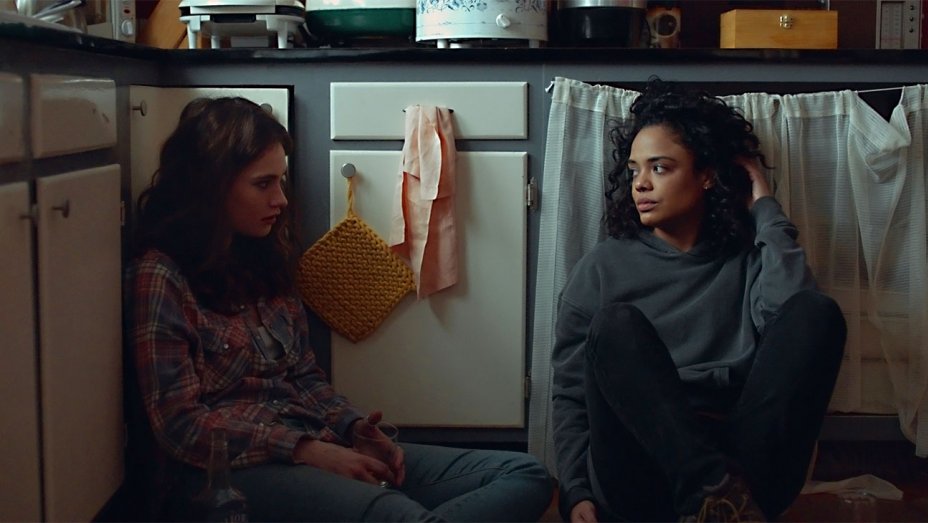
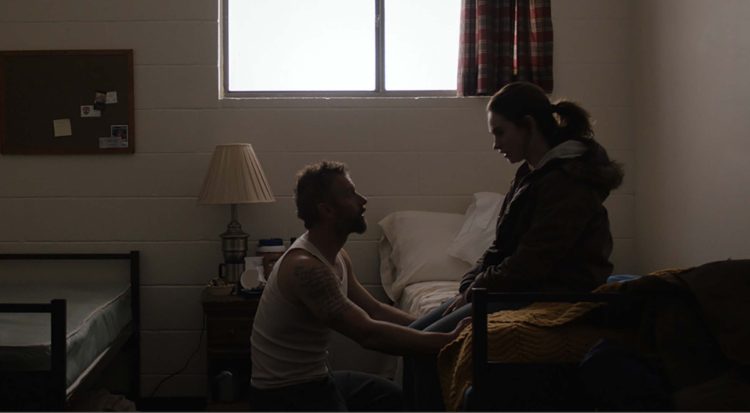
    Little Woods follows in the vein of Hell or High Water as it follows sisters Ollie (Tessa Thompson off of her banner year last year) and Deb (Lily James) as they struggle against the institutions in the US that force them to turn to compromise their morals to survive.

    Ollie is ten days away from the end of her probation for peddling drugs from Canada across the border into Little Woods, North Dakota in an ironic twist on the narrative the president is trying to drive. It’s not like she didn’t have a reason. Her mom was sick and suffering like most people in the cold rural oil town. She convinces herself of her actions because she is doing good for the people of the town.

    However, she’s not only moving prescription medications. She’s also bringing opioids over the border fueling the crisis that is sweeping the country — to her credit, she leaves the actual dealing of the drugs to local Bill (Luke Kirby). But she’s on the track to rehabilitation. Her probation officer Carter (Lance Reddick) even recommended her for a job that would take her out of the oil town.

    On the other hand, Deb is living in a van parked in a store parking lot with her son Johnny (Charlie Ray Reid) who she had with her estranged boyfriend Ian (James Badge Dale). And even though she’s barely making enough money to support her and her son, she discovers she’s pregnant.

    Ollie, the consummate problem solver, makes a deal with a bank to prevent foreclosure. Unfortunately, that plan involves the sisters coming up with $3,000 in just one week. With their backs against a wall, Ollie risks her bright new future to step back into the drug game and sell to injured oil workers in the town who don’t have enough money to have their injuries looked at in a hospital.

    little woods
    James Badge Dale and Lily James in LITTLE WOODS.

    Little Woods is colored — perhaps too broadly — with themes around the US government’s failure of working-class citizens. Particularly around healthcare and the economic depression of blue-collar workers. And the movie is effective in delivering an impactful story around those themes. If anything, the biggest criticism is that the script is a bit too polished and on the nose — Deb at one point even says, “being pregnant costs $8,000?”

    The movie is a slow burn character drama until the last 30 minutes where DaCosta proves why she will be directing the Jordan Peele-produced Candyman remake. Her grasp of suspense and tension is impressive as Ollie and Deb’s plan sets into motion. Brian McOmber’s droning score adds to the overwhelming sense of dread — he scored Krisha and It Comes at Night to similar effect — and cinematographer Matt Mitchell captures the vast emptiness of the plains to mirror the bleakness of the story.

    But so much of the movie rides on the back of Tessa Thompson’s rich performance. Ollie is an enigma of a character. She feels both broken down and empowered by her circumstances. Broken down because there are institutions set in place that oppress people like her’s ability to live and empowered because she’s resentful enough to do something about it. Thompson has proved herself in genre fare like Annihilation and Sorry to Bother You, this movie gives her the chance to flex her dramatic chops to great success.

    Little Woods isn’t the best version of the “people on the margins” story that has been told in movies like The Florida Project and last year’s criminally overlooked Leave No Trace. Still, it’s a solid debut by a filmmaker with a great future and another step in the ascendance of Tessa Thompson.


    ADVERTISEMENT


    More movies, less problems


    Hey! I’m Karl. You can find me on Twitter and Letterboxd. I’m also a Tomatometer-approved critic.

    💌 Sign up for our weekly email newsletter with movie recommendations available to stream.


    ADVERTISEMENT


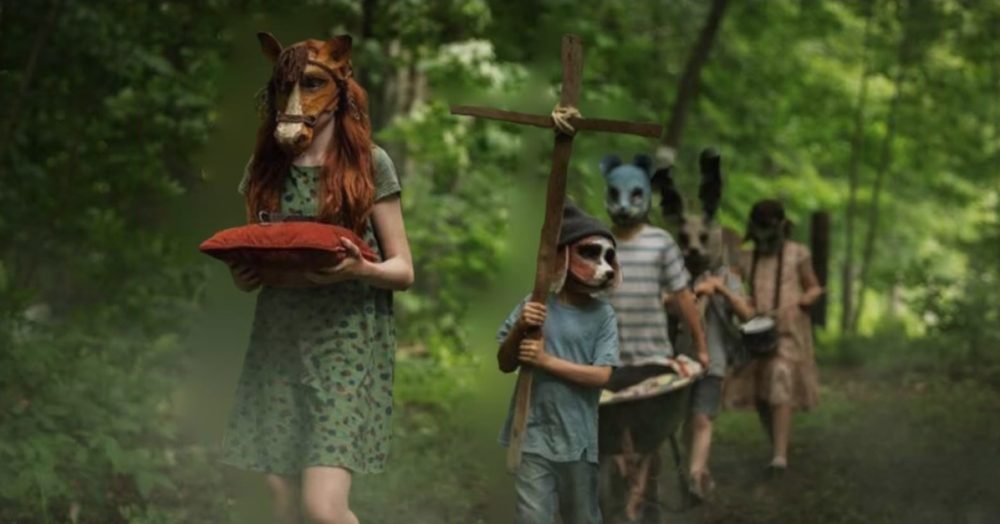
  • ‘Pet Sematary’ review — Kill it, bury it, and don’t let it come back

    ‘Pet Sematary’ review — Kill it, bury it, and don’t let it come back

    Pet Sematary, a remake of the 1989 film, follows a young family struck by disaster and the lengths they’ll go to undo it

    30-second review: Pet Sematary is appropriately creepy and tense, but with a weak screenplay and direction to match, this horror movie remake is dead on arrival. There are moments in where you can appreciate the craft that went into it. But without characters or a strong story to ground those moments in, they all feel cheap and fleeting. It makes you think why they’d remake it in the first place. Based on the final cut, I’m thinking it has something to do with $$$. 

    Where to watch Pet Sematary: Available to buy or rent on Amazon.

    Go bury yourself in the Pet Sematary and come back. Full review below ?


    Pet Sematary has an interesting story, strong visual style, and a keen sense of atmosphere. However, all those elements that work are betrayed by a bloated script, underwritten characters, and directorial choices that could have been scaled back by at least 75%.

    It’s unfortunate considering the Stephen King story that the movie is based on — it was adapted into a 1989 film — could be mined for incredibly rich subtext on grief and guilt. However, the movie doesn’t find those themes until the final third, which delivers, but ultimately falters because the movie before it doesn’t earn those final 30 minutes.

    The Creed family, consisting of Louis (Jason Clarke), Rachel (Amy Seimetz), and their two children Ellie (Jeté Laurence) and Gage (played by twins Hugo Lavoie and Lucas Lavoie), move from Boston to Maine to live a calmer life. Louis was an ER doctor in Boston and seems to have some PTSD from his experience — the movie, unfortunately, doesn’t explore this thread.

    As she explores their new house and acres of property, Ellie stumbles upon a “Pet Semetary” (sic) where dozens of the town’s deceased pets are buried. There she meets their neighbor Jud (John Lithgow), a widower who quickly takes to Ellie and the rest of the Creeds — though we’re not shown much of their bonding.

    Throughout the film, both Louis and Rachel are haunted by terrifying visions. Louis by a patient he recently lost at his university clinic job, which was supposed to be a relaxing career change and Rachel by memories of her sister who died at a young age from spinal meningitis. The visions are appropriately unsettling, but lose their impact because the trauma that is causing them is overly simplified.

    One day, Jud discovers Ellie’s beloved cat Church dead on the side of the road. It’s assumed that he was hit by one of the trucks that often come barreling down the country road. Instead of devastating his daughter with the news, Louis decides to bury the cat with the help of Jud. However, Jud has another plan.

    Deep in the vast stretches of the swamp on the property is an ancient burial ground used by Native Americans. There Jud tells Louis to bury the cat, leave a tower of stones on top of the grave, and go back home. Louis is disturbed to find Church with Ellie the next morning.

    However, Church isn’t the same. He’s aloof and aggressive. At one point he even attacks Ellie and threatens Gage. Louis, realizing his mistake, takes Church and releases him into the wild. Jud reveals that though the grounds can bring the dead back to life, the returned don’t return the same as they were.

    Pet Semetary has themes built into its concept. Naturally, the plot explores death, our reaction to it, and the guilt we feel after it happens. The issue with this incarnation of the story is that it chooses to emphasize the horror over the characters and their journies. With a story as grounded in real human emotion and experience as this, you need both for it to be effective.

    Look at last year’s Hereditary, which similarly dealt with guilt and grief. If you pulled out the horror elements, you still had a compelling family drama. Do the same to Pet Semetary and you’re not left with much.

    On top of that, the movie has some real structural issues in a screenplay that also has too much clunky exposition to forgive. I truly think directors Kevin Kölsch and Dennis Widmyer do their best with the material but end up making choices that emphasize the issues in the screenplay rather than hide them. In particular, the pacing makes the movie feel both too drawn out and too short at the same time.

    I wish there was more for me to recommend in Pet Sematary. I had high hopes after a run of great horror movies about loss — The Babadook, Under the Shadow, and Hereditary being chief among them. But horror is evolving and it’s not enough to just be atmospheric and scary. Pet Sematary delivers in that aspect, but without the other elements, it’s dead on arrival.


    ADVERTISEMENT


    More movies, less problems


    Hey! I’m Karl. You can find me on Twitter and Letterboxd. I’m also a Tomatometer-approved critic.

    💌 Sign up for our weekly email newsletter with movie recommendations available to stream.


    ADVERTISEMENT


  • 2020 Oscars Update #1: Are ‘Us’ or ‘Captain Marvel’ contenders?

    2020 Oscars Update #1: Are ‘Us’ or ‘Captain Marvel’ contenders?

    This is the state of the 2020 Oscars race. At the end of every month, I’m going to take a look at the state of the Oscars race — breaking down the contenders that made a splash, those that fizzled out, and the ones to come.

    317 days until the 2020 Oscars

    Oscar contenders that were released this month

    By this time last year, three Oscar-nominated films had premiered — Best Picture nominee Black Panther, Best Animated Feature nominee Isle of Dogs, and Best Visual Effects nominee Ready Player One.

    Most notably, it was the second year in a row that a best picture nominee was released in the first quarter of the year — Get Out was released in February 2017. And what do Get Out and Black Panther have in common? They were both massive hits at the box office. It makes sense considering it takes a lot for a voter to remember your film almost a year later.

    2019 has been notably slow at the box office, but there have been two massive hits that could be in the Oscar conversation. Funny enough, they both have connections to past early Oscar contenders:

    (more…)
  • Comedic Performances that Deserved Oscar Nominations

    Comedic Performances that Deserved Oscar Nominations

    The Oscars are notorious for ignoring comedies, so we took to Twitter to find the comedic performances that were worthy of nominations.

    Dying is easy, comedy is hard. However, in the eyes of the Oscars, comedy isn’t equal. Comedies are rarely taken seriously and when they are they are rarely broad comedies.

    With Olivia Colman taking home the Oscar for Best Actress for her performance in comedy The Favourite, I took to #FilmTwitter to find other comedic performances that should have been nominated for Oscars. Here are some of those answers.

    (more…)
  • ‘Us’ movie review — Jordan Peele avoids the sophomore slump

    ‘Us’ movie review — Jordan Peele avoids the sophomore slump

    Us, Jordan Peele’s follow up to his Oscar-winning debut Get Out, follows a family being hunted down by their terrifying doppelgängers.

    30-second review: Lupita. N’yongo. While Us is successful in many ways — especially in its horror set pieces surrounding a horrifying home invasion — the central performance by the Oscar winner is the main reason the movie is a worthy follow-up to Get Out. He ups both the horror and the comedy, for better and worse. Though the plot and themes are muddier, Peele focuses on delivering an effective horror film — and that he did. 

    Where to watch Us: Available to buy or rent on iTunes and Amazon.

    Watch yourself. Full review after the jump ?


    For people that complained the Jordan Peele’s directorial debut Get Out wasn’t scary enough, he heard you. While the laughs and biting political commentary that made Get Out such a sensation — and winning him an Oscar for Best Original Screenplay — are still there, Peele’s sophomore effort Us cranks the horror up as far as it can go.

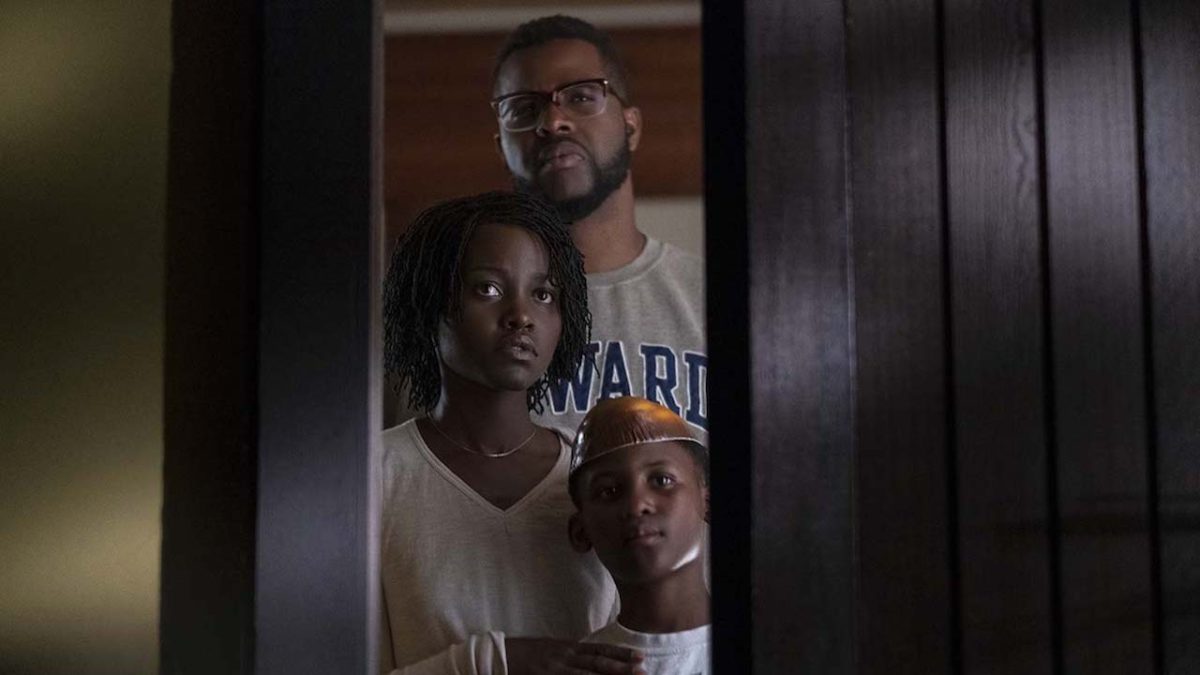
    The first half of the film is laced with unrelenting tension as Adelaide (Lupita N’yongo), her husband Gabe (Winston Duke), and their kids Zora (Shahidi Wright Joseph) and Jason (Evan Alex) are tormented by their scissor-wielding, red jumpsuit-wearing doppelgängers in their beach vacation house.

    The experience is particularly unsettling for Adelaide who had an experience as a child (Madison Curry) where she was separated from her parents (Anna Diop and Yahya Abdul-Mateen II) on a carnival-filled boardwalk to end up in a mirrored fun house where she encountered a girl that looked exactly like her.

    Where Get Out used a premise similar to Invasion of the Body Snatchers and The Stepford Wives to explore race in America, Us uses home invasion movies as its template. It pulls from those movies all the way down to the fact that their tormenters are almost playing with them before finally accomplishing what they set out to do — kill their counterparts.

    All the actors portray their doppelgängers to chilling effect, especially N’yongo who nails both the role of a terrified mother desperate to protect her family and her deliciously sinister twin who is hell-bent on some revenge and speaks in a malicious hoarse voice — she’s the only doppelgänger that speaks.

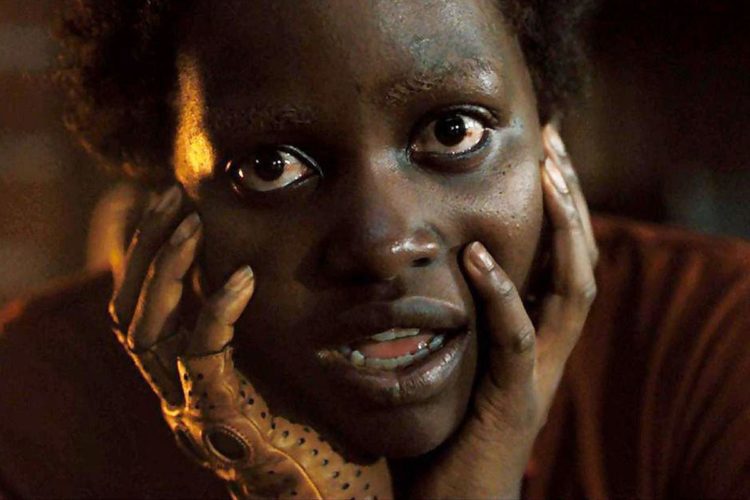
    Us movie
    Lupita N’yongo in Us. Credit: Universal Pictures.

    The plot doesn’t unravel as smoothly as Get Out, which is why the movie isn’t as successful as a whole. The middle act, in particular, ends up stealing a lot of the momentum from the superb first third. It also doesn’t hold up to as much scrutiny. Where Get Out tracks in nearly every beat — like a puzzle that you need to solve and that you can rewatch and find new clues that you might have missed — Us feels more like a maze that you have to wander around before finally solving. Don’t think too much about the mechanics of the movie, it takes away from its charms.

    Tonally, Us is darker, which makes the flashes of humor stick out. Much of the first act is focused solely on atmosphere and tension, so when the middle third comes around the humor deflates a lot of it. But it mostly works. That’s thanks to Duke’s performance — much of the film’s comedy comes from his character’s artificial bravado.

    The allegory, though, and N’yongo’s performance is what keeps the movie from going too far off the rails. The movie’s title can be taken in more ways than one. And while the message is not quite as profound, the movie still completes the job of delivering it with impact.

    Us works a lot better on its surface than it does when it’s dissected. But as a horror movie, it completely works with its centerpiece home invasion sequence being a spectacular horror setpiece that will have you both covering your eyes and having trouble looking away. If anything, come for N’yongo’s performance, which should put her on the track to a much deserved second Oscar nomination.

    Edit: Shadow and Act has a terrific article theorizing on the meaning of the film. You can read it here. 


    ADVERTISEMENT


    More movies, less problems


    Hey! I’m Karl. You can find me on Twitter and Letterboxd. I’m also a Tomatometer-approved critic.

    💌 Sign up for our weekly email newsletter with movie recommendations available to stream.


    ADVERTISEMENT


  • ‘Captain Marvel’ movie review — A 90s origin story throwback

    ‘Captain Marvel’ movie review — A 90s origin story throwback

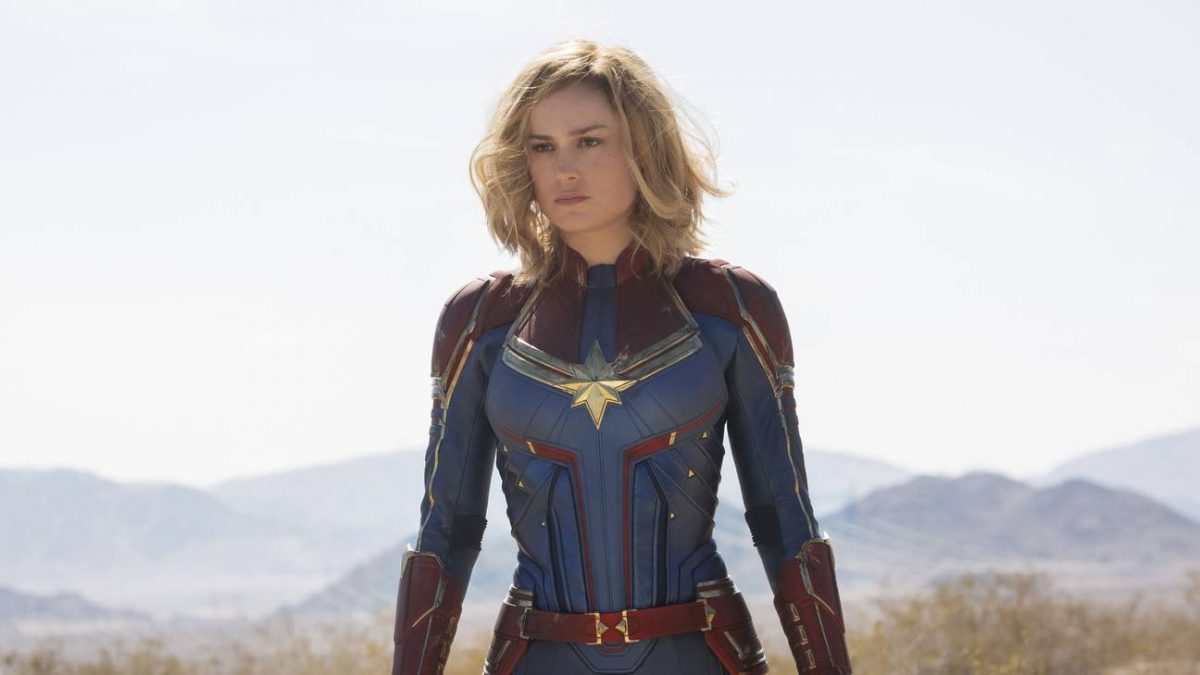
    Captain Marvel features Brie Larson as the first lead female superhero in the Marvel Cinematic Universe as she a young Nick Fury solve the mystery of her identity.

    One sentence review: Captain Marvel is a fun, corny, and empowering origin story that feels like a bridge between the past and the future of the Marvel Cinematic Universe.

    One paragraph review: Captain Marvel harkens back to the MCU origin stories that kicked off this wave of superhero movies — and that’s a good thing. It’s smaller, tighter, and more character driven than the other movies in the franchise, even if it feels non-essential. It also helps that Brie Larson and Samuel L. Jackson have firecracker chemistry and are supported by a stellar cast — Ben Mendelsohn and Lashana Lynch are standouts.

    Where to watch Captain Marvel: Available to buy or rent on Amazon

    Grab your leather jacket and sunglasses. Full review after the jump ?


    Captain Marvel had one of the hardest time slots on the Marvel Cinematic Universe calendar. If the forthcoming Avengers: Endgame is the series finale, then Captain Marvel is the penultimate episode. However, like many penultimate episodes, it feels like any typical entry in the Marvel Cinematic Universe — for both better and worse.

    Like last year’s Bumblebee — the out of sequence 80s dripped entry in the Transformers franchise — Captain Marvel is a prequel to almost all of the MCU — except Captain America: The First Avenger. Taking place in the 90s and following a Kree soldier called Vers (Brie Larson), Captain Marvel is less about forwarding the overall storyline of the MCU — though it certainly connects some dots — and more about giving Captain Marvel a warm welcome to the MCU with her own origin story.

    And while the movie hits a lot of the same beats as a typical superhero origin story, it presents them in an interesting way. That’s because Vers spends most of the running time of the movie trying to make sense of these dreams of a life on Earth that feel like memories.

    Along with her crew of Kree warriors — Vers’ mentor and commander Yon-Rogg (Jude Law), Minn-Erva (a criminally underused Gemma Chan), Korath (Djimon Hounsou reprising his Guardians of the Galaxy role, among others — Vers continues the long-running war with a shape-shifting species called Skrulls. However, after being captured in a battle, Vers escapes only to crash land on Earth.

    There, she catches the attention of S.H.I.E.L.D operative Nick Fury (a de-aged Samuel L. Jackson — the CGI is phenomenal) who helps her on her quest to find out who she is and defeat the Skrulls.

    The movie balances funny fish-out-of-water moments as Vers marvels at the 90s culture and technology — she literally crash-lands into a blockbuster — with a charming buddy comedy between Fury and Vers. And while it’s all fun and entertaining, the movie does get at something deeper.

    So much of what works in Captain Marvel comes from directors Anna Boden and Ryan Fleck (best known for Half Nelson, which scored Ryan Gosling his first Oscar nomination). MCU mastermind Kevin Feige choosing the duo to tackle the introduction of what is most likely going to be their most important hero to date was surprising. They’ve directed quiet character-centric indies for most of their careers. But it’s that indie intimacy that drives the movie’s best moments.

    Vers finally tracks down some answers in the form of her former best friend on Earth Maria (a terrific Lashana Lynch). And instead of it being this huge melodramatic moment where the hero reunites with their best friend or finally learns their identity, the movie slows down and gives a genuinely emotional moment between these two women. Lynch nails the scene. She’s a standout.

    To both its benefit and detriment, Captain Marvel is essentially inconsequential in the MCU timeline. We could have jumped into Endgame without this story. It pulls some of the tension and stakes out of it — even the villain of the piece Talos (Ben Mendohlson — truly great) is mostly benign. However, it also allows the movie to be that corny, fun, and uplifting origin story that we’ve seen, but still eat up.

    It helps that Brie Larson is magnetic as Captain Marvel. She’s not your typical superhero. There’s something genuine about her. Even when she truly harnesses the extent of her powers, it feels like a real person experiencing something extraordinary. Speaking of the extent of her powers, Thanos better beware.

    At just two hours, Captain Marvel is really just a blast to watch. It’s a movie that I think will replay a lot better than in this current moment when we can separate it from the conclusion of the franchise. It doesn’t bring much new to the table other than the fact that the hero is a woman. But with that, it inherently has these touching moments of empowerment that make this an important entry in the MCU.

    Also, did I mention there’s an adorable cat named Goose and Annette Bening?


    ADVERTISEMENT


    More movies, less problems


    Hey! I’m Karl. You can find me on Twitter and Letterboxd. I’m also a Tomatometer-approved critic.

    💌 Sign up for our weekly email newsletter with movie recommendations available to stream.


    ADVERTISEMENT


  • ‘High Flying Bird’ review — The politics of basketball

    ‘High Flying Bird’ review — The politics of basketball

    High Flying Bird is a masterfully constructed drama that tackles the professional sports business with as much intrigue as a heist movie. 

    30-second review: High Flying Bird doesn’t clue you into its real intentions until the very end, that doesn’t make the journey to get there any less compelling. Steven Soderbergh is a master of storytelling and with this film he’s given an incredible story and screenplay to work with from Moonlight‘s Oscar-winning screenwriter Tarrell Alvin McCraney.

    While the movie takes place in the world of basketball, it’s not really about basketball. Instead, it’s a commentary on professional sports, how the players are treated and our political moment. McCraney’s script is a structural marvel as it moves players (pun intended) into place without tipping you off to its endgame.

    Where to watch High Flying BirdNow streaming on Netflix.

    Swish. Full review below ?


    High Flying Bird isn’t about basketball, but rather the business of basketball — in fact, a game of basketball never actually happens in the movie. Director Steven Soderbergh — who has spent his retirement from movies making movies — filmed the film on an iPhone — for the second time in his career after Unsane. There’s something so hyperrealistic about the imperfect crispness of the picture. It’s perfect for this narrative written by Moonlight’s Oscar-winning screenwriter Tarell Alvin McCraney.

    Soderbergh has always been interested in analyzing people in incredibly specific and strained circumstances. That’s why he’s always been attracted to stories involving crimes — Out of Sight, Ocean’s Eleven, The Informant!, Logan Lucky. High Flying Bird is no exception.

    High Flying Bird
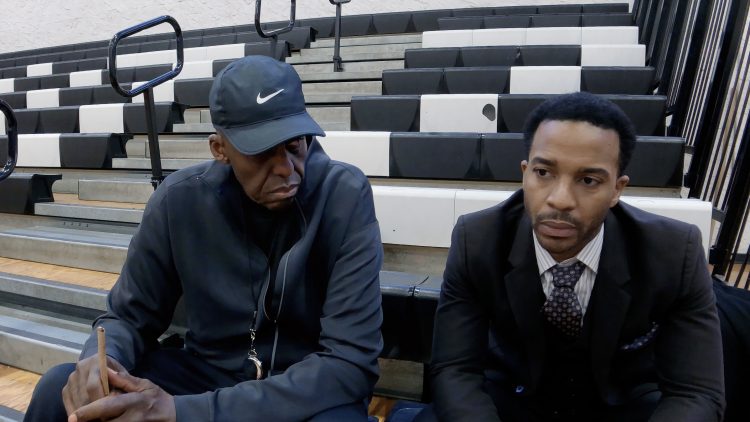
    Bill Duke as Spence and André Holland as Ray Burke in High Flying Bird, directed by Steven Soderbergh. Photo by Peter Andrews

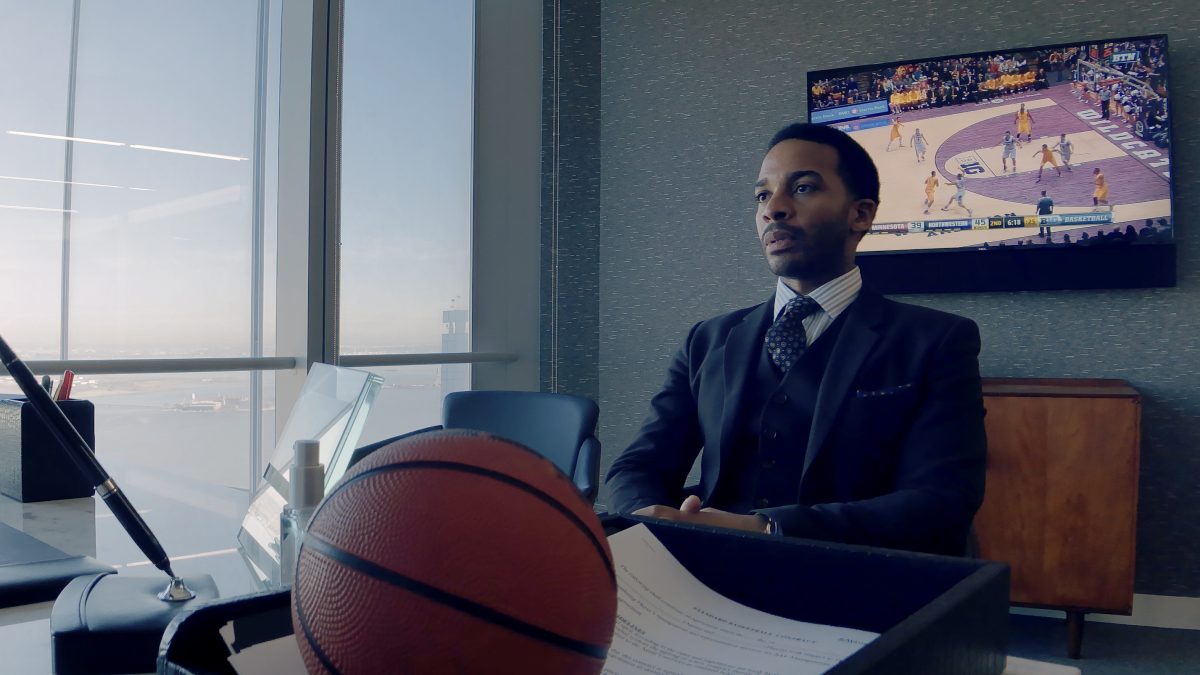
    Taking place 25-weeks into an NBA lockout, High Flying Bird follows agent Ray Burke (Andre Holland) as he navigates the tricky world of negotiations between the team owners, players union repped by Myra (the great Sonja Sohn), and the networks carrying the games. He has his own self-interests in the lockout ending. He represents first-round draft pick Erick Scott (Melvin Gregg) who is struggling as his contract to the New York team — actually team names are never said — is in purgatory during the lockout.

    McCraney’s screenplay gives away that he began as a playwright as most scenes play out as long conversations or speeches that seem meaningless — until they’re not. Truly, this is a masterful screenplay that’s already in the running for one of the best of the year. He weaves multiple ideas and actions and motivations together seamlessly without giving anything indication of where it’s all doing until he wants you to know.

    Ray is always thinking. Holland’s portrayal of the smart and calculating sports agent is as slick as George Clooney’s Danny Ocean. It’s important because Ray is just as sneaky. Even though it doesn’t look like it on the surface, High Flying Bird is a heist movie just like the Ocean’s Trilogy or Logan Lucky. But instead a heist of money, this movie follows the heist of an idea. Or, should I say, a heist and a reverse heist.

    High Flying Bird
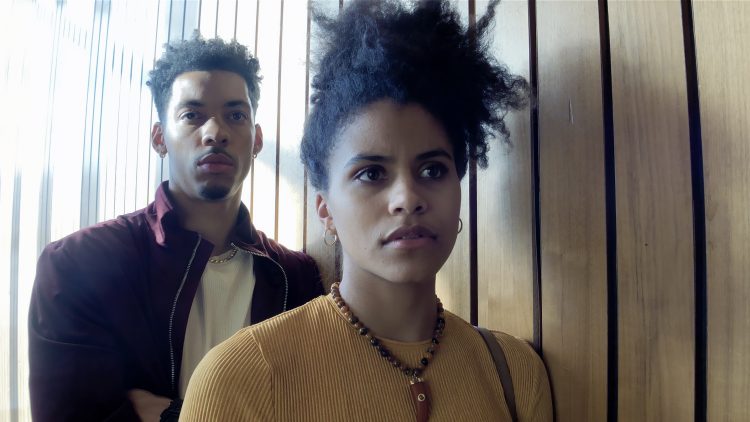
    Melvin Gregg as Erick Scott and Zazie Beetz as Sam in High Flying Bird, directed by Steven Soderbergh. Image by Steven Soderbergh/Netflix

    The thought that the NBA — or any professional sports league — takes advantage of its largely black players isn’t new. “They invented a game on top of a game,” as Ray’s mentor Spencer (Bill Duke) says referring to basketball turning from a game to a business. However, Ray is playing the game on top of the game on top of the game. Another person who is playing the system for their own game is Ray headstrong assistant Sam (Zazie Beetz giving a movie star performance).

    The brilliance of High Flying Bird is that all the pieces on the board and their roles — that also include Erick’s rival Jamero Umber (Justin Hurtt-Dunkley), his mom/manager Emera Umber (Jeryl Prescott), New York team owner David Seton (Kyle MacLachlan), and Ray’s boss (Zachary Quinto) — aren’t revealed until the final act where the mastermind reveals that everything that happened was in his plan all along.

    Thanks to the screenplay — a structural and thematic marvel — High Flying Bird manages to be a timely exploration of our political moment without straying too far from its main plot. Not only that, it’s as entertaining to watch as a stylish heist thriller. Soderbergh does his usual strong work, but if Tarell Alvin McCraney wasn’t already on your radar he should be now. He’s the real star.


    ADVERTISEMENT


    More movies, less problems


    Hey! I’m Karl. You can find me on Twitter and Letterboxd. I’m also a Tomatometer-approved critic.

    💌 Sign up for our weekly email newsletter with movie recommendations available to stream.


    ADVERTISEMENT

  • 2019 Oscars Wrap-Up: The Oscars are changing and resistant to change

    2019 Oscars Wrap-Up: The Oscars are changing and resistant to change

    The 2019 Oscars feel like a step back after so much progress in the last couple years, but there are glimmers of hope.

    The 2018-2019 awards season has finally come to a close and like every other season, it feels like looking at an empty room after a party. It’s still and lifeless with reminders of what came before — all the decorations and glamour are now worn down, tattered, and strewn on the floor. And all you can do is ask yourself, was it worth it? But in an odd way, this season has felt like an even bigger let down than before.

    After two consecutive years of some of the greatest Best Picture fields in recent memories, The Academy backslid to one that still had great progressive picks — Black Panther, BlacKkKlansman, The Favourite, Roma — mixed with complete regressions — Bohemian Rhapsody, Green Book. It seems that unless one of the movies in the former group won that the season would be a letdown.

    And we thought it could happen. After one of the most inspired picks in their history with Moonlight, the Oscars went the still unique, but more consensus choice of The Shape of Water — had Get Out and Lady Bird not been in the field this win would have gone over a lot better. There was hope that Roma would finally break the barrier and be the first Foreign Language movie to win Best Picture — and the first released by a streaming platform.

    But the majority male and white Academy went with the choice we should have seen all along: Green Book. It is a movie for them, by them, and meant to ease their conscience. Truly, I don’t think Green Book is a cinematic disaster on the level of Bohemian Rhapsody, another Oscar-friendly choice. But it winning 30 years after Driving Miss Daisy won speaks volumes as both movies have a fatal misunderstanding of the themes it’s playing with.

    Let’s go back and start with the good.

    Diversity wins

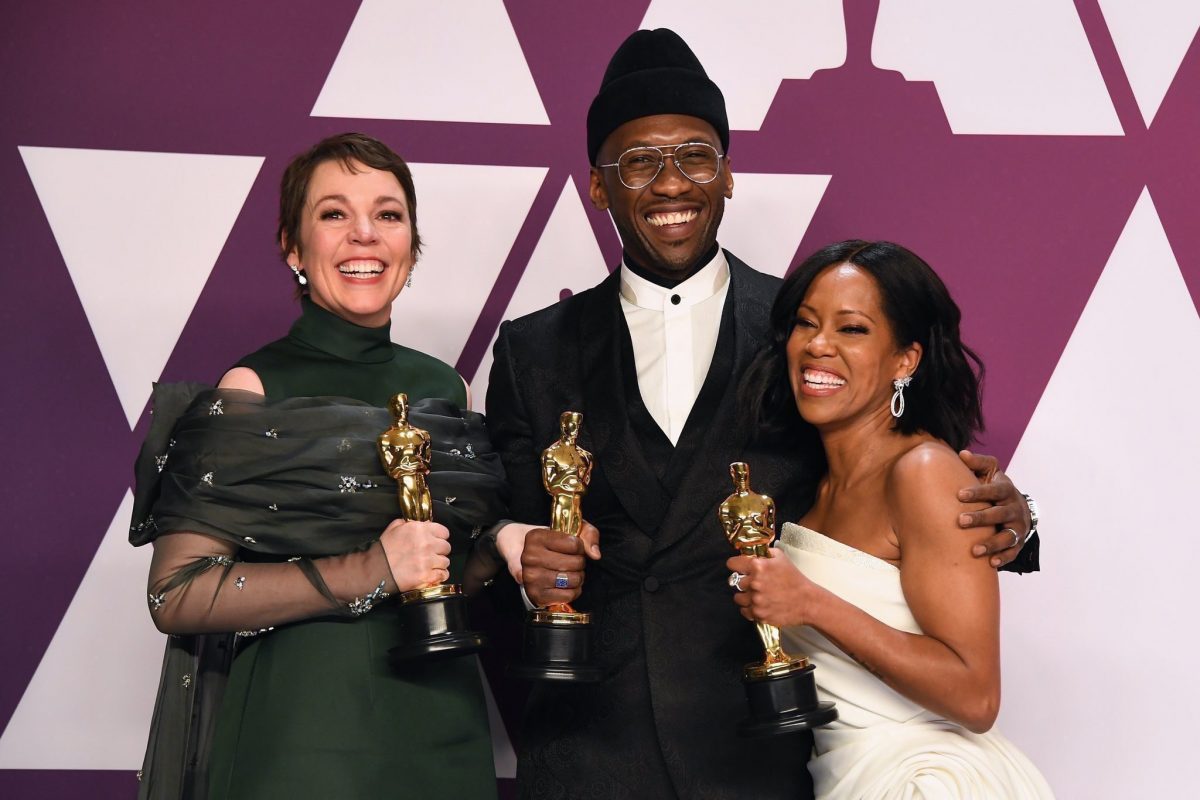
    Regina King won Best Supporting Actress for Barry Jenkins’ adaptation of James Baldwin’s novel of the same name. Not only was she deserving, If Beale Street Could Talk is a movie that breaks every convention we know about the Academy.

    Even though I have large issues with the movie, I do believe Mahershala Ali deserved to win the Best Supporting Actor Oscar from that lineup. His performance is the movie’s saving grace and I’m happy that he, of all people, has two Oscars. He’s also only the second black actor to win more than one competitive Oscar.

    While the Oscars love veterans, Olivia Colman — a relative unknown in the US — won for a comedic performance as a queer Queen Ann in Yorgos Lanthimos’ offbeat The Favourite upsetting Glenn Close who extends her record for the most Oscar nominations without a win for any living actor or actress.

    Black Panther become the first Marvel movie to win an Oscar — picking up three for Costume Design, Production Design, and Original Score. The winners of those first two categories were the first black women to win non-acting Oscars in 30 years.

    Finally, Spike Lee won his first competitive Oscar for Best Adapted Screenplay for BlacKkKlansman. Not only that, he received it from Samuel L. Jackson.

    The Oscars are making good and interesting choices. But with that, messy traditional biopic Bohemian Rhapsody led the night in wins and overly simplified take on race Green Book won Best Picture.

    The dichotomy is apparent.

    The Academy is changing, but reminders of its past are still there

    It was apparent when last year two of the four acting Oscars went to a film with a similarly shaky take on race and the other two won for playing real-life characters in biopics, but Get Out and Call Me By Your Name won the screenplay categories and The Shape of Water won Best Picture.

    The efforts to diversify the Academy by former president Cheryl Boone Isaacs have had a noticeable effect on the nominees and winners. But the old guard of the Academy still has a great effect. This year, however, their effect was seen in the biggest category of the night. That’s why it was so much more visible.

    I’m hopeful for the Oscars. So many barriers were broken. A superhero movie — one led by a black cast — was finally nominated for Best Picture. A black-and-white Mexican Netflix movie was nominated for — and nearly won — Best Picture. Three of the four acting winners were people of color and three of the four acting winners played queer characters.

    But there is still a long way to go.

    And if the Academy (and ABC) could stop obsessing over ratings, which will continue to fall as live tv continues to fall, there are sensible changes they can make to get there. My suggestions:

    • Continue to diversify the voting body: Strides have been made to diversify the voting body, but it’s slow going. The Academy has to add more women and people of color to specific branches — directing, producing, and below-the-line, in particular.
    • Expand Best Picture to ten nominees (again): More nominees means more chances that big-budget tentpoles, smaller indie movies, and more diverse movie are nominated.
    • Shorten the season: Awards season lasts too long. If the Oscars were made earlier, there would be less time for campaigning and glad-handling and more chances for surprises that aren’t just following earlier award bodies.

    I love the Oscars because I love film. The way to fix the Oscars is for the Academy to begin loving film again, as well. You do that by adding fresh new voices and giving them more chances to have their work recognized. Let’s relish in the positive, but know that there’s work to be done. If this year has shown us anything, it’s that we, the film lovers, have a voice to change things.

  • ‘The Changeover’ review — A well-made gothic YA fantasy

    ‘The Changeover’ review — A well-made gothic YA fantasy

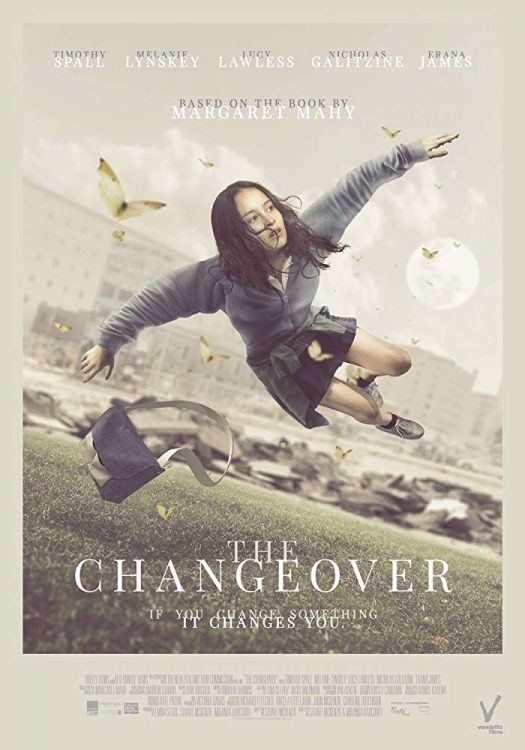
    The Changeover is a well-made fantasy YA movie that features a terrifying villainous turn by Timothy Spall.

    The Changeover — based on Margaret Mahy’s 1984 novel of the same — is refreshingly a young adult adaptation that doesn’t have aspirations for a franchise. In the vein of Twilight, the movie tells the story of Laura (Erana James), a teen who seems to know when something bad is going to happen before it does. She doesn’t realize it, but this is because she’s a witch.

    Portrayed as a low fantasy — meaning that magical events intrude on an otherwise normal world — The Changeover takes place in New Zealand following an earthquake. Laura and her younger brother Jacko (Benji Purchase) are often left to their own devices following the suicide of their father and their mother Kate’s (Melaine Lynskey) rigorous work schedule to support the trio.

    One day, walking home from school, Laura loses Jacko just to find him with a creepy man named Braque (Harry Potter’s Timothy Spall). The chance encounter triggers extrasensory perception for danger, but before she can get Jacko out of the shipping crate that Braque uses as an antique shop he places a stamp on the young boy.

    In the next days, Jacko begins to develop strange behaviors — speaking in a voice that isn’t his, purposefully burning his hand on the stove — before falling ill and ending up in the hospital. Doctors think they pinpoint the illness, which would require a blood transfusion if either Laura or her mother is a suitable donor.

    However, Laura knows something more supernatural is afoot. So, she turns to the mysterious school hunk Sorensen Carlisle (Nicholas Galitzine) — your Edward Cullen-esque lover interest — for help. He reveals that he is part of a coven of witches and that Braque is a magical parasite that is feeding on Jacko’s lifeforce through the stamp to obtain eternal life. He knows how to save Jacko, but it would require Laura to undergo the dangerous process of “The Changeover,” which is a ritual that gives her her full powers as a witch.

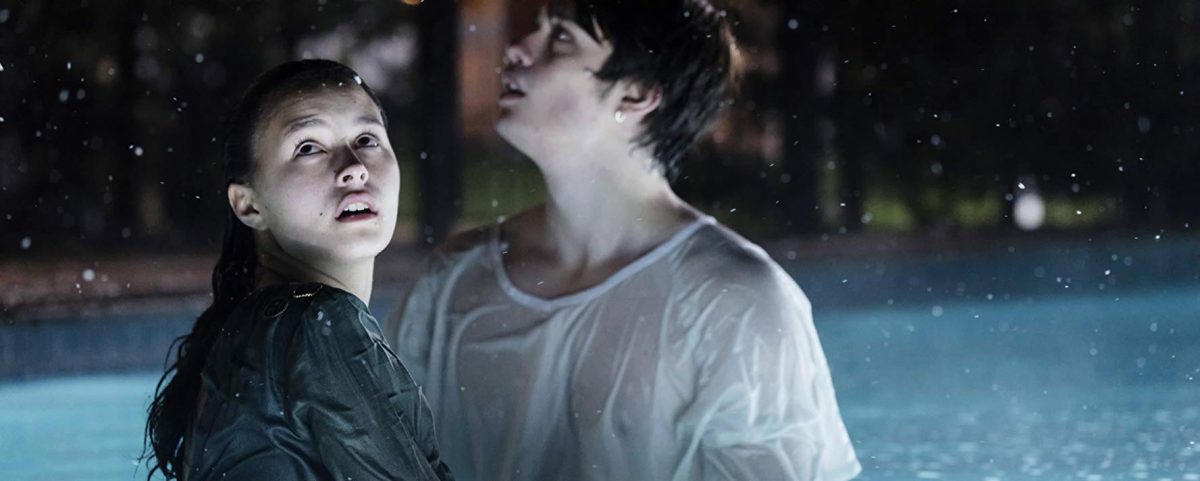
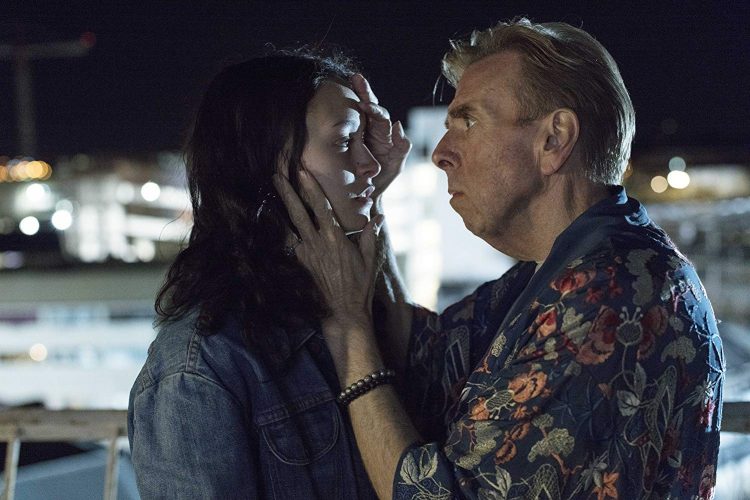
    Erana James and Timothy Spall in THE CHANGEOVER

    The Changeover is coming late in the lifespan of teen fantasy romances that saw commercial successes like Twilight and Warm Bodies and flops like Beastly and Red Riding Hood. However, it still is a refreshing exercise in the genre. Not only is it well-directed by Miranda Harcourt and Stuart McKenzie, but it also features great atmospheric sound design and cinematography.

    However, so much of the success has to be credited to Timothy Spall’s skin-crawling performance as the villain of the piece. There is real horror in the movie. Something that Twilight never achieved — despite being about vampires and werewolves — because it was too involved in the central relationship. Where those movies were 75/25 on romance to story, The Changeover is more like 25/75. The biggest issue is that when the relationship is muscled in it feels out of place and awkward.

    The movie soars when it is a gothic horror fantasy filled with tension and dread. Thankfully it’s that for most of the running time. Sometimes it takes a detour through teen fantasy soap territory — music montages and declarations of love and all — but not enough to derail the movie.

    At a lean 92 minutes, it’s hard not to recommend giving The Changeover a watch. It doesn’t always work, but when it does it’s magical.

    The Changeover will be in theaters and on demand on February 22nd.

  • ‘The Kid Who Would Be King’ review — Brexit via King Arthur

    ‘The Kid Who Would Be King’ review — Brexit via King Arthur

    The Kid Who Would Be King delivers as a family-friendly fantasy-adventure based on the King Arthur legend and an allegory for Brexit. 

    The Kid Who Would Be King tells the classic story of King Arthur and the Knights of the Round Table via Brexit era Britain. As Morgana (Rebecca Ferguson truly chewing the scenery) — the villain of both the myth and the movie — says, “the land is divided — lost and leaderless.” It’s an on-the-nose reference to Brexit, but also the reason the movie works so well.

    Director Joe Cornish — who made waves with his debut Attack the Block — mines the tale for everything it’s got and everything you’d expect out of a kid’s adventure movie. As the story goes, we meet young tween Alex Elliot (Louis Ashbourne Serkis — yes, he’s Andy Serkis’ son) as he defends his best friend Bedders (Dean Chaumoo) from two bullies — Lance (Tom Taylor) and Kaye (Rhianna Doris). Those names should all sound familiar.

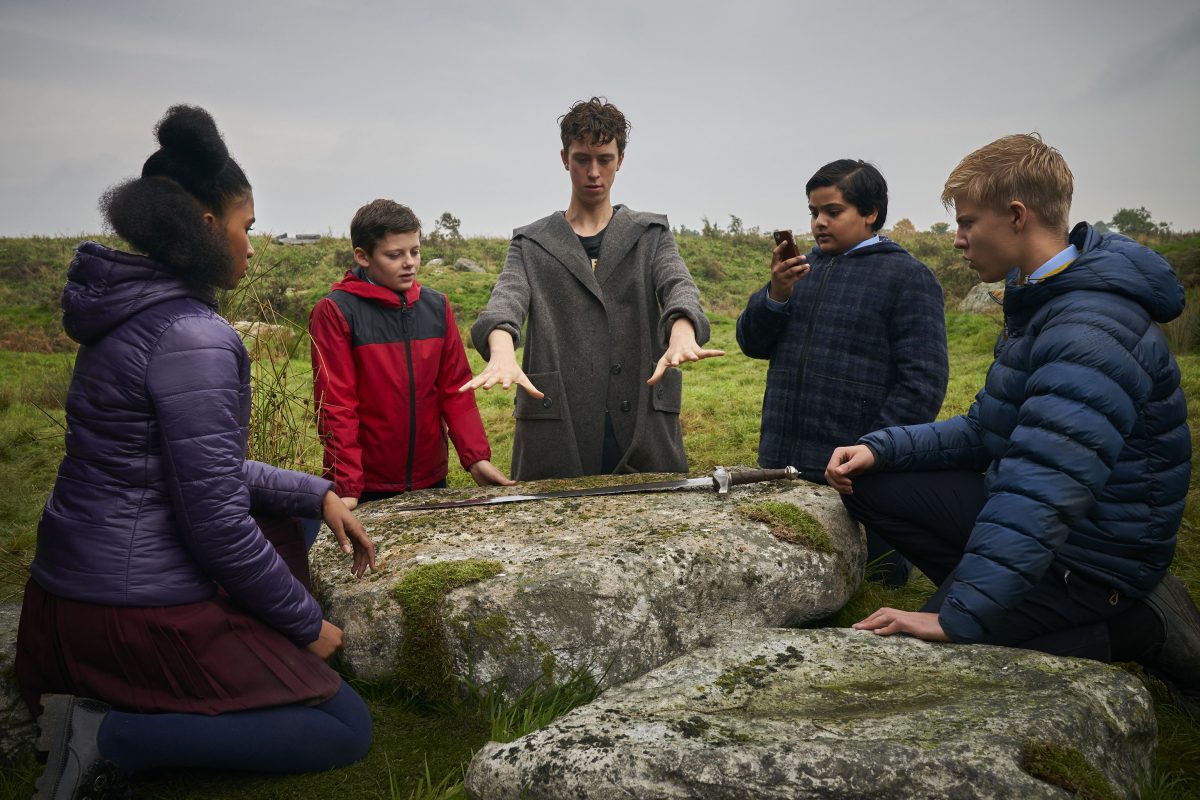
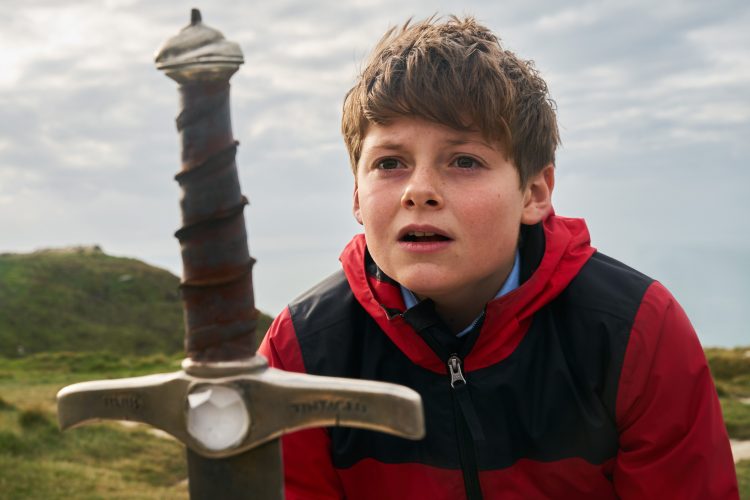
    From there, the movie closely follows the legend of King Arthur — which is also a book that Alex’s father used to read with him before he disappeared. After being chased by Lance and Kaye to a construction site, Alex discovers a sword in a stone — the sword in the stone, also known as Excalibur. He easily pulls it out, which means that he is the chosen one and the rightful king.

    The Kid Who Would Be King
    Louis Ashbourne Serkis stars in Twentieth Century Fox’s THE KID WHO WOULD BE KING. Photo Credit: Kerry Brown.

    He doesn’t know this yet, but he will soon find out. He brings the sword home and like any good friend call Bedders over to joke about the possibility that it’s really Excalibur. The relationship between the two kids is one of the main reason for the movie’s success. It drives much of the development and emotional storyline.

    The next day at school, an odd new student shows up named “Mertin.” It doesn’t take a lot of critical thinking to learn this is actually Merlin (Angus Imrie), who is sent to help Alex on his quest. Many of the comedic moments — particularly ones that will appeal to kids — come from Merlin’s silly hand gestures when performing spells, his attempt to blend in as a normal student, and his always hilarious tranformations into an owl and an older version of himself played by Patrick Stewart clad in an oversized Led Zepplin shirt.

    After being attacked by a fiery demonic skeleton sent by Morgana, who is gaining strength for her return to Earth to enslave all the inhabitants, Alex and Merlin recruit Bedder, Lance, and Kaye to be his Kights of the Round Table. Their quest is to find the door to the underworld and defeat Morgana before she returns to Earth in four days during a total solar eclipse.

    Along the way, they train to be proper knights, are attacked by more of Morgana’s minions, and fight each other before finally uniting and bonding as a team. Cornish hits all the expected points but hits them a grounding in character and a strong anti-Brexit point-of-view. Don’t get it wrong. This is a fantasy-adventure kids movie. But a kids movie with very real implications in the real world.

    The Kid Who Would Be King
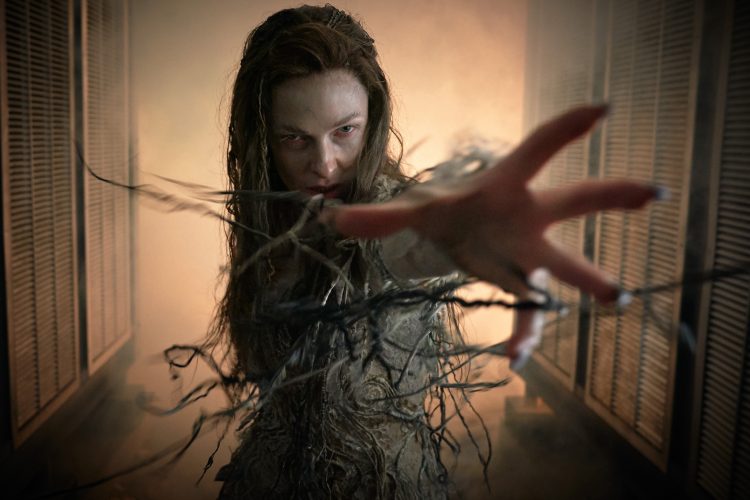
    Rebecca Ferguson in Twentieth Century Fox’s THE KID WHO WOULD BE KING. Photo Credit: Kerry Brown.

    As with Attack the Block, The Kid Who Would Be King is a good story told in a great way with playful visuals and a strong young cast. It’s a blast to watch this group of seemingly mismatched kids “on a quest to save Britain,” as Alex rights on a note he leaves for his Mom.

    And as a Brexit allegory, it’s heavy-handed but clear on its message: we’ve lost our way by focusing on our differences and it’s only by teaching this new generation about acceptance and unity that we’ll get through this mess. What makes Cornish an exciting director is he can balance that while delivering a light, fun, and funny fantasy-adventure with dragons, sword-fights, and a mega Home Alone style final staff between an army of school kids and an army of demonic skeletons.

    The Kid Who Would Be King is the first of many great Brexit-era movies that I’m sure are to come. And overall, Cornish’s attempt at merging a classic legend with our modern day issues is successful. It’s yet another feather in the cap of the young director. Nothing but respect for our king.

    The Kid Who Would Be King is in theaters now.