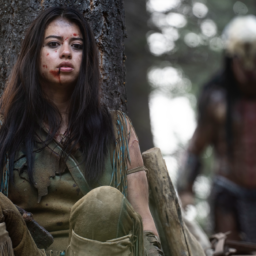
A young Native American woman in the 1700s hunts down a vicious other-worldly predator terrorizing her tribe’s land. Or is it hunting her?
Prey proves that bigger isn’t always better. Though the sequels to the original Predator each try to one-up the last — most hilariously with the aptly named Predators — director Dan Trachtenberg does the exact opposite with his stripped-down period coming-of-age. He still keeps the fun energetic action that the franchise is known for — the eponymous predator retains all of its ridiculous and ever-advancing powers — but by setting it in the 1700s, the movie has to find innovative ways to keep the audience entertained — and it certainly does. Wrapped up in a poignant tale of female empowerment, Prey is a perfect popcorn blockbuster to turn your brain off to for a lean 90 minutes.
We’ve seen many long-running franchises return in the past few years with varying degrees of success. On one end of the spectrum, we had Scream, a celebration and satirization of the very thing that made the original film a classic. Then there was Texas Chain Saw Massacre where the only successful change in this modernized version was removing the word “the” from the title. The main problem with Massacre was the filmmakers’ — or studios — attempts to make the movie bigger and bloodier than its predecessors. Instead of the original’s relatively sparse plot and sending, it opted to bend itself to trendy sensibilities in horror resulting in a maximalist incoherent mess. Prey, a reboot of the long-running Predator franchise, does the exact opposite.
Prey doubles down on the original’s simple plot and characters and strips away any attempts at modernization. On the contrary, it sets the movie back in more primitive times.
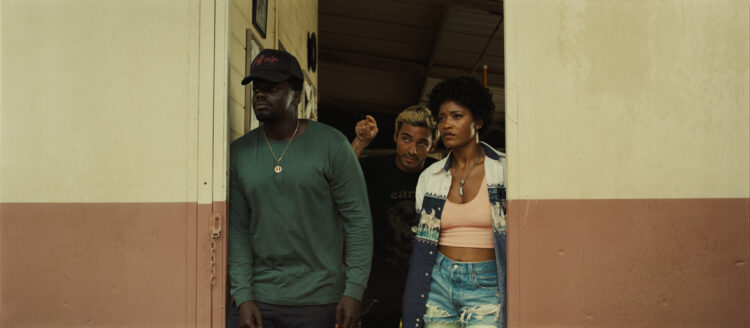
Nope follows two siblings that become convinced that UFOs are visiting their ranch to abduct horses. Seeing a path to fortune, they set out to capture it on video.
Nope is Jordan Peele’s Jaws. A chopped, screwed, and depraved homage to the summer blockbuster with stunning anxiety-inducing, white-knuckled suspense pieces that had my heart racing. Peele’s loving hate letter to the blockbuster is his most ambitious project to date that forces us to question our obsession with spectacle. Wildly creative, constantly twisting and turning, masterfully crafted with Oscar-worthy sound design, Nope is a worthy follow-up to Get Out and Us.
Jordan Peele has had perhaps the most prolific run for a new director in the last decade. Get Outhis debut film became a cultural phenomenon and garnered Best Picture and Director nominations at the Oscars in addition to a win for Best Original Screenplay. His win felt like the coronation of an exciting new auteur, which was further evident with his equally terrific sophomore movie Us. How does a director of that caliber top himself? Enter his latest movie Nope, Peele’s most ambitious, off-the-wall, and deranged movie yet. Like a studio gave him a blank check and asked no further questions—best indicated by the movie’s chilling cold open the features a bloodied sitcom set sitting lifeless except for a motionless body and a chimpanzee who seems to be the culprit of the carnage.
ADVERTISEMENT
After the relatively modest narratives of his first two movies, Nope ups the scale to an astronomical degree—to a near blockbuster size.
Interestingly, the closest analog to Peele’s career thus far is Steven Spielberg, who created the modern-day blockbuster. Coincidentally—or not since nothing seems to be a coincidence with him—Nope is Peele’s Jaws. Or at least an homage to it and the many other summer blockbusters that followed. Though the movie is packed full of references from Close Encounters of the Third Kind and Jurassic Park to Twister and War of the Worlds to Signs and Creature from the Black Lagoon it is every bit as original and electrifying as Get Out and Us. Watching it felt the way I imagined audiences felt the first time watching any of those classics—at least if my shrieking friend next to me was any indication.
Though the movie pulls from a lot of corners, Nope is another story of humans and the curiosity—and invasiveness—that plagues them. Think Creature from the Black Lagoon, which inspired Jaws. At the center of the movie are siblings OJ (Oscar winner Daniel Kaluuya) and Emerald Haywood (Keke Palmer), the co-owners of a ranch in California that specializes in horses for entertainment. Following the sudden death of their father, a reluctant OJ runs the ranch while Emerald dreams of doing something bigger.
(from left) OJ Haywood (Daniel Kaluuya), Angel Torres (Brandon Perea) and Emerald Haywood (Keke Palmer) in Nope, written, produced and directed by Jordan Peele.
That something bigger reveals itself to be really big when the pair become convinced that a UFO has been visiting their ranch to abduct their horses.
One night, all electrical devices on the ranch suddenly stop working. And right as the lights dim, an unearthly sound blankets the vast landscape. Right then, a mysterious cloud produces an isolated tornado to snatch up one of the horses. Seeing a way out of financial ruin, OJ and Emerald set out to capture evidence of the phenomenon with the help of electronics store employee Angel (Brandon Perea). After a genuinely frightening night with fake and real frights, the trio determines that the UFO is sitting in a cloud perched just over a ridge by the ranch waiting for its opportunity to take its prey. Realizing they’re in over their heads, they enlist the help of cinematographer Antlers Holst (Michael Wincott) who dreams of capturing the impossible.
The comparisons to Jaws are clear. A ragtag group of locals on a mission to “capture” an unpredictable, menacing, and deadly wild animal. OJ and Emerald are equivalent to Police Chief Martin Brody, Angel to oceanographer Matt Hooper, and Antlers to fisherman Quint. There’s even a scene where Antlers quotes the song “One-Eyed, One-Horned Flying Purple People Eater” in a tongue-in-cheek homage to Quint’s famous USS Indianapolis monologue. But just when you think you know where Nope is going, it finds a way to surprise you—like with a subplot involving Jupe Park (Steven Yeun) and an infamous incident on the sitcom he starred in as a child involving the cold open chimpanzee.
ADVERTISEMENT
While all of Peele’s movies have been horror, Nope might be the most frightening to date.
Though there is comedy to cut through some of the tension, Peele steps on the gas and doesn’t let up for the 135-minute running time. The creeping sense of dread, real danger, and suspense kept my pulse racing the entire time. In particular, a stellar sequence—the best of the movie—that sees the UFO attacking the ranch in an action setpiece mashup of War of the Worlds and Jurassic Park may have taken a few years off of my life. It highlights the movie’s immersive and dominating sound design—which more than deserves attention from the Oscars.
There are twists and turns in the narrative, but what keeps you engaged is the movie’s increasingly intense setpieces that tie together threads of horror, sci-fi, action, and comedy perfectly. Nope is Peele firing on absolutely every cylinder masterfully using Michael Abels’ cinematic score, Hoyte van Hoytema’s sweeping cinematography, and Nicholas Monsour’s editing to hit you with setpieces that feel equal parts grand, intimate, and dangerous.
With Nope, Peele weaponizes the tropes and iconography of summer blockbusters to criticize both the genre and our relationship to spectacle.
What are the themes in Nope?
Get Out and Us became phenomenons because of the cultural discourse they sparked. Peele weaponized genre movies to reach a broad audience to then explore deep societal themes. Nope is a meta deconstruction of the summer blockbuster. Much like The Cabin in the Woods was a loving hate letter to the horror genre, Nope is meant to criticize our fascination with spectacle—the subplot following Steven Yeun’s character reinforces this. In the face of disaster or tragedy, why is our first instinct as a society to exploit it for fame or fortune? Yeun’s Jupe keeps an entire room in the wild wild west theme park he owns dedicated to the incident—one that should be traumatizing for him. Instead, he exploits it.
And despite the threat that the UFO poses, the OJ and Emmerald do everything in their power to capture it on video. Despite its danger, they can’t look away. Perhaps the theme isn’t as devastating as those of race and class that were explored in Get Out and Us, but Peele commits to exploring it just as deeply.
ADVERTISEMENT
Nope is an imperfect movie, but its ambition vastly outweighs any nitpicks with the plot or characters.
Daniel Kaluuya and Keke Palmer give wholly committed performances that feel lived in. The characters are defined by their past baggage. Palmer, in particular, eats every scene with her emotional and expressive physicality. However, I wish that more time was dedicated to the siblings and their relationship to make the movie’s payoff all the more impactful. In general, I think the characters are underdeveloped. Whether purposefully or by design I’m not sure. At the very least, I was charmed by them but didn’t feel the emotional attachment I felt to Kaluuya’s Chris in Get Out or Lupita Nyong’o’s Adelaide in Us.
Nope in itself is a spectacle that deserves to be seen and heard on the big screen.
In his copped-and-screwed version of a summer blockbuster, Jordan Peele makes us question why we can’t look away. Why are we so easily drawn in by a spectacle—both on screen and in the real world? Why is it so hard to look away from disaster? In the opening shot of Nope, there is a curious phenomenon happening amongst the carnage. You might notice it, you might not. With that shot, Peele is asking us why we’re not looking deeper? Why are we so distracted by tragedy that we can’t see the wonder around it? Interestingly, it was impossible to stop looking at Nope on the screen. It’s a spectacle through and through. The movie isn’t challenging us to look away, but instead look deeper. You might be surprised by what you find.
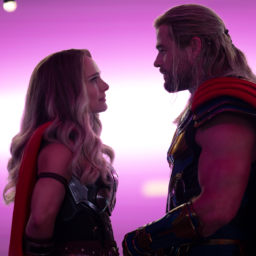
In his fourth solo outing, Thor: Love and Thunder finds Thor and Valkyrie align with an unlikely new hero to take down a villain with a taste for revenge.
Thor: Love and Thunder makes up for what it lacks in structure and narrative in charming oddball energy, maximal laughs-per-minute, and a cast that is game for anything. Director Taika Waititi, returning after a very successful entry in Thor: Ragnorok, throws everything but the kitchen sink into the movie—for both better and worse. Sometimes the emotional beats are betrayed by the comedic tone and vice-versa, but when the movie gets it right—like in the riotous but stirring reveal of The Mighty Thor—it’s perfection.
Thor: Love and Thunder might be more of a Taika Waititi movie than it is a Marvel Cinematic Universe movie. I mean, it’s colorful, gay, and has a running gag about screaming goats—it doesn’t get much more Waititi than that.
While the most recent movies in Phase Four of the Marvel Cinematic Universe have to do much heavy-lifting in setting up the rest of the series, Thor: Love and Thunder stands on its own—even with the cameos.
After all, the last time we saw Thor (Chris Hemsworth) was in Avengers: Endgame where he became one of the few main superhero holdovers from the original Avengers. Much time has passed and there is much to catch up on, which we see in a sleek and often-hilarious montage narrated by fan-favorite Korg (voiced by Waititi). Korg explains that Thor has been galavanting across the universe with the Guardians of the Galaxy “helping” various worlds with their problems. What the catch-up is meant to explain (other than how Thor dropped all his Endgame weight) is how Thor has become a bit more of a bohemian narcissist as he’s searched for meaning after helping defeat Thanos.
ADVERTISEMENT
Another thing Phase Four has had in common is the use of cameos to draw audiences in (I’m looking at your Spider-Man: No Way Home). And while the move can sometimes come off as cumbersome pandering, the Guardians’ (Chris Pratt, Pom Klementieff, Karen Gillan, Vin Diesel, Bradley Cooper, Sean Gunn, Dave Bautista) appearance feels slight enough to not detract from the movie. Were they completely necessary? Probably not. But they were a welcome sight.
Eventually, following a distress message from Sif (Jamie Alexander reprising her role), Thor learns that Gorr the God Butcher (Christian Bale under heavy makeup) has been going from planet to planet murdering Gods. In the movie’s cold open, we see Gorr lose his daughter after he’s slighted by the God he worshipped spurring his journey of revenge. More importantly, Sif reveals that New Asgaard is next.
The Sif scene is the perfect example of Waititi maintaining his comedic tone while still delivering on narrative. Sif asks Thor to let her die following a battle with Gorr so that she can go to Valhalla. An apologetic Thor informs her that she actually needs to die in the battle to go to Valhalla, but quips in the movie’s funniest one-liner that maybe her missing arm made it to Valhalla.
Thor rushes back to the settlement of Asgardians where leader King Valkyrie (Tessa Thompson) is battling with the shadow creatures sent by Gorr. In yet another scene of Waititi’s ingenuity, we are treated to an epic battle, introduced to The Mighty Thor, and see a hilarious montage of how Thor and his one true love Jane Foster’s (Natalie Portman) relationship crumbled under the weight of both of their duties—Thor’s to the Avengers and Jane’s to her research.
We learn that Jane, who is suffering from cancer, was called to Thor’s destroyed hammer Mjölnir. When she got to the hammer, it repaired and gifted itself to Jane in an attempt to save her. Now, as The Mighty Thor, she vows to help Thor and Valkyrie defeat Gorr who kidnaps New Asgard’s children to a mysterious land called the shadow realm.
ADVERTISEMENT
Thor and Jane’s relationship acts as the emotional anchor for the movie through all its absurdness. However, as often as the tonal balance between humor, thrills, and drama works—it doesn’t.
The journey to the shadow realm takes our heroic quartet to Omnipotence City, a haven for the gods, where they hope to drum up support in their battle against Gorr. Specifically, they want to get the help of Zeus (Russell Crowe in a hilarious extended cameo). Unfortunately, Zeus is more interested in showing off with his lightning bolt for the other gods and, oh yeah, the orgy scheduled for later in the day.
The riortous scene is comedy gold (pun intended) where we get to see just how far Marvel is willing to let Waititi go (we go as far as seeing Chris Hemsworth’s golden buns). We’re also treated to Valkyrie queering it up—and bopping to Mary J. Blige’s “Family Affair”—a gold-splashed action scene, and, of course, screaming goats. It’s a highlight scene.
On the action side, a battle in the “shadow realm” is presented almost completely in black-and-white in one of the most thrilling creative decisions I’ve seen in a Marvel in quite some time. The scene is almost pure horror, but because of the tone up until that point it’s difficult to feel the stakes. While Bale is completely committed to the role of Gorr—and is often terrifying—you never truly feel he’s dangerous.
That’s why when the movie works best when it focuses on just the characters.
With Tessa Thompson’s Valkyrie, a history lesson on Korg’s people, and Chris Hemsworth’s peach, Love and Thunder is easily the queerest MCU movie yet.
Still, it was a low bar. In the first three phases of the MCU, it seemed that LGBTQ+ people did not exist despite romance and sexuality being front and center. I mean, one of the first few scenes of Iron Man was Tony Stark sleeping with a female reporter. Queer representation in the MCU has only now started to settle in with characters like Phastos in Eternals and now Thompson’s Valkyrie and Waititi Korg in the Thor franchise wearing their queerness unapologetically. The result? A more colorful movie, both literally and figuratively.
ADVERTISEMENT
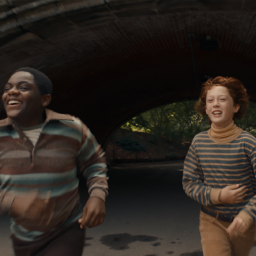
The dimension that it adds to a character like Valkyrie helps elevate the movie to a more profound plane in the same way that Thor and Jane’s past gives us an emotional investment in their narrative. Instead of being heroes of perfection, they themselves have trauma that drives them forward—or hold them back. Waititi’s grasp of tone and narrative in those scenes is perfection—much like his underrated gem Hunt for the Wilderpeople. It’s when he has to dig back into the MCU formula that the movie loses its color.
It’s clear that the best way for the MCU to move forward is to give its directors full creative control over their movies from screenplay to direction.
Much of Thor: Love and Thunder feels like MCU mastermind Kevin Feige handing Taika Waititi a blank check and a script and saying, “go,” much like Doctor Strange in the Multiverse of Madness felt like it had Sam Raimi’s DNA in it. However, these two movies in addition to Chloé Zhao’s Eternals show that unless Marvel truly allows these directors to completely run away with their movies—story and all—it’s difficult to meld the two visions. Of those three movies, I think Love and Thunder might be the least successful because Waititi had the more difficult balancing act. He was making a comedy. All the while, Disney needed him to deliver a popcorn blockbuster and Marvel needed him to deliver on storylines familiar to comic readers. He mostly succeeds. It’s clunky, the pacing is off, but I can’t deny that I laughed nearly every second of screentime.
Hirokazu Kore-eda follows a group of misfits that form a would-be family as they trek across Korea to sell a recently “abandoned” baby in Broker
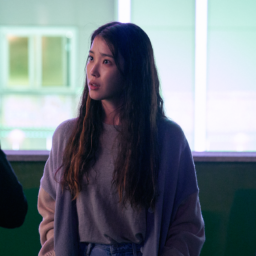
Hirokazu Kore-eda’s Broker is at once a heartwarming cheeky road-trip comedy and a heartbreaking drama of misunderstood misfits that continues his exploration of the meaning of family that he began with his 2018 Palme d’Or winning drama Shoplifters. Though the movie’s slight crime narrative keeps the plot moving, it’s the irresistible and charming cast of characters that keep you engaged — particularly Song Kang-ho’s would-be patriarch Sang-hyeon and Lee Ji-eun’s (better known as singer-songwriter IU) flawed yet complex young mother So-young. Each character and performance feels like an actual person that lived a full life before the movie begins and Kore-eda finds those complexities as they continue to develop during the movie’s breezy running time.
Broker is premiering at the 2022 Cannes Film Festival.Neon acquired the movie for U.S. distribution prior to the festival.
At the start of Broker, we see So-young (Lee Ji-Eun, better known as popstar IU) leave her baby outside a “baby box,” a drop-off point where would-be mothers can leave their unwanted baby in safe hands. Some people would say that she was abandoning her child. But as police sergeant Soo-jin (Bae Doona) puts it later, So-young was protecting her baby. That is a theme throughout Hirokazu Kore-eda’s Palme d’Or competing drama, which premiered at the 2022 Cannes Film Festival. What is perceived as an act of selfishness by some could in fact be an act of love.
ADVERTISEMENT
It’s a similar theme to Kore-eda’s last movie, the Palme-winning Shoplifters, which presupposed that chosen families bonded by similar life experiences or trauma are stronger than those by blood.
However, Broker expands on that to explore the idea that families are only as strong as your actions to protect them. If it sounds like grounds for sentimentality, then you would be right. Kore-eda is a bit of a master when it comes to balancing sweetness with the realities of the world. And if Shoplifters and Broker are any indications he’s most interested in exploring them through complicated characters whose reasonings may not immediately seem just.
Such is the case with the titular “brokers” of the movie — Sang-hyeon (Parasite’s Song Kang-ho and Dong-soo (Gang Dong-won) — who take babies from the baby box of a church and sells them to desperate families for the highest price. One of those babies is So-young’s Woo-sung who Sang-hyeon and Dong-soo feel they can sell despite his thin eyebrows — a fact that is hilariously brought up often. We’ll learn more about why the brokers feel just in their actions, even if it’s not their conscious reason. But that’s the beauty of Broker, Kore-eda fills his script with so many moments of empathy that it’s easy to understand such complex characters.
Eventually, in a surprising change of heart, So-young comes back for Woo-sung. However, because of a technicality she no longer has parental rights to him. Instead, the broker pair convinces her to let them find him a family. The ever street-smart So-young instead uses the opportunity to ensure that Woo-sung goes to a home that deserves him rather than just any family with enough money to buy a baby.
ADVERTISEMENT
Though the entire cast is effortlessly charming with characters that feel lived-in with fully formed pasts and looking towards the future, it’s Song Kang-ho’s would-be patriarch Sang-hyeon and IU’s So-young that are the heart of the movie.
While larger plot machinations come into play including a criminal investigation run by detectives Soo-jin and Lee, the movie’s main focus is each character’s (including the investigators) relationship with their past — and the fight to become more than it. Sang-hyeon, who has an ex-wife and daughter, is seemingly never able to connect with them and is seen as flighty and inconsistent. On the other hand, So-young harbors a secret that gives her pause to start a family with Woo-sung. Though it sounds ripe for manufactured overwrought sentimentality, it never strays into melodrama.
In the most impactful scene in the movie on the precipice of their time together, So-young turns off the light in their hotel room — as to not have to face each member of their ragtag family — and says, “thank you for being born” to each one. There are no waterworks (except from me and the audience), no dramatic declarations, just five people in a room grateful to have found each other. The scene is earned rather than muscled in to pry a few tears from the audience.
Kore-eda understands that drama can be warm without unearned emotionalism. Broker may be charming and slightly heightened, but like any good tale, it’s based in something fully human.
Like Shoplifter before it, Broker doesn’t have an easy ending. Possibly not even one that you’d consider happy. As much as the movie is a serotonin booster and heartstrings-tugger, Kore-eda always finds his way back to the ground level. While this new family that we’ve come to love over a two-hour period may not get a happily ever after, they certainly get a “and life goes on” ending. Taken with Shoplifter, its spiritual prequel, Broker is a promise that although life has its ebbs and flows and happiness is fleeting, there is a way to survive it. And that way to survive is with each other.
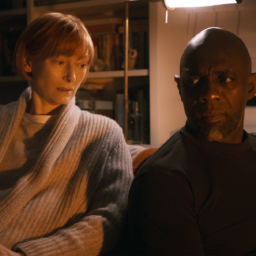
Tilda Swinton plays an academic who frees a Djinn (Idris Elba) from centuries-long imprisonment and is granted three wishes in Three Thousand Years of Longing.
George Miller has never made the same movie twice in his storied career and Three Thousand Years of Longing is no exception. The movie is a visual feast as it hops across millenniums to tell the story of how a Djinn (Idris Elba) found his way into the hands of a lonely academic (Tilda Swinton). Elba’s grainy baritone voice over the lush visuals that Miller renders with the same imaginative spectacle that he did Fury Road draws you in and underlines the movie’s power of storytelling theme. However, whenever the movie trails from that thread and explores that potential romance between Swinton and Elba’s characters the spell is broken. Stories have power, but stories are only as good as their ending. Three Thousand Years of Longing needed one more wish.
Three Thousand Years of Longing is about a genie—or more specifically, a Djinn—and his worst enemy: an intellectual. Many of the myths we know about the concept of a genie tell us that they’re tricksters looking to leave their hapless “master” worse off than before. In that way, they’re cautionary tales. Interestingly, the Djinn at the center of George Miller’s newest film—played by Idris Elba—does the opposite. More than anything, he wants Alithea (Tilda Swinton), the scholar traveling through Istanbul who frees him, to make the right wishes. Still, this is a cautionary tale. One of love and loneliness rather than greed.
ADVERTISEMENT
It’s been seven years since Australian director Miller premiered Mad Max: Fury Road at the Cannes Film Festival and reminded us why he is one of the greatest directors working today, especially in the fantasy genre. Naturally, his return to the festival was one of the most anticipated movie premieres of the year—mine included. With a blank check from the incredible critical and awards success of Fury Road, I was anticipating nothing but the most impressive world-building wrapped in a visual spectacle that has to be seen to believe. Instead, Three Thousand Years of Longing left me yearning for much more like the characters at its center.
Alithea, a dedicated and eccentric scholar, journies to foreign lands to speak about her theories of how fantastical stories in our history have been rendered obsolete by science and now relegated to the pages of comic books. However, science can’t quite explain away the visions of ghosts of history haunt her including one of King Solomon who seems a bit angry at Alithea’s presentation at a conference. After exploring Istanbul with a colleague, she comes across an odd glass bottle. Warped, lined with a swirling blue design, and, of course, sealed shut.
ADVERTISEMENT
When she returns to her hotel room, the bespeckled Alithea inadvertently opens the bottle while cleaning it with her electric toothbrush. A thick dark mist envelopes her hotel room to reveal an enormous Djinn, a ghostlike creature from Arabian mythology but is used interchangeably with a genie in the movie. Elba’s hulking figure and striking face coupled with prosthetic pointed ears and yellow eyes make for a striking effect. He reveals to Alithea that he’s been imprisoned for hundreds of years and that now he owes her three wishes for setting him free.
Alithea, the ever-analyzing historian that she is knows from mythology that these wishes rarely turn out well and refuses. Djinn, sent into a frenzy, cautions that if she does not make her wishes nothing good could come of it recalling how it is what caused his imprisonment for the second time. He reveals to Alithea that he has been imprisoned three times over the past three thousand years.
So begins Three Thousand Years of Longing’s ode to storytelling as Djinn recounts in poetically-written narration his journey through millennia. From the Queen of Sheba (Aamito Lagum) to a poor concubine during the age of the Ottoman Empire, Miller brings each encounter to life as vivid magical landscapes that quite literally shimmer on the screen. However, we’re not given time to luxuriate in each world. This is a story that Djinn is telling us. As with all orally passed down stories, there are gaps as it jumps from moment to moment rarely letting the emotions of the events to seep through. It’s like there’s a barrier between the storyteller and the audience—it’s why Three Thousand Years often feels cold.
ADVERTISEMENT
Based on B.S. Ayatt’s short story The Djinn in the Nightingale’s Eye, Three Thousand Years of Longing feels like a blank check movie in that most studios wouldn’t immediately greenlight a $60 million fantasy romance told mostly in voiced-over flashbacks. You’d expect an epic. However, the movie feels slight because of its structure—especially compared to Fury Road. Though, that slightness is a benefit to the second half of the movie, which shifts—somewhat abruptly—from epic fantasy to a quiet romance.
There are two key ingredients to make a romance work: chemistry and overcoming adversity. Unfortunately, neither work here. Not to the fault of Elba or Swinton, who as always give masterful performances. Particularly Elba who has to literally portray three thousand years of longing and trauma—something he carries on his face throughout the movie. The movie structurally doesn’t give us the chance to fall for the characters as they fall for each other as we switch back and forth between times and places. We don’t have a reason to root for Djinn and Alithea’s love story by the time the movie focuses in on it. It’s a shame since the part of the story is what would have it work. Despite Djinn’s warnings and Alithea’s logic, they still fall into the same traps that Djinn has seen for millennia. It implies that matters of the heart are often clouded because it’s our nature as humans. However, Miller is never able to consummate that theme and the story.
There’s magic to be had in Three Thousand Years of Longing. And if you know Miller’s work—Mad Max, Babe, Happy Feet, The Witches of Eastwick—you know that you’re going to see and feel it. The world he builds is nothing less than spectacle. But behind the sparkling vivid imagery is emptiness. Ironically, the movie leaves us longing for more. More character, more emotion, more humanity. What made Fury Road such a monumental achievement was its ability to consummate a genre story with deeply complex human themes. Three Thousand Years frankly fails on both accounts. Well, here’s hoping for the Furiosa movie.
Here is a round-up of three films competing for the Palme d’Or at the 2022 Cannes Film Festival: Boy From Heaven, The Eight Mountains, EO
Boy From Heaven
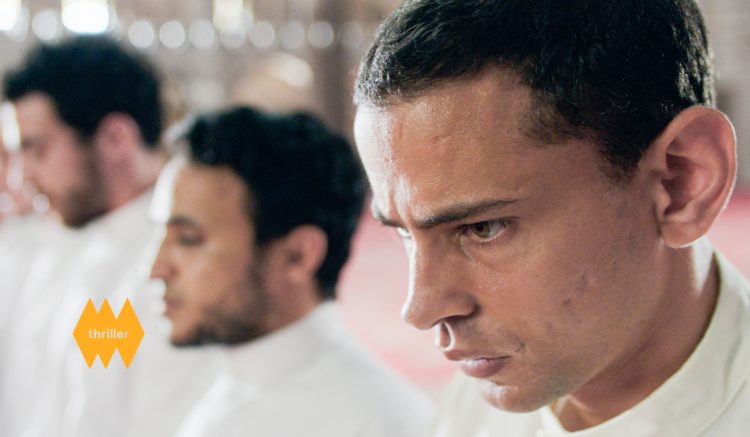
Tawfeek Barhom in Boy From Heaven, which is competing for the Palme d’Or at the Cannes Film Festival. Image Credit: Atmo Rights AB
Boy From Heaven follows young student Adam (Tawfeek Barhom) as he attends Al-Azhar University, the most prestigious Islamic educational institution in the world. The school, which he’s attending on a state scholarship, takes him far from his small fishing town to the bustling metropolis of Cairo. However, plans are in motion in the shadowy corridors after the grand imam, the head of the university and the most influential religious figure in the country dies in front of the school. Looking to install a leader that is in their best interests, state security colonel Ibrahim (Fares Fares) recruits a reluctant Adam to help their cause from the inside.
If this sounds like a story you’ve seen before, then you’re right. A thriller following a young reluctant recruit tasked with spying from within an organization isn’t new. However, what director Tarik Saleh proves is that a story can be fresh and new with a change of setting and perspective. Saleh directs the film with a methodical slow-burn pace that keeps you hooked with every new revelation as Adam’s position puts him into further danger. With each progressive scene, the Hitchcockian influences become even clearer as suspicion and paranoia slowly increase. At just over two hours, it’s surprisingly one of the shorter titles at the 2022 Cannes Film Festival, but never for a moment does it lag.
Though the story may be familiar, the world it takes in, at least to me, is foreign. Saleh tackles the sensitive subject of Egypt’s separation of church and state or lack thereof. The political maneuvering of the state almost completely conflicts with the religion’s “if God wills” teaching. By the movie’s end, the title Boy from Heaven almost feels tongue-in-cheek as Adam’s fate lies in the hand of earthly forces. Newcomer Tawfeek Barhom gives a committed performance of a boy asked to grow up and face the harsh realities of a culture he’s loved as he reluctantly fights for survival. It is one of the best performances of the festival.
ADVERTISEMENT
The Eight Mountains
Alessandro Borghi and Luca Marinelli in The Eight Mountains, which is competing for the Palme d’Or at the Cannes Film Festival. Courtesy of Festival du Cannes.
The logline for Felix van Groeningen and Charlotte Vandermeersch’s The Eight Mountains (Le otto montagne in the original Italian) of the friendship between two men that over the years reignites in a remote Alpine village could conjure up comparisons to movies like Into the Wild, Wild, or Brokeback Mountain. However, unlike any of those movies, The Eight Mountains starts at the bottom of an incline but never climbs it.
I had the same problem with Groeningen’s previous film Beautiful Boy as I did this. The craft is undoubtedly beautiful, the score from Daniel Norgren and cinematography from Ruben Impens in particular, but underneath it’s empty. It is nothing but an emotionless exploration of self-identity that doesn’t do anything to actually unpack it. Gratuitous voiceover and a collection of unremarkable scenes are meant to stir some empathy for the characters. Instead, those scenes reek of self-importance. The movie tells us to care instead of showing us why.
It’s unfortunate considering the autobiography of the same name it is based on is regarded highly for its intimacy and perspective. In place of that intimacy, Groeningen and Vandermeersch opted for aesthetics that keep us at an arm’s length from the characters. Perhaps it’s because they themselves don’t understand the story they are telling. Themes of memory, regret, friendship, and loneliness crop up. But once we begin to explore those trails they disappear. For example, when the film’s protagonist Pietro (well-acted by Luca Marinelli) ventures to Nepal to find himself after a loss, he explains in voiceover what he felt, but we never visualize it. We’re told to trust his word that he’s a better person, that he found love, that he understands his life somehow. But it’s impossible to trust someone that we aren’t taught to care for.
Maybe others will be affected by The Eight Mountains. Maybe it’s a journey I haven’t needed to take. But frankly, I’m not sure that Pietro took the journey either — like the equivalent of reading a self-help book instead of going to therapy.
ADVERTISEMENT
Eo
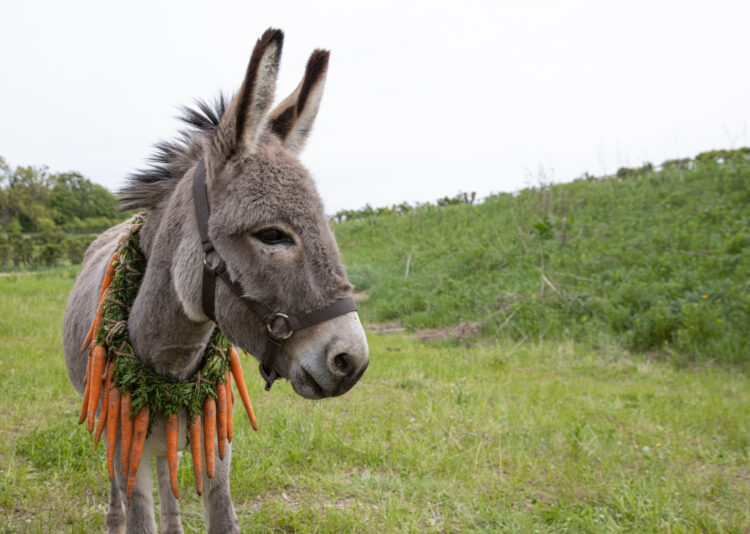
An image from Eo, which is competing for the Palme d’Or at the 75th Cannes Film Festival
EO, which is competing for the Palme d’Or,doesn’t have a plot, little dialogue and, oh, the protagonist is a depressed donkey that may or may not wish he was a horse, but this weird little movie is irresistible. Sure, its lead is a donkey, but this movie is as human as it gets as we watch him journey away from home and back again. And just like Mr. Frodo, he experiences a wide array of people at their best but mostly at their worst.
Polish director Jerzy Skolimowski, who has been a blind spot for me until now, doesn’t over personify his character though. He’ll close in on Eo after a significant event or have him react to something in some way. But he makes clear that he is an animal. That’s not to say he doesn’t care for him. The whole point of the movie is to mine empathy for Eo while also exploring the human world, particularly the conflict in it.
In Decision to Leave, a picture-perfect detective’s murder investigation slowly goes off the rails when he finds himself fascinated by the victim’s enigmatic wife
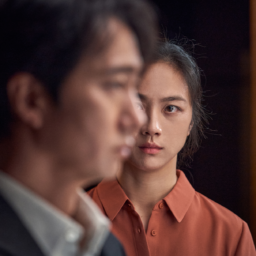
Decision to Leave finds South Korean director Park Chan-wook at the absolute top of his game as he breathes new life into a not-so-classic detective story. The fiercely paced first half is a twisting police procedural that engrosses you with its clever editing and a brilliant score by Jo Yeong-wook before pivoting to a romantic exploration of two people trapped in life patterns finding liberation with each other. While it’s not as subversive as his last film The Handmaiden, Park has a knack for using genre movies to explore deeper themes whilst never being less than entertaining. Park Hae-il’s performance as Inspector Hae-jun joines the pantheon of great detectives while Chinese actress Tang Wei gives the performance of a lifetime. The Oscars should keep an eye on them.
Full review coming soon. Sign up for our newsletter to see it first.
A group of billionaires on a private yacht cruise have their world turned upside down when a catastrophic event strikes in Triangle of Sadness
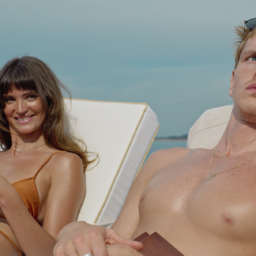
Triangle of Sadness is a two-and-a-half-hour joke-a-minute biting satire of the rich and class that keeps you guessing in every scene. And despite having jokes like an extended 10-minute puke scene, it’s a well-studied character study about people of privilege and how they would react with it taken away. The cast of characters that ranges from a capitalist Russian oligarch, a drunk Yacht captain, and two dating models are perfectly wrought parodies of the rich that you miss hanging out with after the final credits roll. I could have watched it for hours.
Triangle of Sadness is premiering at the 2022 Cannes Film Festival. Update: Neon has acquired the film for distribution later this year
A few times during Triangle of Sadness, Swedish director Ruben Östlund’s Palme d’Or-competing film at the 2022 Cannes Film Festival, we see and hear “everyone’s equal.” But nothing is quite as ironic as that phrase being splashed up on screens at a high fashion runway show or uttered on a luxury cruise targeted at billionaires and influencers. That’s Östlund’s intention. Every one of his films takes aim at something wrong in our society by taking people in power and with privilege and putting them in situations that take them away: an avalanche in Force Majeure, a leaked video in The Square, and now a catastrophe on a yacht in Triangle of Sadness.
But what he was exploring in his prior two films he perfected in Triangle of Sadness. The result is one of the best comedies in years.
ADVERTISEMENT
The movie is split into three parts plus a prologue where we meet model Carl (Harris Dickinson) on a casting call where he’s hilariously told to relax his “triangle of sadness” aka the wrinkles between your eyebrows when you scrunch your face. “Maybe a little botox will help,” says one of the casting directors. Then, part one, titled “Carl and Yaya” begins.
Yaya (Charlbi Dean), a high fashion runway model, and Carl are at dinner when the check comes which she ignores until his hand barely grazes it and she thanks him for paying. This sets off a night-long argument about the principle of paying for dinner — something every couple has experienced at one point or another. Taken as its own short film, part one would be a perfect deconstruction of relationships where currency comes in power given and taken. More than once it’s mentioned that Carl makes less than Yaya but he also points out that it’s not about the money but the principle.
ADVERTISEMENT
We later catch up with them in part two, “The Yacht.” Carl and Yaya are among the passengers on a luxury yacht cruise that plays like a seabound version of Upstairs Downstairs where we spend time with the various ridiculous (and ridiculously rich) passengers and the staff that serves them led an overly ambitious and eager to please cruise director (Vicki Berlin). The part fully becomes a broad comedy as the cast of characters increasingly show how out of touch they are with the real world. Among them are war profiteers proud of their business, a capitalist Russian oligarch and his wife who insists the staff stop work and go for a swim, and the cruise’s drunk captain (Woody Harrelson).
If the first part and cold open were closer to satire, this part is a purely broad comedy with hilarious introductions to the most out-of-touch rich people, a storm-laden drunken dinner, and a ridiculous 15-minute gross-out gag that’s like Titanic with more puking. Particularly hilarious is Harrelson’s Tom, a self-proclaimed socialist, and Dimitry (Zlatko Burić), a capitalist Russian tycoon, having a healthy commiseration of ideologies loudly and drunkenly broadcast over the ship’s PA system.
ADVERTISEMENT
I’m not sure I want to tell you where the movie ends up. Part of the fun is the unexpected turn that it takes for its third and final part that sees the social system turned on its head as Gloria (Dolly de Leon), the Filipino toilet manager of the ship, finds herself in a new position of power. Let’s just say it’s like an episode of Survivor without the film crew. The hyjinks continue as the movie romps its way to a perfect ambiguous conclusion fit for its characters. By the movie’s end, I was sad that I wouldn’t be able to see more of them. I could have watched it for hours more.
Triangle of Sadness comes after a long run of “eat the rich” movies from Get Out to Parasite. While both of those movies have their fun, there is a darkness at their center. The value that Östlund brings to the genre is a lack of self-seriousness. Rich people are out of touch. We know that. He’s not interested in adding the message. He’s here to have fun and take the piss out of deplorable rich people (among other bodily fluids). If Triangle of Sadness proves anything it’s that the broad comedy is not dead.
Director James Gray analyzes his own family in his autobiographical drama Armageddon Time, set during his childhood in a pre-Reagan New York City
Armageddon Time isn’t the first drama in recent memory where a filmmaker reckoned with a formative time in their childhood. But many don’t feel as immediately relevant — perhaps a little too on the nose — as James Gray’s exploration of his “liberal” family’s navigation of a pre-Reagan America in New York City. While presenting itself as a fun childhood romp through the dawn of the 1980s, it quickly turns into a biting indictment of privilege, generational racism, and the white-washing of the American dream.
Eo follows life through the eyes of the eponymous donkey as he experiences life and conflict in the human world
Eo doesn’t have a plot, little dialogue and, oh, the protagonist is a depressed donkey that wishes he was a horse, but this weird little movie is irresistible. Sure, its lead is a donkey, but it is as human as it gets. Constructed from our hero donkey’s journey away and back again, Eo meditates on loneliness, human nature, and empathy.
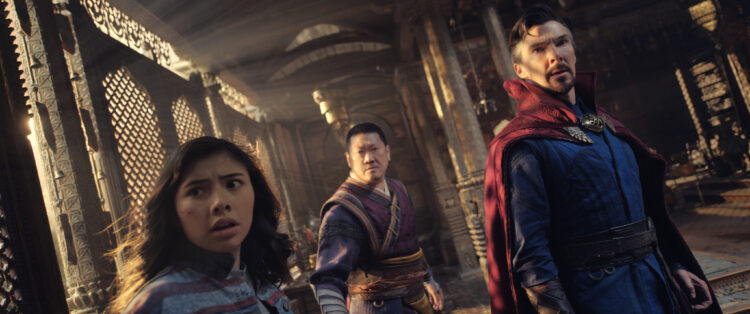
Doctor Strange has to go up against his fellow Avenger Wanda Maximoff in order to save a young girl and the fabric of the multiverse
Don’t worry, Sam Raimi fans. Doctor Strange in the Multiverse of Madness fully goes horror—jump scares, body horror, a smattering of diabolical kills and all. It’s a Marvel Cinematic Universe movie through and through but has Raimi’s creepy groovy campy deranged DNA all over it. It’s messy, uneven, and ridiculous but also may have made a play to be my favorite MCU movie of all time. Start the Elizabeth Olsen Oscar campaign.
The Marvel Cinematic Universe is at its best when the powers that be allow the director’s DNA to weave its way into the tried and true formula. There was Taika Waititi’s slapstick-infused and witty Thor: Ragnarok, Chloé Zhao’s quiet existential musings in Eternals, and now the groovy creepy fun delights Sam Raimi’s Doctor Strange in the Multiverse of Madness.
When Raimi, best known for creating the cult classic Evil Dead horror franchise, was first tapped to direct many speculated that the movie may go full horror after all before the universe where that version of the movie existed was quashed. However, if the jump scares, body horror, and smattering of downright devilish and diabolical kills are any indication, Doctor Strange in the Multiverse of Madness is a horror movie through and through.
ADVERTISEMENT
Of course, though, it’s a Marvel movie first and begins with an action scene traversing through an ethereal low gravity universe where a different universe’s Doctor Strange is trying to reach The Book of Vishanti along with America Chavez (16-year-old newcomer Xochitl Gomez) while being pursued by a giant monster. Just as she is about to be caught, a portal to our universe suddenly opens giving her an escape. Of course, though, things are not that simple and a monster has followed her right in the middle of Christine Palmer’s (Rachel McAdams for the first time since appearing in the first Doctor Strange movie) wedding that a heartbroken Strange is attending. I mean, she is his ex-girlfriend.
After dispatching the monster, he and Wong (Benedict Wong) learn that Chavez has the one-of-a-kind ability to travel the multiverse. Though, she’s not exactly sure how she does it. Clearly, some force wants that power. Wong takes her to the Masters of the Mystic Arts fortress Kamar-Taj for safekeeping while Strange seeks out Wanda (Elizabeth Olsen) for help.
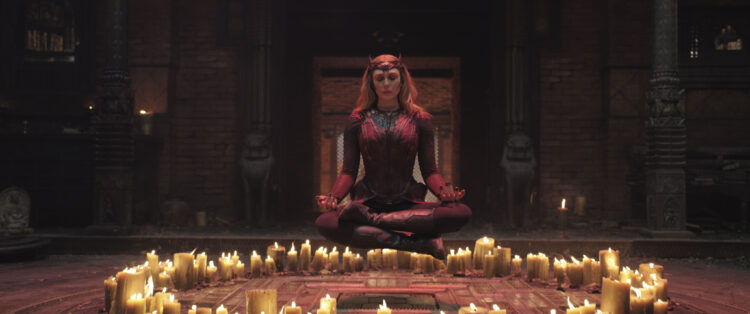
However, in a surprisingly quick twist, we learn that Wanda herself is behind the attack in an effort to take America’s power and find a universe where she could be reunited with her sons who she lost in the Disney+ series WandaVision. She gives Strange until sunset to turn her in, which, of course, he does not do causing Wanda to take the fortress by force.
What begins as a classic MCU action scene quickly turns into a clear announcement of Raimi as the creative force behind the movie as the horror elements he’s so known for start to creep in — whispered voices, tilting camera angles, quick-cut editing all reminiscent of The Evil Dead. That’s what’s most exciting about Multiverse of Madness. It’s not afraid to be scary. It stretches that PG-13 rating to its absolute limit.
America again escapes with Strange to the multiverse leading to perhaps one of the most thrilling, deranged, terrifying, and twisted sequences in Marvel Cinematic Universe history that feels more akin to Prime Video’s The Boys than your classic superhero movie. Combined with some stellar and applause-inducing cameos, it propels the movie into a confident and assured second half that brings new (and ridiculous) ideas — a feat for a franchise with 27 movies and six television series.
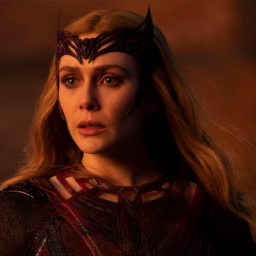
Speaking of television series, Elizabeth Olsen continues to be a standout as her storyline continues from her Emmy-nominated turn in WandaVision. It almost makes more sense to call the movie Wanda’s Multiverse of Madness because she dominates every frame that she’s in. She chews the scenery with her villainous turn as a mother trying to be reunited with her kids to incredible and terrifying results. You feel the weight and danger of her presence — even when she isn’t on screen. While Benedict Cumberbatch, Benedict Wong, and Xochitl Gomez do great work, Elizabeth Olsen easily runs away with the entire movie. She’s even Oscar-worthy.
ADVERTISEMENT
Does the story have the same narrative implications as Spider-Man: No Way Home? No. It’s far from inconsequential, but the story does feel contained. That relative slightness is what allowed Raimi to chew into each action setpiece with his full might. Not a moment of the well-paced and lean 126-minute running time is wasted. The movie hits the gas from minute one and doesn’t let up until it crashes — in the best way possible.
Doctor Strange in the Multiverse of Madness is messy, uneven, ridiculous, and at times confusing — and that’s why I loved it. In all the chaos and depravity is a future where the MCU is more than just a formula. It shows that auteurs with a singular vision can have the vision realized while still fitting into the grander scheme of the franchise. Sam Raimi swings for the outer reaches of the multiverse to absurd results — however, he’s in full control. Every campy unhinged decision is done with a wink and a nudge to the audience. Mileage may vary by viewer. For this critic, it went the distance. Creepy, campy, groovy, devilish fun from beginning to end.
Firebird tells the true story of a hidden romance between a private in the Cold War-era Soviet military and a star fighter pilot
The best queer cinema lives in the silences and the subtext. In the looks and the touches. In the underlying messages. That’s because the lives of queer people are often lived in these spaces out in the world — in the present, but particularly the past. It is a defense mechanism for living in a society where safety is a privilege we aren’t often afforded. And it doesn’t get more dangerous than the Cold War-era Soviet Union.
That’s where the love story at the center of Firebird, the feature debut of Estonian director Peeter Rebane, takes place. The film, based on Sergey Fetisov’s memoir The Story of Roman, focuses on young private Sergey (Tom Prior, who also co-wrote the screenplay) and fighter pilot Roman (Oleg Zagorodnii) as they strike up a secret romance in the shadows of their Air Force base.
ADVERTISEMENT
Matters are complicated by the base’s second-in-command Major Zverev’s (Margus Prangel) all-seeing eye and his secretary Luisa’s (Diana Pozharskaya) budding interest in both Roman and Sergey. That’s where much of the movie’s dramatic tension lies, largely because the central romance feels too easy. Unlike the great period-set queer romances — Portrait of a Lady on Fire, Call Me By Your Name, Maurice — Firebird doesn’t focus on the smoldering tension between Sergey and Roman.
There are moments when Rebane understands the needs of the story. At times he focuses on those passing touches, quick glances, and underlying meanings that underline so much of the communication between queer people. The problem is Firebird is afraid of living in the silence of those moments and fills them with often clunky dialogue — “I search for something deeper, but I can’t quite grasp it.” In that way, the directing far surpasses the screenplay, which feels overwrought and overwritten.
ADVERTISEMENT
However, the biggest failure of the movie is its inability to give reason to root for the central couple. It gets so distracted by its plot — and desire to be a war thriller — that it forgets to make its characters characters. In the final text epilogue, it’s hinted that Sergey lived a much more complex and rousing life than what is portrayed. It’s as if Rebane and Prior wrote their screenplay by connecting various plot points rather than journeying their characters through them.
Sergey Fetisov has a story worth telling. One that I imagine is filled with emotional complexity and gives insight into the hardship of queer life in a specific time and place. The moviefails to mine any deeper than surface-level and opts for melodramatics rather than reality. The premise promises great love. But like any great love, it has to be earned. Unfortunately, Firebird doesn’t try to earn it.
Crush follows an awkward queer high schooler as she tries clear her name as the school vandal while navigating a new crush
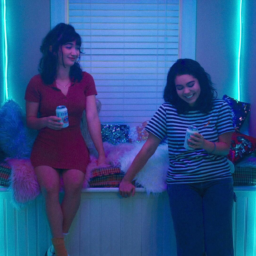
In many ways, Crush is your typical high school coming-of-age romantic comedy that falls into all the genre trappings. An endearingly awkward lead, quirky side characters including a too-comfortable mom, a quick music-driven pace, melodramatic heart-to-hearts, and, of course, a third act public confession in front of the whole school — but that familiarity is a feature, not a bug. While Kirsten King and Casey Rackham‘s screenplay is often too adorkable and low stakes for its own good, it’s never less than charming — and queer kids deserve silly high school romantic comedies of their own. Rowan Blanchard and Auli’i Cravalho, best known as the voice of Moana, have enough charisma to power through the movie’s expected beats that it’s impossible not to fall for them.
Crush will be available exclusively on Hulu on April 29.
Paige (Rowan Blanchard) is your typical awkward high school junior with her dreams set on attending a summer program at The California Institute of the Arts. There’s just one problem: she has artist’s block. The prompt is to create a piece around her happiest moment. In the movie’s breezy intro, she considers the moment she came out to her mother (a delightful Megan Mullally), but that daydream is broken when her mother gifts her with glow-in-the-dark dental dams. Some parents are too supportive. The next she considers is when she told her straight best friend Dylan (Tyler Alvarez) she liked girls, but that option is kiboshed by his unremarkable reaction: “I like girls too.”
Then, she considers a moment she has completely gotten over: when she first formed her crush on school it-girl Gabby (Isabella Ferreira). Crush immediately drew me in with the way it treated its queer themes — as if there’s nothing to see here. This isn’t a coming out movie like many other queer high school rom-coms. In one scene, Coach Murray (scene-stealing Aasif Mandvi), the school’s track coach, hands out keys for the hotel rooms for an away meet and quips: “do not go in each other’s rooms, even though I know 60% of you are queer.” It’s refreshing that this isn’t where the movie derives its plot and tension.
ADVERTISEMENT
Instead, the story surrounds the mystery of “King Pun,” a graffiti artist and social media star who has anonymously been vandalizing the school with their punny artwork. The problem is the school’s principal (Michelle Buteau) is convinced that Paige is King Pun and is threatening her with suspension threatening her CalArts hopes. However, Paige is able to strike a deal. If she can find the real identity of the vandal before the semester’s end she can avoid suspension. The catch is she has to join the school’s track team — yeah, it’s a bit of sweaty plot manuevering — that Gabby is co-captain of with her twin AJ (Auli’i Cravalho). Of course, hijinks ensue including a montage of Paige embarrassing herself at practice, which leads Coach Murray to assign AJ as her trainer.
You could probably figure out the story from there.
Through all the cute crushing back and forth between the triangle of girls, we get bits of their internal life — AJ feels pressure from her father and living up to her sister’s success, Gabby feels like people use her because she’s popular, Paige has never been kissed. But Crush isn’t precious about these issues and keeps much of its exploration surface-level — to both its benefit and detriment. Do you yearn to learn more about the characters? Or course. Is it refreshing for a movie not to be distracted by deeper themes in service of its simpler story? Yes.
ADVERTISEMENT
Blanchard and, in particular, Cravalho are irresistibly charming as the romance leads while the rest of the cast — Alvarez and Mandi, in particular — provides the much-needed goofs and laughs. There are some hilarious one-liners like “trigger warning, there will be a gunshot to start but it’s fake” and “you look like a serial killer, change your eyes,” that catch you off guard in such a sweet movie.
There’s a sense that movies targeted at the LGBTQ+ community need to be about something whether our queerness or our trauma. For all its formulaic stereotypical corniness, Crush‘s normalization of its queer characters is what makes it a joy to watch. It doesn’t ignore it either, it just decenters it in the narrative allowing kids and teens to see that a queer life isn’t just darkness. They can have silly crushes too. And sometimes those crushes turn into something more. We need more movies like Crush.
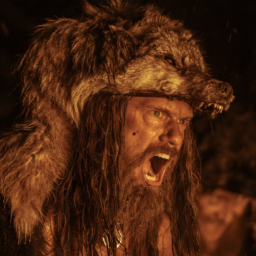
Years after witnessing his father’s murder, a Viking prince goes on a rampage across Scandinavia to avenge his death and save his mother.
The Northman looks and sounds like it cost $90 million to make. Robert Eggers is a master at his craft perfectly melding every element — particularly Jarin Blaschke’s cinematography — to create his Viking-era world. Where the movie goes south is in its narrative and characters. Beneath the twisting Scandinavian folklore is a simple and familiar revenge story that never gives us real reason to care. The movie lacks the emotional impact to become fully immersed. Still, Eggers is a masterful director and holds your attention even if the movie isn’t as narratively compelling as The Witch nor as visceral as The Lighthouse.
In an effort to make the Oscars cool again, The Academy made the Oscars deeply uncool
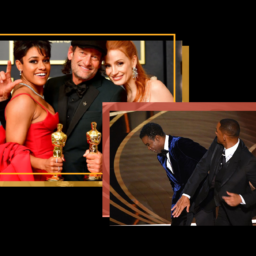
Even before the 94th Academy Awards telecast, people were already predicting it to be one of the worst Oscar telecasts in history. Those people were wrong… it was the worst Oscars telecast in history.
As rumors that ABC would pull the plug on the ceremony amid sagging ratings, The Academy tasked telecast producer Will Packer with finding a way to get people interested in the Oscars again. The tactics? Inviting TikTokers to the ceremony, introducing fan-voted categories, and, most egregiously, cutting eight categories from the live telecast in an effort to reduce the show’s running time. Hilariously, the ceremony is one of the longest in the past two decades. All the changes made it feel like the Oscars, an award meant to honor movies, hated movies.
Here’s my breakdown of the best moments, the worst moments, and yes, that moment.
ADVERTISEMENT
Highlights
The Speeches
Wow! Who would have thought that the speeches are the best part of an awards show? Who could have come up with such a concept!?
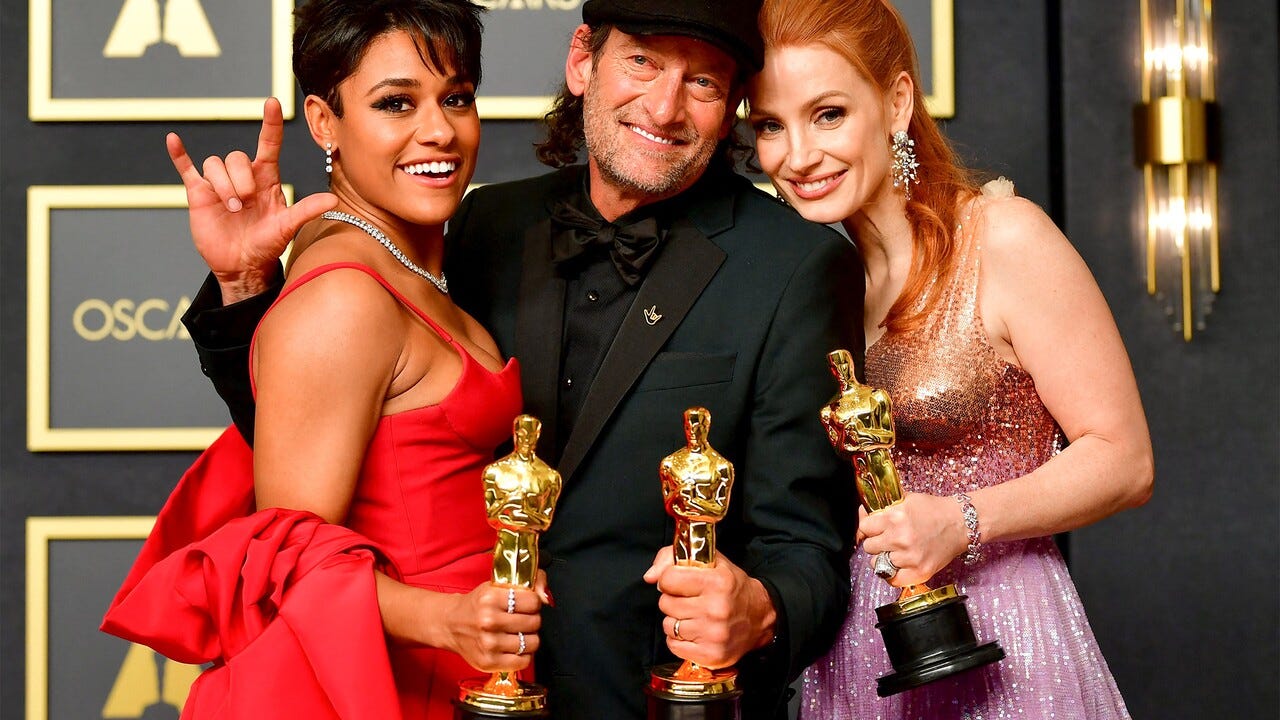
The first speech of the night was from Best Supporting Actress winner Ariana DeBose who won for her portrayal of Anita in West Side Story, a role that made Rita Moreno the first Puerto Rican Oscar winner in history. At the end of her speech, she alluded to being the first openly LGBTQ+ person to win an acting Oscar saying, “I promise you this, there is a place for us.” It was particularly poignant considering Disney, the studio behind the movie, has been embroiled in controversy over Florida’s “Don’t Say Gay” bill.
Later in the night, Jessica Chastain similarly paid homage to the LGBTQ+ communityin her speech after winning Best Actress for playing gay icon Tammy Faye in The Eyes of Tammy Faye.
Best Supporting Actor winner Troy Kotsur became the first deaf male actor to win an Oscar and the second deaf actor overall after his CODA co-star Marlee Matlin won in 1987. His touching speech gave tribute to the deaf community and the importance of family while last year’s Best Supporting Actress winner Yuh-jung Youn looked on like a proud mom.
Not only do these speeches create moments and make statements, but it also allows the show to have structure. With fewer speeches, the telecast was instead inundated with filler bits and “tributes” that felt nothing more than set dressing for what we really want to see: people winning Oscars.
The Performances (for the most part)
Beyoncé opened the ceremony with a gorgeously composed performance of her nominated song “Be Alive” from King Richard with a group of dancers clad in tennis ball orange dresses live from a Compton tennis court. It felt like it fit naturally in the structure of the show, as did the performances of the other nominated songs (Van Morrison’s “Down to Joy” from Belfast was the only nominee not to be performed).
One performance, however, did not land with me. Read on.
Liza with a Z
It’s a tradition for the Oscars to invite a screen legend to present the Oscar for Best Picture and this year may have been the most legendary. Oscar-winner Liza Minnelli and Oscar nominee Lady “I don’t consider myself an ethical person” Gaga jointly presented in one of the most genuinely touching moments of the ceremony.
When Minnelli had trouble opening the envelope, Lady Gaga whispered “I got you,” to which she replied, “I know.” Queens supporting queens.
ADVERTISEMENT
Lowlights
We have to talk about Bruno
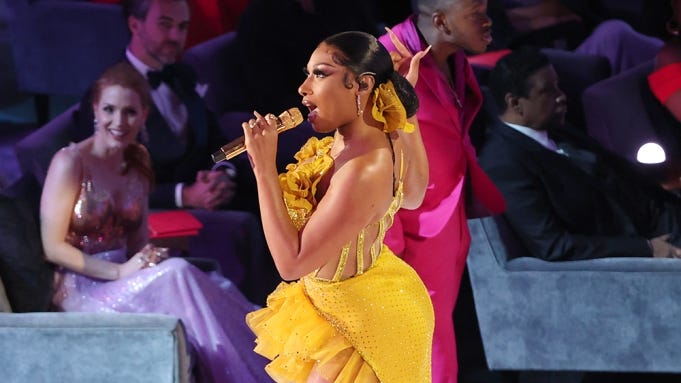
In a head-scratching decision, the telecast featured a performance of “We Don’t Talk About Bruno” from Encanto. The catch is it wasn’t nominated for Best Original Song. Another song from the movie was nominated. So why perform it? Because it was the most popular song from a movie in 2021. Including it felt strained and uncomfortable, especially with an inserted Megan Thee Stallion that replaced the song’s best part!
Three hosts. No jokes.
Can someone explain to me why Wanda Sykes or Regina Hall couldn’t just host alone? The writing at awards ceremonies is famously terrible, but this Oscars may have just set a new low with an uncomfortable thread about Regina Hall being single to a fully rude seat filler joke aimed at Kirsten Dunst. Sykes and Hall did the best they could with the material they were given. Amy Schumer, on the other hand, made me feel uncomfortable whenever she was on screen. A host is supposed to make you feel safe. Like a captain driving the ship. Instead, I was dreading their appearances.
Montage. Montage. Montage.
The Academy teased several tributes and cast reunions in an effort to pique interest in the ceremony. Those included a James Bond 60th Anniversary montage, a Pulp Fiction, White Men Can’t Jump, Juno, and The Godfather cast reunions. And one too many montages. The problem is that these packages felt, like the performance on “Bruno,” awkwardly muscled into a ceremony that already lacked focus.
ADVERTISEMENT
The downright absurd
No Runtime to Die
ABC mandated that the Oscars stay within their allotted three-hour time slot. The Academy’s solution? Cut eight categories from the main broadcast. The outcome? A ceremony longer than last year’s. What exactly was the point of cutting those categories if they were just going to fill the time with unnecessary bits, performances, and montages?
Twitter’s fan vote went to who?
In another attempt to pander to young people, The Academy instituted two fan-voted categories: Oscars Cheer Moment and Fan Favorite Movie. What they quickly learned is that Twitter is the pit of fan culture hell. Zack Snyder’s Justice League and Army of the Dead won both categories in a presentation that had me taking a bathroom break.
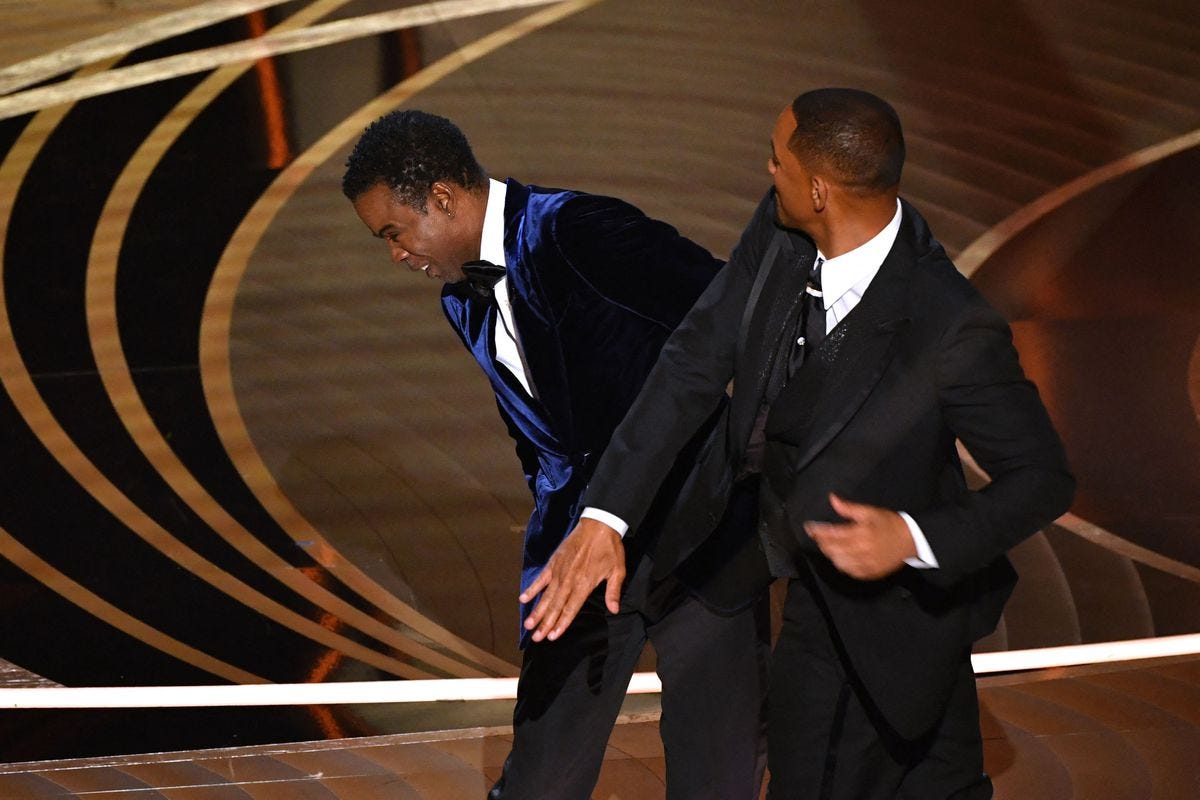
The Slap™️
No comment.
Final Thoughts
I love the Oscars. I loved the Oscars before I even fully formed my love for movies. Watching people being lauded for the craft, to receive validation that we so rarely get, was inspiring to me. This year’s ceremony was not the Oscars that comforted a shy closeted gay boy in New Jersey. Instead of seeing love and hope onstage, I saw greed. It broke my heart. I don’t know what the solution is. I just want my Oscars back.
? What did you think of this year’s ceremony? Let me know!