
Karl Delossantos

  • ‘Beef’ is road rage revenge well done | Non-spoiler review

    ‘Beef’ is road rage revenge well done | Non-spoiler review

    Beef starts as a road rage revenge comedy that quickly careens into a dark but profoundly complex character study of the Asian-American experience


    Beef is a delightfully unhinged road rage revenge dark comedy that careens into a complex character study of the American Dream and two different people united by their dissatisfaction with life — and enraged by the people around them. Steven Yeun and Ali Wong are sublime anti-heroes.

    Beef begins streaming on Netflix on April 6th.

    While the inciting incident of Netflix’s new series Beef is dramatic, it’s perhaps not quite as dramatic as you’d expect. When we are first introduced to Danny Cho (Steven Yeun) he’s in line at a home improvement store called Forsters suspiciously returning three portable grills and a carbon monoxide alarm. “You’ve tried to return these three times before,” the cashier quips before Danny sulks back to his car. However, as he backs out of his parking spot he nearly hits a white Mercedes SUV. The driver honks their horn a touch too long, which annoys the already aggravated Danny. To make matters worse, they stop, roll down their window, and flip Danny the bird. 


    The ensuing chase is reckless as Danny tries to get a look at the driver. Flower beds are destroyed, red lights are run, and near crashes abound. However, they never come face to face. Instead, Danny memorizes the license plate and vows to track her down. The cold open is so concise and sharp. Without the context of the participants it’s shocking. However, as “The Birds Don’t Sing, They Screech in Pain” goes on, we learn exactly why Danny and Amy’s (Ali Wong) reactions make sense and how it careens both of them into an existential tail spin — that’s where the real dramatics start.

    When you’re at the edge of a cliff, the smallest nudge will send you plummeting over the edge.

    We’re introduced to both of our protagonists’ — or are they antagonists? (only time will tell) — inner circles. There’s Amy’s house husband George (Joseph Lee), a paragon of the wealthy Los Angelean holistic bohemian, who instead of asking Amy what’s troubling her when she returns home tells her to take a deep breath and focus on the positive — “let’s fill out our gratitude journals,” he suggests. On the other side, Danny’s brother Paul (Young Mazino) is a man-child who spends his days playing video games and trading crypto instead of working with Danny on his contractor business. While both characters fill archetypes — as does all of the supporting cast — the series progressively challenges our assumptions about them each episode. 

    https://www.youtube.com/watch?v=AFPIMHBzGDs

    Amy, a successful entrepreneur who founded a luxury plant brand, is in the throes of a deal with Jordana Forster (Maria Bello), the egregiously wealthy owner of the Forster line of home improvement stores. Wong’s portrayal of Amy as a product of the #girlboss generation is instantly intriguing as she makes sure to show the cracks in the facade. Glimmers of her 1,000-watt smile fading tell us everything we need to know about her — she has to remain in control but is slowly losing it. Even in couples therapy where Amy and George are working through his penchant for liking her employee’s thirst trap pictures on Instagram — “Baby I can explain, I’m just saving the captions” — she has a rehearsed, well-studied response that is designed to appease anyone with a psych degree. It doesn’t. Eventually someone under that much pressure will eventually crack. 

    However, there are moments when Amy shows her hand. Like when she lets slip about her mother, “she thought that talking about your feelings is the same as complaining.” It’s those flashes of biting commentary about the first generation Asian-American experience that surprise you amongst the nearly slapstick chaos of Beef. Danny, seemingly a chronic failure to start, would rather lie and tear the people around him down to make them than seem like he’s failed again. Amy, a workaholic, can’t seem to let go of the ladder that she’s been climbing for decades, one that she doesn’t seem to want to climb, even if it means leaving those she cares about on the ground.


    ADVERTISEMENT


    The eponymous beef between Danny and Amy gives them both purpose. Even if that purpose is to win at all costs. What’s incredible about Beef‘s trajectory, is that when blood is spilled in the final episodes, we almost forget what exactly they were beefing about in the first place.

    In “The Drama of Original Choice,” we learn more about both Amy and Danny’s pasts as Beef further digs into its exploration of the Asian diaspora. However, we don’t just see their pasts, we see their parents’. We see the hope and dreams that they put upon their kids — just like the bagel in Everything Everywhere All At Once — and the sacrifice they had to make to give them the opportunity. That amount of pressure will cause anything to break, even if it becomes a diamond first like Amy.

    By series end, all the periphery characters become victims of both Danny and Amy’s own pride — and their beef. No one makes it out unscathed or unchanged. Whether it’s Paul who lives constantly in Danny’s shadow (and unwanted protection) or Amy’s husband George who has to find validation from his mother Fumi (Patti Yasutake) rather than his own wife. There’s Amy’s neighbor and Jordana’s confidant Naomi (Ashley Park), whose seemingly idealistic housewife life is threatened by Amy’s success — “I work,” she tells Amy, “I have my non-profit.”Beef is about trauma and our response to it. But the road rage incident isn’t the trauma. It’s the inciting incident of Danny and Amy’s reckoning with their pasts, how it affects their presents, and their paths for the future. It is one of the most incisive deconstructions of the first generation Asian-American experience.

    In the series’ most-powerful moment — and Ali Wong’s future Emmys clip — Amy asks her therapist, “do you think love could really be unconditional?” The series answers that question in its own way. Even if things need to be destroyed to get there.


    ADVERTISEMENT


    More movies, less problems


    Hey! I’m Karl. You can find me on Twitter and Letterboxd. I’m also a Tomatometer-approved critic.

    💌 Sign up for our weekly email newsletter with movie recommendations available to stream.


    ADVERTISEMENT


  • ‘Peak Season’ is a late twentysomething anti-rom-com | movie review

    ‘Peak Season’ is a late twentysomething anti-rom-com | movie review

    Peak Season follows a burnt-out young professional who escapes to Wyoming where she strikes up a friendship with a local fishing guide

    On its surface, Peak Season is a light, charming big city girl meets small town boy romantic-comedy that we’ve seen countless times. But as it goes on it surprises you with its surprisingly complex philosophical musings about life, what we want, and what we think want. Where Peak Season ends up is more emotional but life-affirming than you can imagine for a romantic-comedy. If anything, it’s a late twentysomething dramedy that is as deeply introspective and life-affirming as it is charming and funny.

    Peak Season premiered at the SXSW 2023 Film Festival.

    Peak Season has all the makings of a Hallmark movie. The stressed out New Yorker escaping to a small town, her workaholic hotshot fiancé, and the charming mountain man who believes in his solitude. But this is no Hallmark movie and this is not a romantic comedy. While it may initially seem that way on the surface and its commentary on the millennial experience of success, burnout, and life choices derivative, Peak Season surprises you with its depth and understanding. While it remains charming and funny throughout, it begs complex questions about our own lives. 


    ADVERTISEMENT


    Amy (Claudia Restrepo) is a burnt out former consultant who escapes to Jackson Hole, Wyoming for peace and quiet with her fiance Max (Ben Coleman) before their upcoming nuptials. Much like Britney Spears in that one movie, she’s at a crossroads. Staring down marriage and an open career path are terrifying things. Loren (Derrick Joseph DeBlasis), on the other hand, is a laid back mountain man who makes ends meet by picking up odd jobs around town — whether a shift washing dishes at a local restaurant, landscaping, or giving the rich out-of-towners fishing lessons. 

    When we first meet Loren, he’s counseling one of his clients who’s beginning to see the possibilities of living the rural life. Loren genuinely loves it and enthusiastically urges him to take the jump. But, of course, there’s his wife and kids. It’s a pipe dream. The story of every one passing through the town. That’s until he meets Amy. She doesn’t quite fit in with the influx of affluent vacationers voyeuristically observing “the other side of the country” but unable to even consider leaving their lives for it. 


    ADVERTISEMENT


    When she first arrives at the mountain mansion that Max has found for them through a mutual friend she quickly makes friends with the housekeeper — speaking to her in Spanish — and has genuine interest in exploring the natural beauty of Grand Teton National Park. That’s in comparison to Fiona (​​Caroline Kwan), Max’s acquaintance they run into, who seems more interested in taking sexy pictures with cows (in her cowboy cowprint getup, of course) and attending a trendy CrossFit class than actually taking in the landscape around her.

    After their dryly humorous first fishing journey complete with tobacco chewing and fishing bibs, Amy and Loren constantly run into each other. Matters are complicated when Max is called back to the city for a work crisis and Amy is left to her devices. Whether it’s her curiosity that keeps her coming back to Loren or genuine interest is unclear. But each time they hang out, their conversations, while romantic and charmingly witty (the movie’s humor is dry but hilarious), are loaded with subtext from their life decisions. Should Amy leave it all (her wedding, her career) for the simple life? Does Loren regret leaving his? You may come to the movie for light comedy, but it’ll surprise you with its complex understanding of the journey so many thirtysomethings face. 


    ADVERTISEMENT


    Over the course of the movie I found myself frustrated. I knew (or at least thought I knew) where the story was going. I’ve seen it a thousand times before. Then, it doesn’t go there. Writer-directors Steven Kanter and Henry Loevner instead explore a more realistic path. One that confronts the human battle between what we want, what we think we want and what is possible. Amy and Loren remind me of Jesse and Celine from Richard Linklater’s Before series or Harry and Sally from Rob Reiner’s When Harry Met Sally. While there is certainly a romantic spark, it’s their philosophical discussions about their views (or lack thereof) of life that fuel their time together. 

    Where Peak Season ends up is more emotional but life-affirming than you can imagine for a romantic-comedy. I don’t even know if it could be categorized as one. It’s a charming thirtysomething dramedy about settling — whether settling down or just settling for something. You’ll even find yourself questioning your own decisions. But the beauty of Kanter and Loevner’s screenplay is that it never judges any of its characters. They make the decisions that are best for them, as scary as that commitment is. What you can commit to is that Peak Season is a quaint indie gem.


    ADVERTISEMENT


    More movies, less problems


    Hey! I’m Karl. You can find me on Twitter and Letterboxd. I’m also a Tomatometer-approved critic.

    💌 Sign up for our weekly email newsletter with movie recommendations available to stream.


    ADVERTISEMENT

  • ‘John Wick: Chapter 4’ is an action magnum opus | movie review

    ‘John Wick: Chapter 4’ is an action magnum opus | movie review

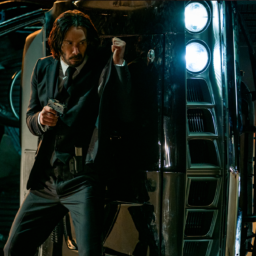
    Keanu Reeves returns as an assassin trying to survive an onslaught from the all-powerful High Table in John Wick: Chapter 4.

    John Wick: Chapter 4 takes the over-the-top action it’s known for and cranks it up to the highest level. After a slow start it moves like a beast through some of the best action sequences of the series. It lacks some of the forward plot machinations that make the other three films so breezy. Still, it’s thrilling and innovative — and even the funniest of the sreies. The house sequence is maybe one of the best action scenes in a decade. It’s imperfect but so much fun. Oh and Rina Sawayama slays.

    Over the last decade, the John Wick series has been an unlikely success story in a Hollywood that has been increasingly reliant on well-known IP and action movies that include men in tights saving the world — I love Marvel, don’t come for me. Even the franchise’s director Chad Stahelski and producer David Leitch thought that the movie was going to flop. As they put it, who would want to watch a movie about a man that viciously murders more than 80 people to avenge his dog? Apparently, a lot since the franchise has grossed over half a billion dollars. By the time we reach John Wick: Chapter 4, Wick has been battered, bruised, stabbed, and shot more than any man should be able to handle. But he is no man. He’s the boogeyman.


    ADVERTISEMENT


    The Marquis de Gramont (Bill Skarsgård), a high-ranking member of the all-powerful High Table, tells blind assassin Caine (Donnie Yen) there are three types of people: those who have something to live for, those who have something to die for, and those who have something to kill for. He then says that John Wick (Keanu Reeves)has none of those. He did at one time. He had his wife Helen. And then her final gift to him — his canine companion whose untimely demise sets up the start of the series. Then he killed his way out of New York City and back again to protect his friend and send an FU to the High Table. What does he have left to kill for?

    That’s what John Wick: Chapter 4 grapples with as Wick once again finds himself at the center of the High Table’s target list. This time, though, they’ve sicked the ruthless Marquis de Gramont on him—and this time The Continental rules are out the window as evidenced by the Marquis’ destruction of the New York branch while he strips the title of manager from Winston (Ian McShane). With no place to turn and his pool of friends shrinking, Wick goes to the Osaka Continental Hotel managed Shimazu (Hiroyuki Sanada) and his concierge and daughter  Akira  (musician Rina Sawayama in her film debut — Pixels, rise up!) for safe housing. 

    This first third of the movie is surprisingly meditative compared to past entries of the series that have tended to throw us into the action immediately. The first action sequence of John Wick: Chapter 3 is among the great action scenes of all time. However, this slow start is not without reason. As Marquis’s right-hand man Chidi (Marko Zaror) and his army of High Table mercenaries descend on the hotel, Shimazu, imbued with stoic power by Sanada’s performance, tells his daughter they must fight for those they love. And we’ll come to learn what it is each character is fighting for.


    ADVERTISEMENT


    What it lacks in propulsive plot momentum, Chapter 4 makes up for in perhaps the most ambitious action sequences in the series’ history. Seemingly endless sections of the movie are dedicated to Wick carving his way through the High Table’s infinite supply of henchmen—two sequences even clock in at nearly thirty minutes. The Osaka Contintental sequence is classic John Wick as the staff of the hotel, largely donning swords, knives, and bows-and-arrows, take on the heavily armed High Table army. Grandiose and epic in scale, it’s perhaps the most ambitious set-piece of the series… up until that point at least. 

    What’s particularly refreshing is our point-of-view switches between Shimazu, Akira, John, and even Caine, who has been coerced into helping the High Table in a bid to protect his daughter. Each character moves the plot forward as they all push forward with their own motivations as their futures are entwined. However, what’s apparent is that while everyone else falls into one of the three categories the Marquis lists, John does not. 

    Eventually, John and Winston reunite and concoct a way out of their precarious position with the High Table: challenging the Marquis to a duel. However, to do that, John has to secure the blessing and crest of his estranged Bulgarian family. So begins a classic John Wick tale that will bring him around the world and back — and perhaps to redemption. Along the way, another assassin known as The Tracker (Shamier Anderson) and his trusty canine sidekick — cinematic parallels! — are roped in the Marquis’s scheme, John fights his way through a crowded club in a callback to Chapter 2, and participates in perhaps the greatest action sequence of all time.


    ADVERTISEMENT


    John Wick: Chapter 4 is an immense action magnum opus. It is near non-stop wall-to-wall combat, car chases, and shoot-outs on a level not seen since Mad Max: Fury Road. The sequence following John Wick through Paris, around the Arc de Triomphe, into an abandoned haussmann-style house (where one of the greatest single-take action sequences will blow your mind as the camera moves in near impossible ways), and up a set of stairs in the funniest and most brutal fights of the series, could bring any action fan to tears.

    However, what sticks with you is that initial question. What does John Wick have left to fight for? Where the movie ends up with that question may divide fans. What won’t be controversial is why the other characters old — Winston, King of the Bowery (Laurence Fishburne) — and new — Akira, Caine — are still fighting. Why they have something to live for, to die for, or to kill for. As a series, John Wick, dripped in all its glorious violence and bloodshed, has always been about love. And by the time you watch John claw his way through dozens of men up a flight of stairs you realize that no matter the motivation, you will always root for John Wick.


    ADVERTISEMENT


    More movies, less problems


    Hey! I’m Karl. You can find me on Twitter and Letterboxd. I’m also a Tomatometer-approved critic.

    💌 Sign up for our weekly email newsletter with movie recommendations available to stream.


    ADVERTISEMENT

  • Late Night With the Devil is the best possession horror in years | SXSW review

    Late Night With the Devil is the best possession horror in years | SXSW review

    A 70s late-night show goes awry when it invites a suspected possession case onto the show in Late Night With the Devil. Nothing like an exorcism to boost ratings.

    Late Night with the Devil is one of the best exorcism horror movies in years. With keen 70s aesthetics, a dread-filled atmosphere and career-best performance by character actor David Dastmalchian, this found footage horror transmits its sinister airwaves through the screen resulting in a devilishly fun slow-burn romp.

    Late Night With the Devil is in theaters now

    Other than a 70s-era 20/20 cold open describing the events of Halloween night 1977 on the Night Owls with Jack Delroy show, Late Night With The Devil plays in real time over the course of the filming of the episode flipping between “actual” footage and behind-the-scenes content during the commercial breaks where we learn how the show is coming together — and falling apart. During his opening monologue,  Jack assures the live studio audience along with his sidekick Gus (Rhys Auteri)that the night will be one to remember as they investigate the occult. This is the 70s after all and nothing like a little satanic panic to boost ratings. 


    ADVERTISEMENT


    Among his guests are renowned psychic Christou (Fayssal Bazzi), magician turned skeptic Carmichael (Ian Bliss), and parapsychologist Rose (Laura Gordon). However, the centerpiece of the whole episode is Lilly, a young teen recently rescued from a demon-worshipping cult with whom Rose has been working. Writer-directors Colin and Cameron Cairnes (real-life brothers) wanted to “[recreate] that slightly dangerous, live television atmosphere.” And from the moment Lilly enters the movie, the danger feels real. Despite the “found footage” presentation of the movie, the Cairnes find ways to communicate a dread-filled atmosphere on-screen. Most effectively, Lilly seems to always be staring straight into the camera — and into your soul. 

    As the night progresses, weird happenings plague the studio before culminating in a chilling exorcism setpiece that will send chills down your spine. However, much like Ti West’s underrated The House of the Devil, the movie never overindulges. It keeps to its grounded 70s aesthetic and maintains a constantly uncomfortable slow burn as the night unfolds. It reminds me of how The Blair Witch Project approaches its found footage aspect with an eerily believable realism. The horror isn’t what is on the screen, it’s what’s happening just off of it. The movie relies on the reactions of the characters to communicate the danger, which is why it’s David Dastmalchian’s performance that is the most impressive facet. 


    ADVERTISEMENT


    You might not know Dastmalchian’s name, but you might recognize his face from some of your favorite movies. Perhaps as the creepy bank robber in The Dark Knight or the creepy kidnapping suspect in Prisoners or the creepy Polka-Dot Man in The Suicide Squad. In Late Night With The Devil he proves that he’s one of the most exciting chameleonic character actors working today. His embodiment of an era-accurate late-night show host (think a 70s Conan O’Brien), while never losing sight of his character’s past narrative is impressive to watch and key to the movie’s ultimate success. Believing his motivations — and his own misguided hope that what’s happening is real — sells the horror to the audience. While late-night hosts are meant to make their audience feel safe, Delroy’s desperation makes us worried about what’s coming next.  

    Late Night With the Devil like The House of the Devil and The Love Witch is an homage to the horror of the period while injecting modern cinematic sensibilities. The result is a spine-tingling and inventive found footage that grabs your attention and never lets go. But that’s just TV, baby. 


    ADVERTISEMENT


    More movies, less problems


    Hey! I’m Karl. You can find me on Twitter and Letterboxd. I’m also a Tomatometer-approved critic.

    💌 Sign up for our weekly email newsletter with movie recommendations available to stream.


    ADVERTISEMENT

  • ‘Scream VI’ is the series’ best sequel | Non-spoiler review

    ‘Scream VI’ is the series’ best sequel | Non-spoiler review

    The survivors of the latest Ghostface killings try to escape their pasts in New York City in Scream VI. Unfortunately for them, Ghostface follows them to the Big Apple.

    Making perfect use of its New York City setting, Scream VI is bigger, bolder, and scarier than any of its predecessors. While it sticks to the tried and true tropes and references that film fans will love, it pushes the boundaries of its story and, most importantly, kills to exciting new territory. Ghostface takes Manhattan and I couldn’t be happier.

    Scream VI, a sequel to the 2022 requel of Wes Craven’s original 1993 slasher classic, is bigger, bolder, and scarier than any of its predecessors. That’s in large part because of its New York City setting. While the city has always been ripe for horror, I mean it’s a claustrophobic concrete maze filled with 8 million highly stressed individuals (I’m a New Yorker, I’m allowed to say this), making one that captures its full potential has largely alluded us (I’m looking at your Jason Takes Manhattan). Scream VI  uses the city’s potential to magnify almost every element of the franchise — the lore, the kills, and, of course, the potential identities of Ghostface.

    After a requel that knowingly remakes the original film while also moving the story forward, Scream VI catapults in an entirely new direction as we focus in on the “core four” as Mason Gooding’s Chad puts it. ​​The movie picks up months after the latest Ghostface killings centered around sisters Sam (Melissa Barerra) and Tara (Jenna Ortega). They along with Chad and his twin sister Mindy (Jasmin Savoy Brown) have gone off to start a new life in New York City. However, it wouldn’t be Scream if the world wasn’t obsessed with the recent string of murders perpetrated by horror-obsessed serial killers—and why wouldn’t they? This is the world of the internet, though, and as with any news story the dark corners create a conspiracy.

    The most horrifying thing in the world, a subreddit, is convinced that Sam perpetrated the latest Woodsboro killings complicating the sisters’ lives in the Big Apple. Thankfully, something comfy and familiar pops up to remind them of home — a Ghostface killer! But this is the sixth movie in a franchise of movies that know they’re movies in a franchise. Horror movie geek Mindy breaks it down for us. Now that they’re deep in the franchise the rulebook is out the window. That means that no one is safe, even legacy characters.

    From the classic cold open that plays with our expectations to the final reveal, Scream VI constantly surprises with its ability to be more brutal and menacing (Ghostface with a shotgun? Horrifying.) while maintaining its winky film nerd charm (complete with a shoutout to Letterboxd). This time, the movie takes aim at how franchises slowly lose reverence for the source material in an effort to keep the themselves relevant. Its criticism of the genre isn’t nearly as incisive as previous installments, even last year’s less successful Scream “requel” had more to say about current state of horror. Instead directors Matt Bettinelli-Olpin and Tyler Gillett lean into the iconic horror elements that make up the series — i.e. the kills.

    Often horror movies portray New York City as long concrete blocks of shadowy corners and urban emptiness. Scream VI does the opposite and uses its crowdedness to its advantage — the two most impressive set pieces take place in public on a bodega and the subway. In a city of millions, no one can hear you scream. It’s that expansion outside of suburban interiors that make this installment so exciting. Classic elements like the chase scene and horrors lurking behind closed doors remain, but new elements bring new life screeching back into the series.

    The mystery is perhaps the most twisted — for better and worse — while legacy characters like Courtney Cox‘s Gale Weathers and Hayden Panettiere‘s Kirby Reed add to the movie’s plethora of easter eggs.


    ADVERTISEMENT


    More movies, less problems


    Hey! I’m Karl. You can find me on Twitter and Letterboxd. I’m also a Tomatometer-approved critic.

    💌 Sign up for our weekly email newsletter with movie recommendations available to stream.


    ADVERTISEMENT


  • ‘Passages’ review: Entanglements in love and sex | Sundance

    ‘Passages’ review: Entanglements in love and sex | Sundance

    Ira Sachs’s Passages tracks the misadventures of a married gay film director as his affair with a woman implodes his marriage.

    Passages follows a narcissistic director who can’t stand when people in his real life don’t follow the script he’s written in his head (i.e. every sad Brooklyn boy who’s “working on a script”). Writer-director Ira Sachs crafts a sharp and incisive movie about gay men, relationships and the entanglements we find ourselves in.

    Passages is playing in theaters now.

    If you liked Passages, we recommend: Great Freedom, Marriage Story, TÁR

    “He knows me well.”

    “So that’s why you left him.”

    When we first meet German filmmaker Tomas (Franz Rogowski, who we last saw in the underrated Great Freedom), he is directing the final scene of his latest movie. We watch him as he instructs an actor to enter the scene down a flight of stairs. Then he makes him do it again… and again. Each time he notices something else wrong with the way he enters the scene—he’s swinging his arms oddly, he’s walking without intention. We’ll see Tomas do something similar throughout Passages, which premiered at the 2023 Sundance Film Festival, except this time to the people in his life. That is expecting them to act one way—the way that is best for him and his wants—and getting frustrated when they don’t follow the script he’s written for them in his head.


    ADVERTISEMENT


    The primary victim of his special brand of narcissism is his long-suffering soft-spoken husband Martin (Ben Whishaw).

    And as much as Tomas’s abrasiveness grates him, he stays by his side—something we see with all couples but feels precisely penetrating for gay couples. Writer-director Ira Sachs understands the gravitational pull of a man like Tomas—his confidence imbues a charm and magnetism—but he also knows that with gravity things eventually come crashing to the ground. And often, Tomas is the incendiary of his own (satisfying) demise. 

    When he meets teacher Agathe (Adèle Exarchopoulos) out at the club after a day of shooting, he’s just been slighted by Martin who chooses to go home rather than dance with him (the nerve!). His response, to sleep with Agathe and then return home to very openly and boastfully say, “I slept with a woman last night.” What reaction does he want out of Martin—disgust, jealousy, anger, admiration? Whatever it is, he doesn’t get it, which furthers his resolve to pursue Agathe. After one of another one of their trists Tomas professes his love for her. She responds, bluntly but without malice, “you say it when it works for you.”


    ADVERTISEMENT


    It’s that direct but rich with subtext dialogue that makes Passages such a fascinating watch despite its uncomplicated appearance.

    Sachs says so much about its protagonist without saying much at all. We never get to see Tomas’s work nor his marriage to Martin prior to its immolation—we see just a narrow sliver of his life. However, the portrait of an egomaniacal artist who lets the bounds of his artistry seep into his personal life is vivid—similar to definitely real and not fictional composer Lydia Tár

    The movie transforms into a triangle then a quadrangle of entanglements as Tomas pursues his relationship with Agathe and Martin moves on with fellow writer Ahmad (Erwan Kepoa Falé). There are arguments, unexpected twists, Tomas’ inability to let people live a moment of their lives without thinking of him, and sex. Sachs directs these sex scenes with vigor, passion, and pure eroticism. However, it’s not just for exploitative show. For someone like Tomas, sex, passion, and desire—and admiration—are mistaken for love. But what he truly loves is the attention—as a Leo, I feel read. Ragowski is astounding in his ability to be a self-absorbed monster, but have us crave his presence on screen—like a trainwreck you can’t seem to turn away from.


    ADVERTISEMENT


    Eventually, the magnetism that draws people to Tomas begins to repulse them and the gravity that kept them in orbit becomes weaker.

    Essentially, his life goes off script and he’s not good at improv. While Passages could have easily relied to melodramatics, Sachs keeps each character and interaction grounded. No line of dialogue feels ingenuine, even when they’re loaded guns that rip through each character. “I want my life back,” one character says. It’s perhaps the first genuine thing anyone says in the movie—other than a barnburner dinner scene featuring Caroline Chaniolleau as Agathe’s mother and Ahmad’s final requiem. Ira Sachs introduces us to the characters of Passages when their lives intersect and tangle into a mess of complications. By the end, Whishaw, whose remarkable portrayal of a gay man finding his strength and independence, untangles the knot and leaves us (and Tomas) flooded with emotion. 

    If you enjoyed Passages, you might also like:


    ADVERTISEMENT


    More movies, less problems


    Hey! I’m Karl. You can find me on Twitter and Letterboxd. I’m also a Tomatometer-approved critic.

    💌 Sign up for our weekly email newsletter with movie recommendations available to stream.


    ADVERTISEMENT


  • ‘Infinity Pool’ review: Hedonistic holiday hell

    ‘Infinity Pool’ review: Hedonistic holiday hell

    Infinity Pool

    Infinity Pool plays like a campier version of Michael Haneke’s psychological thriller Funny Games crossed with an upper class Spring Breakers all wrapped up in Brandon Cronenberg’s infamous visceral body horror style. It’s weird, grotesque, bleakly funny, and, most surprisingly, entertaining. People are going to detest it, but we can’t all have taste for hedonism.

    By the time Gabi (Mia Goth) is riding on the hood of a convertible drinking straight out of a bottle of wine with a bucket of fried chicken and a gun, you’re probably wholly enamored by the frenzy of Infinity Pool or absolutely detest it. It seems “like father, like son” very much applies to the Cronenberg dynasty. Like his father, writer-director Brandon Cronenberg (who last directed the sensational Possessor) has settled into a niche of body horror meant to unsettle, unnerve, and upset. However, similar to his father’s most recent film Crimes of the Future, Cronenberg found entertainment and even humor in his madness. Even though nearly every bodily fluid imaginable is present—blood, sweat, tears, bile, spit, c-m—in another world Infinity Pool would be a mainstream horror.


    ADVERTISEMENT


    It’s no wonder it has conjured up comparisons to the series The White Lotus, which has collectively captured the consciousness of the broad public for its satirical takedown of the rich and marriages.

    Infinity Pool doesn’t have quite the same societal commentary, but it’s impossible not to draw comparisons at least in premise. When we’re first introduced to married couple James (Alexander Skarsgård) and Em (Cleopatra Coleman) Foster—vacationing at a beautiful luxury seaside resort in the fictional country of La Tolqa—we instantly know who they are. They’re both conventionally attractive, but clearly mismatched—and bored with each other. It’s giving Harper and Ethan.

    It is perhaps why James, a failed writer, is so quick to accept Gabi’s invitation to dinner when he learns she’s a fan of his work despite it not selling well and her flirtatious demeanor. We learn during dinner with Gabi and Alban (Jalil Lespert) that Em is the wealthy daughter of a book publisher—whose one piece of advice to his daughter was not to marry a writer. What does she do? Marry the first sad sap with a pen that she could find. She further explains that she essentially supports the couple—“I’m practically a charitable organization,” she quips. James doesn’t look pleased but also doesn’t fight. Skarsgård, typically a hulking (and very handsome) figure, portrays James diminutively literally hunched over for much of the movie—a physical manifestation of his repression and shrunken masculinity.

    Gabi and Alban invite them outside the resort’s walls to visit a secret beach—forbidden as La Tolqa is “uncivilized” as Gabi puts it. Still, the Fosters oblige. On their way back to the resort with James at the wheel after a day of sun, boozing, and um… hand jobs—in which Gabi jacks James to a very graphic conclusion—they strike and kill a local farmer with the car. Instead of risking their chances with the local authorities—who will beat, torture, and rape them according to Gabi—they flee the scene back behind the barbed wire fences of the resort.


    ADVERTISEMENT


    Then, Detective Thresh (Thomas Kretschmann) comes knocking. When he takes the couple into the police station, James is clearly anxious, but only weakly questions and protests their detainment—more evidence of his feebleness. The police are completely sure of his guilt—thanks to Gabi and Alban’s testimonies. However, not all is lost. The police chief explains that is La Tolqa tradition to execute offenders by having the family members of the victims maim them. But, with tourism being a booming part of the economy, the country has a deal to clone offenders and instead kill the double as a symbolic punishment—for a fee, of course.

    The way that this procedure is summarized is so matter-of-fact as if it is a normal everyday occurrence—the station even has an ATM for their convenience.

    That dry-pointed humor is what makes Infinity Pool surprisingly accessible. Despite the sinister depravity that is about to ensue, the tone is continually light. After his clone is created, James watches in horror as the farmer’s son brutally stabs his double multiple times. Em shudders and looks away. James, after the bloodbath, almost looks pleased. Like he’s gotten a shot of adrenaline. Still, the events have the couple fleeing the country—or at least trying to. James seems to have misplaced his passport leading him to stumble upon Gabi and Alban again inviting him to dinner with a group of vacationers.

    James discovers that the members of the group are essentially hedonist tourists chasing thrills in a country where they are essentially immortal—they’ve all committed crimes for which their doppelgängers have paid the price. Cronenberg is a visceral filmmaker and captures these indiscretions by assaulting your senses with the coked-out images and sounds of drug trips, hallucinations, f-cking, and killing. His horror is less of danger and more of our innate discomfort with our bodies—inside and out. Even a drug-fueled orgy leaves you feeling dirty as we watch bodies touching, sliding, and penetrating in graphic detail.


    ADVERTISEMENT


    Eventually, these pleasure trips—whether sexual, physical, or criminal—reach a point of no return and James realizes he must escape.

    Is it too late? Perhaps there’s still a chance to physically escape. Mental escape is another story. Cronenberg’s intentions with the story are perhaps sometimes drowned out by the devilish uncomfortable horror or the high-camp shenanigans of Mia Goth’s Gabi—another incredible entry in her pantheon of horror characters. Still, the tale of masculinity and emotional escape emerge in tact—themes movies like The Hunt or The Purge try and fail to mine. If anything, Infinity Pool has more in common with Michael Haneke’s sadistic home invasion satire Funny Games or Harmony Korine’s bikini-clad crime caper Spring Breakers—replace bikinis with disturbing ritual masks and two bored young men with a group of bored affluent married couples. It’s about the primal instinct to purge and society’s instinct to quash those urges—and the nightmares that come with it. Infinity Pool may bring you nightmares, but it’s worth the pleasure trip.

    If you enjoyed Infinity Pool, you might also like:


    ADVERTISEMENT


    More movies, less problems


    Hey! I’m Karl. You can find me on Twitter and Letterboxd. I’m also a Tomatometer-approved critic.

    💌 Sign up for our weekly email newsletter with movie recommendations available to stream.


    ADVERTISEMENT


  • Fair Play review: Love, work, sex, and power | review

    Fair Play review: Love, work, sex, and power | review

    Sundance 2023 | Fair Play follows a happy couple that is thrown into turmoil when one of them is promoted at the financial firm they work at

    Fair Play is a corporate barn burner and relationship psychosexual drama that’s thrilling as it is brutally precise in its study of power, sex, attraction, and ambition. Phoebe Dynevor & Alden Ehrenreich give powerhouse performances as a dueling couple that let work and power seep into their lives. Cutthroat, sharp, and entertaining as hell, writer-director Chloe Domont didn’t come to play.

    All is fair in love and work. At least that’s what aspiring power couple Emily (Phoebe Dynevor) and Luke (Alden Ehrenreich) would probably tell you.

    When we first meet them, they are the picturesque young couple twirling their way through the dance floor of Luke’s brother’s wedding. Their chemistry is palpable, especially when their steamy sex scene in the bathroom ends in a very un-steamy way. They simply laugh off the blunder. One semi-accidental marriage proposal later and the now-engaged couple is on the floor of their Chinatown apartment awoken by their 4:30am alarm that rattles them to start their day. Where they were messy and carefree in the scene before, they go about their morning routine with near-precision — perfectly brewing their espresso, Emily tying her hair into a tight bun, Luke donning a crisp white button down. They leave and go their separate ways only to find each other again in the elevator of the hedge fund firm they both work for.


    ADVERTISEMENT


    Since they’re both low-level analysts, they keep their relationship secret — it’s something anyone would use for leverage in the cutthroat industry. That doesn’t stop them from listening in on the conversations that float in-and-out of earshot — we too hear snippets of the workplace banter. One particular statement catches Emily’s attention: Luke is on-deck to replace the recently fired portfolio manager who we watched nearly go postal in an earlier scene — “thought he was gonna jump,” one of the analysts emotionlessly quips. When Emily tells Luke what she’s heard, he’s almost drunk on the news — and horny. The pair have hot-and-heavy sex to celebrate, but writer-director Chloe Domont isn’t out to make an erotic thriller and we’ll soon realize this.

    After Emily receives a 2am phone call from one of their superiors, she rushes over to an exclusive club down a sketchy alleyway to find Campbell (Eddie Marsan), the firm’s CEO, waiting for her to offer her the recently opened portfolio manager role. Domont presents the scene almost like a horror movie where Emily is the prey and Campbell is the predator. It highlights the power imbalance between the two — the fact that he could get her to meet him in the dead of the night (and despite Luke’s protests) only furthers that. When she returns to the apartment, she relays the news to Luke with near dread. But where his reaction to the news that he could be promoted was euphoria, it’s decidedly measured for Emily. And as much as he tries to convince her that he’s happy for her success, you can see the pain in his face as Emily walks into her new office separated by a wall of glass as if to tease those outside of it.


    ADVERTISEMENT


    From there, Fair Play turns into a ticking time bomb as the couple’s relationship is put under the strain of Luke’s arrogance and Emily’s ambition.

    It’s the balancing of those two threads that make the movie — particularly Dupont’s sharp screenplay — so impressive. At times, the movie is a corporate barnburner about Emily navigating her newfound success as a woman in an industry that is decidedly a boy’s club. In others, it’s a psychosexual relationship drama about how deviations from the traditional gender dynamics can send men into a tailspin — let’s just say Luke probably loved Joker. And at it’s most satisfying, both worlds come careening together as the pair navigate the minefield of their relationship in the workplace.

    Dumont throws situations at the character to deepen the cracks in the foundation of their relationship that eventually turn into a canyon. Like when Luke makes a bad call an investment and sends Emily scrambling to fix his mistake, he cannot take blame for his actions just as he can’t praise Emily for her successful attempt to avert disaster. When she receives a bonus of $525k for her quick work, she types out a text asking Luke if he wants to “staycation” at a fancy hotel before adding… “my treat,” and then quickly deleting it.


    ADVERTISEMENT


    It’s the tension between Luke’s grasp for the power of his masculinity — Ehrenreich plays his descent into arrogant patriarchy-fueled madness with the gusto of a Golden Age Hollywood star — and Emily’s careful tiptoeing around his ego that drive the thrills of Fair Play as well as its devilishly fun sparing that keep you engaged through every minute of its spry two-hour runtime.

    In its final minutes, Fair Play takes a massive swing that will turn some viewers off but leave most satisfied with its conclusion. Dumont isn’t precious about the movie’s core themes of power and privilege, specifically when it comes to gender dynamics in relationships and the workplace. She’s as transparent as the office’s glass walls. But that’s what makes Fair Play such an entertaining watch despite its high tension.


    ADVERTISEMENT


    More movies, less problems


    Hey! I’m Karl. You can find me on Twitter and Letterboxd. I’m also a Tomatometer-approved critic.

    💌 Sign up for our weekly email newsletter with movie recommendations available to stream.


    ADVERTISEMENT


  • ‘Sometimes I Think About Dying’ review: Daisy Ridley fights loneliness | Sundance 2023

    ‘Sometimes I Think About Dying’ review: Daisy Ridley fights loneliness | Sundance 2023

    Sometimes I Think About Dying follows a socially awkward office worker finds her lonely days interrupted by a new co-worker who piques her interest—and interest in herself.

    Sometimes I Think About Dying is an observational meditation on loneliness, connection and life that’s surprisingly moving and life-affirming despite its pointed dry humor at the start. Daisy Ridley’s performance as chronic wallflower Fran is frustrating, charming, and above all complex in its portrayal of introversion in a world built for extroverts.

    Fran (Daisy Ridley) is a wallflower observing life going on around her but never participating in it. You might too if you worked from her drab office in a tiny waterside town in Oregon. As the hours tick on and she voyeuristically listens to her co-worker’s mundane conversations—“look at that cruise ship!”—her mind slips away… to her death. The way Fran (Daisy Ridley) imagines her death comes in spurts of visions—her feet lifting off the ground as she watches a crane lift outside her office window, her body dumped in the woods. Sometimes I Think About Dying is a cheeky title, but refers to the very real—and shockingly relatable—phenomenon. One that is a part of the very lonely human experience.


    ADVERTISEMENT


    The movie’s portrayal of this loneliness is perhaps an extreme example, but not completely unrelatable. When Carol (Marcia Debonis), a beloved employee at Fran’s company, Fran finds herself clinging to the edge of the party. She reads over Carol’s farewell card filled with personal messages and inside jokes before writing, “Happy retirement, Fran.” However, it’s not as if the people around her are shunning her. Fran simply doesn’t know how to insert herself in the seemingly effortless whirl of socialization around her. That’s until Robert (Dave Merheje) starts working there.

    After a hilariously painful ice-breaking exercise where Fran sharply exclaims her love for cottage cheese, she does something life-changing. She makes Robert laugh over slack. “Cottage cheese is not a cheese. I googled it,” she says. His small chuckle over her non-joke piques her interest—gives her something to be interested in—especially considering she can’t seem to become interested in herself.

    Fran says maybe a handful of words in the movie’s opening act, which makes it difficult to even empathize with her plight. It’s almost frustrating to watch how sheepish she is. Even when she meets up with Robert for a movie and dinner after work, he drives the conversation. However, the brilliance of the screenplay by Kevin Armento, Stefanie Abel Horowitz, and Katy Wright-Mead is that it never vocalizes or outlines Fran’s affliction. Instead, it allows us to unpack her for ourselves—perhaps by seeing ourselves in her or in Robert.


    ADVERTISEMENT


    As the pair continue to hang out, we see that Fran’s shyness isn’t impenetrable as Robert gets her to say more than a few words at a time. Like Before Sunset if Jesse was a sweet divorcee and Celine was and introvert. The content of their conversations on the surface dredges some charm, though the subtext is where the richness—or lack thereof—of Fran’s existence… well, exists. Her isolation is self-imposed. Like she’s put herself into a mental prison as an act of protection. If no one gets to know her, you can’t be rejected. The movie highlights how introverted people are often thrown into loneliness solely because they live in a world unsuited to their needs. 

    Sometimes I Think About Dying is a small movie. It deals in the moments between the moments of life. What it explores is what happens when you live a lowercase ‘L’ life instead of a Life. Its most impressive feat, though, is its ability to make you understand how Fran’s past has informed her present and perceived future. While the first act feels like a retread of the dry humor of Office Space, it’s all in service of a story exploring what is the point of all this. This being life, work, love. Being human. In the emotional final minutes of the movie Fran encounters a character we’ve met who says, “whatever I imagine in my head is not as real as what I do have.” The thoughts she’s referring to are those that are good or bad, positive or negative. It’s a plea to live in the moment. Sometimes I Think About Dying says all that in few words.


    ADVERTISEMENT


    More movies, less problems


    Hey! I’m Karl. You can find me on Twitter and Letterboxd. I’m also a Tomatometer-approved critic.

    💌 Sign up for our weekly email newsletter with movie recommendations available to stream.


    ADVERTISEMENT

  • RuPaul’s Drag Race “One Night Only” review (15×01): The best premiere in years

    RuPaul’s Drag Race “One Night Only” review (15×01): The best premiere in years

    Each week I am ranking the maxi-challenge performances and runways each episode of RuPaul’s Drag Race season 15. Here’s the rankings for “One Night Only”.

    RuPaul’s Drag Race is back with its biggest season yet. Sixteen drag queens are vying for the title of America’s Next Drag Superstar and a cash prize of $200k, the largest in the show’s herstory.

    30-second episode review

    After season 12’s redefining premiere “I’m That Bitch” with queen Nicki Minaj, Drag Race has struggled with their premieres as the casts and episode count have ballooned. However, season 15’s “One Night Only” seems to have found the solution—a supersized episode with a slightly different format than we’re used to. While we do have split entrances, having them all in one episode allows us to meet all the queens in one week but have some time to get to know them separately before the marathon of a maxi-challenge. In my opinion, the talent show should be reserved for All Star seasons, but this was a solid entry with a lot of good performances and three great performances. Sure, there were a lot of lip syncs, but for as many safe boring ones there were a slew of exciting unique ones.

    The show was also paced really well. Despite there being a record sixteen queens I felt I was able to get to know a little about each one. Even those that weren’t one of the main characters of the episode like Aura or Robin.

    The Maxi-Challenge

    In a rare alignment, I agreed with the tops and the bottoms this episode (but I’m still anticipating some buffoonery very soon). The only change I would have made is critiquing eight girls—four tops (ouch) and four bottoms (a nightmare)—so more of the massive cast could get feedback.

    The Tops

    1. Anetra: Give her an Emmy, Grammy, Oscar and Tony. One of the best talent show performances in Drag Race herstory. I laughed, I cried, I gagged. What I loved about the number (similarly to Pangina Heals’ on UK vs The World) is the breadth and pacing. She hit multiple talents back to back (comedy, voguing, jiu jitsu!) so there isn’t a moment to rest in those sixty seconds—not a second wasted. And she was smart for not telling the girls about the jiu jitsu. The gag when she hit that first board was palpable.
    2. Marcia Marcia Marcia: While she is a beautiful and graceful dancer (you betta werk that BFA), often more sincere performances don’t do well in the talent show (Gia Gunn was robbed!). Which is why it was brilliant of Marcia to frame her performance around a teenage girl worshipping her “teen” idol Ross Matthews. It was stupid (complimentary). It was impressive. It was drag.
    3. Jax: If you’re going to do a lip sync, this.. is how… you do it. The impressive stunts aside—three back handsprings and then landing on your titties!—bringing out a jump made of braided hair ATTACHED TO YOUR HAIR is what we call high drag. Elevated. I pity the fool who has to lip sync against her.

    The Bottoms (from best to worst)

    1. Loosey: I agreed with Loosey’s low placement based on the performance (girl… unless you sound like Jan or Monet don’t even try it), but even the audacity to sing live saves her for me. Unlike Jaremi FKA Phi Phi O’Hara and Adore Delano before her, I think everything around her performance was solid (song choice, look). It’s just the actual performing that was her downfall. I think her look saves her too.
    2. Amethyst: Such a terrific concept that was bungled in execution. The judges were completely right in that she delivered the punchline way too soon. The wine should have been the first joke, then the baby reveal at the end. It would have been nice if she had some set-pieces like the other girls that she could search around. Instead, it just looked like an actual mother walking through the park.
    3. Irene Dubois: In concept, this is a killer idea. But this (ironically) would have made a terrific TikTok video. Sketches and standup don’t do well in the talent show because they’re low energy and often lack levels, Irene took that to the next level. If she had done this as a song like Trinity the Tuck in All Stars 4, then maybe it would’ve gone over better.

    The Runways

    The Cast of RuPaul's Drag Race season 15
    The cast of RuPaul’s Drag Race season 15

    The runway category is “Who is she?” I was looking for pieces that clearly communicated who the queen is, their personal style of drag, and, of course, a well put together garment. Overall, the runway was a bit underwhelming especially for a category as broad as this. I wish I saw more inventiveness or interesting concepts. Here’s my ranking:

    1. Sasha Colby: Icons being icons. This is Vegas showgirl elegance after dark. I love the maroon and black color palette and how the somewhat understated dress lets the headpiece do the talking. Sasha, the fashion girl of the season? TOOT.
    2. Sugar: The more I look at this look the more I love it. While I was skeptical when she walked out and it was a clear Belle reference, the way she elevated it with the corset and asymmetrical skirt that had a fun belt detailing up top. TOOT.
    3. Mistress Isabelle Brooks: For a runway titled “Who is she?” Mistress understood the assignment. If I knew nothing about her I would know she’s a DRAG QUEEN from Texas. Rhinestoned and fringed on every inch with a perfectly proportion-ized body. Mistress is teaching the children (or at least Sugar and Spice). TOOT.
    4. Luxx Noir London: It’s a bit reminiscent of Drag Race Season 10 winner Aquaria’s evil twin runway, but the color palette compliments her skin so beautifully (she is oiled for the gods). And she’s right, does anyone still wear a hat? They should. TOOT.
    5. Loosey LaDuca: Body-ody-ody. Loosey’s silhouette is correct. The definition of hourglass. The second she stepped out I got the Britney reference, but what I love is the dress stands on its own. This is drag, mama.
    6. Malaysia Babydoll Foxx: And this is drag, baby(doll). A classic silhouette, pristine white and dripping in glittering rhinestones. You could see her even if the lights were off. Not only that, but the body was correct. TOOT.
    7. Spice: Similarly to Sugar (I’m hoping this isn’t a recurring theme, though), I love the elevated Disney princess vibe. What made this slightly less successful than her twin is the color. Obviously you couldn’t really get around it with the Ariel reference, but I think you lose some of the detailing that stood out in Sugar’s look. Still I clocked the ostrich feathers. TOOT.
    8. Robin Fierce: Sure it’s a body suit, but it’s a beautiful sparkly body suit with a tearaway! There were some fit issues at the top of the garment, but I really enjoyed that hair which was reminiscent of the bagel from Everything Everywhere All At Once. If you know, you know. TOOT.
    9. Anetra: It’s giving C-3PHo and I’m living for it. I don’t love the black bulletproof vest, but the fact that she made this gives me confidence that she’ll kill design challenges. TOOT.
    10. Jax: I might be biased because I live in the East Village (and have stepped on a rat in Tompkins), but I loved this 80s/90s retro NYC look. It reminded me of an elevated version of Asttina Mandella’s infamous ASOS jacket runway from UK Season 2. Like that runway, the girls that get it get. And I got it. TOOT.
    11. Irene Dubois: I’m a horror gay, so I immediately understood and loved the reference to Alien. I do wish there was something trailing off of it, whether a cape or a train (or a tail). The bottom just feels a little bare. But still gorg. TOOT.
    12. Marcia Marcia Marcia: It’s clean, well-done, and on-brand. Still, it left me underwhelmed for a first runway, especially since it’s so similar to her entrance look. I’m hoping to see more um… versatility from her as the season progresses. TOOT.
    13. Salina Estitties: After her entrance and performance looks I was nervous for Salina, but I liked her deconstructed West Coast Latina getup. The jacket/vest give a shoutout to her culture while the draggy pants elevate it and tie it all together. But that hat and shirt… still, TOOT.
    14. Amethyst: I like this vague pastel K-pop girlie-inspired look, but it also feels a bit like the outfit is wearing her (ironically, I hate when the judges use this critique). It looks well-made and she styled it well, but something wasn’t clicking for me. Still, not bad. TOOT.
    15. Princess Poppy: I was… underwhelmed. While it’s certainly pretty and I liked the shape of the tutu, something in the bodice wasn’t quite right. Whether it was the nude illusion or the shape I’m bot sure, but this wasn’t doing it for me. BOOT.
    16. Aura Mayari: Baby… you can’t come in with that much confidence and then present this on the runway. The bottom half looks like a design challenge gone wrong—it’s just a piece of fabric wrapped around her waist—while the top half is lost completely on the stage. BOOT.

    My Top 3 Power Rankings

    Each week, I will rank who I think is going to be in the top 3 and those that are in the hunt. Here are my current predictions:

    1. Anetra: Few queens have dominated an episode of Drag Race as much as Anetra did this one. We see mixed results for queens who win the premiere (it seems either you make it to the finale or flame out midway through).
    2. Sasha Colby: I mean… like Sasha said in her entrance: period. She’s a legend, which usually doesn’t mean much on Drag Race. However, she’s a legend still in her prime. Plus, there doesn’t seem to be anything she can’t do.
    3. Mistress Isabelle Brooks: The narrator/commentator of the season usually doesn’t make the finale (see: Katya), but Mistress is shaping up to be more of a main character rather than a supporting role. She seems to be representing the traditional drag queen (as opposed to the TikTok queens) which I think gives her fuel.

    Heatseekers: Jax, Spice, Luxx Noir London

    Do you agree or disagree? Let me know on Twitter or Instagram.


    ADVERTISEMENT


    More movies, less problems


    Hey! I’m Karl. You can find me on Twitter and Letterboxd. I’m also a Tomatometer-approved critic.

    💌 Sign up for our weekly email newsletter with movie recommendations available to stream.


    ADVERTISEMENT


  • ‘M3GAN’ slays her way into our hearts | movie review

    ‘M3GAN’ slays her way into our hearts | movie review

    A toy inventor and roboticist creates a lifelike AI doll to keep her recently orphaned to protect and befriend her niece. M3GAN takes her job deadly seriously.

    M3GAN slays (and dances) her way into camp slasher movie villain canon one spicy comeback at a time. Whenever she isn’t on screen, including during the movie’s setup, things don’t operate quite as well. But the second that M3GAN walks through the door dressed in a satin brown peacoat and enormous “here for the drama” sunglasses, the movie runs like a well-oiled robotic machine in a blonde lace front.

    By the time M3GAN, a lifelike AI doll programmed to be a child’s greatest companion, sings her 9-year-old charge Cady (Violet McGraw) an acapella lullaby version of Sia’s “Titanium” (after swearing she didn’t kill anyone on Cady’s behalf) you’re either completely locked into the movie’s specific brand of black comedy camp or you’re boring. Just kidding. Kind of. But M3GAN, already a viral sensation, does beget a certain brand of weird to appreciate a sassy doll with a penchant for spicy comebacks, breaking into song and… well, murder. Like Child’s Play for the AI era.


    ADVERTISEMENT


    And just like Chucky (M3GAN vs Chucky movie when?), M3GAN gets plenty of mileage simply on the audaciousness of a child’s toy (albeit a toy that looks like Charlize Theron as Megyn Kelly) doing things a toy very much shouldn’t—like the aforementioned murder. Unlike Child’s Play—and it’s failed remake that attempts to update the story for the 21st century—M3GAN has an added layer of relevancy by exploring the ethics (and pure creepiness) of artificial intelligence and our overreliance on it. While Chucky (or Annabelle from The Conjuring franchise) are cursed dolls, M3GAN is created by us—specifically Gemma (Allison Williams), a roboticist and toy inventor. It creates a lore where our audacity is almost as unbelievable as M3GAN’s. We contributed to our own downfall.

    It’s even more hilarious when you consider that Gemma, who has been toddling in her development of M3GAN (short for Model 3 Generative Android), was only able to finally finish building her when she became overwhelmed caring for her recently orphaned niece Cady (Violet McGraw). Trying to find a way out of actually parenting—and to impress her boss (Ronny Chieng) at the toy company she works at—she programs M3GAN to not only continually learn behaviors and evolve to help Cady, but also do anything to protect her physically and emotionally. Emotionally protecting a child who just witnessed her parents being killed in a car crash? What could possibly go wrong!?


    ADVERTISEMENT


    Once M3GAN starts disobeying Gemma’s commands (with sass!)—“Are you sure you want me to shut down?”—the scene for slasher history is set. Though there is a general lack of inventive kills that is a bit disappointing, the movie’s horror is more derived from an AI becoming uncontrollable rather than the actual physical danger she poses. If anything, M3GAN’s greatest shortcoming is that the human characters aren’t nearly as entertaining as she is—ironic if you think about it. Whenever she isn’t on screen, including during the movie’s setup, things don’t operate quite as well. But the second that M3GAN walks through the door of Gemma’s home dressed in her satin brown peacoat, the movie runs like a well-oiled robotic machine in a blonde lace front.

    M3GAN became an instant gay twitter phenomenon for two reasons: gays love powerful women (human or otherwise) and gays love camp. The second we saw a ridiculous-looking lifelike doll doing a tight 8-count before going to murder someone we were hooked. However, the key to camp that few people acknowledge is intention. For camp to work, a movie’s tone has to be somewhat sincere. And what is more sincere than a deadpan AI fulfilling its programming—even if its methods are a bit uncouth? I guess what I’m trying to say is *in my best Roxie voice* the name on everybody’s lips is gonna be… M3GAN!


    ADVERTISEMENT


    More movies, less problems


    Hey! I’m Karl. You can find me on Twitter and Letterboxd. I’m also a Tomatometer-approved critic.

    💌 Sign up for our weekly email newsletter with movie recommendations available to stream.


    ADVERTISEMENT


  • ‘Babylon’ review: Pure magic and bad taste

    ‘Babylon’ review: Pure magic and bad taste

    Babylon follows the rise and fall of several figures during the 1920s Hollywood silent film era. But sound (and change) are on the horizon.

    Babylon is “a confluence of bad taste and pure magic,” as Jean Smart’s character describes star-on-the-rise Nellie LaRoy. In the mess of its unfocused plot and spectacle is a rousing story of evolution, fame, and, yes, the power of movies that’s greater than the sum of its parts.

    Diego Calva and Margot Robbie’s storylines are the most successful as two Hollywood dreamers on parallel paths to success. However, the movie gets distracted by its own flash and their character development gets stunted. Still, the movie manages to land on its feet, just barely.

    It is a huge swing. If it’s a hit or miss I’m not entirely sure. What I do know is it didn’t lose me for its three-plus hour runtime and the ending left me reeling. Did it earn it? Not quite. But Chazelle knows how to put a movie together, even if he’s not fully mastered the storytelling part.

    Babylon is now streaming on Parmount+. Get one week free here.

    By the time the title card for Babylon roars onto screen we’ve seen every bodily fluid imaginable—blood, sweat, tears, cum, bile, spit, shit (both human and animal). There’s song, dance, contortion, acrobatics, and an elephant. Welcome to Hollywood circa the late 1920s. The film industry is hitting its stride and dreamers from all over converge to have their hopes crushed and realized. But that’s what all of the films in director Damien Chazelle’s short but prolific filmography are about—people fighting to realize their dreams. In Babylon, our dreamers are New Jersey-born aspiring actress Nellie LaRoy (Margot Robbie) and Mexican-American film assistant Manny Torres (Diego Calva). For them, unlike the pair at the center of La La Land, the dream is very real. They shoot for the moon and actually get there. Unfortunately for them, there’s also this thing called gravity. 


    However, before the crash, Babylon is a cocaine-fueled, debaucherous love letter to excess and the people who dare to dream. Nellie and Manny meet for the first time at a… party. Let’s just say that this makes The Hangover look quaint. In classic Chazelle style the camera whips around the hilltop mansion catching glimpses of people dancing, drinking, fucking, and doing every illicit substance imaginable—it’s pure heartracing movie magic. In the chaos we also meet our cast of characters. There’s Nellie and Manny, of course. Then there’s silent film star Jack Conrad (Brad Pitt), the man everyone wants to meet and with one glance can send you to stardom. On stage playing the sax is trumpeter Sidney Palmer (Jovan Adepo) who along with his band support a song from Lady Fay Zhu (Li Jun Li), a sort of composite between screen legends Anna May Wong and Marlene Dietrich. Lastly we have Elinor St. John (Jean Smart), a journalist covering the industry with kink for sensationalism. 

    Over the next decade or so we follow each character as they grow in the industry. After the party, Manny is tapped to be Jack’s assistant while Nellie is asked to fill in on a film for an actress that… had a little too much fun. Just when you thought Babylon couldn’t get any more impressive, Chazelle treats us to another quick-cutting romp through the silent movie era as we watch multiple projects being filmed at the same time on the same studio lot. There’s Nellie’s prostitute in a bar movie where the director (Olivia Hamilton), in awe, watches as she’s able to cry on command in a hundred different ways. Then there’s Jack’s Grecian war epic, hilariously directed by Spike Jonze playing a very angry German director, complete with real explosions causing real injury to the extras. Meanwhile, Manny is tasked with retrieving a specific camera before the sun goes down and they lose their light. After that day, Nellie and Manny are hooked and on the up and up. 

    The kinetic energy of the first hour of the movie is equal parts overwhelming and enthralling. There’s isn’t a minute when something, whether in the foreground or background, keeps you hooked on the screen. And there’s of course Margot Robbie whose expressive face, spot on New Jersey accent, and full commitment to the off-the-wall but genuinely talented Nellie keep you rooting for her and Diego Calva whose charm, leading man good looks, and earnest, if not, naïve demeanor keep you hooked on him whenever he’s on screen. It’s always satisfying to watch people succeed (the same way it’s so satisfying to watch Sebastian and Mia fall in love in La La Land).

    But then, along comes sound. 


    ADVERTISEMENT


    And just like Singin’ In The Rain before it, nobody is ready for change as evidenced by perhaps one of the funniest scenes of the year where an entire studio can’t get on the same page to film a scene with sound—it ends with someone dying (if you know, you know). However, the fall is nowhere near as graceful as the rise. The movie begins to fall apart when it loses focus on its main characters. With asides to Adepo’s Sidney, whose storyline involving race is stunted by his screen time, and Lady Fay, who we never really get to know, we start to lose track of the development of our main protagonists. Even Jack’s climactic final scene, which is impactful regardless because of Chazelle’s sensitive direction, loses some impact because we don’t get to experience his journey there as deeply. It’s like the studio asked Chazelle who the main character was and he just said, “yes.”

    As Elinor writes a story about Nellie’s latest film, she calls it “a confluence of pure magic and trash.” That is exactly what Babylon is. When it is great, it lands among the stars. But when it misses, it crashes back down to earth—albeit in spectacular fashion. The third act, which takes us back to the lunacy of the first with a delicious appearance by Tobey Maguire, recaptures some of the magic and brings the movie to a roaring crescendo that leaves us buzzing. It helps the movie become greater than the sum of its parts. Even with a disappointing middle hour, Babylon is worth its three-hour runtime. The greatest litmus test for an ensemble movie like this is whether I’ll miss hanging out with its characters—and I will. Unhinged Nellie, steadfast Manny, enigmatic Lady Fay, they all left something of an impact. And that is all they ever wanted.


    ADVERTISEMENT


    More movies, less problems


    Hey! I’m Karl. You can find me on Twitter and Letterboxd. I’m also a Tomatometer-approved critic.

    💌 Sign up for our weekly email newsletter with movie recommendations available to stream.


    ADVERTISEMENT


  • ‘Avatar: The Way of Water’ review: Post-Pandora depression is real

    ‘Avatar: The Way of Water’ review: Post-Pandora depression is real

    Avatar: The Way of Water returns us to the world of Pandora where the Navi’s struggle against human colonizers takes them to the water

    Avatar: The Way of Water reminds us that the possibilities of film are endless as it expands the world of Pandora to an impossibly stunning underwater landscape. Coupled with James Cameron’s inability to direct a bad action scene, it’s an immersive sci-fi epic that keeps you engaged from start to finish. That’s despite a derivative plot and underdeveloped characters. While other movies might feel empty by relying on its visuals, The Way of Water emotes through them. Did I care for any of the characters (or know their names)? Nope. Do I care what happens in the sequels? Absolutely not. But it’s an enjoyable 3-hour visual magnum opus.

    After the release of Avatar in 2009, there was a spate of news stories about people feeling depressed after seeing the movie. They couldn’t live with the fact that they didn’t live in a world as beautiful as Pandora apparently. I had a similar experience when I went to the bathroom during the long three-hour runtime of the movie’s sequel Avatar: The Way of Water. As I sprinted out of the theater, the dull colors of the AMC Empire (if you know you know) and the quiet of the halls felt deafening. As I came back into the theater, feeling encompassed by the world felt comforting. But do I now remember the names of any of the characters on the screen? Absolutely not.


    ADVERTISEMENT


    That was always the clap back from the original’s detractors, especially those defending The Hurt Locker’s Best Picture win at the Oscars. The challenge was to name three characters or one iconic line to prove the movie’s cultural impact and staying power (typically the challenge would end at “Jake Sully”). It was always interesting considering the sheer scale of the movie. Director James Cameron created an entire world, culture, and famously, language for the movie similar to George Lucas with Star Wars. But unlike that long-running franchise, nothing from the Avatar world has seemed to stick. I mean, you don’t walk around saying “I see you” to people, which would have been the answer to that earlier question. 

    But as I was sitting watching Avatar: The Way of Water I wondered if that was not a bug, but a feature. 

    What better way to make people focus on some of the most incredible and impressive CGI visuals created for film than to make every other element fade into the background to simply support it. Do I need to know the name of Jake Sully (Sam Worthington) and Neytiri’s (Zoe Saldaña) second son? No. (It’s Lo’ak if you’re wondering). But did I tear up while he was comforting his whale-like companion? Absolutely. It’s what James Cameron does best. He emotes through his visuals. Of course there are countless iconic lines in Titanic, but the images of Jack and Rose standing on the bow of the ship or getting steamy in a car are what really sell the romance. The Way of Water does the same. Instead of romance, however, Cameron emphasizes family. 


    ADVERTISEMENT


    We’re reintroduced to Jake and Neytiri more than a decade after the events of the original movie through sweaty expositional voiceovers. Despite pushing out the “sky people” aka colonizing humans aka the Resource Development Administration (I know…) from Pandora, they’ve returned more aggressively than ever destroying the clan’s home and driving them into hiding. The humans, led by General Frances Ardmore (Edie Falco), are bent on taking over the planet as a recolonization effort for humanity. However, the Navi are fighting back and slowly cutting off the RDA’s supplies which is why Ardmore brings in reinforcements in the form of Colonel Miles Quaritch (Stephen Lang) who returns after being killed by Neytiri during the events of the first film as an Avatar with the memories of his human form.

    The Sullys fly off to a distant island chain where the Metkayina clan is settled. Though they’re wary of the family at first, leader Tonowari (Cliff Curtis) and his wife Ronal (Kate Winslet) allow them to stay granted they assimilate with the people. And while it treads similar ground to the original, the way the Metkayina expand the lore of the Avatar world is nothing short of awe-inspiring. Unlike the forest-dwelling Omaticaya clan where the family is from, the Metkayina live off of the water. Because of that, their tails and arms have fish-like fins while their skin is a lighter shade of blue. 

    The Metkayina’s trepidation toward the outsiders mirrors Neytiri and her clan’s reaction to Jake’s arrival in the first movie. Here, however, it’s their children—Neteyam (Jamie Flatters), Lo’ak (Britain Dalton), Tuktirey (Trinity Jo-Li Bliss), and adopted Kiri (Sigourney Weaver returning to play the daughter of her original character)—that bear the brunt of the assimilation as Tonowari and Ronal’s kids Reya (Bailey Bass) and Aonung (Filip Geljo) train them in the “way of water.” In the same way that their home tribe relies on and is connected to the forest, they are connected to the ocean and its creatures. This is where Avatar: The Way of Water soars (swims?). Like the first movie (or any other of Cameron’s movies), the world-building is unmatched. For an hour, we’re treated to some of the most impressive visuals I have ever seen on screen as the world of Pandora is expanded into the water.


    ADVERTISEMENT


    After more than a decade of muddy CGI-gobblygook where the worlds have no weight or permanence (*head slowly turns to Marvel and DC*), seeing what the VFX artists were able to create has raised the bar. And it’s not even the sweeping landscapes that are the most impressive like in the first movie—though those are impressive, as well. It’s the close-ups. In some scenes, I would just stare at the texture of the skin of the Navi. There are imperfections, just like in life, in every frame that make you feel immersed in this new world. Unlike Black Panther: Wakanda Forever, where there was much to be desired from the underwater kingdom of Talokan, The Way of Water takes its time to explore every facet of this new foreign land.

    And sure, a lot of the plot beats that it hits are derivative like Reya and Lo’ak’s burgeoning romance or a confrontation with a group of boys who don’t take to the outsiders. But setting it in this detailed tapestry of a world negates any quibbles I could have with the plot. Like in one of the most impressive sequences of the movie, Lo’ak is attacked by a shark-like beast after being left in the deep water by some nefarious teens from the village. He is saved by a whale-like creature called a Tulkun, a spiritual partner to the clan, and begins to bond with it. While the “two outcasts bonding over being outcasts” story is familiar, the sheer visual of “man” and beast together is enough to draw you in.


    ADVERTISEMENT


    However, whenever we spend time with the human characters, particularly Colonel Quaritch and his biological son Spider (Jack Champion), who has lived with the Navi since the events of the first movie before being kidnapped by his newly resurrected Avatar father (I know this plot is convoluted), the movie loses a lot of the awe that distracts us in other scenes. The humans are drawn so black-and-white that they’re almost evil for the sake of being evil. Although Quartritch does have possibly the most defined arc of any of the characters and when both storylines crash together it leads to a satisfying (and thrilling) conclusion that is possibly one of the best large-scale action scenes I’ve seen in years.

    Avatar and now Avatar: The Way of Water will always be fascinating entries in James Cameron’s filmography. From Aliens to Terminator 2 to Titanic, he has been able to weave together compelling stories with pure spectacle. Avatar excels incredibly in the latter and just barely passes on the former. However, the way it excels makes it almost impossible not to enjoy yourself for its surprisingly spry three-hour runtime.


    ADVERTISEMENT


    More movies, less problems


    Hey! I’m Karl. You can find me on Twitter and Letterboxd. I’m also a Tomatometer-approved critic.

    💌 Sign up for our weekly email newsletter with movie recommendations available to stream.


    ADVERTISEMENT
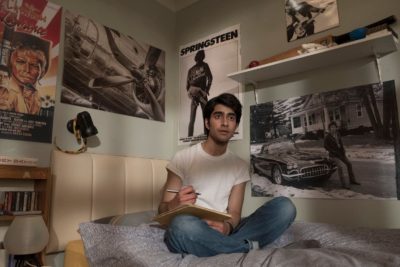

  • ‘Spoiler Alert’ review: Love, loss, and smurfs make a perfect rom-com

    ‘Spoiler Alert’ review: Love, loss, and smurfs make a perfect rom-com

    Spoiler Alert follows Michael and Kit’s imperfect romance through various ups and down before they’re faced with a crisis that tests the bounds of their love

    Spoiler Alert is the kind of realistic romantic tragicomedy that makes you feel nearly every emotion at once. Funny but not forced. Tragic but not overwrought. Romantic but not unrealistic. It hits all the beats in each of its genres while delivering a satisfying albeit devastating rom-com that says love is worth the pain. Am I romantic now?? I think so.

    Spoiler alert: This romantic comedy is actually a tragedy. But it wants you to know that. Spoiler Alert opens with a shot of Michael Ausiello (Jim Parsons) lying across from his husband Kit Cowan (Ben Aldridge) in a hospital bed, clearly in his last moments, before flashing back to the pair meeting for the first time thirteen years earlier. Why, though, does the story spoil its tragic ending? Isn’t it enough that the couple doesn’t get their happily ever after? Instead, we’re forced to watch in dread knowing their fate. Well, that’s by design. While there are flashes of the romantic comedy tropes we’ve come to know and fall for time and time again, Spoiler Alert is grounded in realism — as it should be since it is based on Ausiello’s memoir Spoiler Alert: The Hero Dies: A Memoir of Love, Loss, and Other Four-Letter Words. Still, the way it errs so closely to his actual story is admirable as it doesn’t shy away from the ugly. 


    ADVERTISEMENT


    And not just the ugly of a terminal cancer diagnosis. It doesn’t present Michael and Kit as a glorified picture-perfect gay couple. We’re first introduced to TV-obsessed Michael when he’s a staff writer for TV Guide, a dream job since he was a child. He’s a workaholic, a bit of a prude, and a man of habit (he always needs his diet coke like half the gay men in New York City). That’s why when he meets photographer Kit out at a gay club on “jock night” it is truly a surprise — the only reason he goes is that his friend (Jeffery Self) goads him into it. Despite some initial awkwardness including a cringe Knight Rider reference, Michael and Kit hit it off. 

    They seem like complete opposites. Michael is uncomfortable in his skin in every way and especially as a gay man — it is the early aughts after all. Kit, on the other hand, breezes through like a hurricane — confident, assured, and swoony. The perfect romantic lead. Despite their differences, though, the pair make it to a second date that director Michael Showalter perfectly presents. One of those conversations that just never seems to run out and can go on for hours. Eventually, they make their way back to Kit’s apartment — where they have a hilarious run-in with his monosyllabic lesbian roommate — to extend their night. However, as they’re hooking up, Michael has a fit as he’s about to remove his shirt. Sensing his discomfort, Kit slows down and asks Michael if he’s doing anything wrong. He reveals he is an “FFK” aka Former Fat Kid. Instead of having him leave, Kit asks if he can just hold him. 

    It’s those moments that make the romance in Spoiler Alert feel so real. Figures since Michael himself said that the movie doesn’t take many creative liberties with the story. Their jagged line to love is imperfect but believable. The story doesn’t shy away from those moments of uncertainty — like when Michael reluctantly hosts Kit at his Jersey City apartment for the first time. I’ll save that reveal for the movie, but let’s just say it leaves them feeling a little blue. In another scene, Kit asks Michael to pretend to be his friend as he hasn’t come out to his parents yet (the charming and hilarious duo of Sally Field and Bill Irwin). It all culminates in a hilarious coming-out scene where three people confess they’re gay at once. Despite the bumps, Kit, who Aldridge plays perfectly as a swoony (and chiseled) romantic lead, sticks around long enough for the pair to move in together and we’re treated to the corny but genuine moments that make us love love — a montage of their Christmases together is warm enough to melt any anti-romance cynic’s heart.


    ADVERTISEMENT


    However, what is so refreshing is that 13 years down the line Michael and Kit are separated and in couple’s counseling drudging up every complaint, big and small, they have about each other. Some are universal and some are specific to the gay experience like being on Grindr (“you can look, but can’t touch”), feeling jealous of the hot gay coworker, missing an episode of Drag Race. It feels similar to director Michael Showalter‘s previous film The Big Sick, which similarly told an imperfect love story.

    Just like that movie, Spoiler Alert takes a turn towards tragicomedy when Kit discovers he has an aggressive type of cancer — get your prostate exam, fellas. And with that, the movie becomes an exploration of regret, grief, trauma, and the boundaries of love. While it doesn’t lose its wit, it does inject understated moments that invoke feelings of loss. In perhaps one of the more quietly impactful scenes, Michael and Kit take photos of each other at a restaurant they’ve frequented — it’s Benny’s Burritos, which recently closed, for you West Village gays. There are no words, but Parsons and Aldridge quietly communicate to us (and each other) the fear, longing, and sadness they both feel. It’s those moments that elevate Spoiler Alert to greatness.

    Sometimes the swings that Spoiler Alert takes don’t completely pan out. Flashbacks to Michael’s childhood that are presented as scenes from a sitcom do little to explain how his mother’s own battle with cancer colors his experience with Kit. There is also an underbaked subplot around Kit’s fidelity during the relationship involving his co-worker Sebastian (Queer Eye‘s Antoni Porowski) that could have been more impactful. Still, it never detracts from the tear-jerky effectiveness of the movie.

    Spoiler Alert is funny but not forced. Tragic but not overwrought. Romantic but not unrealistic. It is the kind of romantic comedy that we gays in New York City can’t roll our eyes at. It wasn’t until Spoiler Alert that I realized the reason so many gay rom-coms fall flat is we’re immune to bullshit. To love who we want to love without prejudice takes years of trauma, therapy, and, eventually, acceptance. We are all too aware that love isn’t like what it is like in the movies — it’s imperfect, messy, and cruel. We want that kind of love. We fought to have that kind of love. The kind of love that even though it’s hard, it’s worth it in the end. Sure, more likely that not the great loves in our lives are not going to end quite as tragically as Michael and Kit’s. At the very least, though, it affirms that through it all life, love, and pain are just a part of the experience. Embrace every moment.


    ADVERTISEMENT


    More movies, less problems


    Hey! I’m Karl. You can find me on Twitter and Letterboxd. I’m also a Tomatometer-approved critic.

    💌 Sign up for our weekly email newsletter with movie recommendations available to stream.


    ADVERTISEMENT


  • ‘The Menu’ review: A delectable dark horror-comedy | TIFF review

    ‘The Menu’ review: A delectable dark horror-comedy | TIFF review

    In The Menu, a group of wealthy diners is invited to an exclusive island restaurant run by a world-renowned chef to experience a once-in-a-lifetime dinner. On the menu: horror.

    As with his Emmy-wining work on Succession, director-writer Mark Mylod brings the same black comedy schadenfreude at the hands of the rich to The Menu.

    Have you ever watched an episode of Netflix’s Chef’s Table and thought, “gee, I wish this was more like a horror movie.” Well, I present to you weirdos The Menu, a deliciously camp (that’s a pun) humble one-room eat the rich satirical horror-comedy about a group of diners at an exclusive isolated island restaurant who think they’re about to be treated to a one-in-a-lifetime multiple-course molecular gastronomy dinner constructed by legendary Chef Julian Slowik (Ralph Fiennes). And they are treated to that meal, more or less. What they don’t know is that they are a part of the menu. However, what is so exciting about The Menu is it’s not in the way you think. This isn’t Raw (if you know, you know). What it is is a hilarious and satiating pitch-black comedy of manners about rich people getting their just desserts from the people meant to serve them—and separately one of the best horror movies and comedies of the year.

    Director Mark Mylod works in a very similar tone to his Emmy-winning work on HBO’s Succession. The Menu from its opening moments to its explosive finale is tongue-in-cheek and never notions that it is trying to say anything more than what is on its surface like other recent genre movies dealing with class—it’s more Bodies Bodies Bodies than it is Get Out or Parasite. Take Tyler (a delightful Nicholas Hoult), a self-described foodie and super fan of Chef Slowik who has been trying to get a reservation to Hawthorne for months—the restaurant only takes twelve guests a night for $1,250 a seat. When he finally does, he brings along Margot (Anya Taylor-Joy) who he chastises for smoking because it will mess up her palette leaving her unable to appreciate the food.

    They board a ferry that brings them and the ten other guests for the night’s dinner service to the isolated island where the restaurant, including the farm, smokehouse, and staff quarters all reside. The restaurant’s no-nonsense deadpan maître d’hôtel Elsa (Hong Chau) explains that the entire staff lives on the island. “Why would we not?” she asks. She adds, “we’re a family.” Elsa is like the harbinger of a classic horror movie and basically wears a sign that says “you will die.” The guests don’t heed the warning.

    After, the guests are seated in the minimalist seaside restaurant that is open concept with the kitchen flowing straight into the dining room. Throughout the night we slip into and out of the conversations at each table where we learn the backstory of each group, all characters in their own right—much like the eccentric suspects of Knives Out. There’s highfalutin food critic Lillian Bloom (Janet McTeer) and her magazine editor (Paul Adelstein) who try to come up with increasingly pretentious words to describe the food (“it’s thalassic,” Lillian says about the first course of the meal, a single scallop on a rock). A group of finance bros who work for the venture capital firm that funds the restaurant. John Leguizamo plays a movie star who says he’s friends with Chef Slowik and tries to stop his assistant Felicity (Aimee Carrero) from quitting her job.

    Through the multiple courses of his finely tuned dinner—captured with the same delicate mouthwatering cinematography of an episode of Chef’s Table or the cooking scenes in Ang Lee’s Eat Drink Man Woman—he brings his diners on an exploration of flavor, nature, and horror. That itself could have been a hilarious satirical comedy, mainly when he introduces the second course: a “breadless” bread plate—he explains that for aristocracy like the diners, something as simple as bread is beneath them. And while the movie starts as a hilarious satirical

    The first indication that something is not quite what it seems is when Chef Slowik describes the inspiration of his third course, recalling a memory from childhood when he had to protect his mother from his abusive father by stabbing him in the thigh with a pair of scissors—on taco night of all nights. The meal, a deconstructed taco with a chicken thigh stabbed a pair of scissors, is served with tortillas laser drawn on with images further exposing the indiscretions of each the guests. They range from gentle chides—Tyler’s is photos of himself taking photos of the food (which they were instructed not to do at the beginning of the night)—to personal revelations—Anne’s tortillas are printed with photos of Richard with a young woman who looks a lot like Margot—to criminal evidence—let’s just say the venture capitalists’ money took a vacation to the Cayman Islands.

    “What is this?” asks Bryce (Rob Yang), one of the venture capitalists.

    “That is a tortilla deliciosa,” Elsa responds sincerely.


    ADVERTISEMENT


    More movies, less problems


    Hey! I’m Karl. You can find me on Twitter and Letterboxd. I’m also a Tomatometer-approved critic.

    💌 Sign up for our weekly email newsletter with movie recommendations available to stream.


    ADVERTISEMENT