Karl Delossantos

  • Natalie Portman and Julianne spar in high camp melodrama ‘May December’ | review and analysis

    Natalie Portman and Julianne spar in high camp melodrama ‘May December’ | review and analysis

    NYFF 2023 | May December follows an actress (Natalie Portman) as she prepares to play a notorious tabloid figure (Julianne Moore) by shadowing her dredging up old wounds


    May December begins with Julianne Moore dramatically opening a refrigerator door, while a dissonant chord strums and the camera locks into a closeup, and deadpan delivers the line, “I don’t think we’re going to have enough hot dogs.” While it is a high camp melodrama filled with a cast of near-absurd characters, at its heart it’s a complex exploration of trauma, exploitation, and how all “grown-ups” are just children pretending to be adults. With Oscar winners Julianne Moore and Natalie Portman squaring off as dueling narcissists and Charles Melton giving a star-is-born performance, May December is one of the year’s best.

    May December had its North American premiere at the 2023 New York Film Festival.

    Right before the title card for director Todd Haynes‘ new film May December smash cuts onto the screen, Gracie Atherton-Yoo (Julianne Moore) swings open a refrigerator door. As the camera closes in on her face and a dissonant chord strums, she dramatically delivers the line, “I don’t think we’re going to have enough hot dogs.” From then on, it’s impossible not to be transfixed by the high camp of this melodrama.

    And there’s so much devilishly delightful sparing between Gracie and actress Elizabeth Berry (Natalie Portman), who visits Gracie’s Georgia home to prepare to play her in an upcoming movie, that it’s surprising when the movie hits you with a flurry of complex emotions. Screenwriter Samy Burch, who marked her first appearance on the promotional circuit at the 2023 New York Film Festival, said of her screenplay, “I really like the tonal mix of humor and real, genuine sadness and heartbreak.” It’s that exact melange of the darkly comedic melodrama and the deeply felt character study that make May December a satisfying — and deeply odd — romp.


    ADVERTISEMENT


    The reason Gracie’s life warrants a movie is her notorious highly-publicized tabloid romance with her now husband Joe (Charles Melton) that swept the nation in the 90s. You see, Gracie and Joe started dating when she was 36-years-old and he was just thirteen-years-old. Twenty years later, the pair still receive their fair of attention — often of the fecal variety — as they live a quiet existence in their Savannah, Georgia seaside home. That is, until Elizabeth arrives.

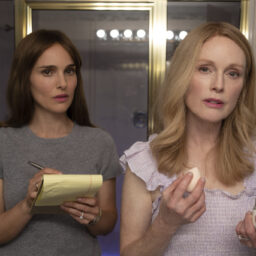
    Portman plays Elizabeth, who from what we can gather is best-known for her performance on a Grey’s Anatomy-type show, with a satirical edge — perhaps chiding her own star persona (or at the very least her iconic accent from her performance in Jackie). She probes Gracie’s life like a psychologist analyzing her patient or a serial killer their prey. She observes her mannerisms, dissects every decision she makes, even copies her makeup routine in a scene that edges on Persona-esque horror — a clear inspiration.

    As she observes more people in Gracie’s orbit, we uncover the ripple effects of her crimes that she went to prison for as we see in hilariously accurate tabloid covers (“Pregnant in Prison!”). Her ex-husband Tom (D.W. Moffat) swears he’s over all of it before snapping as he starts to recall the incident, Gracie and Tom’s son Georgie (Cory Michael Smith) — yup, his name is Georgie — is a man-child who is the diva lead singer of a band that performs at a local pub, meanwhile the current manager of the pet shop where Gracie and Joe first met milks the publicity for everything it’s worth — even keeping a laminated copy of a newspaper article about the incident on the counter.


    ADVERTISEMENT


    The cast of characters border on absurd almost becoming caricature, but Haynes keeps the film grounded in some reality despite the camp hijinks. However, Elizabeth isn’t some innocent voyeur. When she finds herself in the notorious storeroom where Gracie and Joe’s first sexual encounter took place she acts it out so convincingly you can’t tell whether she’s actually pleasuring herself. We’re always kept a distance from her true intentions, but at the very least we can infer that she’s not as afraid of exploiting the family for her own work as she says she is.

    However, Gracie isn’t as forthcoming with the truth as she thinks she is either. She’s almost dismissive of her past. “Everyone’s got skeletons in their closet,” she says as if she’s referring to a spat of unpaid parking tickets. Both women are unwilling to cede their true selves to the other. Burch’s screenplay doesn’t shy away from making Gracie and Elizabeth irredeemable. Something we don’t often get to see.

    And while there is legitimate fun to be had with the passive-aggressive meeting of two different breeds of narcissist, at the heart of May December is a sensitive character study of a man who was both asked to grow up too fast and not afforded the opportunity to. Melton, in a star-making Oscar-worthy performance, portrays Joe with a depth that makes you so sympathetic to his plight that it almost feels like whiplash compared to melodrama. While he starts off as the capable father or doting husband, when he begins interacting with Elizabeth — she herself is 36-years-old, the age that he met Gracie — we watch his body language revert to the 13-year-old boy in that pet store storage room.


    ADVERTISEMENT


    With hunched shoulders, his hands in his pockets, and mumbled replies, we see that through all these years Joe has just been putting on the air of an adult. In one of the most heartbreaking scenes, he smokes weed for the first time ever — surprising for a man in his late 30s — with his college-bound son (Gabriel Chung) and through sobs tells him of his hopes that he will live a happy life: “I don’t know if we’re connecting, or if I’m creating a bad memory for you.” In the subtext, he hopes that he won’t suffer the same traumas that he himself had to endure. It’s that incisive insight that makes the movie as compelling as it is entertaining.

    On the surface, May December shouldn’t work with its contrasting tones of dark comedy mixed with near-parody satirical elements and sentimental dramatics with complex human condition. However, it manages to find balance in way that allows you to enjoy it without letting you get too comfortable with the sensitive situation.

    In a climactic scene, Elizabeth tells a despondent Joe, “this is what grown-ups do.” However, what Burch’s screenplay presupposes is that the concept of a “grown-up” doesn’t actually exist. Regardless of age, people are not much more than their child-self reacting to the things in their present filtered through their past. Every character in the movie has been stunted in their coming-of-age in some way — perhaps because you never stop coming of age. We watch in real-time as Gracie tears into her own children with the gusto of Faye Dunaway in Mommie Dearest — perhaps its generational trauma or maybe she’s just a sociopath — meanwhile Joe is trying everything in his power to not let them suffer the same fate.

    The beauty of May December is that it doesn’t give its characters a melodramatic ending — again, keeping one step in the real-world. Dare I say, the movie comes to a close with some hope. Still, we’re treated to one last flash of glorious camp that sets it as one of the year’s best.


    ADVERTISEMENT


    More movies, less problems


    Hey! I’m Karl. You can find me on Twitter and Letterboxd. I’m also a Tomatometer-approved critic.

    💌 Sign up for our weekly email newsletter with movie recommendations available to stream.


    ADVERTISEMENT


  • Foe is its own worst enemy | review

    Foe is its own worst enemy | review

    NYFF 2023 | Foe follows the fallout after a young couple receives news that one of them will be sent to space with a clone to keep the other company

    The collective star power of Academy Award nominees Saoirse Ronan and Paul Mescal isn’t enough to save this sweaty (both literally and figuratively) lo-fi sci-fi melodrama from its own ambitions. Despite intriguing heady themes like the ethical dilemma of artificial intelligence, the moral ambiguity of cloning and rumination on relationship dynamics, its distrust in the intelligence of its audience leaves it as its own worst enemy.

    Foe is playing at the 2023 New York Film Festival.

    The year is 2065 and the Earth is irreparably damaged. Young couple Junior (Paul Mescal) and Hen (Saoirse Ronan) are approached by even keeled and enigmatic Terrance (Aaron Pierre). He tells the couple that in an effort to save the human race, a mysterious combination of the government and private companies is sending a group of people into space for two years to understand how to survive. Junior is selected as a part of that group, which will require him to leave Hen alone for two years. But fear not, a nearly identical biomechanical clone will be left to keep her company. What could possibly go wrong?


    ADVERTISEMENT


    Bringing together critical darlings Saoirse Ronan (Lady Bird, Little Women) and Paul Mescal (All of Us Strangers) should’ve been a boon for writer-director Garth Davis’s Foe. Putting the star power and screen presence of two of the hottest young actors working today in a single-location barn-burner relationship drama seems like a recipe for success. I mean, a handful of morality science fiction from Blade Runner, a dash of marriage dynamics from A Streetcar Named Desire and a pinch of Hitchcockian psychological pastiche is enough to whet any appetite. But when the movie feels the need to spoon-feed you each plot point, emotion and moral dilemma with a heavy hand, you quickly lose your appetite. 

    It’s unfortunate considering the story, which was adapted from Ian Reid’s novel of the same name, is intriguing on its own. Reid co-wrote the screenplay with Davis. But where Reid is unafraid to be obtuse with his storytelling, like his first novel I’m Thinking of Ending Things which was adapted into a stellar psychological thriller by Charlie Kaufman, in translating the story to screen the movie over explains itself. It’s unclear whether it is a choice or for fear that the audience wouldn’t get the tale. But the fun of a twisty psychological thriller is… well, the twist. In an effort to not alienate the audience, it undercuts the narrative’s effectiveness.


    ADVERTISEMENT


    There’s clearly a lot on Reid’s mind. The ethical dilemma of artificial intelligence, the moral ambiguity of cloning and rumination on relationship dynamics could make for an interesting story. And taken outside of Davis’s  heavy-handed direction, perhaps those themes could thrive. What we get is a sweaty (both literally and figuratively) melodramatic messy clone of a story already told well. While Mescal and Ronan are chewing the scenery with bombastic performances—screaming, crying, the works—it feels out of place in a story that could’ve been meditative speculative fiction (see: After Yang).

    When Foe finally reveals itself, a reveal you probably saw coming a mile away, it’s worn you down with its overwrought anguish. Perhaps there’s some so-bad-its-good replay value to it, but why watch a clone when you can watch the better original thing.

    Foe premiered at the 2023 New York Film Festival. It will be released by Amazon later this year.


    ADVERTISEMENT


    More movies, less problems


    Hey! I’m Karl. You can find me on Twitter and Letterboxd. I’m also a Tomatometer-approved critic.

    💌 Sign up for our weekly email newsletter with movie recommendations available to stream.


    ADVERTISEMENT


  • ‘American Fiction’ satirically rewrites race into Hollywood | review

    ‘American Fiction’ satirically rewrites race into Hollywood | review

    TIFF 2023 | American Fiction follows a fed-up Black author who facetiously writes a “Black novel” to poke fun at media’s desire for tragic POC stories only to find himself with his most success to date

    American Fiction is an uproarious absurd comedy, uplifting family drama, and swoony romantic comedy, and all wrapped up in a hilarious crowd-pleasing satire about the stories the media deem worthy of telling about marginalized people. It’ll have you crying from laughter and then asking, “Am I the problem?” With a stellar ensemble cast anchored by Jeffrey Wright giving a career-best performance, American Fiction is one of the most-entertaining and best movies of the year.

    American Fiction premiered at the 2023 Toronto International Film Festival.

    You might also like: Everything Everywhere All At Once, Get Out

    In adapting the 2001 novel Erasure, writer-director Cord Jefferson basically delivers three separate movies. On one end, American Fiction is a Nora Ephron-esque romantic comedy about a cranky writer and the love he finds with his newly divorced neighbor. On the other, it’s a family drama about a Black family and their various personal struggles. Bridging the two is a witty comedy about the (very white) media machine and its hunger for stories about marginalized people — only if they’re sad. If it sounds like a lot, you’re right. However, through clever writing, a stellar ensemble and plot that keeps you guessing, the result is a hilarious crowd-pleasing satire that will have you nodding and laughing along in agreement, but also wondering, “Am I the problem?”


    ADVERTISEMENT


    Because while American Fiction chides the stereotypical “tragedy porn” that typically encompasses the most popular Black stories — think Oscar successes 12 Years a Slave or Precious — it also emulates them. It’s like the book that first frustrates author Thelonious “Monk” Ellison (Jeffrey Wright) about the hypocrisy. After speaking on a sparsly attended panel at a book festival, Monk walks by a packed conference hall where Sintara Golden (Issa Rae) is addressing a largely white audience about her best-selling debut novel We’s Lives in Da Ghetto. She reads a passage and it’s every bit as bad as you’d imagine it’d be — the audience eats it up.

    Things are excasserbated when Monk goes to a local bookstore looking for a copy of his book. Instead of finding it in historical fiction an unassuming teen employee guides him to the “African-American” stories section. When Monk questions him on why it’s there, he responds, “I imagine this author is Black.” Monk retorts, “The blackest thing about this book is the ink!” After his book agent Arthur informs him another publisher has passed on his newest novel for “not being black enough,” Monk faceciously writes My Pafology. As he types, the two characters Willy the Wonker (Keith David) and Van Go Jenkins (Okieriete Onaodowan) enter the room and enact the story. There’s a drug deal, shootout, missing father reveal. Everything that Monk hates about the state of Black media. He signs the manuscript Stagg R. Leigh and sends it off to Arthur to send to publishers as a “f— off.”

    They love it.


    ADVERTISEMENT


    From there, Monk deals with the fallout from the book’s success including a potential movie adaptation that a producer (Adam Brody) is circling, becoming a finalist for a literary prize that Monk is on the jury for, and a small hitch where people inadvertadly become convinced “Stagg” is a wanted fugitive on the run from the authorities (it adds to the mystique!). All the while, Monk is dealing with his kooky family — responsible doctor sister Lisa (Tracee Ellis Ross), immature gay plastic surgeon brother Clifford (Sterling K. Brown), aging mother Agnes (Leslie Uggams), and childhood nanny Lorraine (Myra Lucretia Taylor) — and potential romance with his newly single neighbor Coraline (Erika Alexander).

    If that sounds like a lot of story to balance, you’d be right. But Jefferson never loses control of any of the plotlines. The romance is romantic. The family drama is compelling. The satire is incisive. Each thread delivers its own resonant commentary that eventually layer into the thoughtful themes of American Fiction.

    While sitting on the jury for a literary prize that he’s never won — they ask him to be on the judging panel after calls for diversity — Monk and Sintara sit amongst three white authors as they debate the authenticity and worthiness of My Pafology as a story. Monk and Sintara are understandably dubious about the novel while the other three white judges proclaim, “we need to listen to more Black voices!” — all as they ignore the two in the room. To add insult to injury, one gleefully says, “I’m thrilled to read about a BIPOC man harmed by our carceral state.” Monk and Sintara can just roll their eyes. What American Fiction understands is people will pay attention to Black stories and opinions when it feels comfortable for them.


    ADVERTISEMENT


    The beauty of the movie, though, is that while it in some ways emulates the kinds of stories its criticizing, it leaves room for joy on the screen. The balance between sincerity, parody, and satire is nothing short of miraculous.

    American Fiction is packed to the brim with jokes, hijinks and gags. From Monk sting like a hardened criminal in a meeting with a film producer to sell the book’s rights or when the family arrives at the beach house to be greeted by two speedo-clad gay men making breakfast with Clifford or a montage on a Hallmark-like channel celebrating Black stories all of which are about slavery, poverty, or gangs, there’s nary a moment without something to laugh at. But within those absurd moments, there’s poignancy. In particular, Clifford confides to Monk his regret about not coming out to their father before he died. “He never knew the entirety of me,” he laments. That line neatly packages what Jefferson is trying to communicate. Monk, in another scene, observes that the media people consume about the Black experience “flatten our lives.” American Fiction tries to add color back into those stories — and it’s one of the year’s best because of it.


    ADVERTISEMENT


    More movies, less problems


    Hey! I’m Karl. You can find me on Twitter and Letterboxd. I’m also a Tomatometer-approved critic.

    💌 Sign up for our weekly email newsletter with movie recommendations available to stream.


    ADVERTISEMENT


  • ‘Dream Scenario’ puts Nicolas Cage in an internet-age nightmare | review

    ‘Dream Scenario’ puts Nicolas Cage in an internet-age nightmare | review

    TIFF 2023 | A woefully average middle-aged professor garners overnight fame after he appears in the entire world’s dreams in Dream Scenario

    Dream Scenario is exactly how Nicolas Cage should be spending his career: on bonkers wild swings like a comedic version of A Nightmare on Elm Street where Freddie is a normal average guy and his weapon is doing nothing. Hilarious, relevant and wonderfully weird, it is a reflection of the internet age, cancel culture and quickly our dreams for fame can turn into a nightmare.

    Dream Scenario premiered at the 2023 Toronto International Film Festival. A24 is distributing. Watch the trailer here.

    You might also like: The Menu, I’m Thinking of Ending Things, The Worst Person in the World

    Dream Scenario is like A Nightmare on Elm Street if dream demon Freddie Krueger was a boring average middle-aged man and instead of knives for hands his weapon was doing absolutely nothing. That’s the new high concept Norwegian director Kristoffer Borgli explores with his follow-up to his breakout film Sick of Myself, which satirically skewered social media influencer culture. He once again sets his sights on the vanity (and memeification) of the internet age with a simple conceit: what would happen if one guy started appearing in everyone’s dreams? And I mean everyone. 

    That guy is woefully unremarkable zoology professor Paul Matthews. His particular brand of awkward schlubby-ness that borders on creepiness could only be achieved by Nicolas Cage. During lunch with a former university classmate, where he attempts to get co-credit for an idea that is publishing a book, she asks, “Well how far along are you?” He retorts, “It’s just in the idea stage.” That’s how Paul’s life has been defined so far. What he’s not done. However, he’ll quickly find that “doing” might also be a nightmare.


    ADVERTISEMENT


    The following day, Paul starts to have weird encounters — his students whispering about him during class, a waitress having intense deja vu when he walks in, and an old flame mentioning he was in her dream the other night. While these all seem like coincidences, he starts to discover that he’s been in many people’s dreams… perhaps everyone’s. He finds his Facebook messages flooded with people telling him that he invaded their dreams. What was he doing in them? Absolutely nothing. As he hilariously fields questions from his students about their Paul dreams, they all have different conceits — running from a monster, trapped by alligators, an earthquake. What they have in common is Paul does nothing. He just stares or casually walks by. His aggressively normal demeanor — “that middle-aged bald guy with glasses” — is a hilarious juxtaposition to that absurd dream logic. 

    The movie’s plot and imagery evokes comparisons to Charlie Kaufman’s Eternal Sunshine of the Spotless Mind and I’m Thinking of Ending Things or David Lynch’s Twin Peaks: Fire Walk With Me. The pitch-black humor that Borgli achieves is so satisfying, especially when delivered by a self-aware tactician like Cage. Paul is woefully uninteresting in a way that only Cage, with his self-aware campy mannerisms and deadpan delivery, can make endearing. But Paul isn’t necessarily a hero, even if we are in some ways rooting for him and his overnight fame. 


    ADVERTISEMENT


    Like any person suddenly thrust into the spotlight, Paul strives to take advantage of his newfound fame to get momentum on his book on ant intelligence that he’s dubbed “ant-elligence.” When he’s courted by a creative agency (headed up by Michael Cera in a cheeky cameo) to manage his new public persona they pitch him on deals ranging from Sprite — “we’ll get everyone to dream of you with a Sprite” — to Obama — “one idea was to have Obama dream about you.” His meteoric rise feels akin to the sudden internet stardom that so many people achieve for doing essentially the bare minimum or in some cases absolutely nothing — memes like “Alex from Target” or “Saltbae” come to mind. It’s clearly Borgli’s intention considering what’s next.

    Suddenly, things take a turn for the worse and Dream Scenario takes a turn for the better (and the spooky). Instead of the benign creep standing idle while terrible nightmarish things happen to the dreamer, Paul becomes the nightmare. Much like Freddie Krueger in A Nightmare on Elm Street, Paul slashes, stabs and bludgeons his way through his hapless victims. The biggest difference is Paul is a person in the real world having to face the consequences of his actions (or lack thereof). From there, the movie turns into a send-up on cancel culture complete with insincere tear-ridden apologies, a hate-fueled internet mob, and, of course, a sorta-kinda-not-really redemption.


    ADVERTISEMENT


    Like Borgli’s breakout film Sick of Myself, Dream Scenario loses some of the (nightmare) fuel that drives it for much of its runtime. He creates this wonderfully off-kilter world with such ease and crafts an entertaining story to go along with it, but he’s not necessarily interested in taking things a step further. The movie is a reflection of our world rather than a critique of it and the satire is maybe better defined as parody — like a comedy sketch turned into a feature-length film. Despite that, and an odd third act turn that perhaps jumps the shark, you never fall out of the trance it puts you in.

    Even if it is driven by observation more than commentary — one hilarious turn after Paul’s cancellation is the alt-right and France standing as his last supporters — Dream Scenario is a satisfying excercise in the absurd that blessedly doesn’t feel self-important about what its chiding. It’s what I loved (and other’s despised) about The Menu. Like a dream you might forget the exact details of it but you wake up knowing the emotions you felt — and Dream Scenario will run you through the gamut.


    ADVERTISEMENT


    More movies, less problems


    Hey! I’m Karl. You can find me on Twitter and Letterboxd. I’m also a Tomatometer-approved critic.

    💌 Sign up for our weekly email newsletter with movie recommendations available to stream.


    ADVERTISEMENT

  • TIFF 2023 reviews: ‘Woman of the Hour’ and ‘Shayda’

    TIFF 2023 reviews: ‘Woman of the Hour’ and ‘Shayda’

    Actor-turned-director Anna Kendrick and first-time director Noora Niasari screened their new movies at the 2023 Toronto International Film Festival

    Anna Kendrick, best known as an actress in the Pitch Perfect franchise and A Simple Favor, takes the director’s chair for the first time with her thriller Woman of the Hour. Meanwhile, first-time director Noora Niasari adapts her childhood in the drama Shayda.

    The Toronto International Film Festival runs from September 7th to 17th, 2023. Read all of our reviews from the festival here.

    Tony Hale, Anna Kendrick and Daniel Zovatto in Woman of the Hour. Courtesy of TIFF.

    Anna Kendrick is first-time director of the hour with Woman of the Hour, a taut and effective thriller

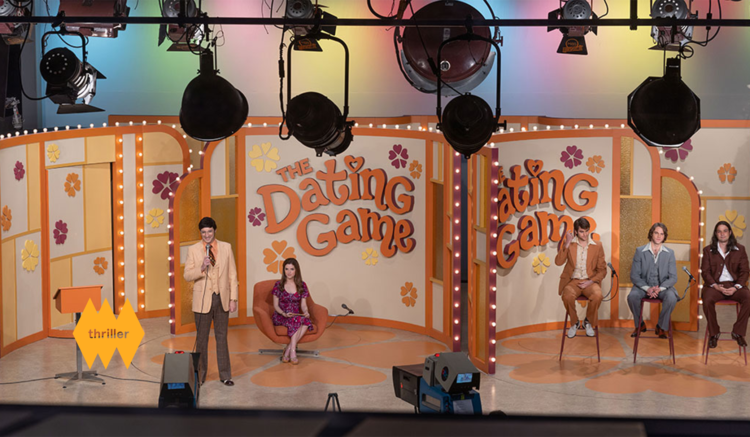
    As an actress, Anna Kendrick (Pitch Perfect, A Simple Favor) is known for her bubbly wry personality behind a thousand watt smile that oozes charisma. It makes the tense and terrifying opening sequences of her directorial debut Woman of the Hour all the more surprising. It has more in common with David Fincher’s Zodiac than any of her onscreen appearances. However, the bizarre true story of a serial killer’s appearance on 70s dating show The Dating Game is a match for her sensibilities as an actress — and apparently as a director.

    Kendrick plays Cheryl Bradshaw, a failed actress in LA whose agent gets her onto an episode of The Match Game. Little does she know Rodney Alcala (Daniel Zovatto, Don’t Breathe), one of the three eligible bachelors she has to pick from, murdered five woman prior to his appearance. Oscillating between intense suspenseful scenes depicting Alcala’s past crimes throughout the 70s and darkly comedic clips from the show — where Kendrick gets to flash her signature wry humor — Woman of the Hour is a tight and engrossing thriller that strikes a balance between respecting the victims and faithfully recreating what transpired.

    While actors-turned-directors often take a “more is more” approach — as if they have something to prove — Kendrick has astounding control over the atmosphere, mood and pacing of the movie. She never sensationalizes any of the killings and even her directorial flourishes — a quick cut or audio dropping out — are small but effective. She allows the story to direct the style rather than the other way around. At a lean 94 minutes, Woman of the Hour is as efficient as they come but doesn’t sacrifice impact. If this movie is any indication, Anna Kendrick is going to be the director of the hour.

    Woman of the Hour premiered at the 2023 Toronto International Film Festival. Netflix acquired the film for distribution. Release date TBA.

    Zar Amir Ebrahimi and Selina Zahednia in Shayda. Courtesy of TIFF.

    Sweet and engrossing Australian drama Shayda gives Zar Amir Ebrahimi another stellar acting showcase

    Ever since seeing Zar Amir Ebrahimi in her Best Actress-winning performance in Holy Spider at the Cannes Film Festival I was fascinated by what she would do next — and she did disappoint. Australian drama Shayda takes the form of a familiar domestic violence drama in the vein of Sleeping with the Enemy or Enough but has the added element of an immigrant story. Ebrahimi plays the titular character, an Iranian immigrant living in a women’s shelter with her daughter Mona (Selina Zahednia) in 1980s Australia.

    We learn through a heartbreaking monologue where Shayda prepares to fight for custody of her daughter what drove her to finally leave her abusive husband (Osamah Sami). Ebrahimi’s performance is staggering. Rather than letting the emotion out in a watershed moment, it feels like she’s held it in so long it simple begins to seep out. So much of the success of Shayda falls on her performance that continually transforms as the movie progresses. While the subject could be overwhelming, first-time writer-director Noora Niasari, who based the story on her own childhood, relishes in the moments of joy rather than lingering on those of pain.

    While the movie doesn’t completely transform the formula of this kind of movie, the pure fact that the story is about an Iranian woman and immigrant makes it a compelling watch. Niasari explores the tension between celebrating and participating in your culture while doing something that goes against it. Shayda doesn’t offer any answers or proclamations, it simply seeks to make you feel what it is like to live in that tension. In the end, Shayda is uplifting, engrossing and heartwarming.

    Shayda is playing at the 2023 Toronto International Film Festival. Sony Pictures Classics will release the film later this year.


    ADVERTISEMENT


    More movies, less problems


    Hey! I’m Karl. You can find me on Twitter and Letterboxd. I’m also a Tomatometer-approved critic.

    💌 Sign up for our weekly email newsletter with movie recommendations available to stream.


    ADVERTISEMENT

  • ‘Origin’ traverses time to investigate the roots of oppression | review

    ‘Origin’ traverses time to investigate the roots of oppression | review

    TIFF 2023 | Origin follows an author’s pursuit of the roots of oppression against the backdrop of her own personal struggles

    In adapting the nonfiction book Caste: The Origins of Our Discontents by Pulitzer Prizer winner Isabel Wilkerson, Ava DuVernay set out to unpack a complex topic that recontextualizes our conception of race and oppression that spans centuries and societies. It’s no small feat, especially for a book as well-researched and intellectual as Wilkerson’s. How does she tackle something this epic in scale? She shrinks it down to its smallest element: humans. Instead of following the idea, she follows Wilkerson’s journey (played by Aunjanue Ellis-Taylor) to understand it — from present-day Florida to the Jim Crow South to late 19th century India. But first, DuVernay wants us to understand Isabelle herself.


    ADVERTISEMENT


    Origin begins in the shadow of the murder of Trayvon Martin (Miles Frost), which DuVernay sensitively recreates through the chilling 911 call that stunned the nation. Like all of us, the story rocks Isabelle who is courted by a former colleague to write an article on the shooting. However, we see that Isabelle’s mind is elsewhere. Her mother (Emily Yancy) makes the decision to move into an assisted-living facility and while Isabelle’s husband Brett (Jon Bernthal) supports her, she feels guilt and regret. In these early scenes, we often see Isabelle framed against the sky (the film’s stunning cinematography is by Matthew J. Lloyd) like she’s floating untethered from the ground. She is at an impasse.

    That’s when the unthinkable happens. Losing her husband and mother in quick succession throws Isabelle into grief. Poetically translated onto the screen to helps us understand how an incident with a plumber (Nick Offerman) sporting a “Make American Great Again” hat throws her back into work. Using her grief and anger as a motivator, she’s dives head-first into her work trying to find answers to impossible questions. But that insatiable appetite for knowledge and eye for patterns is nothing short of gripping to watch. Like the greatest journalism movies — Spotlight, All the President’s Men — Origin moves with swiftness driven by an urgency to solve the mystery. However, unlike those movies the mystery is at the very core of our world.


    ADVERTISEMENT


    To help us fully understand Isabelle’s thoughts, we hear excerpts from Caste played over reenactments of three historical threads. In the first, we follow German man August (Finn Wittrock) and Jewish woman Irma (Victoria Pedretti), who defied rule in Nazi-era Germany. From there, we connect with a pair of Black anthropologists (Isha Blacker and Jasmine Cephas-Jones) who after witnessing the rise of the Nazi party in Germany embed themselves in the Jim Crow South to investigate the racial divide. Lastly, in an Eat, Pray, Love-like trip to India, Isabelle uncovers the caste system and subordination of the Dalit people.

    Each of these threads weave into a tapestry that form Isabelle’s argument: racism and oppression are not synonymous. Oppression exists with or without race. By analyzing each of these disparate systems of oppression, she supports her argument. Cycling between these asides, scenes from Isabelle’s past, and her present research, Origin pieces together a puzzle of our world and Isabelle’s place in it.


    ADVERTISEMENT


    For some, Origin may come off as pedantic. In communicating Wilkerson’s work for a broad audience, DuVernay over-explains herself. Taken as each individual element, the movie could feel more like an issues documentary than an effective narrative. But taken as a sum of its parts, Origin is a dazzling epic of large ideas and the smallness of those affected by them. Two moments emotionally drive the movie’s real purpose. In one, a small Black boy celebrating a win with his little league team is denied entry to a whites-only pool. Eventually, the lifeguard allows him to enter the pool on the condition he remains on a pool float and doesn’t touch the water. As his white teammates look on with confusion the lifeguard moves the boy around the pool on a float. Like the shots of Isabelle against the cast blue sky, the boy himself is floating in space. Untethered and unable to move unless moved.

    The second moment is the movie’s watershed moment — Ellis-Taylor’s most exhilarating moment as an actress. As Isabelle, thousands of miles away in India, speaks on the phone to her ailing cousin and confidant Marion (Niecy Nash-Betts in a stellar supporting turn) she asks her to “cover me.” For me, It invoked “I’ll Cover You,” a song from musical Rent where a character and his lover promise to protect each other. In that emotional conversation on distant two points on the globe, Isabelle finds her grounding. Origin, for all its sweeping thoughts, can be simply distilled to that one very human idea. Connection, to the past or our present, tethers us to our humanity. An experience that is as universal as the connection between two people.


    ADVERTISEMENT


    More movies, less problems


    Hey! I’m Karl. You can find me on Twitter and Letterboxd. I’m also a Tomatometer-approved critic.

    💌 Sign up for our weekly email newsletter with movie recommendations available to stream.


    ADVERTISEMENT

  • ‘Unicorns’ is a glittering unlikely queer romance | review

    ‘Unicorns’ is a glittering unlikely queer romance | review

    TIFF 2023 | Unicorns follows a South Asian drag queen and Essex mechanic’s sparkling will-they-won’t-they romance of queer discovery and joy

    Unicorns is a gorgeous glittering hidden gem. Full of queer life and spirit, it charmingly mines familiar tropes of queer repression and exploration to examine the unlikely relationship between a single dad and a drag queen. Ben Hardy and newcomer Jason Patel make an intoxicating pair that hold your attention with their electric chemistry from beginning to end.

    Unicorns premiered at the 2023 Toronto International Film Festival.

    You might also like: Weekend, Moonlight, Past Lives

    Towards the end of Unicorns, writer-director James Krishna Floyd’s directorial debut that premiered at the 2023 Toronto International Film Festival, Ashiq (musician Jason Patel, also in his feature film debut) tells mechanic Luke (Ben Hardy) that “she wasn’t real,” referring to his drag queen persona Aysha who we see him as for the majority of the movie. In response Luke says, “she was real to me.” 

    The main tension of Unicorn is between warring identities, not just between our protagonists but within them. Ashiq, when we first see him out of drag, rolls out his prayer mat and begins prayers like he wasn’t just twirling for tips in a gay club an hour ago. Luke, the father to a young son, finds himself in crisis when he discovers his attraction for Aysha. It’s that exploration of the fluidity of gender and sexuality that elevates Unicorns past its perhaps familiar tropes and themes. The beauty of the romance is it isn’t necessarily one of sexuality discovery than it is a discovery that gender in matters of love doesn’t matter.

    The result is a gorgeous glittering gem that captures your attention from beginning to shimmering end. 


    ADVERTISEMENT


    Luke first meets Aysha when he stumbles down a dark corridor to a basement gay club where she is performing (more like slaying the house down boots mawmah) on stage mixing the electronic techno trappings found in any gay bar with traditional South Asian music and dance. The way Floyd, along with co-director Sally El Hosaini, captures Aysha is with mysticism. A spectacle you can’t look away from. Even the way that Luke finds himself in the club feels like Alice tumbling down to Wonderland.

    Sequined for the Gods and twirling for her tips, Luke is transfixed by her and she knows it. She strikes up a conversation before going in for a kiss that gets interrupted when Luke realizes that Aysha is a drag queen. The kiss sends him into a tailspin. But unlike other versions of this story, Luke never moves to full blown homophobia or violence. He holds back as if aware that deep down he liked it — and Aysha noticed it too.

    Despite their not-so-meet-cute ending with hostility, Aysha seeks Luke out to drive him to gigs after her usual driver falls through. Not being able to turn down the cash — perhaps a glimmer of curiosity in Aysha — he accepts. What follows is an all-night romp that includes three more hilarious drag queens, a private mansion party and a broken nose following a brawl. And Luke comes back for more, becoming Aysha’s regular driver and escort to gigs. They begin to form a close bond that hinges on their experience in boxes that they’ve found themselves in that spirals into an irresistible will-they-won’t-they romance.


    ADVERTISEMENT


    There’s so much texture to Luke and Aysha. Unicorn takes some incredulous turns along the way that in a weaker movie may take you out of the story but the purely intoxicating screen presence of Patel and particularly Hardy, who nearly runs away with the movie, is enough to keep you engrossed. Patel, who’s most at home as Aysha, eats every frame without saying a word — a rare star quality. Hardy, on the other hand, gives a physical performance communicating his internal struggle that he holds in his body. Both his resistance and attraction to Aysha could be felt through the screen in a way that feels raw and authentic.

    Queer repression is a familiar theme. Movies like Brokeback Mountain, God’s Own Country, and Moonlight all mine the too relatable experience of feeling your sexuality repressed in the name of “normalcy.” Unicorns doesn’t quite reach the heights of those movies in the canon, but what it does is give us a dazzling invocation of the queer experience that is steeped mostly in joy rather than tragedy. To see drag queens read each other — “he didn’t know I was a queen” / “was he blind?” — or gaysians communing is so rare but so uplifting. Throughout the movie, Luke physically sees more of Ashiq under Aysha — something that she is resistant to sharing. First it’s a wig, then it’s makeup, then it’s seeing his bare chest. But with the physical unpacking, there is the emotional one. And that is a wonder to watch both actors perform. A sparkling wonder. 


    ADVERTISEMENT


    More movies, less problems


    Hey! I’m Karl. You can find me on Twitter and Letterboxd. I’m also a Tomatometer-approved critic.

    💌 Sign up for our weekly email newsletter with movie recommendations available to stream.


    ADVERTISEMENT


  • High school farce ‘Bottoms’ rides on top | review

    High school farce ‘Bottoms’ rides on top | review

    Bottoms follows two deeply uncool high school girls that create a self-defense club with the hope of wooing their cheerleader crushes

    Emma Seligman’s vision of high school in Bottoms is equal parts satiric and surreal. Like if Luis Buñel directed The Breakfast Club or Andrei Tarkovsky directed Clueless. The pure absurdity of Bottoms is something to marvel at. Like the movie’s tagline suggests — “a movie about empowering women (the hot ones)” — it’s completely aware of the near-parody that it is. And thanks to Ayo Edebiri and Rachel Sennott’s performances that cement them even further as our brightest rising stars, Bottoms rides on top for most of its runtime.

    Bottoms is in select theaters now.

    If you liked Bottoms, I recommend: Bodies Bodies Bodies

    To explain Bottoms, I need to spoil it just a tiny bit. The final shot of the movie, a baroque painting if I’ve ever seen one, pulls from a classic 90s / early aughts high school comedy trope. The school football team triumphantly raises the school’s quarterback. Students rush the field dancing with joy. Our best friend protagonists make up and hold each other.

    However, a few added details make this unlike any high school comedy we’ve seen. The field is littered with incapacitated (and possibly dead) players and our ragtag group of protagonists are covered in blood (both their own and others’). In the background, a tree burns after recently being blown up with a homemade device. Welcome to the wonderfully weird and wacky world of writer/director Emma Seligman‘s Bottoms.

    Seligman’s vision of high school in Bottoms is equal parts satiric and surreal. Like if Luis Buñel directed The Breakfast Club or Andrei Tarkovsky directed Clueless. It’s a tricky tone that Rachel Sennott and Ayo Edebiri nail with perfectly pitched performances as woefully lame high schoolers PJ and Josie. All they need is a mission. And like any good high school raunchy comedy, this mission involves getting laid: “Do you want to be the only girl virgin at Sarah Lawrence?” Best friends that stick together get laid together. At least that’s their prerogative.


    ADVERTISEMENT


    There’s two hang ups to this plan. First, the school doesn’t like them. As they say, “they don’t hate us because we’re gay, they hate us because we’re the ugly, untalented gays.” Second, the objects of both of their affections, Josie’s crush Isabel (Havana Rose Liu) and PJ’s crush Britt (Kaia Gerber, most recently seen in Babylon), are the school’s it-girl cheerleaders who quite literally float in and out of scenes in slow motion.

    If things weren’t complicated enough, Isabel’s boyfriend is the school’s star quarterback Jeff (a scene-stealing Nicholas Galitzine following his breakout performance in Red, White & Royal Blue — talk about range) who is treated like a god amongst men and who his teammates, specifically Tim (Miles Fowler), will do anything for. In the cafeteria, the team is literally seated like they’re in The Last Supper except Jeff is Jesus and the rest of the team are his disciples.

    Which is why when PJ and Josie mistakenly “run over” Jeff with their car, the school turns even more against them. “Damn I got ‘F—-t #2’ this time,” PJ remarks at the graffiti scrawled on their lockers. Their plan to clear their names (and maybe get some one-on-one time with their crushes) is to start a self defense club where girls at the school can learn to protect themselves and like talk… and stuff. The plan is a little unclear. Despite what its trailer suggests, Bottoms is more of a hangout movie than it is driven by an actual plot. A cheating scandal, murder plot and “yeah Hazel, let’s do terrorism” later and we find ourselves in the final act not completely sure how we got there.


    ADVERTISEMENT


    Bottoms is laugh a minute from hilarious one-liners delivered with charmingly awkward precision (“I was gonna study for Mr. G’s ‘Women Murdered in History’ test”) to visual gags (a spring breakers-inspired crime montage set to “Total Eclipse of the Heart”). However, that is just as much a detriment to the movie as it is an asset. While the delightfully off-kilter tone and surrealist touches make for an entertaining romp, the movie sacrifices plot momentum and character development in its wake putting more in line with a high school movie parody a la Not Another Teen Movie. That would be fine if Seligman’s screenplay stayed committed to the movie’s farcical nature. It gets a little too close to being profound in a way that took me out of the carefully built world. Thankfully it sticks the landing (on a pineapple juice-soaked football field).

    The pure absurdity of Bottoms is something to marvel at. Like the movie’s tagline suggests — “a movie about empowering women (the hot ones)” — it’s completely aware of the near-parody that it is. And thanks to Sennott and Edebiri’s performances that cement them even further as our brightest rising stars, Bottoms rides on top for most of its runtime.


    ADVERTISEMENT


    Instead of a full story, I look at the movie as a series of vignettes of high school awkwardness and cranked-up satirical world-building — aided by a stellar supporting cast with standouts Marshawn Lynch as a problematic history teacher (“Feminism… what is it?” scrawled on the board), Ruby Cruz as well-meaning classmate Hazel who doesn’t completely understand sarcasm, and Galitzine’s Jeff whose cartoonish portrayal of a high school quarterback steals ever scene he’s in with even the slightest facial expression. The 2000s parody film may be dead (Scary Movie, you will always be famous) but Bottoms is born from it — a devilishly weird and demented baby.


    ADVERTISEMENT


    More movies, less problems


    Hey! I’m Karl. You can find me on Twitter and Letterboxd. I’m also a Tomatometer-approved critic.

    💌 Sign up for our weekly email newsletter with movie recommendations available to stream.


    ADVERTISEMENT

  • ‘Red, White & Royal Blue’ is the sappy gay fairytale we deserve | review

    ‘Red, White & Royal Blue’ is the sappy gay fairytale we deserve | review

    Red, White & Royal Blue follows the star-crossed romance between the First Son of the United States and a British prince

    Red, White & Royal Blue is every bit as corny and sappy as you’d expect for a romantic comedy with a premise as improbable as the First Son of the United States and the Prince of Great Britain falling in love — but it’ll have you grinning from ear to ear. With a clear queer perspective and strong chemistry between Taylor Zakhar Perez and Nicholas Galitzine, it’s almost impossible to resits.

    Red, White & Royal Blue is streaming on Prime Video.

    You might also like: The Half of It

    Red, White & Royal Blue is a fairytale. A gay fairytale. Like “first 50 rows at a Lady Gaga concert” gay fairytale. One where a line like “first 50 rows at a Lady Gaga concert kind of gay” is eye-roll-inducing but oddly charming at the same time. It’s an especially hard line to tow when the gay rom-com canon ranges from good (Fire Island and the unfairly maligned Bros) to tragic (Spoiler Alert) to “set gay rights back 20 years” (Love, Simon). However, writer-director Matthew Lopez finds a way to keep his adaptation of Casey McQuinton’s book of the same name from becoming an international incident (between gays and the book’s largely straight female fan base)… unlike the start of Alex’s (Taylor Zakhar Perez) and Henry’s (Nicholas Galitzine) improbable romance.


    ADVERTISEMENT


    If you’ve somehow avoided the “Best Sellers” section at every bookstore in the United States and United Kingdom, Red, White & Royal Blue is a star-crossed romance between Alex, the son of the President of the United States, and Henry, the Prince of Great Britain. It’s a plot straight out of the romance textbook. After a gruesome run-in between the pair and a comically large cake at the heir to the British throne’s wedding, Alex and Henry must quash their beef (at least in front of the cameras) to appease both the King (Stephen Fry) and President Ellen Claremont (Uma Thurman). One mistaken assassination attempt and entrapment in a janitor’s closet later and the pair’s beef turns into a swoon-inducing banter-filled friendship… that quickly develops into more when they admit that their vitriol for each other was just meant to cover up an intense attraction. Enemies-to-lover girlies, this one’s for you.

    Perez and Galitzine, despite a shaky start, are convincing in their love affair with sharp repartee sweet and soppy enough to cause a toothache. Their conversations eventually culminate in a fateful New Year’s Eve party underscored by Flo Rida’s “Low” — the most romantic of early 2000s bops — where Henry confesses his feelings for Alex. While their romance is surprisingly devoid of real stakes — this is a fairytale after all, a happily ever after is inevitable — both actors put in surprisingly deft work to make their characters full of depth as they talk about their insecurities in both of their unique positions. Their interactions, despite all other parts of the plot being completely heightened, feel genuine. It in large part stems from a screenplay, though imperfect, that strives to be authentic to the queer experience.


    ADVERTISEMENT


    There are knowing touches that make watching the movie as a gay man more satisfying, at least more than the book which I found enjoyable but wanting for more. Those details are most apparent in the tender centerpiece sex scene that has caused more of a stir than its actual impact in the movie — while it’s more graphic than a typical rom-com sex scene it is surprisingly tame for an R-rated movie. Lopez lingers on small moments — the slight push on a lower back, a shaky exhale — that feel like they come from experience rather than some romantic ideal of what it is to be a man with another man. Contrary to the vague objectification I felt from the book, the movie feels made for and by us.

    Additional to the success of “rom” part, Lopez also excels in bringing the comedy. Sarah Shahi‘s scene-stealing Chief of Staff Zahra is a highlight, whose sass reminds us that reading is fundamental (her delivery of “little lord f-ckleroy” is a highlight before a sarcastic curtsy brings the house down). On the other hand, Uma Thurman’s performance, slathered in a deep southern drawl, looks camp right in the eye (never in my life did I think I’d hear Mia Wallace say “Truvada”). The light tone makes the surprisingly robust two-hour runtime fly by.


    ADVERTISEMENT


    Red, White & Royal Blue benefits from its themes at a surface level. While Alex has more recently begun his bisexual awakening and Henry has already accepted himself as gay — even if his duty quashes any possibility of being open — Lopez intelligently doesn’t hold those themes precious to the story (even if Ellen does say the line “the B in LGBTQ is not invisible.”) They’re engrained into the characters and their journeys, but it doesn’t stop them from charmingly referring to Henry’s… ahem, excitement as “Stonehenge” and “Big Ben.” It’ll have you giggling and swinging your feet like you’re a lovelorn teen again. And isn’t that exactly what the movie is trying to achieve?

    Cynics will find nothing but fault in Red, White & Royal Blue, a story that ends with the United States presidential election coming down to a single state (who could have seen it coming when Alex mentioned his Texas strategy plan at least a dozen times in the lead up) and the British public holding demonstrations in support of a gay prince. But the fairytale-like improbability of the plot is a feature, not a bug, as are cheeky if not corny lines like “I went to an English boarding school. Trust me, you’re in good hands.” It’s okay for gay men to have our silly little romantic comedies that require a suspension of disbelief. Even better if it’s told by a person that is chasing that very fairytale ending… even if it’s not with a prince.


    ADVERTISEMENT


    More movies, less problems


    Hey! I’m Karl. You can find me on Twitter and Letterboxd. I’m also a Tomatometer-approved critic.

    💌 Sign up for our weekly email newsletter with movie recommendations available to stream.


    ADVERTISEMENT

  • ‘Barbie’ is hot pink-splashed post-modern meta romp | review and analysis

    ‘Barbie’ is hot pink-splashed post-modern meta romp | review and analysis

    Barbie leads a perfect life, until something goes horribly wrong. To save herself, she needs to leave her pink utopia Barbieland and venture into the real world. Ken’s there too.

    Barbie looks camp right in the eye and turns it into a hot pink-splashed post-modern meta exploration of existentialism, feminism, the patriarchy and masculinity packaged in a satirical surreal musical comedy homage to classic. It isn’t just a movie of our time. It is the movie of our time.

    Barbie is in theaters now.

    Before I begin: I want to vocalize by full support of the Writers Guild of America and the Screen Actors Guild as they fight for a fair deal. 

    I’m so happy I live in a world where a major studio gave a female filmmaker a $145 million dollar budget to make a post-modern meta-exploration of existentialism, feminism, the patriarchy and masculinity packaged as a satirical surreal musical comedy homage to classic cinema based on a children’s toy. They’d probably faint if I tried to explain this to a Victorian child. Barbie is a movie of today. Or, more aptly, Barbie is *the* movie of today. 

    Writer-director Greta Gerwig (Lady Bird, Little Women)—she co-wrote the movie with her husband Noah Baumbach—captures our current societal, political, and cultural moment with confident hot pink-splashed ease as she double winks at the audience with the surreal absurdity of Barbieland. That is the most remarkable achievement of the movie. Barbie knows that we know that they know that we know exactly what they’re doing. It’s like a movie of a dream sequence in a movie in a dream. Things don’t quite make sense, but it adds up. In the case of Barbie, it adds up to a sharp, incisive, and profound reflection of our world—that also happens to be a hilarious summer romp that we’ve been craving.


    ADVERTISEMENT


    We begin in Barbieland, a picturesque bright idealistic world made of plastic. It’s basically the “how society would look if” meme if it was pink. Every morning the “Barbies” wake up, brush their teeth with comically-sized toothbrushes, “shower” with no water, and float down from their roofs to begin their day of… well, being perfect. Barbie is president (Issa Rae in a charming supporting role). She also holds every seat on the Supreme Court. She’s a doctor. A lawyer. Barbie is everything. As narrator Helen Mirren puts it in a cheeky voiceover, “all problems of feminism and equal rights have been solved” in the real world because of Barbie… or so the Barbies in Barbieland are led to believe—more on that later.

    All the visual gags and well-publicized hyper-stylized quirks are as delightful as you’d imagined (Her heels don’t hit the ground! They drink from cups with nothing in them! Gravity is more of a concept than reality!). The specificity and absolute absurdity of the world-building is joyous, as is the “giant blowout party with all the Barbies, and planned choreography, and a bespoke song.” Margot Robbie as our protagonist Stereotypical Barbie (her words not mine)—aka the Barbie you think of when someone tells you to think of a Barbie—is perhaps the most charismatic and perfect of them all (if that’s even possible). 

    But then at the end of their perfect Disco-inspired musical number to Dua Lipa’s “Dance the Night” a though creeps into Barbie’s head: “Do you guys ever think about dying?” Cue the record scratch.

    The next day, Barbie’s perfect morning isn’t quite perfect. Her “shower” is cold, waffles burnt, and, most alarmingly, her feet are flat (*gay gasp*)! She laments, “I would never wear heels if my feet were shaped this way.” There are countless of those precise observational quips. This leads her to Weird Barbie (Kate McKinnon)—a Barbie who was played with too hard and can’t seem to keep herself out of the splits—who explains that someone playing with her in the real world is making her this way (she even starts to get *gulps* cellulite on her thigh). Weird Barbie offers her a red pill and a blue pill. Well, in the world of Barbie it’s a pink sparkly pump and a Birkenstock. Go to the real world and fix the problem or stay here and suffer—she chooses the pump. Weird Barbie makes clear it wasn’t an option to begin with. So Barbie takes a car to a bike to a rocket to an RV to a boat into the real world… oh, and Ken (Ryan Gosling) is there too.


    ADVERTISEMENT


    Like Singin’ in the Rain—a clear inspiration for the movie—delightfully wrestled with the change from silent movies to sound, Barbie wrestles with the change from Barbie’s ignorant utopic existence in Barbieland to the bleak reality of the real world where she’s ogled on by men in a world ruled by them. Ken, on the other hand, is like a teenage boy discovering the Joe Rogan podcast. His eyes are “opened” to the possibilities of being a man and a world ruled by the patriarchy—and learns its limits. His world shifts from only have a good day if Barbie looks at him to seeing he can have that power all to himself—what could possibly go wrong?

    Gerwig bakes the themes of the movie into the world and story seamlessly. She makes the concept of Barbie inseparable from gender and gender roles—her very existence is rooted in the experience of being a woman. In a climactic scene, Gloria (America Ferrara), a Mattel employee in the real world, lists the all the reasons why being a woman is so frustrating (you have to be skinny, but you can’t say you’re skinny you have to say you’re “healthy”; you have to strive to be successful, but you can’t be mean). It calls into question Barbie’s place in the real world—is she there to just make women feel bad that they can never achieve that level of success? Though Mattel is directly involved in the movie, they are just as much of a target of the movie’s dismantling of the paradoxes that make up our society—represented here by a bumbling CEO played by Will Ferrell and low-level intern Aaron (Connor Swindells).

    Like any hero’s journey, Barbie’s adventure leads her back to Barbieland where things are looking different—and with more horses. From there, Barbie evolves to a battle of philosophies that call into question the foundations of our society.


    ADVERTISEMENT


    While Robbie’s performance is pitch-perfect playing up the plastic perfection (and realistic ignorance) of Barbie as she discovers what it is to be human (it’s giving Tyra Banks in Life Size), it’s Ryan Gosling’s performance as Ken that perhaps best encapsulates the high wire act that Gerwig accomplishes between the energetic larger-than-life tone and complex societal themes. In a scene that is destined to be his Oscar clip, Gosling portrays a devastated Ken experiencing real emotion for the first time while throwing himself around the Barbie dream house in what can only be described as a slapstick tantrum over the nearly impossible balancing act of existing not for something but yourself.

    It’s difficult to watch Barbie and not be enamored by the sheer audacity of it all. It looks camp right in the eye and turns it into an artful, wildly entertaining, sharply funny deconstruction of the very fabric of our existence and the existence of our society. That isn’t even a hyperbolic statement. The intro parody of 2001: A Space Odyssey isn’t only brilliantly hilarious, it’s the perfect cinematic comparison. Barbie exists in a different meta-plane than other movies. By the time an Avengers: Endgame-level battle is levied between Gosling’s Ken and Simu Liu‘s Ken using sports equipment that eventually devolves into a “Greased Lightning”-inspired musical number it feels like you’ve seen the bounds of cinema expanded. As Billie Eilish’s “What Was I Made For?” underscores and an emotional montage on screen you can help but be moved by this movie about a doll.

    So take the sparkly pink pump and step into Barbieland.


    ADVERTISEMENT


    More movies, less problems


    Hey! I’m Karl. You can find me on Twitter and Letterboxd. I’m also a Tomatometer-approved critic.

    💌 Sign up for our weekly email newsletter with movie recommendations available to stream.


    ADVERTISEMENT

  • ‘Past Lives’ and an uncertain future | review and analysis

    ‘Past Lives’ and an uncertain future | review and analysis

    Past Lives follows childhood crushes Na Young and Hae Sung who reconnect at various points over the ensuing three decades from Seoul to New York

    Though Past Lives is an epic in scope spanning decades at its core it’s a sweet intimate drama about how your past colors your present and often clouds your future. With irresistible “will-they-won’t-they” tension, sharp insights into how our past colors our present and clouds our future, and a trio of charming performances led by Greta Lee, it’s almost impossible to not fall for Past Lives.

    If you liked Past Lives, I recommend: Weekend, Aftersun

    I’ve been thinking about a monologue from Before Sunset, the second film in Richard Linklater’s masterpiece Before trilogy, recently. “Each relationship, when it ends, really damages me. I never fully recover. That’s why I’m very careful about getting involved because it hurts too much. Even getting laid! I actually don’t do that… I will miss the other person—the most mundane things.” Celine, played by Julie Delpy, continues, “I see in them little details, so specific to each of them, that move me, and that I miss, and… will always miss. You can never replace anyone, because everyone is made of such beautiful specific details.”

    This is also how Hae Sung (Teo Yoo), a Korean man who reconnects with his childhood crush after more than two decades, perhaps go through life in the same way — looking for meaning in every moment that makes up the fabric of our lives. How does each interaction, each success, each failure build us up (or tear us down) as a person — or change the trajectory of our lives? When a moment ends, can that really be it? Was it something meant to be contained to just that split second of my life? Does it really matter if it doesn’t mean more than just that split second? 


    ADVERTISEMENT


    Those are the questions in writer-director Celine Song’s debut feature Past Lives. An intimate character drama with the scale of a romantic epic, Song presupposes that looking to the past as a path for the future is a fool’s errand. And as time passes — rather than saying “12 Years Later,” Celine Song uses the title card “12 Years Pass” to remind us that life is still happening in those gaps — so do the people that filled these moments that at one time felt so meaningful.

    Past Lives is made up of these brief moments covering three eras in its protagonists’ lives — quick glimpses that come and go like a memory reminiscent of Charlotte Wells’ Aftersun. We were first introduced to Hae Sung and Na Young (Greta Lee) twenty-four years earlier in Seoul, Korea where they’re on the precipice of a life-altering moment as Na Young’s parents make the decision to immigrate to Canada leaving Hae Sung heartbroken. That isn’t before her mother sets them up on a date to make “good memories” for her. Little do they both know that that memory will cascade into something larger for them. An entire movie could be dedicated to just Na Young’s journey to Canada, but the brilliance of Song’s direction is she let’s lingering shots do the talking — like one of Na Young standing in a corner at her new school observing her new strange environment.

    Twelve years pass and Na Young, now going by her English name Nora, is a writer living in New York City — as a kid, she jokes about her dream of winning a Nobel Prize, and since moving that dream has “diminished” to winning a Pulitzer. Realizing that Hae Sung was looking for her years ago, she reaches out leading to a digital relationship that puts the years prior into perspective. Nora realizes how easily time can be halted by revisiting your past — something Past Lives puts a magnifying glass to — so she asks Hae Sung for a break in communication. But as so happens, weeks turn into months and months into years.

    Eventually, another twelve years pass and an older more established Nora is married to fellow writer Arthur (First Cow’s John Magaro). Meanwhile, Hae Sung has reached back out to say he’s planning a visit to New York which Arthur (half-jokingly) says is a ploy to win Nora back. What could possibly go wrong? Well, the beauty of Past Lives — and this is perhaps a spoiler — is that nothing does. Life isn’t quite as dramatic as we hope it to be as much as the fantasy scenarios we concoct in our heads are. It’s why the movie’s cheeky cold open where two people play my favorite game, “make up a backstory for strangers at a bar” is oddly a meta assessment of the trio’s story. As is Arthur’s lament to Nora that in this story he’s the “evil white American husband keeping you two apart.” Besides, that’s not the story Song is trying to tell.


    ADVERTISEMENT


    The movie covers themes as broad as the Asian diaspora and how leaving where you’re from forces you to change and adapt — but can also blur your sense of identity. Nora observes that her Korean is softening, but when she talks to Hae Sung she says she “feels more Korean.” However, Song dives even further into the individual experience. Rarely are we afforded the opportunity to reobserve the moments that form us into the person we are today. Some of us, like Hae Sung, fight desperately to hold onto it. Maybe his time with Nora was the last time things made sense. Others, like Nora, are in direct opposition to that feeling. She actively runs from it — maybe to assimilate, maybe to chase a future that she’s already formed for herself. The beauty of Past Lives is that it doesn’t assume either is wrong only that the only path is forward.

    Past Lives perhaps hits its themes too directly but the effect is never less than profound. The final moments, both devastating and triumphant, are miraculous — Greta Lee gives a star-is-born performance that begs not to be forgotten come awards season. For all three of our protagonists, a new chapter is opening — full of possibility, an old chapter is closing — healing old wounds and an entire story is being rewritten. Song’s screenplay, littered with beautifully simple yet deeply affecting insight, is simmering with romantic tension even if Past Lives isn’t quite a romance. Greta Lee, Teo Yoo and John Magaro play off of each other with astonishing realism that still mines the almost melodramatic (and slightly comedic) tone of Celine Song’s stage work for which she is known. The result is a charming, funny, and swoon-worthy 100-minute meditation that left me lightly sobbing on the way home.

    Past Lives reminds me of the ending question posed in Arrival, “if you could see your whole life from start to finish, would you change things?” If you were to ask Celine Song, I’d imagine she’d answer with a hearty “no.” Because the beauty of this lifetime is that it is your lifetime — even if you share it for brief glimpses with others. It is your reality.


    ADVERTISEMENT


    More movies, less problems


    Hey! I’m Karl. You can find me on Twitter and Letterboxd. I’m also a Tomatometer-approved critic.

    💌 Sign up for our weekly email newsletter with movie recommendations available to stream.


    ADVERTISEMENT


  • ‘The Little Mermaid’ review: Halle Bailey swims to stardom

    ‘The Little Mermaid’ review: Halle Bailey swims to stardom

    Disney’s 1989 classic The Little Mermaid makes a splashy return to the screen with a refresh that finally bucks Disney’s live-action adaptation losing streak

    The Little Mermaid is largely successful off the back of recreating the original film — but how wonderful it looks in live-action. Bolstered by a star-is-born turn from Halle Bailey as Ariel, this is the Disney live-action to finally capture some of the magic from our childhood for the new generation.

    The Little Mermaid is in theaters May 26.

    “Welcome back, ladies and gentlemen. Before we continue I’d like to apologize to anyone who might be upset or offended by what you saw before the break. It’s not every day you see a demonic possession on live television.” That’s how host Jack Delroy (David Dastmalchian)follows up a segment of the Halloween episode of his late-night talk show where he interviews suspected possession victim young teen Lilly (Ingrid Torelli). While it might seem bizarre for a 1977 late-night show, it’s by design. Night Owls with Jack Delroy is lagging in ratings behind a little program known as The Tonight Show starring Johnny Carson and it’s sweeps week — the time of the month when Nielsen comes up with its ratings for what Americans are watching on TV. If you were desperate enough you’d commune with the devil too. 

    After enduring expressionless hyperrealistic animals in The Lion King and an eerily artificial genie in a surprisingly dull Aladdin, Disney has finally broken their live-action losing streak with Rob Marshall’s adaptation of the 1989 classic The Little Mermaid. And there were two clear reasons for the movie’s success. 

    There’s Marshall himself, who has become the go-to movie musical adapter since winning Best Picture for Chicago in 2002 — though The Little Mermaid is easily his best film since. And, of course, there’s Halle Bailey who makes the jump from musician to actor with the ease of Lady Gaga in A Star is Born, Janelle Monae in Moonlight and Hidden Figures, and Rina Sawayama in John Wick: Chapter Four (What? Like it’s hard?). If anyone keeps the movie afloat, it’s her Ariel.


    ADVERTISEMENT


    This version of The Little Mermaid largely follows the story of the original. Ariel, a young mermaid who longs to live in the surface world, gets the chance to live her dream when sea witch Ursula (a deliciously camp Melissa McCarthy) strikes a deal to make her into a human in exchange for her siren call. Of course, there’s a catch. If she doesn’t get the swoon-worthy Prince Eric (Jonah Hauer-King) to give her true love’s kiss by the third sunset, she will revert to a mermaid and find herself pledged to Ursuala.

    Her journey to the surface world is aided by her father King Triton’s (Javier Bardem) trusted advisor Sebastian (voiced by Hamilton’s Daveed Diggs), her (terrifying looking) fish friend Flounder (Jacob Tremblay), and squirrely seagull Scuttle (Awkwafina). And while the surface world brings its own kind of magic, it is ahem… under the sea that is the most impressive.

    Where Jon Favreau strived for realism in The Jungle Book or The Lion King (because a lion version of Shakespeare’s “Hamlet” just begs for realism), Marshall was unafraid to infuse surrealism into the world — it is a movie about mermaids after all. There’s no better example than the colorful musicality of “Under the Sea”, which largely errs to the original sequence. As Diggs joyously laments on the wonders of their ocean world, colorful sea creatures dance around the coral reef — whether sea turtles marching to the beat or sea fans mimicking burlesque fans. It’s the kind of energized musical number that was lost to the uncanny valley of The Lion King


    ADVERTISEMENT


    “Kiss the Girl” is formed by the sounds of the environment — wind through the trees, bird fluttering their wings — bringing the impossible magic of the cartoon into the real world. McCarthy, taking note from Ursula’s original inspiration Divine, brings us a deliciously camp “Poor Unfortunate Souls” that teems with the spellbinding antics of the original number while bringing a new sense of danger with the live-action elements. The movie’s sense of stakes was a welcome surprise. 

    And while the classic numbers certainly do the heavy lifting, the movie charts new territory. Screenwriter David Magee (Life of Pi, Finding Neverland) expanded the lore in ways that help the movie reach new depths (though others leave it shipwrecked). Moving the story to an unspecified Caribbean island adds a fresh perspective to the well-worn Disney Princess genre — and adds an island musicality that keeps the scenes between musical numbers light and airy.

    New numbers like “For the First Time” fall into step with the classic score, while still feeling like it fits within the tone and possibilities of this adaptation. The island kingdom itself has a new life (and music) to it — adding a new complexity to the themes of the original.

    At the core of the movie’s success, however, is Hauer-King’s Prince Eric, who feels more than just a love interest thanks to added character development — and a new musical number that plays suspiciously like “Edgar’s Prayer” from Barb and Star Go To Vista Del Mar — and, of course, Bailey’s singular Ariel who teems with charisma, uniqueness, nerve, and talent. Her version of “Part of Your World” (and its subsequent reprises) have bore themselves into my psyche since seeing the movie — and likely the rest of the audience if judging by the applause break after her final ethereal riff.


    ADVERTISEMENT


    Bailey’s take on “Part of Your World” is perhaps the greatest characterization of the movie’s success. Her rendition has a deep reverence for Jodi Benson’s iconic original but finds ways to push the song in new directions to feel one with herself. As much as she is the lead of the movie, the movie is her. From her palpable chemistry with Hauer-King to her doe-eyed wonder at the surface world to her teenage angst of where she came from, her performance drives (sails?) The Little Mermaid to its peak.

    Does The Little Mermaid change my mind about Disney’s commitment to producing films off of existing IP? No. I’d rather they focus on creating new stories for this generation to fall in love with. Still the movie, for all its imperfections and missteps — I will never forgive Lin Manuel Miranda for subjecting me to “The Scuttlebutt” rap — finds heart within material that already had one beating strong in it. And that heart is Halley Bailey, the Disney princess a new generation needs and deserves.

  • ‘Mafia Mamma’ review: Toni Collette’s mob comedy needs to get whacked

    ‘Mafia Mamma’ review: Toni Collette’s mob comedy needs to get whacked

    Mafia Mamma follows a down-on-her-luck California woman who unwittingly becomes the head of her family’s crime operation in Italy

    Mafia Mamma tries to be Under the Tuscan Sun, Goodfellas and a raunchy 2000s comedy yet fails at all three. The jokes are so low-brow (and vaguely offensive) to even laugh at let alone with. Sloppily made. Frustratingly repetitive. Toni, I’m so sorry.

    Mafia Mamma may have been the greatest comedy of all time… back in 2008. Today, not so much. It’s not fault of the actors, who are doing their absolute best with material that reads like it was written by a screenwriter that has since been canceled. Toni Collette is such a master at comedic line delivery that she could make War and Peace funny. The problem here is that the jokes are so broadly-written that even good line-delivery make the punchline land—it’s what happens when jokes are only punchlines.

    It’s a shame that a concept ripe for laughs (and camp) goes to waster (sleeping with the fishes, if you will). Kristin, a California wife and mother, is surrounded by men who think her job is to kowtow to their will—worst of all is her man-child husband Paul (Tim Daish) who, of course, is in a band. So when she gets a call from her late grandfather’s no-nonsense Italian “assistant” Bianca (Monica Bellucci) asking her to come to Italy to help settle his affairs, Kristin is hesitant… that is until she catches her husband in a compromising position in their basement.


    ADVERTISEMENT


    Seeing an opportunity to get herself out her rut—and with some encouragement from her friend Jenny (Sophia Nomvete) who insists she have an “Eat, Pray, Fuck” vacation—Kristin travels to Italy. However, at the funeral the mourning is quickly interrupted by gunfire (and maybe one of the worst “walking away from an explosion” shots I’ve ever seen—Angela, show them how it’s done). Turns out, Kristin’s grandfather was the boss for one of the most powerful crime families in Italy, The Balbanos, and he wanted her to be his successor much to the chagrin of his nephew Fabrizio (Eduardo Scarpetta).

    Kristin ambles her way through the crime org including negotiating peace between crime families, managing their sh-tty wine cover operation, and trying to get d-ck. That last part is what makes Mafia Mamma nearly unbearable to watch. While Collette is completely immersed in Kristin’s naïve doe-eyed persona, that one-note doesn’t often change even when the movie takes a turn towards female empowerment. In many cases, it’s her dopiness that saves her rather than her own skill. Throw in Super Mario Bros.-levels of Italian stereotypes, unnecessary levels of gross-out gore, and a plot that doesn’t actually go anywhere despite it going everywhere and you have a crime-comedy that’s dead-on-arrival.


    ADVERTISEMENT


    More movies, less problems


    Hey! I’m Karl. You can find me on Twitter and Letterboxd. I’m also a Tomatometer-approved critic.

    💌 Sign up for our weekly email newsletter with movie recommendations available to stream.


    ADVERTISEMENT


  • ‘Air’ balls hard | movie review

    ‘Air’ balls hard | movie review

    Ben Affleck’s Air tells the story of how Nike struck the biggest partnership in sports history with Michael Jordan and the Air Jordan

    Air is a sturdy crowd-pleasing “based on a true story” dramedy that leverages every aspect of the biopic genre to a precision level.

    There’s always that one scene in movies about inventors or companies where the main character gets up and gives an impassioned speech about why what they’re doing is important or matters. Ben Affleck’s Air is no exception. However, when Sonny Vaccaro (Matt Damon) gives a speech to convince a young Michael Jordan (Damian Young) to partner with Nike on what will eventually become the Air Jordan, Affleck cuts the scene with archival footage from the real Jordan’s life. News clips covering his highest highs and lowest lows. In one cut we see an archival news report about his father’s murder before cutting back to the film’s version of James Jordan (Julius Tennon). The effect is nothing short of show-stopping, especially since the film takes care to never let us get a full look at the young Michael. 

    That emotional impact was particularly surprising to me considering I don’t have much of an attachment to the subject matter at all. 


    ADVERTISEMENT


    The movie begins with a breezy montage of 1984. Everything from Princess Diana to Tetris is displayed setting the backdrop. Further adding to the background is perhaps the most shocking true fact the movie exposes: “Nike… 17%.” That’s the share of the athletic shoe market that Nike commands (today it’s over 40%). And while the upstart company had a fast start, their biggest competitors Adidas and Converse continue to cover the majority of the feet in the nation. Air has such a distinct sense of its time and place that it makes it hard to fathom the colossus it eventually becomes. 

    That’s thanks in part to the performances by the ensemble — and Affleck in particular as Nike founder and CEO Phil Knight — that perfectly captures the energy of a startup that is finding its footing as it finds wider success. The movie is even interspersed with title cards the ten principles of Nike’s mission statement — their inclusion, as someone who has worked in many start-ups, felt facetious. In direct opposition to Knight, who has become somewhat of a corporate shill (despite still traversing the office barefoot), is Sonny. Hilariously, and like many companies, Sonny’s role is obscure and a bit undefined with the goal of “making things better.” However, he can be boiled down to a talent scout.

    With Nike’s back against the wall and the NBA draft behind them, it’s Sonny’s job to find three basketball players to split a $250k partnership with Nike to save their failing basketball shoe brand — wild to think about. After going through all the potentials from the top draft picks, Sonny sets his sights on young upstart Michael Jordan. He could just see the spark of greatness, even when others doubt him. So sets off his campaign to lock down MJ, even if it means betting his entire career — and Nike’s entire budget — on it. Even Sonny’s greatest supporter in the office, Howard White (Chris Tucker — doing scene-stealing comedic character work) is skeptical of their chances. Still, Sonny fights for it. 


    ADVERTISEMENT


    Like Ford v. Ferrari or Moneyball, as two recent hall of fame examples, Air is the epitome of a dad movie. As in, dads will watch it and nod along like they too are an expert in athlete-brand partnerships at a major shoe corporation. There’s something about process movies — or movies about people just passionately and effectively doing their job well (i.e. every Tom Hanks movie) — that gets dads going. Well, call me a daddy because I was nodding along with them. 

    Affleck breezily moves between scenes of Sonny analyzing game tape, working with wacky designer Pete Moore (Matthew Maher), or strategizing around their pitch meeting — “Phil, you have to walk in seven minutes late.” It’s the kind of technical fodder that we see more often in journalism movies, here it’s a little more fun. And further tying into the theme of startup culture, more than once a character references the scramble to create the pitch feeling like “the old Nike days” — that glorious period of a startup’s life where you have nothing and everything to lose, but you’re having fun scrappily surviving.


    ADVERTISEMENT


    Even with that momentum, Air takes a few moments to breathe (pun intended) thanks to two key players. First is George Raveling (Marlon Wayans), Jordan’s coach for the 1984 Olympic Games, who in a barnburner biopic inspirational one-scene special recounts how Martin Luther King, Jr. gifted him his “I Have a Dream” speech. Second is Viola Davis as Michael’s mother Deloris Jordan who, for lack of a better phrase, is the heart of the movie in both of her expertly-acted scenes (she’s not an EGOT winner for nothing). In particular, a negotiation scene late in the movie, performed with steady confidence only an actress Davis’ stature can muster, evokes the strongest emotional response of the movie. 

    Air is as sturdy of a crowd-pleasing “based on a true story” dramedy as they come — this coming from someone who thinks Argo, Affleck’s last directorial effort, is one of the worst Best Picture winners in recent memory. However, where Argo’s emotional manipulation feels like… well, manipulation, Air feels genuine. It never overstates its stakes or forces you to care about its characters. Even a mid-movie soliloquy where marketer Rob Strasser (Jason Bateman) tells Sonny about his divorce and estranged relationship with his daughter only mines the smallest of eye rolls. Does Air do anything to reinvent the biopic? Far from it. Does it leverage every aspect of it to a precision level? Absolutely. It’s the equivalent of watching Michael Jordan fly through the air to dunk. An athlete performing to his highest technical level, but with extra magic that only he could assemble. 


    ADVERTISEMENT


    More movies, less problems


    Hey! I’m Karl. You can find me on Twitter and Letterboxd. I’m also a Tomatometer-approved critic.

    💌 Sign up for our weekly email newsletter with movie recommendations available to stream.


    ADVERTISEMENT


  • ‘How To Blow Up a Pipeline’ review: An explosive eco-thriller

    ‘How To Blow Up a Pipeline’ review: An explosive eco-thriller

    A group of strangers hatch a plan to blow up a pipeline in West Texas as an act of climate protest in Neon’s thrilling How To Blow Up a Pipeline

    How To Blow Up a Pipeline is a non-stop tension-filled eco-thriller that plays more like a sleek heist movie than one about climate activism. Flowing with terrific performances and complex moral quandaries, it’s one of the finest movies about the climate crisis to date.

    How To Blow Up a Pipeline is in theaters April 6th.

    How to Blow Up a Pipeline, which was contructed using ideas from Andreas Malm’s book of the same name, is structured like a classic heist movie. Act one: we’re introduced to each member of our ragtag group of protagonists trying to pull off an impossible feat. Act two: we watch as they lay the groundwork for the plan — taking care to emphasize how much can — and probably will — go wrong. Act three: we watch the heist play out with brute skillfulness, of course with more than one unplanned bump along the way. But this is no heist movie. 


    ADVERTISEMENT


    Throughout the movie, we learn through pointed but impactful flashbacks how each member of our motley crew has come to find themselves in West Texas attempting to blow up an oil pipeline. More importantly, though, we learn why. The central idea of Malm’s book is that traditional protesting tactics regarding the climate crisis are little too late and drastic measures — like blowing up an oil pipeline to spike the price of fuel — are necessary to get the attention of those that can enact actual change. 

    The swift efficiency of Ariela Barer, Jordan Sjol, and Daniel Goldhaber’s screenplay (Goldhaber also directs) allows us to get to know how each character fits into the cog of their plan while we watch how it unfolds. At the helm are Xochitl (Barer) and Shawn (Marcus Scribner), two climate activist college students who are tired of the endless and fruitless protests that seemingly shout into a void. Together they recruit aloof Native American amateur bomb-builder Michael (Forrest Goodluck), local landowner veteran Dwayne (Jake Weary), vandal anarchist couple Logan (Lukas Gage) and Rowan (Kristine Froseth), Xochitl’s childhood friend Theo (Sasha Lane) and her girlfriend Alicia (Jayme Lawson).


    ADVERTISEMENT


    While each character’s motivation is outlined clearly — and perhaps a bit too tidily — How to Blow Up a Pipeline flows through its runtime like… well, oil in a pipeline. Despite the dusty West Texas landscape, the movie moves like any sleek heist movie — picture a western Ocean’s Eleven. Still, Goldhaber allows for moments of overwhelming tension like Michael’s careful preparation of the bombs — that have the equivalent power of ten sticks of dynamite — where one wrong move could cause an explosion. While the forward propulsion of the gang’s mission provides plenty of moments of suspense, there are more surprises in store as we explore more how this group is woven together. 

    How to Blow Up a Pipeline’s greatest feature, however, is that it doesn’t sanctify its protagonists. It never presupposes that they’re heroes or that what they’re doing is right — even if their cause is just. They argue about what the public will call them. How will history remember them? After throwing a few names around, they settle on terrorists. Whether or not they believe themselves to be classified as such depends on which character you ask. Some of them seem more understanding of the gravity of their crime than others. By the time it’s revealed whether or not they were successful, we’ve found ourselves rooting for their success, even if it’s just because we’ve gotten to know their motivations. But then the movie itself questions them, or in some cases misleads us. The unraveling mystery is what make How to Blow Up a Pipeline more than just  a call to action, but a call to explore your own position. 


    ADVERTISEMENT
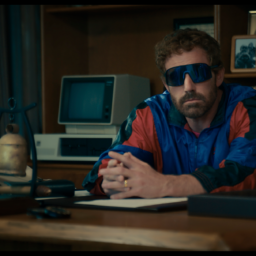

    More movies, less problems


    Hey! I’m Karl. You can find me on Twitter and Letterboxd. I’m also a Tomatometer-approved critic.

    💌 Sign up for our weekly email newsletter with movie recommendations available to stream.


    ADVERTISEMENT