Michael Wampler

  • Hannibal Review: “The Number of the Beast is 666” (3×12)

    Hannibal Review: “The Number of the Beast is 666” (3×12)

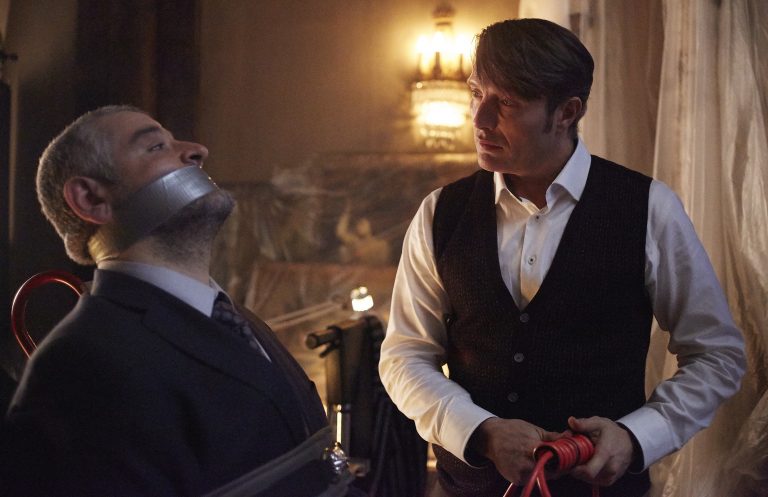
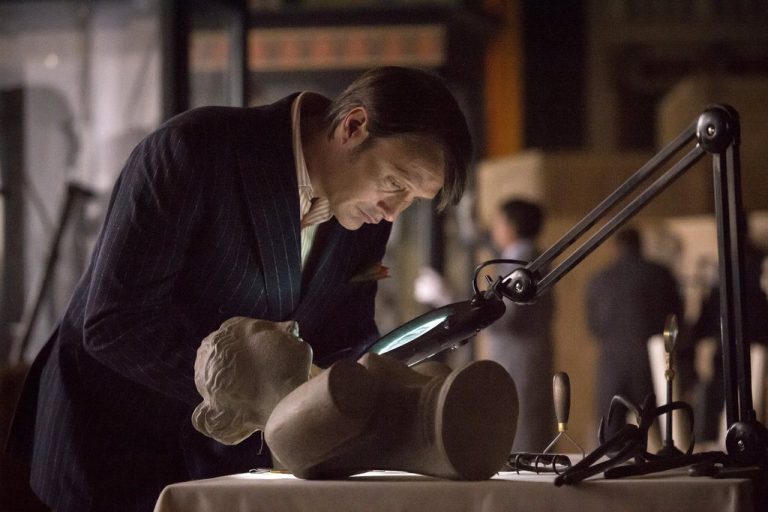
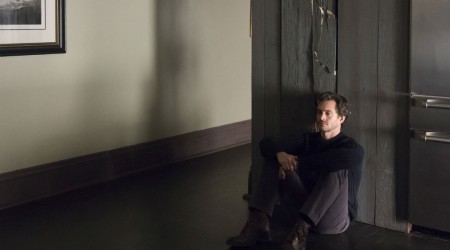
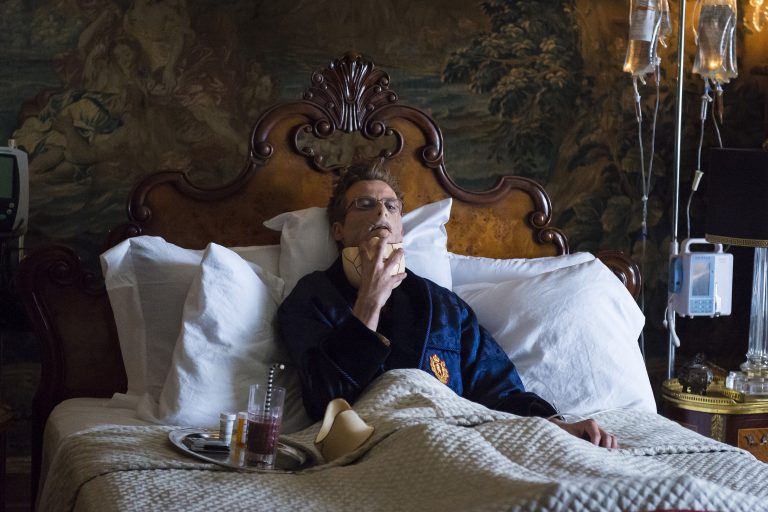
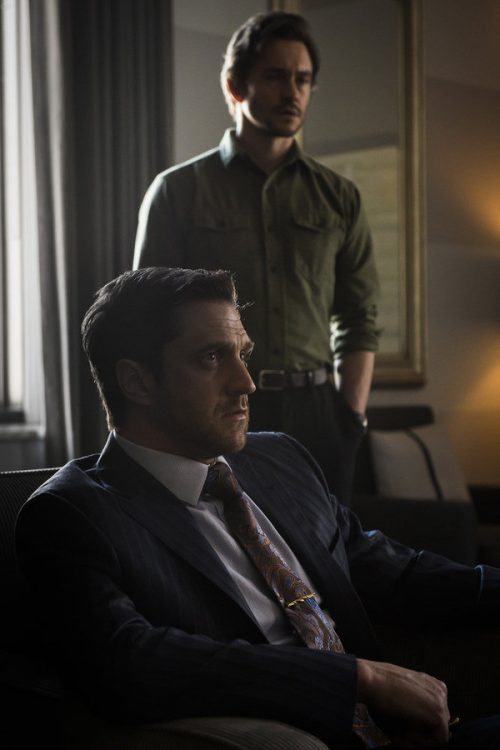
    HANNIBAL -- "The Number of the Beast is 666" Episode 312 -- Pictured: (l-r) Raul Esparza as Dr. Chilton, Hugh Dancy as Will Graham  -- (Photo by: Brooke Palmer/NBC)
    HANNIBAL — “The Number of the Beast is 666” Episode 312 — Pictured: (l-r) Raul Esparza as Dr. Chilton, Hugh Dancy as Will Graham — (Photo by: Brooke Palmer/NBC)

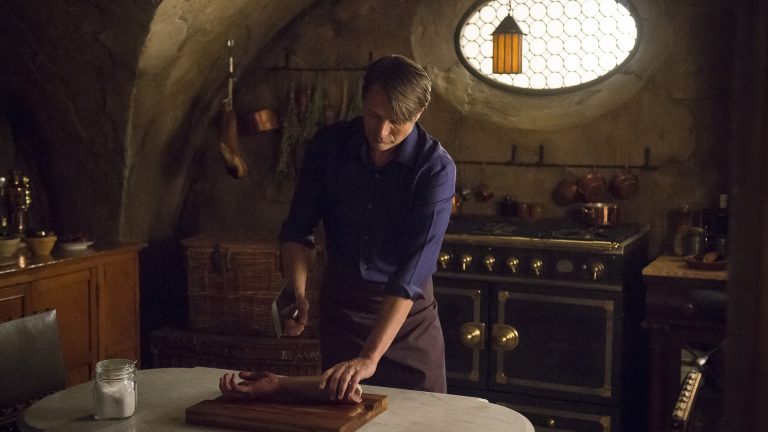
    Let’s get one thing straight immediately: “The Number of the Beast is 666” is a non-stop tour de force, from beginning to end. It is virtuosic in its scope, full of intimate scenes and juicy dialogue arranged around a lurid, stunning centerpiece that takes one of the most iconic, oft-parodied scenes of modern horror and makes it freshly terrifying. Make no mistake, Hannibal’s penultimate episode is perfect. It pains me that we have just one more week to revel in this brilliance.

    That’s not hyperbole, either. The opening conversation between Will and Bedelia is, as is any conversation on this show featuring Gillian Anderson’s magnificent, lilting delivery, magnetic. A similar conversation appears later in the episode the episode, and taken together they are revelatory. Subtext has been becoming text for most of this season, but here we officially go there, with Will’s realization, at Bedelia’s suggestion, that Hannibal may in fact be in love with him. Leaving aside how very cool the notion of recasting the Hannibal mythos as a queer story is, the idea that the series has all along been built around, and in fact is building toward the conclusion of, this relationship provides context and weight to this final arc.

    The discussion of Bluebeard’s wives, the idea that Hannibal uses Will as his agent in the world, and the return to the notion of participation—the suggestion that Will in fact chooses to be Hannibal’s agent in the world—all serve to recapitulate and to magnify the conflicts that have defined the series. Because with Hannibal behind bars, are not many of these conflicts beside the point? The devil is caged. And yet Jack is still a vengeful, manipulative, deceitful God. Alana is still cold and caustic, a far cry from the warm, nurturing woman we met three seasons ago. Will may very well be the murdering lunatic Freddie Lounds accused him being. Francis Dolarhyde may appear to be a wild card streaking through this assemblage, but it is all Hannibal Lecter’s design.

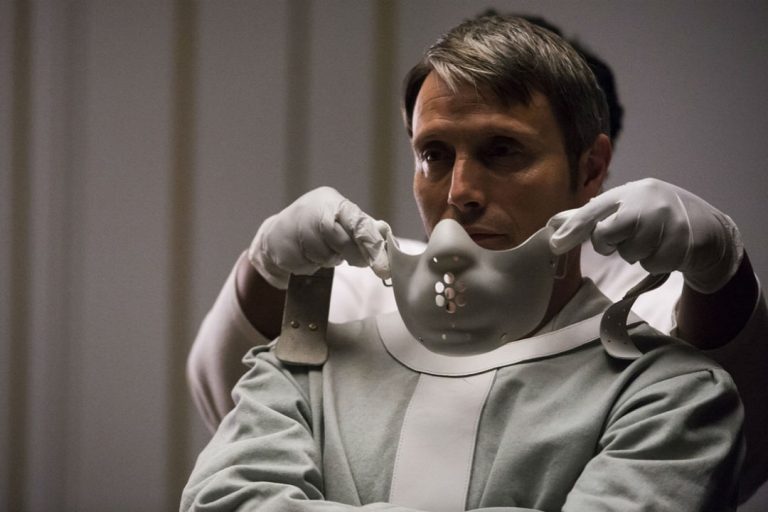
    This is something Bedelia knows first-hand, knows instinctively, and perhaps this is why she seems to take such relish in laying it out for Will. Gillian Anderson’s addition to the cast has paid dividends this season, and her delivery here is as on point as ever; each word is clipped and crisp and fraught with meaning beneath the monotone of her voice. Bedelia is not the only who appears to be enjoying herself, either. Hannibal himself is a delight this episode, as Mads Mikkelsen’s performance edges closer to the rendition of the character with which we are most familiar. He has a permanent smirk plastered across his face, whether he is taunting Jack and Alana with their errors, lambasting Chilton one final time, or even, in a split-second gag shot, slurping up one of Chilton’s disembodied lips.

    So much of the momentum here, then, is derived from long-standing character arcs coming to a head; from the continued twisting and turning and repeating of various motifs. Jack has always been manipulative of Will; now Will is aware of it and can call Jack on it, even if he continues to participate. Hannibal ribs at Alana, reminding her that he once tasted her lips, as well. Bedelia alludes to Bluebeard’s wives, but says with emotion that she would have preferred to have been the last (implying instead that she, like all of the others, has suffered some sort of death at Hannibal’s hand).
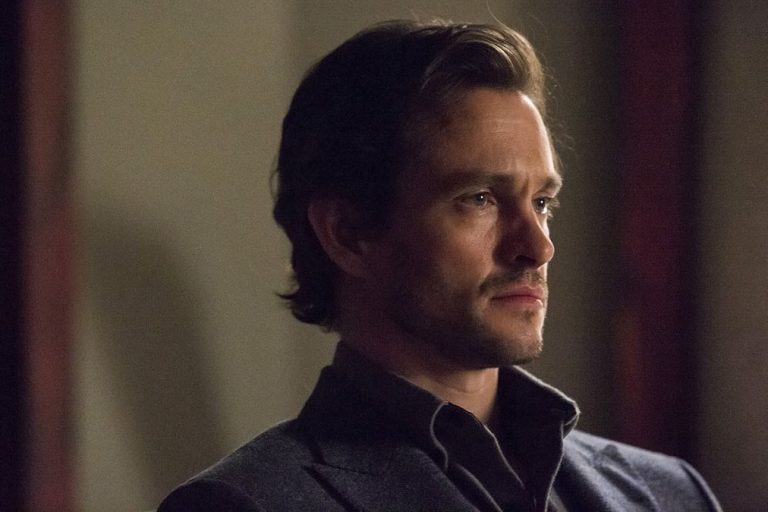
    hannibal-number-of-the-beast-is-666_article_story_largeIf the episode had just been a string of these sorts of scenes it would have been a series highlight. But it is the Red Dragon’s contribution to the episode that makes “The Number of the Beast is 666” the pinnacle of the series. (At least, one hopes, to date.) Dolarhyde’s abduction and torture and eventual murder of Chilton occupies an entire, extended twenty minute act of the episode, though it is unfortunately split by a commercial break (to give NBC credit, they did time it with a natural deflation of the tension, at Reba’s appearance). The entire thing is masterful, not least because this is such a recognizable, work-defining sequence. If you are anything like me, you cannot hear “do you see?” and not think first of South Park’s parody. But here we have a marvel of sustained a horror, a writer’s workshop in the slow ratcheting up of dramatic tension. Small scenes within the sequence fade to black and fade back in, mimicking Chilton’s consciousness throughout. Chilton is tied to a chair, shot from below, and above him the Dragon towers, his face obscured by a black mask that is more than a little reminiscent of our old friend, the Wendigo.

    The writing and the direction are top-notch, but it is both performances that seal the deal. Raul Esparza plays Chilton with the perfect degree of smarm, but he turns that performance on its head here, parlaying Chilton’s fear into a considerable amount of audience sympathy. As for Richard Armitage, he is terrifying. His performance is so innately physical, from the jerking motions he makes as the Dragon, to the guttural growl the he modulates seemingly from the pit of his stomach. You are, in large part thanks to Armitage, on the edge of your seat for the full sequence, and only when you look up do you realize twenty minutes have gone by.

    This is how great television is done, full stop—a textbook example of mood-setting, of dramatic structure, of thoughtful performance.

    Stray Observations:

    • “Quantifiably bitchy!” Chilton gets one last sick burn in before he, well, you know.
    • “Are you a small or medium? Small, I bet.” Freddie Lounds, national treasure. TattleCrime is still a stupid name, though.
    • The makeup work this episode is phenomenal, as well; Hannibal has never shied from gore, but the work on Chilton’s lipless face is among the grossest things the show has done.
    • We have been advised to watch the final through the credits. Will there be a tag teasing Silence of the Lambs? Some other sort of Easter egg? My fingers are crossed for an eleventh hour renewal.
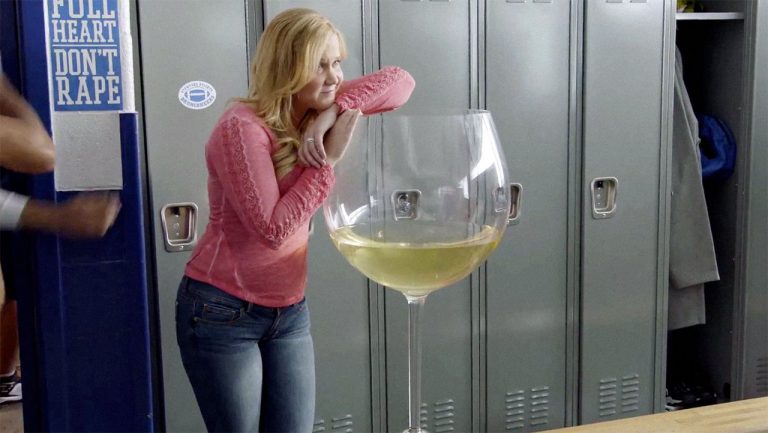
  • Emmy Spotlight: Inside Amy Schumer

    Emmy Spotlight: Inside Amy Schumer

    jdCh3By most measures Amy Schumer is an unlikely It Girl. She is crude and often vulgar. She does not look like or present herself as a vapid, bleached-blond wastrel. She speaks bluntly and frankly about the very system that regularly anoints It Girls, and what she has to say is sharply critical. And yet here we are: Amy Schumer is nominated for an Emmy, is the star of a hit movie, and is a least a weekly headline item. It should go without saying that this is a vastly preferable world, and that it is Amy Schumer’s own body of work that has made her success possible.

    Inside Amy Schumer presents its third season for Emmy consideration this year, but this is the first season to truly become such a hot topic of conversation. Schumer’s ascent into the public eye has been nothing shot of meteoric. In fact you can begin to see the backlash phase beginning; pick any comments section on an article about Schumer and you will find at least one comment complaining about the superfluity of articles about Schumer. You don’t need me to tell you that this backlash is largely imagined, the result of the collective undesirables of the Internet-with-a-capital-I, replete with neckbeards and MRA-pamphlets, finding fault with Schumer’s particular brand of feminism.

    These neckbeards are Schumer’s bread and butter. Inside Amy is nominated for Outstanding Variety Series (though really, should not these shows be eligible to compete in the “real” comedy category?), but one need only focus on the episodes and sketches singled out for the show’s other six (!) nominations to see exactly what Schumer’s project is, and where she plumbs society’s less fortunate aspects for maximum comedic effect.

    Take “Cool With It”, which of the three episodes highlighted by the Television Academy plays things the most straight. In the titular sketch, Amy plays an office worker determined to play it cool with her office-bro co-workers. They go out to a strip club, get drunk, get lap dances, all to Amy’s repeated, increasingly garbled refrain that she’s “cool with it!” Things escalate until Amy is murdering the stripper and burying the body—still cool with it. The sketch ends with a non-sequitur; Amy turns to the camera and pitches equal pay for women. Then she bashes the still-breathing stripper over the head with her shovel.

    https://www.youtube.com/watch?v=UOlELxK83pw

    It’s easy to see why the sketch appeals to Emmy votes, and why this episode is the one for which Amy is recognized as an actress. On display is her determinedness to weave current social issues into her comedy, but to do so in challenging and unexpected ways. Here the issue is not just equal pay—in fact that is shoehorned in rather weakly—but also the issues that women face in the office and in other social situations. They are expected to conform to such dudebro behavior—think of Gillian Flynn’s “Cool Girl” for this concept taken to its dramatic extreme. Schumer satirizes it expertly, but what is also on display here is her gameness to use her own physicality in service of the satire. Schumer’s leans into her physicality, not afraid to play a silly, drunken slob. Physical comedy is a huge part of what makes these sketches work, and Schumer’s versatility is showcased here.

    That Schumer is not afraid to sound drunk, look silly, or go blue is half of her success recipe. The other half is her braininess, and that of her writing team, all of whom are also recognized for an award this year. Again, the individual episodes recognized are clues into what Emmy voters have rightly recognized in the show as a whole. Nominated for Outstanding Original Music is Girl You Don’t Need Makeup, the One Direction parody that also features in “Cool With It.” The song is first and foremost a quality pop track, which isn’t exactly required, but it certainly helps; the production is so top-notch, this could easily be a real One Direction song.

    Screen-Shot-2015-04-22-at-11.49.36-AM-1280x789
    Photo Credit: Salon

    The music and lyrics are by staff writer Kyle Dunnigan, and they are, at first, a straight parody of “You Don’t Know You’re Beautiful”, with the same “you’re naturally beautiful!” message, only infinitely more obtuse. (Sample lyric : You’re beautiful and who cares what they think / Now wash that lovely face off in the sink / In the sink, girl.) But things very quickly take a turn for the absurd, a trademark of many of Schumer’s best sketches; the satire begins obviously, but then is turned on its head. After the first chorus, the boy band exhorts Amy to “hold up, girl / we spoke too soon / with this whole no makeup tune / we kinda changed our minds on the makeup thing.” Now they’re extolling the virtues not of makeup, but of the way makeup can make a girl look like a “naturally beautiful girl.” “You’ll be the hottest girl in the nation / with just a touch of foundation” and “I didn’t realize that your lashes were so stubby and pale / Just a little mascara and you’ll look female” drive home the point, and before long the chorus has been revised as well. Amy is still perfect when she wakes up, “just don’t go outside like that, OK? / just a little makeup, some natural-looking makeup / what more do I have to say?” By the end of the song Amy is made up like a clown. Here again is that perfect marriage of verisimilitude, satire and absurdity.

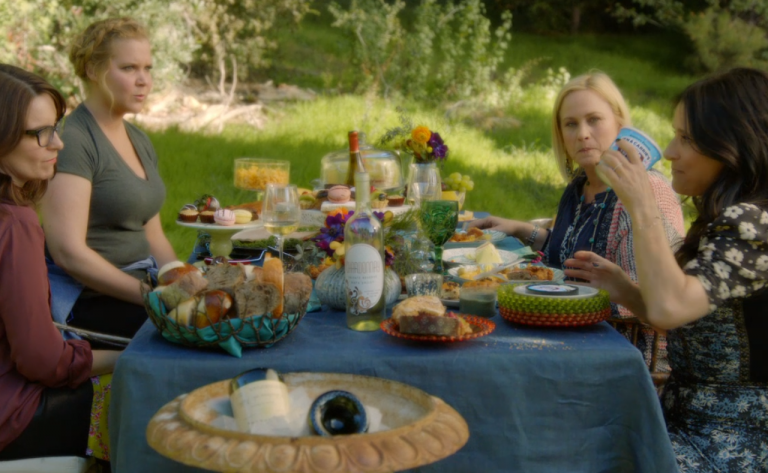
    That braininess extends to the other two episodes singled out for Emmy recognition. In the first, “Last Fuckable Day,” the titular sketch features Julia Louis-Dreyfus, Tina Fey, and Patricia Arquette, who are celebrating Julia’s last fuckable today. The thesis is that women in Hollywood reach an arbitrary point at which they are no longer fuckable, and there’s nothing to be done about it. The sketch treats this not just as a tremendous injustice, but as an insurmountable fact. Throughout, the actresses lean into and even celebrate it; now they can eat whatever they want, and fart and belch freely. Unlike many of the other sketches this season, any sort of heightened absurdity isn’t really on display here at all; the sketch is just funny women making pithy jokes about a very real, ongoing situation in Hollywood.

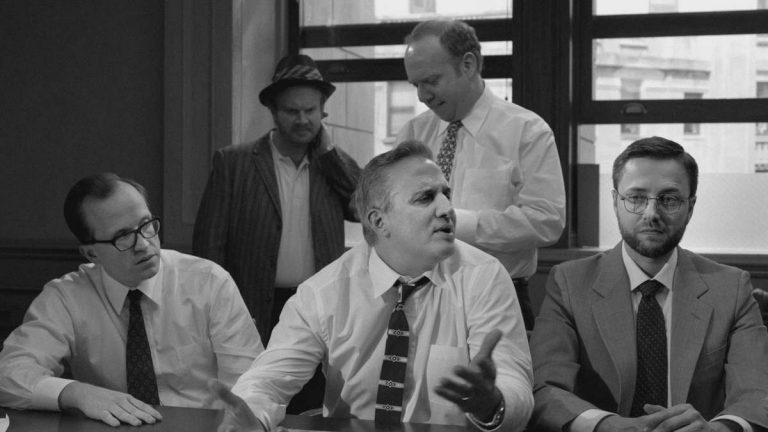
    Fuckability is the question at hand in the greatest sketch of the season, as well; and here absurdity is the name of the game. “12 Angry Men Inside Amy Schumer” is an episode-length sketch, which is risk number one; it is a straight, nearly shot-for-shot parody of 12 Angry Men, which is risk number two; and it minimally features Amy herself, which is risk number three. That the thing was made at all is nothing short of a miracle, even with the likes of Jeff Goldblum,Vincent Kartheiser, Kumail Nanjiani, and Paul Giamatti (who is nominated for the episode) lend some star power to proceedings.

    inside amy schumer 12 angry men
    Photo Credit: AV Club

    They’re all great and they certainly lend to the comedy, but as it turns out they were hardly necessary. The strength of Schumer’s satire more than stands on its own. Up for dispute is a very simple question: is Amy Schumer hot enough to be on television? Given the types of “criticism” that are so often volleyed at Schumer, this episode is most easily read as a more than apt retort to the aforementioned neckbeards of the internet. The comedy lies in the treatment of the issue; all of the actors are incredibly game, discussing degrees of fuckability with straight faces and surprising passion. What if it was late at night and you’re in bed and you squinted at the television? Would she be fuckable then? Some of the jury allows that she would. Eventually the question becomes one of “reasonable chub”; if Amy gets you even a little hard, she gets to be on TV.

    This is insane. This is hilarious. And this is how it is to be a woman on television. That Amy Schumer gets weekly to stand before a camera and speak truth to power, and that the reward is, finally, an absurd degree of popularity, visibility, and accolades, is a long overdue recognition of some tremendous work. Not all of her sketches always land—some veer too far in one direction, be that in the direction of satire or of absurdity or of topicality—but when that perfect alchemy is struck, Inside Amy Schumer manages something that a lot of other comedy on television isn’t even attempting.

  • Emmy 2015 Spotlight: “Mad Men”

    Emmy 2015 Spotlight: “Mad Men”

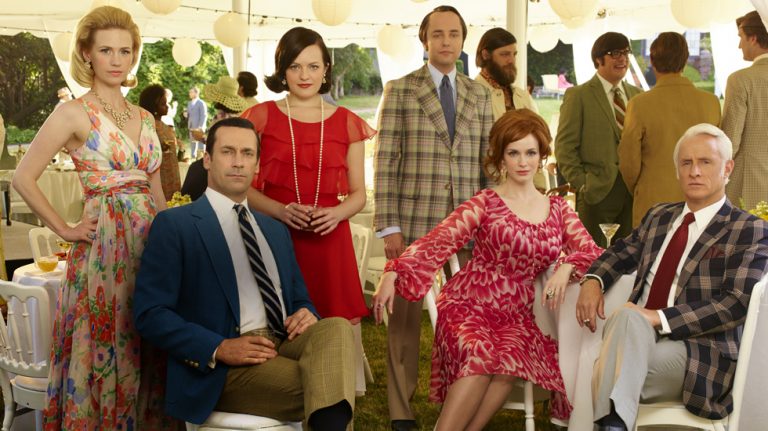
    Photo by Vulture
    Photo by Vulture

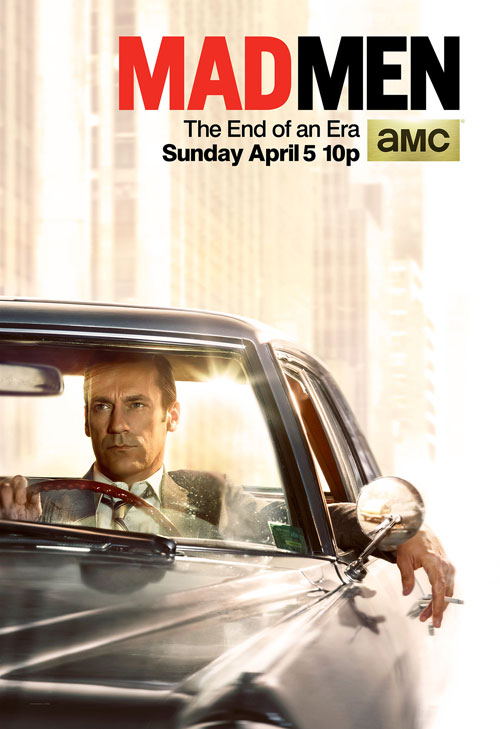
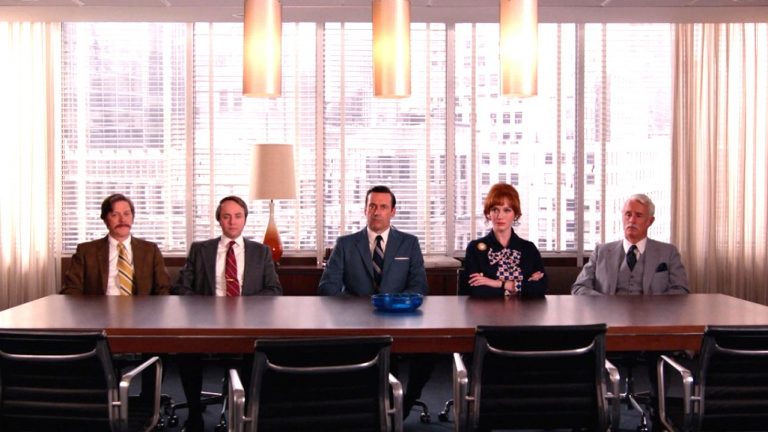
    How will Don Draper die? Throughout the final episodes of Mad Men, which aired the second half of its final season this past spring, it was this question, and increasingly speculative answers to it, that dominated so much discussion of the show. As is so often the case with Mad Men, much of that speculation was beside the point. Like with previous similar speculation of the “Megan is surely Sharon Tate” variety, these questions treated Mad Men like a much more conventional, clichéd story than it has ever attempted to be. By the seventh season, you would think we’d know better. But no—we expected Mad Men to submit to conventional narrative tropes straight through to the very end.

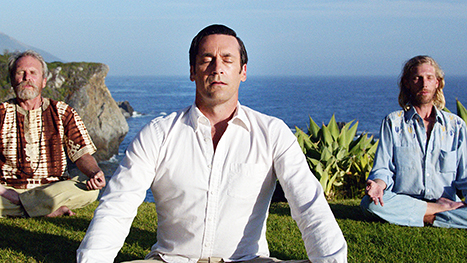
    This is likely why the conclusion that Matthew Weiner did provide was at first so jarring. Suddenly there are only ten minutes left of Mad Men, and Don Draper is in a share circle at a hippie commune, hugging a strange man and getting his om on. And then, “I’d Like to Buy the World a Coke.”

    Weiner likely thought this ending fairly straightforward, and in fact it is. In the world of Mad Men, Don goes to the Mecca of enlightenment, reinvents himself once more, and subverts an entire subculture to sell soda—and he does it while creating arguably the most successful advertising campaign of the era. That there is any debate at all about this outcome is a testament to the complexity of the series, but that doesn’t make the debate any less wrongheaded. Is it a cynical note to end the series on? Certainly. But it is also distinctly Mad Men, a fitting conclusion in its content and in its surface inscrutability.

    Mad Men’s final run is as notable for what it did not do as for what it did. It did not run through a laundry list of finale must-haves. (The one instance in which it did do this, with Stan and Peggy’s rom-com moment in the finale, is one of the series’ few bum notes.) It did not concern itself overly with explanation, or with tidiness. The finale does do more than it needs to set up “next acts” for the central characters, but this tidiness is happily subverted in many of the cases. Joan’s business may fail. Pete and Trudy may be just as unhappy when they step off that plane. Roger may divorce again. Latter-day Mad Men devoted a lot of time to making its characters unbelievably materially happy; they all end the series millionaires. But if the millions didn’t make them happy, there’s no guarantee that a new job, a new boyfriend, a new try at marriage, or a new outlook on life will have any more success.

    mad men time and life
    Photo Credit: The Unauthorized Critic

    That’s what makes the closing moments so great, and it’s what means that they aren’t, necessarily, as cynical as they appear on their face. That Don returns from his sojourn essentially unchanged is a truism of life, but it doesn’t have to be a cynical one. That humans are fundamentally unchangeable is a core notion of the show. It would have been more cynical for Weiner to, in the eleventh hour, suddenly posit that the characters have finally bettered themselves—this time, it all works out! There is no magic salve for the human condition. We come as we are. Mad Men’s thorough, nuanced, empathic understanding of this truth is its single greatest achievement, and that understanding is on display throughout this last set of episodes.

    It’s true of Betty, who, perhaps not entirely unexpectedly, receives the series’ only truly tragic sendoff. Yes, Betty Francis ends the series with a cancer diagnosis, one that comes in the midst of her studies toward a psychology degree. But all the same traits are still there: the stubbornness that leads her to refuse Henry’s insistence on more thorough care; the recklessness that leads her to, even briefly, consider a flirtation with a much older Glenn Bishop; and the hardness toward Sally that, ultimately, expresses itself as a kind of maternal protectiveness, in the lovely final letter that Betty pens to her daughter.

    It’s true of Peggy, who continues to climb the corporate ladder throughout this final run. For Peggy happiness is much more easily pinned down than it is for Don, but don’t confuse that with contentedness. Peggy must always be moving; she, like Don, always has the next goal in sight. Part of it is that, for women, the goalposts are positioned rather differently. But part of it is that same hunger, and it’s that hunger that scores her Bert’s weird octopus painting, and it’s that hunger that keeps her at McCann-Erickson, rather than running off to join Joan’s business (which is not to belittle either option). It’s that same hunger that makes her sudden realization of her love for Stan feel, if not wrong, then just a little too pat.

    Photo Credit: Us Magazine
    Photo Credit: Us Magazine

    And it is, as always, true of Don. He ends the series where he began it, more or less. The penultimate episode finds him at a VFW hall, ever the outsider among these hardened veterans, who are nothing like Don. Secretly he thinks they are beneath him; they are the man he abandoned to become Don Draper. There is the creeping sense of dread, that perhaps Don will finally be found out, brought to task for his original sin—but no, that would be too obvious, and besides, we already knew, have known for some time, that the secret of Don’s identity wouldn’t matter. Bert shrugged it off, way back when. And it’s not that identity that gets Don in trouble here. Instead it’s his readiness to identify a kindred spirit, a ne’er-do-well teenager who cons the vets out of their money. Don tries to talk the kid off his path, and onto a better one, or at least, a different one than the path that Don chose. But people don’t change. We come as we are.

    The last set of episodes was more polarizing than perhaps would have been expected. Significant stretches of time were spent on seeming irrelevances; except that nothing is irrelevant in Mad Men’s novelistic approach, should you be willing to take the time to engage it. The show concluded more vehemently denying its medium than ever—and it’s a good thing. In doing so Matthew Weiner has delivered a stunning seven seasons’ worth of consistently A+ drama. I am hard-pressed to think of a bad episode of Mad Men; I don’t know that there is one. But don’t be surprised when Mad Men goes home effectively empty-handed at this year’s Emmys, too. There are sacrifices to be made in denying the medium, and among them are viewership and accolades. Those of us who invested the time, the thought, the energy, though—we know what we’ve experienced, and we know we’re not likely to see anything of its kind again. Maybe that’s hyperbole. Or, maybe, it’s just advertising.


    Standout episodes: “Time & Life,” “The Milk & Honey Route,” “Person to Person”

    This paragraph is about the Emmys and how Mad Men should win, but probs won’t.

  • Hannibal Review: “…And the Beast From the Sea” (3×11)

    Hannibal Review: “…And the Beast From the Sea” (3×11)

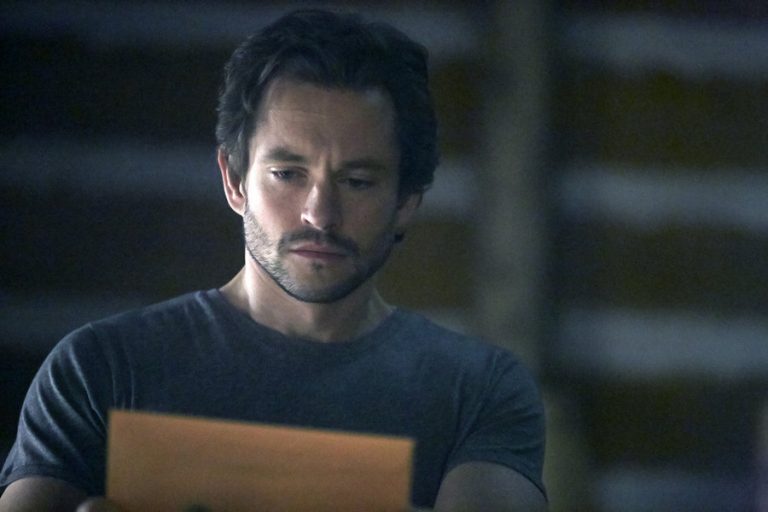
    HANNIBAL -- "...and the Beast from the Sea" Episode 311 -- Pictured: Hugh Dancy as Will Graham -- (Photo by: Ian Watson/NBC)
    HANNIBAL — “…and the Beast from the Sea” Episode 311 — Pictured: Hugh Dancy as Will Graham — (Photo by: Ian Watson/NBC)

    As Hannibal has adapted Red Dragon proper, it has been as consistently great as we’ve come to expect from the series, but it has also been something new: conventional. Up until now, this final stretch of episodes has been a fairly straightforward adaptation of the source material, and while it has been an undoubtedly skillful adaptation, it has also been something of a transliteration. Given the series’ earlier inventiveness—it’s willingness to subvert and sometimes wholesale alter the source material (a key plot point from Red Dragon, for instance, was exhausted some time ago)—these episodes can feel a little by-the-numbers, even if the quality itself hasn’t dipped.

    Perhaps it is this sense of security that lends the middle sequence of “…And the Beast From the Sea” its palpable urgency. Dolarhyde’s attack on Will’s family, as prompted by Hannibal, is, in the novel, a final flourish, one that gives Thomas Harris’s story a typical thriller conclusion, which establishes Hannibal as a lingering, unkillable threat to Will’s well-being. By moving this sequence to the middle of the story, having it occur before Will and company even know who the Tooth Fairy is, Bryan Fuller has deftly moved us back into uncharted territory. The hunt for this new killer is distinctly more personal now. In terms of macro-narrative, the conflict between Will and Hannibal is now, once again, directly related to the plot of the season.

    Photo By: www.imageupload.co.uk
    Photo By: www.imageupload.co.uk
    This is a sort of invention that we expect from Hannibal, and the sort that I hadn’t realized I was missing until that pulse-pounding chase through Will’s darkened house. We may know the general shape of things to come, but the emotional impact on our central characters is properly foregrounded once more. The big shift, the final narrative turn, will no longer bill the capture of Dolarhyde, or even his final, fitful attempt to harm Will as Hannibal’s surrogate—it will instead be the final shift of Hannibal’s relationship with Will, and on what note the show will leave their dynamic.

    With that reshuffling in mind, the various pieces of the Red Dragon story fall into clearer relief. As Alana, Jack, and Will discuss Will’s run-in with Dolarhyde, which constitutes the first solid lead they’ve got. The focus is instead on Jack’s less-than-honorable approach to the investigation, as it becomes increasingly obvious that he is repeating the same mistakes that led Will into such a mess in the first place. When Molly takes a bullet, the consequences of Jack’s callous manipulation are all too clear. And yet—and Molly knows this—Will won’t say no anyway. He will always take Jack’s call. He will always go to Hannibal’s cell.

    Alana’s arc, too, becomes more about playing the emotional fallout of the preceding series than it is about the particular plot mechanics at play now. When she strips Hannibal of his cell’s various amenities, she isn’t just punishing him for his interference in the investigation. She’s also inflicting on him the same indignities that he

    HANNIBAL -- "...and the Beast from the Sea" Episode 311 -- Pictured: Nina Arianda as Molly Graham -- (Photo by: Sophie Giraud/NBC)
    HANNIBAL — “…and the Beast from the Sea” Episode 311 — Pictured: Nina Arianda as Molly Graham — (Photo by: Sophie Giraud/NBC)
    has inflicted upon her, Will, Margot, and upon everyone he has ever come into contact with, to some extent or another. It’s no mistake that this scene, in which Alana’s staff strips Hannibal’s cell bare, is the first to explicitly confirm that the space was never real at all, just a figment of Hannibal’s imprisoned imagination. The constructed relationships between all of these people have collapsed, either under the weight of too much tragedy, or under the stress of being rent totally and purposefully asunder.

    All of that brings us back around to Francis Dolarhyde, who in this episode begins his own conflict of identity. The Great Red Dragon begins to manifest itself as its own being, separate from Francis, and it calls into question for Francis his very sanity. This is new for Francis—for all he’s done. His sanity has never been in question. But how can he continue to murder, when he also feels this love for Reba? Hannibal’s solution, of course, is simply to feed the dragon elsewise—this was Hannibal’s solution to his love for Will, as well. In a way it’s a simple analogy: the Great Red Dragon is to Francis Dolarhyde as the Wendigo is to Will Graham. The common thread is Hannibal Lecter.


    Stray Observations:

    • Molly really is a badass. I love that in this adaptation, they’ve given her much more agency than she had in either the novel or in the film.
    • There is a particularly great shot of Will confronting Hannibal—a clean line dividing them, Hannibal in a field of white, Will succumbing to darkness.
    • Potential spoilers for the final two episodes: the major plot point of Red Dragon that has previously been exhausted is, of course, Freddie Lounds’s fiery wheelchair death, which was presented in season two as a ruse, but which in the novel leads directly to the discovery of Dolarhyde’s identity. Given that many of the newspaper communication games from the novel have been elided entirely from the show, I imagine that the conclusion will be markedly different from here on out.
  • Hannibal Review: “And the Woman Clothed in Sun” (3×10)

    Hannibal Review: “And the Woman Clothed in Sun” (3×10)

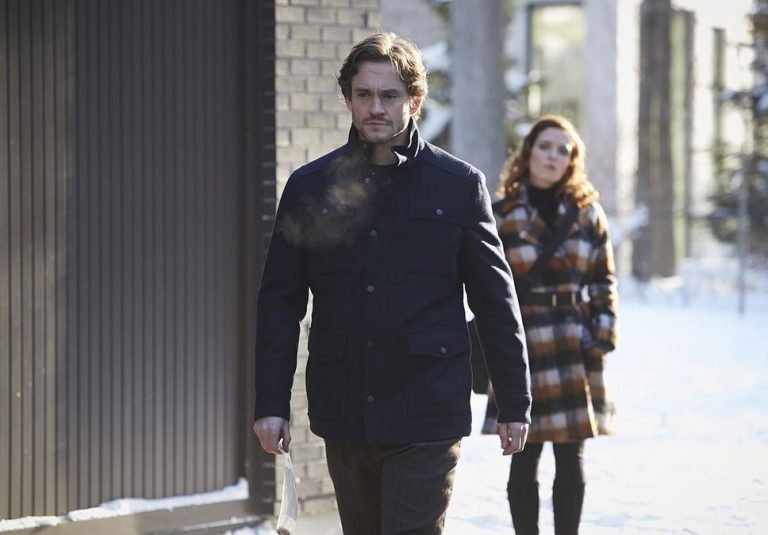
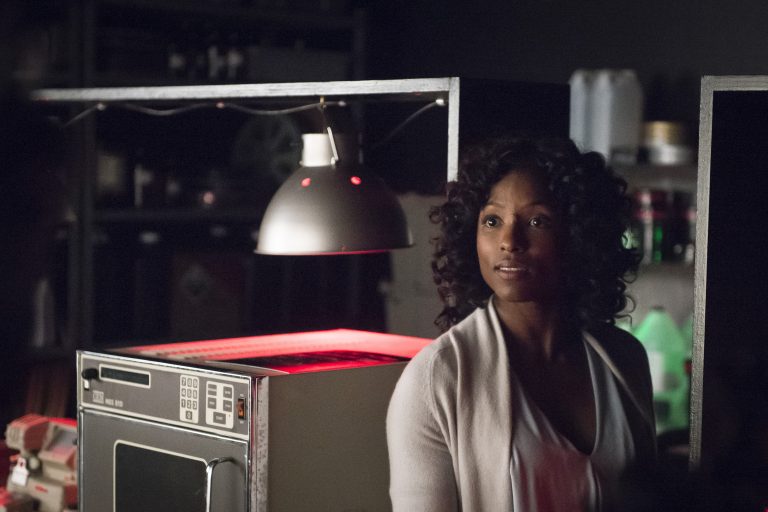
    gaGiven its parallel title, it should be no surprise that “And the Woman Clothed in Sun” is, more or less, a direct continuation of the preceding episode, even more so than this highly serialized final run of episodes. Mostly, what’s here is further explication of Francis Dolarhyde, specifically and more generally, a further explication of exactly what goes on in the mind of a psychopath. Much of Hannibal has been concerned with the finer points of sanity, ever since Hannibal asked Will to draw a clock. Where does sanity end and insanity begin? How fuzzy is the line? Is it a gradient? a cliff? Are you born into it, or can it be cultivated?

    Not that the episode offers any outright answers; in fact, the overarching argument seems to be that there are no answers. But in keeping with its subject matter, what Hannibal does offer is case studies. We spend much time with Dolarhyde this week, as his strange courtship with Reba McClane rounds home base. One of the eeriest scenes from the novel, in which Reba fondles an anaesthetized tiger, junk and all, causing Dolarhyde’s audible arousal, is here basically intact, and it’s lovingly shot, even if it is sometimes a little too obvious that that’s a tiger-patterned rug (maybe). Immediately after, Reba cozies up to Dolarhyde in similar fashion, feeding into his ever-growing ego as the “Red Dragon” begins to possess his mind.

    With this continued focus on Dolarhyde, Richard Armitage continues to be a standout member of an already stacked cast. He plays the duality of the character with an unsettling ease. At times, he is vulnerable, even scared; at others, he is menacing. The combined effect is one of confusion and disorientation, which is never more effective than at the epishatwode’s end, when Dolarhyde steals and eats the creepy Blake watercolor from which the novel takes its name. It falls just short of a punchline, which is just where the scene should land for maximum effect.

    Another welcome case study is of Bedelia Du Maurier, who makes a triumphant return here as a speaker, capitalizing on her experiences with Hannibal, in which she has recast herself as a victim. Will is obviously unappreciative of this decidedly radical reinterpretation, and their back and forth throughout the episode is a highlight, providing the delightful repartee so many of the pairings on this show share. Bedelia steps almost gleefully into the Hannibal role, poking and prodding at Will as best she can. Hasn’t he learned his lesson? “Or do you just miss him that much?” she teases, raising that homoerotic specter once more. Her best line: “I don’t lie; I obfuscate.” If that isn’t a rationalization right out of Hannibal Lecter’s playbook, I don’t know what is.

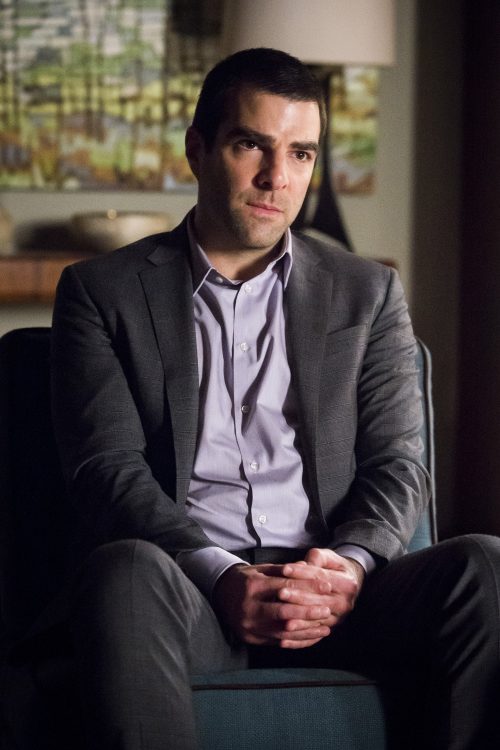
    The centerpiece of this story is Bedelia’s extended flashback to her first murder, of the patient whom Hannibal “manipulated” her into finding dangerous. The patient is played by Zachary Quinto, who is subdued and effective. It’s no stunt cast; a serious actor is necessary, even for this small role, to give the scene the weight it requires. This scene is beautifully edited, crossing back and forth to her appointment with Will, so that without a careful look at Bedelia’s wardrobe, it’s never clear to whom she’s saying what. This is a moment that we’ve heard aboutiger ladyt before, but to see it dramatized here, especially in such gory detail, puts a fine point on the dialogue that Bedelia has with Will. She harps about his exceptional empathy, and argues that it is just as empathetic to end a life as it is to save one; in some cases, it is perhaps smarter. Will refuses to believe this, and it’s that basic good nature (or is it naïveté?) that will ultimately undo him.
    At the risk of sounding like a broken record, this is a typically excellent episode of a show that is ending far too soon, and yet, I suspect, also at exactly the right time. The themes are coming full circle; the plot, building to a fever pitch. The effect of the Red Dragon arc is to take one of the “killers of the week” and make him a central figure on the show, and by placing Dolarhyde into relief with these other incredibly damaged people, we see the spectrum of sanity of which Bryan Fuller wishes to convince us. It’s all of a piece, and for that thematic consistency to remain as flawless as it now is, the piece must come to completion. Better a little perfection than a lot of mediocrity, and with this episode, we are one step closer to a perfect version of Red Dragon.


    Stray Observations:

    • I love the way this season plays with time and space, in a manner that surely was fueled as much by budgetary concerns as by artistic intent. There are the flashbacks with Bedelia, but throughout the season, characters have been in multiple places and multiple moments simultaneously; each time Hannibal sees himself in his office, rather than his prison, is another little pang, a sense of justice served to a mad man, for now.
    • Dolarhyde seems himself, like Will, in a fractured mirror.
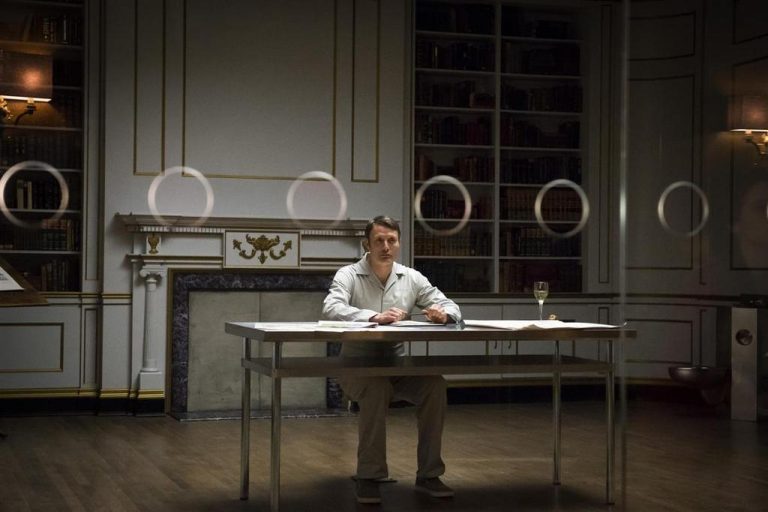
    • Will gets more help from Hannibal, and there’s a great shot of them staring at each other through the glass, and Will’s reflection merges with Hannibal’s body
  • Hannibal Review:  “And the Woman Clothed with the Sun…” (3×09)

    Hannibal Review: “And the Woman Clothed with the Sun…” (3×09)

    h3x09By now, the project of what is essentially Bryan Fuller’s version of a Red Dragon miniseries is abundantly clear: Hannibal is portraying two parallel and intersecting stories about the lasting effects that a man like Hannibal Lecter and his various, horrible misdeeds can have on the world around him. That’s a thread that runs through the novel and the film adaptation, as well—in a take on the well-worn trope, Jack calls Will back on the job for one final case. But in all the previous takes on this story, that trauma was implied. Here it is text. And we are reminded of it over and over again.

    “And the Woman Clothed with the Sun” takes great pains to remind us of perhaps the greatest trauma Hannibal inflicted upon Will: his grooming and eventual murder of Abigail. In stealing Abigail away from Will, he perverted the one healthy relationship Will had managed; he called into question his ability as a friend, father, and his basic humanity. In murdering Abigail before Will’s eyes, Hannibal must have thought he was making some grand gesture of love. Instead, he ruined Will nearly beyond repair.

    Knowing all of that and flashing back to Hannibal’s time with Abigail to give even more (super, super creepy) context to the whole affair, makes Will’s status quo in these episodes all the more poignant. He has managed to put himself back together, to find a wife and a son, and to live a relatively normal life. Hannibal inherently threatens that, and Jack knows it. His disregard for Will’s well-being, which was the engine of much of the early half of season two, is back in full force here. Jack seems to think that Will would say no, if he truly were unable to come help. Hannibal knows better, and he knows that that’s the avenue directly into Will’s head.nbc

    This is one of the greatest improvements that Hannibal makes upon the source material: these are all good friends. Will, Jack, Hannibal, and Alana have history, and it informs their decisions now. Alana worries about Will and about Jack’s manipulation of him as well as about Hannibal’s: “I’m not just worried about you. Last time it didn’t end with you.”

    It’s fitting, then, that the episode hinges around each of the three protagonists paying Dr. Lecter a visit. Will is nearly crippled by just one conversation with Hannibal. Alana takes pleasure in toying with Hannibal, and she clearly revels in his reversal of fortune—check out the great blocking in her conversation with him, as the camera holds close on Hannibal, with Alana out of focus in the background; she only comes into focus when she gets a particularly good jab in about his imprisonment or Will’s utter indifference toward him.

    As for Jack, he spends his time trying to justify himself to Hannibal—he recognizes the mind game but still falls victim to it, and, in fact, he leaves, opting out of the conversation rather than winning it, once he realizes that Hannibal has pulled what is essentially a trump card. The best thing any of these people could do is leave Hannibal to rot in his indignity and forget him entirely, but only Will really managed to begin to do that, and now he’s lost his chance. Look at the toll that this is already taking on him: away from Molly, his nightmares return, and his bed is once more drenched in sweat; when he looks into a mirror, his reflection shatters before him.

    Of course, throughout all of this, the FBI continues its investigation into the Tooth Fairy murders, and they’re getting nowhere fast, even with Lecter’s help. Francis Dolarhyde is just as theatrical as Hannibal ever was, but the geographical distance between his crimes is a stumper. Seeing Dolarhyde in his daily life, it’s unsurprising that a man so reticent would be so careful in his insanity. Richard Armitage doesn’t speak his first lines until well into this episode, yet even in silence, he is thoroughly magnetic as Dolarhyde. There is a brief, as-yet unexplained flashback to his childhood; there are glimpses of him splicing together horrifying film of his handiwork, paralleled with Will’s study of the families’ home movies. There is the revelation that he kills the family pets prior to killing the families themselves.

    And then there is his courtship with Reba McClane, played here by Rutina Wesley. Reba is blind, which adds a particularly unsettling element to their scenes. His awkward nature plays to her as almost charming, but we can see Dolarhyde and know that he’s anything but. That kind of blindness to certain aspects of one’s character is one that’s been a major theme throughout the series, but especially this season; we see it in Bedelia’s relationship to Hannibal, in Alana’s with the Vergers, and, of course, in Will’s with Hannibal.

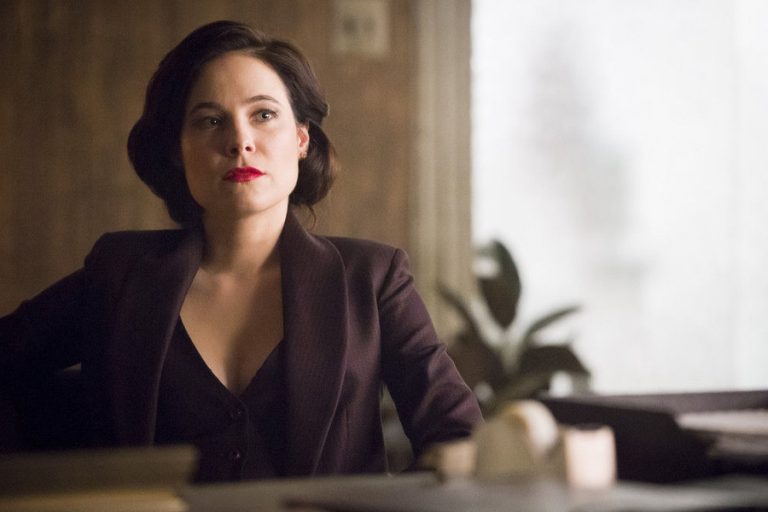
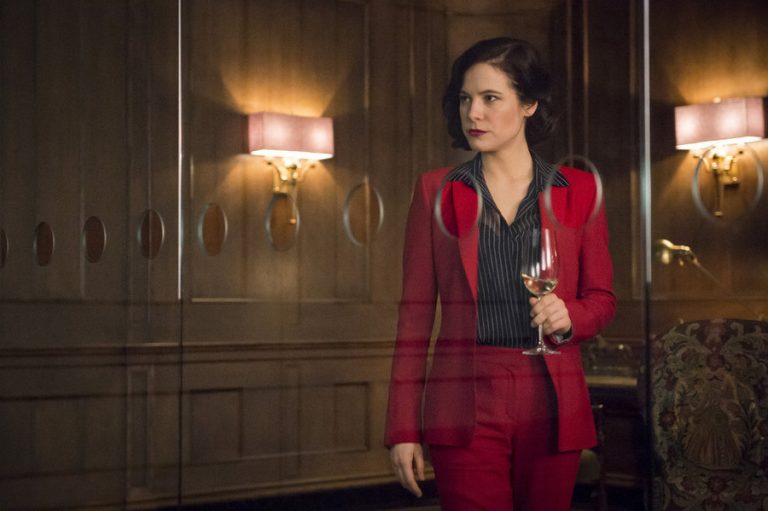
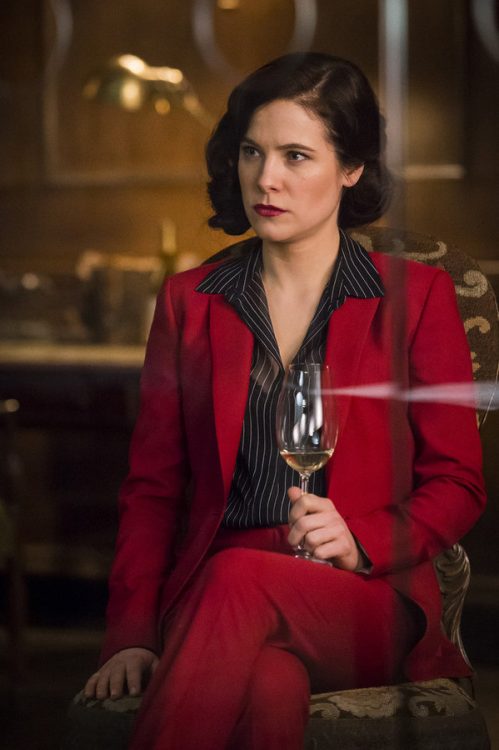
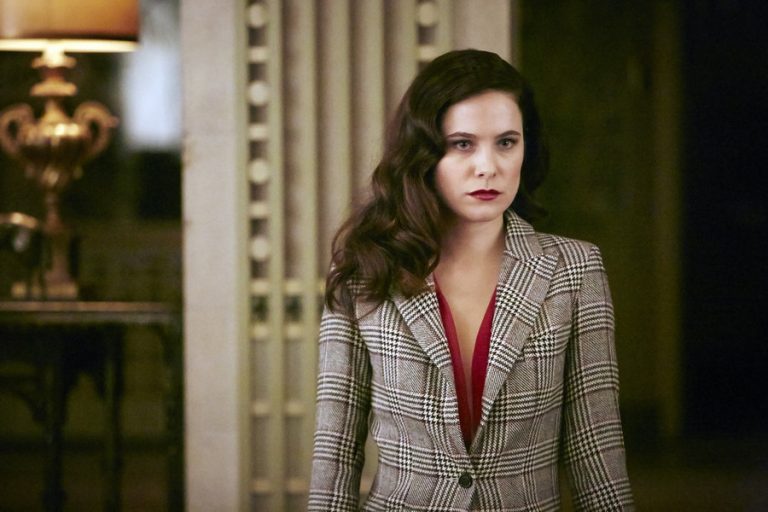
    HANNIBAL -- "...and the Woman Clothed in the Sun" Episode 310 -- Pictured: Caroline Dhavernas as Alana Bloom -- (Photo by: Brooke Palmer/NBC)
    HANNIBAL — “…and the Woman Clothed in the Sun” Episode 310 — Pictured: Caroline Dhavernas as Alana Bloom — (Photo by: Brooke Palmer/NBC)

    By the end of the episode, Dolarhyde has placed a call to Hannibal, beginning another different courtship. Their collusion here links the past and present of the show, as well as giving Hannibal another avenue to inflict further trauma, even from within his cell. Why do the characters continue to subject themselves to him? Perhaps it’s something akin to charm. But it appears it’s quickly becoming too late for them to extricate themselves.


    Stray Observations:

    • Once you see the gay subtext on this show, you cannot unsee it. The opening scene is two ex-boyfriends talking to each other, word for word.
    • Alana is still with Margot! As a matter of fact, this episode marks the first time that I feel like the new characterization of Alana is clicking. They’ve sort of merged her with Chilton from the books (making you wonder why they kept him around at all), but it works quite well.
    • Another great shot—Will calls home to Molly, and, for a moment, they’re sharing the same bed.
    • So does Hannibal’s cell really look like that, or is he imagining it? It’s never quite clear.
    • Freddie Lounds is back! She called Will and Hannibal Murder Husbands! “Well, you did run off to Europe together.”
    • NBC Doesn’t Care About Fannibals: In my market, Hannibal was pre-empted for a Phillies game and was then joined in progress. There’s making a sound business decision, and then there’s being downright rude.
  • Hannibal Review: “The Great Red Dragon” (3×08)

    Hannibal Review: “The Great Red Dragon” (3×08)

    HANNIBAL -- "The Great Red Dragon" Episode 308 -- Pictured: Caroline Dhavernas as Alana Bloom -- (Photo by: Brooke Palmer/NBC)
    HANNIBAL — “The Great Red Dragon” Episode 308 — Pictured: Caroline Dhavernas as Alana Bloom — (Photo by: Brooke Palmer/NBC)

    There’s really no getting around the fact that with “The Great Red Dragon,” Hannibal has become an entirely different animal. While it’s always had elements of adaptation to it, especially in the beginning of this season, which drew largely from the novel Hannibal, the series has mostly told original stories with the occasional twist on or wink at the source material. The spirit, rather than the letter, of Thomas Harris’s published work, has been followed to this point.

    No longer: “The Great Red Dragon” is a near word-for-word adaptation of the first several chapters of the novel Red Dragon, and it is great. It likely goes without saying that it’s far better than Brett Ratner’s film of the same name, but what’s truly excellent here is the way that the episode enriches the source material, expanding upon it in new ways owing to the larger context that the preceding episodes have built up.

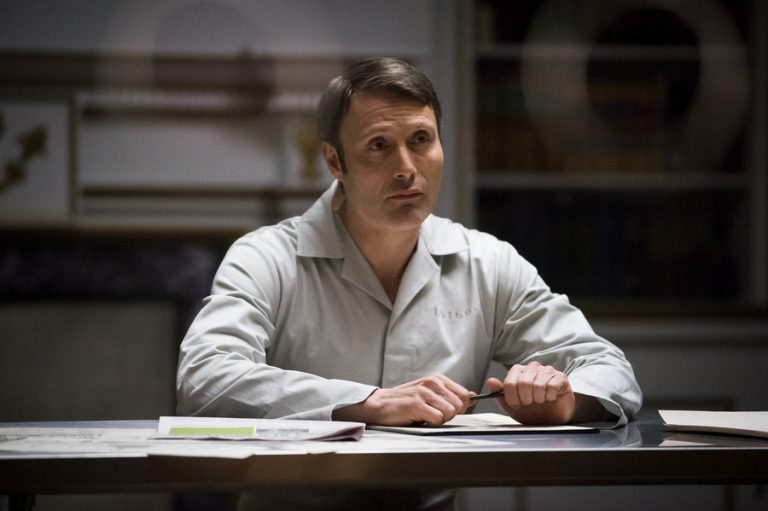
    HANNIBAL -- "The Great Red Dragon" Episode 308 -- Pictured: Mads Mikkelsen as Hannibal Lecter -- (Photo by: Brooke Palmer/NBC)
    HANNIBAL — “The Great Red Dragon” Episode 308 — Pictured: Mads Mikkelsen as Hannibal Lecter — (Photo by: Brooke Palmer/NBC)

    For instance, we open immediately on a close up of Richard Armitage as Francis Dolarhyde, discovering his namesake on the cover of Time magazine. It is such a thrill seeing this moment recast with the show’s visual aesthetic and Brian Reitzell’s phenomenal score. We’ve been introduced to countless killers-of-the-week by now, and Dolarhyde is efficiently, thoroughly, and wordlessly established. On the one hand, the show takes advantage of shorthand, as we know the character already. On the other, the images and sounds tell us all we need to know anyway.

    In fact, the episode is largely an exercise in returning us to the original format of the show. Jack Crawford recruits a reluctant Will Graham to investigate a case that only he can crack, despite the protests of those close to Will. Alana Bloom and Frederick Chilton trade barbs. Agents Zeller and Price return (FINALLY) and are sassy. And at the end, Will must go to Hannibal for assistance, just as Hannibal always knew he would. They’re all familiar beats, but the characters have been through so much. Three long years have passed since Hannibal was locked away; the context is all different. Whether or not Will should help Jack is a central conflict of Red Dragon, and it has been in Hannibal as well. But it’s remarkable how much more weight their reunion carries, now that the backstory has been dramatized.

    HANNIBAL -- "The Great Red Dragon" Episode 308 -- Pictured: Caroline Dhavernas as Alana Bloom -- (Photo by: Brooke Palmer/NBC)
    HANNIBAL — “The Great Red Dragon” Episode 308 — Pictured: Caroline Dhavernas as Alana Bloom — (Photo by: Brooke Palmer/NBC)

    It’s a recognizable adaptation of a familiar story, but it is chock full of the inventive flourishes we’ve come to expect from Hannibal. Following Dolarhyde’s introduction, a stunning, wordless sequence plays out of Hannibal’s capture and imprisonment. His reminiscences, like Will’s so often do, take place in his mind palace, and he pictures himself in the church in Florence, listening to a cherubic choir boy singing some version of “Hallelujah,” when really he is stuck in his sterile cell. Alana’s conversation with Hannibal is a nice example of the show enhancing the source material, playing off Alana’s expanded role and her history with Hannibal. She knows he’s not insane, and so does he—but that’s the plea he scored anyway.

    Very little actually happens in “The Great Red Dragon” beyond what we’ve already summarized. It’s very prefatory, setting up the final arc of the show. We’re deftly introduced to Dolarhyde and to Molly, Will’s wife of an indeterminate amount of time, who feels like a fully realized character more or less immediately. That’ll be important down the road, of course, but it’s appreciated here as well.

    More than anything, “The Great Red Dragon” serves to recalibrate the series following the carnage not just of “Digestivo,” but basically of everything since “Masumono.” It does so spectacularly. One of the episode’s final sequences is a good, old-fashioned crime scene investigation, just like in the early, more procedural days of the show. The swinging pendulum returns at last as Will re-enacts Dolarhyde’s crime, and he finally says that line that has, perhaps unexpectedly, become a catchphrase among fandom: This is my design. It’s awesome. A moment equivalent to Batman suiting up, and yet the feeling of awesomeness makes the audience inherently complicit in what Jack is doing to Will. We know the damage this work is doing to him; we shouldn’t be so jazzed to see it in process. But then there’s that killer shot of him standing over Mrs. Leeds, with the bright red strings of “blood” spray fanning out behind him, becoming illuminated, and it looks too beautifully composed to be concerned for very long.


    Stray Observations:

    • Next to Molly, Will doesn’t have to sleep on a towel. How’s that for “show, don’t tell”?
    • Will’s reunion with Hannibal echoes for a moment that hallucinatory encounter in Italy.
    • Hannibal and Chilton discuss the former’s cooking: “And when you last made it for me?” “The blood was from a cow, only in a derogatory sense.” Hannibal is still the stealth-funniest show on TV.
    • Chilton promised himself he would never use colons in his book titles because, of course, he did.
    • “A snaggle-toothed son of a bitch.” I don’t know why Laurence Fishburne’s delivery cracked me up here, but it sure did.
    • NBC isn’t even bothering with previews for upcoming episodes anymore, if you needed any further writing on the wall.
  • Hannibal Review: “Digestivo” (3×07)

    Hannibal Review: “Digestivo” (3×07)

    hannibal digestivo review

    In Italian cuisine the digestivo is had last, and its purpose is right there in the name: essentially a nightcap. It’s a small drink used to aid digestion of the meal. “Digestivo” is more a binge than a nightcap, but it does such a beautiful job of synthesizing not just the preceding season, but the entire series, that one would like nothing more than to become intoxicated by it again and again. It is a grand finale, reaching even further operatic heights than “Masumono,” ratcheting up not just the violence and gore, but the psychologically terrifying ways in which that violence is carried out. That the episode after all that should then end on a comparatively quiet flourish is fitting. The meal is done; now, we digest.

    For all intents and purposes, “Digestivo” is the final episode of Hannibal proper. The best proof of this is in the title of the next episode, “The Great Red Dragon,” which abandons the culinary titling scheme the series has used thus far. Moreover, the final episodes of the show are effectively a Red Dragon miniseries, and while they will certainly call back to and develop on what we’ve seen so far, expect these episodes to function more as a sequel than as a part of what, with “Digestivo,” has become a pretty tremendous whole.

    “Digestivo” operates on two levels. There’s the surface level: the operatic, Grand, Guignol-esque, terrific violence that punctuates the conclusions of the characters’ journeys to date (except, strangely, for Jack, who mainly sits this one out, perhaps having already had his big moment two episodes ago). Then there is the interpersonal level: the emotional stuff that underlies all the bloodspray. Both levels work independently of the other (spectacularly so), but they also intertwine so effectively that neither feels egregious or out of place.

    This is a feat because there is plenty here that could be considered, on a lesser show, to be egregious. For instance, Mason Verger stole Margot’s uterus, implanted into it a baby born of his sperm and her eggs, and further implanted the uterus into a surrogate mother he keeps at his farm. That surrogate? Is a pig. And Alana and Margot, upon discovering this, cut the stillborn baby from the very pregnant pig’s womb, in excruciating detail. (And NBC couldn’t market this show!) This is the most horrifying thing that happens in the episode, but not without some tough competition.

    After all, “Digestivo” also features their revenge-by-eel upon Mason. And a Face/Off style surgery in which Mason plans to cut off Will’s face and wear it as his own, while he eats Hannibal Lecter. (That Will voices his realization of this in what is basically a joke line is an indication of how twisted these people’s lives have become by this point.)

    As I say, this is basically a series finale, and so it’s hard not to view the episode as a laundry list of loose end tying. In a lot of ways, it is just so. But the tying is done so satisfactorily. The knots are just tight enough to provide resolution but are loose enough to give the audience a thirst for more. Fortunately, a taste more is exactly what we get. But with “Digestivo,” I am more at peace than I have yet been with Hannibal’s impending end. In point of fact the show might as well already be over.

    After all, what more need be said than what is so artfully depicted in that final scene between Hannibal and Will? Will saves him from Cordell and Mason, and he takes him to his home. Will wakes up, and teacup shatters again, never to come back together. He has what is more or less a literal break-up scene with Hannibal, and Hannibal takes the goodbye just as hard. This is the worst defeat Will can inflict upon Hannibal: to let him go. To not chase him, not find him, not think about him or care about him at all. Not to worry about forgiveness or blame. To let the teacup stay where it is in fragments on the floor.

    This is the only way that whatever this thing is between them can end, and it removes, even if for a moment, all of Hannibal’s desire to keep playing the game. Mads Mikkelsen is at his best in this scene, playing a muted, vulnerable Hannibal for perhaps the first time in the series. No longer is there any need, any desire even, to eat Will. The fascination with Will, the love for him, morphs in an instant into a desire to strike back at the one who hurt him. “We are a zero-sum game,” Hannibal puts it so simply. And so he turns himself in to Jack, so that Will may always know where he is and exactly how to find him. Chiyoh has him in her sniper rifle’s sights, but she doesn’t take her shot. For her, Hannibal belongs in a cage, and a cage is where he will stay.

    This could be the end. It would be a tremendous end. Even with the Red Dragon arc to come, I have a hard time treating this as anything but a finale to the series. That it is a nearly perfect one is all the better.

    Stray Observations:

    • Joe Anderson is more than fine as Mason, but he really is missing some of the spark that ignited Michael Pitt’s performance, even as some of his lines are truly delightful: “No. I drink martinis made with tears.”
    • Will bites off Cordell’s cheek at Mason’s unbelievably creepy dinner party, and Hannibal looks so very proud of him.
    • There’s lots of talk about literal dick eating this week, in terms of subtext becoming text.
    • Alana’s arc is still one of the few weak points of the season for me. She releases Hannibal from Verger’s trap with the following explanation: “I was trying to save Will from you, but right now, you’re the only one that can save him.” This, along with her conversation with Will, is the best explanation we can get for her various actions, but they never felt tethered to a theme the way that Hannibal’s, Will’s, or even Bedelia’s similarly nebulous decision-making processes were.
    • Is it wrong that Cordell’s recipe for Hannibal’s tongue sounds delicious?
  • Hannibal Review: “Dolce” (3×06)

    Hannibal Review: “Dolce” (3×06)

    hannibal dolce

    Well. That certainly took an unexpected turn.

    As the season (and series) begins to wind down, I imagined “Dolce” to be a sure shot; obviously Hannibal was on the ropes, and Will and Jack would close in on him once and for all, setting the stage for the adaptation proper of Red Dragon that will close out the show. There would be some kinks along the way—what role would Chiyoh ultimately play, for instance? Would Alana and the Vergers aid or hamper the effort?—but ultimately, the resolution was clear cut and in sight. I am both sorry and delighted to realize that I have underestimated this little show that could. Dolce is, of course, the dessert, a sweet course to be eaten before the final drinks and coffee.

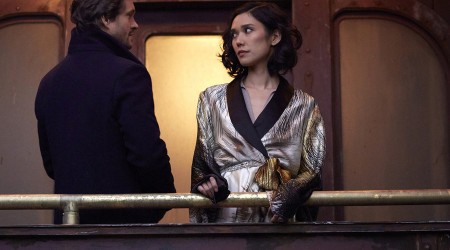
    HANNIBAL -- "Dolce" Episode 306 -- Pictured: Tao Okamoto as Chiyoh -- (Photo by: Ian Watson/NBC)
    HANNIBAL — “Dolce” Episode 306 — Pictured: Tao Okamoto as Chiyoh — (Photo by: Ian Watson/NBC)

    “Dolce” is plenty sweet, a reward both to viewers of the series and long-time fans of the source material. Cleverly feinting toward resolution, “Dolce,” instead, pulls a sharp left, repurposing even more of the Hannibal novel and film in the lead up to one of the most batshit, insane final sequences the show has attempted (and yes, I am including the oft-invoked, blood-soaked finale of “Mizumono” in this estimation).

    So before we get to Red Dragon, we’ve got Will, Hannibal, and Jack seated at a dinner table, much as Hannibal fantasized earlier. And Hannibal is cutting Will’s head open with a circular saw. We don’t get to see what happens next—one hopes that “Digestivo,” airing this week (about which more below) will fill in some blanks—before Will, Hannibal, and not Jack, are hanging by their feet in Mason Verger’s meat locker.

    Thomas Harris’s Hannibal is perhaps the most luridly purple of the Hannibal Lecter works. The novel and film are both somewhat over-the-top; the event ill-suited to the stories being told. That’s not so here. “Dolce” is delightfully, unabashedly weird. Bedelia du Maurier, with whom I am officially obsessed, spends the first half of the episode stitching up Hannibal, while subsequently taunting him—his inevitable capture, his inability to turn her into a meal. And the second half she is doped up on heroin; the better to sell herself as helpless captive to Jack and Will. Early in season two, Bedelia played mind games with Will, too, and Will echoes that chilling whisper back to her here: “I. Don’t. Believe. You.” Gillian Anderson is the MVP of the episode, and it’s exciting to know that Bedelia will be sticking around into the Red Dragon arc.

    HANNIBAL -- "Dolce" Episode 306 -- Pictured: Caroline Dhavernas as Alana Bloom -- (Photo by: Ian Watson/NBC)
    HANNIBAL — “Dolce” Episode 306 — Pictured: Caroline Dhavernas as Alana Bloom — (Photo by: Ian Watson/NBC)

    The best thing about “Dolce” is how it gets so close to the end of the story, waiting until the last second to divert. Will and Hannibal meet. Their faces practically identical in their scars and dried blood. Throughout this season, subtext has become text, and here, the apotheosis. “You and I have begun to blur,“ Will says. “Isn’t that how you found me?” Hannibal replies. Hannibal goes with Will willingly (no pun intended); it’s oddly poetic. This really all has been a game for Hannibal, and Will a worthy adversary. Incarceration is merely the next round; a slightly different set of rules.

    But then Chiyoh shoots Will in order to set Hannibal free. It’s one of the hilarious ironies of this last arc. All parties involved want Hannibal defeated, but they each want it done on their own terms. So they end up in competition with each other, while the true enemy slips away, even if just for one more day. The greatest trick the devil ever pulled.

    As Hannibal cares for Will, not unlike how Bedelia cared for Hannibal at the episode’s opening, their strange, pseudo-romantic dynamic comes to the forefront. (“Just make out already,” you may or may not have shouted at your screen during this scene.) Of course, Hannibal does to those he loves the same thing he does to those he does not: he eats them. There is a difference in context, in preparation, but these nuances are known only to psychopaths. How do our intrepid heroes, if we can still call them such at this point, get out of this mess? If it’s anything resembling its source material, we’re in for one hell of a “Digestivo.”


    Stray Observations

    • “How is Chiyoh?” “Oh, she pushed me off a train.” There’s still a buddy-cop sitcom brewing somewhere in here, if we’re looking for ways to save the show from certain doom.
    • Evil Alana is oddly similar to Chilton in mannerism and, also, in oddly significant cane-leaning. Intentional? Almost certainly. It also lends further to the episode’s general aura of the bizarre.
    • Margot Verger’s new hair is awful.
    • Holy suggestive sensuality, Batman. Margot and Alana get it on in a sea of kaleidoscopic vagina imagery. Most importantly, this makes Alana Eskimo buddies with Will—twice over, depending how much you want to read into all that Will/Hannibal subtext.
    • As a matter of fact, there are many hazy, murky, fluid images in this episode, and many are drug induced, as though drugs are the only way to make any kind of visual sense of the horrors these people have perpetrated upon each other.
    • Hannibal Renewal Watch: Amazon passed, the contracts are up, and, insult to injury, the show will finish its run on Saturdays. It is, sadly, time to retire the Hannibal Renewal Watch. We hardly knew ye.
  • Hannibal Review: “Contorno” (3×05)

    Hannibal Review: “Contorno” (3×05)

    HANNIBAL -- "Contorno" Episode 305 -- Pictured: (l-r) Fortunato Cerlino as Inspector Pazzi, Mads Mikkelsen as Hannibal Lecter -- (Photo by: Sophie Giraud/NBC)
    HANNIBAL — “Contorno” Episode 305 — Pictured: (l-r) Fortunato Cerlino as Inspector Pazzi, Mads Mikkelsen as Hannibal Lecter — (Photo by: Sophie Giraud/NBC)

    “Contorno” presents an interesting question with regard to episodic television writing. To wit: how much does an absolutely killer final act compensate for an episode that otherwise doesn’t quite move the needle from the previous installment and only inches us forward, plot-wise, into the next? In beginning, to answer this question, let’s return as usual to Italian dining, in which the contorno is a side of vegetables or salad served alongside the main course. So is Bryan Fuller simply making us eat our vegetables here? That interpretation would fit the previous episode, too.

    But if that is the case, then the closing scenes of this episode are one sweet gelato, a reward for the giant exposition salad we’ve been wolfing down for the past two weeks. It’s a little weird to start at the end here, but there is no denying the momentous nature of that reprise between Jack and Hannibal, one that perfectly mirrors and inverts their previous, much bloodier confrontation.

    Hannibal doesn’t go to this particular well very often, but it makes a very worthwhile trip here: Laurence Fishburne is a towering hulk of a man. Really, he is. Jack is so physically imposing in these scenes. Just look at the first shot of his arrival, as he glowers up at Hannibal in the window, having witnessed his murder of Inspector Pazzi. (The shot is reversed at the end of the sequence, with Jack looking out the window at Hannibal as he flees.) The fight that proceeds is beautiful, one-sided, scored by one of the series’ most inspired musical cues to date, and is just generally a tremendous achievement. Certainly it is the high water mark of the season.

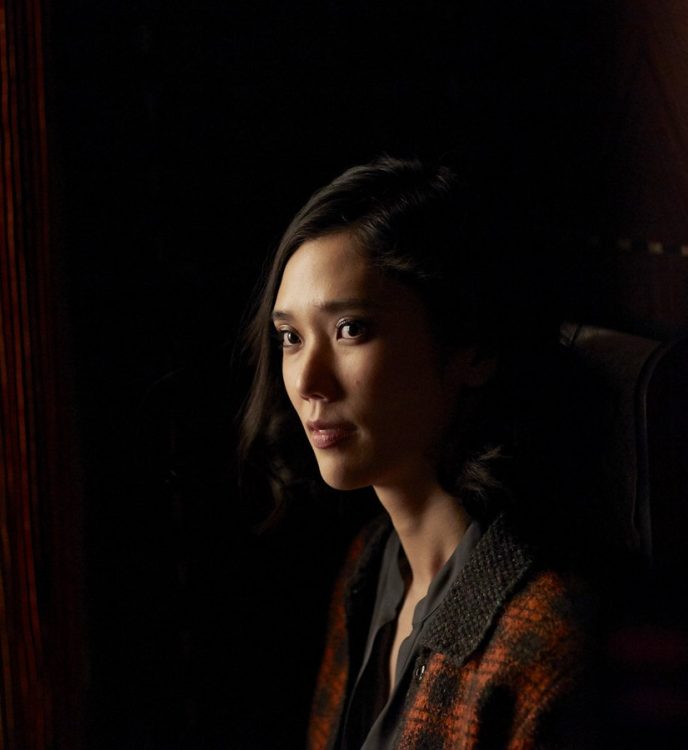
    HANNIBAL -- "Contorno" Episode 305 -- Pictured: Tao Okamoto as Chiyoh -- (Photo by: Sophie Giraud/NBC)
    HANNIBAL — “Contorno” Episode 305 — Pictured: Tao Okamoto as Chiyoh — (Photo by: Sophie Giraud/NBC)

    And yet it is not quite the end of this little European arc. The preamble to Red Dragon, which will (it is now all but certain) serve as the finale to this iteration of the Hannibal Lecter saga. Hannibal is bruised, beaten, and bloody, but he escapes, if only temporarily. Jack may have found him first, but Will and Alana are converging as well, despite their separate setbacks this episode.

    In fact, I think the great strength of this episode is that, despite the absence of plot, it offers a few key images and conversations that bolster the series’ themes. There’s this recurring idea of reciprocity, which, of course, is the one word that may best describe the relationship between Hannibal and Will—really, between Hannibal and everyone else on the show. It’s all about how much he can do to them, how badly he can hurt them, and how much they’re capable of doing in return. Alana is the best example of this. I’m still not sold on her heel-turn into calculated villainy, but her single-minded attempt at vengeance, though foiled again by Hannibal, at least provides a clear explication of the theme. Also interesting is the way the show links her and Bedelia, through Alana’s careful explanation of how she discovered Bedelia and Hannibal through her weekly wine-and-gnocchi routine. There’s methodology to both women’s apparent madness.

    Will is still the more interesting situation though, not least because Will is still the better-realized character. He and Chiyoh spend the episode on a train, engulfed in darkness, as they further contemplate Hannibal’s impact on each of their lives. Chiyoh’s purpose becomes clearer, as she seems to have gotten Will figured out: “If you don’t kill him, you’re afraid you’re going to become him.” There’s a strange symbiosis to their dynamic that, rightly, frightens Chiyoh. Enough so that she pushes him off the back of a moving train in the episode’s most jaw-dropping moment.

    HANNIBAL -- "Contorno" Episode 305 -- Pictured: Mads Mikkelsen as Hannibal Lecter -- (Photo by: Brooke Palmer/NBC)
    HANNIBAL — “Contorno” Episode 305 — Pictured: Mads Mikkelsen as Hannibal Lecter — (Photo by: Brooke Palmer/NBC)

    Not that Will is in any real danger. We have Red Dragon to get to, after all. And, more importantly, Will and Hannibal are inextricably, almost supernaturally linked. It should come as no surprise when our good friend, the murder stag, comes to Will’s side and nudges him awake (slash maybe back to life?).

    But the thing I like best about this episode and the season so far is this recurring motif of the snail. “Contorno” delivers a new piece of knowledge (or, at least, new if you, like me, don’t know all that much about snails). They survive digestion. If you’re not convinced yet that our heroes are the snails in this story, you should be now. They’ve all been killed and “eaten” by Hannibal Lecter, without their knowledge; now they’ve survived the digestion, and each of them have become something else, something new, something different. That’s how they’ll catch him, at long last.


    Stray Observations:

    • There’s a beautiful early shot of Jack releasing Bella’s ashes. It seems odd to me that he decides to throw the ring away, too, though. Is that something people do? I suppose it fits the theme of rebirth/metamorphosis that we’re developing here.
    • I love how they’ve repurposed the Hannibal source material with Inspector Pazzi, in a way that doesn’t suck so much and that serves the new version of the story they’re fashioning. I also really, really love how they retain the utterly silly depiction of Pazzi’s crack detective skills from the film, as he Googles a picture of Hannibal Lecter to determine that yes, indeed, that strange professor is Hannibal Lecter.
    • I’m increasingly skeptical that there will be any real payoff to this business with Mason Verger and Alana, unless Verger will have some sort of role to play in the Red Dragon arc.
    • Hannibal Renewal Watch: Amazon has passed, Netflix has passed, and the actors’ contracts have expired. This appears to be the end, my friends. Fortunately, The Silence of the Lambs is the Hannibal Lecter story least in need of rehabilitation.
  • Hannibal Review: “Aperitivo” (3×04)

    Hannibal Review: “Aperitivo” (3×04)

    hannibal aperIt’s a little odd yet fitting that “Aperitivo” is the fourth episode of the season. It’s odd because, in Italian dining, the aperitivo is the drink that precedes the meal; it’s meant to whet the appetite and to break the ice in social situations. It’s a precursor to not just to the main course, but the meal itself.

    Despite the fact that “Aperitivo” arrives three hours in to the meal that is Hannibal season three, it performs many of these functions. It (finally) connects the dots between the ending of season two and the events of the previous three episodes, and then it spends much of its time setting the table for the middle act of this season, which will bring us, one presumes, to the status quo of Red Dragon. With some minor deviations, of course.

    But for all of the (some might say overdue) explanations and resolutions “Aperitivo” offers, there’s no skating around the fact that it halts the momentum that Hannibal has so far achieved precisely by skipping past all that exposition. This episode is tracing its own steps for much of its running time, and, frankly, after three episodes, I’m more invested in what’s going on across the Atlantic.

    Fortunately for us at home, even a somewhat disappointing episode of Hannibal is still better than most anything else on television, and “Aperitivo” is full of the little delights that we have come to expect. The opening scene between Chilton (who has cheated death again!) and Mason Verger is a master class in grotesquery, as they strip off their masks to reform the deformities with which Hannibal Lecter has left them. It’s one of the weirder scenes the show has done—which is saying something—that are full of weird sexual overtones that never quite resolve themselves.

    Weird sexual overtones persist into yet another reflection back on that night at Hannibal’s, though now we visit it in another new context, after Bedelia’s bombshell that, maybe, Hannibal is literally in love with Will. The constant flashing back may eventually become tiresome—maybe it already has—but I love that the show affords this sequence its proper weight. For all of these characters, this is the most fucked up night of their lives, bar none, and that impact is fully felt each time we revisit the scene from another perspective.

    It’s after these opening scenes that the episode begins to flag, if only a little. We see Will meet with Jack, prior to taking off to Europe to chase after Hannibal. He admits to Jack that he wanted Hannibal to run, and that he, in fact, wanted to go with him—so basically he almost found himself in exactly the same position in which Bedelia now finds herself. “Friendship with Hannibal is blackmail elevated to the level of love,” after all.

    We also catch up with Alana, who had her own flirtation with Hannibal in the previous season. Now, with a fancy new cane and an apparently murderous new attitude, she’s providing therapy to Mason Verger and also maybe convincing him to form a supervillain team with Chilton in order to get revenge on Hannibal. I don’t yet know what to make of this development in Alana’s character—she is so changed from the source material, where Alan Bloom is a minor character, and yet her development in the series so far has been so contingent on her relationship to the other characters that it’s hard to gauge how far she’s snapped, or if it’s even believable that she would. The jury is out here.

    Finally, we spend some actual quality time with Jack, as he finally decides to give Bella the peaceful death she desires. How much is his reasoning for this linked to his experience at Hannibal’s? It’s purposely vague. But Jack’s decision here is firmly entrenched in the context of the previous episodes this season. In the matter of Bella’s final days, is he observing or participating? (Hannibal sends him condolences because he is a giant prick.)

    The episode is slower than I’d like. It spends a lot of time connecting dots that the audience has already done intuitively, but it’s still necessary plot work. It’s understandable why Fuller and company waited until now to do it, too. If “Secondo” was a reflection on cause and effect, on the context for horror, then this hour is a reflection on grief, death, and on the aftermath of said horror. We see how Jack, Alana, and Will dealt with that immediate aftermath, and how they arrive at the point where Will is going at it alone in Lithuania. In the grand scheme of things, this episode is shoe leather, connective tissue between the ultra-arty thematic work that came before and the falling dominoes that are about to come. There’s nothing inherently wrong with that, but I’m glad to be past it nonetheless.


    Stray Observations

    • Outside of flashbacks and the note that Hannibal sends Jack, this is a Hannibal-free episode. This may or may not contribute to the perceived lack of momentum.
    • Also, how demented is that gorgeous dream sequence in which Will and Hannibal murder Jack at dinner? There is so much to unpack in that image, and I really hope that we revisit it as the season wears on.
    • Chilton copyrighted “Hannibal the Cannibal” because of course he did.
    • Hannibal may be taking over from Mad Men as the stealth funniest show on television. Lots of black humor in this episode.
    • “If my brother offers you chocolate? Politely refuse.”
    • “I’ve always enjoyed the word defenestration, and now I get to use it in casual conversation.”
    • Hannibal Revival Rumor Watch: Rumors all over the place this week. Hulu maybe wants the show but can’t have it because of Amazon’s contract, which Amazon may or may not make good on? And it might not matter at all because the show’s international backers might demand network involvement? Also, maybe A&E is interested? Look, if there’s more Hannibal to be had, I will watch it literally anywhere Bryan Fuller asks me to.
  • Hannibal Review: “Secondo” (3×03)

    Hannibal Review: “Secondo” (3×03)

    hannibal 3x03The secondo is the heaviest course of the Italian meal; it may include different sorts of meats or fish. Here’s the most interesting part: according to Wikipedia (I do a lot of hardcore research for these reviews, you know…) either the primo or the secondo may be considered more important, depending on the locality and the situation. Depending, in other words, on the context. “Secondo” is all about exploring that context. The question of which is more important in a continuing succession of pairs—cause and effect, Will and Hannibal, eater or eaten—is left to the viewer.

    Exploring the context of Hannibal Lecter means that we delve into Hannibal Rising, source material with which I am only glancingly familiar, by which I mean I am familiar with the fact that the source material blows and have therefore avoided it. Will visits the Lecter estate in Lithuania, which is a literal Dracula’s castle. The gothic nature of the setting is a perfect match for the visual aesthetic that Fuller has cultivated. Roughly the first half of Will’s time in Lithuania is extremely light on plot but heavy on creepy images and atmosphere, as he stalks Chiyoh, a mysterious woman hanging about the Lecter grounds who is keeping a prisoner.

    Meanwhile Hannibal and Bedelia continue their increasingly perverse game of house. They have Professor Sogliato over for dinner, and Hannibal casually murders him at the dinner table. Then he and Bedelia casually observe, trading barbs, as the man dies in a most darkly comic fashion, until Bedelia pulls the knife from his brain and spares him. . “That may have been impulsive” and “technically, you killed him” are both surprising laugh lines. In fact, throughout the episode, these two bicker with an unexpected humor.

    But the context is key. Bedelia is horrified by Hannibal’s actions, but only for a moment, until her horror is replaced by her fascination. “You are going to be caught,” she warns him. Later: “You’re drawing them to you, aren’t you?” She’s thoroughly chilling, and, moreover, she’s much more interested in understanding Hannibal than she should be—she’s fascinated by him. Consider context: what’s more important? Understanding the reason for Hannibal? Or understanding what he is and getting the hell out of dodge as quickly as your feet will carry you?

    The trap of understanding, of needing to find meaning, is one that Jack and Will and company have fallen into, and one into which Bedelia has more or less dived head first. In a way, Chiyoh is trapped, as well, though her trap is one of her own making. All roads, as always, lead to Hannibal, and soon the episode’s central question—the context it provides, the dichotomy it presents—is between Will and Hannibal. How alike are they? Who is crazy and who is sane? How should we even define the two extremes?

    It’s only fitting, then, that the writing and editing as the episode continues begins to interweave Hannibal and Will’s stories, showing us Will’s discovery of Hannibal’s past, as Hannibal shares a version of the same with Bedelia. The big reveal of the episode, insofar as Hannibal trades in big reveals, is that of Mischa, Hannibal’s young sister. But as Will says, “Mischa doesn’t explain Hannibal.” There is no easy explanation, no dot to connect. One or the other thing might be important; maybe cause, maybe effect. Maybe it doesn’t matter at all. “All sorrow can be borne, if you put them in a story.” Maybe the whole thing is trying to foist meaning onto a horror that has none; a man who kills and eats for the power it gives him over his victims. After all, we have Hannibal’s version of the same story: “Nothing happened to me. I happened.” Chiyoh’s version of the story is that her prisoner ate Mischa, which set Hannibal on his path. Bedelia catches on more quickly, as she asks Hannibal bluntly how Mischa tasted.

    It’s no accident that Bedelia sinks into that murky bath once again this week. This time as Hannibal shampoos her hair for her—he might as well be drowning her himself. But has Hannibal happened to Bedelia after all? Hasn’t she made, willingly, every decision that led her to this point? Is she not a participant after all?

    It seems that Will is. He frees Chiyoh’s prisoner, who summarily attempts to kill Chiyoh, forcing her to kill him instead. Chiyoh, at least, is sorry for what she has to do. Will isn’t. Hannibal was once curious whether Chiyoh would kill. Is Will equally curious? He strings up Chiyoh’s victim in a pose that would make Hannibal proud.

    I’ve filled this review with questions because the whole of “Secondo” is questions at its core. Even Jack gets in on the game, talking with the inspector about the nature of faith, understanding, and imagination. And yet Jack still has faith—still imagines—that Will understands Hannibal. That there is something there to be understood. That it isn’t all entropy, sliding slowly into pure chaos.

    “Secondo” is by far the best of this opening set of episodes. Visually, it is a fabulously murky episode. Everything in Lithuania is in dark blacks and blues. The very setting threatening to swallow Will and Chiyoh whole. Even the scenes in Hannibal’s stolen apartment are burnt orange, with none of the warmth that implies. The edits between scenes are slow dissolves, cross cuts, and fades in and out. Everything is of a piece; everything is of a design. Even if that design is a broken tea cup or a shattered bottle of wine. Narratively, the episode is the same; a fractured set of fairy tales and ponderings about the stories we tell ourselves and each other in order to bear the horrors we must live. It’s been a slow, purposeful start, but with the closing scenes of “Secondo,” the stage is set—sooner rather than later—for reckoning.


    Stray Observations:

    One of the episode’s neatest visual flourishes is the recurring, luxurious shots of snails. As Abel Gideon said so succinctly, “The snail doesn’t know it’s being eaten.” Hannibal sees everyone around him as snails, anyway, and maybe they are, for as susceptible to his machinations as they tend to be. Or maybe it’s that the knowledge of it doesn’t change their behavior.

    As an experiment, I am going to watch Hannibal Rising and see how it compares. (I expect the answer will be “not favorably,” but my expectations are nil anyway.)

    I try not to put too much weight on the previews, as the marketing monkeys responsible at NBC know how to twist and contort any episode beyond recognition. (RIP Parenthood.) But YO NEXT WEEK LOOKS SO GREAT.

    Well, as you all have learned by now, NBC has not renewed Hannibal for a fourth season. I’m not going to eulogize the show just yet because I’m pretty confident that some online streaming service or another will resurrect it for at least one more go. It remains to be seen whether that would even be worth it, given the difficulty with getting the rights for Silence of the Lambs and considering that the end of Red Dragon is a fine stopping point for the characters we’ve come to know. As much as I’ll miss Hannibal should this be the last season, you can’t really blame NBC for this one. They’ve given the show more than a chance against pretty much all reason.

  • Hannibal Review: “Primavera” (3×02)

    Hannibal Review: “Primavera” (3×02)

    hannibalAfter totally neglecting the cliffhanger ending of its second season, this week Hannibal brings us up to speed—at least somewhat—reacquainting us with Will Graham after what’s revealed to be a six month gap since that hellish night at Hannibal Lecter’s house. But first, “Primavera” takes us all the way back to that night, presenting the final moments of season two in the new context of this third season. At the time, it was a tragic crescendo, a cacophony of destruction raining down upon our heroes; now, the scene is framed as a tragic echo. Hannibal recalls the loss of the man who was his one, true friend. “Fate and circumstance have returned us to this moment,” Hannibal says, then and now. The stag lies dead, too. An ocean of blood spilling from it and drowning Will. The teacup shatters, again, only to reconstruct itself as Will awakens in hospital.

    Yes, the first several minutes of “Primavera” are composed of scenes we’ve already seen, but the new context they are afforded in following “Antipasto” is invaluable. They’re also no less gorgeous than they were the first time around—with a monochromatic grey that is shot through with deep, red blood, spurting in geysers and flooding the frame around the characters. The teacup, shattering is such a vital, recurring image throughout the previous season, reassembles itself here once more. This suggests something of Will’s mental state and sets up the dream logic that dictates much of the episode to follow.

    “Primavera” only slowly reveals its true nature. We should know better. After all, we are, by this point, more than familiar with Will Graham as an unreliable narrator. When a silhouette that might be Alana Bloom’s turns out instead to be that of Abigail Hobbs, it should be an obvious trick. And yet, somehow, it’s not. It helps that Abigail has cheated death on this show before; and the parallel of the relationship between Hannibal and Bedelia to that between Will and Abigail is intriguing enough to justify her giving death the slip one more time.

    But as the episode unfolds, much of Will’s reality comes into question. “Primavera” plays out like some sort of lurid fever dream, chiefly concerned with putting Hannibal and Will’s relationship in new relief (in light of what each views as the betrayal of the other) and exploring the past that Hannibal has attempted to abandon, whether it’s his crimes of the distant past (as the historical Il Mostro) or his more recent abuses toward Will and company.

    As with “Antipasto,” the very best thing about Hannibal this week is its utter indifference to the conventions of plot and narrative. In bucking what would be expected of the early season here, Hannibal presents an infinitely more exciting narrative instead. The show is doling out its familiar characters and rhythms only very slowly, and, for the most part, these have been abandoned or transformed beyond recognition. We are thrown one familiar bone, as Will investigates a murder committed by Hannibal Lecter, but rather than alongside Jack and Alana, he’s with Detective Pazzi and an imagined Abigail. We are robbed even of the pendulum swing that normally signals Will’s practiced use of his empathic abilities.

    And then there is the extended finale sequence, which is a master class in visual storytelling. It begins with Will’s study of the corpse Hannibal has left for him. Is it a gift? A trail of breadcrumbs? A warning? Or, perhaps, as is often the case, it is at once all and none of these. What it becomes for Will is a nightmare revisited, as the stag that was slain is reborn, in gloriously grotesque fashion, before his eyes, and in a church, of all places. The effects work here is excellent, and the way the corpse bends and breaks itself is a horrifying sight for Will and the audience alike.

    And so, with Moby Dick newly revealed to his Ahab, Will hunts through the catacombs beneath the church, certain that he has caught a glimpse of Hannibal, and that he is somewhere here, lurking in wait. This is, of course, a gorgeous sequence, but is also delightfully tense, even as it serves the sole purpose of marking time as the surviving cast slowly assembles in Italy to finally bring Hannibal to justice. What excellent camerawork throughout. Hannibal is nowhere, yet he is around each corner. And then he is there, looking for all the world like Bela Lugosi or Christopher Lee. He and Will have several near misses. In fact, they may be nowhere near each other, as the episode never feels more dreamlike than it does in this sequence, and Hannibal and Will each fade in and out of the murky shadow in tandem. Will’s whispered, “I forgive you,” so reminiscent of Bedelia’s still-stunning “I believe you,” may be whispered to thin air—though it certainly seems as though Hannibal is there to hear him, after all.

    “Primavera” presents in may ways the first part of a long mystery narrative. The final manhunt for Hannibal Lecter, and it’s impossible, at this stage, to know what is real and what is not or who is real and who is not. Good and evil, like observation and participation, are obfuscated to the point of meaninglessness. In other words, we are right where Hannibal and Hannibal wants us to be.


    Stray Observations:

    • The show pretty unambiguously names Hannibal as the real-life serial killer Il Mostro, a tack that the novel and the film Hannibal  (in deleted scenes) hinted at, as well.
    • There is continued, overt discussion of religion in this episode. The idea of evil as the Devil-with-a-capital-D or, alternatively, of playing God, has always been on the fringes. Just last week, Abel Gideon called Hannibal the literal Devil.
    • What an awful last year of life Abigail Hobbs lived, when you think about it.
    • The title isn’t as structurally clever as “Antipasto”, which is disappointing—instead, it references Botticelli’s painting of the same name.


  • Hannibal Review: “Antipasto” (3×01)

    Hannibal Review: “Antipasto” (3×01)

    antipasto hannibal review

    What I love best about the titling scheme Bryan Fuller has chosen for Hannibal—this season, each episode is named after an Italian course; the previous seasons were French and Japanese, respectively—is how it at once constitutes gimmickry and structural importance. Not every episode is perfectly aligned with its title, but many come pretty close. “Antipasto” is such an episode. It’s a peculiar episode. There is not even the remotest doubt that Will, Jack, and Alana survived the bloodshed of season two’s finale (not least, their names are in the credits), and so, assuming that its audience is not necessarily on pincushions waiting to find out what’s happened to them, “Antipasto” is instead thoroughly unconcerned in addressing the cliffhanger at all. This serves to generate considerably more suspense than the cliffhanger itself, such as it was, ever did. We are launched several months into the future, and our first glimpse of Will and company doesn’t come until the preview for next week. The question becomes not if they survived, but how on earth they managed it.

    Imagine an alternate premiere, a perfunctory episode of television that picks up right where we left off and doles out, piece by piece, the process that brought our maimed heroes back to life. It’s boring, and moreover, it’s uncharacteristic of Hannibal as a series. What a relief, then, to see in “Antipasto” that Bryan Fuller retains a full understanding of the sort of show he’s making, and how that sort of show works. Very little actually happens in “Antipasto”, and yet every second is engrossing; every shot, every frame, is dense with meaning. This is a show that begs to be savored.

    The episode wastes no time throwing us right back into the stylized glory that is Bryan Fuller’s vision of the Hannibal Lecter story. When we meet Hannibal in the season premiere, he is wandering around a party, floating adrift from frame to frame. He is newly unknown, freed not just from the weight of the Chesapeake Ripper, but freed from the reputation of Hannibal Lecter himself. Not that he doesn’t fall quickly into old habits. A new name and a new companion don’t change the fundamental aspects of his character.

    So Hannibal and Bedelia are trotting around the continent, stealing identities and living perfectly frivolous lives among the French, then Italian elite. One of their acquaintances happens upon in both countries, and twigs to their scheme. Suddenly Hannibal falls into the cat and mouse rhythm he developed so thoroughly with Will. Meanwhile, Bedelia du Maurier spends the episode becoming increasingly unraveled, despite her deceptively cool exterior. Gillian Anderson plays her as a reckless, curious woman, in way over her head (and she plays her brilliantly, at that. I have never been happier with opening credits than to see Gillian Anderson’s name added to this week’s).

    The episode climaxes (or perhaps, the antipasto cleared away, and the main course glimpsed) when, suddenly, Hannibal is bludgeoning his new friend to death, just as Bedelia tries to run away. Is she observing or participating? Hannibal asks this question of her implicitly throughout the episode, and explicitly here, as he calmly murders the poor man, and Bedelia looks down helplessly as he deconstructs her carefully considered rationalization. She has been participating all along; passivity is not an excuse. The game of cat and mouse has been with her all along.

    The relationship between Hannibal and Bedelia is fascinating, giving the episode a driving energy that more than serves in the absence of the show’s typical characters and rhythms. Her interest in him darts back and forth from intrigue to wariness. She discusses his murderous, cannibalistic habits frankly, not as scared of them as she should be—and that is what scares her most. There are many shots of blood flowing in “Antipasto”, being washed off the bodies of our intrepid Eurotrippers, or dripping off the corpse of a freshly killed rabbit hanging from a butcher shop. But there is no washing away the blood they’ve spilt. There’s no getting around the fact that Hannibal is, as Abel Gideon says tonight in flashback, truly the devil. He has an uncanny gift for brining out the worst in all around him, and Bedelia is no exception, as much as she’d like to think he is. The phrase “professional curiosity” comes about again; before this was the rationalization Alana used to justify her interest in Will Graham. Yet another parallel is drawn.

    The story, then, is excellent, a brilliant first course as we set the stage for, at last, the adaptation of Red Dragon proper. But as always the real main course here is the visual experience. The episode’s pace is deliberately languorous, as Fuller chooses instead to immerse us, slowly, in the new lives that Hannibal and Bedelia have established for themselves. As he does so, he lets us sink slowly back into the cinematography, the visual rules and motifs that govern Hannibal’s cinematic language. “Ethics become aesthetics,” Hannibal and Bedelia conclude in their philosophical exchange. No longer is the show interested, necessarily, in portraying Hannibal’s crimes as murders, as evil. That’s for granted now; now, the interest lies in portraying the nature of evil.

    There is of course the recurring visual of blood running, dripping, splashing, but there are a few other choice shots as well. For instance there is a striking contrast between the composed formality not just of Hannibal as a character, but of the settings and the framings that contains him, and the brutality with which he mains and murders. As the camera moves and wavers in the open sequence, it will be interesting to watch if the formal aspects of the show become increasingly unhinged as Hannibal does the same.

    There are also some black and white flashbacks with Abel Gideon, that serve to paint Hannibal’s previous life in a different, separate light. But the shot of the episode this week is the sequence of Bedelia, slowly sinking into the black murk of her bath, the depth of which for a moment becomes that of an ocean. What a stunning visual representation of her journey. Fuller describes this season in various interviews as a trashy ‘80s art film, and he’s not wrong; I just think his modesty oversells exactly what he’s managed to achieve. Hannibal is arguably one of the greatest dramas on the air, period, but it is inarguably the best-looking show on television right now.

    “Antipasto” is slow and atmospheric, setting the table for the rest of the season, and doing just enough to whet its audience’s collective appetite. In other words it does just what it’s meant to. Bring on the next course.

    Stray Observations:

    • “Antipasto” is also, for me, a bit of a palate cleanser. I’m thrilled to be writing about this amazing show, and I’m looking forward to being a sight more positive than I got to be about Scandal and American Horror Story. (I hope I haven’t jinxed it.)
    • As always, the greatest guilty pleasure of Hannibal is THE FOOD. Every dish looks magnificently appetizing—even the dishes that we know for a fact are people. It is this show’s greatest trick.
    • Yo, how insane was season two of Hannibal? That previously on is just a mashup of crazy shit.
  • Scandal Season Finale Review: “You Can’t Take Command” (4×22)

    Scandal Season Finale Review: “You Can’t Take Command” (4×22)

    scandal season finale review

    “You Can’t Take Command” is the sort of finale that, as you’re watching it, is pretty damn entertaining. But the second it’s over (and, really, during any commercial break or even just a pause in the episode’s action), and you think about any of its components in any sort of detail, the whole thing threatens to fall apart. It coasts along on momentum, but then, at a crucial narrative peak, the momentum comes crashing to a halt. The show stops and forces you to think about what it’s doing—and all that anyone can be expected to think is, “wow, that was stupid.”

    None of that is to say I hated “You Can’t Take Command.” In fact, I found much of it way more tolerable than the past several episodes of the season. (I certainly didn’t hate it as much as The A.V. Club’s Joshua Alston, for instance.) The episode coasts along a lot more smoothly, and in more entertaining fashion because it actually has an endgame to play out. We are past the point of endless table setting for a foregone conclusion, and that helps the show tremendously.

    For instance, take the way the episode immediately drops the other shoe. Leave aside that Rowan’s fake name is Damascus; we, at this point, can take for granted that everyone on Scandal is a fucking idiot. The shit-eating grin on Joe Morton’s face as he hands Mellie the photos of her and Andrew, along with the Remington file, is pure gold. And how great that Mellie is finally, if against her will, placed smack center in the middle of all this B-613 shit. In other words, she is finally granted a role in the show proper, rather than shunted off to some narrative offshoot reserved just for her. (Like, just spit-balling here, an extremely improbable run for Senate in a state in which she does not reside.)

    The script even does one better by drawing parallels between Mellie and Olivia, a concept that is always extremely welcome. Cyrus and Maya each tell them, respectively, how self-centered they are; how they construct dramas surrounding themselves, and other people are merely actors in those dramas. Never mind that everyone lives in her own drama.

    This, ultimately, is the undoing of Olivia’s grand scheme to take down her father. No one knows who Rowan is. You can’t take Command, the logic goes, because there may as well not be a Command. Eli Pope is a doddering curator at the Smithsonian, full stop. “You Can’t Take Command” goes full-on “darkest before the dawn” here, as Rowan, in short order, murders the entire grand jury and even the stenographer too; threatens David Rosen with Abby’s life, leading to Jake and Olivia’s imprisonment (actually Cyrus does this, about which more in the strays); and systematically eliminates every person on earth who can name him as Rowan, even going so far as to offer Maya her freedom in exchange for her silence.

    What a setup, right? The CIA is fully aware of B-613, and while Director Lowry seems to have been unaware of how out of hand it’s become, she’s powerless before Rowan and Cyrus to do anything about it. Like that, Rowan appears invincible.

    And then Olivia and Jake just kind of win. They trace the money from the Smithsonian that Eli Pope has been funneling to B-613, and they nail the doddering old curator for embezzlement. They even visit him in jail and gloat.

    I probably don’t need to explain why this is stupid. This is where the episode screeches to a halt, and it never quite recovers. To the extent that Rowan is actually eliminated here, what an anticlimax! All of this season has led to a financial technicality? He’s in regular-people prison, for a white-collar crime? There isn’t even the decency of a final showdown between Olivia and her father? Maya doesn’t have more of an interesting role to play? From the pretty effective groundwork laid in the first half of the episode comes almost nothing of interest or import, and that’s a bummer. I wouldn’t have been surprised if the finale of this season were a disappointment—but to have it come some close to salvaging something worthwhile, and whiff at the last minute, is the real scandal. (Sorry.)

    And then there is of course the fact that Rowan hasn’t gone anywhere at all. So this is a false ending, and a disappointing false ending at that. It’s a matter of when, not if, Rowan returns and this whole sloppy mess rears its head once more. If nothing else, this finale and this season might have been an exercise in deck-clearing, freeing the show of the shackles of the B-613 storyline, but they haven’t managed even that.

    That’s a shame, because the new status quo suggested by the episode’s final act is an intriguing one in many places, but it’s significantly less intriguing when all indications are that any shifts are temporary, awaiting reversion to the template. Consider the notion that the two most electric scenes in the finale are only tangentially related to B-613, and in fact grow out of the fallout of B-613’s “destruction.” Quinn’s confrontation of Huck, upon realizing that he (totally nonsensically, it should be noted) is still operating under Rowan’s orders, and killed the grand jury, is a unexpectedly cracking payoff to the season’s most frustrating plot thread. “Of course you have a choice. You always have a choice.” Leave it Quinn of all people to be the moral arbiter on this show. “You’re not thinking anymore, you just want to kill.” Katie Lowes’s performance is gripping here, and it’s about damn time the narrative grapples with the fact that Huck is essentially a monster in the employ of Olivia Pope. Fuck your white hats. The only negative about this scene is that it’s such a small part of the episode, and is left on a cliffhanger—one both hopes that Quinn shoots him dead, and yet doesn’t want to put that burden on Quinn. It would have been nicer to see this one laid to rest.

    The other great, great scene is Fitz’s confrontation with Mellie. I think he ultimately is being a bit unfair to her, given all that he has done, but the idea that Mellie gave up that grand jury is too much to take for him. The whole last act of this episode is shit hitting in the fan, and it works on that level, allowing the episode to regain at least a little of the momentum it lost in the resolution of the Rowan business. Tony Goldwyn is on fire here, too, which helps tremendously. – “Do you think I’d let you be President after what you did? Pack your bags and get out of my house. Before I throw you out.” There’s a lot of talk on this show about what a great man Fitz is, and while I hate to see Mellie villainized solely to prove that point, it’s not unreasonable to see this as a breaking point for Fitz. That point is further emphasized by the fact that he summarily fires Cyrus, recognizing him finally for the snake that he is. Fitz has been a pawn for much of his life, this season included; perhaps he just has finally decided, no more.

    And then there is, of course, that ending. Olivia Pope and Fitzgerald Grant making out on the White House balcony. (In a truly terrible VFX shot, but nonetheless.) The season has teased out their romance in fits and starts, but really this story hasn’t been the focus of the show for some time, and this seems like an odd time to revisit it. That said, it’s impossible not to get giddy at the sheer energy of the scene, and at the song choice, “Here Comes the Sun,” which evokes the metaphor of Jake and Olivia’s arguably more hopeful relationship just as it is abandoned in favor of Fitz and Olivia’s arguably more epic love. As we prepare ourselves for Scandal season five (and beyond, because as we know, Shondaland shows never end), it’s finally time for Fitz and Olivia to stand in the sun.

    How long will it last? Other than “not very” the answer is left vague. For all the show’s talk of being the good guys, wearing the white hats, what “You Can’t Take Command” confirms if nothing else is that the very idea of white hats is unattainable. The bad guys will always have one up on our heroes, which is that no matter what awful things our heroes do, there is still a line that they won’t or can’t cross—and the heroes who do cross that line, for whatever reason, are summarily cast out.

    This season was a mess, and the episode was too. But there are strands of good ideas, little ideas here and there to explicate. There is fertile ground for future stories, which is half the job of a finale, and is the half that “You Can’t Take Command” is much more successful at. For now I’ll pretend that Olivia just shot Rowan or something, and deal with him again when he inevitably shows up. Out of sight, out of mind.


    Stray Observations:

    • Cyrus Beene. What a dick this guy is, right? I don’t even recall if his partnership with Rowan was previously known or not, but it wouldn’t have been surprising anyway. His little quip, “I can’t have a soul. If I had one I would never accomplish a thing,” says so much about what he has become, and to an extent what he has always been. (Suddenly that wedding flashback makes more sense in context of the season.) He’s a monster, which we knew already, but certainly for me his threatening of Abby’s life was a bridge too far. It’ll be curious to see what his role his next year—does he go full black hat? Team up with Mellie? Something else?
    • Verbatim from my notes: IS OLIVIA POPE ABOUT TO BECOME THE FIRST LADY
    • “Susan is a national treasure.” You’re damn right Vice President Artemis is a national treasure.
    • Jake tells Olivia that she’s in love with Fitz and he leaves, hopefully for good. The men on this show are always telling Olivia how in love she is with the other men on this show.
    • That wraps another season of Scandal. I’m undecided whether I’ll be writing about it again in the fall—I had previously been reluctant to write about this one weekly simply because I don’t think the show is that fertile ground for weekly criticism, and I still feel that way twenty-two episodes later. But we’ll see. As always, the grade below is for the season. The episode gets an entirely too generous 8/10—the whole is certainly less than the sum of the parts here.