Coda follows the only hearing member of a culturally deaf family as she finds her voice as part of her school’s choir
Coda starts Sundance 2021 off on a high note. While it doesn’t stray too far from its familiar coming-of-age dramedy plot, its keen observations of the hardships and joys of being deaf in a hearing world. It’s impossibly charming, funny, and filled with memorable characters.
Coda tells a story it feels like we’ve seen hundreds of times before — but trust me when I say you haven’t seen anything like it yet. Coda premiered in the U.S. dramatic competition section of the virtual 2021 Sundance Film Festival, the second film of writer and director Sian Heder to premiere at the fest, and will likely be one of the year’s success stories.
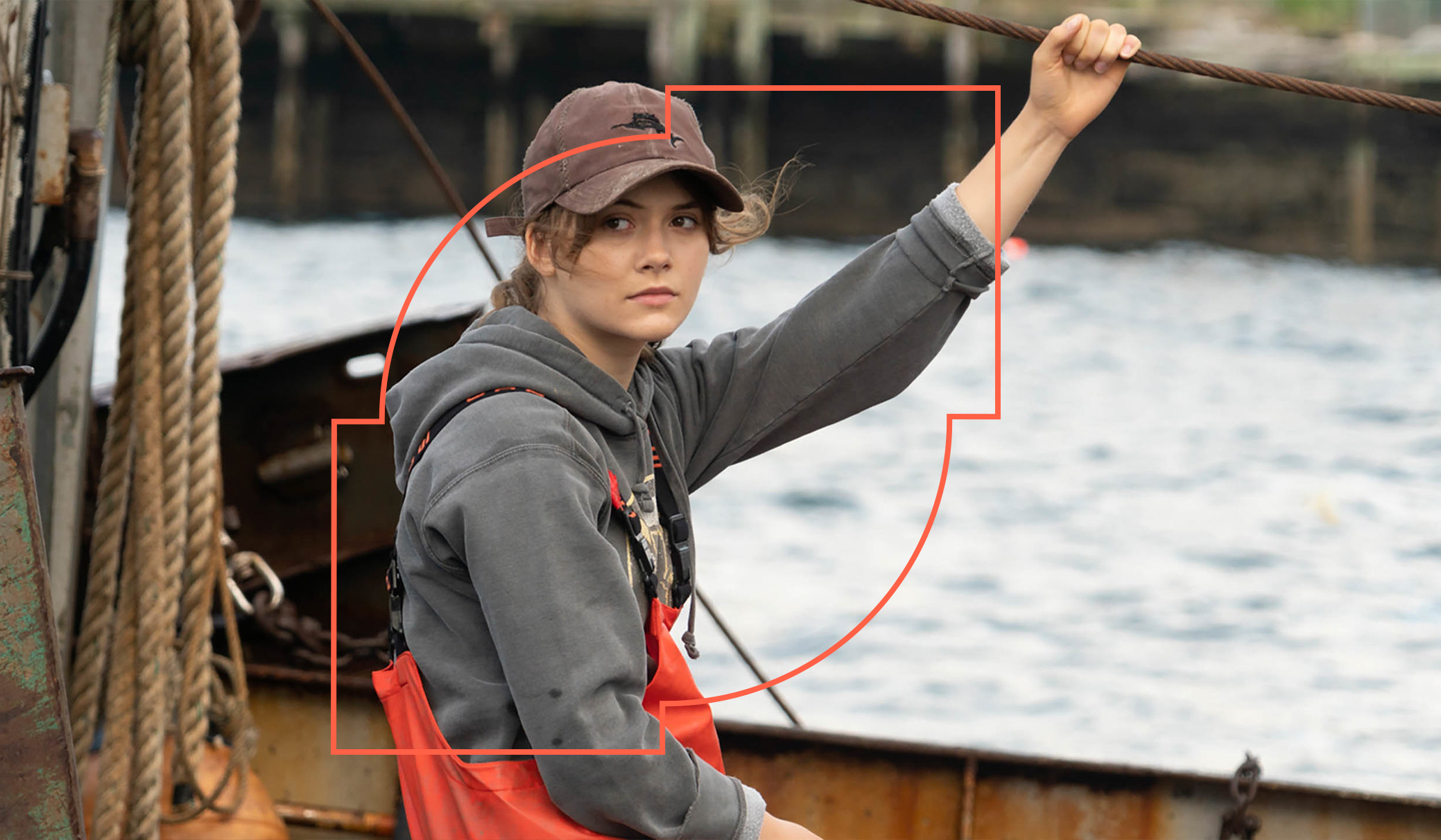
You know the setup. Ruby (Emilia Jones — get to know this name), an angsty and picked-on teen, struggles her way through her senior year of high school. She is mostly ostracised from her classmates because her family is poor and runs a fishing business, however the fact that she’s the only hearing member of her deaf family also plays into the torment.
ADVERTISEMENT
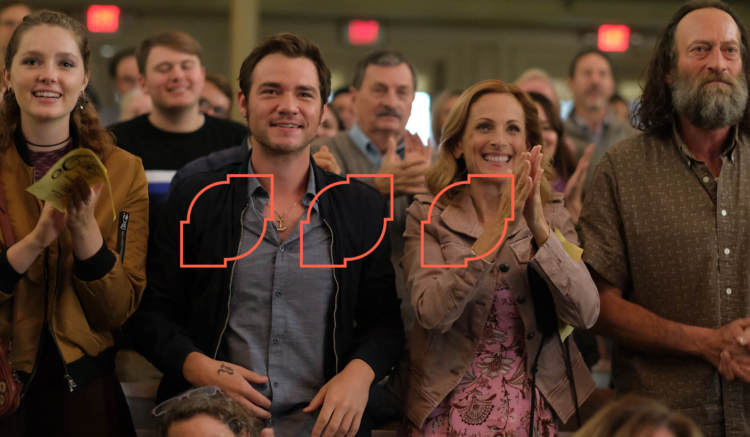
As you could imagine, she feels a weight of obligation to help her father Leo (Daniel Durant) and older brother Frank (Troy Kotsur) with the business, and her mother Jackie (Oscar winner Marlee Matlin) doesn’t help things either. However, she does it out of love for her family, which other than being culturally deaf are completely happy.
Knowing her crush Miles (Sing Street’s Ferdia Walsh-Peelo) is joining the choir, Ruby makes a rash decision to also join. However, as we see in moments of privacy, Ruby can sing — like really sing. As the movie progresses, her choir teacher Bernardo Villalobos (Eugenio Derbez), offers to train her to audition for music school. Of course, though, she keeps it from her family for fear of disappointing them.
You know the plot. You can tell me what you think is going to happen and I’ll probably tell you you’re right. However, there are moments where Coda breaks from the genre trappings to deliver one of the best musings on what it’s like to be deaf in a hearing world.
A still from CODA by Siân Heder, an official selection of the U.S. Dramatic Competition at the 2021 Sundance Film Festival. Courtesy of Sundance Institute.
When Ruby’s parents watch her perform for the first time, we hear the song for the first few moments — and then silence. We’re in her parents’ heads. We can’t hear what she sounds like, which is anxiety-inducing for them. However, they begin to look around. The gift of observation that those that are deaf have allowed them to see what the music is doing to the audience so that even though they can’t hear her they know that she has something.
Coda benefits from its stellar and deep exploration of every character, each of whom just happens to be made of pure charm and delight. We get to spend a little time with each of them to understand exactly why they make the decisions they make, the struggles that they fight through — exploring the minutiae of being culturally deaf.
Coda never strays to the melodrama. Every moment feels earned and grounded in something real thanks to the strong performances from the entire cast. However, if there is a breakout this year at Sundance, it is Emilia Jones. She pours with emotion at every point often slipping in and out of signing that is wracked with emotion. If Coda is about anything, it’s about the joys we find through adversity. And though that adversity might shape us, it doesn’t define us. A stunning wait to start the fest.
💌 Sign up for our weekly email newsletter with movie recommendations available to stream.
ADVERTISEMENT
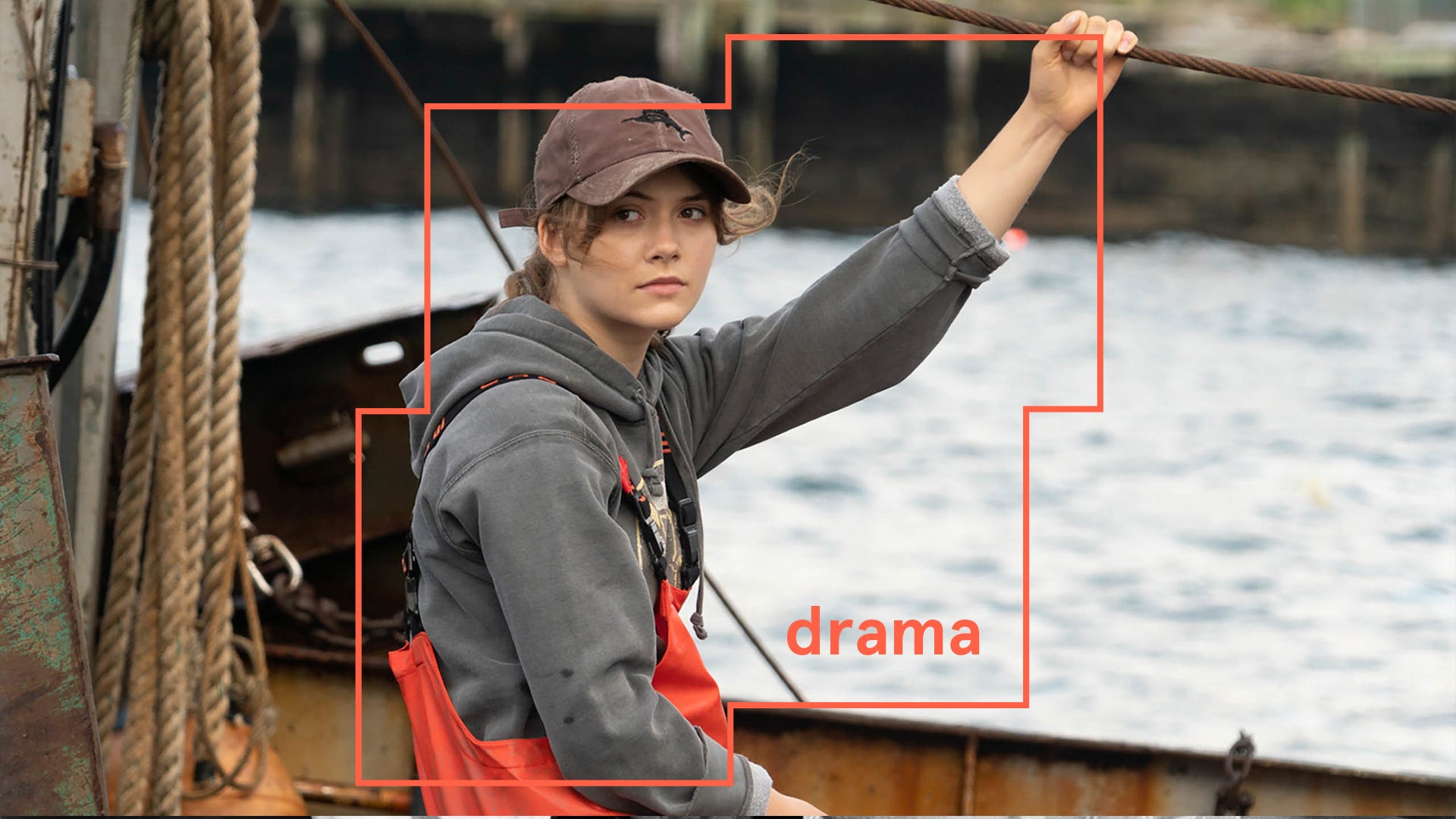
Chloé Zhao makesNomadland‘s melancholic but hopeful story of nomads traversing the American West a stunningly complex character study of life on the margins of society.
💌 Sign up for our weekly email newsletter with movie recommendations available to stream.
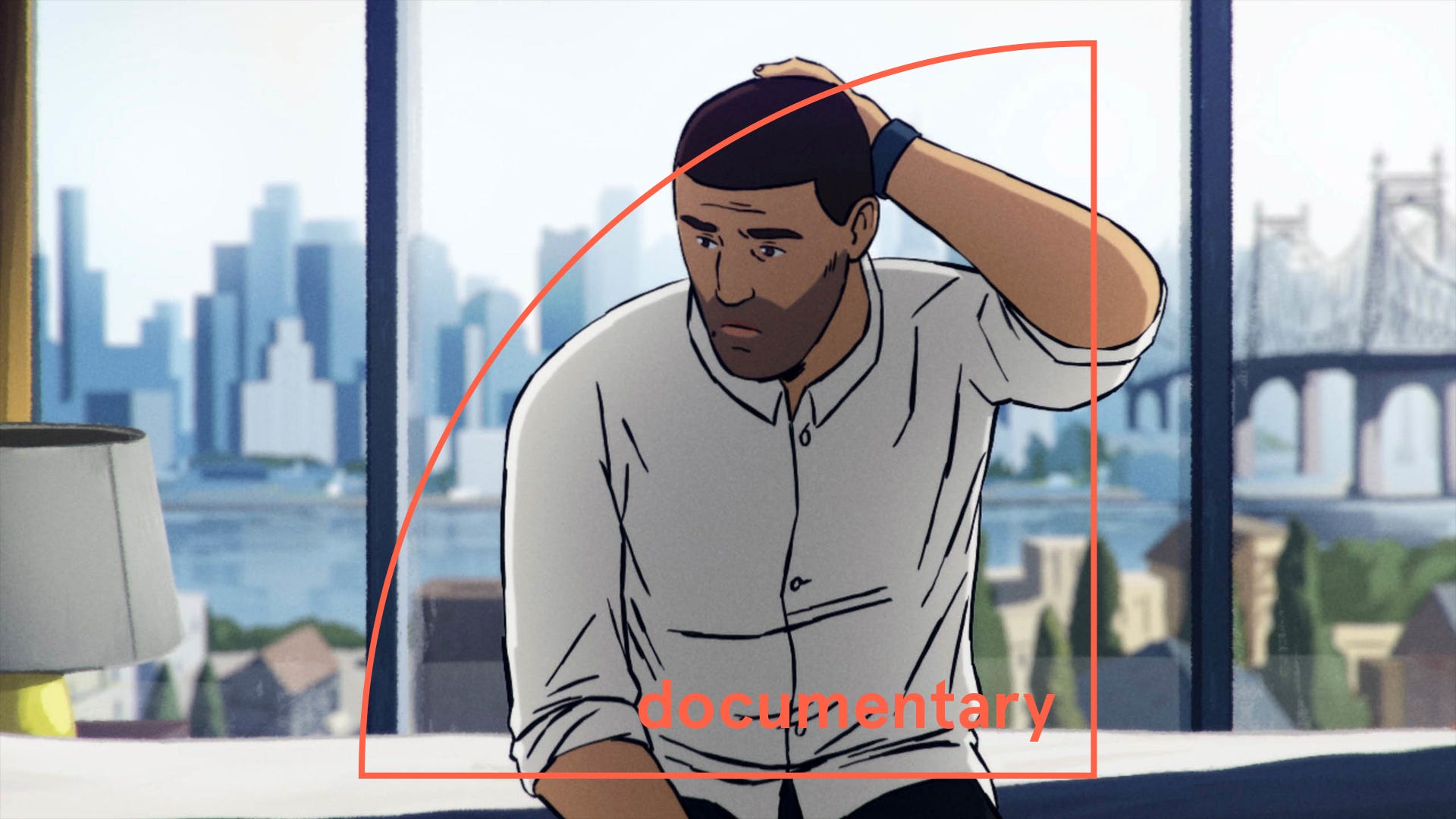
Flee follows an Afghan refugee’s journey with his family to find safety in Europe. Years later he recounts the story to a friend who documents the story through animation.
Flee is a great argument for animation’s place in documentary filmmaking. Though we’ve seen refugee stories before, this one is specific and intimate. Filled with nuances about trauma, sexuality, and finding home. An emotional, visceral, and ultimately cathartic experience.
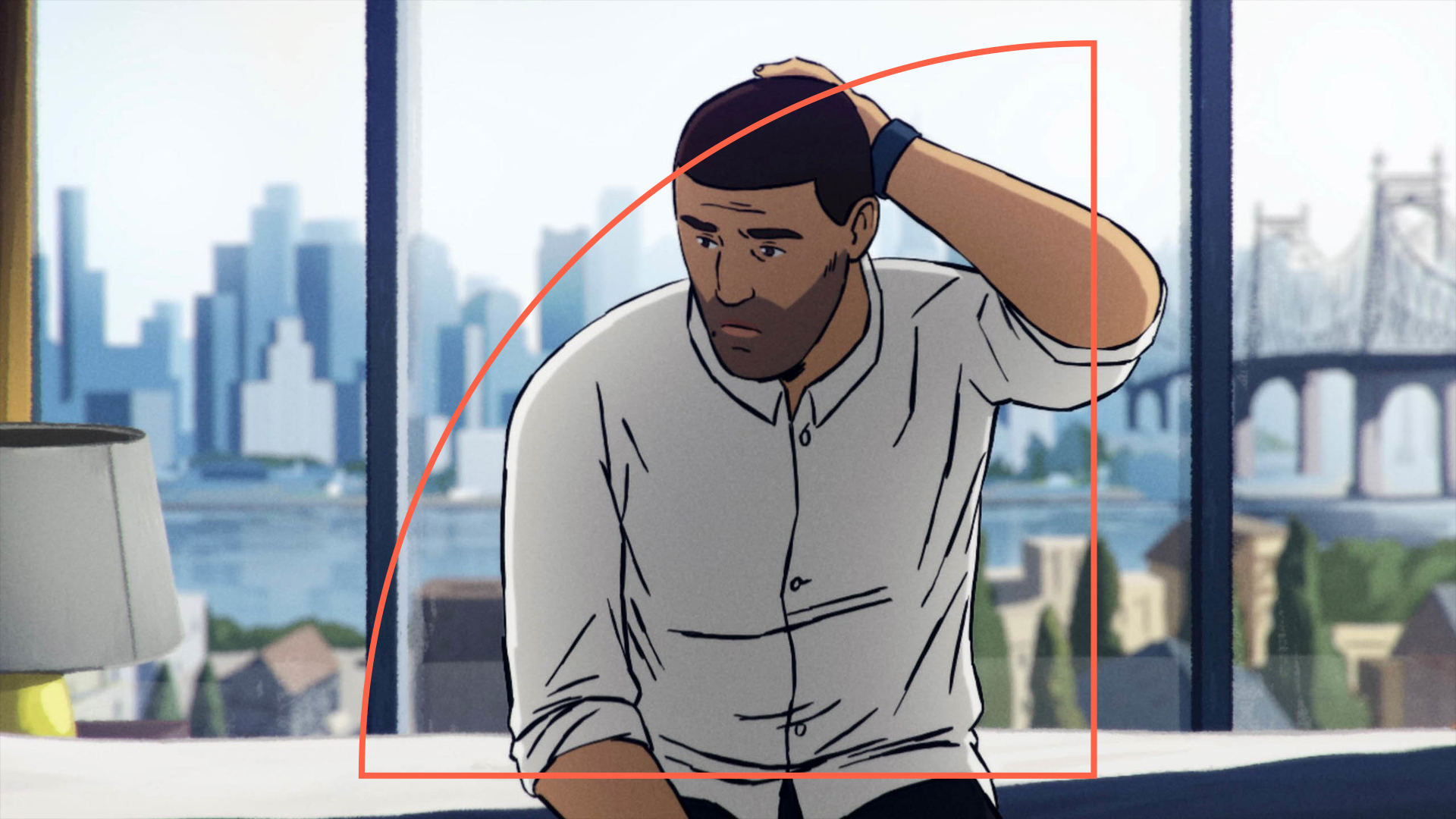
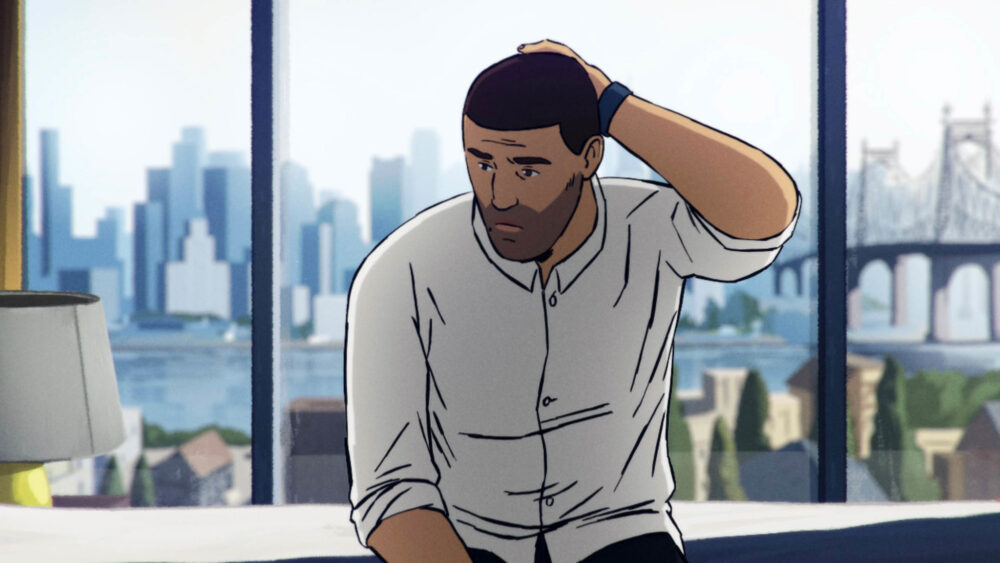
At the start of Flee, which premiered in the World Documentary section of the 2021 Sundance Film Festival, we watch a man lie back in a bed. We see him from a bird’s eye view. He’s animated, but something about the animation tells us that this is drawn from life. Offscreen we hear director Jonas Poher Rasmussen ask the man, “what does the word ‘home’ mean to you?”
At that, the man, Amin, begins to transport us back to 1984 Kabul, Afghanistan. As he describes the place and time, the rough charcoal sketches morph into vivid colors as we meet his family. He begins to talk about them — his mother, father, brother, and sisters. However, he quickly cuts off the interview saying, “it’s my past. I can’t run away from it. I don’t want to.” But he can’t continue, which Rasmussen understands.
That’s because Rasmussen, we learn, is old school mates with Amin. He describes seeing him on the train. He describes him in great detail. Decades later they’re still friends and Rasmussen has taken interest in telling Amin’s story of fleeing Kabul as the Taliban took control of the city and his journey to eventually settle in Denmark. And the way Rasmussen tells it is the way any other person would learn about their friends’ past. Flee feels like a story that you lie back in a bed and listen to with the storyteller right next to you — this quite literally happens.
This might be a good place to mention that the entire film is animated. That’s in large part to protect Amin’s privacy. At the same time, it allows us to see his memories, as fickle as they are like all memories, as he remembers them. Months later he sits back down to recount the story. And from there, Flee captures you and doesn’t let you go until it cuts to black.
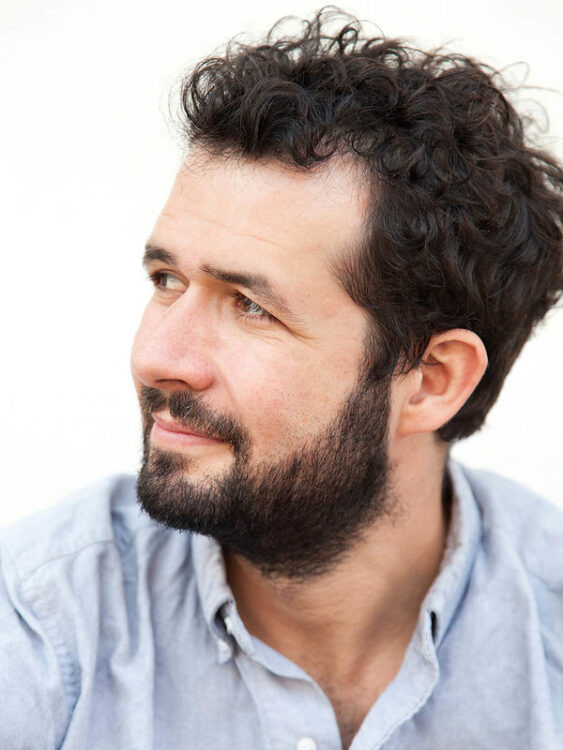
Jonas Poher Rasmussen, director of Flee, an official selection of the World Cinema Documentary Competition at the 2021 Sundance Film Festival. Courtesy of Sundance Institute | photo by Yann Bean.
There’s so much to unpack in Amin’s story, but I will leave that for you to uncover when you watch it. And I’m telling you now, watch it when it comes out — thankfully Neon has acquired the film for distribution (the first of the fest). Instead, I want to talk about what makes Flee so effective as a documentary.
Documentarians often find archival footage to piece together the story they’re trying to tell. They fill in the gaps with interviews or reenactments. Instead, Flee lets Amin tell the story. Rasmussen simply gives us a way to see it all unfold. Hearing Amin’s voice as it wavers, the animation often following his lead, makes the entire experience feel intimate. Like he’s telling it just to us.
Periodically, we’ll flip back to the present, which we also see in the same hand-drawn animation. It only heightens the intimacy. There are asides about how that past and trauma has shaped who Amin is now, especially his relationship with his partner Kasper, who hopes to move to the countryside with Amin. However, he can tell something is holding him back.
We learn through Amin’s story why he’s so hesitant to take the next step with Kasper. He doesn’t tell us, but we’re able to figure it out. In a gorgeous and poetic scene right before the end of the film, we watch Amin return home to Denmark in the present after a business trip. Kasper is off in the distance waiting for him in the busy airport. Amin stares from afar and says in voiceover, “even when you’re in a safe place, you’re on your guard.” Quickly, he adds, that maybe that’s something that needs to change.
Flee pushes the medium of documentary filmmaking forward by finding a way to get us to both sympathize and empathize with Amin’s feelings through our own experiences. It was almost a visceral experience. I experienced nothing close to the hardships Amin experienced as he tried to escape Afghanistan by way of Russia through human traffickers. However, the film’s intimate understanding of the story it was telling made it possible to find a way to apply his story to my own life. Even in a safe place, you’re on your guard. Maybe it is about time to change that.
West Side Story gets an update from Steven Spielberg with Rachel Ziegler and Ariana DeBose taking over the iconic roles of Anita and Maria in this classic musical
Steven Spielberg remakes the 1961 film West Side Story with (mostly) new stars, new screenplay, and a fresh take on the classic. Featuring star is born performances by Ariana DeBose and Rachel Ziegler, this new version may even surpass the original.
Steven Spielberg took on two daunting tasks with his version of West Side Story. First, as a remake of a movie many consider to be one of the best ever made — it also has ten Oscars to back it up. Second, as a movie musical. An art that many of tried and nearly just as many have failed at producing in our modern age (*head slowly turns to Dear Evan Hansen*). Yet somehow he succeeds on both fronts and simultaneously delivers his best movie in years.
The original 1961 film, which was co-directed by the director of the stage version Jerome Robbins, feels like it’s adapting a stage musical to the screen. The staging, even on the streets of New York, feels like musical staging in three dimensions. Spielberg has a grander vision for his new version. Rather than feeling tied to one “stage,” Spielberg allows numbers to cut and move and take up the entire world rather than just one small part of it.
ADVERTISEMENT
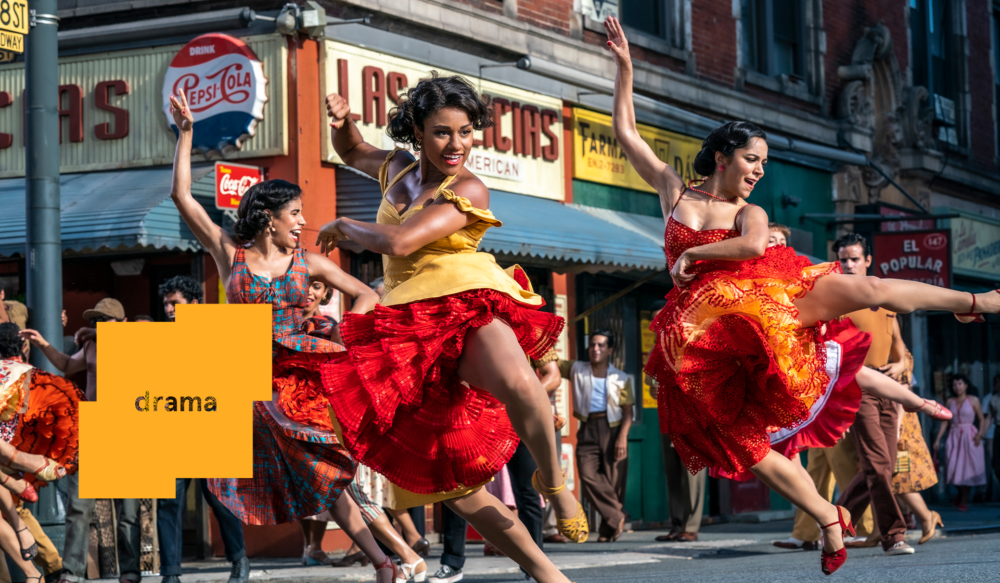
A perfect example is the restaged “America,” inarguably the most iconic song and number. In the original, Anita, played by Rita Moreno who returns in a new role in this version, dances on the rooftop along with the Sharks and their girls in choreography that honors Robbins’ original vision. The camera is simply there to caption the action.
In this new version, Anita takes to the streets. She weaves through the city, into traffic, through stores, surrounded by onlookers who are just as much a part of the number as the dancers. It’s a grand old Hollywood musical number elevated by the new cinematic language — the camera cuts and pans and stays ahead of the action as much as it follows it. It also helps that our new Anita Ariana DeBose delivers the number with as much, if not more, high-flying feisty energy as Moreno.
And that goes for the film as a whole. While the 1961 version is clean and polished, Spielberg infuses the story which much-needed grit that is appropriate for 50s era New York. The new sensual and dark energy makes this tragedy all the more tragic while still maintaining the hyper-stylized magic needed of a musical.
ADVERTISEMENT
Spielberg uses moments of surrealism like the lights dimming when Maria and Tony lock eyes for the first time in a way that blurs movie and musical without completely alienating those who might be more musical-averse in the audience. However, that doesn’t mean he shies away from extravagant over-the-top musical numbers. His staging of “Office Krupke,” which always felt like a dead spot in the original, feels like an intricate Broadway staging.
You’ll notice that I almost went through this entire review without talking about the leads of the story, but that’s because Maria and Tony have always been the least interesting part of West Side Story. However, Kushner’s screenplay recenters the story on Maria in a way that makes us buy the relationship. It helps that newcomer Rachel Ziegler gives a shining star is born performance despite her less-than-stellar costar.
West Side Story is a classic and depending on who you ask classics should not and cannot be touched. Spielberg and Kushner said, “hold my beer.” This revamped version proves that you can have reverence for your source material while updating with new cinematic sensibilities to create something that stands entirely on its own.
Paul Thomas Anderson’s Licorice Pizza, a coming-of-age comedy starring Alana Haim, follows two young people in the 70s trying to find their key to success
Licorice Pizza is an irresistably charming comedy romp through the 70s through the eyes of two charismatic young people looking for an outlet for their energy.
Without fail the second a Paul Thomas Anderson movie ends I’m filled with an odd sense of sadness. Sadness that I won’t be able to hang out with his characters anymore. That I won’t be able to live in their world anymore. And yes, I even felt it with There Will Be Blood.
However, his newest film Licorice Pizza has more in common with Boogie Nights than much of his recent work — both are set in the 70s and feature a comedic cast of characters. But even that comparison isn’t perfect. Even in his lighter movies PTA often finds darkness in our existence. Licorice Pizza, however, is almost completely made of joy.
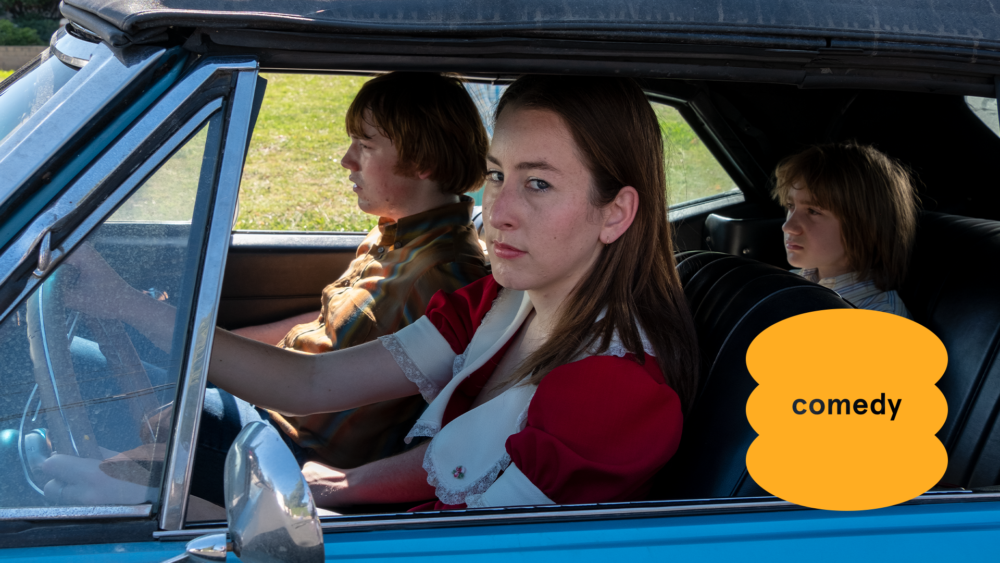
When Gary Valentine (Cooper Hoffman) meets Alana Kane (Alana Haim, of the band Haim, in her film debut) it’s clear that they’ve each met their match. What Gary, who is a mature-seeming 15-year-old, and Alana, a lost 25-year-old, have in common is that they have too much energy and natural charisma without an outlet for it.
ADVERTISEMENT
Throughout the movie, people seem inexplicably drawn to them. In one of the more ridiculous scenes in a film full of them, an actor (Sean Penn) invites Alana for drinks after an audition where he spews nonsense about the Korean war and attempts a motorcycle stunt from one of his old movies — with Alana in tow… kind of. He suavely cheeks, “you remind me of Grace.” Referring to his former co-star Grace Kelly.
The rest of the movie is just a greatest hits reel of those scenes, each of which works on their own but especially as a study of two people experimenting with their lives until they find meaning. Plotless movies sometimes end up being a chore to get to, but this is Paul Thomas Anderson. He knows exactly what buttons to hit and when.
In recent years, PTA has been leaning into character studies about difficult men with complex plots that frankly challenge the viewer into sticking with it. Think The Master or Phantom Thread. So it’s a wonder that Licorice Pizza is simply a hangout movie made for an easy watching experience.
As Alana begins to find success in various places, the pure lunacy of each scene heightens. When Gary’s new scheme at success is selling water beds, Alana takes his note of being sexier on sales calls a little too literally. After purring into the phone and promising to come over to “personally install” the mattress she quips to Gary, “if you say you want it more sexy, I’ll make it f-cking horny.”
ADVERTISEMENT
Lines like that easily make this PTA’s funniest movie, perhaps even his first broad comedy. That makes it the perfect movie for his wife comedy legend Maya Rudolph to make her first appearance in. Even more fitting for her to welcome a comedy star in the making.
Alana Haim, who is making her film debut along with her sisters and bandmates Este and Danielle (and their parents), steals every single frame of the movie with her perfectly delivered one-liners — I haven’t laughed harder this year than when she screamed, “you’re a f-cking Jew!” — and her subtly expressive face that just oozes disappointment at Gary’s shenanigans.
Like Quentin Tarantino’s Once Upon a Hollywood or Richard Linklater’s Everybody Wants Some, Licorice Pizza is about faithfully recreating its time period. Not just the aesthetic, but the mood. The word transportive is used too often, but it really feels like PTA picks you up and drops you into this world where you can revel in the delight of hanging out for two hours. In that simplicity, PTA has found greatness.
Brooklyn Horror Film Festival’s When I Consume You follows a brother and sister living in Brooklyn who must face down an insidious evil stalking them
When I Consume You is the exact kind of indie horror I love to watch. Deeply personal, smartly crafted together, and full of the entire cast and crew’s heart.
A poetic and meditative supernatural thriller that twists in horror elements to tell its profound narrative about second chances, family, and trauma.
There’s a lot to admire about Perry Blackshear’s third feature When I Consume You, which premiered at the Sixth Annual Brooklyn Horror Film Festival, but nothing more than its sheer ambition. The Greenpoint, Brooklyn-set horror is a supernatural tale, action thriller, and family drama all wrapped into a polished arthouse package that is immersive and deeply felt. And although its ambition gets away from Blackshear at times, its heart — both figuratively and literally — is on display.
At the center of When I Consume You are Wilson (Evan Dumouchel) and Daphne (Libby Ewing), siblings who like all of us are in the process of figuring it all out. And as someone who has never lived more than a few blocks away from his sister in New York, this was particularly relatable for me. Daphne is a little further along in her journey than Wilson whose severe anxiety from their rocky childhood has prevented him from turning his janitorial job into something more. Daphne, on the other hand, has been able to turn her life around — until something stops her dead in her tracks.
ADVERTISEMENT
When I Consume You is a generational curse movie in the vein of Hereditarywhere real-life human trauma is brought into the supernatural. Blackshear doesn’t shy away from the movie’s genre elements — the movie opens with Daphne throwing up blood into the sink before pulling out a tooth — but instead of a horror movie with elements of a family drama, he steers this towards a family drama with horror elements. Which makes its second and third act twists land with great effect.
⚠️ Slight spoilers ahead
After getting to know Daphne and her deep relationship with Wilson, he discovers her dead in her apartment of an apparent overdose. However, after seeing a figure fleeing the scene with superhuman agility, he becomes certain that she was murdered and vows to find her killer. However, this isn’t the last we see of Daphne as she returns as a ghost to help Wilson track down her killer. In his quest, he encounters a cop (MacLeod Andrews) who is not what he seems and uncovers a deep family secret that explains the ghostly occurrences happening around him.
ADVERTISEMENT
There’s some narrative muddiness that makes the movie a little difficult to follow, though that’s also part of its charm. While the movie’s wavelength is sometimes hard to latch onto, its light hand when it comes to explaining its lore is appreciated. There’s a poetic quality to its rhythm that lands it squarely between arthouse and something broader.
For a low-budget indie shot over three weeks on location in Greenpoint, as Blackshear pointed out in a post-screening Q&A, it is impressive how effective its action and horror elements are. He has full control of an atmosphere that is as melancholic and isolating as New York could be in the winter. Plus the trio of main performances from Dumouchel, Ewing, and Andrews are dynamic, well-realized, and lived-in. When I Consume You is the exact kind of indie horror I love to watch. Deeply personal, smartly crafted together, and full of the entire cast and crew’s heart.
The Toronto International Film Festival is in full swing. Here is a round up of quick reviews for thrillers playing the fest.
Read all of my reviews, including full-length reviews, from the fest here!
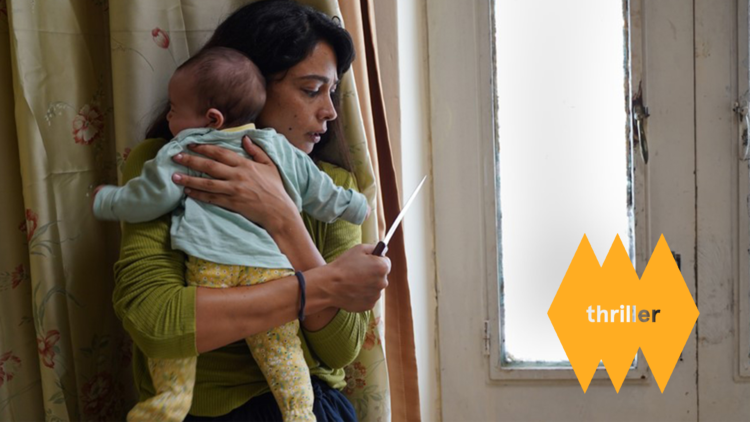
Hany Abu-Assad’s Huda’s Salon. Courtesy of TIFF.
Huda’s Salon
As someone who both writes and consumes film criticism, there is nothing I hate more than hearing, “well, you just have to watch it.” However, there is so little I can divulge about the plot of Huda’s Salon, a new film by Palestinian director Hany Abu-Assad,without spoiling the fun that I have to tell you you just have to watch it. But I promise that you’ll thank me for my discretion
The opening scene plays out in a single long take as Huda (Manal Awad) does Reem’s (Maisa Abd Elhadi). The women discuss the latest gossip, complain about the men in their lives, and bond over the difficulty of motherhood. Then something happens. Something you don’t see coming and that will set off a cascading series of events that puts each of the characters in a pressure cooker that is just waiting to burst.
Abu-Assad allows the story to speak for itself rather than making any specific statements about life under occupation. The pure anxiety of the film is enough to tell you what it’s like. The movie struggles with the dichotomy of living in a place where you’re damned if you do and damned if you don’t. Whether it’s being a patriot or being a martyr. It plays like a 70s espionage thriller with a Hitchcockian twist as the plot unravels.
Perfectly crafted and shot from beginning to end and full of terrific performances, but particularly Maisa Abd Elhadi, Huda’s Salon had me holding my breath from beginning to end.
ADVERTISEMENT
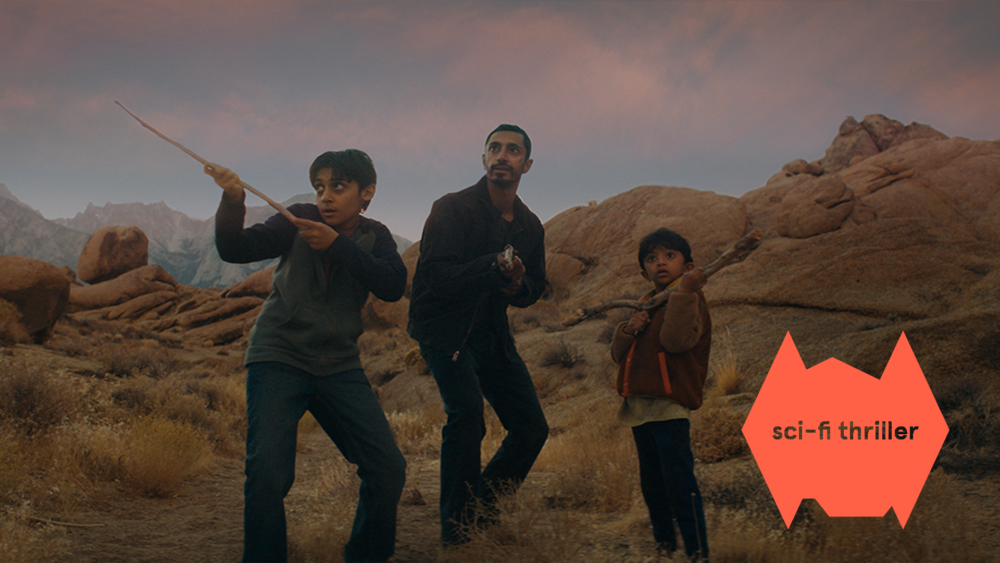
Michael Pearce’s Encounter, which premiered at the 2021 Toronto International Film Festival. Courtesy of TIFF.
Encounter
Riz Ahmed, following his Oscar-nominated turn in Sound of Metal, proves again that he is one of the best actors of his generation in Michael Pearce’s Encounter. The sci-fi thriller follows Malik Khan (Ahmed), a marine veteran and father, who goes on a mission to rescue his sons after he becomes convinced that an alien invasion of bugs is controlling people leading them to become violent.
The beauty of Encounter is that it doesn’t intend to trick you. It’s easy enough to solve exactly what is going before it reveals it to you. Instead, it’s more interested in Ahmed’s Malik and his struggle with PTSD and his relationship with his two sons (Aditya Geddada & Lucian-River Chauhan). With that storyline, the movie finds surprising emotional depths as the older of the two boys struggles with his perception of his father.
However, the movie is formulaic and a subplot featuring Octavia Spencer as a parole officer takes a lot of steam out of the father/son relationship story that fuels the movie. It’s unfortunate considering Pearce’s direction is confident and systematically builds up tension around the mystery as different situations create cracks in Malik’s carefully structured world and the boys a reason to fear their father.
There is value in the film once you wade through the predictable plot. If anything, come for another terrific Riz Ahmed performance.
ADVERTISEMENT
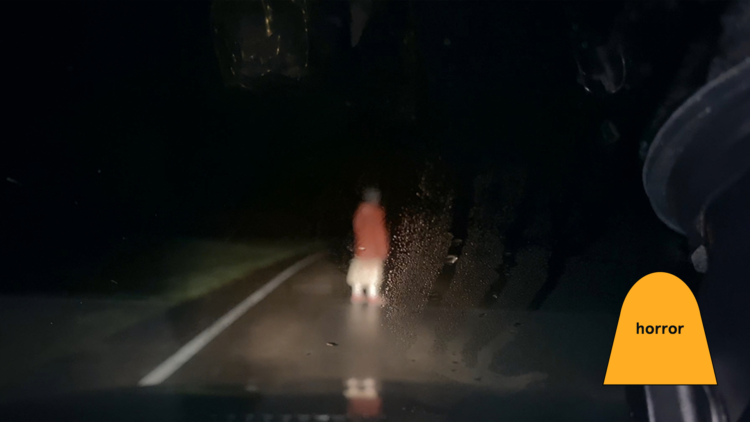
DASHCAM
Rob Savage’s DASHCAM, which premiered in the Midnight Madness section of the 2021 Toronto International Film Festival. Courtesy of TIFF.
Director Rob Savage brought the world its first, and to date best, pandemic-era film with his computer screen horror Host. The brilliance of that film is that it took place where our world is currently taking place: on screens and on Zoom, more specifically. Though computer screen films aren’t new, Host is the first to feel like it didn’t have to stretch the medium to its absolute max to work – something that his new film DASHCAM has to do and more.
Our protagonist — if you could call her that — is Annie Hardy a Los Angeles-based musician who is supporting herself during the pandemic by live-streaming from her car freestyling for tips. This is the medium through which we see the movie. Annie doesn’t hide her Covid skepticism or MAGA-supporting tendencies from her viewers, some of whom support her and some vehemently hate-watch her as we see from the live chat that remains in the corner of the frame for most of the film. Hardy, who is playing an over-the-top version of herself and hosts a show called “Band Car,” is crass, rude, and unafraid to voice her opposition to restrictions and etiquette around the pandemic.
Looking to escape the “madness of America,” she hops a flight across the Atlantic to London where she intends to stay with her musician friend Stretch (Amar Chadha-Patel). He is none too happy about her presence, especially when she steals his car and ends up in an empty restaurant where she is asked to bring an elderly woman called Angela (Angela Enahoro) to another location. However, after defecating on herself and then attacking a woman who seems to be looking for her, it becomes clear that Angela may not be entirely human.
From there, DASHCAM becomes a dizzying found footage horror with scenes reminiscent of The Blair Witch Project as Annie and Stretch try to stave off attacks by Angela and the woman after her. And while the horror and gore are repetitive — we have more than one fake-out death involving the same person — it at the very least delivers the kinds of thrills and chills that you’re looking for in this kind of movie. However, through it all, it feels like Annie seems to be trying out material for her Netflix standup special. Her brand of combative libertarianism slowly becomes more grating than funny and the film’s genre inventiveness wears off. As a subversion of the found-footage monster movie DASHCAM is rough around the edges, but works. Whenever it tries to be something more it makes me want to log off.
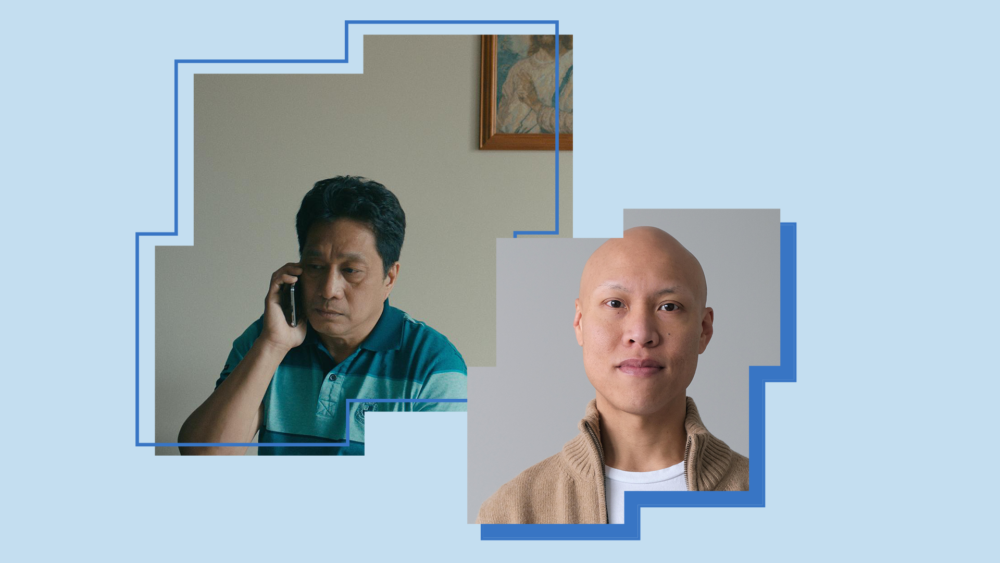
Director and writer Martin Edralin talks about his new film Islands, which is premiering in the narrative feature competition at the 2021 Online SXSW Film Festival
As I was perusing the lineup for the 2021 Online SXSW Film Festival one film, in particular, caught my eye. Martin Edralin’s Islands had a logline that immediately captured my attention with one word: Filipino. As a Filipino-American, it was a visceral experience to see my race so unabashedly showcased in a film premiering at a major festival. But that wasn’t even something that directorand writerMartin Edralin had thought about.
“It seems like there’s a movement in the US with foreign language right now, so it’s really interesting timing,” he told to me in an interview the week before the film premieres on Tuesday, March 16th.
In our chat, we talked about how Filipino culture shaped the film, how it relates to his great short film Hole, and how it was working with two non-professional actors in the lead roles.
Note: This interview has been edited and condensed.
Martin Edralin, director of Islands, premiering at the 2021 Online SXSW Film Festival. Credit: Karen Tsang
Karl Delossantos (Smash Cut):I watched the film last night and I don’t know if I should thank you for the therapy or charge you for the emotional distress. It was terrific!
Martin Edralin: Oh, thank you!
This is the first film in Tagalog to premiere at SXSW and as a Filipino-American that was great to see. How does it feel to have that distinction?
It feels great! I had no idea. It wasn’t something I even thought about. I think it was after they accepted the film that I looked into it and noticed it. I didn’t even know as a Canadian movie that we could be in the narrative competition. I thought it would be world cinema. It’s really exciting. It seems like there’s a movement in the US with foreign language right now, so it’s really interesting timing.
Yeah, especially coming off the heels of the Minari Golden Globe controversy where it was considered foreign language even though it’s an American film. The Filipino diaspora is at the center of Islands. What about that was interesting for you to explore?
That’s what I lived. Originally this was going to be made in the Philippines. Because of some funding in the development process that I qualified for I had to move it to Canada. And in that process, I realized that yeah I’m Filipino but I don’t actually know what it’s like to live in the Philippines. I visited a few times, but being Filipino in Canada or the US is very different.
And it’s my first Filipino film too so there was an awareness in the process where I really know [the material]. Where in my other films with white characters I was telling stories about humans and emotions I’m familiar with, but for Islands we could really color it with the houses we know and the family relationships. It all feels so natural. Even though I was on set, when I watched the movie for the first time I could smell the food in the scenes.
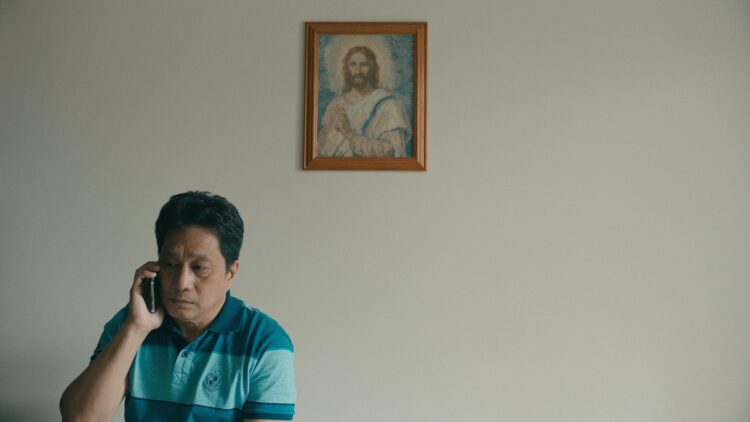
Joshua (Rogelio Bataglas) calls for help in Martin Edralin’s Islands | Credit: Film still
ADVERTISEMENT
Watching the opening scene was such a visceral experience for me because it was these artifacts of my childhood that I recognized. The one that really got to me was chopping the whole raw chicken with the cleaver!
Exactly! It’s little things like that. We know those sounds.
The theme of Islands is actually pretty similar to your short film Hole in that it’s about intimacy and someone trying to find it and they’re unable to.
It’s something I didn’t really realize until I was writing it or filming it that it was kind of like a follow-up. [Both films] have lead characters that are past their “prime dating years” and aren’t going to have an experience of love or sex or any real human connection.
Yeah, they’re definitely similar in that way. How did you find Rogelio Balagtas [Josua in Islands]? He and Sheila Lotuaco [Marisol in Islands] are both remarkable.
We went out to the community and we went on Facebook and I emailed every Filipino organization I could find in Canada and eventually we went to the US and the Philippines. We just really had to find the right people. With Rogelio, someone told me about a short that was made in Winnipeg and I saw him in it. He was a dad, it wasn’t the lead role or anything and he barely spoke, but there was something interesting about him.
So we asked him to self-tape and there was still just something about him. So we did a Skype audition, which was super fun because we did a few dialogue scenes but it was really about him doing things without dialogue. So we made him dance in a room by himself and cry into a pillow and pretend to masturbate and we were like wow this is the guy. Because we didn’t want the character to be sad or pathetic. We didn’t want him to masturbate and have it be seen as gross. And he’s just a sweet guy. He’s a nice guy.
Another connection with Hole where sexuality isn’t a taboo and it’s embraced and seen as a part of human life.
Yes! And especially with masturbation with men. It’s always portrayed as something as gross or bad or wrong unlike with women where it’s hypersexualized. I just felt like that’s just what everybody does.
I’m glad you mentioned too that you had Rogelio dance in his audition because I was texting my parents while watching it that line dancing is a plot device, which is so Filipino! Was that a part of the fabric of the film?
I don’t actually remember. I have a feeling that it was during casting when we were looking for senior actors — and they’re always difficult in any ethnicity to find. And I knew there were a lot of these line dancing classes out there — my mom actually goes to one — and there was one in particular that was four-hours long. The first time I went there I was almost moved to tears. It was so beautiful to see all these people that are old and some could barely dance, but they were there and doing this thing together.
💌 Sign up for our weekly email newsletter with movie recommendations available to stream.
ADVERTISEMENT
I love that the ability to dance alone is seen as something liberating in the film.
Yeah liberating and thinking of it as pleasure. It’s something we take for granted, the ability to move and to move to music. Thinking about love or sex, it’s just one of those things where it’s joy that needs to be experienced.
I want to talk about Sheila Lotuaco and the watershed scene in the middle of the film where she talks about her experience working abroad as a Filipino expatriate.What was it like shooting that scene?
That scene was made very early. This film was originally about that character, an overseas Filipino worker. It was becoming muddled and felt like two different stories so that script is away in a drawer somewhere. I did a lot of research about the OFW (Overseas Filipino Worker) experience and just read a lot of horror stories about these things happening in the Middle East and I felt like I had to keep that in the movie and say something about it.
I actually thought shooting it was going to be really challenging, but she was a natural. Even in the audition and in rehearsals, she would just cry. Actually both actors when we were rehearsing they would just cry. And I would be like, “you’re not even professional actors!” But they could really just live the experience.
And Sheila is a caregiver [like in the film], she’s a healthcare worker in Canada so it’s a little different than what other OFWs are doing around the world, but it was something important we had to say.
ADVERTISEMENT
We’ve all been thinking about mortality a lot with the pandemic. How did the entire story of Joshua bearing the burden of taking care of his aging parents come together?
My mom had just retired at the time in 2015 when I had just started thinking about the film, and my dad was on his way to retiring. And you hear these stories about how after someone retires they start to get old really fast from the inactivity or not using their brains in the same way. So I was thinking about that. As you know in Filipino culture we take care of our parents and I have a lot of South Asian friends who also have these multigenerational households where you’re taking care of your parents and they’re taking care of your kids, so I was also thinking about that.
Living a freelance filmmaker life with a busy schedule and whether you’re being paid well one month or paid at all the next month, how do you in this sort of life take care of your parents?
Yeah, it’s a distinction between American and Asian culture. It’s always something in the back of your mind: how do you live your life and also take care of them?
I almost feel guilty thinking about how am I going to do this. In the Philippines it isn’t even a question. It’s just something you do, it’s a part of life.
For an audience that is not familiar with the Filipino experience, what do you want them to take away from the film?
There was never really any intention of putting our culture on display, but we were certainly looking to decorate the film with it — in the production design and including line dancing and religion, how we mourn, our food. It’s all in there. We wanted to show what’s it like to be in a Filipino home.
The film was going to be quite dark. Hole and other shorts I’ve done are slower and there’s almost no levity whereas with Islands there are touches of dry humor and it’s brighter and more colorful overall. But if anyone is going to take anything from it, and I’m going to get a little dark, but we’re all aging and we’re all going to lose everybody in our lives and eventually we’re going to leave. I was thinking a lot about avoiding regret and experience these things whether it’s love or dance. We should just enjoy and experience the things we can while we can and take chances and if you life someone you should just ask them, maybe not if they’re your cousin *laughs* but yeah, just live.
Islands is premiering on Tuesday, March 16thduring the 2021 SXSW film festival. Visit sxsw.com to register.
💌 Sign up for our weekly email newsletter with movie recommendations available to stream.
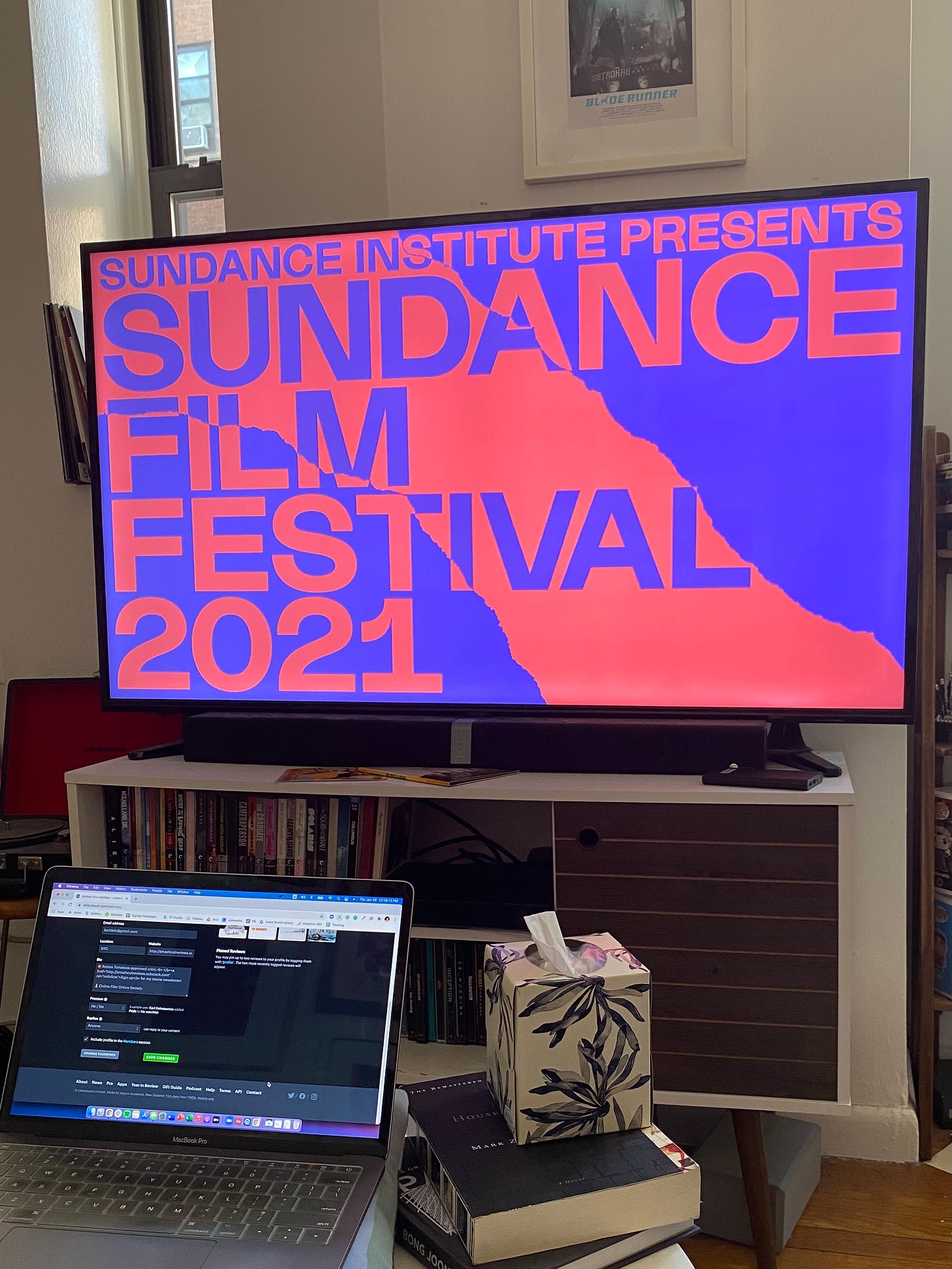
The 2021 Sundance Film Festival went from the mountains of Park City, Utah to my living room. Here’s what the experience was like.
This post about the 2021 Sundance Film Festival first appeared in my newsletter! Sign up here.
I was fortunate enough to be invited back to cover the 2021 Sundance Film Festival, the first major fest of the year. 19 movies. 4 hours of sleep. 1 couch. Here’s how it went:
Virtual Park City, UT (aka my living room)
The experience
Last year, I was on a snowy mountaintop in Park City, Utah lacking sleep, hungry from skipping meals, and battling minor altitude sickness as I trudged through snow and ice-covered sidewalks to watch movies that may never be seen by the public. I loved every minute of it.
And while this year’s Sundance Film Festival was held virtually so that I could enjoy it from the comfort of my own couch, there was still a sense of anticipation largely thanks to clever work from the Sundance Institute to mimic the experience of the festival itself.
Part of the fun — and frustration — of any festival is taking bets on the right film to see. There were still screening blocks that forced you to pick between films and limited “seats” available for premieres. However, this time if you weren’t feeling a movie and wanted to start another you didn’t have to change theaters. It took two clicks.
Each film was still started with a slightly awkward introduction from a programmer and the filmmaker before we were treated to a beautiful homage to the Indigenous people and the land where Sundance usually takes place. But missing were the interactions with the hoards of volunteers that often were the best part of the fest.
However, what I did miss was the in-person aspect. Interacting with other critics and bloggers while waiting to get into the theater or finally finding a moment of peace to write in the corner of a hotel or the anticipation of maybe getting into a premiere if it had open space. My couch is still no Park City, especially when the buzzer from my food delivery can take you out of even the most engrossing film.
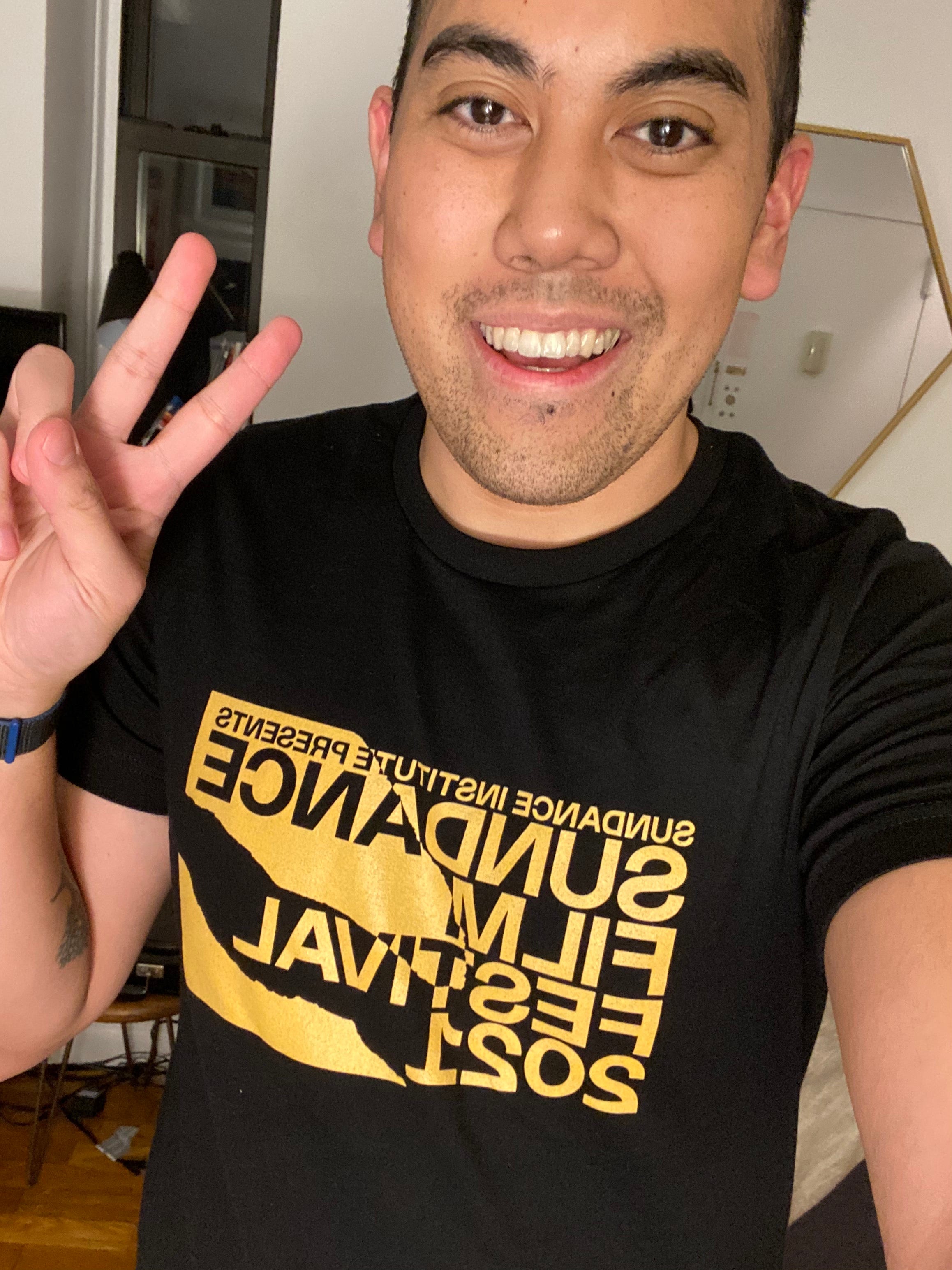
New year, new fest, new shirt
The films + acquisitions
There were certainly less buzzy films at this year’s fest, which was a blessing and a curse. Coming into the festival the only large centerpiece film was Judas and the Black Messiah, which we’ll get to. Fewer films came in with distribution meaning more chances to be surprised — and disappointed.
And even though there were more films available for acquisitions, there were few with one huge exception. Coda was acquired by Apple TV+, after a bidding war with Netflix and Amazon, for a record-breaking $25 million — it bested last year’s Palm Springs which broke the previous record with $22.5 million.
Usual streaming players like Netflix, Amazon, and Hulu were largely absent while indie studio A24, perhaps the most successful studio when it comes to Sundance, didn’t show or acquire anything at the fest. Though Neon, hot on their tails as always, acquired three documentaries and premiered one film.
Compared to last year, which may have just been my first-time glow, this year’s slate felt minor by comparison. I came away last year loving a few films, this year I loved a couple and admired a few. Surely there were fewer submissions and fewer studios willing to premiere a film when they’d be unable to show it in theaters, so the programming team did the best with what they had. Here were my favorites:
Summer of Soul (…Or, When the Revolution Could Not Be Televised)
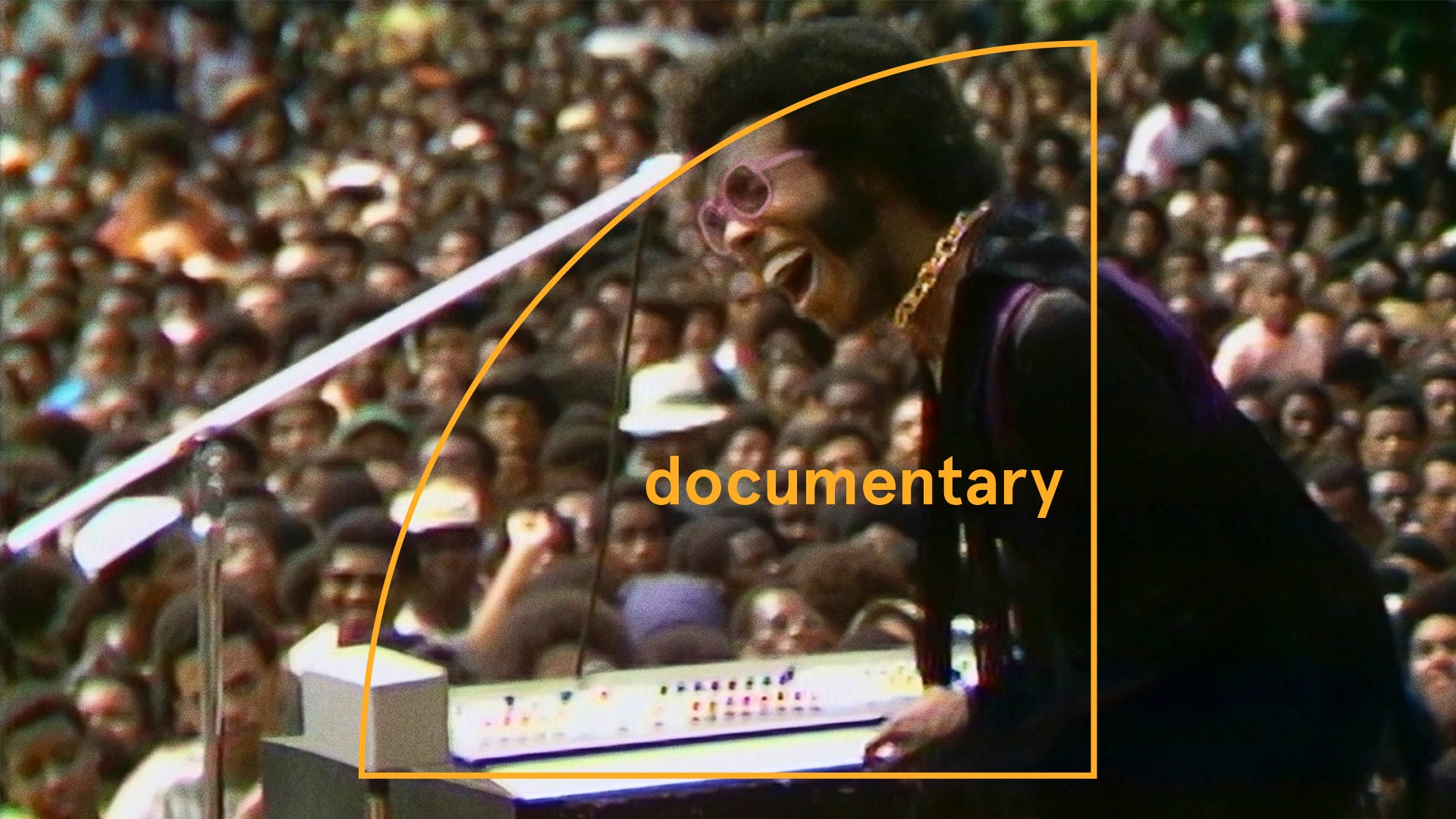
My final film of the fest and the best. Questlove’s Summer of Soul (…Or, When the Revolution Could Not Be Televised)is an archived look at the often forgotten Harlem Cultural Festival, a celebration of Black music and culture in the summer of 1969. Though it was often overshadowed by Woodstock, the festival was a watershed moment for the Black community. The movie is presented as a concert doc, except it uses the rhythm of each performance to underscore segments about the political and social environment happening around it — the various assassinations of the 60s, the Black Panther Party, etc. It’s a stunning, joyful, but enlightening doc of Black joy.
Where to watch it: The doc was acquired by Searchlight and Hulu for a record-breaking $12 million, the most for a documentary ever at a festival.
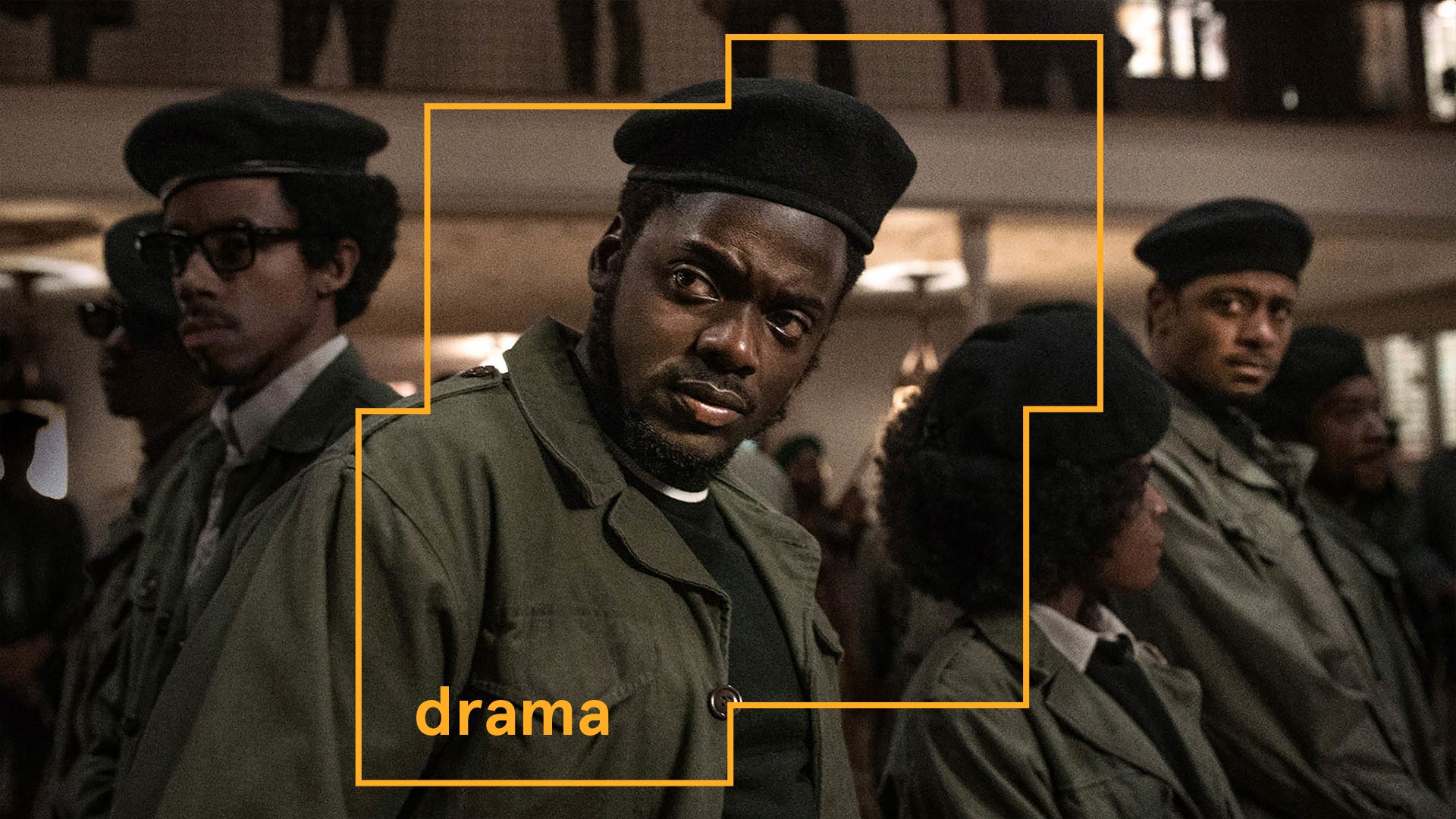
Judas and the Black Messiah
I won’t scoop myself here. More on this film next week…
Animation is an underutilized medium in documentary filmmaking, as Jonas Poher Rasmussen’s Flee clearly demonstrates. Rasmussen tells the story of his friend Amir — a pseudonym — about his life in Afghanistan, his escape to Russia as a refugee family during the Taliban’s occupation of Kabul, and how he found himself settled in Europe. To protect Amir’s identity, the film uses beautiful hand-drawn animation with bits of archival footage mixed in to give us an incredibly intimate look at Amir’s journey. However, what makes this documentary truly great is how it demonstrates how past trauma can affect your present life as Amir tries to move in with his boyfriend. [Full review]
Where to watch it: The doc was acquired by Neon. They’re looking to release it this year.
CODA
The first film that I enjoyed was the first one I saw: Sian Heder’s CODA. The film focuses on shy high schooler Ruby (breakout Emilia Jones), the only hearing member of a culturally deaf family consisting of Jackie (Oscar-winner Marlee Matlin), Frank (Troy Kotsur), and Leo (Daniel Durant), who joins the school choir to spend more time with her crush. However, after the choir director realizes her raw talent, he encourages her to apply to music school — forcing her to decide between staying with her family or following her dreams. It doesn’t break far out of the coming-of-age drama formula, but there are beautiful moments of direction that help you understand what it’s like to be deaf in a hearing world. [Full review]
Where to watch it: CODA was acquired by Apple TV+ for a record-shattering $25 million. Expect to see it streaming on the platform for next year’s award season.
Every movie I watched ranked
Summer of Soul (…Or, When the Revolution Could Not Be Televised)
💌 Sign up for our weekly email newsletter with movie recommendations available to stream.
ADVERTISEMENT
Chloé Zhao makesNomadland‘s melancholic but hopeful story of nomads traversing the American West a stunningly complex character study of life on the margins of society.
💌 Sign up for our weekly email newsletter with movie recommendations available to stream.
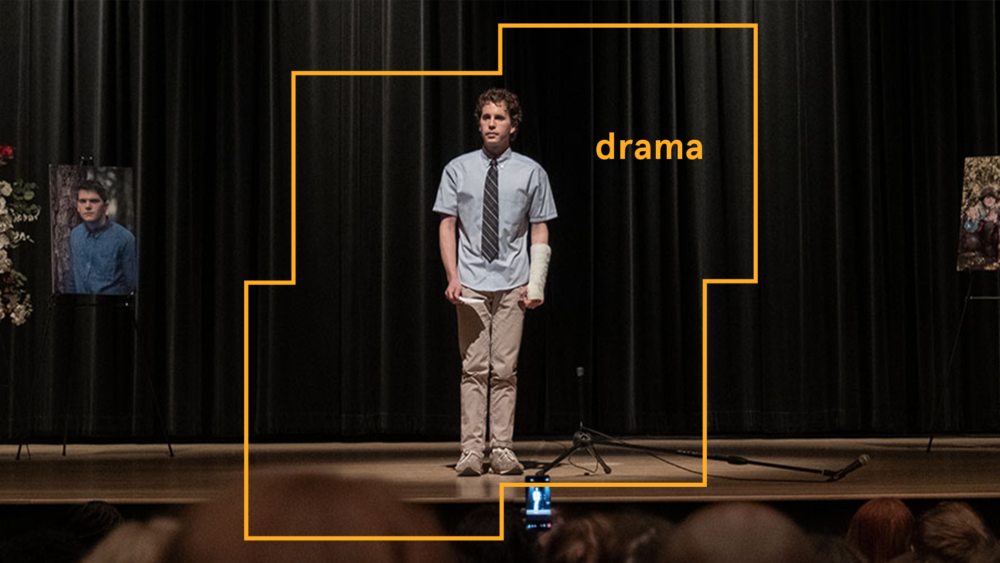
Dear Evan Hansen follows a high school senior with a social anxiety disorder who suddenly finds himself as the hero of his town after a student commits suicide
Undoubtedly one of the worst movie-musicals ever made. Overwrought and emotionless at the same time, insensitive towards trauma and mental illness, and out of touch with reality. Jail to everyone.
Dear Evan Hansen,
Today was not a good day because I was subjected to watching you.
Sincerely, Me
Usually I don’t like being mean about the films I don’t like. Also, I’m a firm believer that almost every film made with the best of intentions has some good you can derive from it. However, Dear Evan Hansen doesn’t sit right with me. At its root, it feels rotten. Like its intentions are misplaced or, given the benefit of the doubt, misunderstood. Director Stephen Chbosky, whose films The Perks of Being a Wallflower and Wonder I truly enjoy, was simply handed a bad project.
ADVERTISEMENT
The moviefollows Evan Hansen (played by Ben Platt), your typical high school senior with a social anxiety disorder who is tasked by his therapist to write a letter to himself every day. After a misunderstanding causes him to become the hero of his town following the suicide of his classmate Connor (Colton Ryan), Evan must continually expand his web of lies and keep all he has gained from the fallout.
This includes lying to Connor’s family (Amy Adams and Danny Pino) about being friends with their son, dating Connor’s sister (Kaitlyn Dever), working with Alana (Amandla Stenberg) on an entire organization and fundraiser honoring him. The list goes on and on. No one is safe from his deceit. The fact that this is a musical is confounding because watching Evan spin lie after lie in songs like “For Forever” and, even more maliciously, fabricate evidence in “Sincerely, Me” almost makes light of the damage his actions are bound to cause.
At this point, if you’re already asking yourself why this seemingly terrible human is the protagonist of the story then we are on the same page. The film, which is an adaptation of the Broadway musical of the same name featuring music by Oscar winners Benj Pasek and Justin Paul, was meant to “immortalize” 27-year-old Platt’s Tony-winning performance. However, Dear Evan Hansen seems to be a story that only worked in the thin period of time when it came out. It already feels dated — as does Platt’s hair.
💌 Sign up for our weekly email newsletter with movie recommendations available to stream.
ADVERTISEMENT
ADVERTISEMENT
Reportedly, changes were made in the adaptation to address some of the more polarizing issues with the story. If that’s the case, then I’d hate to see what was wrong with the musical. At its core, the musical is meant to preach that everyone is dealing with their own traumas whether it be depression, social anxiety, suicidal thoughts, insecurities, however it doesn’t take any time to actually explore the reality of those traumas. Instead, it’s a surface level assessment of them. Hollywood’s “glamourized” version where consequences don’t exist.
Because of its purely uninformed and disingenuous portrayal of mental illness — and apparent disregard of therapy — the movie feels overwrought and emotionless at the same time. It mines melodrama with no actual basis for it. It feels like the characters are just pawns in this power grab for sympathy. And while there is some good acting here — Julianne Moore, Amandla Stenberg, and Kaitlyn Dever, in particular — the rest of the cast feels like they’re in a competition of who can ugly cry the most.
Evan Hansen, whose actions throughout the film could only be described as monstrous, is meant to meet consequences at the end of the film and Connor is meant to be humanized. Instead, Evan’s behavior, which is harmful to the stigma around mental illness, is excused as a product of past trauma. Something the movie was supposedly supposed to fix. Or maybe, just maybe, this was a story we didn’t need to have told again.
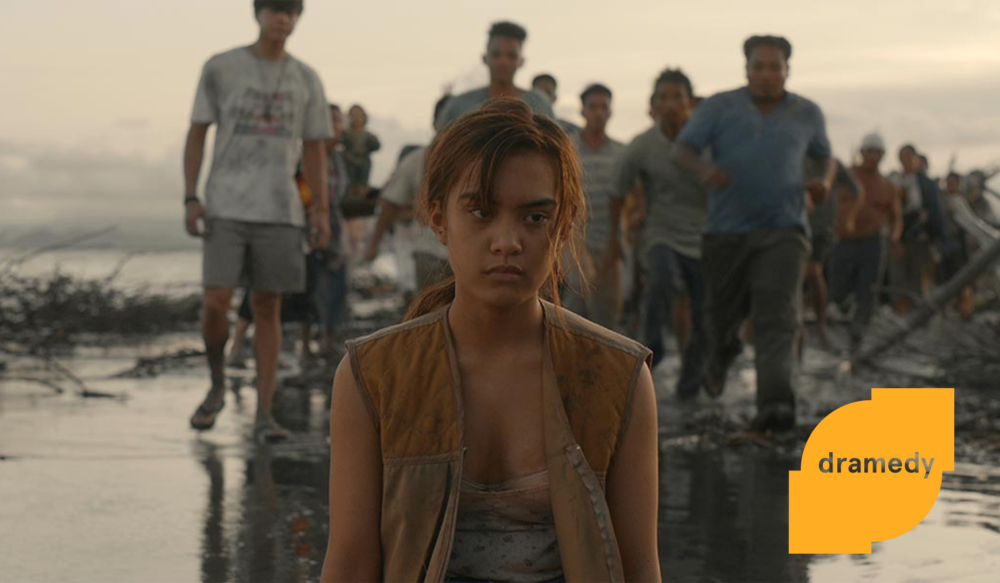
Filipino film Whether the Weather is Fine takes a quirky approach to its story of the aftermath of a Typhoon
Carlos Francisco Manatad’s Whether the Weather is Fine will surprise you with its melancholic surrealist drama and absurdist comedy approach to a real-life disaster and capture you with its heart.
Whether the Weather is Fine, which had its North American premiere at the 2021 Toronto International Film Festival, is perhaps the best indication that the Filipino film industry is alive and well. The film focuses on the City of Tacloban, Director Carlos Francisco Manatad’s hometown, amidst the aftermath of Typhoon Haiyan — it was one of the strongest tropical cyclones ever recorded and one of the deadliest. However, the first two shots of the film tell us that this isn’t going to be your standard disaster movie.
The first real shot of the movie is of a clear blue sky outlining the irony of beautiful weather following the destruction. The second shot introduces us to Miguel (Daniel Padilla doing terrific work), who inexplicably wakes up on the couch of a destroyed home. A few feet from him lies a corpse and from his pocket, he pulls out a fish. It’s that tongue-in-cheek tone that immediately sets Whether the Weather is Fine from any expectations you may have based on its premise.
ADVERTISEMENT
Eventually, Miguel finds his girlfriend Andrea (Rans Rifol) and his mother Norma (Charo Santos-Concio) amongst the destruction. With an eerie loudspeaker warning of an incoming second storm, the trio decides it’s time to move on. How each of them accomplishes that differs.
Manatad captures the dreamlike state victims of disaster find themselves in with magical realism. All senses are heightened. It’s like the world doesn’t entirely make sense. And that’s because it doesn’t — much like Joe Talbot’s terrific The Last Black Man in San Francisco. When something as life-altering as Typhoon Haiyan happens, what you once knew no longer applies.
Through it all, the film maintains a darkly comedic tone as each of the characters tries to find what they’re looking for — escape, a purpose, forgiveness. The increasingly surreal and bleak scenes — helping a dog leading one character to become the messiah, an impromptu song and dance — become set-dressing to the engrossing journey each of the characters goes on.
However, it’s in the moments of hope that Whether the Weather is Fine comes together. There are two musical sequences that highlight what the film ultimately trying to say. There’s something about the Filipino spirit that is unbreakable. Something as a Filipino-American I’ve always tried to capture. Manatad tells us that through all the absurdity of life, sometimes all you need is an escape. And sometimes that escape is breaking out into song.
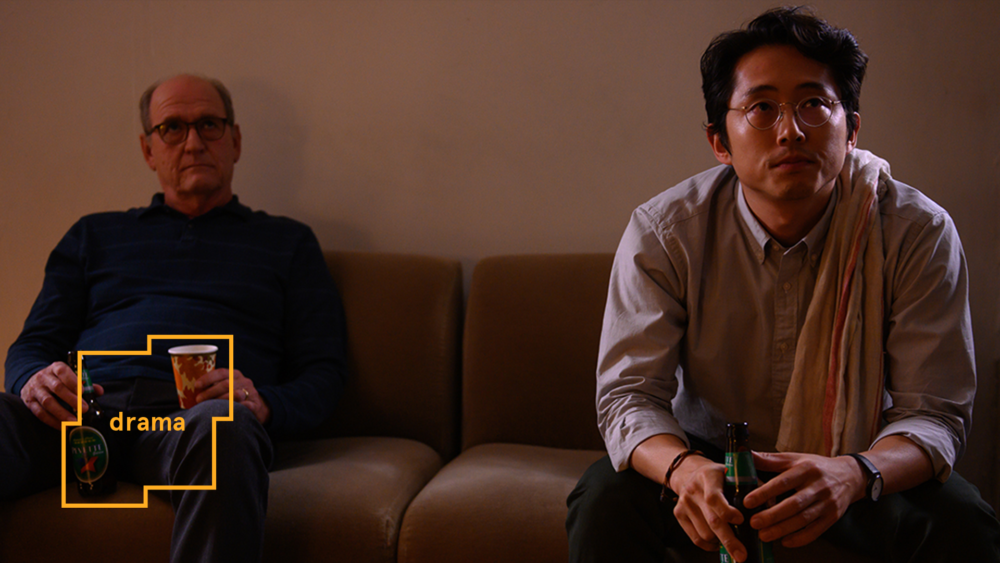
The Humans takes place over a single night as a family gathers in a lower Manhattan apartment for Thanksgiving — and that’s a horror.
The Humans is a terrifically acted New York City-set family drama that plays like a horror movie about existential dread and the figurative, and literal, claustrophobia of life… so the most East Coast movie I’ve ever seen. I want to watch it 100 times
The Humans, along with Florian Zeller’s The Father, might be one of the most exciting play-to-movie adaptations for its pure embrace of the cinematic language. Throughout the film, which is set in a two-floor New York City apartment in Chinatown, the bulbs in each of the rooms progressively go out. The space the characters inhabit is literally shrinking and they’re forced to face the darkness — and each other. The tension builds until the final bulb finally burns out and all that they’re left to see is what’s in their heads — existential dread, worry, regret. So, basically, the most New York movie ever made.
If that sounds like horror to you, then you’re right. Though the premise of the film, which Stephen Karam adapted from his play of the same name, isn’t one that lends itself to the genre it very much is. And it oddly inhabits a new subgenre of family drama horror along with films like Krisha or the recent Shiva Baby. It makes sense, though. What is more horrifying than facing the truth in front of people that you’ve known your whole life.
ADVERTISEMENT
Forgoing family tradition, the Blake family spends Thanksgiving in younger daughter Brigid (Beanie Feldstein) and her boyfriend Richard’s (Steven Yeun fresh off his Oscar nomination for Minari) new apartment in Lower Manhattan. For anyone who grew up outside New York — like yours truly (Jersey!) — and moved into the city, having your parents come to your apartment is a stressful experience.
Yes, this is a family drama and quasi horror, but it’s also a dark comedy that hilariously understands the intricacies of the family dynamic. Mom talks about the latest odd death that she heard about on Facebook (“Mom, you don’t have to tell me every time a lesbian kills herself,” says Amy Schumer as eldest daughter Aimee), Dad walks around the apartment finding things to fix and chastises Brigid for not telling the super. All the while, their grandmother Momo (June Squibb), who suffers from dementia, babbles on.
The camera lingers on the artifacts of New York City apartments that are so familiar — the odd water stains on the wall, clanking radiators, shoddy light fixtures. And of course, Brigid’s parents Deidre and Erik (Jayne Houdyshell and Richard Jenkins) notice every single detail. These artifacts are a part of the horror of the film. Like a hidden totem of the unspoken trauma occurring outside of the walls of the apartment. For people that live in the city, those things fade away. For everyone else, they’re all too apparent.
💌 Sign up for our weekly email newsletter with movie recommendations available to stream.
ADVERTISEMENT
There are other horror tropes that Karam uses to make you uneasy about what’s happening in The Humans. The camera creeps from around corners and frames characters with plenty of negative space around them. He tracks characters walking down the narrow halls and sometimes even includes a jump scare.
When stage plays are adapted to film you can often tell. There’s a certain cadence to the dialogue that feels just next to normal. And typically directors focus too closely on the dialogue. The Humans does the exact opposite. Dialogue happens in the background just out of the frame. Conversations are happening around the characters. We’ll focus on one of them and slowly close in. We see their reactions — or lack thereof — to what is going on around them.
But why is The Humans a horror? Why not just make it a family drama? I haven’t said much about the plot yet, but that’s because there really isn’t one. Each of the members of the family is dealing with their own issues — Aimee is dealing with a breakup, Erik is worried about finances — and the relationship dynamics that existed way before the movie began — how many of us could be a little nicer to our moms. But real life can be horrifying in that way. There’s nothing more horrifying than facing your own failures and the existential dread of life.
ADVERTISEMENT
As the night trudges on, revelations are made, arguments are had, and, of course, there are moments of familial bliss. In particular, Richard’s attempt to assimilate into the family is particularly hilarious, as anyone that has brought a significant other home could attest to. The movie maintains this tone dancing around drama and dark comedy as it explores the intricacies of the family dynamic and of being alive. It’d make a perfect companion piece to fellow New York City-set dramedy The Daytrippers.
This is one of those films that I have difficulty talking about because the reason it works is so personal. You can pick out moments of relatability — both positive and negative — throughout the film and with every character. It’s an incredibly humane film that begs for empathy for its characters. You feel like you get to know them as well as your own family. If I could say one thing to convince you to watch this movie it is this: by the end, you’ll be sad you can’t hang out in that apartment anymore.
In Last Night in Soho, an aspiring fashion designer escapes her drab London life by transporting by to the 1960s and inhabiting an aspiring singer. But eventually dreams become nightmares.
Edgar Wright is anything but subtle in his filmmaking and storytelling. When asked, “how much?” he answers with a resounding, “yes!” — and that’s typically for the better and worse with his films. He’s a lover of the cinematic form. That’s evident in all of his movies. However, it’s often at the expense of his storytelling. And that is the case with his latest crime mystery psychological horror ghost story *takes breath* Last Night in Soho, which played at the 2021 Toronto Film Festival.
That long list of descriptors is why it does and does not work. It tries to chase down too many threads — pun intended. Though, the thread that holds it all together is Eloise Turner (Thomasin McKenzie proving yet again that she’s a force to be reckoned with), a young aspiring fashion designer who gets the chance to chase her dream when she’s accepted to the London School of Fashion.
ADVERTISEMENT
Eloise, who is from a remote English town, is excited to go to London to not only find a bigger space for herself but to follow the footsteps of her late mother — who she just so happens to see once in a while. Eloise has a sixth sense, if you will, that makes her more connected to those that have passed. There isn’t much explanation of the phenomenon, so you just have to go with it.
When she arrives, her nightmare roommate makes it impossible for her to live in the student dorms. Instead, she finds a room to rent in an old house in Soho owned by Miss Collins (Diana Rigg) and her life seems like it’s about to fall into place — until she goes to sleep. Her first night sleeping there, she suddenly finds herself transported back to the 1960s. However, she’s not herself. She inhabits the body of a young woman named Sandie (Anya Taylor-Joy) as she breezes into a nightclub with the intention of being a star. And Taylor-Joy performance convinces us that she is going to be.
💌 Sign up for our weekly email newsletter with movie recommendations available to stream.
ADVERTISEMENT
The way the camera sweeps between the two actresses is Wright at his finest. Eloise in her gray pajamas stares into a mirror where Sandie, in her flowing unstructured pink dress, stares back. Suddenly with a sweep of the camera they’ve switched places. Later on, as Sandie twirls on the dance floor with a music manager (Matt Smith) who promises to make her a star, she suddenly switches to Eloise. Another move and it’s Sandie again.
Those first few scenes of Eloise romping through the 60s are glorious in their visuals — the production design and costumes only amplify the kinetic energy — and help move the story forward at a breakneck pace — until it doesn’t. The problem I often have with Wright is those hyper-stylized visuals and frenetic editing eventually get in the way of the story. Like he’s thinking of stories in the context of how he’s going to present them.
ADVERTISEMENT
Eventually, those visions of Sandie and the 60s turn from an escape to an inescapable living nightmare as it bleeds into Eloise’s reality. And with that turn, it feels like Last Night in Soho jumps the shark. Jump scares pervade the horror and Eloise, our relatable outcast heroine never quite returns to form as the ghosts take their toll on her.
In addition to the ghost story, there’s a murder mystery that begins to take form. However, like the apparitions that haunt the streets of Soho, your interest in it is often fleeting. And to the film’s detriment, the entire third act, which is genuinely thrilling and unfolds stunningly, hinges on your investment in it.
As an experiment in the cinematic form, Last Night in Soho doesn’t disappoint and fans of Wright will likely be able to overlook its weaker elements to find satisfaction in the film. Even those that aren’t can revel in the film’s visuals, energy, and standout performances by Thomasin McKenzie and Anya Taylor-Joy. But in the canon of Wright’s career, Last Night in Solo feels minor.
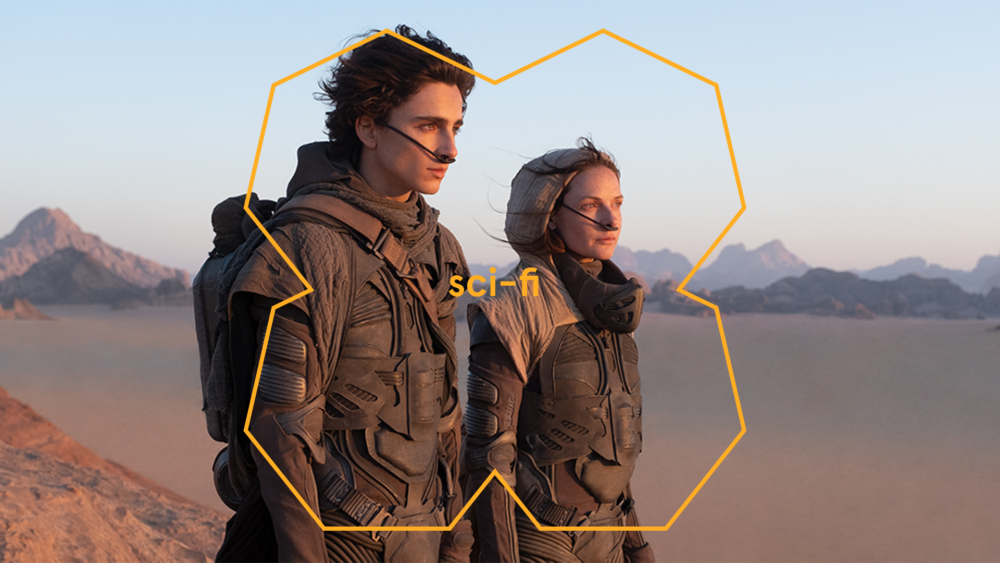
House Atreides is tasked with controlling the mining operation on the dangerous desert planet of Dune, but what they don’t know is political intrigue is afoot
On the surface, Dune is ambitious and thrilling. However, it feels like a good movie that flirts with greatness but never quite gets there. Though it’s stunningly made and designed, the classic story just doesn’t hold the same weight as it did when it was first released and the decision to only release half of it doesn’t help.
Why did Blade Runner 2049 work when it really shouldn’t have? When it was announced that Denis Villeneuve would direct the sequel to Blade Runner it had already toiled in development hell for nearly two decades, usually the kiss of death even if the film eventually does see the light of day. However, Villeneuve delivered a singular meditative vision that didn’t set out to remake the original, but rather expand on the world that was already there and dive even further into its thematic depths. That’s what Villeneuve had to do with Dune, especially after David Lynch’s much-maligned 1984 adaptation. And while he delivered on the world-building and action, underneath feels like a lack of a beating heart.
Erring closely to Frank Herbert’s 1965 novel, Dune follows the members of House Atreides. Duke Leto Atreides (Oscar Isaac) is tasked with stewarding the dangerous desert planet Arrakis, which is used by the Empire for its endless supply of “spice,” a powerful substance that has supernatural effects on humans. He, along with his concubine Lady Jessica (Rebecca Ferguson) and son Paul (Timothée Chalamet), journeys to the planet to begin the difficult work controlling the spice mining operation. However, political intrigue is afoot as Vladimir (an unrecognizable Stellan Skarsgård), Baron of House Harkonnen, is plotting the downfall of House Atreides.
ADVERTISEMENT
The world, captured gloriously by cinematographer Greig Fraser (Lion, Zero Dark Thirty), is built with terrific detail that makes it so fun to explore. The world is littered with fun details in the costumes (Ferguson’s Lady Jessica is a fashion icon), ships (dragonfly spaceships!), and culture. The mythology feels rich and deep. Like there are endless layers to parse through.
There is a gaggle of names and places to keep in order, but Villeneuve’s deliberate pacing makes it easy to keep track of the story — almost too easy. The story is quite simple, for better and worse. Better because heavy exposition tends to bog down sci-fi. On the other hand, he exposes how thinly built the plot of Dune is.
Though Dune was heavily acclaimed at the time of its release and still stands as one of the most influential novels ever written, nearly six decades later we’ve seen countless iterations of the “chosen one” storyline that is at its core — Star Wars, The Terminator, The Matrix, even Harry Potter. This undercuts the exceptional world-building that Villeneuve accomplishes by giving us a story that frankly fails to take full advantage of what the world has to offer.
💌 Sign up for our weekly email newsletter with movie recommendations available to stream.
ADVERTISEMENT
ADVERTISEMENT
And the main part of that failure is Paul himself. The movie hinges on our desire for his success and the success of his people. And while yes, it’s easy enough to understand that House Atreides and the Fremen are good and House Harkonnen is bad, we’re never shown in earnest why we should root for them. We’re simply told.
On the surface, Dune is ambitious and thrilling. The few action set-pieces are tight and suspenseful as are the scenes of pure dramatic heft. In particular, many of the scenes between Ferguson’s Lady Jessica and Chalamet’s Paul start to find the humanistic quality that the rest of the film is missing. In one scene, Jessica and Paul use their shared knowledge of hand signs and telepathic powers to take down a group of soldiers. It’s the kind of plot and character-driven action that made Blade Runner 2049 so successful. However, in Dune it feels like it slips away like sand through your hands as soon as it is over because it’s difficult to muster up a connection to any of the characters.
Dune, or Dune Part 1 as the title card puts it, feels like half of a movie. Unlike all the “chosen one” films I listed above, it can’t stand on its own. Even the introduction of the Fremen people (led by Zendaya and Javier Bardem) feels cut short. There is a lot of story to get through, but the decision to split the film may have stretched the story to its absolute limit. I don’t mean to sound overly negative. Dune is a good movie that flirts with greatness but just never quite gets there — much like the chosen one. But perhaps, as the story goes, it’ll get there in the end.
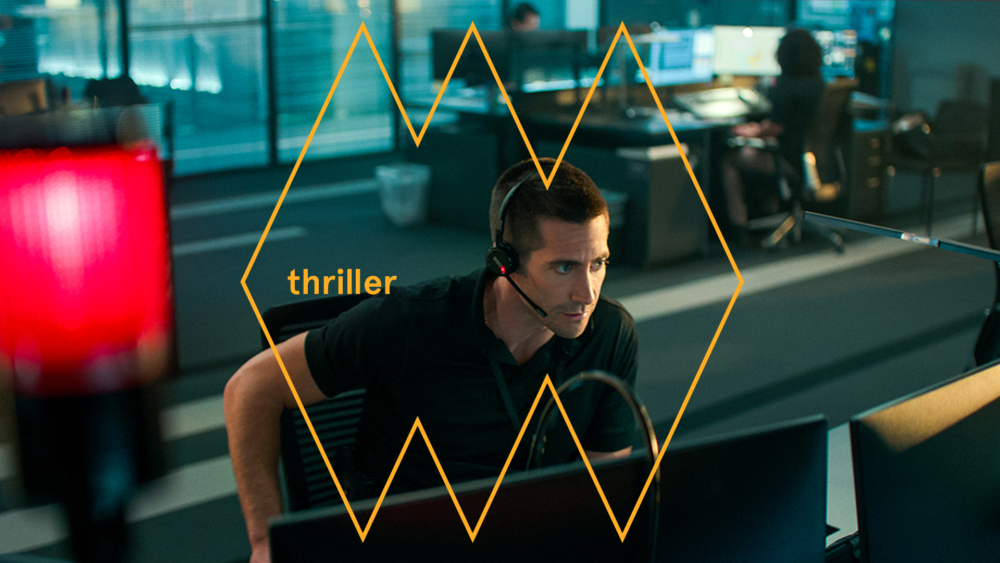
The Guilty follows a suspended police officer working 911 dispatch who falls upon an abduction case that he becomes determined to solve
The Guilty is a tense, innovative, and constantly twisting police procedural that unfolds in real-time and solely through phone calls to incredible effect. However, it elevates itself by also acting as a character study and indictment on policing and toxic masculinity. Jake Gyllenhaal has officially entered the Oscar race.
The Guilty, a remake of the 2018 Danish film of the same name, is a masterclass in adapting a non-English language film for American audiences. The trend of making English-language versions of acclaimed and successful foreign films has been picking up steam to mostly negative results — I’m looking at you Downhill. And more often than not, it’s because the studios commissioning these films don’t understand what makes them successful in the first place. That’s not the case with Antione Fuqua’s adaptation, which premiered at the 2021 Toronto International Film Festival.
Fuqua, best known for his thrillers and directing Denzel Washington to an Oscar for Training Day, doesn’t set out to recreate the Danish film. He’s too singular of a filmmaker for that. Rather, he filters the original’s plot through a distinctly American — and Fuqua — lens.
ADVERTISEMENT
Jake Gyllenhaal plays Joe, a former police officer relegated to 911 dispatch duty pending his trial. The reason for his suspension is kept close to the vest, however, Joe’s discontentment with the situation is not. He regularly snaps at co-workers, has coughing bouts that are caused by the wildfire smoke in the air (and maybe something more mental), and regularly pushes the boundaries of his job often talking back at 911 callers.
And that’s why when a woman named Emily (Riley Keough) calls feigning talking to her child Joe takes it upon himself to solve the case. Unfolding in real-time and the most intense episode of Law & Order: SVU, Joe realizes that Emily was taken against her will by her estranged husband Henry (Paul Dano) leaving her six-year-old daughter and infant son alone at home.
Coordinating with the California Highway Patrol, his partner Jim (Eli Goree), and various others and armed only with the information in the police database, Joe attempts to find Emily before it’s too late. That part of the plot is similar to the Danish version. However, in the background of all this — and throughout the screenplay written by True Detective’s Nic Pizzolatto — the wildfires and general distrust in the police loom large. That change alone validates the American version’s existence.
ADVERTISEMENT
There are many twists and turns that we only hear through calls that come through with the brilliant immersive sound design that puts us firmly in Joe’s point of view. Being in his point of view and watching the film unfold in real-time adds a sense of urgency, desperation, and helplessness. And while Fuqua’s smart directorial choices are one reason for this, Gyllenhaal’s terrific performance is captivating. It’s especially impressive considering he never leaves the screen for a single second of the film.
As thrilling as it is to unpack The Guilty as a police procedural what makes it great — and an Oscar contender for Netflix — is its grounding as a character study into toxic masculinity and the psychological effects of giving power to a person. Joe, our “hero,” brings his own outside circumstances to the situation — his own separation from his wife and daughter, his impending case — and uses that to motivate his decision-making for better or worse. He changes throughout the film. We watch as this case tears away at his psyche before the dam breaks — and with it, Jake Gyllenhaal’s performance soars.
In M. Night Shyamalan’s Old a group of vacationers become trapped on an isolated beach where time is sped up and everyone is aging rapidly
Old is a weird psychological body horror that’ll divide audiences. The odd tone of that film makes for an interesting B-horror movie that either you’ll love, hate, or love to hate. The precise wavelength that Old is on is hard to catch, but once you do it’s almost impossible not to enjoy. Grab some popcorn, sneak some alcohol in a water bottle, and check your cynicism at the door,
Just when you thought The Happening was M. Night Shyamalan‘s most bizarre movie along comes Old. But if you know anything about the director, it’s that when he swings he swings hard and when he misses it’s in spectacular fashion. Old is no exception. There’s a level of delusion when it comes to M. Night Shyamalan that I love. For the most part, I think he’s in on the joke of his films — at their core, they’re midnight B-movie features. However, I think there’s a bit of him that’s still stuck in The Sixth Sense of it all where he believes he’s a prestige filmmaker — and that’s alright.
Old follows the Capa Family — Prisca (Phantom Thread‘s terrific Vicky Krieps), her husband Guy (Gael Garcia Bernal), and their kids, preteen Maddox (Alexa Swinton) and six-year-old Trent (Nolan River) as they arrive at a luxurious tropical resort. They’re greeted by warm faces, exotic drinks, and a vacation riddled with clunky expository dialogue. And I mean bad… like “I’m an actuary, I analyze risk!” bad. Actually, every character is defined by their occupation and proudly announces it every time they get — phrases like “I’m a doctor” and “I work in a museum” are exclaimed almost every five minutes. There’s even a rapper called Mid-Sized Sedan. You can’t make this stuff up.
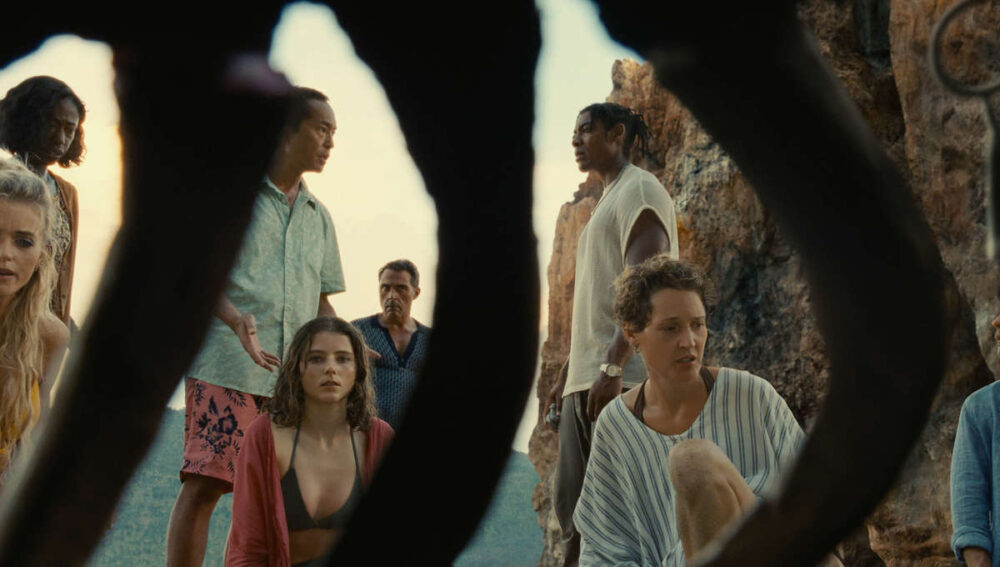
Suggesting they get off the beaten path, the hotel concierge gives them directions and passage to a secluded beach that can only be reached through a narrow canyon pass. Along with other guests from the hotel — doctor Charles (Rufus Sewell), his young wife Chrystal (Abbey Lee) and their daughter Kara (Kyle Bailey) — they settle in for the longest day of their lives… literally.
Before long they discover the body of a woman in the water who died of unknown causes which immediately makes the group suspicious of Mid-Sized Sedan (Aaron Pierre), who was the only person on the beach when they arrived. Long-married couple Jarin (Ken Leung) and Patricia (Nikki Amuka-Bird) — he’s a nurse! she’s a therapist! — join the group and try to turn back for help, but quickly realize that they can’t leave the beach because of some unseen force. With no way to call for help and no way to leave, they’re left waiting for rescue. However, waiting on this beach isn’t exactly an option as each of the kids begins to age rapidly before their eyes.
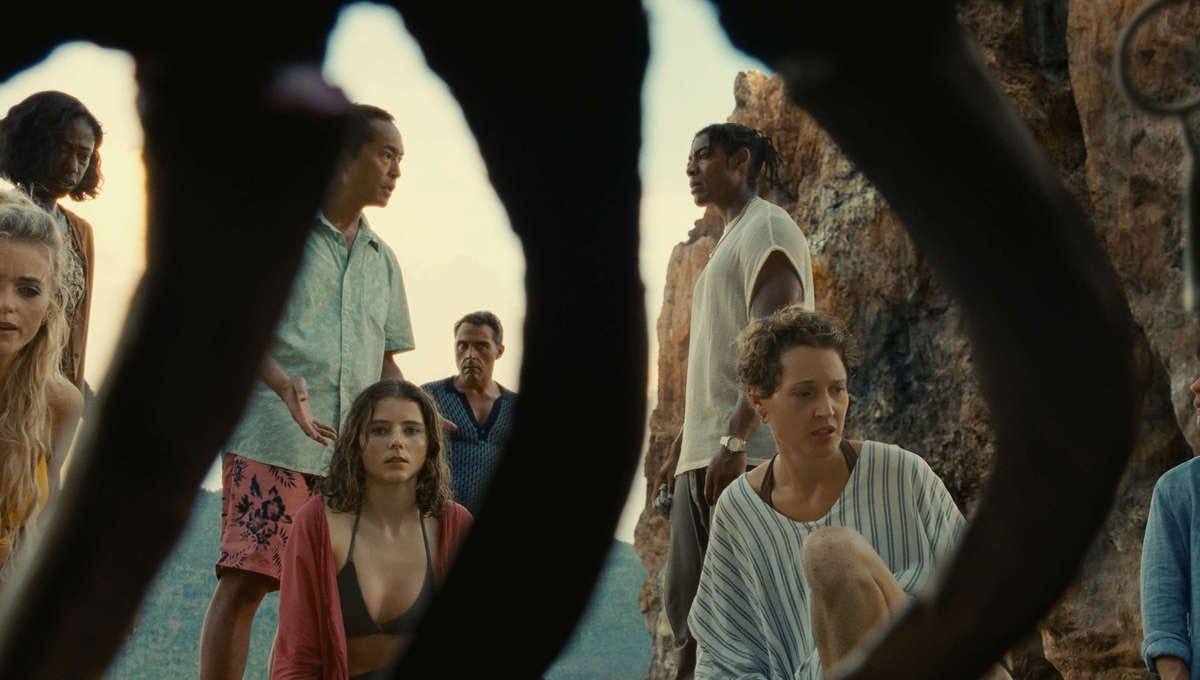
The cast of Old. Courtesy of Universal Pictures.
They soon calculate that one hour on the beach equals two years. “Racing against the clock” takes on new meaning. As things go from odd to downright absurd, the group struggles to find a way off the beach before they die. And die they do in spectacular fashion.
Shyamalan has never been one for true horror. He’s famously said he’s not a horror filmmaker even though his film The Sixth Sense is one of the few horror movies to be nominated for Best Picture. However, Old is a psychological thriller that uses body horror elements to make you feel uncomfortable in a way that only some filmmakers can hope to achieve. The fear of aging and our own mortality is enough horror.
And the way that Shyamalan moves the story along is quite brilliant. One incident folds into the next and as time marches along the revelations, particularly to the teen versions of the children played masterfully by Hereditary‘s Alex Woolf, Eliza Scanlen and Jojo Rabbit‘s Thomasin McKenzie, become increasingly shocking. It’s quite incredible how well-paced the movie is despite its bizarreness.
The tone is something you’ll either love or hate and have you questioning whether Old is as serious as it’s meant to be. There’s a sense of camp to it all. For example, the therapist character chides at precisely the wrong moment that she, “doesn’t like the relationship dynamic here.” And another character who is slowly succumbing to some mental illness repeatedly asks what the movie with Marlon Brando and Jack Nicholson is — it’s The Missouri Breaks, by the way. It’s over-the-top, but never not entertaining.
Can I call Old a good movie? I’m not sure. Shyamalan has used the “you didn’t get that this was a satire” defense when it came to The Happening, which in some ways I accept. The odd tone of that film does make for an interesting B-horror movie that either you’ll love, hate, or love to hate. The precise wavelength that Old is on is hard to catch, but once you do it’s almost impossible not to enjoy. Grab some popcorn, sneak some alcohol in a water bottle, and check your cynicism at the door.