Blog

  • 2015 Oscar Predictions: Best Original Screenplay

    2015 Oscar Predictions: Best Original Screenplay

    2015 oscar predictions the grand budapest hotel best original screenplay

    This is going to be a hard category to get right. There are three extremely strong contenders that are all Best Picture nominees and all have their own strengths. The first possibility is Birdman. The film won the screenplay award at both the Golden Globes and Critics Choice. However, the film was ineligible at the Writers Guild Awards. It’s also one of the two frontrunners for Best Picture after surprise wins at the PGA and SAG awards. Then there’s The Grand Budapest Hotel, which is the most “original” of the nominees, which sometimes is enough to win the award. It also surprisingly (for some) led the nominations along with Birdman with 9. Wes Anderson is also arguably overdue for an Oscar win, particularly for this category. Finally, Boyhood rounds out the category as the other Best Picture frontrunner. The screenplay is probably one of the least impressive feats in the film. However, if there is a Boyhood sweep, then this is definitely one of the categories that will be taken along with it. The other two nominees, Foxcatcher and Nightcrawlerare really taking the backseat here. However, if I had to pick a “fourth place” film is would be Nightcrawler.

    Right now, I’m going to say that Birdman takes this award. Despite its ineligibility at WGA, it was solidly running through the precursor awards beforehand, and last year’s winner for Best Adapted Screenplay, 12 Years a Slave, was also ineligible at WGA. If voters feel inclined to award Wes Anderson, then he may sneak a win here.

    [maxbutton id=”3″]

    Will Win: Birdman
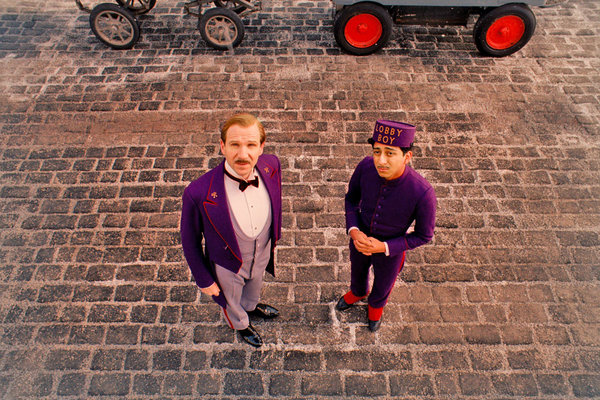
    Could Win: The Grand Budapest Hotel
    Should Win: The Grand Budapest Hotel
    Should have been nominated: Enemy

  • Parenthood Review: “We Made It Through the Night” (6×12)

    Parenthood Review: “We Made It Through the Night” (6×12)

    parenthood we made it through the night

    The penultimate episode of Parenthood is in the curious position of both needing to tie up outstanding stories in time for the finale, while also not really having very much in the way of outstanding stories to tie up. The result is an episode that is emotionally if not narratively satisfying; an episode that in earlier seasons, or even earlier in this season, would not quite work, but that here is able to still rise above its weaker moments.

    The strongest episodes of Parenthood are united thematically, even across the many disparate threads they may follow. I don’t think that “We Made It Through the Night” quite achieves this goal, and so the episode can be a little disorganized and chaotic at times. With no clear connection between the characters, the episode instead jumps from scene to scene, often without any particular logic or reason. This possibly is the result of sloppy editing rather than a poorly organized script—though more likely, it is a combination of the two.

    What makes the episode curious is that for all its faults on these technical scores, its individual units are not nearly so problematic, and several scenes are actually high watermarks for the entire season. I’m thinking both of small, incidental scenes, such as Kristina’s pissy argument with Jasmine, and of major, emotional powerhouses such as Sarah’s wedding announcement to Zeek. It’s these moments, more than any particulars of craft or plot, that are the heart of Parenthood, and when an episode delivers on these scores, it’s hard to fault it for much else.

    On the one hand I wish this episode was more focused, but on the other, I can’t really think of any specific scenes that could be cut—and if the reward for a somewhat sloppy episode here is a tightly focuses finale, then all the better. Even something like Career Day at Chambers, which is easily the episode’s most superfluous bit, provides a necessary touchstone for Max’s arc, which is pretty likely to be marginalized next week. The scene where Kristina and Max reassure him of his career prospects, and the amazing progress that he’s made over the course of the show, is unquestionably shoehorned into the episode, but it resolves an emotional arc that has been with the show, if inconsistently, since day one, and is therefore the sort of necessary business that the show must get to at this stage in the game. Plus, the story allows for Max’s lovelorn glance toward Dylan toward episode’s end, a blink and you’ll miss it shot as well as a fantastic piece of acting from Max Burkholder.

    Everything else continues to build from previous episodes. Most notably, of course, is the birth of Amber’s son, also named Zeek, perhaps with premature morbidity. The first trip to labor at the episode’s beginning is, of course, a false alarm, one that brings all of the Bravermans descending upon the hospital once again. (The staff must really hate this family by now.) If I were Amber, the absolute last thing I would want at the birth of my child was my entire extended family, and yet the utter chaos of this opening scene is yet another Parenthood moment that is remarkably true to life. (Another—Julia’s nonchalant observation to Joel that there’s no rush to get to the hospital, confirming that Julia is absolutely my spirit Braverman.) Amber’s second trip to the hospital is the real deal, though, and is a beautiful moment that is shared just between her and Sarah, appropriately enough. Another tear-jerker: Zeek setting eyes on his namesake for the very first time. I think that closing shot is a wordless decision to get the surgery after all—we’ll see after next week, but it’s a testament to Craig T. Nelson’s abilities that the moment is filled with such complexity.

    In fact, Nelson can’t be praised enough for his work in this episode with any number of scene partners. As Camille paints Zeek’s portrait, Nelson sits there stony-faced, Zeek on the left of the frame and the portrait on the right, and it’s almost as though the painting has more life in it than Zeek does. Or when Sarah tells Zeek about the upcoming wedding, and Nelson lays in the bed and lets his body just sink into it, practically backwards out of the shot. It’s a tremendous physical performance; Zeek is just old now, and old and frail are not characteristics we’re used to applying to him. It’s heartbreaking, especially as it motivates Sarah and Hank’s decision to greatly speed up the impending nuptials.

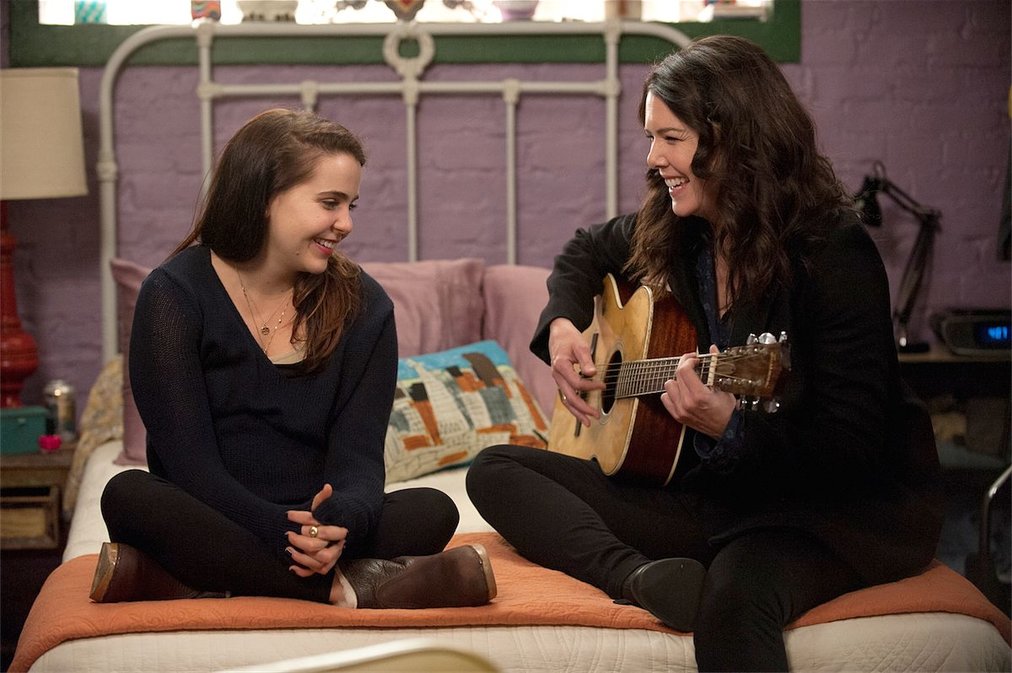
    The other big component of “We Made It Through the Night” is the continuing trials of Joel and Julia’s reconciliation, which turns out to be slightly more complicated than it may have previously seemed. That’s typical Parenthood though; the show gets by far the most mileage out of digging into these moments, into what happens after “happily ever after,” so to speak. It’s a series about life itself, what surrounds the big moments and makes those big moments worthwhile. Amber having her baby or Zeek nearly dying are the milestones, but what we’re actually here for is Sarah and Amber singing with each other and strumming the guitar, and Zeek laying eyes on his great-grandson and namesake for the very first time. Parenthood has always intuited that and delivered on it, and so here we are.

    Stray Observations:

    • Can you believe the finale is next week already? Will Haddie return? How about Ryan? (We already know Seth will not, sadly.) Might we perhaps catch a glimpse of Piecat?
    • Did Drew Holt Get a Haircut? I don’t know; apparently the birth of his nephew does not rate an appearance.
    • Adam and Crosby continue to go back and forth on the Luncheonette this week, and while I still appreciate the way that the story has become about their brotherly relationship, things end on such a dire note that reconciliation next week seems all but inevitable.
    • I know I am not the only person to note this, but The Newsroom has ruined all “Ave Maria” montages forevermore.
  • Film Review: “Men, Women, and Children”

    Film Review: “Men, Women, and Children”

    Men, women, and childrenJason Reitman, of Thank You for Smoking and Juno, brings us his latest comment on modern society: Men, Women, and Children.

    This film follows the lives of several teenagers and their parents, befitting the title. It focuses on the constraints of our technological world, loss of human connection, with an overarching theme of insignificance. The cast is extensive, including Adam Sandler, Jennifer Garner, Dean Norris (Hank of Breaking Bad), and Ansel Elgort (The Fault in Our Stars). Emma Thompson voices over the film occasionally.

    Men, Women, and Children focuses on four families. Don and Helen Truby (Adam Sandler and Rosemarie DeWitt) have a troubled marriage which leads them both to infidelity. Their son, Chris (Travis Tope) struggles with an addiction to internet porn and resulting impotence. Chris’ love interest is Hannah Clint (Olivia Crocicchia), who is an aspiring actress and model. Hannah‘s friend, Allison Doss (Elena Kampouri), struggles with an eating disorder. Hannah’s mother, Joan (Judy Greer), was also once a struggling actress who hopes to give her daughter the opportunities she never had. To help jumpstart Hannah’s career Joan sets up a website to display headshots and occasionally takes photo request from (sketchy) online fans. Joan’s love interest is Kent Mooney (Dean Norris). Kent’s wife abandoned their family to move to California. His son, Tim (Ansel Elgort), recently gave up his high-school football career in favor of video games and existentialism. His growing depression is apparent throughout the film. Tim’s love interest, Brandy Beltmeyer (Kaitlyn Dever), has a mother, Patricia (Jennifer Garner), who tracks her on social media. Patricia checks her daughter’s computer and phone every night, reading messages and scanning for unwholesome behavior or unwanted attention.

    The biggest problem in Men, Women, and Children is the lack of cohesion. The themes are scattered and dull. On the surface, it attempts to attack technology and its effect on our generation and our parents’. It might succeed at doing so if it stuck to one story line. Some of the problems faced by the characters cannot possibly be traced back to their cell phone. Don and Helen have grown tired of their lives and each other. This is a simple plot adding very little to the movie as a whole. There is a lot of that in this movie: extra. Extra characters, extra storylines, extra voices, extra themes…

    Emma Thompson narrates this film, sometimes over a scene and sometimes coupled with the image of a satellite hurling through space. The narration and imagery are equally useless and poorly executed. The images of space draw in yet another, not-so-subtle, theme. Life is meaningless. Earth is inconsequential. The voiceover undermines the film’s brooding tone.  Ansel Elgort’s character brings the themes of technology and meaninglessness together. He has an obsession with video games and questions his existence. This theme has not only been done before, but done much better. In addition to the loathsome space scenes the production quality of the rest of the film is sub-par. The incorporation of technology into the scenes (i.e. text bubbles over people’s heads to depict what they’re seeing on their phone) is not graceful. The intention is obvious, but not well executed. It looks clunky and a little silly, detracting from the film’s dark tone. The acting is standard, nothing horrible, and nothing groundbreaking. The abundance of characters leaves each with little screen time, but also little time to mess things up which works to the movie’s advantage.

    Men, Women, and Children’s lack of direction, plethora of storylines, and absurd Stranger Than Fiction-esque voiceover leaves the film with little substance or clear endpoint. The themes are confusing. The acting is just okay.  The plots are too many and too contrived. The narration doesn’t fit. Everything seems forced, like it could be out of an after school special on PBS or Lifetime.

  • Film Review: “Nightcrawler”

    Film Review: “Nightcrawler”

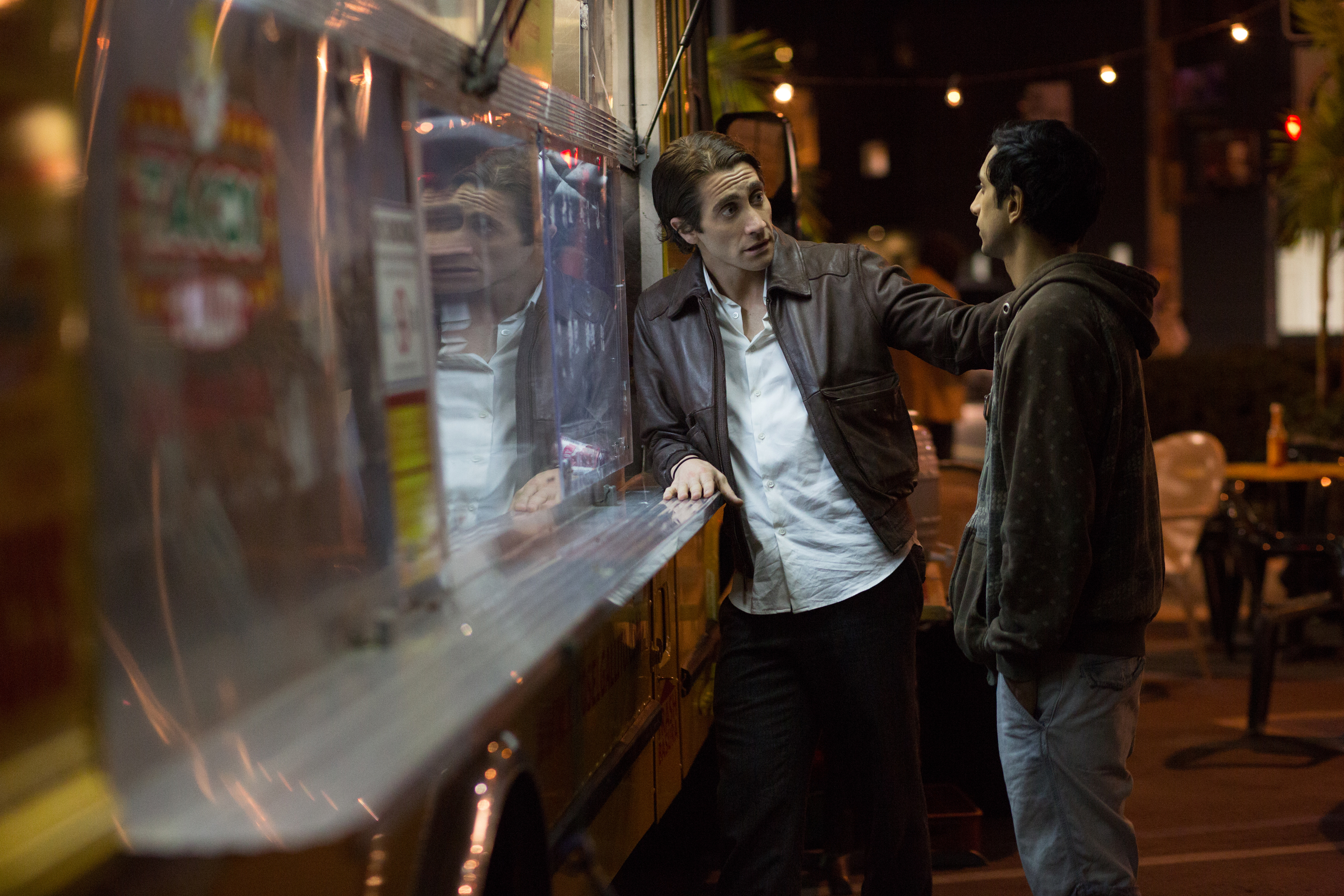
    nightcrawlerDan Gilroy makes his directorial debut with Nightcrawler, which he also penned, starring Jake Gyllenhaal. A gripping psychological thriller, Nightcrawler follows Louis Bloom (Gyllenhall), a persistent young man eager to break into the world of L.A. crime journalism. Having first screened on the Toronto International Film Festival, Nightcrawler claims a Halloween release date, a fitting day for this twisted insight into the mind of sociopath.

    Louis Bloom seems like everyone else. He’s handsome, well-read, driven, generally a normal guy trying to make money where he can. Louis scrapes up cash here and there. He commits a string of petty burglaries in lieu of a steady job. When he happens upon a car accident on the interstate Louis discovers his passion: the whirl of excitement, the flutter of suspense and the thrill of crime reporting in the heart of Los Angeles. He decides to buy a video camera and police scanner and throw himself into the action. It takes time for him to get on his feet but soon he shoves his way to the head of the pack, beating even the police to the crime scenes. Louis is highly motivated and tenacious, but he does have flaws. He’s a high-functioning sociopath highly skilled in manipulation. He lacks empathy and a sense of right and wrong. Pretty much, he drags dead bodies across asphalt so his shot will be more balanced. He “charms” his pseudo-coworker Nina, played by Rene Russo, and establishes an exclusive relationship with her news station. His footage is the best because he goes to insurmountable lengths to get it, filming crimes as they happen and withholding evidence from the police in order to break the story first. His obsession with power and recognition would become too much for most people, but not Louis. Nightcrawler is a journey into the mind of a sociopath and the cutthroat nature of success.

    [Tweet “Jake Gyllenhaal gives an Oscar worthy performance in “Nightcrawler””]

    Louis speaks matter-of-factly. Often the things he says seem prepared or as if they’re being read off out of a self-help book for aspiring entrepreneurs. He mentions that he spends a lot of time on his computer, researching all kinds of things. It only makes his character more convincing. His interactions with others are well-rehearsed and calculated. He uses others to his own benefit, to the extreme, threatening and blackmailing with a subtle charm that convinces you that there’s no choice. He clearly doesn’t feel regret or form any real connections with other characters.

    Gyllenhaal’s performance is by far the most riveting aspect of this movie. He balances the characteristics of a sociopath so well; acting irrational when he’s after something, laughing things off when most would cringe, and using is charming craziness to manipulate others. Often threatening others or bargaining when he has no leverage, but always coming out the victor. Gyllenhaal gives a stunning performance. His dialogue is sharp and his movements, unnerving. The best way to describe his character is unsettling; a guy who’s not quite weird enough to turn heads, but weird enough to send a chill down your spine. His portrayal is strangely hypnotic, balancing empty stares with endless rambling while charming his prey. He’s backed up by solid performances from Rene Russo and Bill Paxton, who plays a fellow driver, as well as Riz Ahmed who plays his assistant. Although the performances put this film over the top, the rest of the production was quality. There were a few car chase scenes that could have come off hokey, but were done in such a way as to emphasize the protagonist’s unpredictability. For a first-time direction, Gilroy did an incredible job.

  • Film Review: “The Babadook”

    Film Review: “The Babadook”

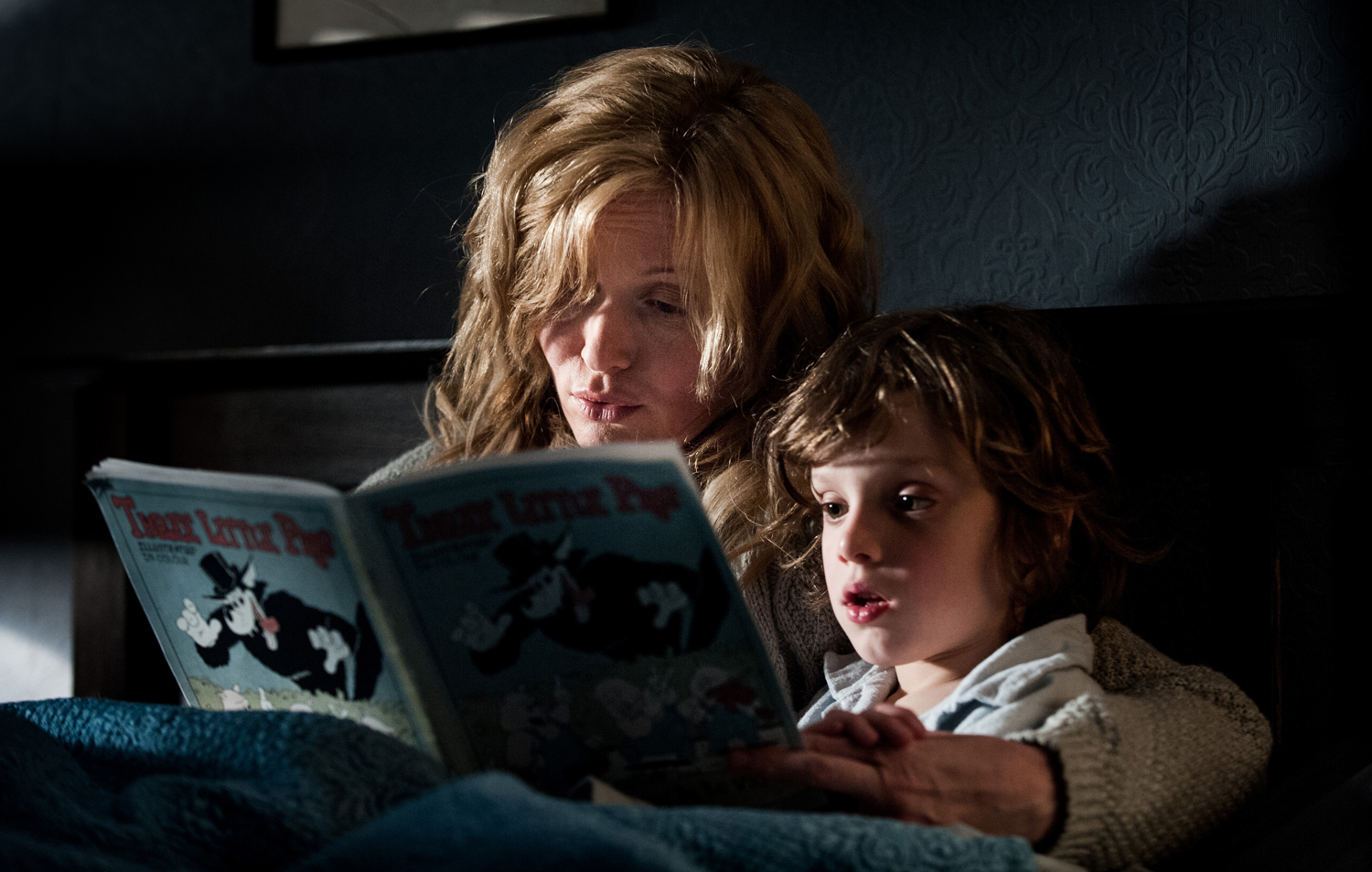
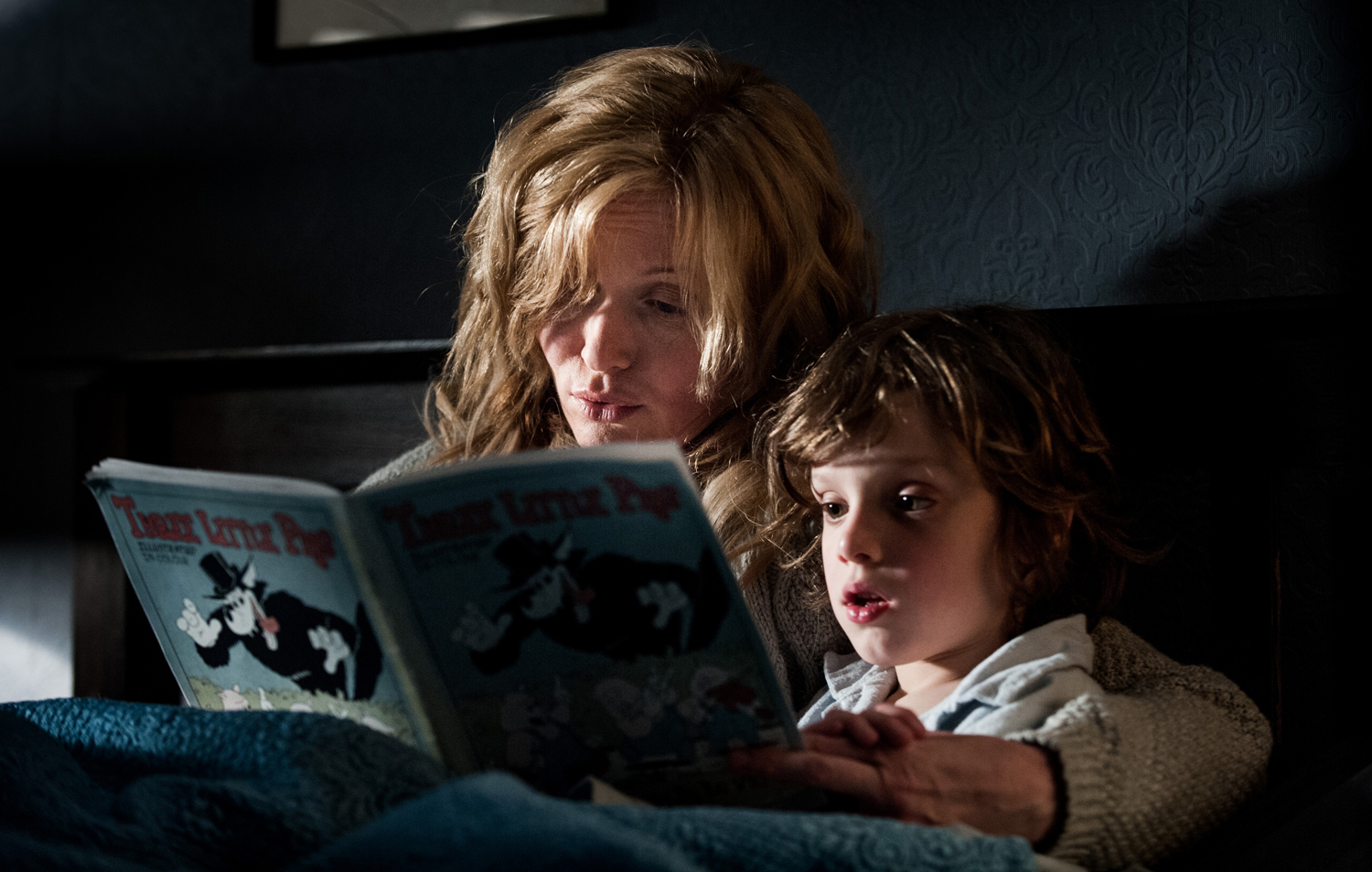
    the babadook

    Jennifer Kent wrote and directed the Australian horror film, The Babadook. Based on the short film, also by Kent, The Babadook rose to critical acclaim after being premiered at the Sundance Film Festival. This is Kent’s debut feature film, drawing inspiration from early horror, fairy tales, and magic. Kent puts a hand-crafted twist on a traditional tale. The Babadook explores real-life horrors through well-timed scares and psychological suspense.

    The film takes place in the two weeks before Samuel’s (Noah Wiseman) seventh birthday, which coincides with the anniversary of his father’s death. He often tells the story when he meets someone knew: his father died driving his mother, Amelia (Essie Davis), to the hospital to give birth to him. Sam is fascinated with his father, but Amelia refuses to speak of him; she hasn’t been quite the same since. She gave up writing to support her son as an orderly. Her detachment is obvious. Sam loves his mother unconditionally but notices her shortcomings and tries his best to help her. They are close but Amelia’s baggage is clearly weighing on the pair.

    One night, Sam chooses a new bedtime book from his shelf, Mister Babadook. It is unfamiliar to him and his mother but they start to read. As the children’s book grows dark, Sam and Amelia become unsettled. The book seems to be speaking to them specifically, trying to convince them to let Mister Babadook in. Sam grows frightened and can’t seem to shake it. The book is gone but the damage has been done. He acts out causing Amelia to take him out of school, for fear of his safety and others. As her stress level rises and the date of Sam’s birthday draws nearer, Amelia begins to unravel. The book reappears and nightmares become real. You can’t get rid of the Babadook…

    Resembling the pop-up book from which it is titled, this film plays with visual design to invoke a sense of mourning. Kent uses old-fashioned shadow play and sound effects to convey the sense of dread in the characters’ lives. The Babadook is an externalization of Amelia’s grief; it’s easier to confront a ghoul than her own reality. “If it’s in a word or in a look. You can’t get rid of the Babadook. I’ll wager with you. I’ll make you a bet. The more you deny, the stronger I get. The Babadook is growing right under your skin.” The parallels between the Babadook and Amelia’s mourning are ingenious.

    This analogy is really brilliant. Amelia’s begins by denying the Babadook’s existence, as she has done with her feelings of despair. But, Sam can see through her charade and insists the Babadook is real. He is shown only in shadows and without a true form. At times he appears as Amelia’s deceased husband, asking for the boy. Amelia eventually experiences the Babadook, admitting to herself that her mourning has never ended. She is overtaken by the demon as she tries to take back control of her emotions. During her possession, her neighbor and son express their love for her despite her perceived unlovable feelings. This is the encouragement she needs to expel the Babadook. It flees to the basement. Amelia’s grief has a home where she can visit. She soothes the Babadook, regaining control.

    Although this film uses many familiar horror techniques, Kent puts her spin on them by adding this giant metaphor to the whole thing. The Babadook is expelled through Amelia vomiting up some kind of black good, which has become synonymous with dark forces in today’s horror. Kent also pays homage to classic horror. She employs a lo-fi technique to depict the Babadook, using stop motion for the monster’s appearances. Although Kent’s production choices set The Babadook apart, the performances of the lead actors are remarkable. This is Wiseman’s debut. His character is intense and well-acted, managing to shock audience while still keeping them emotionally invested. Davis’ character could seem unlikeable but her performance allows the audience to sympathize and understand her plight. The Babadook is a refreshingly impactful horror film in a sea of cheap scares. With impressive production quality and meaningful analogy, the real terror of the Babadook lies deep within.

  • Film Review: “Wild”

    Film Review: “Wild”

    wild film review
    Jean-Marc Vallee directs the biographical film written by Nick Hornby, Wild. This film is based on the memoir, Wild: From Lost to Found on the Pacific Crest Trail, written by Cheryl Strayed. Vallee’s Dallas Buyers Club last year elicited two Oscar-winning performances, setting a high standard for Reese Witherspoon in the lead role and Laura Dern as supporting. However, with the help of Vallee’s cunning direction, the actors give award-worthy performances and the story ascends one of self-awareness and acceptance of the things we cannot change. It highlights the struggles of finding our identity in the shadow of tragedy. But most of all, it highlights the talent of Witherspoon and Vallee.

    Wild follows Cheryl Strayed (Witherspoon) as she travels the Pacific Crest Trail searching for a meaning to her tangled life. Divorce from Cheryl’s abusive father leaves her mother (Dern) struggling to regain the years she has lost. She is working to get her GED and put their life back together as she is struck with the news of terminal cancer. This leaves Cheryl to step into her mother’s role and abandon the success to which she is striving. After the death of her mother and the responsibilities become too much, Cheryl’s life plunges into chaos. She descends into a life of drug use and, despite her marriage, promiscuity. As Cheryl lets go of the cares of life, her relationships begin to deteriorate, particularly with her husband. Although it is clear that they care for each other, Cheryl’s emotional absence leads them to divorce. This is the turning point at which she decides to change something. She decides to trek the thousand miles across all types of terrain through the PCT. She encounters others with similar journeys and comes face to face with some of her own demons.

    Wild is packed with powerful metaphors. Cheryl literally carries around her baggage on her back, in the form of an enormous backpack filled with hiking supplies. As she begins her journey, her pack is completely full. She struggles to even get it off the ground. Her baggage is so overwhelming she has to lie down to even attempt to pick it up. She walks, with the highway at her side at first. With surrender so close, Cheryl pushes on carrying her pack. When she approaches her first check point on the trail, she receives a warm welcome. Some of the more experienced hikers help her unload her bag and pick out the things she can leave behind, thus ridding her of some of the weight and making it easier to withstand. Along with her pack and fellow hikers, the animals she encounters on her journey also play an important role, all representing certain struggles and challenging Cheryl to overcome them. Like a fox that she meets several times taunting her along her journey.

    The stand-out achievement of Wild is the career-defining performances given by Reese Witherspoon and Laura Dern. Their talent, combined with Vallee’s, allow this film to reach its full potential. Witherspoon delivers her most powerful performance, capturing the plights of Cheryl with ferocity, compassion, and grit. The unabashed honesty, with which the story is told, elevates Wild into Oscar contention. Although a film about a woman walking through the desert may seem dull, Witherspoon has no problem holding the attention of her audience. The sweeping landscapes and flashbacks add to help the story flow. Instead of a linear story about how Cheryl wound up at the PCT, we start with her already in the thick of it and go back to find out more. The star of the flashbacks is definitely Dern. She delivers an impactful and dignified performance. Wild is introspective and engaging, giving Witherspoon and Vallee space to flex their impressive talents.


  • Film Review: “Big Eyes”

    Film Review: “Big Eyes”

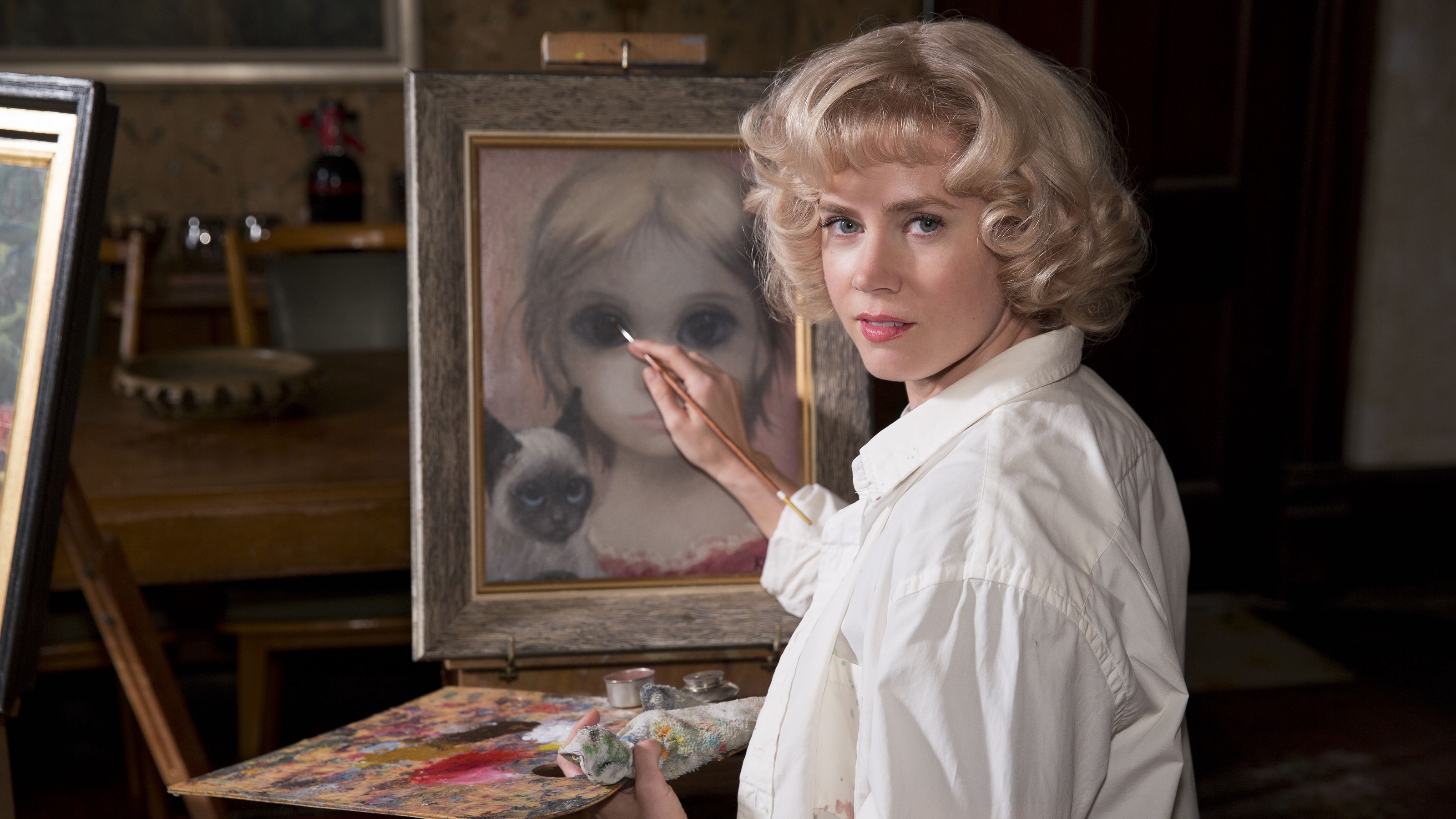
    Big eyesTim Burton has given us gothic classics that will last us throughout our lives. From the spook-inducing and gorgeously crafted Nightmare Before Christmas, to the satire of suburbia and tale of acceptance of Edward Scissorhands, he’s produced and influenced a multitude of works that started strong. However, in recent years it has become more a niche thing that is mocked as an outlet for Hot Topic teenagers to showcase how emo is still relevant. (Hint: it’s not). His latest movies has followed a formula, by taking something dark in its subtleties and making it dark all around (i.e., Alice in Wonderland, Dark Shadows) or going back to something that worked once and seeing if he could do it again by bringing it into post-2000s cinema (i.e., Frankenweenie, Corpse Bride). This all changes for Big Eyes where, the more normal that he is opens up more doors than he could possibly imagine.

    The film follows the real life events of Walter and Margaret Keane, both painters who are starving artists and find love amongst themselves. When Walter notices that Margaret’s paintings of large-eyed children could be the hottest thing since sliced bread, he decides to take all of the credit (being in the 50s, his reasoning is that no one wants to buy women’s art), and begins to make more than enough money to provide for Margaret and her daughter for another marriage. Things start to turn sour in the art world though, when Walter continues to take the credit and Margaret perpetuating the lie with her silence and we watch to see how this will resolve with the credibility of the artist in a world that is against her.

    First off, the casting choices are perfect, almost seeming like a Wes Anderson film more than a Tim Burton film. Amy Adams is the soft-spoken, kind-hearted but determined Margaret Keane. Christoph Waltz is the charming, yet devious Walter Keane. Krysten Ritter as Margaret’s friend, Dee-Ann, Jason Shwartzman as Reuben, the pretentious art gallery curator and Danny Houston as Dick Nolan, a gossip reporter and the narrator. The acting is very well played out, with every scene getting a little more tense each time. Some may call it predictable, but we want and do see Margaret grow in her attempts to showing off her art. Christoph Waltz is an entertaining antagonist where his psychological breakdowns of Amy Adams makes you love to hate him. However, during the climax, he goes from being charming and cunning to an all-out cartoon character. He’s very over the top, not necessarily convincing the audience that he painted all of the big eyes, but more so trying to prove it to himself.

    The cinematography is gorgeous, there are shots of pure symmetry (again, like Wes Anderson), but just a little off-kilter to add a little spice. The shots where there is just pure solid color in the background are marvelous and really add to the theme of knowing where your inspiration and color come from. The close-ups are intimate and never feel forced, and the setpieces of 50s San Francisco are stunning. Everything from the neon to the color of the galleries pop. The apartment to the new house are both eye-catching in the morning, afternoon, and night. The sequence where Margaret finds her inspiration was very well done and give you that whole “Uncanny Valley” feeling. You know that they eyes are off, but you can’t stop staring at those windows to the soul. The music is also unlike anything that we’ve heard from Danny Elfman. There are times where it feels a little stereotypical, when going to Hawaii or showing a fancy ball, the choices kind of shout out “HEY, WE’RE IN THIS LOCATION NOW, CAN YOU TELL?!”

    Overall, this a decent film that has aspects of a Burton production, but not necessarily pushed in your face for jaw-dropping effect. It’s not very loud, it’s subtle, the big eyes do all the work. For any art lover, you focus more on the paintings than on the shots, both of which leave you breathless. Another thing that hit home for me was the representation of Jehovah’s Witnesses in the movie. When I was a member of the faith I did the EXACT same thing that these actors did and they captured it perfectly. Big Eyes does have the prospect of creating a new movement in Burton films. Others may say that he’s a little late to the indie party with all of the pastels and the Anderson flair, but to see him something other than what he was mostly good at is a gift to the eyes.

  • Play Review: “A Delicate Balance”

    Play Review: “A Delicate Balance”

    a delicate balance

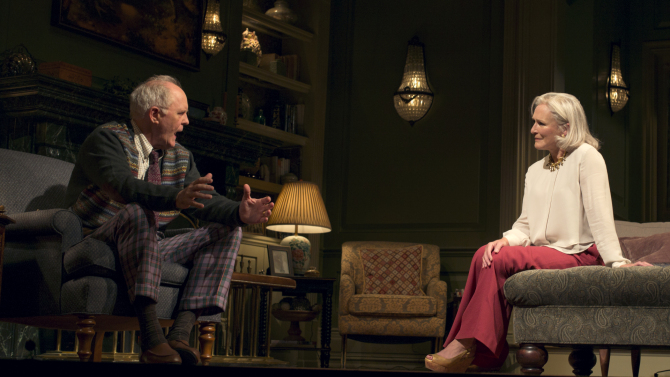
    “I might very easily, as they say, lose my mind one day” purrs Glenn Close with casual conviction. It’s a humorous, but ultimately unsettling way to open a play. “A Delicate Balance” may not be Edward Albee’s most famous work, but it is likely the hardest to look in the eye.

    Glenn Close and John Lithgow star as Agnes and Tobias, the heads of a WASP-ish upper class family. They live a comfortable life as they drink and lounge in their opulent living room (sumptuously designed by Santo Loquasto). A sort of existential crisis of fear has gripped the retirees however. Agnes’ alcoholic sister Claire (Lindsay Duncan) has crashed the party as a permanent guest. Soon the couple’s daughter Julia (Martha Plimpton) comes scurrying home from a fourth failed marriage. And more troubling, two best friends Harry and Edna (Bob Balaban and Clare Higgins) flee their house because of an unknown terror and seek shelter in under Tobias’ roof.

    Albee is a master of the domestic drama. Though you may be disappointed if you go in looking for a retread of “Who’s Afraid of Virginia Woolf”. Drinks and barbs are slung back and forth with wild abandon, sure. But there is something a bit more sinister amid the zingers. As Agnes points out, “It’s one of those days where everything is happening underneath”.

    Fear becomes a character looming over the entire proceedings. Director Pam McKinnon (who helmed Albees “Virginia Woolf” last season) has highlighted the most uncomfortable themes in the play. When keeping up appearances is all you have to live for, what happens when your composure crumbles or your authority undermined? Agnes refers to the “terror” Harry and Edna bring into their home as a plague. A fear that infects all of their minds and forces the characters to ponder if they will go mad, amount to nothing, or lose the comfort they worked so hard for. So while the play is full of funny bits, it can also be a tough pill to swallow as Agnes examines which people are a “cancer” to her family’s happiness and image.

    Glenn Close turns in a much more restrained performance than we are used to as the matriarch of the family. There were certain moments I felt she could have amped it up, but she retains her thrilling ability to command a room with a simple gesture. A sharp glare, furrowed brow, or single word can command or silence any of her family members.  Agnes orchestrates all of the proceedings and hardly moves a muscle.

    It’s Lindsay Duncan that gives Ms. Close a run for her money. As Claire, Duncan saunters about the room with zero sense of decorum or propriety, constantly on the sidelines offering hilarious commentary as her sister and brother-in-law attempt to keep their house together. Her comedic timing is perfect and any actor who must play drunk should watch Ms. Duncan for a master class. If you’re having trouble with the plays darker elements, you can at least find solace and humor in watching Claire chug martinis and fantasize about having her sister killed.

    The pacing suffers occasionally, mostly in scenes with Henry. Bob Balaban is playing up his characters awkwardness. Sometimes it works, but often it saps the energy out of the scene. And in a three act play (yes three!) it takes great effort to recover from lagging pace. Thankfully McKinnon keeps everything moving at a clip.

    Not everything comes fully into focus though. There is a side plot about a past affair that gets muddled. And Claire has several prophetic moments which are made too on the nose by an abrupt lighting shift or clumsy tableaux. And John Lithgow and Martha Plimpton are doing great work (they each get their own tremendous monologue to show off their chops), but one can’t help but feel the characters are sometimes more of an idea, and in service to the plays themes, rather than real people to root for.

    This is a dense play. I still feel like I need to go back for a second viewing to truly take in everything Albee presents. It also asks the audience (and more precisely: a theatre going, cultured, type of audience) to examine their own lives. As such, A Delicate Balance won’t be to everyone’s tastes. But, with the talented cast and brilliant playwright, you’re bound to find something on the menu to your liking. Even if you can’t quiet digest the whole thing.

    A Delicate Balance
    John Golden Theatre
    252 West 45th Street, Manhattan
    Written by: Edward Albee
    Directed by: Pam McKinnon
    Starring: Glenn Close, John Lithgow, Lindsay Duncan, Martha Plimpton, Bob Balaban, and Clare Higgins
    Run Time: 2 hours and 45 minutes, including 2 intermissions

  • Transparent Review: Season One

    Transparent Review: Season One

    501B6133.CR2

    If there’s one thing that Netflix has proven, it’s that original programming for streaming services cannot be ordinary. Instead of pumping out run of the mill big-network dramas, we instead are treated to shows such as Lilyhammer, Orange is the New Black, and House of Cards. These high-class dramas currently outshine nearly anything else on network television, being successfully risky in the issues they can present. And forget about any cheap or cheesy sitcoms; the company has already taken under its wing two of the greatest and most influential sitcoms ever produced: Trailer Park Boys and Arrested Development.

    Amazon Prime has finally realized this, stepping up its content game with the thought-provoking comedy-drama Transparent.

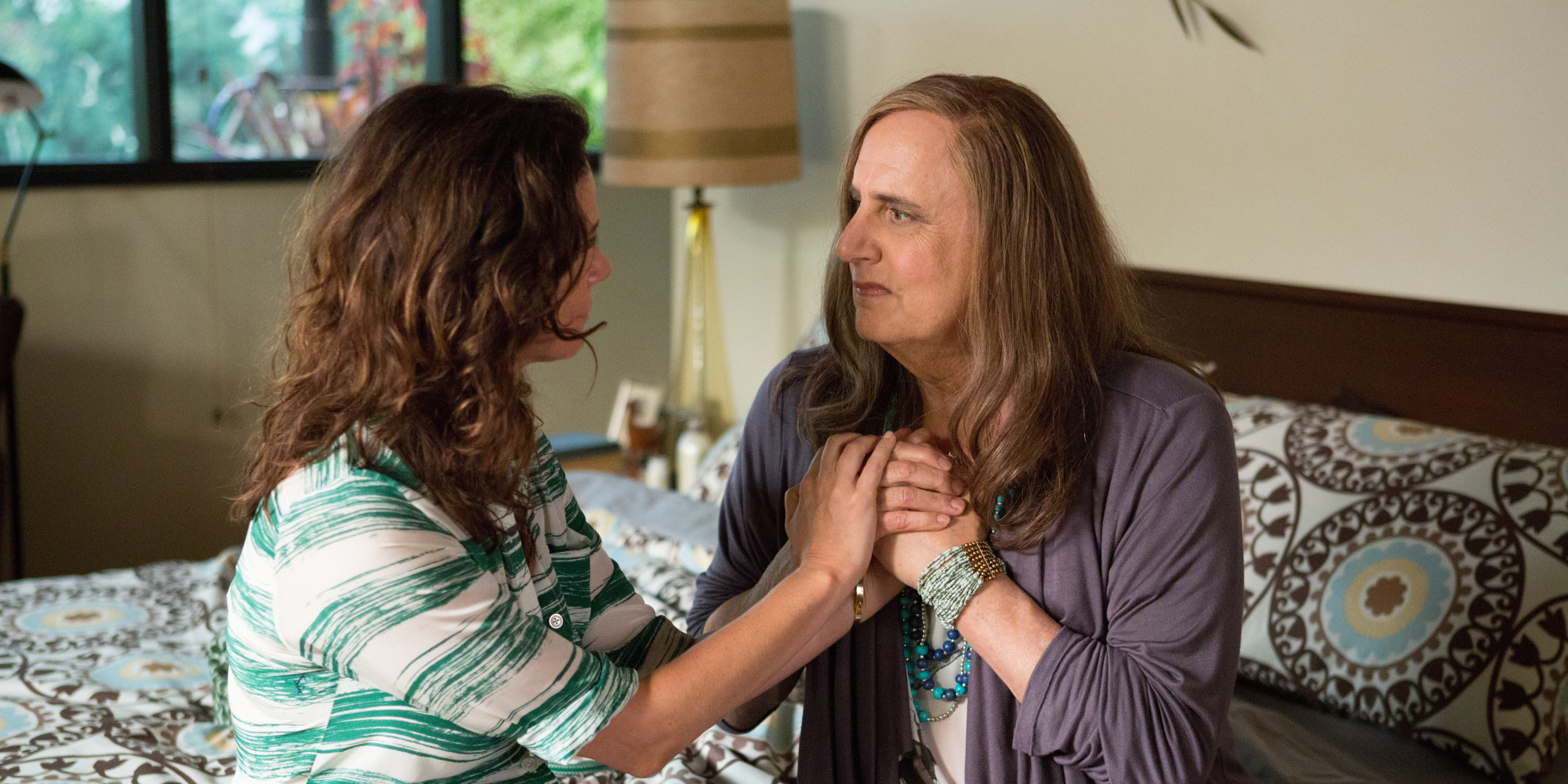
    Retired professor Mort Pfefferman has been living as a closeted transgender for his entire life, until he decides to come out to his three children. His oldest daughter, Sara, is unhappily married with two children. Son Josh is a lonely, struggling music executive who jumps from woman to woman attempting to find solace. Ali, the youngest sibling, is a child genius grown up to be jobless and penniless, frequently engaging in drug-fueled escapades. Shelly, Mort’s ex-wife and mother to his three children, lives unhappily in a retirement community with her senile new husband.

    Assigned to be a male at birth, Mort has lived his life acting through the societal expectations of a male, while identifying internally as a female. Coming out to his family, he begins to dress, act, and live as woman, adopting the name of “Morah”. In respect to the character, she will from this point forward be referred to with her preferred female pronouns.

    In the same vein as Orange is the New Black, Transparent provides a brutally honest approach to Morah’s story. It doesn’t sugarcoat anything, nor does it try to force a lesson in our face. It simply presents reality as it is, which makes for a fascinating story. Also unusual is the portrayal for a practicing Jewish family. There’s a bar mitzvah, a Shabbat dinner, and a rabbi, and they are all accurate without bending to stereotypes. The show isn’t trying to teach anybody about Judaism; the Judaism is just there, as it would be in real life.

    Obviously, we are not only going to follow how Morah’s life changes as a result of her coming out, but also how her children react. Most interesting is the insight that their reactions give us into the backgrounds of the various characters. For example, Josh is barely able to handle the news, not being able to understand the father’s decision. The betrayal he feels provides valuable back commentary about the lack of father figure that was in Josh’s life as he grew up. The resentment from that is now escalated as he loses what little of a father he had left.

    This is where a lot of the realism about a transgender character comes into play. When many shows attempt to deal with issues such as this, they tend to put too much emphasis on just the issues themselves. The Pfferferman story isn’t only about a father who is suddenly revealed to be a woman; it is about seemingly unrelated elements that come into play because of this revelation, and even the smallest changes it makes to the status quo.

    Because of this direction, Morah’s three children are each given nearly equal screen time to Morah herself. The beauty of this ensemble is how connected everybody’s lives really are. The entire family is on a struggle to find happiness in their lives, after living through lies. In the same way that Morah had to live a lie about who she really was, Sara has lived the lie of being in a happy relationship, as how Josh has been living a lie of a perfect dream life, and so on.

    This connection has the added benefit of giving normalcy to Morah. It would be very easy to “freak show” her, make her into an exotic character that we cannot possibly figure out. By pointing out the parallels between Morah and her family, we see that she is not much different from the wider cis-gender community. Instead of focusing on her transexuality, we are able to simply focus on a great story.

    Major credit must be given to the actors who bring this story to life. I was a tad worried about how I would be able to take Jeffrey Tambor seriously; as a huge fan of Arrested Development, I am so used to seeing him in his George/Oscar Bluthe dual role (one that has had him cross dress on occasion). But you immediately forget about this as soon as he enters the screen here. Tambor completely embodies the role of Morah, beautifully executing every complex emotion of a transgender woman beginning her journey.

    As the three children, Amy Landecker, Jay Duplass, and Gaby Hoffman all do excellent job of honestly portraying the flawed nuances of their characters. What impressed me the most, however, was the sibling chemistry that they all had with each other. From the casual banter during a quick meet up, to some intense fight scenes, you get the feeling that these three have actually grown up together for the past thirty years.

    In terms of visual production, the show is a beauty. The cinematography is gorgeous, with coloring and framing that is both artistic and based completely in realism. The directing is, once again, going for a sense of realism, going from fast and fun to harsh and cold when needed.

    In a television market severely lacking in truthful depictions of the LGBT community, Transparent is a welcome, refreshing, and well-needed addition to the current television lineup. Perfectly nailing all the issues of transexuality in combination with a top-grade production, you are treated to a gripping, emotional, and sometimes comedic story. Yet to break into the mainstream, Transparent is poised to become a groundbreaking classic.

  • LIVE BLOG: 2015 Screen Actors Guild Awards Reactions

    LIVE BLOG: 2015 Screen Actors Guild Awards Reactions

    2015 screen actors guild awards

    The 21st Annual Screen Actors Guild Awards were held at the Shrine Auditorium in Los Angeles. The kudos honor the best performances by actors and casts in motion pictures and television from the last year. Check out our live blog below with our reactions to the winners, ceremony, and what it all means for the Oscars.


    [liveblog]


  • AHS: Freak Show Review – “Curtain Call” (4×13)

    AHS: Freak Show Review – “Curtain Call” (4×13)

    freak show curtain call

    Wow.

    Let’s just all take a minute to consider “Curtain Call,” which is an astoundingly, thuddingly bad conclusion to a season that, while not great, wasn’t necessarily a disaster.

    Well, leave it to Ryan Murphy to rewrite history at the eleventh hour. “Curtain Call” is awful: tone deaf, flat, boring, ridiculous—take your pick. It is among the worst hours American Horror Story has put us through, which is at this point a rather tall order. It is easily the worst episode of Freak Show.

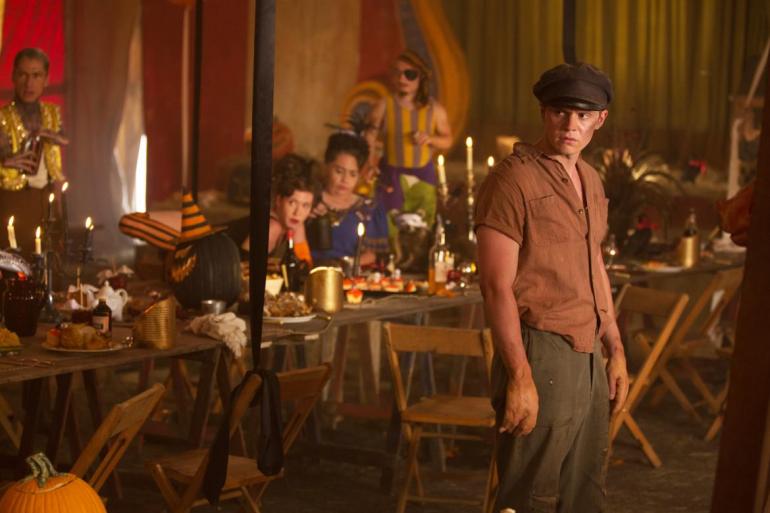
    The episode divides rather neatly into two halves. The first concerns Dandy’s takeover of the Cabinet of Curiosities. As the episode opens, Dandy lords over the freaks, and they rise against him, seemingly too easily. And of course it is too easy—before long Dandy is silently strolling around the camp, shooting the freaks dead one by one. RIP Grace Gummer the Fork-tongued Tattoo Monster, dead without consequence like every other woman on this show. Coven may have trivialized death by making it a temporary, stakes-free status for most of its characters (Nan just stayed dead). But Freak Show commits an arguably greater skin by robbing death of its necessary dramatic weight. Dandy’s massacre of the freaks underlines a point that needs no further expounding, and comes at the expense of characters in whom the audience could not possibly be expected to have any investment. Even Dandy, despite Finn Wittrock’s game performance, has been absent so long and so underwritten overall that his motivation beyond “is a murderous psycho” is non-existent. There is some beautiful cinematography throughout the sequence, but that’s just surface (albeit a gorgeous one). Far from shocking or moving, this turn of events is mean and violent and totally empty. Even Desiree’s anguished embrace of Jimmy upon their discovery of the bodies rings hollow, even though it theoretically checks every box it needs to. In Freak Show, grief and violence and loss are all surface, no depth.

    From there we have an abrupt cut to the wedding of Dandy Mott to Bette and Dot. If I weren’t committed to reviewing this show for Smash Cut, I would’ve shut off the television at this wedding scene. No joke. Of course the twins are playing a long (well, not very long) con, but fuck it, who cares? By the time Bette and Dot and the surviving freaks (just Desiree and Jimmy at this point) have drugged Dandy and dragged him back to the circus, I have completely checked out. I think my major issue with this whole thing is that this final confrontation begins in this episode—it doesn’t build from anything that came before, even despite some hamfisted attempts to pull everything together such as Desiree’s speech. “You may look like a motion picture dream boat, but you are the biggest freak of them all.” You don’t say!

    As with Coven, the season arc has done a heel turn to be about something that isn’t tangential—in fact, the rest of the season was the tangent—but which is entirely without consequence anyway. In this instance, it’s the notion of Dandy wanting to own the freak show, which was nominally raised in the first episode and then promptly abandoned in favor of literally a million other things. The funny thing is, this is true of all the show’s seasons: both Murder House and Asylum made similar eleventh hour turns that revealed the stories to be about something different than expected. The difference is, those seasons revealed the stories as being about something more than expected, too. Freak Show’s ending is reductive, unexpected only in how thoroughly unsatisfying it is.

    Anyway, then Bette and Dot and Desiree and Jimmy trap Dandy in a Houdini-esque tank and drown him to death, all the while sitting there and munching popcorn and cracking wise. And so, what? Are we supposed to feel good about this? Is this supposed to be a triumph for these characters—that they, too, are horrible murderers?

    And then suddenly it is 1960, and Elsa is famous (sure) and has a variety hour (okay) and is married to David Burtka (alright, fine) and she won’t perform on Halloween because she doesn’t do that because Edward Mordrake. Do you remember Edward Mordrake?

    Just to be clear: the entire remainder of the episode is an extended rhapsody on the nadir of Elsa Mars’s fame, which has apparently all along been the heart and soul of the season. Eventually the hardcore German murder-porn videos of Elsa’s past come back to haunt her, and also Massimo is dying of lung cancer, and so she decides that maybe she will perform on Halloween after all, and so she sings David Bowie’s “Heroes” (poorly) and Edward Mordrake shepherds her soul away on national television, accompanied by Twisty. Do you remember Twisty?

    Wait. It gets stupider. Edward Mordrake decides that Elsa Mars isn’t made for his Gang of Ghouls or whoever the fuck and so instead, Elsa passes into Freak Show Eternal and there’s the fucking ghost of Ma Petite and Grace Gummer the Fork-tongued Tattoo Monster and yes, even Ethel, and they all hug and make up and Elsa sings “Life on Mars” to an audience of ghosts, happily ever after. I’m not kidding. This is how American Horror Story: Freak Show ends. What a spectacular nosedive into the asinine for a season that’s been content to tread the line of mediocrity for so long.

    Merry Christmas, Noodle Mouse. See you next year for Amish aliens from the future or whatever.


    Stray Observations:

    • As always, the grade below is for the season. The episode grade is 3/10, and that only because some of the actors are trying really hard and a few shots are very pretty.
    • Shout out to Finn Wittrock, who was by far the MVP of Freak Show, and a more than worthy addition to the repertory. Here’s hoping that if he’s back for more, it’s a more deserving script.
    • Neither Maggie nor Dell warrants any mention in a finale that turns out to be extremely preoccupied with ghosts. This may suggest something about the superfluity of, oh, say five or six episodes in the middle of the season.
    • Per reports from TCA week, American Horror Story is going to be radically re-invented for season five. Given that this is a Ryan Murphy show and so the phrase “radically re-invented” is pregnant with literally boundless possible meanings. Perhaps it will be re-invented as a “good television show.”
    • My primary motivation for reviewing American Horror Story this season was my hope that it would ascend to the terrible, laughable heights (sure, we’ll call them heights) of Coven, and so mostly I’m bummed that it turned out to be too little, too late. Imagine if we had hit this high water mark around episode eight! Anyway, The Americans takes over the time slot next week, so if you need a palate cleanser you could do worse. Thanks for following along on this dumb journey with me!
  • Shameless Review: “I’m the Liver” (5×02)

    Shameless Review: “I’m the Liver” (5×02)

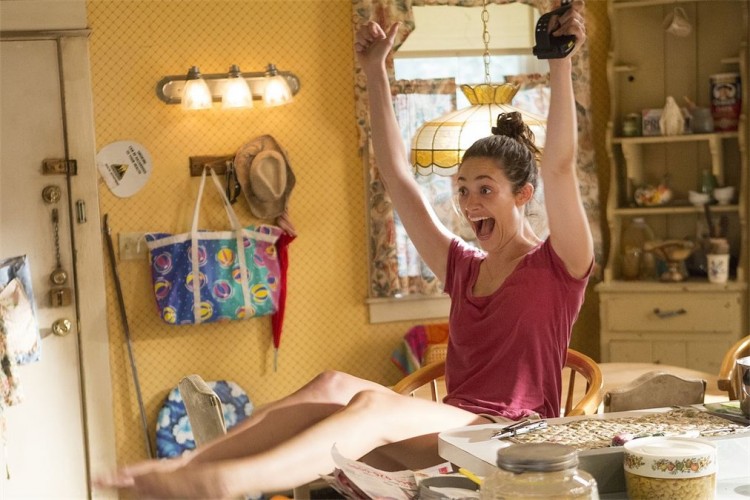
    shameless I'm the liver

    As with “Milk of the Gods,” this week’s episode of Shameless is something of a mixed bag. There’s quite a bit of good material here, but the show is doling it out very slowly, and as a result much of “I’m the Liver” repeats the beats of the premiere, without adding any depth or creating any further complications. Even the instances that do develop new wrinkles this week (I’m thinking mainly of Fiona here) are still baby steps forward in a season that is in no rush to make its point.

    Again, Shameless has more than earned this sort of measure storytelling. There’s no reason not to be confident that the season is building to something, and that much or all of this early work will pay off down the line. But when aspects of the episode are as trying as aspects of this episode are, it can be difficult to be as patient as one would like with the storytelling.

    Once again, the bulk of the episode is spent with Frank and company, and once again, I’m left to wonder if this isn’t a mistake. The broader comedy on this show can be hit or miss, and Frank’s story this week exemplifies both extremes. There is some excellent physical comedy—in fact, Sheila casually squirting Sammie with the hose is side-splitting—but also some misguided attempts at black comedy that ultimately forget they’re meant to be telling a joke. The Father’s Day luncheon to which Frank and Sheila are invited, hosted by the parents of the donor whose liver Frank is now abusing, is dark to the point of discomfort. By the time the donor’s mother is cringing in horror at the head of the table, the audience is way ahead of her. It’s not funny enough to warrant how very dark the scene is, and so it ends up gross and even somewhat exploitative, too weird for its own good. Wrapped up in all of this is Sheila and Sammie’s continued feud, which is, like so many things with these characters, too outlandish to achieve any sort of pathos; and without the pathos, the comedy falls flat, too.

    Lip and Ian are both stuck in retreads of the premiere. Lip has his first day of work on the demolition crew; he puts on a brave face, pretending to be this strange, idealized version of himself that he holds in his head, like he can still be the blue collar, working class South Side hero. But he’s not that guy, and after a hard day of work, he rounds the corner and collapses. The story is well-told in its few scenes, but divulges no new information, nor does it change Lip’s status quo, not even when he briefly crosses paths with Mandy. Still, it’s a sight better than Ian’s story, which is equally repetitive but less well done, featuring an (admittedly accurate) caricature of the Westboro Baptist Church and an increasingly heightened manic episode of Ian’s that is never quite believable or engaging. It may just be that Cameron Monaghan is better at playing the depressive episodes than the manic, but something in the combination of performance and writing just doesn’t work this week.

    Much more successful is the C-plot featuring Debbie and Carl, which starts out as a light-hearted, standard teen-movie romp, through the lens of Shameless, before turning into a more careful study of Debbie’s continuing journey into adolescence. Her scenes with Svetlana are comedic gold, as are Debbie’s studied attempts at sexiness at the public pool. Svetlana is pretty much always awesome to have around, but tonight’s scenes are a good reminder of just how well rounded the character has become.

    But what’s truly best about this particular thread is the way it dovetails so neatly with Fiona’s, leading to a devastating final scene that sneaks up on the viewer, so that you don’t realize its horror until it’s too late. Fiona spends much of the episode flirting back and forth with Sean, newly free of her ankle monitor and suddenly (or perhaps usually?) flush with options with regard to men. But after a violent encounter with a diner who was rude to Fiona (and I mean, super fucking rude), Sean hits the brakes. He might have seemed like the responsible and respectable option, but is in fact the same kind of conflicted, bad news guy that she’s always into. And he confirms every scary thing that Fiona has ever thought about herself. “I’m not just chaos,” she pleads, but he knows better.

    And so she takes her fourteen year old sister, dressed like a hooker, to a 21-plus concert, puts her directly in harm’s way with some gross pervert, punches a guy, draws the singer of the band into a fight, and runs like hell out of there lest she violate her probation. Chaos with a capital-C, sweetheart. This is a great note to end the episode on, not just narratively speaking, but also just with the composition of the shot. Debbie is foregrounded, giggling with excitement, finally off on an adventure with her big sister. Meanwhile Fiona is behind her, exhilarated as well, at first, until she realizes just how much trouble she is.

    It’s this ability to turn on a dime that makes Shameless a better-than-average series. It doesn’t hit these heights often, and tends to only really be consistently sublime with regard to Fiona, but man, do moments like this one make the whole endeavor worth it. I’m still waiting, somewhat less patiently than before, for the rest of the season’s elements to coalesce; but as far as Fiona and Emmy Rossum are concerned, at least, I’m all in.

    Stray Observations:

    Little Chuckles continues to be an absolute delight, with his “Happy Father’s Day Gampa” sign and all.

    “This is just like with the Jews.” “Today, the urban gentry is moneyed lesbians.” Frank’s thoughts on gentrification are typically complex.

    Another great shot: just when I was feeling a little skeptical, Frank and Sheila are prancing down the street holding hands, and dare I say my heart melted a little a bit.

    Kevin gets some great scenes in with Svetlana as well, as his and Veronica’s parenting troubles take a turn for the worst this week. Sometimes a haircut is not just a haircut.

    “Surrogate. I rent uterus like youth hostel.” Svetlana is a treasure.

    “You can’t wear the uniform and wield the cross as a weapon, soldier.”
  • Parenthood Review: “Let’s Go Home” (6×11)

    Parenthood Review: “Let’s Go Home” (6×11)

    Parenthood

    As Parenthood draws to a close, its aims of a work of fiction haven’t really changed, but they have come into sharper focus. There is a scene late in this week’s episode, the aptly titled “Let’s Go Home,” where Zeek and Camille return to the old house to retrieve an old souvenir baseball. (First, just consider that enough time has passed for the Braverman house to become “the old house”.) They’re greeted with the sight of a young boy frolicking in the yard with his dog, and a fresh coat of paint in a color Camille never would have thought of. Life goes on, and we adapt and rebuild. They leave without with baseball, without even going inside.

    “Let’s Go Home” is very much concerned with ideas of belonging, of going forward or going backward but keeping “home” in your sights regardless. It’s a more typical episode of the series than “How Did We Get Here?” in terms of structure, and it’s a stronger episode for that. Characters are paired off as usual, splintering away into their own stories, with no physical focal point such as the hospital, or even a family dinner, to anchor them to each other.

    That turns out to be a good thing. Last week’s efforts to tie everything physically to the crisis over Zeek’s health meant that anything that moved away from that became a distraction. This week, the clan is allowed to sprawl as far away as they need to; home is an idea, not a place.

    If the project of Parenthood is portraying this family unit as together and cohesive, through thick and thin, always and forever, then “Let’s Go Home” is largely an episode that puts those pieces into a place for a final statement on a theme in the coming weeks. The series is not reinventing the wheel at this point, nor does it need to. I loved this episode; it’s one of my favorites of the season. (Yes, even the business with the Luncheonette.)

    Much of the episode is about characters building things or fixing things. You first notice this when the show smacks you over the head with it—Amber and Sarah can’t figure out how to put together the crib that absent dad Seth mailed. But soon a pattern emerges throughout the episode, of characters sitting on the floor together, wondering how to rebuild the fragmented or simply forgotten pieces of their lives. Julia and Sarah do strange-looking crunches on the grass and weight the pros and cons of getting back together with Joel, or of saying yes to Hank’s proposal. Adam and Crosby wonder whether to go out on a limb for a shared dream, or to play it safe by giving up. Sarah and Hank sit by the finished crib and map out the next phase of their lives, together.

    It should come as no surprise that in every instance, Parenthood endorses risk taking, endorses reunion, endorses any course of action that brings the Bravermans together. It’s the same drum that the show has been beating all this time, and to its credit, it hasn’t really gotten old. What sets this episode apart is its slightly different variation on this enduring theme. Parenthood has spent a fair amount of time now disassembling its various parts, a fact that is much more obvious in retrospect than it was as it was happening. Whether it’s Kristina’s battle with cancer, Adam losing his job, Zeek facing death, Julia contemplating divorce, Amber getting pregnant—the ties that bind the Bravermans have frayed but have not broken. With the end in sight, there is no longer a need to continue testing those ties—now the show can purely celebrate and reinforce them.

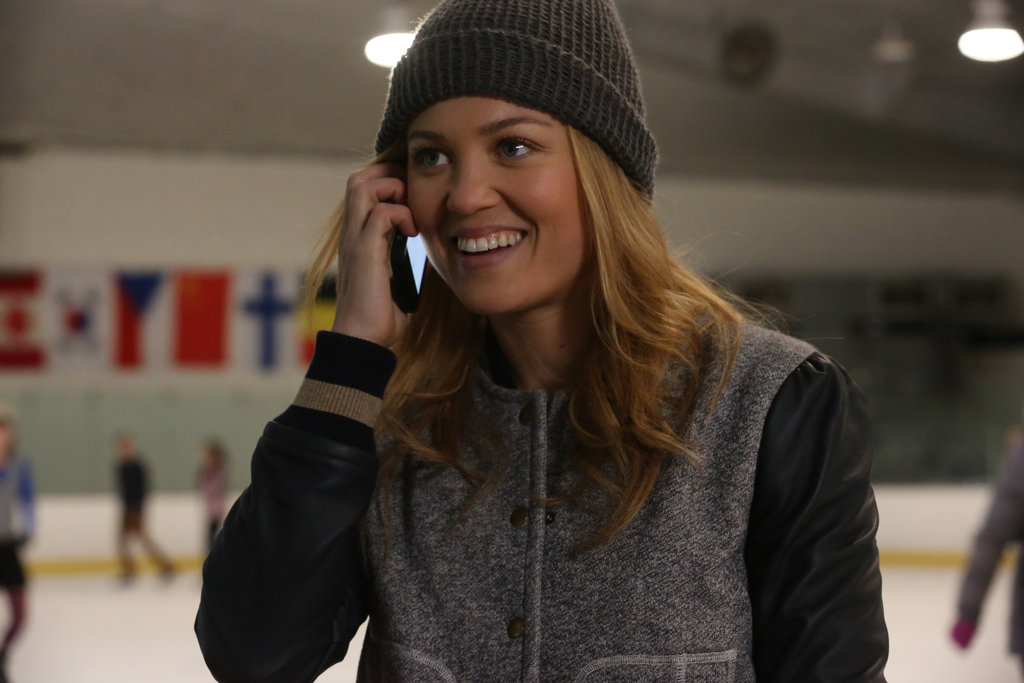
    The result is a sweet and refreshing take on the usual Parenthood schmaltz (which I say with nothing but love.) It’s what gives us scenes like the unexpectedly romantic kiss on the ice between Julia and Joel, whose reunion just two weeks ago was my most dreaded outcome of the season. Their tentative steps toward fixing their marriage had a lightness of touch this week that is a gigantic benefit to the story, making it a delight to watch.

    Even the Luncheonette story was not totally unbearable! I’ll quibble with Adam a little bit this week; after Zeek plainly tells him that Crosby is an adult and can handle the business on his own, Adam goes and continues to tell Crosby that, since Adam wants to back out, its lights out for the studio. Adam is the worst. But the situation with the Luncheonette this week leads to the best use of Crosby in some time, giving him something to be legitimately serious about, and creating a final test of faith for the rest of his family; instead of bemoaning his continued arrested development, I’m excited to see Crosby (presumably) rise to the challenge.

    “Let’s Go Home” is more heartwarming than heart wrenching, which is a fine change of pace for the series in the home stretch. It’s one of the season’s finer hours, one that’s sure to leave you with a smile plastered onto your face. You’d have to have a heart of stone not to be moved by Sarah’s “yes” to Hank, or by Joel’s admittedly smooth moves in regaining Julia’s love and trust. This almost aggressively optimistic mode is one that only works when the question of future stories is removed, but it works well indeed, and it makes these final hours with Bravermans a well-earned pleasure.

    Stray Observations:

    • I was thinking how hilarious it would have been there was some tragic family secret hidden away on those rolls of film, but it turned out they’re actually the opening credits, which is even more hilarious.
    • I’m happy Jasmine gets to do something here, even if it is just prop Crosby up.
    • Semi-regular praise for Monica Potter again, who is so, so good. Her face after Adam tells her about Jasmine’s visit is running through eighteen different emotions simultaneously and they are all captivating.
    • “I prefer actual silence to Aunt Sarah’s voice.” Max returns with a vengeance this week.
    • Chris gets thrown under a bus this week without so much as a goodbye. Chris, we hardly knew you.
    • He was always a cute kid, but this is the first time I’ve actually thought to myself that Miles Heizer grew up pretty fine. (Maybe it’s the haircut.)
  • Smash Cut Awards Clash (Ep. 1): Oscar Nominations Reactions

    Smash Cut Awards Clash (Ep. 1): Oscar Nominations Reactions

    Episode One Oscar Nominations Reactions
    This year, as usual, the Oscar nominations brought us some of the biggest snubs, surprises, and shockers of any award show.

    Although we saw Birdman and The Grand Budapest Hotel lead as expected, films like Gone Girl and Selma were nearly shut out. In the first episode of the Smash Cut Awards Clash podcast. Editor-in-Chief Karl Delossantos breaks down the top 6 categories and talks about the snubs and surprises in each of them.

    Check back next week when we talk about the technical races.

    Smash Cut Awards Clash (Episode 1): Oscar Nomination Reactions! by Karl Delossantos on Mixcloud

  • My Top 5 Favorite Song Production Choices

    My Top 5 Favorite Song Production Choices

    If there’s one thing I’m a sucker for, it’s fantastic album production. And since I now possess an ample platform for my opinions to be kinda heard, I’m going to honor some of my favorite production moments.

    It’s one thing to have top-notch, impressive production throughout an entire song; I can name plenty of those. For this list, I’m focusing on songs that have specific jaw dropping moments, sending chills down my spine not only the first time I heard them, but every time afterwards.

    I’ve left out the works of The Beatles, Queen, and all Steven Wilson associated projects, because they each have vast enough catalogues for their own lists. I’ve also left off some song selections from albums in which every song could make it onto the list (Daft Punk’s Random Access Memories, for example).

    Now, this was accidental, but I ordered this list starting with the sexiest tracks, diminishing in sexiness as we go down the list. So, with that in mind, let us proceed….

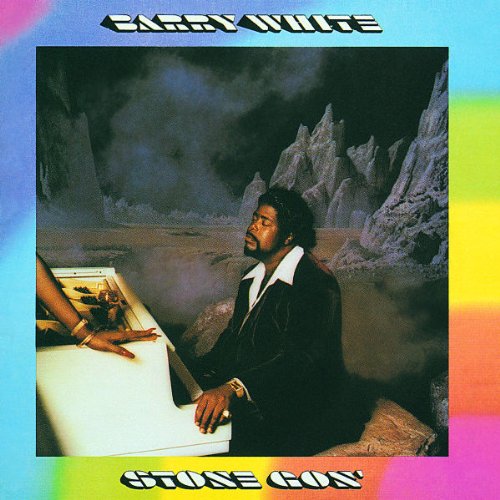
    1. “Never, Never Gonna Give Ya Up” – Barry White, Stone Gon’, 1973

    I’ll be honest, that famously dramatic, almost atonal intro is the reason this song made the list. The way the music builds in intensity is mysterious, You have no idea where it will take you until the band reaches that high climax (pun totally intended), and you’re awash in probably one of the sexiest backing tracks ever. I think there’s a harpsichord in among the strings, and it works amazingly well.

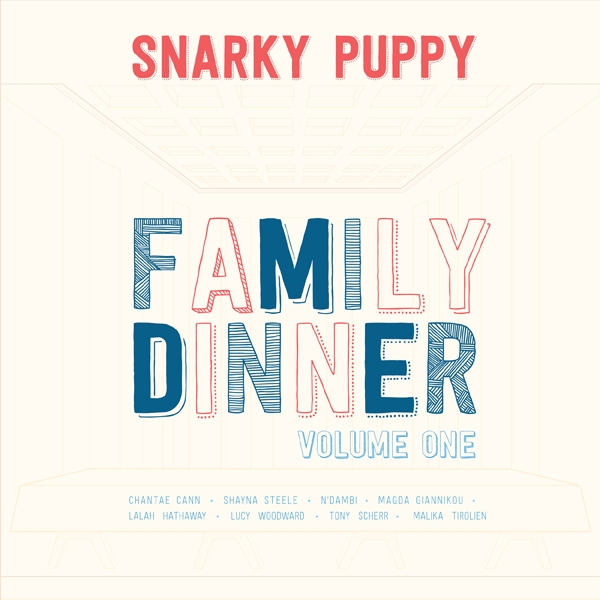
    1. “Something” – Snarky Puppy & Lalah Hathaway, Family Dinner Vol. 1, 2013

    If there was ever a track that truly deserved a Grammy, it was this (thankfully, it won one). Robert “Sput” Searight’s arrangement took this fantastic R&B track into sultry jazz territory, and Lalah Hathaway’s vocals are perfect in every way. She also sang polyphony, four times, like it was no big deal.

    There was just too much to say about Snarky Puppy’s playing, so I just went ahead and listed all the reasons they make this track amazing

    • Bassist Michael League laying down some of the grooviest, funky bass lines that never overpower
    • Guitarists Mark Lettieri’s and Bob Lanzetti’s well-timed melodic flourishes
    • The way drummer Robert “Sput” Searight and percussionist Nate Werth locked in together, forcing us listeners to helplessly dance along
    • Mike “Maz” Maher’s smooth trumpet solo
    • Corey Henry’s unbelievable organ interplay with Lalah’s voice
    • Corey Henry’s organ tone
    • Corey Henry
    • The backing vocals of Chelsea West, Katya Diaz, and Rachella Searight
    • Beautiful horn lines from Maz, Chris Bullock, and Jay Jennings
    • The laid back electric piano lines of Bill Laurance

    Special credit must be given to sound engineer and mixer Eric Hartman. As he as done on every Snarky Puppy live album, he manages to get a clean mix of fourteen musicians, balancing every instrument perfectly. In an age of compressed and distorted tracks, it is rare to find a song where you can pick out each instrument individually. It was well needed here.

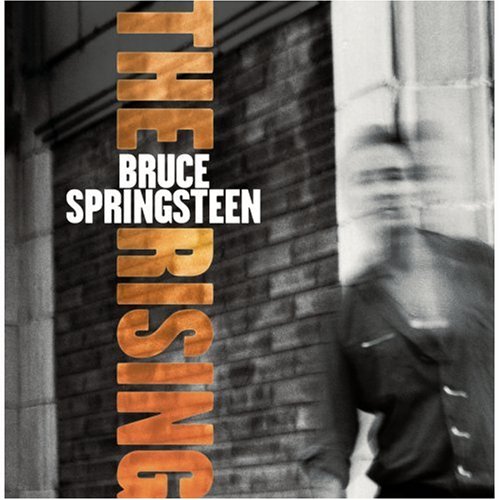
    1. “The Fuse” – Bruce Springsteen, The Rising, 2002

    The Bruce Springsteen catalogue features a rich variety of top-notch production, but this track has always stood out for me. A modern rock song with a slight hip-hop influence (courtesy of producer Brendan O’Brian), it’s an overall great modern rock song.

    There is an absolutely beautiful and haunting moment that comes in about 3:40 into the song. At the end of a reverberated and airy bridge, all the music suddenly cuts out as Springsteen delivers his final line. “Your bittersweet taste on my tongue”. A completely dry vocal track provides a chilling contrast to the preceding lines, and intensifies the power as the band slams into the chorus.

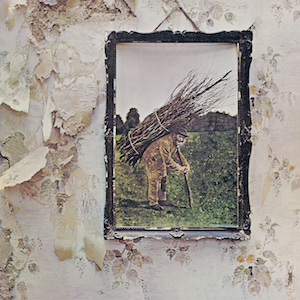
    1. “Stairway to Heaven” – Led Zeppelin,                   , 1971

    Not too much can be said about Stairway that hasn’t been said already, so I’m going to keep this one pretty short. The buildup in this song is perfectly executed. Going from a lonely acoustic guitar, to a dreamy musical drive, into a ferocious all-out rock climax, Stairway is a musical journey that has seldom been surpassed.

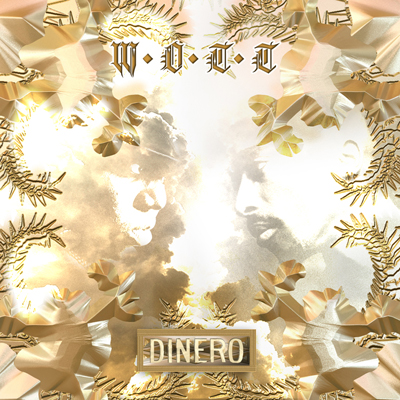
    1. “No Church in the Wild” – Kanye West & Jay-Z (featuring Frank Ocean & The Dream) (with samples of Spooky Tooth, Phil Manzanera, & James Brown), Watch the Throne, 2012

    Combine a progressive rock guitar riff, James Brown screaming, a vocoder, and a philosophy lesson, and you get this classic track. Ok, I’m gonna break my rule since I’m talking about the full song, but I just love it a bit too much. The brooding intensity of the music is perfectly matched by Jay’s flow (and, um, less so by Kanye’s). Frank Ocean and The Dream make awesome cameos as well, and the creative sampling makes a vibe that always seems to get the blood running whenever I hear it.


    <iframe src=”https://embed.spotify.com/?uri=spotify:user:1289280408:playlist:2W9AA4AREZUZJowL891ZY0″ width=”300″ height=”380″ frameborder=”0″ allowtransparency=”true”>


    Do you agree with this list? Or did it make steam come out of your ears, clouding your headphones? Do you have different songs you would have put in this list? I bet you do. Throw ‘em in the comments!!!