Blog

  • Masters of Sex Review: Kyrie Eleison (2×02)

    Masters of Sex Review: Kyrie Eleison (2×02)

    Episode 202

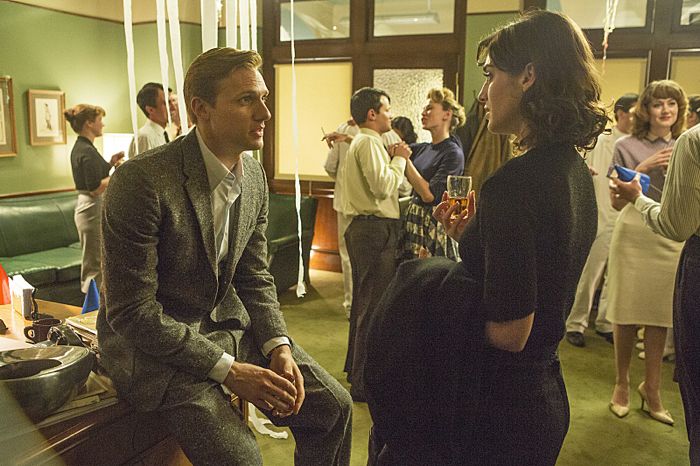
    I don’t want to say this was a filler episode of Masters of Sex, but this was a filler episode of Masters of Sex. That being said, it was a fairly good filler episode. Entitled “Kyrie Eleison”, the episode dealt with a new nanny, a new hospital, a film crew, and a nymphomaniac. Yep, you heard that right. Masters of Sex has always been a show that pushes the limits, and this episode is no exception.

    First of all, I need to define what I see as a filler episode. Obviously it’s an episode that doesn’t have a clear effect on the series’ plot, but I also have to point out that it shouldn’t have a profound effect on any characters or our perception of those characters. While there is some development, like from Betty and Teddy, there isn’t anything that I would say changes too much of the course of the series. Mad Men is a rare show that I would way never had a filler episode. Every single episode and scene contributed to the education of the characters. Although Masters had to fill sometime, I am in no way faulting them for it.

    Starting at his new job, Bill got a rude awakening to the way of the hospital. Unlike Washington University Hospital, politics and money speak a lot louder than the actual morality of medicine. It’s something that Bill isn’t used to. Obviously he’s experienced his fair share of hospital politics at WU, but at least the work always meant more. I mean, at least until he was fired because of it, but that’s besides the point. As Bill deals with a teenage nymphomaniac, who is now on her third lost pregnancy, he gets a taste of those politics. Her parents, benefactors to the hospital, were insistent that she has a hysterectomy to help counter her “whorish” ways. Bill was tepid to the idea and continues to be even when his new boss insisted that he perform the surgery.

    Though this storyline is part of the reason I saw this episode as a filler, unlike Mad Men which arguably never had a filler episode, I found the storyline to be entertaining and quite emotional. Especially when the daughter begged Bill to perform the surgery after accepting her parent’s diagnosis of her as a whore. He was adamant that all perversion are medical illnesses. We got to see a softer side of Bill who was trying to uphold his oath of “do no harm” by introducing her to contraception and telling her that she’s “not what [her} problems are.”

    I probably shouldn’t telling you this, but daddy thought the sun rises and sets with you.
    -Vivian to Bill

    Bill also finally discovered the secret of Barton’s suicide attempt by asking his daughter. After listening intently about the ordeal and offering Vivian some support, Bill went to his car and cries, offering us a rare glimpse of vulnerability that we haven’t seen since the episode “Catherine.”

    Though Virginia spent much of the episode tending to other characters’ storylines, she did have a wonderful and hilarious scene with a throat doctor as she explained the functionality of Ulysses, which ended in quite a… splash. She also had a dance with Dr. Langham who explained to her that they’re “lone wolves, driven from the pack by [their] refusal to conform.”

    In my review of last week’s episode (find the review here) I compared the series to Mad Men. This week, another comparison came in. Betty Draper… I mean, Libby Masters hired a nanny named Coral (played by Keke Palmer) to help with their daughter. When she was able to quiet down the baby after Libby was unable to, Libby decided to belittle her by correcting her grammar and telling her that they should be working as a team. The passive-aggression could be cut with a knife. She even had a cigarette in hand. If that wasn’t a Betty Draper move, then I don’t know what is. Thank god they’re finally giving Caitlin Fitzgerald something else to do.

    Despite their separated storylines, Bill and Virginia both end up at their usual hotel just as the episode faded out. “Kyrie Eleison” was definitely a step down from the wonderful season premiere, but it proved to be an entertaining episode that offered some strong moments. However, I am nervous that the main plot of the series may not be thick enough to fill out a complete roster. This coupled with Showtime’s tendency to keep shows on past their expiration date (I’m looking at you Dexter), I can see this series going south very fast. But, I can only hope that it doesn’t.

  • 2014 Emmy Predictions: Best Guest Actor in a Drama Series

    2014 Emmy Predictions: Best Guest Actor in a Drama Series

    Featured Guest Actor Drama[maxbutton id=”3″]
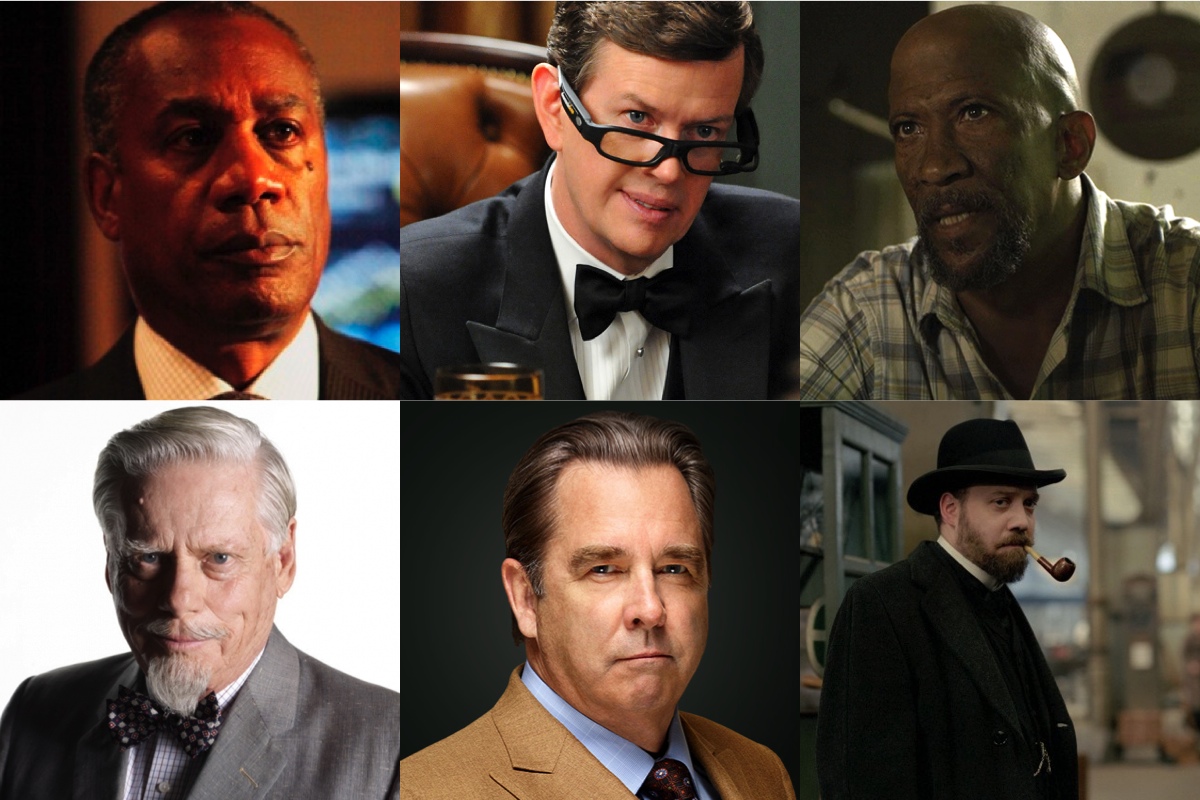
    There’s a tough two horse race in the works for the Emmy for Best Guest Actor in a Drama Series. Although Mad Men has never won an Emmy for acting, after their surprising season finale it looks like Robert Morse is going to have a real shot at breaking that curse. His screen time is not huge, but he does get emotional during the moon landing and then has a musical number (I know, WTF). It’s going to stand out a bit among his competitors.

    He is getting some strong competition from Beau Bridges (Masters of Sex) who gave an emotional performance where we see the lengths he goes to “cure” himself of his homosexuality. However, I think we are grossly underestimating Reg E. Cathey (House of Cards). Anyone who has watched his episode submission knows why I’m ranking him at number two. While his performance is extremely understated, his storyline has a lot of impact.

    The Katy Perry dark horse contender here is Joe Morton (Scandal). Most of his submission is spent in flashback with a lot of yelling, and tears, and sadness. Perfect Emmy bait. It helps that the show won here last year as well.
    Guest Actor Drama FINAL
    1. Robert Morse, Mad Men (“Waterloo”)
    2. Reg E. Cathey, House of Cards (“Chapter 22”)
    3. Beau Bridges, Masters of Sex (“Manhigh”)
    4. Joe Morton, Scandal (“Guess Who’s Coming to Dinner”)
    5. Paul Giamatti, Downton Abbey (“Episode 4.8”)
    6. Dylan Baker, The Good Wife (“Tying the Knot”)

  • Emmy Spotlight: “House of Cards”

    Emmy Spotlight: “House of Cards”

    05-house-of-cards-s02e13-1
    Where does one begin with House of Cards? It so clearly (I might even say desperately?) wants to be a prestige drama, and it has many of the hallmarks of such series. High-profile director and executive producer from the film world? Check. Even higher-profile movie star making the switch to television? Check. Famous, older film actress arguably staging a comeback in her most notable role in some time? Check, even if I did accidentally insinuate that American Horror Story is a prestige drama just now. In its production, its tone, and the style if not the quality of its writing, House of Cards has just about every characteristic one would assign to a prestige drama.

    And yet House of Cards is not a very good show, is it?

    Let me backpedal here a bit. House of Cards isn’t terrible. It’s perfectly fine. But it’s at its very best when it’s not aiming so damn hard at prestige. Frank’s monologues, lush with purple prose, are often ridiculous, but they are of such heightened, Shakespearean proportion that they enliven what can often be a very tedious show. House of Cards is at its best when it luxuriates in its pulpiness. The thrill of Frank murdering Zoe Barnes is a highlight, but it happens an hour in! Then we’re left to dry for several episodes, with nothing quite so earth-shattering to entertain us, and with a pace that slows to a crawl. At the end of the day House of Cards and Scandal share more DNA than the former might care to admit. That’s a shame, because the scandalous moments (no pun) are the real highlights of the show, and we could do with a great deal more of them.

    frank-underwood-is-embarrassingly-ignorant-about-how-treasury-auctions-workUnfortunately such moments are few and far between for much of the season. That’s for a variety of reasons, not least of which is the show’s curious structure, which stretches storylines over many episodes and allows them to meander at languorous pace. Lucas’ investigation following Zoe’s murder is protracted, and comes to an abrupt end with his arrest, as we instead follow hacker Gavin Orsay on a strange tangent that remains unresolved by season’s end. Doug Stamper is preoccupied by Rachel Posner through much of the season, which means frequent detours into Rachel’s daily life, until Doug intervenes once more—all in the name of giving Frank Underwood yet another life to trample over and utterly ruin. (That said, Rachel’s apparent killing of Doug is another welcome shocker, though, and one that follows through on her promise to him in the season premiere. Frank and Claire’s impromptu threesome with Meechum is another great such moment.) In a binge watch this stop-start pacing might go unnoticed (though honestly, I think it’s actually more obvious), but when considering the episodes as a set, it’s hard to decide how valuable each of these tangents really is.

    More than not delivering on the promise of the season premiere’s twist, the show is frustratingly content to move forward with a predictable inevitability toward its conclusion. There is never for a moment any doubt that Frank will not achieve his goal of ascending to the presidency. We are meant to marvel at the extent to which Frank manipulates Walker and everyone around him, but when it’s so very easy, what does it matter? Even Raymond Tusk, who we’re sold on as a big bad who can put Frank back on his heel, is beaten summarily and without much undue effort on Frank’s part. Frank’s schemes just simply work, every time, without fail. Even his seeming failures are intentional, another layer of manipulation, the villain getting himself captured on purpose. We likely need no more discussion on that tired cliché.

    The persistence of low stakes non-drama falls largely on the glut of characters who are not named Underwood. So many characters are cyphers, such obvious pawns in Frank’s game that to get invested in them is near impossible. Even when the acting is good, as it is with Molly Parker’s Jackie Sharp, the writing doesn’t do enough to make these characters feel alive or three-dimensional. They all exist in relation to Frank, without ever providing any meaningful resistance to Frank. Drama thrives on conflict; stories thrive on a protagonist who faces obstacles. That’s true even when the protagonist is a villain, as Frank so unabashedly is. And when the writing is bad, as it is with President Walker, a bland, milquetoast, stupid man who through some miracle has been elected to his office, the problem is exacerbated that much more. Who cares if Frank usurps his presidency? The man is a moron. It’s basically a requirement of the plot that everyone be a pawn in Frank’s game, but that doesn’t make for very compelling drama, no matter how great the acting around it all is. Take the monologue that closes the first episode: Frank illustrates his grand design to us, and in the moment it’s invigorating, but we really need to see him challenged and it just doesn’t happen!

    To its credit, the show is staged and shot in such a way that plays up this aspect of the writing—for example in “Chapter 17”, where Jackie Sharp and Remy scheme with Frank in his office; Jackie and Remy are shot together, facing the camera (and therefore Frank) as they talk, and every so often the camera cuts back to Frank, facing them, but not facing the camera head on. The alternating shots give the impression of Frank watching a play, which of course he is—one he’s written himself. When Jackie and Remy leave, Frank turns and addresses the audience, furthering this effect. I point this moment out, and the many others like it, to emphasize that there is no artistic failing on the part of the show—it’s well and thoughtfully constructed, and the idea that all these characters are puppets for Frank and Claire Underwood is effectively communicated in all aspects of the production. But when the show purports to be an ensemble drama, as well, when it expects the audience to care about Lucas or Jackie or Rachel independently of their association with the Underwoods, this device falters, and at times it breaks the show. In both the writing and within the story itself, everything the other characters do is in service of Frank Underwood, and never in resistance to him. If a character believes otherwise he is undoubtedly wrong, either lying to himself, or simply ignorant and naïve.

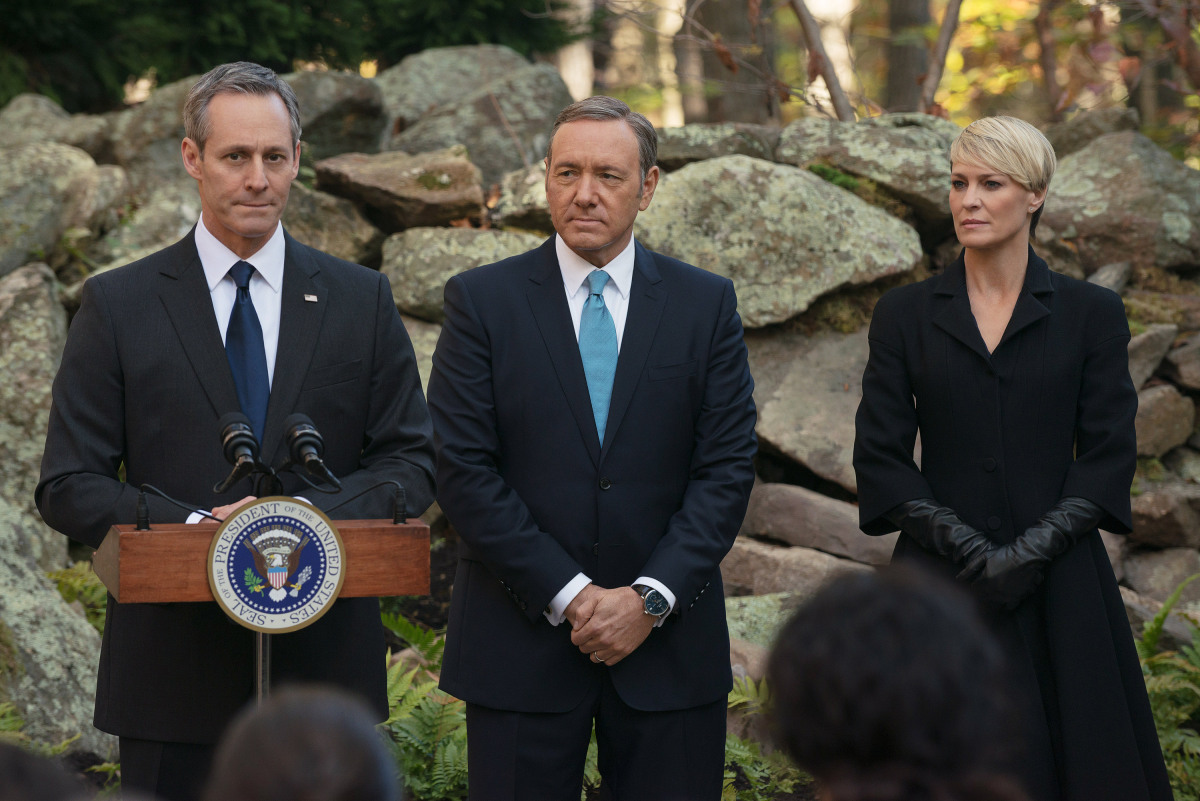
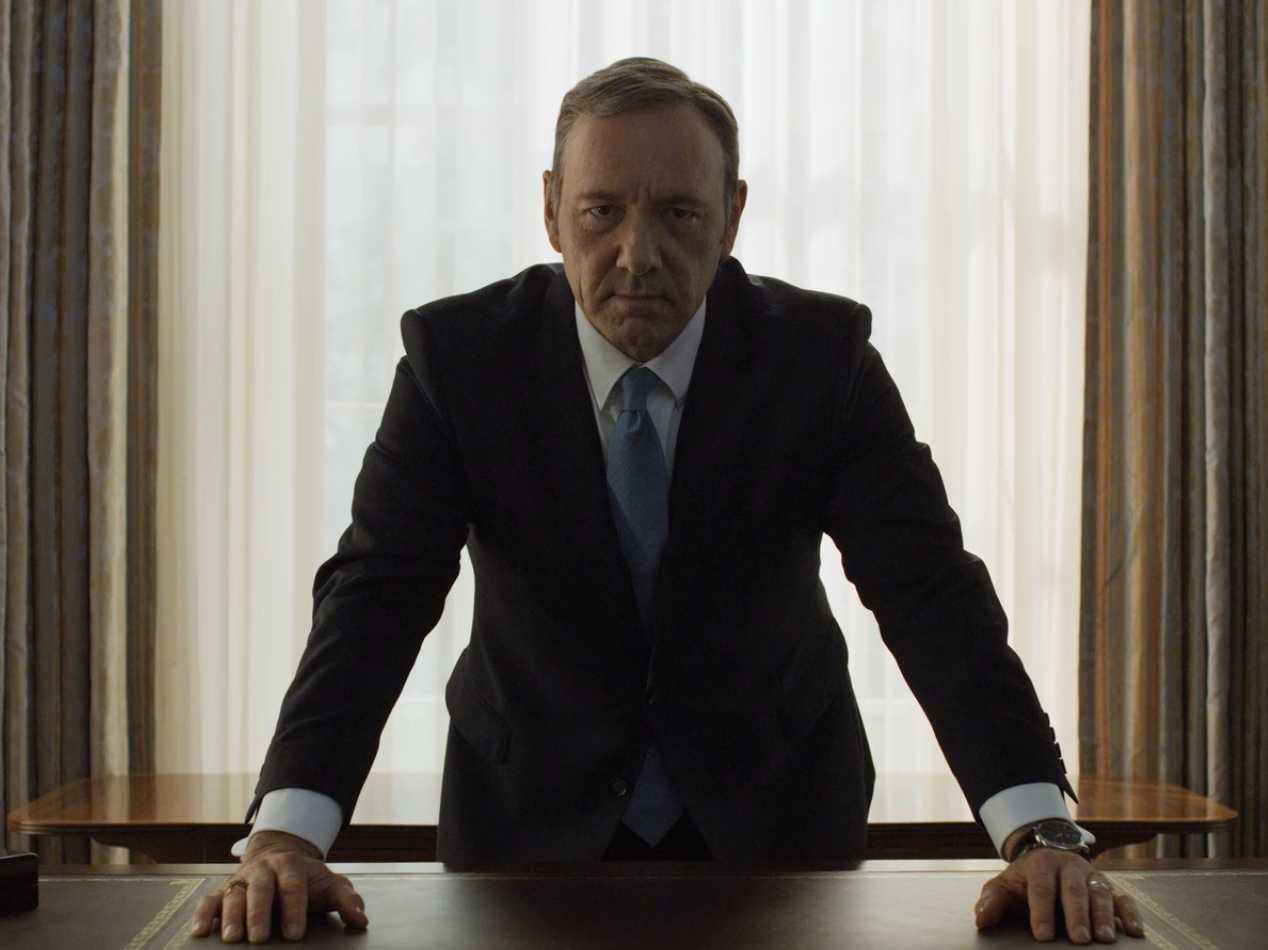
    houseofcards-meechumI fear I’m coming off more negatively than I intend to, so let’s address the nugget of a fantastic show that is nestled within House of Cards. I’m referring of course to the wonderful arc of Frank and Claire’s relationship, which takes center stage this season in a way that nearly manages to anchor the show despite the aforementioned flaws and frustrations. It’s no great surprise that Kevin Spacey is a powerhouse from top to bottom this season. The monologue at the end of the premiere is stunning, the shot of his cufflinks with just enough tongue in cheek. But really it’s that last shot of the season that takes first prize—it’s great enough to make you think you’ve been watching a wholly different show. The show, and Spacey’s performance, borrow liberally from Richard III, smartly so. Even when the script is unwilling or unable to properly shade the events of this story, Spacey’s performance finds nuance and subtlety (even with that accent).

    But really, the MVP of this season is the stellar, absolutely fantastic Robin Wright. Claire’s story, though intermittently focused on throughout the season, is also the strongest of this set of episodes, whether it’s in wrapping up her season one storylines, or with the introduction of her military sex assault legislation midway through the season. Wright doesn’t hit a false note at any point. The dialogue is frequently terrible on this show, on the nose and expository, or else so luridly purple that no actor could possibly compensate. Well, no actor besides Kevin Spacey or Robin Wright, anyway. “I’m willing to let your child wither and die inside you if that’s what’s required,” is a thing of fucking beauty. Claire’s revelatory CNN interview is the centerpiece of “Chapter 17,” and it is marvelous, especially as juxtaposed with that episode’s quarantine at the Capitol. Frank is literally locked away, forced to watch Claire manipulate the interview solo, and he watches on television with loving admiration.

    We’ve known for a while that these two really are a perfect pair, but this season foregrounds their marriage as a partnership in every aspect of their lives, and it does so to great effect. It’s bizarre to think of how functional and happy this marriage really is, considering the work these two get up to on a daily basis. Claire’s admission that she’d been raped is at once a lie and a truth, and it’s a revelation that propels her throughout the remainder of a season. By the end, she has left another life ruined, trampled again in the name of Underwood. There is that wonderful scene in the finale when, upon returning from the home where her latest victim, heavily medicated on lithium, is now suffering a literal psychiatric breakdown, Claire sits on the stairs and collapses into tears, breaking down for literally a second, before she regains her composure and continues to her bedroom. Robin Wright is impossibly good, completely encapsulating such a wide array of emotions in this scene. That she does this consistently throughout the season is nothing short of amazing, and I’d argue that she does more than even Spacey to elevate this material.

    We should also take a moment to recognize Reg E. Cathy’s work as Freddy in his standalone episode late in the season, which feels—intentionally, no doubt—like something out of The Wire. In an initial binge, the episode feels abrupt and out of place, but it’s rightly been recognized as a standout moment of the season. It does something the rest of the show generally fails to do: it expands the scope and the context of Washington, and reminds us that there is a real world beyond all of this scheming. In addition it gives Frank his only failure of the season, and a personal one at that. We know, intellectually, that Frank and Claire have left a trail of (sometimes literal) corpses in their wake, and we’re meant to question the degree to which they feel remorse for their actions. So the idea that Tusk manages to torpedo the only thing remotely close to friendship that Frank has should be momentous, but instead that is isolated to this episode, and that’s a huge problem for the series. Of course we know Frank is a shark, but a little more insight into his emotions would go a very long way. That’s something a show like Scandal doesn’t do, and doesn’t have to do—but if House of Cards is going to be a serious drama, then it needs an episode like this. Not just an episode—it needs to feel like this all of the time, and outside of a few scattered moments, it doesn’t.

    House of Cards has all the components of great television. It’s gorgeously shot, frequently well acted, and occasionally surprising, thrilling, and emotionally deep. But at other times it feels like a rote political procedural, with all the depth and subtlety of something like Political Animals. There’s nothing wrong, necessarily, with a show like that, but it results in a jarring tone when House of Cards tries to have its cake and eat it, too. As with Game of Thrones, House of Cards feels like a series that never quite coalesces, despite having many great constituent parts. It doesn’t feel complete, the way that Breaking Bad or Mad Men or True Detective does. It’s very fun for what it is, and when Spacey or Wright are on screen, it can even be magnetic. More often than not, though, it’s a mechanical progression of events in service of a character whose success is never in doubt. Whatever conflict is presented is often empty, there to prop up Frank Underwood, schemer extraordinaire. I’d like the next go around to be a little more challenging for him.

    That said: also as with Game of Thrones, the finale leaves just enough unsaid to promise a strong third season—with Doug’s body waiting to be found and Rachel Posner on the loose, there are more than a few threads to be pulled that might unravel the Underwood presidency, and that’s a process that I’m still very intrigued to see. On that level, then, the show has succeeded. It just falls short of prestige.

    7/10

  • Deadmau5 – “while (1 < 2) – Disc Two" Album Review

    Deadmau5 – “while (1 < 2) – Disc Two" Album Review

    deadmau5-31948

    When I talked about while (1<2)’s first disc (see the review here) as being this perfectly paced venture into a non-traditional deadmau5 album, I meant it. Everything about the first disc brought new light into the way that house albums could be played, and if it was just kept at the first disc it would’ve been more than enough. I’m only saying this because the second disc does not bring the same punch as the first. I’ll explain why in a minute.

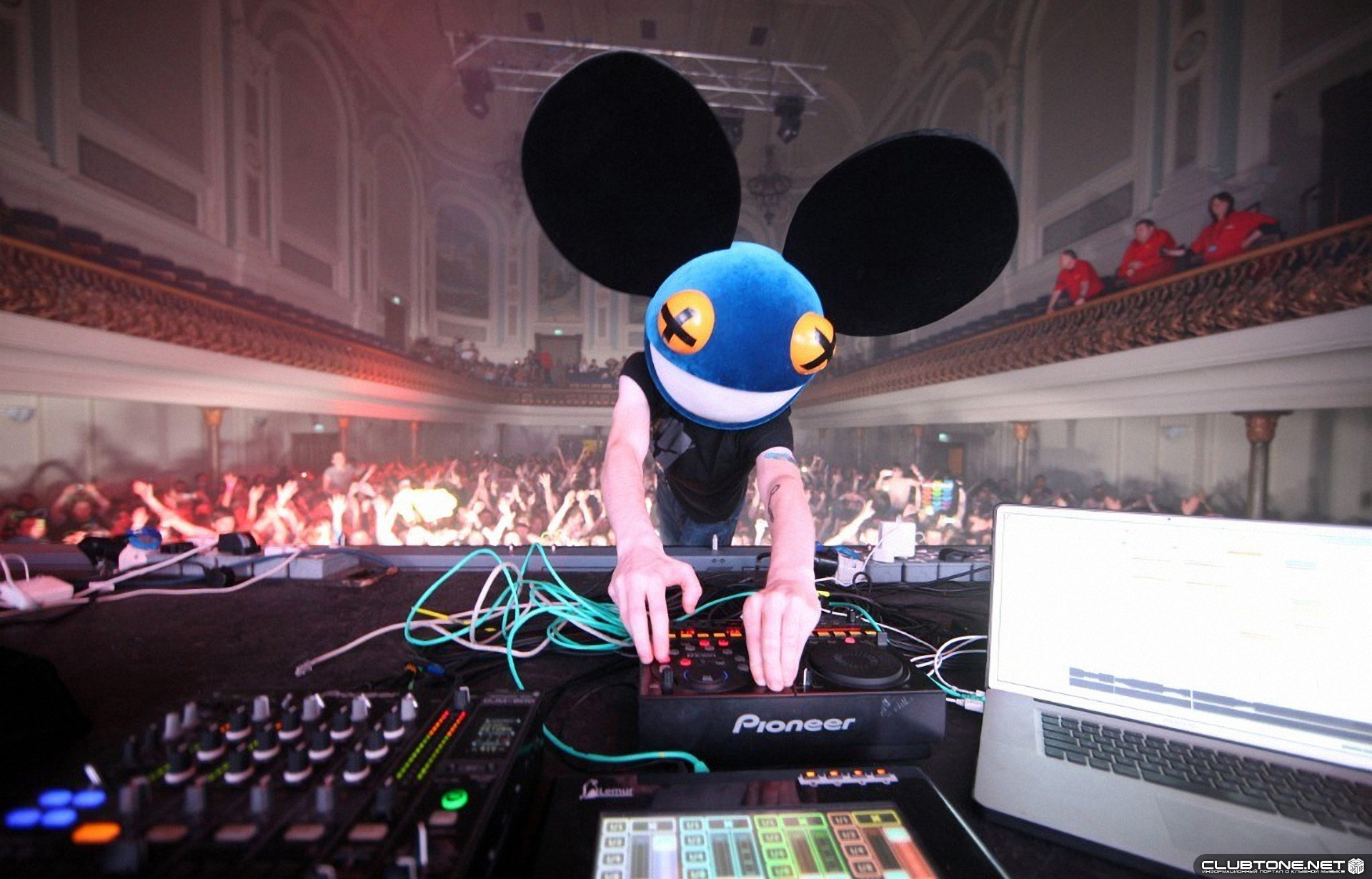
    When you hear a deadmau5 song, you think of the pumping bass, the kicking hooks, and sometimes the screaming voice of Gerard Way in the background while watching him fight in a giant robot amongst a crowd of thunderous fans… just me? ok. You don’t think of the piano interludes and the “gentle” deadmau5, you think of the “bursting with personality, assaulting” deadmau5. And although the first disc was a huge change of pace for Mr. Zimmerman, he still retained the house tracks throughout and kept that punch like Floyd Mayweather. BUT, when the second disc comes into play, it shouldn’t have to take 8 tracks (SERIOUSLY, 8 TRACKS) to get into the full Tron-like prog-house jam that we’ve come to expect.

    The second disc is paced and laid out like a soundtrack to a movie about a DJ who can’t make it like his friends can or something to that effect. I can praise the instrumentals for the use of piano and even acoustic guitar, but it’s not house, it’s not progressive house, it’s not even resembling anything close to what Zimmerman’s put out in recent years. “Acedia”, “Errors in my Bread”, “Mercedes” and “Pets” are the only house-like tracks on this disc, and I say “house-like” because they’re surprisingly underwhelming and dare I say, nice. I don’t follow most house musicians for their “nice” music, I follow so I can be punched in the face and ask “please, may I have another?”

    That being said, the piano tracks are beautifully arranged and have a somber tone to them, just like in the first disc. A track that really piqued my interest was “A Moment to Myself” which incorporated little glitches and ambient synths that make it seem like a lost M83 track that’s great for taking a load off from a long day. The remix of Nine Inch Nails’ “Survivalism” was decent too, but it’s not like the How to Destroy Angels’ remix in the first disc. And the final track “Seeya”, has the grooves of Disclosure, but like most of the album, it’s NOT. DEADMAU5. (And more importantly, it took 14 tracks to get to this REALLY GOOD TRACK?).

    Anyway, as a whole, the album is a crazy change from > album title goes here <, and it is refreshing to hear a new take on house music. However, the name deadmau5 has a lot of weight in the EDM world and if it was put under another name it would be just a decent album. The instrumentals are nice, but it’s not house. The whole album is nice, but that’s not the style we’ve come to love. There are a few tracks that leave you wanting more, but what you get is not what you wanted. Joel Zimmerman, if you’re gonna make a new album with a new sound, don’t make it musical whiplash next time.

  • Emmy Spotlight: “Game of Thrones”

    Emmy Spotlight: “Game of Thrones”

    o-GAME-OF-THRONES-facebook

    The fourth season of Game of Thrones is wildly, frustratingly uneven. On the one hand it features series highlights such as “The Lion and the Rose,” “The Viper and the Mountain,” and “The Children,” but on the other, the premiere is excessively dull, and outside of these jam-packed episodes, there is not very much that happens. Call it a problem of adaptation; after all, this season adapts roughly a third of A Storm of Swords, while also incorporating elements from A Feast for Crows and A Dance with Dragons, while also inventing material for the show (a phenomenon that, as George R. R. Martin himself has noted, compounds itself with each new episode).

    There’s another problem of adaptation this season, as well, one that has become steadily more pronounced at the series wears on. A Song of Ice and Fire is massive and sprawling, and it is structured in such a way as to expand, seemingly exponentially and infinitely, from the inciting events of the first novel. Even on the page, this continued unfurling of the narrative, expansion sideways rather than momentum forward, is tedious. On the screen it can be downright plodding. There are now so many characters, locations, and schemes, so many subplots to keep track of, that it becomes difficult if not impossible to track it all. The series does very little to mitigate this, and in the still overwhelmingly positive reviews, you’ll find most critics making excuses for this quality of the show.

    There are successes of adaptation, as well. One of the biggest has been with Sansa Stark, who on the screen becomes vastly more interesting than she is in the source novels. This owes in part to some effective streamlining in the writing, as well as the dramatization of emotions that are largely internal on the page. But it also owes a tremendous debt to Sophie Turner, who has grown the most of the child actors on this show, and who gives a phenomenally nuanced and subtle performance throughout the season. Whether it’s her grim, tortured silence at Joffrey’s wedding, or her blossoming as a schemer under Littlefinger’s tutelage, Turner fully inhabits this character in a way that Martin is never quite able to.
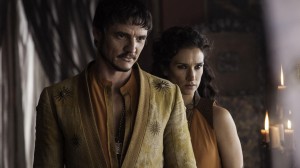
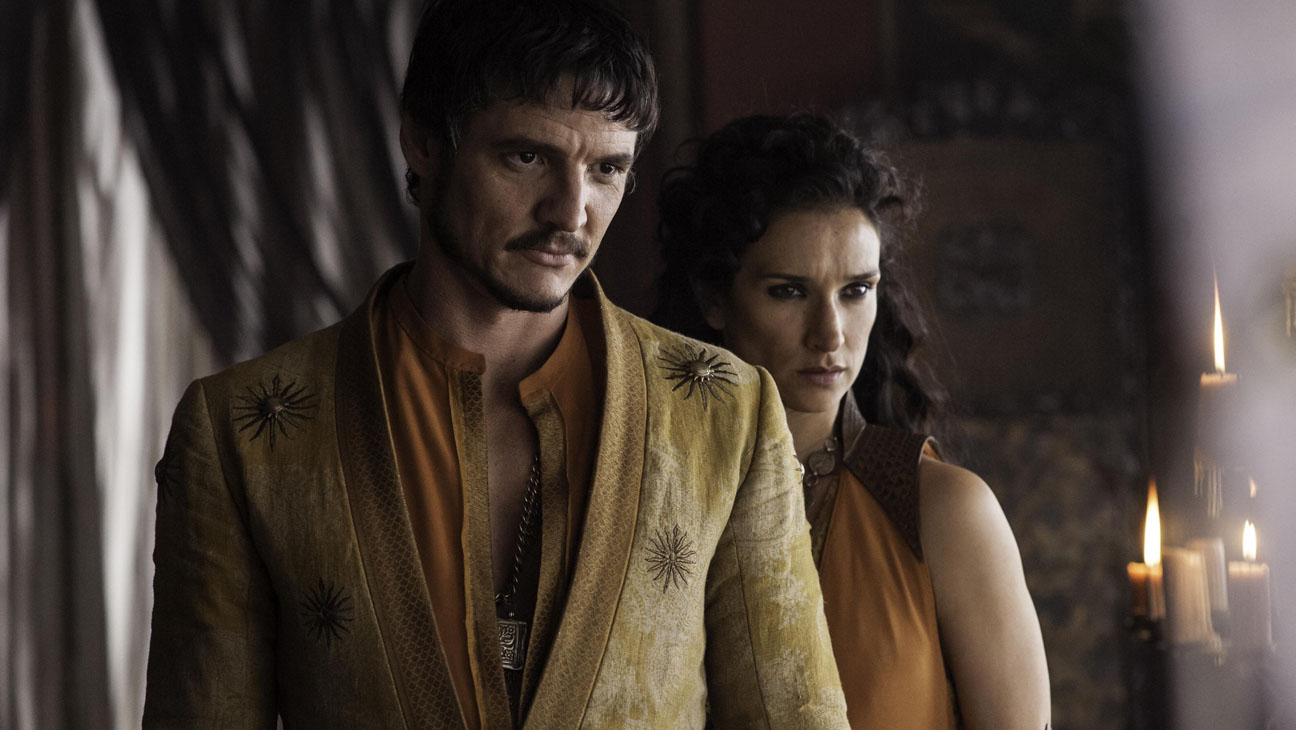
    PedroPascalasOberynMartellIndiraVarmaasEllariaSand_photoHelenSloan_HBO_a_lAnd of course we must also give credit to Pedro Pascal for his lively, exuberant, memorable turn as the Viper of Dorne, Prince Oberyn Martell. Despite his limited presence in the novels, the character is a noted fan favorite, and Pascal’s performance delivers on this and then some. His death is crushing (no pun intended), and carries with it the appropriate emotional heft that keeps it from seeming like another shocking death for death’s sake.

    When we have a mere scene or two per episode at most, with only a handful of primary characters, screen time becomes a valuable commodity, one that cannot be wasted. This season the writing team has played with structure in some useful ways, allowing large set pieces, such as Joffrey’s wedding, Lysa Arryn’s death, or Oberyn’s fight with the Mountain, to take up large swaths of screen time within episodes. Generally this has been to great effect. But it has also backfired, spectacularly, with the incredibly misguided “The Watchers on the Wall,” a special effects extravaganza that failed to have any dramatic heft to it. On the opposite end of the spectrum you have a story like Bran’s, which is both lacking in material, and which is spread over far too many episodes, with such long gaps between appearances that any attempt at building momentum is doomed to failure.

    To wit: Bran appears in just four episodes. Jaime appears in nine, which may come as a shock, since the character is all but forgotten throughout most of the season. Episode counts aren’t a foolproof way of tracking this sort of thing, but they can be rather informative, and the fact that no character appears in all ten episodes of the season is certainly a sign of a disjointed narrative.

    Now, there’s an argument to be made that Westeros is itself in a period of messy, formless chaos, now that the war is over and the Lannisters are proving poor stewards of the throne. It’s a good argument. But the series could do a better job putting this over in the storytelling itself. In fits and bursts, there sustained sequences of excellence, but even these require the viewer to connect dots across multiple episodes, and even the best stories amount to no more than forty or so minutes across the entire season.

    I’m being perhaps more negative than I mean to be. When the season is on point, it truly is excellent. The episodes I call out above all feature series best scenes and performances. Take Joffrey’s wedding in “The Lion and the Rose,” a masterfully written, staged, shot and directed exercise in building tension that swallows up nearly half of that episode’s run time, yet leaves you demanding more time with each and every character in attendance. The big event is of course Joffrey’s long awaited death, but that’s not what you’ll want to watch again for. No, the real reward of repeated viewings are the many, many small moments that director Alex Graves packs in. Lena Headey alone is an endless source of entertainment, reveling in Cersei’s own delight at the extremely awkward proceedings, before unraveling totally upon the realization that her oldest son is dead.

    “The Lion and the Rose” also excels where so much of this season fails, by unifying its many other characters and locations under a singular theme. I wrote at the time about Melisandre’s conversation with Shireen, which casts the world of the show in binary tones, light and dark, that are in eternal struggle with each other, and speculated that the season would hinge on this framework. But I did not pay enough attention to her following assertion, that there is only one hell: the one we’re living in.

    Again and again this season, that point has been hammered home, and the most effective episodes are the ones that most effectively pull this throughline through each of their stories. We see such success, certainly, in “Mockingbird”, which structures the episode around three separate visits to Tyrion’s cell, while contemplating various other relationships as well. And we see it in “The Children,” by far the strongest episode of the season, as the major plots of the season, such as they are, come to a close, each with a far higher cost than our heroes, such as they are, could have predicted. Arya leaves the Hound for dead, even as we know, or suspect, that he cared more deeply for her than he would ever admit. Jon Snow burns his first love. Cersei is confronted finally with the reality that her father views her as no more than a breeding sow, and does not even credit her enough to believe the truth of her relationship with Jaime. Jojen Reed is killed, and Bran’s dream of walking again is dashed. Daenerys must chain up her dragons, as she slowly realizes she may not be quite so fit to rule. And Tyrion, who has long been perhaps the only honorable man in King’s Landing since Ned Stark lost his head, is a murderer, in cold blood. As befits the episode title, these are all children, victims of this hellish world, doomed to suffer pointlessly and endlessly.

    But for all the strength and power of these themes, and of the closing scenes of the season especially, the season overall is ultimately too scattershot, too inconsistent, and at times too poorly structured, to make effective use of them. The show has always told its stories piecemeal, opting to jump around the globe each episode, checking in on a handful of characters here, another handful there, and it’s always been a conceit that has threatened to become problematic. Here, finally, the show’s scope has outgrown its ability. There are simply too many balls in the air, and just as the novels have become increasingly unfocused and unwieldy, so at times has the show.
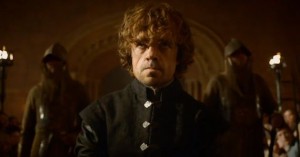
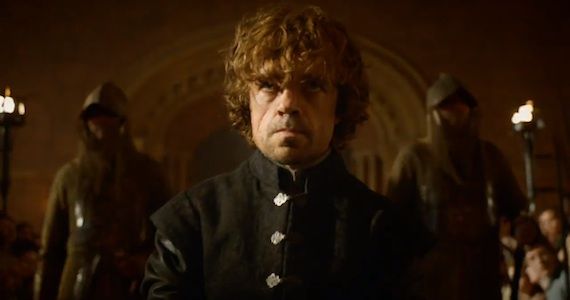
    Game-of-Thrones-Season-4-TyrionThe problem is easily rectified, and I suspect it will be, but that doesn’t excuse some frankly confounding structural decisions here. In seasons past, the penultimate episode has been a climax of the season, an ultimate statement on the themes at hand that serves to severely raise the dramatic stakes. And it’s obvious that “The Watchers on the Wall,” which occupies that ninth slot, strives to be so, as well. Instead it is by far the worst episode of the season, assuming on the part of the audience far too much investment in a character (Jon Snow) and a story (the stewardship of the Wall) that the show itself has terribly underserved. The idea that an entire episode should be spent on it is absurd. Besides being uninteresting, boring, action for its own sake, it also wrecks the pacing of the final third of the season, which from Tyrion’s excellent trial scene onward hurtled toward the inevitable conclusion of “The Children” with a growing sense of dread and despair.

    The season is all to prone to these sorts of ill-advised and pointless narrative detours. Yara’s failed rescue of Theon is circular plotting at its absolute worst, clearly meant to fill time and nothing more, as the characters end up right where they started. Ditto Jon’s detour to take care of the mutineers, which serves only to give Kit Harington a paycheck and deliver an action scene in an episode lacking for content. With scenes like these, and with relatively thin stories spread too thin over too many episodes, the whole season feels as though it is treading water. Each burst of momentum is so welcome in part because it has been preceded by dramatic doldrums. Worse, the poor pacing underserves characters like Jaime, who after becoming such an integral presence on the show in season three is largely reduced to window dressing; or Stannis, whose motivations are needlessly obtuse in order to preserve a false element of surprise.

    In a way these complaints are useless, since the source material is there and isn’t changing. With Joffrey’s wedding and Oberyn’s death out of the way, there is frankly very little of consequence left in the remaining novels, especially with Bran and Daenerys’ stories having bled a bit into “A Dance With Dragons” by this point. Perhaps not entirely useless, though; since the producers are slowly pivoting away from the source material, and doing so in ways that are bringing disparate stories together (Brienne and Arya, for instance), perhaps we will see more of this kind of streamlining going forward. There are already several signs of this, with an early introduction of the extent of the White Walkers’ nature, Jojen’s thus-far unwritten death, and the exclusion of Lady Stoneheart, a superfluous and silly character in the novels. As it becomes increasingly less likely that Martin will finish his novels remotely in time to catch up to the show, David Benioff and D.B. Weiss seem to become more confident in their own plan for this story. Except for the curious staging of Jaime and Cersei’s reunion at Baelor, the changes they have made from the source material have by and large been improvements on novels that are often plodding and self-indulgent. So there is hope for the future.

    Ultimately the show needs to get to a place where it is greater than the sum of its parts, which it currently is not. That’s a strange thing to grapple with, since for three seasons, the whole has been greater; but as the story evolves, so must the show, and for as much as season four was a transition season for the story, it feels also like a transition season for the creators, as they learn how better to navigate the larger world they’ve built for themselves. It’s not a bad season by any means, and as I say, the high points are better than most other drama on television. Peter Dinklage continues to give a fantastic performance as Tyrion, especially in the season’s final hours, and I can’t wait to see what he does next season. Charles Dance’s Tywin was an excellent villain, and his presence will be sorely missed. All the performances are wonderful, really, and there’s no denying the show is well put together. But it often feels like two or three different shows, stitched together, and not always very neatly. The final scenes of “The Children” are captivating and moving, setting up a true sense of wonderment, and, bizarrely for this show, suggesting the faintest glimmer of hope, for redemption, for a rescue from this hell. I wish only that the preceding season were so consistently, evocatively beautiful. Like our heroes, we’ll get there eventually.
  • Honeyblood – “Honeyblood” Album Review

    Honeyblood – “Honeyblood” Album Review

    honeyblood1

    Honeyblood’s debut reminds me of  Veronica Falls’ Waiting for Something to Happen, some Icona Pop, Widowspeak, and a splash of The Breeders and Yuck. It’s a mish-mash of sounds and ideas while still maintaining a really cool sound that should be praised but falls under the umbrella of most household names in indie pop.

    The sound is praise-worthy and the production for most of the songs sounds like the crunch of leaves from fall; it’s brittle, it’s loud and it’s something to marvel at. The drums crash and the guitars have a great dynamic between the grind of the tracks themselves and the chorus effect staple. You can hear the little influences with the slow, headbobbin’ grooves of the guitar and the vocals that seem angelic and juxtaposed with the devilish production.

    The songs have an immediate punch to them- while they don’t get as loud as bands like The Men and My Bloody Valentine, they have a power to them that makes you feel “just punk enough”. “Biro” and “(I’d Rather Be) Anywhere But Here” take it a bit smoother with catchy indie-pop lyrics talking about the problems of the past and the overall ennui of life, love and hometowns. But that’s where the umbrella comes in.

    Most indie pop has had these lyrics about leaving home and missing someone and complaining about no change and complaining about change, the whole spiel is getting very old and I want a little edge and variety with my indie pop nowadays. “Fall Forever”, “Killer Bangs”, “Choker”, “No Spare Key”, “Joey” they all have just about the same theme and if you’ve never heard of Honeyblood you’d just think it was the indie pop Pitchforked flavor-of-the-month.

    Final Verdict: As amazing as it is to listen to the instrumentation and clever breaks and vocal melodies that fill this album, digging any deeper isn’t going to yield a diamond. You’ll find some garnet and some cubic zirconium, but nothing that’s worth as much as it was years ago.

  • Emmy Spotlight: “Breaking Bad”

    Emmy Spotlight: “Breaking Bad”

    8-11-13-breaking-bad-ftr

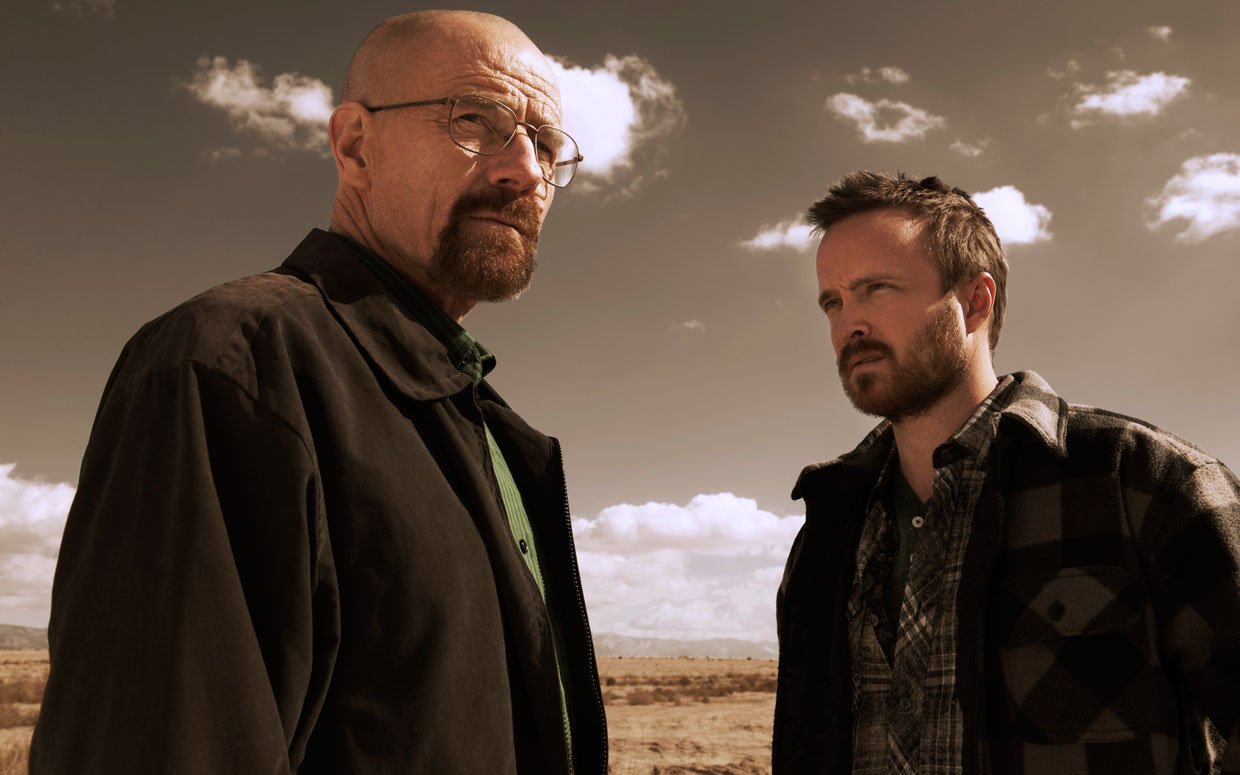
    Whatever your opinion of Breaking Bad (there are apparently some of you out there that don’t enjoy it?), it’s hard to deny that these final eight episodes are triumph of television storytelling. With the final shot of “Gliding Over All” Vince Gilligan and team set into motion an endgame that is marvelous to behold. There is no more piece moving, no more careful setting up of details. No, for eight episodes the dominoes simply fall.

    It says something about the sheer quality of the contenders this year that, for all the lavish praise that has been heaped upon it, Breaking Bad is by no means a lock to win Best Drama. And taken as a whole, I don’t know that I would rank the series above something like Mad Men, or The Wire. But just this set of eight episodes? These are something special.

    There is an attention to detail in these final installments that is stunning to behold. It’s the resurgence of Walt’s cancer, as on his knees he vomits into the toilet, that leads him to realize that Leaves of Grass is missing, and that Hank is on to him. And like that he is Heisenberg again, and we are right back where we started. Throughout “Blood Money” we are reminded of the show’s past, as Hank rifles through his evidence box, and as he recounts to Walt in his garage all of the times that Walt has lied and manipulated their family. Now his lies are slowly coming down around him

    That scene in the garage is key. It’s the first of many scenes that frame this final season as a classic Western, a final, epic, and long overdue showdown between Hank and Walt. It closes the episode, with a challenge from Walt to Hank: tread lightly. His hubris is such that he cannot resist this one last opportunity to one-up his macho brother-in-law. Their relationship has so changed since the pilot, and yet, fundamentally, it has not changed at all. Walter is still a sniveling, chickenshit failure of a chemistry teacher, with a chip on his shoulder and something to prove. In combination, “Blood Money” and “Buried” feature Walt and Hank stepping back into their respective roles; when Hank meets with Jesse at the latter episode’s end, it is triumphant, and suggestive of a way that he will eventually best Walter.
    In “Confessions” Walt reframes the entire narrative, but twists it just so, framing Hank. The dinner scene is also spectacular, especially the way that Hank, having initially and instinctively wanted to protect Skyler, is now perfectly content to see her burn too. This is a turning point—not the first and not the last, either—where Walt reveals himself for what he truly is. Our sympathies are now, or should be, entirely with the Schraeders. Also in “Confessions,” Jesse and Walt’s relationship fractures finally and permanently, and sets up their last interaction in “Felina”. Jesse is perhaps underused, especially toward the end of the season, but Aaron Paul is so phenomenal in the role that you forget it. He completely sells even the too-writerly realization of Jesse’s that Walt arranged to have Brock poisoned.

    “Rabid Dog” amps up the cat-and-mouse game, placing Jesse in the middle of Hank and Walt’s feud, a pawn to each of them, which is all he’s ever been. By now the season’s structure has taken shape: it is a tightening noose. As ever the acting on key, basically perfect, but here it is the best it’s ever been. Each performance increases in intensity, until everything reaches an impossible and inevitable fever pitch. Dean Norris emerges as a truly brilliant actor, as Hank becomes the moral center of the show. Anna Gunn keeps the audience’s sympathies with Skyler, somehow, even as Skyler’s behavior becomes more and more abhorrent. And of course, Bryan Cranston is a virtuoso, doing his best work on the series in this last run. No nonsense regarding Homeland or House of Cards this year, please—we must recognize this incredible, gargantuan performance once more while we still have the chance.

    These last episodes are a classic Western, until suddenly they aren’t. That Uncle Jack puts a bullet in Hank’s head is inevitable, but it is no less shocking for that. And so begins the slow unraveling, the final topple of the last of the dominoes. “To’Hajilee” closes on what should rightfully be a moment of triumph, but it’s too early in the narrative for Walt to be brought down, and deep in our gut we know it. The episode cruelly ends on a cliffhanger, but we know already that Hank and Gomie are doomed. (After all, he took the time to call Marie and revel in his victory—never a good sign for the action hero he’s become.) After lurking around the edges of the season, Uncle Jack and his gang arrive on the scene of Hank’s triumph, guns loaded. The ensuing standoff is straight out of a Clint Eastwood flick, and it is tense. It is paralyzing, in fact, each bullet a new rupture in what until this point has been the relative security of the Western structure. You don’t realize you’ve been holding your breath until you exhale.

    But this has all been preamble, because this season features “Ozymandias,” which is the best episode of the series, and frankly is one of the best episodes of television drama ever produced, period. Every compliment one can level at Breaking Bad can be said tenfold of “Ozymandias,” which pulls apart each and every thread of the series, blows up its entire premise, and sets the stage for the final two episodes in grand, bombastic style, as Walter gazes upon Albuquerque in the rear view mirror of Robert Forster’s van. The episode is rightly nominated for Outstanding Writing, for Moira Walley-Beckett’s flawless script; criminally, Rian Johnson’s equally perfect direction has gone unrecognized.If the season is a project in bringing Breaking Bad full circle, then “Ozymandias” is a project in thoroughly dismantling everything we know about this world, these characters, and their relationships.

    The first scene takes us back to the show’s origins, Walt looking closer to Bryan Cranston’s other famous role, an apron over his tighty-whiteys, doing the old odd couple routine with Jesse. Now Hank is dead. Skyler lunges at Walt with a kitchen knife, and Walter Jr. flings himself on top of her, protecting her from his father, the monster. And Jesse is chained up like a rabid dog, buried beneath the sand. A commentary on this season could just as easily be a commentary on this episode alone. When Skyler pulls a knife on Walt, and they wrestle to the floor, Walt, Jr. in the frame between them, your heart stops and your breath catches, even more than during the To’Hajilee shootout. We watch the White family not only crumble apart, slowly, over many seasons, but we now watch them explode, violently, in the tensest scene of a series chock full of such set pieces. Walter’s staged speech over the phone, in which he spits invective at her, calls her a stupid bitch, for the benefit of the police and to save her from prosecution, is a stellar performance, is harrowing, and is heartbreaking. What’s worse is that we are complicit in all of this–we who have watched Walt, and cheered him on, all this time. “Ozymandias” is more than the unraveling of this masterfully spun yarn. It is also a judgment, of Walt and of the viewer, one that reframes the entire series and puts us in the proper perspective for its conclusion.

    Back when this half-season aired, there was plenty of joking about the idea that Walt by this point is so evil that he can be outdone only by meth-dealing Nazis, which is a fair point, especially given Andrea’s horrible fate. But yet another magic trick the producers pull here is that while yes, they give Walt a worthy enough adversary to remain in the protagonist’s role, they also pull no punches regarding his true nature. Look no further than the closing moments of “Granite State”, when Walt hatches his plan out of pure hubris, sparked by his resentment of Gretchen and Elliot, and when the show’s theme song cues on the soundtrack like it’s the theme from Batman. There can be no doubt: Walter White is a bad man. For this reason I remain amused by the too-common complaint that “Felina” makes him out to be a hero, gives him an easy and triumphant conclusion, and altogether lets him off the hook for his crimes. It’s an abjectly wrong and willfully blind reading of the episode and of the series. Walter White takes out a bunch of meth-dealing Nazis, and saves Jesse, yes. But this is all his design, and he gets no credit for putting an end to a hell of his own making. And when he finally, deservedly dies, he does so alone, having lost his family and perhaps his only true friend.

    I remembered the middle of this season being somewhat loose, perhaps long-winded or flabby, but upon rewatch this is not the case. The pacing is nearly perfect, flagging only slightly somewhere in the middle of “Rabid Dog.” There are some other flaws, too; as I said before, Jesse is too absent from the final episodes, and the scope of Walt’s meth empire bordered on unrealistic at some points, especially with the discussion of purity and color as so very important to Lydia’s buyers. But ultimately, any complaints are minor, and misguided. Here is the last act of a great tragedy, and like all great tragedies, the conclusions are foregone. The true artistry on hand here is the unflinching way in which the writing, the direction, the cinematography, the performances—really every single aspect of the production, right on down to the editing and even the costuming—present this tremendous finale to the viewer. Upon finishing you are left barren and hollow, and yet, thoroughly satisfied.

    Score: 9.5/10

  • 2014 Emmy Predictions: Lead Actor in a Miniseries/TV Movie

    2014 Emmy Predictions: Lead Actor in a Miniseries/TV Movie

    [maxbutton id=”3″]
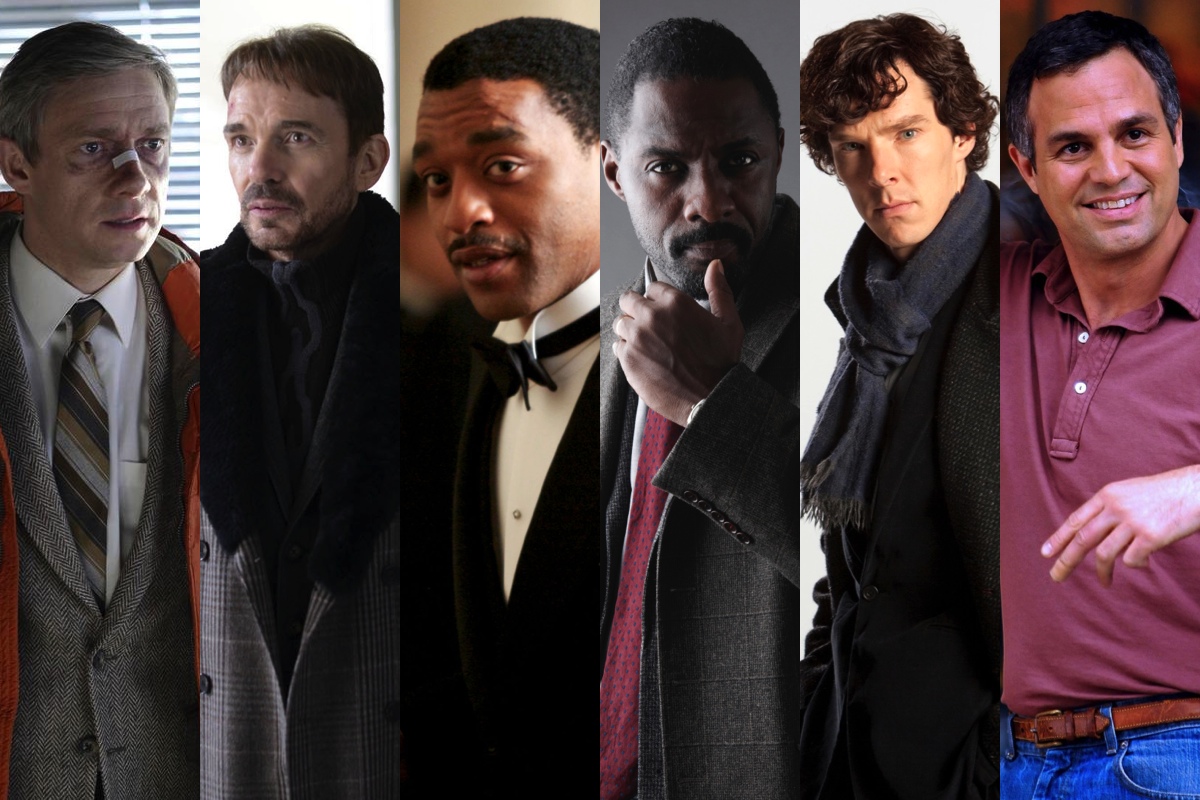
    The race for Lead Actor in a Miniseries/TV Movie is a tough one to hash out. Manu pundits have Oscar-winner Billy Bob Thornton (Fargo) leading to win by a large margin, but I don’t think it’s a slam dunk like many think. Mark Ruffalo (The Normal Heart) gave a phenomenal and passionate performance, while Martin Freeman (Fargo) had a more comedic performance that was more focused towards the beginning of the miniseries. Voters are expected to watch the miniseries and movies in their entirety, however it is quite known that voters focus more on the beginning of the miniseries. So, in this case Freeman leads the race. Right now, I think Thornton still wins, but I’m going to do a bunch of switching in the coming weeks.

    Lead Actor Miniseries FINAL

    1. Billy Bob Thornton, Fargo
    2. Mark Ruffalo, The Normal Heart
    3. Martin Freeman, Fargo
    4. Chiwetel Ejiofor, Dancing on the Edge
    5. Benedict Cumberbatch, Sherlock: His Last Vow
    6. Idris Elba, Luther

  • 10 Drama Actors that Deserve, but won’t get, Emmy Nominations

    10 Drama Actors that Deserve, but won’t get, Emmy Nominations


    10 Emmy Actors Drama

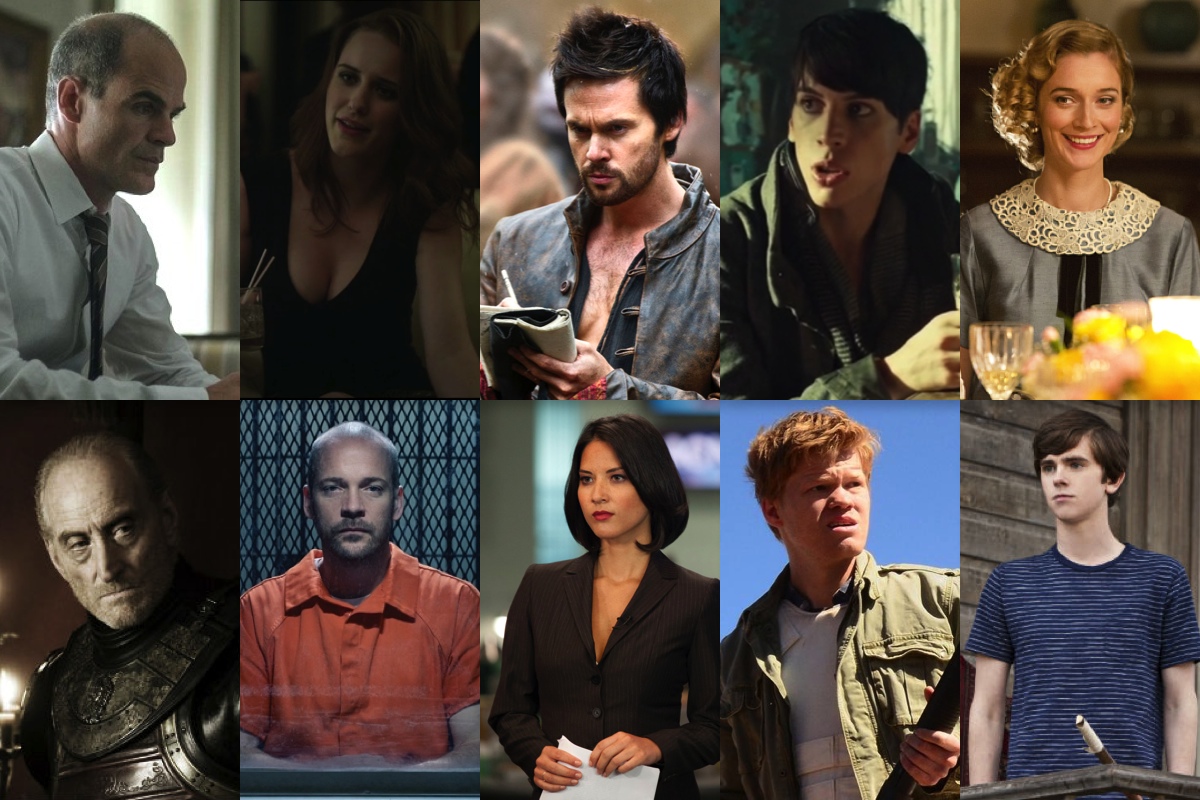
    It’s no secret that most award shows don’t get it completely right, but the Emmys are probably the most guilty of that. Why? Because they have years to nominate an actor or a show, but never do. While after years of ignoring the Emmys finally give a show it’s fair notice (i.e. Friday Night Lights), most actors and shows simply go without the recognition they deserve. So, to give them that recognition, here is a list of 10 Drama Actors (male or female, lead or supporting) that deserve Emmy nominations this year, but won’t get one (probably). Be sure to check out our Drama Actor version here!

    Freddie Highmore | Bates Motel
    I was very tepid towards Highmore’s performance as a young Norman Bates on Bates Motel. He just simply wasn’t good. However, throughout the first season and into the second season he grew into a fine actor. It’s hard playing an iconic character, but what’s even harder is playing an iconic character that we honestly never really knew much about in the first place. Highmore is able to channel his own interpretation and be emphatic with Norman’s emotions without seeming over the top. While he made the right move this year to move up to lead after competing in supporting last year, it’s just simply too crowded and the Emmys aren’t kind to the young.

    Michael Kelly | House of Cards
    It seems that almost everyone on House of Cards has some ulterior motive in their actions, however the one man that is cut and dry is Francis’ henchman Doug Stamper. He simply doesn’t ask, he just does. However, what earns him a spot on this list is Kelly’s ability to add more dimensions to Doug than other characters in the same role. While he is just as icy, and somewhat terrifying, as all those characters, he adds some humanity without breaking his character’s patented stone cold face. However, his character just isn’t loud enough for the Emmys to take notice.

    Jesse Plemons | Breaking Bad
    He may not have the fireworks that his co-stars have, but Jesse Plemons does so much more than we credit him for. Todd isn’t just creepy on his own after all. Plemons has the task of creating a character that is a true sociopath. Every villain on the show had some reasoning behind their actions. Everyone from Gus to Tuco to Lydia, but Todd simply did what he did because he has some complex to be approved. Plemons portrayed that aspect of Todd so well, while also creeping us out and making us terrified of the lengths he will go to please Heisenberg and eventually Lydia.
    https://www.youtube.com/watch?v=AA-1qo2jq98

    Caitlin Fitzgerald | Masters of Sex

    Throughout the first episode of Masters of Sex you just wanted to slap Libby and tell her to stand up for herself for once. Well, eventually she finally did and Fitzgerald so adroitly took us on that journey. She seemed so natural in the role of the tragic wife attached to an even more tragic man and eventually got us rooting for her by seasons end. While her performance is grand, she never gets a big episode on the show, perhaps “Catherine”, but with the show’s buzz waning, it looks like she’s getting snubbed.
    https://www.youtube.com/watch?v=wR0MVFSjqY8

    Jordan Gavaris | Orphan Black
    Tatiana Maslany gets so much deserved praise for her performance on Orphan Black that we forget that she’s not the only one on the show. And not just because she plays the majority of the characters. Jordan Gavaris gets to play the typical hilarious over the top one liner supporting actor that everyone just loves. However, what makes him difference is the actor’s ability to ground the character in something real. There is a real love for Sara and his emotions and action, while over the top are never acted too over the top. Let’s just say he keeps Felix in check. However, with the Emmys already ignoring Maslany, it’s unlikely they’re paying any attention to him.

    Rachel Brosnahan | House of Cards
    It’s shocking to see that the prostitute from the first episode of House of Cards grew into such a huge and full role. Rachel became a focus in the second season of the show and I think it’s due in part to Rachel Brosnahan’s performance. She had to play a woman tired of being controlled, but helpless to stop it. It was heartbreaking to watch the one humane character on the show unable to escape her past even though she was trying to reform herself. She was truly remarkable in the role and I hope to see her again in season 3.
    https://www.youtube.com/watch?v=_o1kgUvH418

    Tom Riley | DaVinci’s Demons
    The show never really grows past a guilty pleasure, but the one bright spot is Tom Riley’s performance on the show. There’s really no complex reasoning behind like the other people on this list, he is simply just a great actor playing a great part. It all seems so natural despite the clear flaws he must contend with. Sadly, the Lead Actor category is simply too crowded and the show is just not on their radar in that way.

    Charles Dance | Game of Thrones

    It’s hard to standout in Game of Thrones‘s massive cast, but the few that have can credit both their performances and their characters. However, one actor has to do a lot with so little. Charles Dance’s performance as Tywin Lannister is simply fantastic. He plays it with such confidence and an air of elegance that he seems tailor made of the role. Although his character is so calm and calculating you can’t help but just watch him when he’s on screen. However, he never gets the fireworks that other characters get, therefore he is simply forgotten.
    https://www.youtube.com/watch?v=SE7ZPSrm2rU

    Olivia Munn | The Newsroom
    There’s a lot to hate about The Newsroom, but Olivia Munn ain’t one (see what I did there). Sorkin didn’t do a lot for the female characters on the show and Sloan is no exception, but Munn was able to get past the trappings of her character’s seemingly etched out path of being underestimated because of her looks and create something more complex. She handles Sorkin’s fast quick fire dialogue with ease and is able to get a chuckle out of a show that is being laughed at than being laughed with. Unfortunately, once the Emmys hear you’re bad, then you’re labeled forever. Munn’s performance may be trumped by her show’s pitfalls.
    https://www.youtube.com/watch?v=LX2v1owLAzs#t=13

    Peter Sarsgaard | The Killing
    I was one of the strong supporters of The Killing‘s third season. I think that it was a brilliant year of television and that the show deserved so much more than what it got. However, this season was ruled by a heartbreaking performance by Sarsgaard as an inmate on death row accused of murdering his wife. It’s hard to find a reason why he won’t be nominated for an Emmy other than this simple one: The Emmys didn’t like The Killing. That’s a tragedy in itself.

    Be sure to check out our Drama Actor version here!

  • Trending This Week on Smash Cut: “Don Jon”, “Veep”, & More

    Trending This Week on Smash Cut: “Don Jon”, “Veep”, & More


    The following are the top 5 most viewed posts on Smash Cut this week:

    Trending This Week

    10 Drama Actors that Deserve, but won’t get, Emmy Nominations10 Drama Actors that Deserve, but won’t get, Emmy… by Karl Delossantos June 12, 2014 It’s no secret that most award shows don’t get it…2014 Emmy Predictions: Miniseries2014 Emmy Predictions: Miniseries by Karl Delossantos July 13, 2014 Miniseries is one of the few categories I can call…2014 Emmy Predictions: Supporting Actor in a Comedy Series2014 Emmy Predictions: Supporting Actor in a Comedy Series by Karl Delossantos July 18, 2014 Supporting Actor in a Comedy series is very close to…Emmy Episode Submission Analysis: emVeep/emEmmy Episode Submission Analysis: Veep by Karl Delossantos July 19, 2014 For those of you that don’t know, at the Emmys…2014 Emmy Predictions: Supporting Actor in a Miniseries/TV Movie2014 Emmy Predictions: Supporting Actor in a Miniseries/TV… by Karl Delossantos July 14, 2014 The race for Supporting Actor in a Miniseries or TV…

    Trending This Month

    10 Drama Actors that Deserve, but won’t get, Emmy Nominations10 Drama Actors that Deserve, but won’t get, Emmy… by Karl Delossantos June 12, 2014 It’s no secret that most award shows don’t get it…2014 Emmy Predictions: Miniseries2014 Emmy Predictions: Miniseries by Karl Delossantos July 13, 2014 Miniseries is one of the few categories I can call…2014 Emmy Predictions: Supporting Actor in a Comedy Series2014 Emmy Predictions: Supporting Actor in a Comedy Series by Karl Delossantos July 18, 2014 Supporting Actor in a Comedy series is very close to…Emmy Episode Submission Analysis: emVeep/emEmmy Episode Submission Analysis: Veep by Karl Delossantos July 19, 2014 For those of you that don’t know, at the Emmys…2014 Emmy Predictions: Supporting Actor in a Miniseries/TV Movie2014 Emmy Predictions: Supporting Actor in a Miniseries/TV… by Karl Delossantos July 14, 2014 The race for Supporting Actor in a Miniseries or TV…

  • Emmy Episode Submission Analysis: Veep

    Emmy Episode Submission Analysis: Veep

    dsUoP3zKLbY.market_maxres

    For those of you that don’t know, at the Emmys contenders must submit sample episodes to be judged by voters. Series submit six episodes that are paired up into three “tapes” that are handed off to three sections of judges. Actors submit one episode.

    Veep

    Comedy Series
    Tape A: “Some New Beginnings” and “The Choice”
    Tape B: “Alicia” and “Fishing”
    Tape C: “Special Relationship” and “Debate”

    The first tape is a strong one, although I wasn’t a huge fan of the season premiere, a lot of people were. The second episode on the tape is a great take on a current debate placed into the hilarity of the show. The second tape is similarly strong. In all, they submitted some of the best they had. They missed opportunities like “Detroit” and “New Hampshire”, but in all they submitted a strong set of tapes.

    veep_3_09_photoJulia Louis-Dreyfus | Lead Actress in a Comedy Series | “Crate”
    With the penultimate episode of the series, Dreyfus doesn’t get much to do. It’s somewhat funny watching her lug around her crate and eventually trying to prevent the reporter to find his phone, however her money scene comes toward the end when she discovers that the President intends to resign at that she is taking his place. I think the reason she chose the episode was because of the bathroom scene with Tony Hale, which is great. She’s proved in her last two submissions that she doesn’t need a great episode to win, but overall it’s an underwhelming choice.

    Tony Hale | Supporting Actor in a Comedy Series | “Crate”
    Most of the episode, Hale is lugging Selina’s crate around. However, his money scene is the same as Dreyfus’. The bathroom scene where he also finds out that Selina is going to be POTUS is also his strongest scene. He does have another fun moment when he’s trying to stop the repeater from finding his phone. Although this submission was better than his from last year, I don’t think it’s going to be enough for a second win.

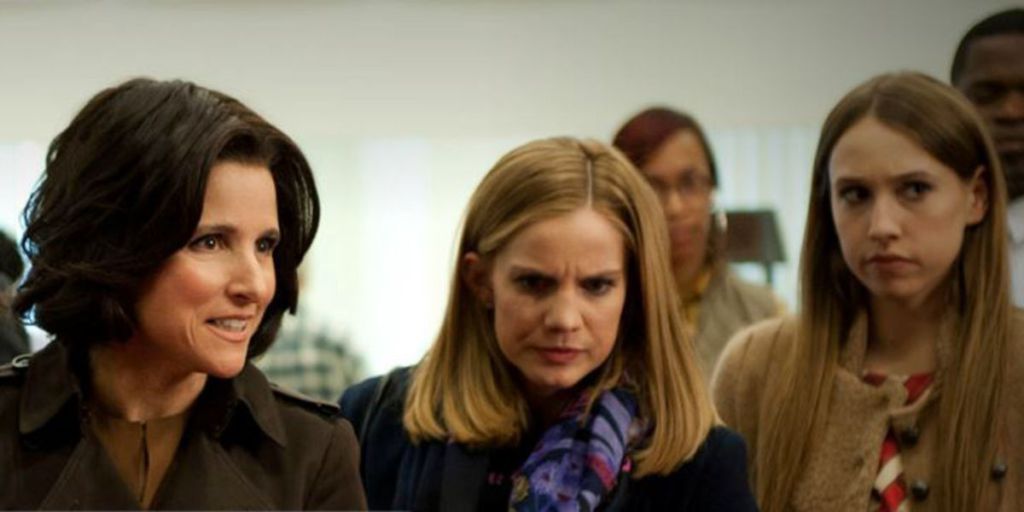
    f8cf8bf743e89cacd5165804fcbb6e3c715469308fd22942284103582a6e664a_largeAnna Chlumsky | Supporting Actress in a Comedy Series | “Detroit”
    Chlumsky plays the “straight” character of the series. Although Bowen won two Emmys for the same type of role, I don’t think Chlumsky has enough in this episode to do it. She has small scenes scattered throughout, but I don’t really see why she submitted it. I think she would have been better off submitting “Special Relationship” or even “Debate.”

    Check out what I thought of Breaking Bad‘s submissions here.

  • 2014 Emmy Predictions: Supporting Actor in a Comedy Series

    2014 Emmy Predictions: Supporting Actor in a Comedy Series

    Featured Comedy Supporting Actor[maxbutton id=”3″]

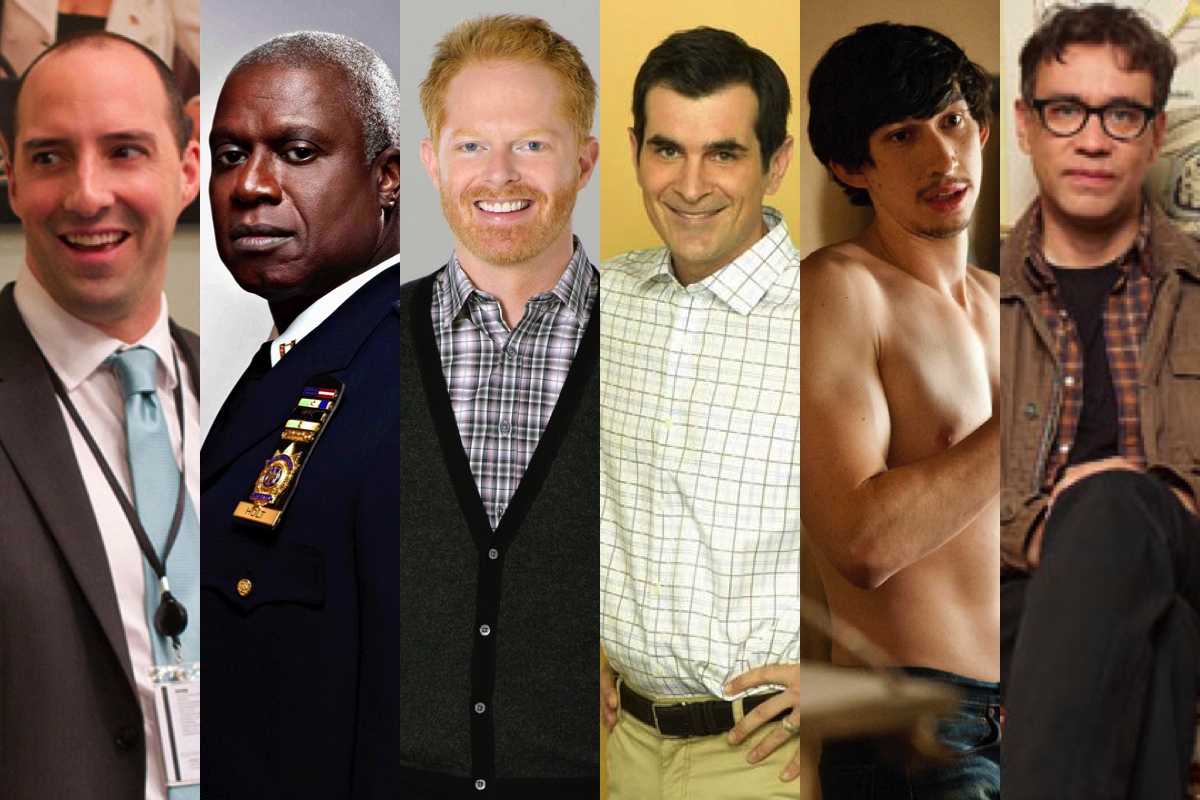
    Supporting Actor in a Comedy series is very close to being a done race. There is one episode submission that stands out from the pack and stuck with me throughout my viewing of the tapes. Jesse Tyler Ferguson (Modern Family) submitted the episode “Message Received” where he tries to get money for his wedding and ends with an emotional argument with his father over the disapproval of his wedding. It had range, impact, he had funny moments. It’s really a fantastic tape. Even better for him, his screen time clocks in at just under 8 minutes excluding the final “monologue,” which in this episode is an answering machine recording. It’s really a fantastic tape.

    Ty Burrell (Modern Family) really screwed up his submission. I can see why he chose the episode, but he only had around 4.5 minutes of screen time and Ferguson has a more prominent storyline. Andre Braugher (Brooklyn Nine-Nine) also submitted poorly. While he is part of the main storyline and has a good amount of screen time, he doesn’t have any material to show for it.

    Saying Ferguson is a lock might be presumptuous, but you can’t deny he’s the frontrunner here. If anyone takes him down, it’s Braugher for lazy name ticking, but I think he has it right now.

    Supporting Actor Comedy

    1. Jesse Tyler Ferguson, Modern Family (“Message Received”)
    2. Andre Braugher, Brooklyn Nine-Nine (“Christmas”)
    3. Fred Armisen, Portlandia (“Pull-Out King”)
    4. Ty Burrell, Modern Family (“Spring-A-Ding Fling”)
    5. Tony Hale, Veep (“Crate”)
    6. Adam Driver, Girls
    (“Two Plane Rides”)

  • Netflix Flick of the Week: “Don Jon”

    Netflix Flick of the Week: “Don Jon”

    DON JON

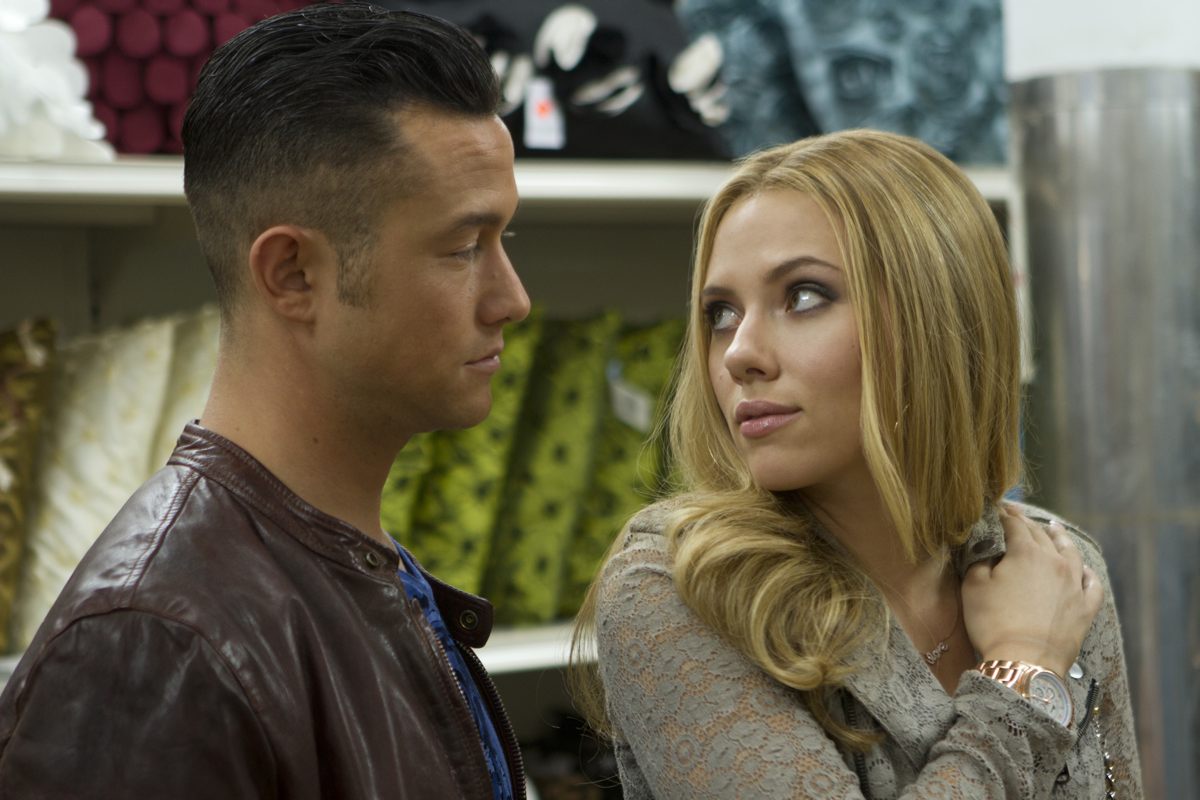
    What’s not to love about Joseph Gordon-Levitt? He’s a talented young actor who’s good-looking and very charismatic. He starred in great films such as Inception, 500 Days of Summer, and Angels in the Outfield (He played the main character who saw the angels, I just blew some of you’re minds didn’t I?). So what if I told you that not only did he star in, but also written and directed a film where he plays a Guido from New Jersey who has an addiction to pornography and masturbation? You all probably are thinking “What, Really?” Well he does just that in the 2013 comedy Don Jon.

    So what’s the film about? It’s actually simple. Gordon-Levitt plays Jon, a young man who only enjoys a few things in life, his body, his place, his girls, his family, his church and pornography. Oddly enough the thing he loves most of all is porn, more than sleeping with woman. Why? Because the girls will do anything and everything in porn that girls in real life won’t do. He enjoys his simple life that is until he meets Barbra, played by Scarlett Johansson. He immediately falls for her and they start to go out. The film follows Jon as he tries to balance his two loves, Barbra and porn.

    Don Jon is Gordon-Levitt’s directorial debut, and for his first film, he does well. The story is simple and even though it has a few clichés in it, it does enough different where it keeps the film fresh and original. The film has a great flow to it and it doesn’t rush scenes where you don’t know what happen, nor does it drag, making you wish that it would just move on. You want to know what happens to our main character and how he solves his problem. The cinematography is pretty standard for this kind of film, good but nothing great. The only problem I kind of had was that the film kept going to same places over and over again. It almost seemed to repeat some scenes, but change them slightly.

    You think you’re going to hate Gordon-Levitt’s character after the first 10 minutes. Being from New Jersey and absolutely hating Jersey Shore, (If you liked it, more power to you) I was ready to root against Jon. However as you watch the film, you start to like him. He’s confident and doesn’t believe he has a pornography problem, but he’s also hard working, caring, and he does try to change for Barbra. Gordon-Levitt is so good at making you like him, even if you don’t want to. Scarlett Johansson also does a great job of being both sweet and fiery, as she wants Jon to change for her. The other main character is Juliana Moore as Esther, a student with Jon in college as she tries to help him with his problems. Moore does great as always, but it is a little weird watching playing the role she does, trying to seduce a much younger Gordon-Levitt. The rest of the supporting cast is good as well, specially Hank Azaria as the crazy Italian father.

    In the end, it’s Joseph Gordon-Levitt, who I think is one of Hollywood’s most underappreciated actors, who really sells this film. Having performed what I like to call the hat trick in films by acting, writing and directing, Don Jon is great comedy that people should give a watch.


  • 2014 Emmy Predictions: Guest Actor in a Comedy Series

    2014 Emmy Predictions: Guest Actor in a Comedy Series

    Featured Comedy Guest Actor[maxbutton id=”3″]

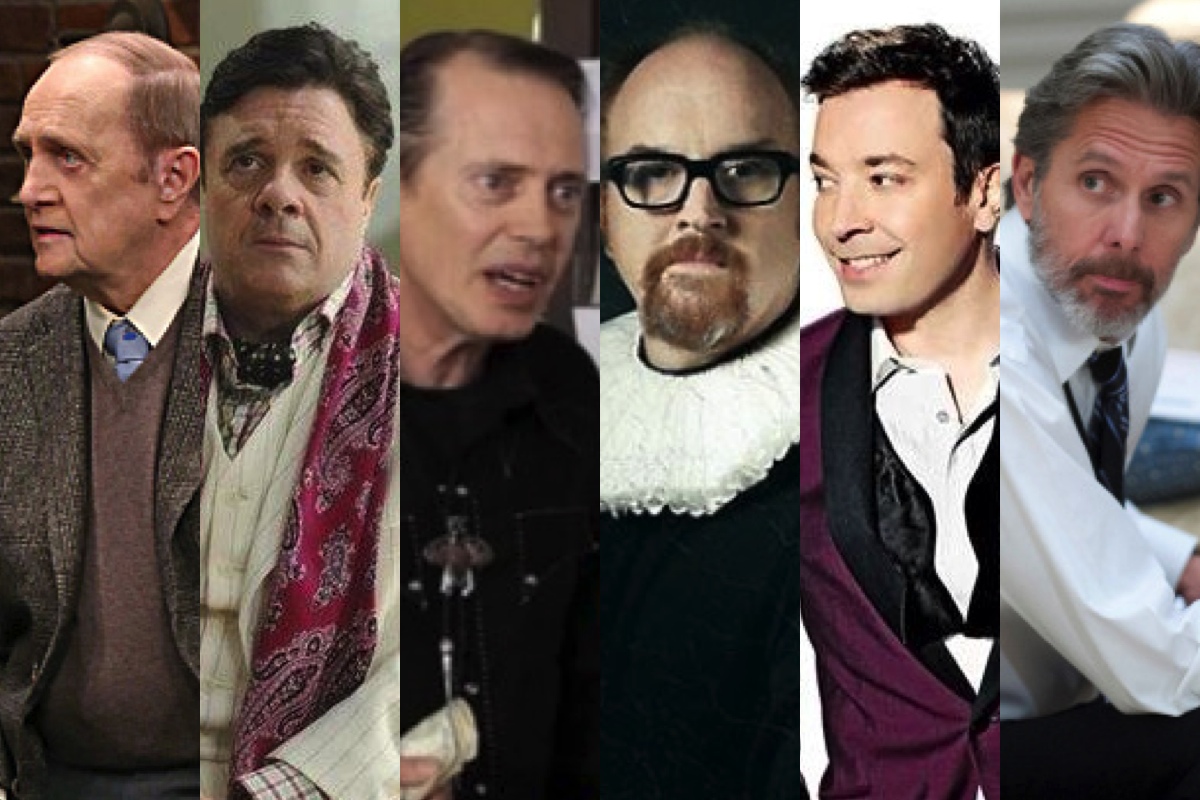
    I think this category is going to come down between the two Saturday Night Live nominees. Jimmy Fallon had won in this category before for his hosting job, and has blasted into the spotlight this year when he took over The Tonight Show with acclaim and big ratings. However, Louis C.K. is also an Emmy favorite and could pose an upset.

    We also have to look out for last year’s winner Bob Newhart (The Big Bang Theory) to upset based on name alone. Nathan Lane (Modern Family) has a good episode submission, but since it’s more heavy toward the end and is relatively short, I don’t think he poses too big of a threat.

    Guest Actor Comedy FINAL
    1. Jimmy Fallon, Saturday Night Live (“Host: Jimmy Fallon”)
    2. Bob Newhart, The Big Bang Theory
    3. Louis C.K., Saturday Night Live (“Host: Louis C.K.”)
    4. Nathan Lane, Modern Family (“Wedding, Pt. 2”)
    5. Steve Buscemi, Portlandia
    6. Gary Cole, Veep (“Crate”)

  • Antarctigo Vespucci Album Review: “Soulmate Stuff”

    Antarctigo Vespucci Album Review: “Soulmate Stuff”

    Antarctigo Vespucci (Soulmate Stuff)

    Antarctigo Vespucci is a project that was born from musical masterminds Jeff Rosenstock, who just recently put the music collective Bomb the Music Industry! to bed, and Fake Problems’ vocalist Chris Farren. What was created was an incredible 7-song debut called Soulmate Stuff that brought me to believe that no matter which way the music industry goes, two friends can get still get together and make amazing music.

    That’s part of the charm of the album, that everything feels so organic. There’s no cohesion or planning. The sound of the album is hard to pin down since it feels like the duo didn’t want to be tied down to a specific genre. It pulls from nearly era of rock. Some songs, like “Don’t Die in Yr Hometown,” sound like they fell of of Springsteen’s Born in the U.S.A, but then “I’m Giving of U2” and “Bang!” are reminiscent of Weezer’s catchy choruses and relatable lyrics.

    The instrumentation contributes to the album’s uniqueness with some tracks backed solely by an acoustic guitar and some become so varied in their instrumentation that something like a glockenspiel could be heard. Farren supplies the vocals to all seven tracks, which is an added bonus considering his laid back emo voice adds so much familiarity. As do the lyrics like: “Just don’t fade out/cause all I want to do is ride my bike and think about sex, yeah.”

    It must be said that Casey Lee’s guitar solo in “I’m Giving Up on U2” and Laura Stevenson’s vocals on “Sometimes” are incredible additions to this album.

    It’s something to rock out to in the shower or car, or just when you need sometime alone. They supply the summer jams that we have so desperately been wanting all winter. Apparently this might be a one time gig for Chris Farren and Jeff Rosenstock and if it is then so be it, because what they created is timeless.