Blog

  • ‘How To Blow Up a Pipeline’ review: An explosive eco-thriller

    ‘How To Blow Up a Pipeline’ review: An explosive eco-thriller

    A group of strangers hatch a plan to blow up a pipeline in West Texas as an act of climate protest in Neon’s thrilling How To Blow Up a Pipeline


    How To Blow Up a Pipeline is a non-stop tension-filled eco-thriller that plays more like a sleek heist movie than one about climate activism. Flowing with terrific performances and complex moral quandaries, it’s one of the finest movies about the climate crisis to date.

    How To Blow Up a Pipeline is in theaters April 6th.

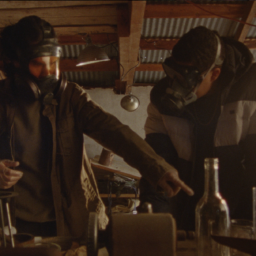
    How to Blow Up a Pipeline, which was contructed using ideas from Andreas Malm’s book of the same name, is structured like a classic heist movie. Act one: we’re introduced to each member of our ragtag group of protagonists trying to pull off an impossible feat. Act two: we watch as they lay the groundwork for the plan — taking care to emphasize how much can — and probably will — go wrong. Act three: we watch the heist play out with brute skillfulness, of course with more than one unplanned bump along the way. But this is no heist movie. 


    ADVERTISEMENT


    Throughout the movie, we learn through pointed but impactful flashbacks how each member of our motley crew has come to find themselves in West Texas attempting to blow up an oil pipeline. More importantly, though, we learn why. The central idea of Malm’s book is that traditional protesting tactics regarding the climate crisis are little too late and drastic measures — like blowing up an oil pipeline to spike the price of fuel — are necessary to get the attention of those that can enact actual change. 

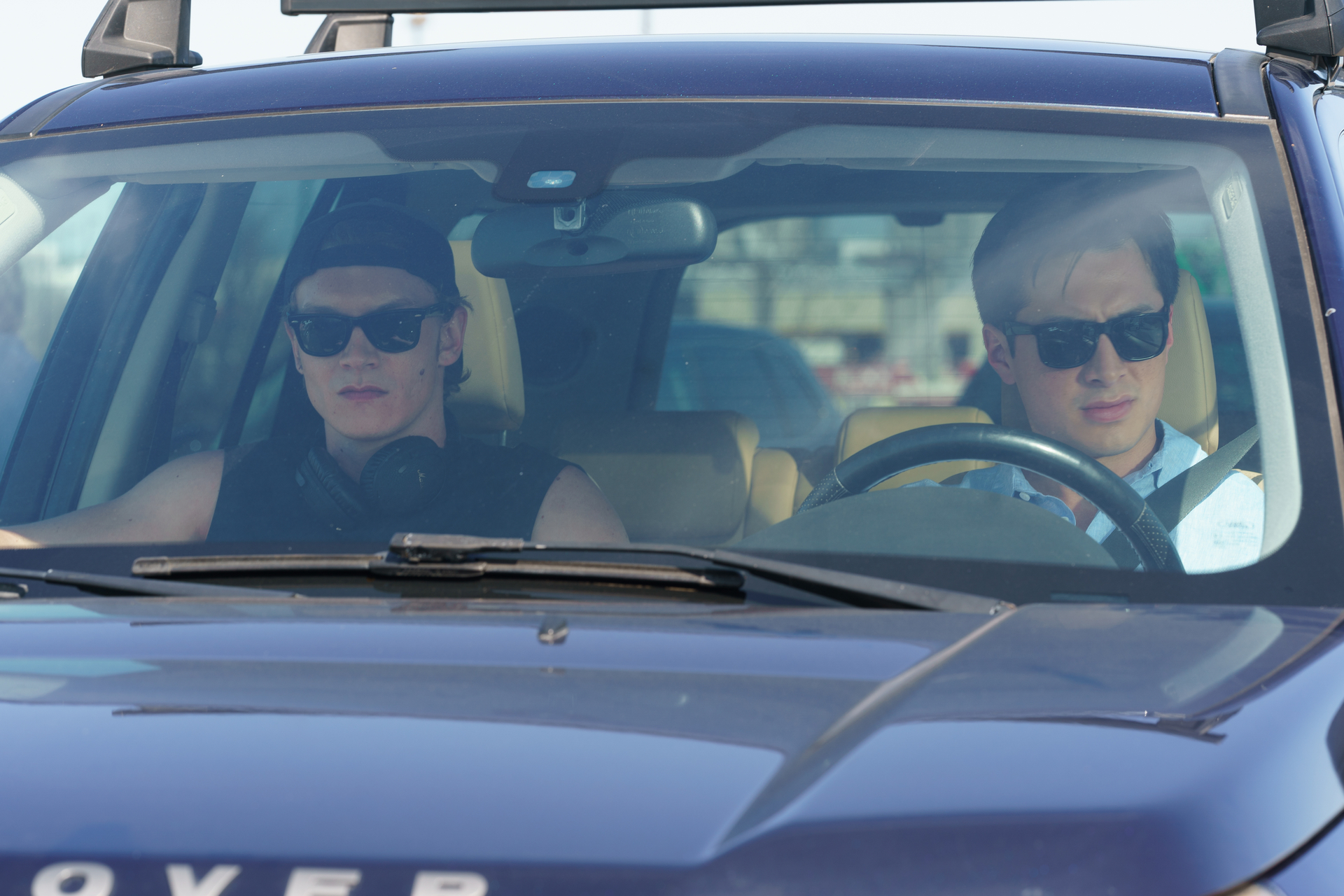
    The swift efficiency of Ariela Barer, Jordan Sjol, and Daniel Goldhaber’s screenplay (Goldhaber also directs) allows us to get to know how each character fits into the cog of their plan while we watch how it unfolds. At the helm are Xochitl (Barer) and Shawn (Marcus Scribner), two climate activist college students who are tired of the endless and fruitless protests that seemingly shout into a void. Together they recruit aloof Native American amateur bomb-builder Michael (Forrest Goodluck), local landowner veteran Dwayne (Jake Weary), vandal anarchist couple Logan (Lukas Gage) and Rowan (Kristine Froseth), Xochitl’s childhood friend Theo (Sasha Lane) and her girlfriend Alicia (Jayme Lawson).


    ADVERTISEMENT


    While each character’s motivation is outlined clearly — and perhaps a bit too tidily — How to Blow Up a Pipeline flows through its runtime like… well, oil in a pipeline. Despite the dusty West Texas landscape, the movie moves like any sleek heist movie — picture a western Ocean’s Eleven. Still, Goldhaber allows for moments of overwhelming tension like Michael’s careful preparation of the bombs — that have the equivalent power of ten sticks of dynamite — where one wrong move could cause an explosion. While the forward propulsion of the gang’s mission provides plenty of moments of suspense, there are more surprises in store as we explore more how this group is woven together. 

    How to Blow Up a Pipeline’s greatest feature, however, is that it doesn’t sanctify its protagonists. It never presupposes that they’re heroes or that what they’re doing is right — even if their cause is just. They argue about what the public will call them. How will history remember them? After throwing a few names around, they settle on terrorists. Whether or not they believe themselves to be classified as such depends on which character you ask. Some of them seem more understanding of the gravity of their crime than others. By the time it’s revealed whether or not they were successful, we’ve found ourselves rooting for their success, even if it’s just because we’ve gotten to know their motivations. But then the movie itself questions them, or in some cases misleads us. The unraveling mystery is what make How to Blow Up a Pipeline more than just  a call to action, but a call to explore your own position. 


    ADVERTISEMENT


    More movies, less problems


    Hey! I’m Karl. You can find me on Twitter and Letterboxd. I’m also a Tomatometer-approved critic.

    💌 Sign up for our weekly email newsletter with movie recommendations available to stream.


    ADVERTISEMENT


  • ‘Peak Season’ is a late twentysomething anti-rom-com | movie review

    ‘Peak Season’ is a late twentysomething anti-rom-com | movie review

    Peak Season follows a burnt-out young professional who escapes to Wyoming where she strikes up a friendship with a local fishing guide

    On its surface, Peak Season is a light, charming big city girl meets small town boy romantic-comedy that we’ve seen countless times. But as it goes on it surprises you with its surprisingly complex philosophical musings about life, what we want, and what we think want. Where Peak Season ends up is more emotional but life-affirming than you can imagine for a romantic-comedy. If anything, it’s a late twentysomething dramedy that is as deeply introspective and life-affirming as it is charming and funny.

    Peak Season premiered at the SXSW 2023 Film Festival.

    Peak Season has all the makings of a Hallmark movie. The stressed out New Yorker escaping to a small town, her workaholic hotshot fiancé, and the charming mountain man who believes in his solitude. But this is no Hallmark movie and this is not a romantic comedy. While it may initially seem that way on the surface and its commentary on the millennial experience of success, burnout, and life choices derivative, Peak Season surprises you with its depth and understanding. While it remains charming and funny throughout, it begs complex questions about our own lives. 


    ADVERTISEMENT


    Amy (Claudia Restrepo) is a burnt out former consultant who escapes to Jackson Hole, Wyoming for peace and quiet with her fiance Max (Ben Coleman) before their upcoming nuptials. Much like Britney Spears in that one movie, she’s at a crossroads. Staring down marriage and an open career path are terrifying things. Loren (Derrick Joseph DeBlasis), on the other hand, is a laid back mountain man who makes ends meet by picking up odd jobs around town — whether a shift washing dishes at a local restaurant, landscaping, or giving the rich out-of-towners fishing lessons. 

    When we first meet Loren, he’s counseling one of his clients who’s beginning to see the possibilities of living the rural life. Loren genuinely loves it and enthusiastically urges him to take the jump. But, of course, there’s his wife and kids. It’s a pipe dream. The story of every one passing through the town. That’s until he meets Amy. She doesn’t quite fit in with the influx of affluent vacationers voyeuristically observing “the other side of the country” but unable to even consider leaving their lives for it. 


    ADVERTISEMENT


    When she first arrives at the mountain mansion that Max has found for them through a mutual friend she quickly makes friends with the housekeeper — speaking to her in Spanish — and has genuine interest in exploring the natural beauty of Grand Teton National Park. That’s in comparison to Fiona (​​Caroline Kwan), Max’s acquaintance they run into, who seems more interested in taking sexy pictures with cows (in her cowboy cowprint getup, of course) and attending a trendy CrossFit class than actually taking in the landscape around her.

    After their dryly humorous first fishing journey complete with tobacco chewing and fishing bibs, Amy and Loren constantly run into each other. Matters are complicated when Max is called back to the city for a work crisis and Amy is left to her devices. Whether it’s her curiosity that keeps her coming back to Loren or genuine interest is unclear. But each time they hang out, their conversations, while romantic and charmingly witty (the movie’s humor is dry but hilarious), are loaded with subtext from their life decisions. Should Amy leave it all (her wedding, her career) for the simple life? Does Loren regret leaving his? You may come to the movie for light comedy, but it’ll surprise you with its complex understanding of the journey so many thirtysomethings face. 


    ADVERTISEMENT


    Over the course of the movie I found myself frustrated. I knew (or at least thought I knew) where the story was going. I’ve seen it a thousand times before. Then, it doesn’t go there. Writer-directors Steven Kanter and Henry Loevner instead explore a more realistic path. One that confronts the human battle between what we want, what we think we want and what is possible. Amy and Loren remind me of Jesse and Celine from Richard Linklater’s Before series or Harry and Sally from Rob Reiner’s When Harry Met Sally. While there is certainly a romantic spark, it’s their philosophical discussions about their views (or lack thereof) of life that fuel their time together. 

    Where Peak Season ends up is more emotional but life-affirming than you can imagine for a romantic-comedy. I don’t even know if it could be categorized as one. It’s a charming thirtysomething dramedy about settling — whether settling down or just settling for something. You’ll even find yourself questioning your own decisions. But the beauty of Kanter and Loevner’s screenplay is that it never judges any of its characters. They make the decisions that are best for them, as scary as that commitment is. What you can commit to is that Peak Season is a quaint indie gem.


    ADVERTISEMENT


    More movies, less problems


    Hey! I’m Karl. You can find me on Twitter and Letterboxd. I’m also a Tomatometer-approved critic.

    💌 Sign up for our weekly email newsletter with movie recommendations available to stream.


    ADVERTISEMENT


  • ‘The Woman King’ redefines the historical epic | TIFF review

    ‘The Woman King’ redefines the historical epic | TIFF review

    Set in 1820s West Africa, The Woman King follows an all-female group of warriors as they prepare to face the rising threat from a rival kingdom.

    In some ways, The Woman King is a quintessential historical action epic—think Ben-Hur or Glory. It’s immersive with its impeccable sets and costumes recreating 1820s Africa, engrossing with its storytelling, and captivating with its action. It’s the kind of big studio blockbuster we don’t often see anymore. But in other ways, it’s unlike anything else in the genre—and a watershed moment for action movies—because of how its story centers on the experience and plights of black women without focusing on their relation to whiteness and men—Top Gun: Maverick, eat your heart out. Of course, those elements are there. But director Gina Prince-Bythewood moves them to the periphery. Instead, her heroines, led by General Nanisca (Viola Davis who disappears into the role), are front and center. 

    At the same time, Prince-Bythewood directs The Woman King as a full-throated historical action epic that is simply weightier because her protagonists aren’t the typical ones you’d see in a studio blockbuster.

    However, she doesn’t treat them any differently in the same way she didn’t treat the queer characters in her underrated fantasy action The Old Guard any differently than straight heroes—#JoeandNicky4Ever. There’s no better example than the movie’s sensational opening scene. In the dead of night, a group of male soldiers is relaxing around a campfire when the Agojie, a group of sword-wielding female warriors from the West African kingdom of Dahomey, rise from the brush—and oiled for the gods—with Nanisca at the center. It’s the kind of cheer-worthy entrance that heroes of their caliber deserve and Prince-Bythewood knows it. 

    What follows is one of the most impressive action setpieces of the year as the Agojie tear through the group of men viciously but gracefully. And just like the warriors, it is captured on camera with the same grace—there’s a sense of space and geography that makes the scene almost feel like a choreographed dance. The women are there to save women taken from their kingdom by the Oyo Empire, who intends to sell their captives to white colonialists. General Nanisca, along with her two closest comrades Izogie (Lashana Lynch) and Amenza (Shelia Atim), returns to the kingdom as revered as warriors should be. While their enemies chide King Ghezo (John Boyega) for using women as his main line of defense, he knows what they are capable of. 

    The movie then transforms into a classic hero’s journey as we’re introduced to Nawi (Thuso Mbedu), an orphan whose adoptive parents gift her to the king after her disobedience becomes too much to handle. But instead of being forced into grueling training with the Agojie, she willingly accepts the opportunity to become a warrior—igniting a running theme of finding one’s agency. The movie spends much of its second act as a Shakespearean drama as tensions continue to rise between Dahomey and the Oyo, Nawi struggles through training, and Nanisca faces a trauma from her past as the king prepares to make her his successor. However, the movie doesn’t become any less thrilling. The stakes are never lessened, if anything the introduction of each character’s arc raises them. 

    Prince-Bythewood knows the key to good action is good character development. Each member of the Agojie is etched in such beautiful detail that you can clearly see how their past—and the world they live in—informs their present.

    Take for example Amenza’s careful counseling of Nansica as various threads from her past come back to haunt her. Her measured response—and consultation with mystical nuts—never feels false because the relationship between the pair is well-defined. You can easily understand why they’ve been confidants for so long. The same goes for the way they fight—it feels in control. Like they’re listening to each other’s bodies only in the way that sisters forged in battle can. 

    Multiple story threads involving slavery, colonialization, and sexual assault weave themselves together into an ignition wire that is ignited into a stellar third act that works because of all the groundwork set in place—and in one case, literally. The brutal action feels dangerous because we are made to care deeply for these women. Every single one of them. Even those whose names we don’t get to learn. That is The Woman King’s most impressive achievement among its many technical and social achievements. 

    Don’t get me wrong, though. The Woman King is exactly what moviegoers are expecting of it.

    Nail-biting action, engrossing political intrigue, awe-inspiring heroics, even a muscled-in romantic subplot—the folly of many of its predecessors. But because of the simple fact that it takes place in a location, time, and with faces we don’t often get to see as heroes, it feels completely fresh. The same way it felt when Black Panther broke the glass ceiling for superhero movies or Crazy Rich Asians for romantic comedies. The beats we know and love are there. But Prince-Bythewood gives them a new rhythm. The Agojie deserve to have their stories told as epically as Maximus Gladiator or Achilles in Troy. And Viola Davis, Lashana Lynch, Sheila Atim, and Thuso Mbedu are up to the task—and then some.


    ADVERTISEMENT


    More movies, less problems


    Hey! I’m Karl. You can find me on Twitter and Letterboxd. I’m also a Tomatometer-approved critic.

    💌 Sign up for our weekly email newsletter with movie recommendations available to stream.


    ADVERTISEMENT

  • ‘Scream VI’ is the series’ best sequel | Non-spoiler review

    ‘Scream VI’ is the series’ best sequel | Non-spoiler review

    The survivors of the latest Ghostface killings try to escape their pasts in New York City in Scream VI. Unfortunately for them, Ghostface follows them to the Big Apple.

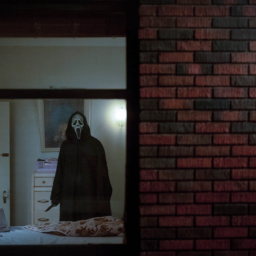
    Making perfect use of its New York City setting, Scream VI is bigger, bolder, and scarier than any of its predecessors. While it sticks to the tried and true tropes and references that film fans will love, it pushes the boundaries of its story and, most importantly, kills to exciting new territory. Ghostface takes Manhattan and I couldn’t be happier.

    Scream VI, a sequel to the 2022 requel of Wes Craven’s original 1993 slasher classic, is bigger, bolder, and scarier than any of its predecessors. That’s in large part because of its New York City setting. While the city has always been ripe for horror, I mean it’s a claustrophobic concrete maze filled with 8 million highly stressed individuals (I’m a New Yorker, I’m allowed to say this), making one that captures its full potential has largely alluded us (I’m looking at your Jason Takes Manhattan). Scream VI  uses the city’s potential to magnify almost every element of the franchise — the lore, the kills, and, of course, the potential identities of Ghostface.

    After a requel that knowingly remakes the original film while also moving the story forward, Scream VI catapults in an entirely new direction as we focus in on the “core four” as Mason Gooding’s Chad puts it. ​​The movie picks up months after the latest Ghostface killings centered around sisters Sam (Melissa Barerra) and Tara (Jenna Ortega). They along with Chad and his twin sister Mindy (Jasmin Savoy Brown) have gone off to start a new life in New York City. However, it wouldn’t be Scream if the world wasn’t obsessed with the recent string of murders perpetrated by horror-obsessed serial killers—and why wouldn’t they? This is the world of the internet, though, and as with any news story the dark corners create a conspiracy.

    The most horrifying thing in the world, a subreddit, is convinced that Sam perpetrated the latest Woodsboro killings complicating the sisters’ lives in the Big Apple. Thankfully, something comfy and familiar pops up to remind them of home — a Ghostface killer! But this is the sixth movie in a franchise of movies that know they’re movies in a franchise. Horror movie geek Mindy breaks it down for us. Now that they’re deep in the franchise the rulebook is out the window. That means that no one is safe, even legacy characters.

    From the classic cold open that plays with our expectations to the final reveal, Scream VI constantly surprises with its ability to be more brutal and menacing (Ghostface with a shotgun? Horrifying.) while maintaining its winky film nerd charm (complete with a shoutout to Letterboxd). This time, the movie takes aim at how franchises slowly lose reverence for the source material in an effort to keep the themselves relevant. Its criticism of the genre isn’t nearly as incisive as previous installments, even last year’s less successful Scream “requel” had more to say about current state of horror. Instead directors Matt Bettinelli-Olpin and Tyler Gillett lean into the iconic horror elements that make up the series — i.e. the kills.

    Often horror movies portray New York City as long concrete blocks of shadowy corners and urban emptiness. Scream VI does the opposite and uses its crowdedness to its advantage — the two most impressive set pieces take place in public on a bodega and the subway. In a city of millions, no one can hear you scream. It’s that expansion outside of suburban interiors that make this installment so exciting. Classic elements like the chase scene and horrors lurking behind closed doors remain, but new elements bring new life screeching back into the series.

    The mystery is perhaps the most twisted — for better and worse — while legacy characters like Courtney Cox‘s Gale Weathers and Hayden Panettiere‘s Kirby Reed add to the movie’s plethora of easter eggs.


    ADVERTISEMENT


    More movies, less problems


    Hey! I’m Karl. You can find me on Twitter and Letterboxd. I’m also a Tomatometer-approved critic.

    💌 Sign up for our weekly email newsletter with movie recommendations available to stream.


    ADVERTISEMENT

  • ‘Infinity Pool’ review: Hedonistic holiday hell

    ‘Infinity Pool’ review: Hedonistic holiday hell

    Infinity Pool

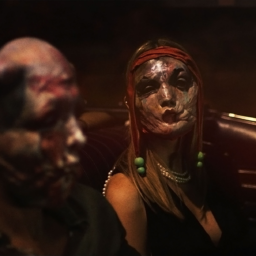
    Infinity Pool plays like a campier version of Michael Haneke’s psychological thriller Funny Games crossed with an upper class Spring Breakers all wrapped up in Brandon Cronenberg’s infamous visceral body horror style. It’s weird, grotesque, bleakly funny, and, most surprisingly, entertaining. People are going to detest it, but we can’t all have taste for hedonism.

    By the time Gabi (Mia Goth) is riding on the hood of a convertible drinking straight out of a bottle of wine with a bucket of fried chicken and a gun, you’re probably wholly enamored by the frenzy of Infinity Pool or absolutely detest it. It seems “like father, like son” very much applies to the Cronenberg dynasty. Like his father, writer-director Brandon Cronenberg (who last directed the sensational Possessor) has settled into a niche of body horror meant to unsettle, unnerve, and upset. However, similar to his father’s most recent film Crimes of the Future, Cronenberg found entertainment and even humor in his madness. Even though nearly every bodily fluid imaginable is present—blood, sweat, tears, bile, spit, c-m—in another world Infinity Pool would be a mainstream horror.


    ADVERTISEMENT


    It’s no wonder it has conjured up comparisons to the series The White Lotus, which has collectively captured the consciousness of the broad public for its satirical takedown of the rich and marriages.

    Infinity Pool doesn’t have quite the same societal commentary, but it’s impossible not to draw comparisons at least in premise. When we’re first introduced to married couple James (Alexander Skarsgård) and Em (Cleopatra Coleman) Foster—vacationing at a beautiful luxury seaside resort in the fictional country of La Tolqa—we instantly know who they are. They’re both conventionally attractive, but clearly mismatched—and bored with each other. It’s giving Harper and Ethan.

    It is perhaps why James, a failed writer, is so quick to accept Gabi’s invitation to dinner when he learns she’s a fan of his work despite it not selling well and her flirtatious demeanor. We learn during dinner with Gabi and Alban (Jalil Lespert) that Em is the wealthy daughter of a book publisher—whose one piece of advice to his daughter was not to marry a writer. What does she do? Marry the first sad sap with a pen that she could find. She further explains that she essentially supports the couple—“I’m practically a charitable organization,” she quips. James doesn’t look pleased but also doesn’t fight. Skarsgård, typically a hulking (and very handsome) figure, portrays James diminutively literally hunched over for much of the movie—a physical manifestation of his repression and shrunken masculinity.

    Gabi and Alban invite them outside the resort’s walls to visit a secret beach—forbidden as La Tolqa is “uncivilized” as Gabi puts it. Still, the Fosters oblige. On their way back to the resort with James at the wheel after a day of sun, boozing, and um… hand jobs—in which Gabi jacks James to a very graphic conclusion—they strike and kill a local farmer with the car. Instead of risking their chances with the local authorities—who will beat, torture, and rape them according to Gabi—they flee the scene back behind the barbed wire fences of the resort.


    ADVERTISEMENT


    Then, Detective Thresh (Thomas Kretschmann) comes knocking. When he takes the couple into the police station, James is clearly anxious, but only weakly questions and protests their detainment—more evidence of his feebleness. The police are completely sure of his guilt—thanks to Gabi and Alban’s testimonies. However, not all is lost. The police chief explains that is La Tolqa tradition to execute offenders by having the family members of the victims maim them. But, with tourism being a booming part of the economy, the country has a deal to clone offenders and instead kill the double as a symbolic punishment—for a fee, of course.

    The way that this procedure is summarized is so matter-of-fact as if it is a normal everyday occurrence—the station even has an ATM for their convenience.

    That dry-pointed humor is what makes Infinity Pool surprisingly accessible. Despite the sinister depravity that is about to ensue, the tone is continually light. After his clone is created, James watches in horror as the farmer’s son brutally stabs his double multiple times. Em shudders and looks away. James, after the bloodbath, almost looks pleased. Like he’s gotten a shot of adrenaline. Still, the events have the couple fleeing the country—or at least trying to. James seems to have misplaced his passport leading him to stumble upon Gabi and Alban again inviting him to dinner with a group of vacationers.

    James discovers that the members of the group are essentially hedonist tourists chasing thrills in a country where they are essentially immortal—they’ve all committed crimes for which their doppelgängers have paid the price. Cronenberg is a visceral filmmaker and captures these indiscretions by assaulting your senses with the coked-out images and sounds of drug trips, hallucinations, f-cking, and killing. His horror is less of danger and more of our innate discomfort with our bodies—inside and out. Even a drug-fueled orgy leaves you feeling dirty as we watch bodies touching, sliding, and penetrating in graphic detail.


    ADVERTISEMENT


    Eventually, these pleasure trips—whether sexual, physical, or criminal—reach a point of no return and James realizes he must escape.

    Is it too late? Perhaps there’s still a chance to physically escape. Mental escape is another story. Cronenberg’s intentions with the story are perhaps sometimes drowned out by the devilish uncomfortable horror or the high-camp shenanigans of Mia Goth’s Gabi—another incredible entry in her pantheon of horror characters. Still, the tale of masculinity and emotional escape emerge in tact—themes movies like The Hunt or The Purge try and fail to mine. If anything, Infinity Pool has more in common with Michael Haneke’s sadistic home invasion satire Funny Games or Harmony Korine’s bikini-clad crime caper Spring Breakers—replace bikinis with disturbing ritual masks and two bored young men with a group of bored affluent married couples. It’s about the primal instinct to purge and society’s instinct to quash those urges—and the nightmares that come with it. Infinity Pool may bring you nightmares, but it’s worth the pleasure trip.

    If you enjoyed Infinity Pool, you might also like:


    ADVERTISEMENT


    More movies, less problems


    Hey! I’m Karl. You can find me on Twitter and Letterboxd. I’m also a Tomatometer-approved critic.

    💌 Sign up for our weekly email newsletter with movie recommendations available to stream.


    ADVERTISEMENT


  • ‘Sometimes I Think About Dying’ review: Daisy Ridley fights loneliness | Sundance 2023

    ‘Sometimes I Think About Dying’ review: Daisy Ridley fights loneliness | Sundance 2023

    Sometimes I Think About Dying follows a socially awkward office worker finds her lonely days interrupted by a new co-worker who piques her interest—and interest in herself.

    Sometimes I Think About Dying is an observational meditation on loneliness, connection and life that’s surprisingly moving and life-affirming despite its pointed dry humor at the start. Daisy Ridley’s performance as chronic wallflower Fran is frustrating, charming, and above all complex in its portrayal of introversion in a world built for extroverts.

    Fran (Daisy Ridley) is a wallflower observing life going on around her but never participating in it. You might too if you worked from her drab office in a tiny waterside town in Oregon. As the hours tick on and she voyeuristically listens to her co-worker’s mundane conversations—“look at that cruise ship!”—her mind slips away… to her death. The way Fran (Daisy Ridley) imagines her death comes in spurts of visions—her feet lifting off the ground as she watches a crane lift outside her office window, her body dumped in the woods. Sometimes I Think About Dying is a cheeky title, but refers to the very real—and shockingly relatable—phenomenon. One that is a part of the very lonely human experience.


    ADVERTISEMENT


    The movie’s portrayal of this loneliness is perhaps an extreme example, but not completely unrelatable. When Carol (Marcia Debonis), a beloved employee at Fran’s company, Fran finds herself clinging to the edge of the party. She reads over Carol’s farewell card filled with personal messages and inside jokes before writing, “Happy retirement, Fran.” However, it’s not as if the people around her are shunning her. Fran simply doesn’t know how to insert herself in the seemingly effortless whirl of socialization around her. That’s until Robert (Dave Merheje) starts working there.

    After a hilariously painful ice-breaking exercise where Fran sharply exclaims her love for cottage cheese, she does something life-changing. She makes Robert laugh over slack. “Cottage cheese is not a cheese. I googled it,” she says. His small chuckle over her non-joke piques her interest—gives her something to be interested in—especially considering she can’t seem to become interested in herself.

    Fran says maybe a handful of words in the movie’s opening act, which makes it difficult to even empathize with her plight. It’s almost frustrating to watch how sheepish she is. Even when she meets up with Robert for a movie and dinner after work, he drives the conversation. However, the brilliance of the screenplay by Kevin Armento, Stefanie Abel Horowitz, and Katy Wright-Mead is that it never vocalizes or outlines Fran’s affliction. Instead, it allows us to unpack her for ourselves—perhaps by seeing ourselves in her or in Robert.


    ADVERTISEMENT


    As the pair continue to hang out, we see that Fran’s shyness isn’t impenetrable as Robert gets her to say more than a few words at a time. Like Before Sunset if Jesse was a sweet divorcee and Celine was and introvert. The content of their conversations on the surface dredges some charm, though the subtext is where the richness—or lack thereof—of Fran’s existence… well, exists. Her isolation is self-imposed. Like she’s put herself into a mental prison as an act of protection. If no one gets to know her, you can’t be rejected. The movie highlights how introverted people are often thrown into loneliness solely because they live in a world unsuited to their needs. 

    Sometimes I Think About Dying is a small movie. It deals in the moments between the moments of life. What it explores is what happens when you live a lowercase ‘L’ life instead of a Life. Its most impressive feat, though, is its ability to make you understand how Fran’s past has informed her present and perceived future. While the first act feels like a retread of the dry humor of Office Space, it’s all in service of a story exploring what is the point of all this. This being life, work, love. Being human. In the emotional final minutes of the movie Fran encounters a character we’ve met who says, “whatever I imagine in my head is not as real as what I do have.” The thoughts she’s referring to are those that are good or bad, positive or negative. It’s a plea to live in the moment. Sometimes I Think About Dying says all that in few words.


    ADVERTISEMENT


    More movies, less problems


    Hey! I’m Karl. You can find me on Twitter and Letterboxd. I’m also a Tomatometer-approved critic.

    💌 Sign up for our weekly email newsletter with movie recommendations available to stream.


    ADVERTISEMENT


  • RuPaul’s Drag Race “One Night Only” review (15×01): The best premiere in years

    RuPaul’s Drag Race “One Night Only” review (15×01): The best premiere in years

    Each week I am ranking the maxi-challenge performances and runways each episode of RuPaul’s Drag Race season 15. Here’s the rankings for “One Night Only”.

    RuPaul’s Drag Race is back with its biggest season yet. Sixteen drag queens are vying for the title of America’s Next Drag Superstar and a cash prize of $200k, the largest in the show’s herstory.

    30-second episode review

    After season 12’s redefining premiere “I’m That Bitch” with queen Nicki Minaj, Drag Race has struggled with their premieres as the casts and episode count have ballooned. However, season 15’s “One Night Only” seems to have found the solution—a supersized episode with a slightly different format than we’re used to. While we do have split entrances, having them all in one episode allows us to meet all the queens in one week but have some time to get to know them separately before the marathon of a maxi-challenge. In my opinion, the talent show should be reserved for All Star seasons, but this was a solid entry with a lot of good performances and three great performances. Sure, there were a lot of lip syncs, but for as many safe boring ones there were a slew of exciting unique ones.

    The show was also paced really well. Despite there being a record sixteen queens I felt I was able to get to know a little about each one. Even those that weren’t one of the main characters of the episode like Aura or Robin.

    The Maxi-Challenge

    In a rare alignment, I agreed with the tops and the bottoms this episode (but I’m still anticipating some buffoonery very soon). The only change I would have made is critiquing eight girls—four tops (ouch) and four bottoms (a nightmare)—so more of the massive cast could get feedback.

    The Tops

    1. Anetra: Give her an Emmy, Grammy, Oscar and Tony. One of the best talent show performances in Drag Race herstory. I laughed, I cried, I gagged. What I loved about the number (similarly to Pangina Heals’ on UK vs The World) is the breadth and pacing. She hit multiple talents back to back (comedy, voguing, jiu jitsu!) so there isn’t a moment to rest in those sixty seconds—not a second wasted. And she was smart for not telling the girls about the jiu jitsu. The gag when she hit that first board was palpable.
    2. Marcia Marcia Marcia: While she is a beautiful and graceful dancer (you betta werk that BFA), often more sincere performances don’t do well in the talent show (Gia Gunn was robbed!). Which is why it was brilliant of Marcia to frame her performance around a teenage girl worshipping her “teen” idol Ross Matthews. It was stupid (complimentary). It was impressive. It was drag.
    3. Jax: If you’re going to do a lip sync, this.. is how… you do it. The impressive stunts aside—three back handsprings and then landing on your titties!—bringing out a jump made of braided hair ATTACHED TO YOUR HAIR is what we call high drag. Elevated. I pity the fool who has to lip sync against her.

    The Bottoms (from best to worst)

    1. Loosey: I agreed with Loosey’s low placement based on the performance (girl… unless you sound like Jan or Monet don’t even try it), but even the audacity to sing live saves her for me. Unlike Jaremi FKA Phi Phi O’Hara and Adore Delano before her, I think everything around her performance was solid (song choice, look). It’s just the actual performing that was her downfall. I think her look saves her too.
    2. Amethyst: Such a terrific concept that was bungled in execution. The judges were completely right in that she delivered the punchline way too soon. The wine should have been the first joke, then the baby reveal at the end. It would have been nice if she had some set-pieces like the other girls that she could search around. Instead, it just looked like an actual mother walking through the park.
    3. Irene Dubois: In concept, this is a killer idea. But this (ironically) would have made a terrific TikTok video. Sketches and standup don’t do well in the talent show because they’re low energy and often lack levels, Irene took that to the next level. If she had done this as a song like Trinity the Tuck in All Stars 4, then maybe it would’ve gone over better.

    The Runways

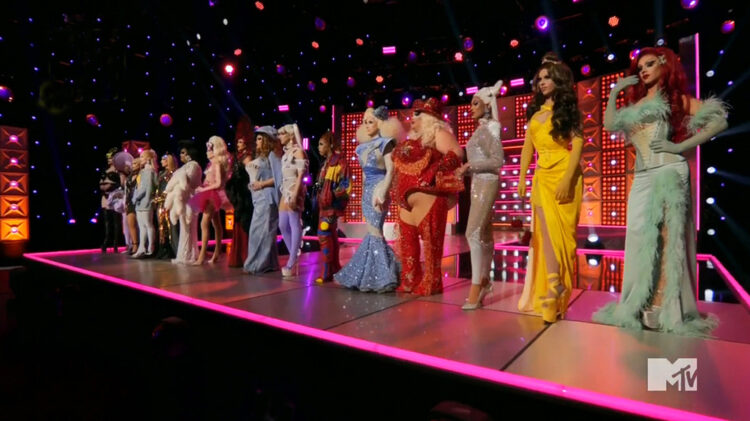
    The Cast of RuPaul's Drag Race season 15
    The cast of RuPaul’s Drag Race season 15

    The runway category is “Who is she?” I was looking for pieces that clearly communicated who the queen is, their personal style of drag, and, of course, a well put together garment. Overall, the runway was a bit underwhelming especially for a category as broad as this. I wish I saw more inventiveness or interesting concepts. Here’s my ranking:

    1. Sasha Colby: Icons being icons. This is Vegas showgirl elegance after dark. I love the maroon and black color palette and how the somewhat understated dress lets the headpiece do the talking. Sasha, the fashion girl of the season? TOOT.
    2. Sugar: The more I look at this look the more I love it. While I was skeptical when she walked out and it was a clear Belle reference, the way she elevated it with the corset and asymmetrical skirt that had a fun belt detailing up top. TOOT.
    3. Mistress Isabelle Brooks: For a runway titled “Who is she?” Mistress understood the assignment. If I knew nothing about her I would know she’s a DRAG QUEEN from Texas. Rhinestoned and fringed on every inch with a perfectly proportion-ized body. Mistress is teaching the children (or at least Sugar and Spice). TOOT.
    4. Luxx Noir London: It’s a bit reminiscent of Drag Race Season 10 winner Aquaria’s evil twin runway, but the color palette compliments her skin so beautifully (she is oiled for the gods). And she’s right, does anyone still wear a hat? They should. TOOT.
    5. Loosey LaDuca: Body-ody-ody. Loosey’s silhouette is correct. The definition of hourglass. The second she stepped out I got the Britney reference, but what I love is the dress stands on its own. This is drag, mama.
    6. Malaysia Babydoll Foxx: And this is drag, baby(doll). A classic silhouette, pristine white and dripping in glittering rhinestones. You could see her even if the lights were off. Not only that, but the body was correct. TOOT.
    7. Spice: Similarly to Sugar (I’m hoping this isn’t a recurring theme, though), I love the elevated Disney princess vibe. What made this slightly less successful than her twin is the color. Obviously you couldn’t really get around it with the Ariel reference, but I think you lose some of the detailing that stood out in Sugar’s look. Still I clocked the ostrich feathers. TOOT.
    8. Robin Fierce: Sure it’s a body suit, but it’s a beautiful sparkly body suit with a tearaway! There were some fit issues at the top of the garment, but I really enjoyed that hair which was reminiscent of the bagel from Everything Everywhere All At Once. If you know, you know. TOOT.
    9. Anetra: It’s giving C-3PHo and I’m living for it. I don’t love the black bulletproof vest, but the fact that she made this gives me confidence that she’ll kill design challenges. TOOT.
    10. Jax: I might be biased because I live in the East Village (and have stepped on a rat in Tompkins), but I loved this 80s/90s retro NYC look. It reminded me of an elevated version of Asttina Mandella’s infamous ASOS jacket runway from UK Season 2. Like that runway, the girls that get it get. And I got it. TOOT.
    11. Irene Dubois: I’m a horror gay, so I immediately understood and loved the reference to Alien. I do wish there was something trailing off of it, whether a cape or a train (or a tail). The bottom just feels a little bare. But still gorg. TOOT.
    12. Marcia Marcia Marcia: It’s clean, well-done, and on-brand. Still, it left me underwhelmed for a first runway, especially since it’s so similar to her entrance look. I’m hoping to see more um… versatility from her as the season progresses. TOOT.
    13. Salina Estitties: After her entrance and performance looks I was nervous for Salina, but I liked her deconstructed West Coast Latina getup. The jacket/vest give a shoutout to her culture while the draggy pants elevate it and tie it all together. But that hat and shirt… still, TOOT.
    14. Amethyst: I like this vague pastel K-pop girlie-inspired look, but it also feels a bit like the outfit is wearing her (ironically, I hate when the judges use this critique). It looks well-made and she styled it well, but something wasn’t clicking for me. Still, not bad. TOOT.
    15. Princess Poppy: I was… underwhelmed. While it’s certainly pretty and I liked the shape of the tutu, something in the bodice wasn’t quite right. Whether it was the nude illusion or the shape I’m bot sure, but this wasn’t doing it for me. BOOT.
    16. Aura Mayari: Baby… you can’t come in with that much confidence and then present this on the runway. The bottom half looks like a design challenge gone wrong—it’s just a piece of fabric wrapped around her waist—while the top half is lost completely on the stage. BOOT.

    My Top 3 Power Rankings

    Each week, I will rank who I think is going to be in the top 3 and those that are in the hunt. Here are my current predictions:

    1. Anetra: Few queens have dominated an episode of Drag Race as much as Anetra did this one. We see mixed results for queens who win the premiere (it seems either you make it to the finale or flame out midway through).
    2. Sasha Colby: I mean… like Sasha said in her entrance: period. She’s a legend, which usually doesn’t mean much on Drag Race. However, she’s a legend still in her prime. Plus, there doesn’t seem to be anything she can’t do.
    3. Mistress Isabelle Brooks: The narrator/commentator of the season usually doesn’t make the finale (see: Katya), but Mistress is shaping up to be more of a main character rather than a supporting role. She seems to be representing the traditional drag queen (as opposed to the TikTok queens) which I think gives her fuel.

    Heatseekers: Jax, Spice, Luxx Noir London

    Do you agree or disagree? Let me know on Twitter or Instagram.


    ADVERTISEMENT


    More movies, less problems


    Hey! I’m Karl. You can find me on Twitter and Letterboxd. I’m also a Tomatometer-approved critic.

    💌 Sign up for our weekly email newsletter with movie recommendations available to stream.


    ADVERTISEMENT


  • ‘M3GAN’ slays her way into our hearts | movie review

    ‘M3GAN’ slays her way into our hearts | movie review

    A toy inventor and roboticist creates a lifelike AI doll to keep her recently orphaned to protect and befriend her niece. M3GAN takes her job deadly seriously.

    M3GAN slays (and dances) her way into camp slasher movie villain canon one spicy comeback at a time. Whenever she isn’t on screen, including during the movie’s setup, things don’t operate quite as well. But the second that M3GAN walks through the door dressed in a satin brown peacoat and enormous “here for the drama” sunglasses, the movie runs like a well-oiled robotic machine in a blonde lace front.

    By the time M3GAN, a lifelike AI doll programmed to be a child’s greatest companion, sings her 9-year-old charge Cady (Violet McGraw) an acapella lullaby version of Sia’s “Titanium” (after swearing she didn’t kill anyone on Cady’s behalf) you’re either completely locked into the movie’s specific brand of black comedy camp or you’re boring. Just kidding. Kind of. But M3GAN, already a viral sensation, does beget a certain brand of weird to appreciate a sassy doll with a penchant for spicy comebacks, breaking into song and… well, murder. Like Child’s Play for the AI era.


    ADVERTISEMENT


    And just like Chucky (M3GAN vs Chucky movie when?), M3GAN gets plenty of mileage simply on the audaciousness of a child’s toy (albeit a toy that looks like Charlize Theron as Megyn Kelly) doing things a toy very much shouldn’t—like the aforementioned murder. Unlike Child’s Play—and it’s failed remake that attempts to update the story for the 21st century—M3GAN has an added layer of relevancy by exploring the ethics (and pure creepiness) of artificial intelligence and our overreliance on it. While Chucky (or Annabelle from The Conjuring franchise) are cursed dolls, M3GAN is created by us—specifically Gemma (Allison Williams), a roboticist and toy inventor. It creates a lore where our audacity is almost as unbelievable as M3GAN’s. We contributed to our own downfall.

    It’s even more hilarious when you consider that Gemma, who has been toddling in her development of M3GAN (short for Model 3 Generative Android), was only able to finally finish building her when she became overwhelmed caring for her recently orphaned niece Cady (Violet McGraw). Trying to find a way out of actually parenting—and to impress her boss (Ronny Chieng) at the toy company she works at—she programs M3GAN to not only continually learn behaviors and evolve to help Cady, but also do anything to protect her physically and emotionally. Emotionally protecting a child who just witnessed her parents being killed in a car crash? What could possibly go wrong!?


    ADVERTISEMENT


    Once M3GAN starts disobeying Gemma’s commands (with sass!)—“Are you sure you want me to shut down?”—the scene for slasher history is set. Though there is a general lack of inventive kills that is a bit disappointing, the movie’s horror is more derived from an AI becoming uncontrollable rather than the actual physical danger she poses. If anything, M3GAN’s greatest shortcoming is that the human characters aren’t nearly as entertaining as she is—ironic if you think about it. Whenever she isn’t on screen, including during the movie’s setup, things don’t operate quite as well. But the second that M3GAN walks through the door of Gemma’s home dressed in her satin brown peacoat, the movie runs like a well-oiled robotic machine in a blonde lace front.

    M3GAN became an instant gay twitter phenomenon for two reasons: gays love powerful women (human or otherwise) and gays love camp. The second we saw a ridiculous-looking lifelike doll doing a tight 8-count before going to murder someone we were hooked. However, the key to camp that few people acknowledge is intention. For camp to work, a movie’s tone has to be somewhat sincere. And what is more sincere than a deadpan AI fulfilling its programming—even if its methods are a bit uncouth? I guess what I’m trying to say is *in my best Roxie voice* the name on everybody’s lips is gonna be… M3GAN!


    ADVERTISEMENT


    More movies, less problems


    Hey! I’m Karl. You can find me on Twitter and Letterboxd. I’m also a Tomatometer-approved critic.

    💌 Sign up for our weekly email newsletter with movie recommendations available to stream.


    ADVERTISEMENT


  • ‘Avatar: The Way of Water’ review: Post-Pandora depression is real

    ‘Avatar: The Way of Water’ review: Post-Pandora depression is real

    Avatar: The Way of Water returns us to the world of Pandora where the Navi’s struggle against human colonizers takes them to the water

    Avatar: The Way of Water reminds us that the possibilities of film are endless as it expands the world of Pandora to an impossibly stunning underwater landscape. Coupled with James Cameron’s inability to direct a bad action scene, it’s an immersive sci-fi epic that keeps you engaged from start to finish. That’s despite a derivative plot and underdeveloped characters. While other movies might feel empty by relying on its visuals, The Way of Water emotes through them. Did I care for any of the characters (or know their names)? Nope. Do I care what happens in the sequels? Absolutely not. But it’s an enjoyable 3-hour visual magnum opus.

    After the release of Avatar in 2009, there was a spate of news stories about people feeling depressed after seeing the movie. They couldn’t live with the fact that they didn’t live in a world as beautiful as Pandora apparently. I had a similar experience when I went to the bathroom during the long three-hour runtime of the movie’s sequel Avatar: The Way of Water. As I sprinted out of the theater, the dull colors of the AMC Empire (if you know you know) and the quiet of the halls felt deafening. As I came back into the theater, feeling encompassed by the world felt comforting. But do I now remember the names of any of the characters on the screen? Absolutely not.


    ADVERTISEMENT


    That was always the clap back from the original’s detractors, especially those defending The Hurt Locker’s Best Picture win at the Oscars. The challenge was to name three characters or one iconic line to prove the movie’s cultural impact and staying power (typically the challenge would end at “Jake Sully”). It was always interesting considering the sheer scale of the movie. Director James Cameron created an entire world, culture, and famously, language for the movie similar to George Lucas with Star Wars. But unlike that long-running franchise, nothing from the Avatar world has seemed to stick. I mean, you don’t walk around saying “I see you” to people, which would have been the answer to that earlier question. 

    But as I was sitting watching Avatar: The Way of Water I wondered if that was not a bug, but a feature. 

    What better way to make people focus on some of the most incredible and impressive CGI visuals created for film than to make every other element fade into the background to simply support it. Do I need to know the name of Jake Sully (Sam Worthington) and Neytiri’s (Zoe Saldaña) second son? No. (It’s Lo’ak if you’re wondering). But did I tear up while he was comforting his whale-like companion? Absolutely. It’s what James Cameron does best. He emotes through his visuals. Of course there are countless iconic lines in Titanic, but the images of Jack and Rose standing on the bow of the ship or getting steamy in a car are what really sell the romance. The Way of Water does the same. Instead of romance, however, Cameron emphasizes family. 


    ADVERTISEMENT


    We’re reintroduced to Jake and Neytiri more than a decade after the events of the original movie through sweaty expositional voiceovers. Despite pushing out the “sky people” aka colonizing humans aka the Resource Development Administration (I know…) from Pandora, they’ve returned more aggressively than ever destroying the clan’s home and driving them into hiding. The humans, led by General Frances Ardmore (Edie Falco), are bent on taking over the planet as a recolonization effort for humanity. However, the Navi are fighting back and slowly cutting off the RDA’s supplies which is why Ardmore brings in reinforcements in the form of Colonel Miles Quaritch (Stephen Lang) who returns after being killed by Neytiri during the events of the first film as an Avatar with the memories of his human form.

    The Sullys fly off to a distant island chain where the Metkayina clan is settled. Though they’re wary of the family at first, leader Tonowari (Cliff Curtis) and his wife Ronal (Kate Winslet) allow them to stay granted they assimilate with the people. And while it treads similar ground to the original, the way the Metkayina expand the lore of the Avatar world is nothing short of awe-inspiring. Unlike the forest-dwelling Omaticaya clan where the family is from, the Metkayina live off of the water. Because of that, their tails and arms have fish-like fins while their skin is a lighter shade of blue. 

    The Metkayina’s trepidation toward the outsiders mirrors Neytiri and her clan’s reaction to Jake’s arrival in the first movie. Here, however, it’s their children—Neteyam (Jamie Flatters), Lo’ak (Britain Dalton), Tuktirey (Trinity Jo-Li Bliss), and adopted Kiri (Sigourney Weaver returning to play the daughter of her original character)—that bear the brunt of the assimilation as Tonowari and Ronal’s kids Reya (Bailey Bass) and Aonung (Filip Geljo) train them in the “way of water.” In the same way that their home tribe relies on and is connected to the forest, they are connected to the ocean and its creatures. This is where Avatar: The Way of Water soars (swims?). Like the first movie (or any other of Cameron’s movies), the world-building is unmatched. For an hour, we’re treated to some of the most impressive visuals I have ever seen on screen as the world of Pandora is expanded into the water.


    ADVERTISEMENT


    After more than a decade of muddy CGI-gobblygook where the worlds have no weight or permanence (*head slowly turns to Marvel and DC*), seeing what the VFX artists were able to create has raised the bar. And it’s not even the sweeping landscapes that are the most impressive like in the first movie—though those are impressive, as well. It’s the close-ups. In some scenes, I would just stare at the texture of the skin of the Navi. There are imperfections, just like in life, in every frame that make you feel immersed in this new world. Unlike Black Panther: Wakanda Forever, where there was much to be desired from the underwater kingdom of Talokan, The Way of Water takes its time to explore every facet of this new foreign land.

    And sure, a lot of the plot beats that it hits are derivative like Reya and Lo’ak’s burgeoning romance or a confrontation with a group of boys who don’t take to the outsiders. But setting it in this detailed tapestry of a world negates any quibbles I could have with the plot. Like in one of the most impressive sequences of the movie, Lo’ak is attacked by a shark-like beast after being left in the deep water by some nefarious teens from the village. He is saved by a whale-like creature called a Tulkun, a spiritual partner to the clan, and begins to bond with it. While the “two outcasts bonding over being outcasts” story is familiar, the sheer visual of “man” and beast together is enough to draw you in.


    ADVERTISEMENT


    However, whenever we spend time with the human characters, particularly Colonel Quaritch and his biological son Spider (Jack Champion), who has lived with the Navi since the events of the first movie before being kidnapped by his newly resurrected Avatar father (I know this plot is convoluted), the movie loses a lot of the awe that distracts us in other scenes. The humans are drawn so black-and-white that they’re almost evil for the sake of being evil. Although Quartritch does have possibly the most defined arc of any of the characters and when both storylines crash together it leads to a satisfying (and thrilling) conclusion that is possibly one of the best large-scale action scenes I’ve seen in years.

    Avatar and now Avatar: The Way of Water will always be fascinating entries in James Cameron’s filmography. From Aliens to Terminator 2 to Titanic, he has been able to weave together compelling stories with pure spectacle. Avatar excels incredibly in the latter and just barely passes on the former. However, the way it excels makes it almost impossible not to enjoy yourself for its surprisingly spry three-hour runtime.


    ADVERTISEMENT


    More movies, less problems


    Hey! I’m Karl. You can find me on Twitter and Letterboxd. I’m also a Tomatometer-approved critic.

    💌 Sign up for our weekly email newsletter with movie recommendations available to stream.


    ADVERTISEMENT

  • ‘Spoiler Alert’ review: Love, loss, and smurfs make a perfect rom-com

    ‘Spoiler Alert’ review: Love, loss, and smurfs make a perfect rom-com

    Spoiler Alert follows Michael and Kit’s imperfect romance through various ups and down before they’re faced with a crisis that tests the bounds of their love

    Spoiler Alert is the kind of realistic romantic tragicomedy that makes you feel nearly every emotion at once. Funny but not forced. Tragic but not overwrought. Romantic but not unrealistic. It hits all the beats in each of its genres while delivering a satisfying albeit devastating rom-com that says love is worth the pain. Am I romantic now?? I think so.

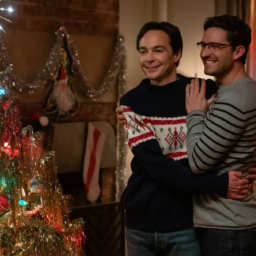
    Spoiler alert: This romantic comedy is actually a tragedy. But it wants you to know that. Spoiler Alert opens with a shot of Michael Ausiello (Jim Parsons) lying across from his husband Kit Cowan (Ben Aldridge) in a hospital bed, clearly in his last moments, before flashing back to the pair meeting for the first time thirteen years earlier. Why, though, does the story spoil its tragic ending? Isn’t it enough that the couple doesn’t get their happily ever after? Instead, we’re forced to watch in dread knowing their fate. Well, that’s by design. While there are flashes of the romantic comedy tropes we’ve come to know and fall for time and time again, Spoiler Alert is grounded in realism — as it should be since it is based on Ausiello’s memoir Spoiler Alert: The Hero Dies: A Memoir of Love, Loss, and Other Four-Letter Words. Still, the way it errs so closely to his actual story is admirable as it doesn’t shy away from the ugly. 


    ADVERTISEMENT


    And not just the ugly of a terminal cancer diagnosis. It doesn’t present Michael and Kit as a glorified picture-perfect gay couple. We’re first introduced to TV-obsessed Michael when he’s a staff writer for TV Guide, a dream job since he was a child. He’s a workaholic, a bit of a prude, and a man of habit (he always needs his diet coke like half the gay men in New York City). That’s why when he meets photographer Kit out at a gay club on “jock night” it is truly a surprise — the only reason he goes is that his friend (Jeffery Self) goads him into it. Despite some initial awkwardness including a cringe Knight Rider reference, Michael and Kit hit it off. 

    They seem like complete opposites. Michael is uncomfortable in his skin in every way and especially as a gay man — it is the early aughts after all. Kit, on the other hand, breezes through like a hurricane — confident, assured, and swoony. The perfect romantic lead. Despite their differences, though, the pair make it to a second date that director Michael Showalter perfectly presents. One of those conversations that just never seems to run out and can go on for hours. Eventually, they make their way back to Kit’s apartment — where they have a hilarious run-in with his monosyllabic lesbian roommate — to extend their night. However, as they’re hooking up, Michael has a fit as he’s about to remove his shirt. Sensing his discomfort, Kit slows down and asks Michael if he’s doing anything wrong. He reveals he is an “FFK” aka Former Fat Kid. Instead of having him leave, Kit asks if he can just hold him. 

    It’s those moments that make the romance in Spoiler Alert feel so real. Figures since Michael himself said that the movie doesn’t take many creative liberties with the story. Their jagged line to love is imperfect but believable. The story doesn’t shy away from those moments of uncertainty — like when Michael reluctantly hosts Kit at his Jersey City apartment for the first time. I’ll save that reveal for the movie, but let’s just say it leaves them feeling a little blue. In another scene, Kit asks Michael to pretend to be his friend as he hasn’t come out to his parents yet (the charming and hilarious duo of Sally Field and Bill Irwin). It all culminates in a hilarious coming-out scene where three people confess they’re gay at once. Despite the bumps, Kit, who Aldridge plays perfectly as a swoony (and chiseled) romantic lead, sticks around long enough for the pair to move in together and we’re treated to the corny but genuine moments that make us love love — a montage of their Christmases together is warm enough to melt any anti-romance cynic’s heart.


    ADVERTISEMENT


    However, what is so refreshing is that 13 years down the line Michael and Kit are separated and in couple’s counseling drudging up every complaint, big and small, they have about each other. Some are universal and some are specific to the gay experience like being on Grindr (“you can look, but can’t touch”), feeling jealous of the hot gay coworker, missing an episode of Drag Race. It feels similar to director Michael Showalter‘s previous film The Big Sick, which similarly told an imperfect love story.

    Just like that movie, Spoiler Alert takes a turn towards tragicomedy when Kit discovers he has an aggressive type of cancer — get your prostate exam, fellas. And with that, the movie becomes an exploration of regret, grief, trauma, and the boundaries of love. While it doesn’t lose its wit, it does inject understated moments that invoke feelings of loss. In perhaps one of the more quietly impactful scenes, Michael and Kit take photos of each other at a restaurant they’ve frequented — it’s Benny’s Burritos, which recently closed, for you West Village gays. There are no words, but Parsons and Aldridge quietly communicate to us (and each other) the fear, longing, and sadness they both feel. It’s those moments that elevate Spoiler Alert to greatness.

    Sometimes the swings that Spoiler Alert takes don’t completely pan out. Flashbacks to Michael’s childhood that are presented as scenes from a sitcom do little to explain how his mother’s own battle with cancer colors his experience with Kit. There is also an underbaked subplot around Kit’s fidelity during the relationship involving his co-worker Sebastian (Queer Eye‘s Antoni Porowski) that could have been more impactful. Still, it never detracts from the tear-jerky effectiveness of the movie.

    Spoiler Alert is funny but not forced. Tragic but not overwrought. Romantic but not unrealistic. It is the kind of romantic comedy that we gays in New York City can’t roll our eyes at. It wasn’t until Spoiler Alert that I realized the reason so many gay rom-coms fall flat is we’re immune to bullshit. To love who we want to love without prejudice takes years of trauma, therapy, and, eventually, acceptance. We are all too aware that love isn’t like what it is like in the movies — it’s imperfect, messy, and cruel. We want that kind of love. We fought to have that kind of love. The kind of love that even though it’s hard, it’s worth it in the end. Sure, more likely that not the great loves in our lives are not going to end quite as tragically as Michael and Kit’s. At the very least, though, it affirms that through it all life, love, and pain are just a part of the experience. Embrace every moment.


    ADVERTISEMENT


    More movies, less problems


    Hey! I’m Karl. You can find me on Twitter and Letterboxd. I’m also a Tomatometer-approved critic.

    💌 Sign up for our weekly email newsletter with movie recommendations available to stream.


    ADVERTISEMENT

  • ‘The Menu’ review: A delectable dark horror-comedy | TIFF review

    ‘The Menu’ review: A delectable dark horror-comedy | TIFF review

    In The Menu, a group of wealthy diners is invited to an exclusive island restaurant run by a world-renowned chef to experience a once-in-a-lifetime dinner. On the menu: horror.

    As with his Emmy-wining work on Succession, director-writer Mark Mylod brings the same black comedy schadenfreude at the hands of the rich to The Menu.

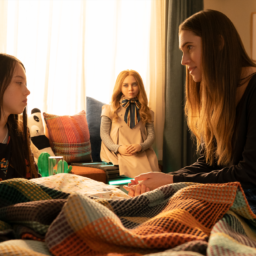
    Have you ever watched an episode of Netflix’s Chef’s Table and thought, “gee, I wish this was more like a horror movie.” Well, I present to you weirdos The Menu, a deliciously camp (that’s a pun) humble one-room eat the rich satirical horror-comedy about a group of diners at an exclusive isolated island restaurant who think they’re about to be treated to a one-in-a-lifetime multiple-course molecular gastronomy dinner constructed by legendary Chef Julian Slowik (Ralph Fiennes). And they are treated to that meal, more or less. What they don’t know is that they are a part of the menu. However, what is so exciting about The Menu is it’s not in the way you think. This isn’t Raw (if you know, you know). What it is is a hilarious and satiating pitch-black comedy of manners about rich people getting their just desserts from the people meant to serve them—and separately one of the best horror movies and comedies of the year.

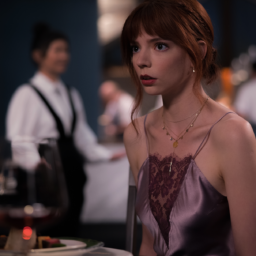
    Director Mark Mylod works in a very similar tone to his Emmy-winning work on HBO’s Succession. The Menu from its opening moments to its explosive finale is tongue-in-cheek and never notions that it is trying to say anything more than what is on its surface like other recent genre movies dealing with class—it’s more Bodies Bodies Bodies than it is Get Out or Parasite. Take Tyler (a delightful Nicholas Hoult), a self-described foodie and super fan of Chef Slowik who has been trying to get a reservation to Hawthorne for months—the restaurant only takes twelve guests a night for $1,250 a seat. When he finally does, he brings along Margot (Anya Taylor-Joy) who he chastises for smoking because it will mess up her palette leaving her unable to appreciate the food.

    They board a ferry that brings them and the ten other guests for the night’s dinner service to the isolated island where the restaurant, including the farm, smokehouse, and staff quarters all reside. The restaurant’s no-nonsense deadpan maître d’hôtel Elsa (Hong Chau) explains that the entire staff lives on the island. “Why would we not?” she asks. She adds, “we’re a family.” Elsa is like the harbinger of a classic horror movie and basically wears a sign that says “you will die.” The guests don’t heed the warning.

    After, the guests are seated in the minimalist seaside restaurant that is open concept with the kitchen flowing straight into the dining room. Throughout the night we slip into and out of the conversations at each table where we learn the backstory of each group, all characters in their own right—much like the eccentric suspects of Knives Out. There’s highfalutin food critic Lillian Bloom (Janet McTeer) and her magazine editor (Paul Adelstein) who try to come up with increasingly pretentious words to describe the food (“it’s thalassic,” Lillian says about the first course of the meal, a single scallop on a rock). A group of finance bros who work for the venture capital firm that funds the restaurant. John Leguizamo plays a movie star who says he’s friends with Chef Slowik and tries to stop his assistant Felicity (Aimee Carrero) from quitting her job.

    Through the multiple courses of his finely tuned dinner—captured with the same delicate mouthwatering cinematography of an episode of Chef’s Table or the cooking scenes in Ang Lee’s Eat Drink Man Woman—he brings his diners on an exploration of flavor, nature, and horror. That itself could have been a hilarious satirical comedy, mainly when he introduces the second course: a “breadless” bread plate—he explains that for aristocracy like the diners, something as simple as bread is beneath them. And while the movie starts as a hilarious satirical

    The first indication that something is not quite what it seems is when Chef Slowik describes the inspiration of his third course, recalling a memory from childhood when he had to protect his mother from his abusive father by stabbing him in the thigh with a pair of scissors—on taco night of all nights. The meal, a deconstructed taco with a chicken thigh stabbed a pair of scissors, is served with tortillas laser drawn on with images further exposing the indiscretions of each the guests. They range from gentle chides—Tyler’s is photos of himself taking photos of the food (which they were instructed not to do at the beginning of the night)—to personal revelations—Anne’s tortillas are printed with photos of Richard with a young woman who looks a lot like Margot—to criminal evidence—let’s just say the venture capitalists’ money took a vacation to the Cayman Islands.

    “What is this?” asks Bryce (Rob Yang), one of the venture capitalists.

    “That is a tortilla deliciosa,” Elsa responds sincerely.


    ADVERTISEMENT


    More movies, less problems


    Hey! I’m Karl. You can find me on Twitter and Letterboxd. I’m also a Tomatometer-approved critic.

    💌 Sign up for our weekly email newsletter with movie recommendations available to stream.


    ADVERTISEMENT


  • ‘Falling For Christmas’ review: Lindsay Lohan is back

    ‘Falling For Christmas’ review: Lindsay Lohan is back

    A spoiled ski resort heiress finds herself in the care of a well-to-do lodge owner after losing her memory in an accident in Falling For Christmas

    Falling For Christmas is in many ways a classic corny holiday-themed romantic-comedy complete with over-the-top camp characters, ridiculous physical comedy, corny but sweet romantic gestures, and a gay awakening with a mountain man named Ralph. Wait a second. Okay, maybe it’s not your classic holiday rom-com. Instead, the Netflix original is a tongue-in-cheek send-up of the genre, something its star Lindsay Lohan is completely dialed into. No one is taking the material too seriously, and that, ladies and gentlemen, is camp.

    A little bit Overboard and a little bit It’s A Wonderful Life, Falling for Christmas is an easy holiday watch for the girls, gays, and theys.

    Sign up for our newsletter to get notified when we publish our full review.


    ADVERTISEMENT


    More movies, less problems


    Hey! I’m Karl. You can find me on Twitter and Letterboxd. I’m also a Tomatometer-approved critic.

    💌 Sign up for our weekly email newsletter with movie recommendations available to stream.


    ADVERTISEMENT


  • ‘Black Panther: Wakanda Forever’ helps us grieve together | review

    ‘Black Panther: Wakanda Forever’ helps us grieve together | review

    Black Panther: Wakanda Forever follows the nation as it navigates grief, politics, and new enemies after the death of King T’Challa.

    • Black Panther: Wakanda Forever is closer to a drama meditating on loss and grief than it is a comic book movie. Even when those elements come in, they’re tied into the plot.
    • The tone of the movie is notably more somber than other Marvel Cinematic Universe movies. Although there are flashes of humor, director Ryan Coogler never strays far from the movie’s darker undertones.
    • The first and last scenes are the most dramatically satisfying and moving in any MCU movie. Letitia Wright, Danai Gurrira and Angela Bassett’s performances become the movie’s heart in Boseman’s stead. Not by replacing him, but by continually reminding us of his impact.
    • Tenoch Huerta is a revelation. A goddamn STAR. His Namor constantly feels dangerous, but finds complexities in his motivations and very existence. Like any good villain (anti-hero?), he very nearly convinces you that he is right. He also very nearly runs away with the movie.
    • The first half has a perfect rhythm. It kept my heart pounding and eyes on the verge of tears. The second loses momentum as it expands its worldly themes. Still, Coogler knows how to keep you in. Along with Chloe Zhao and Sam Raimi, he’s the MCU’s future.

    By the time the Marvel logo came up at the start of Black Panther: Wakanda Forever, this time with a purple background rather than its usual trademark red, I was already on the verge of tears. There’s a melancholy in those opening minutes that we haven’t yet seen in a Marvel Cinematic Universe movie. The real raw human emotion that has mostly gone untapped in the franchise hits you like a gut punch — and we all know why. While director-writer Ryan Coogler was still in the middle of writing the script, star Chadwick Boseman died from colon cancer. Something unknown to Coogler and producer Kevin Feige. There wasn’t a world that they, or we, imagined without Boseman as T’Challa, the Black Panther and King of Wakanda. Now faced with his absence, they had to go back to the drawing board. What they came up with was exactly that: his absence.


    ADVERTISEMENT


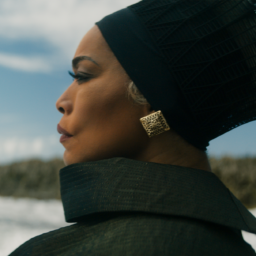
    Instead of shying away from his death or recasting the character, Coogler unflinchingly faces grief and loss head-on dealing with each surviving character’s struggles and how they deal with his absence. The details of T’Challa’s death aren’t specific. A mystery illness with no cure that quickly and quietly led to the King’s demise despite his sister Shuri’s (Letitia Wright) attempts to recreate the heart-shaped herb in a last-ditch effort to save him. It’s her grieving process — and guilt — that propels us for the first half of the movie as we learn of the geopolitical implications of T’Challa’s death including the rise of his mother Queen Ramonda (Angela Bassett) as the head of the nation. Seeing an opening, other nations are seeking to share in Wakanda’s supply of vibranium going as far as raiding outposts with the substance. Queen Ramonda gives an impassioned speech in front of the United Nations — one of many stellar moments of Bassett’s performance in typical Waiting to Exhale mic drop car-burning fashion — accusing them of taking advantage of their supposed weakness.

    And she’s right. Shortly after we see an American ship using a machine designed to find vibranium deposits encounter a potential supply at the ocean’s floor. However, before they can even get so much as a glance at it, they are ambushed by a group of blue amphibious humanoids that easily dispatch with the crew before one cloaked in shadow (with wings on his feet) single handedly takes down a helicopter. We come to learn that this is Namor (newcomer Tenoch Huerta). Or as he says with perfect supervillain delivery: “my people call me K’uk’ulkan, the feathered serpent god. My enemies call me Namor.”

    Like the first movie, Wakanda Forever moves rhythmically for the first half. Composer Ludwig Göransson — he won the Oscar for the first movie — expands the score’s musical language to work with Coogler’s melancholy tone and the political intigue of the plot. In some ways, the movie feels like a noir — albeit a brightly lit and action-oriented one. The mystery of Namor and his people, the Talokan, fuel much of the setup. Namor’s introduction — easily breezing into the (nearly) impenetrable Wakanda for a conversation with Queen Ramonda and Princess Shuri — is a showcase for Huerta. He explains to them that Wakanda’s cooperation with the outside world puts his own underwater kingdom at risk, so he tasks them with bringing the scientist responsible for creating the vibranium-detecting machine to him to kill.


    ADVERTISEMENT


    This sets off a series of moral, political, and personal dilemmas as Queen Ramonda looks to protect her nation and Princess Shuri discovers that there’s more in common between her people and her supposed enemy. Throughout the movie, but especially in the first half, Coogler is in the pocket — completely in rhythm with the story he’s telling. Nearly every single element that made the first movie the first (and still only) comic book movie to be nominated for Best Picture at the Oscars is even further elevated, especially the costumes by Ruth E. Carter and production design by Hannah Bechler. Coogler himself is more visually daring, presenting action setpieces and fights that feel dangerous.

    However, Black Panther: Wakanda Forever begins to come apart when it has to consummate its very sensitive exploration of grief with the demands of a comic book movie. And often in the second half, those two elements are in direct opposition to each other. Coogler does his best to use Shuri’s emotional journey to hold the two together, but in the end there are a few jumps the audience needs to make to believe in where the story ends up. The element that is successful at briging those two ideas together is Huerta’s Namor.


    ADVERTISEMENT


    The backstory of the Tatoklan almost begs for its own movie and gives the themes of grief, loss, and trauma structure. Much of this is in thanks to Tenoch Huerta’s revelatory performance. He is a goddamn star. His Namor constantly feels dangerous, even just with his words — especially important as comic book movies become increasingly predictable. However, he finds complexities in his motivations. Like any good villain he very nearly convinces you that he is right. In a way, he’s not even a villain, but an anti-hero in his own story. 

    Black Panther: Wakanda Forever is for better and worse emblematic of the fourth phase of the Marvel Cinematic Universe. Rather than returning to the same formula that made the franchise a success, Coogler pushes the narrative and artistic boundaries to create a flawed but ultimately satisfying chapter.


    ADVERTISEMENT


    More movies, less problems


    Hey! I’m Karl. You can find me on Twitter and Letterboxd. I’m also a Tomatometer-approved critic.

    💌 Sign up for our weekly email newsletter with movie recommendations available to stream.


    ADVERTISEMENT

  • ‘Till’ breathes life into American history | movie review

    ‘Till’ breathes life into American history | movie review

    Bringing a piece of American history to life, Till is the story of a mother’s love as a woman fights for justice after her young son is murdered in the 1950s

    The name “Emmett Till” is one that is often thrown around. He is one of a handful of Civil Rights figures (along with Rosa Parks, Martin Luther King Jr., and Malcolm X) that have permeated the culture to the extent that they are mentioned on the half page allocated to the “Civil Rights Movement” in American History textbooks. (He even made his way briefly into my conservative Christian education in rural Michigan). Perhaps you know that he was a 14-year-old Black boy who was lynched in Mississippi. Perhaps you have seen the photos of his body that were used to showcase the horror of racism. But for many, Emmett Till remains a distant historical figure rather than a real human, even though his murder only took place 67 years ago (for context, he’d be the same age as Bernie Sanders and Martha Stewart if he was still alive). Till, Chinonye Chukwu’s film which premiered at the New York Film Festival on October 1, seeks to make Emmett Till a human once again.


    ADVERTISEMENT


    In a Q&A after the press and industry screening of the film Chukwu outlined three non-negotiables she stipulated when she was approached to direct Till. First, she did not want to show violence against Black bodies directly. Second, she wanted the film to begin and end with moments of joy. And third, she wanted to center the story of Emmett Till around his mother Mamie Till-Mobley. All three of these choices contribute to breathing life into a story that has become more myth than real-life, especially for non-POC Americans.

    In recent years we’ve seen an increasing number of films that could be labeled “trauma porn” whether those be brutal depictions of violence against Black people (like in Antebellum), against women (as with Blonde), against queer people (see the recent “Bury Your Gays” trope), or against those with mental health issues (The Son’s manipulative plotting comes to mind). It could have been easy to steer into the horrific, graphic violence committed against Till here with long, grizzly lynching scenes, but Chukwu deftly steers away from that while still presenting a powerful, unflinching portrait of what happened to Till. 


    ADVERTISEMENT


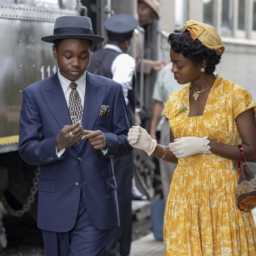
    The casting of the cherubic, exuberant Jalyn Hall as Emmett (who goes by “Bobo”) instantly gives the film a lightness in its early sections, although those are obviously complicated with the dread we as the audience feel knowing what is coming. Hall plays Till as a goofy, sometimes lazy, always sweet, smiley little boy, the type of child we’ve all met, and the type we know can accidentally wander into trouble. Just how quickly things escalate, however, clearly illustrates the dangers that even innocent Black children were subjected to then (and unfortunately still today far too often).

    The centerpiece of the film, of Chukwu’s directing, and of Till’s emotion is Danielle Deadwyler’s portrayal of Emmett’s mother. Deadwyler (who you may know from last year’s The Harder They Fall or Station Eleven, both of which show her dizzying range as an actor), gives one of the most tremendous, full-bodied performances of the year. As Emmett’s loving protective mother early on, as the heartbroken, grief-stricken mourner in the film’s center, and as the persistent, determined fighter in the third act, she builds a mountain of Oscar-worthy moments. Especially in several long takes, Deadwyler proves herself as an actor Hollywood should be watching. The strength and subtlety of her performance is the best thing about the film (and one of the best performances of 2022). The film succeeds largely because of Deadwyler’s performance, and its ability to deliver to the audience the full emotional weight of the lynchings without the graphic violence mostly falls on the shoulders of her portrayal. Some credit for this performance must be given to Chukwu, who captured an equally powerful performance from Alfre Woodard in her 2019 drama Clemency.


    ADVERTISEMENT


    While the true story is one that needs to be told, and the performances are tremendous, they are slightly undercut by the technical elements of the film. Up against a slew of big-budget, artistically nuanced period pieces (Noah Baumbach’s White Noise premiered the day before at NYFF, and The Fabelmans, Empire of Light, and The Women King are all swirling through this year’s awards conversations), Till feels a bit chintzy at times. Some scenes are obviously green screen, the production design is underwhelming, and the sets often feel more like walking into a Cracker Barrell than the 1950s. The film, which was produced by Whoopie Goldberg and documentarian Keith Beauchamp, among others, was not a project to get greenlit do the uncomfortable subject matter, and I would imagine the financing was not on the level of recent productions from behemoths like Netflix or Amazon. One wonders whether the film’s weak spots in the technical areas are a result of filmmaking choices or the movie’s small budget given Hollywood’s longstanding reluctance to financially support projects with Black voices at the center (especially ones that focus on racism). I tend to think the latter, and hope that someday soon we’ll get to see Chukwu work with the budgets given to her white, male counterparts.

    Certainly not a flawless film, but one that triumphs repeatedly in many ways, Till accomplishes much of what it sets out to do. It gives new life to Emmett Till. It showcases the work of his mother as a Civil Rights activist. It delivers a tremendous Oscar-worthy central performance. And it manages to tell a terrible, terrible story without being overly graphic or shying away from the horrors, all while being approachable to a larger audience (a nearly impossible tightrope walk that Chukwu should be commended for walking). Till makes the (too near) past present and full of life, and hopefully reminds viewers that Emmett Till is more than just a name and a series of black and white photographs.


    Hey! I’m Matt. You can find me on Twitter here. I’m also a staff writer at Buzzfeed.


    ADVERTISEMENT


  • In ‘All Quiet on the Western Front’ war has never looked worse and never looked better | TIFF review

    In ‘All Quiet on the Western Front’ war has never looked worse and never looked better | TIFF review

    All Quiet on the Western Front, the second adaptation of the novel of the same name, follows a group of young soldiers that learn the hard way that war is hell

    All Quiet on the Western Front will be released on Netflix on October 28th.

    For whatever reason (schadenfreude? To stare the harshest reality straight in the eye? A fascination with large machines?), for as long as humans have been making movies, they have been making them about war. The first ever Best Picture winner at the Oscars was Wings, a 1928 silent war film about a pair of fighter pilots. The highest-grossing film ever (adjusted for inflation) is Gone with the Wind, set against the backdrop of the Civil War. And Oscar history is littered with wartime films from classics like World War II-set Casablanca and The Bridge on the River Kwai (focused on a British POW camp) to more recent entries like Holocaust tragedy Schindler’s List and Iraq War-set The Hurt Locker. But one story has been a staple in the war film canon since the very beginning: the 1930 Best Picture winner All Quiet on the Western Front


    ADVERTISEMENT


    The film is based on the German novel by Erich Maria Remarque, which follows a young, naive soldier named Paul through events of the First World War. Remarque’s novel, inspired by his experience fighting in the trenches, paints a horrifying, monotonous, and ultimately pointless picture of war. Paul is dispatched to complete various futile tasks on the front, watching his comrades die agonizing deaths with little rhyme or reason. As opposed to the prevalent view of war at the time—honorable, glorifying, heroic—the novel took a definitive anti-war stance. It enraged many readers (especially in Germany where the book was banned during the Nazi era) while delivering harsh truths to a population fueled by propaganda, and with relatively few ways to understand what war actually looked like.

    Now post-Vietnam War, post-Cold War, and post-Iraq War, the anti-war sentiments of All Quiet seem commonplace and even quaint.

    The fact that you were probably assigned the book in a high school English class and that the original film is in black-and-white contribute to the misconception that this is a run-of-the-mill war epic. At the time of the film’s release, however, merely two year’s after the book’s publication in German, and one-year post-English translation (nearly a decade before World War II), All Quiet was revolutionary. 

    Nearly a century after the American film, a German remake, which debuted at the Toronto International Film Festival, feels as timely as ever. In a period of growing nationalism and increased violence, the message of war’s futility and human toll feels like a necessary reminder. Like the novel and the 1930 film, this new adaptation from German director Edward Berger, isn’t terribly concerned with a streamlined plot (because war itself rarely has one). Rather it’s more of a mish-mash of grizzly, muddy, bloody moments covered in rats, in piss, in shrapnel, in severed limbs, and in the ever-present toxic masculinity. 


    ADVERTISEMENT


    While the new film strays from the book in many regards (especially in its eleventh-hour battle sequence), it does stay true to the novel in premise and theme.

    A group of impetuous young German schoolboys, led by Paul (newcomer Felix Kammerer) enlist in giddy excitement, trotting off to certain death while singing upbeat tunes and daydreaming about the glory, wealth, and women who will await their return. A masterful opening sequence that follows the garments of previous German casualties, their uniforms stripped from mangled bodies, stitched up, scrubbed, and handed to the euphoric new recruits, shalacks the film with ominous foreboding from its first scene. The crew is then whittled away one by one in a series of battles, wartime mishaps, and body horrors, cementing for viewers that there is no glory in war. 

    While there may be no glory in war, there is most certainly glory in war movies. Berger’s vision, expertly shot by cinematographer James Friend, is as breathtakingly gorgeous as it is brutal. The haunting, misty vistas (set against an eerie piano score from Volker Bertelmann) are Nat Geo in spooky season. Even as the runtime approaches the 2.5-hour mark, Berger is concocting new ways to artfully depict how goddamn horrible war is. Scenes of tank warfare, of hand-to-hand combat in a bomb crater, and of flamethrower deaths will be branded into my mind for eternity. The film, distributed by Netflix, looks EXPENSIVE, and the practical effects go a long way, much as they did with almost Best Picture winner 1917. However, unlike Sam Mendes’s one-shot masterpiece or Mel Gibson’s Hacksaw Ridge, which presents war as at least somewhat heroic, All Quiet’s beauty is 100% in service of showing how disgusting war is. 


    ADVERTISEMENT


    The 2022 German submission for the Academy Awards, All Quiet is almost guaranteed an Oscar nomination in the Best International Feature category. And as we’ve seen with Drive My Car, Flee, Another Round, Cold War, Roma, and of course Parasite, the increasingly international Academy is not afraid to nominate non-US films in other categories. Cinematography, Score, Sound, Film Editing, Makeup (those yellow teeth!), and even Picture seem within reach, especially since this year seems without an international juggernaut frontrunner to this point. It should be mentioned that Daniel Brühl appears here in a supporting role (as he seems contractually obligated to appear in any movie involving Nazis) relegated to a series of non-battle scenes that add more bleakness to the story. 

    Despite premiering late in the TIFF lineup and being over two hours long, I was engrossed the entire time in this beautiful horror.

    With a Netflix debut at the end of October, All Quiet on the Western Front has the potential for plenty of eyeballs as awards season heats up. It’s one of the most artfully rendered and least “oorah”-shouting war films in recent history—I’m looking at you, Top Gun: Maverick. And while the Germans may have suffered a painful loss in World War I, they have a cinematic triumph here.


    Hey! I’m Matt. You can find me on Twitter here. I’m also a staff writer at Buzzfeed.


    ADVERTISEMENT