Tag: 2020 Sundance Film Festival

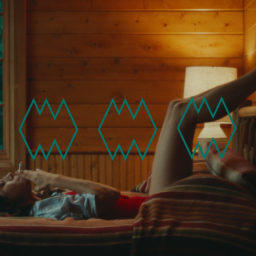
  • ‘Black Bear’ is Aubrey Plaza’s best performance to date | movie review

    ‘Black Bear’ is Aubrey Plaza’s best performance to date | movie review


    ADVERTISEMENT


    A young couple’s relationship is thrown into turmoil when an enigmatic filmmaker moves in with them to try and complete her latest film in Black Bear.


    With its sharp script, interesting structure, and a watershed performance by Aubrey Plaza, Black Bear is a deliciously entertaining and satirical quasi-thriller romp about what it is to be a creative.

    Black Bear is streaming on Paramount+. You can subscribe here.

    Black Bear, which premiered in the NEXT section of the 2020 Sundance Film Festival, invokes feelings of a cross between a relationship drama like Before Midnight and a meta satire like One Cut of the Dead. And if that combination sounds crazy, it kind of is. Black Bear could have easily felt like a party trick of a film where a mid-movie shift changes everything you know about the film. Still, it manages to be more than a clever gimmick. 

    While Lawrence Michael Levine’s careful direction and sharp screenplay help, it is Aubrey Plaza’s dynamite performance as protagonist Allison that does a lot of the work to pull the movie off. Allison at first comes off like an alternate version of Plaza herself. She is a writer, director, and actress who escapes to the mountain home of a friend of a friend to get over a bout of writer’s block—and she maintains the same dry deadpan wit that is patently Plaza. 


    ADVERTISEMENT


    💌 Sign up for our weekly email newsletter with movie recommendations available to stream.


    ADVERTISEMENT

    The homeowners who are hosting Allison, Gabe (Christopher Abbott—also in Possessor at the festival) and Blair (Enemy’s Sarah Gadon), are a long-term couple—important to note that they’re not married—who are expecting a child. They’ve been offering their isolated lake home to creatives hoping to help inspire them, as they are with Allison, a filmmaker trying to complete writing her latest film.

    From the start, it’s clear that there is some simmering tension between the trio. Blair and Gabe seem to constantly contradict each other and take subtle jabs that they know sting. At the same time, it’s clear that Gabe is attracted to Allison, which Blair picks up on. It leaves her in the odd position of hosting Allison while trying to steer her boyfriend in the right direction. 

    The tension that Levine derives is palpable, though something seems off. Things seem maybe a touch too perfect. Or maybe too dramatic? Perhaps it’s that the dialogue is hyper stylized? Or maybe too natural. Eventually the movie answers at least part of the question of what’s going on, but I will spare you the detail because the reveal is all a part of the trick that makes the movie work. 


    ADVERTISEMENT


    Black Bear is about everything and nothing. Not that it doesn’t have a clear purpose, but because of its experimental structure its allegiances are unclear. There are threads for and against the creative process, relationships, and gender dynamics that could have all easily become overwrought. But because of the way the movie twists to a sharp, satirical tone that is at times uproariously funny you’re never left too deep in dramatic waters. Until the climax. 

    The only proper way to end this review is with a full paragraph of praise for Aubrey Plaza’s performance which I’ll begin with ARE YOU F#CKING KIDDING ME!? Plaza’s performance is mind-blowing in its complexity. Allison herself is a character that code switches depending on who she’s talking to, but at the same time seems susceptible to manipulation. Or is she? Her thoughts are opaque and oh so transparent at the same time to the point that you can at times see her thinking through how she should come off at any given moment. But when that scene happens, and you’ll know it when you see it, you know exactly what she’s thinking. Give her the damn Oscar. 


    ADVERTISEMENT


    More movies, less problems


    Hey! I’m Karl. You can find me on Twitter and Letterboxd. I’m also a Tomatometer-approved critic.

    💌 Sign up for our weekly email newsletter with movie recommendations available to stream.


    ADVERTISEMENT


    💌 Sign up for our weekly email newsletter with movie recommendations available to stream.


    ADVERTISEMENT

  • 'The Night House' terrifies — Sundance review

    'The Night House' terrifies — Sundance review

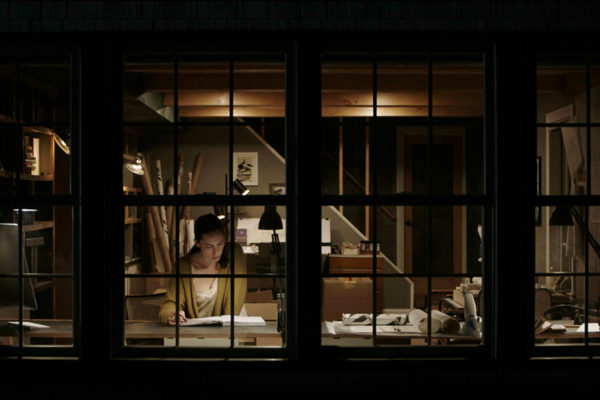
    Rebecca Hall plays a widow haunted by her dead husband in their lakehouse in The Night House

    The scares in The Night House come hard and fast, aided by director David Bruckner’s masterful grasp of a dread-filled atmosphere.

    See all our reviews from the 2020 Sundance Film Festival here.

    What does a house feel like when one of its inhabitants is gone? It feels empty. Incomplete. Cold. That’s the feeling that director David Bruckner’s new film The Night House, which premiered as part of the Midnight section of the 2020 Sundance Film Festival, gives off at the start as Beth (Rebecca Hall), a high school teacher, copes with the suicide of her husband Owen (Evan Jonigkeit). As she strolls through their lakeside home, built and designed by Owen, you can feel the vacant space. It probably doesn’t help that the home is filled with large windows opening into the darkness of the woods and lake. However, eventually, like Bruckner’s last film The Ritual, that feeling eventually gives way to a pervasive dread. 

    Owen’s suicide came as a surprise to many, but no one more than Beth. For her, Owen was her rock helping her through depression. Now that he’s gone she begins to self-destruct by drinking too much and pushing those close to her away including her friend and coworker Claire (Sarah Goldberg) and neighbor Mel (Vondie Curtis Hall). She, like many others who lose a loved one to suicide, feels confused and, more intensely, abandoned.

    💌 Sign up for our weekly email newsletter with movie recommendations available to stream.


    ADVERTISEMENT


    However, she’s not alone. One night she hears a heavy knocking at the door — this is where living in an all-glass house isn’t ideal. Then, the basement lights flip on. The next morning she’s not sure if it was real or a dream. Another night, she’s awoken by the stereo blaring her wedding song, startling the silent house. As the haunt becomes more intense with white-knuckling tension and well-earned effective jump scares, Beth starts to suspect her husband may have had secrets — dark secrets. 

    The screenplay, written by Ben Collins and Luke Piotrowski, begins to twist itself into a mystery that sometimes gets overly complicated for its own good — much like their last effort Super Dark Times. As Beth digs deeper she finds that her husband has books on the occult and photos of women that look like her on his computer. The mystery throws Beth into turmoil amidst the haunt. Rebecca Hall’s performance ranks among her best as she balances raw guttural emotions with Beth’s indignance. And while the story threatens to throw the movie off its rails, Bruckner’s strong grip on the mood and atmosphere keeps it on the rails — or keep it from sinking, rather. 

    When the movie finally shows its cards it’s generally satisfying. Without Bruckner’s presentation, I’m not sure how successful it would have been. Still, The Night House is a genuinely terrifying and haunting romp that will have you watching it through your fingers. The scares come so hard and fast and nearly every element is designed to scare you — from the smart production design to the smart, albeit loud, sound design. The entire movie is a maze that you feel trapped in, and that’s why horror fans will love it.


    ADVERTISEMENT


    More movies, less problems


    Hey! I’m Karl. You can find me on Twitter and Letterboxd. I’m also a Tomatometer-approved critic.

    💌 Sign up for our weekly email newsletter with movie recommendations available to stream.


    ADVERTISEMENT


  • ‘The Father’ is Anthony Hopkins’ greatest performance in decades — Sundance review

    ‘The Father’ is Anthony Hopkins’ greatest performance in decades — Sundance review

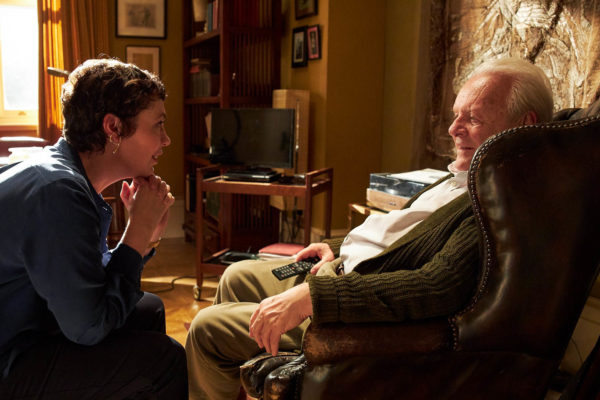
    The Father puts you in the shoes of a man (Anthony Hopkins) suffering from dementia as he tries to figure out what his reality truly is

    While Sundance has had a mixed track record in recent years as a platform to launch an Oscar contender, I have almost no doubt in my mind that Anthony Hopkins will receive a Best Actor nomination for his performance as the eponymous father Anthony in playwright Florian Zeller’s directorial debut The Father, which played in the Premieres section at the 2020 Sundance Film Festival. It’s a rarity for an actor as esteemed as Hopkins to get another career-defining performance this late, but there’s no other way to describe it other than a tour-de-force and perhaps his greatest role to date. 

    Adapting from his own play Le Père, Zeller tells the story of Anthony (Hopkins), an elderly man who recently moved in with his daughter Anne (Oscar winner and overall lovely human Olivia Colman). For much of the beginning of the movie, it seems like a pretty standard drama about a man facing a deteriorating mental state as he deals with dementia — similar to Michael Haneke’s Amour, a film I adore. He’s forgetful and sometimes paranoid, particularly about his watch, which he believes his caretaker stole. 

    However, as the movie unfolds, it becomes clear that we’re watching it from Anthony’s perspective. It starts out slow at first, small changes in the environment, forgotten names or events. At one point his daughter tells him she’s moving to Paris to be with her new husband. The next, she’s still married to the man she’s always been with (Mark Gatiss). In the next, that man changes to a completely different person (Rufus Sewell).

    💌 Sign up for our weekly email newsletter with movie recommendations available to stream.


    ADVERTISEMENT


    Zeller begins to play with the viewer in other ways. More than any movie about dementia I’ve seen in the past, it truly gives you the feeling of what it feels like to be in and out of lucidity. Suffering from dementia should feel like a horror movie and that’s what The Father achieves. Surprisingly, it’s the moments of clarity — if there ever truly is one — that are the most horrific. You’re never sure what reality actually is. 

    Hopkins’ is an emotional powerhouse whose empathetic performance is impossible to not completely give in to. While the movie, to its fault, sometimes feels a little too much like a play adapted to the screen, it feels like an honor to be front row to such a raw and emotive performance. Not once does it ring false. Brilliantly, you can see the man that Anthony once was beneath the confusion. 

    It’s difficult to make a movie about this subject matter move with so much rhythm. However, once The Father has you, it’s hard to fall out of its momentum. It may feel stagey at times, as movies based on plays often feel, but it almost works for the effect that Zeller is going for. The devastating final act is when you finally crash to reality and Anthony Hopkins delivers some of the greatest work I think I’ve seen on screen. It may be early, but one of your Oscar frontrunners is here.


    ADVERTISEMENT


    More movies, less problems


    Hey! I’m Karl. You can find me on Twitter and Letterboxd. I’m also a Tomatometer-approved critic.

    💌 Sign up for our weekly email newsletter with movie recommendations available to stream.


    ADVERTISEMENT


    💌 Sign up for our weekly email newsletter with movie recommendations available to stream.


    ADVERTISEMENT


  • ‘Minari’ grapples with the American dream | Sundance movie review

    ‘Minari’ grapples with the American dream | Sundance movie review

    Minari follows a Korean-American family as the set down roots and builds a farm in rural Arkansas in the 1980s

    Minari is a beautifully told family drama about chasing the American dream and all the costs and beauty that entails. Terrifically acted by the entire cast, Minari is perhaps the best movie to come out of the 2020 Sundance Film Festival. 

    ▶︎ Minari is available to purchase on all platforms, including Prime Video.


    ADVERTISEMENT


    See all our reviews from the 2020 Sundance Film Festival here.

    I can’t begin to describe how it feels to have so many Asian-American stories being told through film in recent years. From Lulu Wang’s remarkable The Farewell to the delightful Crazy Rich Asians or John Cho in thriller Searching. It feels like each is more personal than the last, and Minari is yet another great entry in that canon. However, that’s not to discount it as just another film with Asian leads. It is singular in its story — it is partially based on director Lee Isaac Chung’s own life — and style.

    Set in1980s rural Arkansas (is that an oxymoron?) — the time period doesn’t really play into the narrative — Minari follows the Yi family as they pull up to their new home. The modest trailer, that’s missing stairs up to the front door, is set on a large plot of land with no neighbors in sight. The patriarch Jacob (Steven Yuen) is excited by the move from California, where he and his wife Monica (South Korean actress Yeri Han) made a living determining the gender of chickens (sexing is the technical term) for a decade. For him, this move represents a step forward as he’s determined to use the five-acre plot to build a farm and start a business. 

    Monica isn’t quite so ecstatic. All she sees is a waste of space, no community, and a house on wheels. She might have a point too. The couple has two kids, Anne (Noel Kate Cho), a young teen girl seemingly wise for her years, and a curious seven-year-old boy named David (Alan Kim) who is suffering from a heart murmur. Despite her begging and a blow-up argument between them that could marvel the one in Marriage Story, Jacob is adamant that this is where they need to be.

    They compromise by bringing Monica’s mother (Youn Yuh-Jung) over from Korea to care for the kids while they are at work. Soonja, who hasn’t seen her daughter for years, is exactly the foul-mouthed, sassy grandmother we all we wish we had. Upon her arrival, it’s clear that David is put off by her — he was born after they moved to the States. She’s not the picture of an American grandma. In addition to her crass language, she gifts him a Korean card game that involves gambling (he should learn early, she says), makes him drink a concoction including deer antlers and at one point makes them hike deep into the forest to plant minari, which is a Japanese herb. David also makes it a point to say she smells like Korea.


    ADVERTISEMENT


    💌 Sign up for our weekly email newsletter with movie recommendations available to stream.


    ADVERTISEMENT


    Minari director Lee Isaac Chung
    Lee Isaac Chung, director of Minari, an official selection of the U.S. Dramatic Competition at the 2020 Sundance Film Festival. Courtesy of Sundance Institute

    However, her presence does ease some of the tension between Jacob and Monica. Jacob has time to get his farm up and running with odd but well-meaning local Paul (Will Patton) and Monica starts to fall into a routine trying to make the house a home and practicing sexing so she can make more money to support the family. She’s particularly helped by her mother’s presence as outlined in a hilarious scene where her mom shows her all the food and spices she brought from Korea — Monica cries when she sees she brought chili powder. Still, the financial burden of supporting the farm and the constant worry about David’s health makes Monica question her husband’s priorities. 

    Though the plot sounds like it could tread into melodramatics it never actually gets there. There is so much warmth and life in Minari. Chung grounds the movie in something real — since it is his own experience. None of the characters feel like caricatures. Even larger-than-life Soonja and precocious David — their banter is a highlight. And though set in 1980s Arkansas, they experience little overt racism. Instead, we see them suffer from microaggressions, like Monica being called “cute” by some of her fellow church parishioners or a little girl asking Anne if any of the words she’s saying are real Korean words before launching into verbal diarrhea that includes the words “ching” and “chong.” None of it is done out of malice and instead ignorance.


    ADVERTISEMENT


    This is the Yi’s internal story. In particular, Minari explores identity in the face of struggle and change. Jacob and Monica came to the States to find a better life. Jacob still seeks that out. He feels he’s destined for something more. That he owes it to his family to be successful. However, that’s the very thing that hurts the family. Monica struggles to find a place in Jacob’s dream and in the town they settle in. Soonja learns how to be the “right” kind of grandmother for David. An Americanized one that bakes cookies and doesn’t teach him how to gamble. But most importantly, we see the movie largely through David who more than anything wants to be a “normal” kid, even if that’s not attainable.

    Minari is the kind of movie that wins you over with its sweetness and comedic edge — some of David and Soonja’s antics will have you in stitches — but keeps you in with its richly complex themes and characters. It’s an irresistible movie. I might even go as so far as to say that this is one of the great families in cinema.

    All of it is aided by Emile Mosseri’s (coming off last year’s The Last Black Man in San Francisco) dreamlike score and cinematographer Lachlan Milne warmly lit cinematography. Whether or not it’s meant to feel like a dream is up to Chung to explain. However, it feels like Minari is someone looking back on their life with sadness but ultimately fondness.

    The final scene escalates to great heights and ends with an emotional shot of the family that will leave you in tears of happiness. And in the moment before the movie cuts to black I realized how much I’d miss seeing these characters on the screen. I wish I could watch their lives continue to develop and watch them grow. That is how I know Minari is a great movie — perhaps a masterpiece of a family drama.


    ADVERTISEMENT


    More movies, less problems


    Hey! I’m Karl. You can find me on Twitter and Letterboxd. I’m also a Tomatometer-approved critic.

    💌 Sign up for our weekly email newsletter with movie recommendations available to stream.


    ADVERTISEMENT

    💌 Sign up for our weekly email newsletter with movie recommendations available to stream.


    ADVERTISEMENT


  • 'Herself' rebuilds a woman's life — Sundance review

    'Herself' rebuilds a woman's life — Sundance review

    Herself follows a domestic abuse survivor and her two daughters as they literally rebuild their lives by building their own house

    See all our reviews from the 2020 Sundance Film Festival here.

    The opening scene of Phyllida Lloyd’s Irish drama Herself, which premiered in the World section at the 2020 Sundance Film Festival, features a devastating act of domestic violence that is difficult to watch. It’s made even more difficult considering Sandra’s (co-screenwriter Clare Dunne) children were there. It isn’t what you’d expect from the director that brought us Mamma Mia!, perhaps one of the most benign movies ever made. However, for the better, the movie begins to show incredible empathy and warmth in the face of such tragedy. 

    After the attack, Sandra separates from her husband Gary (Ian Lloyd Anderson) and moves her two young girls Molly (Molly McCann) and Emma (Ruby Rose O’Hara) into a hotel with the help of a women’s shelter. However, revealing a flaw in the system, Gary still has visitation rights and sees the girls on the weekend, much to Sandra’s dismay. Life has become a struggle for her. She’s working multiple cleaner jobs — at a bar and the house of a doctor suffering from an injured hip — looking for permanent housing for her and the girls, all the while with a broken hand. 

    💌 Sign up for our weekly email newsletter with movie recommendations available to stream.


    ADVERTISEMENT


    Incensed by the system’s inability to find her a permanent home and an offer of a plot of land on her property from Peggy (Harriet Walter), a doctor who Sandra’s mother worked for, Sandra makes the decision to build a house for her and her daughters. She finds a plan online and sets out to try to make her dreams come true. However, building a home on top of her other responsibilities and Gary breathing down her neck proves difficult. So, she seeks out the help of a contractor (Game of ThronesConleth Hill) to help steer the project, which eventually attracts more volunteers. 

    We’ve seen this kind of story before. However, Herself differentiates itself by avoiding a lot of the pitfalls of this kind of empowerment story. Rarely does it wade into melodrama and instead remains relatively grounded. That’s partially thanks to Dunne’s massively winning performance as Sandra, who is defiant in the face of her obstacles but clearly overwhelmed — as most people would be. The screenplay that she co-wrote with Malcolm Campbell effectively build Sandra as a character while also giving us a chance to really understand the pitfalls of the system — both governmentally and societally — that make it difficult for her to get back onto her feet. 

    The movie has a deep understanding of the character’s plights and particularly how those plights make her stronger, but also how they sometimes defeat her. But in the face of it all Sandra persists with the help of those around her. The message of the movie is one of community, strength, and empowerment. And despite some questionable needle drops it never preaches that to you. Instead it gets its point across using its story. And what a story that is. It’s no wonder Amazon Studios acquired the film. It’s the kind of heartwarming project you want to sit on the couch and lose yourself to.

  • ‘Palm Springs’ will make you laugh, cry and repeat — Sundance review

    ‘Palm Springs’ will make you laugh, cry and repeat — Sundance review

    Palm Springs updates the time loop comedy as two wedding guests get stuck repeating the wedding day over and over again

    Quick review: Palm Springs finds new life in the Groundhog Day-inspired time loop movie by bending the formula and finding both laughs and heart in a romantic comedy story anchored by great lead performance by Andy Samberg and Christin Milioti.

    Where to watch Palm Springs: Streaming on Hulu.

    Chloé Zhao makes Nomadland‘s melancholic but hopeful story of nomads traversing the American West a stunningly complex character study of life on the margins of society.


    The time loop movie has been done countless times across multiple genres whether it’s sci-fi action Edge of Tomorrow, meta-horror Happy Death Day and, of course, the pioneering Bill Murray comedy Groundhog Day. It’s a genre in and of itself that seems like it couldn’t be made new again. However, director Max Barbakow finds something fresh with Palm Springs, his new sci-fi comedy produced by The Lonely Island (Andy Samberg, Akiva Schaffer and Dylan Sellers), that premiered at the 2020 Sundance Film Festival before being picked up by Neon and Hulu in a record-breaking $17 million distribution deal

    The movie opens to Nyles (Samberg) being awoken by his girlfriend Misty (Meredith Hagner), who is a bridesmaid in Tala (Camila Mendes) and Abe’s (Tyler Hochelin) wedding. He goes through the day with an airiness that could be perceived as arrogance at first — it’s Andy Samberg after all — that is eventually explained as prescient boredom. You see, Nyles has been through this day countless times. For all he knows, it could be millions. He knows what’s going to happen — and every version of what’s going to happen. 

    In this iteration of the day he saves Tala’s sister Sarah (Christin Milioti) from giving an embarrassing maid of honor speech that he’s seen her give numerous times by giving a speech of his own. That leads the two to hookup in the desert. However, they’re interrupted by something I’ll save for you to see on your own leading to a chase to a cave with a mysterious orange glow. 

    Sarah follows Nyles into the orange glow, despite all his efforts to stop her, leading her to become stuck in the same time loop as Nyles. This is the twist that makes Palm Springs feel fresh — two time loopers! That simple choice unlocks so many wonderful narrative moments from Sarah’s anger at Nyles for getting her stuck there, Nyles having to teach Sarah the rules of the world — it helps them avoid any clunky exposition, and the exploration of a relationship between two people literally stuck together by time and space.

    💌 Sign up for our weekly email newsletter with movie recommendations available to stream.


    ADVERTISEMENT


    And seeing the debauchery the pair gets into without fear of consequences is a blast. From doing mushrooms in the desert to staging a Die Hard-inspired scene during the wedding — complete with bad Russian accents, a bomb in the wedding cake, and a hook for a hand. However, this is a romantic comedy and spending that much time with someone, even if time isn’t moving forward, is bound to bond people together. 

    While Palm Springs is certainly a playful romp, it has an engrossing plot and complete character arcs that are made even more interesting by the time loop. Sarah is the black sheep of her family, a constant screw up, who commits an unforgivable screw up during the wedding. Nyles is dealing with the nihilism of someone with no future and is slowly forgetting the past. We also learn that Nyles accidentally got another wedding guest named Roy (J.K Simmons in a hilarious but poignant role) stuck in the loop too. For all its ridiculousness and trademark Lonely Island shenanigans, the movie has a strong beating heart.

    Milioti, who blew me away in the stage adaptation of Once before gaining recognition as the titular “mother” in How I Met Your Mother, finally gets the leading role she deserves and takes advantage of it. Her hilarious deadpan delivery makes gets nearly every line a laugh, however, it’s her irresistible charm that makes the character great. Samberg gives without question his greatest performance to date. His signature class clown persona is there — and, as always, he puts it to good use — however, he gets to flex his more dramatic character muscles here which results in a surprisingly heart-filled performance.

    As the Palm String trudges forward through multiple upbeat montages that takes time to slow down and spend real time with the characters, it’s apparent this is something special. Not only is it hilarious with rarely a minute without a joke, it never gets repetitive or boring. Which is a feat considering the entire plot is about a single day repeating over and over again. It’s not surprising this sold for such a large sum because this feels like a classic broad romantic comedy in the making. 

  • 'Never Rarely Sometimes Always' tackles our failure of women's healthcare — Sundance review

    'Never Rarely Sometimes Always' tackles our failure of women's healthcare — Sundance review

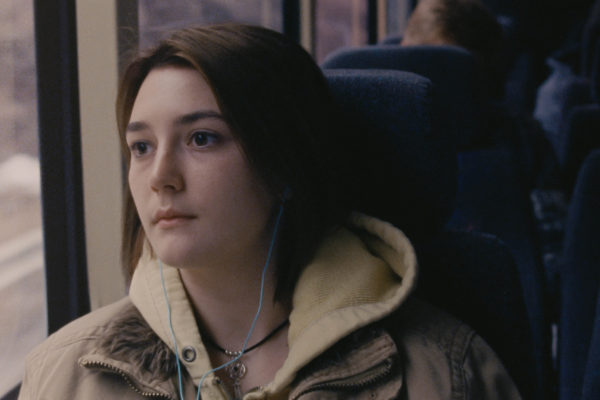
    Never Rarely Sometimes Always follows a teen girl from a small town as she journies to New York to get an abortion

    Quick review: Never Rarely Sometimes Always is a matter-of-factly told abortion drama that pulls no punches as it takes on the failings of our healthcare system — especially for women. In theaters March 13th.

    See all our reviews from the 2020 Sundance Film Festival here.

    Director Eliza Hittman’s filmography is just three films deep, but her matter-of-fact style is as assured as an auteur with decades under their belt. That isn’t more apparent than with her new movie Never Rarely Sometimes Always, which premiered at the 2020 Sundance Film Festival in Park City, Utah this week.

    Hittman has a long history with Sundance going back to 2011 and her short Forever’s Gonna Start Tonight. Since then, all three of her films — It Felt Like Love and Beach Rats are the others — have premiered there — and it feels like the perfect setting. Though all of her movies have been set and filmed in New York City, they’re all connected by naturalistic acting, teen angst, and an unadorned presentation. All qualities that feel right for a festival cast against snowcapped mountains and far from the business 

    Like all her films, she follows a teen, this time a girl, undergoing a life-changing experience. Autumn (Sidney Flanigan), quiet but indignant, performs at her school’s talent show among singing trios and awkward musical theater numbers. The song she performs is about the pain and disappointments of love — we’ll soon learn that she’s pregnant and left to deal with it on her own, which makes the song all the more poignant.

    💌 Sign up for our weekly email newsletter with movie recommendations available to stream.


    ADVERTISEMENT


    Her tiny Pennsylvania town clearly is not the progressive environment a teen in this situation would want to be in. When she goes to the local women’s clinic, the doctor, despite the best of intentions, clearly cautions against abortion as an option when Autumn shows interest. It’s clear from the brochures that only layout options that involve bringing the pregnancy to full term and an old video — probably on VHS — comparing abortion to murder.

    Without many options in her small town, she and her cousin and best friend Skylar (Talia Ryder) make plans to travel to New York City to have the procedure despite their limited means. And this is when Never Rarely Sometimes Always really begins to come alive. 

    When the pair arrive in the city it’s clear they’re out of their depths as tasks as simple as buying a MetroCard seem impossible to them. Then again, isn’t it for everyone? They face several setbacks that are quietly thrown their way — Hittman isn’t one for melodramatics — that they get through using their strong and tender bond. Flanigan plays Autumn close to the chest with rarely a moment that she reveals her feelings. Ryder’s Skylar, on the other hand, is full of warmth and energy that often gets them through their situation. Their relationship is what keeps you invested in the film. 

    Hittman doesn’t preach. She simply lays out the facts of women’s access — or lack thereof — to healthcare in this country and sets juxtapositions to show just how ridiculous the process to get care is. It also shows the professionals following the law and those trying their best to work with it for the sake of the women affected. Along the way, toxic masculinity also sees its way around the pair with Autumn’s dad (Ryan Eggold) clearly having an unhealthy complex towards women and a young man (Théodore Pellerin), who offers to help the girls for a price. 

    However, nothing is as effective or impactful as the film’s title scene where a particularly helpful doctor runs through a series of required questions about Autumn’s past to which she has to answer never, rarely, sometimes, always. The scene plays out in a single fixed shot that never strays from Autumn’s face with Flanigan doing some incredible work. During the scene, we finally see Autumn show emotion while also explaining why she feels the need to always hide them.

    Never Rarely Sometimes Always is more than an overwrought drama about abortion. It’s more measured than that. It knows what it’s trying to say and know that it doesn’t need to do much work to say it. With two incredibly strong lead performances — and a quick cameo by Sharon Van Etten as Autumn’s mom — and a well-structured and tight screenplay, Eliza Hittman has pieced together an essential drama that further challenges the institutions that restrict the most vulnerable people in our society. More than that, it’s an empathetic look being a teenage girl.