Despite the mess that is the 2019 Oscars, it is refreshing to have a season that feels unpredictable. Best Picture is still up in the air as is Best Supporting Actress while there is room for upsets in nearly every category. As a lifelong Oscar fan, it’s always more excited to not know who’s going to win come Sunday night.
Will Win:BlacKkKlansman Could Win:Roma or Green Book Should Win:Roma or Black Panther
I’m taking a big swing in this category. While BlacKkKlansman hasn’t won a major prize, it was nominated every where it needed to be. People love and respect Spike Lee. I think this is going to do really well on the preferential ballot. As long as Roma or Green Book don’t win on a first round then I think this is your Best Picture winner.
Best Actress
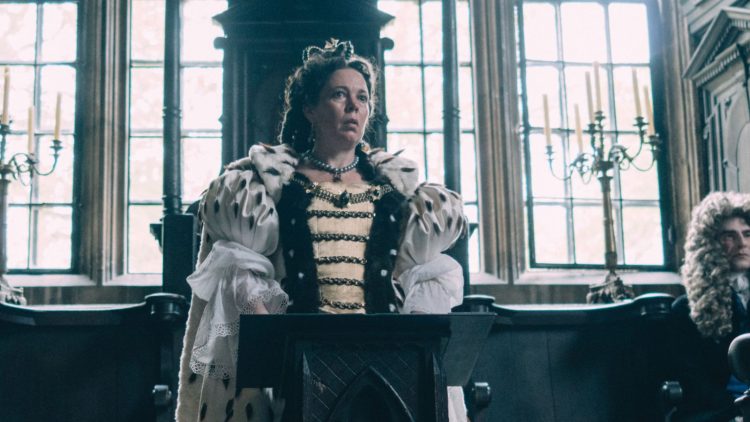
Olivia Coleman as Queen Anne in THE FAVOURITE
The nominees:
Glenn Close, The Wife
Olivia Coleman, The Favourite
Lady Gaga, A Star is Born
Melissa McCarthy, Can You Ever Forgive Me?
Yalitza Aparicio, Roma
Will Win: Glenn Close, The Wife Could Win: Olivia Coleman, The Favourite Should Win: Olivia Coleman, The Favourite
Glenn Close will finally end her 37-year losing streak when she wins her first Oscar for The Wife. There is the *tiniest* chance that BAFTA winner Olivia Coleman wins for her performance Queen Ann in The Favourite.
Best Actor
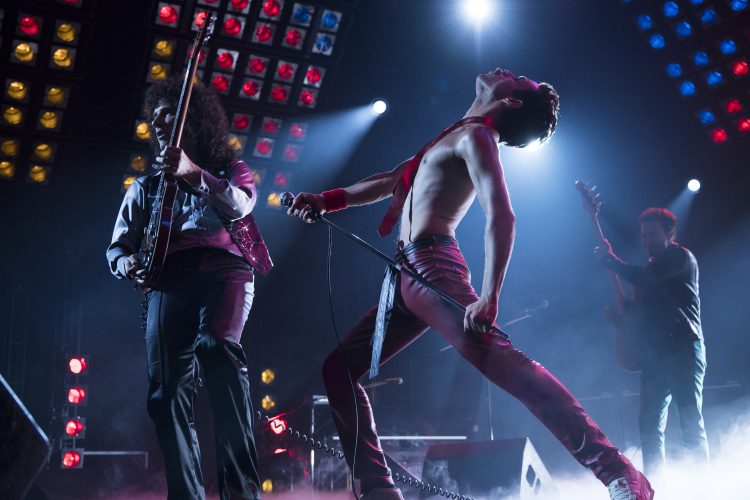
Rami Malek in BOHEMIAN RHAPSODY
The nominees:
Christian Bale, Vice
Rami Malek, Bohemian Rhapsody
Bradley Cooper, A Star is Born
Willem Dafoe, At Eternity’s Gate
Viggo Mortensen, Green Book
Will win: Rami Malek, Bohemian Rhapsody Could win: Christian Bale, Vice Should win: Bradley Cooper, A Star is Born
Although Christian Bale won the Golden Globe and Critics Choice awards for his performance as Dick Cheney in Vice, I think the real challenger to clear frontrunner Rami Malek is Bradley Cooper. For better or worse, he’s been in the news a lot and if voters want to award A Star is Born outside of Best Original Song, this would be the place to do it.
That’s because she missed a nomination at the BAFTAs and the Screen Actors Guild Awards. For context, that last winner of Best Supporting Actress that didn’t at least get a nomination at the SAG Awards was 2000 when Marcia Gay Harden won the Oscar for Pollack.
You have to go back to 2007 for the last time the winner of this category didn’t also win the Oscar — that year, Ruby Dee won the SAG for American Gangster and Tilda Swinton won the Oscar for Michael Clayton.
King has to worry about that first statistic more than the second since this year’s winner of the SAG Award was Emily Blunt for A Quiet Place, who wasn’t even nominated at the Oscars.
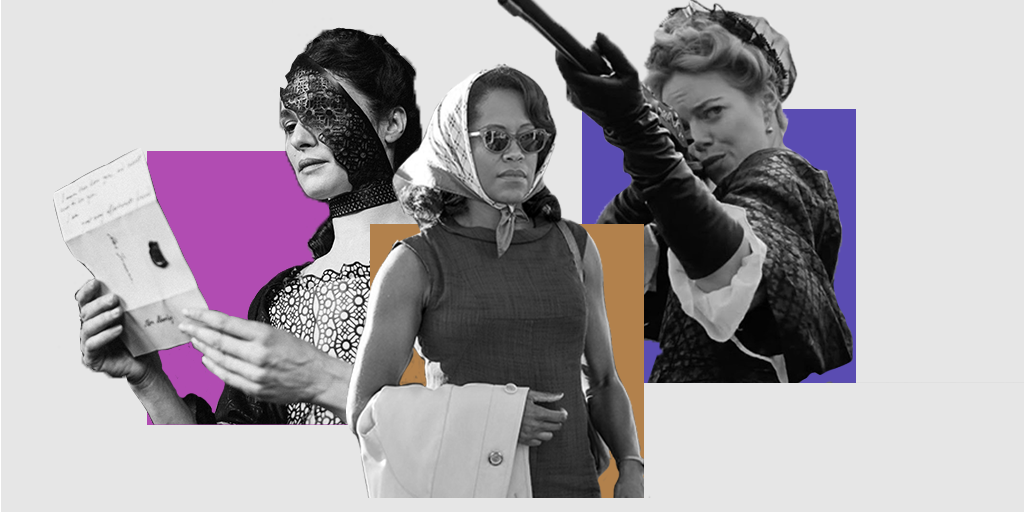
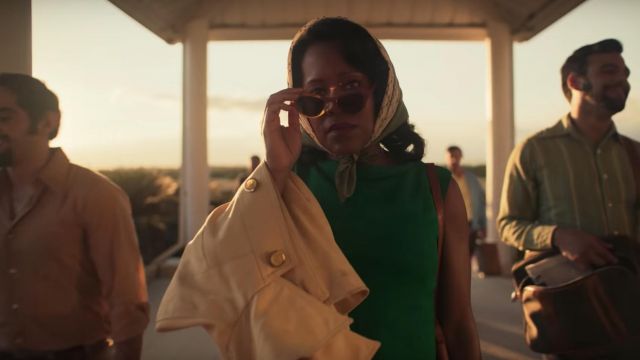
Regina King is the frontrunner for Best Supporting Actress for IF BEALE STREET COULD TALK
The fact that one of her fellow Oscar nominees didn’t win will help her. Especially, Amy Adams for her performance as Lynne Cheney in Viceand Rachel Weiss for her performance in The Favourite — both of whom are her biggest competition.
Adams, with her six nominations, could become the living actor with the most Oscar nominations without a win if Glenn Close finally wins on her seventh nomination in Best Actress, as expected. Her overdue narrative can push her to a win. The problem, though, is that her performance isn’t nearly as well received as her other nominations and ultimately takes a backseat to Christian Bale’s transformative performance as Dick Cheney.
Who might really be the favorite is Rachel Weisz. This year has eerily followed the 2015 Best Supporting Actor race where Sylvester Stallone was the frontrunner — winning the Golden Globe and being snubbed by SAG (which is won by non-Oscar nominee Idris Elba) and BAFTA just like King — to lose the Oscar to the BAFTA winner, Mark Rylance.
Whoever wins the BAFTA could be the actual frontrunner for Best Supporting Actress. However, watchout for an outside chance that Marina de Tavira turns her surprise nomination into a surprise win if Roma ends up sweeping on Oscar Sunday.
First Man is a de-glamourized version of Neil Armstrong’s reluctant journey to becoming the first man on the moon.
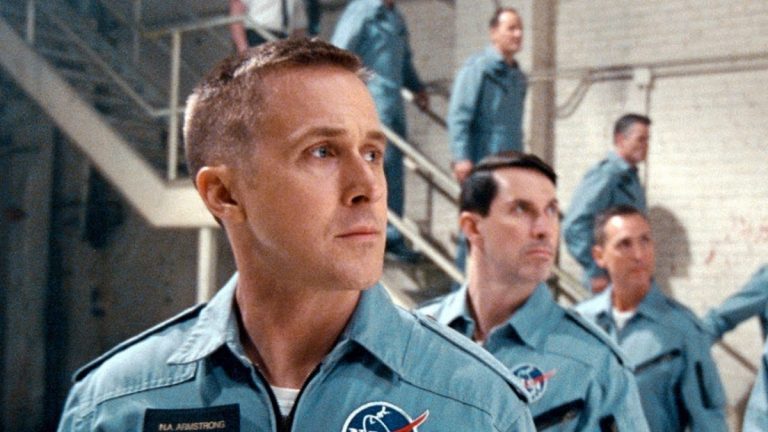
What’s remarkable about Neil Armstrong (Ryan Gosling) is how unremarkable he is. He’s quiet. Almost shy. Sometimes he’ll crack a joke or offer a closed mouth smile, but he internalizes most of his emotions. There are a few moments where we see them break through. Early on he breaks into tears over the death of his daughter. Later, his anger shows for a flash after he finds out some of his friends were killed in a shuttle accident. Gosling does incredibly well portraying Armstrong’s steely resolve in the wake of such adversity in First Man. But the movie is careful not to sanctify him. Armstrong was a normal man doing an extraordinary thing. But he himself didn’t think it that extraordinary. He was truly a reluctant American hero, as he’s often billed.
First Man is a change of pace for Oscar-winning director Damien Chazelle. After directing and writing three musicals—Guy and Madeline on a Park Bench and the Oscar-winning Whiplash and La La Land—he tackles this biopic from a script by Josh Singer, the Oscar-winning screenwriter of Spotlight and The Post, with a lot more restraint than his other projects. Though he is known for impressive Steadicam shots, kinetic editing, and hyperrealism in his films, First Man almost does the exact opposite. Much of the movie is shot handheld, which comes specifically in handy during the breathtaking flight sequences. Aided by the superb sound mixing and Chazelle’s knack for visual storytelling, the sequences feel dangerous and nightmarish. It truly makes you think who in their right mind would try to go to space.
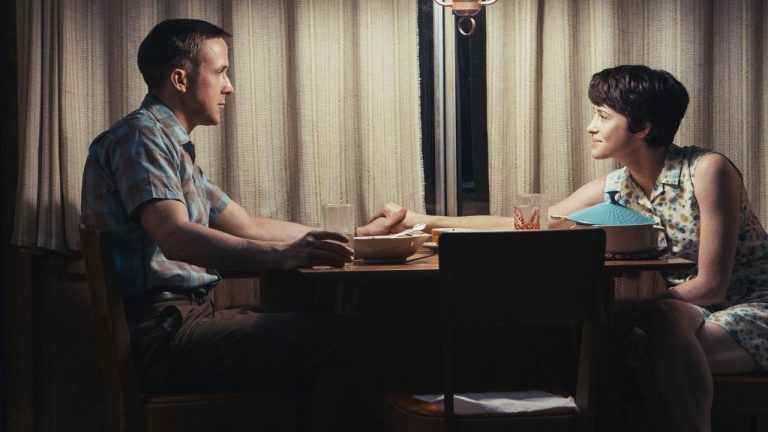
It’s something that Janet (ClaireFoy), Armstrong’s wife, struggles with and ultimately understands. She knows why he’s obsessed with space and getting there, even if it’s heartbreaking for her. Foy owns this movie. So many biopics about famous men always have the doting wife archetype that often is relegated to sitting in the background and worrying about her husband. In First Man, Foy doesn’t just support him. She challenges him. She makes him take responsibility for his obsession with space. In the best scene of the movie—surely to be her Oscar scene—she confronts him for not explaining to their sons that he might not return from the trip. It’s fiery, focused, and, most importantly, realistic.
Ryan Gosling and Claire Foy in Damien Chazelle’s First Man.
Unlike Hidden Figures in 2016, which portrayed the women of color behind another NASA accomplishment—it was nominated against Chazelle’s La LaLand that year—First Man isn’t a Hollywood-ized version of the story. That’s not to say that makes Hidden Figures a lesser movie—I quite liked it. But in Hidden Figures, you want to see Taraji P. Henson be the hero and succeed and beat racism. First Man almost does the opposite and tries to portray Neil Armstrong the way that many people have described him. That stripped down version doesn’t make him the most compelling protagonist, but it matches the gritty realism of the rest of the film.
That realism is what makes every flight sequence phenomenal to witness. It’s no wonder that Chazelle loves portraying obsessed men because he is clearly obsessed with the details. He pays attention to everything. From the smallest bolt holding a ship together to the tempo of Justin Hurwitz’s fabulous score. It’s all to communicate that space—and space travel, specifically—is terrifying and insane. The reason Foy is so successful in this film is that she is the audience surrogate. She questions why anyone would be crazy enough to attempt what Armstrong and the rest of NASA are attempting. That is until the moon landing sequence.
The vastness and nothingness of space swallow up Armstrong and Buzz Aldrin (Corey Stoll) as they finally make their approach on the surface of the moon. Linus Sandgren’s cinematography brilliantly uses the negative space of, well, space, to emphasize the emptiness of it all while Hurwitz’s score makes us feel the intensity and danger of the task. However, when the sequence comes to a head in its climactic moment, it’s not about winning the space race—the flag planting being omitted was a point of controversy for some reason—or patriotism. It’s about Neil’s grieving process. That sequence and the film’s final moments alone are worth the price of admission.