Tag: Michael Stuhlbarg

  • ‘Shirley’ is as haunting as its subject | review

    ‘Shirley’ is as haunting as its subject | review

    Shirley follows a young couple staying with famed novelist Shirley Jackson and her husband as she tries to break through writer’s block

    Quick cut: Shirley is a haunting and devilishly entertaining look at the famed writer anchored by an electrifying performance by Elizabeth Moss.

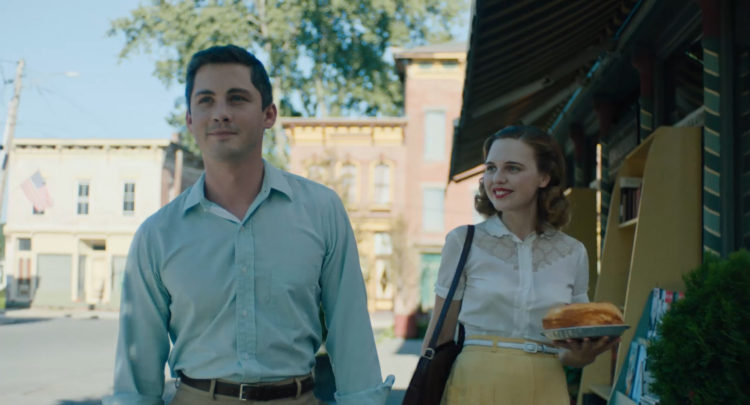
    In the opening scene of Josephine Decker’s Shirley, Rose (Odessa Young), a spirited young woman on a train accompanying her husband Fred (Logan Lerman) to the college he’s assisting at, is just finishing the eponymous Shirley Jackson’s (Elizabeth Moss) infamous short story “The Lottery.” After she reads the final scene—a horrifying spectacle—she looks up at her husband and says, “it’s terrific,” like she’s fascinated at the horror. Then she goads him into the train bathroom for rough sex, which is shocking considering the movie takes place in the 1950s. 

    The film’s overwhelming and somewhat chaotic opening prepares you for its penchant for tension—sexual, suspenseful, and otherwise. On the other hand, the introduction to Shirley barely scratches the surface of the unpredictable rollercoaster that she is—bolstered by Moss’s stunningly committed performance. Though she’s troubled, plagued with agoraphobia, depression, and an aggressive bout of writer’s block, Shirley is also enigmatically endearing—even knowing her legacy now, she’s frustratingly overlooked.

    💌 Sign up for our weekly email newsletter with movie recommendations available to stream.


    ADVERTISEMENT


    The young couple is staying with Jackson and her husband Stanley Edgar Hyman (Michael Stuhlbarg), a professor who Fred is assisting, while they wait for a place of their own. And since Shirley is nearly incapacitated by her writer’s block, Stanley asks Rose to help around the house and keep an eye on her—he asks in an almost dismissive way as if it’s her duty to help. Though Shirley is initially wary of Rose and Rose is terrified of Shirley—Moss portrays her as an almost supernatural figure or bomb just waiting to be set off—the two begin to bond as Rose becomes the muse for Shirley’s novel, which will eventually become her classic Hangsaman

    Decker’s style, dreamlike in its execution but deliberate in every decision, is perfect to give us insight into the mad genius of Jackson. Rough and horrifying cuts to nightmarish visions are mixed with moments of serenity, like when the main character of her story, an actual college girl that has gone missing, is literally brought into focus through Rose. Decker tells the story like one of Jackson’s own tales, mixing horror tropes and with the psychosexual drama. In particular, Tamar-kali’s score infused with jangly strings and incomprehensible melodies adds to the horror. 

    As the movie unfurls, it becomes clear that something more is afoot, though Sarah Gubbins’ brilliant screenplay is careful to keep us an arm’s length away as to prevent us from finding out until precisely the right moment. And while the central mystery and Shirley’s creative journey writing her novel is more than enough to keep you hooked, the movie’s themes of misogyny and control are what engross you—and Decker handles them with a steely indignance. The spars of words between Rose and Shirley cover so much ground on the power struggle between genders while Rose, beginning to come into herself, finds control over her husband in a stunning scene where she has sex with him on her terms—keeping her mouth just out or reach.

    Shirley Movie
    Logan Lerman and Odessa Young in Josephine Decker’s Shirley. Courtesy of NEON.

    In Rose’s first interaction with Shirley, she tells her that reading “The Lottery” made her feel “terrifically horrible,” an apt description for the move itself. The horror-like atmosphere, Moss’ maniacal performance, and layered narrative make Shirley almost overwhelming, but when you find what to focus on it’s a rewarding experience. And when you learn more about the real Shirley—this is a fictional version pulled from Susan Scarf Merrell’s novel of the same name—you find her journey in the movie tragic but profound.

    There are puzzle pieces missing, whether intentional or not I don’t know, but those missing pieces make Shirley an entertaining and stimulating watch. As all the characters spar with each other in various pairings you become attached to them, a surprising feeling considering the narrative they’re in. That’s a testament to the incredible development Gubbins does in her screenplay and Decker’s auteurist vision for the work. However, it would be a disservice not to mention Moss’ electrifying portrayal that’s almost impossible to untangle, but once you do her genius is apparent. 

    Shirley premiered at the 2020 Sundance Film Festival. It will be released on

  • 2018 Oscar Predictions: Best Supporting Actor

    2018 Oscar Predictions: Best Supporting Actor

    Best Supporting Actor typically goes to an overdue industry veteran, which in this case is looking to be Willem Dafoe for The Florida Project. 

    Best Supporting Actor is a packed category at the Oscars this year and filled with industry favorite actors that all have narratives to break into the race. However, it seems like Willam Dafoe (The Florida Project) is going to be the one to beat. His subtle but heartfelt performance has won over raves from critics that astonish over the fact that he’s only been nominated twice at the Oscars in this category — Platoon and Shadow of the Vampire. And he’s the perfect fit for a winner of this category, which usually goes to a hard-working veteran character actor. He’s the one to beat.

    Another veteran character actor in the running is Sam Rockwell (Three Billboards Outside Ebbing, Missouri). Though Frances McDormand is getting a lot of praise for her steely performance, Rockwell has become a standout from the cast. His bigoted cop role is the kind of villain that is often nominated in Best Supporting Actor, but more importantly, his character has an arc. And that’s one of redemption — though, the controversy around that redemption may work against him. Rockwell is well-regarded in the industry and a nomination could be seen as a career achievement award. Plus, his surprise win at the Golden Globes will certainly help raise his profile.

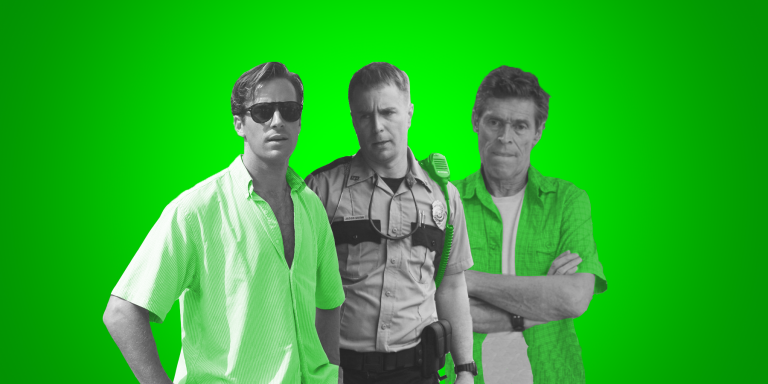
    There are two supporting actors from Call Me By Your Name in contention, which is always a difficult call to make. It’s rare to get more than one nomination in an acting category at the Oscars and it hasn’t happened in this category since 1991 when Bugsy got two noms. However, the more likely candidate from Call Me By Your Name is Armie Hammer. He nabbed a Golden Globe nomination and has more screen time than his co-star Michael Stuhlbarg, who has arguably received more acclaim — mostly for his ending monologue — but has less screen time. It is troublesome that neither actor was nominated at the Golden Globes — neither was the cast. I think Hammer has enough buzz to push him through to an Oscar nomination, but the prospects of having both actors nominated is pretty much gone.

    Check out our 2018 Oscar Predictions!

    Current Predictions:

    1. Willem Dafoe, The Florida Project
    2. Sam Rockwell, Three Billboards Outside Ebbing, Missouri
    3. Richard Jenkins, The Shape of Water
    4. Armie Hammer, Call Me By Your Name
    5. Woody Harrelson, Three Billboards Outside Ebbing, Missouri

    Other Contenders (in alphabetical order):

    • Mark Rylance, Dunkirk
    • Woody Harrelson, Three Billboards Outside Ebbing, Missouri
    • Michael Stuhlberg, Call Me By Your Name
    • Ben Mendohlson, Darkest Hour
    • Jason Mitchell, Mudbound
    • Ray Romano, The Big Sick
  • Call Me By Your Name review — A masterpiece about first love

    Call Me By Your Name review — A masterpiece about first love

    Call Me By Your Name is a sensitive and beautiful portrait of a first love set against the summery backdrop of Italy’s countryside.

    Drenched in the warm tones of summer and set against the backdrop of 1983 “somewhere in Northern Italy” as an opening title card says, Call Me By Your Name tells the story of Elio (Timothée Chalamet), an intelligent and contemplative 17 year-old who spends his days reading books, transcribing music, swimming at the river, and going out at night. That is until his routine is interrupted by Oliver (Armie Hammer), an American student who is receiving help with his academic paperwork from Elio’s father Lyle (Michael Stuhlbarg), a professor of archeology. The 2007 book of the same name that the movie is based on is told in what is essentially an internal monologue from Elio’s perspective thirty years after that summer. With the film, director Luca Guadagnino adapts that monologue by moving it into the present day and visually representing Elio’s emotional journey without clunky dialogue or distracting narration. It’s the ultimate use of visual filmmaking and one of the reasons Call Me By Your Name is the best film of the year.

    There’s not much to add in terms of plot summary when it comes to the film since it is so character based. Elio and his parents — his mother Annella is played by Amira Casar — are intellectuals who enjoy conversations around the various academics each excel at and are bored by those who cannot entertain that kind of discussion. And when Oliver arrives, they’re all smitten with his ability to keep up with them. However, Elio is put off by his seemingly cocky attitude. Something that he becomes attracted to as the movie moves along.


    Elio’s infatuation with Oliver is confusing for him, of course, since, unlike the book, this is seems to be his first time feeling attracted to a man. However, even though he is dating his childhood friend Marzia (Esther Garrel), this is the first time he’s truly falling for someone. It’s his first real crush.

    The first half of the movie takes place completely in subtext. The focus of the movie seems to be more on the beautiful landscapes and carefree attitude of the Italian summer rather than the potential romance blossoming before us. However, if you pay attention, the real story is in the details. Looks, touches, movements tell the story of what Elio is feeling and what he is feeling is confused. Anyone did feeling those emotions for the first time. Like any teen, he starts off by resenting Oliver. In particular, he takes issue with the blasé way he says “later” whenever saying bye.

    However, as Elio begins to realize that these aren’t feelings of jealousy or resentment, but attraction, he becomes obsessed with Oliver the way that anyone becomes obsessed with a crush. But it’s something more. Elio is too much of an introspective person to not know exactly the game he is playing. He leaves signs for Oliver — questioning his whereabouts, leaving the door to his room from their shared bathroom opened — hoping that he picks up on them. Guadagnino is masterful at portraying Elio’s inner thought process with the camera. However, Chalamet (Lady BirdInterstellar) must be credited with giving one of the most humanistic and expressive performances of the year. Elio is a masterwork of a character. Complex in more ways than one and constantly changing and adapting to his situation. Chalamet keeps up with those changes and always allows the audience into his head with just his facial expressions. It’s a real powerhouse performance by a promising young actor.

    Eventually, Elio decides to take the plunge and become more direct with his feelings for Oliver. And from there, it becomes a struggle internal struggle for both characters to fight their urges despite knowing what’s right. Hammer tackles Oliver with the perfect amount of self-confidence that leaves room for mystery, which leaves the audience wanting to unravel his true persona. And his work with Chalamet makes them one of the most successful onscreen pairings in years.

    However, Elio and Oliver’s story has to be places within the context of their surroundings. Elio’s parents have some idea that his relationship with Oliver is anything but ordinary. And their subtle cues to both Elio and Oliver have impact on the story’s forward momentum. And that’s the real virtue of Call Me By Your Name. It lives in the silent moments.


    For such a simple story, the thematic depths that Call Me By Your Name covers is incredibly impressive. Elio’s struggle with his sexuality is confusing and aggressive. But it isn’t new ground to be covered, especially in queer cinema. What makes the movie different is it taps into our innate desires. It taps into our desire to be touched. To be held. To be understood. To be loved. Not only that, it taps into that guttural feeling you experience when those things are gone. Most importantly, it expresses those things without words. Though, there is powerful dialogue to be heard.

    The final two scenes of the film, which features the now famous speech performed by Stuhlbarg, who deserves an Oscar for his quiet power, and a nearly seven-minute single take of Elio are perhaps the most powerful of the year. And in those last few moments before the film cut to black, the audience sat in silence before applauding, then falling silent again. And though the projector cut out quickly through the screening and we had to switch theaters, the audience was with the film from beginning to end. We laughed, we cried. Simply put, it’s one of the best cinematic experiences I’ve had all year. And that’s including DunkirkCall Me By Your Name is a masterpiece. A film filled with life and one that any one can empathize with. But the mark that it’s a great film is that as the credits are rolling over that magnificent seven-minute single take, you are hoping it never ends.

    ★★★★★ out of 5


  • The Shape of Water review — Sally Hawkins gives the performance of a lifetime

    The Shape of Water review — Sally Hawkins gives the performance of a lifetime

    The Shape of Water is a beautifully crafted story by master filmmaker Guierrmo Del Toro, but lacks the emotional depth to make it great.

    Love is love, even if it’s between a human woman and an amphibian man. That’s the message that Guierrmo Del Toro seems to be trying to get across with his newest movie The Shape of Water, a modern fantasy romance during the height of the Cold War. Like his last film Crimson PeakThe Shape of Water is presented as a fairy tale and is stylistically told as such. There are even moments where it seems like the image on screen could be a page in a picture book. However, like a fairy tale, his delivery of this message is a bit on the nose. But that isn’t anything new for Del Toro.


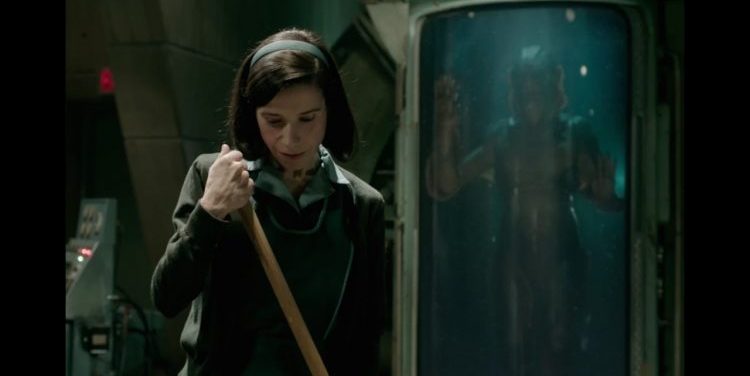
    In early 1960s Baltimore, Elisa Esposito (Sally Hawkins) lives a routine life. When she wakes she changes over the calendar, puts eggs on the stove to boil, makes her lunch for the day, and of course masturbates in the bath. You know, routine. However, Elisa isn’t exactly a normal woman. She is mute. But she doesn’t let that fact crush her spirit. She’s a lively woman who enjoys conversation with her neighbor Giles, an advertisement artist who has let go from his company because of some type of addiction that we don’t quite learn of. Elisa is also special because she works nights cleaning at the Occam Aerospace Research Center, a top-secret government facility that recently acquired an asset that they believe may be the key to besting Russia at the space race.

    This asset is a mysterious creature that was found in the waters of South America. He is simply referred to as Amphibious Man (Doug Jones) in the credits, but that doesn’t quite cover what he is. What is clear is that Elisa is taken aback by him, especially when the head of the team researching the creature, Colonel Richard Strickland (Michael Shannon), is injured by him. As time goes on, Elisa begins sneaking into the room that contains the creature to feed him hard-boiled eggs and play him music off her portable record player. Over time, the creature and Elisa begin to bond. She begins to see the humanity in him, as does Dr. Robert Hoffstetler (Michael Stuhlbarg, he’s having a great year between this and Call Me By Your Name), who might have ulterior motives for the creature. As Strickland becomes more hostile towards the creature, Elisa decides to recruit the help of Giles and her friend and co-worker Zelda (Octavia Spencer, as charming as ever) to help her break him out of the facility.

    Del Toro is one of the finest visual filmmakers working today and The Shape of Water is a perfect example of that. The movie is carefully designed to take place within the period, but also have a surreal quality to it with its costumes and sets splashed in a sea-foam green color tone. Del Toro knows how to heighten reality to fit the story he’s trying to tell by having every department fully committed to his vision. Credit also has to be given to cinematographer Dan Laustsen, who shot the film like a cold war movie, with a storybook flare.

    However, as engaging as the story is, I never felt truly immersed. Part of the problem with Crimson Peak was its general emotional coldness. None of the characters had strong arcs that you could become invested in. The same problem happens in The Shape of Water. There are glimpses of emotional undercurrents. Giles, a closeted gay man, has taken an interest in a waiter at a local diner and often drags Elisa along to see him. And while that storyline comes close to becoming an emotional arc, a pivotal scene is cut right before it really says anything and then the storyline is dropped.

    Sally Hawkins, though, delivers a lot of heart to the movie. She’s an emotional powerhouse without speaking a single word. In one scene, she forces Giles to repeat everything he’s saying to ensure he’s understanding. And though Jenkins pretty much deadpans the translations, the pain in Hawkins’ face is enough to carry the emotional heft of the scene. Her relationship with the creature isn’t exactly built up or earned. It feels like it’s rushed for the sake of the plot. But again, Hawkins makes me believe that she truly has fallen for him. She’s sensational. The same goes for Jenkins. He portrays his character’s loneliness with incredible restraint and though the script doesn’t give him the chance to build much of an emotional arc, he adds a lot of depth.


    And even though I was ultimately disappointed in my lack of emotional investment in the movie, Del Toro is a masterful storyteller. Elisa and Giles both bond over their love of old Hollywood musicals. And that imagery is often invoked with Giles and Elisa sitting on the couch mimicking the movie they’re watching on screen or when at one point Elisa imagines her and the creature performing a classic black-and-white musical number. Like all of his films, The Shape of Water has a quirky tone to everything, even when it drifts into the horrifying. That tone is also aided by Alexander Desplat’s playful score, which is certainly one of the most memorable elements of the film.

    For a movie about a creature of the deep, The Shape of Water keeps everything surprisingly surface level. It feels like what you get on screen is all that you are given. Still, Guierrmo Del Toro is such a masterful filmmaker that he is able to make the story and visuals interesting enough to keep audiences in their seats. However, the movie left me cold with nothing to attach to. It is the visual feast that his past projects were, certainly. But the emotional heft is put on the shoulders of its cast. In particular, Sally Hawkins and Richard Jenkins, who both deserve Oscar nominations for their work. The Shape of Water is definitely worth a watch for its story and filmmaking prowess.

    ★★★½ out of 5


  • The 10 Best Movies of 2017

    The 10 Best Movies of 2017

    This year has been one of the best movie years in recent memories with films that pushed the boundaries of filmmaking. Here are the best movies of 2017!

    2017 is a year that started strong and ended even stronger, which is refreshing considering the end of the year always has an influx of awards-friendly prestige movies. But what is even more refreshing is the variety of movies this year that were successful commercially and critically. Horror had a huge year, as did comedy. Action made a comeback and romance became original again. But these genres don’t totally cover the movies on this list. If movies in 2017 could be summed up, you could say it was a genre-bending year. More and more movies have escaped classification, which is the right direction for the industry. However, more importantly. It seems that movies that had something real to say about our current political and societal moment are being seen.

    The more movies that stray away from the typical movie formula and become successful, the more original movies we will start seeing. This list, I believe, is a testament to those new original directions and voices. Here are what I consider the best movies of 2017.

    Note: See every 2017 movie I watched ranked on Letterboxd!


    Brigsby Bear
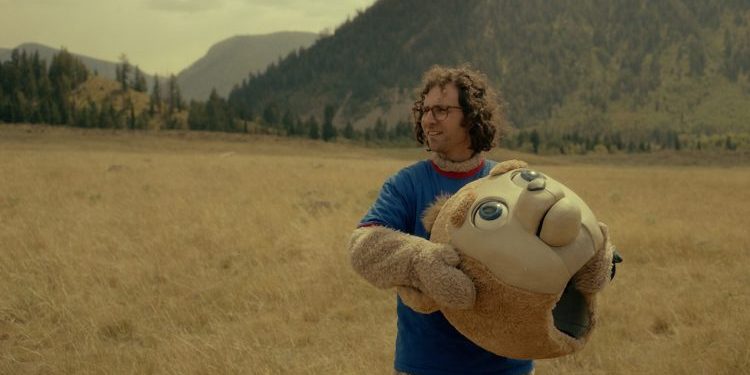
    Kyle Mooney in Brigsby Bear

    When I heard that Saturday Night Live’s Kyle Mooney — one of my favorite repertory players — was co-writing and starring in a movie I was expecting something hilarious, awkward, and downright weird. Brigsby Bear was all those things, but what surprised me is that it had a surprising amount of heart. Mooney brings his usual endearingly awkward persona to his character, but the story makes it both charming and a bit devastating. It’s actually a rational exploration of trauma and how we deal with it. That doesn’t stop it from being a hilarious “fish out of water” comedy with the sensibilities as Mooney’s sketches on SNL. Still, its weird exterior is just a way to take the audience off guard and hit them with the kind of warmth and hope we need today.

    Brigsby Bear is available on Blu-Ray and Digital HD on Amazon ➤

    Get Out
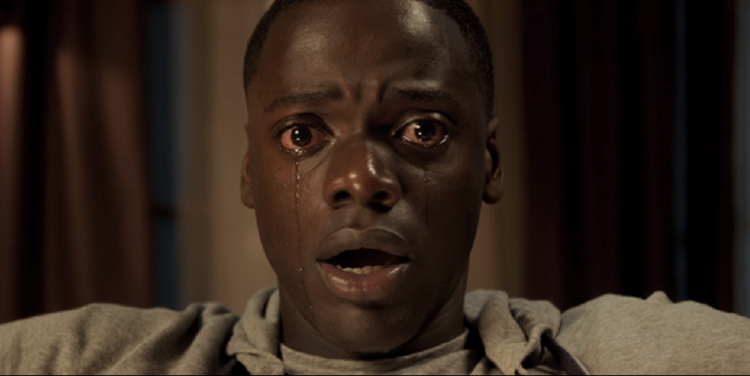
    2017 was a great year for first-time filmmakers. However, no first film quite made an impact as large as Jordan Peele’s Get OutNot only did it make an impact critically and commercially, it sparked a national conversation about race while also being eminently entertaining. It has the sharp wit that Peele has become known for along with his collaborator Keegan Michael Key (who didn’t work on him for this film) that drive big laughs, but also a really smart take on racism, particular that of the liberal elites. However, what makes Get Out one of the best movies of 2017 is the incredible attention to detail. It’s the type of movie that is more rewarding on multiple viewings. Every line and image serves a purpose in the grand scheme of the movie. Not only that, it makes a star out of Daniel Kaluuya. To which, I say, it’s about time.

    Get Out is available on Blu-Ray and Digital HD on Amazon ➤

    The Florida Project
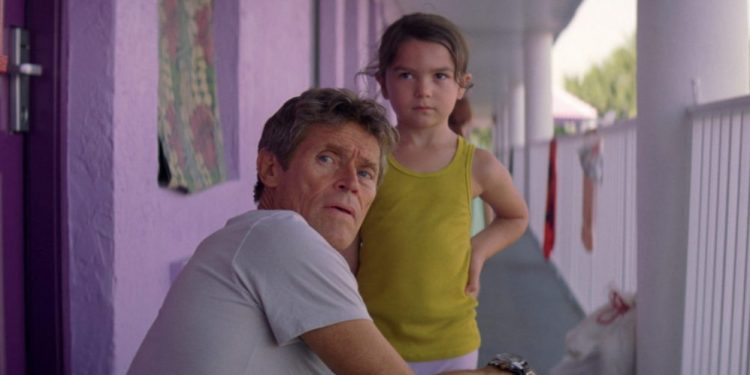
    Willem Dafoe and Brooklynn Prince in The Florida Project

    Director Sean Baker specializes in making films about people on the fringes of society. In The Florida Project, he tells a story about the invisible homeless on the outskirts of the family resorts of Orlando. But what makes this movie truly great and one of the best movies of 2017 is that he tells it firmly in a child’s perspective. To the protagonist Moonee (Brooklynn Prince), everything is magical. However, she doesn’t understand that some of the things her young mother Halley (Bria Vinaite) are less than normal and sometimes even illegal. But Baker never judges his characters. He has sympathy for their experiences, much like Willem Dafoe‘s character, who manages the hotel where Moonee and Halley live. In the end, audiences will view it with the same childlike wonder that Moonee has. It’s heartfelt, a bit dark, but also a delight to watch.

    The Florida Project is available on Blu-Ray and Digital HD on Amazon ➤


    Phantom Thread

    Daniel Day-Lewis and Vicky Krieps in Phantom Thread

    To say that Paul Thomas Anderson created a romantic comedy with Phantom Thread might be overreaching, but he came close. In what is apparently his last performance, Daniel Day-Lewis continues his streak of playing complicated and difficult men. However, this time he has a complicated woman (Vicky Krieps) to go up against. And that battle of the Titans is one of the most thrilling relationships to see play out on screen. Reynolds Woodcock is a character for the ages and is certainly fitting to be Day-Lewis’ march into movie history, but more importantly, we have been introduced to an exciting new star in the making in Vicky Krieps. While this is a movie about a tortured artist, it’s also very much about the women — the other being his sister Cyril (Lesley Manville) behind that tortured artist who have to find new ways to both support him and keep him grounded. Phantom Thread is a meditation on marriage. And if I was Maya Rudolph, Anderson’s wife, then I might be a bit worried.

    Blade Runner 2049

    Creating a follow-up to a film as technically dazzling and thematically rich as Ridley Scott’s 1982 classic Blade Runner seemed like a fool’s errand. That is until Denis Villeneuve (Arrival) stepped into the director’s chair. Along with Hans Zimmer and Benjamin Wallfisch, who composed the score, and Roger Deakins, who shot the film, Villeneuve created one of the dazzling worlds seen on film this year. Splashed with neon tones that contrast to the industrial infrastructure that has befallen Earth, Blade Runner 2049 is a visual feast. But what made the film one of the best movies of 2017 is it continued to explore the themes of humanity, while also delving into new directions, most interestingly involving Ryan Gosling‘s K. Though it has a nearly 3-hour running time, it’s endlessly engrossing as its mysterious plot reveals itself. What differentiates it from the original, though, is it has a strong emotional center that catches you off guard and brings warmth to an otherwise cold world.

    Blade Runner 2049 is available on Blu-Ray and Digital HD on Amazon ➤

    Next Page: The Top Five

    My top five favorite movies of the year are an eclectic group of films that I believe balanced beautiful filmmaking with profound storytelling. These filmmakers have certainly earned their place as the best movies of 2017!

    Columbus

    Haley Lu Richardson and John Cho in Columbus

    What made Richard Linklater’s Before trilogy such an amazing achievement is its ability to make conversation so compelling. The same could be said for Kogonada’s film debut Columbus. Although this conversation isn’t as contained as Jess and Celine’s in terms of time, Casey (Haley Lu Richardson, who gives one of the best performances of the year) and Jin (John Cho) help each other come to terms with their pasts and plan for the future. All of this happens in the shadow of the modern architecture of Columbus, Indiana, which is captured beautifully by Elisha Christian. However, what makes this film great and one of the best movies of 2017 is that Columbus is the third lead of this film. Its existence is a juxtaposition much like Casey and Jin are to each other, and it’s exactly what they need.

    Columbus is available on Digital HD on Amazon ➤

    Personal Shopper

    Kristen Stewart in Personal Shopper

    I’ve tried to describe Personal Shopper to people and it always comes out sounding like an overzealous student film. But masterful director Olivier Assayas takes the seemingly disparate elements and competing genres to create a profound meditation on grief — with a detour towards the supernatural. The ghostly elements of the film are legitimately terrifying mostly because there is so much mystery behind them. Assayas doesn’t give audiences the answers, which makes the film into a puzzle that we have to solve. And that’s thrilling enough, but he then instills Hitchcockian tension that turns it into a psychological thriller. While all these genre elements are happening, Maureen, played by a masterful Kristen Stewart, has to come to terms with her own mortality and her grief. It’s an emotional powerhouse of a movie disguised as a psychological thriller, which makes it one of the best movies of 2017.

    Personal Shopper is available on Blu-Ray and Digital HD on Amazon ➤


    Lady Bird
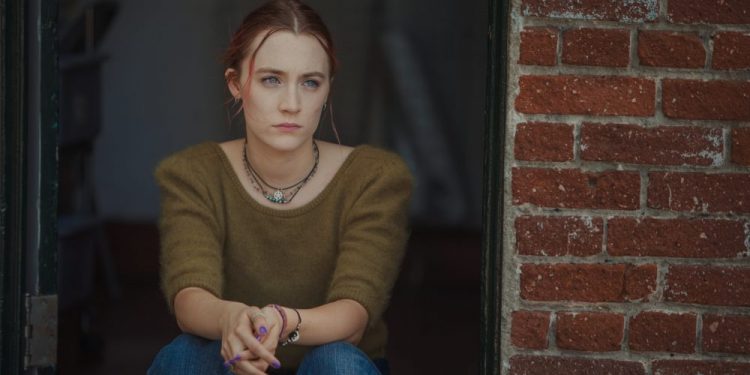
    Saoirse Ronan Lady Bird Review

    The same way movies like Clueless and Never Been Kissed so accurately portrayed the painful awkwardness of growing up in the 90s, Lady Bird is almost a near perfect coming-of-age dramedy about adolescence in the post-9/11 era. Though the movie is based on writer and director Greta Gerwig‘s teenage years growing up in Sacramento, California, Christine “Lady Bird” McPherson (Saoirse Ronan) is the kind of character that nearly anyone can see themselves in. In particular, she’s a teen that is trying out different versions of herself, and Gerwig captures that in a quick-paced, hilarious romp that hits emotional beats that will make you want to give your parents a call and tell them that you love them. Lady Bird reminds us that even though we may see ourselves as the star of our own story, we may be a supporting character in someone else’s.

    Lady Bird is available on Blu-Ray and Digital HD on Amazon ➤


    Dunkirk

    Dunkirk Best Picture

    No studio filmmaker is pushing the boundaries of cinema quite like Christopher Nolan. But he may have launched us into a new frontier with his World War II movie Dunkirk. I so often use the word epic when describing Nolan’s films. Interstellar was a nearly 3-hour journey through space and time. Epic is really the only word you can use to describe it. However, Dunkirk is almost the antithesis of that. It deconstructs the war movie and only leaves the action, which makes it an unrelenting and tense experience that makes a fantastic argument as to why movies have to be seen in the theater. With the sweeping cinematography by Hoyte Van Hoytema and dissonant score by Hans Zimmer, Nolan was able to achieve full immersion into the world. By the end, you’ll feel like you went through war. It’s a cinematic experience of the highest caliber. Read by

    Dunkirk is available on Blu-Ray and Digital HD on Amazon ➤

    Call Me By Your Name

    Timothee Chalamet and Armie Hammer in Call Me By Your Name

    For all the movies giving commentary on our current political moment, commenting on the injustices of our society, or simply bringing stories forward that are no often told, the one that stands out and tops this list as the best movie of 2017 is largely unpolitical. Call Me By Your Name is at its heart a romance. Specifically, a first love. And it captures that feeling brilliantly under the direction of Luca Guadagnino who, along with cinematographer Sayombhu Mukdeeprom, present the movie with the feeling of a fleeting summer’s glow. And like Moonlight, my number one film last year, Call Me By Your Name recalls feelings that nearly everyone has felt — love, hate, jealousy, fear, hope, helplessness — without doing much to force those feelings on you. Movies are emotionally manipulative. However, the best movies are the ones that are getting you to feel something without you even noticing. And Call Me By Your Name achieves this flawlessly.

    James Ivory’s screenplay and Guadagnino’s sensitive direction gave the cast the room to play with their characters, which gives every conversation an authentic quality. But, much credit must be given to the cast. Michael Stuhlbarg‘s intellectual father character is bubbling with excitement over the prospect of discovered artifacts or sparring over the origin of words. But by the time we get to his closing speech, we understand that his character is more sensitive than we’re initially led to believe and the love for his son knows no bounds. With the enigmatic Oliver, Armie Hammer constantly keeps us guessing about his motives, his thoughts, and his feelings. However, at the center of it all is Timothée Chalamet. He’s effortless in his portrayal of youthful energy, but when the emotions that come with the exploration of sexuality hit him, it’s like a floodgate is opened.

    Call Me By Your Name is the rare film where really nothing is happening on screen, yet everything is at the same time. It’s beautiful and bold and sexy and sensitive. It’s a film about love that is impossible not to love.


    Honorable Mentions

    Looking back, it has been an incredible year for movies. So, parring this list down to a top ten was nearly impossible, and I’m still not completely confident in my rankings or inclusions. Although, that’s just a testament to the quality of films this year. So before I get to the “best movies” — if there’s really such a thing in this crop — I want to take a moment to highlight some of the high points of cinema this year.

    It’s safe to say that this year included some of the most original and best superheroes movies in the past few year. Patty Jenkins’ Wonder Woman, in addition to being the highest-grossing film to be directed by a woman, did something that no film in the DC universe of films has done. Be good. Not only that, though, the film has some of the best action scenes of the year and a strong heart at its center with Gal Gadot. Marvel also had a great year with Spider-Man: Homecoming and Thor: Ragnarok, both of which felt like departures from the usual Marvel formula with the former being a John Hughes-inspired high school movie and the latter being a broad comedy.

    However, action also had other great entries. In particular, David Leitch (co-director of John Wick) brought us one of the greatest female action heroes with Atomic Blonde. Even though the Cold War plot gets convoluted, it boasts the single best action scene even made with the now famous stairwell scene.

    There were two fantastic ghost stories this year. One of them made this list, the other, A Ghost Story, just missed out. However, its melancholic journey through time is beautifully captured in a way that feels wholly unique. Another ghostly film with a more family-friendly approach also proved to be one of the emotionally satisfying experiences of the year. Pixar hits it out of the park again with Coco, an entertaining, funny, and sentimental take on processing loss.

    Two real-life stories also made a strong impression this year. The first was one of the most surprising revelations of the year. Stronger on the surface looked like another “based on a true story” movie about a man overcoming incredible odds. But with sensational performances by Jake Gyllenhaal and Tatiana Maslany and a smart directorial style, it turns into a real story of triumph in the face of adversity. The other, The Big Sick, tells a story that seems too crazy to be true. But Kumail Nanjiani and Emily V. Gordon adapted their real-life love story with enough of a witty realistic punch to make it a charming reinvention of the romantic comedy genre.

    Lastly, the film that just barely misses out on my top ten best movies of the year is Bong Joon-Ho’s Okja. More than any film this year, it takes creative swings that test both genre and filmmaking conventions and ends up being a sweet and profound tale of friendship and without a doubt the best original Netflix film to date.