Tag: Netflix

  • ‘Beef’ is road rage revenge well done | Non-spoiler review

    ‘Beef’ is road rage revenge well done | Non-spoiler review

    Beef starts as a road rage revenge comedy that quickly careens into a dark but profoundly complex character study of the Asian-American experience


    Beef is a delightfully unhinged road rage revenge dark comedy that careens into a complex character study of the American Dream and two different people united by their dissatisfaction with life — and enraged by the people around them. Steven Yeun and Ali Wong are sublime anti-heroes.

    Beef begins streaming on Netflix on April 6th.

    While the inciting incident of Netflix’s new series Beef is dramatic, it’s perhaps not quite as dramatic as you’d expect. When we are first introduced to Danny Cho (Steven Yeun) he’s in line at a home improvement store called Forsters suspiciously returning three portable grills and a carbon monoxide alarm. “You’ve tried to return these three times before,” the cashier quips before Danny sulks back to his car. However, as he backs out of his parking spot he nearly hits a white Mercedes SUV. The driver honks their horn a touch too long, which annoys the already aggravated Danny. To make matters worse, they stop, roll down their window, and flip Danny the bird. 


    The ensuing chase is reckless as Danny tries to get a look at the driver. Flower beds are destroyed, red lights are run, and near crashes abound. However, they never come face to face. Instead, Danny memorizes the license plate and vows to track her down. The cold open is so concise and sharp. Without the context of the participants it’s shocking. However, as “The Birds Don’t Sing, They Screech in Pain” goes on, we learn exactly why Danny and Amy’s (Ali Wong) reactions make sense and how it careens both of them into an existential tail spin — that’s where the real dramatics start.

    When you’re at the edge of a cliff, the smallest nudge will send you plummeting over the edge.

    We’re introduced to both of our protagonists’ — or are they antagonists? (only time will tell) — inner circles. There’s Amy’s house husband George (Joseph Lee), a paragon of the wealthy Los Angelean holistic bohemian, who instead of asking Amy what’s troubling her when she returns home tells her to take a deep breath and focus on the positive — “let’s fill out our gratitude journals,” he suggests. On the other side, Danny’s brother Paul (Young Mazino) is a man-child who spends his days playing video games and trading crypto instead of working with Danny on his contractor business. While both characters fill archetypes — as does all of the supporting cast — the series progressively challenges our assumptions about them each episode. 

    https://www.youtube.com/watch?v=AFPIMHBzGDs

    Amy, a successful entrepreneur who founded a luxury plant brand, is in the throes of a deal with Jordana Forster (Maria Bello), the egregiously wealthy owner of the Forster line of home improvement stores. Wong’s portrayal of Amy as a product of the #girlboss generation is instantly intriguing as she makes sure to show the cracks in the facade. Glimmers of her 1,000-watt smile fading tell us everything we need to know about her — she has to remain in control but is slowly losing it. Even in couples therapy where Amy and George are working through his penchant for liking her employee’s thirst trap pictures on Instagram — “Baby I can explain, I’m just saving the captions” — she has a rehearsed, well-studied response that is designed to appease anyone with a psych degree. It doesn’t. Eventually someone under that much pressure will eventually crack. 

    However, there are moments when Amy shows her hand. Like when she lets slip about her mother, “she thought that talking about your feelings is the same as complaining.” It’s those flashes of biting commentary about the first generation Asian-American experience that surprise you amongst the nearly slapstick chaos of Beef. Danny, seemingly a chronic failure to start, would rather lie and tear the people around him down to make them than seem like he’s failed again. Amy, a workaholic, can’t seem to let go of the ladder that she’s been climbing for decades, one that she doesn’t seem to want to climb, even if it means leaving those she cares about on the ground.


    ADVERTISEMENT


    The eponymous beef between Danny and Amy gives them both purpose. Even if that purpose is to win at all costs. What’s incredible about Beef‘s trajectory, is that when blood is spilled in the final episodes, we almost forget what exactly they were beefing about in the first place.

    In “The Drama of Original Choice,” we learn more about both Amy and Danny’s pasts as Beef further digs into its exploration of the Asian diaspora. However, we don’t just see their pasts, we see their parents’. We see the hope and dreams that they put upon their kids — just like the bagel in Everything Everywhere All At Once — and the sacrifice they had to make to give them the opportunity. That amount of pressure will cause anything to break, even if it becomes a diamond first like Amy.

    By series end, all the periphery characters become victims of both Danny and Amy’s own pride — and their beef. No one makes it out unscathed or unchanged. Whether it’s Paul who lives constantly in Danny’s shadow (and unwanted protection) or Amy’s husband George who has to find validation from his mother Fumi (Patti Yasutake) rather than his own wife. There’s Amy’s neighbor and Jordana’s confidant Naomi (Ashley Park), whose seemingly idealistic housewife life is threatened by Amy’s success — “I work,” she tells Amy, “I have my non-profit.”Beef is about trauma and our response to it. But the road rage incident isn’t the trauma. It’s the inciting incident of Danny and Amy’s reckoning with their pasts, how it affects their presents, and their paths for the future. It is one of the most incisive deconstructions of the first generation Asian-American experience.

    In the series’ most-powerful moment — and Ali Wong’s future Emmys clip — Amy asks her therapist, “do you think love could really be unconditional?” The series answers that question in its own way. Even if things need to be destroyed to get there.


    ADVERTISEMENT


    More movies, less problems


    Hey! I’m Karl. You can find me on Twitter and Letterboxd. I’m also a Tomatometer-approved critic.

    💌 Sign up for our weekly email newsletter with movie recommendations available to stream.


    ADVERTISEMENT


  • ‘Falling For Christmas’ review: Lindsay Lohan is back

    ‘Falling For Christmas’ review: Lindsay Lohan is back

    A spoiled ski resort heiress finds herself in the care of a well-to-do lodge owner after losing her memory in an accident in Falling For Christmas

    Falling For Christmas is in many ways a classic corny holiday-themed romantic-comedy complete with over-the-top camp characters, ridiculous physical comedy, corny but sweet romantic gestures, and a gay awakening with a mountain man named Ralph. Wait a second. Okay, maybe it’s not your classic holiday rom-com. Instead, the Netflix original is a tongue-in-cheek send-up of the genre, something its star Lindsay Lohan is completely dialed into. No one is taking the material too seriously, and that, ladies and gentlemen, is camp.

    A little bit Overboard and a little bit It’s A Wonderful Life, Falling for Christmas is an easy holiday watch for the girls, gays, and theys.

    Sign up for our newsletter to get notified when we publish our full review.


    ADVERTISEMENT


    More movies, less problems


    Hey! I’m Karl. You can find me on Twitter and Letterboxd. I’m also a Tomatometer-approved critic.

    💌 Sign up for our weekly email newsletter with movie recommendations available to stream.


    ADVERTISEMENT


  • In ‘All Quiet on the Western Front’ war has never looked worse and never looked better | TIFF review

    In ‘All Quiet on the Western Front’ war has never looked worse and never looked better | TIFF review

    All Quiet on the Western Front, the second adaptation of the novel of the same name, follows a group of young soldiers that learn the hard way that war is hell

    All Quiet on the Western Front will be released on Netflix on October 28th.

    For whatever reason (schadenfreude? To stare the harshest reality straight in the eye? A fascination with large machines?), for as long as humans have been making movies, they have been making them about war. The first ever Best Picture winner at the Oscars was Wings, a 1928 silent war film about a pair of fighter pilots. The highest-grossing film ever (adjusted for inflation) is Gone with the Wind, set against the backdrop of the Civil War. And Oscar history is littered with wartime films from classics like World War II-set Casablanca and The Bridge on the River Kwai (focused on a British POW camp) to more recent entries like Holocaust tragedy Schindler’s List and Iraq War-set The Hurt Locker. But one story has been a staple in the war film canon since the very beginning: the 1930 Best Picture winner All Quiet on the Western Front


    ADVERTISEMENT


    The film is based on the German novel by Erich Maria Remarque, which follows a young, naive soldier named Paul through events of the First World War. Remarque’s novel, inspired by his experience fighting in the trenches, paints a horrifying, monotonous, and ultimately pointless picture of war. Paul is dispatched to complete various futile tasks on the front, watching his comrades die agonizing deaths with little rhyme or reason. As opposed to the prevalent view of war at the time—honorable, glorifying, heroic—the novel took a definitive anti-war stance. It enraged many readers (especially in Germany where the book was banned during the Nazi era) while delivering harsh truths to a population fueled by propaganda, and with relatively few ways to understand what war actually looked like.

    Now post-Vietnam War, post-Cold War, and post-Iraq War, the anti-war sentiments of All Quiet seem commonplace and even quaint.

    The fact that you were probably assigned the book in a high school English class and that the original film is in black-and-white contribute to the misconception that this is a run-of-the-mill war epic. At the time of the film’s release, however, merely two year’s after the book’s publication in German, and one-year post-English translation (nearly a decade before World War II), All Quiet was revolutionary. 

    Nearly a century after the American film, a German remake, which debuted at the Toronto International Film Festival, feels as timely as ever. In a period of growing nationalism and increased violence, the message of war’s futility and human toll feels like a necessary reminder. Like the novel and the 1930 film, this new adaptation from German director Edward Berger, isn’t terribly concerned with a streamlined plot (because war itself rarely has one). Rather it’s more of a mish-mash of grizzly, muddy, bloody moments covered in rats, in piss, in shrapnel, in severed limbs, and in the ever-present toxic masculinity. 


    ADVERTISEMENT


    While the new film strays from the book in many regards (especially in its eleventh-hour battle sequence), it does stay true to the novel in premise and theme.

    A group of impetuous young German schoolboys, led by Paul (newcomer Felix Kammerer) enlist in giddy excitement, trotting off to certain death while singing upbeat tunes and daydreaming about the glory, wealth, and women who will await their return. A masterful opening sequence that follows the garments of previous German casualties, their uniforms stripped from mangled bodies, stitched up, scrubbed, and handed to the euphoric new recruits, shalacks the film with ominous foreboding from its first scene. The crew is then whittled away one by one in a series of battles, wartime mishaps, and body horrors, cementing for viewers that there is no glory in war. 

    While there may be no glory in war, there is most certainly glory in war movies. Berger’s vision, expertly shot by cinematographer James Friend, is as breathtakingly gorgeous as it is brutal. The haunting, misty vistas (set against an eerie piano score from Volker Bertelmann) are Nat Geo in spooky season. Even as the runtime approaches the 2.5-hour mark, Berger is concocting new ways to artfully depict how goddamn horrible war is. Scenes of tank warfare, of hand-to-hand combat in a bomb crater, and of flamethrower deaths will be branded into my mind for eternity. The film, distributed by Netflix, looks EXPENSIVE, and the practical effects go a long way, much as they did with almost Best Picture winner 1917. However, unlike Sam Mendes’s one-shot masterpiece or Mel Gibson’s Hacksaw Ridge, which presents war as at least somewhat heroic, All Quiet’s beauty is 100% in service of showing how disgusting war is. 


    ADVERTISEMENT


    The 2022 German submission for the Academy Awards, All Quiet is almost guaranteed an Oscar nomination in the Best International Feature category. And as we’ve seen with Drive My Car, Flee, Another Round, Cold War, Roma, and of course Parasite, the increasingly international Academy is not afraid to nominate non-US films in other categories. Cinematography, Score, Sound, Film Editing, Makeup (those yellow teeth!), and even Picture seem within reach, especially since this year seems without an international juggernaut frontrunner to this point. It should be mentioned that Daniel Brühl appears here in a supporting role (as he seems contractually obligated to appear in any movie involving Nazis) relegated to a series of non-battle scenes that add more bleakness to the story. 

    Despite premiering late in the TIFF lineup and being over two hours long, I was engrossed the entire time in this beautiful horror.

    With a Netflix debut at the end of October, All Quiet on the Western Front has the potential for plenty of eyeballs as awards season heats up. It’s one of the most artfully rendered and least “oorah”-shouting war films in recent history—I’m looking at you, Top Gun: Maverick. And while the Germans may have suffered a painful loss in World War I, they have a cinematic triumph here.


    Hey! I’m Matt. You can find me on Twitter here. I’m also a staff writer at Buzzfeed.


    ADVERTISEMENT


  • ‘The Guilty’ puts Jake Gyllenhaal in the Oscar race | TIFF movie review

    ‘The Guilty’ puts Jake Gyllenhaal in the Oscar race | TIFF movie review

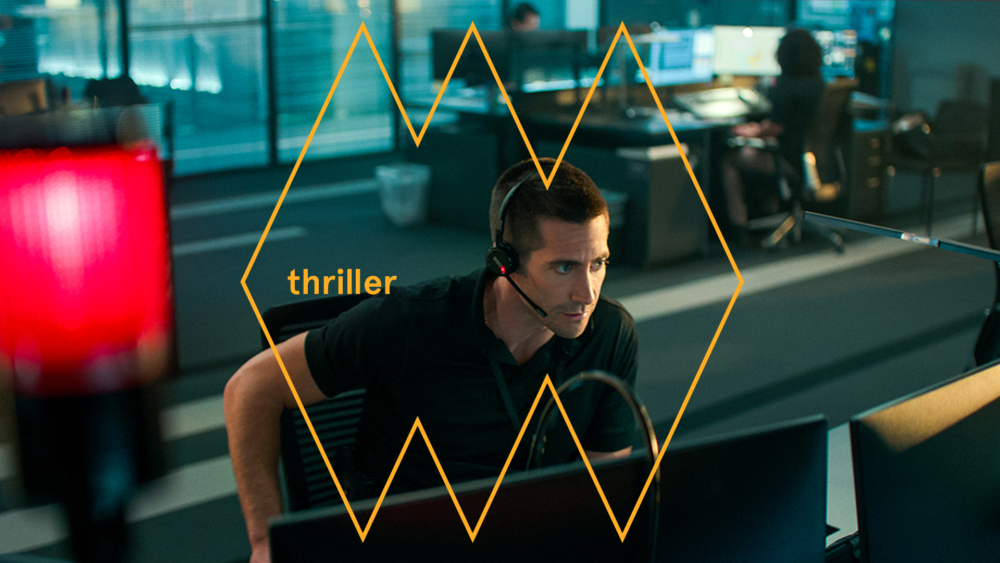
    The Guilty follows a suspended police officer working 911 dispatch who falls upon an abduction case that he becomes determined to solve

    The Guilty is a tense, innovative, and constantly twisting police procedural that unfolds in real-time and solely through phone calls to incredible effect. However, it elevates itself by also acting as a character study and indictment on policing and toxic masculinity. Jake Gyllenhaal has officially entered the Oscar race.

    The Guilty, a remake of the 2018 Danish film of the same name, is a masterclass in adapting a non-English language film for American audiences. The trend of making English-language versions of acclaimed and successful foreign films has been picking up steam to mostly negative results — I’m looking at you Downhill. And more often than not, it’s because the studios commissioning these films don’t understand what makes them successful in the first place. That’s not the case with Antione Fuqua’s adaptation, which premiered at the 2021 Toronto International Film Festival. 

    Fuqua, best known for his thrillers and directing Denzel Washington to an Oscar for Training Day, doesn’t set out to recreate the Danish film. He’s too singular of a filmmaker for that. Rather, he filters the original’s plot through a distinctly American — and Fuqua — lens. 


    ADVERTISEMENT


    Jake Gyllenhaal plays Joe, a former police officer relegated to 911 dispatch duty pending his trial. The reason for his suspension is kept close to the vest, however, Joe’s discontentment with the situation is not. He regularly snaps at co-workers, has coughing bouts that are caused by the wildfire smoke in the air (and maybe something more mental), and regularly pushes the boundaries of his job often talking back at 911 callers. 

    And that’s why when a woman named Emily (Riley Keough) calls feigning talking to her child Joe takes it upon himself to solve the case. Unfolding in real-time and the most intense episode of Law & Order: SVU, Joe realizes that Emily was taken against her will by her estranged husband Henry (Paul Dano) leaving her six-year-old daughter and infant son alone at home. 

    Coordinating with the California Highway Patrol, his partner Jim (Eli Goree), and various others and armed only with the information in the police database, Joe attempts to find Emily before it’s too late. That part of the plot is similar to the Danish version. However, in the background of all this — and throughout the screenplay written by True Detective’s Nic Pizzolatto — the wildfires and general distrust in the police loom large. That change alone validates the American version’s existence. 


    ADVERTISEMENT


    There are many twists and turns that we only hear through calls that come through with the brilliant immersive sound design that puts us firmly in Joe’s point of view. Being in his point of view and watching the film unfold in real-time adds a sense of urgency, desperation, and helplessness. And while Fuqua’s smart directorial choices are one reason for this, Gyllenhaal’s terrific performance is captivating. It’s especially impressive considering he never leaves the screen for a single second of the film. 

    As thrilling as it is to unpack The Guilty as a police procedural what makes it great — and an Oscar contender for Netflix — is its grounding as a character study into toxic masculinity and the psychological effects of giving power to a person. Joe, our “hero,” brings his own outside circumstances to the situation — his own separation from his wife and daughter, his impending case — and uses that to motivate his decision-making for better or worse. He changes throughout the film. We watch as this case tears away at his psyche before the dam breaks — and with it, Jake Gyllenhaal’s performance soars. 


    ADVERTISEMENT


    ADVERTISEMENT


    More movies, less problems


    Hey! I’m Karl. You can find me on Twitter and Letterboxd. I’m also a Tomatometer-approved critic.

    💌 Sign up for our weekly email newsletter with movie recommendations available to stream.


    ADVERTISEMENT

    💌 Sign up for our weekly email newsletter with movie recommendations available to stream.


    ADVERTISEMENT


  • What to Stream Vol 1: Mad Max: Fury Road, Speed, The Mitchells vs. The Machines

    What to Stream Vol 1: Mad Max: Fury Road, Speed, The Mitchells vs. The Machines

    Welcome to What to Stream, our weekly recommendation for movies streaming on Netflix, Hulu, Prime Video, and HBO Max. Today’s theme: action.

    Happy Thursday! Since my dad said I recommend too many sad and slow movies that “normal people” wouldn’t like, today’s recommendations are three thrilling, non-stop action movies featuring some stellar car chases. This was originally published in my weekly newsletter that helps readers know what to stream.

    💌 Sign up for our weekly email newsletter with movie recommendations available to stream.


    ADVERTISEMENT


    In movie news: The Oscars were this Sunday and… they got weird. Nomadland led the field with 3 awards including Picture, Actress for Frances McDormand, and Best Director for Chloé Zhao — she’s the first woman of color and second woman ever to win the award. Here are my full thoughts.

    Enjoy the beautiful weekend!


    Mad Max: Fury Road ?

    ▶ Streaming on HBO Max

    Mad Max: Fury Road finds us further into the post-apocalyptic wasteland where the original took place where a tyrannical ruler called Immortan Joe has taken four women as his prisoner wives. With the help of warrior Furiosa (Charlize Theron), wannabe soldier Nux (Nicholas Hoult), and a drifter named Max (Tom Hardy) they escape but quickly find themselves hotly pursued by an army. Here’s the trailer.

    Tom Hardy in Mad Max: Fury Road. Courtesy of Warner Bros. Pictures.

    Why it’s great: Mad Max: Fury Road is one of my favorite Best Picture nominees of all time for its pure audaciousness. It is the fourth installment of a cult 80s post-apocalyptic action series that spent nearly a decade in development hell — yet, it feels like a fully realized magnum opus of an action movie. 

    From the opening shot, it immerses you in George Miller’s carefully crafted world and then immediately slams on the pedal and goes. Miller utilizes every cinematic tool available to him to take over your senses and completely control your perception of what is happening on screen giving you no choice but to get lost. 120 mins.


    ADVERTISEMENT


    Speed ?

    ▶︎ Streaming on HBO Max

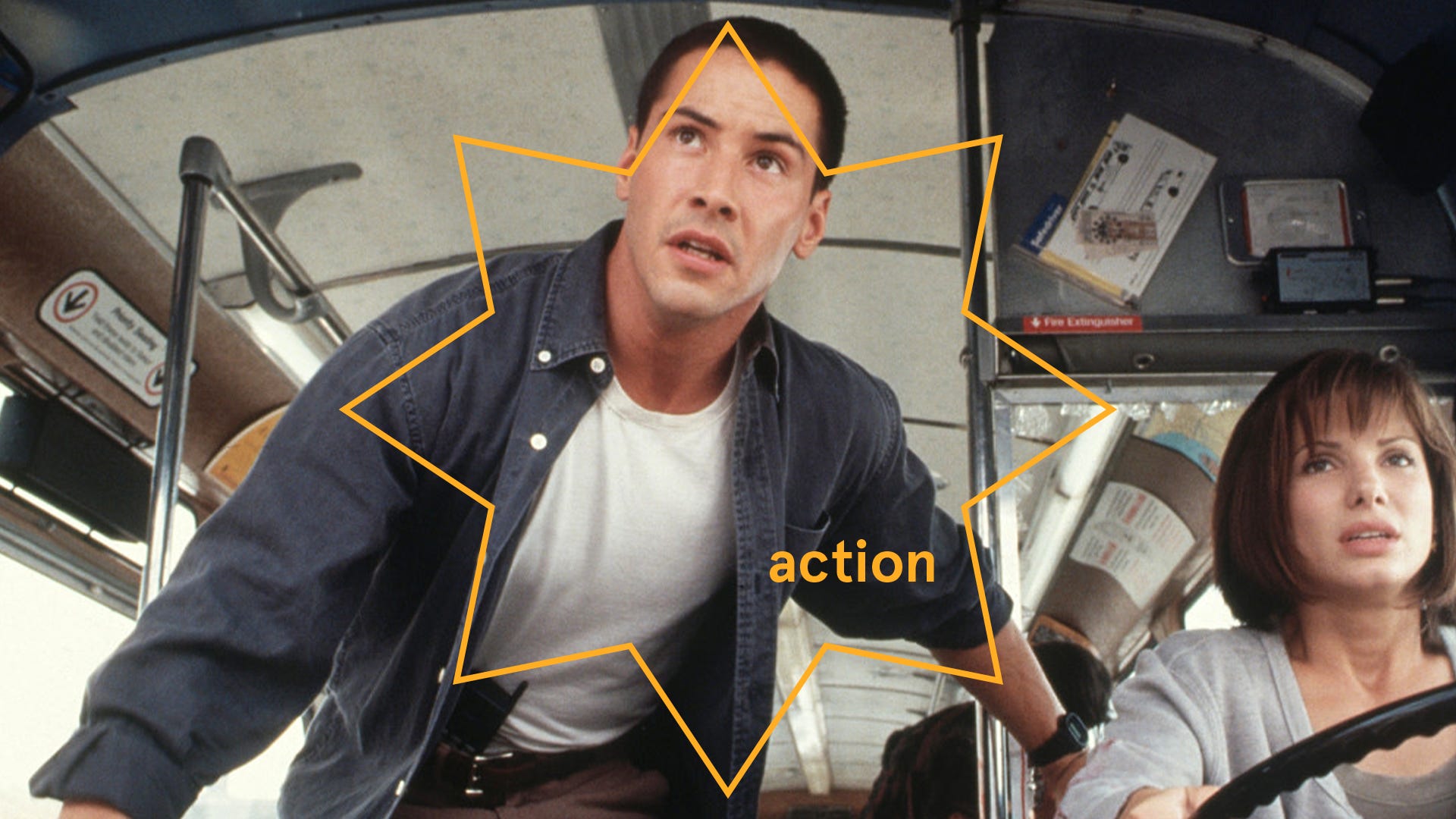
    One bus. One bomb. 50 mph. One Keanu. Speed follows police officer Jack Traven (Keanu Reeves) who, along with passenger Annie (Sandra Bullock) has to prevent a mad bomber from blowing up a bus and killing those aboard by keeping it traveling at 50 mph. Here’s the trailer. 

    Keanu Reeves and Sandra Bullock in Speed. Courtesy of HBO Max.

    Why it’s great: Speed is the quintessential 90s action flick filled with corny dialogue, ridiculous stunts, a hilariously thin plot, and Keanu Reeves — but these are all the reasons it works so well. 

    Fueled by Keanu doing the thing that makes Keanu Keanu, Speed is an irresistibly fun and fast-paced action-thriller that is literally all gas, no brakes. Before the end, you’ll find yourself cheering for our heroes and saying “okay, we’ll have to base it on sex then.” 115 mins. 


    ADVERTISEMENT


    The Mitchells vs. The Machines ?

    ▶ Streaming on Netflix (starting tomorrow)

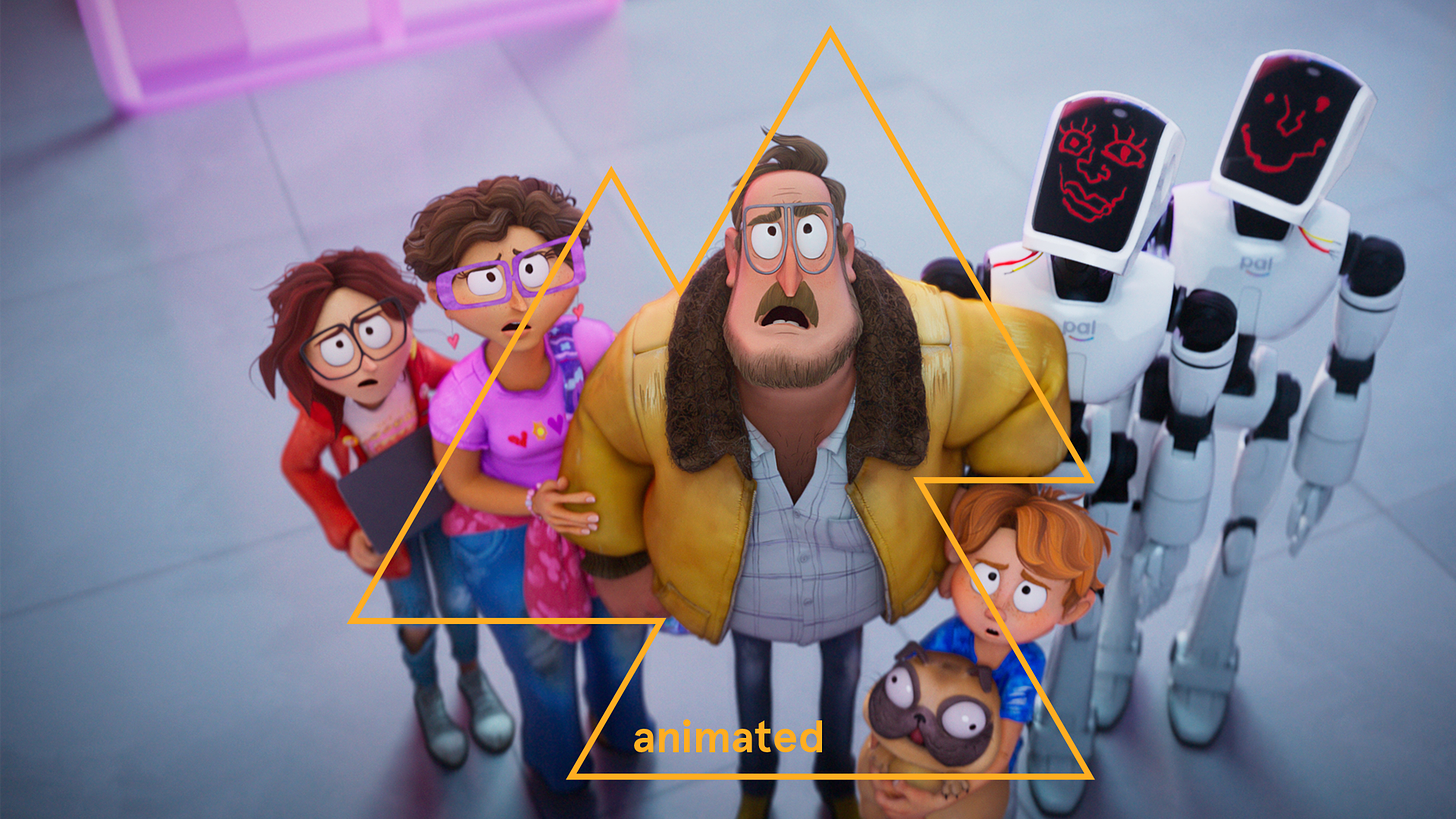
    The Mitchells vs. The Machines follows the eponymous Mitchells, your run-of-the-mill dysfunctional family on a road trip to bring daughter Katie (Abbi Jacobson) across the country to film school. During their trip, however, Mark Bowman (Eric Andre) a tech tycoon reminiscent of another Mark, unintentionally unleashes a robot apocalypse led by a Siri-like smart assistant called Pal (Olivia Colman). Finding themselves as the last humans left to save the planet, the Mitchells have to do something they’ve never done well: work together. Here’s the trailer. 

    Why it’s great: Produced by Phil Lord and Chris Miller — best known for The Lego Movie and Spider-Man: Into the Spider-verse — The Mitchells vs. The Machines is a colorful and hilarious assault on the senses that functions perfectly as an action movie, family movie, comedy, and audacious exercise in animation.

    Like the pair’s other films, The Mitchells constantly challenges and subverts what an animated movie can be while still being completely reverent and masterful. Basically, they punch you in the face with graphics and color and then put you in a chokehold with profound explorations of real issues we find in our relationships. However, unlike some other studios *cough* Pixar *cough* The Mitchells vs. the Machines is unapologetically for kids and it’s all the better for it. 113 minutes. Full review.


    ? P.S. You can see every movie I’ve ever recommended right here.
    I’m also a Tomatometer-approved critic on Rotten Tomatoes! You can find new movie reviews here and here

  • ‘The Half of It’ is the whole package | Netflix movie review

    ‘The Half of It’ is the whole package | Netflix movie review

    The Half of it is a modern retelling of Cyrano de Bergerac that explores sexuality, identity, friendship, and growing up queer

    Quick cut: The Half of it is a melancholy, but an ultimately joyful, exploration of growing up and exploring your identity told through a thoughtful, meditative, and heartwarming story.

    To steal a term from one of the great artists working today, The Half of It feels like future nostalgia. We’ve seen the modern take on the classic play Cyrano de Bergerac countless times — there are even two other Netflix originals with the same plot. However, director/writer Alice Wu finds a singular take with the story by mining achingly personal themes that elevate it past its high school movie tropes. 

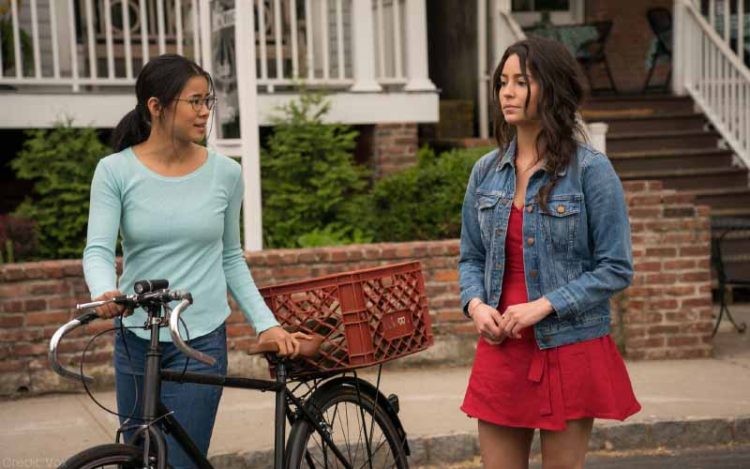
    In The Half of it, our Cyrano is Ellie Chu (Leah Lewis), a shy straight-A student living in the small rural town Squahamish, Washington, where she and her parents immigrated to from China when she was a child — though her mother died shortly after. Her father (Collin Chou) spends his days as the signalman at the town’s only train station, and Ellie writes papers for other students to help pay the bills. This is why she is approached by jock Paul (Daniel Diemer) looking for help writing love letters to the school’s misunderstood it-girl Aster Flores (Alexxis Lemire), who he has a crush on but never able to talk to in person. 

    💌 Sign up for our weekly email newsletter with movie recommendations available to stream.


    ADVERTISEMENT


    Although Ellie is initially hesitant, her interest in Aster convinces her to play along. Ellie is clearly attracted to Aster though it’s never explicitly verbalized. It’s one of the many reasons The Half of It is so refreshing. Like any other high schooler struggling with their identity or sexuality, Ellie isn’t quick to accept or even understand her feelings. All she knows is she’s intrigued by Aster and wants to “talk” to her more through Paul’s letters. And that’s what happens. 

    Through various letter exchanges, we learn Aster is a lover of classic movies and art. Though Paul knows less than nothing about the subjects, Ellie tries to teach him for when he finally talks to Aster in person. While they’re spending time together, Paul begins to dig into Ellie’s background. At first, she rebuffs the questions. But after realizing Paul genuinely wants to get to know here, something no one in the small town has tried to do, she relents. 

    Wu’s screenplay is quietly brilliant. It’s filled with character development and background that is subtly tucked in between the lines. Unlike other high school coming-of-age movies, The Half of It doesn’t feel it needs to overly explain itself. As Paul and Ellie learn about each other and understand each of their unique plights, they adjust the way they interact. In that way, it feels like director great Mike Nichols’ best work. Like his seminal coming-of-age masterpiece The Graduate — which this movie explicitly references — or the hilarious The BirdcageThe Half of It brings the story and characters to the line of absurdity but never crosses it. 

    She adds a layer of melancholy on the otherwise joyful film. There are jokes and characters to serve as comedic foils, Wolfgang Novogratz‘s Trig is a standout, however at the core is a wildly sensitive drama about identity and the meaning of love. And though that sounds corny, the way The Half of it explores that meaning is through meaningful exchanges between characters. 

    The Half of It
    Leah Lewis and Alexxis Lemire in Netflix’s The Half of It. Courtesy of Netflix.

    In some way, every character is underestimated. Ellie is thought to be a quiet, unassuming A-student, but has a braveness waiting to be mined. Paul, who could have easily played into the dumb jock trope, has an underlying sweetness that shows itself in some of the movie’s most heartwarming scenes. Even Ellie’s dad, who is portrayed as holding his daughter back, has a complexity that is explored in a standout scene with Paul, where he explains his emotions in his native Mandarin. 

    On the surface, The Half of It is a serviceable high school dramedy. However, at its core, it’s a sensitive character study of identity and how the town we grew up in shapes it, for better and worse. And though it only skims the surface of sexuality, it’s distinctly queer. The gaze is queer. The themes are queer. This is a movie that only a person that has experienced it could accomplish. And although it has all this complexity, it still has the moments of joy and levity we crave in a coming-of-age. However, those moments happen where — and between characters — we least expect them. This is a love story. But not between who you think. 

    There’s a chance The Half of It fades into the background of the multitudes of Netflix romantic comedies that are shuffled away in the mysterious algorithm. But I hope that the right audience sees it. It feels like a cliche now, but if I had seen this movie when I was a kid, I feel like the world would have been different for me. I’d see it differently. I’d understand myself and how to love differently. I’d understand that confusion is just a part of understanding. And that running after a train may look ridiculous, but that’s love. 

    The Half of It is streaming on Netflix.

  • ‘The Lovebirds’ shine, the movie not so much | Netflix review

    ‘The Lovebirds’ shine, the movie not so much | Netflix review

    The Lovebirds follows a failing couple who find themselves on the run after witnessing a murder that ropes them into a criminal enterprise

    Quick cut: When The Lovebirds gives Issa Rae and Kumail Nanjiani room to exercise their mastery in comedic timing and delivery it is enormously enjoyable, but the simplistic plot and uninspired writing leaves this crime comedy grounded.

    There’s something about putting a couple at the center of a crime comedy that just works. Whether it’s an actual couple—like in Game Night or Date Night—or a mismatched buddy cop pairing—The Nice Guys or The Other Guys (at least they’re consistent). And perhaps the real reason they work is that the actors in the lead roles have the chemistry and comedic chops to make even the weakest material work. Such is the case with Issa Rae and Kumail Nanjiani in Netflix’s The Lovebirds, which reunites Nanjiani with his The Big Sick director Michael Showalter.

    Rae and Nanjiani play Leilani and Jibran who at the start of the movie are madly in love. Skip four years and they find themselves arguing in their New Orleans apartment about whether or not they’d do well in The Amazing Race. However, like many seemingly silly arguments that long term couples have there is a lot of subtext in their words. Leilani finds Jibran too serious and unwilling to break out of his comfort zone, he finds her too self-involved and obsessed with image—we’ve seen this play out before.

    Just as they call it quits while in the car to a friend’s dinner party, they run into a cyclist. And when I say run in, I mean they straight up hit him with their car. However, he doesn’t stick around clearly running from someone. That someone is only known as Mustache (Paul Spark) who commandeers the couple’s car—with them still in it—and chases down the suspect. And when I say chases down, I mean finds him, runs him over, reverses, and runs him over again.

    💌 Sign up for our weekly email newsletter with movie recommendations available to stream.


    ADVERTISEMENT

    The couple is shocked and not completely sure what to do, but when a hipster couple hilariously mistakes them for the murderers they make a run for it. Convinced that the only way to prove their innocence is to find the real murderer, Jibran and Leilani set out on a cross-city manhunt looking for any clues. Along the way, they have run-ins with a torturous southern belle (Anna Camp), a frat boy possibly involved in the criminal enterprise that hired Mustache, and a secret sex society pulled straight out of Eyes Wide Shut.

    The plot is essentially null and void with no moment that is particularly interesting or memorable. Instead, it’s solely meant to give Rae and Nanjiani moments to exercise their mastery in comedic timing and delivery. When confronted by Anna Camp’s woefully underused southern belle torturer, their bickering about whether or not to take bacon grease to the face or a horse kick to the chest is truly hilarious. In another scene, their interrogation of a frat boy—who Leilani calls “date rape”—shows off the leads’ chemistry. However, the high is often short-lived and stunted by Aaron Abrams and Brendan Gall‘s witless script.

    There are moments when the movie tries to give some depth to the couple as they work through their differences in the midst of this crisis. And while it’s appreciated, it makes the already thin plot even more of a drag. Rae and Nanjiani do their best to lift the material from its subpar footing but are only marginally successful. Is The Lovebirds a complete disaster? No. It’s an entertaining 90 minutes. But after that everything about the movie simply flies away from your mind. Just watch the brilliant Game Night instead.

    The Lovebirds is now streaming on Netflix.


    ADVERTISEMENT


    More movies, less problems


    Hey! I’m Karl. You can find me on Twitter and Letterboxd. I’m also a Tomatometer-approved critic.

    💌 Sign up for our weekly email newsletter with movie recommendations available to stream.


    ADVERTISEMENT

    💌 Sign up for our weekly email newsletter with movie recommendations available to stream.


    ADVERTISEMENT


  • ‘Set it Up’ review — Netflix rekindles the flame of romantic comedy

    ‘Set it Up’ review — Netflix rekindles the flame of romantic comedy

    Set it Up follows two overworked and underpaid assistants as they “parent trap” their horrible bosses.

    30-second review: I think anyone that grew up in the 2000s has a soft spot for that perfect romantic comedy. The kind that has perfect one-liners that you can work into everyday life and characters who live lives that you could only aspire to in unrealistically large apartments and scenes that make your heart flutter at the thought of them happening in real life.

    Set it Up mines those tropes and makes me feel nostalgic for those breezy romantic comedies. And while it hits a lot of those familiar plot beats, the movie surpasses other contemporary rom-coms because director Claire Scanlon and the charming leads have a great sense of comedic timing and the propensity for subtle, but effective physical comedy. It’s one of those movies that you’ll want to come back to over and over again.

    Where to watch Set it Up: Now streaming on Netflix.

    The romantic comedy was nearly destroyed by the 2000s the same way the slasher genre was destroyed by the 80s. The oversaturation of generic rom-coms with the same gorgeous (mostly white) leads and the formulaic plot eventually led to its downfall.

    Year after year, we watched the same movie time after time. Guy meets girl, they hit it off, they’re happy for a time, something happens to make them not happy, but then they’re happy in the end. Last year, The Big Sick made huge strides to bring the genre back. However, it wasn’t exactly the light and easy broad comedy that makes you want to watch it over and over again until you can quote every line.

    I think anyone that grew up in the 2000s has a soft spot for that perfect romantic comedy. The kind that has perfect one-liners that you can work into everyday life and characters who live lives that you could only aspire to live in unrealistically large apartments and scenes that make your heart flutter at the thought of them happening in real life. 

    💌 Sign up for our weekly email newsletter with movie recommendations available to stream.


    ADVERTISEMENT

    Set it Up mines those tropes and makes me feel nostalgic for those breezy romantic comedies. And while it hits a lot of those familiar plot beats, the movie surpasses other contemporary rom-coms like How to Be Single and What’s Your Number? because of two women: director Claire Scanlon and screenwriter Katie Silberman.

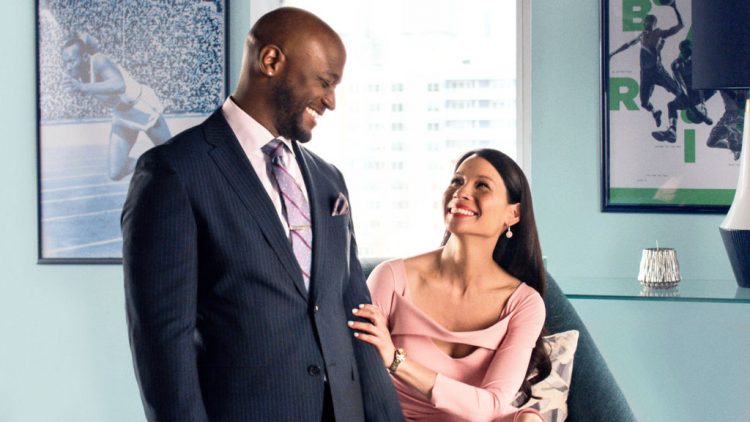
    Set it Up is essentially a retelling of The Parent Trap — it even references it at one point. Assistants Harper (Zoey Deutch) and Charlie (Glen Powell) are both living the nightmare scenario when it comes to a job in the city. While other assistants finally leave work at a late but decent hour, Harper and Charlie are stuck tending to their bosses Kirsten (Lucy Liu) and Rick (Taye Diggs), respectively. Imagine the relationship between Andy and Miranda Priestly in The Devil Wears Prada.

    Both assistants are toughing it out in their jobs to hopefully progress to something more. However, one frantic late night trying to get dinner from a closed restaurant that their bosses won’t end up eating will make anyone desperate. So, when Harper and Charlie meet on one of those frantic nights, it becomes clear that they can help each other out.

    Taye Diggs and Lucy Liu in Set it Up

    Harper comes up with a plan to Cyrano their bosses. Charlie prefers the more simple parent trapping. Together they hatch a plot to get their two overworked bosses to fall in love with each other and give Harper and Charlie a chance to have time for themselves. This plot involves a hacked elevator — featuring Tituss Burgess in one of the funniest scenes of the movie — the kiss cam at a Yankees game, and manipulating nearly every aspect of their lives to force them together.

    Of course, though, this isn’t really Kirsten and Rick’s love story. It’s Harper and Charlie’s. Through all the shenanigans of getting their bosses together, the pair also learns more deeply about each other. Harper is working for Kirsten, one of the nation’s most notable sports reporters, in the hopes of eventually writing for her website.

    Of course, that doesn’t leave her much time to actually write or date — she’s never had a boyfriend. Charlie, on the other hand, is dating model Suze (Joan Smalls who is quite good in this small role), but doesn’t have time to dedicate to the relationship as he hopes for a promotion under venture capitalist Rick.

    Romantic comedies are only as good as their leads and Set it Up is no exception. It’s already hard to imagine the movie with Deutch and Powell. Their chemistry is perfect and permeating even without contrived moments of romantic tension, though one scene involving a pizza had me swooning.

    Scanlon also benefited from the actors’ pitch-perfect comedic timing and propensity for subtle, but effective physical comedy. Watching Harper frantically walking into Kirsten’s office after being called in is a delight every time. What’s also delightful is Silberman’s quirky script. It’s filled with all the wackiness you’d expect in a movie like this, but with filled out characters and backstories.

    What’s so refreshing about Set it Up is that every character has a moment. Liu is a consummate pro and plays steely better than anyone else in the business. Diggs is playing to the cheap seats with his over-the-top finance-bro character. However, even small one-scene characters like Burgess or Noah Robbins, who plays an intern who is quickly fired, or a delivery man trapped in an elevator or a jewelry salesperson caught in the middle of an argument all have their moments to shine.

    Still, Deutch and Powell are the stars here and drive Set it Up with incredible charm. It’s one of those movies that you’ll want to come back to over and over again. It’s one of those movies that you’ll be nostalgic for a decade from now. You can’t manufacture charm in a movie like this. It takes talent. And there’s a lot of talent behind this movie, Scanlon, Silberman, Deutch, Powell, Liu, Diggs. 

    Set it Up is the perfect example of a broad romantic comedy done right. It adheres to the formula for the most part but isn’t afraid to break it. It has its own style and moves to beat of its own drum. It could be trimmed by 10 minutes and Pete Davidson‘s gay roommate character is questionable, but that’s all part of the nostalgia too, honestly. Set it Up is a good old-fashioned rom-com that is worth your time, even if you’re just overdicking around.


    ADVERTISEMENT


    More movies, less problems


    Hey! I’m Karl. You can find me on Twitter and Letterboxd. I’m also a Tomatometer-approved critic.

    💌 Sign up for our weekly email newsletter with movie recommendations available to stream.


    ADVERTISEMENT

  • ‘To All The Boys: P.S. I Still Love You’ — movie review

    ‘To All The Boys: P.S. I Still Love You’ — movie review

    To All The Boys: P.S. I Still Love You picks up with Lara Jean and Peter officially dating, but a new suitor is bringing trouble to the honeymoon

    Quick review: I fell in love with To All The Boys I’ve Loved Before, but the sequel P.S. I Still Love You makes me think I want to see other people.

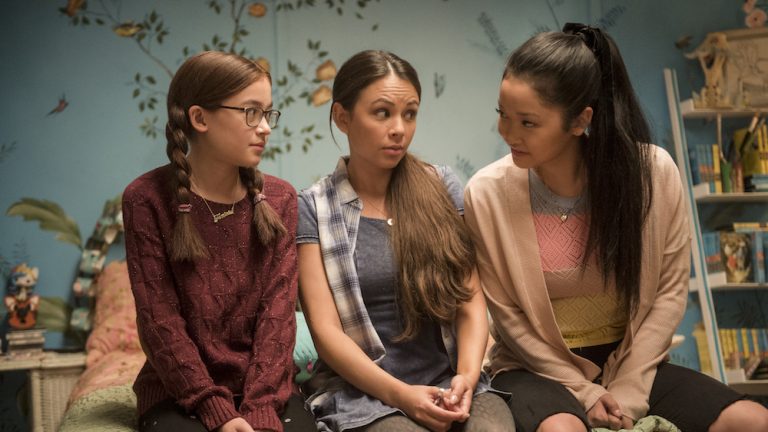
    To All the Boys I’ve Loved Before felt like a breath of fresh air when it premiered two years ago on Netflix. It came on the heels of a renaissance in romantic comedies that still firmly used the formula we all know and fall for but subverted it in some way. Already by having Lara Jean (Lana Condor), a half-Korean American teen girl, as its lead it felt new. It found its heart in places other than the romance whether it the bond between the three Covey sisters, eldest Margot (Janel Parrish) and youngest Kitty (Anna Cathcart), or remember their late mother. If anything, the romance was secondary to Lara’s own journey. That’s why it was disappointing that the sequel To All the Boys: P.S. I Still Love You felt like a regression into the genre’s cliches. 

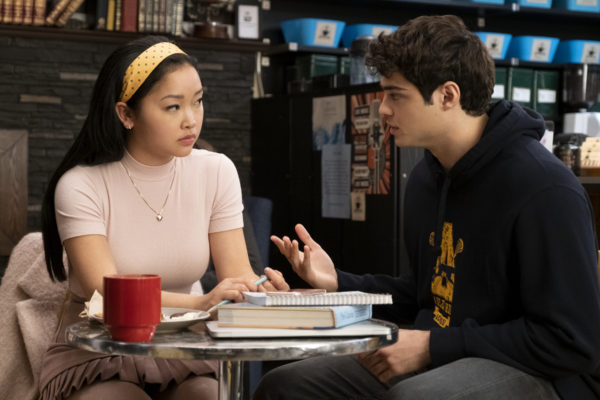
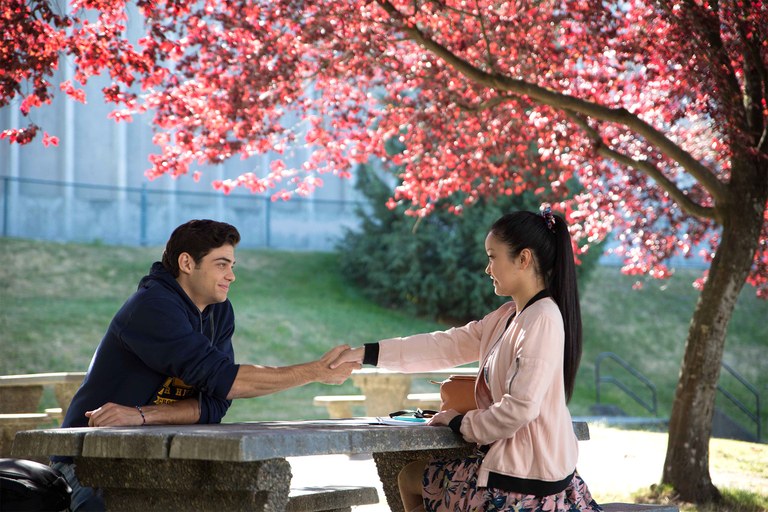
    Lara Jean and Peter (Noah Centineo) are officially a couple — the hottest at the school to boot. But the girlfriend thing is new to Lara. She doesn’t know the “right” things to do and it doesn’t help that Peter’s ex Genevieve (Emilija Baranac) is always around. So when John Ambrose (Jordan Fisher), one of the recipients of Lara Jean’s love letters, writes back she doesn’t know what to do. Is it wrong that she felt a heart flutter when she read the letter? She’s supposed to love Peter. Still, it’s clear that they’re both heads over heels for each other so she doesn’t think much of the feeling. Of course, this isn’t the last we hear of John Ambrose.

    As part of the school’s volunteer program, Lara Jean volunteers at Belleview Retirement Home where eccentric resident Stormy (Holland Taylor), who knew her sister when she volunteered there, shows her the ropes. It’s all looking up until John himself shows up to volunteer causing Lara Jean to quite literally fall for him — she actually slips and falls to the ground. So there’s the set up: on one hand there’s the new, exciting and sweet John Ambrose who seemingly always knows the right things to say and on the other there’s Peter who she went through so much to be with but seems to be failing at the boyfriend game. 

    💌 Sign up for our weekly email newsletter with movie recommendations available to stream.


    ADVERTISEMENT


    To All the Boys: P.S. I Still Love Your Poster

    There are some moments where the movie comes alive like one where Lara Jean, Peter, John Ambrose, Gen, and Lara Jean’s cousin Chris (Madeleine Arthur) go to an old treehouse they used to hang out in as kids to dig up a time capsule they buried. However, much of the movie feels like it’s on an Ambien. P.S. I Still Love You loses so much of the glow the first film had by falling too far into cliches that we’ve seen in so many rom-coms with a love triangle at the center. In particular, making Peter almost too unlikeable versus John Ambrose who is too perfect pulls the tension out of the affair and makes the final act frustrating.

    The same goes for the performances. In the first Condor was endearing as a woefully naive high schooler. Here she feels sedated like she’s indifferent rather than torn between the two boys. And for much of the movie Centineo is sidelined depriving us of the effortless charm that catapulted him into stardom. Thankfully, Fisher more than makes up for it with his pitch-perfect and heart-stealing turn as the sweet John Ambrose. Still, P.S. I Still Love You leaves much to be desired. 

    Was To All the Boys I’ve Loved Before a fluke? Perhaps. I would have loved to have seen director Susan Johnson’s take on the sequel — Michael Fimognari made his feature directorial debut with this film.  

  • ‘To All the Boys I’ve Loved Before’ review — A crush-worthy teen rom-com

    ‘To All the Boys I’ve Loved Before’ review — A crush-worthy teen rom-com

    To All the Boys I’ve Loved Before is a swoon-worthy teen romantic comedy with a heart of gold and a trailblazing protagonist.

    To All the Boys I’ve Loved Before comes on the heels of Set it Up and Crazy Rich Asians, which seems to cement 2018 as the comeback of the romantic comedy. And while To All the Boys I’ve Loved Before would seem like it has the least pedigree of the three, it’s one of the best teen movies I’ve seen in years—including movies I loved this year like Love, Simon and Blockers. That’s because it, for the most part, subverts the typical teen rom-com cliches.

    One part of that is casting Vietnamese-born actress Lana Condor as the lead character who was written in Jenny Han’s book of the same name as a half-Korean, half-Caucasian girl—something that not every Hollywood adaptation of a prior property has done. However, the other part of the movie’s success is that Susan Johnson took those typical rom-com cliches in the movie and simply makes them work. It has the typical structure of a rom-com, but fills that structure with realistic—but still over-the-top—characters and a star-making performance by Condor.

    Condor plays Lara Jean Covey, your typical high school student who awkwardly tries to find someone to sit with in the cafeteria, is afraid to drive, and harbors crushes on boys that she barely has contact with. However, unlike most teens, she writes letters to each of her crushes—the letters are as embarrassing as you’d think—and hides them away in a gift box her deceased mother gave her. Some of those crushes include a middle school spin-the-bottle kiss, Peter (Noah Centineo), her Freshman year homecoming date Lucas (Trezzo Mahoro), and her sister Margot’s boyfriend and former friend Josh (Israel Broussard).

    That last crush is the one that could have the most devastating effect for Laura Jean since Margot (played by Janel Parrish) has broken up with Josh right before she left for college in Scotland. That’s why when the letters somehow get out in typical rom-com fashion, Lara Jean hatches a plan to avoid an awkward discussion about his letter.

    💌 Sign up for our weekly email newsletter with movie recommendations available to stream.


    ADVERTISEMENT

    To All Of The Boys I’ve Loved Before

    That plan involves another former crush, Peter, now the school’s most popular lacrosse-playing jock who just broke up with his girlfriend and Lara Jean’s former best friend Gen (Emilija Baranac), pretending to be her fake boyfriend to convince Josh she’s not in love with him anymore. But Peter has his own motivation for the fake relationship. He desperately wants Gen back since she left him for a college student.

    Though the plot is as teen rom-com as it gets and the story beats don’t stray too far from the standard—there are ridiculous parties in enormous mansions, a climactic school event that is a turning point for the movie, a leaked embarrassing moment caught on camera—Johnson makes every single moment count, even the corny ones.

    But what struck me the most was the emotional moments. Surprisingly they had a lot of impact, especially a moment where Lara Jean and her father (John Corbett) reminisce about her mother and he tells her a story about a diner they’d frequent. A lot of rom-coms can feel like they lack a human element, but it’s alive and well To All The Boys I’ve Loved Before.

    The reason Netflix has been so successful in churning out romantic comedies is that they realize they don’t have to reinvent the wheel. To All the Boys I’ve Loved Before doesn’t do much to surprise, but it has heart, something that the barrage of rom-coms that came out in the 2000s didn’t have. Don’t sleep on this movie just because it’s familiar—save for a lead character and actor blazing a trail for diversity—To All The Boys I’ve Loved Before is a crush-worthy movie that will have your heart swooning.

    To All the Boys I’ve Loved Before is now streaming on Netflix. You can get the novel here.

  • ‘I Lost My Body’ is hands down one of the year’s more innovative films — Oscars spotlight review

    ‘I Lost My Body’ is hands down one of the year’s more innovative films — Oscars spotlight review

    In I Lost My Body, a hand separated from its owner after a tragic accident tries to make its way back home.

    Quick review: I Lost My Body has an extremely absurd premise but thanks to some powerful storytelling, it turns out to be one of the most reflective perspectives on life I’ve ever seen — hopefully, the Academy agrees.

    Where to watch I Lost My Body: Streaming on Netflix.

    See the rest of Jane’s 2020 Oscar spotlight series here.

    Of all of the Oscar-nominated animated films this year, none were quite as innovative or inventive as I Lost My Body. It throws away all of your preconceived notions about narrative structure and constructs a story entirely built on sensory details and how crucial the senses play a part in your life’s story. I Lost My Body is a film that’s meant to stick with you long after the end credits roll. It’s one of the finest animated offerings of 2019 and my preferred choice as the winner of the Academy Award for Best Animated Feature.

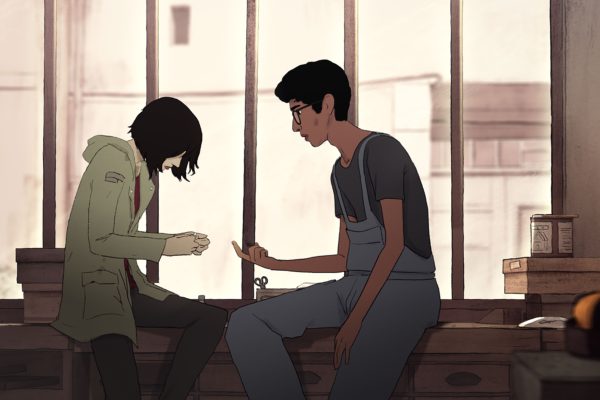
    The film plays out like a fever dream of some sort. A hand separated from its owner after a tragic accident tries to make its way back home. During the journey, we are introduced to the body of this owner in a series of flashbacks detailing who this hand belongs to. Turns out the body belongs to a young man (Hakim Faris) who lives aimlessly through life after the untimely death of his parents. But things start to look up after a chance encounter with a kind young woman (Victoire Du Bois) who takes the time to actually acknowledge him. The film then switches back on both narratives until the two storylines line up in a satisfying and heartbreaking conclusion that might make you shed a tear or two by the end.

    💌 Sign up for our weekly email newsletter with movie recommendations available to stream.


    ADVERTISEMENT

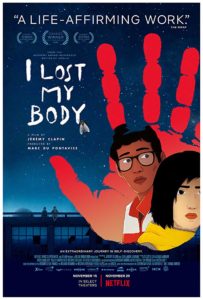
    I Lost My Body Poster

    The film takes full advantage of its eccentric premise by giving the separated hand a vibrant personality thanks to some impressive animation. The stakes have never been higher living in the city of Paris through the experiences of a hand dealing with hungry rats, bustling highways and towering buildings. You see the hand feel vicious rage when dealing with a pigeon but also gentleness towards a newborn, which shows you how essential body language is a powerful showcase in showing how you connect to others and the world.

    At a brisk 80 minute runtime, I Lost My Body is a sensory experience that reflects on the power of touch and sound. It’s a connection of the body and soul, it’s one of a kind. It lingers with you and makes a strong case as not only the best animated film but one of the best pictures of the year.

    Random thoughts ?

    • I have read multiple reviews that claim one of the major critiques of the film is the contrived love story. But I very much enjoyed it. She’s not there for a throwaway love interest or treated as a manic pixie girl. She feels real and that’s important in a film that’s all about feeling your way through life.
    • I hope we get to see more work soon from director Jérémy Clapin. Anyone have an idea of what his next project will be?
    • Probability of winning an Oscar: Lukewarm. Believe me, I would love nothing more than this film to bring home the gold. It did have a promising start, winning the Nespresso Grand Prize at Cannes and becoming the first animated film to do so. But the Academy isn’t made up of critics like the Nespresso jury is. It didn’t even make the Golden Globes shortlist for Best Animated Feature. The Academy has a pattern of picking animated films that have a wide range of appeal, especially toward family entertainment rather than indie arthouse darlings. Maybe this is the year the Academy feels differently?

    💌 Sign up for our weekly email newsletter with movie recommendations available to stream.


    ADVERTISEMENT


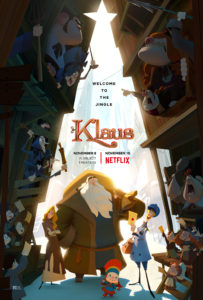
  • 'Klaus' is one festive mess of holiday cheer — Oscars spotlight review

    'Klaus' is one festive mess of holiday cheer — Oscars spotlight review

    When Smeerensburg’s new postman, Jesper, befriends toymaker Klaus, their gifts melt an age-old feud and deliver a sleigh full of holiday traditions.

    Quick review: Even with its stellar hand-drawn animation, a clunky story followed by questionable morals makes Klaus a lump of coal rather than the holiday treat it so desperately wants to be.

    Where to watch Klaus: Available to stream on Netflix.

    See the rest of Jane’s 2020 Oscar spotlight series here.

    I wanted to like this. Truly I did. I appreciate any director who really wants to showcase hand-drawn animation. Director Sergio Pablos highlights color, character design and action so much that you remember what CGI can miss and what hand-drawn animation can elevate. That’s the only positive aspect of Netflix’s new holiday film Klaus. It is a run-of-the-mill Santa origin story that offers nothing new and fails to be anything but uninspiring. 

    The story begins with a voiceover telling the audience that no one actually remembers where the myth of Santa comes from. That’s not the case as people clearly remember as this film is in a long line of better Santa Claus origin tales (Santa Claus is Comin’ to Town, The Santa Clause). The plot is about a spoiled, self-entitled brat named Jesper (Jason Schwartzman) who is sent to the Arctic Circle by his Father who owns The Postal Service? Sure. Jesper needs to make a quota of delivering mail or else be cut off from his family’s finances. Unfortunately for him, this town has two feuding clans who have come from a long line of hating each other and don’t have time to send letters.

    He finds a loophole in the form of an isolated Klaus (J.K. Simmons) who sends toys to children if they send him a letter. The two begin to forge a partnership and strangely the unlikeable postman begins to create all the traditions you love about Santa Klaus. To ask for more toys, the children seek the help of the local teacher in town, Alva (Rashida Jones in a thankless role) and begin to make their own destructive town a better place to be. This displeases both leaders of the town, Tammy Krum (Joan Cusack) and Mr. Ellingboe (Will Sasso) who then make an alliance to remove the yuletide distractions from their daily debauchery. Besides that, you get every cliche checked off in bland plotting. A throwaway love interest? Check. A dead wife to inspire your tragic backstory? You got it. A big reveal that shows what Jesper has been up to all along? You betcha.

    💌 Sign up for our weekly email newsletter with movie recommendations available to stream.


    ADVERTISEMENT


    That wouldn’t make Klaus bad just worn out territory (Seriously, did they just watch Santa Claus is Comin’ to Town and switch some things around?). Here’s what makes it bad: All throughout the film, the moral message is that doing good for others inspires others to be good. However, the film doesn’t really separate doing good for the sake of doing good versus doing good for your own gain. The children turn the town around but only because they were promised a reward. They never actually learn anything that inspired the heart of Christmas: selfless acts of generosity. 

    Oddly enough, the film points this out several times and makes you believe that there would be some payoff by the film’s conclusion, but we never dive deep enough beyond the shallow writing to see a believable change in the town. To some degree, Jesper changes but by the time he does, you’re already so sick of his presence that you wish the film spent more time with the Saami tribe and little girl Márgu (the only time the film actually inspires heartfelt emotion). 

    This begs the question: How? How does this film get nominated for an Oscar? My bet is that the voters had this on mute in the background during the holiday season and were impressed by the visuals. I love the character designs. Big broad Klaus against thin stick Jesper is a ton of fun to watch. The villagers’ designs (if heavily borrowed from film *cough* Santa Claus is Comin’ to Town) come in many diverse shapes, sizes and colors. It’s arguably the most creative part of the film. So if you are a lover of holiday films and animation, put this on. Just make sure the sound is off.

    Random thoughts ?

    • The voice acting of the film is more or less good although I never got lost in any of the performances. One exception is Joan Cusack who is a blast to listen to and gets the only chuckles I had in the film. 
    • It’s funny, for a film that seems to want to sugarcoat you with sentiment, I thought it was odd that the film didn’t focus on Jesper and his Dad’s relationship at all. 
    • Probability of winning an Oscar: Not likely. The Academy rarely gives out accolades to seasonal themed films and with the holidays just recently over, I don’t see them handing out an award to a Christmas film. However, this film is very popular (93% on Rotten Tomatoes!) with critics and audiences. So maybe it’s just the cynic in me that can’t get behind this film.
    Missing Link poster

    💌 Sign up for our weekly email newsletter with movie recommendations available to stream.


    ADVERTISEMENT

  • ‘Bird Box’ review — Netflix’s uneven but entertaining post-apocalyptic thriller

    ‘Bird Box’ review — Netflix’s uneven but entertaining post-apocalyptic thriller

    Bird Box doesn’t bring anything new to the post-apocalyptic thriller genre despite a strong third act and solid performances.

    Bird Box certainly has the pedigree of a great movie behind it. The Netflix-produced movie is directed by the Emmy-winning director of The Night Manager Susanne Bier—she pulled off an upset against The People v. O.J. Simpson—written by the Oscar-nominated screenwriter of Arrival Eric Heisserer, and based off Josh Malerman’s novel of the same name, which is one of the best novels of the decade. 

    However, all the talent doesn’t necessarily translate onto the screen. Bird Box tells the story of the end of the world that is eerily similar to A Quiet Place, which premiered earlier this year. A phenomenon of people killing themselves after seeing some mysterious creatures is spreading across the globe. Unlike A Quiet Place, Bird Box—to its detriment—shows us the end of the world. 

    Reluctant expecting mother Malorie (Sandra Bullock) is taken to a prenatal checkup at a hospital by her plucky and excited sister Jessica (Sarah Paulson). As the sister’s make their way to the hospital, news about an odd phenomenon happening in Europe and Asia dominate the TV and radio. Something is making people commit suicide in droves and it just arrived on Malorie and Jessica’s doorstep.

    There’s a fantastic action sequence in the underrated World War Z where Brad Pitt and his family must escape Philadelphia while a wave of newly zombified corpses floods the streets. Bird Box goes for the same effect here to less successful results. Bier does a great job of adding tension to set pieces, however, some of the choices she makes take away from that tension.

    Sandra Bullock and Sarah Paulson in Bird Box. Courtesy of Netflix.

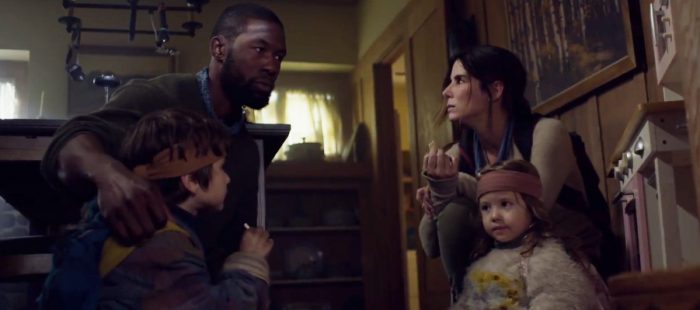
    As they’re trying to escape the chaos unfolding, Jessica sees whatever creature is causing the phenomenon and crashes the car. Malorie is able to escape to a nearby house with the help of Iraq war vet Tom (Moonlight‘s Trevante Rhodes) where she finds a group of people trying to process what just happened.

    In the house, we find conspiracy theorist grocery store employee Charlie (Lil Rey Howery of Get Out fame), an older woman named Sheryl (Jacki Weaver), and the bothersome alcoholic Douglas (John Malkovich). Those character descriptions I gave are all we ever know about these and the other characters in the house including some that we know even less about—Greg (B.D. Wong), Felix (Colson Baker aka Machine Gun Kelly), Lucy (Rosa Salazar).

    The group falls into a routine with Tom taking a leadership role and Douglas continuing to antagonize the group. Eventually, a soft-spoken pregnant young woman named Olympia (Danielle Macdonald—a standout) comes to the door in one of the more memorable sequences in the film. Her character is one of the few that is given some depth and often drives emotion into the story. 

    The house is fortified by covering the windows with newspapers and no one goes outside without a blindfold. Desperate for food, the group leaves the safety of the house in a completely blacked out car to venture to a grocery store. As they make their way, the sounds of the crumbled society echo around them—the issue here is that Bier shows us what is happening outside the car leaving little intrigue.

    For the first two-thirds of the film, the screenplay often falls into cliches of the apocalypse genre—, particularly in the often messy dialogue. What made the novel and A Quiet Place is the scarcity of details and genre. Bird Box, on the other hand, goes too far into the weeds to explain characters and the situation they’re in. Yet somehow, we come away knowing less than we did before.

    Bird Box
    Trevante Rhodes and Sandra Bullock in Bird Box. Courtesy of Netflix.

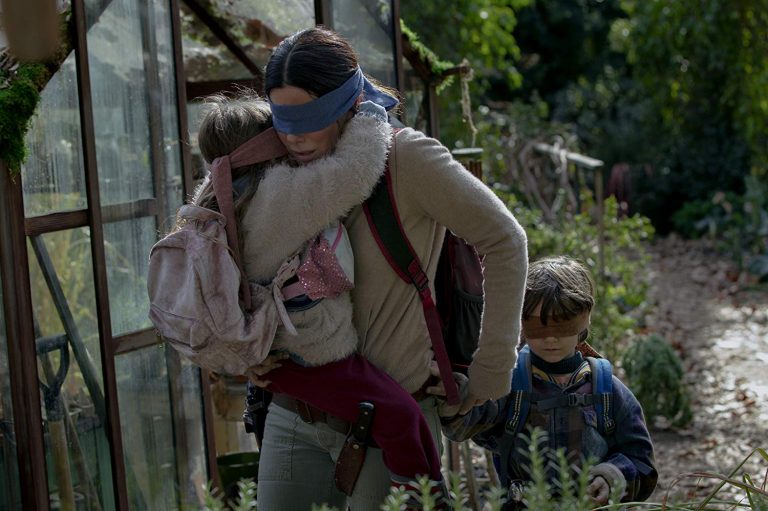
    However, parts of the movie do work. Sprinkled throughout the film are flashforwards to a time further into the crisis in scenes that feel like they’re pulled from A Quiet Place. Malorie along with two young children named simply Girl (Vivien Lyra Blair) and Boy (Julian Edwards) take a boat down a river to some mythic sanctuary where they hope to be safe from the creatures. 

    Here, Bier and Heisserer take a simplistic approach. There’s little to see and little dialogue. These scenes are easily the best and most tense, so when the film completely reverts to these flashforwards for the third act it takes off. There’s something heightened and terrifying about not being able to see and Bird Box translates that feeling onto the screen as Malorie and kids encounter dangers down the river. If anything, the third act redeems the movie as a whole.

    The premise of Bird Box is so promising and its source material is some of the best horror fiction ever written. However, it often feels like both Bier and Heisserer don’t trust the audience enough to deliver a stripped-down story. Maybe that’s because Netflix was looking for a mainstream blockbuster type, which they certainly got—this movie is going to be a crowdpleaser, most likely. 

    The third act is where thematically the film comes together as Malorie struggles with motherhood in the face of a hopeless world. Bullock is solid as always in these scenes, but Rhodes is the steady hand here that elevates the material and delivers the thesis of the movie. It makes me wish this is what Bird Box was the entire time, but that would just be A Quiet Place wouldn’t it?

    Bird Box will be available to stream on Netflix on December 25th. You can get the book here.

    Karl’s rating:

  • ‘The Perfection’ review — Cello from the other side

    ‘The Perfection’ review — Cello from the other side

    The Perfection follows two students of a renowned music academy whose first encounter leads to sinister results.

    30-second review: The Perfection‘s first half portends a sharp and tense psychological thriller with two committed performances by Allison Williams and Logan Browning as the former and current star students of a prestigious music academy respectively. But one poorly executed twist followed by another takes away any goodwill the movie builds in its genuinely well-constructed setup.

    While the rest of the movie could be an entertaining and campy descent into madness, its reliance on several plot and character reversal makes it more tiring than enjoyable. It’s unfortunate because there’s some real craft on display and the two leads give committed performances.

    Where to watch The Perfection: Now streaming on Netflix.

    Full review below ?

    The best psychological thrillers make you want more and then don’t give it to you — at least until they earn it and you’re begging for it. Look at Karyn Kusama’s masterful The Invitation, which spends almost its entire running time subtly changing your perception of its true nature before letting you have it.

    And The Perfection does that for a time — but then it continues. The first 45 minutes are a campy descent into chaos as a former child prodigy Charlotte Willmore (Allison Williams) reunites with her mentor Anton Bachoff (Steven Weber) in Shanghai to help him pick his next star pupil.

    Years earlier, Charlotte was that star pupil before being forced to drop out of the Bachoff Academy of Music — where she was studying cello — to care for her ailing mother. With her mother now passed, she’s looking to be back in the fold. In Shanghai, where three young girls are in the final round of the competition, Charlotte meets Bachoff’s current star Lizzie (Logan Browning).

    Lizzie has fame, fortune, and even a giant billboard where she’s endorsing vodka — because that’s what cellists do — and Charlotte isn’t quiet about her adoration for her. However, in a subversion of expectations, Lizzie is just as much a fan of Charlotte — she even flirts with her as they judge the competition.

    The Perfection
    Logan Browning and Allison Williams in The Perfection. Credit: Netflix.

    The pair, at the behest of Anton, play a duet together shot and cut with the same attraction and intensity the pair seem to share. As the duet crescendos — both Browning and Williams learned how to play the cello for the movie — scenes of the pair drinking and dancing are cut in before they sleep together in a drunken haze. The next morning, they’re all smiles. Although, Lizzie has a bad hangover that Charlotte suggests clearing it with ibuprofen and hair of the dog.

    Lizzie invites Charlotte on her off-the-beaten-path journey into the rural western part of the country — she accepts. However, after boarding the bus, Lizzie’s sickness turns from a bad hangover to something worse. Is it the mysterious stomach flu that has been going around? Was she poisoned? Was she cursed? Truthfully, the movie had me gripped.

    The scenes aboard the bus are filled with tension as Lizzie becomes violently ill and desperate for reprieve. Director Richard Shepard does a terrific job of masking the true intentions of the characters and makes the scenes as disorienting as Lizzie feels. Williams and, in particular, Browning are terrific and incredibly believable as two young women feeling alone and terrified in a foreign country without access to any help. And then all that tension is deflated in one decision.

    The movie literally rewinds itself and replays to fill in the gaps. The places where you were left guessing now leave no room for interpretation and the second half continues this trend. As the twists and turns get even more egregious the movie just becomes a chore to watch. It’s unfortunate because the final beat is actually chilling and portends what could have been. A lighter touch would have been welcome.

    As Sheila O’Malley pointed out in her review, The Perfection brings up an interesting conversation about spoilers — and also that this movie should have a strong trigger warning for sexual abuse and rape. For me, I think that you should be able to review and recommend — or not recommend — a movie without having to reveal any spoilers. However, when a movie, like The Perfection, relies too heavily on its twists and turns that you can’t properly critique it, then it’s probably not a good movie.


    ADVERTISEMENT


    More movies, less problems


    Hey! I’m Karl. You can find me on Twitter and Letterboxd. I’m also a Tomatometer-approved critic.

    💌 Sign up for our weekly email newsletter with movie recommendations available to stream.


    ADVERTISEMENT


  • ‘High Flying Bird’ review — The politics of basketball

    ‘High Flying Bird’ review — The politics of basketball

    High Flying Bird is a masterfully constructed drama that tackles the professional sports business with as much intrigue as a heist movie. 

    30-second review: High Flying Bird doesn’t clue you into its real intentions until the very end, that doesn’t make the journey to get there any less compelling. Steven Soderbergh is a master of storytelling and with this film he’s given an incredible story and screenplay to work with from Moonlight‘s Oscar-winning screenwriter Tarrell Alvin McCraney.

    While the movie takes place in the world of basketball, it’s not really about basketball. Instead, it’s a commentary on professional sports, how the players are treated and our political moment. McCraney’s script is a structural marvel as it moves players (pun intended) into place without tipping you off to its endgame.

    Where to watch High Flying BirdNow streaming on Netflix.

    Swish. Full review below ?


    High Flying Bird isn’t about basketball, but rather the business of basketball — in fact, a game of basketball never actually happens in the movie. Director Steven Soderbergh — who has spent his retirement from movies making movies — filmed the film on an iPhone — for the second time in his career after Unsane. There’s something so hyperrealistic about the imperfect crispness of the picture. It’s perfect for this narrative written by Moonlight’s Oscar-winning screenwriter Tarell Alvin McCraney.

    Soderbergh has always been interested in analyzing people in incredibly specific and strained circumstances. That’s why he’s always been attracted to stories involving crimes — Out of Sight, Ocean’s Eleven, The Informant!, Logan Lucky. High Flying Bird is no exception.

    High Flying Bird
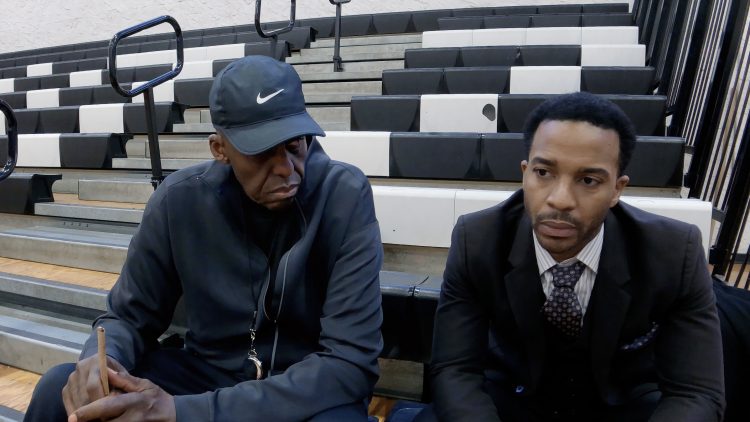
    Bill Duke as Spence and André Holland as Ray Burke in High Flying Bird, directed by Steven Soderbergh. Photo by Peter Andrews

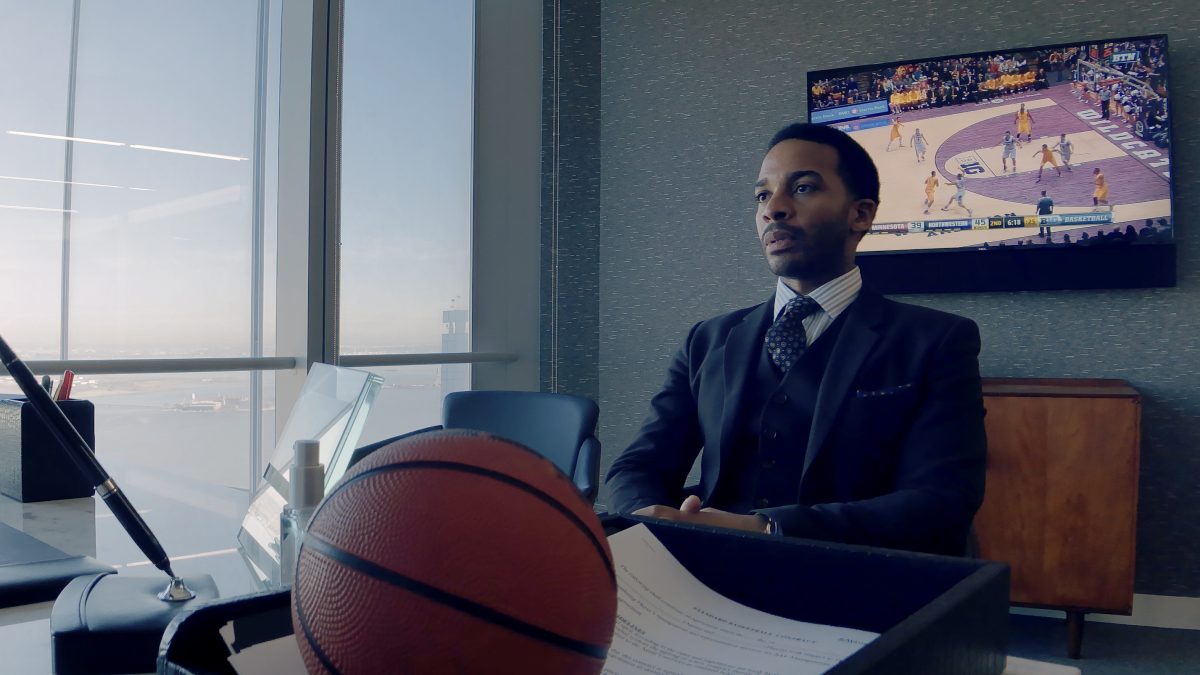
    Taking place 25-weeks into an NBA lockout, High Flying Bird follows agent Ray Burke (Andre Holland) as he navigates the tricky world of negotiations between the team owners, players union repped by Myra (the great Sonja Sohn), and the networks carrying the games. He has his own self-interests in the lockout ending. He represents first-round draft pick Erick Scott (Melvin Gregg) who is struggling as his contract to the New York team — actually team names are never said — is in purgatory during the lockout.

    McCraney’s screenplay gives away that he began as a playwright as most scenes play out as long conversations or speeches that seem meaningless — until they’re not. Truly, this is a masterful screenplay that’s already in the running for one of the best of the year. He weaves multiple ideas and actions and motivations together seamlessly without giving anything indication of where it’s all doing until he wants you to know.

    Ray is always thinking. Holland’s portrayal of the smart and calculating sports agent is as slick as George Clooney’s Danny Ocean. It’s important because Ray is just as sneaky. Even though it doesn’t look like it on the surface, High Flying Bird is a heist movie just like the Ocean’s Trilogy or Logan Lucky. But instead a heist of money, this movie follows the heist of an idea. Or, should I say, a heist and a reverse heist.

    High Flying Bird
    Melvin Gregg as Erick Scott and Zazie Beetz as Sam in High Flying Bird, directed by Steven Soderbergh. Image by Steven Soderbergh/Netflix

    The thought that the NBA — or any professional sports league — takes advantage of its largely black players isn’t new. “They invented a game on top of a game,” as Ray’s mentor Spencer (Bill Duke) says referring to basketball turning from a game to a business. However, Ray is playing the game on top of the game on top of the game. Another person who is playing the system for their own game is Ray headstrong assistant Sam (Zazie Beetz giving a movie star performance).

    The brilliance of High Flying Bird is that all the pieces on the board and their roles — that also include Erick’s rival Jamero Umber (Justin Hurtt-Dunkley), his mom/manager Emera Umber (Jeryl Prescott), New York team owner David Seton (Kyle MacLachlan), and Ray’s boss (Zachary Quinto) — aren’t revealed until the final act where the mastermind reveals that everything that happened was in his plan all along.

    Thanks to the screenplay — a structural and thematic marvel — High Flying Bird manages to be a timely exploration of our political moment without straying too far from its main plot. Not only that, it’s as entertaining to watch as a stylish heist thriller. Soderbergh does his usual strong work, but if Tarell Alvin McCraney wasn’t already on your radar he should be now. He’s the real star.


    ADVERTISEMENT

    More movies, less problems


    Hey! I’m Karl. You can find me on Twitter and Letterboxd. I’m also a Tomatometer-approved critic.

    💌 Sign up for our weekly email newsletter with movie recommendations available to stream.


    ADVERTISEMENT