Tag: Octavia Spencer

  • ‘Luce’ movie review — An American (dream) crime story

    ‘Luce’ movie review — An American (dream) crime story

    Luce follows a mystery surrounding a small town’s golden child and him and his parents’ run-in with a teacher bent on his demise. 

    30-second review: Luce is so successful because its story has a clear message and point-of-view it wants to communicate, but director Julius Onah presents it in a completely fresh and original way. Though at its core it’s an emotional family drama, it plays more like a psychological thriller — and sometimes horror. 

    Its twisting plot sometimes gets in the way of its social commentary, but overall Luce is an unpredictable and extremely entertaining exploration of the morals that we built our country on. Plus, Kelvin Harrison Jr. gives an Oscar-worthy performance — he’s a star on the rise.

    Where to watch Luce: Now playing in theaters. 

    Full review below ?

    You’re going to need to suspend disbelief a bit when watching Luce. Not because the world it takes place is any different than ours — it is our world and country — and not because the story is that ludicrous. It’s just clear that the story and characters are designed to deliver a message. An extremely timely message in our polarized political moment. And while many movies have dealt with the strained race relations in our country, Luce is more complex.

    Luce (Kelvin Harrison Jr. following up his breakout in It Comes at Night) is the perfect American success story at his high school in the picturesque suburbs of Arlington, Virginia. Not only is he the captain of the track team, the valedictorian of his class, and star of the debate team, it seems that almost everyone in the school adores him — administrators, teachers, and students alike.

    However, it wasn’t always easy for Luce. We learn that he was adopted from war-torn country Eritrea by white parents Amy (Naomi Watts) and Peter (Tim Roth) Edgar who had the tough rehabilitating the former child soldier. And though they often refer to how rough his childhood and upbringing was, they look at him with pride over his accomplishments.

    There is one person that doesn’t completely buy Luce’s charisma and agreeable demeanor — and trust me when I say Harrison makes you fall for Luce. His American History teacher Harriet Wilson (Octavia Spencer doing her best work in years) is wary of him, especially after reading an essay where he defends African writer Frantz Fanon and his call to combat colonization with violence. To make matters worse, Ms. Wilson searches Luce’s locker and finds a brown bag filled with powerful fireworks. 

    She takes them to Amy who has to decide whether to confront her son or hide that she knows about their existence in the first place. She decides to hide them in a cabinet in their kitchen and hold a confrontation for another time — or never. However, in the twisting narrative of the film, the fireworks are quickly discovered by Luce, which sets off a chain of confrontations and deceptions and moral quandaries ranging in themes from tokenism, race, class, sexuality, nature versus nurture, and even more.   
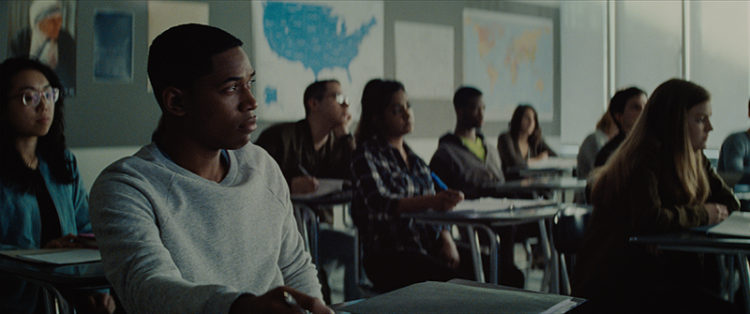
    Luce movie
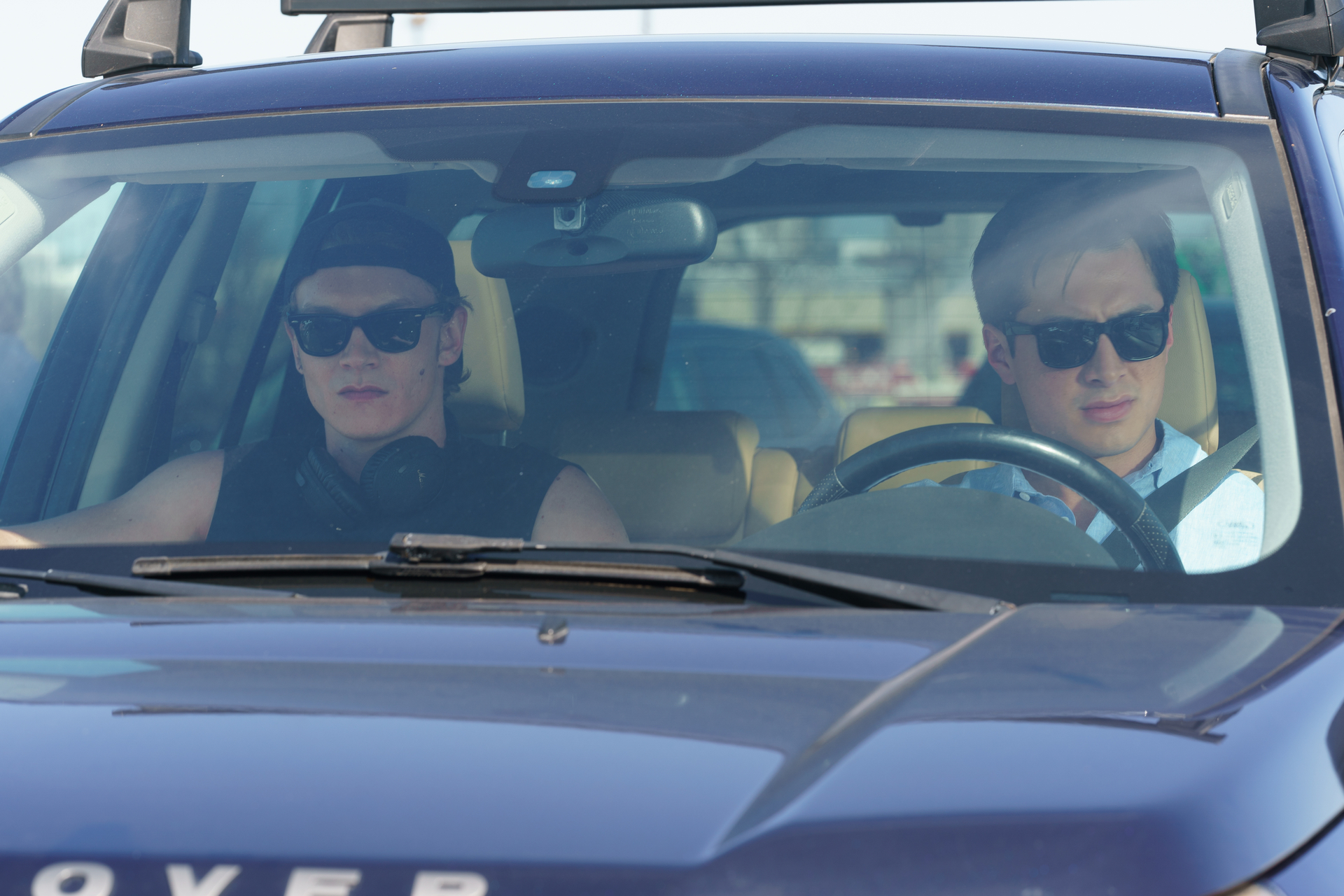
    Kelvin Harrison Jr. in Luce. Credit: NEON.

    Luce operates on multiple levels at once. At the center, there is this central mystery around Luce. How genuine and harmless is he? Is he predisposed to violence because of his background? Did he know about the fireworks? But the discourse runs so much deeper than that. Every character is dealing with some struggle that tests the very fabric of our society. If it sounds dramatic, it is. But it’s never overwrought or sentimental. 

    Though it may seem a bit heavy-handed with its themes and message, that’s the point. The movie is designed to make you question the characters and your loyalty to them. In one magnificent scene, Luce indirectly confronts Ms. Wilson with his knowledge of the fireworks and their discovery. Harrison — who is truly brilliant and Oscar-worthy — makes you question Luce’s motivations by making his delivery both sincere, but with a sinister tinge that is genuinely terrifying. With a few changes in the plot, Luce could easily have been a horror movie. 

    That’s the brilliance of Julius Onah’s direction. He doesn’t allow the movie to be constrained by any one genre as he switches perspectives between Amy, Luce, and Ms. Wilson. Even more, he gives Watts, Harrison, and Spencer room to dive into each of their characters to the point that each feels so lived in, even when the plot gets more convoluted and staged — it is based on a play after all.

    I can’t understate how thrilling it is to watch Luce. You’re kept guessing at every moment. In one scene late in the movie, a character for one second breaks their usual demeanor for a split second in a way that is both endearing and completely terrifying. There are more of those moments throughout. Moments where you don’t know whether to laugh or cringe. If I was watching this on stage, I would applaud. Luce is made of those brilliant moments. Be ready for a ride. 


    ADVERTISEMENT


    More movies, less problems


    Hey! I’m Karl. You can find me on Twitter and Letterboxd. I’m also a Tomatometer-approved critic.

    💌 Sign up for our weekly email newsletter with movie recommendations available to stream.


    ADVERTISEMENT


  • 2018 Oscar Predictions: Supporting Actress

    2018 Oscar Predictions: Supporting Actress

    Best Supporting Actress is probably the most competitive acting category at the Oscars, even though Allison Janney has emerged as the frontrunner.

    Best Supporting Actress at the Oscars this year is a battle of the TV titans. Laurie Metcalf (Lady Bird), an Emmy winner for Roseanne, and Allison Janney (I, Tonya), an Emmy winner for The West Wing and Mom, have been going head to head all season. Metcalf essentially swept the critics’ awards, but once the televised awards came, Janney started winning. However, I, Tonya has been a divisive movie. The fact that it couldn’t crack Best Picture or Best Orignal Screenplay is evidence of that. On the other hand, Lady Bird is a Best Picture frontrunner, and can even pull off a win.


    However, Janney has the more traditional scene-stealing Oscar role in the vein of Mo’nique in Precious or Melissa Leo in The Fighter. Though, Metcalf certainly has winners who have had performances similar to hers — Patricia Arquette in Boyhood. While Janney’s performance is bigger, Metcalf has her moments and comes off more empathetic. I think it’s more of a tossup than people think.

    There isn’t much room for an upset, but if there was one it could come from one of two contenders. Mary J. Blige (Mudboundhas been the most consistent nominee along with Janney and Metcalf. Though she hasn’t won anything, she would be a way to honor Mudbound, which was certainly popular based on nominations, and she was also nominated for Best Original Song, which gives her added visibility. However, that could also hurt her chances since voters have another category to honor her.


    Lesley Manville (Phantom Threadwas one of the most surprising nominations in any category. And Phantom Thread overperformed, including nominations in Best Director and Best Picture. She could pull a Marcia Gay Harden when she won Best Supporting Actress for Pollack without any major nominations.

    At this point, I’d still give Janney the edge. She won all the right awards, is beloved in the industry, and is campaigning. However, I, Tonya is divisive and her character is truly an antagonist with no redeeming qualities. Even Mo’nique had a redemption scene. Plus, Lady Bird is going to be a popular movie at the Oscars. It’s going to be a lot closer than most people think.

    Check out all our 2018 Oscar Predictions!

    Current Predictions (2/1/18):

    1. Allison Janney, I, Tonya
    2. Laurie Metcalf, Lady Bird
    3. Mary J. Blige, Mudbound
    4. Lesley Manville, Phantom Thread
    5. Octavia Spencer, The Shape of Water
  • The Shape of Water review — Sally Hawkins gives the performance of a lifetime

    The Shape of Water review — Sally Hawkins gives the performance of a lifetime

    The Shape of Water is a beautifully crafted story by master filmmaker Guierrmo Del Toro, but lacks the emotional depth to make it great.

    Love is love, even if it’s between a human woman and an amphibian man. That’s the message that Guierrmo Del Toro seems to be trying to get across with his newest movie The Shape of Water, a modern fantasy romance during the height of the Cold War. Like his last film Crimson PeakThe Shape of Water is presented as a fairy tale and is stylistically told as such. There are even moments where it seems like the image on screen could be a page in a picture book. However, like a fairy tale, his delivery of this message is a bit on the nose. But that isn’t anything new for Del Toro.


    In early 1960s Baltimore, Elisa Esposito (Sally Hawkins) lives a routine life. When she wakes she changes over the calendar, puts eggs on the stove to boil, makes her lunch for the day, and of course masturbates in the bath. You know, routine. However, Elisa isn’t exactly a normal woman. She is mute. But she doesn’t let that fact crush her spirit. She’s a lively woman who enjoys conversation with her neighbor Giles, an advertisement artist who has let go from his company because of some type of addiction that we don’t quite learn of. Elisa is also special because she works nights cleaning at the Occam Aerospace Research Center, a top-secret government facility that recently acquired an asset that they believe may be the key to besting Russia at the space race.

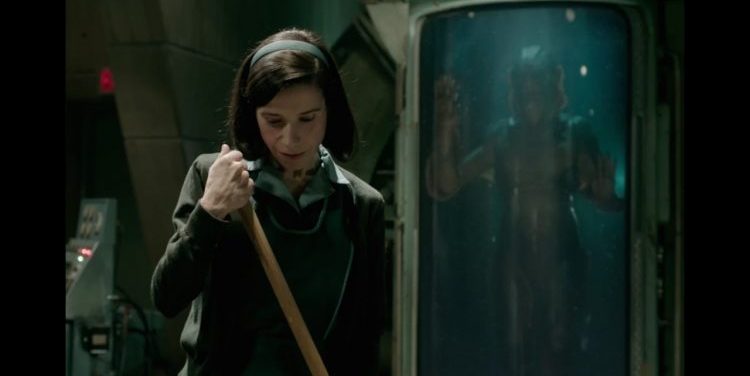
    This asset is a mysterious creature that was found in the waters of South America. He is simply referred to as Amphibious Man (Doug Jones) in the credits, but that doesn’t quite cover what he is. What is clear is that Elisa is taken aback by him, especially when the head of the team researching the creature, Colonel Richard Strickland (Michael Shannon), is injured by him. As time goes on, Elisa begins sneaking into the room that contains the creature to feed him hard-boiled eggs and play him music off her portable record player. Over time, the creature and Elisa begin to bond. She begins to see the humanity in him, as does Dr. Robert Hoffstetler (Michael Stuhlbarg, he’s having a great year between this and Call Me By Your Name), who might have ulterior motives for the creature. As Strickland becomes more hostile towards the creature, Elisa decides to recruit the help of Giles and her friend and co-worker Zelda (Octavia Spencer, as charming as ever) to help her break him out of the facility.

    Del Toro is one of the finest visual filmmakers working today and The Shape of Water is a perfect example of that. The movie is carefully designed to take place within the period, but also have a surreal quality to it with its costumes and sets splashed in a sea-foam green color tone. Del Toro knows how to heighten reality to fit the story he’s trying to tell by having every department fully committed to his vision. Credit also has to be given to cinematographer Dan Laustsen, who shot the film like a cold war movie, with a storybook flare.

    However, as engaging as the story is, I never felt truly immersed. Part of the problem with Crimson Peak was its general emotional coldness. None of the characters had strong arcs that you could become invested in. The same problem happens in The Shape of Water. There are glimpses of emotional undercurrents. Giles, a closeted gay man, has taken an interest in a waiter at a local diner and often drags Elisa along to see him. And while that storyline comes close to becoming an emotional arc, a pivotal scene is cut right before it really says anything and then the storyline is dropped.

    Sally Hawkins, though, delivers a lot of heart to the movie. She’s an emotional powerhouse without speaking a single word. In one scene, she forces Giles to repeat everything he’s saying to ensure he’s understanding. And though Jenkins pretty much deadpans the translations, the pain in Hawkins’ face is enough to carry the emotional heft of the scene. Her relationship with the creature isn’t exactly built up or earned. It feels like it’s rushed for the sake of the plot. But again, Hawkins makes me believe that she truly has fallen for him. She’s sensational. The same goes for Jenkins. He portrays his character’s loneliness with incredible restraint and though the script doesn’t give him the chance to build much of an emotional arc, he adds a lot of depth.


    And even though I was ultimately disappointed in my lack of emotional investment in the movie, Del Toro is a masterful storyteller. Elisa and Giles both bond over their love of old Hollywood musicals. And that imagery is often invoked with Giles and Elisa sitting on the couch mimicking the movie they’re watching on screen or when at one point Elisa imagines her and the creature performing a classic black-and-white musical number. Like all of his films, The Shape of Water has a quirky tone to everything, even when it drifts into the horrifying. That tone is also aided by Alexander Desplat’s playful score, which is certainly one of the most memorable elements of the film.

    For a movie about a creature of the deep, The Shape of Water keeps everything surprisingly surface level. It feels like what you get on screen is all that you are given. Still, Guierrmo Del Toro is such a masterful filmmaker that he is able to make the story and visuals interesting enough to keep audiences in their seats. However, the movie left me cold with nothing to attach to. It is the visual feast that his past projects were, certainly. But the emotional heft is put on the shoulders of its cast. In particular, Sally Hawkins and Richard Jenkins, who both deserve Oscar nominations for their work. The Shape of Water is definitely worth a watch for its story and filmmaking prowess.

    ★★★½ out of 5


  • Hidden Figures review — One of the most enjoyable biopics in years

    Hidden Figures review — One of the most enjoyable biopics in years

    Hidden Figures delicately balances a racial drama with a biopic while also telling the story of the space race. The result is one of the most delightful movies of the year.

    It takes the right kind of movie to get a Thursday night crowd actually cheering in the theater. Well, Hidden Figures is that kind of movie. Crowdpleasers aren’t hard to find in our current cinematic environment. It seems that Hollywood lives off of them. Financially, they do. However, good crowd pleasers are a rarity. Last year saw The Martian was the perfect example. You rooted for the success of the main characters and wallowed in their defeats. But in the end, you were up off your seat cheering at the photo finish. However, Hidden Figures is a more complex story than The Martian. In addition to being a true story, director Theodore Melfi had to carefully balance a biopic with a race drama, all the while telling the story of the space race with Russia.

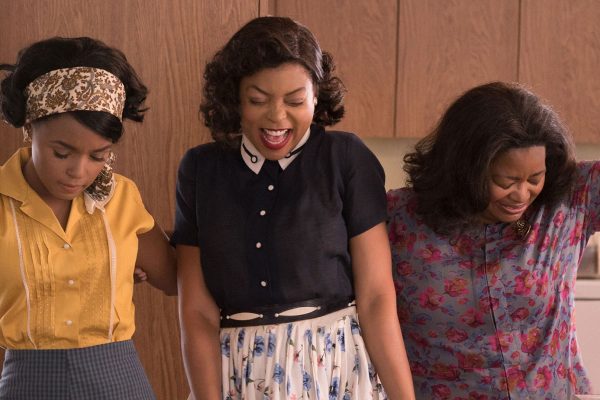
    Hidden Figures tells the story of three unsung heroes of NASA. Dorothy Vaughan (Octavia Spencer) is the informal supervisor of the West Area Computers Division, which is a group of thirty black women doing the calculations for the spacecrafts. Two of those women are Mary Jackson (Janelle Monáe), an aspiring engineer, and mathematician Katherine Goble (Taraji P. Henson), who is the center of our story.


    The movie opens with the three ladies stranded on the side of the road after Dorothy’s car breaks down. A cop comes to investigate and becomes distracted by the fact that the ladies work for NASA. This scene makes two things clear. First, it reminds us of the racial tensions of our society at the time. Second, it reveals that no matter what, the space race is at the front of everyone’s mind. Katherine is reassigned to the Space Task Group, which does the calculations for the all the shuttle missions. However, she finds that she is the only female and only person of color working in the division. This leads to animosity between her and her coworkers. They bring in a coffee pot for colored people in a heartbreaking instance. More subtly, Katherine’s bright patterned dresses clash against the uniform white button downs and black ties worn by everyone else in the department.

    However, this animosity is demonstrated beautifully and heartbreakingly in a single scene. The building that contains the Space Task Group doesn’t have a colored bathroom. So, she has to run in her heels and skirt half a mile to the West Area Computers division with her work in hand. She works while she uses the bathroom, then runs back to her office. This is played for laughs the first few times. It is even set to Pharrell’s song “Runnin’.” However, on a rainy day, this simple injustice causes Katherine to snap. Taraji P. Henson is an actress with a lot of power behind her, and she lets it go in this scene. But what makes it so effective is that Melfi builds up to it. He earns that scene and Henson knocks it out of the park. It may be emotionally manipulative filmmaking, but to the movie’s credit, it essentially asks you to buy into it emotionally and you allow it.

    More than anything, these women just want to work and do what they love. They want to have the opportunity to prove themselves. Allison Schroeder and Melfi’s screenplay, which they adapted from the book of the same name, does just that. It places the lens of the movie squarely on these ladies. It filters our society through their experiences. It’s one thing for a biopic to tell a story. Hidden Figures is the rare biopic to show me a real person.


    The movie tells the story of unsung heroes and it makes it a point to remind you of the impact of both their work and the work. It has a reverence for its subjects that is so vital. Part of that is thanks to the incredible performances from the cast. Kevin Costner does great work as Al Harrison, the director of the Space Task Group. He is a champion for Katherine and often helps her break the barriers that are systematically set in place. Jim Parsons is also great outside his typical mold as the head engineer Paul Stafford. Kirsten Dunst and Mahershala Ali, who is destined for an Oscar for Moonlight, also give great performances. Glen Powell gives a charming performance as John Glenn, the first American to orbit the Earth.

    However, it’s the three leading ladies who carry the movie on their shoulders. Octavia Spencer does her usual great work as the forward-thinking and motivated Dorothy Vaughn. Breakout Janelle Monáe is a scene stealer for much of the movie and has two scenes that would have made excellent Oscar clips. But Taraji Henson gives one of the best performances of the year as Katherine Johnson. She gorgeously emotes in two incredible scenes that are high points for the movie. Though, what I most appreciate about her performance is her internal struggle of suffering from injustices while trying to just do her the best work she can do.

    Is Hidden Figures one of the best written or directed movies of 2016? No. But is it one of the most satisfying and enjoyable movies? Yes! Hidden Figures will hook you from the very first time you see Taraji Henson, Janelle Monáe, and Octavia Spencer grace the screen and not let go until the last credit rolls. Watching Hidden Figures is perhaps one of the best times I had in the theater recently. It doesn’t just emulate a crowd pleaser, it’s the definition of a crowd pleaser.

    ★★★★ out of 5