Tag: TIFF 2023

  • ‘How to Have Sex’ is the best movie of the year | movie review

    ‘How to Have Sex’ is the best movie of the year | movie review

    How to Have Sex follows a trio of friends on a drunken debauched island holiday that leads to trouble


    How to Have Sex subverts the 2000s-era raunchy sex comedy to deliver a sobering holiday drama with a melancholic realistic edge. Despite being set in the present, it has a nostalgic quality as it mines the many complicated feelings we experience as we come of age. Isolation, joy, anxiety, hope, fear, longing. As the movie takes its dark turn, it becomes even more piercing in its exploration of girlhood. With Mia McKenna-Bruce‘s heartbreaking performance as its strong beating heart it is much more than another teen movie.

    How to Have Sex is now playing in limited release.

    The plot and structure of Molly Manning-Walker’s How to Have Sex closely resembles a 2000s-era raunchy sex comedy where the goal is to get laid — think Superbad or The Hangover (or more recently Bottoms, which subverts the genre). But this is no off-the-wall broad comedy — though there are certainly hijinks, jokes, and drinking. Lots and lots of drinking. Manning-Walker grounds the movie in realism to the point that it’s essentially a mumblecore drama where you’re slipping in and out of very specific moments in the character’s lives. The effect is dizzying, entertaining, terrifying and in equal parts uplifting and heartbreaking — the best movie of the year so far.


    ADVERTISEMENT


    When we first meet our trio of friends Tara (Mia McKenna-Bruce), Skye (Lara Peake) and Em (Enva Lewis) they are the picture-perfect Essex messes — think Love Island: High School Edition. They’re boisterous, brash and have a weekend away with no parents in the Greek party town of Malia. Tara seems like the firebrand of the group and never shirks an opportunity to “woo” at the slightest luxury of the trip. However, we quickly learn that behind their bravado the girls are just insecure teens.

    Manning-Walker captures their debaucherous nights out like any good party movie with thumping bass and flashing neon lights giving way to the girls throwing up after drinking from a comically large fishbowl. But what it quickly sets up is the caring dynamic between the trio — something that we’ll see tested through the movie. As much as our first impression portrays the girls as wildly carefree to a fault, we’re able to empathize with their youthful joy. It’s something that Manning-Walker captures so vividly.


    ADVERTISEMENT


    It’s something that Tara particularly exudes. Behind all her surface confidence is her insecurity around being a virgin, something Skye and Em are working to change. Which is why when they meet their balcony neighbors Badger (Shaun Thomas) and Paddy (Samuel Bottomley) they see the opportunity for Tara. It’s what careens the story from joyful friendship dramedy to something darker. However, How to Have Sex keeps much of its comedic edge. “Romeo, Romeo, for where is you?” Skye says when they first spot Badger on the balcony neighboring theirs. 

    Where she felt like an assured woman at the start of the movie, Tara becomes a shy girl when she meets the new group. It doesn’t help either that Skye clearly likes Badger and is jealous of the sweet attention he gives to Tara — who would have thought a man with his name tattooed across his chest would be so swoon-worthy! Meanwhile, Em hits it off with their queer friend Amber (Laura Ambler) adding to Tara’s isolation. The dynamic feels so familiar and relatable. Like being at a party you don’t want to be at. Manning-Walker so deftly captures the feeling with the bright dance music making way to a drowning high-pitched buzzing and the bright neon lights becoming blinding. It’s an assault on the senses. Like a cinematic anxiety attack. 


    ADVERTISEMENT


    It puts us firmly in Tara’s point-of-view so when things turn from uncomfortable to downright trouble we’re right there with her. We feel what she’s feeling. At the center of the story are Tara’s relationship dynamics, particularly with Skye, Badger and Paddy. And they all represent different facets of the coming-of-age trope. Though Skye is her best friend, she tends to project her own insecurities onto Tara. In a drunken slip-up, she embarrassingly reveals to the group that Tara is still a virgin. While she shrugs it off as an accident, it’s clearly a sleight. Paddy is a classic f-boy — who hilariously gets an unfetching tattoo on the trip (I don’t want to know how) — who constantly negs Tara but sees himself as a hero. In opposition, Badger makes her feel nothing but comfortable. It’s that dichotomy of gender dynamics that makes How to Have Sex profound.

    How to Have Sex feels like a coming-of-age classic-in-the-making. Despite being set in the present, it has a nostalgic quality as it mines the many complicated feelings we experience as we come of age. Isolation, joy, anxiety, hope, fear, longing. As the movie takes its dark turn, it becomes even more piercing in its exploration of girlhood. Anchored by Mia McKenna-Bruce‘s masterful heartbreaking performance, the movie finds a strong beating heart making it so much more than another teen movie. While it’s not a message movie, it reflects hard truths in the world — and the beautiful things we find to combat them — to remind us we are not alone at the party.


    ADVERTISEMENT


    More movies, less problems


    Hey! I’m Karl. You can find me on Twitter and Letterboxd. I’m also a Tomatometer-approved critic.

    💌 Sign up for our weekly email newsletter with movie recommendations available to stream.


    ADVERTISEMENT

  • ‘Dream Scenario’ puts Nicolas Cage in an internet-age nightmare | review

    ‘Dream Scenario’ puts Nicolas Cage in an internet-age nightmare | review

    TIFF 2023 | A woefully average middle-aged professor garners overnight fame after he appears in the entire world’s dreams in Dream Scenario

    Dream Scenario is exactly how Nicolas Cage should be spending his career: on bonkers wild swings like a comedic version of A Nightmare on Elm Street where Freddie is a normal average guy and his weapon is doing nothing. Hilarious, relevant and wonderfully weird, it is a reflection of the internet age, cancel culture and quickly our dreams for fame can turn into a nightmare.

    Dream Scenario premiered at the 2023 Toronto International Film Festival. A24 is distributing. Watch the trailer here.

    You might also like: The Menu, I’m Thinking of Ending Things, The Worst Person in the World

    Dream Scenario is like A Nightmare on Elm Street if dream demon Freddie Krueger was a boring average middle-aged man and instead of knives for hands his weapon was doing absolutely nothing. That’s the new high concept Norwegian director Kristoffer Borgli explores with his follow-up to his breakout film Sick of Myself, which satirically skewered social media influencer culture. He once again sets his sights on the vanity (and memeification) of the internet age with a simple conceit: what would happen if one guy started appearing in everyone’s dreams? And I mean everyone. 

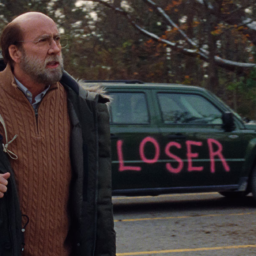
    That guy is woefully unremarkable zoology professor Paul Matthews. His particular brand of awkward schlubby-ness that borders on creepiness could only be achieved by Nicolas Cage. During lunch with a former university classmate, where he attempts to get co-credit for an idea that is publishing a book, she asks, “Well how far along are you?” He retorts, “It’s just in the idea stage.” That’s how Paul’s life has been defined so far. What he’s not done. However, he’ll quickly find that “doing” might also be a nightmare.


    ADVERTISEMENT


    The following day, Paul starts to have weird encounters — his students whispering about him during class, a waitress having intense deja vu when he walks in, and an old flame mentioning he was in her dream the other night. While these all seem like coincidences, he starts to discover that he’s been in many people’s dreams… perhaps everyone’s. He finds his Facebook messages flooded with people telling him that he invaded their dreams. What was he doing in them? Absolutely nothing. As he hilariously fields questions from his students about their Paul dreams, they all have different conceits — running from a monster, trapped by alligators, an earthquake. What they have in common is Paul does nothing. He just stares or casually walks by. His aggressively normal demeanor — “that middle-aged bald guy with glasses” — is a hilarious juxtaposition to that absurd dream logic. 

    The movie’s plot and imagery evokes comparisons to Charlie Kaufman’s Eternal Sunshine of the Spotless Mind and I’m Thinking of Ending Things or David Lynch’s Twin Peaks: Fire Walk With Me. The pitch-black humor that Borgli achieves is so satisfying, especially when delivered by a self-aware tactician like Cage. Paul is woefully uninteresting in a way that only Cage, with his self-aware campy mannerisms and deadpan delivery, can make endearing. But Paul isn’t necessarily a hero, even if we are in some ways rooting for him and his overnight fame. 


    ADVERTISEMENT


    Like any person suddenly thrust into the spotlight, Paul strives to take advantage of his newfound fame to get momentum on his book on ant intelligence that he’s dubbed “ant-elligence.” When he’s courted by a creative agency (headed up by Michael Cera in a cheeky cameo) to manage his new public persona they pitch him on deals ranging from Sprite — “we’ll get everyone to dream of you with a Sprite” — to Obama — “one idea was to have Obama dream about you.” His meteoric rise feels akin to the sudden internet stardom that so many people achieve for doing essentially the bare minimum or in some cases absolutely nothing — memes like “Alex from Target” or “Saltbae” come to mind. It’s clearly Borgli’s intention considering what’s next.

    Suddenly, things take a turn for the worse and Dream Scenario takes a turn for the better (and the spooky). Instead of the benign creep standing idle while terrible nightmarish things happen to the dreamer, Paul becomes the nightmare. Much like Freddie Krueger in A Nightmare on Elm Street, Paul slashes, stabs and bludgeons his way through his hapless victims. The biggest difference is Paul is a person in the real world having to face the consequences of his actions (or lack thereof). From there, the movie turns into a send-up on cancel culture complete with insincere tear-ridden apologies, a hate-fueled internet mob, and, of course, a sorta-kinda-not-really redemption.


    ADVERTISEMENT


    Like Borgli’s breakout film Sick of Myself, Dream Scenario loses some of the (nightmare) fuel that drives it for much of its runtime. He creates this wonderfully off-kilter world with such ease and crafts an entertaining story to go along with it, but he’s not necessarily interested in taking things a step further. The movie is a reflection of our world rather than a critique of it and the satire is maybe better defined as parody — like a comedy sketch turned into a feature-length film. Despite that, and an odd third act turn that perhaps jumps the shark, you never fall out of the trance it puts you in.

    Even if it is driven by observation more than commentary — one hilarious turn after Paul’s cancellation is the alt-right and France standing as his last supporters — Dream Scenario is a satisfying excercise in the absurd that blessedly doesn’t feel self-important about what its chiding. It’s what I loved (and other’s despised) about The Menu. Like a dream you might forget the exact details of it but you wake up knowing the emotions you felt — and Dream Scenario will run you through the gamut.


    ADVERTISEMENT


    More movies, less problems


    Hey! I’m Karl. You can find me on Twitter and Letterboxd. I’m also a Tomatometer-approved critic.

    💌 Sign up for our weekly email newsletter with movie recommendations available to stream.


    ADVERTISEMENT


  • ‘Origin’ traverses time to investigate the roots of oppression | review

    ‘Origin’ traverses time to investigate the roots of oppression | review

    TIFF 2023 | Origin follows an author’s pursuit of the roots of oppression against the backdrop of her own personal struggles

    In adapting the nonfiction book Caste: The Origins of Our Discontents by Pulitzer Prizer winner Isabel Wilkerson, Ava DuVernay set out to unpack a complex topic that recontextualizes our conception of race and oppression that spans centuries and societies. It’s no small feat, especially for a book as well-researched and intellectual as Wilkerson’s. How does she tackle something this epic in scale? She shrinks it down to its smallest element: humans. Instead of following the idea, she follows Wilkerson’s journey (played by Aunjanue Ellis-Taylor) to understand it — from present-day Florida to the Jim Crow South to late 19th century India. But first, DuVernay wants us to understand Isabelle herself.


    ADVERTISEMENT


    Origin begins in the shadow of the murder of Trayvon Martin (Miles Frost), which DuVernay sensitively recreates through the chilling 911 call that stunned the nation. Like all of us, the story rocks Isabelle who is courted by a former colleague to write an article on the shooting. However, we see that Isabelle’s mind is elsewhere. Her mother (Emily Yancy) makes the decision to move into an assisted-living facility and while Isabelle’s husband Brett (Jon Bernthal) supports her, she feels guilt and regret. In these early scenes, we often see Isabelle framed against the sky (the film’s stunning cinematography is by Matthew J. Lloyd) like she’s floating untethered from the ground. She is at an impasse.

    That’s when the unthinkable happens. Losing her husband and mother in quick succession throws Isabelle into grief. Poetically translated onto the screen to helps us understand how an incident with a plumber (Nick Offerman) sporting a “Make American Great Again” hat throws her back into work. Using her grief and anger as a motivator, she’s dives head-first into her work trying to find answers to impossible questions. But that insatiable appetite for knowledge and eye for patterns is nothing short of gripping to watch. Like the greatest journalism movies — Spotlight, All the President’s Men — Origin moves with swiftness driven by an urgency to solve the mystery. However, unlike those movies the mystery is at the very core of our world.


    ADVERTISEMENT


    To help us fully understand Isabelle’s thoughts, we hear excerpts from Caste played over reenactments of three historical threads. In the first, we follow German man August (Finn Wittrock) and Jewish woman Irma (Victoria Pedretti), who defied rule in Nazi-era Germany. From there, we connect with a pair of Black anthropologists (Isha Blacker and Jasmine Cephas-Jones) who after witnessing the rise of the Nazi party in Germany embed themselves in the Jim Crow South to investigate the racial divide. Lastly, in an Eat, Pray, Love-like trip to India, Isabelle uncovers the caste system and subordination of the Dalit people.

    Each of these threads weave into a tapestry that form Isabelle’s argument: racism and oppression are not synonymous. Oppression exists with or without race. By analyzing each of these disparate systems of oppression, she supports her argument. Cycling between these asides, scenes from Isabelle’s past, and her present research, Origin pieces together a puzzle of our world and Isabelle’s place in it.


    ADVERTISEMENT


    For some, Origin may come off as pedantic. In communicating Wilkerson’s work for a broad audience, DuVernay over-explains herself. Taken as each individual element, the movie could feel more like an issues documentary than an effective narrative. But taken as a sum of its parts, Origin is a dazzling epic of large ideas and the smallness of those affected by them. Two moments emotionally drive the movie’s real purpose. In one, a small Black boy celebrating a win with his little league team is denied entry to a whites-only pool. Eventually, the lifeguard allows him to enter the pool on the condition he remains on a pool float and doesn’t touch the water. As his white teammates look on with confusion the lifeguard moves the boy around the pool on a float. Like the shots of Isabelle against the cast blue sky, the boy himself is floating in space. Untethered and unable to move unless moved.

    The second moment is the movie’s watershed moment — Ellis-Taylor’s most exhilarating moment as an actress. As Isabelle, thousands of miles away in India, speaks on the phone to her ailing cousin and confidant Marion (Niecy Nash-Betts in a stellar supporting turn) she asks her to “cover me.” For me, It invoked “I’ll Cover You,” a song from musical Rent where a character and his lover promise to protect each other. In that emotional conversation on distant two points on the globe, Isabelle finds her grounding. Origin, for all its sweeping thoughts, can be simply distilled to that one very human idea. Connection, to the past or our present, tethers us to our humanity. An experience that is as universal as the connection between two people.


    ADVERTISEMENT


    More movies, less problems


    Hey! I’m Karl. You can find me on Twitter and Letterboxd. I’m also a Tomatometer-approved critic.

    💌 Sign up for our weekly email newsletter with movie recommendations available to stream.


    ADVERTISEMENT


  • TIFF 2023 reviews: ‘Woman of the Hour’ and ‘Shayda’

    TIFF 2023 reviews: ‘Woman of the Hour’ and ‘Shayda’

    Actor-turned-director Anna Kendrick and first-time director Noora Niasari screened their new movies at the 2023 Toronto International Film Festival

    Anna Kendrick, best known as an actress in the Pitch Perfect franchise and A Simple Favor, takes the director’s chair for the first time with her thriller Woman of the Hour. Meanwhile, first-time director Noora Niasari adapts her childhood in the drama Shayda.

    The Toronto International Film Festival runs from September 7th to 17th, 2023. Read all of our reviews from the festival here.

    Tony Hale, Anna Kendrick and Daniel Zovatto in Woman of the Hour. Courtesy of TIFF.

    Anna Kendrick is first-time director of the hour with Woman of the Hour, a taut and effective thriller

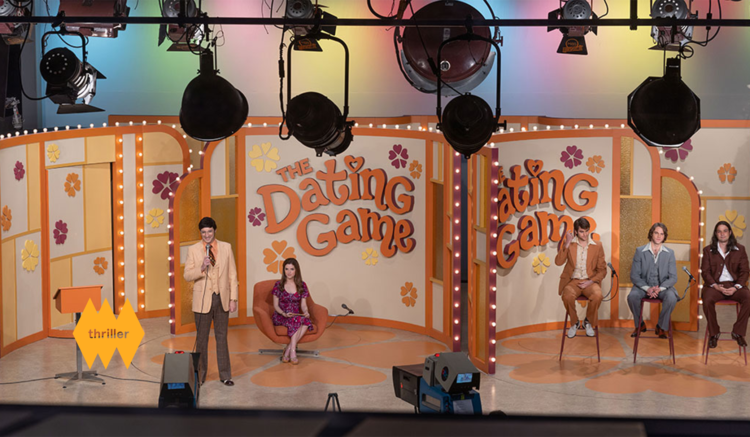
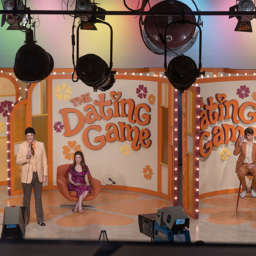
    As an actress, Anna Kendrick (Pitch Perfect, A Simple Favor) is known for her bubbly wry personality behind a thousand watt smile that oozes charisma. It makes the tense and terrifying opening sequences of her directorial debut Woman of the Hour all the more surprising. It has more in common with David Fincher’s Zodiac than any of her onscreen appearances. However, the bizarre true story of a serial killer’s appearance on 70s dating show The Dating Game is a match for her sensibilities as an actress — and apparently as a director.

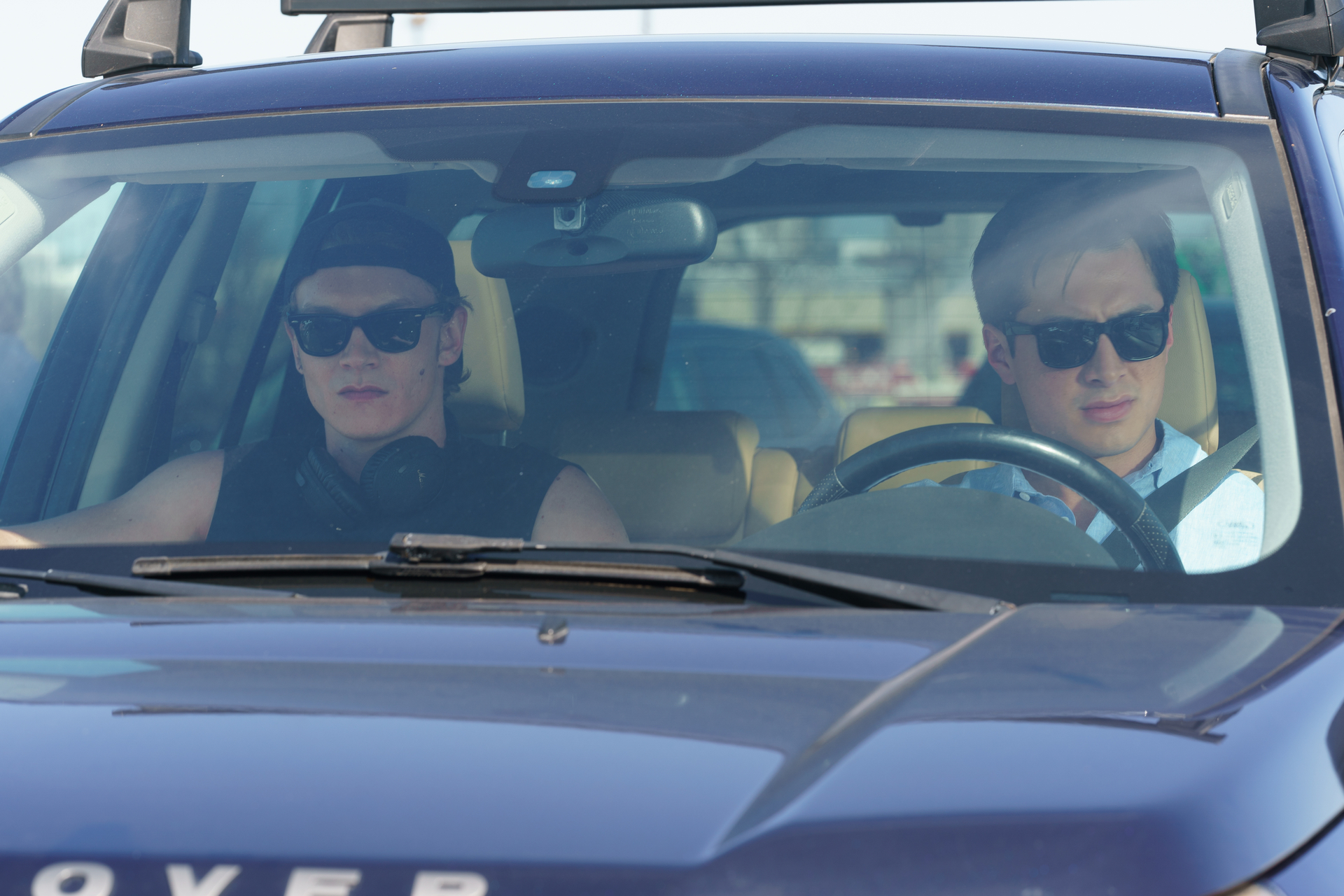
    Kendrick plays Cheryl Bradshaw, a failed actress in LA whose agent gets her onto an episode of The Match Game. Little does she know Rodney Alcala (Daniel Zovatto, Don’t Breathe), one of the three eligible bachelors she has to pick from, murdered five woman prior to his appearance. Oscillating between intense suspenseful scenes depicting Alcala’s past crimes throughout the 70s and darkly comedic clips from the show — where Kendrick gets to flash her signature wry humor — Woman of the Hour is a tight and engrossing thriller that strikes a balance between respecting the victims and faithfully recreating what transpired.

    While actors-turned-directors often take a “more is more” approach — as if they have something to prove — Kendrick has astounding control over the atmosphere, mood and pacing of the movie. She never sensationalizes any of the killings and even her directorial flourishes — a quick cut or audio dropping out — are small but effective. She allows the story to direct the style rather than the other way around. At a lean 94 minutes, Woman of the Hour is as efficient as they come but doesn’t sacrifice impact. If this movie is any indication, Anna Kendrick is going to be the director of the hour.

    Woman of the Hour premiered at the 2023 Toronto International Film Festival. Netflix acquired the film for distribution. Release date TBA.

    Zar Amir Ebrahimi and Selina Zahednia in Shayda. Courtesy of TIFF.

    Sweet and engrossing Australian drama Shayda gives Zar Amir Ebrahimi another stellar acting showcase

    Ever since seeing Zar Amir Ebrahimi in her Best Actress-winning performance in Holy Spider at the Cannes Film Festival I was fascinated by what she would do next — and she did disappoint. Australian drama Shayda takes the form of a familiar domestic violence drama in the vein of Sleeping with the Enemy or Enough but has the added element of an immigrant story. Ebrahimi plays the titular character, an Iranian immigrant living in a women’s shelter with her daughter Mona (Selina Zahednia) in 1980s Australia.

    We learn through a heartbreaking monologue where Shayda prepares to fight for custody of her daughter what drove her to finally leave her abusive husband (Osamah Sami). Ebrahimi’s performance is staggering. Rather than letting the emotion out in a watershed moment, it feels like she’s held it in so long it simple begins to seep out. So much of the success of Shayda falls on her performance that continually transforms as the movie progresses. While the subject could be overwhelming, first-time writer-director Noora Niasari, who based the story on her own childhood, relishes in the moments of joy rather than lingering on those of pain.

    While the movie doesn’t completely transform the formula of this kind of movie, the pure fact that the story is about an Iranian woman and immigrant makes it a compelling watch. Niasari explores the tension between celebrating and participating in your culture while doing something that goes against it. Shayda doesn’t offer any answers or proclamations, it simply seeks to make you feel what it is like to live in that tension. In the end, Shayda is uplifting, engrossing and heartwarming.

    Shayda is playing at the 2023 Toronto International Film Festival. Sony Pictures Classics will release the film later this year.


    ADVERTISEMENT


    More movies, less problems


    Hey! I’m Karl. You can find me on Twitter and Letterboxd. I’m also a Tomatometer-approved critic.

    💌 Sign up for our weekly email newsletter with movie recommendations available to stream.


    ADVERTISEMENT


  • ‘American Fiction’ satirically rewrites race into Hollywood | review

    ‘American Fiction’ satirically rewrites race into Hollywood | review

    TIFF 2023 | American Fiction follows a fed-up Black author who facetiously writes a “Black novel” to poke fun at media’s desire for tragic POC stories only to find himself with his most success to date

    American Fiction is an uproarious absurd comedy, uplifting family drama, and swoony romantic comedy, and all wrapped up in a hilarious crowd-pleasing satire about the stories the media deem worthy of telling about marginalized people. It’ll have you crying from laughter and then asking, “Am I the problem?” With a stellar ensemble cast anchored by Jeffrey Wright giving a career-best performance, American Fiction is one of the most-entertaining and best movies of the year.

    American Fiction premiered at the 2023 Toronto International Film Festival.

    You might also like: Everything Everywhere All At Once, Get Out

    In adapting the 2001 novel Erasure, writer-director Cord Jefferson basically delivers three separate movies. On one end, American Fiction is a Nora Ephron-esque romantic comedy about a cranky writer and the love he finds with his newly divorced neighbor. On the other, it’s a family drama about a Black family and their various personal struggles. Bridging the two is a witty comedy about the (very white) media machine and its hunger for stories about marginalized people — only if they’re sad. If it sounds like a lot, you’re right. However, through clever writing, a stellar ensemble and plot that keeps you guessing, the result is a hilarious crowd-pleasing satire that will have you nodding and laughing along in agreement, but also wondering, “Am I the problem?”


    ADVERTISEMENT


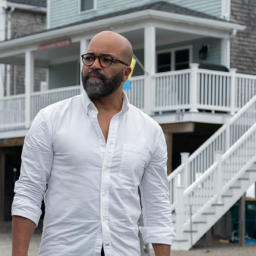
    Because while American Fiction chides the stereotypical “tragedy porn” that typically encompasses the most popular Black stories — think Oscar successes 12 Years a Slave or Precious — it also emulates them. It’s like the book that first frustrates author Thelonious “Monk” Ellison (Jeffrey Wright) about the hypocrisy. After speaking on a sparsly attended panel at a book festival, Monk walks by a packed conference hall where Sintara Golden (Issa Rae) is addressing a largely white audience about her best-selling debut novel We’s Lives in Da Ghetto. She reads a passage and it’s every bit as bad as you’d imagine it’d be — the audience eats it up.

    Things are excasserbated when Monk goes to a local bookstore looking for a copy of his book. Instead of finding it in historical fiction an unassuming teen employee guides him to the “African-American” stories section. When Monk questions him on why it’s there, he responds, “I imagine this author is Black.” Monk retorts, “The blackest thing about this book is the ink!” After his book agent Arthur informs him another publisher has passed on his newest novel for “not being black enough,” Monk faceciously writes My Pafology. As he types, the two characters Willy the Wonker (Keith David) and Van Go Jenkins (Okieriete Onaodowan) enter the room and enact the story. There’s a drug deal, shootout, missing father reveal. Everything that Monk hates about the state of Black media. He signs the manuscript Stagg R. Leigh and sends it off to Arthur to send to publishers as a “f— off.”

    They love it.


    ADVERTISEMENT


    From there, Monk deals with the fallout from the book’s success including a potential movie adaptation that a producer (Adam Brody) is circling, becoming a finalist for a literary prize that Monk is on the jury for, and a small hitch where people inadvertadly become convinced “Stagg” is a wanted fugitive on the run from the authorities (it adds to the mystique!). All the while, Monk is dealing with his kooky family — responsible doctor sister Lisa (Tracee Ellis Ross), immature gay plastic surgeon brother Clifford (Sterling K. Brown), aging mother Agnes (Leslie Uggams), and childhood nanny Lorraine (Myra Lucretia Taylor) — and potential romance with his newly single neighbor Coraline (Erika Alexander).

    If that sounds like a lot of story to balance, you’d be right. But Jefferson never loses control of any of the plotlines. The romance is romantic. The family drama is compelling. The satire is incisive. Each thread delivers its own resonant commentary that eventually layer into the thoughtful themes of American Fiction.

    While sitting on the jury for a literary prize that he’s never won — they ask him to be on the judging panel after calls for diversity — Monk and Sintara sit amongst three white authors as they debate the authenticity and worthiness of My Pafology as a story. Monk and Sintara are understandably dubious about the novel while the other three white judges proclaim, “we need to listen to more Black voices!” — all as they ignore the two in the room. To add insult to injury, one gleefully says, “I’m thrilled to read about a BIPOC man harmed by our carceral state.” Monk and Sintara can just roll their eyes. What American Fiction understands is people will pay attention to Black stories and opinions when it feels comfortable for them.


    ADVERTISEMENT


    The beauty of the movie, though, is that while it in some ways emulates the kinds of stories its criticizing, it leaves room for joy on the screen. The balance between sincerity, parody, and satire is nothing short of miraculous.

    American Fiction is packed to the brim with jokes, hijinks and gags. From Monk sting like a hardened criminal in a meeting with a film producer to sell the book’s rights or when the family arrives at the beach house to be greeted by two speedo-clad gay men making breakfast with Clifford or a montage on a Hallmark-like channel celebrating Black stories all of which are about slavery, poverty, or gangs, there’s nary a moment without something to laugh at. But within those absurd moments, there’s poignancy. In particular, Clifford confides to Monk his regret about not coming out to their father before he died. “He never knew the entirety of me,” he laments. That line neatly packages what Jefferson is trying to communicate. Monk, in another scene, observes that the media people consume about the Black experience “flatten our lives.” American Fiction tries to add color back into those stories — and it’s one of the year’s best because of it.


    ADVERTISEMENT


    More movies, less problems


    Hey! I’m Karl. You can find me on Twitter and Letterboxd. I’m also a Tomatometer-approved critic.

    💌 Sign up for our weekly email newsletter with movie recommendations available to stream.


    ADVERTISEMENT

  • ‘Unicorns’ is a glittering unlikely queer romance | review

    ‘Unicorns’ is a glittering unlikely queer romance | review

    TIFF 2023 | Unicorns follows a South Asian drag queen and Essex mechanic’s sparkling will-they-won’t-they romance of queer discovery and joy

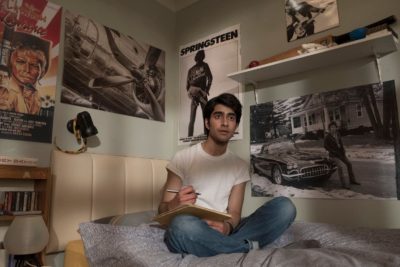
    Unicorns is a gorgeous glittering hidden gem. Full of queer life and spirit, it charmingly mines familiar tropes of queer repression and exploration to examine the unlikely relationship between a single dad and a drag queen. Ben Hardy and newcomer Jason Patel make an intoxicating pair that hold your attention with their electric chemistry from beginning to end.

    Unicorns premiered at the 2023 Toronto International Film Festival.

    You might also like: Weekend, Moonlight, Past Lives

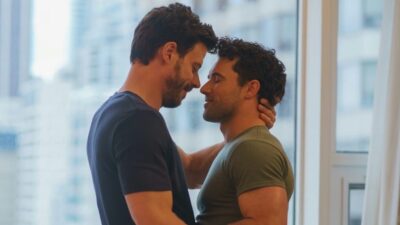
    Towards the end of Unicorns, writer-director James Krishna Floyd’s directorial debut that premiered at the 2023 Toronto International Film Festival, Ashiq (musician Jason Patel, also in his feature film debut) tells mechanic Luke (Ben Hardy) that “she wasn’t real,” referring to his drag queen persona Aysha who we see him as for the majority of the movie. In response Luke says, “she was real to me.” 

    The main tension of Unicorn is between warring identities, not just between our protagonists but within them. Ashiq, when we first see him out of drag, rolls out his prayer mat and begins prayers like he wasn’t just twirling for tips in a gay club an hour ago. Luke, the father to a young son, finds himself in crisis when he discovers his attraction for Aysha. It’s that exploration of the fluidity of gender and sexuality that elevates Unicorns past its perhaps familiar tropes and themes. The beauty of the romance is it isn’t necessarily one of sexuality discovery than it is a discovery that gender in matters of love doesn’t matter.

    The result is a gorgeous glittering gem that captures your attention from beginning to shimmering end. 


    ADVERTISEMENT


    Luke first meets Aysha when he stumbles down a dark corridor to a basement gay club where she is performing (more like slaying the house down boots mawmah) on stage mixing the electronic techno trappings found in any gay bar with traditional South Asian music and dance. The way Floyd, along with co-director Sally El Hosaini, captures Aysha is with mysticism. A spectacle you can’t look away from. Even the way that Luke finds himself in the club feels like Alice tumbling down to Wonderland.

    Sequined for the Gods and twirling for her tips, Luke is transfixed by her and she knows it. She strikes up a conversation before going in for a kiss that gets interrupted when Luke realizes that Aysha is a drag queen. The kiss sends him into a tailspin. But unlike other versions of this story, Luke never moves to full blown homophobia or violence. He holds back as if aware that deep down he liked it — and Aysha noticed it too.

    Despite their not-so-meet-cute ending with hostility, Aysha seeks Luke out to drive him to gigs after her usual driver falls through. Not being able to turn down the cash — perhaps a glimmer of curiosity in Aysha — he accepts. What follows is an all-night romp that includes three more hilarious drag queens, a private mansion party and a broken nose following a brawl. And Luke comes back for more, becoming Aysha’s regular driver and escort to gigs. They begin to form a close bond that hinges on their experience in boxes that they’ve found themselves in that spirals into an irresistible will-they-won’t-they romance.


    ADVERTISEMENT


    There’s so much texture to Luke and Aysha. Unicorn takes some incredulous turns along the way that in a weaker movie may take you out of the story but the purely intoxicating screen presence of Patel and particularly Hardy, who nearly runs away with the movie, is enough to keep you engrossed. Patel, who’s most at home as Aysha, eats every frame without saying a word — a rare star quality. Hardy, on the other hand, gives a physical performance communicating his internal struggle that he holds in his body. Both his resistance and attraction to Aysha could be felt through the screen in a way that feels raw and authentic.

    Queer repression is a familiar theme. Movies like Brokeback Mountain, God’s Own Country, and Moonlight all mine the too relatable experience of feeling your sexuality repressed in the name of “normalcy.” Unicorns doesn’t quite reach the heights of those movies in the canon, but what it does is give us a dazzling invocation of the queer experience that is steeped mostly in joy rather than tragedy. To see drag queens read each other — “he didn’t know I was a queen” / “was he blind?” — or gaysians communing is so rare but so uplifting. Throughout the movie, Luke physically sees more of Ashiq under Aysha — something that she is resistant to sharing. First it’s a wig, then it’s makeup, then it’s seeing his bare chest. But with the physical unpacking, there is the emotional one. And that is a wonder to watch both actors perform. A sparkling wonder. 


    ADVERTISEMENT


    More movies, less problems


    Hey! I’m Karl. You can find me on Twitter and Letterboxd. I’m also a Tomatometer-approved critic.

    💌 Sign up for our weekly email newsletter with movie recommendations available to stream.


    ADVERTISEMENT