Best Actress is one of the most competitive categories at the 2019 Oscars as Glenn Close hopes to finally seal the deal.
Best Actress, unlike its Best Actor counterpart, is a little bit more clear in terms of who the top contenders are. And many of them follow Oscar history — young ingenues, overlooked veterans. However, it’s a long list of contenders. Here are our predictions for Best Actress at the 2019 Oscars.
On her 7th career nomination, Glenn Close should FINALLY win her much deserved Oscar for The Wife. The overdue veteran narrative is always a strong one and Close is the epitome of one. The one knock against her is that her film The Wife is not widely seen. Still, her narrative should be strong enough for a win.
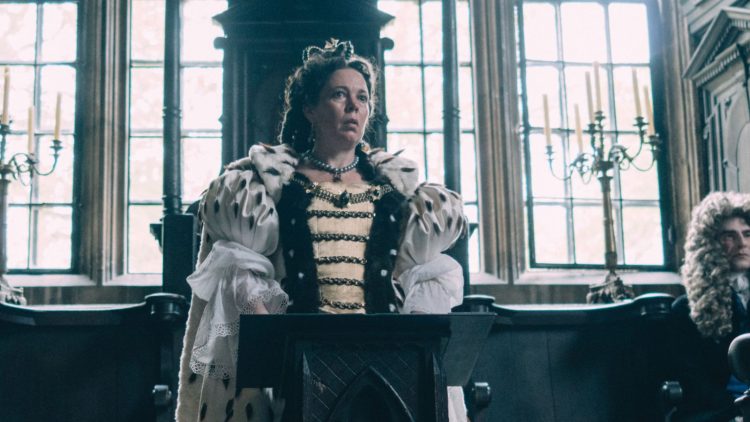
Olivia Coleman, The Favourite
Playing a queen often wins you an Oscar — Helen Mirren won for The Queen and Judi Dench won for Shakespeare in Love. However, Olivia Coleman’s performance as Queen Anne in Yorgos Lanthimos’ wonderfully weird The Favourite is not your typical performance.
However, after winning the Globe and giving an endearing speech her stock has certainly risen. If it wasn’t for Close, she’d be the clear… favorite.
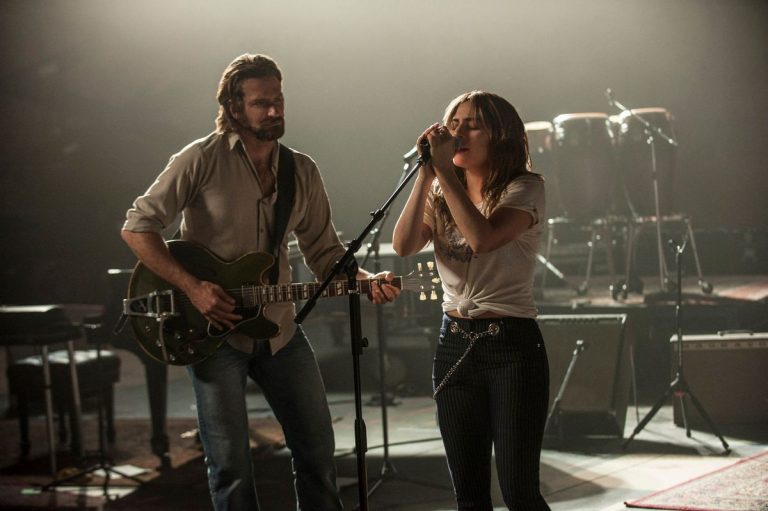
Lady Gaga could receive her first Oscar nomination in Best Actress for A Star is Born.
Lady Gaga, A Star is Born
Although Cher and Barbara Streisand both won Oscars after successful careers as musicians — this video explains how Cher pulled off her win for Moonstruck— Lady Gaga has an uphill climb for her performance in A Star is Born.
After shockingly losing the Golden Globe to Glenn Close (see above), it’s clear that she’s not going to be as much of a force as we thought. Maybe her public persona as a pop star is hurting her. Either way, she’s definitely winning an Oscar this year for co-writing “Shallow”.
Dark Horse
Yalitza Aparicio, Roma
Alfonso Cuarón’s magnum opus Roma — in a career full of them including my personal favorite Children of Men — is going to be one of the rare foreign language films to break through in major categories. Despite that, the film’s lead Yalitza Aparicio is going to have a harder time making it into the category.
Foreign language performances rarely make it into the acting categories. And to make it even harder, she doesn’t speak English, which will make connecting with voters difficult — even though it really shouldn’t. That being said, she’s the heart of the film and could be swept along if the movie does well in nominations.
Long Shot
Melissa McCarthy, Can You Ever Forgive Me?
Can You Ever Forgive Me? might have fallen out of the conversation for Best Picture, but one consistent throughout the season has been Melissa McCarthy in the lead role as Lee Israel.
It’s certainly a change up from her typical comedic performance, which might be to her advantage. However, because of the film’s waning buzz and the fact that her co-star Richard E. Grant has been singled out for praise, she’s on the bubble.
Slow burn horror movies done right can be some of the scariest movies in the genre. Here are some of our favorites!
Horror movies today rely on unsuspecting *JUMP SCARES* to entertain audiences. But we all know—at least you should—that a good horror movie is built on suspense and tension. That’s why some of the best horror movies are slow burn. These movies don’t tell you everything. Instead, they’re puzzles that you have to solve. And sometimes the terror is in what you can’t figure out.
From folk horror to ghost stories to slashers, here are some of my favorite slow burn horror movies!
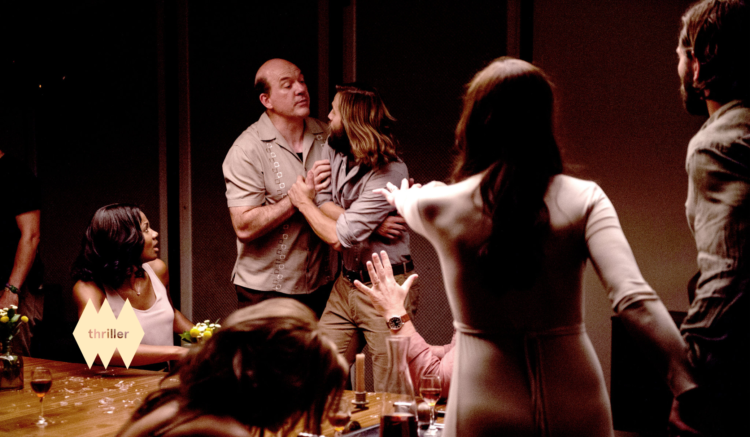
What it’s about: Will (Logan Marshall-Greene) and his new girlfriend Kira (Emayatzy Corinealdi) are invited to his ex-wife (Tammy Blanchard) and her new husband’s (The Haunting at Hill House’s Michiel Huisman) house for a dinner with old friends. However, a reunion isn’t the only thing planned for the night.
Why it’s great: Of the movies on this list, Karyn Kusama’s The Invitationis arguably the most underrated. It is the definition of a slow burn. Really nothing happens in the plot until the last 25 minutes. But by then, you’ve run through all the possibilities for what’s actually going on in your head and you’re prepared to find out exactly what’s happening.
The amount of tension—both horror and emotional—that the movie builds before its conclusion is incredible. And any payoff would work. Still, it feels like the movie still picks the best possible ending—and the final shot is stunning.
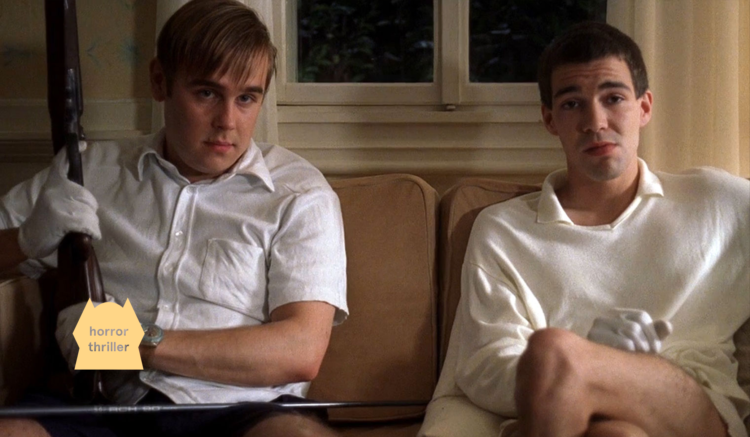
What it’s about: Georg (Ulrich Mühe), his wife Anna (Susanne Lothar), their son Georgie (Stefan Clapczynski), and their dog Rolfi arrive at their lakeside vacation home for a week of relaxation. However, when Paul (Arno Frisch) and Peter (Frank Giering) arrive, their weekend becomes anything but.
Why it’s great: Funny Games might be an uncomfortable experience, but it’s impossible to turn away from the screen once it gets going. The movie’s slow-burn pace never feels sluggish as Paul and Peter’s games become more sadistic and the family’s attempts at survival more fleeting.
It’s a lean and mean horror-thriller that clearly has more on its mind, but it’s never overindulgent. There’s also a shot-for-shot English remake directed by Haneke himself, which is just as good as the original. 109 mins.
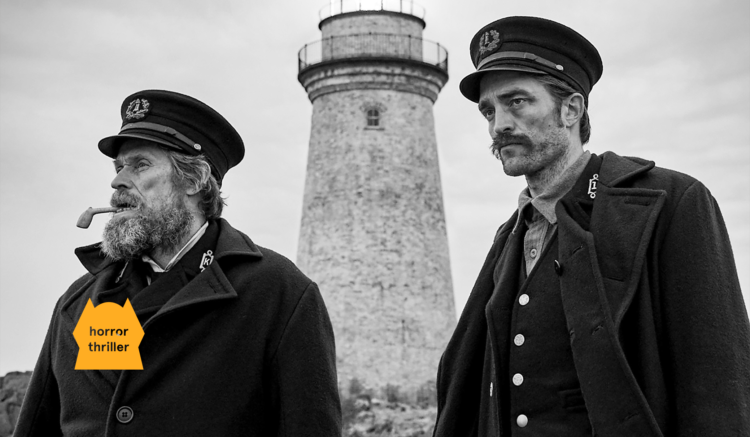
Here’s what it’s about: In the late 19th century, a lighthouse keeper (Willem Dafoe) and his assistant (Robert Pattinson) slowly descend into suspicion and madness as they become isolated on a tiny New England island by a storm.
Why you should watch it: Just like his breakthrough first feature The Witch, The Lighthouse is an immersive experience. Shot with stark black-and-white cinematography and presented in a glorious 1.19:1 aspect ratio, Robert Eggers throws you headfirst into the deep end of the late 19th century with every period detail intact — it’s almost unbelievable that the lighthouse was built for the film.
The layered sound and striking visuals make it feel like the movie is wrapping around you as the pair fall further into insanity. The story, compelling from beginning to end and aided by a career-best performance by Dafoe, challenges your perception of what is real before leaving you either perplexed or jaw-dropped. Just let it take you.
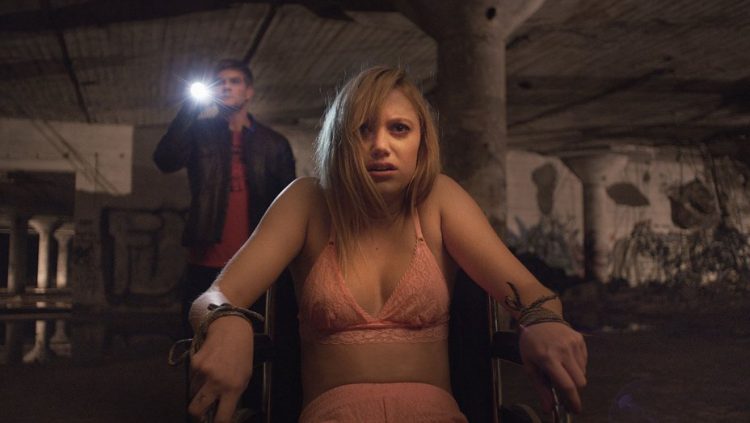
What it’s about: Jay (Maika Monroe) is a normal teenage girl who spends time at the pool and goes on dates. But after sleeping with a guy, she is tracked down by a mysterious entity that takes the form of anyone—a stranger or someone she knows—until “it” finally gets her.
Why it’s great: It Follows takes the classic slasher movie rule “never have sex” to the extreme. What’s really interesting about the movie is that it subverts a couple of different genres. It has the elements of a slasher movie and a ghost movie which makes the finished product something else entirely.
However, instead of jump scare prone ghosts or agile serial killer, the eponymous “it” is slow-moving and creeping in its pursuit of the teenagers. And unlike the other movies on this list, It Follows isn’t about uncovering a mystery—it’s about surviving.
There is also little jump scares, but the movie leverages creepy imagery to add to the tense atmosphere. Plus, Disasterpiece’s pulsing synth score makes every beat all the more intense.
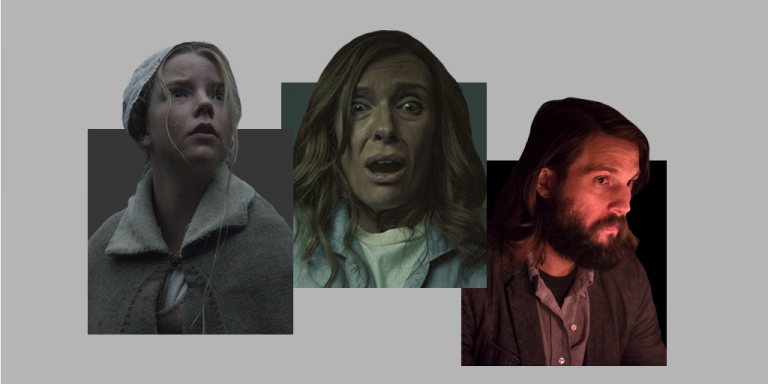
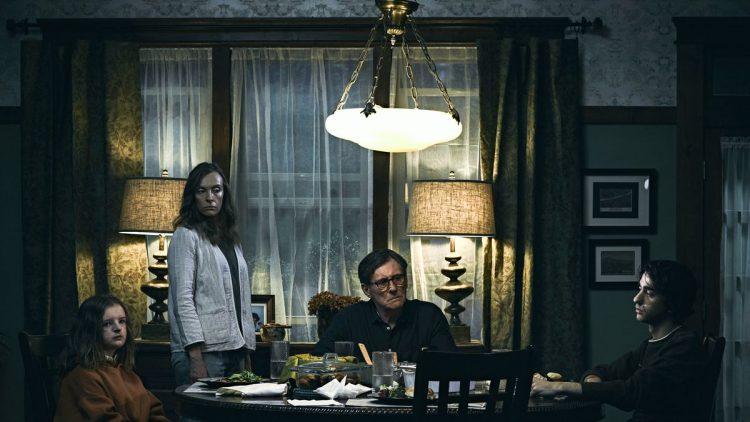
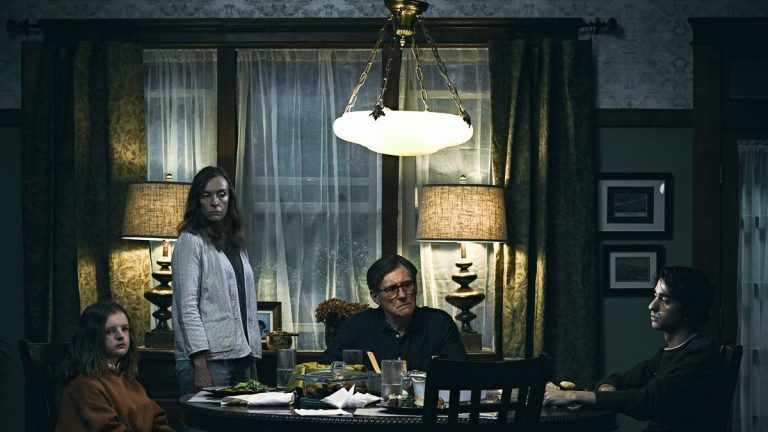
What it’s about: After the death of her mother, Annie (Toni Collette), her husband Steve (Gabriel Byrne), and their kids (Alex Wolff and Milly Shapiro) begin to uncover sinister secrets about their family.
Why it’s great: Hereditary is without qualification the scariest movie I saw in theaters. It’s also a horror fan’s dream. It’s a puzzle that you have to solve and unlike a lot of slow burn horror movies, it gives you the clues, you just have to find them.
Hereditary is also patient in its scares—in addition to its story. The horror set pieces are long drawn out and some you don’t even notice until a second look. That’s what makes this a masterpiece. It replaces jump scares with truly frightening imagery and an unsettling atmosphere.
Everything from the score to the production design to the sound design drip with evil. And it also has a smoldering family drama underneath it all. Not to mention one of the great horror performances from Toni Collette. It’s also one of our favorite movies of 2018.
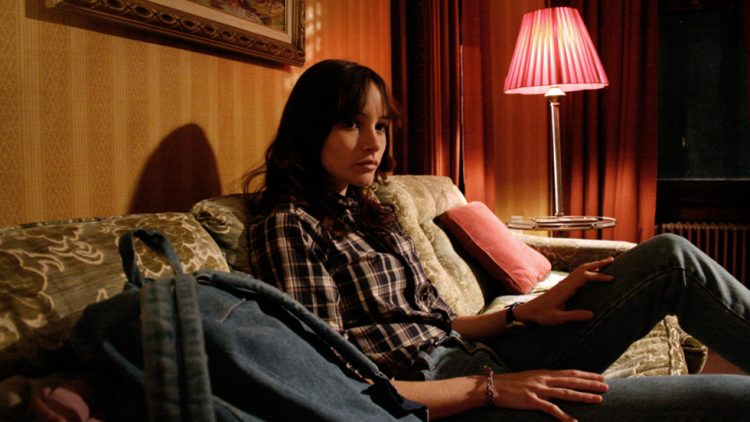
What it’s about: It’s the 1980s, The Fixx is burning up the charts, there’s a full lunar eclipse, and Samantha (Jocelin Donahue) has a babysitting job at a mansion in the middle of nowhere. What can go wrong?
Why it’s great: The House of the Devil is a pitch-perfect homage to the satanic panic films of the 70s and 80s—think Rosemary’s Baby and The Omen—complete with camera zooms and freeze frames. Another thing it nails from the era is the slow burn.
You never truly know what’s going on in the movie until it lets you in on it. And I will warn you, this movie is the slowest of slow burns. It doesn’t give you much indication—or horror—for a good while. But the ending is worth the wait.
Plus, there’s bad 80s pop rock, feathered hair, and Sony Walkman. It’s all you can ask for.
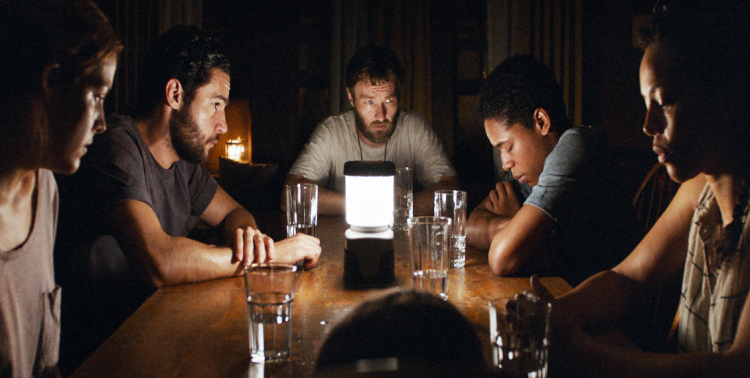
What it’s about: After a mysterious apocalyptic illness wipes out the population, a family (Joel Edgerton, Carmen Ejogo, and Kelvin Harrison Jr.) must battle the horrors outside the house—and some inside.
Why it’s great:It Comes at Nightsuffered from its marketing in its initial theatrical run. While it was being sold as an apocalypse horror, it was closer to a psychological thriller with truly unsettling moments.
Trey Edward Shults—who also directed the phenomenal Krisha—balances unnerving imagery with a slow burn story that isn’t about what’s going on the outside, but what’s going on on the inside.
The chilling final 20 minutes are the payoff of an emotional rollarcoaster where relationships are tested and trust is earned and lost.
💌 Sign up for our weekly email newsletter with movie recommendations available to stream.
ADVERTISEMENT
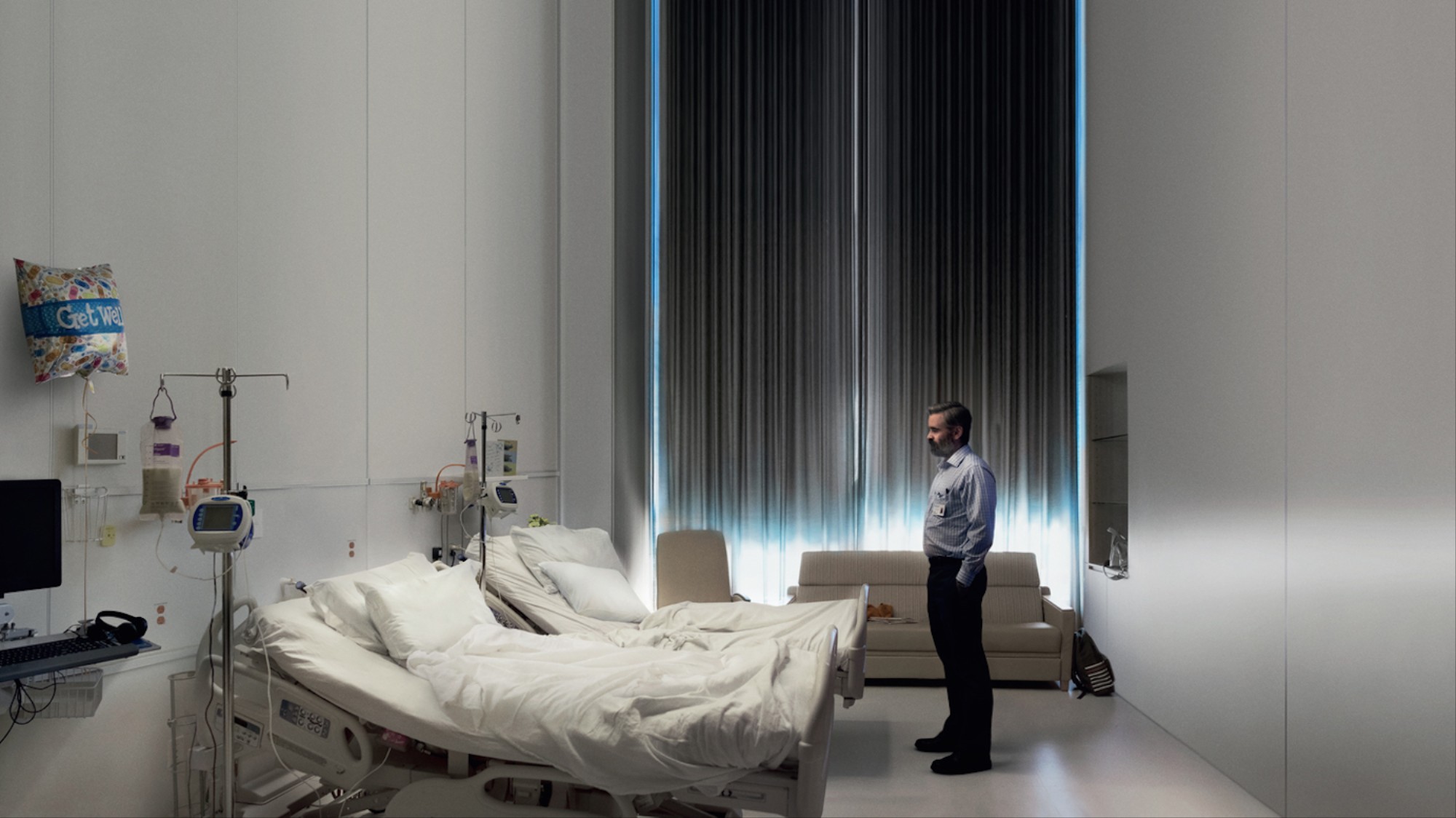
The Killing of a Sacred Deer (2017)
What it’s about: The Murphy Family, cardiovascular surgeon Steven (Colin Farrell), his wife Anna (Nicole Kidman), and his two kids (Raffey Cassidy and Sunny Suljic), become the fascination of a mysterious teen Martin (Barry Keoghan) who seems to be up to no good.
Why it’s great: Director Yorgos Lanthimos’ signature style—deadpan acting and generally nihilistic worldview—is sometimes hard to appreciate, but it applies so well to the psychological thriller The Killing of a Sacred Deer.
There is a sense of impending doom throughout the entire film as Martin’s increasingly nefarious plan falls into place. What makes him such a compelling villain is that you never truly know what he is up to. Neither does the Murphy Family—until it’s too late.
During the last act, Lanthimos’ style adds even more tense energy as a decision on the level of Sophie’s Choice is made. It’s darkly funny, suspenseful, and creepy. The perfect combination for a slow burn horror movie.
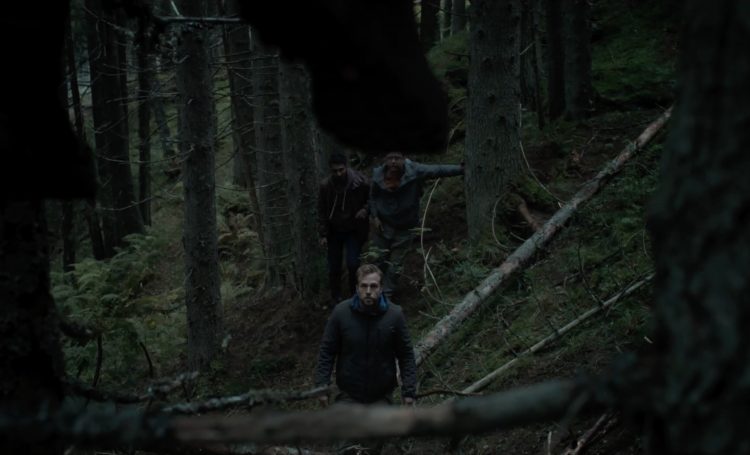
What it’s about: After a tragic incident, four friends reunite for a trip into the mountains and forests of Sweden. However, little do they know they’re not alone.
Why it’s great: A slow burn story is almost a requirement for a folk horror movie, and The Ritual is no exception. Though the story is one that we’ve seen before—it’s comparable to The Descent earlier on this list—The Ritual delves into incredibly interesting mythology.
While the group of friends ventures deeper into the forest—The Blair Witch Project-style—increasingly distressing and creepy occurrences build suspense until the movie finally reveals exactly what’s going on.
The Ritual is paced incredibly well and never lets any tension go. And while it might be the least original of the movies on this list, its execution makes for a perfect stormy movie night.
Where to stream it: The Ritual is streaming on Netflix.
ADVERTISEMENT
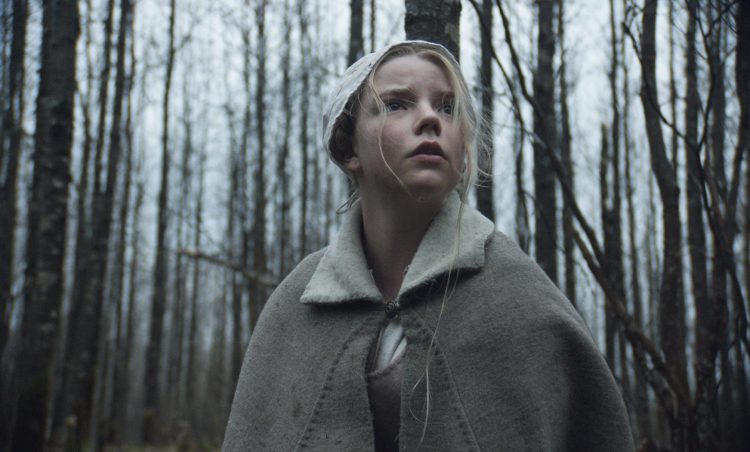
The Witch (2015)
What it’s about: In 1630s New England a devout Christian family is exiled from their settlement to live in the wilderness. All is well until weird occurrences start to make the family members question if they can trust each other.
Why it’s great: Described as a New England folktale, The Witch does a fantastic job of immersing you in the world—the old English, the perfect production design, stunning performances. It’s all ground setting for a chilling tale.
However, the slow burn doesn’t come from whether or not there is a witch, that question is answered relatively quickly. Instead, the mystery is who you can trust.
And the movie doesn’t give you a clear answer. But along the way, you encounter terrifying scenes from a creepy black goat to one of the most stunning exorcism scenes I’ve ever seen. Plus, there’s a fantastic performance by newly anointed scream queen Anya Taylor-Joy.
Where to stream it: The Witch is available to stream on Netflix and Prime Video! It’s also available to rent or buy.
ADVERTISEMENT
The Night House (2020)
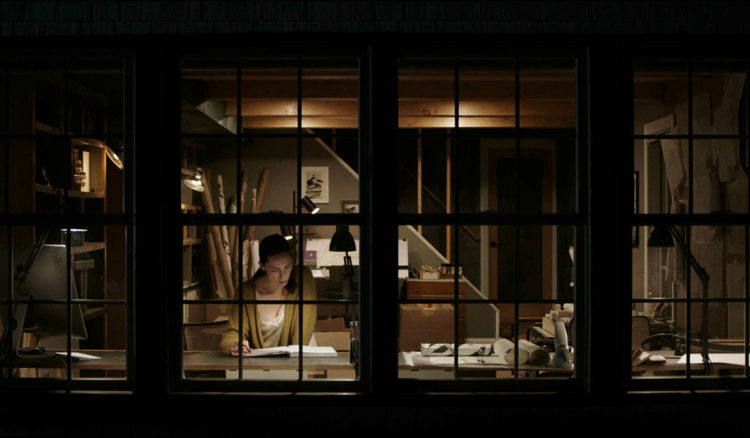
What does a house feel like when one of its inhabitants is gone? It feels empty. Incomplete. Cold. That’s the feeling that director David Bruckner’s new film The Night House, which premiered as part of the Midnight section of the 2020 Sundance Film Festival,gives off at the start as Beth (Rebecca Hall), a high school teacher, copes with the suicide of her husband Owen (Evan Jonigkeit). As she strolls through their lakeside home, built and designed by Owen, you can feel the vacant space. It probably doesn’t help that the home is filled with large windows opening into the darkness of the woods and lake. However, eventually, like Bruckner’s last film The Ritual, that feeling eventually gives way to a pervasive dread.
Mafia Mamma follows a down-on-her-luck California woman who unwittingly becomes the head of her family’s crime operation in Italy
Mafia Mamma tries to be Under the Tuscan Sun, Goodfellas and a raunchy 2000s comedy yet fails at all three. The jokes are so low-brow (and vaguely offensive) to even laugh at let alone with. Sloppily made. Frustratingly repetitive. Toni, I’m so sorry.
Mafia Mamma may have been the greatest comedy of all time… back in 2008. Today, not so much. It’s not fault of the actors, who are doing their absolute best with material that reads like it was written by a screenwriter that has since been canceled. Toni Collette is such a master at comedic line delivery that she could make War and Peace funny. The problem here is that the jokes are so broadly-written that even good line-delivery make the punchline land—it’s what happens when jokes are only punchlines.
It’s a shame that a concept ripe for laughs (and camp) goes to waster (sleeping with the fishes, if you will). Kristin, a California wife and mother, is surrounded by men who think her job is to kowtow to their will—worst of all is her man-child husband Paul (Tim Daish) who, of course, is in a band. So when she gets a call from her late grandfather’s no-nonsense Italian “assistant” Bianca (Monica Bellucci) asking her to come to Italy to help settle his affairs, Kristin is hesitant… that is until she catches her husband in a compromising position in their basement.
ADVERTISEMENT
Seeing an opportunity to get herself out her rut—and with some encouragement from her friend Jenny (Sophia Nomvete) who insists she have an “Eat, Pray, Fuck” vacation—Kristin travels to Italy. However, at the funeral the mourning is quickly interrupted by gunfire (and maybe one of the worst “walking away from an explosion” shots I’ve ever seen—Angela, show them how it’s done). Turns out, Kristin’s grandfather was the boss for one of the most powerful crime families in Italy, The Balbanos, and he wanted her to be his successor much to the chagrin of his nephew Fabrizio (Eduardo Scarpetta).
Kristin ambles her way through the crime org including negotiating peace between crime families, managing their sh-tty wine cover operation, and trying to get d-ck. That last part is what makes Mafia Mamma nearly unbearable to watch. While Collette is completely immersed in Kristin’s naïve doe-eyed persona, that one-note doesn’t often change even when the movie takes a turn towards female empowerment. In many cases, it’s her dopiness that saves her rather than her own skill. Throw in Super Mario Bros.-levels of Italian stereotypes, unnecessary levels of gross-out gore, and a plot that doesn’t actually go anywhere despite it going everywhere and you have a crime-comedy that’s dead-on-arrival.
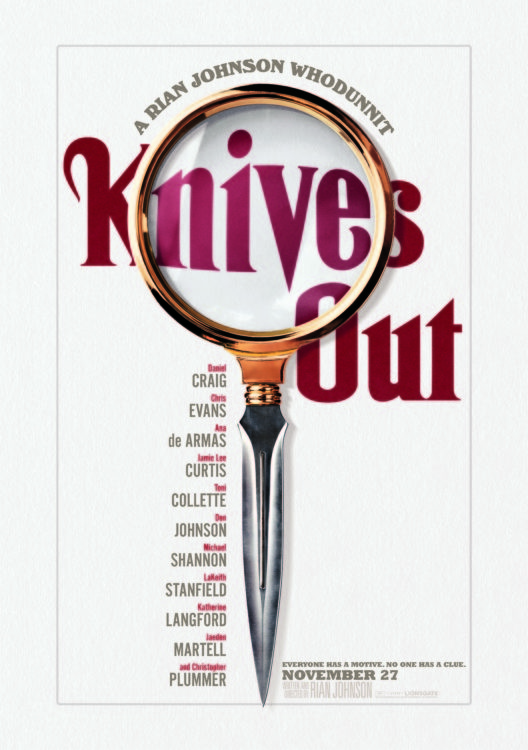
On his 80th birthday, Harlan Thrombey is found dead and sets off a classic whodunit where all the suspects have their knives out for each other
One-sentence review:Knives Out creates one of the great movie families with the ridiculous Thrombeys and puts them in a murder mystery that’s as compelling as it is relevant.
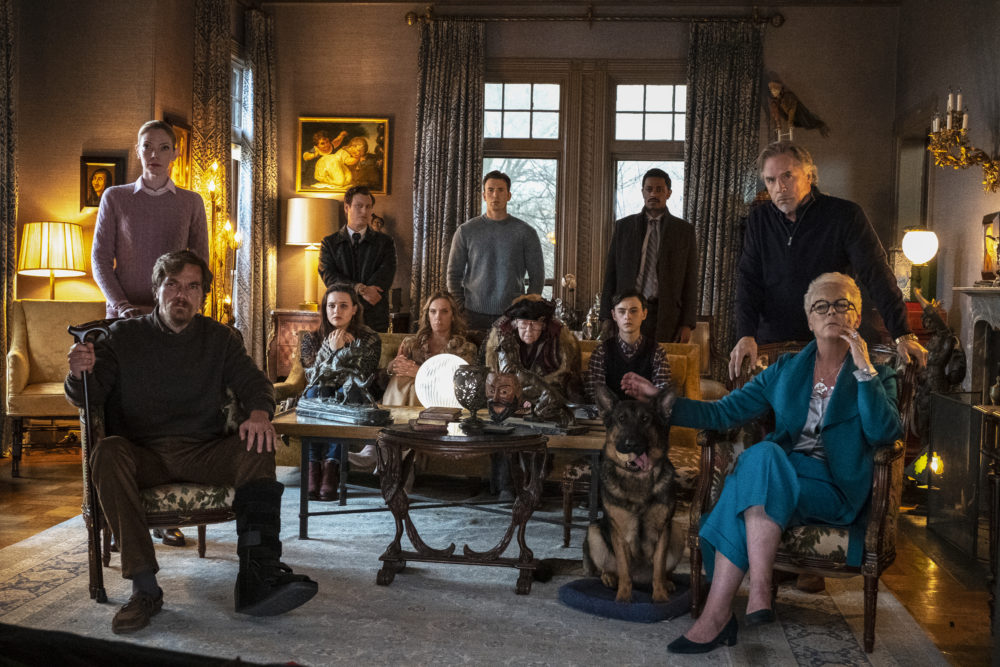
The cast: Ana de Armas, Daniel Craig, Chris Evans, Jamie Lee Curtis, Michael Shannon, Don Johnson, Toni Collette, Lakeith Stanfield, Katherine Langford, Jaeden Martell, Christopher Plummer
Though Ready or Notis a horror, Knives Out is a whodunit mystery, and Parasiteis… well, Parasite, they all center on a character (or characters) spending time around people in another class. In Knives Out, that character is Marta (Blade Runner 2049’s breakout Ana De Armas) and the people of another class is the Thrombey Family. And while the movie is packaged as a neat, tidy, and ridiculous sendup of the classic murder mystery, director and writer Rian Johnson has a lot more on his mind and the movie is all the better for it.
However, Johnson isn’t opaque about his point-of-view, the fun of the movie is that you know exactly what he’s talking about. You see, the Thrombeys are the kind of rich people that think they’re entitled to being rich. Something the recently passed patriarch and famed crime novelist Harlan Thrombey (Christopher Plummer) is keenly aware of. During the reading of his will you can tell what each character wants — his publishing business, the house, his money. However, Harlan’s untimely demise — which is initially ruled a suicide — means there’s more in the way of the Thrombeys and their money.
Knives Out poster. Credit: Lionsgate.
That’s because someone hired famed private investigator Benoit Blanc (Daniel Craig), a heavily southern Hercule Poirot-type that Harlan’s grandson Ransom (Chris Evans) refers to as “CSI: KFC,” to investigate whether Harlan’s death was truly a suicide. The suspects are largely his family. There’s his son Walt (Michael Shannon), who is bent on getting control of the publishing business so he can sell film rights to Netflix. Then there’s his daughter and Ransom’s mother Linda (Jamie Lee Curtis), a “self-made” business woman who just needed $1 million of daddy’s money to get her business off the ground — her husband Richard (Don Johnson) is being towed along. And best of all, there’s Joni (Toni Collette), a Gwyneth Paltrow-inspired lifecycle blogger who runs a website called Flam.
Each of them — and the people connected to them — has a reason for wanting Harlan dead. And at the center of it all is Marta. Blanc takes a shining to her because she has a very unique “superpower.” She cannot help but throw up violently when she tells a lie. He sees that as an asset. But like everyone in this movie, she has something to hide.
Leave it to Johnson, who managed to piece together one of the most compelling Star Wars movies with The Last Jedi, to construct a nearly perfect murder mystery. Despite the many twists and turns, all the pieces to solve the mystery are always there. He doesn’t insert any out of nowhere surprises. You can truly solve the puzzle. That doesn’t stop him from presenting it in an interesting way.
The first act is largely comprised of interviews with each family member who gives their account of the night in question — Harlan’s 80th birthday party. However, each of them twists the facts to make themselves look innocent. Hilariously, all their terrible sides are uncovered. In one of my favorite small details, each family member says a different country the Marta immigrated from despite them constantly saying she’s “part of the family.” In another, Richard praises Marta for immigrating “correctly.” As integrated she is into their lives, she’s still a class visitor.
It’s those small microaggressions that elevate Knives Out past its premise. Not that its premise isn’t already great. Like Get Out, Johnson is careful to make the movie work as a genre pic as well as a social commentary. It’s just what gives it that extra push past being crowd-pleasing popcorn fare. Admittedly, it’s great crowd-pleasing popcorn fare.
The mystery, the characters, and the humor are all spot on. Craig is a standout as is Evans, who plays Ransom as the typical New Englander heir who probably just bought a boat. Then there’s Collette who nails it with the line, “I read a Tweet about a New Yorker article about you,” referencing Blanc. If anything, I wish we spent more time with the Thrombeys. Though, Craig, de Armas, plus Lakeith Stanfield and Noah Segan as a pair of not-so-helpful detectives are certainly fun to watch.
As I’m thinking back to watching the movie there isn’t a singular moment that stands out — perhaps the stellar final shot. But I think that’s a testament to the sheer consistency of it all. The movie is built around character and story instead of just finding the next gag. It’s so refreshing and so effective. It’s easily one of the best times I had in a theater this year.
Despite the mess that is the 2019 Oscars, it is refreshing to have a season that feels unpredictable. Best Picture is still up in the air as is Best Supporting Actress while there is room for upsets in nearly every category. As a lifelong Oscar fan, it’s always more excited to not know who’s going to win come Sunday night.
Will Win:BlacKkKlansman Could Win:Roma or Green Book Should Win:Roma or Black Panther
I’m taking a big swing in this category. While BlacKkKlansman hasn’t won a major prize, it was nominated every where it needed to be. People love and respect Spike Lee. I think this is going to do really well on the preferential ballot. As long as Roma or Green Book don’t win on a first round then I think this is your Best Picture winner.
Best Actress
Olivia Coleman as Queen Anne in THE FAVOURITE
The nominees:
Glenn Close, The Wife
Olivia Coleman, The Favourite
Lady Gaga, A Star is Born
Melissa McCarthy, Can You Ever Forgive Me?
Yalitza Aparicio, Roma
Will Win: Glenn Close, The Wife Could Win: Olivia Coleman, The Favourite Should Win: Olivia Coleman, The Favourite
Glenn Close will finally end her 37-year losing streak when she wins her first Oscar for The Wife. There is the *tiniest* chance that BAFTA winner Olivia Coleman wins for her performance Queen Ann in The Favourite.
Best Actor
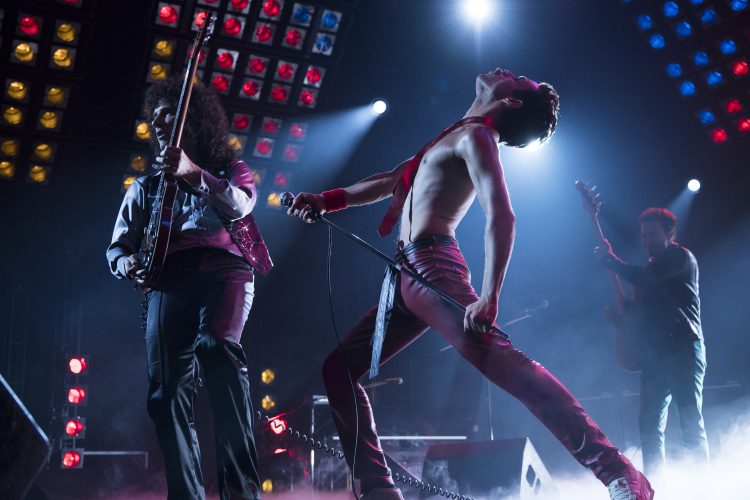
Rami Malek in BOHEMIAN RHAPSODY
The nominees:
Christian Bale, Vice
Rami Malek, Bohemian Rhapsody
Bradley Cooper, A Star is Born
Willem Dafoe, At Eternity’s Gate
Viggo Mortensen, Green Book
Will win: Rami Malek, Bohemian Rhapsody Could win: Christian Bale, Vice Should win: Bradley Cooper, A Star is Born
Although Christian Bale won the Golden Globe and Critics Choice awards for his performance as Dick Cheney in Vice, I think the real challenger to clear frontrunner Rami Malek is Bradley Cooper. For better or worse, he’s been in the news a lot and if voters want to award A Star is Born outside of Best Original Song, this would be the place to do it.
Velvet Buzzsaw has trouble balancing its satirical and horror elements, which results in an interesting, but unsatisfying Netflix original.
Velvet Buzzsaw doesn’t become the movie we want it to be until the last 30 minutes. That’s when it starts working effectively as an art-world satire and horror-thriller. The rest, though, has a hard time striking a balance between too. So much so that it strikes exactly the wrong balance.
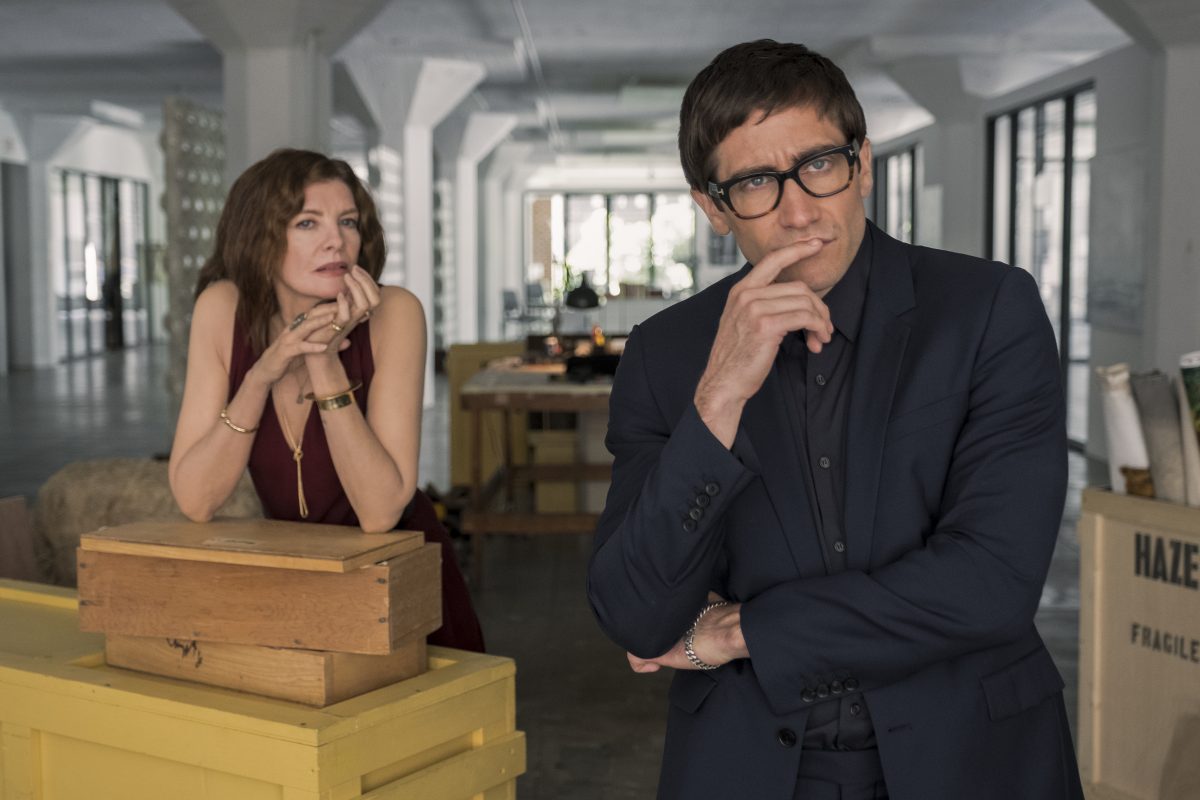
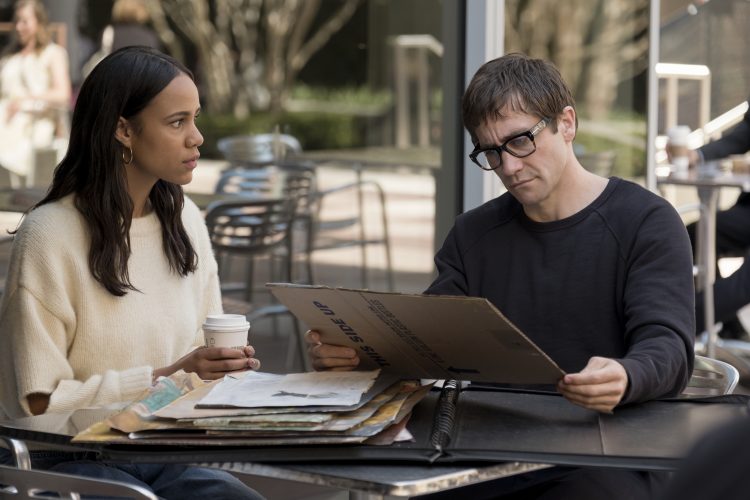
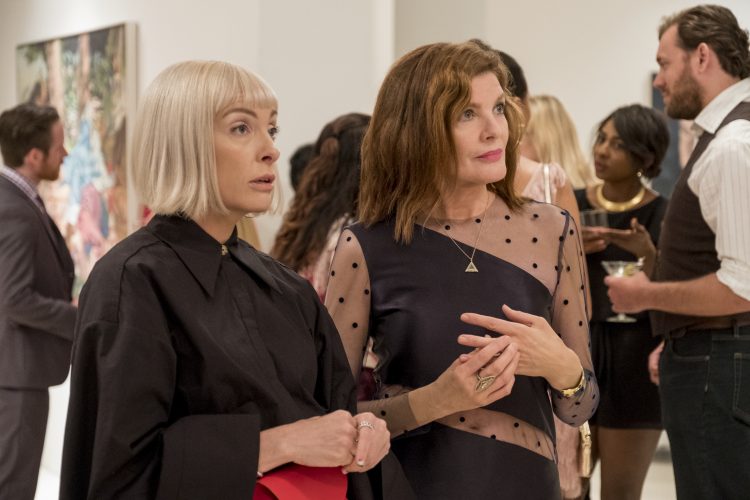
However, there are interesting elements. The film reunites director and writer Dan Gilroy with Jake Gyllenhaal who plays Morf, a highly respected Los Angeles art critic, and Rene Russo as no-nonsense gallery owner Rhodora, both of whom he worked with in his film debut Nightcrawler.
With Velvet Buzzsaw, he trades the dark and shadowy crime underbelly of Los Angeles with the colorful and chic world of the art community. Everything is brightly lit, incredibly crisp, and fully saturated. And that’s a problem. Not only does it not create the tense atmosphere the movie sorely lacks, but it’s also a poorly shot movie. The cinematography is reminiscent of a CW primetime soap.
Zawe Ashton and Jake Gyllenhaal in VELVET BUZZSAW
What keeps it at least somewhat afloat is the intriguing plot. After discovering her neighbor dead in the hallway of her apartment building, art agent Josephina (Zawe Ashton) ventures into his apartment to find hundreds of pieces of artwork — some haunting and some disturbing. She takes them to Morf who confirms that they are all masterworks and should be worth millions.
It’s discovered that the artist was a man with a troubled past named Vetril Dease. Catching wind of the incredible portfolio, Rhodora convinces Josephina to let her sell the pieces in her gallery where they quickly become a popular fixture and sweep through the LA art scene.
However, these aren’t just paintings. They’re cursed. Anyone that profited from them is dying in increasingly horrific ways. No one seems safe. There’s gallery worker Bryson (Billy Magnussen of Game Nightfame), another art gallery owner Jon Dondon (Tom Sturridge), Morf’s art curator assistant Gretchen (Toni Collette coming off Hereditary), and Rhodora’s latest client Damrish (Daveed Diggs) who are all at risk.
All the while, Gilroy attempts a cutting satire of the often pretentious and self-involved community of high-end art. While it gets some good digs in that remind us just how silly art can be — there are incredible one-liners like “a bad review is better than sinking into the great glut of anonymity” and “critique is so limiting and emotionally draining” — it doesn’t really poke at anything we didn’t already know.
Toni Collette and Rene Russo in VELVET BUZZSAW
On the horror side of things, Gilroy fails to create much suspense or scares. The death scenes are interesting and reminiscent of the Final Destination series, but none are surprising or shocking. A large part of that is because the plot never truly gets off the ground. Morf spends some time investigating the mysterious artist Dease to try and unravel the mystery of the paintings, but it’s a subplot when it should truly be the main plot. Instead, we spend time on the relationship between the bisexual Morf and Josephina and intrigue around the ownership of the paintings.
That leads to the biggest problem Velvet Buzzsawhas. It’s filled with cold and pretentious LA art people that are hard to care about, including Gyllenhaal’s Morf who comes the closest to being a protagonist. Without an audience surrogate or relatable character at the center, it’s hard to even care about what’s happening the characters. There’s an attempt to make young assistant Coco (Natalia Dyer) that character, but she ends up not being used that way.
It’s frustrating considering the caliber of the actors in the cast and the intriguing premise. That being said, Gilroy mines enough ridiculous observations and stray one-liners about the LA art world that make it an entertaining enough watch. However, I think it had the potential to be great. With a name like Velvet Buzzsaw, I wasn’t expecting anything less.
Where to stream Velvet Buzzsaw: Available to stream on Netflix.
Jake Gyllenhaal plays an art critic that is haunted by an artist’s work (literally) in the trailer for Dan Gilroy’s Velvet Buzzsaw.
Velvet Buzzsaw reunites Jake Gyllenhaal with his Nightcrawler director Dan Gilroy and co-star Rene Russo. Here’s the plot description:
Velvet Buzzsaw is a thriller set in the contemporary art world scene of Los Angeles, where big money artists and mega-collectors pay a high price when art collides with commerce.
Netflix
I was a huge fan of Nightcrawler. It was one of my favorite movies of 2015 and features Gyllenhaal’s best performance — he was egregiously snubbed at the Oscars (still mad).
While that movie was essentially a neo-noir crime thriller, Velvet Buzzsaw looks like it’s delving a bit into horror. It makes sense considering there were a lot of horror elements in Nightcrawler — Lou Bloom, Gyllenhaal’s character, was truly terrifying at points.
Gyllenhaal thrives when he’s playing characters falling into madness/obsession — Nightcrawler, Zodiac, Prisoners — which bodes well for the movie.
It also helps that he’s joined by a stacked supporting cast including Daveed Diggs, Stranger Things’ Natalia Dyer, Bird Box‘s John Malkovich, and the current reigning queen of horror Toni Collette — following up her stunning performance in last year’s Hereditary.
Velvet Buzzsaw has a lot going for it.
It will be released on Netflix on February 1st. It will have its world premiere at the Sundance Film Festival.
Hereditary may be slow-burn, but it burns bright and intense. With some of the most unsettling horror images and setpieces, it is one of the best horror movies in recent memory.
When horror is done right, terrifying, heart-stopping horror, it grabs every one of your senses and makes you hyper-aware of all of them. It lays in wait, biding its time and revealing just enough throughout until the story comes crashing together at the end. It has a grounding in something real and human so that the horror feels even more imminent. Considering that definition, it’s not an exaggeration to say that Hereditaryis horror done perfectly.
Director Ari Aster joins the ranks of Robert Eggers (The Witch), Jordan Peele (Get Out), and Jennifer Kent (The Babadook) who all made their feature film debut with stunning horror movies. However, what they all also have in common is that they challenge the constraints of the genre. The Witch is a period piece, Get Out is a social satire, and The Babadook is a psychological drama. With Hereditary, Aster again blurs the line of horror to create a twisted, horribly remarkable film.
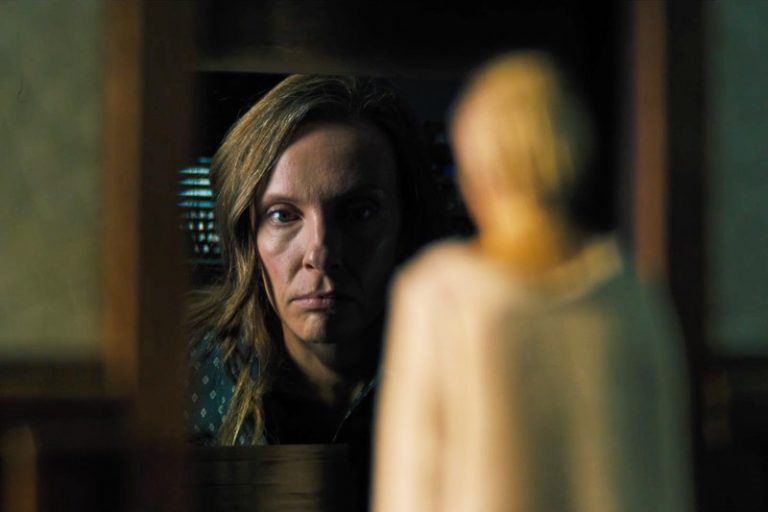
Hereditary does a great job of not letting its audience on to what kind of movie it is for much of its running time. It’s not even until it’s final moments that you truly know what kind of movie it was. At the center of the movie is the Graham family. Annie (Toni Collette) is an artist who focuses on creating miniatures, particularly inspired by her life. Her husband Steve (the fantastic Gabriel Byrne) is a stoic professional-type. Together they have two kids, Peter (strongly performed by Alex Wolff), a typical teenager, and 13-year-old daughter Charlie (played by Milly Shapiro in a remarkable film debut).
Annie is dealing with the recent loss of her mother—the movie begins on the day of her funeral. She explains during her eulogy that her mother was a secretive woman and someone she had a complicated relationship with. However, who did have a strong relationship with Annie’s mother was Charlie. It’s well-established that Charlie is not your typical 13-year-old. She doesn’t seem to understand basic social norms. She spends much of her time with her nose in a sketchbook drawing the people around her. At one point, she does something so bizarre that the entire audience recoiled at it.
All of these things point to Hereditary being one type of movie. A creepy child, an emotionally vulnerable mother, and an isolated house in the woods sounds like something familiar. However, something happens. Something truly shocking and remarkable happens. It’s a moment that will be engrained in the rest of the movie and in your mind long after the credits roll. Hereditary is made up of moments like that. However, it starts at this point. The movie is recontextualized and where it ends up is almost impossible to parse out.
And although the movie is wholly original, it feels like a culmination of this new golden age of horror that we’re in. The aptest comparison is probably to The Babadook. The main success of that movie is that the horror is wrapped around something familiar in all of us—grief and loss. A lot of the slow-burning first hour of Hereditary is spent exploring grief and loss, particularly in Annie’s character. Collette is remarkable as she navigates her emotions following this event. She plays Annie like someone who bears the weight of all the events that led to this point in her life on her shoulders. You empathize with her. So as she falls further down the rabbit hole of possible insanity, you can’t help but be heartbroken.
However, the emotional elements of the movie aren’t the most impressive thing about it. I can say, without qualification, that Hereditary is the most horrifying and upsetting movies I’ve seen in theaters. There’s an impressive sense of dread that sits on top of the movie similarly to The Conjuring. You’re constantly trying to parse out what is going to wrong, but Aster makes it nearly impossible to do that. The movie takes a few sharp turns that always make sense, but are also completely unexpected. And those turns are stitched together with horrifying images and set pieces that don’t rely on jump scares or sudden spikes in the score—composer Colin Stetson does a fantastic job underscoring the dread and tension—but rather leveraging our own fears and insecurities against us.
There are parts where you’re not even sure what the horrifying thing is, then you hear a wave of gasps and whispers as the audience eventually discovers it. Aster brilliantly frames and stages set pieces by going with the least obvious route to affect the audience. It’s those kinds of scares, combined with the unpredictability of the storytelling that makes Hereditary an experience like no other.
It’s hard to recommend Hereditary without divulging exactly what kind of movie it is. But this feels like broad horror combined with arthouse. It has the oppressive dark energy of The Conjuring, the patient enigmatic storytelling of The Witch, the emotional heft of The Babadook, and the horrifying visceral imagery of The Shining. It’s a horror fan’s dream.
It’s shocking that this is a debut. It’s assured in its style and meticulously plotted. Repeat viewings will be rewarded. Collette’s Oscar-worthy performance grounds us in the reality of grief and loss while the story and plot unravel something a lot more sinister. At its core, Hereditary is perhaps a haunted house story. But a more apt description might be a haunted family story. Psychologically haunted or supernaturally haunted aside, Hereditary will creep its way into your nightmares. Good luck sleeping. *tongue click*