Tag: Viola Davis

  • 2019 Oscar Predictions: Best Actress

    2019 Oscar Predictions: Best Actress

    Best Actress is one of the most competitive categories at the 2019 Oscars as Glenn Close hopes to finally seal the deal.

    Best Actress, unlike its Best Actor counterpart, is a little bit more clear in terms of who the top contenders are. And many of them follow Oscar history — young ingenues, overlooked veterans. However, it’s a long list of contenders. Here are our predictions for Best Actress at the 2019 Oscars.

    Current Rankings
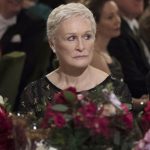
    Glenn Close
    The Wife
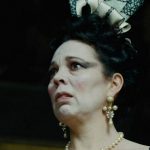
    Olivia Coleman
    The Favourite

    Lady Gaga
    A Star is Born

    Melissa McCarthy
    Can You Ever Forgive Me?
    Yalitza Aparicio
    Roma

    Check out all our 2019 Oscar Predictions: Best Picture | Best Actor | Best ActressBest Supporting Actor | Best Supporting Actress

    The Frontrunners

    Glenn Close, The Wife

    On her 7th career nomination, Glenn Close should FINALLY win her much deserved Oscar for The Wife. The overdue veteran narrative is always a strong one and Close is the epitome of one. The one knock against her is that her film The Wife is not widely seen. Still, her narrative should be strong enough for a win.

    Olivia Coleman, The Favourite

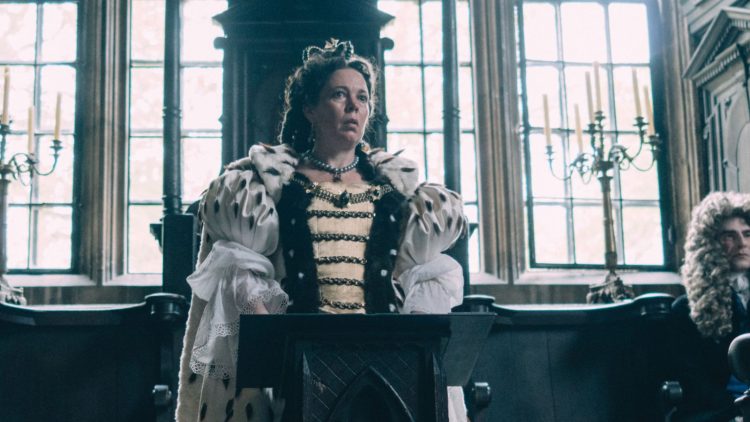
    Playing a queen often wins you an Oscar — Helen Mirren won for The Queen and Judi Dench won for Shakespeare in Love. However, Olivia Coleman’s performance as Queen Anne in Yorgos Lanthimos’ wonderfully weird The Favourite is not your typical performance.

    However, after winning the Globe and giving an endearing speech her stock has certainly risen. If it wasn’t for Close, she’d be the clear… favorite.
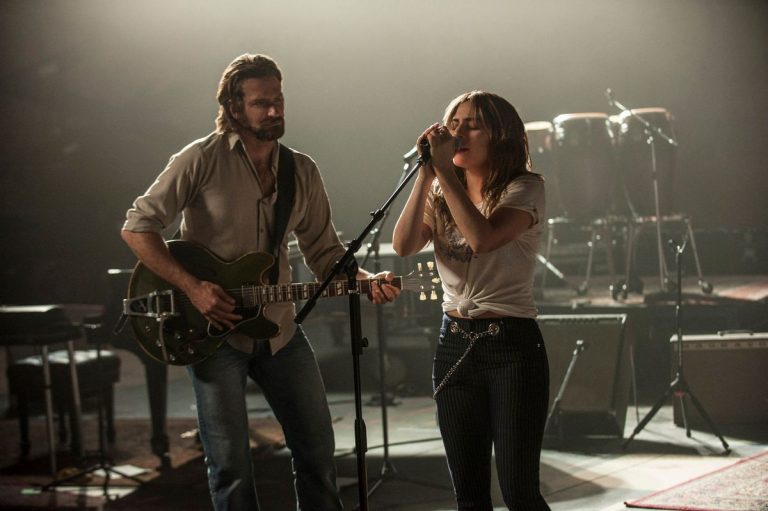
    A Star is Born Best Actress
    Lady Gaga could receive her first Oscar nomination in Best Actress for A Star is Born.

    Lady Gaga, A Star is Born

    Although Cher and Barbara Streisand both won Oscars after successful careers as musicians — this video explains how Cher pulled off her win for Moonstruck — Lady Gaga has an uphill climb for her performance in A Star is Born.

    After shockingly losing the Golden Globe to Glenn Close (see above), it’s clear that she’s not going to be as much of a force as we thought. Maybe her public persona as a pop star is hurting her. Either way, she’s definitely winning an Oscar this year for co-writing “Shallow”.

    Dark Horse

    Yalitza Aparicio, Roma

    Alfonso Cuarón’s magnum opus Roma — in a career full of them including my personal favorite Children of Men — is going to be one of the rare foreign language films to break through in major categories. Despite that, the film’s lead Yalitza Aparicio is going to have a harder time making it into the category.

    Foreign language performances rarely make it into the acting categories. And to make it even harder, she doesn’t speak English, which will make connecting with voters difficult — even though it really shouldn’t. That being said, she’s the heart of the film and could be swept along if the movie does well in nominations.

    Long Shot

    Melissa McCarthy, Can You Ever Forgive Me?

    Can You Ever Forgive Me? might have fallen out of the conversation for Best Picture, but one consistent throughout the season has been Melissa McCarthy in the lead role as Lee Israel.

    It’s certainly a change up from her typical comedic performance, which might be to her advantage. However, because of the film’s waning buzz and the fact that her co-star Richard E. Grant has been singled out for praise, she’s on the bubble.

  • ‘Air’ balls hard | movie review

    ‘Air’ balls hard | movie review

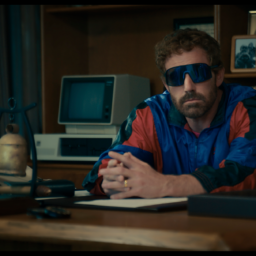
    Ben Affleck’s Air tells the story of how Nike struck the biggest partnership in sports history with Michael Jordan and the Air Jordan

    Air is a sturdy crowd-pleasing “based on a true story” dramedy that leverages every aspect of the biopic genre to a precision level.

    There’s always that one scene in movies about inventors or companies where the main character gets up and gives an impassioned speech about why what they’re doing is important or matters. Ben Affleck’s Air is no exception. However, when Sonny Vaccaro (Matt Damon) gives a speech to convince a young Michael Jordan (Damian Young) to partner with Nike on what will eventually become the Air Jordan, Affleck cuts the scene with archival footage from the real Jordan’s life. News clips covering his highest highs and lowest lows. In one cut we see an archival news report about his father’s murder before cutting back to the film’s version of James Jordan (Julius Tennon). The effect is nothing short of show-stopping, especially since the film takes care to never let us get a full look at the young Michael. 

    That emotional impact was particularly surprising to me considering I don’t have much of an attachment to the subject matter at all. 


    ADVERTISEMENT


    The movie begins with a breezy montage of 1984. Everything from Princess Diana to Tetris is displayed setting the backdrop. Further adding to the background is perhaps the most shocking true fact the movie exposes: “Nike… 17%.” That’s the share of the athletic shoe market that Nike commands (today it’s over 40%). And while the upstart company had a fast start, their biggest competitors Adidas and Converse continue to cover the majority of the feet in the nation. Air has such a distinct sense of its time and place that it makes it hard to fathom the colossus it eventually becomes. 

    That’s thanks in part to the performances by the ensemble — and Affleck in particular as Nike founder and CEO Phil Knight — that perfectly captures the energy of a startup that is finding its footing as it finds wider success. The movie is even interspersed with title cards the ten principles of Nike’s mission statement — their inclusion, as someone who has worked in many start-ups, felt facetious. In direct opposition to Knight, who has become somewhat of a corporate shill (despite still traversing the office barefoot), is Sonny. Hilariously, and like many companies, Sonny’s role is obscure and a bit undefined with the goal of “making things better.” However, he can be boiled down to a talent scout.

    With Nike’s back against the wall and the NBA draft behind them, it’s Sonny’s job to find three basketball players to split a $250k partnership with Nike to save their failing basketball shoe brand — wild to think about. After going through all the potentials from the top draft picks, Sonny sets his sights on young upstart Michael Jordan. He could just see the spark of greatness, even when others doubt him. So sets off his campaign to lock down MJ, even if it means betting his entire career — and Nike’s entire budget — on it. Even Sonny’s greatest supporter in the office, Howard White (Chris Tucker — doing scene-stealing comedic character work) is skeptical of their chances. Still, Sonny fights for it. 


    ADVERTISEMENT


    Like Ford v. Ferrari or Moneyball, as two recent hall of fame examples, Air is the epitome of a dad movie. As in, dads will watch it and nod along like they too are an expert in athlete-brand partnerships at a major shoe corporation. There’s something about process movies — or movies about people just passionately and effectively doing their job well (i.e. every Tom Hanks movie) — that gets dads going. Well, call me a daddy because I was nodding along with them. 

    Affleck breezily moves between scenes of Sonny analyzing game tape, working with wacky designer Pete Moore (Matthew Maher), or strategizing around their pitch meeting — “Phil, you have to walk in seven minutes late.” It’s the kind of technical fodder that we see more often in journalism movies, here it’s a little more fun. And further tying into the theme of startup culture, more than once a character references the scramble to create the pitch feeling like “the old Nike days” — that glorious period of a startup’s life where you have nothing and everything to lose, but you’re having fun scrappily surviving.


    ADVERTISEMENT


    Even with that momentum, Air takes a few moments to breathe (pun intended) thanks to two key players. First is George Raveling (Marlon Wayans), Jordan’s coach for the 1984 Olympic Games, who in a barnburner biopic inspirational one-scene special recounts how Martin Luther King, Jr. gifted him his “I Have a Dream” speech. Second is Viola Davis as Michael’s mother Deloris Jordan who, for lack of a better phrase, is the heart of the movie in both of her expertly-acted scenes (she’s not an EGOT winner for nothing). In particular, a negotiation scene late in the movie, performed with steady confidence only an actress Davis’ stature can muster, evokes the strongest emotional response of the movie. 

    Air is as sturdy of a crowd-pleasing “based on a true story” dramedy as they come — this coming from someone who thinks Argo, Affleck’s last directorial effort, is one of the worst Best Picture winners in recent memory. However, where Argo’s emotional manipulation feels like… well, manipulation, Air feels genuine. It never overstates its stakes or forces you to care about its characters. Even a mid-movie soliloquy where marketer Rob Strasser (Jason Bateman) tells Sonny about his divorce and estranged relationship with his daughter only mines the smallest of eye rolls. Does Air do anything to reinvent the biopic? Far from it. Does it leverage every aspect of it to a precision level? Absolutely. It’s the equivalent of watching Michael Jordan fly through the air to dunk. An athlete performing to his highest technical level, but with extra magic that only he could assemble. 


    ADVERTISEMENT


    More movies, less problems


    Hey! I’m Karl. You can find me on Twitter and Letterboxd. I’m also a Tomatometer-approved critic.

    💌 Sign up for our weekly email newsletter with movie recommendations available to stream.


    ADVERTISEMENT


  • ‘The Woman King’ redefines the historical epic | TIFF review

    ‘The Woman King’ redefines the historical epic | TIFF review

    Set in 1820s West Africa, The Woman King follows an all-female group of warriors as they prepare to face the rising threat from a rival kingdom.

    In some ways, The Woman King is a quintessential historical action epic—think Ben-Hur or Glory. It’s immersive with its impeccable sets and costumes recreating 1820s Africa, engrossing with its storytelling, and captivating with its action. It’s the kind of big studio blockbuster we don’t often see anymore. But in other ways, it’s unlike anything else in the genre—and a watershed moment for action movies—because of how its story centers on the experience and plights of black women without focusing on their relation to whiteness and men—Top Gun: Maverick, eat your heart out. Of course, those elements are there. But director Gina Prince-Bythewood moves them to the periphery. Instead, her heroines, led by General Nanisca (Viola Davis who disappears into the role), are front and center. 

    At the same time, Prince-Bythewood directs The Woman King as a full-throated historical action epic that is simply weightier because her protagonists aren’t the typical ones you’d see in a studio blockbuster.

    However, she doesn’t treat them any differently in the same way she didn’t treat the queer characters in her underrated fantasy action The Old Guard any differently than straight heroes—#JoeandNicky4Ever. There’s no better example than the movie’s sensational opening scene. In the dead of night, a group of male soldiers is relaxing around a campfire when the Agojie, a group of sword-wielding female warriors from the West African kingdom of Dahomey, rise from the brush—and oiled for the gods—with Nanisca at the center. It’s the kind of cheer-worthy entrance that heroes of their caliber deserve and Prince-Bythewood knows it. 

    What follows is one of the most impressive action setpieces of the year as the Agojie tear through the group of men viciously but gracefully. And just like the warriors, it is captured on camera with the same grace—there’s a sense of space and geography that makes the scene almost feel like a choreographed dance. The women are there to save women taken from their kingdom by the Oyo Empire, who intends to sell their captives to white colonialists. General Nanisca, along with her two closest comrades Izogie (Lashana Lynch) and Amenza (Shelia Atim), returns to the kingdom as revered as warriors should be. While their enemies chide King Ghezo (John Boyega) for using women as his main line of defense, he knows what they are capable of. 

    The movie then transforms into a classic hero’s journey as we’re introduced to Nawi (Thuso Mbedu), an orphan whose adoptive parents gift her to the king after her disobedience becomes too much to handle. But instead of being forced into grueling training with the Agojie, she willingly accepts the opportunity to become a warrior—igniting a running theme of finding one’s agency. The movie spends much of its second act as a Shakespearean drama as tensions continue to rise between Dahomey and the Oyo, Nawi struggles through training, and Nanisca faces a trauma from her past as the king prepares to make her his successor. However, the movie doesn’t become any less thrilling. The stakes are never lessened, if anything the introduction of each character’s arc raises them. 

    Prince-Bythewood knows the key to good action is good character development. Each member of the Agojie is etched in such beautiful detail that you can clearly see how their past—and the world they live in—informs their present.

    Take for example Amenza’s careful counseling of Nansica as various threads from her past come back to haunt her. Her measured response—and consultation with mystical nuts—never feels false because the relationship between the pair is well-defined. You can easily understand why they’ve been confidants for so long. The same goes for the way they fight—it feels in control. Like they’re listening to each other’s bodies only in the way that sisters forged in battle can. 

    Multiple story threads involving slavery, colonialization, and sexual assault weave themselves together into an ignition wire that is ignited into a stellar third act that works because of all the groundwork set in place—and in one case, literally. The brutal action feels dangerous because we are made to care deeply for these women. Every single one of them. Even those whose names we don’t get to learn. That is The Woman King’s most impressive achievement among its many technical and social achievements. 

    Don’t get me wrong, though. The Woman King is exactly what moviegoers are expecting of it.

    Nail-biting action, engrossing political intrigue, awe-inspiring heroics, even a muscled-in romantic subplot—the folly of many of its predecessors. But because of the simple fact that it takes place in a location, time, and with faces we don’t often get to see as heroes, it feels completely fresh. The same way it felt when Black Panther broke the glass ceiling for superhero movies or Crazy Rich Asians for romantic comedies. The beats we know and love are there. But Prince-Bythewood gives them a new rhythm. The Agojie deserve to have their stories told as epically as Maximus Gladiator or Achilles in Troy. And Viola Davis, Lashana Lynch, Sheila Atim, and Thuso Mbedu are up to the task—and then some.


    ADVERTISEMENT


    More movies, less problems


    Hey! I’m Karl. You can find me on Twitter and Letterboxd. I’m also a Tomatometer-approved critic.

    💌 Sign up for our weekly email newsletter with movie recommendations available to stream.


    ADVERTISEMENT


  • ‘Widows’ review — Viola Davis leads the best movie ensemble of the year

    ‘Widows’ review — Viola Davis leads the best movie ensemble of the year

    Widows is successfully a thrilling heist movie, emotional character study, and dissection of our current social climate.

    Widows is based on the 1983 British television show of the same name, but you wouldn’t know that watching Oscar-winning director Steve McQueen’s adaptation from a screenplay written by Gone Girl scribe Gillian Flynn. The film, which changes the location from London to Chicago, is distinctly American.

    The themes ranging from corruption to police shootings to race to the wealth gap are covered with poignancy and impact. However, like all of McQueen’s films, including the Oscar-winning 12 Years a SlaveWidows is also a character study. It’s all packaged up neatly in a twisting heist thriller that makes it one of the most compelling, and best, films of the year.

    Widows begins with Veronica (Viola Davis fresh off her Oscar win for Fences) and Harry Rawlings (Liam Neeson) waking up in their sun-drenched Chicago high-rise apartment. Smash cut to four masked men stumbling into a van. One of them is injured and one of them is revealed to be Harry. After a brilliantly captured car chase, the men are brought down in a hail of bullets before their van ultimately explodes.

    However, Veronica doesn’t have much time to grieve as Jamal Manning (Brian Tyree Henry), a crime boss turned alderman-candidate, with his brother Jatemme (Oscar-nominee Daniel Kaluuya of Get Out fame), who acts as his muscle, come to Veronica demanding the $2 million that her husband stole from them.

    Henry and Kaluuya both give menacing performances. Henry is a sneering devil who is calm and composed until he’s not. Kaluuya is similarly, and eerily, quiet, but is unpredictable in his explosive actions, like in Get Out so much of his performance happens just in his face.

    Veronica, who is eventually led to her late husband’s journal by their driver Bash (Garret Dillahunt), recruits the other widows of Harry’s deceased crew to help her finish the job he outlined in his journal to clear his debts and start a new life for herself.

    The other widows, Alice (Elizabeth Debicki) and Linda (Michelle Rodriguez), also have reasons to pull off the heist. Linda lost her store after her husband’s passing and is having trouble supporting her kids with her mother-in-law breathing down her neck. Alice, also looking for money, turns to escorting at her mother’s (Jacki Weaver in a great one-scene performance) suggestion and is eager to get out of it.

    Widows
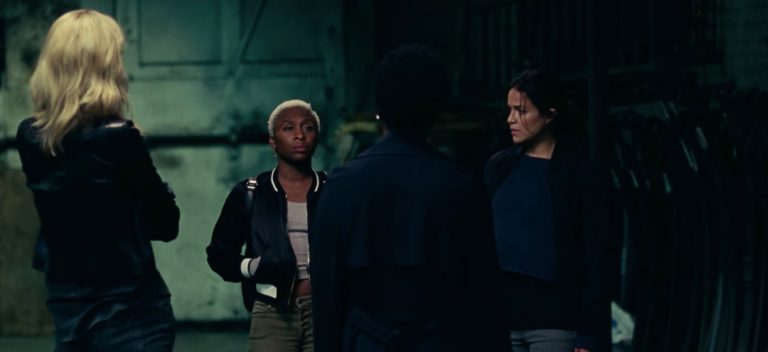
    Elizabeth Debici, Cynthia Erivo, and Michelle Rodriguez in Widows.

    However, their planning and execution of the heist is not the center of the story. It’s thrilling and suspenseful, especially when Hans Zimmer’s beaming score is supporting it, but it’s not the main propulsion of the story. Instead, it’s the widows themselves that are the narrative and emotional drive as we watch them navigate life after losing their husbands and finding strength in a society that undercuts them as women.

    All the while, in the background, a story of political intrigue plays out as the contentious election between Manning and Jack Mulligan (Colin Farrell) the son of the current alderman of the 18th Ward (Robert Duvall). There, we also confront McQueen’s interest in adapting this story specifically in Chicago and at this time in our political history. 

    The main theme of Widows can be boiled down to dichotomies in our increasingly polarized country. Those lines, drawn across race, wealth, and gender, are captured visually through Sean Bobbitt’s stunning cinematography.

    There are physical separations between each side. In one of the best scenes of the movie, and perhaps of the year, Mulligan, leaving a campaign event, climbs into his limo. However, the camera doesn’t follow him in. Instead, it’s fixed on the hood of the car showing us the neighborhood turn from abandoned lots and distressed storefronts to tree-lined suburban streets with ivy-covered mansions within minutes. It emphasizes the modern-day segregation in Chicago.

    The balancing act McQueen pulls off with the film is impressive. It succeeds on every field it’s playing in. However, if there’s anything takes Widows from good to great, it’s the performances. Every single actor has their moment. Kaluuya and Henry are worthy villains. Cynthia Erivo, who plays a single mother who helps the widows, turns in more great work after nearly stealing Bad Times in the El Royale last month. Carrie Coon and Garret Dillahunt do great work in small roles. Duvall and Farrell make a great onscreen father and son team.

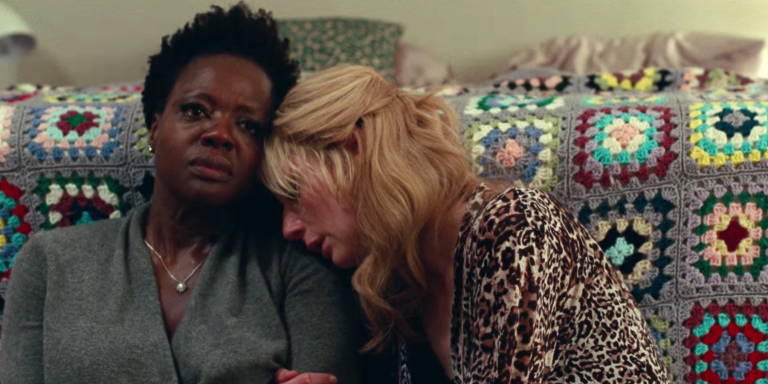
    But the real success her comes from the performances of Michelle Rodriguez, Viola Davis—giving another powerhouse performance—, and particularly, Elizabeth Debicki, whose heartbreaking, funny, and charismatic performance as Alice ranks as one of the best of the year.

    At one point, a cop says, “he should burn in hell, but hey, Chicago will do.” In Widows, Chicago stands in as a microcosm of the United States. Racial tensions are the highest they’ve been in decades, police shootings are on the rise, the wealth gap is turning into a chasm, and women have to fight against a system that oppresses them every day.

    Flynn’s smart screenplay and McQueen’s always stylish and steady direction guide the film through those nuances and the result is nothing short of extraordinary. Widows boast the best cast of the year and is sure to be that rare film that bridges the gap between arthouse and mainstream.

    Widows is in theaters now.

    Karl’s rating:

  • 2019 Oscars Final Predictions

    2019 Oscars Final Predictions

    Despite the mess that is the 2019 Oscars, it is refreshing to have a season that feels unpredictable. Best Picture is still up in the air as is Best Supporting Actress while there is room for upsets in nearly every category. As a lifelong Oscar fan, it’s always more excited to not know who’s going to win come Sunday night. 

    Here are my predictions in ever category:

    Best Picture

    Will Win: BlacKkKlansman
    Could Win: Roma or Green Book
    Should Win: Roma or Black Panther

    I’m taking a big swing in this category. While BlacKkKlansman hasn’t won a major prize, it was nominated every where it needed to be. People love and respect Spike Lee. I think this is going to do really well on the preferential ballot. As long as Roma or Green Book don’t win on a first round then I think this is your Best Picture winner. 

    Best Actress

    Olivia Coleman as Queen Anne in THE FAVOURITE

    The nominees:

    • Glenn Close, The Wife
    • Olivia Coleman, The Favourite
    • Lady Gaga, A Star is Born
    • Melissa McCarthy, Can You Ever Forgive Me?
    • Yalitza Aparicio, Roma

    Will Win: Glenn Close, The Wife
    Could Win: Olivia Coleman, The Favourite
    Should Win: Olivia Coleman, The Favourite

    Glenn Close will finally end her 37-year losing streak when she wins her first Oscar for The Wife. There is the *tiniest* chance that BAFTA winner Olivia Coleman wins for her performance Queen Ann in The Favourite

    Best Actor

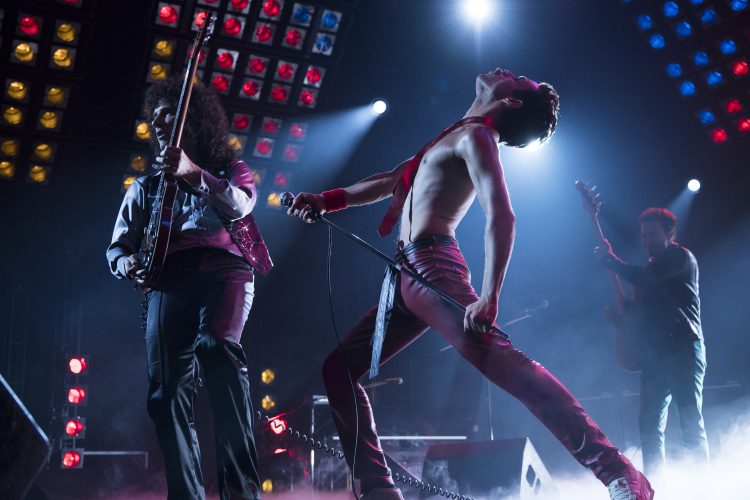
    Rami Malek in BOHEMIAN RHAPSODY

    The nominees:

    • Christian Bale, Vice
    • Rami Malek, Bohemian Rhapsody
    • Bradley Cooper, A Star is Born
    • Willem Dafoe, At Eternity’s Gate
    • Viggo Mortensen, Green Book

    Will win: Rami Malek, Bohemian Rhapsody
    Could win: Christian Bale, Vice
    Should win: Bradley Cooper, A Star is Born

    Although Christian Bale won the Golden Globe and Critics Choice awards for his performance as Dick Cheney in Vice, I think the real challenger to clear frontrunner Rami Malek is Bradley Cooper. For better or worse, he’s been in the news a lot and if voters want to award A Star is Born outside of Best Original Song, this would be the place to do it. 

    Continue Reading

    Pages: 1 2 3