Category: Emmys

  • 2015 Emmy Predictions: Comedy Series

    2015 Emmy Predictions: Comedy Series

    modern family best comedy series

    Unlike the race for Drama Series, Comedy Series is looking to be more of the same. To put it simply, all six nominees from last year should return. With the new Emmy rules, we’ll most likely be adding Golden Globe winner Transparent to the mix.

    However, there is room for some upsets.

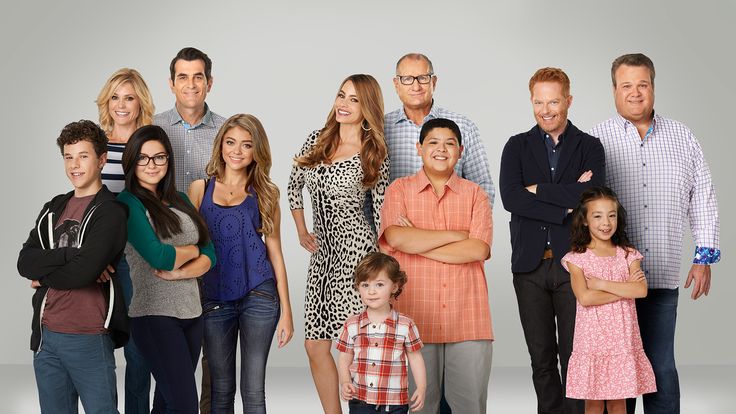
    Let me start off with the top contender. Five-time winner Modern Family (I just threw up a little) should have no problem returning.

    After them we have critically darling Veep, Globe winner Transparent, and dark comedy Louie with strong chances in the category.

    The last two nominees are ironically two shows about geeks that are completely different from each other. The Big Bang Theory has been slowly waning in support, despite Parsons winning (yet again) last year. However, the first nominee that could possibly drop out is Silicon Valley. Although, it didn’t underperform last year, it certainly didn’t blow us away with its nominations. Plus, it’s poised to miss out on acting nominations yet again.

    Looking to replace it is Unbreakable Kimmy Schmidt. I think a lot of pundits are underestimating the Netflix series. It garnered extremely positive reviews and is looking to be another hit for the streaming service. Plus, having Tina Fey at the helm certainly can’t hurt.

    Other possibilities include the final season of Parks and Recreation or the yet to be seen Grace and Frankie, which Netflix will push hard for.

    Check out all our 2015 Emmy Predictions here!

    The Lock and Frontrunner
    1. Modern Family

    Safe Bets
    3. Veep
    4. Transparent
    5. Louie

    Teetering on the Edge
    6. The Big Bang Theory
    7. Silicon Valley
    8. Unbreakable Kimmy Schmidt

    Other Possibilities
    9. Parks and Recreation
    10. Grace and Frankie

  • 2015 Emmy Predictions: Lead Actress in a Comedy Series

    2015 Emmy Predictions: Lead Actress in a Comedy Series

    amy poehler lead actress in a comedy series

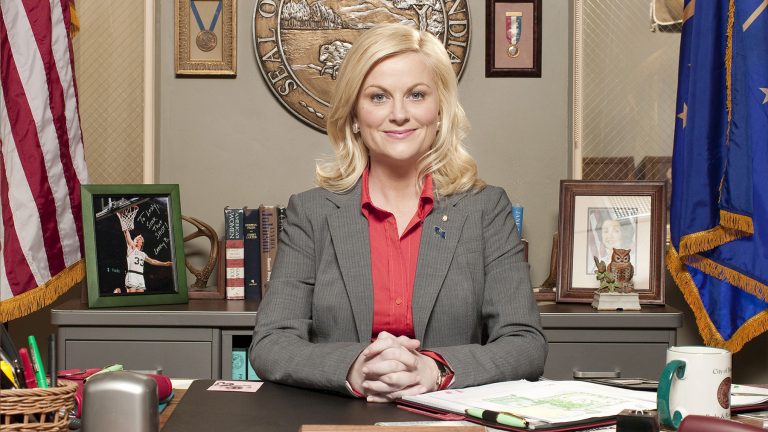
    Like its drama counterpart, Lead Actress in a Comedy Series is a crowded field this year. Three-time winner Julia Louis-Dreyfus (Veep) returning to the race, overdue industry and fan favorite Amy Poehler (Parks and Recreation), and veteran actresses Lily Tomlin and Jane Fonda (Grace and Frankie) co-starring in a new Netflix (which is red-hot at the Emmys) already make the category heavy enough. However, now comes the process of fitting in the new stars and the perennially nominated women.

    With Tina Fey and Netflix backing her star-vehicle, Ellie Kemper (Unbreakable Kimmy Schmidt) should be in no matter how her quirky show does at the Emmys.

    Golden Globe winner Gina Rodriguez (Jane the Virgin) seems to have some momentum going for her, and considering her acclaim and success early in the year it’s obvious that the often ignored CW will be campaigning hard.

    With two new actresses possibly joining the lineup, that would mean that Emmy favorite Edie Falco (Nurse Jackie) could be pushed out. It might be unwise to predict that such a no brainer nominee would be snubbed, however I could see scenario where the category is expanded to 7 with a tie somewhere in the voting.

    Another new nominee that could pop up is Lisa Kudrow (The Comeback), a favorite from Friends who self parodies in her new show, which is the actually be her comeback.

    Check out all of our 2015 Emmy Predictions here!

    Strong Frontrunners
    1. Julia Louis-Dreyfus, Veep
    2. Amy Poehler, Parks and Recreation

    The Veterans
    3. Lily Tomlin, Grace and Frankie
    4. Jane Fonda, Grace and Frankie

    Could be any of them
    5. Ellie Kemper, Unbreakable Kimmy Schmidt
    6. Gina Rodriguez, Jane the Virgin
    7. Edie Falco, Nurse Jackie
    8. Lisa Kudrow, The Comeback

    Other Contenders
    9. Melissa McCarthy, Mike and Molly
    10. Lena Dunham, Girls

  • What the new Emmy rules mean for this year’s race

    What the new Emmy rules mean for this year’s race

    new emmy rules

    With the Oscars now over, it’s time to shift our attention to the small screen and look ahead to the 2015 Emmy Awards. This year is like no other, with multiple changes to the Emmy rulebook, which will throw a wrench into several shows.

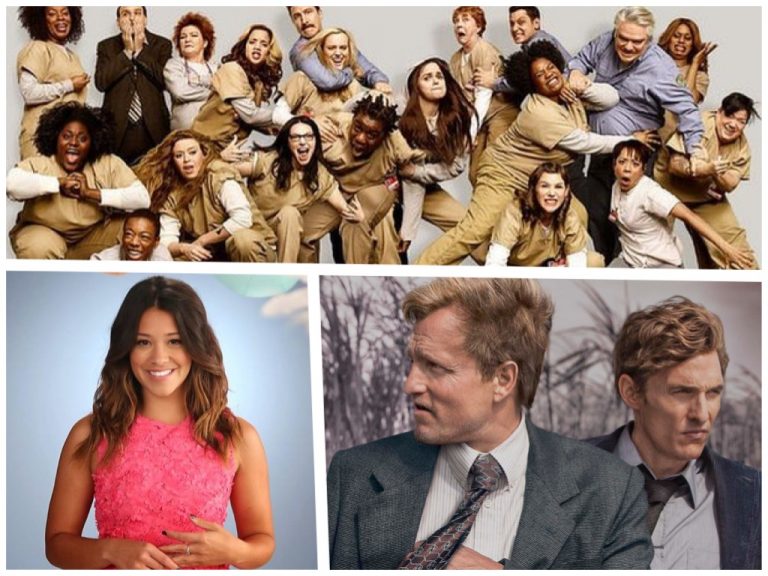
    The first new rule is probably the most shocking. The Academy will now define comedies as shows with a runtime of less than 30 minutes, while a drama is more than 30 minutes. This mostly affects shows like  Shameless, and Gleewhich have competed in comedy up until now. As for new shows, Golden Globe nominee Jane the Virgin will have to compete in drama, which will definitely hurt Golden Globe winner Gina Rodriguez’s chances at the Emmys.

    However, producers will be able to petition their show to bend the genre rule. It might be advantageous for the three above shows.

    The second new rule expands the program categories to 7 nominees. Similarly to the Oscars, this will let less likely contenders into the competition. This year can see perennially snubbed shows like Parks and Recreation or highly acclaimed shows like The Good Wife sneak in.

    A much needed rule change has also come in the miniseries category, which will be renamed “Limited Series.” This change defines a limited series as one with more than two episodes of at least 150 minutes that tells a complete non-recurrent storyline that doesn’t have any recurring themes or characters. This will keep shows like True Detective from competing in the Drama category.

    Another much needed change also came in the Guest categories. In this case, the Academy reverted to their original rules. A guest performer is an actor who appears in less than 50% of the program’s episodes. Under this new rule last year’s winners like Uzo Aduba (Orange is the New Black), Allison Janney (Masters of Sex), and Joe Morton (Scandal), would not be eligible for that category.

    At this point, we have to see where the derby goes before seeing how some of these rules turn out. All and all, I’m mixed about them. The expansion of the categories and definition of guest actor and limited series are really great. However, while I agree there has to be a clarification of a comedy and drama, I don’t think this one is it. That being said, this should be an interesting year at the Emmys.

  • 7 Reasons why “House of Cards” Season 2 was Awesome

    7 Reasons why “House of Cards” Season 2 was Awesome

    Kevin-Spacey-in-House-of-Cards-Season-2-Chapter-26 SPOILERS!

    It’s ridiculous, unrealistic, and wonderfully dark, but also so entertaining. It probably won’t win this year at the Emmys, but here are some reasons voters could cast their vote for House of Cards.

    “One heartbeat away from the presidency and not a single vote cast in my name…”

    aqctu

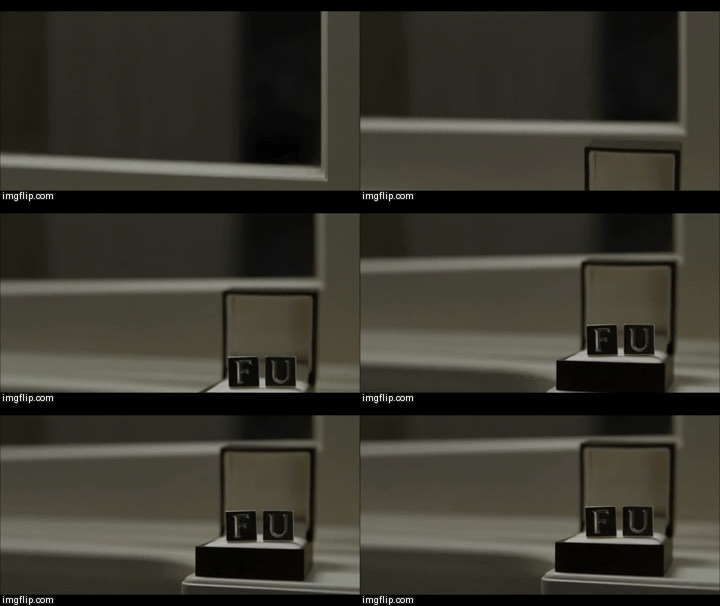
    Remember when Frank gave us this sterling piece of advice when dealing with Washington? Hopefully you listened to him, this season got messy.

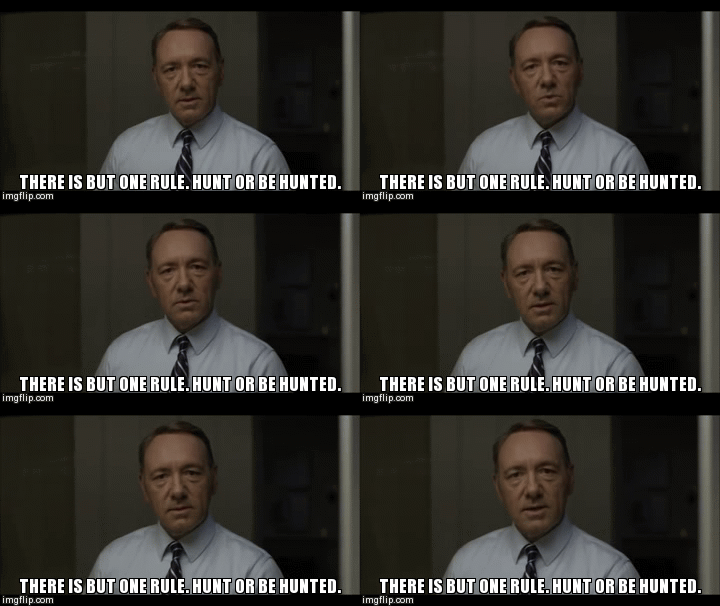
    Then, this one image basically summed up House of Cards. No matter what Frank and Claire do, just remember…

    aqc4c

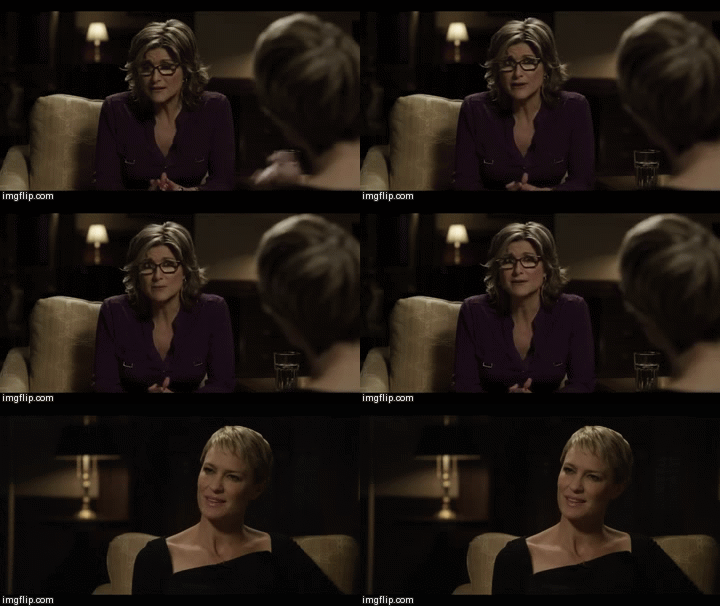
    Remember when Claire got to be a total BAMF during this interview? Also, Robin Wright is a freaking goddess.

    aqcxi

    You know that prostitute from season one? She was freaking amazing this season.

    aqd17

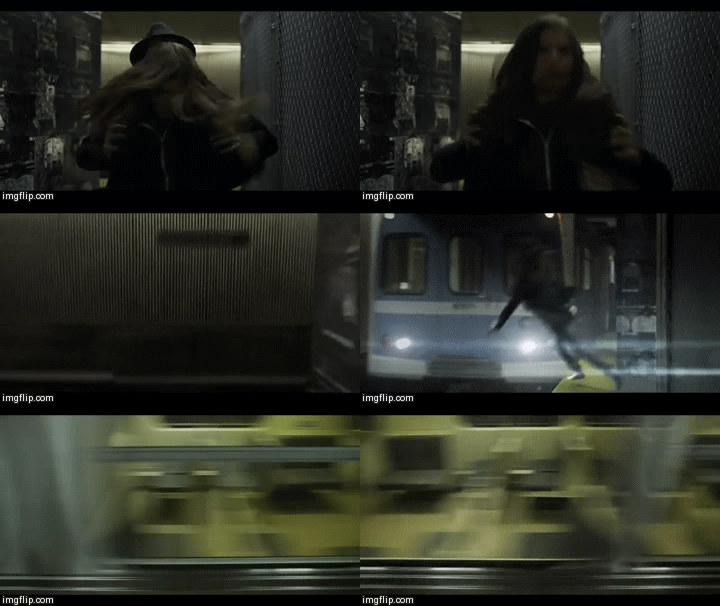
    How could you forget about this shocker. Admit it, you screamed a little when this happened. Goodbye Zoe Barnes and your wonderful hoodies.

    aqbwn

    And last, but not least…

    aqauy

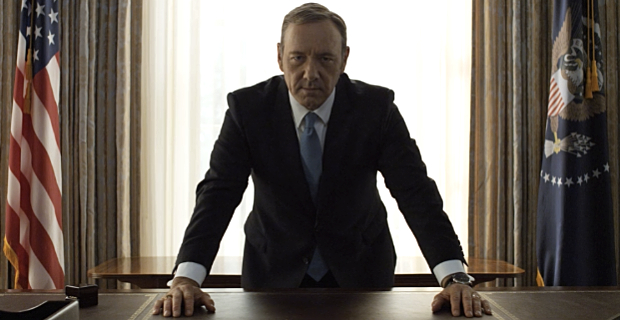
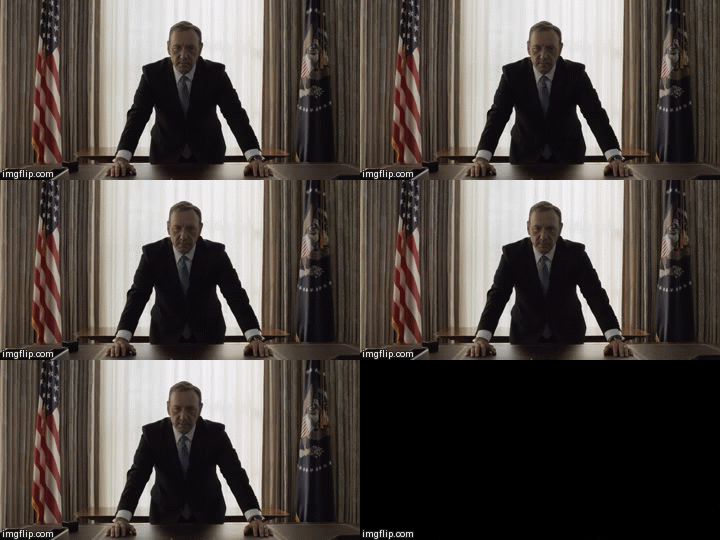
    How could we talk about House of Cards season 2 without mentioning the now infamous desk knock. All hail President Underwood!

    Check out our Emmy Spotlight for the show here! What were your favorite moments from House of Cards season 2?

  • Emmy Spotlight: \"Mad Men\"

    Emmy Spotlight: \"Mad Men\"

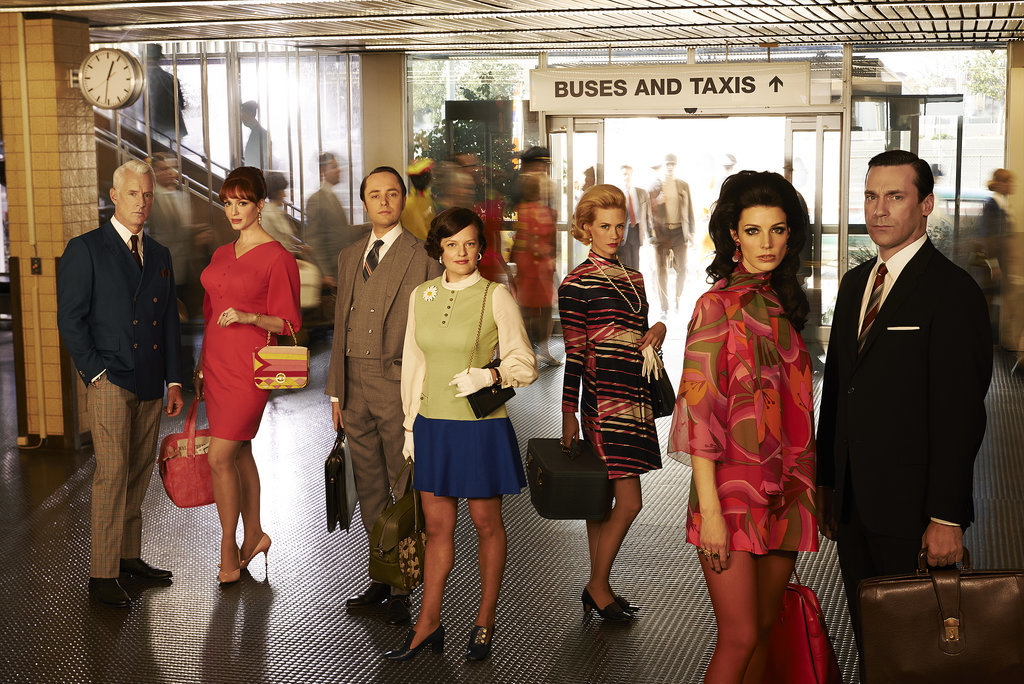
    mad-men-season-7
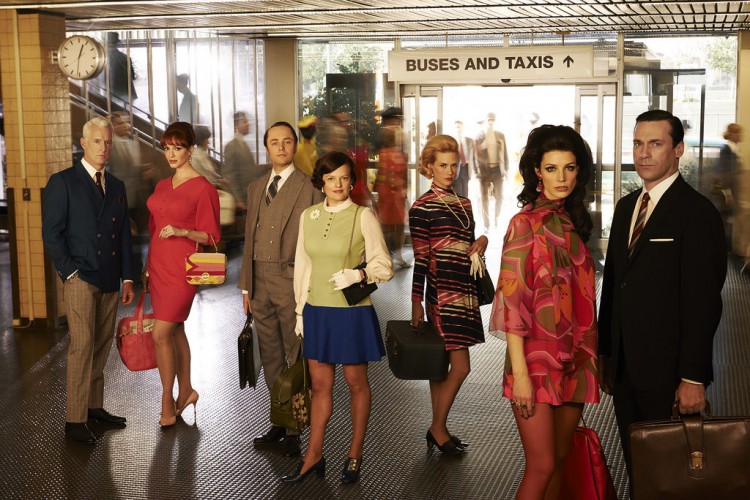
    In its final season, Mad Men is determined to come back to basics, and indeed, throughout these seven episodes the audience, and our characters, come face to face over and over again with the idea that happiness, however we define it, is inherently unattainable. Happiness is caught up in desire, and no matter what we have, we’ll always want what’s next.

    There is little here that hasn’t been explicated on the show already, but don’t mistake that for a lack of interest or thoughtfulness. Instead, the first portion of this final season takes us on a much deeper exploration of several (though, sadly, not all) of these characters, and brings questions and themes to the forefront that, until now, have been content to linger back, informing the events of the series, but never quite themselves becoming those events.

    Matthew Weiner and company have become very comfortable with Mad Men, and that comfort shows in this batch of episodes, which are typically competent and confident in their production. Likely owing to the split scheduling of the season, this first set lacks any formal experimentation along the lines of something like “Far Away Places” or “The Suitcase”, or even “The Crash,” though there are certainly moments like these scattered throughout, especially in “The Monolith,” and of course with the delightful sendoff given to Robert Morse’s Bert Cooper.

    The show has always been about the pursuit of happiness, and it has always viewed the ‘60s especially as a decade of progress, of movement from point A to some different, better point B. We are rapidly approaching point B now, as the ‘60s draw to a close, and while it’s different, many of our characters are, finally, hitting the wall that Weiner has been building for six seasons now—there isn’t much better to be found here. The season is littered with signs that the times are running away from Don and crew. Early in “Time Zones,” the season premiere, Don meets Megan at the airport, and the scene is shot in vivid color, a swanky ‘70s riff on the soundtrack, as Megan departs her cab in slow motion, dressed head to toe in the fashion of a decade that’s barely started. There’s a deliberate artifice to this scene, and to many like it throughout the season (like the party Harry takes Don to, for example). Artifice is all over this season, right from the first scene—where Freddie Rumsen speaks a pitch he didn’t write directly into the camera—to the scene in “Waterloo” where Pete, Peggy, Harry and Don rehearse their Burger Shack pitch, using placeholder dialogue all along.

    Also running throughout the season is an uncertainty of reality, one that is explored most obviously in “The Monolith,” as poor Michael Ginsberg is driven slowly insane by SC&P’s new IBM computer. The story, and his behavior, are outright weird, and they bely not just the encroaching ‘70s, but more generally, the advent of technological advances, including the moon landing that closes out the season, that threaten to displace the agency, and thereby the characters. In season six, assassinations dotted the ongoing narrative, increasingly destabilizing the world the characters inhabited. This season, it’s glimpses of the future that destabilize the characters themselves; the world around them, for the most part, is doing just fine without them.

    Even Don himself feels a little less than real, this time around. Peggy views him as this titan of advertising, a force of nature rather than a human being, and it causes her to resent him. When he does return to work, he ends up walking through the office like a bogeyman, talking to tertiary characters, in each shot occupying the middle of the frame uncomfortably. He sits alone, waiting, in the creative room, while behind him the work of the agency continues on. He’s been fired without being fired, and his presence there is awkward for all involved. In many ways, this season is Don’s slow realization of this fact. That extends to his marriage, as well. Toward the end of “Time Zones,” Don meets Lee Cabot (played in a random guest turn by Neve Campbell), and confesses that his marriage is already over—Megan just doesn’t know it yet. Over seven episodes, she has her own epiphany, finally leaving Don in “Waterloo,” although even then, leaving most of the words unspoken.

    Artifice and unhappiness afflict the other characters, too. Peggy ended season six in Don’s office, feet propped up on the desk, but here, she’s right back where she started, and this time she’s languishing under Lou Avery, a competent creative director, but one happy to be an office drone, turning in work good enough to keep from being fired. Don might have been an ass, but he challenged Peggy to do her best work, and now she’s used to that type of boss. Ditto Joan, who continues to be a partner in name only, clawing her way to greater responsibility within the agency. And as for Pete, when we first see him he’s tanned, he’s got a new wardrobe, and he seems to be significantly happier in LA. It’s when he returns to Cos Cob in “The Strategy” that we see the extent to which he’s fallen. Trudy is divorcing him, his daughter doesn’t even recognize him, and Pete is the same sad, manipulative little man he’s always been. It’s already too late for his new girlfriend.

    Despite all that, there’s an underlying humor this season, too. I’ve said before that Mad Men is stealthily one of the funniest shows on television, and that’s owing to the incredibly well drawn characterizations. Everything in the show feels very lived-in, and the hyperrealist approach to the writing and acting means that, sometimes, particular situations or lines of dialogue are just funny, the same way we occasionally find things funny in real life. It’s not a setup-punchline kind of thing, but instead is wonderfully organic humor. Case in point: “Excuse me, could I get a splash of whisky in this?” Especially as things threaten to become increasingly dourer, it’s great to know that we can count on several of these characters for a laugh. Sometimes life is hard, and sometimes it’s unbelievably funny, and Mad Men excels at presenting these moments in equal measure, and in making them as surprising and unexpected as they tend to be in reality.

    In other words, it’s business as usual for Mad Men. Each episode is its own little short story, and when they’re all taken together, they form their own kind of novel, a continuing look at Sterling Cooper & Partners, and the people who work there. The show is serialized only in the way that life is; events keep piling on, some significant, some rather mundane. People flit in and out at the strangest of times, in the unlikeliest of ways. If there’s a criticism to be had here, it’s that it all feels a little too familiar at this point. Once upon a time Mad Men could surprise you, whereas here, it feels a little like we’re going through the motions.

    I also can’t help but feel like I’ve watched an incomplete story. Narratively speaking, we don’t cover much ground this season, and most of the really good stuff seems to have been held on to for the final run, airing next spring. We don’t spend as much time with Pete, or even with Roger, as I’d like. Joan is criminally underused. Surely the writing team was pressed for time, needing to create a complete story in only half the space available—but at the same time, I feel like, as I did with Breaking Bad, that this first half has been stretched out a bit too thin, to allow for a back half that is relatively identical to what would have aired in a traditionally scheduled season.

    Even considering its structural failings (which are more the fault of AMC, really), this season still does a pretty major job of final seasons, which is to refocus on the important themes, and the important characters. In “The Strategy,” Don and Peggy come to the end of a very long journey, dancing together to “My Way,” and finally viewing each other as colleagues and as equals. We’ve been watching this relationship grow, been watching it wax and wane, as Peggy continues to grow as a professional and, finally in this season, begins to surpass her former mentor. It is a moment weighted in the show’s history, and it’s the kind of scene that only a show this detailed can deliver—and even then, it’s a moment that can only be delivered at this point in the narrative. The best thing about Mad Men is that Matthew Weiner has this brilliant, almost instinctual knowledge of structure, knows exactly where to place story beats like this so they might have maximum effect. And so the “My Way” scene doesn’t close the episode. Instead, we go out on Pete, Don and Peggy, eating in Burger Shack together, their own kind of family.

    The bottom line: it’s Mad Men. It’s got one of the best ensemble casts in the history of the medium, a truly stacked bench where great performances can come from any actor, at any moment. And those performances come frequently this season. Elisabeth Moss especially continues to shine, perfectly embodying the basically unwinnable situation Peggy finds herself in. She’s asked to be pretty unlikeable at times this season, especially in “A Day’s Work,” and yet Moss keeps our sympathies with Peggy, and presents a full, complete character at all times. Credit is due also to Kiernan Shipka, whose Sally Draper resembles Betty more with each episode. And now, more than ever, Jon Hamm anchors the show, providing a skeleton to a season that tends to dart around a little. With Don on the ropes, Hamm captures a desperate side to the character that we haven’t really been privy to be for. He’s cowed by Cutler, made subordinate to Peggy, is well on the way to losing wife number two, and just generally unable to keep up with the changing times. Once before, Dick Whitman simply took on a new identity, and everything followed from that. Now that’s not an option, and the result is some fantastic character work from Hamm.

    It’s still well written, and gorgeously shot. Sometimes the symbolism might seem a little bit on the nose (oh, are you stuck outside on the balcony, cold and alone, Don Draper?), but it’s all of a piece with the realist/novelistic approach that has become the show’s signature. You watch Mad Men for the same reason you read Fitzgerald, or Faulkner, or pick a writer: you watch it because there is a stylistic flair, a specific portrait of life that is unique to the writer, or the book, or in this case, to the show. We’re well past the point of debate. It’s a show you either love, or you don’t. The worst thing that can be said about this season is that it feels slightly scattered, spread a little too thin. There’s both a lot going on, and not very much. Once we’ve seen the rest of the story, I imagine this half-season will feel less so. But for now, there’s no escaping that it is half a story, and that takes away from the overall package ever so slightly.
  • 11 Gifs Explaining Why Breaking Bad Should Win at the Emmys

    11 Gifs Explaining Why Breaking Bad Should Win at the Emmys

    breaking_bad_5b_teaser_poster_0SPOILERS AHEAD!
    Breaking Bad‘s brilliant final season deserves all the accolades coming to it (see our Emmy predictions here), but why? Here are 11 reasons why Breaking Bad should win at the Emmys.

    So Hanks finds out about Walt in the premiere, but instead of lashing out, in true Heisenberg style Walt says:

    aqltj

    When Hank gets a little to close, Walt makes this little ditty.

    aqld4

    After Jesse discovers that Saul stop the ricin from Jesse to give to Brock, we see a very angry Jesse.

    aqm32

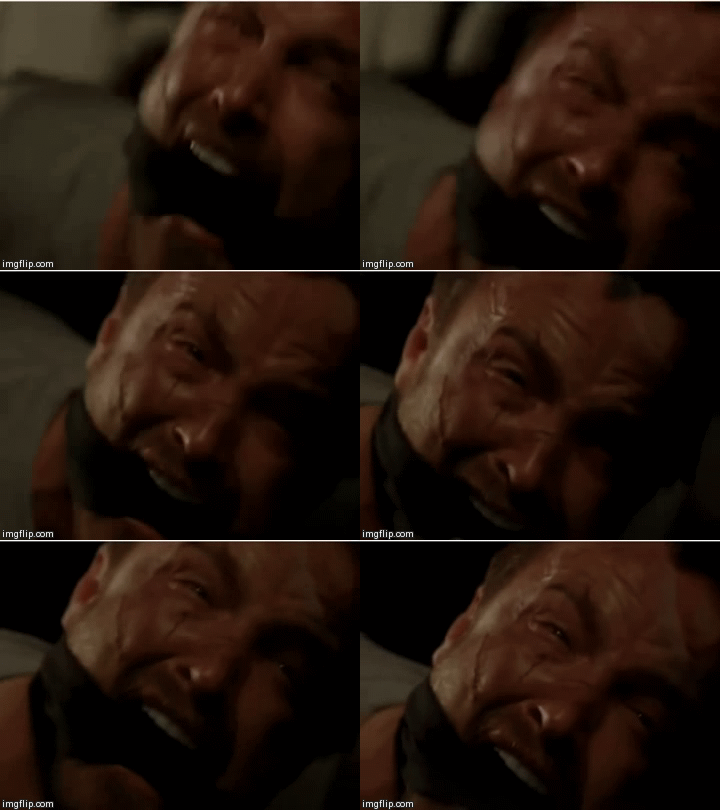
    Then when Meth Damon… I mean Creepy Todd… I mean Todd pays Andrea a visit to keep captive Jesse in line, we see sad Jesse.

    aqm15

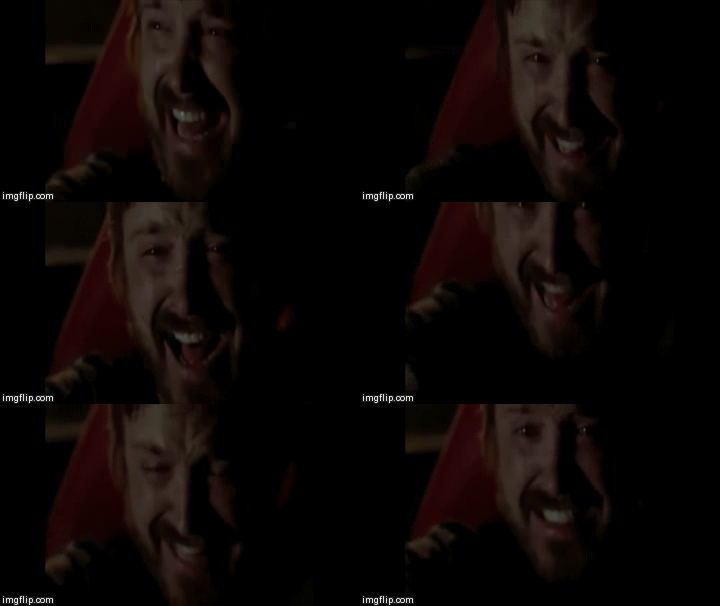
    But neither of those compare to happy Jesse in the finale. Emmy him, bitch!

    aqn9z

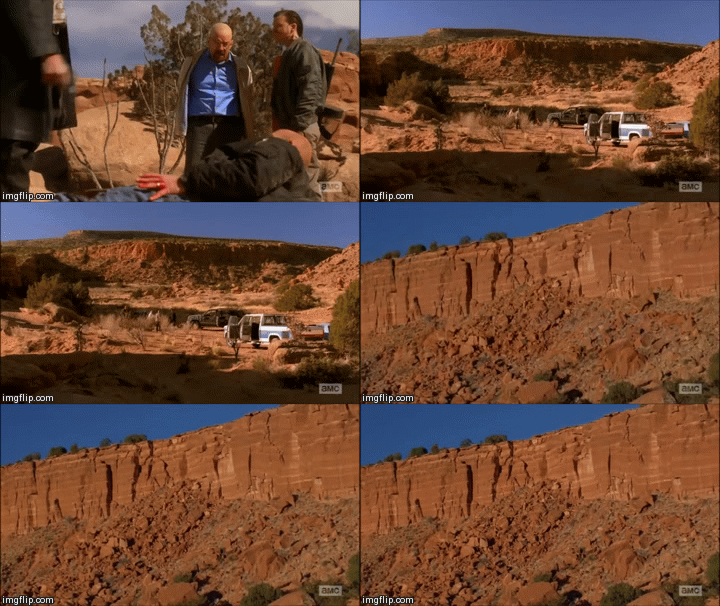
    In the instant classic “Ozymandias” we see the end of ASAC Schrader… I don’t have anything funny to say. That was just plain sad.

    aqlfz

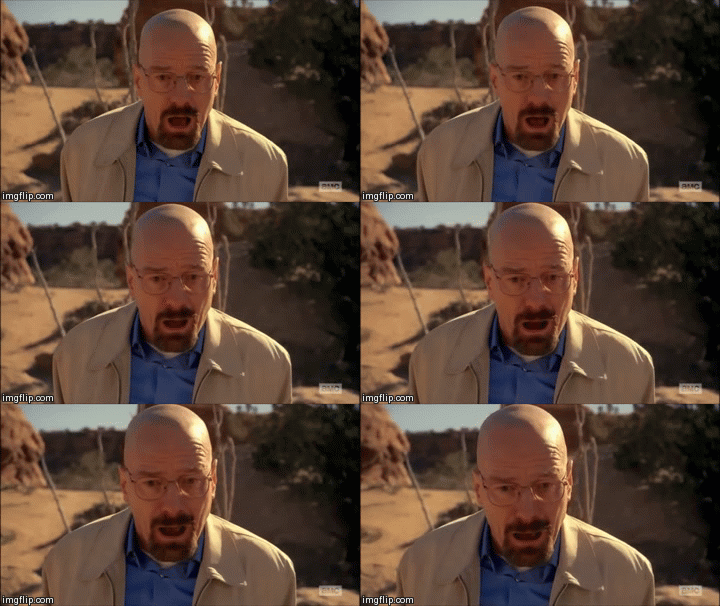
    Poor Walt… not like you caused this or anything.

    aqlh8

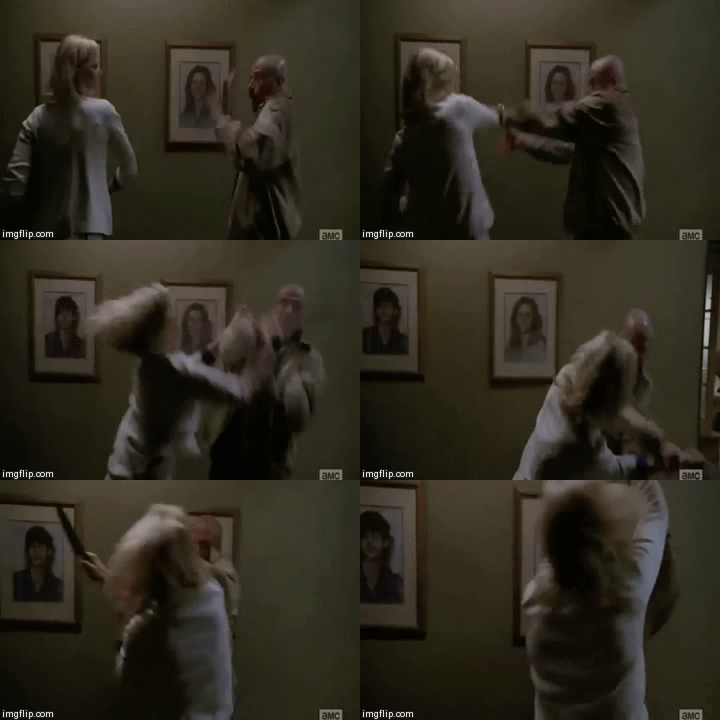
    The Skyler becomes a BAMF when Walt tries to get them to leave.

    aqlz6

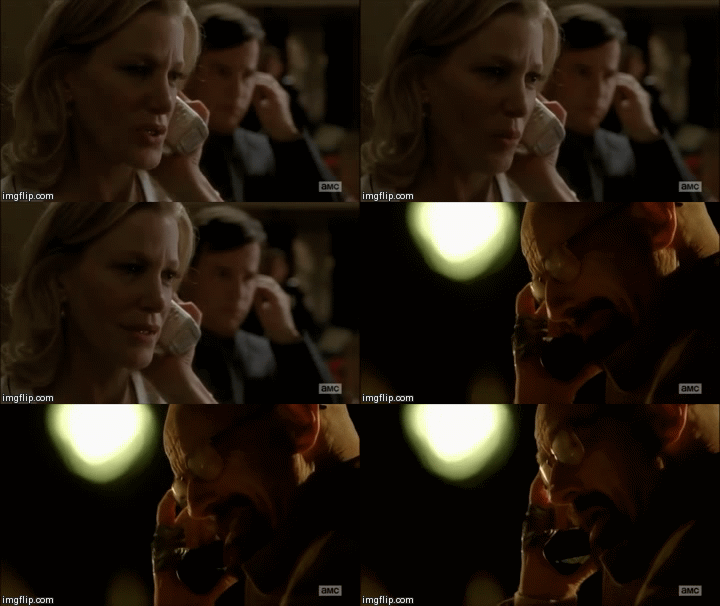
    However, there is some shred of the Walt we used to know when he protects Skyler with this phone call. Emmys for everyone!

    aqo3p

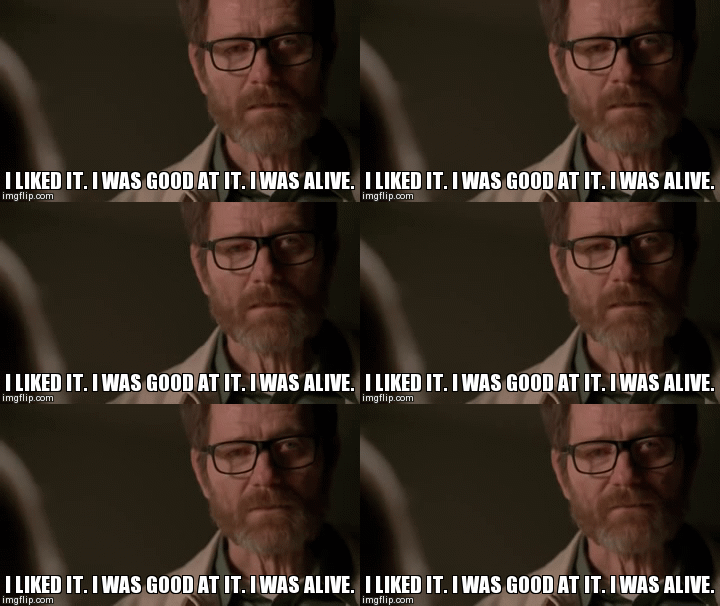
    Skyler: If I have to hear one more time that you did this for the family–
    Walt: I did it for me.

    aqmav

    Goodbye Heisenberg. We will remember your name.

    aqm7d Check out our Emmy Spotlight of the show here! What were your favorite moments of the final season of Breaking Bad?

  • 2014 Emmys Ceremony Superlatives

    2014 Emmys Ceremony Superlatives

    2014 Emmys REcap

    Last night’s Emmy awards were a mixed bag. There were some great wins and frustrating loses, and while the ceremony went smoothly, it did have its low points. So, here is a list of my so called Emmy superlatives.

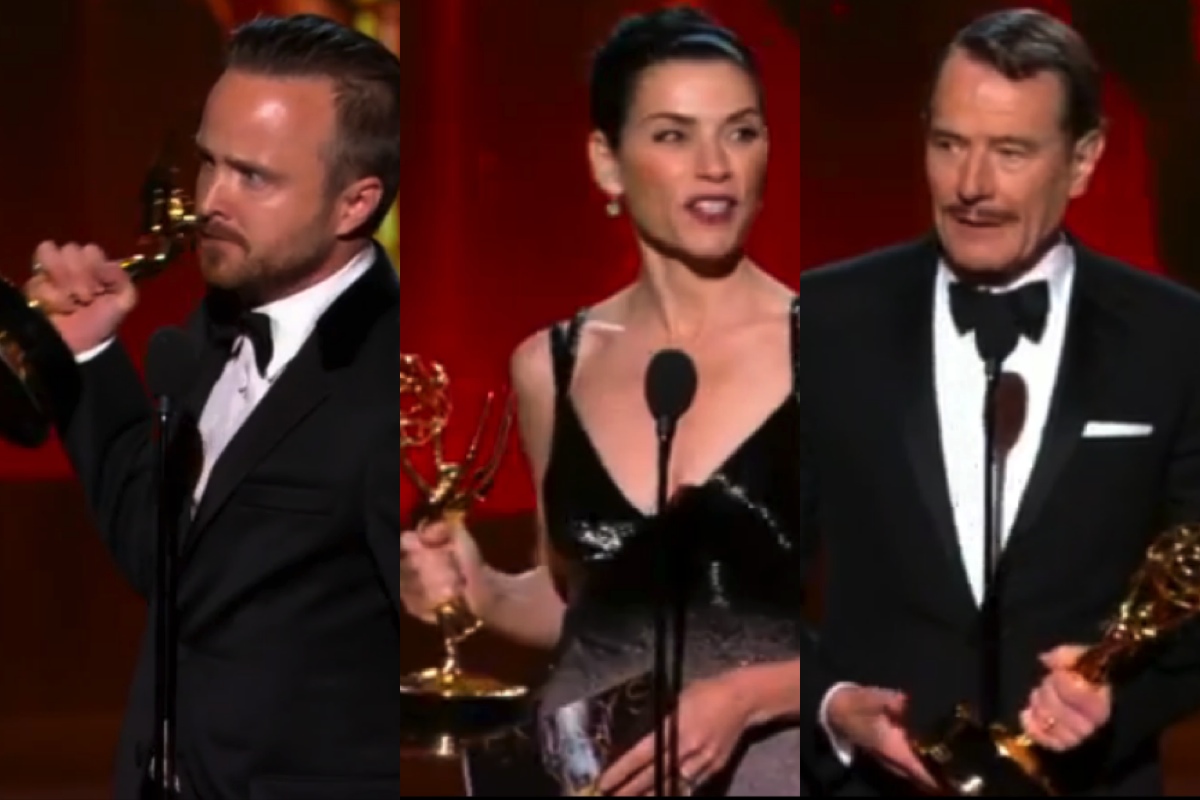
    Most Satisfying Win: Watching Bryan Cranston win his final Emmy for Breaking Bad was awesome, but I have to say that seeing Anna Gunn take her second Emmy made me incredibly happy. You go, girl.

    Worst Loss: As much as I absolutely love Martin Freeman and all of the work in his career, Matt Bomer should have won the Emmy for The Normal Heart.

    Best Surprise Face: Oddly enough, tons of people were genuinely surprised by their Emmy wins, but I loved Kathy Bates’ absolute shock when she won for American Horror Story.

    Best Gag: The Julia Louis-Dreyfus and Bryan Cranston Seinfeld gag. The world nearly exploded from that kiss.

    Best Segment: Billy on the Street… enough said.

    Worst Segment: As much as I absolutely adore Weird Al, that whole theme song thing wasn’t funny at all.

    Best I Lost, but I’m Happy For You Face: Kerry Washington‘s joy for Julianna Margulies when she won Lead Actress in a Drama Series warmed my heart.

    Best I Lost and I hate you face: The Normal Heart guys looked absolutely pissed off that Martin Freeman won

    Best Speech: It’s tough, but I’m going to say Bryan Cranston had the perfect mix of sweetness, humor, and modesty. It was such a well balanced and well spoken speech.

    Best Streak kept alive: A The Good Wife actresses winning an Emmy every single year so far. Kept alive this year by Julianna Margulies.

    Worst Streak kept alive: Modern FamilyI actually hate you.

    Best Repeat Winner: In a year with tons of repeat winners, it was great to see Aaron Paul take his third trophy for Breaking Bad.

    Worst Repeat Winner: Jim Parsons constantly wins for doing the exact same thing on The Big Bang Theory. This must end.

    Best Presenter: Amy Poehler and Seth Meyers going through ways to introduce McConaughey and Harrelson was pretty damn funny.

    Honorable Mention: What a tastefully done In Memoriam segment. Bravo.

    Check out our Emmy live blog here!

  • 2014 Emmy Awards Reactions (LIVE BLOG)

    2014 Emmy Awards Reactions (LIVE BLOG)

    Emmy-Awards-key-art

    Check out our reactions from this night’s Emmy awards below. Be sure to take a look at our predictions here and all of our Emmy Spotlights.

    [liveblog]

  • 2014 Emmy Predictions: Lead Actress in a Drama Series

    2014 Emmy Predictions: Lead Actress in a Drama Series

    Featured Lead Actress Drama

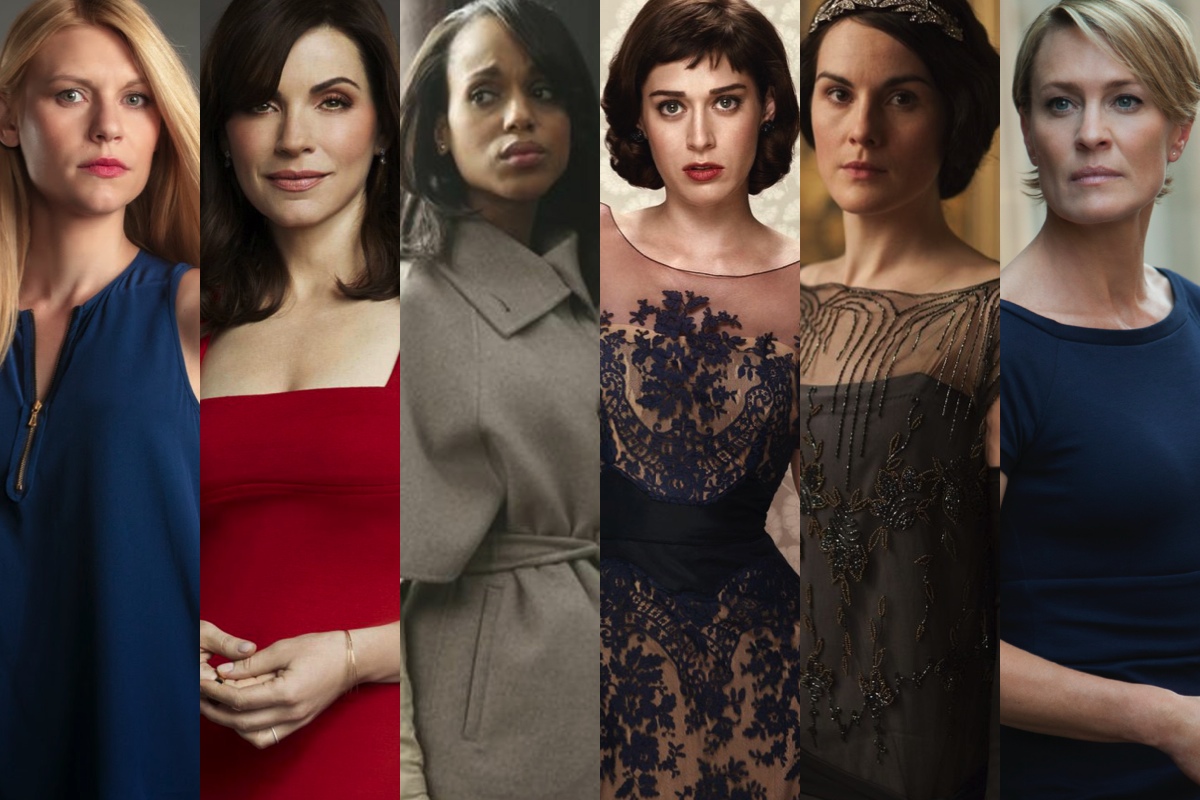
    When I was first writing the nomination predictions for this category, I said that this is one of the most competitive categories of the year. However, with all the episode submissions in it has turned into one of the weakest. Early frontrunner Robin Wright (House of Cards) seemed like a no brainer, until she submitted the season finale instead of the much buzzed about “Chapter 17.” Although she has a small crying scene in the episode, her actual active screen time only clocks in around 4 1/2 minutes.

    In a very last minute switch, I am throwing my support behind Julianna Margulies (The Good Wife), who submitted the post Will Gardner death episode. She has a crying scene early in the episode, but the rest is spent with Alicia trying to find out what a Will was trying to tell her in his last call. Although it isn’t as impressive as other possible tapes, she definitely has the buzz behind her to push her through.

    The spoiler right now is current two-time champ Claire Danes (Homeland) who has another screaming, ugly cry episode to submit. However, to make the episode even stronger for her, Carrie is actually sympathetic for once.

    In all, the race is fairly open. You can make an argument for every contender except for Dockery, but I think Margulies takes it by a hair.

    [maxbutton id=”3″]
    1. Julianna Margulies, The Good Wife (“The Last Call”)
    2. Claire Danes, Homeland (“The Star”)
    3. Robin Wright, House of Cards (“Chapter 26”)
    4. Kerry Washington, Scandal (“The Fluffer”)
    5. Lizzy Caplan, Masters of Sex (“Pilot”)
    6. Michelle Dockery, Downton Abbey (“Episode 4.1”)

  • 2014 FINAL Emmy Predictions: Lead Actor in a Comedy Series

    2014 FINAL Emmy Predictions: Lead Actor in a Comedy Series

    [maxbutton id=”3″]

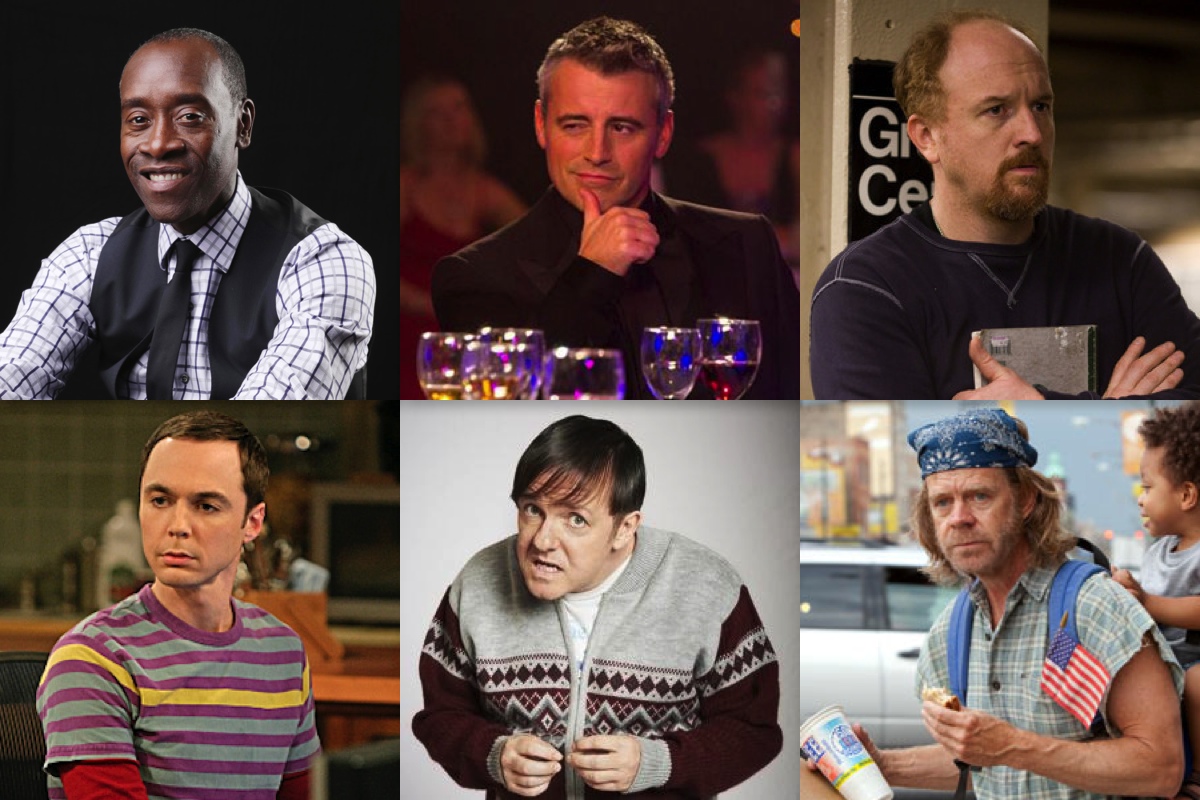
    Lead Actor in a Comedy Series is pretty much an open race and it has been that way even before the nominees were announced. In the past, the default winner has been Jim Parsons (The Big Bang Theory), and he returns strong to the race with yet another Sheldon is drunk episode. However, for me the clear standout from the pack, in terms of both buzz and episode is William H. Macy (Shameless). He got in partially because of the odd buzz around his show’s switch from drama to comedy, but he also has his name. He’s the veteran of the group. He’s also the one actor in the lineup that hasn’t been nominated for his role before. Then, there is his episode, and it’s a doozy. He’s dying… doesn’t standout much more than that.

    Right behind him is Emmy darling Ricky Gervais (Derek). In addition to winning an Emmy for just about anything, he ended up being a surprise nominee that shouldn’t have been a surprise at all.


    1. William H. Macy (Shameless)
    2. Ricky Gervais (Derek)
    3. Louis C.K. (Louie)
    4. Jim Parsons (The Big Bang Theory)
    5. Matt LeBlanc (Episodes)
    6. Don Cheadle (House of Lies)

  • 2014 FINAL Emmy Predictions: Lead Actress in a Comedy Series

    2014 FINAL Emmy Predictions: Lead Actress in a Comedy Series

    [maxbutton id=”3″]

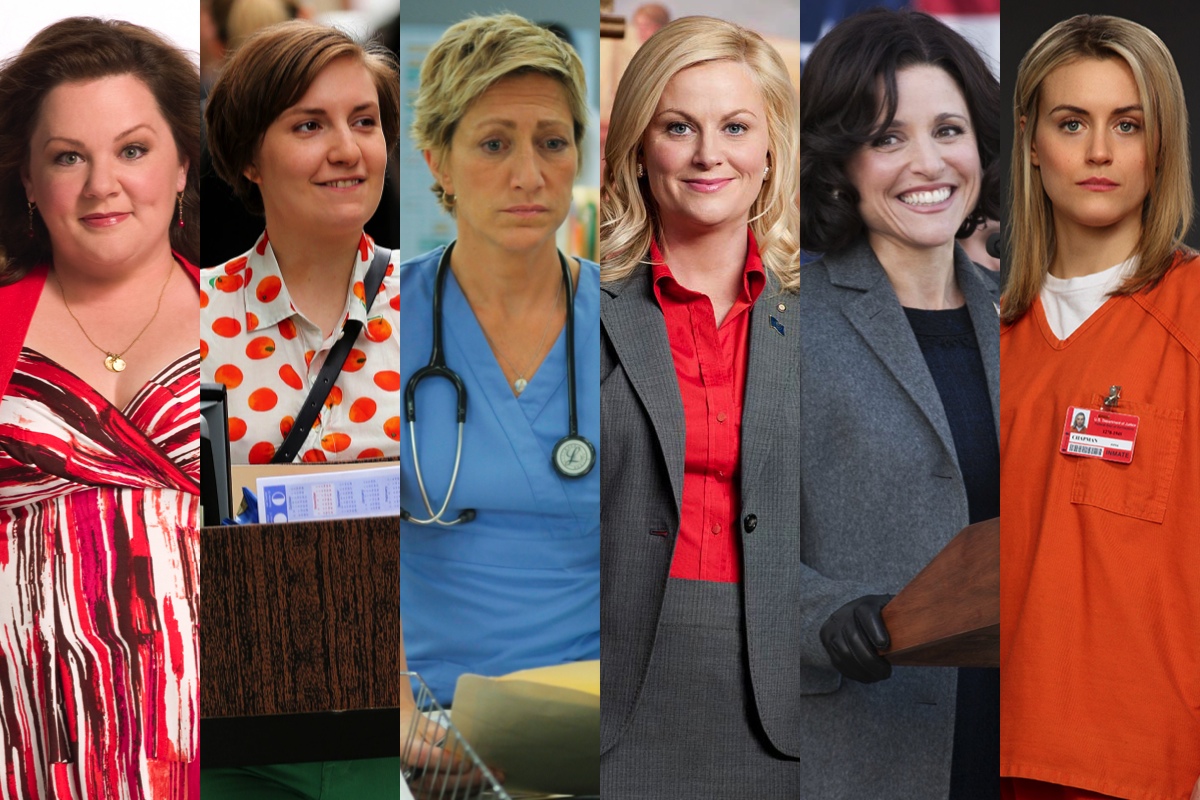
    Julia Louis-Dreyfus (Veep) is going for the three peat, and I think she’s going to do it. For some odd reason, she’s been unable to submit her best for Veep. The first season she submitted the episode tears when there were clear alternatives like the Pilot and “Baseball.” The second season, she submitted the episode “Running”, which offered her some physical comedy and intoxication, but was no where near as strong as season finale “DC.” However, she still won both times. Why? Because an average Julia Louis-Dreyfus tape, is a great one in the Emmy field. In the episode “Crate”, which is along the same lines. She doesn’t have too much to do, except for the incredible bathroom scene when she discovers that she is becoming president. It seems like enough, partially in thanks to the relatively weak field of episodes.

    Her closest competition is Melissa McCarthy (Mike & Molly). Although she was snubbed last year after winning for the freshman season and being nominated once more, she comes back strong with an episode that has all the hallmarks of an Emmy winning episode. First, there’s range. It’s a surprisingly emotional episode of the series, which isn’t something you usually get from a multi-cam sitcom. The episode has a strong storyline with a beginning, middle, and end. Lastly, she has a lot of impact. You feel bad for her, and sometimes that’s all you need.

    There is some competition coming from Amy Poehler (Parks and Recreation), who is the overdue choice, and Taylor Schilling (Orange is the New Black), who would be the freshman choice. I could see it going either of those ways before going back to McCarthy, but I think Dreyfus is the safer choice here.

    1. Julia Louis-Dreyfus, Veep (“Crate”)
    2. Melissa McCarthy, Mike & Molly (“Mind Over Molly”)
    3. Amy Poehler, Parks and Recreation (“Recall Vote”)
    4. Taylor Schilling, Orange is the New Black (“Fucksgiving”)
    5. Lena Dunham, Girls (“Beach House”)
    6. Edie Falco, Nurse Jackie (“Super Greens”)

  • Emmy Spotlight: Orange is the New Black

    Emmy Spotlight: Orange is the New Black

    o-ORANGE-IS-THE-NEW-BLACK-facebook1

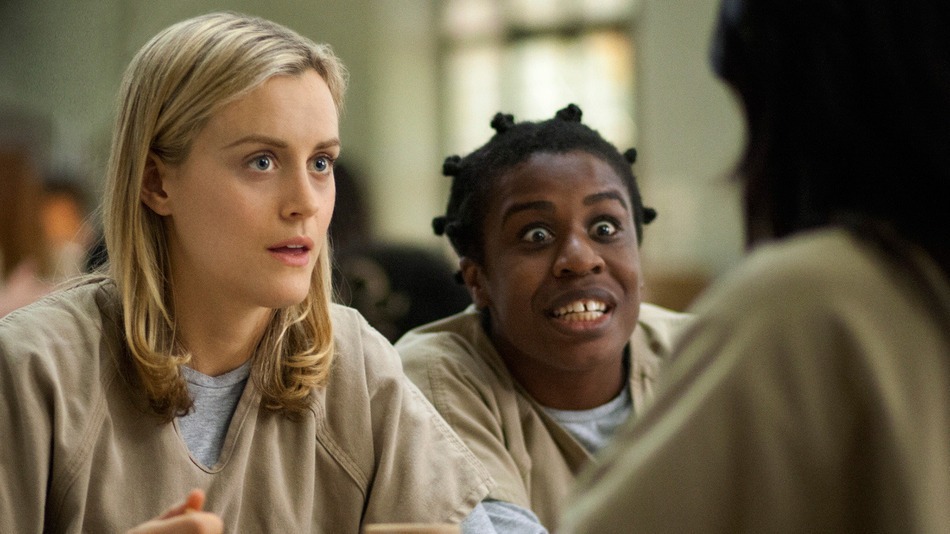
    Did you know that it’s the first season of Orange is the New Black that is in contention at this year’s Emmy ceremony? I sure didn’t. So go ahead and check out my absurdly belated review of season two that I totally didn’t write by accident after you finish up here. And now, let’s all reach back in our minds, to that desolate wasteland in our collective memory known as “summer 2013,” which is when the first season of Orange is the New Black aired before it was then summarily ignored by that year’s Emmys because eligibility windows.

    The first season of Orange is the New Black is a solid dramedy. It’s pretty hard at this point not to look at it comparison to the second (and I think superior) season, but I’ll try my best. What I love most about it, which I briefly touched on in my piece on season two, is that the show is a total Trojan horse. On its face it appears to be yet another show about a privileged white lady, in over her head, even more so considering it’s from Jenji Kohan, who gave us Weeds. But like that show (which I’ll argue forever is great), Orange has a much different, better, and more interesting agenda. For while Piper is certainly our entry point into the crazy world of Litchfield, it becomes evident very quickly that Kohan and company are much more interested in the characters that inhabit the prison, and in the ways that they cope with life behind bars. It’s a wonderful bait and switch, and the result is a television show that features one of the most diverse, inclusive casts in the history of the medium.

    It’s not all bait and switch, of course. The premiere episode especially is heavily focused on Piper, as it slowly transitions the audience from her comfortable upper-class existence into the harsh realities of prison life. Appropriately titled “I Wasn’t Ready,” the episode also firmly establishes the flashback structure, most reminiscent of a show like Lost, that enables the series to explore its characters in such impressive depth. While at first this exploration is reserved for Piper, it quickly extends outward. At first the characters appear to Piper, and therefore to us, as clichés. But slowly, as Piper gets to know both them and the prison better, we see that each is a complex, well-rounded individual.

    It says something about how well the rest of the season does its job that, in re-watching “I Wasn’t Ready,” Piper comes across as, frankly, grating. Similarly, the other characters come across as flat and one-note, especially as they’re introduced with their specific roles within the prison. One of the biggest benefits of the Netflix model is that we don’t need to wait thirteen or more weeks for the shading to be filled in, as we would with a typical television show. Instead, the rough sketches presented here are fleshed out as quickly as our eyes will allow.

    The show grows exponentially throughout the season, and the retrospective strangeness of the premiere suddenly seems all of a piece with the story the show is trying to tell. Insofar as the season is about Piper’s journey, then, it’s quite successful. But it’s most successful in telling the stories of the other inmates. Kate Mulgrew is a standout as Red, who runs the kitchen and makes Piper’s life hell before becoming a valuable ally. On the outside Red was herself an outsider, starved for the attention of the wives of the Russian mobsters, until she falls in with the crowd herself. Laverne Cox is excellent in a small role as Sophia, a transgender woman who committed credit card fraud to finance her surgery. And Taryn Manning gives a frequently genuinely frightening turn as Pennsatucky, an under-educated meth head in for the murder of a worker at an abortion clinic. But even the background roles, tertiary characters who might not have much bearing on the plot, but who add depth and color to the setting of the show, are memorable and even moving. Morello, Jones, Big Boo, Taystee, Poussey, and on and on—slowly but surely, nearly every single inmate becomes a living, breathing character.

    It’s somewhat disappointing, then, how heavily the season leans on Piper and Alex. It’s not that Laura Prepon is bad in the role—in fact, she’s the better of the season’s several antagonists, since her preexisting connection with Piper raises the stakes for both Piper and the audience. But with so much else going on at the prison, it can sometimes be a drag to spend so much time with arguably one of the least interesting characters, or at least, the most familiar. There isn’t very much left to learn about Piper, whereas we as an audience are seeing someone like Red, or Sophia, or Miss Claudette, for the first time. What we do learn about Piper is how she is changed by these women, and by her new circumstances; everything we learn, we learn through contrast to these other elements.

    I think part of my discomfort with the focus on Piper is also the relative lack of an overarching story, one that connects the many, many disparate threads of the season. (I’m cheating slightly by noting that season two goes a long way to fixing this, by way of introducing Vee, but hey—it does.) Pablo Schreiber’s Mendez rounds out the villains of season one, and his dealings with Daya and Tricia do bring in many of the other supporting characters, but Piper and Pennsatucky’s ultimate showdown feels very separate from much of the show, just as the rest of the show at times can feel very separate from Piper. Curiously, even though Piper is one of the few characters in season two who doesn’t interact directly with Vee, that sense of her as just another inmate actually makes the character feel more integrated into the show.

    It’s important to remember, though, that these episodes can be watched straight through in a handful of sittings (if not just one), and in many ways they are meant to be taken more as a whole than they are as a series of thirteen separate stories. Taken as such, the season becomes an examination of morality, in a sense, of the way that decisions long forgotten, or tiny indiscretions thought unnoticed, can suddenly dominate our lives. Laura Prepon plays Alex as a toxic presence throughout Piper’s life, one that simply won’t go away, while scenes with Larry and his parents create an ever larger gap between what Piper was and what she is now. Running through all of that is Pennsatucky, with her brand of pure, unbridled chaos. As for everyone else, they fall somewhere along the spectrum, each their own special shade of grey, whether we’re talking Bennett, the well-intentioned fool, or Fig, who emerges by the end of the season as a devious administrator, or Piper herself, a spoiled white girl who maybe is learning to be less so. (As an aside, Alysia Reiner is absolutely fabulous as Natalie Figueroa, always striking the perfect balance of no-nonsense and heinous bitch.)

    When we get to the end of the season, Piper is pummeling the life out of Pennsatucky, and it’s a moment that is appropriately horrifying, and yet in a way also liberating. It’s Piper embracing prison life for all that it entails, her sign to herself that yes, she is ready. And we have Healy, who leaves Piper to die. And we have Red, down a peg, having lost her kitchen and with it her status in the prison. Perhaps it is most fitting, then, to view this first season as a collection of different stories, united by their common themes, and by their common setting. Funnily enough, the comparisons to Lost don’t seem to end with the structural similarities; there’s something to be said for the idea that Litchfield, as a closed system, is a space for the inmates, and the COs as well, to confront their own worst demons, whether they reside in their pasts or in their present.

    In closing, then, I want to especially call out the Christmas pageant that closes out the season in “Can’t Fix Crazy”. The entire sequence is wonderfully incongruous, breathtaking in its simplicity and in its beauty. When Norma breaks the silence caused by Suzanne’s forgotten lines, with her surprisingly gorgeous voice, the moment catches you off guard in the best possible way, precisely because it is so unexpected to see anything even remotely resembling unbridled joy up on that stage.

    The incongruity carries into Piper and Pennsatucky’s shiv duel out back, and I think it’s worth noting that when Piper does finally snap, it’s at Pennsatucky’s insistence that she is unworthy of God’s love, of anyone’s love at all. That exact fear has nagged at the back of Piper’s mind all season, but really, it’s the same fear that plagues every single character on the show, whether inmate or guard or administrator. For whatever reasons—the reasons don’t ultimately matter—the various residents of Litchfield are afraid that they are unworthy of love. And so the best thing about Orange is the New Black is not only its expanding scope, but its insistence on revealing these people for the human beings that they are. It’s highly entertaining and often funny, but it’s also piercing commentary on our prison system, on the way that we as a country systematically and institutionally devalue inmates who, really, have the same problems any of us has. Orange is the New Black is about finding commonality where one least expects it—commonality between inmates and free folk, between black and white, rich and poor, and any other divisive binary you can dream up. The characters and setting might be new to television, but themes aren’t, and it’s that universality that makes the show so very effective, and which has so quickly cemented it in the cultural zeitgeist. And the best thing about considering this first season on such a delay? We already know the show only gets better from here.

  • 2014 Emmy Predictions: Supporting Actor in a Drama Series

    2014 Emmy Predictions: Supporting Actor in a Drama Series

    [maxbutton id=”3″]

    The Drama Supporting Actor is a category that comes down to the episode submissions, and I wouldn’t have it any other way. The race comes down to the three contenders:

    Peter Dinklage, Game of Thrones (“The Laws of Gods and Men”): Peter Dinklage won this category for the show’s first season, with an episode that really only had one scene for him to shine. The same somewhat goes for his episode submission this year. As Tyrion stands trial for murder, he must watch as his defense is slowly chipped away until he reaches his breaking point and delivers a passionate speech condemning everyone in the room. It is really the best kind of Emmys speech. He is relentless and there are yells, gasps, and screams as he speaks. There is also a lot of gravitas in the performance. You feel bad for Tyrion. You’re on his side. Then, the episode closes on his face. The one drawback is that you have to wait for that scene… a long 50 minutes.
    Aaron Paul, Breaking Bad (“Confessions”): Aaron Paul has win this category twice. The first time was for the episode “Half Measures.” It was a bit of a watershed episode for Jesse. He must deal with drug dealers who are using children to sell drugs. His second win came from the episode “End Times,” which was one of the strongest episode submissions for a supporting actor in years. “Confessions” is similarly a watershed episode. Every single scene is just Jesse pouring out emotion whether it’s sadness, anger, or all out rage. His one hitch is that he doesn’t show up until about halfway through the episode. Although, he is on screen the entire time from that point.
    Josh Charles, The Good Wife (“Hitting the Fan”): I’m really glad that Josh Charles submitted “Hitting the Fan” opposed to “Dramatics, Your Honor.” While the latter sure is memorable, “Hitting the Fan” offers him a lot of emotion, opposed to his usual stone face. The best part of the episode is that the now iconic desk scene opens the episode. He is complete war mode and he shows it with complete rage. He also has the advantage of having consistent screen time.

    My head is telling me to go with Dinklage, my gut says it’s Charles, and my heart wants to go with Paul. This is as much of a toss up as categories get. I’m throwing a dart and landing on Aaron Paul here, but very unconfidently. If Dinklage or Charles take it, I will be just as happy.
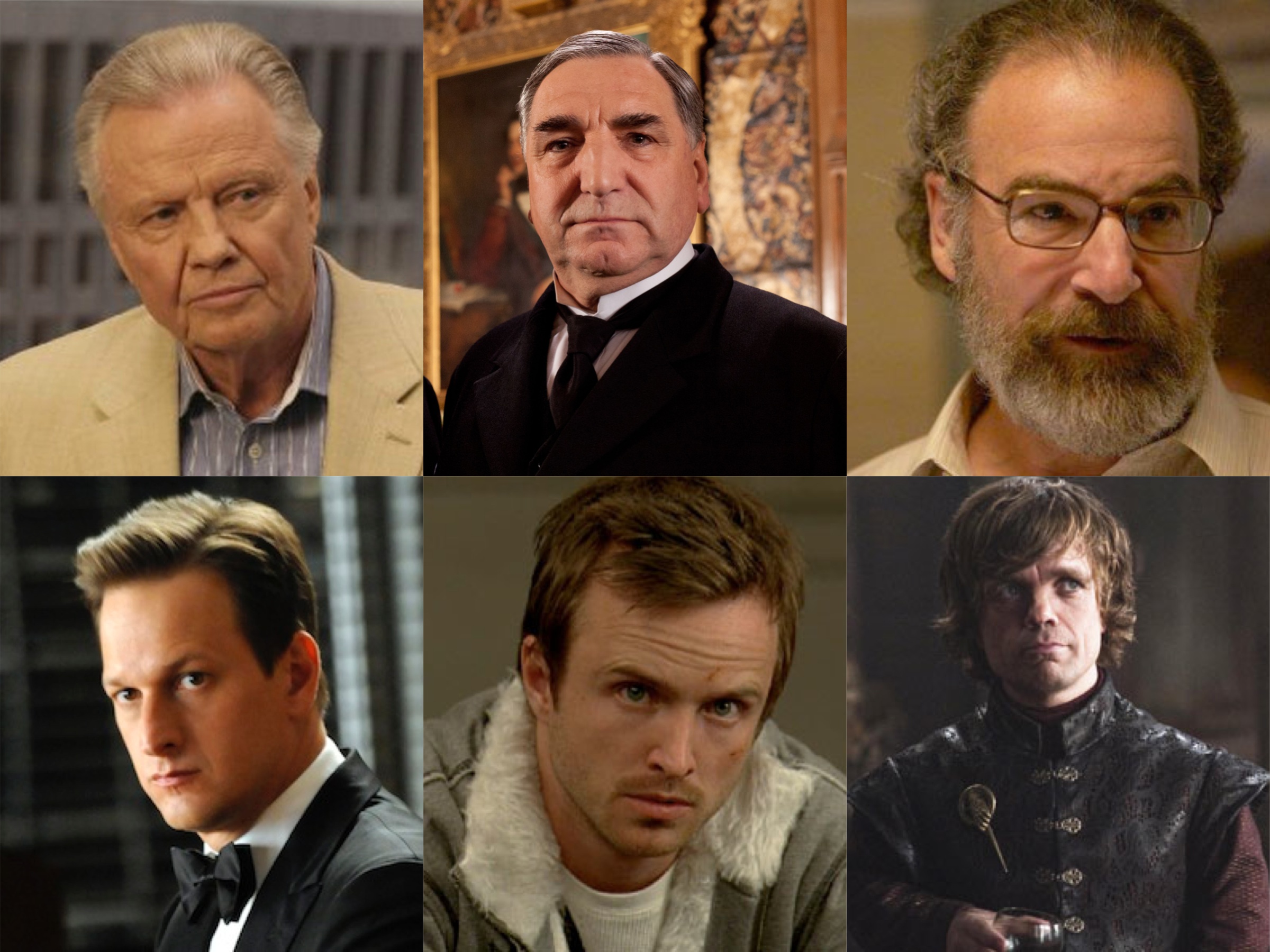
    1. Aaron Paul (Breaking Bad)
    2. Josh Charles (Game of Thrones)
    3. Peter Dinklage (Game of Thrones)
    4. Jon Voight (Ray Donovan)
    5. Mandy Patinkin (Homeland)
    6. Jim Carter (Downton Abbey)

  • Emmy Spotlight: Veep

    Emmy Spotlight: Veep

    Selina signs her book

    If at any point this essay devolves into just a running list of one-liners, I apologize. But with a show as consistently, uproariously funny as Veep, it’s nigh impossible to resist the urge to simply revel in the wonderful blue humor of Armando Ianucci’s vulgarity-ridden zingers. In the hands of the talented ensemble that fills out the cast, swearing is elevated to an art form, even if no one quite measures up to the imitable Malcom Tucker, played by Peter Capaldi on Ianucci’s The Thick of It, the BBC satire that is Veep’s precursor.

    Now in its third season, Veep has thoroughly demonstrated that it only gets better with age. With its focus on Selina Meyer’s cover presidential aspirations, this season has a stronger narrative thrust than the previous two, as it displays greater comfort with the characters and setting, and more confidence in its audience, allowing stories to unfold serially over multiple episodes. There are still elements of the series’ trademark problem-of-the-week model, but even on these outings (including a trip to Silicon Valley and a stop at a gun show in Detroit), the hijinks that the Veep’s staffers get up to have repercussions beyond the individual situations.

    Don’t get me wrong, it’s not like this is 24 or something. Beyond “Selina campaigns for president” the plot is as secondary as it ever was. But even this minor shift in the season’s structure is extremely rewarding. Now that they’ve an actual goal to work toward (as opposed to continued languishing in the uselessness of Selina’s office), we see new aspects of these by-now familiar characters.

    As ever, and even more so now, it is the characters that are Veep’s greatest strength. This is an incredibly strong ensemble, gifted in their delivery of some wickedly funny dialogue, and endlessly compatible. The characters can be paired off in basically any combination, and hilarity is guaranteed to ensue, and in fact this season sees some fruitful experimentation in this regard, especially with the running gag of Sue and Kent’s maybe-flirtation, maybe-mutual hatred. Even established character traits, such as Dan and Amy’s rivalry, come into clearer focus when they have something concrete, like the campaign manager position, to compete over.

    Of course, all of that means nothing without the performances to back it up, and it’s not overstating things to say that Veep has one of the best comedy ensembles to ever appear on television. Leading the cast as Vice President Selina Meyer, Julia Louis-Dreyfus has won two Emmys for the role and is now nominated a third time for Best Actress, and she continues to earn it a hundred times over. She is amazing with all her material, but she is best at conveying Selina’s pure, seething hatred for everything and everyone around her. Pretending to care about her staff, her constituents, even her family, is so obviously the most difficult aspect of Selina’s job, and of her personal life. Not that she pretends very often—some of the season’s biggest laughs come from Selina’s barely veiled, and sometimes not-at-all veiled, disdain for the people she is forced to interact with. (My personal favorite: Selina’s every interaction with Minna Hakkinen, whom she insists on referring to as the “ex-Prime Minister of Finland,” every time, no matter what: “In your country, people fuck snow.”)

    The rest of the cast is fantastic as well. Tony Hale is perfectly cast as Selina’s simpering personal aide, Gary, who this season suffers a shoulder injury that makes him unsuited even for his ridiculously unnecessary job as, essentially, a place for Selina to hang her purse. He’s eminently pitiable, but just annoying enough that you don’t feel bad for laughing at him. Of course, Hale has experience with this type of character, having spent four years as veritable punching bag Buster Bluth, and in many ways Gary is a toned-down variation on that same attention-starved, slightly slow-on-the-uptake, tertiary team member. Dan Reid and Anna Chlumsky are reliably funny, trading off the Everyman role while the other indulges in some neurosis or other. Scott is especially effective during Dan’s epically chaotic tenure as Selina’s campaign manager. Matt Walsh’s Matt McClintock is as endearingly bumbling as ever, but he also meet his wife (played by Kathy Najimy) and see a home life that suggests he’s not quite as pathetically useless as he appears to be at work.

    The ensemble continues to grow, as well, as Sufe Bradshaw’s Sue has an increasingly larger role, Kevin Dunn joins the regular cast as Ben, and Timothy Simons continues to steal the show as perennial punching bag Jonah. And there is also a strong cavalcade of guest stars: beside the aforementioned Najimy and Gary Cole’s Kent, Chris Meloni also gives a hilarious turn as Ray, Selina’s physical trainer/fuckbuddy, Zach Woods as Amy’s milquetoast boyfriend Ed, and Diedrich Bader as a shit-stirring campaign manager who manages to (further) turn Selina against her staff. Frankly, there isn’t a weak link in the bunch here—every single character, including the minor one-off characters who drop by for just a line or two, can be counted on to generate laughs.

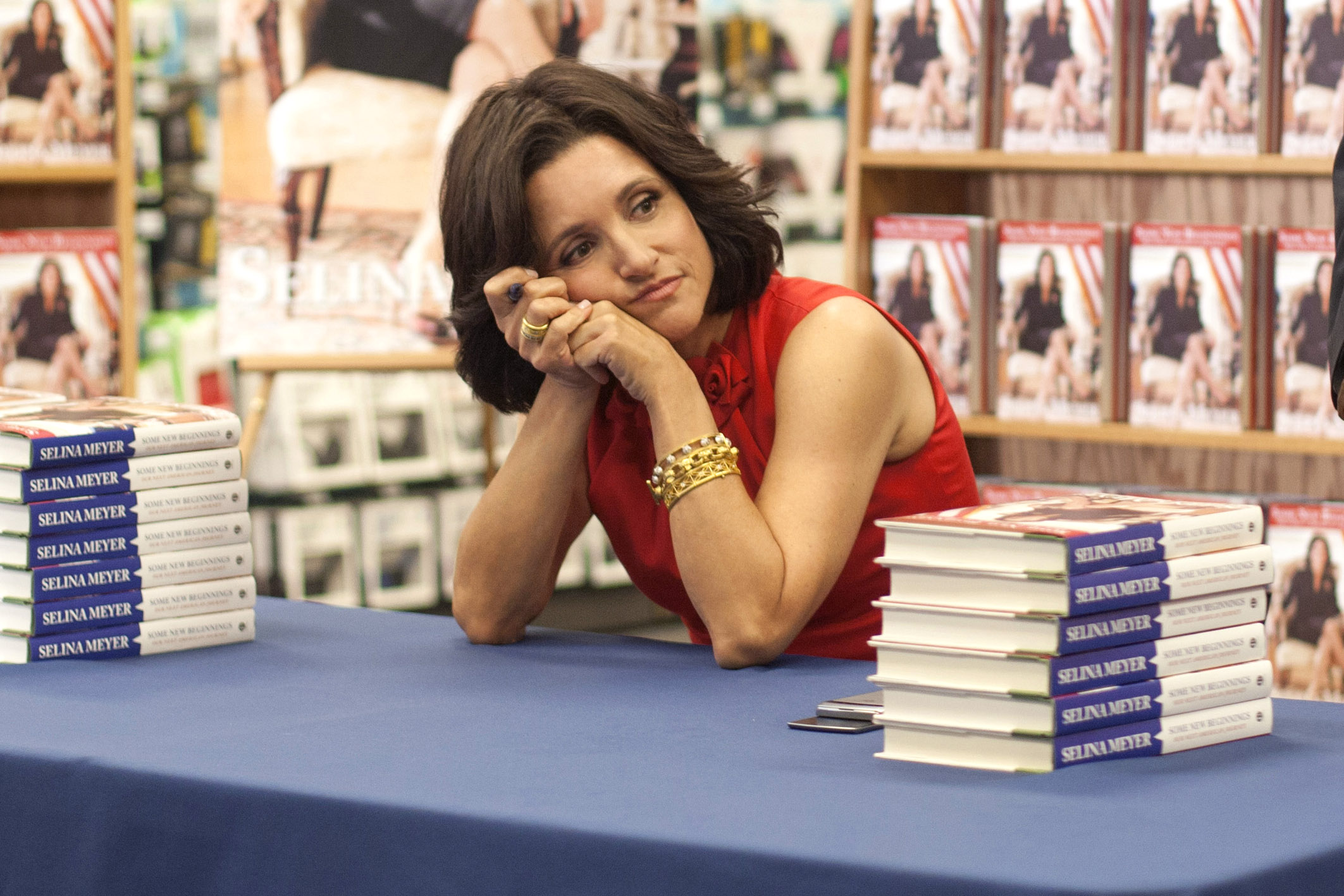
    For that, credit belongs chiefly to the twisted, vulgar genius of Armando Ianucci, who truly is a poet of swear words and insults. The epithets that fly in every episode are endlessly inventive, bringing new meaning to the phrase “colorful language,” but more than that, they are backed by a witty, acerbic sense of humor (a running joke late in the season involves the First Lady’s attempted suicide), often crass (never forget: “That would be like using a croissant as a dildo”), but with such a pitch perfect ear for the bullshit nonsense of politico-speak that it always feels like smart satire, rather than cheap laughs. In fact, “feels like” is the wrong phrase. This is straight-up satire, through and through. Veep thoroughly understands the emptiness of so much of the political cycle, of the meaningless campaign slogans and press appearances. Nowhere is this better represented than in the premier episode, where the Vice President signs copies of her book, a fake smile plastered on her face. The book is called “Some New Beginnings: Our Next American Journey,” which makes no sense; it was, naturally, ghostwritten; and when Selina finally bothers to open up a page, she finds that it doesn’t make a lick of sense.

    Like all great comedy, the secret of Veep’s success is that at its core, it speaks the truth. The reality might be heightened, but Washington really is this dysfunctional, and the system really is up to its eyes in bullshit. That’s what makes the characters unrepentant awfulness so entertaining. We’ll gladly watch them bumble around because they deserve every damn bad thing that happens to them. Unfailingly, Selina and company’s plans fall to utter shit (I would call them best-laid plans, but they so rarely are), and the show not only unfailingly mines humor from it, but it pays increasing dividends too. They can’t do anything right because they are incompetent idiots, but they’re also terrible people, instinctively mean and socially illiterate. Their messes are frequently, perhaps even exclusively, of their own making, and there is never any doubt that they deserve their fate.

    And yet, Armando Ianucci and his team never fall from the tightrope they walk every episode—Selina and her team remain loveable underdogs, even (and perhaps especially) in their most insensitive, idiotic, blundering moments. Nothing encapsulates this idea better than the finale, where we see Selina’s staff briefly excel in their new roles, before failing spectacularly and expectedly. “Crate,” the first part of the season finale, ends with POTUS stepping down, and Selina becomes president through basically no effort of her own—and to boot she basically cheers on FLOTUS’s dubious mental health and welcomes her latest suicide attempt—and the moment somehow actually comes off as triumphant, with her Gary manically celebrating in the ladies’ room (nosebleed notwithstanding). That she’s supposed to be having a meaningful, serious conversation with two immigrants could not be less important to her, and after getting the news of her impending promotion, she has a shit-eating grin plastered to her face the entire time. That’s politics, and that’s Veep, and I wouldn’t have it any other way.

     

  • Emmy Spotlight: True Detective

    Emmy Spotlight: True Detective

    Matthew-McConaughey

    Can you believe that we’re far enough past True Detective’s finale to have already arrived at the True Detective backlash? Neither can I, but here we are nonetheless. In the words of the ever-quotable Gawker Media, Nic Pizzolatto is a schmuck, and he probably also hates women? Pizzolatto mostly disregards that criticism, and mostly he does this for good reason. True Detective tells a story of violence against women—systemic, socially engrained, physical, sexual, and emotional violence against women. From beginning to end, the implication is that it the capacity for this violence is basically in the soil of the godforsaken Louisiana that the show depicts.

    The crime that sets this whole chain of events in motion, in 1995, is like something out of Hannibal, and is unlike any case Marty Hart or Rust Cohle have worked on before. Their investigation leads them down a dark, twisting path, until they appear to catch their man, and Hart shoots him dead in anger. But in 2002 it becomes clear that this is not the case, and Cohle spends the next decade trying to unravel the mystery. Like the audience he becomes bogged down in mythology, in ideas of the Yellow King and Carcosa, and it drives him half-mad. And in the intervening time, we watch each man in fits and glimpses, always comparing them to each other, watching as the case, or else their inherent natures, chips away bit by bit at their souls.

    It goes without saying, then, that True Detective is relentlessly dark, and not just in terms of the violent crimes that Hart and Cohle investigate. These men have dark lives, as well. Rust Cohle is divorced, and has recently lost his young daughter, and has turned to a Nietzschean, nihilist philosophy, refusing to recognize any meaning to life or the world around him. Marty Hart is a womanizing bastard, a perennial philanderer, and a misogynist hypocrite. Through some awful twist of fate, it is these men who are charged with the investigation of a serial murderer who abducts and horribly maims children. But True Detective is less interested in being a mystery about this killer’s identity than it is in being a portrait of these two men across the nearly two decades that their investigation spans. This doesn’t become immediately obvious to us until the end of the seventh episode, “After You’ve Gone,” when Errol Childress, he of the scarred neck and spaghetti monster ears, is more or less dropped into our laps. Much of the finale, “Form and Void,” is then devoted to Hart and Cohle retracing their steps, explaining how the clues they’ve been presented with do, indeed, lead to the Childress clan. I highly doubt that anyone could have arrived at this conclusion on his own, through careful study of the show, not least because the most essential clues are not given until after the killer’s identity is confirmed.

    If you are watching True Detective expecting the thrill of clues coming together and solving a mystery, then “Form and Void” is your Lost moment, a crushing disappointment at the realization that your expectations not only have not been met, but were in fact way off base to begin with. If you were watching with more interest to form and style, to the performances being given, and to the character studies being carried out, then you perhaps are more pleased with the final product than you would have expected at the beginning. By and large I fall into the second camp, and that is owing to several key components.

    First and foremost is Cary Joji Fukunaga’s wonderful direction. True Detective is a formal rarity in television, with all eight installments by the same writer and director. The result is a consistency of tone and vision that is almost completely unparalleled—the only other example I can think of is Breaking Bad, which is all the more impressive considering it achieves that consistency over many more episodes, with many more writers and directors in the room. There is hardly a shot in these eight episodes that is not utterly breathtaking. More than anything else, Fukunaga achieves the perfect atmosphere for this story, a hard-boiled Southern Gothic detective yarn, with the requisite strong imagery that goes with those vastly different territories. His instinct for framing is unmatched, and there are countless images throughout that will stay with you for a very long time. There are many wide shots, industrialized landscapes with billowing plumes of smog that never seem too symbolic. The lighting, as well, is excellent, leaving everything in murky shadow or else this bitter orange light—and all this is contrasted with the bright, lush green landscapes of the Louisiana swamplands, including the fields where eventually we arrive at Carcosa itself.

    Another component, briefly mentioned before we get to the meat and potatoes here, is T-Bone Burnett’s excellent music curation, along with the opening tune and credit sequence, all of which capture the Creole vibe of the show’s setting, as well as the more haunting aspects of the narrative. Particularly with the songs that close out each episode, Burnett picks some killer cues that keep us thoroughly, emotionally engaged.

    And finally we have the lead actors, Woody Harrelson and Matthew McConaughey, each in his own way thoroughly unlikely to be found in this sort of project, and yet each perfectly suited to his role. McConaughey especially is a revelation here, at the beginning of his so-called “McConnaissance,” imbuing this difficult character with a vital spark of humanity that is necessary to make the constant dorm-room philosophizing remotely bearable, let alone believable. In McConaughey’s hands, Rust Cohle becomes a real man, irreparably damaged by grief, whereas he easily could have become a noir cliché. The same is true of Harrelson, whose Marty Hart is as clichéd a hard-boiled detective as they come, and yet remains relatable to the audience even in his most horrible moments. Both actors commit fully to the idea that they are not portraying good men, and that level of understanding is crucial to the performances they give. This is their show, and they steal it, both rightly nominated for Lead Actor this year.

    As for the rest of the “main cast,” they don’t get much to do. Michael Potts and Tory Kittles play the detectives who have taken over the Carcosa case in 2012, and while they are named, you’ll be hard-pressed to remember the names. Michelle Monaghan has the next-largest role, as Margaret Hart. Credit where it’s due: Maggie is a stronger character than many critics would have you believe, but the fact remains that there simply isn’t enough here to make much of a judgment on her one way or the other, especially toward the end of the season, where she serves only to drive conflict between the two men. The argument here is that this is a closed-perspective show, telling the story from Cohle and Hart’s points of view, to the exclusion of other perspectives. That’s a fine argument, but there are multiple scenes throughout the season that are from Maggie’s point of view, and they sort of torpedo that argument.

    In a story about wanton violence toward women, whether physical or emotional, it’s completely legitimate for female characters to function as objects, or as reference points for the male characters. This is something that happens fairly often in literature—I’m reminded most strongly of James Salter’s short story “American Express”—and it only really becomes problematic here when Pizzolatto opens his mouth about it. (I guess maybe he is a little bit of a schmuck after all.) But I don’t find it to be a fundamental problem with the show the way that other critics, chief among them Emily Nussbaum of The New Yorker, have. When toward the end of the season, Maggie seduces Rust, for the sole purpose of hurting Marty, it’s easy to read Rust’s angered reaction as misogynist, as the narrative reducing Maggie to a sex object. And yes, she is being used to create conflict between the two men. But it’s much more rewarding to read the scene as a damnation of both men, as a way of equating Cohle with Hart, even though Cohle sees himself as better than Hart is. Assuming that Maggie’s portrayal here is negative or misogynist or anti-feminist is, frankly, lazy. Yes, it’s a problem that the character eventually exists only to drive a wedge between Hart and Cohle, but the script, and more so Monaghan’s performance, ensure that it’s the men who are at fault.

    Really, the plot is the weakest part of the whole affair here. It’s overly complicated, especially considering that the human elements of the story are foregrounded in the climax, and it’s all too easy to tune in and out of the (rather convoluted) specifics of Hart and Cohle’s investigation. That Cohle more or less cracks the case off-screen is a big red flag. Each episode has hugely interesting set pieces, especially those concerned with Hart’s home life. His relationship to his wife and daughters is consistently contrasted with the dead girls he investigates, and ideas of virginity and patriarchy are fully explored through Marty’s various experiences and, yes, his bad decisions with regard to women. No one should walk away thinking that True Detective endorses his behavior—but yes, it would be nice if Monaghan had a bit more to work with.

    Basically, the show is at its best when it’s not concerned directly with the detective work, whether that’s when we’re exploring the characters’ lives outside of work, in the fantastically directed chase sequence that closes out “Who Goes There,” a long, unbroken carnage that is certainly the highlight of the season, or in the rip-roaring climax that briefly becomes a supernatural showdown of epic proportions. It’s impossible to overstate how magnificently tense the final confrontation with Childress, there in Carcosa. It’s no stretch to accuse the show of teasing occult or supernatural elements that it never quite delivers on, but in this sequence, those elements are out in full force nonetheless. The set design of Carcosa is staggering, and the way that Hart and Cohle make their way into this literal heart of darkness is a perfect ending to the long, strange journey that has led them there.

    That said, I have a quibble—neither of them dies, despite grievous injuries that probably should have killed one or both of them. That instead both Hart and Cohle survive this long ordeal is somewhat beyond belief, but is nevertheless in line with the story that Pizzolatto ultimately tells. They survive precisely so that they can realize the folly of their actions, of their belief systems. Yes, this is a story in which our heroes, such as they are, are made to learn something. It’s a weirdly warm and fuzzy ending, and while it doesn’t come out of left field—in fact it’s well supported from the very beginning—it does subvert audience expectations, and that can often feel like the same thing. Mostly this is a case of Pizzolatto being a Writer with a capital-W, used to writing a complete work and letting it stand for itself. Television is a different animal, and while we can now in retrospect view it as a creative whole, we’ll always have those six weeks of rabid speculation that was, at best, misguided. At worst, it was an utter waste of time.

    So the show is not perfect. I think at times its reach exceeds its grasp, especially in the later episodes. Moreover, the show ends up telling a simpler story—in which it tracks the progress of two very damaged men over nearly twenty years—than it purports to at first; you can look to the degree of disappointment in the show’s finale as proof positive of this. It certainly would have been helpful if Pizzolatto had tipped his hand earlier with regard to this. Instead, as with The Killing over on AMC, a series of clues turn out to be red herrings, and the mystery itself turns out to be almost beside the point. There’s nothing wrong with that—but when your show is called True Detective and you’re laying out clues like crazy anyway, it might be helpful to give your viewers a heads up.

    But by and large this is a very good series. It starkly portrays the very worst aspects of human nature, and does so unflinchingly, but it also makes a strong argument against nihilism, against the resigned acceptance of this world as a cruel, random place. It leaves us with our notion of good and evil intact, and perhaps even reinforced. You could watch it on mute and it would still be gorgeous, if nothing else. The narrative is long and winding, too much so, with occasionally too inflated a sense of self-importance, but the script is nonetheless effective in its smaller moments, and each episode has several sequences that are truly great television. For the atmospherics and direction alone, True Detective is a stellar achievement; that the other elements all occasionally align as well is even better, and more than enough to forgive its few failures.