The Creative Arts Emmys are tonight! I will be live blogging the winners, my opinions, and what I think it means for the main ceremony! Check out our Emmy predictions here!
[liveblog]
The Creative Arts Emmys are tonight! I will be live blogging the winners, my opinions, and what I think it means for the main ceremony! Check out our Emmy predictions here!
[liveblog]
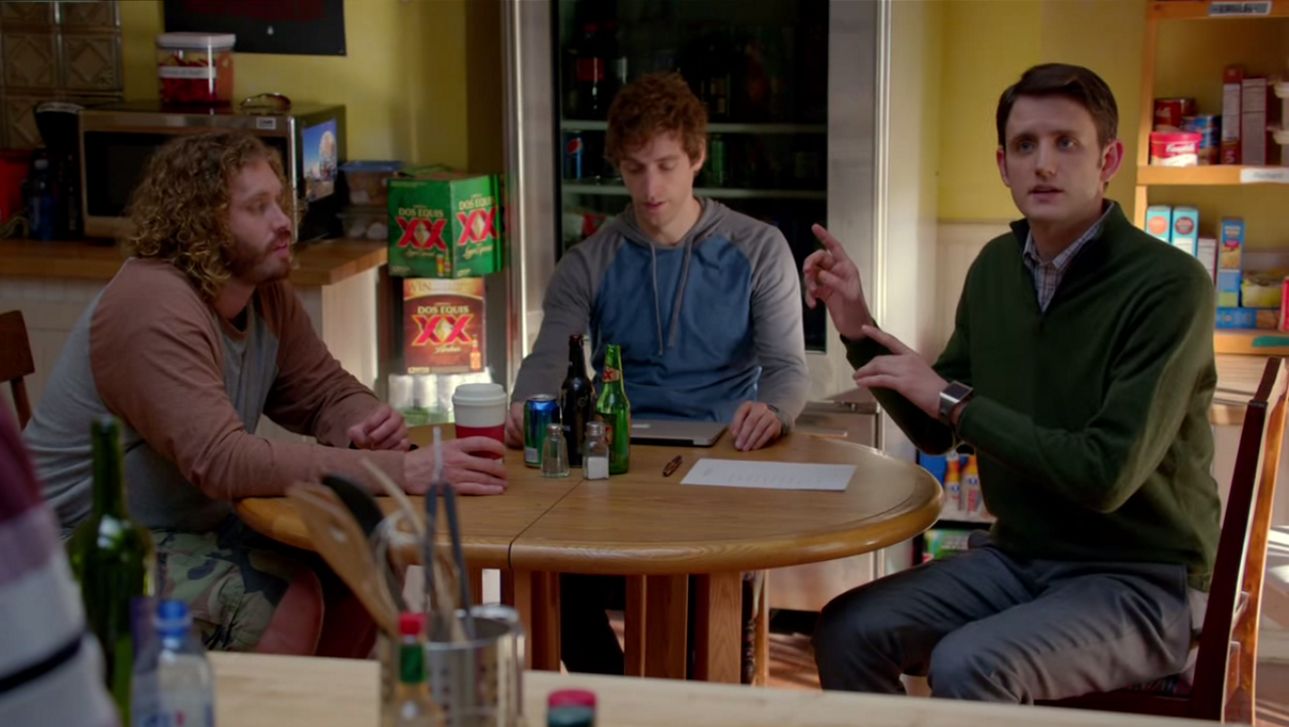
For people of a certain generation, the works of Mike Judge in general, and the film Office Space in particular, are something of a cultural milestone. In fact, Office Space has defined for me (and likely for you, too) my entire approach to corporate culture, and also the restaurant business, and frankly just what it is like to spend the bulk of your waking time doing a job that you, at best, tolerate for a paycheck that, at best, will stretch just far enough to cover your meager expenses. If that sounds terrible, that’s because it is. Welcome to America.
Skewering corporate culture is nothing new, and it wasn’t when Office Space came out either, but I would argue that Office Space does it best, and especially does it best for the office life of the nineties. In mocking the ridiculous complexities of office culture, Office Space also became engrained within our culture. You’ll be hard-pressed to find anyone born after 1980, give or take, who doesn’t immediately recognize TPS reports, that red Swingline stapler, a case of the Mondays, pieces of flare, or good lord, even a Jump to Conclusions mat. When we’re laughing at Office Space, we’re laughing at ourselves, but we still go to work, day in and day out.
It’s of course too soon to tell if Silicon Valley will become engrained in the popular culture in the same way, but all of the ingredients are there. Silicon Valley tech culture has almost certainly crossed the line into self-parody, in a world where even goddamn Snapchat is worth billions of dollars, and Silicon Valley captures the height of this nonsense more or less perfectly. At the fictional tech company Hooli, the offices are candy colored, with toys and gadgets and distractions galore, and no one appears to actually be doing any work. And as for the “incubator” that houses our heroes’ startup venture, it’s a house owned by do-nothing rich dude Erlich Bachman. This is a world where ideas rule above all else, but even the ideas are empty, one vapid proposal after the next, purporting to “make the world a better place,” even if it’s something really fucking stupid like Human Heater, the gadget that lowers your gas bill by heating up the top layer of your skin using microwaves.
The satire is spot on, then, but it quickly becomes apparent that, like much of Judge’s work, Silicon Valley is two separate beasts, with an equal share of the humor coming from the sort of juvenile, bro-y gross-out humor one would find on Beavis and Butthead or, yes, even in Office Space. Silicon Valley’s greatest strength is in its unfailing ability to land a joke. The season is fairly compact, at only eight half-hour episodes, but each episode is remarkably dense with one-liners, runners, and situational comedy. As great as the satire is, it needs this more functional and reliable brand of comedy to prop it up, and Judge and company have struck the necessary balance. I dare you not laugh at the extended, pseudo-mathematical discussion of “optimal tip to tip efficiency” in the finale episode of the same name (which, you definitely want to read this totally NSFW journal article). It’s as though twelve-year old boys somehow went and got doctoral degrees.
All that said, like any freshman comedy there are issues, though the raw strength of the comedy here suggests that they’ll iron themselves out. Firstly, considering the season’s brevity, it takes forever to really get going with what is a fairly simply plot. It takes until the third episode for the show to catch up with its own promotional materials, and while the pilot is very funny, and lays necessary groundwork about the world of the show, it’s also undeniably heavy on exposition. The characters, similarly, tend to be slightly one-note, though again, that note is often funny. Thomas Middleditch is a fine leading man, playing neurotic yet charming with aplomb, and his Richard is quirky enough to keep from being a boring straight man to the cast of much, much more colorful characters.
Perhaps the best of the regular bunch is T.J. Miller’s Erlich, who is a do-nothing slacker who sees himself as the Woz to Richard’s Jobs (or is that the other way around?). Either way, beyond bluster and bravado he brings nothing to the table as far as Pied Piper goes, and yet it’s precisely those qualities that make him such a memorably funny character. Also great is Zach Woods, who plays Jared as though Richard were on several different types of drugs simultaneously, just this wired, anxious people-pleaser who doesn’t seem to have acquired a single social skill in two-plus decades of life. Woods has been ubiquitous this past television season, with very good reason—his deadpan delivery and knack for physical comedy make him an invaluable part of the ensemble.
The rest of the cast is good for one-liners, or else to bounce lines off the main characters, but they hardly register beyond that, even when the writers give them the occasional B-plot. Again, it’s not that Martin Starr, Kumail Nanjiani and Josh Brener aren’t funny, just that they don’t really serve a purpose as anything other than joke machines. And as long as the jokes are funny, great! It’s not like we love Office Space for its deep, nuanced characterization. But at least when the plot wheels did turn, there was enough to make us care, where about Peter’s relationship with Jennifer Aniston, or Milton’s desire to burn down the office, or what have you. Here, Amanda Crew’s Monica might as well not be on the show at all, and her “romance” with Richard is yawn inducing, seemingly there for demographic pandering and little else. Since she’s practically the only woman on the show, that’s doubly damning.
While we’re talking about the cast, deserving of special mention is Christopher Evan Welch, whose performance as Peter Gregory is delightfully odd, a collection of strange mannerisms and non-sequiturs that feel perfectly emblematic of this bizarre tech culture. Welch tragically died after filming scenes for the first five episodes, and the character is only mentioned for the remainder of the season. It’s a shame we don’t get to see more of him, because he is sublimely hilarious.
So there are certainly some kinks to work out, but at the end of the day, Silicon Valley succeeds in making you laugh, if at nothing else, and for a comedy, especially a freshman comedy, that’s worth at least 80% of the battle. Since they’ll be forced to retool at least partly in the wake of Welch’s passing, I think we’ll see some useful cast shuffling, hopefully some higher stakes and more thoughtful plotting. The raw material is there, it’s just waiting to be shaped into something with a little more, well, shape. That takes time, and it’s time that I’m willing to give.

Best Supporting Actress in a Drama Series is a category with a lot of great performances, but one is pretty much a lock to win. With the episode submission “Ozymandias” and the buzz of the final season, last year’s winner Anna Gunn (Breaking Bad) is a near shoe-in for a win.
However, the dark horse in this category is a surprising one. Joanne Froggatt (Downton Abbey) was a surprise nominee for some, but others (those who still watch Downton Abbey) were sure that she would get in, and I see why. Her episode submission (Episode 4.2 in the U.S. and Episode 4.3 in the U.K.) involves a controversial rape scene that gives her some really strong and heartbreaking material.
While Christine Baranski has a watershed episode dealing with the death of Will, I think she should have instead submitted the less emotional “Outside the Bubble”, which offers her more screen time and a great storyline.

[maxbutton id=”3″]
1. Anna Gunn, Breaking Bad (“Ozymandias”)
2. Joanne Froggatt, Downton Abbey (“Episode 4.2”)
3. Christine Baranski, The Good Wife (“The Last Call”)
4. Maggie Smith, Downton Abbey (“Episode 4.8”)
5. Christina Hendricks, Mad Men (“The Strategy”)
6. Lena Headey, Game of Thrones (“The Lion and the Rose”)
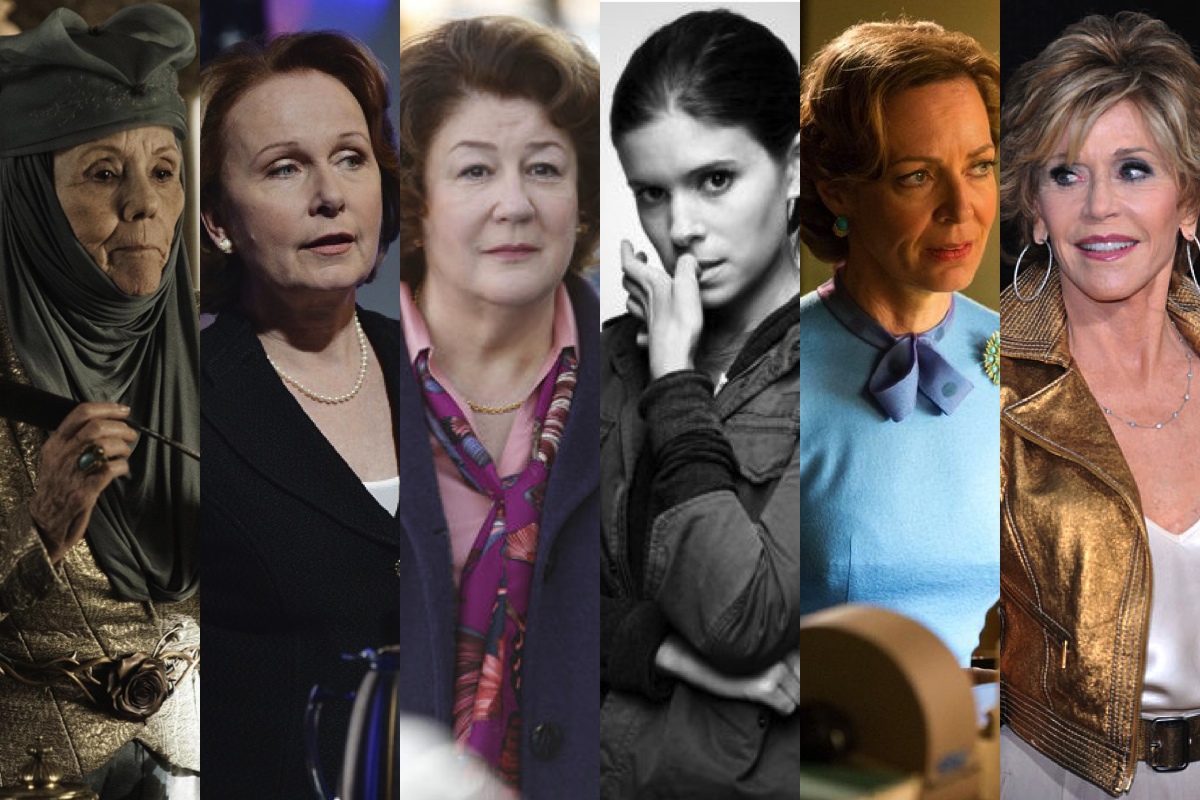
If you asked me two months ago who would win Guest Actress in a Drama Series, I would have put all my money on Allison Janney (Masters of Sex) for her masterful portrayal of a sexually frustrated housewife. However, after watching the tapes, it looks like there is another contender trying to stab her in the back (I very carefully chose this wording).
This is a category where the loudest performance often wins. From Ann Margaret for Law & Order: SVU to Sally Field for ER, it seems like if you play a heightened character, then you are due. This year, almost every single performance is extremely understated, except Kate Burton (Scandal).
SPOILER ALERT FOR SCANDAL! In her episode submission, entitled “A Door Marked Exit,” she murders her gay cheating husband in the first scene by stabbing him repeatedly in the back. If that doesn’t get a voters attention, then I don’t know what will. Then, throughout the episode she cries and screams her way through a cover-up for said gruesome murder. END SPOILER.
It’s just the type of performance that wins this category. Another consideration is that Janney is also nominated in the Supporting Comedy Actress category for Mom (see our predictions here). The judging panels will be different, however if voters think there’s enough Janney to go around, they may be inclined to mark the clear alternative.
Although Janney gets to cry in her episode, Burton’s submission is all out madness. I still have Janney out front. Despite everything I said so far, she still has momentum on her side. However, don’t be surprised to see Scandal take yet another acting category.
[maxbutton id=”3″]

1. Allison Janney, Masters of Sex (“Brand New World”)
2. Kate Burton, Scandal (“A Door Marked Exit”)
3. Jane Fonda, The Newsroom (“Red Team III”)
4. Kate Mara, House of Cards (“Chapter 14”)
5. Diana Rigg, Game of Thrones (“The Lion and the Rose”)
6. Margo Martindale, The Americans (“Behind the Red Door”)

Karl, Brooke, and Craig discuss the year in television so far including on air and on Netflix. They also talk about the upcoming fall lineup and those pesky Emmys!
http://www.youtube.com/watch?v=PKQNbB-ANis
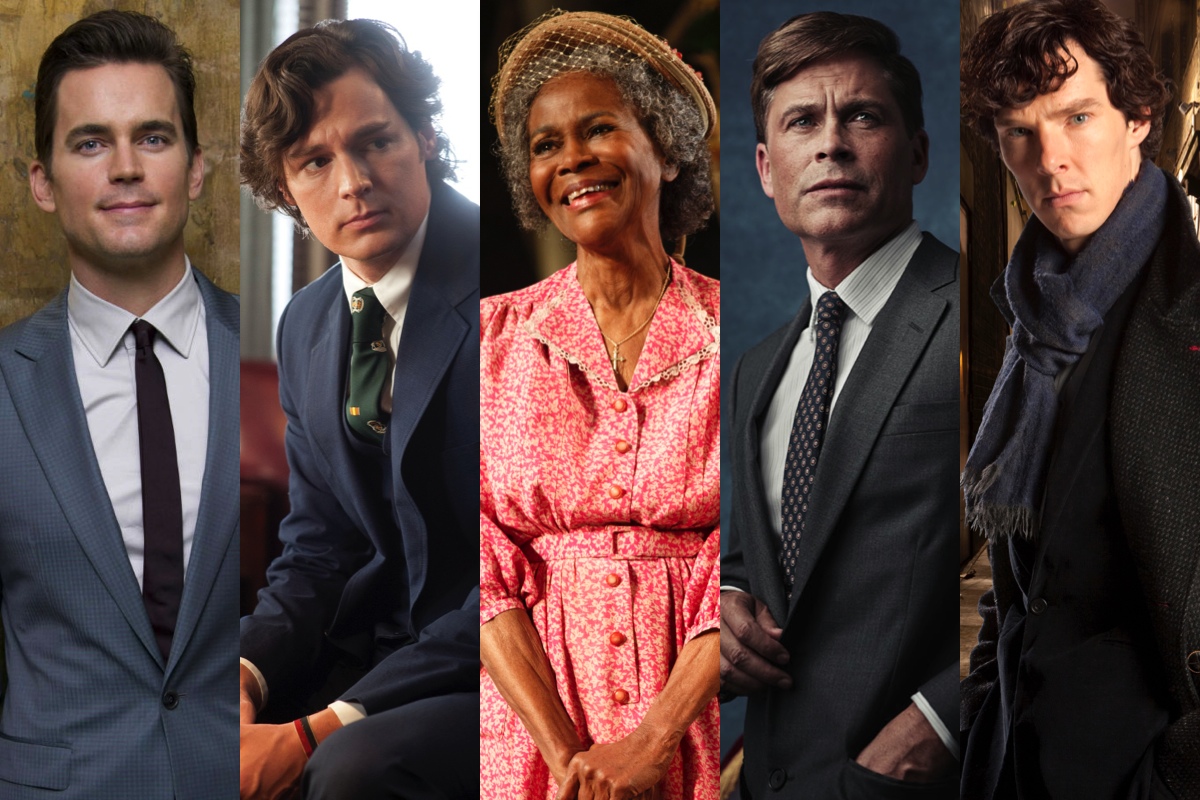
This is by far the easiest category to predict. The Normal Heart is pretty much running this race unopposed. It did extremely well in the nominations with 16, leading all TV movies, and it did receive critical acclaim.
If there is a very unlikely upset, it would probably be Sherlock: His Last Vow. There’s no question that the show is extremely popular and it interestingly (and wisely) submitted a single installment as a film.
[maxbutton id=”3″]
 1. The Normal Heart
2. Sherlock: His Last Vow
3. The Trip to Bountiful
4. Killing Kennedy
5. Muhammad Ali’s Greatest Fight
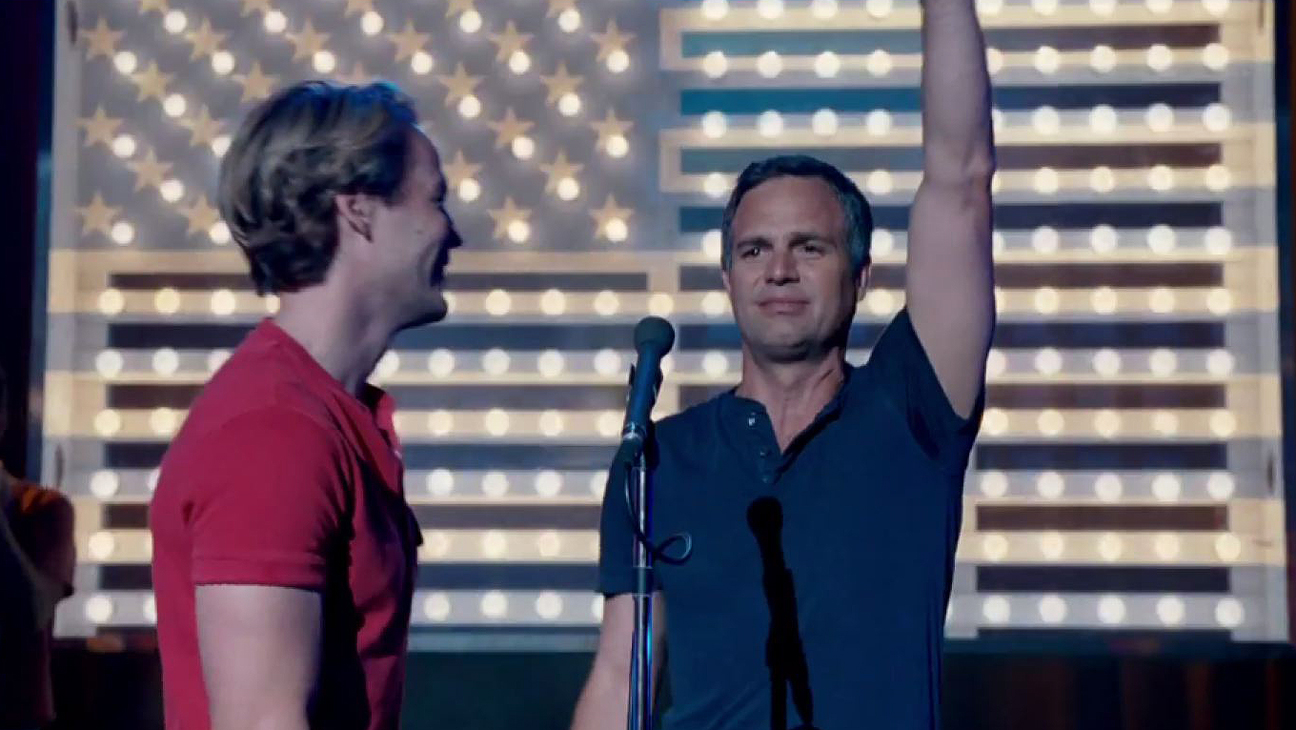
The Normal Heart arrives on HBO with somewhat lofty expectations, and yet, being a Ryan Murphy production, I wouldn’t blame anyone for approaching it with a healthy measure of skepticism, as well. It’s in many ways a spiritual sequel to Angels in America, another adaptation by HBO of another well-regarded period piece about the AIDS crisis. The Normal Heart has quite a bit in common with that miniseries, but where Angels used the religious and the supernatural to underpin the melodrama at its core, The Normal Heart has no such crutch. As a result, and as is unsurprising for a Ryan Murphy joint, what we get is an often uneven, and yet often incredibly moving, piece of melodrama that occasionally transcends those trappings, and becomes plain drama.
The film is written by Larry Kramer, based on his 1985 play, and many of its issues can be traced back to the source material. Its subject matter is firmly in Murphy’s wheelhouse, and is in many ways perfectly suited to his directorial style. There is a great sense of atmosphere, of time and place; Murphy, with considerable assistance from Kramer, perfectly captures the gay experience of the eighties, and best of all, presents multiple gay perspectives within the film. It’s obviously very personal material for Murphy, and for the most part his best instincts are on display here.
Like most of his work it tends toward melodrama, and this is not always to the film’s benefit, especially when the script also tends toward the didactic. Much of the dialogue, and at times entire scenes, feel less like drama, and more like actors quoting from Wikipedia. It can at times be overbearing, too over the nose. But at other times, there is a raw power to the material, and at these times, it’s Murphy’s direction that is largely to thank. He is not a showy director here, and is generally content to leave the camera still, to pick a frame and hold it and let the actors do their work. What he does not do is let it feel like a filmed play; there is a filmic quality to the movie, a liveliness and a gravity. When the material isn’t getting in its own way, the direction is quite good, and is some of the best I think we’ve seen from him. I haven’t seen Eat Pray Love, but based solely on this film, I’d be interested in more feature work from Murphy, especially to see him directing other people’s scripts.
Since the film is based on a stage play, the big draw here is the actors, and the strength they bring to talky, showy roles. The casting is impeccable and the performances are uniformly strong. Mark Ruffalo plays Ned Weeks, the firebrand gay author at the center of the play, and he is a phenomenal leading man, simply a powerhouse from beginning to end. Ned is a neurotic, almost self-loathing character, but he is also cocky, overbearing, too quick to anger, and too impulsive to really lead the crusade that he thinks he’s leading. He is an extremely difficult character to like, and Ruffalo doesn’t try to make him likeable. Instead he makes him human.
None of the other actors gets quite so much to do as Ruffalo, but they each shine in one or two showcase scenes. Taylor Kitsch is restrained and barely recognizable as Bruce, the closeted leader of Gay Men’s Health Crisis, while Jim Parsons turns it up to eleven as Tommy, the self-described “Southern bitch”. Both deliver in key emotional scenes, Kitsch especially, when Bruce gets into a fistfight with Ned, then throws a television crew’s camera out the window. Alfred Molina is excellent as Ned’s brother Ben, who nominally wants to be an ally, but who finds it difficult to really understand his gay brother.
Strangely enough the weakest link in the cast is Julia Roberts, though I would be quicker to blame an underwritten character than her acting ability. She is arresting in her scenes, delivering her lines with a fiery passion, but it’s her scenes more than any others that most cross the line into didactic territory. Her confrontation with the funding panel at the National Institutes of Health towards the film’s end is the most egregious example, as she spouts factoids about the AIDS crisis, her volume ever increasing. It’s meant to be emotionally affecting, a crowning moment for a doomed cause, but it comes off instead as preaching, nearly as pandering, and that damages the overall effect of the scene.
The true star of the film, however, is Matt Bomer, as Felix Turner. Nestled in among all of the messaging and the melodrama is a brilliant, real, poignant, and moving love story, and it’s this that makes The Normal Heart truly special. Bomer and Ruffalo have tremendous chemistry, but it’s Bomer especially who sells the tragedy of their relationship. Beyond the physical aspects of watching Felix slowly waste away as he succumbs to the disease, Bomer also fully embodies the mental and emotional toll that AIDS takes on the character. There is an undercurrent of fear, of anger, that runs throughout the film, and in that sense, Ned and Felix are essentially two sides of one coin. It makes sense, then, that the larger political story being told revolves around the small love story between them. It’s a smart if risky structural decision, but thanks to Ruffalo and Bomer, that risk pays dividends. The film would not work at all without them.
Ultimately, The Normal Heart suffers in retrospect because of the progress that has been made with regards to AIDS specifically, and with the gay community in general. In many ways the story it’s telling feels like ancient history; there is an entire subset of the gay community today that has no concept at all of the AIDS crisis, and there is a growing set that has little concept of gay discrimination at all. What was groundbreaking in 1985 is now obvious, and what worked on the stage then doesn’t necessarily play as well on the screen now.
That said, the story is still important, one that deserves to be told. It’s hard not to grow angry when, after we pan out from Ned, alone at Yale’s “Gay Week,” a title card informs us that Ronald Reagan first publicly mentioned AIDS in 1985, and promised to make it a funding priority, before cutting AIDS funding by 11%; and further, that to date more than 36 million people worldwide have died of HIV/AIDS. Daily, 6,000 people are newly infected. This is a story that needs to be told. It’s a reminder that needs to be made. The Normal Heart wants to be an important film, and while it doesn’t always succeed in that regard, the effort itself is admirable. And even if it does preach too much, even if the education gets in the way of the drama, there is such a strong core in Ned and Felix’s love affair that the scenes that don’t quite work can sort of fall by the wayside. Like most of Murphy’s work, it is best enjoyed in the moment—but what a beautiful moment it is.
[maxbutton id=”3″]
Check out our Emmy predictions here!
Like us on Facebook!
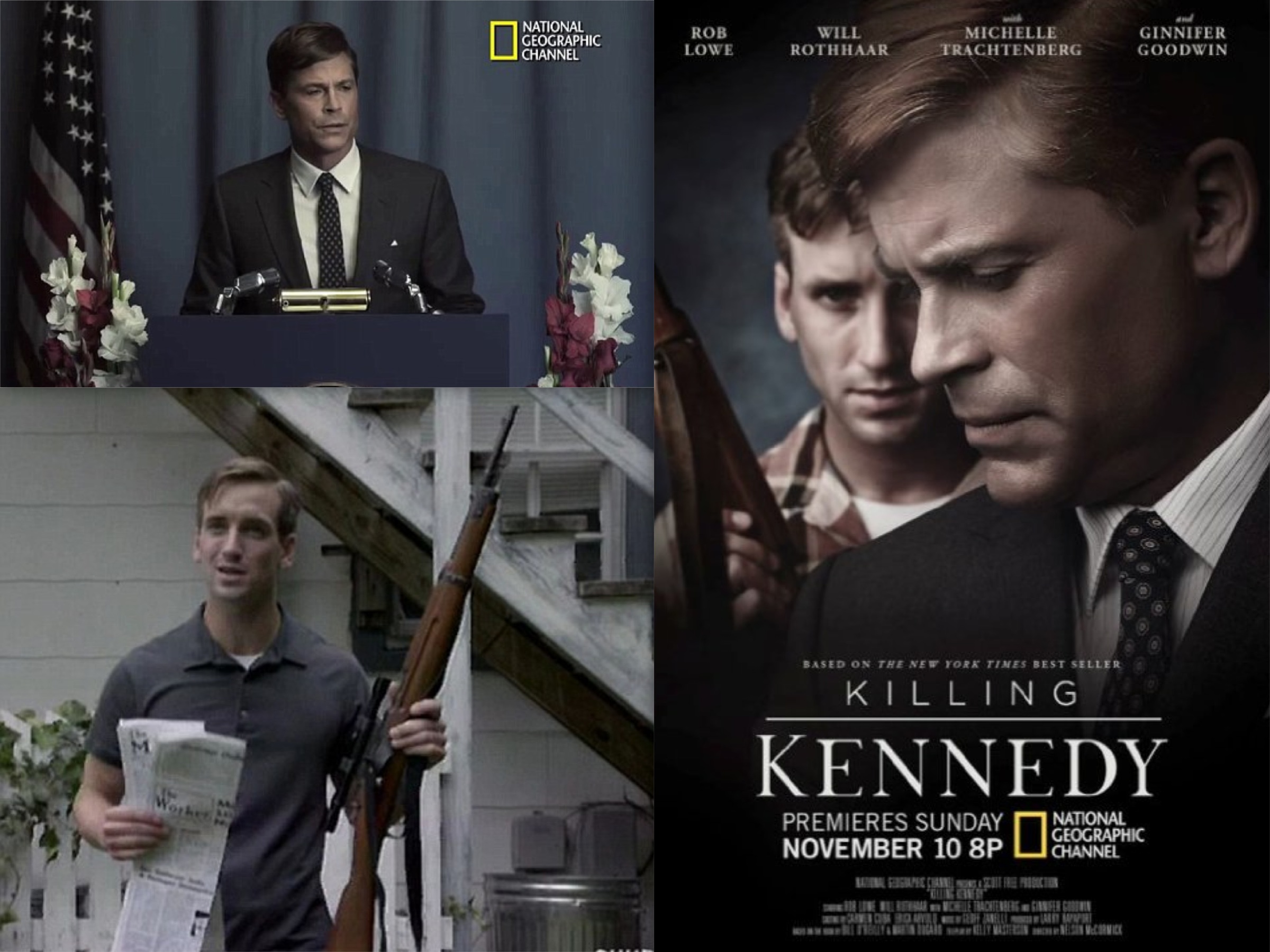
When I say there isn’t a contender more underrated than Killing Kennedy, I mean it. Although it was a fairly successful entry for the History Channel, have you heard someone walking down the street saying, “have you seen that new JFK movie on the History Channel?” However, although the History Channel is basically doing to history what MTV did to music, the film ended up being a strong mix of both television and history. It may have not garnered the critical notices that it should have (56% on Rotten Tomatoes?), the film was still able to give a surprisingly engaging, and more importantly, entertaining portrayal of a story we think we all know.
The story is very simple, it is the assassination of John F. Kennedy from the perspective of assassin Lee Harvey Oswald. However, although this doesn’t sound as impressive coming from me, the film may be one of the best portrayals of the JFK assassination I have ever seen.
Instead of focusing much on the assassination itself or the aftermath like Parkland did, Killing Kennedy was a construed look at two complicated men doing what they could to save the country they loved. The juxtaposition of their methods was a refreshing take on the subject, which has beaten at for years. For the sake of this review I will break up this spotlight into two sections: John F. Kennedy and Lee Harvey Oswald.
John F. Kennedy
These parts of the film didn’t stray terribly far from what we already knew. The film starts off with John Fitzgerald Kennedy (Rob Lowe) kicking off his 1960 presidential campaign. He explains to Kenneth O’Donnell that it was supposed to be his older brother Joe running for president, however Kenny retorts that it was always supposed to be him. We then jump ahead 11 months to the night of the election, with Jack anxiously waiting the results.
It seems appropriate to mention here the surprising resemblance Rob Lowe has to JFK. It’s not a striking visual resemblance, although the hail is nearly perfect. The way of him. His attitude. His voice. It all seems familiar, even without the dark sunken eyes that JFK did have.
Jacquie Kennedy comes in to congratulate him, although the race isn’t over. She even calls him “Mr. President.” Just like that, we know who Jacquie Kennedy is. She is not just a wife who stands next to the big man. She is his supported and pillar. Throughout the movie we watch her be betrayed by Jack, even hurt. However, she champions his successes and comforts him in his failures.
Through the Cuban Missile Crisis, Cold War, and rise of organized crime (which will fuel the conspiracy theorists yet again). It’s not the most interesting look at these events. Obviously it’s more of a back room approach, but what is important here is the way JFK reacts to this new stress. You realize the kind of man he is. He wants to do well the for the country. He wants to do well for his family, but he doesn’t know how. It puts the role of POTUS in perspective. There is no manual to be president. The film nicely humanizes him.
As great as Rob Lowe is as JFK, Gennifer Goodwin is a revelation as Jackie Kennedy. I don’t think it’s the greatest portrayal of Jackie O. To be honest, I don’t think anyone has absolutely nailed the role. But she played her part of the First Wife, beside and one step behind her husband extremely well. Especially when Jack’s taste for fun begins to surface.
Lee Harvey Oswald
When we first see Lee Harvey Oswald, a former Marine, he is in the Russian Embassy looking to denounce his United States citizenship. He criticizes the capitalist system and pledges himself to the political idea of marxism. He doesn’t necessarily have a hatred for his home country, he is simply disillusioned by it. However, the US ambassador refuses to allow him to denounce his citizenship and tells him to spend time thinking about what he actually wants.
In the ensuing time he meets a girl named Marina, who he ends up marrying. After experiencing the realities of Russia, he returns to the embassy to get his citizenship back and move back to his home country. However, before leaving he has tiny press conference explaining his decision to denounce his citizenship and make his pledge for marxism. The fun part is, that it was just all a delusion. We learn that Oswald isn’t only a patriot, he also want to have something to be known for, to be remembered for.
Throughout the film, his delusions become more frequent, his devotion to marxism stronger, and his inclination towards action apparent.
However, the revelation here is Will Rothhaar’s performance as Lee Harvey Oswald. There is something to be said for an understated performance, but when it is meant to portray a character that is a sociopathic delusional marxist it becomes all the more remarkable. At a certain point, you feel empathetic toward the patriot. The film portrays him as a misunderstood patriot, who may have taken his delusions of a more perfect America too far, but had a heart that was in the right place. At least, that’s what I thought. You could still see him as a sociopathic delusional marxist. To each their own.
In the end, Killing Kennedy is a fun film to watch. It tells a side of the story that is not often told. It seems that we always get one or the other. It’s always John F. Kennedy or Lee Harvey Oswald. This movie compares these two difficult men, whose destiny’s collide in a catastrophic way, but allows us the understanding behind the both of them. I don’t think it exactly reaches the heights of 2011’s miniseries The Kennedy’s, but it does feel like something fresh and new. Either way, Killing Kennedy is yet another corner in the History Channel’s journey to make History exciting again.
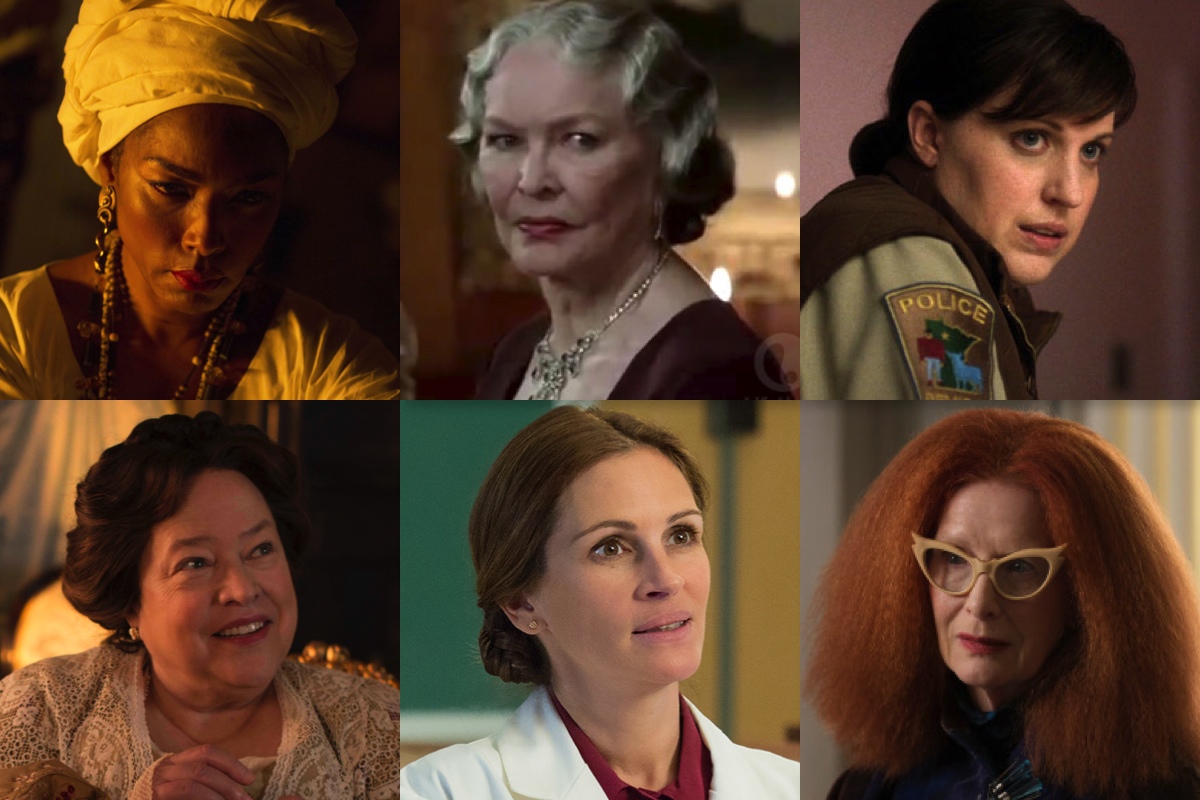
I’ve been avoiding predicting this category like the plague. It is probably the hardest category to predict, because there is not even a semblance of a frontrunner. The top three contenders are neck and neck, and this race could really go either way.
First of all there is Julia Roberts (The Normal Heart). Her role in won Ellen Barkin a Tony and offers Roberts a lot strong and passionate speeches and scenes.
On the other hand, there is Allison Tolman (Fargo) that gives a very understated underdog performance that has been critically acclaimed. It also doesn’t hurt that Fargo did extremely well in the nominations.
Then, there is Oscar-winner Kathy Bates (American Horror Story: Coven) who was an early frontrunner for the trophy. With the anthology series over-performing in nominations, and Bates being joined by two additional cast members, logistics could be in her favor.
For now, I’m going to have Tolman out front. It’s more of a hunch if anything, but I do think she has momentum going for her.
[maxbutton id=”3″]
 1. Allison Tolman (Fargo)
2. Kathy Bates (American Horror Story: Coven)
3. Julia Roberts (The Normal Heart)
4. Angela Bassett (American Horror Story: Coven)
5. Ellen Burstyn (Flowers in the Attic)
6. Frances Conroy (American Horror Story: Coven)
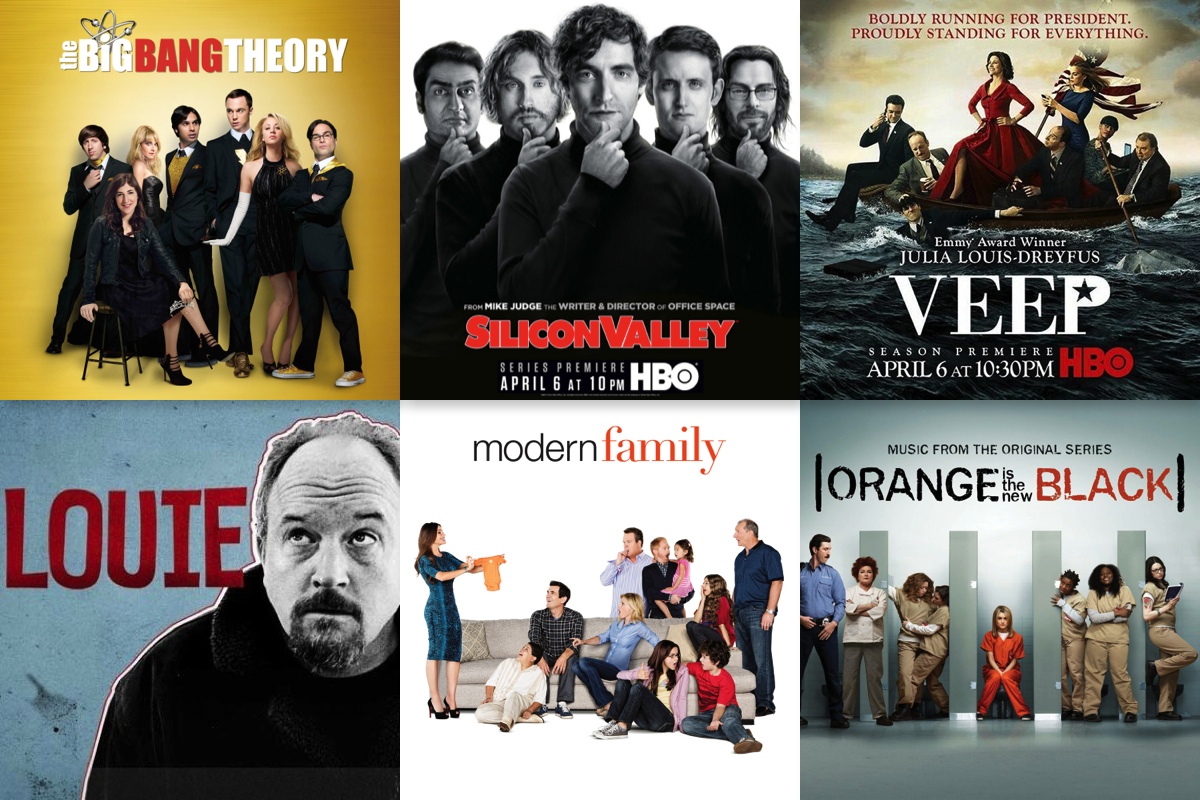
I’ve been hesitant to predict this category. I think that the category is being battled out between two of the biggest critical darlings of the year. Veep did surprisingly well last year winning 3 awards, with surprises in two of the categories. This year they did even better increasing their nomination total from five to nine, including a crucial nomination in the writing category. However, Orange is the New Black performed extremely well for their first season as well. They score key writing and directing nominations, did solidly in the technicals, and led all new shows. I think there is a lot of support and buzz for the series, that’s why I have them taking it.
Four-time champ Modern Family is looking to tie Fraiser for the most wins in this category. However, it’s clear that there is a lot of waning support in the Academy. Although they did take the trophy last year, they only won in one other category. They also dropped in nominations, including losing out in two more supporting slots (Sofia Vergara and Ed O’Neill) in addition to Eric Stonestreet’s surprise snub last year.
 [maxbutton id=”3″]
1. Orange is the New Black
2. Veep
3. Modern Family
4. Louie
5. Silicon Valley
6. The Big Bang Theory
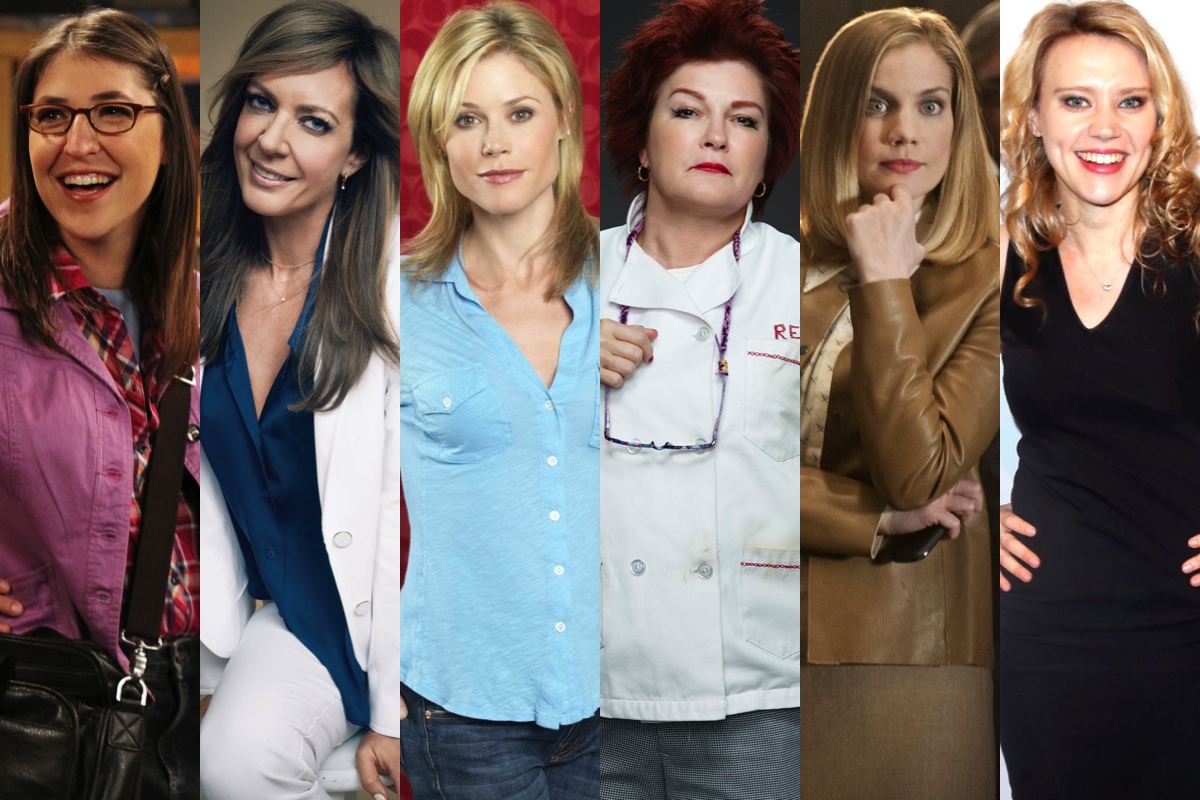
Emmy favorite Allison Janney (Mom) has been the presumed frontrunner of this race from the beginning of the season. However, I wasn’t totally buying that she could win based off name alone. However, the episode submissions have made it clear who this race comes down to. There are really only two viable contenders to win.
Janney is still out front with the hilarious menopause episode of Mom. It’s reminiscent of Patricia Heaton’s “Bad Moon Rising” episode of Everybody Loves Raymond, which won her an Emmy.
The other contender is Kate Mulgrew (Orange is the New Black). She has the benefit of having her episode focus on her character and allows her to show a lot of range. Although she doesn’t have any huge laugh out loud moments, it’s definitely the most unique tape in the bunch. She’s just behind Janney right now.
Two-time winner and supposed frontrunner last year Julie Bowen (Modern Family) either didn’t have any better episodes or just submitted poorly. She has one somewhat funny physical comedy scene where she tries to itch her lice infested hair without having someone noticing, but it’s short and definitely not enough.
If there is a Merritt Weaver situation like last year, it could be Anna Chlumsky (Veep) taking the trophy. Although her episode isn’t too impressive, I can see her being the alternative choice if voters can’t pick a winner, especially is Veep is a hit at this year’s Emmys.
 [maxbutton id=”3″]
1. Allison Janney, Mom (“Estrogen and Hearty Breakfast”)
2. Kate Mulgrew, Orange is the New Black (“Tit Punch”)
3. Anna Chlumsky, Veep (“Detroit”)
4. Julie Bowen, Modern Family (“The Feud”)
5. Kate McKinnon, Saturday Night Live (“Host: Anna Kendrick”)
6. Mayim Bialik, The Big Bang Theory (“The Indecision Amalmagation”)
Louie returned this year after a longer than usual hiatus. When we last left our fictional Louie, Parker Posey had collapsed on the subway and died suddenly, and he flew to China alone for New Year’s Eve. It was a surprisingly melancholy season finale, especially following the “Late Show” three-parter that preceded it. Now in its fourth season, Louie is decidedly more on that melancholy, realist side of things. It’s still very much a comedy, in the sense that it’s designed to draw a laugh, but also in its general approach toward life. What I mean is that it’s a comedy in the Aristotelian sense, as opposed to a tragedy. In other words, what Louie is not, thank goodness, is a sitcom.
This season of Louie is also the show’s best, a more mature, thoughtful, and yes, funny extension of everything that Louis C.K. has been doing for three years now. As the show’s sole writer, director and editor, C.K.’s mastery of the form becomes more and more evident, while Louie progresses and becomes more and more daring. Surreal at times, and very, very real at others, the show navigates these tonal shifts expertly and to great effect; at any given moment an episode can turn on the dime, but the show never panders, is never egregious. It is often beautifully shot, as in the Emmy-nominated “Elevator, Part 6,” and is brilliantly edited, as in “In the Woods, Part 2,” and it is always excellently written. Uniformly, without exception, and that’s not hyperbole.
As you may have guessed from the episode titles I’ve called out already, the season is more heavily serialized than the show has typically been in the past. Of fourteen episodes, eleven are part of multi-episode arcs. But that doesn’t mean you need to watch everything to understand what’s going on—it isn’t like this is 24 or something. The episodes interconnect, but they also stand alone, each acting as its own short story. It’s one of many things that Louie has in common with Girls, but it’s no great revelation to say that Louie is on a whole other level than that (also great) series.
There is such a great depth to this season. By this point it’s a given that Louis C.K. is funny, and talented, and the actors he gathers are equally so. But the storytelling reaches new heights here, with several episodes standing out as series best entries. Take “Elevator, Part Four,” which opens with Janet and Louie in couples’ therapy, a comically surreal scene in which their therapist alternately (and quite meanly) places blame on each of them for the failure of their marriage. C.K. and Susan Kelechi Watson have always had great chemistry, but this season, and especially this episode, delve deeper than ever into their characters’ relationship, and the result is massively rewarding. Louie jokes in the elevator that for the cost of therapy, they could just as easily have their daughter Jane killed. Janet stands there, stone-faced, for a very long moment, until she cracks a laugh just as the scene cuts.
Even better is what C.K. cuts to, an extended flashback in which a much younger Louie and Janet spend the night at a hotel, admit that they want divorce, and have sex for the very last time. After Louie comments that it would be hilarious if Janet had gotten pregnant. We already know she did. The young actors playing Louie and Janet are perfectly cast, despite the fact that the young Janet is somehow white—she makes you forget that almost instantly, and a little cognitive dissonance only adds to the scene, anyway. They fully encapsulate who these people are, not just at this point in their lives, but fundamentally, across their entire lives. With the combination of acting, writing and directing, the audience is never in doubt that these are the same characters we’ve gotten to know in the present day.
This is even truer of “In the Woods,” which features flashbacks to a thirteen-year-old Louie’s first adventures with pot, as in the present, Lily discovers the drug at the same age. I absolutely love how C.K. uses temporality to create such a complete picture of Louie as a character, and how he is so thorough in doing so that he also juxtaposes Louie the father with his own mother, Louie the young man with Janet, and so forth. “In the Woods, Part Two,” is almost entirely a flashback, but when it cuts back to the present, it does so meaningfully. When Louie’s mother yells at him, and keeps on yelling, and breaks down crying, it’s a punch to the gut; when the scene cuts to Louie as a father, with his own child to talk with about pot, that’s something else entirely. F. Murray Abraham also gives a guest turn this episode, as Louie’s absent father, and when Louie talks to Lily later on, you can see, from his acting, and from the way the episode is directed and edited, that Louie is afraid of becoming that absent father himself. He sees the peculiar way that life tends to rhyme with itself, and that idea is simultaneously comforting and terrifying. He remembers the way he so disappointed his science teacher, and his mother, and his best friend. But also he knows that Lily needs his love and support, more even than she needs his discipline.
“In the Woods” is also an extremely serious episode, but it needs to be. It’s not without its laughs, including a pretty amazing turn from Jeremy Renner as Louie’s dealer, but it’s also got these gut-wrenching moments, including Louie’s fight with his mother mentioned above, and his tirade against his father, and the silent treatment his teacher gives him when Louie finally comes clean about his misdeeds. It’s a nightmare of the adult Louie’s, an imagining of every awful thing that could happen to Lily as she grows up, made doubly worse by the fact that those things have happened to Louie already.
The entire season, in retrospect, is a project in slowly piecing together a man that to some degree has been broken by tragedy. He’s unable to understand the women in his life, and so he’s always starving for emotional connection, and it gets worse the older he gets. C.K. makes this more literal than usual throughout Louie’s extended romance with the Hungarian Amia. Their sex scene in “Elevator, Part 5” was a hot topic after it aired, and it is certainly difficult to tell if or when Amia consents. Louie literally drags her into the bed, and the scene is lit and staged in such a way that it happens in almost pitch darkness. That she speaks to him the following morning in Hungarian, speaking literally a different language, underscores not just the lack of communication that leads to dubious consent, but to Louie’s overall inability when it comes to women. The later episodes in the “Elevator” arc lead up to Hurricane Jasmine Forsythe, and feature several bizarre newscasts, with the anchors spouting gibberish. They’re some of the most laugh-out-loud funny bits in the whole season, but I like to think that they’re also speaking to this theme.
That running theme is also why ending the season with “Pamela” is such an inspired decision. As played by Pamela Adlon, the character Pamela is even more Louie-esque than Louie himself. She’s incapable of taking anything season, even and especially her own feelings for Louie, and that brusqueness both makes her perfect for him, and makes talking to him nearly impossible. Louie may not be the best at communicating in a relationship, but he desperately wants to communicate in a relationship, whereas Pamela can think of nothing worse. And yet their courtship at the season’s end is touching, and it culminates, as comedy must, in their own little happy ending. Neither character changes, but by meeting in the middle, they can still find a way to make love, or something, work.
This is an artistic vision that is so singular and so fully realized, quite unlike anything else on television. I can’t use superlatives or hyperbole to compare it to other shows—it’s practically speaking its own language. As I said before, its closest relative is Girls, but even as a fan of that show, Louie blows it out of the water. It’s sometimes as funny as Veep, sometimes as deep and provoking as Mad Men, sometimes even as exhilarating as Breaking Bad, but it is never anything less than its own, special thing. It’s at this point that I’m really glad I was so tough on the previous shows in this spotlight series, because it makes the score I’m about to give that much more emphatic. Louie is a perfect ten. Go watch it.
 [maxbutton id=”3″]
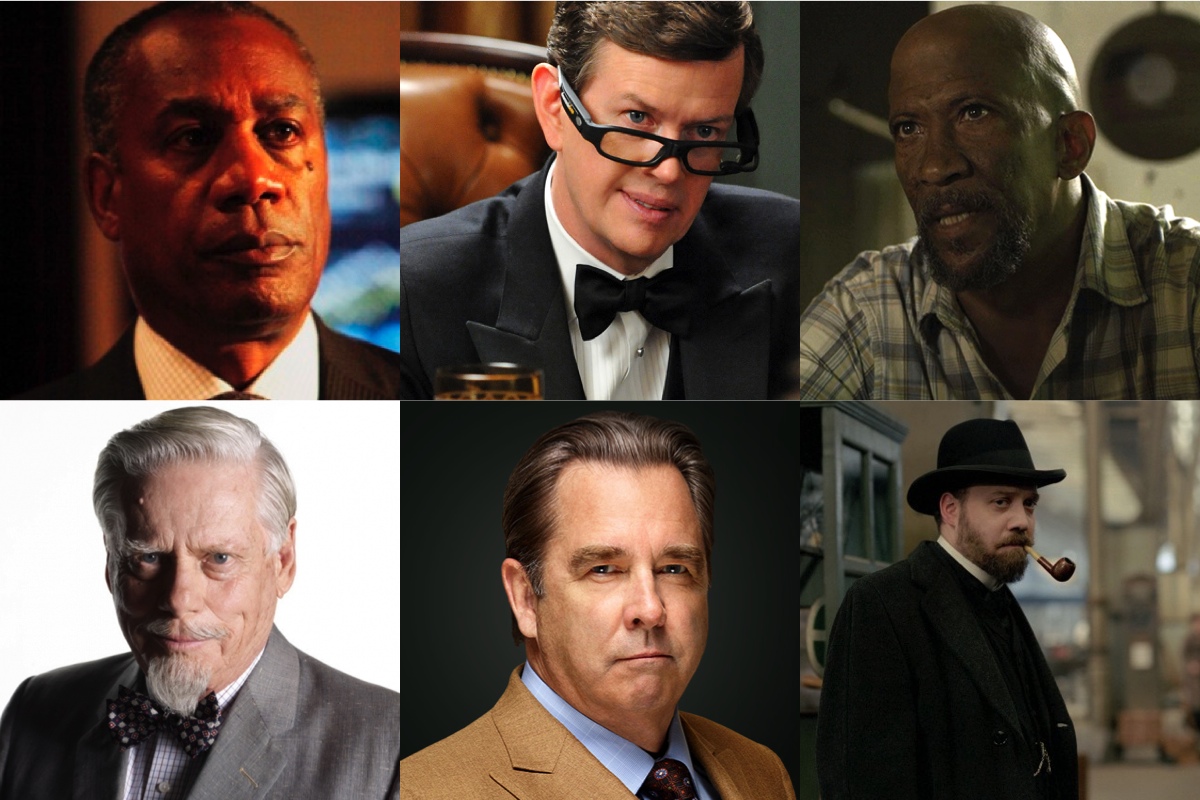
There’s a tough two horse race in the works for the Emmy for Best Guest Actor in a Drama Series. Although Mad Men has never won an Emmy for acting, after their surprising season finale it looks like Robert Morse is going to have a real shot at breaking that curse. His screen time is not huge, but he does get emotional during the moon landing and then has a musical number (I know, WTF). It’s going to stand out a bit among his competitors.
He is getting some strong competition from Beau Bridges (Masters of Sex) who gave an emotional performance where we see the lengths he goes to “cure” himself of his homosexuality. However, I think we are grossly underestimating Reg E. Cathey (House of Cards). Anyone who has watched his episode submission knows why I’m ranking him at number two. While his performance is extremely understated, his storyline has a lot of impact.
The Katy Perry dark horse contender here is Joe Morton (Scandal). Most of his submission is spent in flashback with a lot of yelling, and tears, and sadness. Perfect Emmy bait. It helps that the show won here last year as well.

1. Robert Morse, Mad Men (“Waterloo”)
2. Reg E. Cathey, House of Cards (“Chapter 22”)
3. Beau Bridges, Masters of Sex (“Manhigh”)
4. Joe Morton, Scandal (“Guess Who’s Coming to Dinner”)
5. Paul Giamatti, Downton Abbey (“Episode 4.8”)
6. Dylan Baker, The Good Wife (“Tying the Knot”)
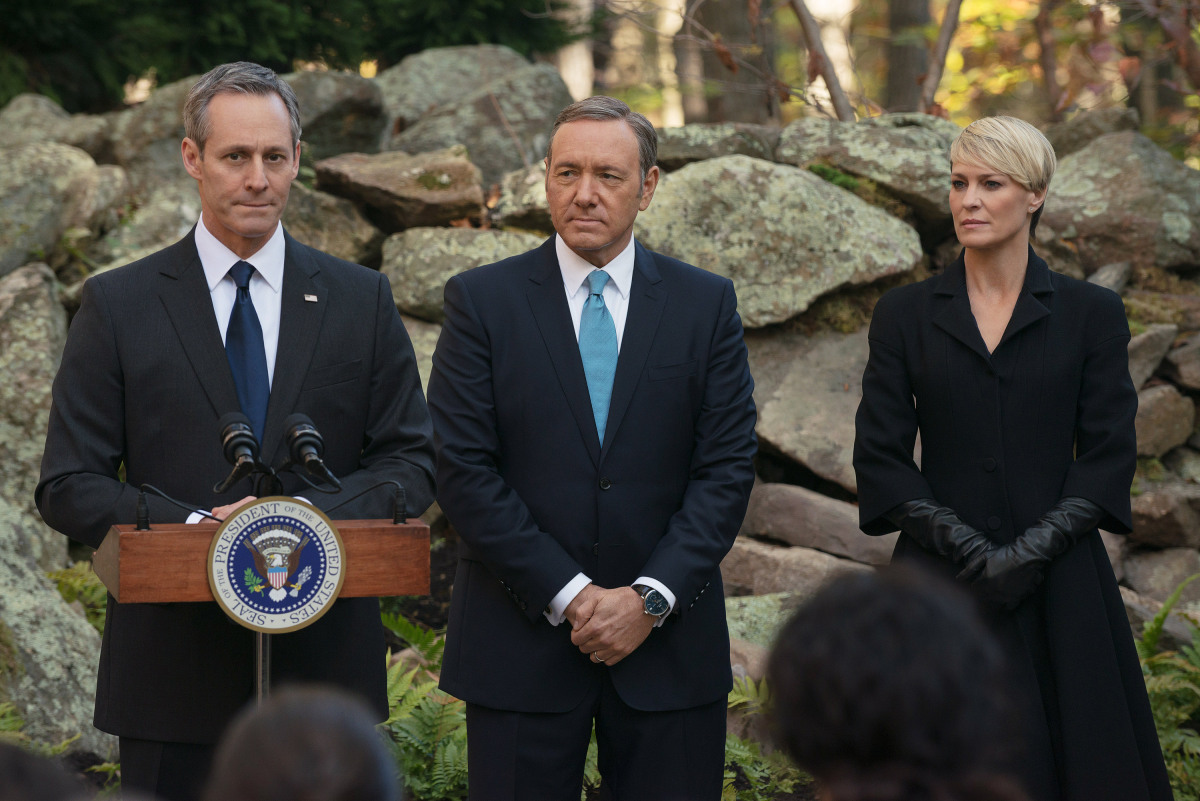
Where does one begin with House of Cards? It so clearly (I might even say desperately?) wants to be a prestige drama, and it has many of the hallmarks of such series. High-profile director and executive producer from the film world? Check. Even higher-profile movie star making the switch to television? Check. Famous, older film actress arguably staging a comeback in her most notable role in some time? Check, even if I did accidentally insinuate that American Horror Story is a prestige drama just now. In its production, its tone, and the style if not the quality of its writing, House of Cards has just about every characteristic one would assign to a prestige drama.
And yet House of Cards is not a very good show, is it?
Let me backpedal here a bit. House of Cards isn’t terrible. It’s perfectly fine. But it’s at its very best when it’s not aiming so damn hard at prestige. Frank’s monologues, lush with purple prose, are often ridiculous, but they are of such heightened, Shakespearean proportion that they enliven what can often be a very tedious show. House of Cards is at its best when it luxuriates in its pulpiness. The thrill of Frank murdering Zoe Barnes is a highlight, but it happens an hour in! Then we’re left to dry for several episodes, with nothing quite so earth-shattering to entertain us, and with a pace that slows to a crawl. At the end of the day House of Cards and Scandal share more DNA than the former might care to admit. That’s a shame, because the scandalous moments (no pun) are the real highlights of the show, and we could do with a great deal more of them.
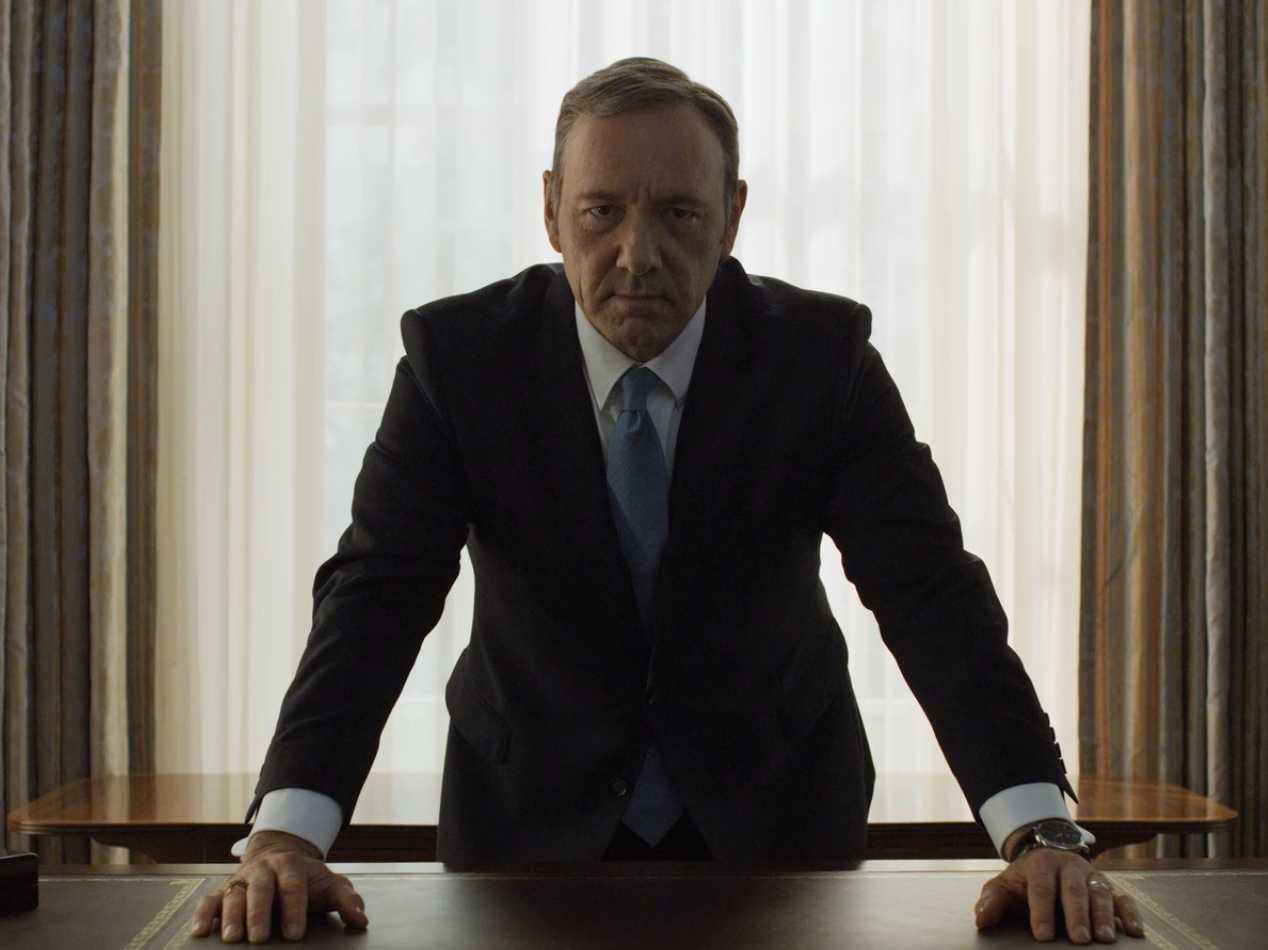 Unfortunately such moments are few and far between for much of the season. That’s for a variety of reasons, not least of which is the show’s curious structure, which stretches storylines over many episodes and allows them to meander at languorous pace. Lucas’ investigation following Zoe’s murder is protracted, and comes to an abrupt end with his arrest, as we instead follow hacker Gavin Orsay on a strange tangent that remains unresolved by season’s end. Doug Stamper is preoccupied by Rachel Posner through much of the season, which means frequent detours into Rachel’s daily life, until Doug intervenes once more—all in the name of giving Frank Underwood yet another life to trample over and utterly ruin. (That said, Rachel’s apparent killing of Doug is another welcome shocker, though, and one that follows through on her promise to him in the season premiere. Frank and Claire’s impromptu threesome with Meechum is another great such moment.) In a binge watch this stop-start pacing might go unnoticed (though honestly, I think it’s actually more obvious), but when considering the episodes as a set, it’s hard to decide how valuable each of these tangents really is.
More than not delivering on the promise of the season premiere’s twist, the show is frustratingly content to move forward with a predictable inevitability toward its conclusion. There is never for a moment any doubt that Frank will not achieve his goal of ascending to the presidency. We are meant to marvel at the extent to which Frank manipulates Walker and everyone around him, but when it’s so very easy, what does it matter? Even Raymond Tusk, who we’re sold on as a big bad who can put Frank back on his heel, is beaten summarily and without much undue effort on Frank’s part. Frank’s schemes just simply work, every time, without fail. Even his seeming failures are intentional, another layer of manipulation, the villain getting himself captured on purpose. We likely need no more discussion on that tired cliché.
The persistence of low stakes non-drama falls largely on the glut of characters who are not named Underwood. So many characters are cyphers, such obvious pawns in Frank’s game that to get invested in them is near impossible. Even when the acting is good, as it is with Molly Parker’s Jackie Sharp, the writing doesn’t do enough to make these characters feel alive or three-dimensional. They all exist in relation to Frank, without ever providing any meaningful resistance to Frank. Drama thrives on conflict; stories thrive on a protagonist who faces obstacles. That’s true even when the protagonist is a villain, as Frank so unabashedly is. And when the writing is bad, as it is with President Walker, a bland, milquetoast, stupid man who through some miracle has been elected to his office, the problem is exacerbated that much more. Who cares if Frank usurps his presidency? The man is a moron. It’s basically a requirement of the plot that everyone be a pawn in Frank’s game, but that doesn’t make for very compelling drama, no matter how great the acting around it all is. Take the monologue that closes the first episode: Frank illustrates his grand design to us, and in the moment it’s invigorating, but we really need to see him challenged and it just doesn’t happen!
To its credit, the show is staged and shot in such a way that plays up this aspect of the writing—for example in “Chapter 17”, where Jackie Sharp and Remy scheme with Frank in his office; Jackie and Remy are shot together, facing the camera (and therefore Frank) as they talk, and every so often the camera cuts back to Frank, facing them, but not facing the camera head on. The alternating shots give the impression of Frank watching a play, which of course he is—one he’s written himself. When Jackie and Remy leave, Frank turns and addresses the audience, furthering this effect. I point this moment out, and the many others like it, to emphasize that there is no artistic failing on the part of the show—it’s well and thoughtfully constructed, and the idea that all these characters are puppets for Frank and Claire Underwood is effectively communicated in all aspects of the production. But when the show purports to be an ensemble drama, as well, when it expects the audience to care about Lucas or Jackie or Rachel independently of their association with the Underwoods, this device falters, and at times it breaks the show. In both the writing and within the story itself, everything the other characters do is in service of Frank Underwood, and never in resistance to him. If a character believes otherwise he is undoubtedly wrong, either lying to himself, or simply ignorant and naïve.
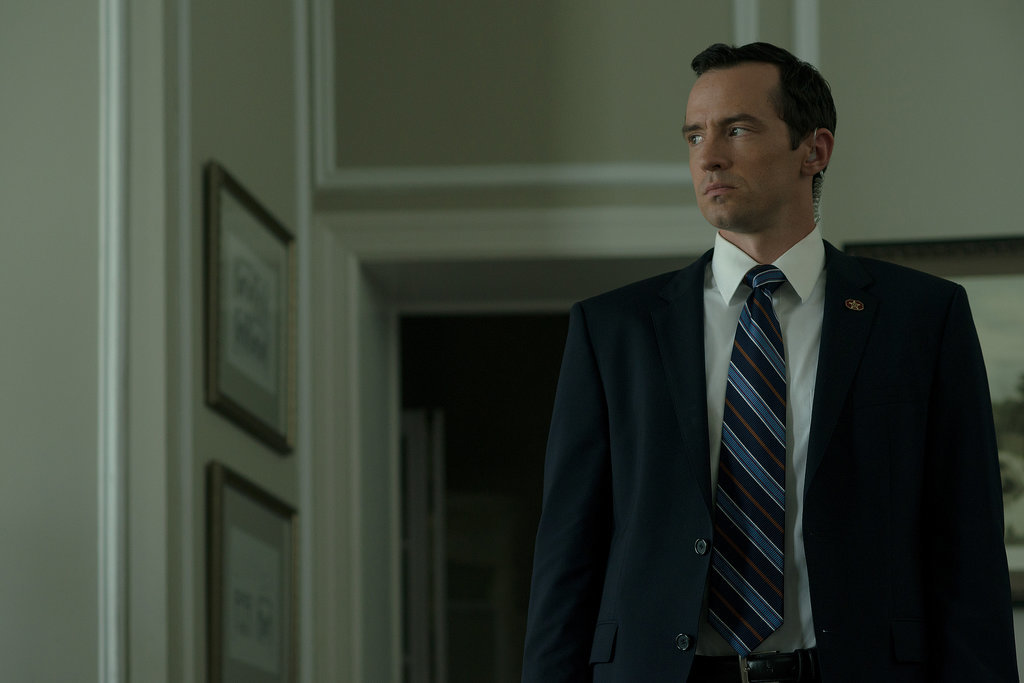 I fear I’m coming off more negatively than I intend to, so let’s address the nugget of a fantastic show that is nestled within House of Cards. I’m referring of course to the wonderful arc of Frank and Claire’s relationship, which takes center stage this season in a way that nearly manages to anchor the show despite the aforementioned flaws and frustrations. It’s no great surprise that Kevin Spacey is a powerhouse from top to bottom this season. The monologue at the end of the premiere is stunning, the shot of his cufflinks with just enough tongue in cheek. But really it’s that last shot of the season that takes first prize—it’s great enough to make you think you’ve been watching a wholly different show. The show, and Spacey’s performance, borrow liberally from Richard III, smartly so. Even when the script is unwilling or unable to properly shade the events of this story, Spacey’s performance finds nuance and subtlety (even with that accent).
But really, the MVP of this season is the stellar, absolutely fantastic Robin Wright. Claire’s story, though intermittently focused on throughout the season, is also the strongest of this set of episodes, whether it’s in wrapping up her season one storylines, or with the introduction of her military sex assault legislation midway through the season. Wright doesn’t hit a false note at any point. The dialogue is frequently terrible on this show, on the nose and expository, or else so luridly purple that no actor could possibly compensate. Well, no actor besides Kevin Spacey or Robin Wright, anyway. “I’m willing to let your child wither and die inside you if that’s what’s required,” is a thing of fucking beauty. Claire’s revelatory CNN interview is the centerpiece of “Chapter 17,” and it is marvelous, especially as juxtaposed with that episode’s quarantine at the Capitol. Frank is literally locked away, forced to watch Claire manipulate the interview solo, and he watches on television with loving admiration.
We’ve known for a while that these two really are a perfect pair, but this season foregrounds their marriage as a partnership in every aspect of their lives, and it does so to great effect. It’s bizarre to think of how functional and happy this marriage really is, considering the work these two get up to on a daily basis. Claire’s admission that she’d been raped is at once a lie and a truth, and it’s a revelation that propels her throughout the remainder of a season. By the end, she has left another life ruined, trampled again in the name of Underwood. There is that wonderful scene in the finale when, upon returning from the home where her latest victim, heavily medicated on lithium, is now suffering a literal psychiatric breakdown, Claire sits on the stairs and collapses into tears, breaking down for literally a second, before she regains her composure and continues to her bedroom. Robin Wright is impossibly good, completely encapsulating such a wide array of emotions in this scene. That she does this consistently throughout the season is nothing short of amazing, and I’d argue that she does more than even Spacey to elevate this material.
We should also take a moment to recognize Reg E. Cathy’s work as Freddy in his standalone episode late in the season, which feels—intentionally, no doubt—like something out of The Wire. In an initial binge, the episode feels abrupt and out of place, but it’s rightly been recognized as a standout moment of the season. It does something the rest of the show generally fails to do: it expands the scope and the context of Washington, and reminds us that there is a real world beyond all of this scheming. In addition it gives Frank his only failure of the season, and a personal one at that. We know, intellectually, that Frank and Claire have left a trail of (sometimes literal) corpses in their wake, and we’re meant to question the degree to which they feel remorse for their actions. So the idea that Tusk manages to torpedo the only thing remotely close to friendship that Frank has should be momentous, but instead that is isolated to this episode, and that’s a huge problem for the series. Of course we know Frank is a shark, but a little more insight into his emotions would go a very long way. That’s something a show like Scandal doesn’t do, and doesn’t have to do—but if House of Cards is going to be a serious drama, then it needs an episode like this. Not just an episode—it needs to feel like this all of the time, and outside of a few scattered moments, it doesn’t.
House of Cards has all the components of great television. It’s gorgeously shot, frequently well acted, and occasionally surprising, thrilling, and emotionally deep. But at other times it feels like a rote political procedural, with all the depth and subtlety of something like Political Animals. There’s nothing wrong, necessarily, with a show like that, but it results in a jarring tone when House of Cards tries to have its cake and eat it, too. As with Game of Thrones, House of Cards feels like a series that never quite coalesces, despite having many great constituent parts. It doesn’t feel complete, the way that Breaking Bad or Mad Men or True Detective does. It’s very fun for what it is, and when Spacey or Wright are on screen, it can even be magnetic. More often than not, though, it’s a mechanical progression of events in service of a character whose success is never in doubt. Whatever conflict is presented is often empty, there to prop up Frank Underwood, schemer extraordinaire. I’d like the next go around to be a little more challenging for him.
That said: also as with Game of Thrones, the finale leaves just enough unsaid to promise a strong third season—with Doug’s body waiting to be found and Rachel Posner on the loose, there are more than a few threads to be pulled that might unravel the Underwood presidency, and that’s a process that I’m still very intrigued to see. On that level, then, the show has succeeded. It just falls short of prestige.
7/10
The fourth season of Game of Thrones is wildly, frustratingly uneven. On the one hand it features series highlights such as “The Lion and the Rose,” “The Viper and the Mountain,” and “The Children,” but on the other, the premiere is excessively dull, and outside of these jam-packed episodes, there is not very much that happens. Call it a problem of adaptation; after all, this season adapts roughly a third of A Storm of Swords, while also incorporating elements from A Feast for Crows and A Dance with Dragons, while also inventing material for the show (a phenomenon that, as George R. R. Martin himself has noted, compounds itself with each new episode).
There’s another problem of adaptation this season, as well, one that has become steadily more pronounced at the series wears on. A Song of Ice and Fire is massive and sprawling, and it is structured in such a way as to expand, seemingly exponentially and infinitely, from the inciting events of the first novel. Even on the page, this continued unfurling of the narrative, expansion sideways rather than momentum forward, is tedious. On the screen it can be downright plodding. There are now so many characters, locations, and schemes, so many subplots to keep track of, that it becomes difficult if not impossible to track it all. The series does very little to mitigate this, and in the still overwhelmingly positive reviews, you’ll find most critics making excuses for this quality of the show.
There are successes of adaptation, as well. One of the biggest has been with Sansa Stark, who on the screen becomes vastly more interesting than she is in the source novels. This owes in part to some effective streamlining in the writing, as well as the dramatization of emotions that are largely internal on the page. But it also owes a tremendous debt to Sophie Turner, who has grown the most of the child actors on this show, and who gives a phenomenally nuanced and subtle performance throughout the season. Whether it’s her grim, tortured silence at Joffrey’s wedding, or her blossoming as a schemer under Littlefinger’s tutelage, Turner fully inhabits this character in a way that Martin is never quite able to.
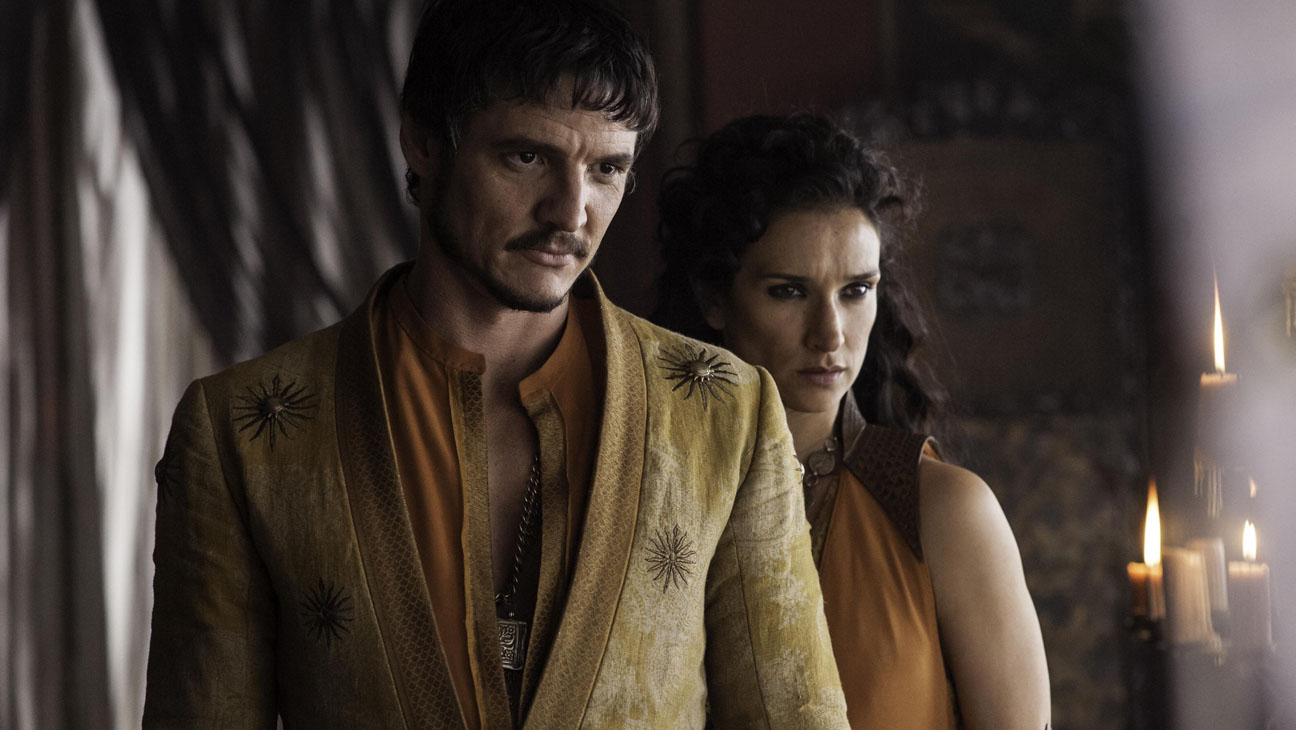 And of course we must also give credit to Pedro Pascal for his lively, exuberant, memorable turn as the Viper of Dorne, Prince Oberyn Martell. Despite his limited presence in the novels, the character is a noted fan favorite, and Pascal’s performance delivers on this and then some. His death is crushing (no pun intended), and carries with it the appropriate emotional heft that keeps it from seeming like another shocking death for death’s sake.
When we have a mere scene or two per episode at most, with only a handful of primary characters, screen time becomes a valuable commodity, one that cannot be wasted. This season the writing team has played with structure in some useful ways, allowing large set pieces, such as Joffrey’s wedding, Lysa Arryn’s death, or Oberyn’s fight with the Mountain, to take up large swaths of screen time within episodes. Generally this has been to great effect. But it has also backfired, spectacularly, with the incredibly misguided “The Watchers on the Wall,” a special effects extravaganza that failed to have any dramatic heft to it. On the opposite end of the spectrum you have a story like Bran’s, which is both lacking in material, and which is spread over far too many episodes, with such long gaps between appearances that any attempt at building momentum is doomed to failure.
To wit: Bran appears in just four episodes. Jaime appears in nine, which may come as a shock, since the character is all but forgotten throughout most of the season. Episode counts aren’t a foolproof way of tracking this sort of thing, but they can be rather informative, and the fact that no character appears in all ten episodes of the season is certainly a sign of a disjointed narrative.
Now, there’s an argument to be made that Westeros is itself in a period of messy, formless chaos, now that the war is over and the Lannisters are proving poor stewards of the throne. It’s a good argument. But the series could do a better job putting this over in the storytelling itself. In fits and bursts, there sustained sequences of excellence, but even these require the viewer to connect dots across multiple episodes, and even the best stories amount to no more than forty or so minutes across the entire season.
I’m being perhaps more negative than I mean to be. When the season is on point, it truly is excellent. The episodes I call out above all feature series best scenes and performances. Take Joffrey’s wedding in “The Lion and the Rose,” a masterfully written, staged, shot and directed exercise in building tension that swallows up nearly half of that episode’s run time, yet leaves you demanding more time with each and every character in attendance. The big event is of course Joffrey’s long awaited death, but that’s not what you’ll want to watch again for. No, the real reward of repeated viewings are the many, many small moments that director Alex Graves packs in. Lena Headey alone is an endless source of entertainment, reveling in Cersei’s own delight at the extremely awkward proceedings, before unraveling totally upon the realization that her oldest son is dead.
“The Lion and the Rose” also excels where so much of this season fails, by unifying its many other characters and locations under a singular theme. I wrote at the time about Melisandre’s conversation with Shireen, which casts the world of the show in binary tones, light and dark, that are in eternal struggle with each other, and speculated that the season would hinge on this framework. But I did not pay enough attention to her following assertion, that there is only one hell: the one we’re living in.
Again and again this season, that point has been hammered home, and the most effective episodes are the ones that most effectively pull this throughline through each of their stories. We see such success, certainly, in “Mockingbird”, which structures the episode around three separate visits to Tyrion’s cell, while contemplating various other relationships as well. And we see it in “The Children,” by far the strongest episode of the season, as the major plots of the season, such as they are, come to a close, each with a far higher cost than our heroes, such as they are, could have predicted. Arya leaves the Hound for dead, even as we know, or suspect, that he cared more deeply for her than he would ever admit. Jon Snow burns his first love. Cersei is confronted finally with the reality that her father views her as no more than a breeding sow, and does not even credit her enough to believe the truth of her relationship with Jaime. Jojen Reed is killed, and Bran’s dream of walking again is dashed. Daenerys must chain up her dragons, as she slowly realizes she may not be quite so fit to rule. And Tyrion, who has long been perhaps the only honorable man in King’s Landing since Ned Stark lost his head, is a murderer, in cold blood. As befits the episode title, these are all children, victims of this hellish world, doomed to suffer pointlessly and endlessly.
But for all the strength and power of these themes, and of the closing scenes of the season especially, the season overall is ultimately too scattershot, too inconsistent, and at times too poorly structured, to make effective use of them. The show has always told its stories piecemeal, opting to jump around the globe each episode, checking in on a handful of characters here, another handful there, and it’s always been a conceit that has threatened to become problematic. Here, finally, the show’s scope has outgrown its ability. There are simply too many balls in the air, and just as the novels have become increasingly unfocused and unwieldy, so at times has the show.
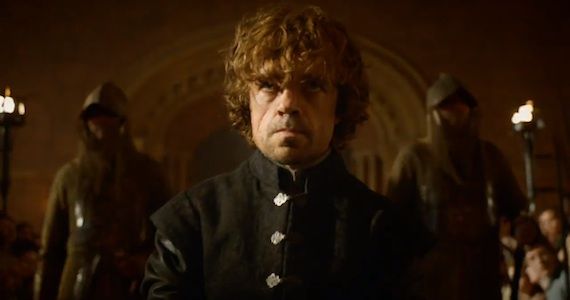 The problem is easily rectified, and I suspect it will be, but that doesn’t excuse some frankly confounding structural decisions here. In seasons past, the penultimate episode has been a climax of the season, an ultimate statement on the themes at hand that serves to severely raise the dramatic stakes. And it’s obvious that “The Watchers on the Wall,” which occupies that ninth slot, strives to be so, as well. Instead it is by far the worst episode of the season, assuming on the part of the audience far too much investment in a character (Jon Snow) and a story (the stewardship of the Wall) that the show itself has terribly underserved. The idea that an entire episode should be spent on it is absurd. Besides being uninteresting, boring, action for its own sake, it also wrecks the pacing of the final third of the season, which from Tyrion’s excellent trial scene onward hurtled toward the inevitable conclusion of “The Children” with a growing sense of dread and despair.
The season is all to prone to these sorts of ill-advised and pointless narrative detours. Yara’s failed rescue of Theon is circular plotting at its absolute worst, clearly meant to fill time and nothing more, as the characters end up right where they started. Ditto Jon’s detour to take care of the mutineers, which serves only to give Kit Harington a paycheck and deliver an action scene in an episode lacking for content. With scenes like these, and with relatively thin stories spread too thin over too many episodes, the whole season feels as though it is treading water. Each burst of momentum is so welcome in part because it has been preceded by dramatic doldrums. Worse, the poor pacing underserves characters like Jaime, who after becoming such an integral presence on the show in season three is largely reduced to window dressing; or Stannis, whose motivations are needlessly obtuse in order to preserve a false element of surprise.
In a way these complaints are useless, since the source material is there and isn’t changing. With Joffrey’s wedding and Oberyn’s death out of the way, there is frankly very little of consequence left in the remaining novels, especially with Bran and Daenerys’ stories having bled a bit into “A Dance With Dragons” by this point. Perhaps not entirely useless, though; since the producers are slowly pivoting away from the source material, and doing so in ways that are bringing disparate stories together (Brienne and Arya, for instance), perhaps we will see more of this kind of streamlining going forward. There are already several signs of this, with an early introduction of the extent of the White Walkers’ nature, Jojen’s thus-far unwritten death, and the exclusion of Lady Stoneheart, a superfluous and silly character in the novels. As it becomes increasingly less likely that Martin will finish his novels remotely in time to catch up to the show, David Benioff and D.B. Weiss seem to become more confident in their own plan for this story. Except for the curious staging of Jaime and Cersei’s reunion at Baelor, the changes they have made from the source material have by and large been improvements on novels that are often plodding and self-indulgent. So there is hope for the future.
Ultimately the show needs to get to a place where it is greater than the sum of its parts, which it currently is not. That’s a strange thing to grapple with, since for three seasons, the whole has been greater; but as the story evolves, so must the show, and for as much as season four was a transition season for the story, it feels also like a transition season for the creators, as they learn how better to navigate the larger world they’ve built for themselves. It’s not a bad season by any means, and as I say, the high points are better than most other drama on television. Peter Dinklage continues to give a fantastic performance as Tyrion, especially in the season’s final hours, and I can’t wait to see what he does next season. Charles Dance’s Tywin was an excellent villain, and his presence will be sorely missed. All the performances are wonderful, really, and there’s no denying the show is well put together. But it often feels like two or three different shows, stitched together, and not always very neatly. The final scenes of “The Children” are captivating and moving, setting up a true sense of wonderment, and, bizarrely for this show, suggesting the faintest glimmer of hope, for redemption, for a rescue from this hell. I wish only that the preceding season were so consistently, evocatively beautiful. Like our heroes, we’ll get there eventually.