Category: Essays

  • Why The Cabin in the Woods is A New Classic Horror Movie

    Why The Cabin in the Woods is A New Classic Horror Movie

    Five years later, The Cabin in the Woods is looking more and more like a horror classic that is singular in its mission to revitalize the genre that we know and love.

    Five years ago, the trajectory of the horror genre was forever changed with the release of the Joss Whedon and Drew Goddard film The Cabin in the WoodsWell, maybe not forever changed, but it sent a statement to the horror community that has certainly been heard.

    Cabin is a loving hate letter to the horror genre. It simultaneously emulates — specifically the genre post-Evil Dead — and criticizes its new tropes by “explaining” its most outlandish aspects. The last movie to attempt this to success is Scream, which set off yet another wave of copycat movies. However, The Cabin in the Woods is one that won’t be easily copied, which is why it is and will stand as a new horror classic.

    Drew Goddard and Joss Whedon wrote The Cabin in the Woods in essentially a weekend as a response to a couple of failed projects and a glut of “torture porn” horror movies — popularized by the Saw series. In the Blu-ray commentary, they called the movie “something for us.” However, that “us” can also describe fans of the genre. This movie could only be born out of horror movie fanatics that are so well-versed in its history and tropes that it would take another horror movie fanatic to truly catch all the references. In that sense, The Cabin in the Woods is a gift to horror fans.

    💌 Sign up for our weekly email newsletter with movie recommendations available to stream.


    ADVERTISEMENT


    The Cabin in the Woods doesn’t just subvert the genre tropes, it challenges the very fabric of the horror movie industry. The movie opens on Sitterson (Richard Jenkins) and Hadley (Bradley Whitford) speaking to Wendy Lin (Amy Acker) about several failed rituals around the globe. Goddard and Whedon’s decision to open with this scene was surprising but completely necessary to the success of the movie. Without it, we’d open to the next scene which shows the girl next door type Dana (Kristen Connolly) packing for a weekend at the eponymous cabin in the woods with her newly blonde friend Jules (Anna Hutchison) and her jock boyfriend Curt (Chris Hemsworth). Goddard creates the opening of almost every 2000s horror slasher so perfectly — right down to the score — that the audience would immediately be turned off by it. However, the opening scene in the facility coupled with the fact that the characters don’t exactly meet their stereotypical horror counterparts — Dana had an affair with a professor, Jules is pre-med, and Curt is at school on full academic scholarship — makes you realize that this is a horror movie like no other.
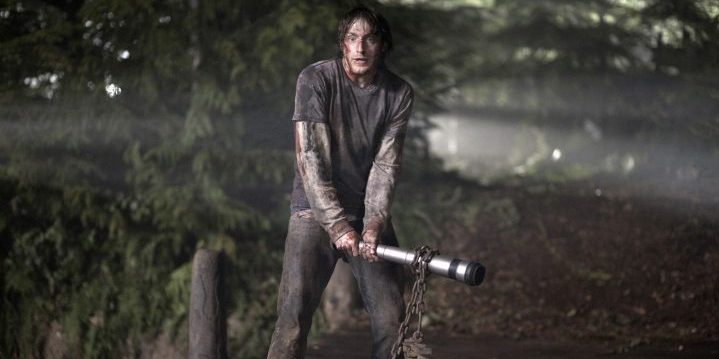
    Fran Kranz in The Cabin in the Woods

    Goddard was careful to actually recreate the horror movie setup that he is looking to tear down — the other two friends joining them on the trip fill the roles of the comedic stoner Marty (Fran Kranz, who gives one of the best performances of 2012 in the film) and love interest Holden (Jesse Williams). The group even encounters a creepy old man at a seemingly abandoned gas station warning them of their impending doom. However, Goddard and Whedon use the scenes at the facility to explain those occurrences. It’s a subtle jab as to why every horror movie plays out the same.

    By the time the film comes together — which is refreshingly gradual compared to the sudden “twist ending” that has also plagued the genre — you’ve already pieced together the clues and have come to an understanding about it. Simply put, The Cabin in the Woods is one of the sharpest satires of our generation. It’s a meta-horror movie that simply laughs at the very movies it’s trying to perpetuate. More than that, there’s a clear sense of recognition. Any horror fan watching the movie can pick out the cliches and stereotypes. However, the movie quickly subverts those and replaces them with reference after reference to classic horror movies — some direct and some you have to dig through your brain to unlock. There are so many that you have to pause the movie several times to catch them all. But that’s why Cabin is so good. As much of a sharp criticism it is, it’s also a playground for horror fans to play in. After watching this movie a dozen or so times I am still discovering new references.

    💌 Sign up for our weekly email newsletter with movie recommendations available to stream.


    ADVERTISEMENT


    But what does it mean? Satires often have a message to whatever they’re satirizing. So, what is the message to the horror genre? Well, the last few minutes of the movie quite efficiently lay that out there. The genre and its fans need a hard reset. We need to stop asking for more blood, more gore, and more sex when it comes to the genre. Instead, the movie begs for smarter characters, more interesting rules, and new stories to be told. Instead of the 33rd Halloween movie, Goddard and Whedon send out a plea for the next Scream or 28 Days Later. The genre needed a reinvention and, in my opinion, The Cabin in the Woods started one.

    Following Cabin we’ve seen an influx of original horror. Some can’t be attributed to the movie. The Conjuring is another movie that was on the forefront of the horror renaissance and part could be attributed to the fact that people that grew up with 80s horror now have the chance to make movies that they want to see. However, I also think that Cabin gave filmmakers the confidence to tackle more interesting stories. Between The Witch, It Follows, The Babadook, and Get Outthis decade has had its lion’s share of great horror. However, I’m always going to look fondly on The Cabin in the Woods for encapsulating the mood of the times and acting as a transition into the golden age of horror.
  • The Conjuring vs. Insidious: The Art of Tension In Horror Movies

    The Conjuring vs. Insidious: The Art of Tension In Horror Movies

    How Insidious and The Conjuring use the classic horror tension formula to create some of the best scenes of suspense in recent decades

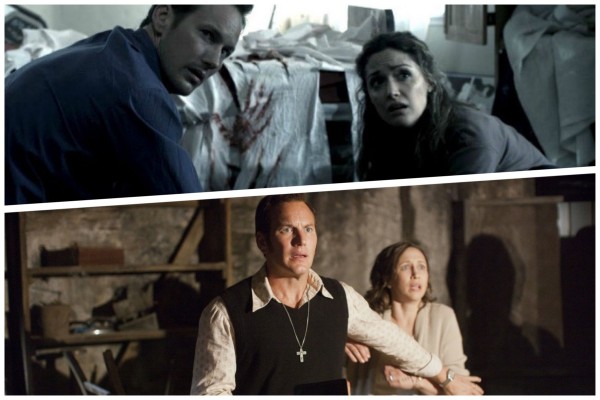
    The argument could be made that we are in a horror renaissance. Original horror movies, in particular, have been taking the limelight and propelling the genre past traps that it has fallen into in recent years. However, one filmmaker has been treading on old formulas and retooling them to create some smart horror recently. That filmmaker is James Wan. While I don’t think his movies are perfect, especially Insidious, he has perfected a horror formula that has been used in horror classics and repurposed them in modern settings. So, with Halloween coming up I thought it might be the perfect time to analyze two keys scenes that use this formula so well.

    Insidious: A smart practice in tension that is squandered in the third act

    Insidious is by no means a perfect horror movie. I need to put that out there right from the beginning. But the first two-thirds of the movie nail what the movie is at its core: a ghost story. Wan very smartly works the audience from the beginning by unsettling us with key imagery that sets the mood for the movie. That coupled with the perennially dark setting creates an atmosphere that is unrelenting (that is until the final third, but we’ll get there in a bit).

    However, one of the smartest things that Wan does is show a lot of restraint. A huge trend in the 2000s horror genre was the cold open that was this initial scare that was supposed to come in place of real mood-building. Even strong movies like The Descent and The Ring did it. Instead, Insidious sees a slow but steady build. No long set up. No character introductions. We’re dropped into their world, but immediately know who they are as a family. Wan takes the time to earn the big scares. Take this scene for example:

    Notice that nothing shocking happens in the first two minutes of the clip. The knock on the door isn’t meant to be a scare. There’s no music in the background. He doesn’t want to let the tension go too soon. He takes his time on the door to build it further. When nothing happens we’re put into a false sense of security when Rose Byrne gets up to check on the baby. Then we get the big scare of the man in the nursery with a clang of music that quickly dissipates, which puts us in another false sense of security. When we go back downstairs we get a subtle but unsettling image of the door being wide open.

    Wan does this again later in the movie when the family moves to a different home, just as effectively. The horror elements of the movie are a clear call back to movies like The Changeling and The Poltergeist. The clown scene is a perfect example of this. However, what makes the first two-thirds of this movie so strong is the dynamic between the two leads, Rose Byrne and Patrick Wilson. Byrne’s character Renai takes the brunt of the paranormal activity. She is mentally worn down to the point that she will do anything to solve the problem. Wilson’s Josh, on the other hand, will not accept that the family is haunted.

    Even before the haunting, we get a pretty clear portrait into the couple’s life. Renai is a worn down musician who is trying to hold it down at home while her husband is at work. We get a sense that there is some tension when Josh doesn’t seem to take as much familial responsibility, so when the haunting increases and Josh is nowhere to be found that tension comes to a head. Of course, we learn later on that this is because of points in Josh’s past.

    💌 Sign up for our weekly email newsletter with movie recommendations available to stream.


    ADVERTISEMENT


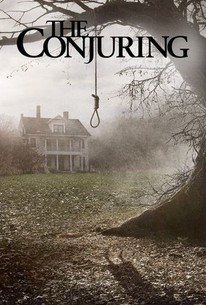
    the conjuring poster

    The reason the third act doesn’t hold up is because of the clear mood shift. Once Elise’s team comes into the picture, a medium that Josh’s mother suggests helps, the film shifts to a black comedy that doesn’t match the first off. More than that, the plot becomes to muddled in a twist that goes on too long. It almost feels like the studio decided what the final act should be. This is so well demonstrated when we watch a demon sharpening his nails while listening to some ironically cheerful music. Insidious falls into the trap that most horror movies fall into nowadays: the third act twist.

    Because of the mechanics of the twist and the flashes of humor, the tension is immediately gone for most of the act. And when Wan tries to ratchet it up again, it feels artificial (the slow-moving ghosts, the classic electricity goes out trope).

    The Conjuring: A practice in slowly adding tension throughout the entire film

    This brings me to Wan’s horror follow-up, The Conjuring. Based on the case files of real-life demonologists Ed and Lorraine Warren, The Conjuring takes a different approach to most ghost stories by focusing first on the paranormal investigators. Unlike Insidious, The Conjuring does begin with a cold open which features an entirely different case from the one focused on in the movie. This opening followed by the slow crawling title text is taken straight from The Exorcist. However, the reason the cold open works here is because we need to see what Ed and Lorraine do from the start and there really is no way to show that without showing a case.

    From here though we are treated to the same slow-building scares we see in Insidious. This time, we are trained for scares not in just one scene, but the entire movie.

    Note: If you haven’t seen The Conjuring (then I’m not completely sure why you’re reading this in the first place), there are some spoilers coming up in the next few paragraphs.

    Hide-and-clap is the perfect example of the slow build scare. We are first introduced to the game when the four girls of the Perron family, the case that the Warrens take on, are playing in their new house. It is a fun and light scene that adds ease to the game. However, when the youngest daughter in the family asks for a game with the mother, played incredibly here by Lili Taylor, it takes on a more threatening tone when the claps are discovered to not be coming from the daughter.

    Based on that set-up, we are trained to know that something involving this game is going to end up being a scare. That’s what this scene is:

    💌 Sign up for our weekly email newsletter with movie recommendations available to stream.


    ADVERTISEMENT


    There’s a lot to break down in this scene, so bear with me. Before this scene, we hear claps again late at night. Of course, Carolyn, the mother, thinks it’s here children. But when we see them all fast asleep we know something more sinister is happening. The pictured hung up the staircase are then knocked down which leads Carolyn downstairs. The lack of music in this scene punctuates the tension. When the basement door opens we are expecting a scare when she goes down. Instead, she goes up which relieves the tension. So, when the door closes we are not expecting it. Again, the tension begins to build when nothing happens in the basement. However, when something does happen, the ball, we are taken aback because we are expecting a bigger scare. When the lights go out and she lights the match we know from past horror experiences that on the third light something is going to happen. When we do get to that third match we’re expecting something to be there when it’s lit. Nothing happens until a beat later when hands clap right next to her, bringing the entire scare full circle.

    It’s this carefully mapped out and timed scare that makes The Conjuring so effective. It’s this tension that acts as a red herring for most of the movie that makes it so terrifying. Unlike Insidious though, The Conjuring stays the course and uses minimal CGI to simply enhance the scares rather than being the scare (The Conjuring 2 makes this mistake).

    Across both films, the use of mundane imagery to translate horror is truly where Wan’s strength lies. The rolling of a ball, an open door that was locked, a pair of hands clapping are the true horror images of these films. But what makes the last third of Insidious ineffective and the second Conjuring film is the over-reliance on CGI and overly complicated compositions to convey horror. We didn’t need to see the demon crawling on the walls or the crooked man. All we needed to see is this mundane imagery that seeps into our daily routine to truly terrify us.

  • Why ‘Closet Monster’ is a Modern Gay Masterpiece of Accepting Yourself

    Why ‘Closet Monster’ is a Modern Gay Masterpiece of Accepting Yourself

    While there has been a resurgence of great gay coming-of-age stories, Closet Monster has been pushed to the side. However, it deserves to get its due as a queer masterpiece.

    I have watched this movie 4 times before being able to put into words what this movie makes me feel. Closet Monster revolves around Oscar Madly as a 9-year-old (Jack Fulton) but, for the majority of the movie, an 18-year-old (Connor Jessup), who is told by his mother Brin (Joanne Kelly) and father Peter (Aaron Abrams) that they are separating. Harboring negative sentiments towards his mother, Oscar lives with his dad and hamster Buffy (voiced by Isabella Rossellini) and sees his mother sparingly. Later on, Oscar, at the ripe age of 9, becomes the sole eye witness to a gay hate crime committed in a cemetery where multiple teenagers insert a metal rod into a young gay man’s anus who becomes paralyzed from the waist down as a result. Okay, so he is not the sole eye witness if we are counting Buffy.

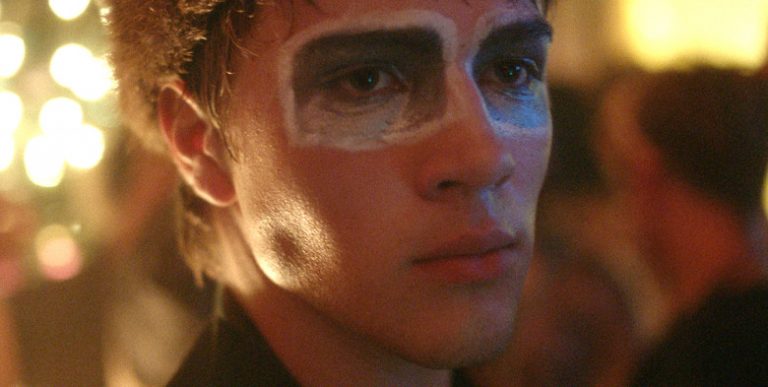
    After a pretty cool transition shot of Oscar falling from a tree house as a 9-year-old and hitting the ground as his 18-year-old self, Oscar, along with his best friend Gemma (Sofia Banzhaf), are planning a move to New York City after graduation. Oscar is a burgeoning special effects makeup artist who is putting all his hope into his dream school. As Oscar eagerly awaits an acceptance letter, he spends his time working a retail job where he meets Wilder (Aliocha Schneider), who apparently has a jawline that can’t be found in Canada. After a less-than-exciting kiss with Gemma and a brush with Wilder, it becomes apparent to Gemma and Oscar that he is gay. The movie spans Oscar’s daily life as he butts heads with his immature father who wreaks of toxic masculinity.

    Upon first viewing, I was far too stuck in the literal to understand the movie well. With a talking hamster, throwing up screws, and recurring stomach pains, I was just a bit confused, but then I watched it again. I was able to appreciate the blended figurative with the literal. While I am a big fan of movies, I rarely find myself on screen. I mean, that is not that odd in general, especially because I am gay. While gay characters are certainly on the rise and getting their stories told (finally), I never related to a characteruntil Oscar.

    This is a movie that was not just entertaining but it helped me reflect on my life, my difficulties with my own sexualities, and how I came to terms with it. In the beginning of the movie, Oscar’s father gives him a dream one night, which is their routine where his father describes a scenario for Oscar to dream of, blows it into a balloon, and lets the air out on Oscar’s forehead. In this dream, he tells 9-year-old Oscar that he will be surrounded by sexy ladies. This was the first thing that resonated with me because I remember how I would squirm internally when someone would say something that would imply that I was attracted to women. From family to doctors and friends to even strangers, the world assumes you are heterosexual, and when you are not, little things like that can be extremely anxiety-inducing. Oscar’s father also regularly used the term queer as an insult towards Brin’s new husband. Peter is a prime example of toxic masculinity, presumed heterosexuality, and homophobia.

    As the movie progresses, Oscar’s feelings for Wilder grow, which is made abundantly clear as Oscar masturbates to a shirt that was worn by Wilder. While masturbating, Oscar, to his horror, looks down and, instead of his penis, sees the very bloody rod that was used years ago during a hate crime. In an inversely proportional relationship, Oscar’s relationship with his father deteriorates rapidly. Their relationship comes to a head one night when Oscar dresses in some of his mother’s old clothing for a costume party at Wilder’s. His father, disgusted at the thought of his son wearing any clothing or partaking in any event that may be construed as gay, tells him he can’t go. To which, Oscar ironically kicks him into his closet and leaves the house. During the night, Oscar is offered a pill, which he takes.

    In a drug-induced daze, Oscar is pursued by a handsome stranger. As they dance, this stranger attempts to grope Oscar, which makes Oscar quickly leave and attempt to collect himself in a bathroom. The stranger quickly follows him and, while never actually kissing him, begins to have sex with Oscar that seems to be less than fully consensual. This ends shortly as Oscar becomes sick and throws up bloody bolts. The recurring rod and bolts are a beautiful metaphor that periodically returns every time Oscar attempts to address or process any thought or action that may be seen as gay.

    What I love about this movie is his relationship with Buffy the hamster and the fact that Oscar always carried a wooden stake as a child for a form of protection, which he dropped at the scene of the hate crime. It may seem like a less significant storyline, but Buffy is truly an important reflection of Oscar. Upon first viewing, I took Buffy’s words as her own dialogue, but the movie took on such a deeper meaning for me when I viewed everything Buffy said as if Oscar was saying it himself. Buffy always responded with what he needed to hear. When his parents fought as a kid, Buffy would confide in Oscar that she was afraid, which was his only coping mechanism for the shattering of his family. When he witnesses a hate crime, Oscar is rightfully frozen in fear. It is Buffy who utters “do something,” which makes Oscar step forward and help scare away the attackers. Buffy is able to convey some of Oscar’s deepest fears or feelings to him without Oscar feeling like he is approaching them head on alone.

    On top of that, any gay thought or feeling Oscar has is always encumbered by the hate crime he witnessed. Whenever Oscar fantasizes about Wilder, Wilder is always pictured in the exact graveyard that the hate crime took place in. Throughout the movie, Oscar realizes Wilder is predominately straight. Although Oscar realizes there will not be a relationship between them, Wilder does help Oscar accept that he is gay after they share a kiss. I think it is important that Wilder has the obvious faults that he does. I like that Wilder quietly exits the movie with no real goodbye because it is indicative of what growing up gay is like for many people. At least for me, I grew up developing crushes on anybody that I thought may like me back. I mean, I felt like a complete outsider, so the thought of any boy maybe liking me back was honestly enough to have my interest; I think this is why Oscar gravitated towards Wilder so much.

    As Oscar wakes up the next day, he goes to his mother’s house and has a heart-to-heart with her about the divorce and how he felt abandoned. During this talk, his mother tells Oscar that when he was born, he came out with the umbilical cord wrapped around his neck like a noose. What I thought was amazing was that much earlier in the film, Oscar is flipping through his photoshoots, and the camera briefly shows a photoshopped image of Oscar with a noose around his image. I really enjoyed the subtle full circle moment this conversation brought to the table. After this conversation, Oscar returns to his father’s house to find that his room has been torn apart by Peter. As he faces his father, Oscar admonishes his father for his actions.

    Oscar leaves the house to find his mother urgently telling him to get in the car. She fails to protect Oscar from the scene of all of his belongings on the front lawn. Unfortunately, he discovers Buffy’s dead buddy and, along with it, his old stake, which was left at the scene of the hate crime many years ago. As a beautiful score begins, which I am currently listening to on repeat as I write this review, one of the most powerful cinematic moments plays out. All audio fades out as Julian Brewer’s Trance plays. Oscar doubles over in pain from a protrusion in his stomach. At last, he pulls the bloody rod from his stomach–a beautiful portrayal of his finally accepting his sexuality and pain as being valid.

    Oscar steps toward his mother and father, who are arguing. As Oscar approaches his father, he raises the metal bar. Happy memories of his father from his childhood flash across the screen. Obscure images of Buffy and Wilder are intermingled with these memories. The music takes a powerful crescendo as Oscar yields the bar and is set to strike as his terrified father and petrified mother look on. As Oscar brings the rod down on the mailbox, the music ends. His father scurries into the house, and Oscar uses the very bar that has hurt him for so long to lock away the man who has hurt him for his whole life inside the home where he felt so much pain.

    As the movie ends, Oscar goes to live in an artist’s residency. As he lays in bed, he hears his father’s voice utter loving thoughts. His father’s disembodied voice tells him he loves him and is so proudAnd then the balloon pops. The dream is broken. It is just that. A dream.

  • Why Moonlight is one of the most important Best Picture winners in history

    Why Moonlight is one of the most important Best Picture winners in history

    Moonlight winning Best Picture will go down as one of the greatest Oscar upsets of all time

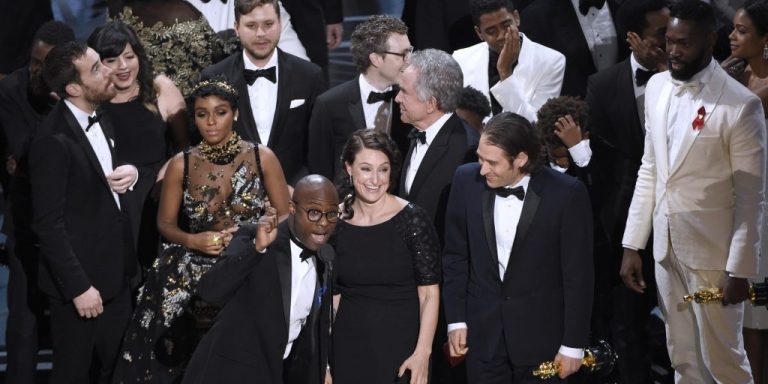
    The emotional rollercoaster that was the last 10 minutes of the 89th Academy Awards was the first of its kind. Never has there been a mistake so colossal in the history of the ceremony. However, it also came during one of the most important wins at the Oscars in history. It’s unfortunate that this mistake overpowered the gravity of the win. So, I wanted to take a moment and talk about what Moonlight‘s win means in terms of the history of the Oscars, of our society, and the times we are living in.

    While the Oscars are slowly fading away in cultural importance as movies move more towards blockbusters and at-home viewing, my love for the process and the films involved has only deepened. I am an Oscars geek. Not only do I love movies and watching people from actors to behind-the-scenes crew members being lauded for their work, I love predicting them. To be honest, I think I fell in love with the Oscars before I fell in love with movies. So, while for some people they are a silly awards show, for me they are a platform, both political and social, that has influence over the industry and the world.

    With the last two years falling beholden to #OscarsSoWhite, all eyes turned to The Academy this year to do something to have all groups represented at the Oscars. When it looked as if movies like Lion, Hidden Figures, Fences, Loving, and Moonlight were making a strong play for awards season, I was ecstatic! Not only did I really love all those movies, it represented a shift in the stories that were being featured heavily on the awards trail. Then, La La Land premiered. Now, to put to rest any anti-La La Land sentiment you may think I’m putting down, take a moment to read my review of the movie. Spoiler: I adore it.


    Moonlight won Best Picture in 2016

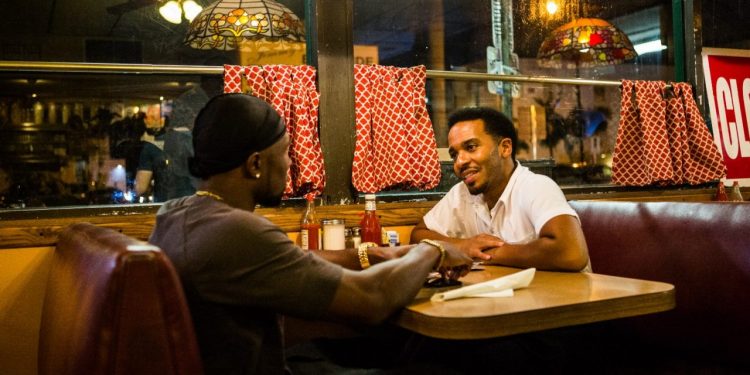
    However, my favorite movie of the year was Moonlight. Its exploration of identity, especially of a young gay black boy, hit close to home for me. And while I thought its singular style, sensational performances, and beautiful story would go over well with many people, I didn’t think The Academy would embrace it. Unfortunately, there are two things that the heavily old, white, and male Academy doesn’t like their stories to be: black and gay. I was hopeful that it would make an awards run and end up with a few nominations here and there. However, it was embraced by critics and critic awards — which makes the case for critics yet again — and eventually by the industry itself. The fact that it was getting so much buzz and publicity was enough for me. It was enough that this story was being seen. And while I predicted Moonlight for Best Picture, I knew that a million pieces had to fall into place for it to happen.

    Well, I shouldn’t have been so dramatic and realized that it’s a movie that is beloved and of course would win Best Picture. But the gravity of that win is something that few people are talking about. Moonlight broke so many barriers in Best Picture that from this moment on we will have to reevaluate the way we predict these awards.

    First of all, it’s the first movie with an all-black cast to win Best Picture. Shockingly, it wasn’t until 2013 that a movie with a black main character won — Steve McQueen’s 12 Years A Slave. Obviously, the Oscars have an issue with diversity, so this was a very encouraging win on that front. A win like this is something that says that they are not letting race or sexual orientation get in the way of the movies they view and ignore. In our current environment, minorities — young minorities in particular — don’t have a central figure to look up to or aspire to. Seeing Moonlight and Barry Jenkins being honored at the Oscars in this way is the kind of thing that kids need to see right now.

    The movie also broke they LGBT barrier at the Oscars. No movie with an LGBT main character has won Best Picture. The closest we got was in 2004 when Brokeback Mountain famously lost to Crash. The amount of progress we’ve made since then has been incredible. And a new kind of progress that will hopefully inspire other filmmakers has been achieved with this win. Hopefully, this will encourage other filmmakers to tackle stories that represent a wide array of people from different backgrounds and different walks of life.

    From an industry perspective, Moonlight is one of the lowest-budget movies to ever win Best Picture. As an independent film lover, it’s encouraging to see such a small movie win and encourage studios to finance smaller and more intimate projects rather than the 700th Marvel film.


    However, most importantly, as a message to SCROTUS, Moonlight successfully teaches us the lessons of empathy and what happens when someone is taunted for who they are. Like in Chiron in Moonlight, more people are receding into themselves and hiding from their true selves because the government and parts of the country are saying that they don’t belong. Well, watching a movie about a gay black teen living in poverty will hopefully give them the courage to step out, speak out, and fight back. Call it a narcissistic, self-congratulatory awards show, but this year, the Oscars were a battle cry.

  • Dear Oscar Voters: If La La Land sweeps, it will be an embarrassment

    Dear Oscar Voters: If La La Land sweeps, it will be an embarrassment

    Dear Oscar Voters,

    I love La La Land. I LOVE it. I have a different appreciation for it versus other film bloggers because of its profound message of alienation that plagues our generation. However, if it wins a record-breaking number of Oscars come February 24th, it will be an embarrassment to the Academy and the industry that will blemish your reputation for years. However, it’s a very likely outcome at this point.

    2016 has been a rough year. That’s no secret. Hate, misogyny, racism, xenophobia, and other troubling issues have come to rise. I understand that La La Land is a wonderful escapist movie. But when we look back at the list of Best Picture winners, will we really want remember 2016 as the year that La La Land won? Race, in particular, has been at the forefront of our minds and discussion. #OscarsSoWhite, which has been an issue for far too long, finally had its effects this year with a record 7 acting nominees of color. Other barriers like Joi McMillon becoming the first African-American woman to be nominated for Best Editing or Bradford Young being the first black cinematographer nominated were also broken. Would a sweep of a movie about “champagne” problems really encapsulate the year?

    Especially when many movies that emulate our current environment have been recognized. Of course, there’s Moonlight, which turns its attention to a completely marginalized group of people. Hidden Figures talks about female empowerment and that no matter the race or gender of a person, they can get the job done. Then, or course, there’s a Fences, which literally is about the barriers that are put in the way of some people. You could even say Lion talks about compassion and love no matter the skin color. Not even giving a chance to properly recognize these movies would be irresponsible.

    Then, there’s the perception of Hollywood. I don’t know if you noticed, but about half the country believes that you’re out of touch rich people who like to self-congratulate. Well, La La Land would essentially be that kind of winner. You are telling the half of the country that looks at the gorgeous political and progressive speeches by Meryl Streep, Mahershala Ali, and David Harbour as over-the-line that you are exactly what they think you are. Out of touch.

    But let me get to the meat of it. No movie is THAT good. The three movies that share the record for the most Oscar wins – Ben-Hur, Titanic, and Lord of the Rings: Return of the King – are technical masterpieces that were at the top of their craft at the time. For you to say that La La Land truly has the best costume design over movies like Jackie and Fantastic Beast and Where to Find Them or better production design than Arrival or Hail, Caesar! or a better screenplay than Manchester by the Sea or 20th Century Women is absurd. Sure, give it sound mixing or original score. But don’t just check it off in every category.

    I’m not writing this to tell you not to vote for La La Land or that it isn’t a good or even great movie. I’m writing this as a true lover and believer of the Oscars as a political platform and artistic platform like no other. Show people that there are other stories to tell. Show people that movie that represent them on screen exist. Show them that you don’t just ignore what’s going on in the world. Show them the Oscar are more than just a pat on a back to yourself. Be the Oscars that I fell in love with.

    With the warmest regard,
    Karl