Category: Movies

  • ‘Dunkirk’ is Christopher Nolan at his best | review

    ‘Dunkirk’ is Christopher Nolan at his best | review

    Dunkirk is a thrilling and emotional war movie that is singular in its form and a high-point in Christopher Nolan’s already impressive career

    Quick cut: Though it is infused with the cinematic innovation that’s synonymous with Christopher Nolan, Dunkirk also finds him at his most human. The action, visuals, and disorienting story make it a cinematic achievement, but the surprising emotion is what makes it one of Nolan’s best.

    Tick. Tick. Tick. That’s the sound that underscores almost all of Christopher Nolan’s film about the evacuations at Dunkirk during the height of World War II. However, what we’re counting down to exactly is never truly apparent. Is it to the end of the evacuation? Or perhaps to when the German troops — who are never truly seen — finally make their final push into Dunkirk? Nolan plays with time by tracking the story in three vignettes. “The Mole” takes place over one week, “The Sea” over one day, and “The Air” over one hour. The three storylines are interwoven into each other before crashing together. However, no matter if you’re watching the speeding story of The Mole or the slow burn one of The Sea, the tension never truly abates until that clock stops ticking.

    With barely any dialogue or even context for where the movie takes place in World War II, it’s disorienting to orient yourself into the story. Still, from the haunting opening shot of five soldiers scavenging through the empty streets of Dunkirk, you are immersed into the narrative. Eventually, Tommy (Fionn Whitehead) emerges as our general point of view for “The Mole.” However, he is certainly not a typical war movie protagonist. There really isn’t anything typical about Dunkirk. There are no incredible heroics or selfless acts of bravery. Nolan portrays the desperation that soldiers felt unflinching. For the soldiers shown in “The Mole,” the only goal is to get off the beach.

    💌 Sign up for our weekly email newsletter with movie recommendations available to stream.


    ADVERTISEMENT


    “The Sea,” which is anchored down by recent Oscar winner Mark Rylance, — he has a good chance of being back in the Oscar race with this role — is a slower build, but no less tense. However, this is also where we get to know our characters a bit more. Specifically, when a soldier (Nolan regular Cillian Murphy) is brought onto Mr. Dawson’s (Rylance) boat — the Navy commissioned the vessel to help with the evacuation — after the ship he was on was struck by a torpedo, his strong PTSD begins to endanger those on board. PTSD is misunderstood, but Nolan handles the plot line here with grace. For a director that is often criticized for forgetting humanity in a situation, Dunkirk is made up almost exclusively of human moments. Even scenes of action have a feeling of dread or our fragility.

    To call Dunkirk singular would be an understatement. Among war movies, it is an outlier. It’s more poetic than it is brutal. It can even be described as an arthouse version of war. Cinematographer Hoyte van Hoytema finds the beauty in the chaos and helps Nolan look past the carnage of war and instead look at the desolation. This isn’t a battle. The battle is over. This is a race for survival. A lesser filmmaker would intercut the war scenes with scenes in Berlin strategizing the final assault into Dunkirk or London with Churchill. Instead, it keeps its attention on the beach, the sea, and the air. It’s that focus that makes you unable to rest during its lean 90-minute running time.

    There’s been a recent discussion over Netflix and its place in the film industry. Is it okay to watch movies in their unintended setting? In the case of Dunkirk, watching it in any place other than a movie theater — ideally an IMAX — would be a disservice. This movie will immerse you. The wide hellish landscape portrayed on-screen engulfs you to the point that hearing a plane roaring overhead will make you flinch much like the soldiers on the beach. At times, you hear the noise, but don’t see the plane and instead watch the reactions of the soldiers screen. A huddled line of soldiers standing on a pier waiting to board the next evacuation boat suddenly turn their faces to the sky to see the unseen enemy before being bombarded the next moment. In those moments, your breath is taken away. It’s filmmaking at its finest.

    💌 Sign up for our weekly email newsletter with movie recommendations available to stream.


    ADVERTISEMENT


    At one point, Tommy, who has teamed up with Alex (Harry Styles, who does good work here) and another unnamed soldier (Aneurin Barnard) are aboard a ship that is hit by a torpedo. As the water rushes in, we are caught up in the swell and are soon consumed by darkness. The terror of the moment seeps into you. Even though you’re watching it on a two-dimensional screen, the scene surrounds you.

    All the while, in the sky, Farrier (Tom Hardy), a Royal Air Force Pilot, is in a dogfight protecting the beach during the evacuation. Hardy is sublime in the nearly silent performance. However, the storyline is more than an action sequence. Dunkirk is about heroes. The actual evacuation was seen as a military disaster that has been largely ignored until now. Well, Nolan has found that heroes in war movies don’t have to be the brave soldiers going out in a blaze of glory. Instead, it’s the ones that save one person. It’s the ones that show their humanity for a brief moment. It’s the ones that see the mass of soldiers huddled on the beach as individuals, instead of one collective mass. Dunkirk is as much about the evacuation as it is the men and women who experienced it.

    Christopher Nolan is the biggest director to rise to prominence in the 21st Century, without qualification. However, it’s only recently that he has learned how to balance his incredible style with substance — check out our review of Interstellar. Well, if Dunkirk is any indication, he’s found that balance. Dunkirk is nothing short of a masterpiece. No other director would attempt a war movie like this. From the artful cinematography to Hans Zimmer’s disorienting score, and the non-linear narrative to the dialogue-less emotion, Dunkirk is a practice in the bursting through the boundaries of filmmaking. But it’s more than the craft. It has heart. Through the entire movie, every character has an ultimate goal that is right there but is never within reach: home.


    ADVERTISEMENT


    More movies, less problems


    Hey! I’m Karl. You can find me on Twitter and Letterboxd. I’m also a Tomatometer-approved critic.

    💌 Sign up for our weekly email newsletter with movie recommendations available to stream.


    ADVERTISEMENT


    💌 Sign up for our weekly email newsletter with movie recommendations available to stream.


    ADVERTISEMENT

  • ‘Circus of Books’ and the family-run gay bookstore | movie review

    ‘Circus of Books’ and the family-run gay bookstore | movie review

    Rachel Mason documents the story of the gay adult bookstore run by her elderly Jewish parents in Circus of Books

    Quick review: Where the Circus of Books lacks focus, it makes up for in pure heart and a touching personal story that gives hope to a community. It will be available on Netflix on April 22.

    “I thought it was just a bookstore… with a circus theme.” That’s what Alaska, a drag queen and winner of RuPaul’s Drag Race All-Stars 2, had to say about Circus of Books, a store where she once worked in West Hollywood. And from the outside, the unassuming concrete facade wouldn’t really reveal that behind those walls was what co-owner Karen Mason called a “hardcore gay adult business.”

    The way that Karen and her husband Barry, a straight Jewish couple, fell into owning a store selling gay porn is less interesting than the point in time it happened. It was the 80s and on the precipice of the gay liberation movement. A few gay activists from the time recall their involvement in a demonstration at the Black Cat bar protesting police brutality against the gay community. Those same men called Circus of Books the “the center of the gay universe in West Hollywood.”

    However, for Barry and, specifically, Karen, it was always just business. Barry worked in movie special effects before inventing a device for dialysis machines that ended up costing more than they brought in. Karen was a journalist who eventually burned out. So, when the opportunity to distribute Hustlers magazine from Larry Flynt (yes, that Larry Flynt) presented itself they pounced.

    💌 Sign up for our weekly email newsletter with movie recommendations available to stream.


    ADVERTISEMENT


    The director of the film is the couple’s daughter Rachel Mason, which adds some enjoyable banter between her and her mother, who feels almost too much of a stereotypical elderly mother. However, it’s that bickering that paints a full picture of Karen. 

    She’s an enigma. A deeply religious woman who owns a gay porn store. However, despite the assault on obscenity put forth by the Reagan administration at the time, which I wish was explored a bit more, she’s always compartmentalized her work from her beliefs. Thought many of their employees were gay, she always saw them first and foremost as people. When she says this, she doesn’t fully realize how much that means to the community. Because in the end for her it’s just business. 

    While the documentary perhaps begins to lose its story thread midway through, it all begins to click in the end. This isn’t a documentary about a quirky mom and pop shop and the cantankerous old couple that owns it. Circus of Books is Rachel Mason’s way of exploring her own family’s lore — the uplifting and the heartbreaking — and, more importantly, the complex woman that raised her. 

    Netflix's Circus of Books
    Inside Circus of Books in West Hollywood, California

    Throughout the movie, Karen chides her daughter over the purpose of it. She doesn’t understand what makes the store or their story special. What she doesn’t realize is that it’s her own journey that is the most interesting. The back half of the movie is an emotional look at Karen’s relationship and reaction to her son coming out, which challenges her ability to separate what she does from her personal life. 

    It’s when that story begins to take shape that Circus of Books finds its full potential. While there’s much to be desired out of an exploration of how the store stood as a symbol of the gay community and how both sex and porn play a key role in gay liberation, Rachel Mason’s real accomplishment is finding the story thread within her family. 

    The Circus of Books is now closed. Whenever we flash to the store in the present we see how it’s slowly become an artifact of its time. However, the movie makes a point to highlight that the store was just the physical location and that its meaning lives within Karen and Barry. 

  • ‘True History of the Kelly Gang’ and its punk rock Ned Kelly | movie review

    ‘True History of the Kelly Gang’ and its punk rock Ned Kelly | movie review

    True History of the Kelly Gang is a fictional punk rock western about the Australian bushranger Ned Kelly and his gang of outlaws

    Quick review: True History of the Kelly Gang is a punky auteurist vision of adrenaline that makes the already chaotic story disorienting, and, most importantly, unrelenting.

    “Nothing you’re about to see is true.” That’s the cheeky title card that starts True History of the Kelly Gang (available on VOD April 24). And for a movie about an Australian bushranger — the equivalent of an American outlaw — known for his brutality and violence over several years in the 1870s, it’s a surprising start. However, director Justin Kurzel remains steadfast in his portrayal of this anti-hero (or pure villain depending on how you look at it) throughout the film and gives the story a punk rock patina that feels particularly apt to tell this version of Kelly’s story.

    The movie, which is based on Peter Carey’s 2000 novel of the same name, portrays Kelly (played by 1917-breakout George Mackay) and his gang as the fearsome, gun-totting rebels that they’re notoriously known as. However, Kurzel infuses them with punk rock energy that includes having them go into battle wearing dresses to strike fear in their enemies. Plus, it makes the homoerotic energy between the members of the gang and with their primary foe even more compelling.

    💌 Sign up for our weekly email newsletter with movie recommendations available to stream.


    ADVERTISEMENT


    The movie is split into three sections: boy, man, and monitor. In boy, a young Ned Kelly (Orlando Schwerdt) comes of age in the Australian bush with his mother Ellen (Essie Davis), a hardened Irish transplant, who is regularly harassed for sexual favors by Sergeant O’Neill (Charlie Hunnam), one of many toxic male figures in Ned’s life. His disdain for his alcoholic father and care for his mother is Oedipal in nature. It’s just another point in his childhood that explains his brute and violent nature as an adult. 

    However, no one affects him more than the old, grizzled bushranger Harry Power (Russell Crowe) who becomes his mentor as a favor to his mother. He experiences horrors and violence that no child should have to witness. 

    The first act’s visual flair, including striking cinematography by Ari Wegner that captures the desolation of the Australian outback and the distinctly modern stylistic sensibilities that Kurzel is attracted to in his period pieces, dunks us in the movie’s semi-fictional world that this Ned Kelly occupies. 

    The first half of the movie is far from typical, but it feels more like a traditional biopic. When we make the shift to the adult Ned Kelly all hell breaks loose. Kurzel delivers an expressionistic blur of sound and light that makes the already chaotic story disorienting, and, most importantly, unrelenting. However, it’s his foe that makes it most compelling. 

    True History of the Kelly Gang
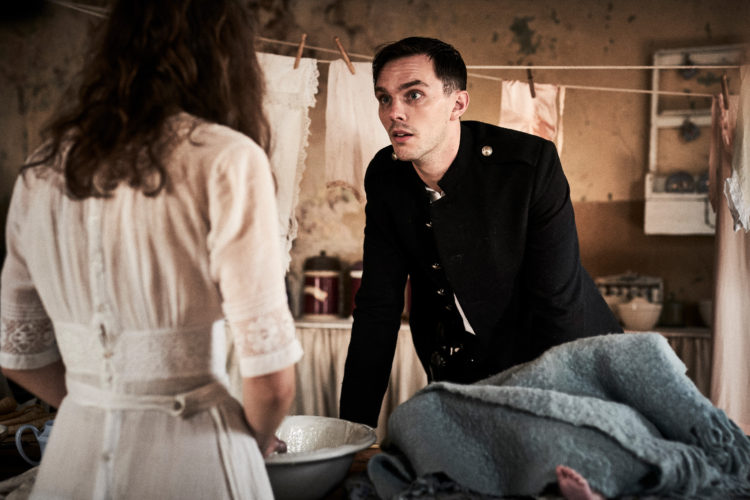
    Nicholas Hoult as “Constable Fitzpatrick” in Justin Kurzel’s True History of the Kelly Gang. Courtesy of IFC Films. An IFC Films release.

    After Oscar-worthy character turns in Mad Max: Fury Road and The FavouriteNicholas Hoult gets to dig his teeth into the meaty and campy Constable Fitzpatrick — a cartoon-ish mustache-twirling villain (without the ‘stache). In one stunning scene across from Kelly’s love interest Mary (Jojo Rabbit‘s Thomasin McKenzie), he employs an interrogation tactic involving a baby that feels so punk it could only live in this world. 

    True History of the Kelly Gang is greater than the sum of its parts. Watching it is a hypnotic experience that will be polarizing to mainstream audiences — it’s oddly meta for an outlaw who was similarly polarizing. Still, it’s impossible to not be affected by it in some way after its final frame. Kurzel takes a huge swing, whether or not he hits depends on you. Either way, the movie feels like a baseball bat to the head — in the best way.   

  • ‘Beautiful Boy’ review — Timothée Chalamet shines in this faulty addiction drama

    ‘Beautiful Boy’ review — Timothée Chalamet shines in this faulty addiction drama

    Beautiful Boy has a story worth telling, but the way it’s told doesn’t do justice to its subjects as it avoids the real pain of addiction.

    30-second review: Beautiful Boy has an incredible true story worth telling at its center, but the way director Felix Van Groeningen presents that story zaps any impact that it could have by opting for style over substance. It’s a classic case of telling instead of showing. The movie tells us that addiction takes a toll on both the addict and their loved ones and that it’s a cycle, but it doesn’t show us that. Instead, it focuses on fleeting emotional moments.

    Timothée Chalamet is terrific as Nic, the drug-addict son at the center of the story. The movie works best when it focuses in on him and his journey. But, the movie regularly flinches before it gets to the hard truths. That’s the biggest disservice it does to the story.

    Where to watch Beautiful Boy: Streaming on Prime Video.

    From its opening moments, it’s clear that Beautiful Boy is going to be one of those tearjerker overwrought emotional dramas. Whether it’s a successful one could take time to parse out—yes, there are successful ones. However, it’s apparent from the cold open, frequent time jumping, and aggressive music cues that Beautiful Boy is going to be a trying experience.

    That’s not to say the true story of father and son pair David (Steve Carell) and Nic Sheff (Timothée Chalamet) working through the latter’s addiction isn’t worth telling. However, director Felix Van Groeningen‘s interpretation of the material strips out the actual emotion from the story and replaces it with something that feels artificial and cold. Emotional moments are often dictated in the movie, not earned.

    The issue is that it seems the entire movie is made up of “emotional moments” as Nic bounces from rehab to hospitals to the streets as David seems to be chasing him around trying to force him to get better, something that just pushes Nic further away from his grasp. Along the way, Nic’s stepmother Karen (Maura Tierney) and mother Vicki (Amy Ryan) are also there to support both men in the journey, but this is truly a father and son story. 

    💌 Sign up for our weekly email newsletter with movie recommendations available to stream.


    ADVERTISEMENT


    Beautiful boy
    Maura Tierney as Karen Barbour and Steve Carell as David Scheff star in BEAUTIFUL BOY

    Beautiful Boy has its moments and Groeningen deserves credit for those. A highlight comes nearly midway through the movie when David waits for Nic at a diner to confront him after his latest relapse. It’s a gorgeous dance between two great actors, particularly Chalamet whose balance of desperation from the high and frustration with his enabling father feels realistic and spot-on.

    In another moment, after Nic and his addict girlfriend Lauren (Kaitlyn Dever) break into David and Karen’s home to get money to support their habit. However, David and Karen return home and catch them as they drive off. Karen hops in the family’s minivan and gives pursuit. As she drives, though, Karen is quickly flooded with emotion at the lost “beautiful boy” she’s chasing. Tierney is great here. But moments like these are sparse in the movie.

    When Groeningen allows the actors to take the material and the characters and run with it with their incredible instincts Beautiful Boy works. However, he’s often too heavy-handed.

    The same goes for the erratic editing style which distracts from the narrative. There’s an argument to say that it helps communicate the feeling of addiction both on the person and their family. Particularly the repetitiveness of addiction—addiction, sobriety, relapse, addiction, sobriety, relapse. But the style also brings out another feeling: avoidance. 

    Beautiful Boy
    Timothée Chalamet as Nic Sheff and Steve Carell as David Scheff star in BEAUTIFUL BOY

    It feels like the characters and the story are an arm’s length away. The majority of the movie is told in breezy music montages—the number of needle drops is confounding—that doesn’t give you a chance to actually get to know the characters and make grasping the narrative even harder.

    Beautiful Boy has a great story and tackles a part of addiction that movies often miss—how the people we love do more harm than good when they’re trying to help. There’s been some criticism around the portrayal of meth addiction here, specifically, that I don’t have the insight into, but that being said Chalamet does great work. Carell, on the other hand, feels miscast.

    Addiction dramas need to be unflinching and Groeningen, to be frank, flinches. The movie looks beautiful, but addiction isn’t beautiful. It was almost as if he was afraid of the truth of it all. I’d love to have seen this story tackled by another director. 

    Beautiful Boy is now streaming on Prime Video.


    ADVERTISEMENT


    More movies, less problems


    Hey! I’m Karl. You can find me on Twitter and Letterboxd. I’m also a Tomatometer-approved critic.

    💌 Sign up for our weekly email newsletter with movie recommendations available to stream.


    ADVERTISEMENT


    💌 Sign up for our weekly email newsletter with movie recommendations available to stream.


    ADVERTISEMENT

  • ‘Set it Up’ review — Netflix rekindles the flame of romantic comedy

    ‘Set it Up’ review — Netflix rekindles the flame of romantic comedy

    Set it Up follows two overworked and underpaid assistants as they “parent trap” their horrible bosses.

    30-second review: I think anyone that grew up in the 2000s has a soft spot for that perfect romantic comedy. The kind that has perfect one-liners that you can work into everyday life and characters who live lives that you could only aspire to in unrealistically large apartments and scenes that make your heart flutter at the thought of them happening in real life.

    Set it Up mines those tropes and makes me feel nostalgic for those breezy romantic comedies. And while it hits a lot of those familiar plot beats, the movie surpasses other contemporary rom-coms because director Claire Scanlon and the charming leads have a great sense of comedic timing and the propensity for subtle, but effective physical comedy. It’s one of those movies that you’ll want to come back to over and over again.

    Where to watch Set it Up: Now streaming on Netflix.

    The romantic comedy was nearly destroyed by the 2000s the same way the slasher genre was destroyed by the 80s. The oversaturation of generic rom-coms with the same gorgeous (mostly white) leads and the formulaic plot eventually led to its downfall.

    Year after year, we watched the same movie time after time. Guy meets girl, they hit it off, they’re happy for a time, something happens to make them not happy, but then they’re happy in the end. Last year, The Big Sick made huge strides to bring the genre back. However, it wasn’t exactly the light and easy broad comedy that makes you want to watch it over and over again until you can quote every line.

    I think anyone that grew up in the 2000s has a soft spot for that perfect romantic comedy. The kind that has perfect one-liners that you can work into everyday life and characters who live lives that you could only aspire to live in unrealistically large apartments and scenes that make your heart flutter at the thought of them happening in real life. 

    💌 Sign up for our weekly email newsletter with movie recommendations available to stream.


    ADVERTISEMENT

    Set it Up mines those tropes and makes me feel nostalgic for those breezy romantic comedies. And while it hits a lot of those familiar plot beats, the movie surpasses other contemporary rom-coms like How to Be Single and What’s Your Number? because of two women: director Claire Scanlon and screenwriter Katie Silberman.

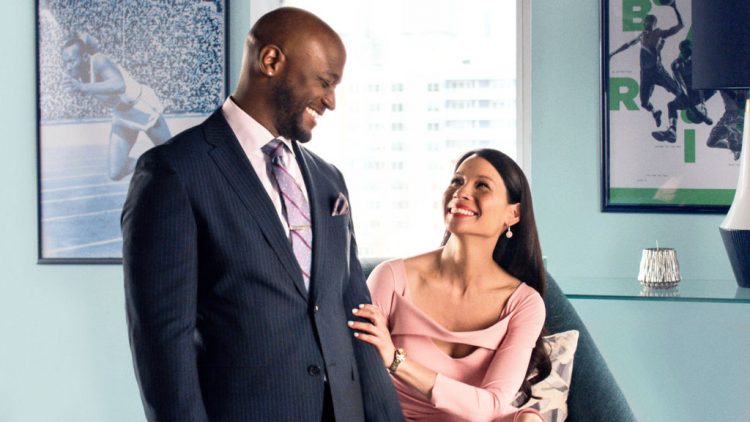
    Set it Up is essentially a retelling of The Parent Trap — it even references it at one point. Assistants Harper (Zoey Deutch) and Charlie (Glen Powell) are both living the nightmare scenario when it comes to a job in the city. While other assistants finally leave work at a late but decent hour, Harper and Charlie are stuck tending to their bosses Kirsten (Lucy Liu) and Rick (Taye Diggs), respectively. Imagine the relationship between Andy and Miranda Priestly in The Devil Wears Prada.

    Both assistants are toughing it out in their jobs to hopefully progress to something more. However, one frantic late night trying to get dinner from a closed restaurant that their bosses won’t end up eating will make anyone desperate. So, when Harper and Charlie meet on one of those frantic nights, it becomes clear that they can help each other out.

    Taye Diggs and Lucy Liu in Set it Up

    Harper comes up with a plan to Cyrano their bosses. Charlie prefers the more simple parent trapping. Together they hatch a plot to get their two overworked bosses to fall in love with each other and give Harper and Charlie a chance to have time for themselves. This plot involves a hacked elevator — featuring Tituss Burgess in one of the funniest scenes of the movie — the kiss cam at a Yankees game, and manipulating nearly every aspect of their lives to force them together.

    Of course, though, this isn’t really Kirsten and Rick’s love story. It’s Harper and Charlie’s. Through all the shenanigans of getting their bosses together, the pair also learns more deeply about each other. Harper is working for Kirsten, one of the nation’s most notable sports reporters, in the hopes of eventually writing for her website.

    Of course, that doesn’t leave her much time to actually write or date — she’s never had a boyfriend. Charlie, on the other hand, is dating model Suze (Joan Smalls who is quite good in this small role), but doesn’t have time to dedicate to the relationship as he hopes for a promotion under venture capitalist Rick.

    Romantic comedies are only as good as their leads and Set it Up is no exception. It’s already hard to imagine the movie with Deutch and Powell. Their chemistry is perfect and permeating even without contrived moments of romantic tension, though one scene involving a pizza had me swooning.

    Scanlon also benefited from the actors’ pitch-perfect comedic timing and propensity for subtle, but effective physical comedy. Watching Harper frantically walking into Kirsten’s office after being called in is a delight every time. What’s also delightful is Silberman’s quirky script. It’s filled with all the wackiness you’d expect in a movie like this, but with filled out characters and backstories.

    What’s so refreshing about Set it Up is that every character has a moment. Liu is a consummate pro and plays steely better than anyone else in the business. Diggs is playing to the cheap seats with his over-the-top finance-bro character. However, even small one-scene characters like Burgess or Noah Robbins, who plays an intern who is quickly fired, or a delivery man trapped in an elevator or a jewelry salesperson caught in the middle of an argument all have their moments to shine.

    Still, Deutch and Powell are the stars here and drive Set it Up with incredible charm. It’s one of those movies that you’ll want to come back to over and over again. It’s one of those movies that you’ll be nostalgic for a decade from now. You can’t manufacture charm in a movie like this. It takes talent. And there’s a lot of talent behind this movie, Scanlon, Silberman, Deutch, Powell, Liu, Diggs. 

    Set it Up is the perfect example of a broad romantic comedy done right. It adheres to the formula for the most part but isn’t afraid to break it. It has its own style and moves to beat of its own drum. It could be trimmed by 10 minutes and Pete Davidson‘s gay roommate character is questionable, but that’s all part of the nostalgia too, honestly. Set it Up is a good old-fashioned rom-com that is worth your time, even if you’re just overdicking around.


    ADVERTISEMENT


    More movies, less problems


    Hey! I’m Karl. You can find me on Twitter and Letterboxd. I’m also a Tomatometer-approved critic.

    💌 Sign up for our weekly email newsletter with movie recommendations available to stream.


    ADVERTISEMENT
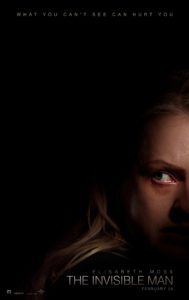

  • ‘The Invisible Man’ and the horrors of abuse — movie review

    ‘The Invisible Man’ and the horrors of abuse — movie review

    The Invisible Man modernizes the classic 1933 Universal Monsters movie with a take on abusive relationships, gaslighting, and toxic masculinity

    Quick review: The Invisible Man is a terrifyingly suspenseful and emotional modern update to the 1933 original film.

    It would have been so easy for director Leigh Whannell to go for easy scares with a premise like The Invisible Man. Instead, he almost does the exact opposite and allows the movie to build to something as he flips H. G. Wells’ 1897 science fiction novel and 1933 film adaptation into the modern age. 

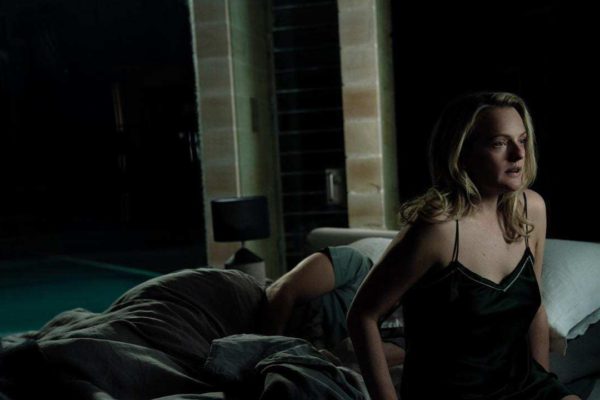
    In this version, we follow Cecilia Kass (Elizabeth Moss) as she starts her new life after finally getting away from her abusive ex-boyfriend Adrian Griffin (Oliver Jackson-Cohen), a renowned scientist and entrepreneur. In the opening scene, we watch Cecilia execute her long-awaited plan as she slips out of bed having just drugged Adrian to keep him asleep. It’s a perfect example of how much of a grasp Whannell has on constructing a horror set piece. He uses sound, silence, camera movements, and Moss’ stellar performance — that only gets better — to make the escape almost unbearable to watch. The tension he creates is Hitchcockian.

    Cecilia makes it out with help from her sister Emily (Harriet Dyer) and begins living with James (Aldis Hodge), a childhood friend, and his daughter Sydney (Storm Reid). While she’s escaped Adrian’s grasp, she still feels his presence, even after she learns that Adrian committed suicide. 

    Putting the sci-fi elements aside, Whannell focuses on a feeling that many women have expressed after experiencing trauma — including abusive relationships, assault and harassment. The lack of control that Cecilia had in the relationship has made her paranoid and unable to truly feel safe. In a stunning monologue, she explains that she lost control of every aspect of her life. As the movie progresses, it begins to dive into other facets of abusive relationships. 

    💌 Sign up for our weekly email newsletter with movie recommendations available to stream.


    ADVERTISEMENT

    The Invisible Man Movie Poster

    While an odd coincidence here and there make Cecilia feel uneasy, it’s when she finds out after fainting at a job interview that she had high levels of Diazepam in her system, the drug she used to sedate Adrian to escape, that she becomes convinced that Adrian is alive and found a way to make himself invisible so he could stalk her. Naturally, James, Emily, and Adrian’s brother Tom (Tom Griffin) don’t believe her. 

    The original Invisible Man focused on Adrian, making him the victim as he loses control to science. Here, Cecilia loses control to Adrian. Even after “death,” he finds a way to gaslight her and alienate her from her friends and family. A classic emotional manipulation. Whannell lets so much of the horror be motivated by it. He makes the audience feel like we are losing control too by letting us in on more than the characters are seeing, achieving a feeling of dread. His careful camera placements and movement toy with our sense of the space — often he shows us empty frames and captures Moss from a distance to create negative space around her.

    Moss is an emotional powerhouse continuing to deliver on the promise she showed in other genre movies like Us. Just like Toni Collette in Hereditary, she doesn’t let the role get away from her. Her performance is heightened, but not over the top. There needs to be some grounding for the movie to work as it thankfully doesn’t overexplain itself. Moss gives that to us. 

    The Invisible Man is a terrific exercise in broad horror. Without compromising its rich themes or depriving the audience of moments of terror to hang onto, Whannell is able to make an artfully made and emotional movie that feels auteur-driven but still made for the mainstream. As we keep moving forward in this new Golden Age of horror, it’s clear he’s going to join Jordan Peele and Ari Aster as a staple of it.

  • John Wick Movie Review — The action movie and hero that saves a genre

    John Wick Movie Review — The action movie and hero that saves a genre

    Told with utter efficiency and blessed with incredible fight sequences, this darkly funny action flick will have you saying the name John Wick for years to come.

    John McClane, Jason Bourne, and now, John Wick. Once and a while an action movie comes along and breathes new life into the genre. John Wick couldn’t come at a better time to save us from the assault of movies that attempted to be the next Taken. Instead, we’re treated to a movie that combines the suave filmmaking of Skyfall, the sly visual humor of Die Hard, with truly singular action sequences. John Wick may be one of the best action movies of the decade that will be attempted to be replicated over and over again to middling success. However, we’ll always remember the rip-roaring original as a pinnacle of the action genre.

    The movie begins with the death of John Wick’s (Keanu Reeves) wife to a terminal illness. Though devastated by her loss, he finds solace in her parting gift to him: a puppy named Daisy. After a run-in with a group of young Russian — wannabe — mobsters, led by Iosef Tarasov (Game of Thrones‘ Alfie Allen). Iosef approaches Wick at a gas station and offers to buy his beloved ’69 Boss Mustang. After refusing, Iosef — best described as a spoiled brat — breaks into Wick’s house, beats him, steals his car, and *trigger warning* sends that adorable little puppy to the farm. Needless to say, Wick doesn’t take this well. You see, John Wick is not just a retired assassin. He is THE retired assassin. “Well, John wasn’t exactly the Boogeyman. He was the one you sent to kill the fucking Boogeyman,” as Iosef’s Dad Viggo (Michael Nyquist), the head of the Russian mob, says.

    💌 Sign up for our weekly email newsletter with movie recommendations available to stream.


    ADVERTISEMENT
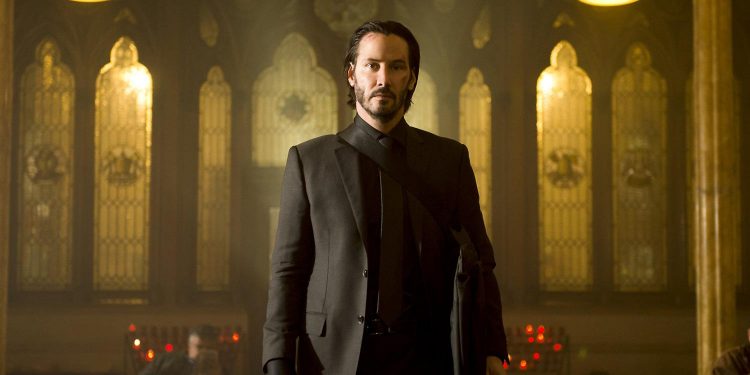

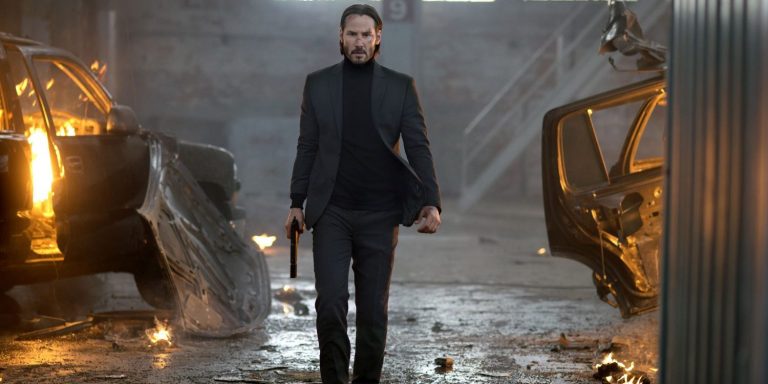
    Instead of falling into turmoil, John sets off on a warpath to do one thing — kill Iosef. Of course, he has to get through countless henchman, Viggo, and a kickass assassin named Ms. Perkins (Adrienne Palicki). This gives us a sleek, turbo-boosted 90-minutes of pure action that can be summed up with one word: awesome.

    Director Chad Stahelski — a former stuntman — directs and captures action in a way that few directors are able to. Unlike the shaky cams and quick cuts that made the Taken movies nearly unbearable, Stahelski makes the action linear and films it with a steady eye that lets you appreciate every move and shot. However, it’s the fight choreography that will make John Wick join the pantheon of action movies. Not only is the martial arts riveting, it has a rhythm to it that makes them so beautiful to watch no matter how brutal they get. Wick doesn’t waste a single bullet, do a move that’s unnecessary, or exert any more effort than he needs. His movements feel like he is an assissin as much as Reeves’ performance does. It also applies the Bond formula of visual comedy by adding touches that are effectively punchlines within the fight scenes.

    Keanu Reeves in John Wick

    The fluidity continues into the screenplay, which builds the world and characters with streamlined efficiency. Without a single exposition all line, the entire world of this criminal underbelly of New York — complete with assassins, Russian mobsters, and a contract killer hotel — is constructed. When we first meet Viggo, he is informed that his son stole from John Wick. His response is a simple: “Oh.” It’s that expositional efficiency that makes this movie such an effective action movie. With that simple “oh,” we know everything we need to know about John Wick.

    More than that, the world that John Wick inhabits is more interesting than any action movie with terrorist groups or secret government agencies. Without directly addressing it, you are dropped into a world of interconnected hitmen — and women — who are part of an exclusive and elegant club called the Continental, which owns hotels and bars which these people can frequent without fear of being offed by a fellow guest. The detail — code names, symbols, people — is exquisite and a master show of world-building. No exposition. No lower thirds. The screenwriter and director trust that the audience can figure out this universe. That’s something so rare in action and incredibly appreciated.

  • ‘Columbus’ review — Romantic and charming, John Cho and Haley Lu Richardson are stellar

    ‘Columbus’ review — Romantic and charming, John Cho and Haley Lu Richardson are stellar

    Columbus is a charming and romantic movie in the vein of Before Sunrise that features stellar performances by Haley Lu Richardson and John Cho

    Quick review: Anchored by two Oscar-worthy performances, Columbus is perhaps one of the great romances of the decade.

    Columbus, a small city located in southeastern Indiana, is a juxtaposition. Even though it’s located deep in the midwest, it has become a mecca for modern architecture and art.

    It’s almost as far from the culture-rich liberal coasts as you can get, yet it still lays claim to some of the biggest advancements of postwar modernism in the United States. But what does that have to do with writer-director Kogonada’s debut film named after the city? Well, everything.

    Columbus is about relationships. The relationship between modern architecture and the city. The relationship between a father and son, a mother and daughter. But, at the core, it’s about the relationship between Casey (Haley Lu Richardson), an 18 or 19-year-old young woman who works at the public library, and Jin (John Cho), a Korean-American man who returns to the US after working overseas when his father falls ill.

    💌 Sign up for our weekly email newsletter with movie recommendations available to stream.


    ADVERTISEMENT


    Over a couple of Before Sunriseesque days, Casey and Jin learn about each other’s pasts, where they are now in their lives, and where they think they should be in the future. And that’s really all there is to it.

    Along the way, there are revelations that test this new friendship — or is it more? But what they have in common is a steadfast appreciation for modern architecture, which is what brings them together in the first place. Casey loves it from growing up in the town.

    Jin simply absorbed the information through his father’s studies and his journal. And though their conversations pretty much only surround architecture, Kogonada infuses them rich subtext that makes the movie a beautiful character study at its core.

    Cho, best known for Harold & Kumar and the Star Trek films, gives a remarkable performance that demands he be taken seriously as an actor. Asian men don’t often get the chance to be leading men, especially in romances. But Cho controls the screen with a steely conviction. More impressively, he is able to decide when to allow audiences to understand his thought process, which makes his emotional arc all the more impactful.

    Columbus movie
    Haley Lu Richardson in COLUMBUS

    💌 Sign up for our weekly email newsletter with movie recommendations available to stream.


    ADVERTISEMENT


    However, he gives room for his scene partners to shine — he often plays across Eleanor (Parker Posey) an old friend and his father’s assistant — particularly Richardson, whose performance is simply astounding and one of the best of the year.

    What I found so refreshing about Columbus is that it captures a specific time in life. The time where you’re at a crossroads — in this case, post-high school — and have to decide what direction you want to take. However, as with many aspects of life, there is pressure from all sides. Even from people that don’t realize their applying pressure.

    Casey feels pressure to pursue education from her co-worker Gabriel (Rory Culkin, a scene-stealer), but feels stuck looking after her mother Maria (Michelle Forbes, fantastic here),a recovering drug addict, Richardson portrays that desire to just push back on the pressure and scream so adeptly that it feels like a gut punch once you recognize the feeling. It’s remarkable considering this movie for most of its running time is quiet and meditative — though that doesn’t make it any less impactful.

    Columbus is one of those gems that doesn’t seem like anything extraordinary until you’re sitting through the credits trying to absorb what you just watched. In terms of conversation movies, it approaches the level of Before Sunset, which I consider the best of the Before trilogy. Kogonada allows the conversation to flow naturally, but with purpose, and that purpose is for two completely different people, a juxtaposition in their own right, to understand each other and eventually help the other understand which road to take.

    The beautiful thing is that we don’t know if it’s the right road, but the ending is still filled with hope. Something that we need more of in film.

    Columbus is available to stream on Hulu or on Digital HD on Amazon!

  • The Conjuring vs. Insidious: The Art of Tension In Horror Movies

    The Conjuring vs. Insidious: The Art of Tension In Horror Movies

    How Insidious and The Conjuring use the classic horror tension formula to create some of the best scenes of suspense in recent decades

    The argument could be made that we are in a horror renaissance. Original horror movies, in particular, have been taking the limelight and propelling the genre past traps that it has fallen into in recent years. However, one filmmaker has been treading on old formulas and retooling them to create some smart horror recently. That filmmaker is James Wan. While I don’t think his movies are perfect, especially Insidious, he has perfected a horror formula that has been used in horror classics and repurposed them in modern settings. So, with Halloween coming up I thought it might be the perfect time to analyze two keys scenes that use this formula so well.

    Insidious: A smart practice in tension that is squandered in the third act

    Insidious is by no means a perfect horror movie. I need to put that out there right from the beginning. But the first two-thirds of the movie nail what the movie is at its core: a ghost story. Wan very smartly works the audience from the beginning by unsettling us with key imagery that sets the mood for the movie. That coupled with the perennially dark setting creates an atmosphere that is unrelenting (that is until the final third, but we’ll get there in a bit).

    However, one of the smartest things that Wan does is show a lot of restraint. A huge trend in the 2000s horror genre was the cold open that was this initial scare that was supposed to come in place of real mood-building. Even strong movies like The Descent and The Ring did it. Instead, Insidious sees a slow but steady build. No long set up. No character introductions. We’re dropped into their world, but immediately know who they are as a family. Wan takes the time to earn the big scares. Take this scene for example:

    Notice that nothing shocking happens in the first two minutes of the clip. The knock on the door isn’t meant to be a scare. There’s no music in the background. He doesn’t want to let the tension go too soon. He takes his time on the door to build it further. When nothing happens we’re put into a false sense of security when Rose Byrne gets up to check on the baby. Then we get the big scare of the man in the nursery with a clang of music that quickly dissipates, which puts us in another false sense of security. When we go back downstairs we get a subtle but unsettling image of the door being wide open.

    Wan does this again later in the movie when the family moves to a different home, just as effectively. The horror elements of the movie are a clear call back to movies like The Changeling and The Poltergeist. The clown scene is a perfect example of this. However, what makes the first two-thirds of this movie so strong is the dynamic between the two leads, Rose Byrne and Patrick Wilson. Byrne’s character Renai takes the brunt of the paranormal activity. She is mentally worn down to the point that she will do anything to solve the problem. Wilson’s Josh, on the other hand, will not accept that the family is haunted.

    Even before the haunting, we get a pretty clear portrait into the couple’s life. Renai is a worn down musician who is trying to hold it down at home while her husband is at work. We get a sense that there is some tension when Josh doesn’t seem to take as much familial responsibility, so when the haunting increases and Josh is nowhere to be found that tension comes to a head. Of course, we learn later on that this is because of points in Josh’s past.

    💌 Sign up for our weekly email newsletter with movie recommendations available to stream.


    ADVERTISEMENT


    the conjuring poster

    The reason the third act doesn’t hold up is because of the clear mood shift. Once Elise’s team comes into the picture, a medium that Josh’s mother suggests helps, the film shifts to a black comedy that doesn’t match the first off. More than that, the plot becomes to muddled in a twist that goes on too long. It almost feels like the studio decided what the final act should be. This is so well demonstrated when we watch a demon sharpening his nails while listening to some ironically cheerful music. Insidious falls into the trap that most horror movies fall into nowadays: the third act twist.

    Because of the mechanics of the twist and the flashes of humor, the tension is immediately gone for most of the act. And when Wan tries to ratchet it up again, it feels artificial (the slow-moving ghosts, the classic electricity goes out trope).

    The Conjuring: A practice in slowly adding tension throughout the entire film

    This brings me to Wan’s horror follow-up, The Conjuring. Based on the case files of real-life demonologists Ed and Lorraine Warren, The Conjuring takes a different approach to most ghost stories by focusing first on the paranormal investigators. Unlike Insidious, The Conjuring does begin with a cold open which features an entirely different case from the one focused on in the movie. This opening followed by the slow crawling title text is taken straight from The Exorcist. However, the reason the cold open works here is because we need to see what Ed and Lorraine do from the start and there really is no way to show that without showing a case.

    From here though we are treated to the same slow-building scares we see in Insidious. This time, we are trained for scares not in just one scene, but the entire movie.

    Note: If you haven’t seen The Conjuring (then I’m not completely sure why you’re reading this in the first place), there are some spoilers coming up in the next few paragraphs.

    Hide-and-clap is the perfect example of the slow build scare. We are first introduced to the game when the four girls of the Perron family, the case that the Warrens take on, are playing in their new house. It is a fun and light scene that adds ease to the game. However, when the youngest daughter in the family asks for a game with the mother, played incredibly here by Lili Taylor, it takes on a more threatening tone when the claps are discovered to not be coming from the daughter.

    Based on that set-up, we are trained to know that something involving this game is going to end up being a scare. That’s what this scene is:

    💌 Sign up for our weekly email newsletter with movie recommendations available to stream.


    ADVERTISEMENT


    There’s a lot to break down in this scene, so bear with me. Before this scene, we hear claps again late at night. Of course, Carolyn, the mother, thinks it’s here children. But when we see them all fast asleep we know something more sinister is happening. The pictured hung up the staircase are then knocked down which leads Carolyn downstairs. The lack of music in this scene punctuates the tension. When the basement door opens we are expecting a scare when she goes down. Instead, she goes up which relieves the tension. So, when the door closes we are not expecting it. Again, the tension begins to build when nothing happens in the basement. However, when something does happen, the ball, we are taken aback because we are expecting a bigger scare. When the lights go out and she lights the match we know from past horror experiences that on the third light something is going to happen. When we do get to that third match we’re expecting something to be there when it’s lit. Nothing happens until a beat later when hands clap right next to her, bringing the entire scare full circle.

    It’s this carefully mapped out and timed scare that makes The Conjuring so effective. It’s this tension that acts as a red herring for most of the movie that makes it so terrifying. Unlike Insidious though, The Conjuring stays the course and uses minimal CGI to simply enhance the scares rather than being the scare (The Conjuring 2 makes this mistake).

    Across both films, the use of mundane imagery to translate horror is truly where Wan’s strength lies. The rolling of a ball, an open door that was locked, a pair of hands clapping are the true horror images of these films. But what makes the last third of Insidious ineffective and the second Conjuring film is the over-reliance on CGI and overly complicated compositions to convey horror. We didn’t need to see the demon crawling on the walls or the crooked man. All we needed to see is this mundane imagery that seeps into our daily routine to truly terrify us.

  • ‘From Here to Eternity’ (1953) — Best Picture marathon

    ‘From Here to Eternity’ (1953) — Best Picture marathon

    We’re marathoning every single Best Picture winner starting with Fred Zinneman’s 1953 war film From Here to Eternity

    Quick review: From Here to Eternity is the kind of old-school Hollywood melodrama that you can’t help but fall for. And while it only occasionally hits greatness, the performances by Burt Lancaster, Frank Sinatra, Montgomery Clift, Deborah Kerr, and Donna Reed are as iconic as they come.

    There’s something so old Hollywood about From Here to Eternity that it’s not hard to imagine why it won eight Oscars from thirteen nominations — coming close to tying All About Eve’s nominations record. And while the movie’s melodramatic storyline and gratuitous hero shots, including the iconic beach scene with a steamy Burt Lancaster, director Frank Zinneman was often lauded for his “social realism” in his time.

    After discovering his parents had tragically died in the Holocaust, his focus shifted to movies set during World War II starting with his breakout The Seventh Cross starring Spencer Tracey. He then found Oscar success with The Search, nabbing his first nomination for Best Director, even though the war had just ended a few years earlier. 

    💌 Sign up for our weekly email newsletter with movie recommendations available to stream.


    ADVERTISEMENT


    But it’s High Noon that would become his most enduring work as his gritty and dark realism shifted to something more hopeful. As critic Stephen Prince put it, Zinneman had his protagonist “fight rather than run.” That same all-American heroism found it’s way into his adaptation of James Jones’ novel From Here to Eternity, published just two years earlier.

    The movie follows three men in the U.S. Army stationed at Schofield Barracks on the island of Oahu during the precipice of the U.S. entering the war. Private Robert E. Lee Prewitt (Montgomery Clift — he worked with Zinneman in The Search, which earned him a Best Actor nod), a new transfer to the barracks, is regularly singled out for punishment and grunt work after he refused to join the boxing team.

    First Sergeant Milton Warden, who was ordered to dole out the rough treatment by Captain Dana “Dynamite” Holmes (Philip Ober), takes pity on Prewitt and convinces the captain from court martialing him. However, he’s partially motivated by the fact that he’s carrying out an affair with Holmes’ wife Karen (Deborah Kerr). The third man to round out the trio is fast-talking and quick-witted Private Angelo Maggio (Frank Sinatra), who befriends Prewitt.

    Part military drama, part soapy melodrama, before taking a turn completely towards war movie, From Here to Eternity truly thrives off the power of its star performances. Of the three leads, Sinatra’s exploration of the headstrong Maggio, who eventually finds himself in trouble with Staff Sergeant James R. “Fatso” Judson (Ernest Borgnine), is easily the most compelling (it would earn him the Oscar for Best Supporting Actor).

    It’s hard to discern what Zinneman is trying to say with the movie. However, Maggio’s tragic storyline partially reveals it as the military’s brutality and hypocrisy for the sake of maintaining masculinity. Perhaps that’s a presumptuous assessment. But evaluating the movie through the lens of the novel (and removing the censorship that pared down the movie’s content) reveals its themes — at least somewhat. 

    From Here to Eternity
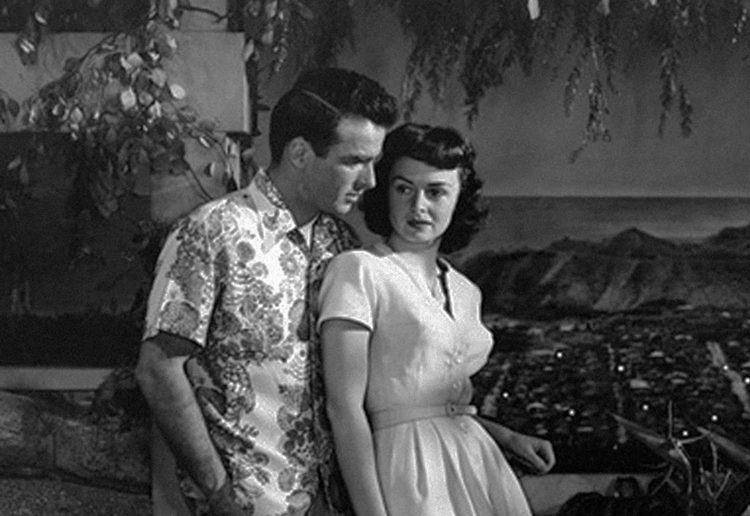
    Montgomery Clift as “Private Robert E. Lee Prewitt” and Donna Reed as “Lorene” in From Here to Eternity

    Still, the movie’s most iconic scene, the beach scene, and Lancaster’s on-screen romance (and kiss!) with Kerr are what stick with you. It’s so classic Hollywood that it’s impossible to resist — even if the cynic in you resists. That storyline never really fits in with the rest of the movie thematically, yet it feels like a welcome respite from the overly masculine energy in other scenes. While Kerr and Donna Reed, who plays the hostess at a local social club and Prewitt’s love interest Lorene, are beholden to the men’s storylines, they also are the emotional core that challenges how the military takes over people’s lives. 

    There’s one scene between the three leads that propels the story into the final act that feels like the watershed moment we don’t talk about nearly enough. Part of that is because of the scene’s homoerotic energy. In the novel homosexuality in the military is a primary theme. More importantly, it’s the first scene where the main characters shed their usual stoic masculinity and finally express their feelings.

    However, those moments are fleeting as to be expected in the era of chiseled jaw Hollywood leading men, which prevents From Here to Eternity from reaching greatness. Still, the iconic scenes and performances have endured for a reason. There’s so much charisma on screen that every frame feels like you’re being dared to look away. When they say there aren’t movie stars anymore, it’s movies like this that explain why.

  • ‘The Carnivores’ and a third-wheeling dog — SXSW movie review

    ‘The Carnivores’ and a third-wheeling dog — SXSW movie review

    The Carnivores follows Alice, whose strain with her long-term girlfriend Bret is being manifested in her sick dog causing increasingly odd cravings

    Quick review: The Carnivores for better or worse is uncategorizable with elements of drama, psychological thriller, horror, and even comedy — and I was happy to be confused.

    With SXSW 2020 canceled, I’m doing my best to help review as many of the features that would have premiered there, particularly those of first-time filmmakers. If you know of a film that needs support, let me know!

    From the start, you can tell there’s something offbeat about The Carnivores. It’s set in a normal suburb — filmed in SXSW’s home Austin — and the characters are just a normal couple. However, its idiosyncrasy quickly reveals itself to you — the dry humor, the absurdist storyline, and almost whimsical imagery. It’s all in service of a ridiculous narrative that sets its sights on long-term relationships and the insecurities that come along with them.

    Alice (Tallie Medel), a doe-eyed bank teller, and her girlfriend Bret (The Invitation‘s Lindsay Burge) have been together for years. However, when we meet them there is clearly a strain represented by Bret’s beloved dog Harvey. In Alice’s eyes, she’s second to Harvey in both Bret’s time and affection — and that might actually be the case, at least from what director Caleb Johnson shows us. Then again, we are watching from Alice’s perspective.

    We watch as Alice calculates the costs of Harvey’s expensive treatment — that at best will keep him alive for a few months — and keeps track of the nights she and Bret don’t have sex. They’re experiencing what many long-term partners experience, intimate strain and financial burden. However, in their case, there is a physical manifestation of that strain, Harvey.

    Alice spends her days fantasizing of ways of getting rid of him while Bret dotingly cares for him, even risking her job at times. Alice’s hate begins to manifest itself as a bleak desire for meat — they’re both vegetarians. The visceral shots of Alice going to the meat aisle in a grocery store to feel the meet or lay a leftover cold cut on Bret to lick it immediately bring up thoughts of Julia Ducournau’s Raw, just less depraved.

    💌 Sign up for our weekly email newsletter with movie recommendations available to stream.


    ADVERTISEMENT

    The movie is a swift 77 minutes that sometimes feel meandering, but never boring as Alice’s cravings grow more intense. It’s difficult to even categorize what genre the movie is in as elements of psychological thriller, horror, comedy, and drama jockey for the tone. However, that whimsical amalgamation is what makes The Carnivores so engrossing.

    Medel finds an endearing quality with Alice that makes you empathize with her struggles. Anyone that has been in a long-term relationship can understand the block that often forms at some point when routine turns into distance. She keeps you so captivated with her dry delivery and bewilderment at even her own feelings. If anything, I think her performance tips the movie a little too far into her direction making scenes with Bret less successful.

    The Carnivores is a visceral experience. It’s less plot-driven and more an exploration of emotions and feelings — Johnson based it on his own relationship. You can feel him thinking and grappling as the movie goes along — it may leave something to be desires — but his style and exciting voice are something I’m looking forward to seeing more of.

  • ‘The Surrogate’ poses a moral dilemma — SXSW movie review

    ‘The Surrogate’ poses a moral dilemma — SXSW movie review

    Jess is thrilled to be the surrogate for her best friend and his husband, but when a prenatal test comes back, it creates a moral dilemma that threatens their friendship.

    Quick review: The Surrogate has an important story to tell and forces us to face our own decisions in a moral dilemma — but it leaves much to be desired.

    With SXSW 2020 canceled, I’m doing my best to help review as many of the features that would have premiered there, particularly those of first-time filmmakers. If you know of a film that needs support, let me know!

    New York filmmaker and playwright Jeremy Hersh broke out at the Sundance Film Festival in 2015 with his short film Actresses — so his feature debut was one of the films many were eager to see at South by Southwest this year. 

    Jess Harris (Jasmine Batchelor) is over-ecstatic to be asked by her best friend Josh (Chris Perfetti) and his husband Aaron (Sullivan Jones, coming off a run in Broadway play Slave Play) to be the surrogate for their first child. However, twelve weeks into the pregnancy a test reveals that the child has down syndrome. The shock sends the trio into a moral dilemma that leaves them at odds looking for a middle ground.

    It takes a while for The Surrogate’s story to get where it needs to be impactful without feeling contrived. The first two acts spend a lot of time maneuvering its characters to deliver a remarkably wrought and candid discussion where both sides of the dilemma are picked apart. If you’re looking for what the movie is trying to say you won’t get far. You can see Hersh thinking and struggling with his own thoughts on the subject through the film. In that way, it’s a morality play. Justice and equity aren’t necessarily found. Instead, the movie asks you to confront your own opinions. In that sense, the movie is something to celebrate.

    Hersh is unafraid to bring up the arguments that may be difficult to face. He is unraveling complex themes from how queerness could breed its own privilege and how progressiveness is often paradoxical. We want to think we know the “right” thing to do in this situation. The Surrogates asks whether that even exists.

    💌 Sign up for our weekly email newsletter with movie recommendations available to stream.


    ADVERTISEMENT

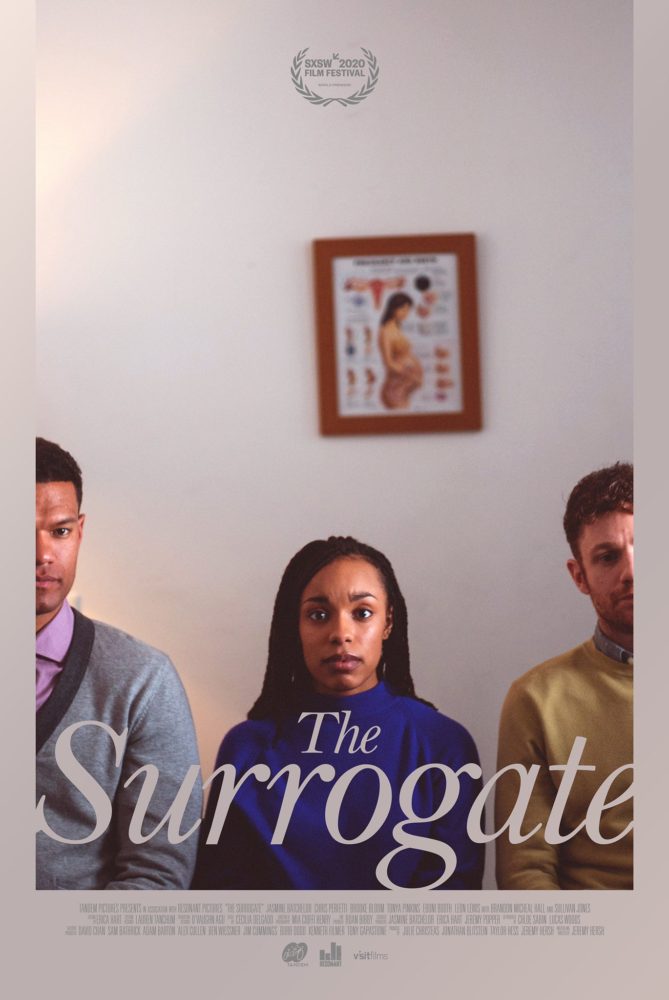
    The Surrogate SXSW poster

    However, something didn’t connect for me. As I struggled to figure it out while being genuinely compelled in the story, I realized it wasn’t that anything was wrong with the movie. It’s that it was too right — too clean. Every character and interaction felt like it was built to explore this single topic rather than watching characters experience it. The focus could be welcome in some cases. In The Surrogate, it left me gasping for who the characters are outside of the moral conundrum that they’re facing.

    In particular, I was disappointed we didn’t explore Jess more and what inspired her passionate reaction to the situation. Her unflinching optimism is admirable and interesting but never explained. We’re left to just accept it as a fact of her character. It’s when her perspective is challenged that The Surrogate feels alive. On stage — or as a short — the story could have been electric. It is electric at some points but never finds its footing. 

    What Hersh and the cast accomplish is something to celebrate. I just wish the messiness of its themes found their way into the story and the characters were more often faced with the imperfections of their arguments. Still, The Surrogate tells an essential story. Hersh has vision — and talent — that much is apparent.

  • ‘Big Time Adolescence’ is Pete Davidson’s breakout — movie review

    ‘Big Time Adolescence’ is Pete Davidson’s breakout — movie review

    Big Time Adolescence follows the friendship between a stoner burnout and a high school student whose debaucherous

    Quick review: Big Time Adolescence is a surprisingly sweet character study about growing up and not growing up.

    Big Time Adolescence is the perfect vehicle for a comedy star like Pete Davidson to make the jump to film. It premiered at last year’s Sundance Film Festival to much buzz following his highly-publicized breakup with Ariana Grande. The film and his performance came as a surprise — Davidson could act. Now, more than a year later and a clearer space to evaluate it, that still stands. And it isn’t just the surprise that a Saturday Night Live player could handle something more than just a comedy sketch, Davidson delivers a lot of nuance within a character that we’ve come so much to associate with him. 

    Davidson plays Zeke, who is an effortlessly cool and debaucherous high school student when we’re introduced to him. His then-girlfriend Kate (Emily Arlook) and her little brother Mo (Griffin Gluck) — short for Monroe — are infatuated with his no-care attitude. Six years later, Kate is long gone applying for law schools while Mo, now a high schooler, and Zeke still hang out nearly every night. 

    It’s easy to see what a teen growing up in a decaying suburb would see in Zeke. He has a house (albeit a dirty frat house-like shack), a girlfriend (Sydney Sweeney), and spends his days playing video games, drinking, smoking, and still not having a care in the world. To Mo, he’s a hero. Director and screenwriter Jason Orley builds their relationship with jaunty conversations and interactions that show just how much care the pair have for each other. Davidson and Gluck find chemistry that feels organic, exactly how you’d expect a pair with their story to act.

    💌 Sign up for our weekly email newsletter with movie recommendations available to stream.


    ADVERTISEMENT


    Big Time Adolescence poster

    There’s a sweetness to Big Time Adolescence that’s surprising. Admittedly, when I came into the movie I was expecting raunchy sex jokes and gay panic humor. Instead, it’s a surprisingly measured character study. Mo’s fascination with Zeke, that is a borderline obsession (they’re with each other every free minute they have), weighs heavily on Mo’s father Reuben (Jon Cryer), who is wary of the influence Zeke has on Mo. However, the movie is careful not to stray into cliches with the relationship even when the plot does. Zeke doesn’t mean harm to Mo and Mo isn’t played as a nerdy kid trying to be cool for laughs. 

    When Mo is invited to a senior party, one Zeke was credited with inventing (his supposed claim to fame), Zeke suggests he uses the opportunity to sell pot to the more than willing students. Though hesitant at first, Mo quickly warms to the idea when he realizes it buys him clout with the popular kids and gets him invited to parties where he can talk to his crush Sophie (Oona Laurence). 

    But again, though it’s a storyline we’ve seen over and over before, Orley keeps the movie focused on his characters. In particular, Mo learning to be a teen and Zeke learning to be an adult. There’s so much nuance in their journies, especially with Davidson, whose performance finds an emotional complexity that has until now been wasted on meaningless projects. The stoner burnout manchild could easily become a caricature, but Davidson gives him texture — he feels lived in. Orley finds the insecurities and shows them to us in subtle ways. Gluck does equally good work by portraying Mo as a kid awkwardly finding his footing. 

    The final scene is where Big Time Adolescence feels important — frankly, it reminded me of the final Ramona monologue in Hustlers. The journey for the two boys is set and in their final conversation together they navigate what that means for their relationship. It’s so emotional for a movie I thought would be inundated with offensive humor just because of its star. Yet another reason to never discount someone based on their history. Big Time Adolescence isn’t perfect, largely because it is weighed down by its less-than-original plot. Still, the thematic depths it finds is great and the characters it creates even better.

  • ‘Premature’ and growing up through love — movie review

    ‘Premature’ and growing up through love — movie review

    Premature follows teen poet Ayanna as she navigates love, friendship, and adulthood in the last summer months before college

    Quick review: Premature may feel familiar but it distinguishes itself as a singular story of first love and growing up.

    Premature begins with electricity. The only kind of electricity you can find on a crowded New York City subway in the summer — well, crowded for a movie version of New York at least. Ayanna (co-screenwriter Zora Howard), a black teen poet, is spaced out watching a couple make out passionately as her friends talk around her. She notices a group of men staring at them and calls one of them over to give his number to her friend. It’s that tenacity the quickly endears us to her. She may seem mature, but eventually, we’re reminded that when we meet her she’s just seventeen and looking forward to getting away to college. 

    The beginning of Premature develops like Weekend or even Before Sunrise. Ayanna and her friends are watching a pickup game of basketball in their Harlem neighborhood — you can feel the vibes of summer in New York — when she spots a new face. Isaiah (Joshua Boone) and Ayanna lock eyes — then begin to fall immediately. The screenplay, that Howard co-wrote with director Rashaad Ernesto Green based on the short film of the same name, lets us fall with them. In just ten minutes, we know who Isaiah is and we start to understand that Ayanna is hiding who she wants to be as any 17-year-old on the precipice of adulthood would.

    Green directs each of their scenes with so much intimacy that is usually so hard to translate onto film. The first time they have sex it starts aggressively — like two bodies yearning for each other crashing together — before Isaiah slows it down by playing one of his late father’s old jazz records. The focus on touch and their bodies is reminiscent of how Barry Jenkins tenderly portrays love in his films. Green clearly has been studying. 

    💌 Sign up for our weekly email newsletter with movie recommendations available to stream.


    ADVERTISEMENT


    Premature movie poster

    In the first act, you forget that Ayanna is still really a kid living at home counting down the days to college. And her whirlwind romance with Isaiah starts to remind us of that. There are moments of soaring romance — a conversation at sunset on the Hudson, a rooftop love session — and devastating realism — old flames and the always burgeoning future — all connected by Ayanna’s sensitively written poems. 

    Howard is remarkable as the starry-eyed but witty and tough Ayanna. She portrays her as a girl that feels she has it all figured out yet hasn’t faced the challenges of an adult yet truly. Those challenges come on the outskirts like when her mother asks her how she expects to pay for school or a heated discussion about police brutality and harassment boils over. Largely, though, it’s an internal struggle for her rather than one affected by society, as a whole. Green said, “there was an overabundance of black films with narratives driven by themes of black victimization, black fear, and black pain.” Premature is rooted in the black experience but portrays it for its beauty.

    The movie starts to swerve into cliches as it slowly creeps towards its finale and maybe goes on a single beat too long. However, this is a reminder of how powerful quiet indie cinema can be when it’s rooted in a clear point of view and place. It feels distinctly New York and black and female — which means you should seek out black voices talking about the film like these reviews from Nijla Mu’min and Carla Renata — but at the same time warmly familiar of a time when you were ready to be old but were still young.

  • ‘To All The Boys: P.S. I Still Love You’ — movie review

    ‘To All The Boys: P.S. I Still Love You’ — movie review

    To All The Boys: P.S. I Still Love You picks up with Lara Jean and Peter officially dating, but a new suitor is bringing trouble to the honeymoon

    Quick review: I fell in love with To All The Boys I’ve Loved Before, but the sequel P.S. I Still Love You makes me think I want to see other people.

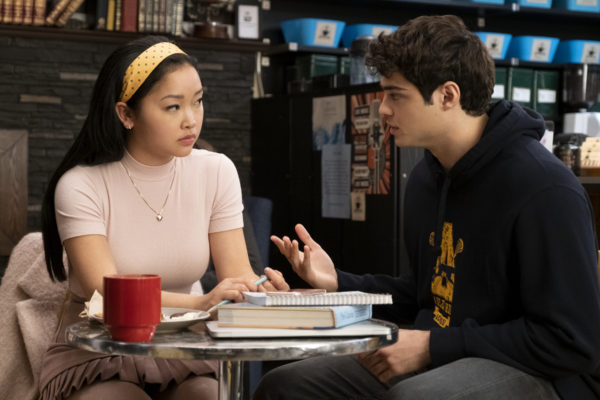
    To All the Boys I’ve Loved Before felt like a breath of fresh air when it premiered two years ago on Netflix. It came on the heels of a renaissance in romantic comedies that still firmly used the formula we all know and fall for but subverted it in some way. Already by having Lara Jean (Lana Condor), a half-Korean American teen girl, as its lead it felt new. It found its heart in places other than the romance whether it the bond between the three Covey sisters, eldest Margot (Janel Parrish) and youngest Kitty (Anna Cathcart), or remember their late mother. If anything, the romance was secondary to Lara’s own journey. That’s why it was disappointing that the sequel To All the Boys: P.S. I Still Love You felt like a regression into the genre’s cliches. 

    Lara Jean and Peter (Noah Centineo) are officially a couple — the hottest at the school to boot. But the girlfriend thing is new to Lara. She doesn’t know the “right” things to do and it doesn’t help that Peter’s ex Genevieve (Emilija Baranac) is always around. So when John Ambrose (Jordan Fisher), one of the recipients of Lara Jean’s love letters, writes back she doesn’t know what to do. Is it wrong that she felt a heart flutter when she read the letter? She’s supposed to love Peter. Still, it’s clear that they’re both heads over heels for each other so she doesn’t think much of the feeling. Of course, this isn’t the last we hear of John Ambrose.

    As part of the school’s volunteer program, Lara Jean volunteers at Belleview Retirement Home where eccentric resident Stormy (Holland Taylor), who knew her sister when she volunteered there, shows her the ropes. It’s all looking up until John himself shows up to volunteer causing Lara Jean to quite literally fall for him — she actually slips and falls to the ground. So there’s the set up: on one hand there’s the new, exciting and sweet John Ambrose who seemingly always knows the right things to say and on the other there’s Peter who she went through so much to be with but seems to be failing at the boyfriend game. 

    💌 Sign up for our weekly email newsletter with movie recommendations available to stream.


    ADVERTISEMENT


    To All the Boys: P.S. I Still Love Your Poster

    There are some moments where the movie comes alive like one where Lara Jean, Peter, John Ambrose, Gen, and Lara Jean’s cousin Chris (Madeleine Arthur) go to an old treehouse they used to hang out in as kids to dig up a time capsule they buried. However, much of the movie feels like it’s on an Ambien. P.S. I Still Love You loses so much of the glow the first film had by falling too far into cliches that we’ve seen in so many rom-coms with a love triangle at the center. In particular, making Peter almost too unlikeable versus John Ambrose who is too perfect pulls the tension out of the affair and makes the final act frustrating.

    The same goes for the performances. In the first Condor was endearing as a woefully naive high schooler. Here she feels sedated like she’s indifferent rather than torn between the two boys. And for much of the movie Centineo is sidelined depriving us of the effortless charm that catapulted him into stardom. Thankfully, Fisher more than makes up for it with his pitch-perfect and heart-stealing turn as the sweet John Ambrose. Still, P.S. I Still Love You leaves much to be desired. 

    Was To All the Boys I’ve Loved Before a fluke? Perhaps. I would have loved to have seen director Susan Johnson’s take on the sequel — Michael Fimognari made his feature directorial debut with this film.