Category: Movies

  • Arrival Movie Review — One of the Best Sci-Fi Movies of the Decade

    Arrival Movie Review — One of the Best Sci-Fi Movies of the Decade

    Smart, impeccably made, with a phenomenal performance by Amy Adams, Arrival proves to be a high point in the science fiction genre

    Denis Villeneuve is a filmmaker that I thought could be one of the great auteurs of our generation (two of his films appeared on our list of the best thrillers of the decade). After blasting onto the American scene with the Oscar-nominated Incendies, he followed suit four films that all ended up in my top tens of their respective years. Prisoners was a dark ethical exploration of violence with deep emotional complexity. Then came a psychological thriller that begged for cinematic analysis with Enemy. Last year, he made a play for the mainstream with his critique of the drug war in Sicario. This year, he cemented his place as one of my favorite directors of all time with the masterpiece Arrival.

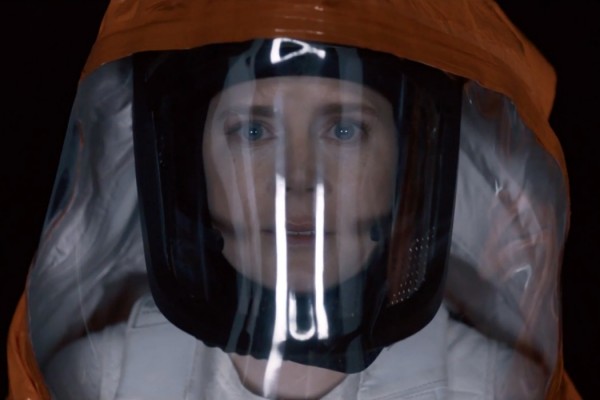
    Based on the short story Story of Your Life, Arrival begins with twelve egg-shaped UFOs positioning themselves around the globe in countries like the U.S., China, Russia, Sudan, and Pakistan. The biggest question surrounding our planet is answered: are we alone in the universe? However, once that question is answered another one emerges: what is their purpose on Earth? That is why the government — represented here by Colonel Weber (Laurence Fishbourne) and Agent Halpern (Michael Stuhlberg)— contacts linguist Louise Banks (Amy Adams).


    Every 18 hours, the door to the UFO, which they call the shell, opens. Banks along with Ian Donnelly (Jeremy Renner) must find a way to decode the visitor’s language and communicate with them before they attack or we do. As progress is made, foreign relations push Banks and Donnelly to the brink of their knowledge to speak with the beings before someone pulls that trigger.Arrival Movie Poster
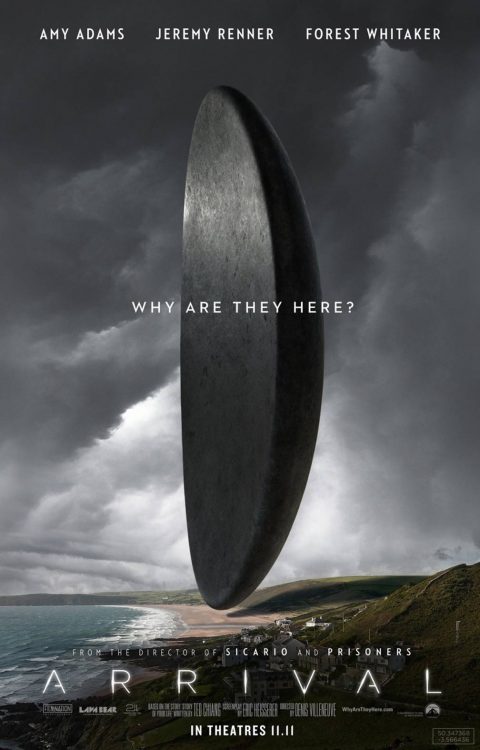
    It’s hard to talk about this movie without spoiling the experience. So, I will say this. Arrival may become the pinnacle of sci-fi movies this decade, if not this century. Its complex plot is communicated beautifully to the audience without being condescending with a twist that ties the experience into a wholly satisfying conclusion.

    Check Out: 10 Best Thrillers of the Decade (so far)

    The first act of the film is Louise’s story. Everything we see is either of Louise or her point-of-view. Our emotions and thoughts are filtered through her. She is an observer at the beginning of the film. How is the world reacting? Villeneuve doesn’t go the easy route with a montage of news clips. We know what Louise knows. We see how she reacts and thus how the world reacts. As she’s brought onto the team that is making contact with the shell, the story is taken away from her. It becomes the world’s story. However, soon we realize that it’s not. It’s Louise’s story through and through. She is ingrained into the plot. Even as it gets more philosophical she anchors it in a humanistic way.


    Amy Adams is at the top of her game. It blows my mind that she still doesn’t have an Oscar after all these years. Her performance carries the emotional baggage of the entire film as well as the whole story. Renner is great here but really exists to support Adams. Outside of these performances, the steady and dark cinematography by Bradford Young finds such beautiful shots in the sets. Editor Joe Walker understands how to show audiences what they need to know rather than tell them. Lastly, Jóhann Jóhannsson — after last year’s Sicario — again scores a home run with his score that defies genre by pulling from both the horror and thriller genres.

    Sci-fi is a hard genre to pull off. Sci-fi with extraterrestrial life is even harder to. The few that make it to become classics like Contact. and Close Encounters of the Third Kind have one thing in common: the human condition. Are we alone in the universe? It’s a question that everyone has at one point pondered. How would we react? What would we do? That’s what Arrival is interested in. Specifically, it is interested in how we communicate. Language and Louise are at the center of this movie. The plot surrounds them and Villeneuve understands that. He understands how people consume movies. They don’t want to be told. They want to see. Arrival will challenge us to think and to question. And while we come away with answers, we also experience the stunning power of great filmmaking, great writing, and a great story. 9/10

    Arrival is available on DVD, blu-ray, and digital on Amazon!
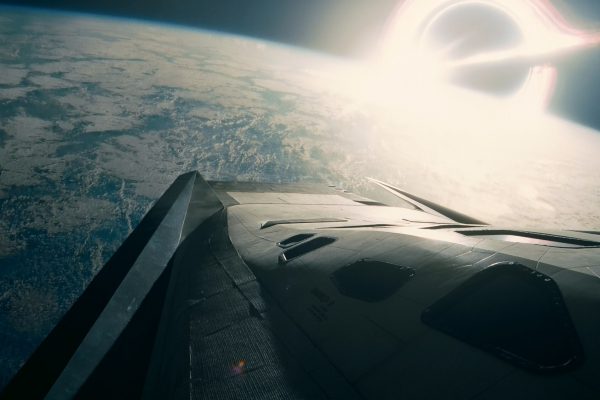
  • Interstellar Movie Review — Christopher Nolan’s most epic, but human movie yet

    Interstellar Movie Review — Christopher Nolan’s most epic, but human movie yet

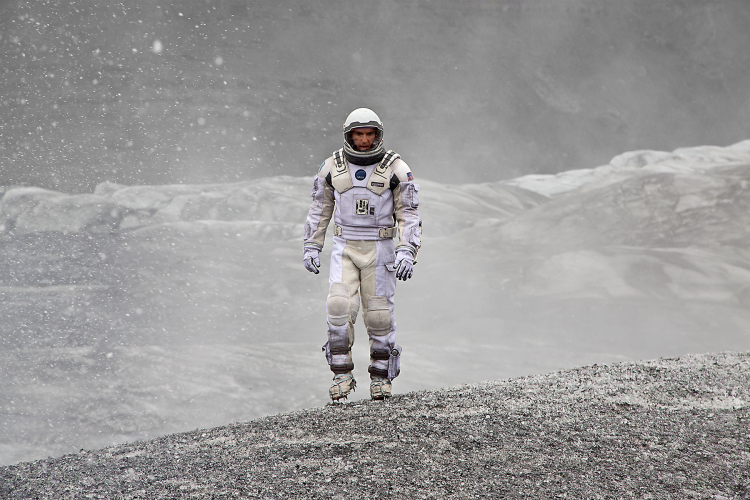
    Interstellar is a visual masterpiece that has a human touch that propels it to greatness. It is perhaps one of the best space movies ever made.

    Christopher Nolan isn’t one known to be taciturn when it comes to his movies. Even his smaller movies like Momento have grand structures bolstering their simple plots. However, Interstellar is easily is first brush with the epic — unless you consider the full Dark Knight trilogy as one. On paper, it should not work. A sweeping narrative covering different times and worlds would be eaten up by audiences. That’s why Gravity found so much success financially and at the Oscars. But Nolan does something completely different with Interstellar. He introduces science in a way that isn’t watered down or ignored. His film, according to astrophysicists, is completely plausible. Though that fact makes the movie a hard one to digest for viewers, the end result is an incredible study of human nature and our desire to survive.

    Food is running out. The world is becoming overpopulated. The Yankees look nothing more than a high school baseball team. A crop blight is threatening the very existence of the human race. Nolan drops into this terrifyingly realistic future plagued with dust storms and the risk of the world simply ending within grasp. With this, the nation turns its attention to farmers and away from the sciences and engineers to save the world.

    Check Out: “Sleeping Giants” Book Review: A Unique, Engaging Sci-fi Thriller


    However, Joseph Cooper (Matthew McConaughey) who was once a pilot for NASA, maintains his faith in STEM. After a dust storm, a mysterious gravitational disturbance leads him back to the formerly disbanded agency. He discovers that NASA, led by Dr. Brand (Nolan regular Michael Caine) and his daughter Dr. Amelia Brand (Anne Hathaway) have discovered a wormhole. “One system with three potential worlds,” as Amelia puts. it. Something, or someone, has given the human race a chance to live by presenting them with potential new planets to call home.

    Cooper is given the seemingly possible decision to leave his children forever, potentially, or save the humanity from extinction. Choosing the latter, he embarks into an incredible mission on the ship Endurance. He, along with Amelia, Dr. Doyle (Wes Bently), and Dr. Romilly (David Gyasi) set off to assess the three worlds to choose where to start a new civilization.

    Back on earth, Murphy Cooper (Jessica Chastain), who grows up while her father is gone, begins to help Dr. Brand determine the formula to get humans off of earth in a mass exodus.

    While wormholes and other worlds seem like the work of science fiction, the science is very real. Though throughout the movie it sometimes gets a little confusing, with a little thinking you can piece it together. Essentially, it’s the Neil DeGrasse Tyson of movies. The science is explained in a non-condescending way.

    interstellar movie review


    One of the most surprising elements of Interstellar is not the story or the science, but the sentimentality. It’s shockingly emotional and often heartbreaking. In fact, parts of it gutted me. Whether it’s surprising because of the director or the premise is anybody’s guess. However, the grasp it has on humanity is both refreshing and welcome. Especially in the science fiction genre, a human factor is usually missing. But Nolan and the screenplay exhibit human nature for all its beauty and destruction.

    We have an innate desire to survive. That’s why the people on earth in Interstellar begin to lose faith in the dream to leave the planet. They are thinking of how they can solve the problems on Earth. The very idea of the movie is thinking of a way to save our race. However, the movie explores the selfish motivations we also innately have. The way it is explored is surprising and devastating.

    But it’s not just the screenplay and direction that exudes that. The ensemble was tasked with accessing emotions that humans would actually feel in these situations. Overall, the entire cast is phenomenal. However, there are three standouts for me. The first is Matthew McConaughey. I think it’s very unfortunate that he won his Oscar for Dallas Buyers Club. Not to take away from that performance. His performance in Interstellar is an incredible meditation on one of the hardest questions for humans: how much will you sacrifice for the greater good. There is no better way to show this than when he is watching messages from his kids as the years go by. This is the best performance of his career.

    Check Out: “Arrival” Movie Review: One of the Best Sci-Fi Movies of the Decade


    The other two performances that stood out were the two actresses that portrayed Murph. Mackenzie Foy breaks any stigma surrounding child actors with a really naturalistic and heartbreaking performance. She has these knowing gazes that foreshadow the scientific curiosity that follows her throughout her life. Jessica Chastain is an incredible presence as the older Murph. She carries over the knowing gazes, but adds the emotional baggage of years of abandonment by Coop. It is easily one of her most memorable performances.

    Masterpiece isn’t a word I take lightly. I’ve said it in probably two reviews on this blog (Boyhood and Moonlight – the former I’m less inclined to continue using that phrase). However, I’d call Interstellar a masterpiece of filmmaking. It’s as grand as it is introspective and as grounded as it is existential. By the end of the nearly three-hour running time — it goes by in a flash — you feel as if you’ve experienced something that is so rarely captured on film. If not for the plot or performances, watch it for the stunning visuals that haven’t been seen on the silver screen since perhaps 2001: A Space Odyssey. I think a decade from now we’re going to look back and wonder how we fell asleep to such a grand and sweeping epic. 

    ★★★★★ out of 5


    Get Interstellar on DVD, Blu-Ray, or Digital on Amazon or stream for free with Amazon Prime!

  • Valerian and the City of a Thousand Planets review — A visually stunning mess

    Valerian and the City of a Thousand Planets review — A visually stunning mess

    Valerian and the City of a Thousand Planet boasts some strong visuals, but its muddled plot and lack of character stop it from taking off

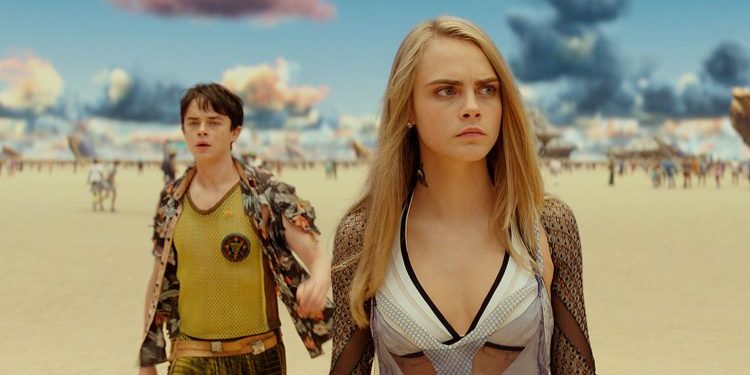
    If I showed you an image from the colorful and bizarre world of Valerian and the City of a Thousand Planets, you might guess it’s one from Star Wars or Guardians of the Galaxy. You wouldn’t be far off since both properties pulled inspiration from the original French comic series Valerian and Laureline. Still, this adaptation by director Luc Besson has neither the tight plotting or exciting adventures of Star Wars nor the entertainingly bizarre humor of Guardians. Though visually and conceptually it comes close to the world’s of both franchises, in the end, Valerian and the City of a Thousand Planets results in a middle of the road space western. But it does have its virtues.

    Valerian begins with three enthralling scenes that for different reasons show why Luc Besson is one of the most stylistically interesting directors working today, for better or worse. We begin by seeing the creation of Alpha, which began as the International Space Station but has since expanded to include beings from thousands of planets. Through a montage set to David Bowie’s “Space Oddity”, we see new nations and species join the group over decades, always greeted by an ever-changing trio who welcome the beings with open arms. It’s simple, but effective filmmaking that sets the tone for the piece as a quirky space adventure, but also suggests a theme of cooperation among different groups of people. We’ll get to that.


    We then jump to an unknown planet populated by blueish-purplish aliens who live in beautiful harmony on a never-ending beach. The conceptualization and creation of this world is the type of visionary filmmaking we’ve come to expect from Besson. It’s a detailed and beautiful world that doesn’t need words for us to understand the people that inhabit it. Within moments, you know that this is a world untouched by civilization for the better. Though the design is gorgeous, the vast amount of CGI in the sequence — which almost seems like 100% — takes away from the impact. Even if it is stunningly done. That becomes a theme throughout the film. Soon, mysterious vessels begin falling from the sky and begin destroying the world, though it’s not an invasion. We quickly cut away from this world to meet Valerian (Dane DeHaan). For such a large cut of the movie, we aren’t given much payoff.

    Valerian and his partner Laureline (Cara Delevingne) are the best space agents in the World Space Federation and maybe lovers or dating. It’s not clear like much of the character development in the film. We meet them as they are about to embark on a mission at Big Market. A vast twisting bazaar that exists in a different dimension and can only be seen and touched if you wear a special helmet and gloves. And like the first alien world we’re introduced to, it’s grand and beautifully made and conceptualized. Valerian and Laureline are tasked with retrieving an item that’s being traded on the black market. The action set piece that ensues is truly an accomplishment in cinema. Taking place in multiple dimensions — we see Valerian in Big Market and Laureline in the “real world”, which is pretty much an empty lot — and spanning what seems like miles of this market, it’s a thrilling chase. But the movie never has another moment like it.

    Once the object is retrieved, they learn that a mysterious force has infected the center of Alpha. As the pair’s commander Commander Arün Filitt (Clive Owen) explains, troops have been sent to investigate, but never return. Owen doesn’t get much to do with his character, but he at least brings presence to the film. The aliens from the beginning of the movie return and kidnap Filitt and Valerian and Laureline are tasked with finding him.

    The problem that Valerian and the City of a Thousand Planet has plotwise is that it doesn’t really have a compelling plot pushing it forward. The blueish aliens are the central mystery and they are somehow connected to this mysterious force, but the movie doesn’t make an argument for us to really care about it. In terms of plot, after the three scenes at the beginning of the movie, we spend the time searching for three different characters that go missing. But they all feel like dead end plots that don’t seem to mean much in the end. Though, a side plot with Bubble (Rihanna), a shape-shifting blue blob of an alien, ends up being one of the most entertaining bits of the film. Even the climax feels like an anticlimax. There are no stakes and we really don’t care about the characters enough to be invested in their journey.


    That’s partially because of the casting of DeHaan. I believe he has the potential to be one of the great actors to come out of this generation. But his oddly affected Keanu Reeves-inspired performance just doesn’t work here. The same goes for his chemistry with Delevingne. She does her best with the material she has, but it’s a bit of a thankless role. The visuals are truly stunning. That’s something that I have to emphasize here. And the world is interesting. But unlike Guardians and Star Wars, we don’t get likable characters or compelling stories or even humor to help give the movie personality.

    I really wanted to like Valerian. And in the hands of a director that understands character a bit more, it might have been better. But trying it seems like Besson was too focused on creating interesting set pieces, that he forgot to contextualize them within a story, which ends up making them less affected. Somehow, Valerian is less than the sum of its parts. All the elements for a fun sci-fi romp are there — you can find them to better success in Thor: Ragnarok. But they just don’t add up. At the very least, we get an incredible Rihanna dance sequence that proves that she can really do it all.

    ★★½ out of 5


    Watch Valerian and the City of a Thousand Planets on Amazon!

  • Deepwater Horizon review — Visual effects shine through the mud and oil

    Deepwater Horizon review — Visual effects shine through the mud and oil

    Visually stunning and emotionally resonant, Deepwater Horizon is the kind of “based on a true story” movie that honors its subject, but is also eminently watchable.

    Disaster movies are already hard enough to pull off. But disaster movies based on a real event are even harder. You have to balance the expectations of the genre with reverence for the victims. United 93 is probably the most recent example of a movie that was actually able to successfully pull this off. Paul Greengrass isn’t concerned with the facts, though he certainly gets them all right. Instead he takes a humanistic approach in telling the story. While Peter Berg doesn’t quite reach those heights, Deepwater Horizon is a more than solid depiction of a horrific event that shows reverence for the victims and indicts those at fault.

    It’s pretty fantastic that the movie actually works. Not only is it a disaster movie based on a real event. It is probably one of the most highly publicized disasters in U.S. history this decade. Because of that, the audience has an opinion going into the movie. They have an idea of the facts. So, it was important for the movie to either present something new or to present it in an interesting way. Berg was able to do both.

    Deepwater Horizon tells the story of the worst oil industry disaster in U.S. history. It claimed the lives of 11 people and caused incalculable damage to the environment of the Gulf of Mexico. The movie follows the men and women aboard the oil rig Deepwater Horizon in the time just before and after the explosion.


    We are introduced to the members of the crew of the rig before they set off to board. This includes chief electronics technician Mike Williams (Mark Wahlberg), dynamic positioning officer Andrea Fleytas (Gina Rodriguez), and crew chief Jimmy Harrell (Kurt Russell), affectionately known as Mr. Jimmy. Berg uses the beginning of the movie to place the crew in their lives outside the rig. Mike “spends time” with his wife and helps his daughter with a project – a little expositional setup, but it’s actually kind of cute. Andrea tries to get her pet project Mustang to work. It’s all to serve the story and the real-life people behind it. Berg doesn’t forget that he’s telling someone’s story.

    Mark Wahlberg in Deepwater HorizonWhen we get on the rig, we are introduced to Donald Vidrine (John Malkovich), who is quickly established as the villain. In real life, it was determined that Vidrine was following orders from higher-ups at BP. However, in the movie, he is the representative of the entire company. Of course, this happens a lot to simplify a story. However, anyone that knows anything about this story knows that BP came away with a slap on the wrist and a divot in their earnings report. It’s a movie with something on its mind. That something is to remind people that the eleven deaths and billions of dollars in damages resulted in no change and no accountability from the company. The idea of corporate greed is not a new one. However, Deepwater Horizon shows the horrifying possibilites brought on by it.

    The first half of the movie largely sets up the chain of events and decisions that caused the disaster. I really appreciated the screenwriters’ care to not dumb down the events. They showed trust in the audience to understand the mechanics. Terms like PSI and negative pressure are thrown around but don’t feel like jargon. Actually, much of the first act feels almost like it could be a documentary. The movie takes care to give you detail by showing facts and labels on screen. However, it’s the dialogue that makes it shine. Screenwriters Matthew Michael Carnahan and Matthew Sand actually wrote dialogue the way that people speak. Conversations switch subjects and drift. Characters recall past events. It’s the kind of screenwriting we need more of.


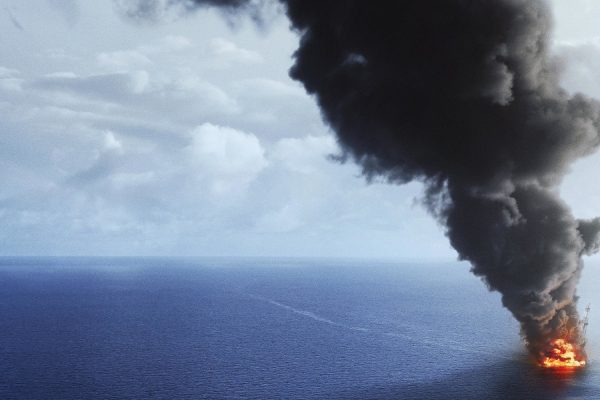
    However, from the second that the rig actually blows, there is no stopping the momentum of the film. Peter Berg is able to create a caustic environment that makes you feel the heat of the fire and the power of the explosions. Visually the film is stunning. It is a new high in terms of photo-realistic effects. Balls of fire, dangerous jets of mud, and sudden jolts of pressure actually feel dangerous. That’s a hard thing to achieve in an action movie. It makes you feel like the characters are vulnerable. Granted, they are on a flaming glorified boat that is 46 miles off the coast.

    Mark Wahlberg gives a surprisingly strong performance here, which is something I never thought I’d say. Though for much of the movie he is the macho hero with near superman abilities. But when he is given the chance to emote, it’s heartbreaking. Another highlight is Kurt Russell as the stern crew chief who takes BP head on. However, John Malkovich as the sneering BP executive steals the entire movie. He’s the kind of slithery corporate puppet that is needed for the audience to direct its anger at. And though he might as well be a mustache twirling villain, it works. He’s performing to the back of the theater and the movie is all better for it.

    Deepwater Horizon is deeply entertaining, visually stunning, and emotional. Though it has its flaws, it also has moments of astonishment that show it for what it is: a technical achievement. The visual effects feat of the second half is reason enough to see it. However, it has a surprising emotional depth that makes it more than just a disaster movie. Even then, what makes it eminently rewatchable is this thrilling story that you can’t imagine being real.

    ★★★½ out of 5


    Deepwater Horizon is available on Blu-Ray and Digital HD on Amazon!

  • The Great Wall Movie Review — Whitewashing? No. Good? No. Well-Made? Yup.

    The Great Wall Movie Review — Whitewashing? No. Good? No. Well-Made? Yup.

    The Great Wall is well-made enough to forgive its narrative flaws and lackluster performance by Matt Damon

    Going into The Great Wall, expectations were both high and terribly low. Besides the whitewashing scandal — more on that later —  the trailer wasn’t well cut enough to truly ratchet up any excitement. However, the names behind the project were. No, not Matt Damon, god help us, but director Zhang Yimou brought a certain level of gravitas to the project. He is a three-time nominee for Best Foreign Language Film and is best known for House of Flying Daggers and Hero — many people consider the latter one of the most beautifully constructed movies ever made. So, with his first foray into English-language filmmaking, I was expecting a certain level of craft. He delivered, and then some. This is perhaps the best-crafted fantasy action movie since The Lord of the Rings Trilogy. One sequence even brings back memories of the famous Helm’s Deep battle in The Fellowship of the Ring. On the other hand, narratively the film is perhaps the dullest I’ve had to sit through recently.


    The Great Wall has come with countless myths and legends, as the opening text states, and the movie tells just one of them. William Garin (Matt Damon) and Pero Tovar (Pedro Pascal) are traders — or thieves — in China looking for fabled black powder. After being attacked by a mysterious beast, they stumble upon the wall and are taken prisoner. There they find a massive army preparing for some attack. However, the army isn’t human. Every 60 years — because 100 years is too long to wait — an army of lizard-like monsters called the Tao Tei emerge from a mountain and kill anything in their path to feed their queen. The wall was built to protect the capital city from attack.

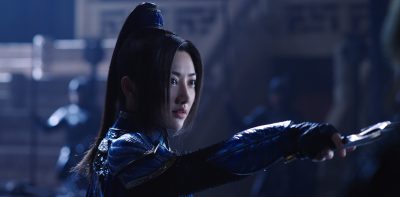
    Jing Tian in The Great Wall
    Jing Tian in The Great Wall

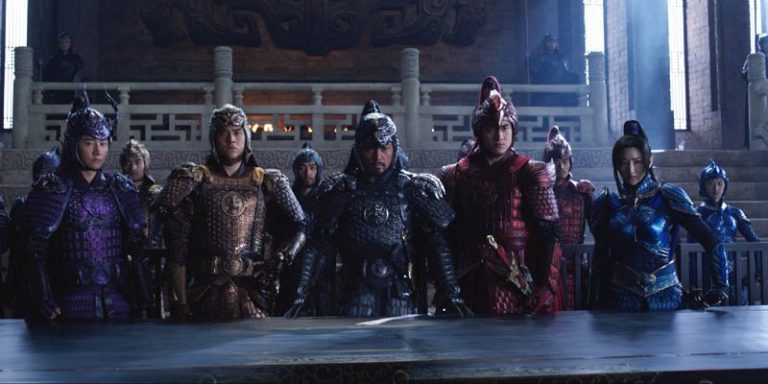
    Once Garin and Tovar are captured, the first wave attacks arrive. Led by General Shao (Zhang Hanyu), the army — The Nameless Order — prepares to defend the wall. The members of the army wear different colored armor — blue, purple, or red — depending on their duty during the battle. From bungee cords to tar covered cannonballs launched from giant catapults to perfectly coordinated arrows, the army is well trained and moves as one. The sequence is easily the best of the movie and an incredible piece of filmmaking. The costume design by Mayes C. Rubeo is intricately put together but works best on a massive scale. The colors work together on screen to form a massive and colorful block against the harsh grays and browns of the wall and surrounding landscape. It’s hard to think of a movie whose work could surpass it this year. Conversely, the production design is more muted, but the detail is still there. The enormous and complex designs of the weapons are pulled right out of a fantasy-obsessed 11-year-old brain and are realized right before your eyes. The metal work on the swords, furniture, and to objects as small as candle holders is exquisite. It’s a shame that the movie couldn’t hold up to that first battle sequence.

    From there, it’s a steep downhill dive. While the visual style is great, the narrative just isn’t there. There’s no point in even going into it because there’s not much to nitpick at. It follows the usual formula of movies like this. And while Jing Tian as Commander Lin Mae is a really great lead, Damon’s performance — especially that kind of generalized European accent that switches between English and Irish — pulls you out of the movie instantly.


    To address the elephant in the room, I don’t believe this was a case of Hollywood whitewashing. Damon’s role is written for a westerner, which is integral to the plot. He is regularly out skilled and marvels at the army’s ability to work together — something that Commander Lin Mae points out he is not good at. Could this movie have been done without a western character in it? Yeah, probably. But it isn’t whitewashing.

    The Great Wall has a mighty fall from grace after the incredible first battle sequence. Even the final action set piece falls flat. But, as with every Zhang Yimou movie, it is fantastically well-made and produced, which certainly elevates it. If you’re looking for mindless action and ridiculously cheesy storylines that you can laugh at, then The Great Wall will fill that void. It’s a solid matinee watch and beautiful to look at.

    5/10

  • Godzilla (2014) Movie Review — A darker, visually stunning version of the classic monster flick

    Godzilla (2014) Movie Review — A darker, visually stunning version of the classic monster flick

    Gareth Edwards’ 2014 Godzilla is a darker, visually stunning version of the classic movie monster despite its issues

    With Kong: Skull Island out today, we thought it was the perfect opportunity to go back and review the first movie in the Legendary MonsterVerse, Gareth Edwards’ GodzillaNow, hopes weren’t exactly high following the trainwreck that was the 1998 film. However, with Edwards in the director’s chair, a little hope was restored. His first film, Monsters, showed a lot of restraint as the main characters navigated a post-apocalyptic world riddled with giant octopi — it’s much better than it sounds. However, when he does get to those action set pieces, he directs them gracefully and with sweeping camerawork. It was a refreshing break from the chaos we usually see in this genre. I’m looking at you Cloverfield. The world may be in chaos, but that doesn’t mean the filmmaking needs to be. While his work in Godzilla isn’t exactly as inspiring, it still cements itself as a solid summer blockbuster — perhaps one of the better ones — despite its clear flaws.

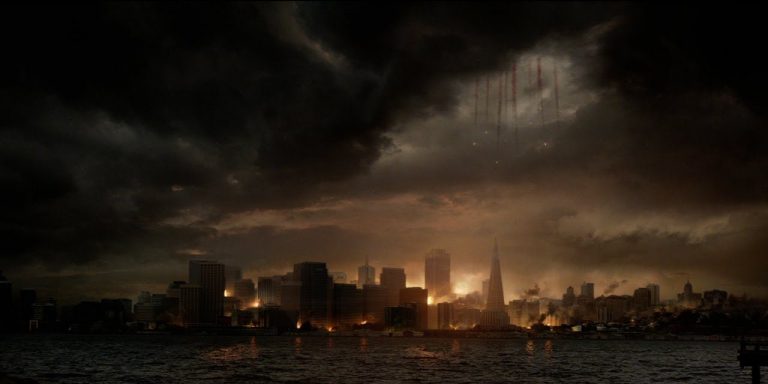
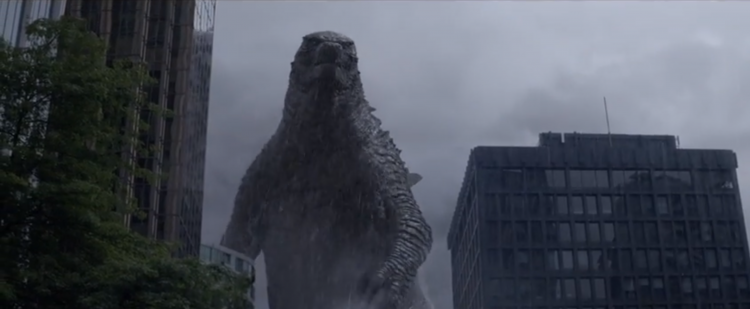
    The Godzilla universe is rooted in camp. From the iconic rubber suits from the 1954 version to Roland Emmerich’s 1998 film with its  — well, I’m not completely sure how to describe it. However, Edwards infuses this take with a darker tone that surprisingly suits it despite the fact that it’s about a 350-foot reptile. Unlike previous Godzilla movies, the 2014 version is actually concerned with plot and its lore, not just the action sequences. This time, Bryan Cranston plays Joe Brody, the lead engineer of a Japanese nuclear plant until it went into meltdown due to mysterious seismic activity. Years later, he gets arrested trying to return to the site to retrieve files to help him figure out what caused the meltdown. His son Ford (Aaron Taylor-Johnson), an explosive disposal officer for the Navy, goes to Japan to bail him out. Eventually, his father convinces him to help him break back into the quarantine zone. They are soon captured and brought to a secret facility where Project Monarch, led by Dr. Ishiro Serizawa (Ken Watanabe) and Dr. Vivienne Graham (Sally Hawkins), are analyzing a mysterious structure at the site of the nuclear plant. After several power failures, a giant moth-like creature dubbed MUTO — Massive Unidentified Terrestrial Organism — is released and is making its way to San Francisco. As he joins the military task force that is looking to stop the monster, Ford learns that in 1954 several nuclear bomb tests being conducted were actually an attempt to kill Godzilla or at least contain him. However, he has awakened with the release of the MUTO. As Dr. Serizawa says, “let them fight.” And fight they do.


    Gareth Edwards' Godzilla

    Unlike earlier Kaiju films, including 2013’s Pacific RimGodzilla revels in the moments between the all-out carnage of the monster-versus-monster battles that defines it. However, that is the reason the bloodthirsty monster movie fanboys detest this movie. They are the people who waged the question, “is there enough Godzilla in Godzilla?” Well, in my opinion, there is just enough. The battle sequences are fantastic and thriller and enough to save the desire for monster awesomeness that some will crave. But then there are moments of pure visual genius that outshine them. Specifically, there’s the highly publicized paratrooper sequence where flares create an incredible effect against the smokey backdrop of a destroyed San Francisco. Then, there’s a moment where we watch on with bated breath as a monster passes beneath a railroad bridge where some of our characters are hiding. There’s some incredible cinema tucked away in there.

    Screenwriter Max Borenstein makes it a point to humanize the movie by using characters that aren’t defined by the usual genre rules. However, as impressive as the cast is, the movie makes little use of them. The wonderful Oscar winner Juliette Binoche gets strong material that amounts to less than three minutes while Cranston barely gets to flesh out his character. Oscar nominees Sally Hawkins and Ken Watanabe are simply there to react to what’s happening while Elizabeth Olsen‘s role as Elle Brody becomes a plot device. Unfortunately, the only actor who gets any material to work with is Aaron Taylor-Johnson whose performance comes off as stiff and emotionless. There are cute attempts to make us care about the characters that simply fall flat and often push the film into cliche territory. Considering the movie is as well-constructed as it is, it’s easy to let that go and allow its visual brilliance to make up for it. In particular, the monster’s first clash in Honolulu and their final, epic showdown in San Francisco are among the best scenes in a monster movie in years.

    It’s clear that Edwards felt the pressure of the studio system in this movie. It often lets tip when a shot or line was put in because the studio thought it would make it more marketable — he certainly figured out how to balance the two with Rogue One. Like that movie, Godzilla is visually dazzling enough to remind you why Legendary chose Edwards to revive the franchise. While it has its problems — the most severe of which is Aaron Taylor-Johnson’s performance — you can forgive it because, well, it’s Godzilla fighting another giant monster. What more can you ask for?

    7.5/10

    Godzilla (2014) is available on DVD, Blu-Ray, and digital rental on Amazon!

  • Kong: Skull Island review — Too much Kong, not enough Skull Island

    Kong: Skull Island review — Too much Kong, not enough Skull Island

    Kong: Skull Island doesn’t live up to 2014’s Godzilla or the 2005 version King Kong, but the central action set piece is reason enough to see it.

    You know your movie has a problem when the most emotional image in your movie is of John C. Reilly holding a hot dog and beer watching the Cubs. However, the problems in Kong: Skull Island run deeper than that. The second movie in the Legendary MonsterVerse, yet another franchise that we didn’t know and probably don’t need, was preceded by Gareth Edwards’ 2014 film Godzilla. After being plucked from indie obscurity and trusted with a decades-old franchise, Edwards created a shockingly entertaining and well-crafted action piece with the film. The same thing happened with Kong director Jordan Vogt-Roberts, best known for The Kings of Summer, to lesser success. But that’s just the gamble you take with an untested director. Though I don’t think he’s going to be given a Star Wars movie the same way Edwards was, he certainly earns his stripes as an action director.


    Following Peter Jackson’s epic and often emotional 2005 film King Kong was always going to be a hard task for whatever director took it on. Instead of taking place in 1933, Kong: Skull Island begins in the 70s  at the tail end of the Vietnam war, which heavily influences the style of the movie. Bill Randa (John Goodman) and Houston Brooks (Corey Hawkins) charter a government expedition to explore the never visited Skull Island. The first 20 minutes of the movie are dedicated to assembling the team, which is a quick and surprisingly entertaining process. They hire former British Special Air Service Captain James Conrad (Tom Hiddleston) to guide the expedition. They are also escorted by a helicopter squadron, just about to go home from Vietnam, led by Lieutenant Preston Packard (Samuel L. Jackson). When they arrive on the island, they drop seismic charges under the guise
    of studying the geological structure of the island. Instead, they flush out a 100-foot tall gorilla. After Kong takes out all the helicopters, in an amazingly shot and directed sequence that certainly homages Apocolypse Now, the survivors must make their way to the extraction point on the north side of the island within three days while trying to survive the creatures living there.

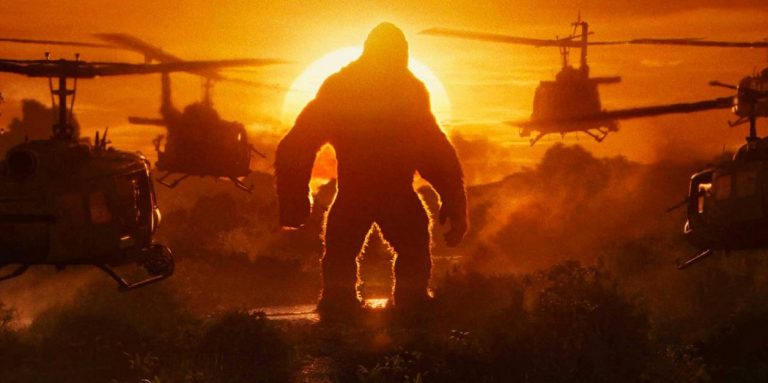
    The plot is tight and efficient, which is a change from the slower paced 2005 version. But where Godzilla withheld the title monster for as long as possible, Kong: Skull Island reveals its hand almost immediately by giving us a glimpse of the mythic beast. While that scene is exciting and beautifully realized — the highly publicized shot of the helicopters approaching Kong against a blazing sun is breathtaking onscreen — it gives you an instant high that is matched by the rest of the movie. All the action scenes following it feel dull in comparison. It’s a huge issue considering there’s not much outside of them that the film has to offer. Story wise, the movie integrates well into the universe — there are references to Monarch and stay for the post-credits scene — but it feels like a franchise starter instead of its own movie.


    Not only is the plot subpar, the characters feel like they’re made to die and the ones that have some purpose are so dull that you wouldn’t even care if they were gone. Mason Weaver (Brie Larson), a photojournalist looking to uncover a government conspiracy, is the closest we get to a charismatic character — she’s meant to step into the Naomi Watts character from the 2005 film — but we care about her because the film tells us to care about her. We get good performances from Samuel L. Jackson, Corey Hawkins, and John Goodman, but they aren’t given enough material to make a strong impression. The one character with an arc is Hank Marlow (John C. Reilly), a World War II fighter pilot who crash landed on the island 28 years before the expedition arrived. And while he gets some great laughs, it amounts to not much else.

    I enjoyed Kong: Skull Island enough to recommend it to B-movie lovers. If you were one of the people who felt jilted by the lack of Godzilla in Godzilla, then this movie is going to satisfy your tastes. If anything, that first action set pieces and the truly fantastic visual effects and cinematography are enough to recommend. But on the giant monster movie scale, it ranks above the 1998 Godzilla and below the 2005 King Kong, 2014 Godzilla, and even Pacific Rim. 

    ★★½ out of 5


    Kong: Skull Island is available on Digital HD on Amazon!

  • Wonder Woman review — Fun, entertaining, a solid summer blockbuster

    Wonder Woman review — Fun, entertaining, a solid summer blockbuster

    DC finally gets it right with Patty Jenkin’s Wonder Woman thanks to its tight direction, lighter tone, and star affirming performance by Gal Gadot.

    Finally, after nearly ten years of the Marvel Cinematic Universe and four years of the DC Extended Universe has a female superhero been featured as the lead. Not only that, they’ve paired her up with a female director! Gender equality in Hollywood is here! Right? Well, that’s a discussion for another time. But the fact that this is the first major studio superhero film directed by a woman has to be celebrated when talking about Wonder Woman, the fourth installment in the DC Extended Universe. And it’s good! It’s actually good! After three failed attempts to get the franchise off the ground, Patty Jenkins has finally been able to harness an iconic character in the DC pantheon and apply her to the superhero origin formula successfully. While she definitely adheres to the formula, especially since this is an origin story, Jenkins uses all the potential it has, which helps you forgive the movie for its flaws.


    However, many of those flaws carry over from the dour style established in the first two movies in the DCEU. Jenkins takes the parameters she has to work in and builds the film around an inspired performance by Gal Gadot. Although this is yet another origin story, it isn’t one that audiences are as familiar with as the ones for Batman or Superman. This gives Jenkins the freedom to shape the story as she sees fit. Though, she doesn’t stray too far from the source material. Young Diana is the princess of the island Themyskira, a hidden paradise populated by a society of all-female Amazons. The women were created by Zeus to protect men against the corruption of his son Ares, the god of war. Ares eventually fights with the gods before ultimately falling to Zeus. Unsure whether or not he’ll return, Zeus gives the woman a weapon that is capable of killing Ares — the god killer. Young Diana is desperate to train with the warrior Amazons including her aunt, General Antiope (Robin Wright, a standout in this section). However, her mother, Queen Hippoltya (Connie Nielsen) forbids her. Eventually, as Diana’s desire becomes too much, Hippoltya allows her to train. However, the one caveat is that Antiope must trainer her harder than any other warrior before her. The first act of this movie is extremely expositional, which makes it lag compared to later sections. However, Jenkins had the fortune of taking a less-known origin story and really bringing it to live. The vividness of Themyskira comes through in the costume and production design. And every woman from Gadot to the background actors bring the island to life.

    Later, an older Diana, after training extensively for years, watches a plane go down after crashing through the barrier that makes the island invisible to outsiders. Inside is Steve Trevor (Chris Pine), a U.S. Army captain who has been working as a spy against the Germans during World War I. Diana saves him, but not before German troops break through the barrier as well and begin to invade the island. This first battle sequence between the Amazons and the Germans gives us just a taste of Jenkins’ ability to direct action. And while she contends with Snyder’s speed-up/slow down style, she also gives the fight a clear narrative, not dissimilar to the way George Miller directed the action in Mad Max: Fury Road. After learning about the war and becoming convinced that Ares is behind it, Diana compels Trevor to take her to the battlefront to find Ares and kill him before more innocent people are. From the first scene they have together, Gadot and Pine display an incredible chemistry that really drives the emotional beats of the movie. Even with the comic tone of their first scenes, the connection is palpable.

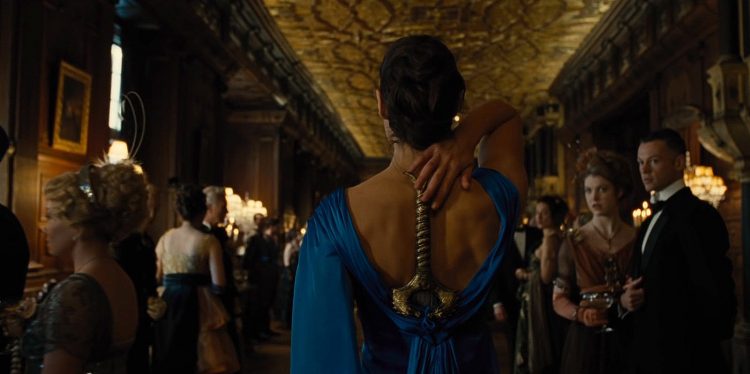
    Gal Gadot in Wonder Woman

    The first third of the movie is shaky but impressive. However, the movie takes flight when the duo arrives in Jolly Ol’ London. Steve leaves Diana with his secretary Etta Candy (a truly delightful Lucy Davis) to get her into more appropriate clothing for the time. The comedy of manners trope has been used in superhero movies before, but it still works here and is fresh. Especially due to the fact that many of Diana’s comments to society are biting and true — her takedown of marriage is specifically memorable. Trevor approaches the Imperial War Cabinet with a journal that contains the notes of Isabel Maru aka Dr. Poison (Elena Anaya), who, along with Erich Ludendorff (Danny Huston), has developed a poisonous gas that they plan on using at the front of the war just as the armistice is about to be called. Most of the cabinet shrug off the threat saying that it is not going to happen because of the impending armistice. However, with the help of Sir Patrick Morgan (David Thewlis), Diana, Trevor, and his team — grifter Sameer (Saïd Taghmaoui), marksman Charlie (Ewen Bremner), and smuggler Chief (Eugene Brave Rock) — make their way to the western front to confront Maru and Ludendorff. I think the three men that make up Trevor’s team are a perfect example of why this movie works and the other DCEU movies don’t. Though their screen time is small, each makes an impact. Each matter. Each has a character that has emotional resonance in the story.

    Wonder Woman doesn’t reinvent the superhero genre. What it does is it shakes off the chains binding it to its franchise and the burden of creating the first installment in a series and instead becomes an actual movie with actual characters and actual conflict. This is something that has unfortunately eluded the DCEU until now. Not only that, the film actually has fun with its characters. The brooding and dark tone of Batman vs. Superman and Man of Steel is left behind for the light and colorful look that the Marvel movies have so successfully harnessed. While Jenkins’ direction is a huge reason for that, Gadot and Pine give performances that elevate the already solid material. Gadot exudes the hero that she is playing. She gives Diana an air of importance, but not self-importance. More importantly, her internal conflict is one of a hero and she sells it even when the script doesn’t. Pine, on the other hand, inhabits the sidekick/love interest role that has been filled by a woman in superhero movie perfectly. He lets Gadot drive the movie, but he gets his moments to make the audience laugh and swoon.


    I think the final twenty minutes of the movie loses the pace and smartness of the second act — the final act, in general, is rough around the edges plotwise. It turns into a less scattered version of the final battle in Man of Steel. The difference, though, which is a testament to Patty Jenkins, is that it takes time to give us character moments throughout the battle. After all, we spent an entire movie with them, getting to know about them, and caring about them. Jenkins doesn’t let the need for a final battle take away from that fact. It just shows that with good direction, even a formulaic superhero movie can be good. A prime example is the first major action sequence with Diana in full Wonder Woman garb. The fluidity of the action matched with the emotional swell of the moment makes it one of the most memorable superhero reveals in an MCU or DCEU movie. Gadot sells every move with a confidence that few actors would be able to exude while Jenkins captures her grace with bravado. That scene stays with you throughout the movie.

    Patty Jenkins has already made history with Wonder WomanHowever, it was an earned victory. She singlehandedly made a case for the DC extended universe to go on. She proved that you can make a successful movie with these properties that is also good. It’s a legitimately good movie. It doesn’t necessarily add anything new to the genre. You have to go back to The Dark Knight to find any original elements in a superhero movie. However, she adds a new flair to the familiar beats that make Wonder Woman one of the most exciting superhero movies in recent memory. It has its flaws. It is not infallible. But you can’t help but root for Diana and the characters on screen. The same way you can’t help but root for Jenkins. Still, she makes it easy to be on her side. Wonder Woman is a pure delight.

    ★★★½ out of 5


    Watch Wonder Woman on Amazon!

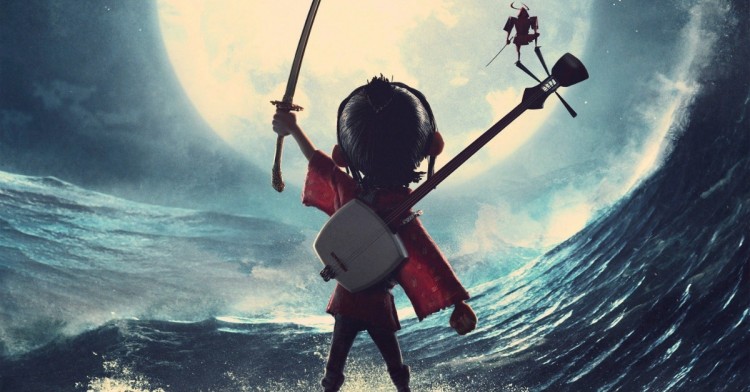
  • Kubo and the Two Strings Movie Review — One of the most gorgeously animated movies ever

    Kubo and the Two Strings Movie Review — One of the most gorgeously animated movies ever

    With some of the most beautiful animations committed to film, Kubo and the Two Strings is a movie that prides itself on story and delivers on its promise

    “If you blink, do it now.” Some movies just remind you how much you love movies. These are the movies that transport you to a different world, dazzle you with gorgeous filmmaking, and tell a story that you lose yourself in. I think Kubo and the Two Strings more than any movie this year has done that.

    One of the first things you learn about when you study storytelling is the hero’s journey. It follows one person’s journey from the known to the unknown and the transformative growth that it comes with. Star Wars is probably the most high-profile example of the narrative structure. The reason it works is because the hero has to earn his or her ending. By going through challenges, defeats, and hard-fought lessons, they have to learn about themselves in the context of their story and the story of those around him or her.

    Kubo is a perfect representation of the hero’s tale. The titular Kubo is a young boy whose life has been shrouded in darkness. The movie opens with his mother’s harrowing escape by boat through vicious waves to save an infant Kubo. Her father, the Moon King, plucked out Kubo’s eye in an effort to make him blind to humanity. Years later, the Moon King and his twin daughters continue to seek out Kubo to steal his other eye. After staying out after dark, Kubo is attacked by his twin aunts. His Mother saves him with the last of her magic and sends him on a quest with a monkey — voiced by Charlize Theron in a phenomenal performance — as his protector.

    kubo and the two strings movie review

    His mission is to find the three pieces of armor that will protect him from his Grandfather – the sword unbreakable, the armor impenetrable, and the helmet invulnerable. Along the way, they find a samurai who has been cursed and turned into a beetle named Beetle who was a student of Kubo’s father. The trio trek through dangerous landscapes and battle many foes. However, the real story is revealed throughout the movie, which ties up to an emotional gut-punch in the end.

    At the center of the entire movie is some of the most dazzling animation I have ever seen. Stop-motion is a genre that I often forget to appreciate because its look could be disconcerting. But Kubo introduces beautiful Japanese inspired art that literally comes to life before your eyes. In particular, the animation of origami figures that fold themselves at Kubo’s will is most impressive. The animators use gorgeous, bold colors to paint vivid landscapes and portraits throughout the journey with painstaking detail that is marvelous.

    Kubo and the Two Strings bravely trusts its audience, adults and kids alike, with its at times dark tale. Sometimes the plot comes to points where you forget that this is a movie marketed towards children. However, it includes flashes of humor — particularly from Beetle (voiced wonderfully by Matthew McConaughey) — that are pitch-perfect in their delivery and effect.

    Laika has proved itself as an animation studio to watch with three hits in a row. With Kubo and the Two Strings, it proves that it’s a top animation studio. From the power of memory to strength in the face of loss, Kubo deals with some heavy themes for a kids movie. However, it balances it out with such beauty, a strong story, and surprising flashes of humor that make it one of the strongest animated movies of the year.

    8.5/10

    Kubo and the Two Strings is available on Digital HD on Amazon!

  • 12 Years A Slave Movie Review — A Beautiful, Unflinching Film

    12 Years A Slave Movie Review — A Beautiful, Unflinching Film

    Chiwetel Ejiofor guides "12 Years a Slave" with a strong, adroit performance.
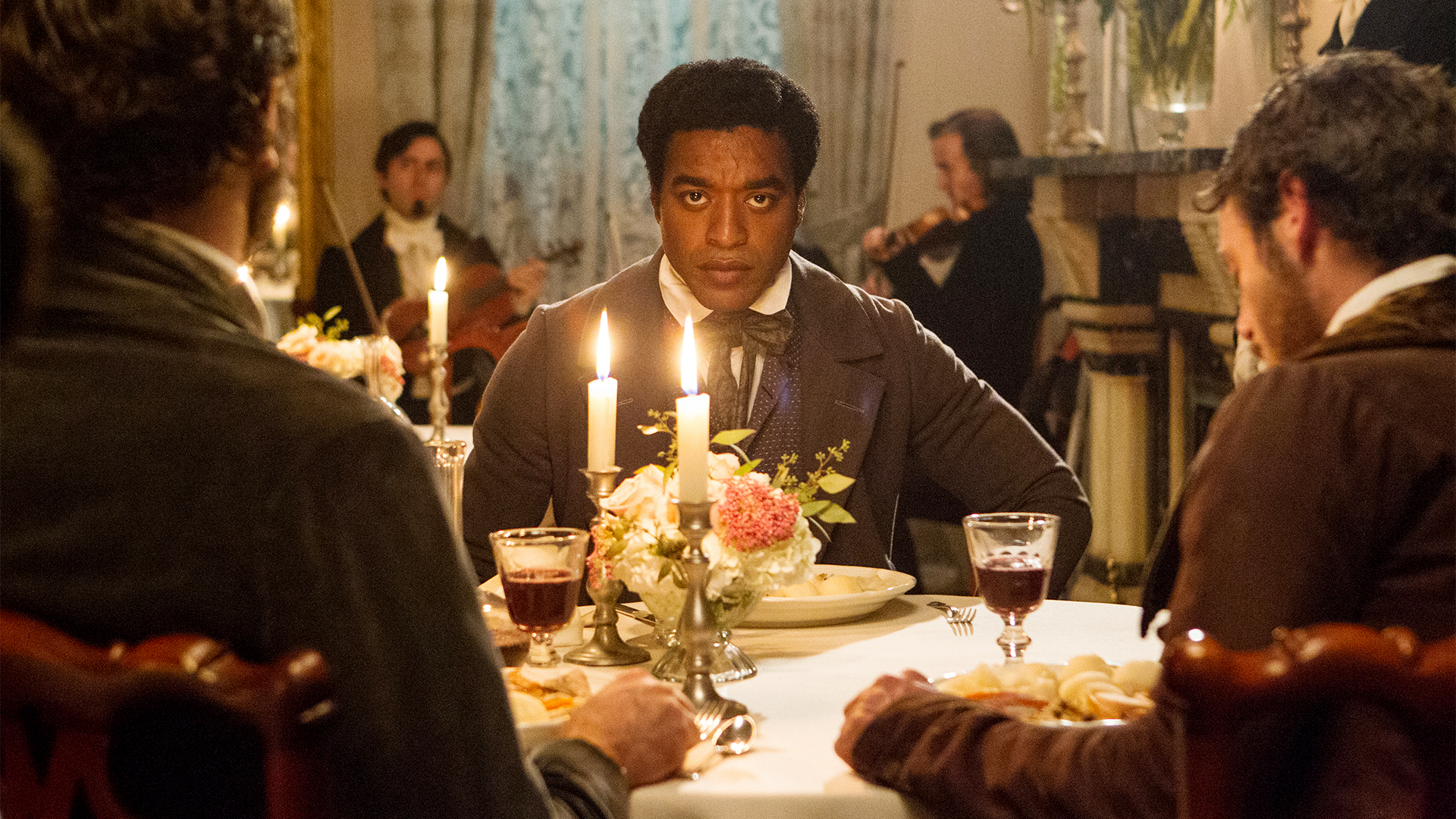
    Chiwetel Ejiofor guides “12 Years a Slave” with a strong, adroit performance.

    The first time I went to watch 12 Years a Slave it was at the height of its acclaim, buzz, and frontrunner status for the Oscars. There were so many expectations for the film and that may have clouded my original judgement, however this time the buzz has died down and I am now able to unbiasedly review the film.

    Steve McQueen is a director that I have been keeping an eye on. After he released Shame, his second feature length film, in 2011 I realized that he was different than many of the other directors of this time. He is a brutal storyteller. There is an unflinching nature to his films. He makes moves to make you feel uncomfortable, but at the same time maintains the beauty of cinema.

    The same can be said for his film debut Hunger and 12 Years a Slave. He is unflinching. The film tells the story of Solomon Northup, a free African-American man and accomplished violinist who is kidnapped and taken into slavery.

    Throughout his nightmare he encounters allies and enemies who create an amazing ensemble cast. Michael Fassbender plays Edwin Epps, who is one of the men who becomes an owner of Northup. His performance is the most complex of the cast. His character development runs so deep that you would think he was the main character. He is cruel, and even sadistic in some instances, but there is humanity left in him and Fassbender portrays that with a masterfully crafted performance.

    Lupita Nyong’o has been receiving incredible buzz for her performance as a slave named Patsey, who often confides in Solomon. Her performance is heartbreaking and raw and whenever she is on screen your eyes are on her. She has been receiving several well-deserved accolades for her performance, but two other actresses in the film compete with her for the spotlight.

    The first is Sarah Paulson as the wife Fassbender’s Epps. She is as cruel as her husband, however unlike her husband she has lost her humanity. Paulson is unflinching in her portrayal. She performs with an icy expression on her face and never breaks.

    The other is Alfre Woodard. She has a short, but impactful, scene as a former slave who eventually married her master. She has fallen into a lifestyle of royalty and has begun to forgot who she was. She looks back on her life at what she did and how she got to her current position and regrets nothing, which is heartbreaking in itself.

    Despite the strong supporting cast it is still Chiwetel Ejiofor, who plays our hero Solomon Northup, who steals the show. He does something that not many actors are able to do without it being explicitly said in the script. And that is giving the audience hope. He plays the character with a strength and will, which transcends the words that are spoken on the film. He makes you want to continue watching.

    Speaking of the script, it is one of the greatest adaptations to screen that I have ever had the honor to experience. Now I have not read the book that the film is based off, however I do know that it never provides as much emotional depth that this film does. It is poetic. There is no other way to describe it except pure poetry.

    The film itself is beautiful. Each shot is pure artwork. Each note of music is pure emotion. Every cut is perfectly pieced together. Steve McQueen has assembled something that is great. It is an epic in scope, but a character study at its heart. It explores loss, grief, strength, and of course hope. The film is hard to stomach for its pure physical brutality, but the emotional toll is much worse. However, once you get past that you realize that this is a film that deserves to be watched, appreciated, and remembered.

  • Wild Tales Movie Review — An anthology film that lives up to its name

    Wild Tales Movie Review — An anthology film that lives up to its name

    Wild Tales is certainly crazy, but every single vignette is a unique take on revenge and the animalistic urges we all have.

    Unlike a lot of foreign language films, the English title for Argentina’s “Relatos Salvajes” is a direct translation to “Wild Tales.” I point this out because this, along with the opening title sequence (a montage of various wild animals), perfectly sums up what the movie is about. It’s about the animalistic side all of us have. The six short films in this anthology are connected by their themes of vengeance and, as horrible as it sounds, it shows the things that we wish we could do to the people we think have wronged us.

    Anthology films, which are usually reserved for the horror genre, are often a mixed bag. You never know what you’re going to get. Sometimes, especially if each vignette is directed and written by different people, the quality is inconsistent at best. Also, often times the constant switching of stories makes the movie lose any momentum it has built. However, “Wild Tales” is able to get past these drawbacks. First, all the stories are written and directed by Damián Szifron, which helps make each of the stories consistent in quality, but more importantly stylistically consistent.

    In addition to being connected thematically, each vignette has a wholly satisfying black humor that makes you want to keep watching. Each 20 minutes section could be watched without the others and still be lauded for its quality. But it’s the message that the sections together portray that make the movie great.

    SPOILER ALERT: After the jump I’m going to be talking about each story. You’ve been warned.

    wildtales11

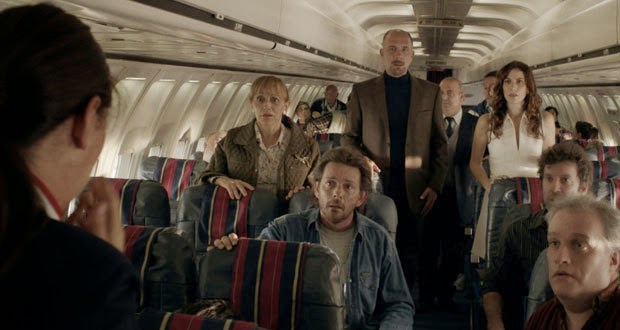
    The first tale, a cold open if you will, is called “Pasternak”. It opens on a model (María Marull) as she boards a plane, she finds out that she’s unable to get frequent flier miles for her ticket since someone else paid for her ticket. While talking to a fellow passenger, she finds that they both know a man named Pasternak, she was his ex-girlfriend and the other passenger a music criticized his work. Then, another passenger reveals she’s connected to him. It can’t be a coincidence. So, what is happening?

    The next tale is one of morality called “The Rats”. A man walks into a diner. The waitress (Julieta Zylberberg) instantly recognizes him as a corrupt official who drove her father to suicide. She would love to tell him off or rid the world of his evil, but the thought doesn’t became a realistic plan until the diner’s cook (Rita Cortese) suggests she poison him. The waitress is torn. The cook makes it sound so easy, but it’s obviously immoral… right? Well, in this world, revenge is a dish best served with french fries and fried eggs.

    Check Out: “The Wave” Movie Review: An American disaster movie in Norway


    Easily the most shocking of the tales, “The Strongest” opens on a young businessman (Leonardo Sbaraglia) driving his new sports car through the desert. As he passes a dingy pickup truck, he yells insults as the driver. However, when he gets a flat tire further down the road, he must confront the driver who doesn’t take being insulted lightly. As their fight escalates, we realize, quite terrifyingly, that this is what we would want to do when someone gives you the finger on the road.

    “The Strongest” kicks off a series of stories that talk about class relationships. In that film it’s rich vs. poor, in “Bombita” it’s citizen vs. government. Simón (Ricardo Darín), a demolition expert, is picking up his daughter’s birthday cake when his car is towed. He goes to the towing company complaining that he was not aware it was a towing zone since it wasn’t marked. From there, that one even effects every aspect of his life, from his marriage to his job. As the story unfolds, we realize we’ve felt the same way every time we get a parking ticket or have to stand in line at the DMV.

    wild-tales-uk-cinemas-630x419

    “The Proposal” goes back to rich vs. poor as it follows a family that has to figure out what to do when the son hits a pregnant woman in a hit-and-run accident. They offer their gardener $500k to take the fall, but when the number of people they have to pay off increases, the patriarch (Oscar Martínez) has to decide how much is too much. It becomes a tale of morality and responsibility. Will the son take responsibility, or will daddy make it go away?

    The final story is the perfect topper to this ridiculous, darkly comic movie. “Till Death Do Us Part” starts at a wedding reception. It’s perfect. The guests are excited, the bride and groom look like they could fly to the moon. That is until the bride (Érica Rivas) discovers that her newly minted husband (Diego Gentile) cheated on her with one of the guests. At first she’s heartbroken and even suicidal,  but she quickly learns that you shouldn’t get sad, you get even. And did she ever. If you take anything away from the story, it’s that hell hath no fury like a woman scorn.

    In the end, “Wild Tales” is a cautionary one. It warns us of the savages we become when we are driven by vengeance. Damián Szifron tells each story with a specific visual flair that helps make “Wild Tales” the best anthology movie I’ve ever seen. 8.5/10

  • Weiner Movie Review — The fall and fall of Anthony Weiner

    Weiner Movie Review — The fall and fall of Anthony Weiner

    Weiner is one of the most satisfying and hilarious political films ever made, which makes the fact that it’s a fly-on-the-wall documentary all the more impressive

    Where most documentaries often rely on style to tell a story, fly-on-the-wall documentaries have to rely on the subject. Thankfully for Weiner, the subject is a narcissistic politician that can’t seem to keep his mouth shut (no, I am not talking about Donald Trump). Though it started as a film about his comeback, Josh Kriegman (a former aide to Weiner) discovered that the film was going to be a very different story.

    For those of you that don’t know, Anthony Weiner was a Democratic congressman on the rise. His passion when it comes to talking about policy and the issues he cares about is palpable in clips shown early in the film. However, after a sexting scandal is revealed by Weiner himself — he accidentally posted a lewd picture to his Twitter account — he resigns in 2011.


    Two years later at the behest of his wife he decides to run for mayor of New York City. The movie is filmed by a former aide of Weiner who fully intended to document his comeback into the political arena, and that’s what is committed to film for the first part of the movie.

    There are no theatrics (save for one moment late in the movie involving a McDonald’s), which not only adds to the realism, but to the fact that this isn’t a movie one event. Yes, Anthony Weiner’s sex scandal started this entire ordeal. But this film is more concerned with the players involved. It is about his self-destruction and his arrogance.

    However, the real brilliance of Weiner as a film is its editing. I don’t think I’ve watched a documentary that made me laugh. One of my favorite comedic beats is when Weiner, jumping around at several parades including, but no limited to, Columbian Heritage, Caribbean Heritage, Pride, Jewish, and many more, is interrupted in a beautifully orchestrated smash cut to his rival Bill DeBlasio in a nearly unattended and silent parade as he smiles and waves.

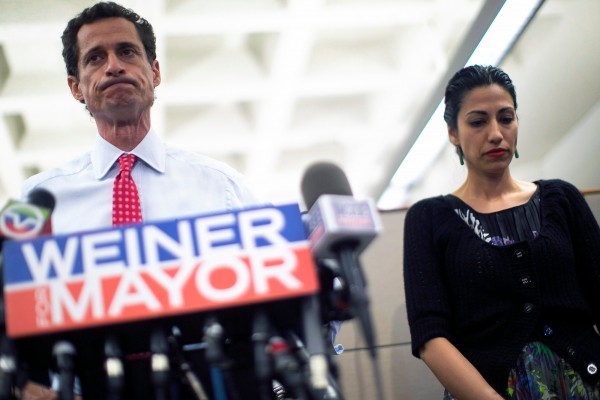
    And although he is a ridiculous politician with a ridiculous name who was involved in a ridiculous scandal, the movie doesn’t let us forget that there is a victim here: his wife, Huma. The filmmakers make it a point to show Huma’s reaction during the hard points. Her face is so expressive as she watches her husband’s campaign implode and eventually, she subtly lays the groundwork for her marriage imploding. It’s such perceptive filmmaking to the point that you’d think it was staged.


    If Weiner was a scripted film it wouldn’t be nearly as impressive, but the fact that the filmmakers were able to perfectly translate Weiner’s doomed campaign to film makes it impressive. But what make it a great film — and one of my favorites of the year — is that underneath the ridiculousness the film truly focuses on the people involved and paints detailed portraits the emotional ride they go on. Weiner is a human film told in a human way. 

    8/10

    Weiner is available on DVD, Blu-Ray, and digital on Amazon!
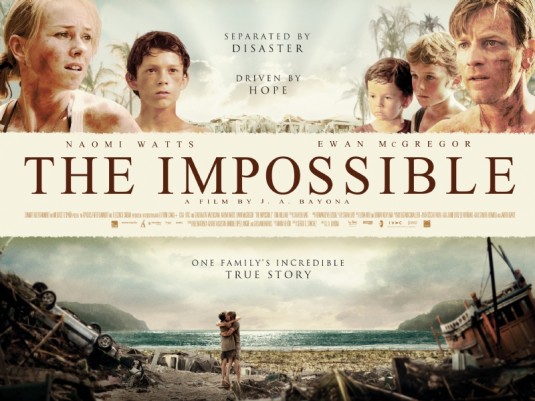
  • The Impossible Movie Review — Sentimental to A Fault, but Thrilling and Gorgeously Made

    The Impossible Movie Review — Sentimental to A Fault, but Thrilling and Gorgeously Made

    Emotionally raw and unnerving, The Impossible is a disaster movie that is actually a family drama at its core, which makes for a thrilling a beautiful movie

    This month, director J.A. Bayona returns with a movie adaptation of Patrick Ness’ novel A Monster Calls. So, I thought it would be a perfect time to go back and review his last movie, 2012’s The Impossible.

    In 2005, one of the worst natural disasters in history hit the Indian Ocean in the form of a tsunami. More than 230,000 people lost their lives and nearly 2 million were displaced. So naturally we follow the story of a white family in the disaster. I wanted to get this fact out of the way because it must be said that despite the masses of Thai, Indonesians, Sri Lankans, and other Southeast Asians who were affected by the disaster, this film decided to filter it through the lens of a British tourist family. I’m going to revisit this later.


    The Bennett family arrives in Khao Lak, Thailand for a Christmas holiday. Little do they know that their dream vacation is about to turn in a nightmare of epic proportions. The first thing that you notice about The Impossible is how impressive the cinematography is. Even simple scenes like the family landing in Thailand and their Christmas day celebration releasing lanterns into the sky are shot with a perfectly placed eye. 

    However, with most disaster movies the centerpiece tsunami scene is the real breakout. Unlike other disaster set pieces, the tsunami doesn’t focus on the epic scale of the disaster, but rather the physical and emotional struggles of our core family. But in reality, what I was really thinking during the sequence was “how the hell did they do that?” Remarkably realistic to the point that you cringe and gasp every time a piece of debris hits a character or when they’re thrashed and impaled as the fury of the water takes its toll on them. If there isn’t a modern argument for practice effects, this sequence is surely it. Bayona used nearly no CGI in the scene.

    the impossible film review

    Naomi Watts as Maria Bennett shows her talents as an actor as she is the lens we view the actual disaster through. Her pain is our pain and her feelings as a mother and a scared human in a seemingly hopeless situation are our feelings.

    And while Watts got the most praise for her performance, the true star here is Tom Holland as the son, Lucas (which bodes well for his turn as Spider-Man). At just 10-years-old at the time of filming, the range of emotions that he was able to convey was incredible for any actor. In the face of incredible odds his character has to deal with conflicting desires to be a strong authoritative figure and reverting to a lost adolescent.

    Nevertheless, Ewan McGregor as the family’s patriarch and the two young performers Samuel Joslin and Oaklee Pendergast are equally fantastic in the film.

    After the disaster, the movie diverts to a story about the aftermath and the new tale of survival the family is thrown into. However, more than that, the movie tells the story of both the chaos in the face of disaster and the power of the human spirit.

    Yes, the movie took a lot of hits for focusing on a white tourist family in this disaster that affected so many Southeast Asian families. However, this decision does make it an easier entry for the Western audiences that are going to be watching this movie. Bayona wanted to filter the story through the eyes of people that we can relate to, and the Spanish family this is based on was the way in.


    However, Bayona did take care to show the range of people affected and the range of people that went to the rescue. The first people to go searching for survivors were the natives and they get their due. 

    While the first two acts are raw, unnerving cinema at its best, the third becomes overly sentimental with a few eye-rolling moments. It feels like it’s a completely different movie from the beginning. There are one too many constructed heartfelt moments. However, it’s not enough to completely take the wind out of the sails of an otherwise engaging and impressive family drama.

    In the end, The Impossible is a surprisingly entertaining and satisfying take on the human spirit in the face of, well, impossible odds. It tracks the unthinkable decisions that this family has to make to survive and the emotional toll it takes on them. Sometimes it’s sentimental to a fault, but the thrilling and innovative filmmaking that’s being done makes it all worth it.

    7/10

    The Impossible is available for digital rental on Amazon!

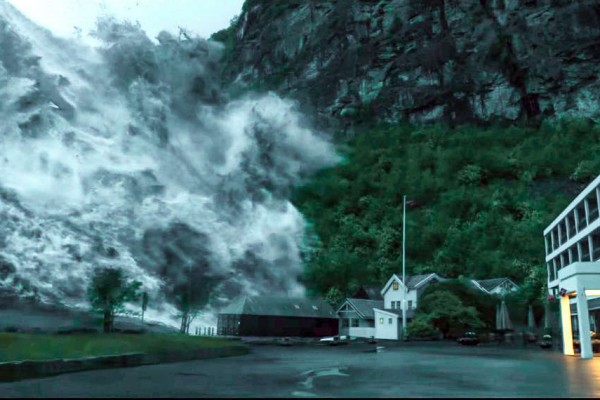
  • The Wave Movie Review — An American disaster movie in Norway

    The Wave Movie Review — An American disaster movie in Norway

    Despite relying on genre cliches, a new setting and distinctly Norwegian point-of-view make The Wave an enjoyable disaster flick

    By the time we get to the eponymous wave in 2015’s The Wave, we are nearly halfway through the movie. Usually when that happens in a disaster movie, that time feels squandered. But not with The Wave. We feel like we earned the right to see the disaster play out. The build, both for character and plot, is a necessary part of the movie.


    Director Roar Uthaug (one of the most amazing names ever committed to a human) said, “I've always been a fan of disaster movies — Twister, Armageddon — but we'd never made a movie like this in Norway before.” So, while this is a clear and deliberate emulation of the American genre, it feels unfamiliar in this new setting. Where American disaster movies happen in claustrophobic cities, the Norwegian landscape offers both beauty and mystery. The Wave doesn’t break any genre cliches. What it does do is infuse strong craft into it. A recurring weak point for disaster movies is the screenplay and the movie doesn’t do anything to break that streak. We have a few cookie cutter characters — the angsty son, skeptic scientist — that leave you rolling your eyes. On top of that, the movie is just the formula. the-wave-movie-review Now, I just need to geek out for a moment. The cinematography in this movie is f***ing amazing. The use of light, in particular, is a masterful piece of filmmaking. By strategically placing on-screen lighting like car headlights and flashlights, cinematographer John Christian Rosenlund creates shadows that beautifully outline the actors. However, it has another purpose. The way that the light, water, and fog play off each other creates a startling vision of hell. Reflections in the water and smoke enact a dream-like quality that mirrors the character's own shock. The lighting coupled with interesting framing gives off a claustrophobic feeling. On top of that, he has a commanding use of color. The best cinematographers don’t just “shoot the movie,” they add to the emotion. Rosenlund’s work does just that. For a movie with some much destruction and that is, at some points, literally lifeless, he injects beauty. It’s a truly remarkable achievement. While The Wave is an incredibly well-made movie, perhaps even the most well-made in the genre, it still falls into the cliches. That’s what prevents it from being a great movie. However, I’m glad, proud even, that a wholly American film genre is being attempted in other countries. Familiar movies told from another perspective become something else entirely. While The Wave won’t go down as one of the great disaster movies, I hope it starts a new movement of “American disaster movies” being tackled by foreign directors.

    7/10

    The Wave is available on DVD, Blu-Ray, and digital on Amazon!
  • The 10 Best Episodes of ‘The Good Wife’

    The 10 Best Episodes of ‘The Good Wife’

    The Good Wife

    In honor of the finale of the brilliant fifth season of The Good Wife, here is a list of what I consider to be their 10 Best Episodes.

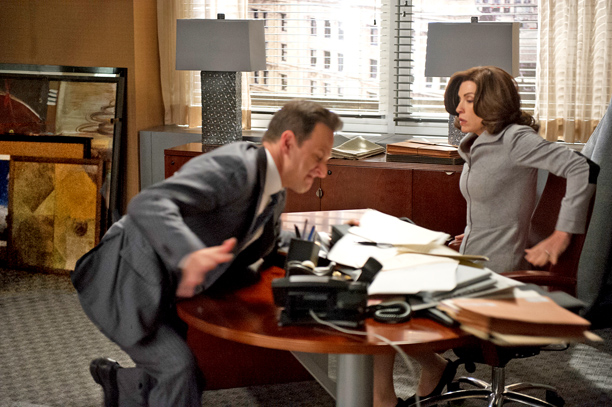
      1. good-wife-recap-1Hitting the Fan (Season 5, Episode 5): When I started writing this list I knew from the beginning that this episode would be number one. It brought together every element of The Good Wife that they have been growing and adjusting to create an episode that is the peak of the show’s creative resurgence. The writing was so natural in its dialogue, but brought to the actors they added an intensity that matched the sharp direction. It is also the episode that highlighted the show as a leader in storytelling. The classical background score, the careful camera work, even the callbacks to past events were so well calculated that every piece contributed to the episode’s ending success. Of course mixed in was the show’s patented dark humor and personal baggage. It was not only the best episode of The Good Wife, it was also one of the best episodes of drama in a long time.
      2. The_good_wife_bangBang (Season 1, Episode 15): I think this was the first episode of The Good Wife that I truly realized that this was a great show. There was no big event, although Peter’s return from prison was probably the biggest thing to happen on the show at that point, but the writers were able to exude such importance with small moments. For example the opening scene of Peter’s return had one line of dialogue between Peter and Alicia. A simple: “hi.” But the emotional weight of their hug to her look at the parole officer spoke thousands. It ran through the entire episode. It’s that skill of taking each character’s journey and growth and translating it into their everyday lives that has given the show so much of its success, and this episode started it all off.
      3. The Last CallThe Last Call (Season 5, Episode 16): It may have not reached the heights that Friday Night Lights’ “The Son” and Buffy the Vampire Slayer’s “The Body”, but the writers of The Good Wife created an episode that suited the needs of the series so well. The use of that final phone call as a device to have Alicia rethink her relationship was genius. Plus, they so gracefully balanced each of the main characters’ reactions without being too melodramatic. Everything felt natural and consistent with the show. It was truly a wonderful hour of television.
      4. Nine Hours (Season 2, Episode 9): In my opinion, this is arguably the best case of the week episode. So often on the show do we see the lawyers of Lockhart/Gardner seems so composed and with things under control, but with a 9 hour time crunch on a death row appeal, everyone is stressed and at the top of their game. It was one of the most memorable cases the show has covered, but also saw the incredible debate between Peter and Glenn Childs.
      5. Another Ham Sandwich (Season 3, Episode 14): This episode finds Will in his grand jury hearing regarding his bribery of judges that results in his suspension. For Josh Charles, this was his “Whitecaps.” With such suspense in his trial, we forget the hilarious storyline between Eli and Stacie Hall as they try to secure the spot as the strategist for a Gay/Straight Alliance, which shows how funny the show can actually be. In the end, it is a humanizing episode for the character of Will, who is humbled following his suspension. It reminds us that these characters aren’t just floating on a cloud all the time. Once in a while they are cut down, and in this episode Will is cut down hard.