Category: Movies

  • ‘Renaissance: A Film by Beyoncé’ is a shimmering documentary stunner | review  

    ‘Renaissance: A Film by Beyoncé’ is a shimmering documentary stunner | review  

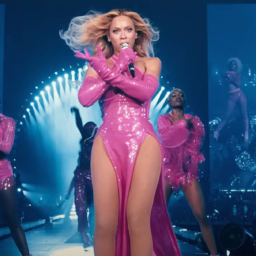
    Renaissance: A Film by Beyoncé takes us onstage and behind the scenes of her record-breaking tour with intimate vignettes that uncover how the show and album came together.


    The nearly three-hour concert documentary epic weaves personal narratives and impressive concert footage to give us an intimate glimpse into the literal blood, sweat and tears that go into creating a show of this magnitude and the love, joy and respect that go into creating an artist like Beyoncé. Renaissance: A Film by Beyoncé isn’t just a record of a concert, it’s a complete story of one of the greatest artists of our generation. And it is completely befitting of a woman of her stature.

    Renaissance: A Film by Beyoncé is in theaters now.

    The brilliance of Renaissance: A Flim by Beyoncé, a nearly three-hour epic concert documentary, becomes clear just 25 minutes in. And despite the reputation (say hey) Ms. Carter has made for herself as a perfectionist, a moment of imperfection stands out. As we catapult from “Cozy” into Beyhive-favorite “Alien Superstar” the audio suddenly cuts out — and no, it’s not yet time for the mute challenge. Ironic considering the song starts with, “Please do not be alarmed, remain calm / Do not attempt to leave the dance floor.” We are unmoved. If anything we’re stunned. We see as the crew, donned in shimmering silver jumpsuits jump into action. Beyoncé is unphased and even decides to gag the crowd by changing her outfit during the short three-minute interruption.


    ADVERTISEMENT


    She rises again from the stage in a new silver stunner and the number continues, perhaps even stronger than before. The scene is preceded by the first of several interludes that dive into a facet of the tour, the Renaissance album, or Beyoncé herself. In this vignette, she explains the logistics of putting together a concert of this scale. She emphasizes the sheer magnitude of the staff from the dancers to the lighting technicians to the army of workers putting the stage together by hand — and points out that she didn’t want them to be hidden hence the silver jumpsuits. The explanation gives the audio mishap more dimension and complexity because we understand how close to failure the show could be at any moment.

    Unlike other concert documentaries like Talking Heads’s Stop Making Sense or Taylor Swift’s recent The Eras Tour, Renaissance doesn’t aim to immerse you into the live show. Though it certainly does.

    We’ll get to that. Instead, it aims to add meaning to it. It weaves together the personal narratives behind its various moving parts and the literal blood, sweat and tears that went into producing it. It makes the highly impressive performance numbers all the more impactful.

    In another vignette, we spend time with Blue Ivy Carter. At just 11 years old she asks her parents to perform on stage. It’s already a scary enough prospect for any tween, let alone the offspring of Beyoncé and Jay-Z. Despite initial pushback, especially from Beyoncé herself who experienced first-hand the stage at such a young age (albeit at a much smaller scale), they agree. Much has been made on social media of Blue’s appearance and dance break set to “My Power” off of The Gift. It’s something that she talks candidly to the camera about. After her first appearance, the internet wasn’t entirely kind. Instead of letting it get to her, she talks about how it empowered her to continue on and to improve herself. It connects perfectly to the song itself: 

    “Keep it locked in a safe
    Don’t make me get back to my ways
    My power, they’ll never take”

    It’s that profound mirroring that makes the structure of Renaissance so satisfying.


    ADVERTISEMENT


    And while all of this documentary filmmaking is impressive, you come to Renaissance for a show. And a show you will see.

    For any souls lucky enough to experience it in person know that Beyoncé performs like no other. The kinetic choreography feels like it plays with the camera as much as it plays with the crowd. There are even moments when dancers will flourish directly to the camera making the audience feel like they’re seeing something unique to the film. The songs of Renaissance are propulsive as is. Still, the way the show mixes each into the next creates an unstoppable momentum that is some of the most impressive concert documentary filmmaking ever.

    To add even more to the elegant chaos, each number showcases the various looks that Beyoncé and her dancers donned across the fifty-six shows of the tour with quick match cuts that mirror this iconic bit of editing magic from Homecoming. The effect is overwhelming and doesn’t just communicate the audacity of having different costumes for each show, it makes the musical numbers more than just a capturing of the show rather a time-jumping montage of the sheer epicness of the tour. 


    ADVERTISEMENT


    The interstitial vignettes cover themes as small as Beyoncé’s connection with her hometown Houston — including a trip to Frenchy’s — and Blue Ivy’s crusade to have the song “Diva” included in full — a hilarious cut from her rant to the performance in the concert is a highlight — to larger societal themes like being a working mother or how vogue and ballroom impacted the creation of the album and show. However, one stands out. Before “Heated” (get your fans out), Beyoncé and her mother Tina Knowles talk about the real-life Uncle Johnny who inspired the now-iconic line, “Uncle Johnny made my dress, the cheap spandex she looks a mess.” 

    Johnathan “Johnny” Williams was Beyoncé’s uncle. An openly gay black man living with HIV. Tina opens up about their time as young adults partying and designing clothes, laying rhinestones down on fabric one by one. The emotional story adds color to what exactly Renaissance is. It’s a celebration of queer Black joy inspired by her Uncle Johnny. However, it more broadly speaks to who Beyoncé has become as an artist.

    She is so often revered as larger-than-life, and in many ways she is. With this film, she tells us that while she’s able to communicate these concepts epically, they all originate from completely human experiences.

    And the tour, despite its perceived perfection, was born out of real human blood, sweat and tears. But also love, joy and respect for those who came before. Renaissance is a love letter. It’s a three-hour sweat-your-ass-off-until-you-forget-your-troubles-romp that will go down as one of the greatest concert documentaries of all time. 


    ADVERTISEMENT


    More movies, less problems


    Hey! I’m Karl. You can find me on Twitter and Letterboxd. I’m also a Tomatometer-approved critic.

    💌 Sign up for our weekly email newsletter with movie recommendations available to stream.


    ADVERTISEMENT

  • ‘The Holdovers’ needs more Joy | review and analysis

    ‘The Holdovers’ needs more Joy | review and analysis

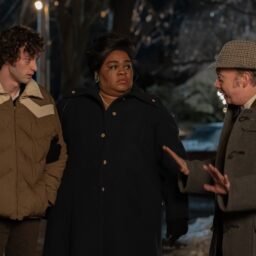
    A curmudgeonly professor, troublemaking student and kitchen manager are forced to spend winter break in an isolated boarding school. But they find warmth and family in the cold in The Holdovers.

    While The Holdovers conjures warm and nostalgic storytelling with its ’70s found family spirit and trio of outstanding performances — especially Da’Vine Joy Randolph — its emotional impact is stunted by its fractured focus.

    The Holdovers is in theaters now.

    The Holdovers channels the spirit of the ’70s, particularly the warm embrace of nostalgia nestled within the found family genre. The characters, already fractured, navigate the challenges of Christmas cheer — which only adds more layers to their brokenness.

    They’re in a state of inertia. Each of them, burdened with clichéd labels they’re desperate to escape from: a grieving mother, a privileged student indifferent to his privilege, and an unlikeable teacher unable to break free from the isolation imposed by his reputation as an old trout. It’s only when the three collide as the last inhabitants of a prestigious New England boarding school over winter break that they begin to move forward, to open up their wounds, to unravel their hardened cocoons. 

    Paul Giamatti plays the rigid and uptight history teacher Paul Hunham whose profession has taken up the majority of his life. His performance is of a breathing, walking corpse. A scrupulous academic afraid of social interactions and relentless in eliciting collective groans from his students due to his hard-ass professorial attitude. 


    ADVERTISEMENT


    Giamatti’s physicality is a canvas of exaggeration, with his abnormal eyes, unkempt body, and a supposedly turgid scent that reflects his decay. He brings to mind the wicked monsters of the ’50s or the rugged cowboys from the golden age of westerns. Giamatti’s character, initially grizzled, undergoes a heartfelt metamorphosis, but The Holdovers presents enough elements to plant the idea that redemption might be a distant prospect for him.

    Dominic Sessa devours each scene he’s in as Angus Tully, a bright but troublemaking student. Sessa flips the tables on the smug arrogance of his character and lets loose a sensitivity that eludes most young actors his age. After learning that his mother has planned a honeymoon with his new stepfather, leaving him all alone for Christmas amidst the lifeless refrigerator of Barton, it’s a desolate holiday season for him. 

    Under the care of Hunham inside the fortress that is the Barton campus, Angus battles his insecurities and often fights fellow holdovers, including the sharply annoying Teddy (brought to life with crisp, prickly behavior by Brady Hepner). But we also get softer moments that show Angus’ more thoughtful side. His penchant for piano playing until the break of dawn and his empathetic interactions with a homesick boarding school roommate draw us into his pensive personality.

    But the standout of the film is, without question, Da’vine Joy Randolph’s compelling and rueful turn as Mary Lamb, the cafeteria administrator, who grieves the loss of her Barton alumnus son in the Vietnam War. Randolph, usually known for her comedic roles in The Lost City and Only Murders in the Building, anchors the narrative without resorting to melodrama and encapsulates the film’s emotional warmth inspiring the awareness of life’s privileges to the others. 


    ADVERTISEMENT


    Unapologetically direct, she shares advice to her unexpected Barton companions embodying the role of a mother whose sorrow none of the characters could ever comprehend. It pains me that Mary’s character felt underexplored, especially when the movie’s theme revolves heavily around loss. Mary lost her son, Angus lost his father, and Paul, well, Paul has lost his sense of self. It would be low hanging fruit for the film to see Mary and Angus forge a connection through this shared familial grief, but for some reason, The Holdovers never reaches the full potential of that relationship. 

    Instead, Paul and Angus find themselves in a tango of authority and defiance. They see themselves in each other, yielding moments of genuine comedy amidst thematic echoes that, albeit, the film smirkingly repeats over and over again. The acting carries the pair’s dynamic into the promised land because the material is quite uncomplicated (especially if you’ve seen ‘70s films). 

    The more nuanced storytelling nugget was Mary, who’s only ever presented as the more reasonable adult figure to Angus rather than Paul. Yet, when the film’s seemingly lone narrative innovation is ushered in, it feels like a half-hearted commitment. Mary development happens off-screen, as if quickly careening us away lest the heavy details detract from Angus and Paul.

    But the thing is, Mary’s story has some bearing on Angus and Paul. Robbing us of her moments with them and how that bleeds into her family or her contemplating her past makes her story feel like it’s only scratching the surface. Randolph is phenomenal in her performance as Mary. There’s a sense of fluidity in her stillness, and within her bereavement lies a captivating resilience. How does she move on from her son’s death and move on as her own person? What does forging connections look like with privileged people who cannot bear to understand you and feel your pain?


    ADVERTISEMENT


    The Holdovers gives enough answers to these intriguing questions, yet it falters in delivering the necessary impact to justify them. Mary moves on, off-camera, while we’re following along Angus and Paul’s journey. The insight and development the pair share is assumed to have been shared by Mary too, but the film doesn’t do enough to earn that. My favorite moment involves a subtle passage of time that shows how Mary begins to feel at peace with the grief that has enveloped her. It’s all done with wordless eloquence as the camera gracefully glides through a bedroom space, revealing Randolph’s vulnerability and strength. It’s a touching moment that the film unceremoniously brushes over, despite it being the ace up its sleeve.

    Perhaps a story with more emphasis on Randolph’s character is wishful thinking, but for most of the film she felt separated in key moments when proximity with Angus or even Paul felt like the more inspired choice. Alexander Payne’s direction is serene and his choice of soundtrack is undeniably evocative of the era, but in a year where Aunjanue Ellis-Taylor (Origin) and Charleen McClure (All Dirt Roads Taste of Salt) have brought to life inimitable portrayals of African-American women at odds with the cruelty of the world, Randolph’s character and the underseen stories of grieving mothers in the ‘70s deserves to have a more nuanced concentration rather than just deferring to the warm embrace of nostalgia.


    More movies, less problems


    💌 Sign up for our weekly email newsletter with movie recommendations available to stream.


    ADVERTISEMENT

  • Colman Domingo gives ‘Rustin’ the megaphone | review

    Colman Domingo gives ‘Rustin’ the megaphone | review

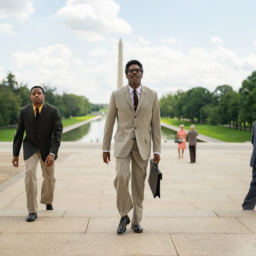
    Newfest 2023 | In Netflix’s new biopic, Colman Domingo plays civil rights activist Bayard Rustin as he plans the March on Washington in just eight weeks

    Thanks to a focused storyline and sensational theatrical performance by Colman Domingo, Rustin largely transcends the typical biopic formula to deliver a satisfying account of Bayard Rustin’s formation of the March on Washington. While George C. Wolfe’s kinetic direction keeps you engrossed in the story, a light screenplay doesn’t allow us to explore the complexities of a Black queer man at the forefront of the civil rights movement.

    Rustin had its New York City premiere at the 2023 New York LGBTQ+ Film Festival.

    Bayard Rustin, the unsung hero of the civil rights movement, is finally given his flowers in Netflix’s new biopic directed by George C. Wolfe (Ma Rainey’s Black Bottom) as it hones in on the eight week dash to plan the now historic March on Washington for Jobs and Freedom. It’s not surprising if you didn’t know who Rustin was before. His involvement in the civil rights movement was often relegated to the background since he was one of the few gay men to be out in the 1960s. However, Rustin doesn’t shy away from it.


    ADVERTISEMENT


    There’s something about a biopic that just works that is so satisfying. It’s the perfect combination of an interesting but unsung subject and a specific story told with enough of a singular vision to transcend past conventional biopic trappings — and Rustin, for the most part, finds the right formula. By focusing in on the planning for the March on Washington and Rustin’s impulses to live life as an out and proud gay man with the spotlight encroaching on him gives the movie focus where other biopics feel unnecessarily packed.

    George C. Wolfe’s deft direction fueled by saxophonist and composer Branford Marsalis‘s kinetic score keeps you engrossed in the story while constantly introducing new characters that weave the tapestry of the near-impossible feat of organizing the largest peaceful protest in history. To carve out storylines for a figure as massive as Rev. Dr. Martin Luther King, Jr. (Aml Ameen) as well as an invisible figure of the movement like Rustin’s lover Tom (Gus Halper in an impressive supporting turn) and mine sympathy for both is nearly as impressive. However, if those supporting performances are the blood of the movie, Colman Domingo‘s performance as Bayard Rustin is the strong beating heart.

    Domingo is nothing short of sensational. A theatrical rendering of a man that in many ways was larger than life living in a world that sought to dull his shine — both from those against him and on his side. Despite his preference for collaboration, as seen in a charming scene where he begins the seeds of the march with a good ol’ fashioned brainstorm, he seems to be fighting for his voice to be heard constantly. Partially because his panache was itself seen as a sort of protest, but also because with any movement egos can quickly get in the way. With politicians, the NAACP and activists, there was as much division in the movement as there was outside. What Julian Breece and Oscar winner Dustin Lance Black‘s screenplay attempts to explore is how Rustin was able to coalesce those ideas into what is now seared into our country’s consciousness.


    ADVERTISEMENT


    Rustin‘s greatest flaw is that it tends to shy away from his flaws to begin with. There are moments where it begins to probe Rustin’s penchant for distraction (often of the male variety) and rigidity in vision, but it never goes as far as to criticize him. Rustin’s inner turmoil will bubble its way to the surface in fits and starts, but often the movie will cut away just before it gives us any sort of real insight. It’s why the stakes never feel great.

    While that makes the movie less successful as a portrait of Bayard Rustin, as an account of his involvement in the planning of the March on Washington it is a satisfying jaunt. It feels like a lost peace of history finally brought to the surface as it doesn’t shy away from Rustin’s queerness. In fact, it centers it in a way we don’t often see in mainstream biopics (*couch*Bohemian Rhapsody*cough*). Coupled with Colman Domingo’s charismatic performance, Rustin is an easy biopic — for both better and worse — that is easy to find yourself lost in.


    ADVERTISEMENT


    More movies, less problems


    Hey! I’m Karl. You can find me on Twitter and Letterboxd. I’m also a Tomatometer-approved critic.

    💌 Sign up for our weekly email newsletter with movie recommendations available to stream.


    ADVERTISEMENT


  • Fair Play review: Love, work, sex, and power | review

    Fair Play review: Love, work, sex, and power | review

    Sundance 2023 | Fair Play follows a happy couple that is thrown into turmoil when one of them is promoted at the financial firm they work at

    Fair Play is a corporate barn burner and relationship psychosexual drama that’s thrilling as it is brutally precise in its study of power, sex, attraction, and ambition. Phoebe Dynevor & Alden Ehrenreich give powerhouse performances as a dueling couple that let work and power seep into their lives. Cutthroat, sharp, and entertaining as hell, writer-director Chloe Domont didn’t come to play.

    All is fair in love and work. At least that’s what aspiring power couple Emily (Phoebe Dynevor) and Luke (Alden Ehrenreich) would probably tell you.

    When we first meet them, they are the picturesque young couple twirling their way through the dance floor of Luke’s brother’s wedding. Their chemistry is palpable, especially when their steamy sex scene in the bathroom ends in a very un-steamy way. They simply laugh off the blunder. One semi-accidental marriage proposal later and the now-engaged couple is on the floor of their Chinatown apartment awoken by their 4:30am alarm that rattles them to start their day. Where they were messy and carefree in the scene before, they go about their morning routine with near-precision — perfectly brewing their espresso, Emily tying her hair into a tight bun, Luke donning a crisp white button down. They leave and go their separate ways only to find each other again in the elevator of the hedge fund firm they both work for.


    ADVERTISEMENT


    Since they’re both low-level analysts, they keep their relationship secret — it’s something anyone would use for leverage in the cutthroat industry. That doesn’t stop them from listening in on the conversations that float in-and-out of earshot — we too hear snippets of the workplace banter. One particular statement catches Emily’s attention: Luke is on-deck to replace the recently fired portfolio manager who we watched nearly go postal in an earlier scene — “thought he was gonna jump,” one of the analysts emotionlessly quips. When Emily tells Luke what she’s heard, he’s almost drunk on the news — and horny. The pair have hot-and-heavy sex to celebrate, but writer-director Chloe Domont isn’t out to make an erotic thriller and we’ll soon realize this.

    After Emily receives a 2am phone call from one of their superiors, she rushes over to an exclusive club down a sketchy alleyway to find Campbell (Eddie Marsan), the firm’s CEO, waiting for her to offer her the recently opened portfolio manager role. Domont presents the scene almost like a horror movie where Emily is the prey and Campbell is the predator. It highlights the power imbalance between the two — the fact that he could get her to meet him in the dead of the night (and despite Luke’s protests) only furthers that. When she returns to the apartment, she relays the news to Luke with near dread. But where his reaction to the news that he could be promoted was euphoria, it’s decidedly measured for Emily. And as much as he tries to convince her that he’s happy for her success, you can see the pain in his face as Emily walks into her new office separated by a wall of glass as if to tease those outside of it.


    ADVERTISEMENT


    From there, Fair Play turns into a ticking time bomb as the couple’s relationship is put under the strain of Luke’s arrogance and Emily’s ambition.

    It’s the balancing of those two threads that make the movie — particularly Dupont’s sharp screenplay — so impressive. At times, the movie is a corporate barnburner about Emily navigating her newfound success as a woman in an industry that is decidedly a boy’s club. In others, it’s a psychosexual relationship drama about how deviations from the traditional gender dynamics can send men into a tailspin — let’s just say Luke probably loved Joker. And at it’s most satisfying, both worlds come careening together as the pair navigate the minefield of their relationship in the workplace.

    Dumont throws situations at the character to deepen the cracks in the foundation of their relationship that eventually turn into a canyon. Like when Luke makes a bad call an investment and sends Emily scrambling to fix his mistake, he cannot take blame for his actions just as he can’t praise Emily for her successful attempt to avert disaster. When she receives a bonus of $525k for her quick work, she types out a text asking Luke if he wants to “staycation” at a fancy hotel before adding… “my treat,” and then quickly deleting it.


    ADVERTISEMENT


    It’s the tension between Luke’s grasp for the power of his masculinity — Ehrenreich plays his descent into arrogant patriarchy-fueled madness with the gusto of a Golden Age Hollywood star — and Emily’s careful tiptoeing around his ego that drive the thrills of Fair Play as well as its devilishly fun sparing that keep you engaged through every minute of its spry two-hour runtime.

    In its final minutes, Fair Play takes a massive swing that will turn some viewers off but leave most satisfied with its conclusion. Dumont isn’t precious about the movie’s core themes of power and privilege, specifically when it comes to gender dynamics in relationships and the workplace. She’s as transparent as the office’s glass walls. But that’s what makes Fair Play such an entertaining watch despite its high tension.


    ADVERTISEMENT


    More movies, less problems


    Hey! I’m Karl. You can find me on Twitter and Letterboxd. I’m also a Tomatometer-approved critic.

    💌 Sign up for our weekly email newsletter with movie recommendations available to stream.


    ADVERTISEMENT


  • Jordan Peele’s ‘Nope’ is a chopped and screwed summer blockbuster | review and analysis

    Jordan Peele’s ‘Nope’ is a chopped and screwed summer blockbuster | review and analysis

    Nope follows two siblings that become convinced that UFOs are visiting their ranch to abduct horses. Seeing a path to fortune, they set out to capture it on video.

    Nope is Jordan Peele’s Jaws. A chopped, screwed, and depraved homage to the summer blockbuster with stunning anxiety-inducing, white-knuckled suspense pieces that had my heart racing. Peele’s loving hate letter to the blockbuster is his most ambitious project to date that forces us to question our obsession with spectacle. Wildly creative, constantly twisting and turning, masterfully crafted with Oscar-worthy sound design, Nope is a worthy follow-up to Get Out and Us.

    Jordan Peele has had perhaps the most prolific run for a new director in the last decade. Get Out his debut film became a cultural phenomenon and garnered Best Picture and Director nominations at the Oscars in addition to a win for Best Original Screenplay. His win felt like the coronation of an exciting new auteur, which was further evident with his equally terrific sophomore movie Us. How does a director of that caliber top himself? Enter his latest movie Nope, Peele’s most ambitious, off-the-wall, and deranged movie yet. Like a studio gave him a blank check and asked no further questions—best indicated by the movie’s chilling cold open the features a bloodied sitcom set sitting lifeless except for a motionless body and a chimpanzee who seems to be the culprit of the carnage.


    ADVERTISEMENT


    After the relatively modest narratives of his first two movies, Nope ups the scale to an astronomical degree—to a near blockbuster size.

    Interestingly, the closest analog to Peele’s career thus far is Steven Spielberg, who created the modern-day blockbuster. Coincidentally—or not since nothing seems to be a coincidence with him—Nope is Peele’s Jaws. Or at least an homage to it and the many other summer blockbusters that followed. Though the movie is packed full of references from Close Encounters of the Third Kind and Jurassic Park to Twister and War of the Worlds to Signs and Creature from the Black Lagoon it is every bit as original and electrifying as Get Out and Us. Watching it felt the way I imagined audiences felt the first time watching any of those classics—at least if my shrieking friend next to me was any indication.

    Though the movie pulls from a lot of corners, Nope is another story of humans and the curiosity—and invasiveness—that plagues them. Think Creature from the Black Lagoon, which inspired Jaws. At the center of the movie are siblings OJ (Oscar winner Daniel Kaluuya) and Emerald Haywood (Keke Palmer), the co-owners of a ranch in California that specializes in horses for entertainment. Following the sudden death of their father, a reluctant OJ runs the ranch while Emerald dreams of doing something bigger.

    An image from the movie Nope
    (from left) OJ Haywood (Daniel Kaluuya), Angel Torres (Brandon Perea) and Emerald Haywood (Keke Palmer) in Nope, written, produced and directed by Jordan Peele.

    That something bigger reveals itself to be really big when the pair become convinced that a UFO has been visiting their ranch to abduct their horses.

    One night, all electrical devices on the ranch suddenly stop working. And right as the lights dim, an unearthly sound blankets the vast landscape. Right then, a mysterious cloud produces an isolated tornado to snatch up one of the horses. Seeing a way out of financial ruin, OJ and Emerald set out to capture evidence of the phenomenon with the help of electronics store employee Angel (Brandon Perea). After a genuinely frightening night with fake and real frights, the trio determines that the UFO is sitting in a cloud perched just over a ridge by the ranch waiting for its opportunity to take its prey. Realizing they’re in over their heads, they enlist the help of cinematographer Antlers Holst (Michael Wincott) who dreams of capturing the impossible.

    The comparisons to Jaws are clear. A ragtag group of locals on a mission to “capture” an unpredictable, menacing, and deadly wild animal. OJ and Emerald are equivalent to Police Chief Martin Brody, Angel to oceanographer Matt Hooper, and Antlers to fisherman Quint. There’s even a scene where Antlers quotes the song “One-Eyed, One-Horned Flying Purple People Eater” in a tongue-in-cheek homage to Quint’s famous USS Indianapolis monologue. But just when you think you know where Nope is going, it finds a way to surprise you—like with a subplot involving Jupe Park (Steven Yeun) and an infamous incident on the sitcom he starred in as a child involving the cold open chimpanzee.


    ADVERTISEMENT


    While all of Peele’s movies have been horror, Nope might be the most frightening to date.

    Though there is comedy to cut through some of the tension, Peele steps on the gas and doesn’t let up for the 135-minute running time. The creeping sense of dread, real danger, and suspense kept my pulse racing the entire time. In particular, a stellar sequence—the best of the movie—that sees the UFO attacking the ranch in an action setpiece mashup of War of the Worlds and Jurassic Park may have taken a few years off of my life. It highlights the movie’s immersive and dominating sound design—which more than deserves attention from the Oscars.

    There are twists and turns in the narrative, but what keeps you engaged is the movie’s increasingly intense setpieces that tie together threads of horror, sci-fi, action, and comedy perfectly. Nope is Peele firing on absolutely every cylinder masterfully using Michael Abels’ cinematic score, Hoyte van Hoytema’s sweeping cinematography, and Nicholas Monsour’s editing to hit you with setpieces that feel equal parts grand, intimate, and dangerous.

    With Nope, Peele weaponizes the tropes and iconography of summer blockbusters to criticize both the genre and our relationship to spectacle.

    What are the themes in Nope?

    Get Out and Us became phenomenons because of the cultural discourse they sparked. Peele weaponized genre movies to reach a broad audience to then explore deep societal themes. Nope is a meta deconstruction of the summer blockbuster. Much like The Cabin in the Woods was a loving hate letter to the horror genre, Nope is meant to criticize our fascination with spectacle—the subplot following Steven Yeun’s character reinforces this. In the face of disaster or tragedy, why is our first instinct as a society to exploit it for fame or fortune? Yeun’s Jupe keeps an entire room in the wild wild west theme park he owns dedicated to the incident—one that should be traumatizing for him. Instead, he exploits it.

    And despite the threat that the UFO poses, the OJ and Emmerald do everything in their power to capture it on video. Despite its danger, they can’t look away. Perhaps the theme isn’t as devastating as those of race and class that were explored in Get Out and Us, but Peele commits to exploring it just as deeply.


    ADVERTISEMENT


    Nope is an imperfect movie, but its ambition vastly outweighs any nitpicks with the plot or characters.

    Daniel Kaluuya and Keke Palmer give wholly committed performances that feel lived in. The characters are defined by their past baggage. Palmer, in particular, eats every scene with her emotional and expressive physicality. However, I wish that more time was dedicated to the siblings and their relationship to make the movie’s payoff all the more impactful. In general, I think the characters are underdeveloped. Whether purposefully or by design I’m not sure. At the very least, I was charmed by them but didn’t feel the emotional attachment I felt to Kaluuya’s Chris in Get Out or Lupita Nyong’o’s Adelaide in Us.

    Nope in itself is a spectacle that deserves to be seen and heard on the big screen.

    In his copped-and-screwed version of a summer blockbuster, Jordan Peele makes us question why we can’t look away. Why are we so easily drawn in by a spectacle—both on screen and in the real world? Why is it so hard to look away from disaster? In the opening shot of Nope, there is a curious phenomenon happening amongst the carnage. You might notice it, you might not. With that shot, Peele is asking us why we’re not looking deeper? Why are we so distracted by tragedy that we can’t see the wonder around it? Interestingly, it was impossible to stop looking at Nope on the screen. It’s a spectacle through and through. The movie isn’t challenging us to look away, but instead look deeper. You might be surprised by what you find.


    ADVERTISEMENT


    More movies, less problems


    Hey! I’m Karl. You can find me on Twitter and Letterboxd. I’m also a Tomatometer-approved critic.

    💌 Sign up for our weekly email newsletter with movie recommendations available to stream.


    ADVERTISEMENT


  • Nicolas Cage stalks people’s dreams in ‘Dream Scenario’ | Trailer & Release Date

    Nicolas Cage stalks people’s dreams in ‘Dream Scenario’ | Trailer & Release Date

    Nicolas Cage plays a boring middle-aged man propelled into fame when he appears in everyone’s dreams in the first trailer of Dream Scenario

    Nicolas Cage returns to the big screen (and the world’s dreams) in the first trailer for director Kristoffer Borgli’s Dream Scenario. The dark comedy is the Norwegian director’s second feature (and first in the English language) after his critically acclaimed Cannes-premiering debut Sick of Myself.

    In Dream Scenario, Cage plays a woefully average college professor who is propelled into fame (or infamy?) after he inexplicably appears in everyone’s dreams one night. However, he quickly learns that fame, for all its glitz and glam, is not all it’s cracked up to be.


    ADVERTISEMENT


    In his review, our critic called Dream ScenarioA Nightmare on Elm Street if dream demon Freddie Krueger was a boring average middle-aged man and instead of knives for hands his weapon was doing absolutely nothing.” Adding that it’s “hilarious, relevant and wonderfully weird, it is a reflection of the internet age, cancel culture and quickly our dreams for fame can turn into a nightmare.” Read our full review here.

    The movie also stars Julianne Nicholson, Michael Cera, Tim Meadows, Dylan Gelula, Dylan Baker and Kate Berlant and is produced by Hereditary‘s Ari Aster (so you know things are about to get wild).

    After a glowing reception at the 2023 Toronto International Film Festival, Dream Scenario will be released by A24 on November 10, 2023.

    Watch the first trailer for Dream Scenario here:

    When will Dream Scenario be released in the United States?

    Dream Scenario will be released in theaters on November 10, 2023.

    Who stars in Dream Scenario?

    Dream Scenario stars Nicolas Cage as Paul Matthews and features an ensemble cast that includes Julianne Nicholson, Michael Cera, Tim Meadows, Dylan Gelula, Dylan Baker and Kate Berlant.

    What movies are Dream Scenario similar to?

    Dream Scenario is similar to movies like Eternal Sunshine of the Spotless Mind, Punch-Drunk Love, I’m Thinking of Ending Things, and A Nightmare on Elm Street.

    More movies, less problems


    💌 Sign up for our weekly email newsletter with movie recommendations available to stream.


    ADVERTISEMENT


  • High school farce ‘Bottoms’ rides on top | review

    High school farce ‘Bottoms’ rides on top | review

    Bottoms follows two deeply uncool high school girls that create a self-defense club with the hope of wooing their cheerleader crushes

    Emma Seligman’s vision of high school in Bottoms is equal parts satiric and surreal. Like if Luis Buñel directed The Breakfast Club or Andrei Tarkovsky directed Clueless. The pure absurdity of Bottoms is something to marvel at. Like the movie’s tagline suggests — “a movie about empowering women (the hot ones)” — it’s completely aware of the near-parody that it is. And thanks to Ayo Edebiri and Rachel Sennott’s performances that cement them even further as our brightest rising stars, Bottoms rides on top for most of its runtime.

    Bottoms is in select theaters now.

    If you liked Bottoms, I recommend: Bodies Bodies Bodies

    To explain Bottoms, I need to spoil it just a tiny bit. The final shot of the movie, a baroque painting if I’ve ever seen one, pulls from a classic 90s / early aughts high school comedy trope. The school football team triumphantly raises the school’s quarterback. Students rush the field dancing with joy. Our best friend protagonists make up and hold each other.

    However, a few added details make this unlike any high school comedy we’ve seen. The field is littered with incapacitated (and possibly dead) players and our ragtag group of protagonists are covered in blood (both their own and others’). In the background, a tree burns after recently being blown up with a homemade device. Welcome to the wonderfully weird and wacky world of writer/director Emma Seligman‘s Bottoms.

    Seligman’s vision of high school in Bottoms is equal parts satiric and surreal. Like if Luis Buñel directed The Breakfast Club or Andrei Tarkovsky directed Clueless. It’s a tricky tone that Rachel Sennott and Ayo Edebiri nail with perfectly pitched performances as woefully lame high schoolers PJ and Josie. All they need is a mission. And like any good high school raunchy comedy, this mission involves getting laid: “Do you want to be the only girl virgin at Sarah Lawrence?” Best friends that stick together get laid together. At least that’s their prerogative.


    ADVERTISEMENT


    There’s two hang ups to this plan. First, the school doesn’t like them. As they say, “they don’t hate us because we’re gay, they hate us because we’re the ugly, untalented gays.” Second, the objects of both of their affections, Josie’s crush Isabel (Havana Rose Liu) and PJ’s crush Britt (Kaia Gerber, most recently seen in Babylon), are the school’s it-girl cheerleaders who quite literally float in and out of scenes in slow motion.

    If things weren’t complicated enough, Isabel’s boyfriend is the school’s star quarterback Jeff (a scene-stealing Nicholas Galitzine following his breakout performance in Red, White & Royal Blue — talk about range) who is treated like a god amongst men and who his teammates, specifically Tim (Miles Fowler), will do anything for. In the cafeteria, the team is literally seated like they’re in The Last Supper except Jeff is Jesus and the rest of the team are his disciples.

    Which is why when PJ and Josie mistakenly “run over” Jeff with their car, the school turns even more against them. “Damn I got ‘F—-t #2’ this time,” PJ remarks at the graffiti scrawled on their lockers. Their plan to clear their names (and maybe get some one-on-one time with their crushes) is to start a self defense club where girls at the school can learn to protect themselves and like talk… and stuff. The plan is a little unclear. Despite what its trailer suggests, Bottoms is more of a hangout movie than it is driven by an actual plot. A cheating scandal, murder plot and “yeah Hazel, let’s do terrorism” later and we find ourselves in the final act not completely sure how we got there.


    ADVERTISEMENT


    Bottoms is laugh a minute from hilarious one-liners delivered with charmingly awkward precision (“I was gonna study for Mr. G’s ‘Women Murdered in History’ test”) to visual gags (a spring breakers-inspired crime montage set to “Total Eclipse of the Heart”). However, that is just as much a detriment to the movie as it is an asset. While the delightfully off-kilter tone and surrealist touches make for an entertaining romp, the movie sacrifices plot momentum and character development in its wake putting more in line with a high school movie parody a la Not Another Teen Movie. That would be fine if Seligman’s screenplay stayed committed to the movie’s farcical nature. It gets a little too close to being profound in a way that took me out of the carefully built world. Thankfully it sticks the landing (on a pineapple juice-soaked football field).

    The pure absurdity of Bottoms is something to marvel at. Like the movie’s tagline suggests — “a movie about empowering women (the hot ones)” — it’s completely aware of the near-parody that it is. And thanks to Sennott and Edebiri’s performances that cement them even further as our brightest rising stars, Bottoms rides on top for most of its runtime.


    ADVERTISEMENT


    Instead of a full story, I look at the movie as a series of vignettes of high school awkwardness and cranked-up satirical world-building — aided by a stellar supporting cast with standouts Marshawn Lynch as a problematic history teacher (“Feminism… what is it?” scrawled on the board), Ruby Cruz as well-meaning classmate Hazel who doesn’t completely understand sarcasm, and Galitzine’s Jeff whose cartoonish portrayal of a high school quarterback steals ever scene he’s in with even the slightest facial expression. The 2000s parody film may be dead (Scary Movie, you will always be famous) but Bottoms is born from it — a devilishly weird and demented baby.


    ADVERTISEMENT


    More movies, less problems


    Hey! I’m Karl. You can find me on Twitter and Letterboxd. I’m also a Tomatometer-approved critic.

    💌 Sign up for our weekly email newsletter with movie recommendations available to stream.


    ADVERTISEMENT


  • ‘Passages’ review: Entanglements in love and sex | Sundance

    ‘Passages’ review: Entanglements in love and sex | Sundance

    Ira Sachs’s Passages tracks the misadventures of a married gay film director as his affair with a woman implodes his marriage.

    Passages follows a narcissistic director who can’t stand when people in his real life don’t follow the script he’s written in his head (i.e. every sad Brooklyn boy who’s “working on a script”). Writer-director Ira Sachs crafts a sharp and incisive movie about gay men, relationships and the entanglements we find ourselves in.

    Passages is playing in theaters now.

    If you liked Passages, we recommend: Great Freedom, Marriage Story, TÁR

    “He knows me well.”

    “So that’s why you left him.”

    When we first meet German filmmaker Tomas (Franz Rogowski, who we last saw in the underrated Great Freedom), he is directing the final scene of his latest movie. We watch him as he instructs an actor to enter the scene down a flight of stairs. Then he makes him do it again… and again. Each time he notices something else wrong with the way he enters the scene—he’s swinging his arms oddly, he’s walking without intention. We’ll see Tomas do something similar throughout Passages, which premiered at the 2023 Sundance Film Festival, except this time to the people in his life. That is expecting them to act one way—the way that is best for him and his wants—and getting frustrated when they don’t follow the script he’s written for them in his head.


    ADVERTISEMENT


    The primary victim of his special brand of narcissism is his long-suffering soft-spoken husband Martin (Ben Whishaw).

    And as much as Tomas’s abrasiveness grates him, he stays by his side—something we see with all couples but feels precisely penetrating for gay couples. Writer-director Ira Sachs understands the gravitational pull of a man like Tomas—his confidence imbues a charm and magnetism—but he also knows that with gravity things eventually come crashing to the ground. And often, Tomas is the incendiary of his own (satisfying) demise. 

    When he meets teacher Agathe (Adèle Exarchopoulos) out at the club after a day of shooting, he’s just been slighted by Martin who chooses to go home rather than dance with him (the nerve!). His response, to sleep with Agathe and then return home to very openly and boastfully say, “I slept with a woman last night.” What reaction does he want out of Martin—disgust, jealousy, anger, admiration? Whatever it is, he doesn’t get it, which furthers his resolve to pursue Agathe. After one of another one of their trists Tomas professes his love for her. She responds, bluntly but without malice, “you say it when it works for you.”


    ADVERTISEMENT


    It’s that direct but rich with subtext dialogue that makes Passages such a fascinating watch despite its uncomplicated appearance.

    Sachs says so much about its protagonist without saying much at all. We never get to see Tomas’s work nor his marriage to Martin prior to its immolation—we see just a narrow sliver of his life. However, the portrait of an egomaniacal artist who lets the bounds of his artistry seep into his personal life is vivid—similar to definitely real and not fictional composer Lydia Tár

    The movie transforms into a triangle then a quadrangle of entanglements as Tomas pursues his relationship with Agathe and Martin moves on with fellow writer Ahmad (Erwan Kepoa Falé). There are arguments, unexpected twists, Tomas’ inability to let people live a moment of their lives without thinking of him, and sex. Sachs directs these sex scenes with vigor, passion, and pure eroticism. However, it’s not just for exploitative show. For someone like Tomas, sex, passion, and desire—and admiration—are mistaken for love. But what he truly loves is the attention—as a Leo, I feel read. Ragowski is astounding in his ability to be a self-absorbed monster, but have us crave his presence on screen—like a trainwreck you can’t seem to turn away from.


    ADVERTISEMENT


    Eventually, the magnetism that draws people to Tomas begins to repulse them and the gravity that kept them in orbit becomes weaker.

    Essentially, his life goes off script and he’s not good at improv. While Passages could have easily relied to melodramatics, Sachs keeps each character and interaction grounded. No line of dialogue feels ingenuine, even when they’re loaded guns that rip through each character. “I want my life back,” one character says. It’s perhaps the first genuine thing anyone says in the movie—other than a barnburner dinner scene featuring Caroline Chaniolleau as Agathe’s mother and Ahmad’s final requiem. Ira Sachs introduces us to the characters of Passages when their lives intersect and tangle into a mess of complications. By the end, Whishaw, whose remarkable portrayal of a gay man finding his strength and independence, untangles the knot and leaves us (and Tomas) flooded with emotion. 

    If you enjoyed Passages, you might also like:


    ADVERTISEMENT


    More movies, less problems


    Hey! I’m Karl. You can find me on Twitter and Letterboxd. I’m also a Tomatometer-approved critic.

    💌 Sign up for our weekly email newsletter with movie recommendations available to stream.


    ADVERTISEMENT

  • ‘Red, White & Royal Blue’ is the sappy gay fairytale we deserve | review

    ‘Red, White & Royal Blue’ is the sappy gay fairytale we deserve | review

    Red, White & Royal Blue follows the star-crossed romance between the First Son of the United States and a British prince

    Red, White & Royal Blue is every bit as corny and sappy as you’d expect for a romantic comedy with a premise as improbable as the First Son of the United States and the Prince of Great Britain falling in love — but it’ll have you grinning from ear to ear. With a clear queer perspective and strong chemistry between Taylor Zakhar Perez and Nicholas Galitzine, it’s almost impossible to resits.

    Red, White & Royal Blue is streaming on Prime Video.

    You might also like: The Half of It

    Red, White & Royal Blue is a fairytale. A gay fairytale. Like “first 50 rows at a Lady Gaga concert” gay fairytale. One where a line like “first 50 rows at a Lady Gaga concert kind of gay” is eye-roll-inducing but oddly charming at the same time. It’s an especially hard line to tow when the gay rom-com canon ranges from good (Fire Island and the unfairly maligned Bros) to tragic (Spoiler Alert) to “set gay rights back 20 years” (Love, Simon). However, writer-director Matthew Lopez finds a way to keep his adaptation of Casey McQuinton’s book of the same name from becoming an international incident (between gays and the book’s largely straight female fan base)… unlike the start of Alex’s (Taylor Zakhar Perez) and Henry’s (Nicholas Galitzine) improbable romance.


    ADVERTISEMENT


    If you’ve somehow avoided the “Best Sellers” section at every bookstore in the United States and United Kingdom, Red, White & Royal Blue is a star-crossed romance between Alex, the son of the President of the United States, and Henry, the Prince of Great Britain. It’s a plot straight out of the romance textbook. After a gruesome run-in between the pair and a comically large cake at the heir to the British throne’s wedding, Alex and Henry must quash their beef (at least in front of the cameras) to appease both the King (Stephen Fry) and President Ellen Claremont (Uma Thurman). One mistaken assassination attempt and entrapment in a janitor’s closet later and the pair’s beef turns into a swoon-inducing banter-filled friendship… that quickly develops into more when they admit that their vitriol for each other was just meant to cover up an intense attraction. Enemies-to-lover girlies, this one’s for you.

    Perez and Galitzine, despite a shaky start, are convincing in their love affair with sharp repartee sweet and soppy enough to cause a toothache. Their conversations eventually culminate in a fateful New Year’s Eve party underscored by Flo Rida’s “Low” — the most romantic of early 2000s bops — where Henry confesses his feelings for Alex. While their romance is surprisingly devoid of real stakes — this is a fairytale after all, a happily ever after is inevitable — both actors put in surprisingly deft work to make their characters full of depth as they talk about their insecurities in both of their unique positions. Their interactions, despite all other parts of the plot being completely heightened, feel genuine. It in large part stems from a screenplay, though imperfect, that strives to be authentic to the queer experience.


    ADVERTISEMENT


    There are knowing touches that make watching the movie as a gay man more satisfying, at least more than the book which I found enjoyable but wanting for more. Those details are most apparent in the tender centerpiece sex scene that has caused more of a stir than its actual impact in the movie — while it’s more graphic than a typical rom-com sex scene it is surprisingly tame for an R-rated movie. Lopez lingers on small moments — the slight push on a lower back, a shaky exhale — that feel like they come from experience rather than some romantic ideal of what it is to be a man with another man. Contrary to the vague objectification I felt from the book, the movie feels made for and by us.

    Additional to the success of “rom” part, Lopez also excels in bringing the comedy. Sarah Shahi‘s scene-stealing Chief of Staff Zahra is a highlight, whose sass reminds us that reading is fundamental (her delivery of “little lord f-ckleroy” is a highlight before a sarcastic curtsy brings the house down). On the other hand, Uma Thurman’s performance, slathered in a deep southern drawl, looks camp right in the eye (never in my life did I think I’d hear Mia Wallace say “Truvada”). The light tone makes the surprisingly robust two-hour runtime fly by.


    ADVERTISEMENT


    Red, White & Royal Blue benefits from its themes at a surface level. While Alex has more recently begun his bisexual awakening and Henry has already accepted himself as gay — even if his duty quashes any possibility of being open — Lopez intelligently doesn’t hold those themes precious to the story (even if Ellen does say the line “the B in LGBTQ is not invisible.”) They’re engrained into the characters and their journeys, but it doesn’t stop them from charmingly referring to Henry’s… ahem, excitement as “Stonehenge” and “Big Ben.” It’ll have you giggling and swinging your feet like you’re a lovelorn teen again. And isn’t that exactly what the movie is trying to achieve?

    Cynics will find nothing but fault in Red, White & Royal Blue, a story that ends with the United States presidential election coming down to a single state (who could have seen it coming when Alex mentioned his Texas strategy plan at least a dozen times in the lead up) and the British public holding demonstrations in support of a gay prince. But the fairytale-like improbability of the plot is a feature, not a bug, as are cheeky if not corny lines like “I went to an English boarding school. Trust me, you’re in good hands.” It’s okay for gay men to have our silly little romantic comedies that require a suspension of disbelief. Even better if it’s told by a person that is chasing that very fairytale ending… even if it’s not with a prince.


    ADVERTISEMENT


    More movies, less problems


    Hey! I’m Karl. You can find me on Twitter and Letterboxd. I’m also a Tomatometer-approved critic.

    💌 Sign up for our weekly email newsletter with movie recommendations available to stream.


    ADVERTISEMENT


  • ‘American Fiction’ satirically rewrites race into Hollywood | review

    ‘American Fiction’ satirically rewrites race into Hollywood | review

    TIFF 2023 | American Fiction follows a fed-up Black author who facetiously writes a “Black novel” to poke fun at media’s desire for tragic POC stories only to find himself with his most success to date

    American Fiction is an uproarious absurd comedy, uplifting family drama, and swoony romantic comedy, and all wrapped up in a hilarious crowd-pleasing satire about the stories the media deem worthy of telling about marginalized people. It’ll have you crying from laughter and then asking, “Am I the problem?” With a stellar ensemble cast anchored by Jeffrey Wright giving a career-best performance, American Fiction is one of the most-entertaining and best movies of the year.

    American Fiction premiered at the 2023 Toronto International Film Festival.

    You might also like: Everything Everywhere All At Once, Get Out

    In adapting the 2001 novel Erasure, writer-director Cord Jefferson basically delivers three separate movies. On one end, American Fiction is a Nora Ephron-esque romantic comedy about a cranky writer and the love he finds with his newly divorced neighbor. On the other, it’s a family drama about a Black family and their various personal struggles. Bridging the two is a witty comedy about the (very white) media machine and its hunger for stories about marginalized people — only if they’re sad. If it sounds like a lot, you’re right. However, through clever writing, a stellar ensemble and plot that keeps you guessing, the result is a hilarious crowd-pleasing satire that will have you nodding and laughing along in agreement, but also wondering, “Am I the problem?”


    ADVERTISEMENT


    Because while American Fiction chides the stereotypical “tragedy porn” that typically encompasses the most popular Black stories — think Oscar successes 12 Years a Slave or Precious — it also emulates them. It’s like the book that first frustrates author Thelonious “Monk” Ellison (Jeffrey Wright) about the hypocrisy. After speaking on a sparsly attended panel at a book festival, Monk walks by a packed conference hall where Sintara Golden (Issa Rae) is addressing a largely white audience about her best-selling debut novel We’s Lives in Da Ghetto. She reads a passage and it’s every bit as bad as you’d imagine it’d be — the audience eats it up.

    Things are excasserbated when Monk goes to a local bookstore looking for a copy of his book. Instead of finding it in historical fiction an unassuming teen employee guides him to the “African-American” stories section. When Monk questions him on why it’s there, he responds, “I imagine this author is Black.” Monk retorts, “The blackest thing about this book is the ink!” After his book agent Arthur informs him another publisher has passed on his newest novel for “not being black enough,” Monk faceciously writes My Pafology. As he types, the two characters Willy the Wonker (Keith David) and Van Go Jenkins (Okieriete Onaodowan) enter the room and enact the story. There’s a drug deal, shootout, missing father reveal. Everything that Monk hates about the state of Black media. He signs the manuscript Stagg R. Leigh and sends it off to Arthur to send to publishers as a “f— off.”

    They love it.


    ADVERTISEMENT


    From there, Monk deals with the fallout from the book’s success including a potential movie adaptation that a producer (Adam Brody) is circling, becoming a finalist for a literary prize that Monk is on the jury for, and a small hitch where people inadvertadly become convinced “Stagg” is a wanted fugitive on the run from the authorities (it adds to the mystique!). All the while, Monk is dealing with his kooky family — responsible doctor sister Lisa (Tracee Ellis Ross), immature gay plastic surgeon brother Clifford (Sterling K. Brown), aging mother Agnes (Leslie Uggams), and childhood nanny Lorraine (Myra Lucretia Taylor) — and potential romance with his newly single neighbor Coraline (Erika Alexander).

    If that sounds like a lot of story to balance, you’d be right. But Jefferson never loses control of any of the plotlines. The romance is romantic. The family drama is compelling. The satire is incisive. Each thread delivers its own resonant commentary that eventually layer into the thoughtful themes of American Fiction.

    While sitting on the jury for a literary prize that he’s never won — they ask him to be on the judging panel after calls for diversity — Monk and Sintara sit amongst three white authors as they debate the authenticity and worthiness of My Pafology as a story. Monk and Sintara are understandably dubious about the novel while the other three white judges proclaim, “we need to listen to more Black voices!” — all as they ignore the two in the room. To add insult to injury, one gleefully says, “I’m thrilled to read about a BIPOC man harmed by our carceral state.” Monk and Sintara can just roll their eyes. What American Fiction understands is people will pay attention to Black stories and opinions when it feels comfortable for them.


    ADVERTISEMENT


    The beauty of the movie, though, is that while it in some ways emulates the kinds of stories its criticizing, it leaves room for joy on the screen. The balance between sincerity, parody, and satire is nothing short of miraculous.

    American Fiction is packed to the brim with jokes, hijinks and gags. From Monk sting like a hardened criminal in a meeting with a film producer to sell the book’s rights or when the family arrives at the beach house to be greeted by two speedo-clad gay men making breakfast with Clifford or a montage on a Hallmark-like channel celebrating Black stories all of which are about slavery, poverty, or gangs, there’s nary a moment without something to laugh at. But within those absurd moments, there’s poignancy. In particular, Clifford confides to Monk his regret about not coming out to their father before he died. “He never knew the entirety of me,” he laments. That line neatly packages what Jefferson is trying to communicate. Monk, in another scene, observes that the media people consume about the Black experience “flatten our lives.” American Fiction tries to add color back into those stories — and it’s one of the year’s best because of it.


    ADVERTISEMENT


    More movies, less problems


    Hey! I’m Karl. You can find me on Twitter and Letterboxd. I’m also a Tomatometer-approved critic.

    💌 Sign up for our weekly email newsletter with movie recommendations available to stream.


    ADVERTISEMENT


  • ‘Unicorns’ is a glittering unlikely queer romance | review

    ‘Unicorns’ is a glittering unlikely queer romance | review

    TIFF 2023 | Unicorns follows a South Asian drag queen and Essex mechanic’s sparkling will-they-won’t-they romance of queer discovery and joy

    Unicorns is a gorgeous glittering hidden gem. Full of queer life and spirit, it charmingly mines familiar tropes of queer repression and exploration to examine the unlikely relationship between a single dad and a drag queen. Ben Hardy and newcomer Jason Patel make an intoxicating pair that hold your attention with their electric chemistry from beginning to end.

    Unicorns premiered at the 2023 Toronto International Film Festival.

    You might also like: Weekend, Moonlight, Past Lives

    Towards the end of Unicorns, writer-director James Krishna Floyd’s directorial debut that premiered at the 2023 Toronto International Film Festival, Ashiq (musician Jason Patel, also in his feature film debut) tells mechanic Luke (Ben Hardy) that “she wasn’t real,” referring to his drag queen persona Aysha who we see him as for the majority of the movie. In response Luke says, “she was real to me.” 

    The main tension of Unicorn is between warring identities, not just between our protagonists but within them. Ashiq, when we first see him out of drag, rolls out his prayer mat and begins prayers like he wasn’t just twirling for tips in a gay club an hour ago. Luke, the father to a young son, finds himself in crisis when he discovers his attraction for Aysha. It’s that exploration of the fluidity of gender and sexuality that elevates Unicorns past its perhaps familiar tropes and themes. The beauty of the romance is it isn’t necessarily one of sexuality discovery than it is a discovery that gender in matters of love doesn’t matter.

    The result is a gorgeous glittering gem that captures your attention from beginning to shimmering end. 


    ADVERTISEMENT


    Luke first meets Aysha when he stumbles down a dark corridor to a basement gay club where she is performing (more like slaying the house down boots mawmah) on stage mixing the electronic techno trappings found in any gay bar with traditional South Asian music and dance. The way Floyd, along with co-director Sally El Hosaini, captures Aysha is with mysticism. A spectacle you can’t look away from. Even the way that Luke finds himself in the club feels like Alice tumbling down to Wonderland.

    Sequined for the Gods and twirling for her tips, Luke is transfixed by her and she knows it. She strikes up a conversation before going in for a kiss that gets interrupted when Luke realizes that Aysha is a drag queen. The kiss sends him into a tailspin. But unlike other versions of this story, Luke never moves to full blown homophobia or violence. He holds back as if aware that deep down he liked it — and Aysha noticed it too.

    Despite their not-so-meet-cute ending with hostility, Aysha seeks Luke out to drive him to gigs after her usual driver falls through. Not being able to turn down the cash — perhaps a glimmer of curiosity in Aysha — he accepts. What follows is an all-night romp that includes three more hilarious drag queens, a private mansion party and a broken nose following a brawl. And Luke comes back for more, becoming Aysha’s regular driver and escort to gigs. They begin to form a close bond that hinges on their experience in boxes that they’ve found themselves in that spirals into an irresistible will-they-won’t-they romance.


    ADVERTISEMENT


    There’s so much texture to Luke and Aysha. Unicorn takes some incredulous turns along the way that in a weaker movie may take you out of the story but the purely intoxicating screen presence of Patel and particularly Hardy, who nearly runs away with the movie, is enough to keep you engrossed. Patel, who’s most at home as Aysha, eats every frame without saying a word — a rare star quality. Hardy, on the other hand, gives a physical performance communicating his internal struggle that he holds in his body. Both his resistance and attraction to Aysha could be felt through the screen in a way that feels raw and authentic.

    Queer repression is a familiar theme. Movies like Brokeback Mountain, God’s Own Country, and Moonlight all mine the too relatable experience of feeling your sexuality repressed in the name of “normalcy.” Unicorns doesn’t quite reach the heights of those movies in the canon, but what it does is give us a dazzling invocation of the queer experience that is steeped mostly in joy rather than tragedy. To see drag queens read each other — “he didn’t know I was a queen” / “was he blind?” — or gaysians communing is so rare but so uplifting. Throughout the movie, Luke physically sees more of Ashiq under Aysha — something that she is resistant to sharing. First it’s a wig, then it’s makeup, then it’s seeing his bare chest. But with the physical unpacking, there is the emotional one. And that is a wonder to watch both actors perform. A sparkling wonder. 


    ADVERTISEMENT


    More movies, less problems


    Hey! I’m Karl. You can find me on Twitter and Letterboxd. I’m also a Tomatometer-approved critic.

    💌 Sign up for our weekly email newsletter with movie recommendations available to stream.


    ADVERTISEMENT


  • ‘The Worst Person in the World’ and the millennial crisis | review and analysis

    ‘The Worst Person in the World’ and the millennial crisis | review and analysis

    The Worst Person in the World explores the millennial urge to reinvent yourself every time things get hard through an aimless 30-year-old navigating her life in Oslo

    How do you balance living for yourself while also being a good person? Isn’t that the mad irony of our existence? We’re given a set amount of time on this earth and we’re meant to immediately know what we want to do with that time. As if that wasn’t enough, we’re also expected to spend some of that limited time leaving something behind, even if that’s just in the people that have known us. The almost unspoken impossible nature of that is what makes the title The Worst Person in the World is so apt for Joachim Trier’s fifth film and third in his Oslo Trilogy. 

    As we go through our lives, we weave and shape them in ways that change the design of everything entirely. We make decisions, some for the better and some for the worse, and we have no choice but to live with them. As millennials, we are particularly hard on ourselves — it feels like we can never make the right decision, and when we go for a decision that makes us feel good, the world around us tells us we’re being selfish. But what if for a moment we could make the world stop? What if we could make a decision without worrying about how it’ll affect the people around us or how it’ll change the trajectory of our lives? What if we could live in the now? Well, it might make us the worst person in the world. 

    But at the very least we lived.


    ADVERTISEMENT


    Our protagonist Julie (Renate Reinsve) (antagonist in her own eyes), is at a point in her life where she is confronting those decisions at a rapid pace. The movie, which is broken into twelve chapters, starts with a prologue where Julie, like many of us, blows up her life. She stops pursuing a medical degree on a whim in order to chase a different whim — becoming a photographer because she took one good photo with her iPhone. She quickly dumps a model she met pursuing that career path for a guy she meets at a bar. Immediately after, she moves in with him. And that’s all before the movie truly begins. 

    In a post-screening Q&A, Reinsve said that she hopes that those who watch the film, whether they’re Julie’s age, just starting out in life, or in their final chapter, find at least some of their own experiences in it. Which is what helped me love the film – after all, how much could I, a gay Asian-American man living in New York City, relate to a story about a straight Norwegian woman living in Oslo? Or how could a person in the final years of their life identify with a person just starting theirs? It turns out a lot. That’s because the movie presupposes that the millennial experience is a universal one. We’re just the first generation to talk about it. 

    Julie is in the midst of experimenting with the shape of her life – she’s trying out different versions of herself until she finds one that fits. The trouble is, that instead of looking inward, she looks for herself in a career, hobbies, or in a significant other. Aksel (Anders Danielson Lie), the guy at the bar from the prologue, represents an exciting new version. He’s older and has an accomplished career as a comic book artist, two things that Julie is chasing. And for a time, their toe to toe wit keeps their relationship alive. However, Julie, like so many millennials when we taste stability, begins to question her decisions. 

    Trier isn’t precious about the themes, though. He’s focused on Julie as a singular character and a marvelous one at that. Reinsve’s sardonic wit and doe-eyed patina is at times charming, funny, and painfully relatable. The entire movie is. Not a moment passes that you aren’t laughing, crying, or doing both while cursing the screenplay’s ability to know you so well. 


    ADVERTISEMENT


    And that’s the odd comfort of The Worst Person in the World – for an international film, it fluently speaks the language of a generation.

    In the same ways life does, the movie takes many twists and turns. New people crop up — mainly Herbert Nordrum’s Eivind, who makes Julie question her current situationship — while others fall away. Moments of tragedy strike unexpectedly and the past is revisited in both joy and pain. But what Trier assumes is that the sum of these moments, the ones that make us laugh, cry, and scream (and the movie will have you doing all three), add up to a full picture of your life, with the realization that happiness isn’t an end in of itself, but rather the journey of your life in all its ebbs and flows and thinking, “it’s all going to be okay.”

    In the end, does Julie find the right version of herself? Maybe. Maybe not. But at the very least, she doesn’t feel like the worst person in the world — and neither do we.


    ADVERTISEMENT


    More movies, less problems


    Hey! I’m Karl. You can find me on Twitter and Letterboxd. I’m also a Tomatometer-approved critic.

    💌 Sign up for our weekly email newsletter with movie recommendations available to stream.


    ADVERTISEMENT

  • ‘John Wick: Chapter 4’ is an action magnum opus | movie review

    ‘John Wick: Chapter 4’ is an action magnum opus | movie review

    Keanu Reeves returns as an assassin trying to survive an onslaught from the all-powerful High Table in John Wick: Chapter 4.

    John Wick: Chapter 4 takes the over-the-top action it’s known for and cranks it up to the highest level. After a slow start it moves like a beast through some of the best action sequences of the series. It lacks some of the forward plot machinations that make the other three films so breezy. Still, it’s thrilling and innovative — and even the funniest of the sreies. The house sequence is maybe one of the best action scenes in a decade. It’s imperfect but so much fun. Oh and Rina Sawayama slays.

    Over the last decade, the John Wick series has been an unlikely success story in a Hollywood that has been increasingly reliant on well-known IP and action movies that include men in tights saving the world — I love Marvel, don’t come for me. Even the franchise’s director Chad Stahelski and producer David Leitch thought that the movie was going to flop. As they put it, who would want to watch a movie about a man that viciously murders more than 80 people to avenge his dog? Apparently, a lot since the franchise has grossed over half a billion dollars. By the time we reach John Wick: Chapter 4, Wick has been battered, bruised, stabbed, and shot more than any man should be able to handle. But he is no man. He’s the boogeyman.


    ADVERTISEMENT


    The Marquis de Gramont (Bill Skarsgård), a high-ranking member of the all-powerful High Table, tells blind assassin Caine (Donnie Yen) there are three types of people: those who have something to live for, those who have something to die for, and those who have something to kill for. He then says that John Wick (Keanu Reeves)has none of those. He did at one time. He had his wife Helen. And then her final gift to him — his canine companion whose untimely demise sets up the start of the series. Then he killed his way out of New York City and back again to protect his friend and send an FU to the High Table. What does he have left to kill for?

    That’s what John Wick: Chapter 4 grapples with as Wick once again finds himself at the center of the High Table’s target list. This time, though, they’ve sicked the ruthless Marquis de Gramont on him—and this time The Continental rules are out the window as evidenced by the Marquis’ destruction of the New York branch while he strips the title of manager from Winston (Ian McShane). With no place to turn and his pool of friends shrinking, Wick goes to the Osaka Continental Hotel managed Shimazu (Hiroyuki Sanada) and his concierge and daughter  Akira  (musician Rina Sawayama in her film debut — Pixels, rise up!) for safe housing. 

    This first third of the movie is surprisingly meditative compared to past entries of the series that have tended to throw us into the action immediately. The first action sequence of John Wick: Chapter 3 is among the great action scenes of all time. However, this slow start is not without reason. As Marquis’s right-hand man Chidi (Marko Zaror) and his army of High Table mercenaries descend on the hotel, Shimazu, imbued with stoic power by Sanada’s performance, tells his daughter they must fight for those they love. And we’ll come to learn what it is each character is fighting for.


    ADVERTISEMENT


    What it lacks in propulsive plot momentum, Chapter 4 makes up for in perhaps the most ambitious action sequences in the series’ history. Seemingly endless sections of the movie are dedicated to Wick carving his way through the High Table’s infinite supply of henchmen—two sequences even clock in at nearly thirty minutes. The Osaka Contintental sequence is classic John Wick as the staff of the hotel, largely donning swords, knives, and bows-and-arrows, take on the heavily armed High Table army. Grandiose and epic in scale, it’s perhaps the most ambitious set-piece of the series… up until that point at least. 

    What’s particularly refreshing is our point-of-view switches between Shimazu, Akira, John, and even Caine, who has been coerced into helping the High Table in a bid to protect his daughter. Each character moves the plot forward as they all push forward with their own motivations as their futures are entwined. However, what’s apparent is that while everyone else falls into one of the three categories the Marquis lists, John does not. 

    Eventually, John and Winston reunite and concoct a way out of their precarious position with the High Table: challenging the Marquis to a duel. However, to do that, John has to secure the blessing and crest of his estranged Bulgarian family. So begins a classic John Wick tale that will bring him around the world and back — and perhaps to redemption. Along the way, another assassin known as The Tracker (Shamier Anderson) and his trusty canine sidekick — cinematic parallels! — are roped in the Marquis’s scheme, John fights his way through a crowded club in a callback to Chapter 2, and participates in perhaps the greatest action sequence of all time.


    ADVERTISEMENT


    John Wick: Chapter 4 is an immense action magnum opus. It is near non-stop wall-to-wall combat, car chases, and shoot-outs on a level not seen since Mad Max: Fury Road. The sequence following John Wick through Paris, around the Arc de Triomphe, into an abandoned haussmann-style house (where one of the greatest single-take action sequences will blow your mind as the camera moves in near impossible ways), and up a set of stairs in the funniest and most brutal fights of the series, could bring any action fan to tears.

    However, what sticks with you is that initial question. What does John Wick have left to fight for? Where the movie ends up with that question may divide fans. What won’t be controversial is why the other characters old — Winston, King of the Bowery (Laurence Fishburne) — and new — Akira, Caine — are still fighting. Why they have something to live for, to die for, or to kill for. As a series, John Wick, dripped in all its glorious violence and bloodshed, has always been about love. And by the time you watch John claw his way through dozens of men up a flight of stairs you realize that no matter the motivation, you will always root for John Wick.


    ADVERTISEMENT


    More movies, less problems


    Hey! I’m Karl. You can find me on Twitter and Letterboxd. I’m also a Tomatometer-approved critic.

    💌 Sign up for our weekly email newsletter with movie recommendations available to stream.


    ADVERTISEMENT


  • ‘TÁR’ wants you to kill your heroes | review and analysis

    ‘TÁR’ wants you to kill your heroes | review and analysis

    TÁR follows world-renowned conductor-composer Lydia Tár as she prepares for a career-defining concert as the objectionable actions of her past come back to haunt her.

    In one of the opening scenes of TÁR, director Todd Field’s first feature film in nearly two decades, which is playing at the 60th New York Film Festival, world-renowned composer-conductor Lydia Tár (Cate Blanchett) chides a BIPOC gender non-conforming Julliard student who suggests he can’t appreciate Bach as he was a racist white man. Tár—a self-proclaimed “Uhaul lesbian” draped in harshly structured suits pulled out of a Muji catalog—retorts, “you must stand in front of your audience and God and obliterate yourself.” She’s saying you need to compromise your humanity—your values, identity, and beliefs—for your craft. And the way Blanchett delivers the stunning monologue, which is presented as an unbroken ten-plus minute take, convinces you that she’s right. 

    She’s not, of course. And over the course of two-and-a-half hours, we’ll learn exactly why.


    Ironically, Lydia is unapologetically her human self in every moment of TÁR—something we as the audience can’t help but find admirable and maybe even charming (she’s funny!)… until it’s not.

    Refreshingly, Field presents her as an anti-hero, a title often reserved for male characters. Like it’s impossible for a woman to be both “difficult” and a human at the same time. The concept is broken down in Brett Martin’s book Difficult Men, which explores the television revolution of the 2000s through the villainous men we rooted for until the end—Don Draper in Mad Men, Tony Soprano in The Sopranos, Walter White in Breaking Bad. However, often times the women in those stories are simply seen as the villain—Skylar White in Breaking Bad being the prime example.

    TÁR, on the other hand, is on Lydia’s side. Or perhaps, we the audience are on her side and the movie challenges us to stay on her side similarly to her partner (in both life and the orchestra) Sharon Goodnow (Nina Hoss). However, she makes it difficult at every turn. We learn that Lydia, the first female conductor of the Berliner Philharmoniker in Germany, is set to conduct a recording of the fifth symphony of legend Gustav Mahler. An accomplishment that will cement her greatness status even more than the EGOT she already achieved—Mel Brooks, eat your heart out. 

    Though she’s more than devoted to the work as we see through prep for the concert and rehearsals, Lydia is human after all despite the android-like demeanor she maintains. It comes in handy when she bullies her young adopted daughter Petra’s (Mila Bogojevic) bully into leaving her alone. She hilariously approaches and says, “I am Petra’s father” before assuring her if she doesn’t leave her daughter alone that she will get her. I’d be terrified too. However, it also prevents her from seeing her true nature like when she’s auditioning new members for the orchestra and cheats the blind audition system to admit young Russian cellist Olga Metkina (Sophie Kauer) to whom she takes a liking.


    ADVERTISEMENT


    But like any good anti-hero story, Lydia’s past eventually catches up to her and exposes her truest human nature—and forces us to reckon with how we treat, forgive, and don’t forgive genius. A past protégé that she tries to sweep under the rug, political intrigue around the orchestra (who knew philharmonics were so dramatic!), and her interest in Olga all eventually start to crush the perfect world she’s built around her. It leads to the movie exploring the power dynamics of fame (and grooming), cancel culture, and the narcissism of greatness.

    That’s not to say the movie is preachy or precious about those themes. TÁR is a surprisingly fun movie that moves swiftly through its two-and-a-half-hour runtime.

    Lydia herself is a few degrees removed from full-blown satire—not quite Julia Louis-Dreyfus screaming about croissants and dildos in Veep but close. And at first, that’s part of her charm until you see that Lydia’s emotional crassness goes beyond words and into action. But when the world puts you on a sky-high pedestal, you’re bound to get too close to the sun. Is Lydia a self-imposed victim of circumstance or is she a sociopathic narcissist? The movie’s ending—completely unexpected—doesn’t give us the answer. Yet, it’s still boldly satisfying like everything else about TÁR. Like a perfectly composed symphony, every note has a purpose—even the ones that don’t seem to.


    ADVERTISEMENT


    However what really pushes TÁR into greatness is that Lydia isn’t actually our point-of-view character.

    However, what really pushes TÁR into greatness is that Lydia isn’t actually our point-of-view character. Sure, we see the events of the movie from her perspective, but it’s actually Sharon who represents us in the movie. When Tár makes the rash decision to hold auditions for a cello solo rather than giving it to the first chair as is tradition—in an effort to give the solo to Olga—Sharon’s confused, disturbed, then angry face says it all. When things finally come crumbling down, Sharon delivers the final blow. Hoss, with far less screen time and internal exploration, makes Sharon into the movie’s most complex character. 

    Still, it’s Blanchett’s performance that feels like a magnum opus—in a career that seems to hit a peak but then continues to climb. I can’t fathom that Tár is fictional because she makes her so real. Like I could open Wikipedia and go on a bender through her early life, personal life (“Tár is openly gay”), and controversies section. It’s what makes TÁR one of the year’s greatest. So rarely does a movie feel so imminently relevant while also having no agenda, no references, and no preconceived notions. TÁR is a movie to chew over. To analyze like a historian. If only those dead old white guys were this interesting.


    ADVERTISEMENT


    More movies, less problems


    Hey! I’m Karl. You can find me on Twitter and Letterboxd. I’m also a Tomatometer-approved critic.

    💌 Sign up for our weekly email newsletter with movie recommendations available to stream.


    ADVERTISEMENT
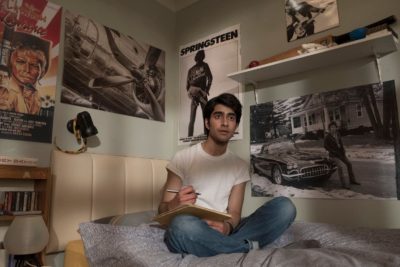

  • ‘Marriage Story’ NYFF review: Now processing heartbreak

    ‘Marriage Story’ NYFF review: Now processing heartbreak

    Marriage Story follows an actress and her director husband as they go through a messy bicoastal divorce.

    One-sentence review: Marriage Story is a heartbreaking but funny and entertaining sendup of marriage, divorce, and what it means to be a couple.

    Where to watch Marriage Story: Streaming on Netflix.

    I just went through a breakup. A five-year relationship that seemed to be endless gone in a single night. There’s so much sadness and anger and denial and grief. However, the overwhelming feeling is confusion. It’s not hyperbolic to say it feels like you’re going to die. Perhaps that is hyperbolic. At the very least, there’s a constant sense of dread. You ask yourself so many questions. Am I making the right decision for me? How about for him? Should I have fought harder? Is he going to be alright? Those are the things that are the hardest to process. I bring this up to give you context for why watching writer-director Noah Baumbach‘s latest film Marriage Story, which premiered at the 57th New York Film Festival, a wrenching and difficult but ultimately cathartic experience.

    The thesis of Marriage Story is delivered via two numbers from Stephen Sondheim’s classic musical Company. The first features Nicole (Scarlett Johansson) — along with her mother Sandra (Julie Hagerty) and sister Cassie (Merritt Weaver) — singing “You Could Drive a Person Crazy.” In the song, the three women that the perpetual bachelor main character Robert is seeing sing in an Andrews sisters-style number about his inability to commit.

    The second is Sandra’s ex-husband Charlie (Adam Driver) singing finale number “Being Alive” in the middle of a bar surrounded by the theater company he founded with Sandra. The song sees Robert finally accepting the notion of love and commitment. In particular, the challenges that come along with the vulnerability that a relationship requires. The song is a moment of acceptance in both Marriage Story and the musical. In the musical, it’s about being able to accept love and all the things that make it complicated. In Marriage Story, the song is about the acceptance that sometimes love isn’t enough. 


    ADVERTISEMENT

    New York vs. Los Angeles: A battle of desires

    The movie begins with Charlie confessing about what he loves about Nicole. A montage of the couple’s life in happier times with their son Henry (Azhy Robertson) plays beneath the voiceover. Then, the movie switches to Nicole’s perspective as she talks about what she loves about Charlie. In so many ways, what they admire about each other are in opposition as is often the case with couples. That’s why they work. Baumbach gives us a chance to explore deep care the couple has — perhaps had — for each other. They’ll question it throughout, but we know it’s there. 

    There are these moments where they will be speaking in their Brooklyn apartment like things are normal, then one of them walks away and immediately begins crying. It’s the death of the normalcy that’s the hardest. However, things are changing for the pair. Nicole is heading to Los Angeles to star in a TV pilot while Charlie is hard at work on his latest play with the theater company. They decide that Henry will temporarily stay with Nicole in LA while she’s filming and Charlie will fly back and forth.

    Laura Dern and Scarlett Johanson in Marriage Story. Credit: Netflix.

    Nicole took the pilot because she wanted to do something truly for herself for once. The two met in their 20s. Young, free, artistic, and ready to take on the world. She had a promising career in film as hinted by with a clip from her breakout role in the teen romance “All Over the Girl,” but after falling for Charlie she flew across the country to be at the center of his theater company. She always had yearnings of returning to LA and even discussed it with Charlie, which he’d placate her with “one day” and “in the future.”

    However, Charlie has never been able to see past his own grand vision for life. “We’re a New York family,” as he often said during the divorce proceedings when they really get rough. However, their son Henry says he likes LA and Nicole’s TV pilot looks like it might be going to series — still, what he thinks is right for the family is for them all to be in New York. It perpetuates the reason Nicole wanted to split up in the first place — this is Charlie’s life, she’s just living in it. 


    ADVERTISEMENT
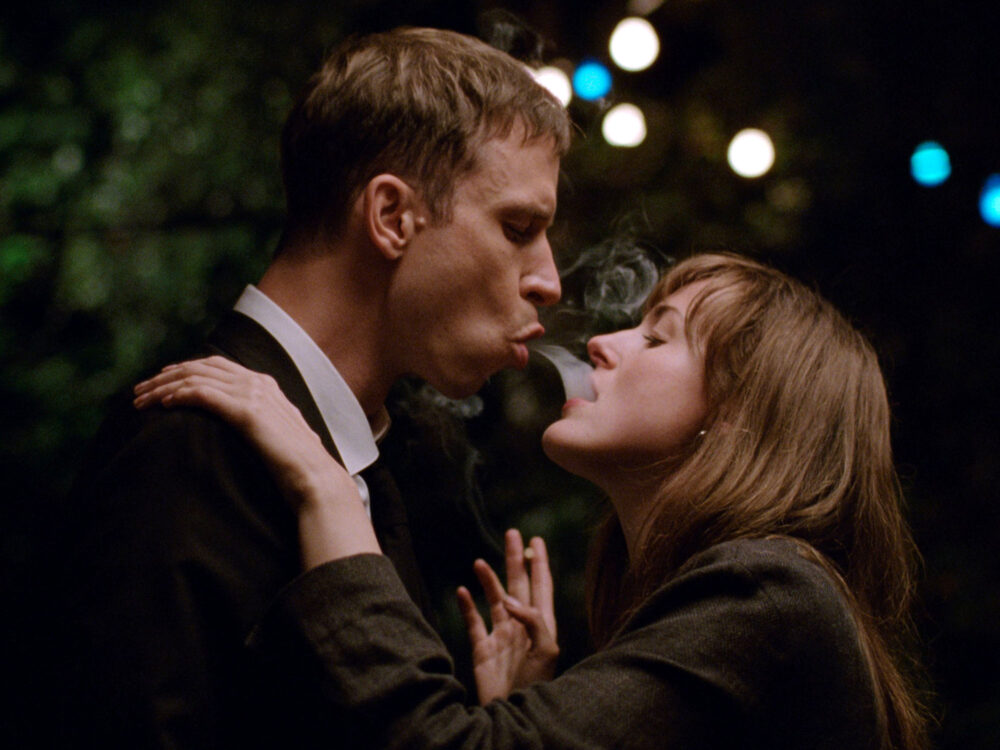

    Divorces have to get ugly before they get better

    After it becomes clear that Charlie won’t accept the family moving across the country, Nicole hires celebrity divorce lawyer Nora Fanshaw (Laura Dern) to represent her. Dern is an absolute knockout in the role of a woman whose understanding of relationships and the male psyche would better suit her as a therapist. However, her veracity also makes her the perfect lawyer. She explains to Nicole that hiring her isn’t a shot across the bow, but a claiming of her wants and desires as her own. 

    Charlie is shocked by the decision as he’s hilariously served papers in a standout scene by Nicole’s sister Cassie. He sees it as a shot across the bow. He even says it feels like the divorce is happening to him — another sign that he just doesn’t get it. 

    From here, the movie devolves into a series of messy arguments and tactics in an attempt to get each side what they want. And at every turn, it feels like Charlie is losing — he can’t use a specific lawyer because Nicole already consulted with them, he needs to establish residence in LA to be close to his son but needs to maintain one in New York to prove they’re a “New York family.”

    This is a movie about the process of divorce and how messy it is — morally and legally. At one point, Dern’s Nora and Charlie’s lawyer Jay (Ray Liotta) go up against each other in court by twisting things Nicole and Charlie have said about each other in increasing preposterous ways to smear the other’s reputation. It highlights the need for a divorce to be messy to actually work. In the case of Charlie and Nicole, it’s a wakeup call. 

    It’s a man’s world

    Charlie is obsessed with saying what he thinks is right for other people. I mean, he’s a director after all — that just bleeds into his own life too. Despite all indications pointing to LA being the right place for their son to grow up — hilariously, characters always remark at how much space there is in LA — Charlie is insistent that they need to be in New York because he wants to be in New York. He just disguises it as what he thinks is best for them. 

    Scarlett Johanson, Azhy Robertson, and Adam Driver in Marriage Story. Credit: Netflix.

    As Nora delivers in a fiery monologue, we live in a society where women are meant to bend their desires to men and whatever they deem comfortable. Even Nicole’s mom seemingly sides with Charlie because of her old-fashioned view of things. For once, Nicole is doing something for herself, and in Charlie’s view that makes her the bad guy. In our view too. The movie is largely told from Charlie’s perspective, so our sympathies automatically lie with him. Then, Baumbach pulls the rug out from under us and reminds us that we’re so immeshed in these societal expectations that we don’t even realize why we’re thinking in that way. 


    ADVERTISEMENT
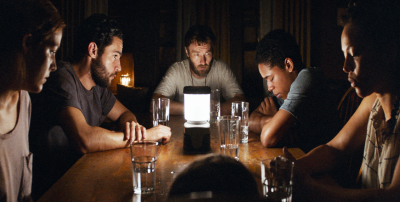

    The only way to get over sadness is to go through it

    However, it’s called Marriage Story for a reason. Except, instead of the making of a marriage, it’s the breaking of one. Like I said at the beginning, as messy as the actual logistics of it are, it’s the emotional gymnastics that we have to do to get through it that’s that hardest. 

    I’ve been trying so hard to convince myself that I’m going to be alright in my breakup — and that he would be alright. And we both will be, but not right away. Maybe it will take weeks, months, or even years to get over it. To get over the emotional ties that we have to each other. There hasn’t been a day that I’ve woken up feeling utterly alone and just crave the normalcy we once had. But that’d be unfair. 

    Like Nicole and Charlie, we met each other at a specific time in life. One where we were still forming who we are. The sad fact of the matter is that it changes with time. Your wants and desires clear up, your lifestyle comes into focus, and that causes rifts. There are some that you should bend for and some you shouldn’t. It’s so hard to be honest about them, but in the long run you’re only causing more hurt if you continue to ignore them. 

    Nicole realizes that. Society taught her to not want, but she slowly realizes that she’s allowed to. Charlie doesn’t realize that. His nature tells him he’s doing the right thing for his family. Those final two songs from Company tell us exactly where they are in emotional maturity. Nicole is past acceptance and Charlie is just getting there. He gets there when he is finally able to be sad and angry about what’s going on. Because the only way to get over it is to go through it. 

    Marriage Story brings us through it, unveils truths about ourselves and society, and does it in a funny and entertaining way. It’s a nearly impossible feat to make a 136-minutes movie about a divorce entertaining, but it is. The process is inherently silly and the things we do make no sense. The way people around us react doesn’t help, but it just exposes truths about life — it’s consistently inconsistent. As messy and devastating as the process of breaking up is, it makes you feel alive. Maybe it’s a good thing in the long run. 


    ADVERTISEMENT
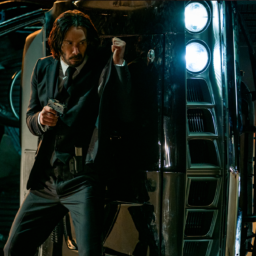

    More movies, less problems


    Hey! I’m Karl. You can find me on Twitter and Letterboxd. I’m also a Tomatometer-approved critic.

    💌 Sign up for our weekly email newsletter with movie recommendations available to stream.


    ADVERTISEMENT