Category: Television

  • Hannibal Review:  “And the Woman Clothed with the Sun…” (3×09)

    Hannibal Review: “And the Woman Clothed with the Sun…” (3×09)

    h3x09By now, the project of what is essentially Bryan Fuller’s version of a Red Dragon miniseries is abundantly clear: Hannibal is portraying two parallel and intersecting stories about the lasting effects that a man like Hannibal Lecter and his various, horrible misdeeds can have on the world around him. That’s a thread that runs through the novel and the film adaptation, as well—in a take on the well-worn trope, Jack calls Will back on the job for one final case. But in all the previous takes on this story, that trauma was implied. Here it is text. And we are reminded of it over and over again.

    “And the Woman Clothed with the Sun” takes great pains to remind us of perhaps the greatest trauma Hannibal inflicted upon Will: his grooming and eventual murder of Abigail. In stealing Abigail away from Will, he perverted the one healthy relationship Will had managed; he called into question his ability as a friend, father, and his basic humanity. In murdering Abigail before Will’s eyes, Hannibal must have thought he was making some grand gesture of love. Instead, he ruined Will nearly beyond repair.

    Knowing all of that and flashing back to Hannibal’s time with Abigail to give even more (super, super creepy) context to the whole affair, makes Will’s status quo in these episodes all the more poignant. He has managed to put himself back together, to find a wife and a son, and to live a relatively normal life. Hannibal inherently threatens that, and Jack knows it. His disregard for Will’s well-being, which was the engine of much of the early half of season two, is back in full force here. Jack seems to think that Will would say no, if he truly were unable to come help. Hannibal knows better, and he knows that that’s the avenue directly into Will’s head.nbc

    This is one of the greatest improvements that Hannibal makes upon the source material: these are all good friends. Will, Jack, Hannibal, and Alana have history, and it informs their decisions now. Alana worries about Will and about Jack’s manipulation of him as well as about Hannibal’s: “I’m not just worried about you. Last time it didn’t end with you.”

    It’s fitting, then, that the episode hinges around each of the three protagonists paying Dr. Lecter a visit. Will is nearly crippled by just one conversation with Hannibal. Alana takes pleasure in toying with Hannibal, and she clearly revels in his reversal of fortune—check out the great blocking in her conversation with him, as the camera holds close on Hannibal, with Alana out of focus in the background; she only comes into focus when she gets a particularly good jab in about his imprisonment or Will’s utter indifference toward him.

    As for Jack, he spends his time trying to justify himself to Hannibal—he recognizes the mind game but still falls victim to it, and, in fact, he leaves, opting out of the conversation rather than winning it, once he realizes that Hannibal has pulled what is essentially a trump card. The best thing any of these people could do is leave Hannibal to rot in his indignity and forget him entirely, but only Will really managed to begin to do that, and now he’s lost his chance. Look at the toll that this is already taking on him: away from Molly, his nightmares return, and his bed is once more drenched in sweat; when he looks into a mirror, his reflection shatters before him.

    Of course, throughout all of this, the FBI continues its investigation into the Tooth Fairy murders, and they’re getting nowhere fast, even with Lecter’s help. Francis Dolarhyde is just as theatrical as Hannibal ever was, but the geographical distance between his crimes is a stumper. Seeing Dolarhyde in his daily life, it’s unsurprising that a man so reticent would be so careful in his insanity. Richard Armitage doesn’t speak his first lines until well into this episode, yet even in silence, he is thoroughly magnetic as Dolarhyde. There is a brief, as-yet unexplained flashback to his childhood; there are glimpses of him splicing together horrifying film of his handiwork, paralleled with Will’s study of the families’ home movies. There is the revelation that he kills the family pets prior to killing the families themselves.

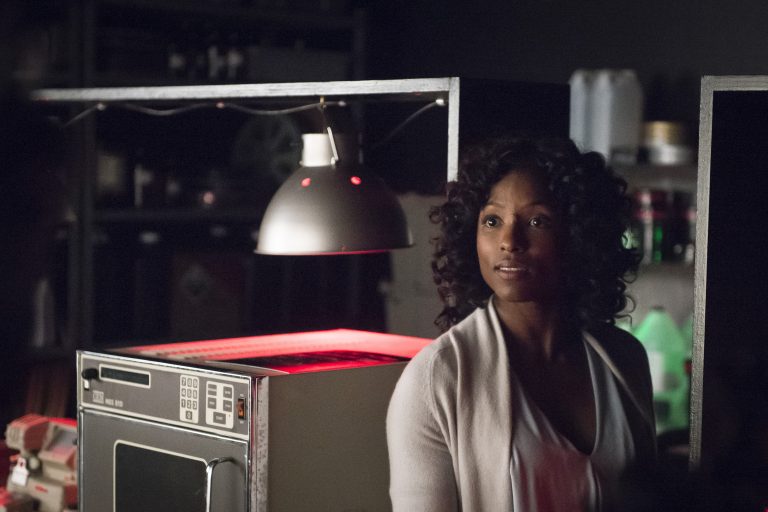
    And then there is his courtship with Reba McClane, played here by Rutina Wesley. Reba is blind, which adds a particularly unsettling element to their scenes. His awkward nature plays to her as almost charming, but we can see Dolarhyde and know that he’s anything but. That kind of blindness to certain aspects of one’s character is one that’s been a major theme throughout the series, but especially this season; we see it in Bedelia’s relationship to Hannibal, in Alana’s with the Vergers, and, of course, in Will’s with Hannibal.
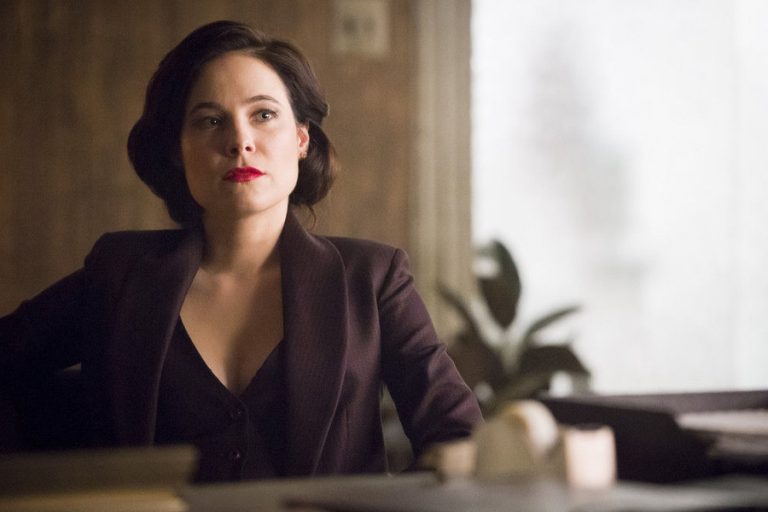
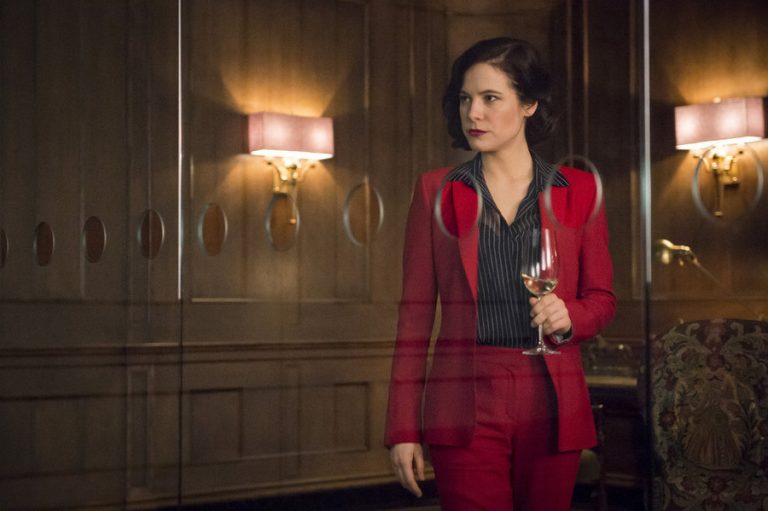
    HANNIBAL -- "...and the Woman Clothed in the Sun" Episode 310 -- Pictured: Caroline Dhavernas as Alana Bloom -- (Photo by: Brooke Palmer/NBC)
    HANNIBAL — “…and the Woman Clothed in the Sun” Episode 310 — Pictured: Caroline Dhavernas as Alana Bloom — (Photo by: Brooke Palmer/NBC)

    By the end of the episode, Dolarhyde has placed a call to Hannibal, beginning another different courtship. Their collusion here links the past and present of the show, as well as giving Hannibal another avenue to inflict further trauma, even from within his cell. Why do the characters continue to subject themselves to him? Perhaps it’s something akin to charm. But it appears it’s quickly becoming too late for them to extricate themselves.


    Stray Observations:

    • Once you see the gay subtext on this show, you cannot unsee it. The opening scene is two ex-boyfriends talking to each other, word for word.
    • Alana is still with Margot! As a matter of fact, this episode marks the first time that I feel like the new characterization of Alana is clicking. They’ve sort of merged her with Chilton from the books (making you wonder why they kept him around at all), but it works quite well.
    • Another great shot—Will calls home to Molly, and, for a moment, they’re sharing the same bed.
    • So does Hannibal’s cell really look like that, or is he imagining it? It’s never quite clear.
    • Freddie Lounds is back! She called Will and Hannibal Murder Husbands! “Well, you did run off to Europe together.”
    • NBC Doesn’t Care About Fannibals: In my market, Hannibal was pre-empted for a Phillies game and was then joined in progress. There’s making a sound business decision, and then there’s being downright rude.
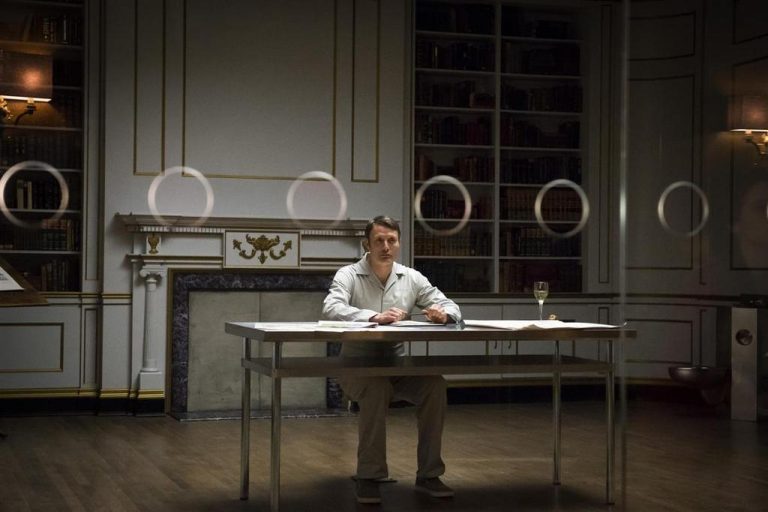
  • Hannibal Review: “The Great Red Dragon” (3×08)

    Hannibal Review: “The Great Red Dragon” (3×08)

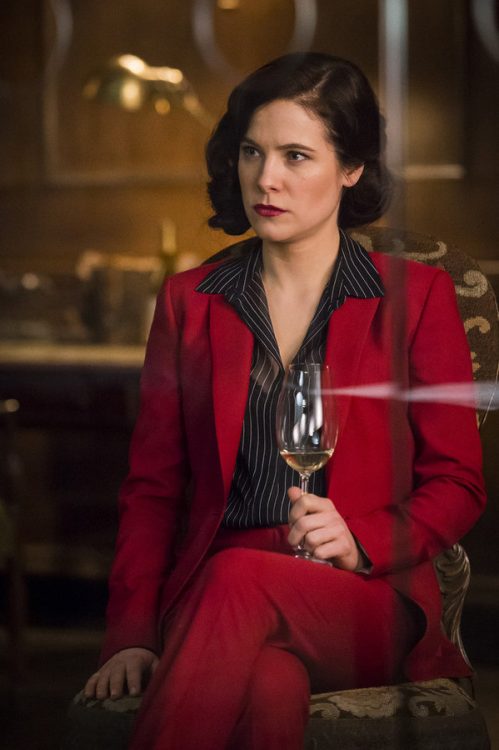
    HANNIBAL -- "The Great Red Dragon" Episode 308 -- Pictured: Caroline Dhavernas as Alana Bloom -- (Photo by: Brooke Palmer/NBC)
    HANNIBAL — “The Great Red Dragon” Episode 308 — Pictured: Caroline Dhavernas as Alana Bloom — (Photo by: Brooke Palmer/NBC)

    There’s really no getting around the fact that with “The Great Red Dragon,” Hannibal has become an entirely different animal. While it’s always had elements of adaptation to it, especially in the beginning of this season, which drew largely from the novel Hannibal, the series has mostly told original stories with the occasional twist on or wink at the source material. The spirit, rather than the letter, of Thomas Harris’s published work, has been followed to this point.

    No longer: “The Great Red Dragon” is a near word-for-word adaptation of the first several chapters of the novel Red Dragon, and it is great. It likely goes without saying that it’s far better than Brett Ratner’s film of the same name, but what’s truly excellent here is the way that the episode enriches the source material, expanding upon it in new ways owing to the larger context that the preceding episodes have built up.

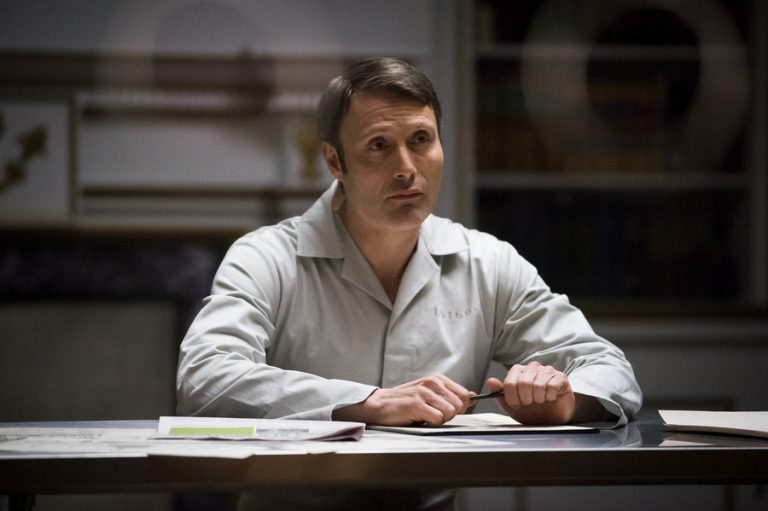
    HANNIBAL -- "The Great Red Dragon" Episode 308 -- Pictured: Mads Mikkelsen as Hannibal Lecter -- (Photo by: Brooke Palmer/NBC)
    HANNIBAL — “The Great Red Dragon” Episode 308 — Pictured: Mads Mikkelsen as Hannibal Lecter — (Photo by: Brooke Palmer/NBC)

    For instance, we open immediately on a close up of Richard Armitage as Francis Dolarhyde, discovering his namesake on the cover of Time magazine. It is such a thrill seeing this moment recast with the show’s visual aesthetic and Brian Reitzell’s phenomenal score. We’ve been introduced to countless killers-of-the-week by now, and Dolarhyde is efficiently, thoroughly, and wordlessly established. On the one hand, the show takes advantage of shorthand, as we know the character already. On the other, the images and sounds tell us all we need to know anyway.

    In fact, the episode is largely an exercise in returning us to the original format of the show. Jack Crawford recruits a reluctant Will Graham to investigate a case that only he can crack, despite the protests of those close to Will. Alana Bloom and Frederick Chilton trade barbs. Agents Zeller and Price return (FINALLY) and are sassy. And at the end, Will must go to Hannibal for assistance, just as Hannibal always knew he would. They’re all familiar beats, but the characters have been through so much. Three long years have passed since Hannibal was locked away; the context is all different. Whether or not Will should help Jack is a central conflict of Red Dragon, and it has been in Hannibal as well. But it’s remarkable how much more weight their reunion carries, now that the backstory has been dramatized.

    HANNIBAL -- "The Great Red Dragon" Episode 308 -- Pictured: Caroline Dhavernas as Alana Bloom -- (Photo by: Brooke Palmer/NBC)
    HANNIBAL — “The Great Red Dragon” Episode 308 — Pictured: Caroline Dhavernas as Alana Bloom — (Photo by: Brooke Palmer/NBC)

    It’s a recognizable adaptation of a familiar story, but it is chock full of the inventive flourishes we’ve come to expect from Hannibal. Following Dolarhyde’s introduction, a stunning, wordless sequence plays out of Hannibal’s capture and imprisonment. His reminiscences, like Will’s so often do, take place in his mind palace, and he pictures himself in the church in Florence, listening to a cherubic choir boy singing some version of “Hallelujah,” when really he is stuck in his sterile cell. Alana’s conversation with Hannibal is a nice example of the show enhancing the source material, playing off Alana’s expanded role and her history with Hannibal. She knows he’s not insane, and so does he—but that’s the plea he scored anyway.

    Very little actually happens in “The Great Red Dragon” beyond what we’ve already summarized. It’s very prefatory, setting up the final arc of the show. We’re deftly introduced to Dolarhyde and to Molly, Will’s wife of an indeterminate amount of time, who feels like a fully realized character more or less immediately. That’ll be important down the road, of course, but it’s appreciated here as well.

    More than anything, “The Great Red Dragon” serves to recalibrate the series following the carnage not just of “Digestivo,” but basically of everything since “Masumono.” It does so spectacularly. One of the episode’s final sequences is a good, old-fashioned crime scene investigation, just like in the early, more procedural days of the show. The swinging pendulum returns at last as Will re-enacts Dolarhyde’s crime, and he finally says that line that has, perhaps unexpectedly, become a catchphrase among fandom: This is my design. It’s awesome. A moment equivalent to Batman suiting up, and yet the feeling of awesomeness makes the audience inherently complicit in what Jack is doing to Will. We know the damage this work is doing to him; we shouldn’t be so jazzed to see it in process. But then there’s that killer shot of him standing over Mrs. Leeds, with the bright red strings of “blood” spray fanning out behind him, becoming illuminated, and it looks too beautifully composed to be concerned for very long.


    Stray Observations:

    • Next to Molly, Will doesn’t have to sleep on a towel. How’s that for “show, don’t tell”?
    • Will’s reunion with Hannibal echoes for a moment that hallucinatory encounter in Italy.
    • Hannibal and Chilton discuss the former’s cooking: “And when you last made it for me?” “The blood was from a cow, only in a derogatory sense.” Hannibal is still the stealth-funniest show on TV.
    • Chilton promised himself he would never use colons in his book titles because, of course, he did.
    • “A snaggle-toothed son of a bitch.” I don’t know why Laurence Fishburne’s delivery cracked me up here, but it sure did.
    • NBC isn’t even bothering with previews for upcoming episodes anymore, if you needed any further writing on the wall.
  • Hannibal Review: “Contorno” (3×05)

    Hannibal Review: “Contorno” (3×05)

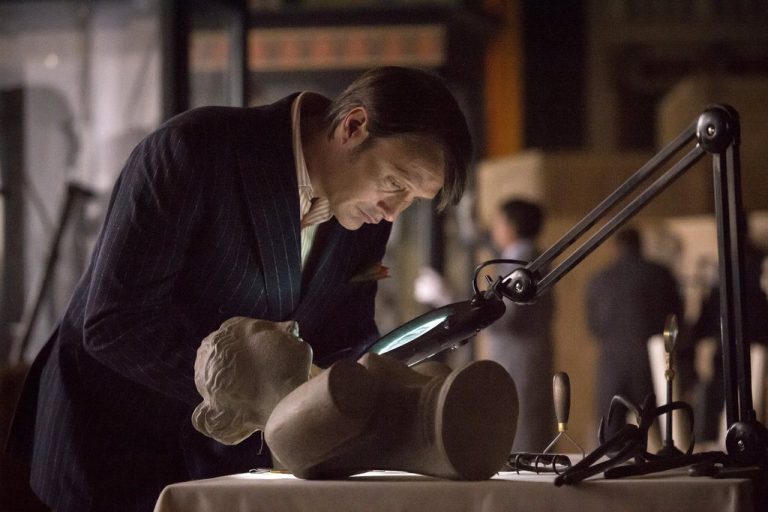
    HANNIBAL -- "Contorno" Episode 305 -- Pictured: (l-r) Fortunato Cerlino as Inspector Pazzi, Mads Mikkelsen as Hannibal Lecter -- (Photo by: Sophie Giraud/NBC)
    HANNIBAL — “Contorno” Episode 305 — Pictured: (l-r) Fortunato Cerlino as Inspector Pazzi, Mads Mikkelsen as Hannibal Lecter — (Photo by: Sophie Giraud/NBC)

    “Contorno” presents an interesting question with regard to episodic television writing. To wit: how much does an absolutely killer final act compensate for an episode that otherwise doesn’t quite move the needle from the previous installment and only inches us forward, plot-wise, into the next? In beginning, to answer this question, let’s return as usual to Italian dining, in which the contorno is a side of vegetables or salad served alongside the main course. So is Bryan Fuller simply making us eat our vegetables here? That interpretation would fit the previous episode, too.

    But if that is the case, then the closing scenes of this episode are one sweet gelato, a reward for the giant exposition salad we’ve been wolfing down for the past two weeks. It’s a little weird to start at the end here, but there is no denying the momentous nature of that reprise between Jack and Hannibal, one that perfectly mirrors and inverts their previous, much bloodier confrontation.

    Hannibal doesn’t go to this particular well very often, but it makes a very worthwhile trip here: Laurence Fishburne is a towering hulk of a man. Really, he is. Jack is so physically imposing in these scenes. Just look at the first shot of his arrival, as he glowers up at Hannibal in the window, having witnessed his murder of Inspector Pazzi. (The shot is reversed at the end of the sequence, with Jack looking out the window at Hannibal as he flees.) The fight that proceeds is beautiful, one-sided, scored by one of the series’ most inspired musical cues to date, and is just generally a tremendous achievement. Certainly it is the high water mark of the season.

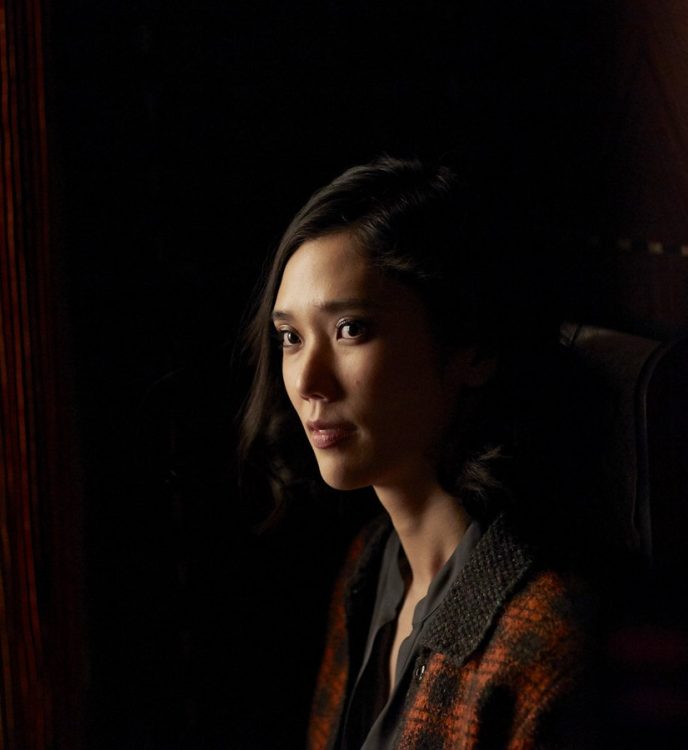
    HANNIBAL -- "Contorno" Episode 305 -- Pictured: Tao Okamoto as Chiyoh -- (Photo by: Sophie Giraud/NBC)
    HANNIBAL — “Contorno” Episode 305 — Pictured: Tao Okamoto as Chiyoh — (Photo by: Sophie Giraud/NBC)

    And yet it is not quite the end of this little European arc. The preamble to Red Dragon, which will (it is now all but certain) serve as the finale to this iteration of the Hannibal Lecter saga. Hannibal is bruised, beaten, and bloody, but he escapes, if only temporarily. Jack may have found him first, but Will and Alana are converging as well, despite their separate setbacks this episode.

    In fact, I think the great strength of this episode is that, despite the absence of plot, it offers a few key images and conversations that bolster the series’ themes. There’s this recurring idea of reciprocity, which, of course, is the one word that may best describe the relationship between Hannibal and Will—really, between Hannibal and everyone else on the show. It’s all about how much he can do to them, how badly he can hurt them, and how much they’re capable of doing in return. Alana is the best example of this. I’m still not sold on her heel-turn into calculated villainy, but her single-minded attempt at vengeance, though foiled again by Hannibal, at least provides a clear explication of the theme. Also interesting is the way the show links her and Bedelia, through Alana’s careful explanation of how she discovered Bedelia and Hannibal through her weekly wine-and-gnocchi routine. There’s methodology to both women’s apparent madness.

    Will is still the more interesting situation though, not least because Will is still the better-realized character. He and Chiyoh spend the episode on a train, engulfed in darkness, as they further contemplate Hannibal’s impact on each of their lives. Chiyoh’s purpose becomes clearer, as she seems to have gotten Will figured out: “If you don’t kill him, you’re afraid you’re going to become him.” There’s a strange symbiosis to their dynamic that, rightly, frightens Chiyoh. Enough so that she pushes him off the back of a moving train in the episode’s most jaw-dropping moment.

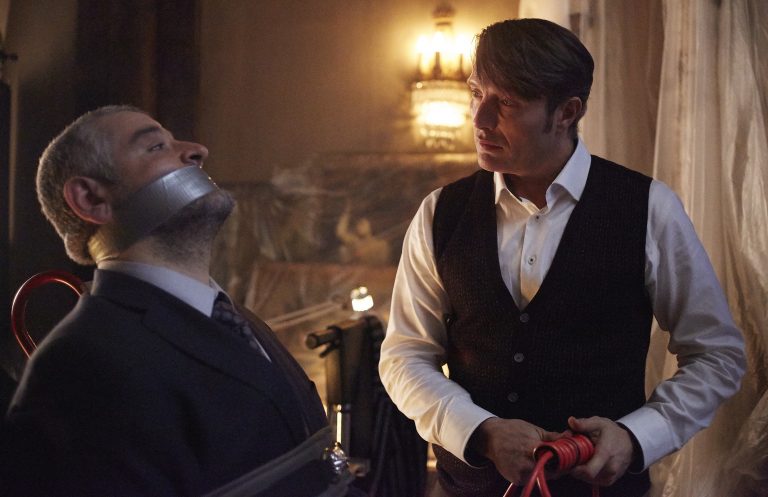
    HANNIBAL -- "Contorno" Episode 305 -- Pictured: Mads Mikkelsen as Hannibal Lecter -- (Photo by: Brooke Palmer/NBC)
    HANNIBAL — “Contorno” Episode 305 — Pictured: Mads Mikkelsen as Hannibal Lecter — (Photo by: Brooke Palmer/NBC)

    Not that Will is in any real danger. We have Red Dragon to get to, after all. And, more importantly, Will and Hannibal are inextricably, almost supernaturally linked. It should come as no surprise when our good friend, the murder stag, comes to Will’s side and nudges him awake (slash maybe back to life?).

    But the thing I like best about this episode and the season so far is this recurring motif of the snail. “Contorno” delivers a new piece of knowledge (or, at least, new if you, like me, don’t know all that much about snails). They survive digestion. If you’re not convinced yet that our heroes are the snails in this story, you should be now. They’ve all been killed and “eaten” by Hannibal Lecter, without their knowledge; now they’ve survived the digestion, and each of them have become something else, something new, something different. That’s how they’ll catch him, at long last.


    Stray Observations:

    • There’s a beautiful early shot of Jack releasing Bella’s ashes. It seems odd to me that he decides to throw the ring away, too, though. Is that something people do? I suppose it fits the theme of rebirth/metamorphosis that we’re developing here.
    • I love how they’ve repurposed the Hannibal source material with Inspector Pazzi, in a way that doesn’t suck so much and that serves the new version of the story they’re fashioning. I also really, really love how they retain the utterly silly depiction of Pazzi’s crack detective skills from the film, as he Googles a picture of Hannibal Lecter to determine that yes, indeed, that strange professor is Hannibal Lecter.
    • I’m increasingly skeptical that there will be any real payoff to this business with Mason Verger and Alana, unless Verger will have some sort of role to play in the Red Dragon arc.
    • Hannibal Renewal Watch: Amazon has passed, Netflix has passed, and the actors’ contracts have expired. This appears to be the end, my friends. Fortunately, The Silence of the Lambs is the Hannibal Lecter story least in need of rehabilitation.
  • Scandal Review: “A Few Good Women” (4×21)

    Scandal Review: “A Few Good Women” (4×21)

    a few good womenIt wasn’t until after I had already watched this week’s episode of Scandal that I learned the episode was titled “A Few Good Women,” a play on, of course, Aaron Sorkin’s A Few Good Men, an altogether superior tale of abuse in the military. Of course, Scandal is dealing with a different type of abuse—rape, here, as opposed to hazing in Sorkin’s film—but the problems in execution undermine any effort at serious discussion of a topic that absolutely merits discussion in this high profile of a venue. The end result, though, is a scattered story that addressed this topic with even less subtlety than (and this is quite unbelievable) House of Cards managed in its second season.
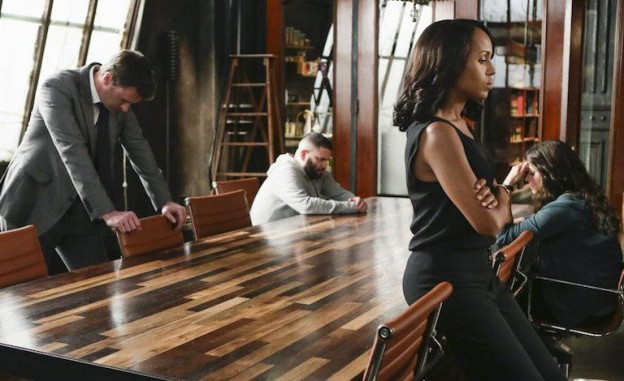
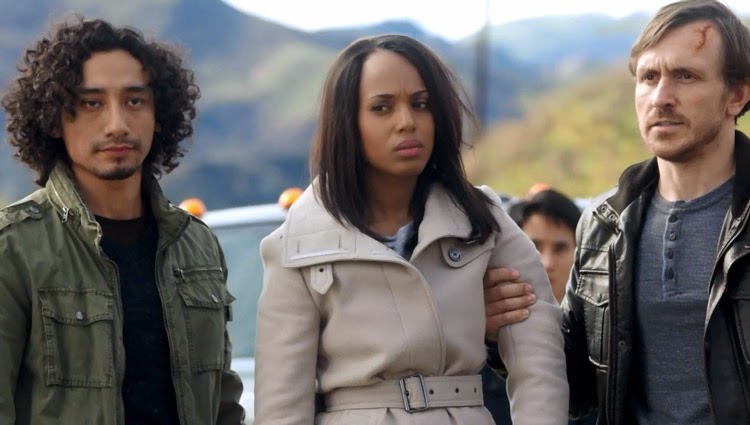
    Scandal’s recent attempt at topicality, “The Lawn Chair,” was successful in large part due to its willingness to forgo the trappings of a typical episode of Scandal. In its position as the penultimate episode of the season, “A Few Good Women” has no such luxury, and so it is mired in #whatisfoxtail, the hashtag that flashes on screen literally – and I mean literally – any time anyone breathes the word Foxtail. Beyond knowing that it is some B-613 scheme, I really do not care #whatisfoxtail, and no hashtag will sway me. I can’t imagine it’s working very well on the rest of the audience, either.

    Nor does the reveal that Foxtail has something to do with Mellie Grant really do anything for me either. I suppose this is some sort of payoff for the inordinate amount of time we have spent on Mellie’s incredibly unlikely run for a Senate seat in a state in which she does not reside. Considering that this story, but for the logical hole at its center, has been a lighthearted, much-needed break from the dour, torturous (and again I mean that literally) proceedings over at OPA, allowing it to be swallowed as well by B-613 seems a misstep more than anything.

    Even the case of the week here is done more in service of furthering the B-613 nonsense than it is in service of actually discussing rape in the military on any serious level. Olivia, Quinn, and Mellie just spout platitudes about the issue—Mellie’s closing speech, especially, comes too easy, a pat resolution to what should be a much more complex discussion. That’s not necessarily the type of show Scandal is, but if you’re going to take on rape in the military, well, take on rape in the military. “A Few Good Women” gives us some cartoonishly villainous sailors that may as well be sitting there twirling moustaches, and the bumbling naval lawyer they assign to Olivia solely because he’s such a useless idiot. Except—surprise!—young Virgil is only pretending to be a useless idiot, apparently quite well and for quite some time, but really he’s a B-613 plant, like every minor character on this damn show.

    I want to comment more about the rape case at the episode’s center, but I can’t because there is so little about which to comment. There are the token scenes of Olivia, Quinn, and Virgil interrogating the Navy admiral accused of rape. They go back and forth with sub-Sorkin pithy barbs. An unlikely, last-minute assist from Fitz gives Olivia the evidence she needs to incriminate the man. And that’s it—a furious victory for all involved. It’s just so lazy.

    Elsewhere in the episode, Olivia, Huck, and Quinn are just casually torturing Russell, a sight that has become par for the course. Fuck your white hats. Between this and the absurdity of the rape case, “A Few Good Women” really lays bare my biggest issue with Scandal at this point in the show’s run. For as good as Kerry Washington is, and she really is still excellent, the character of Olivia is a pale imitation of the one we met four years ago. Some of that is intentional, and her PTSD rears its head again in this episode to remind us. She is in a situation here, as Jake uncomfortably makes clear to her, where her entire life is a construction. She has no way of knowing what is real and what is not or who to trust or who to not. Anyone can be an agent of Rowan’s.

    But this only goes so far. Olivia hardly seems the competent professional she’s meant to be anymore, even in situations where she’s clearly meant to seem as such. In this episode she is shrill (god, it pains me to write that, but it’s true), intrusive, and , worst of all, ineffective. She runs around shouting orders like she is still the legendary Washington fixer Olivia Pope, but is she really? She fucks up left and right. Huck killed a girl. She doesn’t even work in the White House anymore. Huck killed a girl. The further Olivia is dragged into wacky conspiracy land, the less effective her character is.

    Maybe the show recognizes this. Maybe the final will be a well-considered reflection on all these difficulties, one that will dispatch Rowan, refocus the show, and get the house that Shonda built back in order. That’s a lot to rest on one episode, and while it’s possible, I wouldn’t call it likely, at this point. The best I can say about this episode is that the season may have dragged its feet, but now, at least, the dominoes are positioned and ready to fall. One way or another, this will all be over after another hour.


    Stray Observations:

    • Russell and Jake trading Rowan impressions is everything. It’s a nice scene that paints both men as human—something Scandal forgets to do more often than not of late. It’s also hilarious.
    • As for the men of the White House: there’s this whole attitude here of, even if the woman was raped—a claim of which Fitz and Cyrus are overly skeptical—it’s not their job to interfere with the military. There is a fetishization of systems and structures on this show (like the endless blathering about the Republic) that every character, hero or villain (if such a binary even exists here anymore), puts above common decency. You can call it a theme of the series, even if it’s a well Scandal goes to only infrequently and superficially.
    • Mellie says “we’re not monsters” of a room in which every single person is, in fact, a monster—herself included.
    • “I’ve seen better writing on soap operas.” Me too, Mellie. Me too.


  • Shameless Review: “Drugs Actually” (5×11)

    Shameless Review: “Drugs Actually” (5×11)

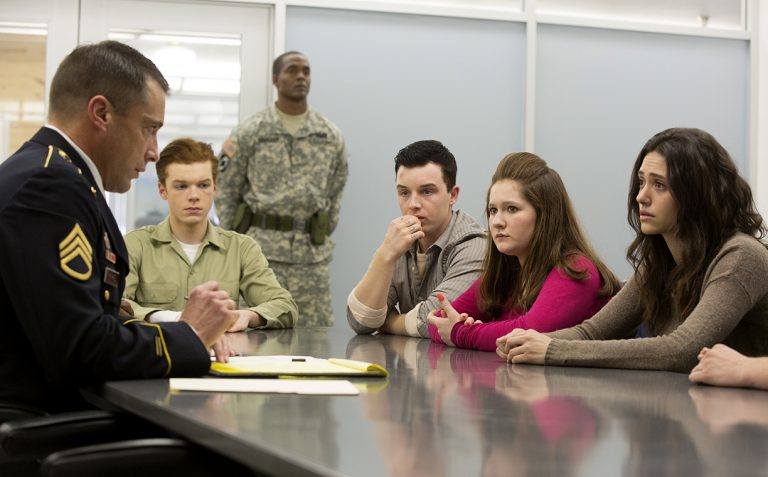
    shamless drugs actuallyWell, wouldn’t you know it? It’s another great episode of Shameless! The show isn’t necessarily firing on all cylinders even now, but in all honesty, even at the heights of the fourth season there were still missteps here and there (and one pretty big misstep named Matty…). So while not everything in “Drugs Actually” is exactly the best Shameless has to offer, so much of it does hit that mark that it’s useless to kvetch.

    I think the very best thing about this episode is that, for the first time in a while, it bends its structure to portray Fiona and Lip once again on parallel journeys. The storytelling is at its best when it draws lines between different characters and highlights the ways that they end up on very similar trajectories, even when they’re in rather disparate situations. In this instance, Fiona and Lip are each being helped, in some way, by entirely inappropriate benefactors—and yet that inappropriateness doesn’t negate the good that’s being done. The fact that the episode finds a way to wind even Frank—Frank!—into this schema is nothing short of astonishing.

    Fiona’s continued dalliance with Sean takes on a new dimension this week, as he helps her through her visit to the military prison where Ian’s being held. She tells him things she doesn’t tell Gus and leans on him in a way that she won’t lean on Gus—not because she can’t, but because she seemingly just doesn’t want to. She fears stability because “stability” is a foreign notion to her. (Remember South Side Rules?) I mean, they literally toast to self-sabotage. They’re cut from the same cloth, which makes them so well matched to each other, and yet which spells doom for this romance before it even gets off the ground.

    And this all happens as Gus is getting ready to come back, so he and Fiona can work on their (admittedly reckless) marriage. Really, Fiona is a monster—she’s going to trample all over Gus’s life, and while, yes, he maybe shouldn’t have married this obvious train wreck so impulsively, he’s also a nice, well-meaning dude. He deserves better. The twist of the knife here is that Fiona knows that too. It’s Fiona’s own self-doubt and her inability to believe in her own ability to be faithful, to be stable, that fuels her infidelity, that feeds her chaotic inner self.

    Compare that to Lip, who goes to a party in the newly gentrified South Side, along with Helene and her husband. She takes him there to meet Norbert, an aerospace engineer that she thinks can line up a job for him down the road. Helene finds Lip an interesting curiosity, a project, someone she can mold. But Lip is engineered to resist that sort of thing, and he fits in terribly at the party, whose host basically lays out Lip’s own worst fear of the situation. Like Fiona, he doesn’t believe that he deserves the success life has granted him. He doesn’t want to be viewed as a success story, a South Side kid gone good. He doesn’t want to acknowledge that, hey, good can be a good thing.

    And then, turning all this on its head, are Frank and Bianca, who basically swap roles here. Bianca is completely off the rails now, having wholeheartedly embraced Frank’s philosophy to an extent that even he can’t keep pace with. It’s amazing to me that Shameless has somehow managed to, again, revitalize the Frank character with such effectiveness. Somehow, Bianca smoking crack with him becomes a sweet, romantic moment. Their sex on the train tracks is dangerous, and yet the audience actually sympathizes with Frank, who gets exactly what he wanted but in a manner that even he realizes is problematic. He ends up betraying Bianca by virtue of trying to help her, by calling her family to convince her to go to the hospital and get treated. Instead, she’s off to Costa Rica, or something, and Frank is going right along with her. It’s a complicated, messy situation, but that Frank can acknowledge this, and seems to genuinely want to spend time with Bianca and improve her quality of life, is an amazing development for a character of whom I was quite tired of not five episodes ago.

    But the biggest bombshell of all is the usual Shameless ace in the hole: Monica, who turns up to visit Ian after the rest of the gang has already given their testimony regarding his mental state. She is a toxic, horrifying woman, a terrible influence on all of her children’s lives but especially on Ian’s, who not only has to suffer with her genetic curse, but is now suffering her wholly inappropriate life advice. She tells him exactly what he wants to hear, though, and in this case that’s enough. The military releases Ian into Monica’s custody, and they hop on the back of a truck headed anywhere south of here. The ghost of Monica, as I said earlier in the season, has loomed large over this story, and now she’s here in the flesh. As ever, it’s a major narrative kick in the teeth. I can’t say enough good things about Cameron Monaghan’s performance throughout this episode—he’s almost completely silent the whole time, but his entire demeanor has changed from earlier depictions of the character. You can see just how totally his disease has enveloped him, and it’s heartbreaking.

    As I said there are missteps. Kevin and Veronica make up in a pretty anti-climactic fashion, and the whole bit with the Alibi Room springing a leak is, maybe, a little on the nose. And as for Debbie and Mickey’s runner regarding whether or not to torture Sammie is fine, until they accidentally kill her (or so they think), hide her body in a storage crate, and then just kind of forget to mention it for the remainder of the episode. A tag at the episode’s end confirms that Sammie is actually alive, just stuck in a storage crate, but ,hey, Debbie and Mickey killing someone isn’t that funny.

    But the major stories of this season have emerged to be Fiona’s, Ian’s, Lip’s, and Frank’s, and these four stories are on point here going into the finale. That’s more than I expected, frankly, from the early going of this season. And that’s more than enough for me.


    Stray Observations:

    – As you’re reading this, the finale has already aired. The holiday got the best of me, but the final review will be up shortly. For this reason also the Stray Observations are mostly just a list of the episode’s (several) funny one-liners.

    – “We want people to think we lead reasonable lives,” Sean says to Fiona. Truer words.

    – “There’s always room in the Caddie.” Sean is actually full of wisdom this week.

    – “The roof’s a nice place to drink.” “Most places are.” Frank is also rather full of wisdom, between this and: “They won’t have crack, they’re winos!”

    – “Top shelf here is the cheap shit, just on a different shelf.”

  • Scandal Season Finale Review: “You Can’t Take Command” (4×22)

    Scandal Season Finale Review: “You Can’t Take Command” (4×22)

    scandal season finale review

    “You Can’t Take Command” is the sort of finale that, as you’re watching it, is pretty damn entertaining. But the second it’s over (and, really, during any commercial break or even just a pause in the episode’s action), and you think about any of its components in any sort of detail, the whole thing threatens to fall apart. It coasts along on momentum, but then, at a crucial narrative peak, the momentum comes crashing to a halt. The show stops and forces you to think about what it’s doing—and all that anyone can be expected to think is, “wow, that was stupid.”

    None of that is to say I hated “You Can’t Take Command.” In fact, I found much of it way more tolerable than the past several episodes of the season. (I certainly didn’t hate it as much as The A.V. Club’s Joshua Alston, for instance.) The episode coasts along a lot more smoothly, and in more entertaining fashion because it actually has an endgame to play out. We are past the point of endless table setting for a foregone conclusion, and that helps the show tremendously.

    For instance, take the way the episode immediately drops the other shoe. Leave aside that Rowan’s fake name is Damascus; we, at this point, can take for granted that everyone on Scandal is a fucking idiot. The shit-eating grin on Joe Morton’s face as he hands Mellie the photos of her and Andrew, along with the Remington file, is pure gold. And how great that Mellie is finally, if against her will, placed smack center in the middle of all this B-613 shit. In other words, she is finally granted a role in the show proper, rather than shunted off to some narrative offshoot reserved just for her. (Like, just spit-balling here, an extremely improbable run for Senate in a state in which she does not reside.)

    The script even does one better by drawing parallels between Mellie and Olivia, a concept that is always extremely welcome. Cyrus and Maya each tell them, respectively, how self-centered they are; how they construct dramas surrounding themselves, and other people are merely actors in those dramas. Never mind that everyone lives in her own drama.

    This, ultimately, is the undoing of Olivia’s grand scheme to take down her father. No one knows who Rowan is. You can’t take Command, the logic goes, because there may as well not be a Command. Eli Pope is a doddering curator at the Smithsonian, full stop. “You Can’t Take Command” goes full-on “darkest before the dawn” here, as Rowan, in short order, murders the entire grand jury and even the stenographer too; threatens David Rosen with Abby’s life, leading to Jake and Olivia’s imprisonment (actually Cyrus does this, about which more in the strays); and systematically eliminates every person on earth who can name him as Rowan, even going so far as to offer Maya her freedom in exchange for her silence.

    What a setup, right? The CIA is fully aware of B-613, and while Director Lowry seems to have been unaware of how out of hand it’s become, she’s powerless before Rowan and Cyrus to do anything about it. Like that, Rowan appears invincible.

    And then Olivia and Jake just kind of win. They trace the money from the Smithsonian that Eli Pope has been funneling to B-613, and they nail the doddering old curator for embezzlement. They even visit him in jail and gloat.

    I probably don’t need to explain why this is stupid. This is where the episode screeches to a halt, and it never quite recovers. To the extent that Rowan is actually eliminated here, what an anticlimax! All of this season has led to a financial technicality? He’s in regular-people prison, for a white-collar crime? There isn’t even the decency of a final showdown between Olivia and her father? Maya doesn’t have more of an interesting role to play? From the pretty effective groundwork laid in the first half of the episode comes almost nothing of interest or import, and that’s a bummer. I wouldn’t have been surprised if the finale of this season were a disappointment—but to have it come some close to salvaging something worthwhile, and whiff at the last minute, is the real scandal. (Sorry.)

    And then there is of course the fact that Rowan hasn’t gone anywhere at all. So this is a false ending, and a disappointing false ending at that. It’s a matter of when, not if, Rowan returns and this whole sloppy mess rears its head once more. If nothing else, this finale and this season might have been an exercise in deck-clearing, freeing the show of the shackles of the B-613 storyline, but they haven’t managed even that.

    That’s a shame, because the new status quo suggested by the episode’s final act is an intriguing one in many places, but it’s significantly less intriguing when all indications are that any shifts are temporary, awaiting reversion to the template. Consider the notion that the two most electric scenes in the finale are only tangentially related to B-613, and in fact grow out of the fallout of B-613’s “destruction.” Quinn’s confrontation of Huck, upon realizing that he (totally nonsensically, it should be noted) is still operating under Rowan’s orders, and killed the grand jury, is a unexpectedly cracking payoff to the season’s most frustrating plot thread. “Of course you have a choice. You always have a choice.” Leave it Quinn of all people to be the moral arbiter on this show. “You’re not thinking anymore, you just want to kill.” Katie Lowes’s performance is gripping here, and it’s about damn time the narrative grapples with the fact that Huck is essentially a monster in the employ of Olivia Pope. Fuck your white hats. The only negative about this scene is that it’s such a small part of the episode, and is left on a cliffhanger—one both hopes that Quinn shoots him dead, and yet doesn’t want to put that burden on Quinn. It would have been nicer to see this one laid to rest.

    The other great, great scene is Fitz’s confrontation with Mellie. I think he ultimately is being a bit unfair to her, given all that he has done, but the idea that Mellie gave up that grand jury is too much to take for him. The whole last act of this episode is shit hitting in the fan, and it works on that level, allowing the episode to regain at least a little of the momentum it lost in the resolution of the Rowan business. Tony Goldwyn is on fire here, too, which helps tremendously. – “Do you think I’d let you be President after what you did? Pack your bags and get out of my house. Before I throw you out.” There’s a lot of talk on this show about what a great man Fitz is, and while I hate to see Mellie villainized solely to prove that point, it’s not unreasonable to see this as a breaking point for Fitz. That point is further emphasized by the fact that he summarily fires Cyrus, recognizing him finally for the snake that he is. Fitz has been a pawn for much of his life, this season included; perhaps he just has finally decided, no more.

    And then there is, of course, that ending. Olivia Pope and Fitzgerald Grant making out on the White House balcony. (In a truly terrible VFX shot, but nonetheless.) The season has teased out their romance in fits and starts, but really this story hasn’t been the focus of the show for some time, and this seems like an odd time to revisit it. That said, it’s impossible not to get giddy at the sheer energy of the scene, and at the song choice, “Here Comes the Sun,” which evokes the metaphor of Jake and Olivia’s arguably more hopeful relationship just as it is abandoned in favor of Fitz and Olivia’s arguably more epic love. As we prepare ourselves for Scandal season five (and beyond, because as we know, Shondaland shows never end), it’s finally time for Fitz and Olivia to stand in the sun.

    How long will it last? Other than “not very” the answer is left vague. For all the show’s talk of being the good guys, wearing the white hats, what “You Can’t Take Command” confirms if nothing else is that the very idea of white hats is unattainable. The bad guys will always have one up on our heroes, which is that no matter what awful things our heroes do, there is still a line that they won’t or can’t cross—and the heroes who do cross that line, for whatever reason, are summarily cast out.

    This season was a mess, and the episode was too. But there are strands of good ideas, little ideas here and there to explicate. There is fertile ground for future stories, which is half the job of a finale, and is the half that “You Can’t Take Command” is much more successful at. For now I’ll pretend that Olivia just shot Rowan or something, and deal with him again when he inevitably shows up. Out of sight, out of mind.


    Stray Observations:

    • Cyrus Beene. What a dick this guy is, right? I don’t even recall if his partnership with Rowan was previously known or not, but it wouldn’t have been surprising anyway. His little quip, “I can’t have a soul. If I had one I would never accomplish a thing,” says so much about what he has become, and to an extent what he has always been. (Suddenly that wedding flashback makes more sense in context of the season.) He’s a monster, which we knew already, but certainly for me his threatening of Abby’s life was a bridge too far. It’ll be curious to see what his role his next year—does he go full black hat? Team up with Mellie? Something else?
    • Verbatim from my notes: IS OLIVIA POPE ABOUT TO BECOME THE FIRST LADY
    • “Susan is a national treasure.” You’re damn right Vice President Artemis is a national treasure.
    • Jake tells Olivia that she’s in love with Fitz and he leaves, hopefully for good. The men on this show are always telling Olivia how in love she is with the other men on this show.
    • That wraps another season of Scandal. I’m undecided whether I’ll be writing about it again in the fall—I had previously been reluctant to write about this one weekly simply because I don’t think the show is that fertile ground for weekly criticism, and I still feel that way twenty-two episodes later. But we’ll see. As always, the grade below is for the season. The episode gets an entirely too generous 8/10—the whole is certainly less than the sum of the parts here.


  • Scandal Review: “No More Blood” (4×13)

    Scandal Review: “No More Blood” (4×13)

    scandal no more blood

    By the end of “No More Blood,” Olivia Pope is back in Washington where she belongs, and everything has changed. Or at least this is the note on which Scandal would like to leave us at the end of this long ordeal.

    “No More Blood” brings the kidnapping of Olivia Pope to a somewhat natural, mostly satisfying conclusion, but the path to the episode’s rather strong final act is circuitous and often repetitive, a sin that this arc has now committed multiple times. I have one basic pet peeve with serialized television and it is this: the false cliffhanger, followed by an immediate reversal and then several scenes that reenact the exact situations that preceded the cliffhanger. This sums up the first three-quarters of “No More Blood” perfectly. Before even the title screen, the Iran deal is undone, of no consequence despite last episode’s Shocking Twist. Then we endure more scenes of people watching an auction on a computer screen; more scenes of Andrew and Mellie trading barbs; and a near-identical prisoner exchange, this time with Russia.

    It’s easy to call this an inescapable reality. There are a certain number of episodes to fill, and plot beats need to fall at specific points throughout the season. Sometimes you need to stretch, to pad, to double back or take the scenic route to the desired conclusion. But that doesn’t make the plotting not lazy—and besides, there are plenty of shows that do not do this, and even Scandal was, once upon a time, better at avoiding this sin.

    Fortunately, the episode is peppered with more original and interesting developments throughout the early going, and once Olivia is delivered safely to (surprise!) Stephen Finch, the episode picks up the pace considerably heading into the next segment of the season. In many ways “No More Blood” is an investment in future episodes of Scandal, wrapping up Olivia’s kidnapping but also sowing the seeds for character and story arcs to come.

    In that transitional capacity, this is a fine episode. Look to Cyrus’s conversation with Abby toward episode’s end to recapitulate the conceit of the series, and lay the groundwork for a fair amount of drama to come. “You almost killed her today,” Abby says, “and he has no idea.” “Not unless you tell him,” Cyrus replies. There has been no shortage of secrets between the cast up to this point, but this is by far the biggest one. Cyrus was seconds away from killing his best friend and betraying his most loyal ally, an act averted only by a fluke of Abby’s involvement. Meanwhile, Mellie has committed yet another unspeakable act without Fitz’s knowledge; Huck has yet another secret to hide from Quinn; and Olivia harbors a resentment toward Fitz that she can barely even vocalize.

    What’s great about “No More Blood” isn’t the progression and resolution of the plot, which is frankly pretty by the numbers, but the suggestions of conflicts to come. I continue to be most engaged by Fitz, of all people. He comes to see Olivia safely home, only to walk into a fight he wasn’t expecting. “I saved you!” he said, but of course he didn’t. He started a war for Olivia, sure (something she wishes he wouldn’t even have done), but he didn’t save her; Abby having the foresight to contact Stephen did that. Throughout this episode, characters argue with Fitz for not performing to their expectations of him. Cyrus does it, imagining himself reaming Fitz out for his decision making, before instead deciding to, as always, yes the President to death and do the real work in backroom dealings. Olivia does it too, at what would seem the unlikeliest of moments, when one might think she’d run back into Fitz’s arms. But Fitz isn’t a person for Olivia or for Cyrus, he is an object, a symbol, an achievement. Fitz doesn’t want to be that—he wants to be a guy in love with a girl. It’s just that no one will let him. Who would have thought that Fitz would be so compelling at this point in the series, let alone the most compelling figure on the damn show?

    When all is said and done, Olivia’s kidnapping was a cool adventure, but I’m happy to see the show back to normal—or at least, what passes for normal for our gladiators. The arc has featured some of the series’ most ambitious storytelling to date, and some truly excellent character work, but it’s also made some questionable decisions, taken a little too long, and wrapped up with the strangest of deus ex machina (dei ex machina? deus ex machinae?) in Stephen Finch, who drops in for a brief cameo and is gone again, just like that. But what it’s done with unquestionable success, and we already see the fruits of this labor in the closing moments here, is leave the kind of scorched earth wreckage that will have repercussions straight through to whatever crazy finale Shonda Rhimes has in store this time.


    Stray Observations:

    • Another neat, potentially deep direction: examining why Jake and Huck have had such different outcomes following their torture at the hands of B-613 and Rowan. Huck makes the titular promise to Quinn, but within mere hours he’s induced a stroke in the Vice President in an act of hired revenge. Perhaps he’s just taking his promise literally? But there’s something uniquely wrong with him that isn’t wrong with Jake (or maybe Jake is just better at hiding it).
    • So all of these people risking life and limb to extract Olivia, they must know Fitz is doing it for love? Obviously Cyrus does, but now he’s barely even hiding his motivation from the rest of his staff.
    • Fitz’s blinded-by-love decision making is particularly personal to Cyrus, of course, given that he inadvertently sacrificed his own husband in pursuit of “the Republic”.
    • Joe Morton! Hadn’t realized how much I missed his presence, but his scene here—which is at its root an overwrought monologue about fishing, somehow—is magnetic.
  • Scandal Review: “Gladiators Don’t Run” (4×12)

    Scandal Review: “Gladiators Don’t Run” (4×12)

    scandal gladiators don't run

    It could just be that I watched Scandal late this week, and after a stellar night for HBO’s dramas, but color me underwhelmed by “Gladiators Don’t Run,” which is a scattered, confusing mess of an episode, one that twists and contorts the plots into braided pretzels so intricate that even the writers themselves seem to lose the thread by the end. (Not unlike this opening sentence…)

    By the end of this episode, Olivia has been sold at auction to the highest bidder (Iran), Andrew Nichol has gotten away scot-free (due to his manipulation of Mellie), and I honestly have no idea what on earth the plot mechanics were to get us here. At the beginning of the episode Olivia is sharing champagne with Ian and negotiating her own auction. But in short order, henchman Gus shoots Ian dead and Olivia is back to being a prisoner (how she lost this status in the first place is a mystery to me, unless I missed something last week somehow). Who exactly is behind this whole thing? Who are the actors involved? How did Olivia get to the point of working with Ian? How did Andrew Nichol get boxed out of his own conspiracy? Where did this cabal of young hot hacker terrorist kidnappers even come from in the first place?

    Scandal doesn’t see fit to answer any of these questions. Stuff just happens, and that’s that. Now, since the “stuff” in question is the kidnapping of Olivia Pope, the fallout at least has some inherent dramatic interest. But that gut, emotional reaction will only carry the show so far, and there’s no escaping the fact that if you stop to think about any one aspect of the show’s plot right now, the whole enterprise falls apart.

    That’s a problem for an episode like “Gladiators Don’t Run,” which is concerned entirely with the progression and contortion of said plot. Who is on whose side, who knows what about whom at any given time—these are the sorts of shifts that the episode delves into, but since 1) it is impossible to keep track without some sort of flow chart and 2) any such flow chart would immediately reveal that none of this makes any sense, an episode with such a project just feels aimless and silly.

    It’s a shame, because moments here really do land. Kerry Washington continues to be fantastic, though she has a noticeably diminished presence this week in terms of screen time. Olivia goes through so many situational changes in this episode alone, and Washington skillfully navigates her emotional state through each. Tony Goldwyn as well is inspired, imbuing Fitz’s search for Olivia with the sort of romantic passion that hadn’t been seen in the character for a while, until recently. This is also an uncommonly funny episode, with a few zingers and setups that had me laughing out loud. The obvious winner is Quinn (“It doesn’t matter how many times you re-invent your identity, Sallie Mae will find you.”), but pretty much everyone gets a good moment or two in.

    But despite the moments of levity and some further attempts at characterization in light of Olivia’s disappearance (Abby shoulders much of this weight, being the literal last person in Washington to learn of Olivia’s current situation), this is an episode that is killing time until what will surely be a shocking reveal next week as to who, really, has won Olivia Pope at auction. (Might it be Harrison? It would explain why we spent so much time mourning him in the early season.) “Gladiators Don’t Run” is an occurrence of plot without story, incidence without import. Even Maya Pope’s return is essentially an excuse for a fetch quest, a way for Jake and Huck and Quinn to mark time until another aspect of the plot resolves itself. We spend most of the episode watching characters watching the auction, being unable to do anything about it, and then having none of it matter, because Iran swoops in from outside of the auction anyway. That’s entirely too much time to spend on what amounts to a red herring.

    When you’re telling a heavily serialized story such as Scandal’s, there are bound to be bits and pieces of your story that will suffer from this. But there’s no excuse for basically an entire episode of it. “Gladiators Don’t Run” continues to run with what’s been successful this season, but it’s mired in boring, confusing, plotty nonsense from beginning to end.


    Stray Observations:

    • So Huck just happens to have $2 billion laying around, which is so improbable that they actually felt the need to flash back to Rowan explaining his ridiculous, Office Space scheme to siphon money from the treasury in order to justify it.
    • The self-referential use of “gladiator” by the characters feels kind of twee to me, especially as ABC continues to use the term to refer to the show’s fans. I wish they’d stop doing it.
    • What do the Grants want most in the world? Fitz wants Jerry alive again; Mellie wants to be president. If this is a long-term direction for Mellie, I’m intrigued.
    • Runner-up for best joke of the episode: Fitz asks, rhetorically, “Who has more money than the United States of America?” Cy and Mellie shrug and start rattling off countries.
    • I thought for sure the violent content disclaimer would involve Maya more directly, but the grisly violence we got sure was unsettling enough.
  • Scandal Review: “First Lady Sings the Blues” (4×20)

    Scandal Review: “First Lady Sings the Blues” (4×20)

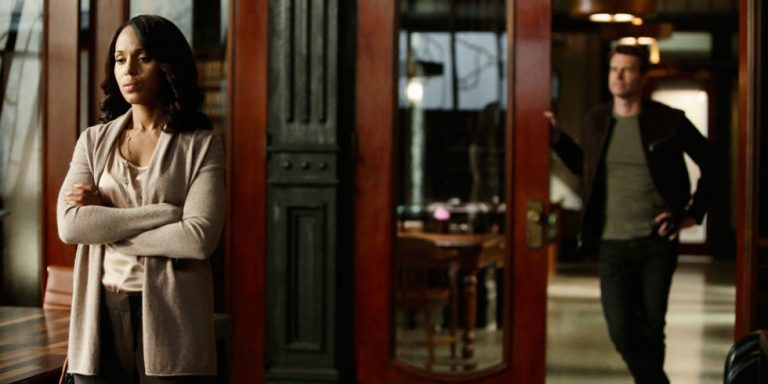
    SCANDAL - "I'm Just a Bill" - With Rowan back in town, the stakes are at an all-time high for the team trying to take down B613. Meanwhile, Olivia gets a call that the mayor's wife has been murdered and is asked to take on the case. Back in the White House, Fitz needs help getting a very important bill to pass, but when he looks to the VP for support, she proves that she's not an easy pushover like everyone once thought, on "Scandal," THURSDAY, APRIL 16 (9:00-10:00 p.m., ET) on the ABC Television Network. (ABC/Nicole Wilder) DARBY STANCHFIELD, JEFF PERRY (OBSCURED), TONY GOLDWYN
    SCANDAL – “I’m Just a Bill” – With Rowan back in town, the stakes are at an all-time high for the team trying to take down B613. Meanwhile, Olivia gets a call that the mayor’s wife has been murdered and is asked to take on the case. Back in the White House, Fitz needs help getting a very important bill to pass, but when he looks to the VP for support, she proves that she’s not an easy pushover like everyone once thought, on “Scandal,” THURSDAY, APRIL 16 (9:00-10:00 p.m., ET) on the ABC Television Network. (ABC/Nicole Wilder)
    DARBY STANCHFIELD, JEFF PERRY (OBSCURED), TONY GOLDWYN

    In the opening moments of “First Lady Sings the Blues” Quinn discovers Jake stabbed to shit and nearly shoots Huck in her panic. And then Huck smacks Jake on the chest and magically revives him. (Someone will need to tell me if Derek Shepard is also actually still dead?) I mean, good lord.

    If you are wondering just how far Scandal has strayed in four seasons, this episode sees Olivia trading favors with an ex-KGB black market doctor to save her ex-evil spy boyfriend from the attempted murder by stabbing committed on her current evil spymaster father’s orders. The legendary “Black Sable” is now Mary Peterson, a picture perfect American housewife who serves mainly as a metaphor, as a picture of the idea that it’s possibly, maybe, to escape a life of B-613 and kidnappings and secrets and lies (watch it on ABC, Sundays at 9!), but sooner or later you’ll be sucked back in.

    So Olivia becomes hell bent on releasing Mary from her service to the KGB. Surely there is some price she can pay, some trick she can pull, to call off Mary’s handler. Surely there is forgiveness? But for all Olivia’s efforts, there is none. Mary and her grandchildren and her handler all end up dead, murdered not by the KGB, but by Rowan, to prove a point.

    Rowan can read Olivia like a book. He knows from her silence that Jake still lives; he casually shoots Marshall in the arm knowing it will draw Olivia out. (I don’t think he even bothers to put down his glass of wine.) This works; after discovering Mary and her family, Olivia is ready to call off the whole thing. There’s no winning, because Rowan will kill them all without blinking, and Olivia can’t do the same. Or can she? The episode ends with Olivia putting a gun to Marshall’s head after all.

    I’ll give credit where it’s due: “First Lady Sings the Blues” makes all this B-613 business seem significantly more exciting than the past handful of episodes have managed. But it still is just papering over the fact that nothing is really happening. There’s the obvious doubling back of Jake’s not-death, which is just the laziest sort of cheap cliffhanger—this is some Sons of Anarchy level shit. But that cheap trick is emblematic of the overall narrative strategy Scandal has been employing too often of late. We’re at (god, I hope) the end of the long, dreary epoch of B-613, but the show pretty transparently wants to keep the big reveals stored away for the finale. So instead, round and round we go.

    The B-plot goes to Mellie’s continued unlikely run for the vacant Senate seat in a state in which she does not reside. (Or I guess she does live there, sometimes? What the fuck ever, honestly.) Sally Langston, like some sort of horrible Greek chorus, uses her talk show platform to poke all the obvious holes in Mellie’s strategy. Kate Burton is an absolute delight in these scenes, but the whole storyline is so inane that some of the joy is gone, no matter how wonderfully venomous Sally is in these scenes. The issues she raises should have derailed this whole campaign from the very start. Instead, it’s revealed that no one even bothered to check to see if there were legal obstacles to Mellie’s ambitions. Oh, the laughs to be had!

    At any rate Cyrus goes onto Sally’s show to try to convince America that there is nothing wrong with Mellie being First Lady and a senator at the same time. Sally is literally insane, though, and she turns the interview on a dime, suggesting that Cyrus is bitter over Mellie’s run and that he covets the Virginia seat for himself. Cyrus dovetails away from that pretty well, by raising the specter of the husband Sally killed, but it doesn’t do enough. Liz North’s last, desperate suggestion is that they say the Grants are on the rocks, or hell, past on the rocks, just flat out divorced. They’ve come a long way—Mellie dismisses the idea outright. They’re a team. But Fitz calls Olivia for advice anyway. Her advice is terrible, by the way—the conflict of interest is not a selling point, it’s just a conflict of interest. The term exists for a damn reason. It may get Mellie elected, but it’s going to tank the Grant presidency.

    But it works! Mellie’s popularity skyrockets in Virginia, though Cyrus is rightfully angry that it’s going to destroy his life’s work (something, remember, he’s sacrificed more than too much for already). “First Lady Sings the Blues” tries to frame Mellie’s trials as about feminism. It’s not about feminism. It is utterly unrealistic for a sitting First Lady to run for Senate, the same as it is for a sitting First Gentleman to do the same. If Mellie would like to do literally any other job in the world, she can knock herself out. But a Senator can’t live in the White House. That’s common sense. Even Hillary Clinton waited until she’d moved out first. Knowing this plays up the ridiculousness of this whole endeavor, and takes the wind out of the episode’s sails.

    Maybe I’m just burnt out on Scandal’s formula—but it seems more to me like the show itself is burnt out on its formula. Last week it seemed the show might use the crash-and-burn ending of the B-613 storyline to radically change the status quo. Now, it seems just as reluctant as ever to change anything at all.


    Stray Observations:

    • “So you’re saying women should be paid in fried chicken now? Are you being paid in fried chicken to host this show?” Such witty repartee from our friend Cyrus Beene.
    • “In this instance misogyny is our friend, is that what you’re saying?” In fact, Abby is still on fire too.
    • #WhatIsFoxtail. This interactive-viewing, let’s-all-hashtag thing is an awful trend that needs to die. Also I could not care any less what Foxtail is.
  • Scandal Review: “I’m Just A Bill” (4×19)

    Scandal Review: “I’m Just A Bill” (4×19)

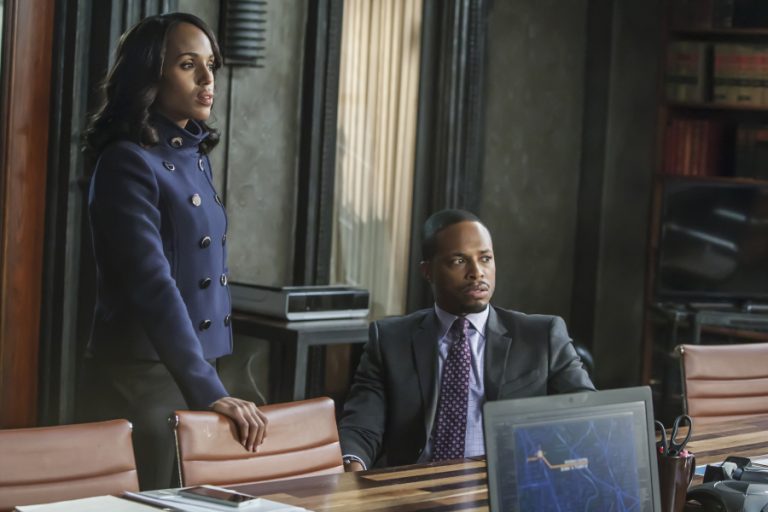
    KERRY WASHINGTON, CORNELIUS SMITH JR.

    I have very little to say about “I’m Just A Bill,” because frankly, it’s more of the same. More conversations between Rowan and Olivia that, however well acted, are tedious and repetitive. More cases of the week that lead the OPA team to make questionable moral decision, only to turn around and rail about justice and white hats. Basically the only thing even remotely engaging this week is Vice President Artemis, who continues to be a beacon of sanity in a show that by now is nearly finished swallowing its own tail.

    How can an episode that features the murder of the mayor’s wife, by the mayor himself, in order to frame his electoral opponent, be so deadly boring? Because that kind of convoluted scheme is Scandal Paint By Numbers by now. It’s the case of the week here to suggest some sort of parallel with Olivia’s quest to take out her father, on the nature of Justice with a capital J, as an absolute. But the “fuck your white hats” mentality is well in place here, and either the show is cannily setting us up for one hell of a fall (which, maybe?), or it’s completely tone deaf to the fact that, with the exception of maybe David Rosen, none of its heroes have any business talking about justice, capital J or otherwise.

    It’s also just flat out not that interesting of an explication. Scandal is a soap opera at the end of the day, and while for a while the notion of the Republic was a fun one, we’ve long since outlasted any capability the show has to raise questions on that high of a level. Joe Morton is great, but his long speech at the beginning of the episode covers well-trodden ground.

    My problem is the same that I’ve had for a while now in the back half of this season. Everything is just running in circles in the season arc, and the episodic stories aren’t engaging enough to make up for the fact that the needle isn’t moving at all. And I mean, I’m saying about an episode in which a series regular is violently murdered! But even Jake’s death at the episode’s end doesn’t pack the shock value that it should, because Jake is boring as shit, and the reveal that Russell, too, is a secret B-613 just induces nothing more than it does a healthy eye roll.

    Like, how many times now have Olivia and company resolved to take down Rowan? Just get on with it already? There are still three episodes left in this season, and at this point I wouldn’t be surprised to see us go around this bend at least two more times. I’ll grant that this B-613 thing has amounted to a narrative corner to end all corners, but enough is enough.

    Over in the White House at least things are entertaining, if not entirely consequential. The so-called “Brandon bill” is poised to be a centerpiece of the Grant administration, but as Artemis’s investigation reveals, the bill is a dud, a gesture in the direction of racial equality that is totally unenforceable. This fact doesn’t bother Cyrus, who sends a whole parade of people to convince Artemis to just go split the tie in the senate already, but it does end up bothering Fitz, who ultimately agrees with Artemis, scraps the entire bill, and sets to work with her on a new one.

    And therein lies my issue with this story: it’s another way to prop up Fitzgerald Grant as a Great Man (and just in time for him to take a fall as B-613 eventually starts to unravel), but it otherwise has basically no bearing on the rest of the episode. Olivia and Marcus played a fairly significant role in the events that resulted in the Brandon bill—and they, what, have no comment on it at all? With Olivia’s kidnapping, it made sense to diverge the White House and OPA settings, at least for a time. But now they’re happening in totally different spheres; in fact they may as well be different shows entirely.

    This is the biggest problem facing Scandal as it heads into what’s looking to be a pretty significant re-tooling: it’s currently a show without identity, when it used to be one of television’s most distinctive offerings. The sooner it can start to show signs of what it plans to become, the better.

    Stray Observations:

    • The episode starts with Rowan asking Olivia if she’s ever heard anything so ridiculous as B-613. I know I have! Shonda Rhimes has been shoving it in my face for going on three years now!
    • Taken totally in isolation, Joe Morton and Kerry Washington’s scenes together are always great, and that’s the case here, too.
    • Cyrus is so disgusting in his excitement that they’ve also incidentally captures the black vote, but at least he readily acknowledges it, I guess?
    • Ethan is sent to retrieve Artemis from spelling bee duty, but she’s so upstanding that she won’t leave even that job undone. His fidgeting as the kid takes forever to spell “onomatopoeia” is hilarious; he looks as though at any moment he may just finish the damn word himself.
  • Scandal Review: “Honor Thy Father” (4×18)

    Scandal Review: “Honor Thy Father” (4×18)

    honor thy father scandal
    Show of hands: who here still actually cares about B-613? Even a little, I mean. Because do you remember how sorta fun last Scandal was? Well we’re back to B-613 big time now. Everyone get in on a collective UGH with me.

    UGH.

    To fully explain how lame this episode is I’ll have to give away the twist right at the front. Rosen, Quinn, Huck and Charlie round up a bunch of (former? current but laying low? who knows?) B-613 agents/known associates of Jake, who is decidedly not playing along with their scheme to take down the evil organization once and for all. So all of the agents get killed, presumably by Jake, upon whom Charlie walks in as he’s surrounded by their dead bodies; this causes Rosen’s whole case to fall apart. Except that it turns out that Jake didn’t kill them after all, and Rosen’s assistant Holly is secret B-613 and has been on to them all the whole time. Jake knew that and he’s been working secretly with Olivia the whole time, and Rosen will just have to learn to trust him, which means literally never trusting him.

    Folks, this is what I like to call “square one”. The plot of this episode is a misdirect, meant to call into question the audience’s loyalty to, and perhaps affection for, Jake Ballard, before another OMFG twist pulling the rug out from us while simultaneously reaffirming our loyalty to, and perhaps affection for, Jake Ballard. This narrative bait-and-switch is lazy, but we can forgive lazy. But it also assumes an undue amount of interest in Jake, who is such a milquetoast character by now, pliable to whatever needs the plot has of him, that it’s not even that unbelievable or shocking that he would turn coat at the last minute and decide that B-613 is maybe worth keeping around after all.

    This is, after all, the man who killed James Novak. A fact that David Rosen fucking knows yet is still ready to pardon Jake for. And yes, everyone is a terrible person, blah blah blah. But given this and given also the fact that Huck still killed an innocent girl two weeks ago and we’re still totally unperturbed by this fact and in fact are cracking jokes about, I’m a little wary of the show’s moral scales vis a vis taking down terrorist organizations and where exactly black and white fall on the landscape. Put more simply: Fuck your white hats.

    A slippery moral scale doesn’t damn a show in and of itself, but it can be the final nail in the coffin of an otherwise dull or poorly made episode, and “Honor Thy Father” is both. Never mind the B-613 plot winding us in circle so that we can end up at exactly the damn place we started. Because we also spend the an inordinate amount of time with Mellie’s half-sister Harmony, who is dug up from the bogs of some southern bayou for vetting by the ever-wonderful Lizzie Bear. Harmony is a walking cliché who injects some obvious drama into Fitz and Mellie’s new working relationship, and the upshot is that Ftiz needs to learn to start playing the role of First Gentleman. Never mind that he is an acting president. Never mind that Mellie is planning a Senate run for a state in which she does not currently reside. These are minor obstacles. (At least Cyrus is open about the fact that she doesn’t have a shot in hell—but then Cyrus is openly bitter about most things these days.) Their dinner scene itself is entertaining in the way that we’ve made awkwardness its own form of entertainment in our modern lives, and the central idea of what Mellie’s doing is particularly interesting given Hillary Clinton’s now-official run for the Whie House—but it doesn’t exactly have the makings of a B-plot, especially not in an episode that’s in desperate need of a lively one to anchor the duller season-arc proceedings.

    There is also of course the case of the week. This time Olivia works for Congressman Nicholas Reed, whose father is on death row for a murder that Nicholas doesn’t believe he committed. (Spoiler alert: Nicholas did the murder and his father is taking the fall.) There is a moment of unintentional (at least I hope it’s unintentional…) hilarity here, when, despite the fact the elder Reed does not act even remotely like an innocent man, Olivia decides for no good reason that he is and goes HAM on the case. Something something Olivia is trusting her gut. She turns out to be right, but based on literally no information that was available to her, and in service of a perfunctory, Law & Order style twist.

    I don’t know, guys. Maybe I’m just burnt out on the network season model. But “Run” was so inventive and engaging, and an indication that Scandal is still capable of some awe-inspiring television. So why am I so bored?


    Stray Observations:

    With a title like “Honor Thy Father” one expects Rowan, and sure enough he shows up at episode’s end. Here’s hoping Joe Morton gives the show the kick in the ass it needs, a task that he’s generally up to.

    Seriously though, Mellie and Harmony’s relationship is dredged right out of some imaginary book called “101 Television Clichés For When You Don’t Know What to Write Next.”

  • Shameless Review: “Love Songs (In the Key of Gallagher)” (5×12)

    Shameless Review: “Love Songs (In the Key of Gallagher)” (5×12)

    shameless-recap-150405

    This has been a sort of formless, shapeless season, and it has in “Love Songs (In the Key of Gallagher)” a finale to match. And yet this episode achieves a sort of formal grace, a specificity of vision, that I wish had been more present in the season as a whole. It’s like a tone poem of grief and fucked up relationships. Or at least, it has this specificity of vision as its goal, and occasionally achieves said goal. In practice “Love Songs” is kind of a mess, leaving no clear direction for the next season of the show, and not really commenting on the preceding season beyond to say, “well that was pretty fucked, right?”

    And maybe that’s the point. Over twelve episodes we have watched Fiona fall in love, again, twice, and by the end of the “Love Songs” she has managed to implode both nascent relationships, before she’s really given either of them a chance. The thing is, Fiona is so oblivious about romance much of the time, she doesn’t even realize that she ruined any chance she had with Sean ages ago, when she decided to marry Gus; so now, she’s throwing away her marriage for something that doesn’t even exist. Not that Fiona would find happiness, or at least lasting happiness, with Sean anyway. “Happy is overrated,” he says. “Grow up, Fiona.” He might be in love with her, but he knows her, and he knows better.

    It doesn’t help that Debbie spends much of the episode throwing Fiona’s indecision back in her face. Debbie’s story is slight (even if it does feature teen pregnancy, about which more in a moment), but it serves to contrast Fiona’s in a key way. Fiona has only ever defined herself in one role, that of mother hen, and that’s a role that has been denied her since she went to prison. Lip filled it, then Sammie. She’s never really come back, not the way she was before at any rate. And she can’t figure out what she wants to be now. Debbie, with all the self-assuredness of a teenaged idiot (not that there is another kind of teenager), knows exactly what she wants right now. She hasn’t yet led the kind of life Fiona has, where seemingly simple decisions like who to love, and how, become hopelessly complicated.

    “Love Songs” also goes a long way to suggest a particular Gallagher “charm”, if you can call it that. Lip’s relationship with Amanda has been nonexistent for much of the season, but it rears its head here in a big way. She’s been falling in love with him in the background and he hasn’t even noticed. Now granted, they had a pretty strange dynamic, and a pretty explicitly open one—but there’s no accounting for love, and to hear Amanda tell it, Lip didn’t have to do much of anything. Just by virtue of being him, he “made” her fall for him. It’s another facet of the charmed life Lip’s been leading lately, and we see it in Helene too, who combines both aspects: she falls head over heels for him, or appears to be, because he is Lip Gallagher and of course she does; but she also represents the economic and academic gifts that await him in this new world he’s carved for himself.

    And then there’s that final love song, as always, that of Frank and Bianca, which takes a turn for the tragic here. They made it to Costa Rica after all, and the few sun-drenched days they share there are, somehow, the most normal and romantic thing happening in the episode. At least until Bianca plays Russian roulette with herself and then accidentally shoots Frank in the other arm. Now the Gallagher-ness of it all comes into play. The whole thing is so fucked that Frank can’t help but laugh. What is Bianca, if not Monica all over again—a series of manic highs, undercut always by a melancholia, Bianca’s brought on by cancer rather than bipolar disorder, that promises nothing but sadness to come. Would Bianca have drowned herself if she hadn’t met Frank? Or found another way to end her life on her terms? Or would she have conceded to her family’s pleas, gotten treatment and gone through chemo and watched her body fail her and her hair fall out until she died anyway?

    Would it have made any difference in the end? “Love Songs” gives us the original article in Monica, so that we can compare these two loves of Frank’s life. Monica is just as awful as she’s always been, a toxic influence on all around her, one that can’t be excused even by her illness. The audience can give a no doubt audible sigh of relief when Ian comes to the some conclusion and ditches her to return home—but he does so to break up with Mickey. Not because he doesn’t love him, but because Ian doesn’t want to be cared for. It’s akin to Bianca’s decision in a lot of ways—a kind of romantic self-immolation, because Ian knows that he is no longer the boy Mickey loves, and can never be again.

    Anyway if “Love Songs (In the Key of Gallagher)” were more thoroughly the episode I talk about above then we’d be in business. But like I said, “Love Songs” is sort of a mess. So these season capping developments—which aren’t really developments at all, but more codas, summations of themes that have been percolating weakly under the surface of a scatterbrained story—are muddled by forays into weird comedy, such as Kevin and Veronica’s strip to the free clinic or Debbie’s encounter with a pervy convenience store clerk.

    And then there is the ending itself. I don’t know what on earth the writers of Shameless were thinking with Sammie’s eleventh-hour (really more fifty-fifth minute) return here, nor with the sudden heel-turn into slapstick comedy that Ian and Mickey’s otherwise lovely break-up scene takes. Yeah, we get it, they’re Gallaghers. But everyone chuckling about how Sammie is chasing Mickey around with a gun is not a capper to the season that anyone could have wanted.

    There are the tags, as well. The first reveals Carl and Chuckie to have become the leaders of their respective gangs, interrupting an otherwise friendly game of juvie dodgeball to stage some sort of brawl. It’s broad and over the top and is another attempt to end the season on a high comedic note, despite a finale that begs a more nuanced touch. The second tag, at least, is lovely, a long overdue conversation between Ian and Lip, interrupted by Frank’s return home. He takes their joint and says only, “she’s gone, boys,” leaving his boys to laugh about how fucking strange their lives are.

    So the writers know what they’re doing. They can hit that high water mark pretty consistently. But so often this season they seemingly chose not to, and the last couple minutes of “Love Songs” really are abysmally bad. A finale should sum the preceding episodes and give an indication of what’s to come. “Love Songs” does the former to an extend, but it leaves us scratching our heads as to the latter.


    Stray Observations:

    The new setting in Costa Rica (I’m not sure where they actually shot it) gives some lovely shots that otherwise wouldn’t be possible on Shameless. Frank on the beach at sunrise after Bianca has drowned herself is a particularly great one.

    The episode opens with a montage of sex scenes, in case the title didn’t tip you to the themes here strongly enough. In said montage Mickey is having sex with some chick, presumably to get past Ian. It doesn’t work. Later he goes to the park and picks up some random dude, which is a weirdly triumphant moment for the character.

    Speaking of Mickey: rumors abound that Noel Fisher may not be back. That would be a shame, especially given the note Mickey leaves on here.

    By the way, Monica is selling meth for her meth cook boyfriend who can’t be older than Lip. So yeah.

    Debbie is actually pregnant, as another tag reveals. I would reflexively say that the plot won’t go through with this, but honestly, I wouldn’t be surprised if another Gallagher is on the way soon.

    Do we think that either Sean or Gus will return in season six? It took a while for me to warm to Sean but I have, so I’d like to see more of Dermot Mulroney when we come back. Gus I can take or leave.

    As always the grade below is for the season as a whole. The episode grade is 7.5/10.

  • Scandal Review: “Put A Ring On It” (4×17)

    Scandal Review: “Put A Ring On It” (4×17)

    scandal put a ring on it
    Love is a complete sham in the world of Scandal. Or at least that’s the takeaway of “Put A Ring On It,” which, despite this rather bleak worldview, manages to be a thoroughly enjoyable time, and which even wrests from the wreckage of all these romances something vaguely resembling a happy ending. This is an episode that play on one of the show’s greatest strengths, taking its case-of-the-week structure and turning it inward upon one of its own characters: in this case, Cyrus Beene, who has been neglected this season and takes a well-deserved moment in the spotlight. It also employs another of the show’s greatest strengths, sparingly used, which is the flashback.

    But there is a curious thing about “Put A Ring On It” as well, which is that it feels dreadfully out of place in the season as a whole. For a moment I wondered if ABC had somehow rearranged the air dates of some episodes, but there’s enough frame of reference here to confirm that that’s not the case. So why are we completely ignoring that Huck killed a girl last week, and that Quinn and Olivia are well aware of that fact? What of B-613, who at any minute will kill any number of these people who are angling to take them down?

    Please don’t mistake my questioning of this for an actual desire to have the questions answered. I am more than happy to pretend that B-613 never existed on this show, and for much of “Put A Ring On It” we can do just that. (The flashbacks to James do force us to remember exactly why he is dead.) The bottom line is that this episode is much stronger for cutting the overwrought baggage that has accumulated in these stories.

    Really, I just wish Scandal would strip down to this level more often. There’s any number of things to laud about this episode. The focus on Cyrus’s impending sham wedding allows for a flashback structure that investigates his evolution over all these years. His time with his first wife, Janet (played by Shameless’s Emily Bergl, which is no doubt pleasantly distracting for viewers of both shows) reveals a man who has always been externally at odds with his internal self. He marries her not for love but for a leg up in the election for comptroller, of all things. She is a means to an end, and that callousness towards his own personal life eventually chases her away.

    When his honeymoon with James rolls around, Cyrus has not really changed; if anything he has become more callous, more calculating, colder than ever. He asks James to use his influence as a journalist to bury a story that would otherwise require him to cancel the honeymoon. It’s the one thing he was never going to ask, and it means that for the remainder of their marriage James is a tool first, husband second. (See Leo and Abby’s arguing about the “separation of church and state” for a counterpoint to this.) And it’s this attitude that got him murdered. More than anything, “Put A Ring On It” parades in front of Cyrus and in front of us just how much of a monster Cyrus has become. The fascinating this is that he did so slowly, without ever realizing it, but also, really, it happened all at once. In a way he has always been this way.

    Obviously the other big flashback is to Olivia and Fitz on Cyrus’s second wedding day, when Fitz literally gave Olivia a ring, one she wears at episode’s end to Cyrus’s third wedding day. The look of wistful hope that Olivia gives Fitz at the end of the episode is sad more than anything, because we’ve just spent forty-five minutes explicating the idea that marriage isn’t something that will work for any of these people or for the lives that they’ve built. But damn it if separating these characters hasn’t revitalized their romance in a major way. When Olivia visits Fitz in the Oval, pointedly not wearing his ring, there’s a real weight to her decision (and some great decisions by director Regina King to show the naked hand multiple times—Fitz may be an ass, but he notices right away).

    And yet rom all that comes a mostly pleasant, mostly hopeful episode. Cyrus’s speech to Michael at the end, after an episode of calling him “whore”, is oddly sweet, in a way that only Cyrus can be. Of course he feels sympathy for Michael after meeting his heinous (if cartoonish) parents, but it’s not that he changes his opinion of the man. He still won’t love him. But he doesn’t have to hate him. He can engage him on his own terms, as a tool, as a means to an end, and they can build a life from there.

    Which brings us, inevitably, to the friendship between Olivia and Cyrus, so often taken for granted, but which is so excellently highlighted in this episode. Even with the horrible things they’ve done, for each other, to each other, with each other, they still communicate with a wordless efficiency. They still understand each other, and their world, fundamentally. It’s why Cyrus can call Michael “whore” and still marry him and still fashion a version of happiness. It’s why Olivia can hate Fitz for saving her life. They just get it. They are one and the same. If ever there was a time to highlight this, it’s now, when the characters are still so scattered from each other in the wake of Olivia’s kidnapping.

    “Put A Ring On It” is another one-off episode to be sure, but it’s a hugely enjoyable one. Stripped down, character-focused Scandal is ultimately the one I prefer. As we continue to figure out exactly what this show needs to be, now and going forward, I hope some of this episode’s DNA stays in the mix.

    Stray Observations:

    • OF COURSE Sally Langston is a Faux News (pun not entirely intended) correspondent. Cyrus: “No one’s going to take her seriously, she’s a grown woman who thinks angels are real.”
    • That said, I don’t believe that Olivia, or Fitz, would name Sally as Secretary of State for any reason, ever. Sally is nuts.
    • Bellamy Young is on fire this episode. Mellie gets some choice moments, whether it’s her catty dismissal of Liz North or her brilliant mimicry of Olivia in the wedding war room.
    • I’m still furious about the way James was dispatched, in the midst of one of the stupidest stories Scandal has done, but Dan Bucatinsky’s reappearance here tugs at the heartstrings nonetheless.
  • The Walking Dead Review: “Conquer” (5×16)

    The Walking Dead Review: “Conquer” (5×16)

    The Walking Dead ConquerYou should be very happy you don’t live with me or next door to me, because my shouts of “Morgaaaaan!” at the opening of last night’s season finale of the “The Walking Dead” were probably heard down the block.

    After small teases here and there, Lennie James’ Morgan returned to the series with a tense standoff to begin the episode. It also gave us our first terrifying look at the Wolves, hinted at for the past several episodes. The wolf is menacing in his calmness, but Morgan has apparently taken some ninja and/or Jedi training. Morgan takes out his captors with his walking stick but leaves them alive, tied up in a car. I’m already wondering how this new badass non-lethal version of the character came to be, and how will he eventually gel with the new badass but very-lethal Rick.

    Back at Alexandria, Michonne tell Rick she delivered last week’s knock out punch “for you, not for them”. Danai Gurira and Andrew Lincoln have a nice scene that shows how dedicated their characters are to each other, even when viewpoints differ. Though the fact that Rick excluded Michonne from his plans was for nothing sort of squashed some of the tension last week seemed to be building towards.

    Leave it to Carol then, to be the tension torch-bearer. In another “I-am-not-to-be-trifled-with” moment, she brings one of her (now signature) sadness casseroles to Pete. Despite his towering stature and threats, she pulls a knife on him. “I could kill you right now, I will” she says, calmly showing him who is boss. Interestingly, our resident Cookie Monster doesn’t kill the scum bag, but gives him the chance to redeem himself. And if not, she’ll gut him later. Melissa McBride has created the most dynamic character arc of the series. This is the reason we watch TV.

    The most successful sequence of the episode was the editing of the various side plots happening alongside Deanna’s town hall meeting. Rick is tracking down the zombie infiltrators, Glenn and Nicholas are battling in the woods, and Sasha’s frustrations come to a head in a confrontation with Gabriel.

    As we cut to the three life and death battles, member’s of Rick’s clan share stories of his bravery and stick up for the leader of their family. It was important to emphasize that despite Rick’s frightening actions, the gang was still united behind him. And as Alexandrian’s like Jessie began to back him up as well, Deanna’s argument grew weaker and weaker.

    I was a tad disappointed that none of the altercations built towards a death. Perhaps that says something about the effect the show is having on my moral compass, but come on. Nicholas and Gabriel need to go. I am glad that Glenn was able to hold on to some of his humanity and spare the coward Nicholas. But the writer’s continued efforts to make me sympathize with Gabriel are growing more annoying by the minute. Oh he’s crying in the street? Don’t care. If Maggie knew what was best, she would have let Sasha pull the trigger.

    The climatic death came in the form of Pete’s accidental murder of Reg. It didn’t quite register as too emotional for the viewer considering his limited screen time, but Tovah Feldshuh once again stepped up to the plate for a brilliantly executed scene. Her angry and vengeful “Rick, do it” was chilling. She at last comes to terms with the kill or be killed mantra, but had to lose her husband to get there.

    Aaron and Daryl provide most of the Walker action of the episode. While trying to follow and recruit a man in a red poncho, they stumble upon an enclosed grocery store. Obviously this type of set-up is too good to be true and I was furiously yelling “Trap!” at my TV, but alas, my new favorite odd couple didn’t hear me.  The resulting fight is full of some of the most creative zombie kills of the series. Aaron chops one walker with a license plate (poor guy just can’t keep his plate collection together), and smashes another’s head apart with a car door. I genuinely thought both of them were goners when they found themselves trapped in the car. Morgan showing up in the nick of time was awesome, but I won’t lie: I was a pretty excited for the Thelma and Louise moment Daryl and Aaron were planning. Either way I’m happy the odd couple lives to fight another day.

    I can’t wait to find out how Deanna and Rick lead the town together, now that the two are on the same page. They’ll need to be on their game for the crafty and dangerous Wolves now interested in taking Alexandria. This season has been the best so far in my opinion. Season six can’t get here fast enough.

    Other Thoughts

    • Did anyone else see the “Little Red Riding Hood” reference in having the man in the red poncho captured by the Wolves? I guess in the apocalypse, “Little Red” doesn’t get a happily ever after.
    • Who was it leaving all the markings for Morgan to follow? The Wolves? Exiled Alexandrians? We will have to ponder this til next season.
    • How many Wolves are there? We only get to see two of them in the finale. Could it be possible there are just two people in the group, using stealth and their army of walkers to gain the upper hand?
    • Best Line: “I want my dish back clean when you’re done”. Carol, leaving a terrified Pete with a casserole of shame.
    • Walker Kill of the Week: Lots of great zombie slaying this week, but Daryl’s triple decapitation via chain whip absolutely takes the cake.  I don’t even care how improbable or unrealistic it was.
  • Scandal Review: “It’s Good to Be Kink” (4×16)

    Scandal Review: “It’s Good to Be Kink” (4×16)

    scandal good to be kink

    About halfway through this week’s Scandal I came to a realization that surprised me for a couple of reasons. It’s never been clearer than with “It’s Good to Be Kink” that Scandal is having real trouble balancing the fallout of Olivia’s kidnapping with its desire to return to business as usual. And I never really thought that Scandal would be the type of show to 1) stray so far from its formula in the first place or 2) make such an abrupt return to said formula that I would miss it straying. But here we are, desperately trying for a sort of character study on Olivia Pope, while Lena Dunham blackmails every literal dick in Washington.

    To wit: “It’s Good to Be Kink” is chock full of wacky hijinks of varying levels of tastefulness. Many of these hijinks are funny: David Rosen tried out super kinky sex once because he was feeling down on himself; Charlie fakes being a torture-porn aficionado a little too well (because he is not faking); Lena Dunham’s wig. It’s all hilarious.

    Also to wit Huck slashes Lena Dunham’s throat in a most chilling and pragmatic fashion because he is a dangerous psychopath and she is a loose end. Said dangerous psychopath continues to be presented to the audience as a sympathetic character despite having done very little to earn the audience’s sympathy, and having done a hell of a lot more to not earn it.

    I cannot square this throat-slashing psychopathy with wacky hijinks. Just can’t do it, and in fact won’t do it. “It’s Good to Be Kink” left me with such a terrible taste in my mouth; it has soured me one a season of Scandal that until now I’ve been pretty sweet on. I mean, I don’t know. Where do we go from here? What is left to say in terms of Huck’s characterization? Because he hasn’t changed, and this act makes it clear that he never, ever will. Huck is already a flimsy, tedious character—I felt empathy for him last week on the strength of a particularly well-written and -acted scene, and that’s it. But this is finally the bridge too far. Stop asking me to feel for this character.

    The funny thing is that this is a question raised throughout the show. Everyone has done terrible things, but the other characters have other, non-psychopath aspects to them. The other characters tend, usually, to show some damn remorse. Huck does no such thing. Huck sits there and silently signs the paperwork guaranteeing his freedom from B-613’s wrath while David Rosen prattles on with guilt over Lena Dunham’s death. Fuck Huck, you guys. Fuck this redemption arc, since the path to Huck’s redemption seems to be a loop straight on back through the behavior he’s supposed to be redeemed from in the first place.

    Like I said: my taste is soured now. The rest of the episode is honestly fine, if a little wheel-spinny. The plot is a little too goofy for me, and the idea that a pending sex scandal is what throws the B-613 takedown into crisis mode is more than a little ridiculous. But Lena Dunham really is perfectly cast, and hilarious in every scene of hers that does not involve her throat being slashed. (“I mean define ‘violate’, for you.”) There’s a lot of showing going on—Mellie and Liz are going to team up; Cyrus keeps trying to bring Olivia back into the Washington fold—but it’s all promises of things to come, and nothing much in this episode itself. The sex book scandal would have been fine as a standalone episode, a pretty entertaining case of the week. It’s the attempt to tie it into the show’s ongoing (and misguided) arcs that cause trouble.

    This week is as good a time as any to also address that I really, really wish the show would get its cast under control. Cyrus, Mellie, and even Fitz have all faded to the background of late. It’s not a question of having too little to do, but of the scripts giving us too little reason to care. Even Olivia has taken a back seat, though this at least is intentional. And considering that her scenes are the best of any given episode, it tends to be worth the wait to see Kerry Washington on our screens again.

    Speaking of Olivia: I’m loving Washington’s portrayal of her PTSD. You can see Olivia going through the motions, whether in talking with Cyrus or in trying to intimidate Lena Dunham; and the latter sees right through her. There is a spark missing in Olivia Pope. She seems like she might have gained it back at episode’s end, taking to bed a stranger from the bar in her own apartment. And, after Marcus questioned her blackness in “The Lawn Chair,” I do think it’s significant that it’s a black man she takes home. Something is brewing here, in terms of race and identity, and how Olivia’s involvement with the establishment has made her lose track of the “black” part of herself. I don’t know that Scandal is equipped to do much more than skim the surface of this, but we’ll be tracking it for the rest of the season for sure.

    Stray Observations:

    • How much did Abby rock this week? So much, is how much.
    • Fuck Quinn, too. Her bullshit distinction between justice for Lena Dunham and Olivia’s “family” made me almost as angry as the actual throat slashing.
    • Mellie, a sitting First Lady, is planning to run for Senate in Virginia. Good luck with that, Mellie.
    • Cyrus has become such a dick lately (well, more of a dick), but since we’ve seen literally none of his internal life in weeks, we’re lacking necessary context. Next week’s episode looks like we’ll get at least some of that context.