Karl Delossantos

  • Will “True Detective’s” Emmy Switch to Drama Pay Off?

    Will “True Detective’s” Emmy Switch to Drama Pay Off?

    True Detective Emmy
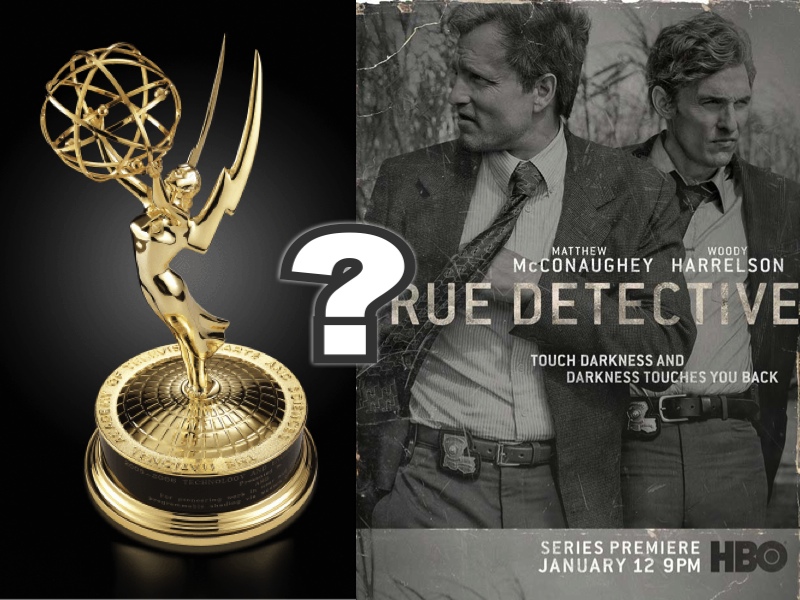
    One of the bigger shocks so far in the Emmy season was HBO’s True Detective’s choice to submit in the drama categories rather than the mini-series categories. The series, which is an anthology series like American Horror Story, would have guaranteed itself wins in Best Miniseries/TV Movie Actor and Directing for a Miniseries/TV Movie. Now, not a single win is guaranteed. To determine whether or not the switch will have an upside I will be looking at each category they are likely to be nominated in.

    Drama Writing
    Prior to the switch I would have said that the series was relatively safe for a writing nomination. However, as of now I have them in 5th place for a nomination. The issue is that it wasn’t a show that was praised for its writing. Is it good? Yes, of course. Was it a standout? No, not by a long shot. If they submit the “The Long Bright Dark (Pilot)” or “Form and Void” I think they have a stronger chance, but I wouldn’t be surprised if they were left off.

    Did it pay off? NO!

    Drama Directing
    I’m going to be very brief with this. They were guaranteed a win on the miniseries side, but now they have to contend with Breaking Bad, which hasn’t won in this category during its series run, which is both a handicap and an advantage. True Detective’s directing has always been a main point of praise for the series, so I still think they win here, but it’s going to be an uphill battle.

    Did it pay off? Maybe.

    Drama Supporting Actress
    This one is simple. Michelle Monaghan was guaranteed a win before, but now sits in sixth place with essentially no chance for a win.

    Did it pay off? Sorry Michelle, but Anna Gunn gave the best performance of this year.

    Drama Actor
    Currently in our predictions we have Matthew McConaughey and Woody Harrelson in 2nd and 6th, respectively, for Drama Actor. However, I am going to move McConaughey to 1st, which is also part of the reason I think this is the one category where I think they helped themselves. Because of the Drama category’s format of a performer submitting one episode, it gives McConaughey a boost if Harrelson is nominated since voters will essentially see two performance from both actors. The reason I think this helps them is because in miniseries voters are supposed to watch the entire series, this puts both McConaughey and Harrelson at a disadvantage because their strongest scene come mid-season. It is common knowledge that voters don’t watch terribly far into any mini-series, so someone with a top heavy season like Martin Freeman in Fargo or in a TV movie like Mark Ruffalo in The Normal Heart will have an advantage. Although, the duo still has to contend with Bryan Cranston, I think voters will respond well to McConaughey’s performance in his likely submission of “Who Goes There?”

    Did it pay off? Looking like a yes. Unless, Cranston still wins.

    Drama Series
    This is a hard one to determine. The series currently sits in 3rd to Breaking Bad and Game of Thrones in our predictions and I think it’s going to stay that way till the end. A lot of you are going to use the argument that Breaking Bad aired too long ago, but so did Homeland when it won. I am confident that Breaking Bad is going to pull it out to the end. However, had True Detective stayed in Mini-series, I think it still would have lost. Fargo, despite its soft ratings, had one of the best seasons of television in history and voters will know that. They’re not stupid. They aren’t going to be deaf to the industry backlash that True Detective is getting. Fargo is essentially their only alternative.

    Did it pay off? It didn’t matter either way

  • Conor Oberst “Upside Down Mountain” Album Review

    Conor Oberst “Upside Down Mountain” Album Review

    140331-conor-oberst-governors-ball

    It’s really hard for me to write about a Conor Oberst album because Bright Eyes is and will forever be one of my favorite bands of all time. When Oberst started to release solo albums again in 2008, I was a bit tepid. His self-titled album sounded like a lighter version of a Bright Eyes Album, which was an odd feeling. The album lacked the overwrought lyrics or powerful meanings that every Bright Eyes album had preceding it. The over-the-top dramatics that ended feeling poetic is part of the reason Bright Eyes became such an important band to me, so when Oberst began his simpler solo projects I was turned off. However, when I say this was his best solo released album to date, I mean it.

    I will admit that I haven’t paid much attention to his solo projects prior to his self-titled in 2008, but the progression of Oberst as a musician is evident here. It’s somewhat of a call back to the effortless and intimate “I’m Wide Awake It’s Morning,” while still drawing from the Southern California Folk Pop that led his recent return to solo work. While his album doesn’t become as tragic as his previous work in Bright Eyes, the introspection feels so genuine.

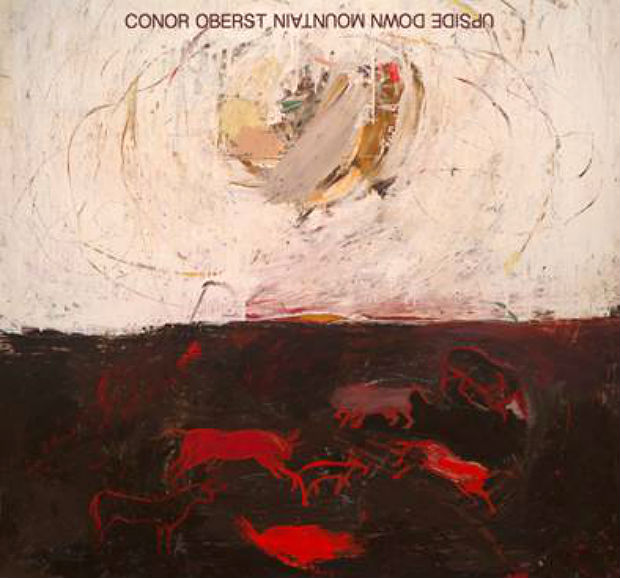
    140331-conor-oberst-upside-down-mountain-album-artThe mix of upbeat folk with the melancholy of the lyrics end up working to support Oberst’s vocals and its simple instrumentation become a refreshing reminder of Oberst’s long career that allowed him to mature as a musician.

    While much of the album featured strong storytelling, none are as complete and profound as that in “Enola Gay.” The 2:24 song features one of the most lyrically honest songs (“mashing Charles Mason songs up with show tunes”) of Oberst’s career set against such a beautifully complex instrumentation that plays off mostly like a classic mellow California folk rock groove, but includes small piano interludes that add a whimsical feeling to the song. Eventually the song builds into one of the most haunting endings of any song I’ve ever heard.

    Overall, Upside Down Mountain is a massive step in the Canon that is Conor Oberst. For some musicians unhappy is them at their best. I will put in that I have been wildly anticipating Death Cab’s post-Ben Gibbard divorce album for some time now. However, the need for raw unadulterated emotion is unnecessary, which is what makes Conor Oberst one of the great musicians of our time. His work always feels so urgent. Whether it be about not knowing love until I met you or about a bad break up his music begs to be heard. This album begs to be heard because of its great storytelling and ability to tap into the emotions we feel as we all gradually move toward death. As a fan of Oberst I am thrilled that he is still able to put out this quality of work, as a lover of music I am thrilled he is able to speak truths in an industry full of bulls**t.

  • ‘Halt and Catch Fire’ Review: “I/O” (Pilot)

    ‘Halt and Catch Fire’ Review: “I/O” (Pilot)

    halt-and-catch-fire-io_article_story_large

    MVP: Lee Pace
    MVP: Lee Pace

    Halt and Catch Fire is to Mad Men as Low Winter Sun was to Breaking Bad. Since the announcement of the show it was evident that AMC was trying to fill the void that Mad Men is about to leave in the network’s schedule. The comparisons between the two run miles through the Pilot, but much to the writers’ credit the series never feels like a rip-off of Mad Men, instead its flaws are derived from the writers’ need show to feel self-important.

    The story of Halt and Catch Fire was one that can sustain itself, unlike the underlying plot momentum of Mad Men, which had to rely on character drama to sustain its episodes. Two men, Joe MacMillan and Gordon Clark, attempt to reverse engineer the IBM BIOS chip to try and engineer their own computer. Much of the pilot is extremely compelling, particularly the well made reverse engineering montage. That is part of the appeal of the series. Its impeccable style was able to hide the fact that everything surrounding it was familiar. Everything from the opening screen defining what “Halt and Catch Fire” meant to a steamy sex scene following a very public debate, this time in a classroom setting. However, with the specific style of the show there was a slight calming of the comparisons.

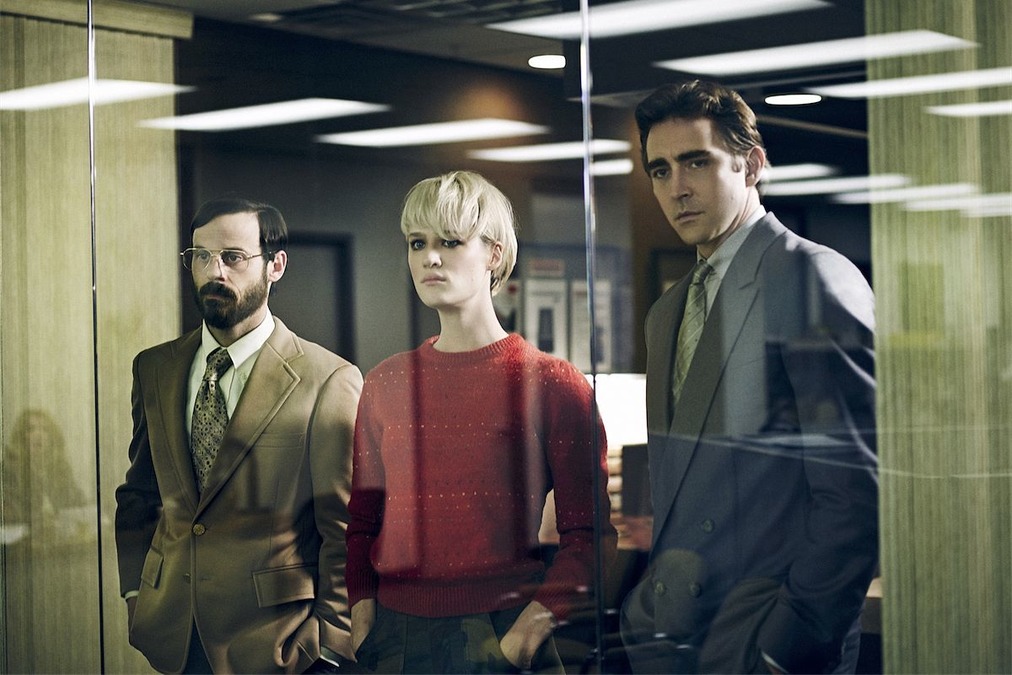
    Another point of familiarity were the characters. Lee Pace portrayed Joe MacMillan who is the Don Draper of the show all the way down to waft dark hair. The character floats through life like it was made for him. He monologues like a poet and persuades like a lawyer. Part of his storyline even involves him pursuing his own agenda behind his employers’ back. Sound familiar. His partner Gordon Clark is played by Scoot McNairy. He is a quiet man who has been weakened by life. It seems that all of his life’s motivation disappeared after various failures including a failed computer he worked on with his wife. She takes on the “bitch wife” role that Betty Draper and Skylar White (although I completely disagree with the public’s disdain for her) inhabited on AMC. They are later joined by Cameron whose role as the rebel genius recruited by the “heroes” seemed to take from every single person before her. It helps that that show’s ensemble was able to insert some uniqueness into each role, however I’m afraid that these caricatures might be set.

    However, it’s weakness is hidden by the show’s confidence. When I say confidence, I mean it’s unwavering ability to believe that it could do no wrong, much like MacMillan. Something from a melodramatic monologue is justified with assurance that the move paid off or a seemingly useless scene involving a baseball bat has a deeper character meaning. The self-importance almost runs rampant, but the plot keeps us centered. Our protagonist’s passion keeps us invested. I don’t know how long I’m going to stick with the show. The first episode didn’t offer us much in terms of plot, however I think with this type of confidence they must have something up their sleeve.

  • ‘Penny Dreadful’ Review: “Resurrection” (1×03)

    ‘Penny Dreadful’ Review: “Resurrection” (1×03)

    out of 10

    Three episodes in and it seems that Penny Dreadful can do no wrong. It is rare that in the first three episodes a show knows itself so intimately that it can change direction and know the audience will follow.

    We are returned more closely to the main storyline that was introduced in “Night Work” (see our review here). Ethan, eager to get medicine for his new companion Broma. Their search leads them to a tense stroll through the zoo where they encounter a pack of wolves. This is where the show shines. As the seconds ticked away the feeling of suspense continued to build. The darkness, the dread, casted a thick fog over the scene until it finally was over.

    What we got out of the storyline was a clue to Mina’s disappearance. Apparently she has involved herself with a nobleman who is able to control her. However, the pieces never really fell into place until we are introduced to a rabid Fenton who referred to the dark being hiding in the shadows as “master.” A final interrogation scene revealed that he’s always there, reaching his hand out of the dark. Fenton is a creepy motherf**ker.

    We’re also told that Vanessa has been acting as bait for this mysterious master. However, it was not totally explained to her about the Amunet possession situation. I’d probably hold that back too. Malcolm simply tells Ethan that if she gets possessed, you might have to bang her, however he was bait more eloquent than that.

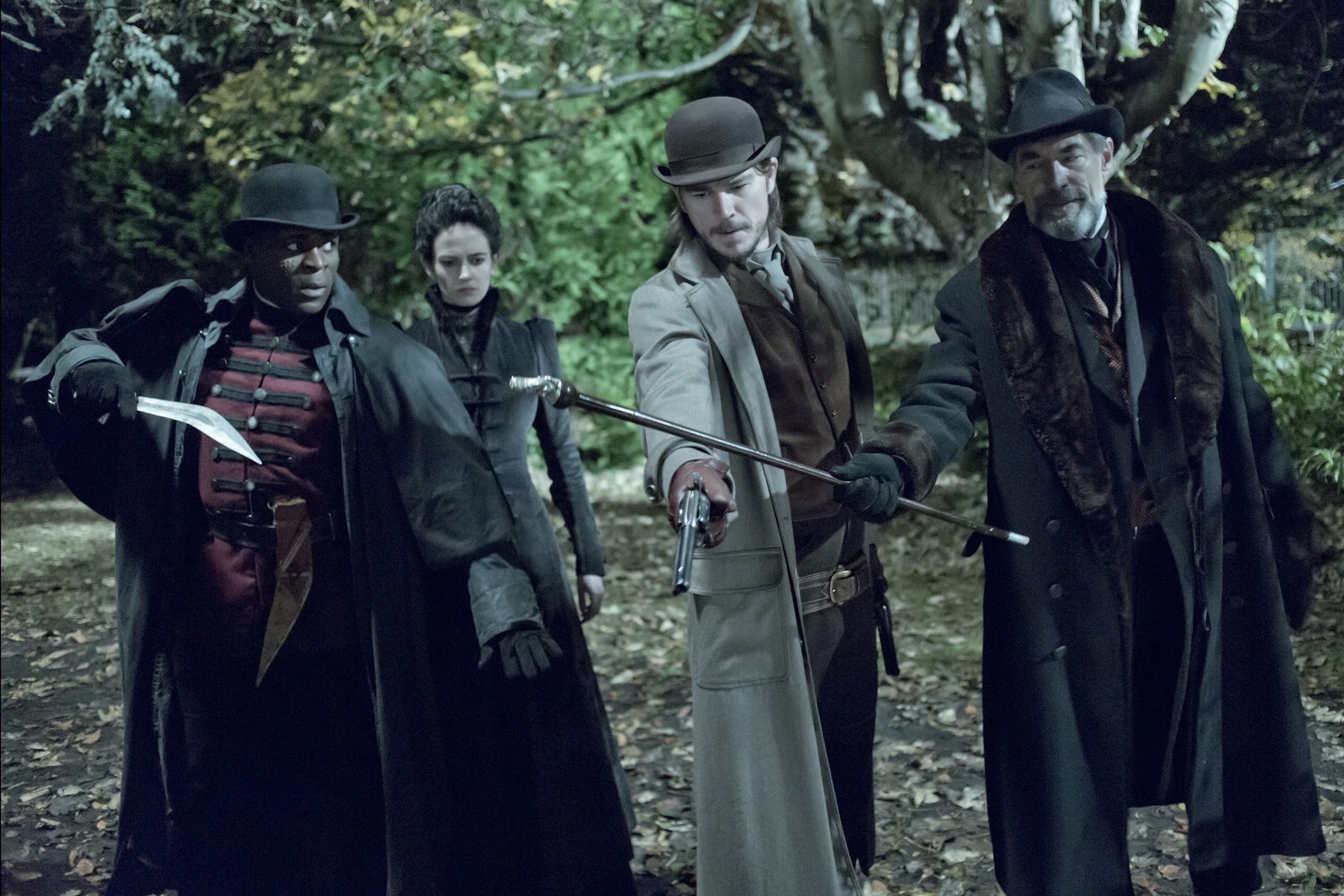
    After a few tense moments over the treatment of Fenton’s creepy ass, the team is assembled. So called monster hunters consisting of Malcolm, Vanessa, Ethan, Victor, and Sembene. The group agreed to “pledge to go as far as your soul will allow.” This is getting interesting.

    However, the storyline that defined the episode and the series yet again involved Dr. Frankenstein. This time we are treated to our first definitive background story to one of the characters on the show, however it is the nature of the background story that is compelling. We learn that Victor’s obsession with life and death stemmed from his mother’s abrupt and traumatic death. The peacefulness of the flashback is suddenly destroyed by the reminder of the carnage of the previous episode.

    Frankenstein’s first monster who is closer to the beast that we are familiar with is not much of a beast after all. Caliban, the name given to the monster by a stranger, was able to speak eloquently and display real emotion and hurt after his first encounter with his father. It seemed from the beginning that Dr. Frankenstein was simply unable to contain his first monster. However, the truth is that within second’s of Caliban’s creation the doctor ran out terrified of what he created. The screams of the monster weren’t screams of horror, they were screams of any new born living being. To be ignored was painful and confusing for Caliban. We actually begin feeling for him, however the show continued to shroud itself in darkness as Caliban and the Doctor were still covered in the blood of our dear departed Proteus, whose body laid in shambles as the two continued their conversation.

    Caliban felt abandoned the way a child felt abandoned by his parents. However, he was shown kindness despite his appearance and learned quickly of the nature of the world. There is good and there is evil, however the lines may not be so clear. Caliban’s isolation and story felt so heartbreaking that it seemed that his act of brutality was simply done in rage following the clear rejection of his creator. Penny Dreadful has become so much more than a show meant to induce horror. This side story of Victor and his creatures have become the catalyst for conversation about human nature.

    Caliban’s back story has become one of the most interesting story lines of the series. I’m interested to see how it plays out. So far it seems that the show is staying closer to the story of Mary Shelley’s Frankenstein, which the episode laid the groundwork for. I can see where they are potentially going with this Victor/Caliban storyline, but I will digress for now. Caliban is a passionate character who is clearly dangerous, that’s what Victor has to look out for. The entire episode provided wonderful material for Harry Treadaway and Rory Kinnear that both actors poured themselves into.

  • Maleficent Movie Review — Visually Stunning, but the Usual Disney Fare

    Maleficent Movie Review — Visually Stunning, but the Usual Disney Fare

    Maleficent-Movie-Trailer-With-Angelina-Jolie-and-Lana-Del-Rey

    Dir. by Robert Stromberg
    Dir. by Robert Stromberg

    It’s hard to review Disney’s Maleficent without mentioning that the screening I went to ended with a hearty applause. The reason I feel it’s necessary to point this out is because despite its clear flaws, this film is an absolute crowd pleaser. The audience bought into the world that the film was selling.

    The first half of the film was essentially a visual treat. Everything from the effects to the costumes to the makeup was done with such a vivid vision that the film’s world could be inhabited by any story. However, the problems quickly began. The first half of the film played out as a prologue, detailing the story preceding Sleeping Beauty and humanizing the fairy known as Maleficent. Quick fire scenes underscored with soaring and menacing music and connected by a seemingly omniscient narration allowed the film to move at a break neck pace, however the actual dialogue suffered because of it. While we were spared the cringeworthy expositional dialogue, we were instead tortured with cliched forced and insincere conversation.

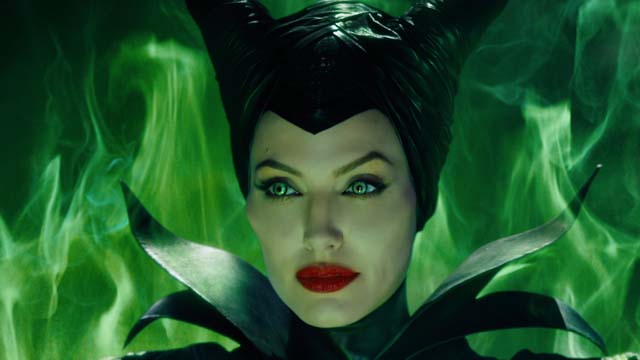
    However, it is always made up for in visuals. A battle scene played out between humans and beings of another world offered such gorgeous cinematography and effects, but so much of the mood is in thanks to Angelina Jolie’s performance. The film was dark by Disney standards, but there was still a lot of predictability and inevitable lessons that destroyed the true darkness that could have encapsulated the movie. What Jolie was able to do was utilize the Maleficent character as the foundation for the brutal honesty that a usual PG-13 film lacks. The character of Maleficent is a complicated one. Throughout the entire movie she never identified as a hero or villain, she was a true character that changed and was as selfish as she was selfless. Jolie was able to portray the change with an elegance that could have been lost on a lesser actress. Further than that, she was able to emote with such veracity that the pain transcended the screen, but also rule the kingdom with an icy stare that struck fear into our hearts like in the animated version.

    Despite her magnificent performance that will surely rank among her best, the second half of the film, which acted as a retelling of the classic Sleeping Beauty tale was clunky at best. The characters surrounding Maleficent became caricatures as if they were pulled directly from a cartoon. It caused the darkness that was built up in the first half to come crumbling down and what we were left with was just another heartwarming Disney movie.

    All flaws aside, Maleficent was a step in the right direction for Disney. The studio has been looking to step out of their usual mold of fanciful films that taught you a lighthearted lesson about life that you already knew. Saving Mr. Banks was their first attempt to break that mold and although it failed, it signaled a change. Maleficent was not a great movie by any means, but the pure craft involved was enough to keep you entertained for 90 or so minutes. I think that the film is an early contender for Oscars for Visual Effects and maybe Production Design and Costume Design. What kept you thinking was that Disney was able to put out a character with such complexity as Maleficent. While the movie surrounding may have been the usual fare, I am excited to see them adding, however small, a little darkness in their movies.

  • ‘Penny Dreadful’ Review: “Seance” (1×02)

    ‘Penny Dreadful’ Review: “Seance” (1×02)

    SPOILERS! If you haven’t watched this episode of Penny Dreadful, I highly suggest you stop reading now!

    Episode 102

    MVP: Eva Green
    MVP: Eva Green

    Penny Dreadful’s second episode titled “Seance” scaled back the scares and focused more on character development and the overall darkness of the series, but there’s no denying that this was one phenomenal hour of television. Everything we thought we knew about the series is ripped from us in literally a matter of seconds as the series continues to be unflinching in its portrayal of the gothic fiction meant to horrify and shock us.

    Let me start off by saying that if we didn’t know what was going on before, then we are really in the dark now. The series knows that they have hooked us to what essentially is a basic knowledge of the world, which puts them in a position of power. They can do whatever they want with us and we would buy into it, that’s what made the final shock of the episode so heartbreaking and exciting at the same time.

    Just when I was ready to call Victor and his monster Proteus the best couple of the television season, we are deprived of what seemed like one of the more pleasant storylines introduced to us in the Pilot. Much of the episode focused on Victor’s efforts to teach his new monster, who chose the name Proteus, and help him piece together his history before his demise. It was wonderful to watch this relationship between monster and creator develop. Every time we cut to them it was a welcome release from the tensions of the rest of the episode.

    Just at the end, when we have thoroughly been duped into loving Frankenstein’s Proteus, especially when he declares he hopes to have as many as ten friends, he is torn into two pieces by a true monster. This monster refers to himself as Frankenstein’s first creation and is closer to the nightmarish creature that we were thinking about when the identity of the doctor was revealed. Now, the question becomes what now? Is the monster responsible for the ripper killings that were referred to in the last episode and the cold open? Will Frankenstein protect his creation?

    This storyline was also a welcome indicator for the rest of the series. As confused as we may be right now about the intentions of each character and the direction of each storyline, it revealed to us that this is a show that is unflinching. The writers aren’t afraid to kill off a, however brief, beloved character or show a graphic sex scene with a prostitute with tuberculosis.

    One of series’ more intriguing characters, which is saying a lot, is introduced in this episode. The classic story of Dorian Gray is mixed into the darkness that is Penny Dreadful and let me tell you, this is not your Angela Lansbury version. Reeve Carney plays a modernized version of the classic English literature character with apparently the same shaky moral grounds as the Oscar Wilde version, but Carney is able to infuse the character with such charm and sexual energy that he makes you just want to jump in the sack with him.

    His storyline begins with a rather racy sex scene with a prostitute suffering from tuberculosis. Despite her spitting up blood, coughing, and wheezing, it seemed Mr. Gray enjoyed himself. He even became more aggressive when she coughed blood onto his face. All the while he had pictures being taken, which would point to him being some recluse, but the next time we see him he is dancing with Vanessa at a party.

    The seance mentioned in the title occurs at said party thrown by Lyle. Despite the psychic’s clearly fake possession it seemed that Vanessa was possessed by something much darker. Something that targeted Sir Malcom’s history. The scene was probably one of the best scenes of television in the past year. It was terrifying, powerful, and… well, dreadful. From the entity we learned that Sir Malcolm left his dying son Peter to go on an expedition.

    Whatever was possessing Vanessa knew its stuff, but when something more insidious entered her, that’s when things got really interesting. The entity accused Sir Malcolm of lusting over his own daughter saying he she saw him having sex with someone. It was a bit confusing, but the horror of the scene wasn’t lost. It ended with a classic demonic back bend as Vanessa left the party leaving the guests horrified.

    Usually the first four episodes of a series are rough. It seems that the writers and directors don’t know what kind of show they’re making, but if this episode is any indication, it is clear that the Penny Dreadful crew is pointed in the right direction. Dread, horror, gore, repeat. That’s the pattern we’re looking at and I wouldn’t have it any other way.

  • 7 Great Stage to Screen Adaptations (Musicals)

    7 Great Stage to Screen Adaptations (Musicals)

    Stage to Screen

    In honor of The Sting being turned into a musical to be put up on the great white way, we decided to go the other way. Here are 7 great stage to screen adaptations.

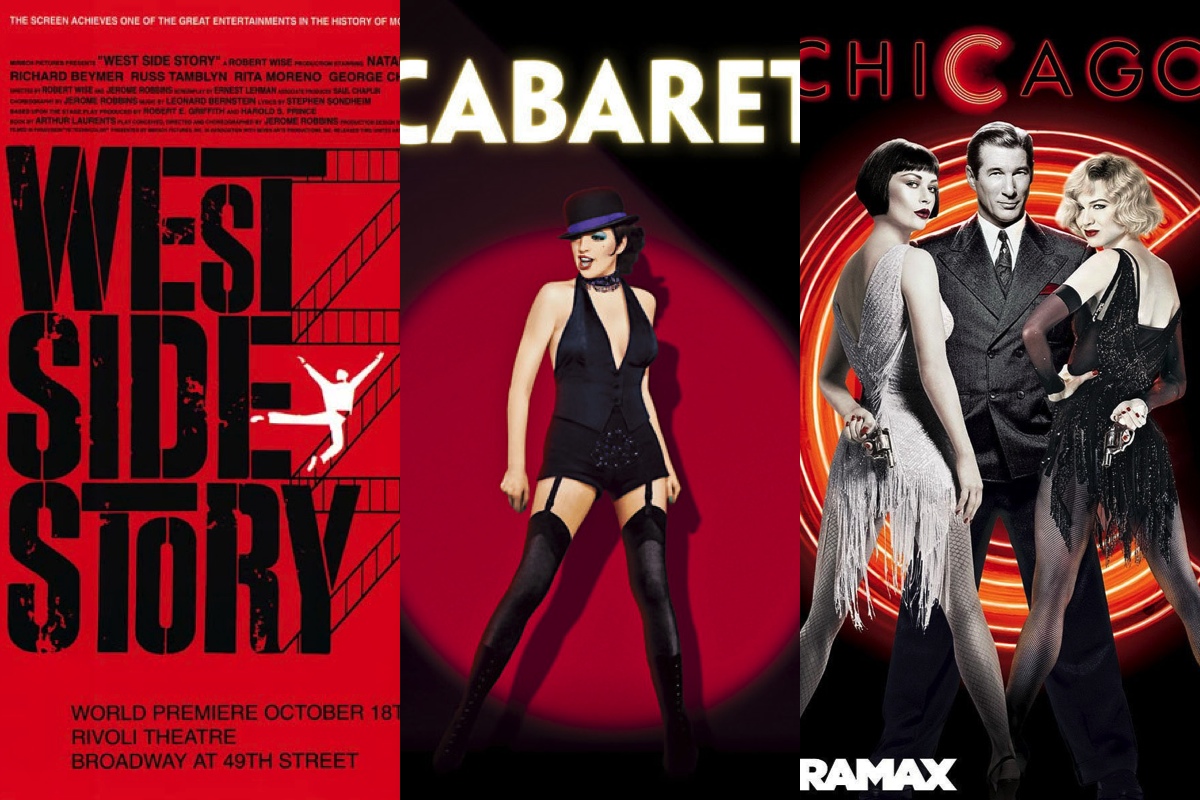
    7. Chicago (2002 | Directed by Rob Marshall | Starring Renee Zellweger, Catherine Zeta-Jones, Richard Gere, Queen Latifah, and John C. Reilly)
    SIX ACADEMY AWARDS including BEST PICTURE

    Some people consider this one of the worst Best Picture winners in history, but I could never see why. After a lull, it essentially revived the movie musical. What made Chicago so successful as a film was the filmmakers’ decision to utilize dream sequences for the musical numbers. Every thing was made up in Roxie Hart’s jazz infused mind. It made the leap that some people had to make to watch a musical more bearable.


    https://www.youtube.com/watch?v=RbebD653agE

    6. My Fair Lady (1964 | Directed by George Cukor | Starring Audrey Hepburn, Rex Harrison, Stanley Holloway, Wilifrid Hyde-White, Gladys Cooper, and Jeremy Brett)
    EIGHT ACADEMY AWARDS including BEST PICTURE, BEST DIRECTOR, and BEST ACTOR

    It’s another musical that is purely successful off charm, but Hepburn’s wonderful performance as Eliza Doolittle was yet another asset. She, along with Cukor were able to take this seemingly cold musical into something full charisma and of pure entertainment.


    5. On the Town (1949 | Directed by Gene Kelly and Stanley Donen | Starring Gene Kelly, Frank Sinatra, Ann Miller, and Betty Garrett)

    It’s such a charming story with such a charming score. It produced such classics like New York, New York, Lonely Town, and Some Other Time. More importantly, the film acted as a love letter to the big city. Filled with excitement, humor, and a bright outlook on life, it almost helps you get past the pure spectacle of it all.


    https://www.youtube.com/watch?v=aO3Gb5mkwTc

    4. Funny Girl (1968 | Directed by William Wyler | Starring Barbara Streisand, Omar Sharif, and Kay Medford)
    BARBARA STREISAND WON THE OSCAR for BEST ACTRESS

    In addition to proving Streisand is a magnificent actress, it also proved that with the right direction anyone can be funny. Her timing was as good as any comedian. The movie is over-produced, over-done, and overwhelming, but its saving grace is Streisand’s amazing performance. It’s simply a star vehicle and that star turned an overly dramatic musical into something bearable.


    3. West Side Story (1961 | Directed by Robert Wise and Jerome Robbins | Starring Natalie Wood, Richard Beymer, Rita Moreno, and George Chakiris)
    TEN ACADEMY AWARDS including BEST PICTURE and BEST DIRECTOR

    No list about movie musicals is complete without the classic Stephen Sondheim and Arthur Laurents tale about lovers on different sides of the track. It is a straight forward adaptation, but the story transfers so well onto screen. What also helped was Jerome Robbins’ careful and tricot direction that ensured the adaptation was done well. It also didn’t hurt that Rita Moreno and George Chakiris turned in magnificent performances.


    https://www.youtube.com/watch?v=xIjobdArtiA

    2. The Sound of Music (1965 | Directed by Robert Wise | Starring Julie Andrews and Christopher Plummer)

    FIVE ACADEMY AWARDS including BEST PICTURE and BEST DIRECTOR

    We know countless songs from the musical: “Do Re Mi,” “The Sound of Music.” “My Favorite Things,” but the success in the musical is not familiarity. It’s sentimental to a fault, with a little bit of camp. It’s irresistible, even to the most cynical. The Sound of Music essentially one of the most charming movie musicals out there that will fill you with warm puppies and rainbows.


    https://www.youtube.com/watch?v=5xfh_nsMOM0

    1. Cabaret (1972 | Directed by Bob Fosse | Starring Liza Minnelli, Michael York, Joel Grey, Fritz Wepper, Marisa Berenson)
    EIGHT ACADEMY AWARDS including BEST DIRECTOR and BEST ACTRESS

    Cabaret isn’t just one of my favorite movie musicals out there, it’s also one of my favorite movies of all time. It is a film that is crafted so well with techniques being born on the screen. Everything from its cinematography, to editing, to sound is so well done and ahead of its time that it is clearly a timeless classic. It’s catchy, sexy, and electric. Plus, it’s Bob Fosse, who could resist?

  • Can ‘Godzilla’ Reign Supreme at the Oscars?

    Can ‘Godzilla’ Reign Supreme at the Oscars?

    god02

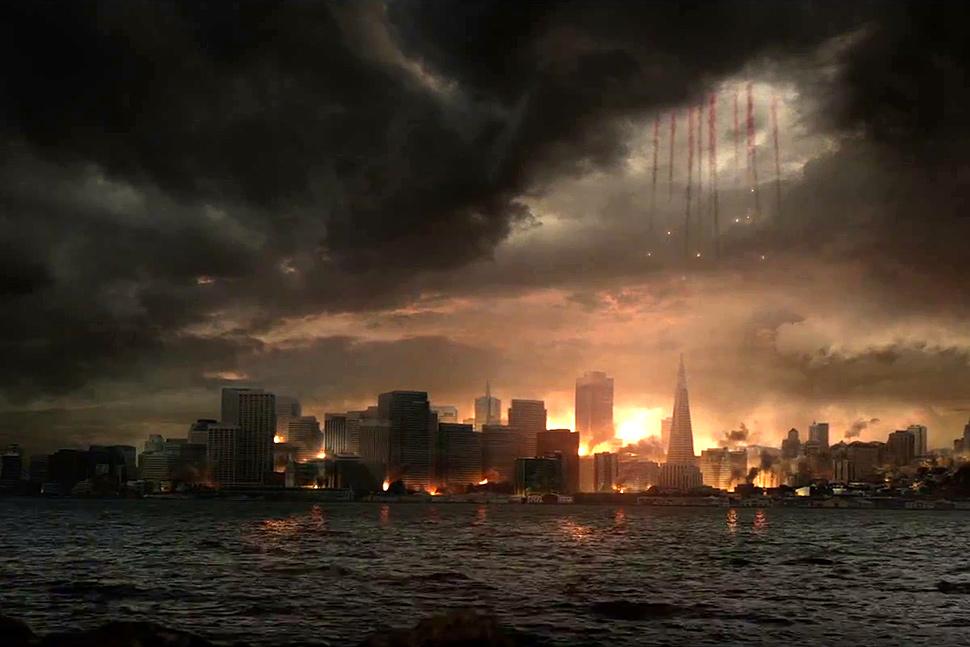
    Summer blockbusters rarely make a huge impression at the Oscars. Usually it’s a Visual Effects nomination, or something for sound, but even those are saved for more Oscar friendly movies. For example, The Avengers became the 3rd highest grossing film last year, however at the Oscars they were delegated a single nomination for Best Visual Effects. Now, we weren’t expecting a Best Picture nomination, but the lack of tech nominations was a little shocking.

    Another summer movie Pacific Rim was expected to reap at least 3 nominations, but ended up being completely snubbed. The question is why? These films had the buzz and the acclaim. The Avengers achieved a 92% on Rotten Tomatoes, while Pacific Rim received a 72%. However, it seems that there is a certain bias against big budget sci-fi and fantasy movies in the Academy, although Gravity did perfectly fine.

    What makes Godzilla unique is its position as one of the best summer blockbusters in years, as some critics put it. It’s also a clear technical achievement, but it may suffer the same fate as Pacific Rim and The Avengers because it doesn’t look like everything else nominated. Many critics complemented the human drama involved, but in the end it is a clear monster movie. While it may receive a Visual Effects nomination, the sound categories, film editing, cinematography, and production design seem out of the question.

    The one time we’ve seen a sort of monster movie succeed at the Oscars is in 2005 with King Kong. It was nominated for Visual Effects, Sound Mixing, Sound Editing, and Production Design, winning all but the last. Could the more unconventional Godzilla achieve this? Maybe. Only time will tell.

    At this early stage we could very well see Godzilla do well in the technical fields, but if any clear alternatives emerge, such as Christopher Nolan’s Interstellar, then the chances for it to receive more than a Visual Effects nomination become more slim.


  • Forgive Me, Leonard Peacock Book Review — A Strong Concept is Let Down by Weak Writing

    Forgive Me, Leonard Peacock Book Review — A Strong Concept is Let Down by Weak Writing

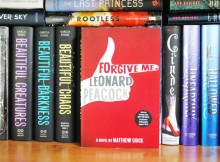
    Forgive Me, Leonard Peacock tells the story of Leonard Peacock (imagine that) as he is about to embark on a life-changing mission. He has decided that today, his 18th birthday, to kill his former best friend Asher Beal and then kill himself. It’s a very interesting concept. To hear about teen on teen violence from the perspective of the shooter. However, this is where Matthew Quick quickly falters. Leonard admits he is crazy. He knows it, however, the writing and language of the book don’t alway reflect that. Whether it was intentional or just a lack of cohesion is left with Quick, however, in my opinion, it veers too randomly.


    Most of the book revolves around Leonard giving out presents to four people he sees as his friends, or at least talk to him. Through this, we feel empathic for him. He has led a tough life. Mostly because he is a self-proclaimed “weirdo”, but it goes deeper than that. He is clearly intelligent, possibly too intelligent for his own good. It gets him into trouble and in turn, has thrust him into nothingness.

    As the book unfolds we see Leonard and his true self becomes revealed. The book is a quick read. First of all, it’s short, but second of all it is engaging. The entire story takes place during one day and the subject of each part is different. The best way to describe the book is in the title. It can be seen as the ending to a letter or as a profession to Leonard.

    Quick has created quite a story and character. The plot is incredibly well done and the frame of the story is as sturdy as the one that holds the Mona Lisa, but where he faults is the writing and execution. In addition to fluctuating between deranged teenager and a storyteller is random at best, I suppose neurotic would be the better tern. However, and most heartbreakingly, he never takes the writing to its full potential. The book is credited as unflinching, however, that doesn’t make any sense to me. An unflinching novel makes me afraid to turn to the next page, but Quick simply writes the book. There’s no pain in the writing, it is all from the story.


    Bottom Line: If this is a story that interests you, then go ahead. It has an engaging plot that will keep you invested. Don’t expect an incredible work of fiction, honestly, in the hands of a different writer, it could have been one. In the end the moral of the story is a good one, the twist, in the end, is also pretty gratifying. Leonard Peacock wanted to be remembered and this book will definitely help his legacy. 6.5/10

    Get Forgive Me, Leonard Peacock in paperback, hardcover, or e-book on Amazon!

  • This is Where I Leave You Book Review — Darkly Funny, Emotionally Heavy, A Must Read

    This is Where I Leave You Book Review — Darkly Funny, Emotionally Heavy, A Must Read

    this-is-where-i-leave-you

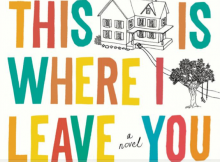
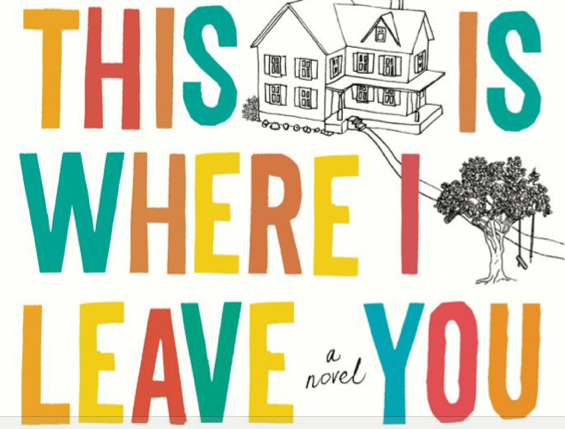
    Judd Foxman has had a tough life recently. His baby was strangled by its umbilical cord in the womb, his wife is having an affair with his boss, and his father has just died. This is pretty heavy for the first few chapters of a comedic book, but this sets up for the premise of the story.

    Judd has not only been battered by life, but also kicked in the balls. His marriage has fallen apart and his father has died. To make this worse, his father’s dying wish is to have his kids sit shiva after his funeral. This involves Judd, his brother Paul and his wife Alice, his brother Phillip and his cougar girlfriend Tracy, his sister Wendy and her husband Barry, and his mother to sit together in what is essentially a 7-day wake, where they are the subjects of mourning in the suburban house where they were raised.

    Of course, the situation is made light of. When one of the siblings asks about their mother, one responds: “She’s Mom, you know? She wanted to know how much to tip the coroner.”

    This holds for some interesting and often hilarious exchanges between these darkly entertaining family members. Wendy, the mother of three boys, struggles with her husband who is always there, but always absent at the same time. Paul, who still holds a grudge against Judd from when they were teens, must also deal with his sex-crazed wife who is intent on having a baby. Phillip is the free-spirited, impulsive nomad player of the bunch. He can have any woman he wants and has had many of them. However, he comes home with a significantly older woman who he sees as a fresh start. Judd’s mother is a celebrity therapist who specializes in children, which already means that she is crazy and has most likely made her children the same way.

    Then there is Judd. He is heartbroken, grieving, and dead inside.  This is where Jonathan Tropper gets his laughs. The dry humor is enough to carry the book, but the relationships between the characters are something else. There were times that I actually laughed out loud while reading, but there is more to the book than that. It tells the story of starting over, about being an adult, about being a man, and facing the future. It targets an underlying fear we all have as our lives progress. The idea of starting over is a terrifying one, but Tropper disguises it in this family crisis to make for an entertaining read.

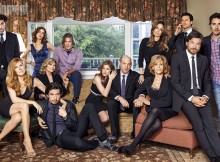
    The book is being adapted into a film that will star Jason Bateman, Tina Fey, Jane Fonda, Adam Driver, Connie Britton, Corey Stoll, among other A-listers. This is a film I’m cautiously excited for. I have pictured the characters in this book so vividly that I don’t want to risk ruining it, but after reading the cast list, I can see every one of those actors in their respective roles.

    It’s as sweet, as it is funny, and as terrifying, as it is deep. The characters are so familiar. They are people you’ve met, people you’re close to, maybe they represent you. It doesn’t matter. This is a book for people battered by life about people battered by life. It allows for a catharsis. For us to face our problems, and for people my age, to accept that they’re coming. Tropper had written something so funny and entertaining that we forget how profound it can be too. This is not one for the kids, one of my favorite lines is: “you need a GPS to follow the sex lives of this family” and that is the best way to describe most of the story lines of this book, but give it go. There is not much more I can say than READ THIS BOOK!

    Bottom Line: Think of this book as the literary version of Arrested Development (interestingly Arrested star Jason Bateman will star in the film adaptation). With its dry humor, outlandish characters, and hilarious situations, it will make for some entertaining reading. However, in the end it’s a book about family and how we make each other better and worse. Tropper has tapped into the psyche of someone who is still growing up, even in their thirties. Like I said, all I can say is READ THIS BOOK!

  • Reaction Shot: ‘This is Where I Leave You’ Trailer

    Reaction Shot: ‘This is Where I Leave You’ Trailer

    It’s finally here. The much anticipated (at least by me) film adaptation of Jonathan Tropper’s best selling book “This is Where I Leave You” is here and it’s underwhelming.

    Related Post: Top Five Most Anticipated Films Based on Books

    The book (check out our review here) tells the story of the Foxman family who must sit shiva following the death of their father. The four children are portrayed by Jason Bateman, Tina Fey, Corey Stoll, and Adam Driver. Their mother is played by Jane Fonda. Throughout the book, the siblings deal with their own issues in the place where all problems begin: home.

    this-is-where-i-leave-youLet me just say that I love this book. It’s so masterfully written and its darkly comic tone is so refreshing and painfully funny. However, that is my main problem with this trailer. It portrays the film too much as a lighter comedy with a moral family tale tacked on, when in reality it’s a story about growth and decay in the wake of broken dreams and missed opportunities. My worry is that the movie is too focused on the comedy aspect of that. The trailer focused a lot on one-liners, which is not what makes the book so hilarious. What makes the book hilarious is it all happens in such a dark fashion. There’s no room for fluff. Tropper is so unflinching and it looks like when it came to penning the movie’s script he flinched.

    Although from the short scenes that I saw, I can tell that almost every actor was cast perfectly with the exception of Dax Shepard as Judd’s (Jason Bateman) boss, who slept with his wife to begin the book, and Adam Driver as the youngest Foxman child, Phillip.

    I’m still excited for this. It’s an adaptation that I saw coming from a mile away. The book is so perfectly set up for a wonderful dramedy about the inevitable crisis we all face, but I can’t help but dread it. I know, most of the time film adaptations are disappointing, but this had so much going for it. Hopefully there is something more there.

  • Do the Shuffle (Vol. 1): The Kooks, Bright Eyes, and The Lawrence Arms

    Do the Shuffle (Vol. 1): The Kooks, Bright Eyes, and The Lawrence Arms

    Do the Shuffle (Vol. 1)

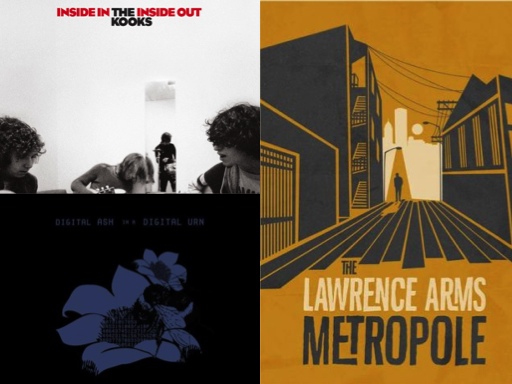
    In our newest segment, one of our team members puts their iPod on shuffle and makes a playlist out of the first ten songs to play. It’s a great way to find new music or rediscover the old stuff.

    http://open.spotify.com/user/smashcutreviews/playlist/5kbkNHtf14nmJ9Vg0fQqwO

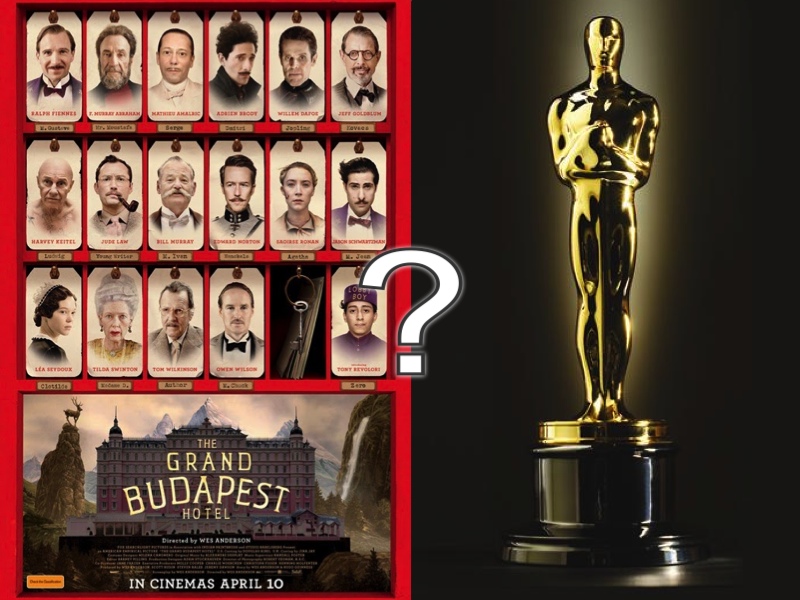
  • Will ‘The Grand Budapest Hotel’ be Wes Anderson’s First Best Picture Nomination?

    Will ‘The Grand Budapest Hotel’ be Wes Anderson’s First Best Picture Nomination?

    Grand Budapest Oscar?

    It’s sad to think that one of the greatest filmmakers of our time has a lowly three Oscar nominations to his name. Wes Anderson has delivered such memorable films as Rushmore, The Royal Tenenbaums, and Moonrise Kingdom, the latter of which was his most recent chance to win that piece of hardware that Hollywood is so hung up on.

    Moonrise Kingdom had an interesting path to its eventual snub at the Academy Awards. The film premiered in competition at Cannes Film Festival that year in May before being released the next week. Upon its release the film earned critical acclaim with many calling it Wes Anderson’s best film and through the summer it seemed like an early contender for Best Picture.

    The usual timeframe for Oscar films is October to December. To use the 2013 Oscars as an example, every film nominated for Best Picture was released in this time period except for Beasts of the Southern Wild, which was premiered at the Sundance Film Festival and released nationally in June, and the eventual winner for Best Foreign Film Amour, which premiered at Cannes and did not receive a wide release in the US.

    So, to determine whether The Grand Budapest Hotel can be nominated purely from the current factors (essentially everything except the other contenders) we can look at these three aforementioned films. Why were Beasts of the Southern Wild and Amour able to obtain nominations and not Moonrise Kingdom?

    In my opinion, you have to look at the films themselves. In 2013, there were nine nominees. Under the Academy rules there can be anywhere from 5 to 10 nominees, however for a film to be nominated it has to have at least 5% of the vote. Assuming Django Unchained, Les Misérables, Life of Pi, Lincoln, Silver Linings Playbook, Zero Dark Thirty, and eventual winner Argo were safe, I would say Moonrise Kingdom, The Master, Amour, and Beasts of the Southern Wild were the next contenders. It is no coincidence that all of these films premiered outside the usual Oscar timeframe.

    The Master was too divisive. Despite its passionate supporters, there were others who simply didn’t get the movie. I think with its lack of nominations outside those for its actors that it was probably the least likely to get in.

    Amour was always a dark horse for me. It was one of my favorite movies of the year and probably the most heartbreaking. However, for most people unaware of the Oscar race it was a shock to see it among the nominees, but it did make sense. First of all, it won the Palme d’Or, which isn’t a guarantee by any means, but it gave it the buzz to get the ball rolling. Second of all, Emmanuelle Riva was receiving raves for her performance and naturally that brings attention to the film. Third, it had the international support. It was the clear frontrunner for Foreign Language Film that year and catered to a very European audience, which I think carried it along. So, let’s say it was 8th that year.

    Now, we’re left with Beasts and Moonrise Kingdom. Both films were the two earliest releases among the contenders and both had more or less limited distribution, but the reason I think Beasts of the Southern Wild ended up nabbing that last spot was because of its “cool factor.” Everyone was talking about it, even President Obama and Megan Fox. It was an indie lite movie. Although I thought Moonrise was more accessible, I don’t think enough people understood his world yet.

    So, after this rant about the 2013 race, what does this mean for the 2015 Oscars and more specifically The Grand Budapest Hotel. I think as of now it nabs the nomination. It’s going to have two very important factors that I mentioned above: (1)the European flavor and (2)the cool factor. I think that it has become that indie lite choice. It had enough deeper meaning to please film geeks, but enough thrills to sustain a regular cinematic audience.

    Does this guarantee it a spot? No. Not by a long shot. We still have the rest of the contenders to consider. However, I think that there are going to be very few films to rival Grand Budapest if it comes down to those last few slots.

  • I Did It My Way: ‘Mad Men’ Review (“The Strategy”)

    I Did It My Way: ‘Mad Men’ Review (“The Strategy”)

    96ffa96d-3586-ca0c-72f2-171f26e46a3c_MM_706_JM_0124_0573_article_story_large

    out of 10

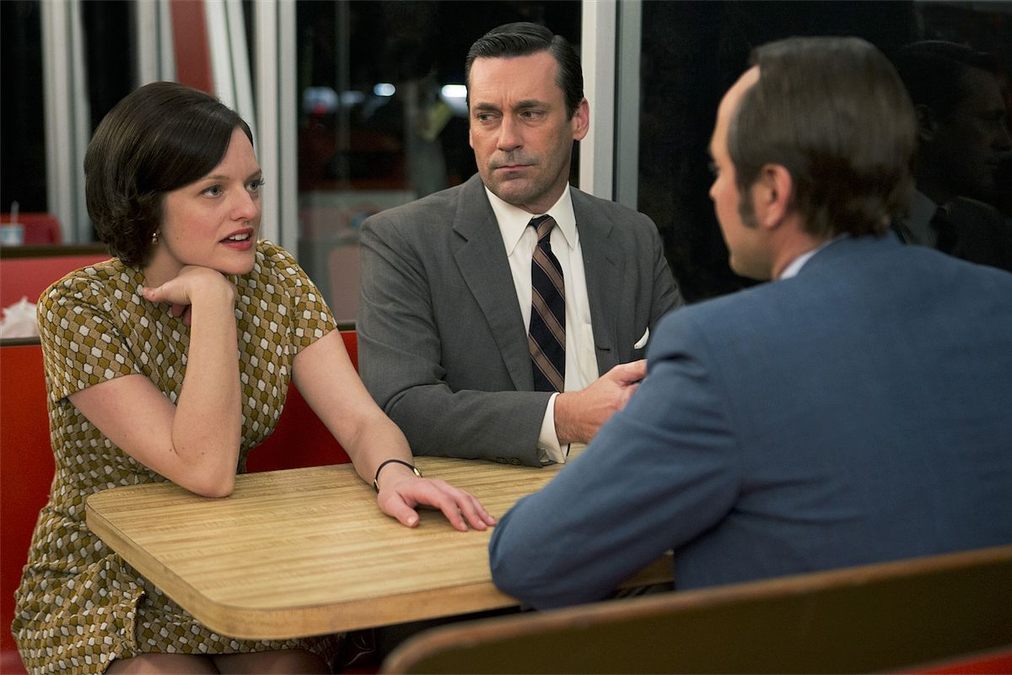
    Turns out Mad Men has a soul after all. At the end of the episode, entitled “The Strategy,” we find Peggy, Don, and Pete having a family dinner at a burger barn. Three people battered by life having a cordial meal together. However, as the rest of the episode preceding the scene revealed, these are three people who have just learned what it is to be human.

    Peggy and Don are still somewhat at odds, more on Peggy’s side though. She is still seething, slopping around, feeling sorry for herself that she can’t reach the level of the great Don Draper. It’s a dark shadow to try to crawl out of, but I’m sure she does. The problem with Peggy is that she’s too hung up on being Don that she forgets that she is her own person. In the episode, she delivers a beautiful Draper-esque pitch for Burger Chef. Elizabeth Moss exuding every bit of confidence as her character has. However, all that confidence crumbles away with one suggestion from Don. She can’t seem to grasp the concept that no matter what there will always be a better idea.

    It also begs to be said that the episode was a wonderful reminder of the changing times. This half-season has been great at that so far. The hippie culture, the computer, but this episode brought to the surface something that the show has been focusing on since day one: women. Peggy realizes her pitch is rooted in the past. The family she was trying to portray, a couple of happy kids with Dad waiting for dinner and Mom worrying what to make, was becoming the minority. Peggy herself began to rue what she has become. A woman who has turned thirty with nothing to show for it, but in one of the show’s softer moments, Don reminds her (with the help of Sinatra’s “My Way”) that she is doing just fine. Then, they danced. It was hands down one of my favorite moments of the season and maybe the series. It perfectly summed up the duo’s relationship as a mentor and his protege, a father and his daughter, as friends.

    The episode was also a huge stepping stone for Joan, which also makes me wish this episode had given more screen time to Hendricks whose Emmy chances look skunked by this season. Bob Benson is made an offer to move to Detroit to join Buick after Chevy makes a move to bring its advertising in house. Knowing that the GE executives will be more assured if he comes in with a wife, he proposes to Joan who, after years of being objectified, asserts that she would rather marry for love. Hendricks is so subtle with her acting, but impactful at the same time. She emotes so naturally. It’s a travesty that she hasn’t won any awards (or the entire cast rather) for this role.

    The one last piece to that dinner in burger chef is Pete. He has been a mystery this entire season. There was a point where I realized that the charm of it all may have seeped into him (like his tan) and he was living in some dream world where nothing mattered. However, after leaving Bonnie in New York to visit his daughter in Connecticut he is given a sort of wake up call. Trudy isn’t at the house to greet him and doesn’t come home until late. Pete feels rejected and unwanted. Trudy even points at that he saw his daughter enough for the year. His dream is falling apart. In New York, Pete is the man who needs to be needed and Bonnie realizes that. She goes back to Los Angeles without him on the same flight as Megan who was visiting Don.

    Their relationship has been falling apart since the beginning, but it was clear now that she was trying to run away from Don now. When in the apartment she decided to take the rest of her stuff with her to Los Angeles, but when Don offered to bring it when he visited she closed up. It looks like the era of Megan Draper is no more.

    This was a refreshing episode of Mad Men. So often the show is brutally honest and cold in its portrayal. It is part of its success. This episode reminded us that sometimes things do fall into place. That the lives of the characters aren’t lost causes. They have room to grow, learn, and move on. It excited me to see how the writers tear them apart again.

  • 2014 Emmy Predictions: Writing for a Drama Series

    2014 Emmy Predictions: Writing for a Drama Series

    Writing Drama
    Writing categories are some of my favorite categories in all entertainment awards shows, but they really do rule supreme for me at the Emmys. Why? Because TV writing can be so good and emotionally taxing, sometimes hilarious, sometimes heartbreaking, but it can also absolutely suck. So any award that appreciates good writing is one that I’m for.

    This year in Writing for a Drama there is a mixed bag of returners and new shows, but there are a couple wild cards that could throw a wrench into the category.

    [maxbutton id=”3″]

    1. “Ozymandias”, Breaking Bad (Written by Moira Walley-Beckett): If this wasn’t one of the greatest episodes of drama to hit the small screen, then I don’t know what is. Further than that, considering the show received two nominations in this category last year despite a 4 year drought shows me that voters are paying attention and if they know what’s good for them, this episode is solidly in first place.
    2. “Waterloo”, Mad Men (Written by Matthew Weiner): This one is pretty much a hunch. If Mad Men is able to get back into this category, which they dominated until last year, it’s probably going to have to be a big episode. That’s why I’m thinking the season finale could be it. It probably doesn’t hurt that Matthew Weiner penned the episode.
    3. “The Last Call”, The Good Wife (Written by Robert and Michelle King): For some reason they didn’t submit the superior “Hitting the Fan” for consideration, which I could have seen winning. While this episode is good, they’re just holding on to a nomination now.
    4. “The Long Bright Dark”, True Detective (Written by Nic Pizzolato): If True Detective makes as big a splash at the Emmys as we think it will, then it’s just natural that their Pilot is nominated here.
    5. “The Children”, Game of Thrones (Written by David Benioff and D.B. Weiss): The decision to again only submit one episode is probably going to work in favor for Game of Thrones, especially with their most buzzed about season yet.
    6. “Pilot”, Masters of Sex (Written by Michelle Ashford): The Emmys are suckers for Pilots and I think in any other year Masters of Sex would be nominated in series, but this is a nice consolation prize.
    7. “Felina”, Breaking Bad (Written by Vince Gilligan): If the Emmys go crazy over the show again, it’s possible that they up their writing nominations from two to three. If that’s the case, I think the series finale is a safe bet.
    8. “Confessions”, Breaking Bad (Written by Gennifer Hutchison): Of all the memorable episodes from the final season of Breaking Bad, the “Confessions” confession tape has to be one of the most memorable scenes. It also doesn’t hurt that the episode won the WGA award for Best Drama Episode.