Karl Delossantos

  • ‘X’ is a Texas Boogie Nights Massacre | movie review

    ‘X’ is a Texas Boogie Nights Massacre | movie review

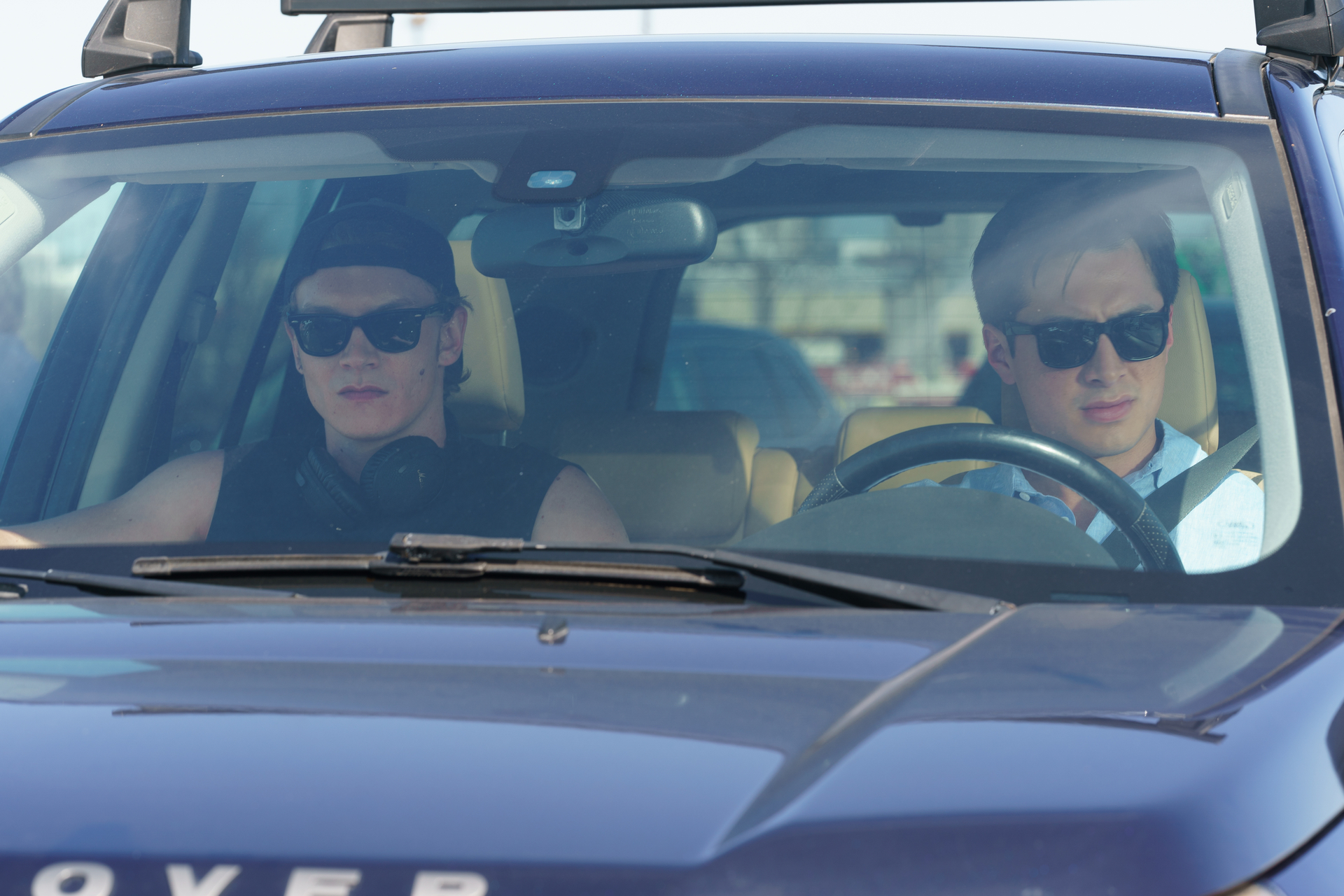
    X follows a young group of aspiring filmmakers who travel to an isolated farm to film a porn. It doesn’t go well.


    X is a detailed and well-studied recreation of 70s exploitation B-movies and the Golden Age of the slasher genre, right down to the film grain. However, director Ti West does more than homage. He adds his own darkly comedic tone to mine some real laughs in between the carnage as well as a surprisingly complex pair of villains — which is why a prequel film has already been shot. Nostalgic cinematography, a tense Carpenter-esque score, and deliciously camp performances — particularly from Brittany Snow, Mia Goth, and Martin Henderson — make X a gloriously bloody and entertaining throwback. Like Boogie Nights by way of The Texas Chainsaw Massacre.

    X is now playing in theaters.

    The most fascinating thing about X is how straightforward it is. There are no tricks, no twists, no sudden genre shifts or gotcha moments, but that’s exactly what director Ti West intends. He’s not looking to reinvent the slasher genre, he wants to celebrate every single gritty bloody detail right down to the film grain — although The Texas Chainsaw Massacre is clearly his biggest inspiration. But that’s not to say he doesn’t have some tricks up his sleeves.

    The glorious The Cabin in the Woods, perhaps the most meta meta-horror movie that lovingly skewers the genre for its repetitive tropes, posits that the victims of slashers are being punished for their youth. Not just being young, but taking advantage of that youth. However, movies from the genre’s heyday in the 70s and 80s personify that punishment as an inhumane mysterious force — Michael Myers, Leatherface, Jason Voorhees. West subverts that trope and instead finds humanity in the antagonists. If anything, X’s villains are devastatingly human.


    ADVERTISEMENT


    But first, let’s go back to 1979. You know the setup. A group of six young people travels to an isolated part of Texas for a weekend of fun. Though, in a Boogie Nights-like twist the group isn’t just doing it for their own pleasure. They’re shooting an adult film to take advantage of the newly formed home video market. Maxine Minx (Mia Goth), in particular, is obsessed with being a star. Something her boyfriend and film’s producer Wayne (Martin Henderson) is convinced she’s destined for.

    Maxine’s co-stars Bobby-Lynne (Brittany Snow) and Jackson Hole (Scott Mescudi aka musician Kid Cudi), on the other hand, are more seasoned porno actors. Rounding out the group are the film’s director RJ (Owen Campbell) and his girlfriend Lorraine (Jenna Ortega), who are more conservative compared to their companions, especially Lorraine who didn’t even know what the project was.

    In an effort to keep costs low the group is shooting the film in the farmhouse on the isolated property of elderly couple Howard (Stephen Ure) and his wife Pearl (Goth, playing double duty in impressive old age makeup). West makes it clear that something is amiss with his chilling bloody cold open, the foreboding music by composers Tyler Bates and Chelsea Wolfe, and classic horror shots framing the villains with menace. We don’t get a clear view of Wayne or Pearl’s faces for some time.


    ADVERTISEMENT


    After some brilliant slow-burn tension building where we begin to learn a bit more about our characters, hell breaks loose. Or should I say, Pearl breaks loose and X pivots to being a full-blown slasher with all the blood and gore you could hope for. Still, West finds depths in its narrative while maintaining its horror elements. Maxine and Pearl feel like parallel stories running in two different timelines. Pearl could’ve been Maxine in an earlier life and Maxine could become Pearl. X presupposes that the real horror here is time. It highlights the brilliance of casting Mia Goth in both roles and the decision to film a prequel in tandem.

    As straightforward of an homage to 70s and 80s horror X is, it mines the thematic depths of youth, time, regret, sex, and the horror genre itself. Horror and porn are often lumped together as gratuitous and deviant as they deal with the taboo topics of sex and gore. West questions asks why that is the case with his narrative. Why do we find two people having sex on camera so alluring yet unacceptable (the same for violence)? The answer is the movie itself.


    ADVERTISEMENT


    More movies, less problems


    Hey! I’m Karl. You can find me on Twitter and Letterboxd. I’m also a Tomatometer-approved critic.

    💌 Sign up for our weekly email newsletter with movie recommendations available to stream.


    ADVERTISEMENT

  • ‘Sissy’ directors and star Aisha Dee chat their new horror | Interview

    ‘Sissy’ directors and star Aisha Dee chat their new horror | Interview

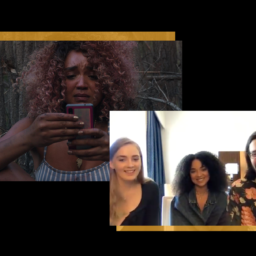
    Hannah Barlow and Kane Senes chat their new horror-comedy Sissy, which premiered at SXSW, along with star Aisha Dee

    Sissy, which opened the Midnighter section at the 2022 South by Southwest Film Festival, stunned audiences (you can read my review here) and was acquired by Shudder for release this year. Directors Hannah Barlow and Kane Senes chatted with me about the movie’s origins, why it needed to be a horror, and balancing the tricky tone between scares and laughs. Star Aisha Dee, best known for her role on The Bold Type, talks about how she empathized with her character, how the pandemic helped her prepare for the role, and what zodiac sign she thinks she’d be.


    ADVERTISEMENT


    More movies, less problems


    Hey! I’m Karl. You can find me on Twitter and Letterboxd. I’m also a Tomatometer-approved critic.

    💌 Sign up for our weekly email newsletter with movie recommendations available to stream.


    ADVERTISEMENT

  • ‘Bodies Bodies Bodies’ is a bloody game of Among Us | SXSW review

    ‘Bodies Bodies Bodies’ is a bloody game of Among Us | SXSW review

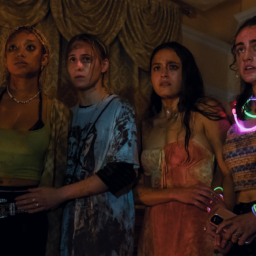
    Accusations fly between a group of friends after a stormy game night turns deadly in Bodies Bodies Bodies. Together they must find the killer among them.

    Bodies Bodies Bodies is like a dark, bloody slasher version of Clue with a hint of Mean Girls and Lord of the Flies that takes place over a single night where accusations fly between a group of friends after a body is discovered on a stormy night — like a sick game of Among Us. Its perfectly constructed mystery is punctuated by its slasher-like horror filmmaking and a flurry of terrific performances — particularly a hilarious Rachel Sennott — that feel so lived-in yet representative of the privileged Gen Z TikTok elite as a whole. The delicate balancing of tones, storylines, and relationships culminates in a hilariously satisfying ending that will make you want to watch the movie over and over again.

    Have you ever wondered how a real-life game of Among Us would play out? Or what the cult classic comedy Clue would be like as an actual horror movie? Well, Bodies Bodies Bodies may have answered that question and then some. Not that director Halina Reijn nor the screenwriters* intentionally took those properties as direct inspiration. It is unique in both narrative and execution even if you see shades of other movies in it — Scream and Mean Girls also come to mind. What it does have in common is it’s a complete blast, especially for genre fans. Though, it still even has a few tricks up its sleeves for them.

    Of course, like any good slasher (or slasher send-up), Bodies Bodies Bodies takes place in a remote family mansion where Sophie (Amandla Stenberg) is bringing her new girlfriend Bee (Maria Bakalova) to a hurricane party at her childhood friend David’s (Pete Davidson) parents’ house to brave a hurricane that is forecasted to hit that night. Immediately, there is tension within the group. It’s clear that past baggage is going to plague the night. David and his girlfriend Emma (Chase Sui Wonders) seem at odds for a variety of reasons but particularly because Alice (Rachel Sennott) brought her hot older boyfriend Greg (Lee Pace) along, causing David to feel threatened. Then there’s Jordan (Myha’la Herrold) who doesn’t seem all that happy that Sophie brought Bee uninvited.

    And with incredible comic timing, the storm starts barrelling down.


    ADVERTISEMENT


    Armed with drinks, glow sticks, enough cocaine to make a drug lord jealous, and a sprawling mansion to use as a playground, the friends hunker down for the longest night of their lives. In an attempt to break the tensions, the group decides to play the game Bodies Bodies Bodies where one player is secretly chosen as the killer and “kills” one of the other players by tapping them on the shoulder in the dark. Then, the remaining players must figure out who did it — like a game of Clue. All is well until the lights go out and the friends split up. Bad choice. A body is discovered and a real-life version of the game is now afoot.

    Throughout the night, more bodies are found, more people are killed, and suspects are cleared and uncleared. It’s like an entry in the Scream franchise that takes place in real-time over a single night.

    What I love about Bodies Bodies Bodies is how natural the relationships and interactions feel. Like you’re getting a glimpse into the deep tanglings of this friend group, which color the accusations. In one of the best and funniest scenes, the friends use Gen Z buzzwords to levy suspicion onto each other and remove it from themselves. “Stop gaslighting me,” one character says. “He’s a libra moon,” says another.


    ADVERTISEMENT


    Eventually, the group begins to play oppression Olympics. “Accuse the black girl,” “I had PTSD from that,” “I was poor.” In reality, none of these kids are completely oppressed. When one claims she’s poorer than the others she’s immediately slapped with, “your parents are professors at a University!” to which she replies, “it’s public.” It’s the kind of tongue-in-cheek skewering of Gen Z wokeness that makes the movie a delight to watch outside of its horror elements.

    However, the commentary doesn’t feel out-of-place. It feels so natural that the characters would use those defenses if they were accused of murder and their reactions, as ridiculous and hilarious as they are, never feel ingenuine. The way that the movie plays out is perfectly satisfying. Reijn paces the movie with precision so that not a single moment feels wasted and the momentum seemingly never stops.

    Bodies Bodies Bodies feels like a perfect example of what the horror genre is going to look like after its renaissance in the early part of the 2010s. Like Get Out or Ready or Not, it uses the tried and true horror staples to build tension and suspense while using the world we live in to color it in complex shades that reflect back the horror of our society. But who am I kidding? More than anything, this is a bloody, hilarious, slasher of a good time. Everything else, icing on the cake. Or, I guess, a line of coke on the dresser.

    * Kristen Roupenian, Sarah Delappe, Chloe Okuno, Joshua Sharp, Aaron Jackson


    ADVERTISEMENT


    More movies, less problems


    Hey! I’m Karl. You can find me on Twitter and Letterboxd. I’m also a Tomatometer-approved critic.

    💌 Sign up for our weekly email newsletter with movie recommendations available to stream.


    ADVERTISEMENT

  • ‘The Cow’ is empty calories | SXSW review

    ‘The Cow’ is empty calories | SXSW review


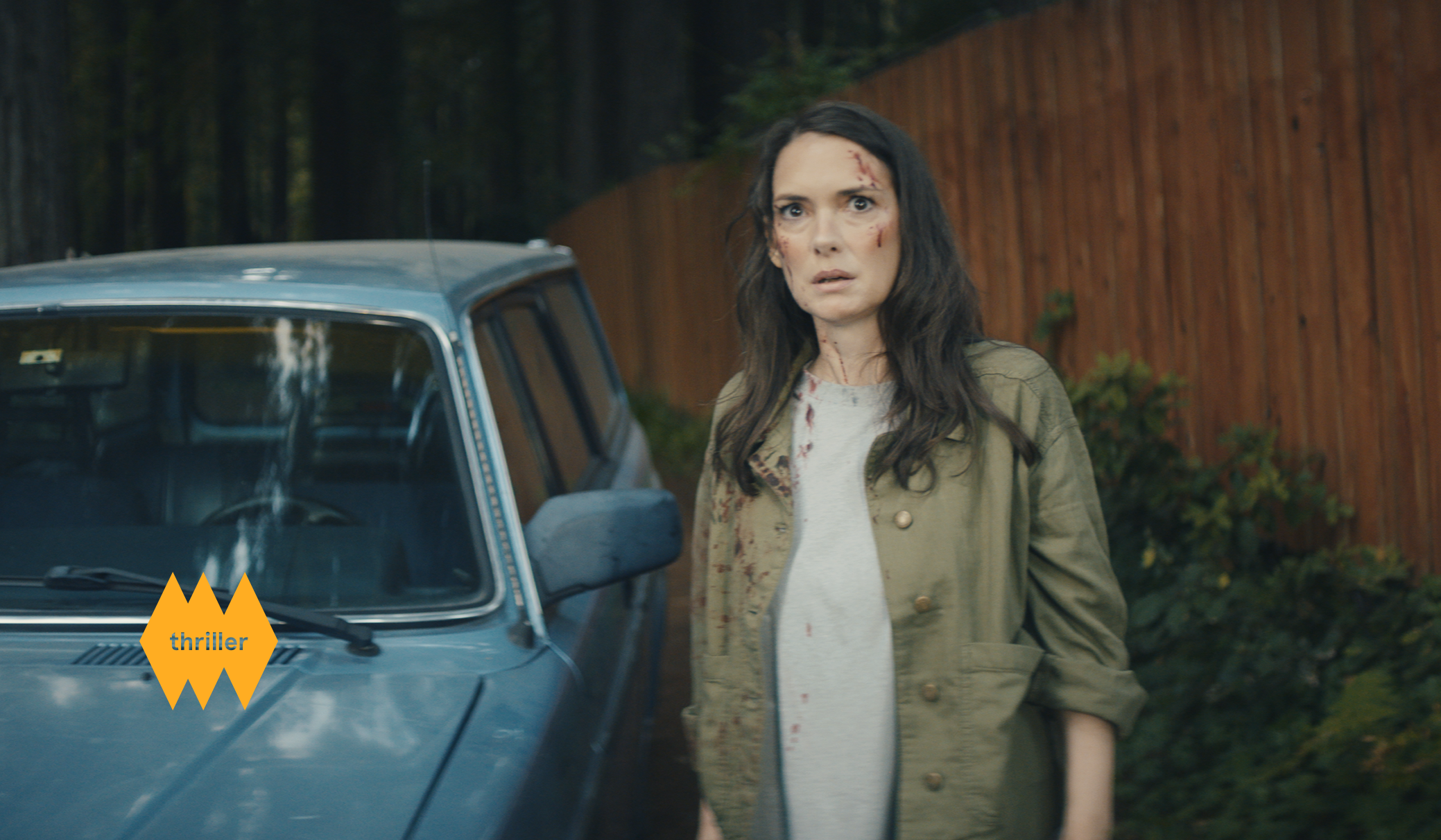
    A couple heads out to a remote cabin for a romantic getaway, but only one of them returns. The Cow follows Winona Ryder’s Kath as she unravels the mystery.

    The Cow starts and ends showing promise for Eli Horowitz as a director. However, the movie’s undercooked non-linear narrative and rough screenplay undercut any dramatic tension or character development needed for us to be engrossed by it. It’s especially unfortunate considering the movie’s intriguing premise and Winona Ryder’s starring role.

    The Cow premiered at the 2022 South by Southwest Film Festival.

    Things are not as they seem at the start of Eli Horowitz’s feature debut The Cow, which premiered at the 2022 South by Southwest Film Festival in Austin. It’s clear, from the eerie score to the intermittent cuts to a mysterious shipping container tucked away in an overgrown field in the forest, that couple Kath (Winona Ryder) and Max’s (10 Cloverfield Lane’s John Gallagher Jr.) weekend getaway isn’t as straightforward as we’d imagine. That becomes abundantly clear when they arrive at the isolated cabin Max has booked and find another couple, Greta (Brianne Tju) and Al (It’s Owen Teague), there already. Realizing that the cabin has been double-booked, Greta invites Kath and Max to share the space for the night, to which Kath reluctantly agrees.

    After a mostly innocent night of games and conversation, Kath turns in for the night. She doesn’t feel quite right in the group. It makes sense considering there’s an age difference between her and Max, who is in his 20s like Greta and Al. When she wakes the next morning, Greta and Max are gone. When she finds Al he reveals that he found the pair hooking up and that they ran off together. A confused and distraught Kath leaves the cabin behind — and the mystery of where Max went off to. Sometime later, though, she decides that she owes it to herself to find out what happened for him to run off so suddenly. With the help of the cabin’s owner (Dermot Mulroney), she slowly finds herself unraveling exactly what happened which is more sinister, as promised.


    ADVERTISEMENT


    The Cow has a lot of ideas it’s trying to grapple with while also maintaining its mystery. Greta and Al are admonished as typical young ultra-progressives who describe that they’re together, but “not in that capitalist consumerist cis-normative bullshit way.” At another point in a flashback, one of Kath’s friends chides to Max, “who knew it was so expensive to look like you don’t give a shit.” It’s that kind of ham-fisted commentary on “wokeness” that bogs down screenplay. If you removed those scenes and only included the mystery elements The Cow would make for a compelling-enough short film.

    The final act of the movie shows the most promise for Eli Horowitz as a filmmaker as the pieces of the movie’s non-linear narrative finally form a clearer picture and moves it to a full-tilt genre movie, which I’m almost hesitant to say because the largely flat second act never gives you hints towards its conclusion. Perhaps that’s the movie’s problem. It doesn’t earn its admittedly interesting twist, and what is in place of a proper build is difficult to stomach.

    I wish I had more positive things to say about The Cow if only because Winona Ryder deserves more starring roles. And while she does the best she can with the material she’s given, it all feels like empty calories.


    ADVERTISEMENT


    More movies, less problems


    Hey! I’m Karl. You can find me on Twitter and Letterboxd. I’m also a Tomatometer-approved critic.

    💌 Sign up for our weekly email newsletter with movie recommendations available to stream.


    ADVERTISEMENT


  • ‘Jethica’ is a charming little ghost story | SXSW review

    ‘Jethica’ is a charming little ghost story | SXSW review

    When Jessica’s stalker follows her to New Mexico, she and her friend Elena look for an otherworldy solution to get rid of him

    Jethica feels like a ghost story told on a cool night next to a crackling campfire… or in the backseat of a car in an abandoned parking lot post-car sex, which is actually where Elena (Callie Hernandez) is recounting the story of how she killed someone to her hookup. As she speaks we start to see the story unfold before us with all the detail and witty tongue-in-cheek humor that any person telling a story would include. Because of that conceit, the movie is a lean 63 minutes of an interesting story well-told — and that’s what makes it great

    Jethica is playing at the 2022 South by Southwest Film Festival

    Full review coming soon.


    ADVERTISEMENT


    More movies, less problems


    Hey! I’m Karl. You can find me on Twitter and Letterboxd. I’m also a Tomatometer-approved critic.

    💌 Sign up for our weekly email newsletter with movie recommendations available to stream.


    ADVERTISEMENT

  • Andrea Riseborough gets her moment with ‘To Leslie’ | SXSW review

    Andrea Riseborough gets her moment with ‘To Leslie’ | SXSW review

    The titular Leslie in To Leslie finds herself deep in the throes of alcoholism after winning the lottery six years earlier.

    To Leslie gets incredibly far on Andrea Riseborough’s watershed performance in the titular role. The movie’s depiction of alcoholism is raw and unflinching — until it isn’t. What begins as a deep exploration of regret, addiction, and reckoning with the past lightens to a familiar feel-good story of redemption that doesn’t feel completely earned. Still, To Leslie finds the winning numbers to get you to feel something.

    To Leslie is playing at the 2022 South by Southwest Film Festival.

    At last call on one of the many nights that Leslie (Andrea Riseborough) spends on a bender in the local bar the jukebox starts to play “Are You Sure” by Willie Nelson. He croons out the question, “are you sure that this is where you want to be?” We don’t get to know Leslie before she wins $160k in the lottery. We don’t even get to know her immediately after. We catch up with her six years later — broke, homeless, and fully in the throes of alcoholism. Screenwriter Ryan Binaco takes a risk to forego the opportunity for the audience to build empathy for the movie’s protagonist — but that might be the point. He challenges us to find something in Leslie. Something to care about.


    ADVERTISEMENT


    That’s a difficult task considering where we find her. Kicked out of the motel she’s been staying out for not paying rent, she seeks out her son James (Owen Teague, who appears in The Cow, which is also premiering at SXSW) who lives in a nearby city. When we meet James the juxtaposition with his mother is stark. He has it together. He has a job, an apartment, friends. Everything that Leslie doesn’t have. And while he’s happy to house his mother while she gets off her feet, he has one rule: no drinking.

    To Leslie’s portrait of addiction feels so grounded. Early in the movie, James confronts Leslie after his roommate’s money goes missing. In one breath, she goes from denying the accusation to playing the guilt card (“I am sick”) to digging for sympathy (“I wanna be a good mama”) to anger when she realizes she’s not going to get her way. Riseborough, a chameleon in every role she’s in, is so good that she makes you almost believe each lie — it’s second nature to her at this point. However, what is even more heartbreaking is James’ retort: “I’m not even 20. I can’t even drink yet and I have to take care of my mother.” Teague, with his limited screen time, haunts the rest of the film with that line.

    Eventually, she finds her way back to her hometown where she finds refuge behind a small motel run by Sweeney (Marc Maron) and Royal (Andre Royo). Though she’s initially run off the property, Sweeney sees something in her and offers her job cleaning rooms in exchange for a small salary and room and board. Well, if anything, he tricks her into taking a job by acting as if she applied for one. It’s like he knows that it has to be her idea for her to commit to it. As the story unfolds, we’ll learn exactly why Sweeney has taken such an interest in Leslie, and why he’s so adept at dealing with such a severe alcoholic. And as their relationship unfurls, Leslie gets her redemption.


    ADVERTISEMENT


    The differences between the first and second halves of To Leslie are stark. Where the first half feels like an intimate and sometimes brutal vision of addiction, the second takes on a feel-good underdog narrative. At times, it feels like the plot is too easy and devoid of conflict. As the first half is unflinching, the second flinches. Thanks to Riseborough and Maron’s charming performances and terrific chemistry it doesn’t completely lose your attention, but it never reaches the heights of its opening scenes.

    Director Michael Morris’ talents are on clear display here, particularly in the well-calibrated performances. But the story left me yearning for more. There are so many threads that we could have followed. A deeper exploration of Leslie’s psyche and how winning the lottery drove her so deep into a hole, more background on Sweeney’s past, and Leslie’s relationship with relative Nancy (Oscar winner Allison Janney), who at some point took James under her wing and came to resent Leslie in the process. Despite its shortcomings, there’s something in To Leslie that got to me. Maybe it’s earnestness. It made me feel something. It made me feel something for Leslie, and that’s all it wants for its audience: empathy.


    ADVERTISEMENT


    More movies, less problems


    Hey! I’m Karl. You can find me on Twitter and Letterboxd. I’m also a Tomatometer-approved critic.

    💌 Sign up for our weekly email newsletter with movie recommendations available to stream.


    ADVERTISEMENT

  • Patton Oswalt is Oscar-worthy in ‘I Love My Dad’ | SXSW review

    Patton Oswalt is Oscar-worthy in ‘I Love My Dad’ | SXSW review

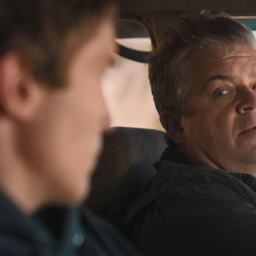
    An estranged father tries to reconnect with his son by catfishing him on Facebook in I Love My Dad

    I Love My Dad takes the Mrs. Doubtfire conceit and updates it for the modern age as a father, desperate to reconnect with his son, catfishes him with a fake Facebook profile. Director-writer James Morosini creates a funny and entertaining self-portrait of his own life while also finding ingenious ways to present our digital life in the real world. Though the movie misses the opportunity to go deeper into the character’s psyches, it never losses your attention thanks to its witty screenplay and Patton Oswalt’s terrific performance.

    I Love My Dad premiered at the 2022 South by Southwest Film Festival.

    Like Mrs. Doubtfire with a modern twist, a hopelessly estranged father catfishes his son in an attempt to reconnect in I Love My Dad. If the premise of the movie sounds like a trove of cringy moments you would be correct. Writer-director James Morosini, who also stars in the movie, knows that and lets the movie thrive even when it gets “hide your face in your hands” awkward — and trust me, it gets awkward. But what could have easily been a raunchy gross-out comedy is instead empathetic towards both of its leads. It’s unsurprising then to learn that Morosini based the movie on his own life. The opening intertitle even quips, “the following actually happened, my dad told me to tell you it didn’t.”


    ADVERTISEMENT


    The eponymous dad Chuck (Patton Oswald) is not exactly the picture-perfect father. In the opening scene, he and his young son Franklin (played by Morosini as an adult) find a lost dog. While most parents would do the responsible thing and try to find the dog’s owner, Chuck gleefully tells Franklin they should take him in before quickly disposing of a missing poster with the dog’s picture that they come across. Years later, Chuck lives hours away and is estranged from his ex-wife (Amy Landecker) and Franklin.

    Chuck tells his co-worker Jimmy (Get Out’s always terrific Lil Rel Howery) that Franklin has now cut him out completely, blocking him everywhere including Facebook, which was Chuck’s only connection with his son. Despite Jimmy’s protests — though it was vaguely his idea — Chuck creates a fake Facebook account under the name Becca (Claudia Sulewski), a waitress at a local diner, and friends Franklin — like an internet-age Mrs. Doubtfire. However, things quickly go array when Franklin messages “Becca” asking why she friended him when they don’t know each other.

    Morosini ingeniously weaves the digital and physical together by having “Becca” appear next to Franklin like they’re actually having a face-to-face conversation as they’re talking over messenger. Instead of reading text on a screen, we actually get to see the character interact and convey emotion. But the movie takes it one step further.


    ADVERTISEMENT


    Just like in real-life texting conversations, sometimes messages get lost in translation, lose their context, or are conveyed differently. Like in some moments when a character uses sarcasm, it comes out as deadpan before they clarify with a “LOL,” which the actors act out. It makes I Love My Dad an immersive experience. In another scene, “Becca” speaks in near gibberish as Chuck, texting while driving (shaking my head) types with typos. It makes the movie feel so relevant and relatable — like Kimi earlier this year — even if it takes place in the past.

    After some initial awkwardness, “Becca” quickly earns Franklin’s trust by connecting with his loneliness. Something that they discuss as they message more and more frequently. However, things take a turn when Franklin starts to form some very real feelings for the fake Becca. Although he initially tries to end contact, Chuck is quickly pulled back in as it’s the only way he’s been able to really connect with his son. Soon, though, they hit a point of no return when Franklin suggests he and Becca should meet up — with the help of Chuck. If you thought things were awkward before, they just got worst.

    It took me a moment to understand Chuck as a character. The ending, without revealing spoilers, gives him a sort of redemption — whether it’s earned will be up to you. The movie is perhaps a little too sympathetic to him without giving us a deeper explanation for his behavior or real consequence. Perhaps that’s a function of Morosini’s closeness to the story, which in a way is a sweet homage to his imperfect father. Perhaps, an imperfect but charming movie is exactly what this story deserves.


    ADVERTISEMENT


    More movies, less problems


    Hey! I’m Karl. You can find me on Twitter and Letterboxd. I’m also a Tomatometer-approved critic.

    💌 Sign up for our weekly email newsletter with movie recommendations available to stream.


    ADVERTISEMENT

  • A movie like ‘Everything Everywhere All At Once’ has never existed before | SXSW review

    A movie like ‘Everything Everywhere All At Once’ has never existed before | SXSW review

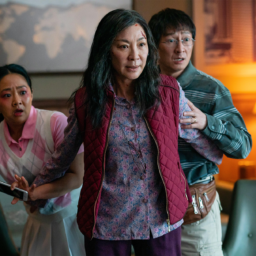
    In Everything Everywhere All At Once, an unremarkable Chinese-American woman finds out that the fate of the multiverse lies in her (and her other versions) hands.

    When I say a movie like Everything Everywhere All At Once has never existed, I mean that a movie like it has truly never existed. Though it spans countless genres, experiments with several mediums, and references dozens of films from 2001: A Space Odyssey to Ratatouille to Kill Bill to In the Mood For Love it feels so singular and assured. Director duo Daniels crafted a romp through the multiverse that is an assault on the mind as much as it is an assault on the senses. Absurd, hilarious, heartfelt, thrilling. It is one of the best movies of the year.

    Everything Everywhere All At Once is playing at the 2022 South by Southwest Film Festival.

    Everything Everywhere All At Once may be one of the most accurate movie titles in history. Filmmaking duo Daniels (Dan Kwan, Daniel Scheinert) throw everything, kitchen sink and all, into their action-thriller-comedy romp through their version of the multiverse — like the silly fever dream ideas of every person in existence brought to life in insanely colorful detail. The movie is so jam-packed that its cinematic references range from Stanley Kubrick’s sci-fi epic 2001: A Space Odyssey to Pixar’s animated Ratatouille to Wong Kar-wai’s arthouse romance In the Mood For Love. And these aren’t just throwaway references. Each movie is woven inseparably into the plot.

    That’s not to say it’s unfocused either. The movie’s story, for as complex as the lore gets, is relatively straightforward and it earns nearly every one of its digressions — yes, even the thread about humans with hot dogs for fingers and the universe where humans never evolved and are simply insentient rocks that communicate in subtitles. I’m telling you, this movie is one of a kind. But, as we know, bizarreness doesn’t necessarily make a good movie — though it certainly makes for an entertaining one. It’s how Daniels use the bizarreness to tell their story that makes it great.


    ADVERTISEMENT


    Evelyn is a Chinese-American immigrant who, along with her husband Waymond (Ke Huy Quan), owns a laundromat that she works hard to run, albeit robotically. After years on the grind she’s simply going through the motions, something that has distanced her from her husband and daughter Joy (Stephanie Hsu). It’s not even that she’s unhappy with her life — she’s simply not living it. She has one problem though: she hasn’t paid her taxes. That leads Evelyn, Waymond and her father Gong Gong (James Hong) to the IRS where inspector Deirdre Beaubeirdra (Jamie Lee Curtis) performs an audit of their business.

    But like anyone trying to pay their taxes, things quickly go awry.

    In a bit of a exposition dump that blessedly make the concept of the multiverse easy-to-follow, Waymond, or at least another version of Waymond from a different universe called the Alpha-verse, inhabits the body of… this universe’s Waymond (okay, maybe it’s not that easy to follow, but the Daniels find ways to guide you through it) and explains to Evelyn that every decision you make splits off a new universe and different version of you and your life. That means there are millions of versions of Evelyns and Waymonds. Alpha-verse Waymond explains that in his universe Evelyn created a technology that gives them the ability to jump across the multiverse into different versions of themselves.

    He seeked out this universe’s Evelyn to recruit her to help defeat the evil inter-dimensional Jobu Tupaki, another version of Joy who wants to destroy the multiverse, by teaching her how to shift between different versions of herself to access their abilities. In perhaps the most impressive fight scene of the many impressive fight scenes in the movie, Evelyn shifts into a version of herself who broke up with Waymond before they could get married and instead became a martial arts master and subsequently a successful actress — yes, it’s as meta as it sounds — and fights a version of Deidre who is a pro-wrestler. Yes, Jamie Lee Curtis gets in on the action too.


    ADVERTISEMENT


    Like The Matrix where Evelyn is Neo and Waymond is Morpheus, she must try to master the ability to jump between versions and prevent Jobu Tupaki from taking over her universe. In the process we see movie star Evelyn (an homage to In the Mood for Love), sign spinner Evelyn, and hibachi chef Evelyn which features the movie’s funniest references to Ratatouille and Guardians of the Galaxy.

    Underneath all the absurdity, though, is a well-realized exploration of the Asian and Asian-American experiences. Coming into the movie, I didn’t expect to be taken so emotionally by the movie’s deeper themes as the son of Asian immigrants. The experience of generational trauma takes form in Evelyn and Joy’s relationship — one strained by her mother’s desire to hold onto her vision of what Joy’s life should be, which is fueled by Evelyn’s father’s vision of what her life should be. The parent-child relationship has become a focus of movies lately. Perhaps because the millennial generation is now watching their boomer parents reach the later years of their lives. Daniels explore the tension of how one generation’s regrets, trauma, dreams bleed into the next but are often rejected because each generation is born into a different world.

    To try to write about Everything Everywhere All At Once is like trying to explain the dream you had last night. The details are outlandish, maybe a little fuzzy, sometimes terrifying, but often connected to something in your subconscious. Some thought or insecurity or desire deep down that is suppressed deep in your psyche for one reason or another. On its face, Everything Everywhere is a wickedly entertaining, high-octane action romp that is destined for instant cult classic status. But it has more on its mind than hot dog hands, butt plugs and world-ending everything bagels — not just more. Everything.


    ADVERTISEMENT


    More movies, less problems


    Hey! I’m Karl. You can find me on Twitter and Letterboxd. I’m also a Tomatometer-approved critic.

    💌 Sign up for our weekly email newsletter with movie recommendations available to stream.


    ADVERTISEMENT

  • ‘Sissy’ skewers millennial culture | SXSW review

    ‘Sissy’ skewers millennial culture | SXSW review

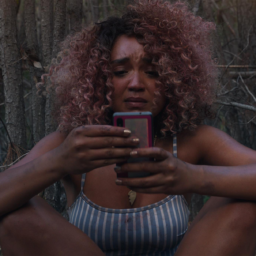
    Sissy follows a young influencer who has to face her childhood bully during a bachelorette weekend in the Australian bush. It doesn’t go well.

    In the vein of last year’s Promising Young Woman, Sissy takes a bubblegum pink-colored satirical approach to tackle its bleak subject matter to devilishly entertaining and constantly surprising results. Paired with a star-making performance from Aisha Dee, Sissy is a multi-hyphenate genre must-see.

    Sissy is playing at the 2022 South by Southwest Film Festival.

    Go watch Sissy. I’m telling you this now because the fun of the movie is to watch the precarious balancing act between tones and genres that writer-directors Hannah Barlow and Kane Senes perform — and the less you know about their plan the better. Your ignorance is their weapon. But don’t worry, they’ll reward you when the movie shifts into high gear.

    Still not convinced? Read on, but you’ve been warned.


    ADVERTISEMENT


    The movie begins with Cecilia (Aisha Dee) staring straight into the camera with a warm sincere smile as she tells us, “I am loved. I am special. I am doing enough.” As the camera pulls out, we realize that we’re watching an Instagram Live and that Cecilia is a wellness influencer — or “mental health advocate” as she puts it. It’s easy to figure out because as soon as she’s finished with her mantra she begins to sell us on a face mask cheekily called “Elon Mask.”

    It’s the perfect way to introduce us to Sissy’s hyper-stylized tongue-in-cheek world. As the live ends, the facade cracks and we see that Cecilia’s life is in a lot more disarray than the perfectly curated pastel backdrop that her live took place on. Her apartment is a mess as she obsessively watches as the likes and comments on her video pour in.

    The juxtaposition between Cecilia’s online persona and her real-life one is exacerbated when she runs into her childhood BFF Emma (Barlow) — who still calls her by her childhood nickname “Sissy” — who she hasn’t seen in more than a decade. Cecilia is taken aback by the encounter but fortified when Emma is impressed by her online success and is invited to her engagement party where she is subsequently invited to Emma and her fiancé Fran’s (Lucy Barrett) bachelorette weekend at a house in the Australian bush. Unexpectedly for Cecilia, the house belongs to Alex (Emily De Margheriti), her childhood bully who also happens to be Emma’s maid of honor. Yes, it’s as awkward as you think it is. It seems that old habits die hard.

    Then, things take a turn.


    ADVERTISEMENT


    What begins as a satirical comedy about millennial culture quickly turns into a full-out horror-comedy slasher send-up as tensions rise to a boiling point. And when I say a slasher, I mean a slasher with bloody brutal kills that would make Wes Craven proud. It’s an unexpected turn for a movie that teases that it has more up its sleeve, but nothing as absurd as a bloody bathtub scalping by way of rejuvenating spa.

    I’m going to keep details sparse about how the movie gets there. That’s part of the fun, but its themes are clear. In the same vein as Promising Young Woman, Sissy directly juxtaposes its dark subject matter with a hyper-stylized bubblegum pink-colored lens. In particular, it focuses on the millennial impulses of success, clout chasing, and the desire to be better without getting better.

    Sissy is a hard movie to pin down in the same way that it’s hard to pin down any of its characters — Daniel Monks‘ Jamie and Yerin Ha‘s Tracey complete the cast. This is a movie without any real heroes. That is, except for Cecilia. Aisha Dee’s star-is-born performance keeps you completely captivated in her, even when your sympathies start to wane. By the end, Sissy will have you cheering for more carnage — and carnage it will deliver.


    ADVERTISEMENT


    More movies, less problems


    Hey! I’m Karl. You can find me on Twitter and Letterboxd. I’m also a Tomatometer-approved critic.

    💌 Sign up for our weekly email newsletter with movie recommendations available to stream.


    ADVERTISEMENT

  • Queer prison drama ‘Great Freedom’ finds hope | movie review

    Queer prison drama ‘Great Freedom’ finds hope | movie review

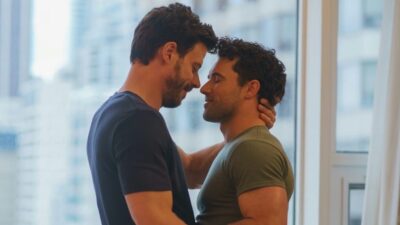
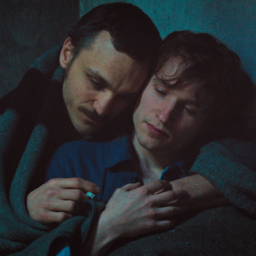
    Great Freedom is an intimate prison drama that follows a gay man over decades as he is repeatedly imprisoned as a part of Germany’s outdated anti-gay laws.

    While Great Freedom takes place during a dark time in Germany’s history, its hopeful story filled with empathy doesn’t feel anything less than authentic and, against all odds, enjoyable. Taking notes from Shawshank Redemption, director Sebastian Meise’s telling of gay men persecuted under Germany’s strict anti-homosexuality laws is epic-in-scope but intimate in its execution. Without becoming overwrought, it feels genuine to the queer experience.

    Great Freedom will open at the Film Forum in NYC on March 4 and Laemmle Royal in Los Angeles on March 11.

    Great Freedom begins in 1968 with a series of hidden camera videos from a public restroom where various gay men cruise for sex. One of the men in those videos is Hans Hoffman (Franz Rogowski) who seems all too comfortable with the prospect of going to prison for two years for “homosexual acts” which are outlawed in West Germany. That’s because this isn’t Hans’ first time. In fact, he’s been in and out of the same prison since 1945. In the prison, Hans, and the other men imprisoned for the same crime, are called “175ers” after paragraph 175 of the West German criminal code which outlaws homosexuality.

    For Hans, the prospect of being locked up in prison versus spending his life metaphorically locked up in the outside world is an easy choice. Plus, he seems to have prison life down pat. As he starts his most recent stint he doesn’t need the guard to tell him the booking procedure, he performs it as if it’s second nature. When he passes the threshold he thrives. He knows how to work the system to get what he wants much like his friend Viktor (Georg Friedrich) who has been inside for decades.


    ADVERTISEMENT


    It’s a jarring place to start a prison drama. Things just seem so peaceful. It’s like Hans is back home and Viktor has his friend back. We’re so accustomed to seeing struggle in prison. Instead, we see the opposite. However, when Hans gets locked up in solitary confinement — a hellish pit where he has to remain with no light, no clothes, and nothing but a bucket to relieve himself in — the darkness makes way to the past. To 1945, specifically, when Hans is first imprisoned and meets Viktor.

    We’ll flashback a few times throughout Great Freedom to moments both big and small. Like Hans and Viktor’s first meeting where Viktor repeatedly kicked Hans out of his room for being a “175er” or a tender moment later when Viktor offers to cover Hans’ number tattoo that he was given when he was in a Nazi concentration camp. The movie jumps around in time to not give us a full picture of either character, but just enough to understand them.

    We’ll also see Hans with other men. Lovers, specifically. In 1957, Hans is back in the prison, but this time with his live-in partner Oskar (Thomas Prenn) who, unlike Hans, hasn’t gotten a chance to adjust to their prison setting or accept the prison they live in outside. “I want to be fearless too,” Oskar says in a note to Hans that is read in voiceover as film images of the couple’s trip to a lake play on the screen — it’s one of the few cinematic flourishes director Sebastian Meise adds in. Hans is almost too much of a hopeful romantic with Oskar, a vision that is quickly shattered.


    ADVERTISEMENT


    Later on in 1968 Hans is once again imprisoned with a lover. This time it’s Leo (Anton von Lucke), a teacher who has an encounter with Hans in a public bathroom. This time, however, a tender Hans understands that sometimes love isn’t all the hopeful. It’s a remarkable portrait of what oppression can do to a person. That’s part of the wonder of the screenplay by Meise and Thomas Reider. The movie is less of a story than it is an exploration. If anything, it’s when the movie tries to push a plot that it loses some of its authenticity.

    Shawshank Redemption is maybe the easiest comparison to make to Great Freedom. Obviously, both movies share DNA as prison dramas and focus on a specific friendship at its center, but the connection goes even deeper. Both stories struggle with what freedom really is. What is it to be in this world when this world isn’t made for people like you? Great Freedom’s final sequence, easily the best of the movie, answers that question. To be accepted is to be with people you love, no matter where they are.


    ADVERTISEMENT


    More movies, less problems


    Hey! I’m Karl. You can find me on Twitter and Letterboxd. I’m also a Tomatometer-approved critic.

    💌 Sign up for our weekly email newsletter with movie recommendations available to stream.


    ADVERTISEMENT


  • Hellbender is a coming-of-witch family affair | review

    Hellbender is a coming-of-witch family affair | review

    Hellbender follows a young teen’s coming-of-witch journey as her mother slowly reveals her and her family’s true nature

    Hellbender is a lo-fi punk rock horror assault on the senses that marks yet another fascinating entry in the coming-of-witch subgenre that has slowly crept its way into the canon — The Witch, The Craft, and Thelma first come to mind. Upstate New York filmmaking family The Adams make up for the movie’s rough edges with its pure audaciousness and genuine creeps that get under your skin. If you don’t know their name now, learn it.

    ▶︎ Streaming on Shudder

    The opening scene of Hellbender is a heavy metal assault on the senses as a group of women try (and fail) to kill another by hanging her. When that doesn’t do the trick, a revolver’s worth of bullets go into her head which the woman — or creature? — shrugs off. When the group tries to end it with a knife, she takes off into the sky screaming and aflame giving way to the movie’s title card accompanied by one of the few songs on the movie’s punk rock soundtrack.

    The scene gets under your skin and makes you feel dirty, which is a compliment considering what The Adams’ intentions are.


    ADVERTISEMENT


    However, before the creeps continue we’re treated to a mini-concert in a makeshift studio in a basement. The band members are 16-year-old Lizzie and her mother (played by real mother-daughter duo Zelda Adams and Toby Poser). The band’s name: H6LLB6ND6R (the family wrote and produced all the music featured in the movie). Their off-the-grid mountaintop existence is explained by a rare autoimmune disorder Lizzie has had since birth. But, blessedly, the movie makes clear that that is not the case.

    Unlike other supernatural coming-of-age movies, one of the virtues of Hellbender is its complete transparency about the kind of movie it is, as evidenced by its opening scene. That isn’t the mystery of the movie. Instead, the movie focuses on Lizzie’s own discovery of her powers after her first encounter with another teen (Lulu Adams) and her relationship with her mother, whose sole mission is to protect Lizzie from herself. Well, maybe also protect others from her too.

    Eventually, Lizzie’s mother reveals that she is a Hellbender, “a cross between a witch, a demon and an apex predator.” The way that the mythology unfolds is trippy and mesmerizing as we learn that consuming life — until now Lizzie was kept on a strict diet of foraged food from the forest — unlocks their powers. The imaginative sequences of magic are awe-inspiring but also devilishly creepy in a surrealistic way.


    ADVERTISEMENT


    Of course, things take a turn and we eventually learn the curses of being a Hellbender. Still, the movie never loses focus of its mother-daughter narrative, even when going full-tilt horror. Hellbender doesn’t waste a second of its lean 86 minute runtime and it’s all the better for it.

    You have to admire The Adams and their pure ambition as a self-taught filmmaking family. Sure, Hellbender isn’t perfectly crafted. But what it lacks in precision it makes up for in pure charm. You can feel the family’s love of their craft wafting through the screen. They aren’t trying to emulate anything that has come before them. It’s a completely singular project that reminds us that anyone can be a filmmaker. You just have to have the audacity to do it. The Adams have the audacity — and then some.


    ADVERTISEMENT


    More movies, less problems


    Hey! I’m Karl. You can find me on Twitter and Letterboxd. I’m also a Tomatometer-approved critic.

    💌 Sign up for our weekly email newsletter with movie recommendations available to stream.


    ADVERTISEMENT


  • ‘Kimi’ is a techno-thriller for the pandemic era | review and analysis

    ‘Kimi’ is a techno-thriller for the pandemic era | review and analysis


    ADVERTISEMENT


    Kimi follows a young tech worker is faced with a corporate conspiracy when she hears a crime through an Alexa-like smart speaker

    Where to watch Kimi:

    There’s a scene in Kimi, the newest movie from Oscar-winning director Steven Soderbergh, when protagonist Angela (Zoë Kravitz) puts her AirPods on to drown out the sounds of her Seattle loft. It mirrored me in my New York City apartment watching the movie with my headphones to drown out the noise coming from the street — and my radiator. When she put her right earbud in, my right headphone went quiet. When she put on the left, my left went silent. It’s a small detail, but one that was crucial to my viewing experience.

    That was the moment I knew that Kimi was something special.

    First of all, for its immersive quality. Like it was made for me to watch it in my apartment with my headphones on immersed in the world. Second, unlike many movies made in the pandemic era, Kimi doesn’t shy away from living in that world. Actually, the pandemic helps drive the plot — a twist on the classic Rear Window-esque psychological thriller. Angela already suffered from agoraphobia from a previous assault that left her riddled with anxiety. You could imagine that a global pandemic didn’t help her mental state.


    ADVERTISEMENT


    Angela sticks to a rigid schedule. She eats breakfast, rides on her Peloton, checks in with her cute neighbor (Byron Bowers) who lives across that street. Soderbergh — known best for directing the Ocean’s Trilogy — catches the action as methodically as Angela is. She’s just as regimented when it comes to her job as a sort of quality assurance engineer for Kimi, an Alexa or Apple HomePod analog. Angela’s job is to analyze snippets of failed requests and correct the mistakes. However, one recording doesn’t sit right with her. Something sounds off. Sinister even.

    In another wondrous scene of immersive sound design, Angela slowly toys with the audio file— reminiscent of Gene Hackman in The Conversation — until she is able to clearly hear a woman being attacked. The discovery finally gives her a reason to leave her apartment when her boss (Rita Wilson) invites her in to share her discovery. However, these case isn’t as simple as a trip to the corporate office.

    In Angela’s apartment the camera is rigid, steady, and ordered but when it’s outside it becomes frenetic and unsteady with unnatural angles mirroring Angela’s state of mind. The jarring soundscape juxtaposed against the peace of the apartment is anxiety-inducing. It’s what Soderbergh is best at. Evoking the specific feeling he wants you to experience.


    ADVERTISEMENT


    Kravitz gives one of the best performances of her career as she portrays the panicked feeling of anxiety that many of us felt in the face of the pandemic. Trying to muster up the courage to go outside and meet her crush for breakfast, she dons her mask, grabs a handful of hand sanitizer packets, and slowly unlocks her door only to be met with the crushing feeling of panic that is so familiar. Soderbergh makes it so easy to empathize with her, something that similar movies — *cough*The Girl on the Train *cough* — fail to do.

    After Angela ventures out into the world, Kimi makes the transition to a full-blown thriller for its second half filled with corporate intrigue, paranoia-filled thrills, and a stunning villain turn from Jane the Virgin actor Jamie Camil before pivoting to a third act conclusion that might be too tidy but is certainly satisfying. It tracks with Soderbergh’s “post-retirement” era — he announced a retirement from filmmaking in 2015 but apparently got bored. His filmmaking is still as lean, mean, and effective as before. But he’s not looking to push his craft or genre further. He’s simply having fun and you can tell.

    Kimi grapples with many of today’s issues — information security, big tech, trauma, homelessness, civil unrest, pandemic anxiety — but it never overstays its welcome and never overstates its purpose. Soderbergh knows that this is a popcorn movie and it’s all the best for it. As we move into the post-pandemic era, it’ll be interesting to see how filmmakers grapple with our collective trauma. If Kimi is any indication, there are stories just waiting to be heard.


    ADVERTISEMENT


    More movies, less problems


    Hey! I’m Karl. You can find me on Twitter and Letterboxd. I’m also a Tomatometer-approved critic.

    💌 Sign up for our weekly email newsletter with movie recommendations available to stream.


    ADVERTISEMENT


  • Every Performance Nominated at the Oscars this Year Ranked

    Every Performance Nominated at the Oscars this Year Ranked

    Twenty actors have been nominated for Oscars across four categories for their performances in last year’s movies. Here is my ranking.

    After a particularly unpredictable Oscar season, we now have twenty actors nominated across four categories including seven previous winners and eight first-time nominees. I took on the monumental task of ranking all twenty performances from best to worst. Agree or disagree? Let me know!

    20. Javier Bardem as Desi Arnaz in Being the Ricardos

    Best Actor | Javier Bardem, who won an Oscar for Best Supporting Actor for No Country for Old Men, isn’t bad in Being the Ricardos as he is woefully miscast.

    19. J.K. Simmons as William Frawley in Being the Ricardos

    Best Supporting Actor | J.K. Simmons, who won an Oscar for Best Supporting Actor for Whiplash, has a couple of strong scenes with Nicole Kidman as Lucille Ball that are about as emotional as the movie gets. However, his impact and screentime are limited. His co-star Nina Arianda deserved a nom.

    18. Ciarán Hinds as Pop in Belfast

    Best Supporting Actor | “Too long a sacrifice can make a stone of the heart.” Hinds does fine work as the “older man who delivers sage and witty advice,” but the role never elevates further than that.


    ADVERTISEMENT


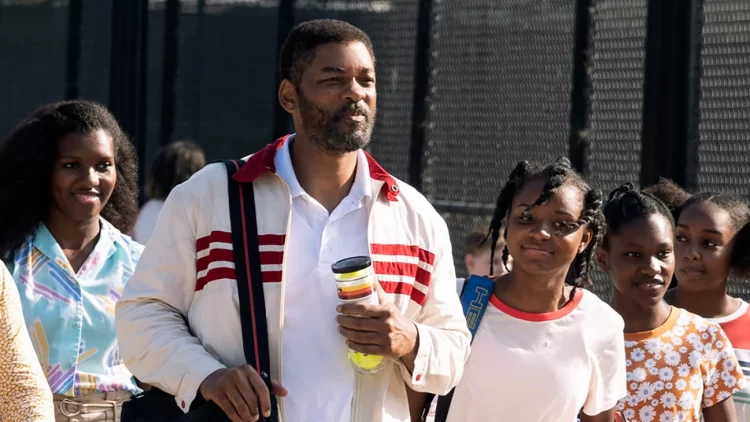
    17. Will Smith as Richard Williams in King Richard

    Best Actor | Will Smith, on his third Best Actor nomination, delivers the role of Serena and Venus Williams’ father with as much movie star gravitas as you would expect from him. However, his performance is safe and expected unlike his co-star further down on this list.

    Will Smith is nominated for Best Actor for his role as Richard Williams in King Richard.
    Will Smith is nominated for Best Actor for his role as Richard Williams in King Richard.

    16. Dame Judi Dench as Granny in Belfast

    Best Supporting Actress | After winning an Oscar for her 8-minute performance in Shakespeare in Love, Dame Judi Dench is up again for a similarly sharp-tongued role. Her emotional grandstanding speech to close at the movie got her the nomination, but the subtler work from co-star Catriona Balfe deserved her spot.

    15. Nicole Kidman as Lucille Ball in Being the Ricardos

    Best Actress | Nicole Kidman, already an Oscar winner in Best Actress for The Hours, fails to disappear into the role of Lucille Ball even if the work she does is admirable — particularly when showing Ball’s creative genius.

    14. Benedict Cumberbatch as Phil Burbank in The Power of the Dog

    Best Actor | One of the more controversial placements on this list — though from this point on every performance is good at the very least — Benedict Cumberbatch, on his second nomination, feels too practiced in a role as explosive as Phil Burbank. I was meant to fear him for some part of the movie, but his presence never loomed as large as his co-stars’.

    13. Jesse Plemons as George Burbank in The Power of the Dog

    Best Supporting Actor | “I just wanted to say how nice it is not to be alone.” Plemons has been doing consistently terrific work in film and television for years. And his slight but sensitive portrayal against some of the movie’s bigger performances is a gorgeous foil to what’s happening around him. Plus, his co-star, fellow nominee and wife Kirsten Dunst, had the sweetest reaction to his nomination.


    ADVERTISEMENT


    12. Aunjanue Ellis as Oracene “Brandy” Price in King Richard

    Best Supporting Actress | Aunjanue Ellis has decades of incredible work spanning TV, film, and the stage, so to see her receive her first Oscar nomination is a delight. Her performance pours out with empathy. Not a moment feels less than genuine.

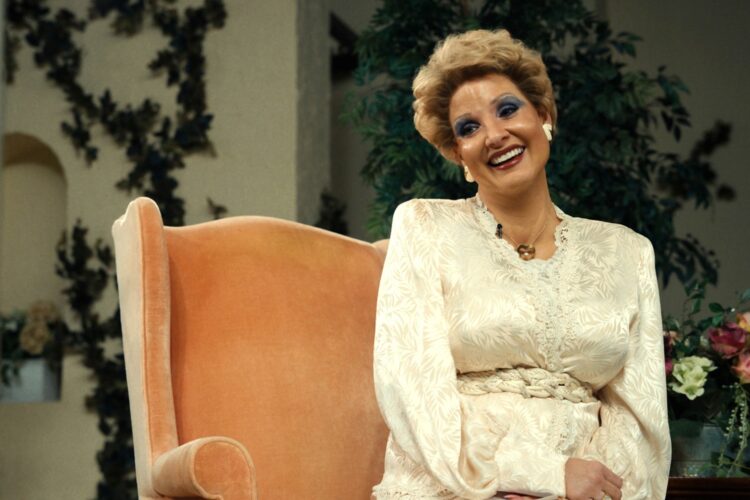
    11. Jessica Chastain as Tammy Faye in The Eyes of Tammy Faye

    Best Actress | It’s a wonder that Jessica Chastain is only on her third nomination considering her body of work. And while The Eyes of Tammy Faye isn’t her best performance, her pure commitment to the role both physically and emotionally make it one to admire.

    Jessica Chastain received her third Oscar nomination for her performance as Tammy Faye in The Eyes of Tammy Faye.
    Jessica Chastain received her third Oscar nomination for her performance as Tammy Faye in The Eyes of Tammy Faye.

    10. Denzel Washington as Macbeth in The Tragedy of Macbeth

    Best Actor | With this 10th nomination, Denzel Washington has extended his record as the most-nominated black actor in Oscar history. I mean, it’s Denzel doing Shakespeare. Need I say more?

    9. Kirsten Dunst as Rose Gordon in The Power of the Dog

    Best Supporting Actress | The fact that this is Kirsten Dunst’s first nomination is maddening, but well-deserved for this role. She has to take her character on a full arc from beginning to end unlike the other character’s in this film and does so with sensitivity.


    ADVERTISEMENT


    8. Olivia Colman as Leda Caruso in The Lost Daughter

    Best Actress | Olivia Colman can do no wrong. Even with a character as difficult to like, by design, as Leda, she is able to make her feel lived-in. That depth is what keeps you hooked into the narrative even when you can’t find someone to root for.

    7. Jesse Buckley as Leda Caruso in The Lost Daughter

    Best Supporting Actress | Speaking of a complex lived-in character, Jesse Buckley, who somehow feels overdue for an Oscar nomination despite being relatively new, also finds those depths in the younger version of Leda Caruso. With just fits and starts of scenes to play with, she gives us a complex vision and hard truth of motherhood.

    6. Kodi Smit-McPhee as Peter Gordon in The Power of the Dog

    Best Supporting Actor | Just like his character in The Power of the Dog, Kodi Smit-McPhee must play the long game with his performance dropping clues along the way. In the end, every action, movement, and line delivery makes sense with the character’s ultimate motives. His performance alone is reason enough to give Jane Campion the Oscar for Best Director. I’d also say Smit-McPhee deserves the Oscar if not for one of his competitors. More on that later.

    5. Andrew Garfield as Jonathan Larson in tick, tick… BOOM!

    Best Actor | Andrew Garfield performs the role of Jonathan Larson like he’s on a stage. Well, he’s literally on a stage for some parts of the movie, but it’s that type of big, play-to-the-back-row performance that we don’t see much anymore. However, the heightened over-stylization of his performance is grounded in a deep understanding of a character that he, even more than writer-director Lin Manuel-Miranda, understands the weaknesses of.


    ADVERTISEMENT


    4. Penélope Cruz as Janis Martínez Moreno in Parallel Mothers

    Best Actress | The tone that Pedro Almodóvar strikes with his film Parallel Mothers is so distinct that it could only take an actress like Penélope Cruz to meet him exactly where he is. It’s no wonder she does her best work with him — her first Oscar nomination was for his film Volver. While the movie’s plot goes pure telenovela, both Almodóvar and Cruz have to find something authentic in Janis to deliver the film’s message. Not only does she succeed, she does so while being effortlessly entertaining and holding the screen like the star she is.

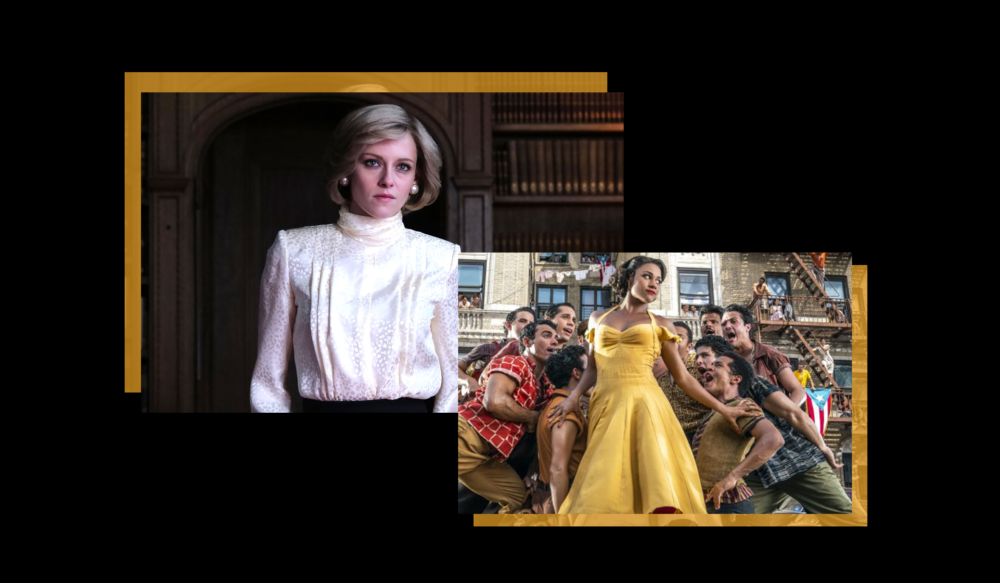
    Ariana DeBose is nominated for Best Supporting Actress for her performance as Anita in West Side Story.
    Ariana DeBose is nominated for Best Supporting Actress for her performance as Anita in West Side Story.

    3. Troy Kotsur as Frank Rossi in CODA

    Best Supporting Actor | Acting is reacting, and first-time nominee Troy Kotsur’s “Oscar scene” in CODA is a masterclass. With no words (signed or otherwise) he goes on a full emotional journey with his daughter (portrayed by the equally great Emilia Jones) that has the hefty job of moving every one of our characters further along on their journey of growth. However, what has been underrated is the pure joy he brings to the role of Frank, a man in a world not made for him, but that he found love in every corner of.

    2. Ariana DeBose as Anita in West Side Story

    Best Supporting Actress | To play a character as iconic (and Oscar-winning) as Anita in West Side Story takes nerve — and Ariana DeBose has the nerve. Rita Moreno, the original anita, plays the role with a fiesty energy that acts as a foil to the subdued energy of the central love story. DeBose’s version is just as bombastic, but with an even darker tinge to match the energy of the movie. While her signature number “America” is as impressive as ever, it’s the scenes of pure dramatic tension that set her apart.

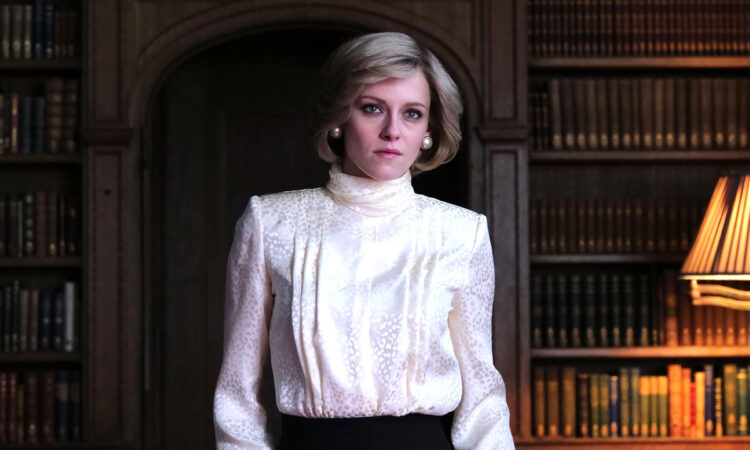
    Kristen Stewart received her first Oscar nomination for her portrayal of Diana, Princess of Wales in Spencer.
    Kristen Stewart received her first Oscar nomination for her portrayal of Diana, Princess of Wales in Spencer.

    1. Kristen Stewart as Diana, Princess of Wales in Spencer

    Best Actress | There’s a fine line between performing as a real-life person and impersonating them (see further down the list), and Kristen Stewart finds the exact avenue to evoke the spirit of Diana, Princess of Wales while making her completely singular — like a servant to the story director Pablo Larraín is trying to tell. Every movement, line reading, and facial expression is studied to the point that Stewart completely disappears into the role. Spencer is a difficult movie that treads a narrow path between genres, and Stewart is right there with it every step of the way.

  • ‘After Yang’ and sci-fi as therapy | review and analysis

    ‘After Yang’ and sci-fi as therapy | review and analysis

    After Yang follows a father’s attempts to save his daughter’s robot brother as the family deals with identity, parenthood, and love

    After Yang premiered at the 2022 Sundance Film Festival. A24 will release it in theaters in March.

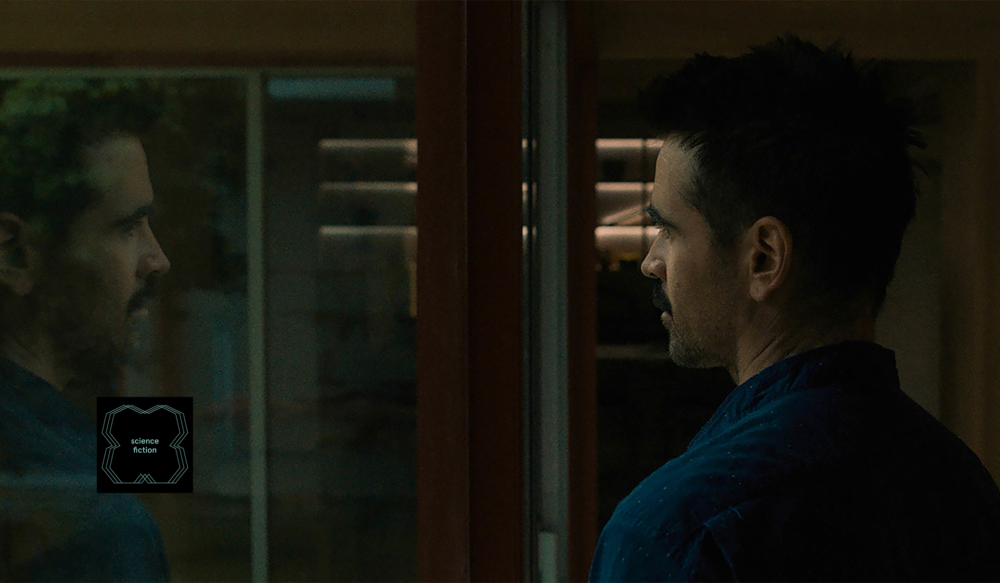
    At its best, science fiction acts as a meditation on something we know through the lens of the unfamiliar. In After Yang, the second film by writer-director Kogonada, the unfamiliar in this case is artificial intelligence, in the form of possibly the closest we’ll ever get to creating a human from computers — a “techno-sapien” as the film puts it. As for what we know, it’s those many things we’re already intimate with: memories, identity, love; the very fabric of our existence. If those sound like lofty themes, they are. It’s an ambitious movie. But those subjects are tackled with the same quiet sensitivity that Kogonada used to direct his egregiously underseen debut feature Columbus.

    The opening shot of the movie is of a quintessential family photo; posing are Jake (Colin Farrell), Kyra (Jodie Turner-Smith), and their young adopted daughter Mika (Malea Emma Tjandrawidjaja). Behind the camera is Mika’s brother Yang (Justin H. Min). But he doesn’t join the family immediately — he holds the view of the family photo for a beat longer than most comfortably would. We’ll return to this scene later, and see it play out multiple times, a recurring motif that extends to other moments in the movie as well.


    ADVERTISEMENT


    In one scene Yang says to Kyra, “there’s no something without nothing.” Then we rewind and we hear him say it again. “There’s no something without nothing.” This time, however, he says it with a slight inflection in his voice and the smallest smile at the end. Each scene we see is shown with this staccato editing and sudden cuts. We’ll hear one line two or three times but derive a slightly different meaning each time. Almost like a memory desperately trying to be remembered.

    After an incredible opening credits sequence, in which each family featured in the film competes in a massive online Dance Dance Revolution-esque competition, Yang malfunctions. Here would be a good time to mention that Yang is a robot that Jake and Kyra bought to help Mika explore her identity as an adopted Chinese child. Though you wouldn’t be able to tell from looking at him: he’s strikingly emotional and singular as a real human. His breakdown is sudden and has a massive impact on Mika who saw Yang as one of the few people she could confide in. In the process of desperately finding a way to fix him before he decomposes, Jake gains access to Yang’s memories.

    After Yang is told through conversations in Yang’s memories and asks a series of questions: How do we perceive our memories and what do we focus on? Why do we like certain things? Why are they important? What details are important? Why are we who we are? If those seem like concepts that are too large to be answered by a single movie, you’d be correct. But Kogonada isn’t interested in answering them — he wants the audience to do so. The movie merely serves as a companion and guide, much like Yang himself is to the family.


    ADVERTISEMENT


    Through his memories, we gather bits and pieces of who he was in relation to these people. In one memory Mika says, “the kids at recess were asking about my real parents. I told them about mom and dad and they said, ‘no, your real parents.’” Instead of giving her platitudes, Yang asks her, “do you believe them?” Eventually, Mika finds her way to her own conclusion.

    The beauty of sci-fi is that you can mold it to whatever you need it to be for your story whether it’s a high-reaching epic like 2001: A Space Odyssey or something that feels closer to home, like Her, Arrival, and now, After Yang. Kogonada takes a human problem that will be with us for as long as we’re alive — one of identity, family, parenthood — and wraps it into a futurist story that allows him to explore it with subtlety. More than a film, it’s a meditation on life, and in that way, I’d go as far to say that After Yang is akin to therapy. It takes a problem, so constant and looming in the undercurrent of our lives that it feels impossible to solve, and breaks it down into questions that we can answer. One of those questions is what comes after? After life and death? After each chapter of life ends? What comes next?

    There’s no simple or clear answer to these questions, just as there isn’t a satisfying finality to the film. Like the family, we’re left with as many questions as we came in with, but After Yang, we’re better equipped to try and find these answers for ourselves.


    ADVERTISEMENT


    More movies, less problems


    Hey! I’m Karl. You can find me on Twitter and Letterboxd. I’m also a Tomatometer-approved critic.

    💌 Sign up for our weekly email newsletter with movie recommendations available to stream.


    ADVERTISEMENT

  • ‘Cha Cha Real Smooth’ is Gen Z’s The Graduate | movie review

    ‘Cha Cha Real Smooth’ is Gen Z’s The Graduate | movie review

    In Cha Cha Real Smooth, a recent college grad tries to find his purpose in life as he takes up a side hustle as a bar mitzvah party starter

    Cha Cha Real Smooth premiered at the 2022 Sundance Film Festival. It is currently seeking U.S. distribution.

    The greatest coming-of-age movies — like Lady Bird and The Graduate — understand that although there is a central protagonist, they are not the main character. In the beginning, they believe they are the center of the universe but eventually learn there is more to their lives than what they see. That everyone surrounding them is the main character of their own lives. That’s what makes Cooper Raiff’s sophomore feature Cha Cha Real Smooth so effortlessly charming as a perfectly pitched dramedy. Although Andrew (Raiff) filters everyone else’s experience around him through his own, Raiff, as the writer-director of the film, gives color to everyone.

    Just like The Graduate, Andrew is newly graduated. His college girlfriend is off to Barcelona for her Albright Fellowship and he’s back in his hometown of Livingston, New Jersey working at “Meat Sticks” — where they sell meat… on sticks. He’s as aimless as they come. He doesn’t even have his childhood home to return to as his mother (Leslie Mann) has moved in with his stepfather (Brad Garrett) and has to sleep on the floor in his tween brother David’s (Evan Assante) room.

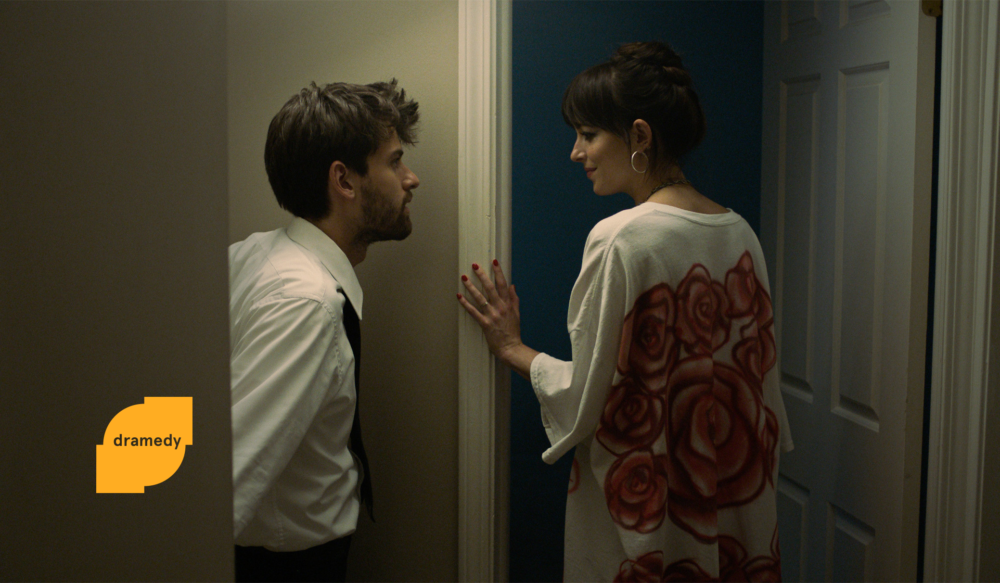
    However, his life finally finds some direction when he takes it upon himself to liven up a subdued bar mitzvah he’s accompanying his brother to. In particular, he hones in on young mother Domino (Dakota Johnson) and her daughter Lola (Vanessa Burghardt) who starts to break out of her shell when Andrew dances with her. It’s worth singling out Burghardt here, an autistic actress who’s playing an autistic character, whose performance rings nothing but sincere.


    ADVERTISEMENT


    Before long, he’s ambushed in the parking lot. “You are being swarmed by Jewish mothers who are recruiting you to be our motivational dancer,” says one of the mothers. For Andrew, it seems like quick money and something he genuinely enjoys. However, this isn’t just a bar mitzvah-set The Wedding Singer. Raiff focuses the movie on Andrew’s avoidance — of responsibility, of making decisions, of coming-of-age.

    For how quiet the story is, it says magnitudes about post-college aimlessness. Not just for recent graduates, though. What Cha Cha Real Smooth presupposes is that no one has truly “figured it out” as an adult. Domino, for instance, is facing down her marriage to lawyer Joseph (Looking’s Raúl Castillo) and confides her trepidation to Andrew. The wonder of the movie is that wherever you think this triangle goes, you’re probably wrong. Both Raiff and Johnson ooze with chemistry as two people set on different paths but completely empathetic to the other’s plights.

    There’s so much sweetness, witty humor, and swoon-worthy relationships (platonic and otherwise) in this movie. But despite a title and premise that errs towards comedy, Cha Cha Real Smooth is a drama that knows itself so well with Lola serving as the movie’s foil. “Sometimes I enjoy being in an empty room,” she tells Andrew, who has become her de facto babysitter. “Well, I’m jealous,” he responds, “I wish I could do that.” She almost doesn’t understand the answer. By the end of the movie, you’ll understand that she’s right.


    ADVERTISEMENT


    More movies, less problems


    Hey! I’m Karl. You can find me on Twitter and Letterboxd. I’m also a Tomatometer-approved critic.

    💌 Sign up for our weekly email newsletter with movie recommendations available to stream.


    ADVERTISEMENT