Blog

  • Closet Monster Movie Review — An electric journey of self-discovery

    Closet Monster Movie Review — An electric journey of self-discovery

    Closet Monster is a unique take on the LGBT coming-of-age genre with a stellar performance by Connor Jessup

    The exploration of sexuality is a sub-genre that has emerged from under the glut of young adult coming-of-age stories. From Dee Rees’ confident debut Pariah or Barry Jenkins’ masterpiece Moonlight, the movies that encompass these themes are heartbreaking, but important in portraying stories that so often feel identical. While Stephen Dunn’s Closet Monster doesn’t quite touch the artistic heights set by those two films, his singular style and focused storytelling make it a strong entry into the canon of the gay coming-of-age genre.


    There are those moments in the youth of LGBT kids when they realize that the feelings they are having are different from others. Before we even meet him as a teenager, Oscar (Connor Jessup) seems to be having those feelings. However, any exploration he might have been going towards is instantly stopped when he witnesses the brutal attack of a gay teen when he is 10. Just before that, his mother, Brin (Joanne Kelly) divorces his father, Peter (Aaron Abrams), and moves out, which leaves him with his hypermasculine father and his pet hamster Buffy (voiced by Isabella Rossellini) — she occasionally speaks to him and acts as his conscious. We skip years later to 17-year-old Oscar who is changed by the events of his childhood. Without a model relationship in front of him and the constant diminishing of any weakness he shows by his father, Oscar simply retreats into himself.

    However, as with many teens, his sexuality comes into question when he forms a crush on Wilder (Aliocha Schneider), his free-wheeling co-worker at a Home Depot type store. As Oscar and Wilder get closer, Oscar’s difficulty of dealing with his feelings, his father, and the stress of trying to get into a special effects makeup school in New York become entangled.

    While it feels like Closet Monster is hitting the usual young adult beats, you quickly realize that it has other plans for its young protagonist. Dunn has even admitted that stories like this have been told before, but because it is so personal, that didn’t matter to him. That intimacy is palpable.While Dunn’s screenplay and direction have to be credited with that, Connor Jessup’s performance is simply electric.
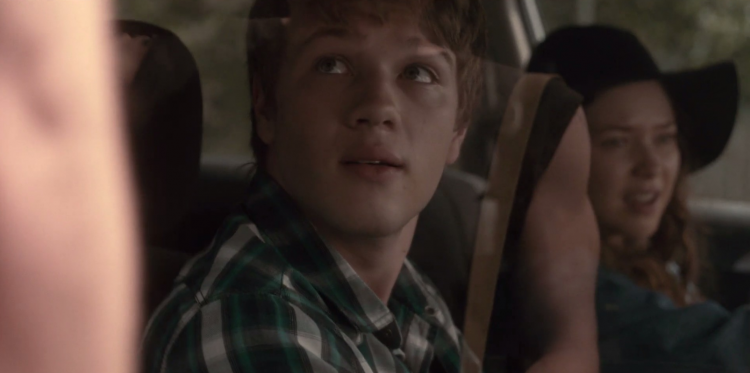
    Connor Jessup in Closet Monster

    With near flawless execution, Jessup builds Oscar with his physicality rather than dialogue. The amount of emotion he’s able to portray with just his face gives us everything we need to know about how he’s feeling in a given moment. The scene in which he meets Wilder is almost devoid of dialogue on Oscar’s part. However, the adolescence-filled sexual confusion is so easily discerned by his physicality and the way he reacts to Wilder. It’s what made Ashton Sanders’ performance in Moonlight so strong.

    Closet Monster is a little obvious with its symbolism. From a metal rod representing his internalized fear of his true identity to Buffy being his connection youth and innocence. However, Dunn stylistically pulls off the movie’s themes beautifully. By cementing our point-of-view with Oscar, he allows us to see what he sees and feel what he feels no matter how surreal they get — a talking hamster, the word unfortunately being scrawled on the walls and furniture after he receives a rejection letter from a college. It’s imperative to the movie’s success since it isn’t plot heavy.


    For a movie so focused on character, we aren’t really given strong portraits of anyone but Oscar. While, of course, this is a movie about him and his struggle with identity, the people around him and how they affect him are integral to his journey. Since we view the movie from Oscar’s point-of-view in two distinct times, we miss a lot of development from his father, mother, and Gemma (Sofia Banzhaf), his best friend. It makes understanding his actions towards them more difficult.

    But this is Oscar’s story. Closet Monster is one of those movies that you watch and understand because it feels so personal. Life doesn’t always work out the way you plan. We don’t get the triumphant happy beats that often bog down movies like this. Instead, we get moments between people, though difficult to watch, that define who we are.

    Closet Monster is available for streaming on Netflix or rental on Amazon!

  • That’s Not Us Movie Review — A refreshing LGBT relationship drama

    That’s Not Us Movie Review — A refreshing LGBT relationship drama

    That’s Not Us is a summery relationship drama that feels relatable, which makes the fact that it’s improvised more impressive

    Relationships live and die in those unspoken moments — when you’re not saying what you mean or you avoid speaking your feelings altogether. That’s what That’s Not Us concerns itself with. It’s an intelligent relationship drama that feels mature. One that understands its characters and the audience it’s speaking to. Even more than that, it portrays LGBT couples in a way that they aren’t often portrayed in movies — as normal couples working through their issues.

    Thats Not UsThat’s Not Us follows three couples vacationing together on a New York island before the summer comes to an end. The vacation, which is supposed to be a boozy escape among friends before returning to the real world takes a turn when the couples learn that not all is good, even in paradise. James (Mark Berger) and Spencer (David Rysdahl) recently moved in together, but are thrown for a loop when Spencer is accepted into grad school in far away Chicago. Liz (Elizabeth Gray) and Alex (Sarah Warton) haven’t had sex in months and Alex’s attempts to remedy the situation seem to only make it worse. Dougie (Tommy Nelms) and Jackie (Nicole Pursell) are in the honeymoon phase of their relationship, but when the simple act of teaching Dougie how to ride a bike comes up, they learn that the fun and games only last so long.


    While the set-up doesn’t seem too far off from other movies, That’s Not Us sets itself apart by being almost entirely improvised. Director William Sullivan devised outlines of the plot and put it on the actors to build dialogue around it. Sometimes it sounds awkward and cliched with lines like “just tell me how you fucking feel” coming up more than once. However, it feels natural still. Conversation isn’t limited to the mundane. In fact, when passion arises, arguments can become poetic.

    That’s Not Us isn’t a perfect movie. The characters at some points fall into cliches and the Dougie storyline doesn’t really add up as well as the other two. However, for anyone who has been in a long-term relationship, there is a degree of familiarity. Scarily so at some points. That’s Not Us touches on that period of transition between honeymoon and understanding in a relationship. For a feature with no clear scripts and micro-budget, it’s an impressive feat and definitely one of Netflix’s hidden gems.

    7/10

    That’s Not Us is available for streaming on Netflix or Digital HD on Amazon!

  • Weekend Movie Review — One of the defining movies of queer cinema

    Weekend Movie Review — One of the defining movies of queer cinema

    In honor of Pride Month, we’re taking a look at one of the best LGBT movies of the decade, Andrew Haigh’s Weekend.

    It’s hard to think of queer cinema of this decade without mentioning the film WeekendUntil Moonlight captured the collective consciousness of cinephiles and mainstream audiences alike, the defining film in the LGBT film canon could be traced back to Andrew Haigh’s masterpiece. But why did this small and intimate film with really only two characters take such a high position in the history of queer cinema? Well, in addition to the lack of high-profile gay movies, Haigh shows us a gay relationship from with an understanding of the dynamics of a gay relationship.

    Unlike the doomed love stories of the past like Brokeback Mountain or, more recently, Carol, Weekend features a story with no risk other than the one of a missed connection. Russell (Tom Cullen) is the character we view the story from. And his background is one that only LGBT people can really understand. There is an odd limbo between being out and fully accepting your identity. Some people fully accept their identity before coming out to those closest to them. Russell can’t fully accept himself, even when he’s around his closest friends who embrace him — Jonathan Race’s Jamie is a general stand-in for this group. For Russell, much like many other gay men, finds safety and comfort in gay clubs, where he goes after spending time with his “straight friends.”


    One night, he runs into Glen (Chris New), an art student. The two men go home together and the next morning after having sex, Glen asks Russell if he can record him talking about their night together for an art project. After, the two trade numbers and go their separate ways. The next day, Russell invites Glen to meet up again. From there, the two strike up a weekend-long conversation that eventually leads to a coming-of-age that both characters sorely needed.

    Weekend is a meditation on moments. There are no grand romantic gestures or ridiculous ultimatums. Though, the central conflict of the movie is an impending departure. Its greatest virtue is its realism. So rarely in relationships nowadays we say what we feel. So two men with a mutual attraction that want it to become more won’t explicitly address that feeling. Instead, Haigh hides that development in the small moments — a touch, a look of familiarity or understanding. As the two men see each other more, each sexual encounter become more explicit — their first hookup isn’t shown on screen. It’s Haigh’s way of showing their growing intimacy and perhaps love.

    Weekend has often been hailed as a gay romance that isn’t necessarily about being gay. And yes, if you strip away those elements the movie would still be able to get by. However, the sexuality of the characters is ingrained in the story as much as it is ingrained in their identity. As I said before, the character of Russell is struggling with his identity. It’s not until he meets Glen that he is forced to confront his identity. Glen, on the other hand, is frustrated at the heteronormativity in our society and vocalizes that dissatisfaction often and loudly. While Russell fades into the background whenever the topic comes up — even when it’s being spoken about around him he shrinks back into himself — Glen takes it on. It’s what helps both characters grow. Russell faces his identity while Glen realizes that he isn’t beholden to the stereotypes.

    In a touching scene later in the film, Glen allows Russell to come out to him — a chance he wasn’t afforded with his parents. It’s a quiet, unassuming scene that is shot without theatrics. However, the emotional impact is palpable. It’s a moment of understanding and unspoken growth. That’s what makes Weekend so effective. Haigh doesn’t need to throw plot or themes in your face. The realistic, conversational dialogue does all the heavy lifting for the movie. Nothing really happens. But, at the same time, everything does.


    There have been grander stories and more flashy movies, but I always find myself going back to Weekend. It’s escapist in its own unique way. You can’t help but immerse yourself in Glen and Russell’s conversation the same way that you did with Jesse and Celine in the Before Trilogy. That’s because, in some way, you can see yourself in them. Whether it’s a moment or a feeling. Or maybe a place or a line. Anyone that has fallen in love can see when other people are falling. Weekend lets you witness two people opening up to each other and discovering each other on a level that can only be described as falling. And I swear, you won’t be able to stop smiling about it.

    ★★★★½ out of 5


    Weekend is available on Digital HD on Amazon!

  • Maleficent Movie Review — Visually Stunning, but the Usual Disney Fare

    Maleficent Movie Review — Visually Stunning, but the Usual Disney Fare

    Maleficent-Movie-Trailer-With-Angelina-Jolie-and-Lana-Del-Rey

    Dir. by Robert Stromberg
    Dir. by Robert Stromberg

    It’s hard to review Disney’s Maleficent without mentioning that the screening I went to ended with a hearty applause. The reason I feel it’s necessary to point this out is because despite its clear flaws, this film is an absolute crowd pleaser. The audience bought into the world that the film was selling.

    The first half of the film was essentially a visual treat. Everything from the effects to the costumes to the makeup was done with such a vivid vision that the film’s world could be inhabited by any story. However, the problems quickly began. The first half of the film played out as a prologue, detailing the story preceding Sleeping Beauty and humanizing the fairy known as Maleficent. Quick fire scenes underscored with soaring and menacing music and connected by a seemingly omniscient narration allowed the film to move at a break neck pace, however the actual dialogue suffered because of it. While we were spared the cringeworthy expositional dialogue, we were instead tortured with cliched forced and insincere conversation.

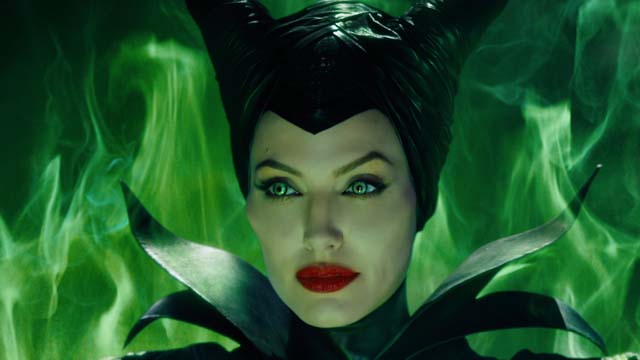
    However, it is always made up for in visuals. A battle scene played out between humans and beings of another world offered such gorgeous cinematography and effects, but so much of the mood is in thanks to Angelina Jolie’s performance. The film was dark by Disney standards, but there was still a lot of predictability and inevitable lessons that destroyed the true darkness that could have encapsulated the movie. What Jolie was able to do was utilize the Maleficent character as the foundation for the brutal honesty that a usual PG-13 film lacks. The character of Maleficent is a complicated one. Throughout the entire movie she never identified as a hero or villain, she was a true character that changed and was as selfish as she was selfless. Jolie was able to portray the change with an elegance that could have been lost on a lesser actress. Further than that, she was able to emote with such veracity that the pain transcended the screen, but also rule the kingdom with an icy stare that struck fear into our hearts like in the animated version.

    Despite her magnificent performance that will surely rank among her best, the second half of the film, which acted as a retelling of the classic Sleeping Beauty tale was clunky at best. The characters surrounding Maleficent became caricatures as if they were pulled directly from a cartoon. It caused the darkness that was built up in the first half to come crumbling down and what we were left with was just another heartwarming Disney movie.

    All flaws aside, Maleficent was a step in the right direction for Disney. The studio has been looking to step out of their usual mold of fanciful films that taught you a lighthearted lesson about life that you already knew. Saving Mr. Banks was their first attempt to break that mold and although it failed, it signaled a change. Maleficent was not a great movie by any means, but the pure craft involved was enough to keep you entertained for 90 or so minutes. I think that the film is an early contender for Oscars for Visual Effects and maybe Production Design and Costume Design. What kept you thinking was that Disney was able to put out a character with such complexity as Maleficent. While the movie surrounding may have been the usual fare, I am excited to see them adding, however small, a little darkness in their movies.

  • Much Ado About Nothing (2012) Movie Review — Shakespeare like you’ve never seen before

    Much Ado About Nothing (2012) Movie Review — Shakespeare like you’ve never seen before

    Much Ado About Nothing finds Joss Whedon at his sharpest and most creative

    I have something to admit. The 1993 film Much Ado About Nothing is one of the movies that made me fall in love with cinema. Partially because it was the first film adaptation of a Shakespeare play that I watched, and partially because of the performances of Emma Thompson and Kenneth Branagh. I’ve never seen two actors delve so passionately into Shakespeare. As incredible his prose is, it takes more than your high school English teacher to perform it properly. Branagh has such respect for the material. So, when I heard that another filmmaker was going attempt to adapt my favorite Shakespeare play, I was a bit skeptical. Who could possibly do the source material justice, while still making the film their own? Then, I heard Joss Whedon was directing, writing, and producing the film. Let me just say I was overly ecstatic.

    For you uncultured folk, which is probably few of you since you’re on this website (obviously), the story of Much Ado About Nothing is a simple one that is actually more complex than it seems. The play follows two couples who are essentially tricked into thinking certain things about their feelings for their respective partners. Love or Hate. Faithfulness or Betrayal. It is, in my opinion, not only Shakespeare’s best comedy but also his best romance. I adore this play.

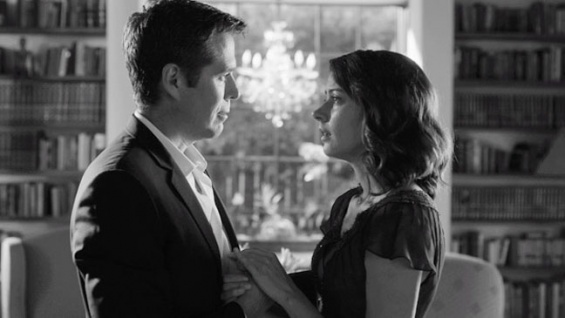
    Alexis Denisof and Amy Acker in Much Ado About Nothing


    Joss Whedon produced the film with what could be seen as a micro-budget, which is basically free considering his other film in 2012 was Marvel’s The Avengers. With Whedon’s home supplying the residence, many of his friends and past collaborators making up the cast, and completing the film in a mere 12 days, the film could be one of the simplest films produced in years. Even the DP didn’t have a lighting budget, he used this crazy thing called the sun. Just reading up on the project made me completely happy.

    Whedon made very small changes to the script and plot. In addition to the modern setting, the one obvious change was a small scene at the beginning of the film that more specifically defined the relationship between Beatrice and Benedick. The scene also did one other thing. It established the film’s offbeat comedic tone that you wouldn’t really expect from a play from Shakespeare. He may be 400 something years old, but the man was a riot. However, Whedon’s direction took the film from being a funny play to a hilarious love story. Small movements from the actors, their facial expressions, their delivery, coupled with Whedon’s slight visual humor made the entire film a joy to watch.

    Speaking of his visual style, you would never guess that this was the man that brought you Buffy the Vampire Slayer, Angel, or The Avengers. The humor could range from simple sight gags to something manic and in your face, but his decision to film in black and white gives the film a magic that keeps you excited throughout. However, that is partially due to the performances from the cast particularly those of Amy Acker, Alexis Denisof (Wesley!), Fran Kranz, and Nathan Fillion.

    I have to say. Much Ado About Nothing could be one of my favorite adaptations of a Shakespeare play. It had everything you need to successfully adapt Shakespeare: (1) a competent director who knows the material and can visually match it; (2) actors that are passionate enough to play the material and talented enough to pull it off (I mean, it’s Alexis Denisof, Amy Acker, Nathan Fillion, and Clark Gregg, not much could go wrong); (3) enough unique style to keep viewers entertained. Whedon was able to make Shakespeare understandable, which is not always an easy feat, especially in this generation. If you’re looking for a great date night flick with a little culture, this one is for you.

    7.5/10

    Much Ado About Nothing is available on DVD, Blu-Ray, and digital on Amazon!

  • Zootopia Movie Review — One of the smartest and timely Disney animated movies

    Zootopia Movie Review — One of the smartest and timely Disney animated movies

    The most recent installment in the Disney renaissance, Zootopia, is also easily their most timely and political. Basically the movie could be described as “let’s talk about racism with animals,” but like the best animated movies it mixes social subtext with genuinely hilarious moments and interesting characters.

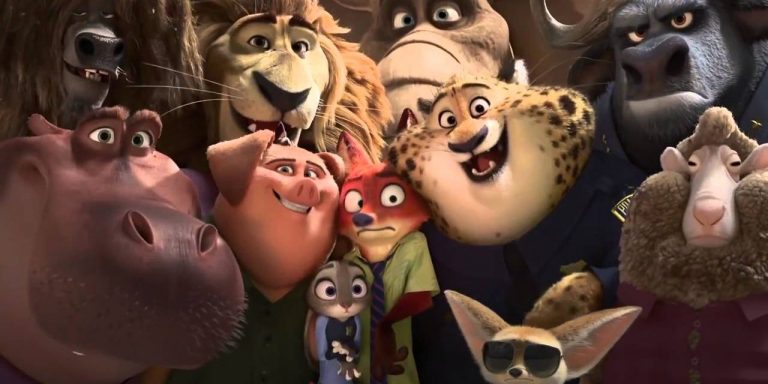
    Zootopia starts on an elementary school play starring rabbit Judy Hopps (Gennifer Goodwin) about how animals became anthropomorphic. She dreams of becoming a police office one day despite her parents’ objections and the fact that a rabbit has never become a cop. Despite this, she graduates at the top of her class and is assigned to district one of Zootopia, a city where animals of all kinds, predator and prey, can live together in peace. However, she is assigned to parking duty since her boss, Captain Bogo (Idris Elba), a water buffalo, doesn’t believe she can make it as a real cop since she’s a rabbit.


    However, she is able to finally pick up a case involving predators who have gone missing. She is tasked with finding an otter who is one of the missing. She coerces the help of a con-man fox named Nick Wilde (Jason Bateman) to help her in the case.

    The narrative itself would be enough to make the movie a good entry in the Disney cannon. It features smart writing, incredible visuals that make the world come to life, and great central characters that spit off banter like the best procedurals on TV — though much credit has to be given to Goodwin and Bateman on their voice work. However, it’s the fact the the movie doesn’t shy away from a political subtext that makes it a great, and maybe even the best, movie in this new age of Disney.

    Throughout the movie, there are eerily familiar parallels to real life, like a lion running for mayor with a sheep on the ticket to shore up the prey vote or a sheep yelling, “go back to the forest, predator” to a cheetah who replies, “I’m from the Savannah!” or a rabbit mother moving her child closer to her when a lion gets on board a train. Maybe for adults the racial subtext is a little bit obvious, but what’s more important is that it trusts that its younger audience will pick up on its message of inclusion and the danger of stereotypes.

    Past the racial commentary, the movie – like Frozen – features a female central character whose main storyline doesn’t involve a romantic interest or dream to find true love. Her dream is to be a police officer despite the adversity she encounters.

    As a comedy, there are moments of just brilliance. At the center of that is a scene involving sloths at the DMV and incredible spoofs of Breaking Bad and The Godfather. It is moments like that that prove that animated movies don’t have to be made either for kids or adults. It could be both.


    Zootopia may be a “kid’s” movie, but its message is one that garners a high-level of thought. It comments on prejudice in a time of fear and calls for peace and tolerance instead of panic. It couldn’t seem more timely with the recent rash xenophobia and racism that has plagued our country. Zootopia may not change the world, but it can at least teach our children that we should not succumb to fear, but instead work together toward peace.

    8.5/10

    Get Zootopia on DVD, BluRay, or digitally over on Amazon!

  • The Nice Guys Movie Review — An Incredibly Fun 70s Buddy Cop Romp

    The Nice Guys Movie Review — An Incredibly Fun 70s Buddy Cop Romp

    Anchored by its leads, The Nice Guys is a hilarious take on the buddy cop movie that is sharp and smart

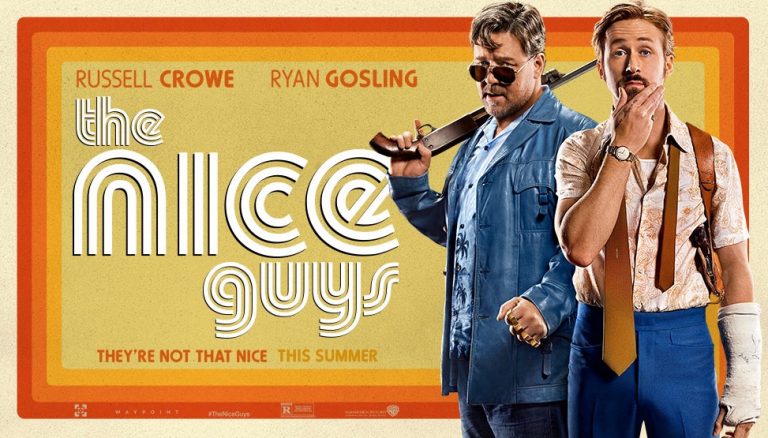
    If 2016 has been lacking in anything, it’s comedy. There have been few hits, critically and commercially, and seemed that more comedies bombed than anything. However, there has been one gem from this year that should stand at the end of this year as the best comedy. I use the word “romp” in reviews a lot, but no movie this year fits the definition of the word more perfectly than The Nice Guys. The film is a no holds homage to the buddy cop movies of the 70s complete with mustaches, lingo, clothes (the costume design is spot on), and topsy-turvy plot. All these factors and two leads whose chemistry will make any other buddy cop duo jealous  leaves us with a film that is not only entertaining, but downright hilarious.

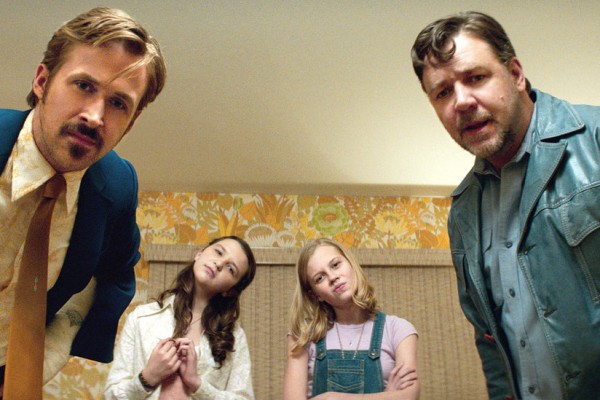
    The duo at the center of this film has quirks that make them perfect for each other and a terrible mismatch at the same time. Ryan Gosling’s Holland March is a semi-successful alcoholic private investigator who isn’t above taking a job to just make an extra buck — he agrees to help a confused willow search for her dead husband whose urn is perched on her mantel. However, when his job gets crossed with Russell Crowe’s Jackson Healey — whose goodbye after their first meeting is “give me your left arm, and when you talk to your doctor, tell him you have a spiral fracture of the left radius” and then sipping on a yoohoo — he doesn’t realize that he’s going to be his unlikely partner in an even bigger investigation.


    Crowe plays the straight man to Gosling’s clumsy, sloppy, high-pitched shrieking March as they come together to investigate the disappearance of Amelia (Margaret Qualley) who is being pursued by a cast of villains (including Matt Bomer in a refreshingly mischievous turn as John Boy). With the help of March’s too-smart-for-her-age daughter Holly (Angourie Rice), the duo finds out that the true subject of the chase is a porn film that reveals a government conspiracy involving air pollution and Volkswagens.the-nice-guys

    As the plot thickens, the clear star of this film is the dynamic between Crowe and Gosling. They play off each other’s energies so perfectly. When March does something idiotic like falling off a balcony, rolling down a hill, and uncovering a dead body, Healey is there to stand in disbelief of his idiocy. But between the two, Gosling proves himself to be a more than capable comedic actor. He goes from pitch-perfect zingers like “so you’re telling me you made a porno where the plot is the point?” to no-bar physical comedy seamlessly — his character doesn’t seem to stop falling. If anything, watch the movie for one of the best performances of Goslings career.


    But another reason to watch is the production value. The movie firmly drops you into the 70s. It even begins with the Warner Bros. logo from the decade. For me, the clear standout is the costume design by Kim Barrett (best known for The Matrix). Her costumes from Healey’s various ridiculously patterned shirts to the gorgeous romper Yaya DeCosta as Tally wears in the final act not only drop us further into the time period, they also keep up the fun attitude the film takes.

    In the end, The Nice Guys is nowhere near a perfect movie. It could certainly use a lot of trimming, especially towards the drawn-out third act. The laughs become a bit thinner and the plot a bit of a drag. However, the journey to get there is a delightful — wait for it — romp. Though the crime it focuses on can get serious at times, the characters never take themselves seriously…

    March: Look on the bright side. Nobody got hurt.
    Healy: People got hurt.
    March: I’m saying, I think they died quickly. So, I don’t think they got hurt.

    …and you wouldn’t want it any other way. 8/10

    The Nice Guys is available on DVD, Blu-Ray, and digital on Amazon!

  • Hidden Figures review — One of the most enjoyable biopics in years

    Hidden Figures review — One of the most enjoyable biopics in years

    Hidden Figures delicately balances a racial drama with a biopic while also telling the story of the space race. The result is one of the most delightful movies of the year.

    It takes the right kind of movie to get a Thursday night crowd actually cheering in the theater. Well, Hidden Figures is that kind of movie. Crowdpleasers aren’t hard to find in our current cinematic environment. It seems that Hollywood lives off of them. Financially, they do. However, good crowd pleasers are a rarity. Last year saw The Martian was the perfect example. You rooted for the success of the main characters and wallowed in their defeats. But in the end, you were up off your seat cheering at the photo finish. However, Hidden Figures is a more complex story than The Martian. In addition to being a true story, director Theodore Melfi had to carefully balance a biopic with a race drama, all the while telling the story of the space race with Russia.

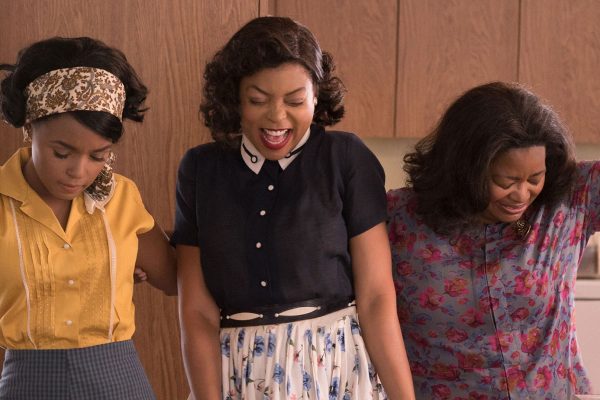
    Hidden Figures tells the story of three unsung heroes of NASA. Dorothy Vaughan (Octavia Spencer) is the informal supervisor of the West Area Computers Division, which is a group of thirty black women doing the calculations for the spacecrafts. Two of those women are Mary Jackson (Janelle Monáe), an aspiring engineer, and mathematician Katherine Goble (Taraji P. Henson), who is the center of our story.


    The movie opens with the three ladies stranded on the side of the road after Dorothy’s car breaks down. A cop comes to investigate and becomes distracted by the fact that the ladies work for NASA. This scene makes two things clear. First, it reminds us of the racial tensions of our society at the time. Second, it reveals that no matter what, the space race is at the front of everyone’s mind. Katherine is reassigned to the Space Task Group, which does the calculations for the all the shuttle missions. However, she finds that she is the only female and only person of color working in the division. This leads to animosity between her and her coworkers. They bring in a coffee pot for colored people in a heartbreaking instance. More subtly, Katherine’s bright patterned dresses clash against the uniform white button downs and black ties worn by everyone else in the department.

    However, this animosity is demonstrated beautifully and heartbreakingly in a single scene. The building that contains the Space Task Group doesn’t have a colored bathroom. So, she has to run in her heels and skirt half a mile to the West Area Computers division with her work in hand. She works while she uses the bathroom, then runs back to her office. This is played for laughs the first few times. It is even set to Pharrell’s song “Runnin’.” However, on a rainy day, this simple injustice causes Katherine to snap. Taraji P. Henson is an actress with a lot of power behind her, and she lets it go in this scene. But what makes it so effective is that Melfi builds up to it. He earns that scene and Henson knocks it out of the park. It may be emotionally manipulative filmmaking, but to the movie’s credit, it essentially asks you to buy into it emotionally and you allow it.

    More than anything, these women just want to work and do what they love. They want to have the opportunity to prove themselves. Allison Schroeder and Melfi’s screenplay, which they adapted from the book of the same name, does just that. It places the lens of the movie squarely on these ladies. It filters our society through their experiences. It’s one thing for a biopic to tell a story. Hidden Figures is the rare biopic to show me a real person.


    The movie tells the story of unsung heroes and it makes it a point to remind you of the impact of both their work and the work. It has a reverence for its subjects that is so vital. Part of that is thanks to the incredible performances from the cast. Kevin Costner does great work as Al Harrison, the director of the Space Task Group. He is a champion for Katherine and often helps her break the barriers that are systematically set in place. Jim Parsons is also great outside his typical mold as the head engineer Paul Stafford. Kirsten Dunst and Mahershala Ali, who is destined for an Oscar for Moonlight, also give great performances. Glen Powell gives a charming performance as John Glenn, the first American to orbit the Earth.

    However, it’s the three leading ladies who carry the movie on their shoulders. Octavia Spencer does her usual great work as the forward-thinking and motivated Dorothy Vaughn. Breakout Janelle Monáe is a scene stealer for much of the movie and has two scenes that would have made excellent Oscar clips. But Taraji Henson gives one of the best performances of the year as Katherine Johnson. She gorgeously emotes in two incredible scenes that are high points for the movie. Though, what I most appreciate about her performance is her internal struggle of suffering from injustices while trying to just do her the best work she can do.

    Is Hidden Figures one of the best written or directed movies of 2016? No. But is it one of the most satisfying and enjoyable movies? Yes! Hidden Figures will hook you from the very first time you see Taraji Henson, Janelle Monáe, and Octavia Spencer grace the screen and not let go until the last credit rolls. Watching Hidden Figures is perhaps one of the best times I had in the theater recently. It doesn’t just emulate a crowd pleaser, it’s the definition of a crowd pleaser.

    ★★★★ out of 5


  • Hunt for the Wilderpeople review — A quirky, funny, and poignant adventure

    Hunt for the Wilderpeople review — A quirky, funny, and poignant adventure

    Hunt for the Wilderpeople marches to the beat of its own drum and offers up laughs, tears, and cheers. Sam Neill offers one of his best performances in memory while the world is introduced to a great new talent, Julian Dennison.

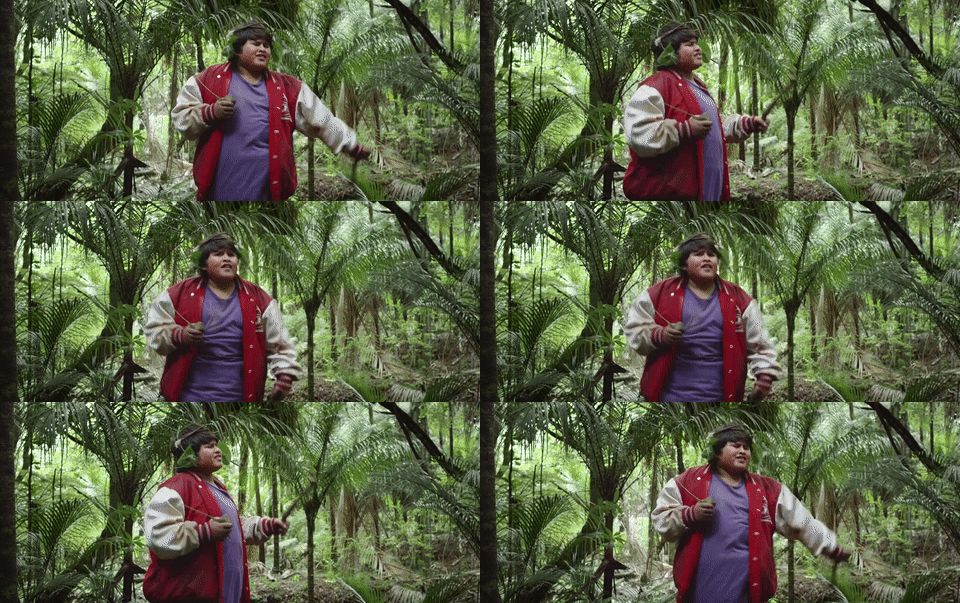
    There is no other movie like Hunt for the Wilderpeople. That’s because it balances so many elements that should be cliches and infuses them with sharp dialogue, charismatic characters, and a keen sense of wonderment — aided by the magical New Zealand countryside. It begins and ends in familiar places and is populated with character types we have come to love — the witty precocious kid, the cantankerous old man. But writer/director Taika Waititi infuses them with so much personality and charm that they feel completely original. The same goes for this offbeat world they inhabit — anyone who has watched his 2014 film What We Do In The Shadows knows his knack world-building — which falls somewhere in between Wes Anderson and the Coen Brothers. Still, the film is completely fresh and nearly impossible not to fall in love with.


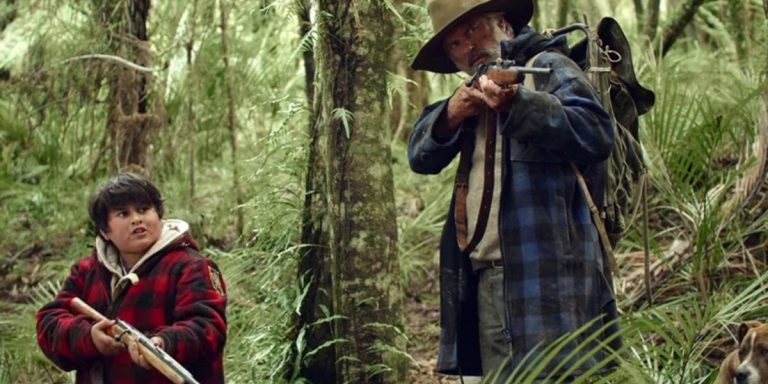
    The first time we see Ricky Baker (Julian Dennison), we feel as if we know the character. He’s a troubled orphan from the city in the foster care system with a history of misbehavior — stealing stuff, throwing stuff, kicking stuff, graffitiing as his Child Welfare worker Paula (Rachel House) says. The movie is split into chapters, which makes it feel like a folk tale or legend being told, and the first is called “A Real Bad Egg.” Paula brings him to the countryside in hopes of reeling in his bad behavior — for Paula “no child left behind” means that kids are issues that need to be squashed instead of loved. However, his foster mother Bella (Rima Te Wiata) — a woman that wears cat sweaters, but can also kill a pig with her bare hands — makes quick work of Ricky by showing him something he hasn’t been shown before — compassion. That’s just the first 10 minutes of the film. Waititi’s screenplay and direction are storytelling efficiency at its best. Instead of long stretches showing Ricky coming to love his “Auntie” Bella, he does it in quick visuals — at one point Ricky untucks his bed to find a hot water bottle in bed for him and finds warmth, both literally and figuratively from it.

    Julian Dennison in Hunt for the WilderpeopleHowever, Ricky goes on the run, for reasons I won’t spoil, with the intention of living off the land. The problem is that Ricky isn’t suited for the wilderness and is soon found by Bella’s husband Hector (Sam Neill) — he’s a grizzled, old, cantankerous outdoorsman. After Hector hurts his ankle on the way out of the bush, he and Ricky must camp out for a couple weeks while he heals. In that time, however, a national manhunt — swat teams, helicopters, dogs, and all — ensues after it’s assumed that Hector kidnapped Ricky. The duo goes on the run, which leads to hilarity along the way. It’s the classic mismatched pair setup. Ricky is ill-equipped to live in the wilderness — he eats through his rations within the first hour. Hector, on the other hand, is an experienced outdoorsman. Ricky passes time by writing haikus, while Hector hunts for eels. As the chase goes on longer, the story gets national attention and the two become famous. But more importantly, this road movie set up lets the two discover that once you strip away the constraints of society, you can become something more than you’re destined to be.
    Between Hunt for the Wilderpeople and What We Do In The Shadows, Taika Waititi has proven himself as one of the finest writer/directors working today. Not only are the world and characters he created wonderfully offbeat, but the lens he films them in is as well. He builds characters in a way by making you underestimate them, then letting the actors do the work to blow your expectations away. Sam Neill, who is the best-known actor in the cast, does great work to make Hector a complex father figure to Ricky. But it’s Julian Dennison who truly steals the show with his hilarious take on Ricky Baker. He could have easily let the role become the stereotypical obnoxious kid but throughout the movie, he shows hints of the hard life that his character had to endure. The movie has a strong beating heart and Dennison is at the center of it.


    The movie is a bit of Up, a bit of Moonlight Kingdom, but Waititi’s DNA is all over it. Though his writing takes center stage with sharp jokes that land every time to references to The Lord of the Rings, Rambo, and Terminator, he also proves that he’s a filmmaker more than able to translate a story beautifully to screen. My favorite example of this is a scene where he plants the camera and rotates it 720 degrees to portray the manhunt over a period of time. While he could have stitched the scene together in post, he instead did the effect in-camera and had the actors run in and out of the frame and utilized body double to create a whimsical, memorable, and efficient piece of storytelling. It’s that kind of quality that makes Hunt for the Wilderpeople a cinematic achievement on every level.

    I think you’d be hard pressed to find someone who won’t at least like Hunt for the WilderpeopleIt has everything you want in a film — memorable characters, an interesting story, and, most importantly, heart. Though it’s the film’s ability to make you roar laughing and quietly stifle tears that make it unique and one of the best comedies to come out in years. Taika Waititi has had a successful career in New Zealand on smaller movies. However, his next project is the massive Thor: Ragnarok. It sounds like a weird choice, but if Hunt for the Wilderpeople is any indication, he is a perfect filmmaker to tackled the franchise. As for the Julian Dennison and his career ahead, I have four words — sh!t just got real.

    ★★★★½ out of 5


    Hunt for the Wilderpeople is available for digital rental on Amazon!

  • I Don’t Feel At Home In This World Anymore review — Deranged in the best possible way

    I Don’t Feel At Home In This World Anymore review — Deranged in the best possible way

    Part screwball comedy, part violent crime movie, I Don’t Feel At Home In This World Anymore is an often hilarious strong debut by Macon Blair

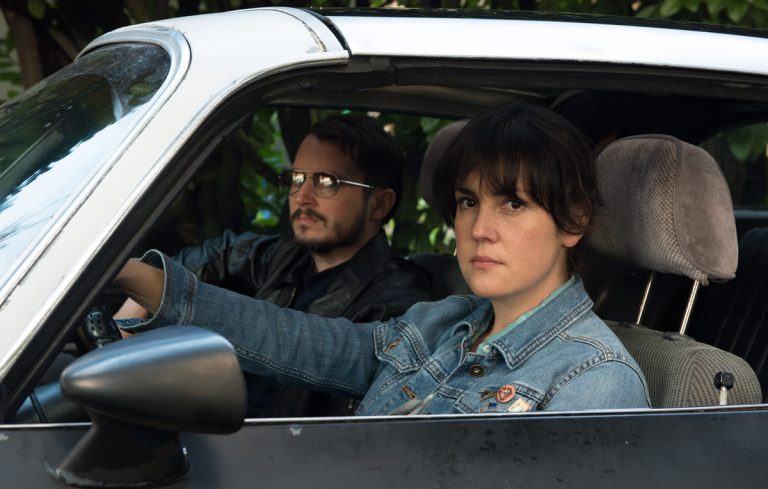
    I Don’t Feel At Home In This World Anymore can pretty much be summed up in its whimsical title. It leans on the worst of our society – an ozone killing car, another shooting on the news — while observing it from a sarcastic, cynical viewpoint in our lead character, Ruth (Malanie Lynskey). The movie can really be boiled down to two things: a buddy comedy with elements of Jeremy Saulnier’s Green Room. That’s not surprising considering the film’s writer/director Macon Blair has starred in all three of Saulnier’s movies — Murder Party and Blue Ruin being the other two. Because of his close collaboration with Saulnier, I Don’t Feel At Home In This World Anymore is assured for a debut film.

    We meet Ruth on what seems like the epitome of bad days. A giant pickup truck with pitch black exhaust smoke constantly shows up on Ruth’s commute to work. Someone cuts in front of her in line at the grocery store. One of her patients — Ruth is a nursing assistant — tells her to “keep your gigantic monkey dick out of my good pussy” before dying immediately. All of this is made worse when Ruth returns home to find that her house was robbed — her laptop, Grandma’s silver, and antidepressants are among the stolen. However, just like any bad day just seems to get worse, the cop that is assigned the case hints at Ruth committing insurance fraud before letting her know “he’ll get back to her.”


    When Ruth is able to track her laptop using her phone, she enlists the help of her obnoxious neighbor Tony (Elijah Wood) — he has a rattail, studies karate, and lets his dog defecate on Ruth’s lawn constantly — to track down the culprits and take the law into her own hands. However, she quickly realizes that the plot is a lot more complicated than she initially thought.

    Blair sets a tone that other movies find hard to tamp down. The movie is extremely dark, a lot of the comedy is dark as well, but it has a surprising amount of heart, mostly thanks to Melanie Lynskey’s portrayal of Ruth. On top of that, the stinging commentary on our societal norms is told from a cynical point of view that also has a touch of hope. The first movie that comes to mind when thinking about the shifting tone of this movie is the Coen Brother’s masterpiece, Fargo. Similarly to the plights of Marge Gunderson and Jerry Lundegaard, Ruth and Tony face the darknesses of our world while grasping to find where the good went.

    However, narratively the film never takes off the way that Fargo does. It’s a crime thriller and screwball comedy, but the plot never quite excels in either aspect. That’s partially due to the film’s villains played by Jane Levy, David Yow, and Devon Graye. While the actors’ performances are quite good and make the most of what they’re given, their storylines and motivations don’t quite live up to the deeper introspection into our protagonists. Lynskey and Wood make the perfect comic and emotional duo. Lynskey plays up the emotions of everyday frustrations without going over the edge into camp — even when she projectile vomits at the sight of blood for nearly a minute. However, her descent into badassery is completely believable as her experiences throughout the movie shape and harden her until the film’s final climactic minutes. Wood, on the other hand, complements her with his no holds-performance of pure loserdom. At one point, he prays to God before breaking into a house, nearly snapping a man’s arm, and throwing a ninja star at the wall, without so much as a glimpse of insincerity. The combination of the two is what makes the film work.


    At a lean 90 minutes, I Don’t Feel At Home In This World Anymore is a quick watch that feels even faster because of Macon Blair’s streamlined script. While at some points it feels like you want more and at others like it could be taken to the editing room, Macon Blair has proven himself to be a storyteller almost up to snuff with his friend Jeremy Saulnier. The final act of the movie, which doesn’t hold back on the violence or laughs, simply affirms the movie’s themes and tone in one of the most satisfying climaxes to a film I have seen this year, but it feels justified. That’s what makes this movie so successful. It’s determined to earn our adoration. Even then, I Don’t Feel At Home In This World Anymore is a profound reminder that as much as the world — line cutters, gas guzzlers, and all — seems to let us down, it’s still ours for the taking.

    ★★★ out of 5

    I Don’t Feel At Home In This World Anymore is available on Netflix!

  • Baby Driver review — An action movie that will make you sing

    Baby Driver review — An action movie that will make you sing

    Funny, thrilling, and musical, Baby Driver is an action movie like no other with a protagonist that will make you sing.

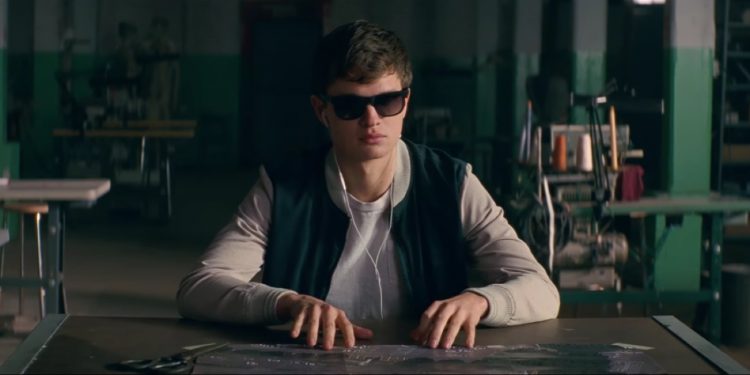
    Any successful action scene and movie has to have a rhythm. Pace is everything. Well, Edgar Wright — best known for Hot Fuzz and Shaun of the Dead — takes that requirement and sets it to a tune. Every one of the action scenes and even the mundane ones are set to a carefully selected tune by our protagonist, Baby (Ansel Elgort). To him, music is life. And since the movie is solidly set in his point of view, every scene, every move, and every heist are music.


    But it’s certainly for good reason. At a young age, he was in a car accident that claimed the life of his parents and gave him tinnitus, which means he constantly hears a high-pitched ringing unless he drowns it out with music. However, one good thing came out of it. By using the music as his metronome, he is able to time his moves and reflexes almost perfectly while driving. Doc (Kevin Spacey), a crime boss in Atlanta, took notice of Baby’s skills when Baby stole one of his cars at a young age. Now, Baby works as a getaway driver to pay off his debts to Doc. Doc is fond of Baby. He even points out the even though he never has the same team for a job twice, Baby is always the driver.

    However, when we meet Baby, he has almost paid off his debts and owes Doc just one more job. Between his job with Buddy (A delightful Jon Hamm), his wife Darling (Eiza González), and Griff (Jon Bernthal, in a small but meaty role) and last job, he meets Debora (Lily James), a waitress at a diner he frequents. Debora captures his attention when he sees her singing “B-A-B-Y” by Carla Thomas as she walks into the diner. In her, he sees a future outside of crime.

    What makes Baby Driver work so well is not only the musicality of the action scenes, though that is certainly vital to its success, it’s the way Baby as a character is presented. Action movies often expect you to like the protagonist because they are the protagonist. They don’t put in the work to make you like the character. With Baby Driver, Wright makes Baby an atypical action movie protagonist. He doesn’t want to be the hero of his story. He wants his story to have the quietest ending possible. However, his line of work doesn’t lend itself to that. Elgort is a huge part of the character’s success. He’s a charmer when he’s silent, but when he gets the chance, he makes a grab for our hearts — he memorably lips syncs to Jon Spencer Blues Explosion’s “Bellbottoms” in the opening heist.

    That opening scene, in general, is a masterwork of directing and one of the best scenes of the year so far. The bank robbery and ensuing getaway, which is set to the same song, is an action scene like no other. The chase flows with the music. Every swerve, hit, and even yell from the passengers is timed with the music. It allows the scene to have momentum, unlike the smash cut riddled action sequences of the Bourne or Taken franchises. Almost every scene has the same momentum.


    Eventually, Baby gets pulled back into Doc’s circle, and he must find a way to protect himself and the people he loves — Debora and his foster dad, (CJ Jones) — before his crimes catch up with him. Interestingly enough, the movie doesn’t end with a car chase, but it certainly subverts any expectations you may have. It’s not the typical crime movie ending. Wright knows that he owes the character of Baby more than that. Throughout the movie, he subtly shows that Baby is more than his life of crime. He is a good person that got pulled into doing bad things. Wright knows that Baby has to atone for that. And the way he does that is almost as thrilling as any action scene in the movie.

    Baby Driver feels like the future of action movies. Even though Mad Max: Fury Road still feels like the height of the genre, it was an evocation. Baby Driver is an innovation. Not just because of its musicality, which makes it feel like an old Hollywood musical on wheels, but because of its unique structure, its out of this world characters, and because Baby is a protagonist like no other. That’s not to take away from the rest of the cast. Spacey is chewing the scenery, but in a way that no other actor can pull off. James is a charming romantic lead, Hamm and González are a suave Bonnie and Clyde-esque couple, and Jones helps give Elgort more dimension. However, the real star is Wright’s screenplay and direction. He balances romance, comedy, and action without taking away from any element. You’d better hope Baby Driver is a hit. We need more movies like it.

    ★★★½ out of 5


    Watch Baby Driver on Amazon!

  • Okja review — A surreal and quirky movie about a super pig

    Okja review — A surreal and quirky movie about a super pig

    Bright colors, quirky characters, and at the center of it a super pig. Okja is a visual delight but offers something deeper below its surface.

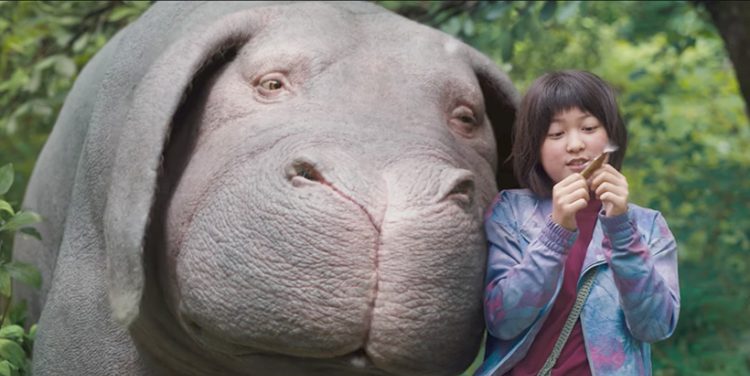
    Okja is a super pig. Yes, that’s what they call her species in the eponymous film. This animal, which is double the size of a hippo, slobbers uncontrollably, and has a propensity to fart — sometimes on command — is also a gentle and loyal giant. That’s clear from Okja’s relationship with Mija, a farm girl in Korea who has grown up with Okja from when she was a toddler. It’s the setup for the classic kid and their animal best friend movie that we’ve seen countless times — Charlotte’s Web, Free Willy, etc. However, this is certainly not one of those movies.

    At the center of Okja is darker themes that can be summed up in the opening scene. Lucy Mirando (Tilda Swinton), the new CEO of the Mirando Corporation, announces in a bright and flashy presentation in 2007 the company’s newest venture: the super pig. Framed as the next step of meat production, the corporation isn’t holding back any expense in promoting the product — flashy graphics, a room full of press. However, the centerpiece is a 10-year contest that involves the company sending twenty-six of the super pigs to locations throughout the globe to see which farmer raises the best pig.


    However, Mija doesn’t seem to understand that the company has darker intentions as its end game. Specifically, that the super pigs are going to slaughtered and eaten. For all the glitz and glamor that the Mirando Corporation has, they are simply covering up that fact that they are the embodiment of corporate greed. Swinton — following up her incredible performance in the director’s last film Snowpiercer — acts as the human stand-in for the company. However, her character’s journey is a lot deeper than that. This campaign is her chance to finally crawl out from under the shadow of her grandfather, father, and menacing twin sister (also played by Swinton), who have all taken the reigns of the company at some point. Her complete lack of empathy for the creatures and Mija stem from money and success blinding her.

    The opening act of the film is a surreal study of a human, their companion, and their relationship. Mija and Okja aren’t human and pet. They’re truly best friends. Okja is as loyal and caring for Mija as she is for her. More importantly, though, Okja’s intelligence and compassion are on full display. It shows that there is a soul behind her eyes. However, that all comes crashing down when a caustic television veterinarian (played by Jake Gyllenhaal) comes to retrieve Okja for the media rounds before ultimately becoming just a product in a grocery store.

    As the setting shifts from Seoul to New York, we are introduced to the members of the Animal Liberation Front (ALF) — led by Paul Dano, who gives a marvelous performance — a PETA like organization that tries help Mija get Okja back. However, they, like Mirando, have ulterior motives as well. After the first act, which plays a lot like the dreamscapes of a Hayao Miyazaki film, the rest of the movie works best when the ALF or Tilda Swinton is on screen. Both sides are at times morally compromised. However, they also have a humanity that makes you understand the dilemma’s they face. That’s not to say that the movie is constantly bleak or overly serious. In the end, Bong Joon-Ho is a director that finds the humor in even the darkest of topics. For example, one of the members of ALF is constantly fainting because he eats as little as possible to leave the smallest carbon footprint. How far do you go to exemplify your ideals?

    However, there are moments when the movie doesn’t work. Specifically, Jake Gyllenhaal’s performance often takes you out of the world. The world that the movie takes place in is surreal, but his performance is on another planet. From his high squeaky voice to his twitchy movements, it’s over-the-top in the exact way a good over-the-top performance shouldn’t be. Compare that to Tilda Swinton’s idiosyncratic antagonist who still makes you feel even in her most overzealous moments. Steven Yuen does great work as well as another ALF member. However, the actor that makes the biggest impact in the film is Ahn Seo-hyun as Mija. So much of the movie relies on your reaction to her character. And she nails every scene.


    Even the smaller roles make a huge impact, though. It’s one of the best things about Bong Joon-Ho movies. Everyone from a disgruntled truck driver to Lucy Mirando’s neurotic assistant get a chance to make an impact on the screen that is memorable, and more importantly, adds to the surrealist world the movie takes place in. And for a movie featuring animal cruelty and corporate greed, it’s incredibly funny. But it doesn’t try hard to be. By just being its quirky self, it accomplishes that.

    To try and classify Okja would be a disservice to the movie. It’s as one of a kind of a film as they come. And that’s its greatest virtue. For this movie to work, it has to march to the beat of its own drum. That beat is a wonderfully unconventional movie that’s sometimes satire, sometimes dark comedy, but all heart.

    ★★★★ out of 5


    Okja is available for streaming on Netflix!

  • The Fault in Our Stars Movie Review — Shailene Woodley Gracefully Leads this Charming Film

    The Fault in Our Stars Movie Review — Shailene Woodley Gracefully Leads this Charming Film

    Shailene Woodley and Ansel Elgort - TFIOS

    Dir. by Josh Boone
    Dir. by Josh Boone

    It’s rare that a film move me to tears. So rare in fact that only three films I have watched in my lifetime were able to do so. They were Michael Haneke’s Amour, Roberto Benigni’s Life is Beautiful, and now Josh Boone’s The Fault in Our Stars. John Green was able to do something with his novel that not many artists can do. He was able to portray life as it is. Complete with all its victories and defeats, comedies and tragedies, virtue and unfairness. His honesty was refreshing. So to translate that honesty was a task that required great care and grace. Director Josh Boone understood that challenge and was able to balance the sentimentality of it all with the brutal realizations of leading a sick life.

    Hazel Grace Lancaster is a true modern day hero. Despite her seeming predestination of an early death, she survives and lives life careful not to harm too many in her inevitable destruction, that is until she meets Augustus Waters. Their love story is one that is doomed from the start, which was always a bold choice on the part of Green and that is apparent through the film. Although it has its light moments, there is always that overwhelming feeling of sadness.

    Everything from the score (composed by Bright Eyes) to the editing and pacing all serve a love story that is already so wonderfully plotted. However, that plot is amplified by the careful decisions to use a framing device that allows Hazel’s voice to guide the story. While part of the decision was probably made to include passages that book fans would miss, it was a welcome addition to the screenplay which takes so much from Green’s words.

    The unsung heroes of the film are the wonderful supporting actors. Mike Birbirglia, Nat Wolff, and Willem Dafoe did wonderful work, but Laura Dern as Hazel’s in denial mother was outstanding. You felt her need to make everything better, but feel powerless. Her hope and defeat play off so well and her arc of acceptance is so fantastically drawn out. However, the two leads were what made the film great.

    Related Article: 5 Reasons Why Shailene Woodley Will Receive an Oscar Nom for “The Fault in Our Stars”

    Ansel Elgort had a tough job in playing Augustus. He didn’t have to do much of the emotional lifting, that is left to his co-star. What he had to do is carefully tread the line that John Green so tediously set in the book between pretension and protection. The character is designed as an enigma, but in the end is simply trying to hide his vulnerability. Elgort did well with the task with some careful help from the direction and Woodley’s performance.

    However, through every painfully honest moment and heartwarming laugh it was Shailene Woodley who carried the film on her shoulders. It’s hard to play a character that many people can identify with. Not that many people have experienced what Hazel has experienced, but relate to a character so finely carved out that the end result is an honest portrayal of a human being and that is what Woodley played. There was never a single moment of this film that I thought of her as acting. Every movement, every line, every facial expression was so genuine that the pain that came along with the tragedy was made much worse. She is a natural talent. If this performance doesn’t prove that Shailene Woodley is one of the best actors in Hollywood, then I don’t know what will.

    In the end, it’s hard to find anything wrong with The Fault in Our Stars. It saves us the melodramatics and essentially makes a grab for the heart. It’s charming, well-written, superbly acted. It exudes an honesty that is not often portrayed in young adult films and while it will make that target audience swoon, it is an affecting piece of cinema that will seduce the masses.

  • Boyhood Movie Review — A brutally honest, modern masterpiece

    Boyhood Movie Review — A brutally honest, modern masterpiece

    Boyhood is an epic that concerns itself with a story on the human level. It is a masterful achievement in filmmaking.

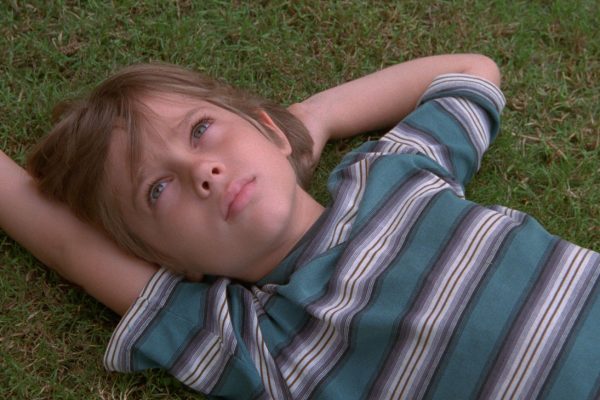
    Masterpiece is often a word that is overly used when reviewing film. A masterpiece should be nearly perfect, adroitly crafted, and a truly remarkable piece of art. That being said, Boyhood is a true masterpiece orchestrated by Richard Linklater. Filmed over a twelve year time period using the same actors, Boyhood follows a family as they live their lives. It’s really something we take for granted in film. Sometimes a simple premise such as life can turn into a phenomenal story. Throughout the twelve-year production period, the writers and actor adjusted the screenplay to create an honest portrayal and deep analysis of the human condition and also created one of the most exciting pieces of cinema I have ever seen.

    Although the film follows 4 members of this family (that was never named throughout the film), the entire story is told from the perspective of Mason (Ellar Coltrane), who begins the film at the age of 6 and is followed until he is 18. It’s nearly impossible to talk about the narrative as a whole. It’s an epic. However, the clearest way to analyze the film is as an education of Mason and his path to adulthood.


    I have to give Coltrane a huge shoutout here. Although his performance didn’t blow me away, he had a nearly impossible job. He had to grow up with a character, and he did so with grace. Patricia Arquette did wonderful work as well, however Ethan Hawke turned in the best performance of his career as Mason’s father, who had a fair amount of growing up to do as well.

    What Linklater is able to capture is remarkable. He manages to beg the questions that every kid asks when growing about the universe, the confusion over divorce, the development of sex and love. Growing up is a hard thing to do and this film tells the true story of it. Linklater has a way with life. He understands it. Between this and the Before Midnight series, I think he has a better grasp on it than most of us could ever dream.

    The experimentation with time is something entirely different to behold. By using cultural references it felt like I was reliving my childhood. It probably helped that Mason and I lived around the same time frame, although he’s 18 in 2014 and I’m 20, but it was exciting to hear references to Brittany Spears and Vampire Weekend, Harry Potter and High School Musical, Bush and Obama. Linklater so carefully clued us into what time period we were in, and the familiarity was comforting in a sense. It made time seem so important. It reminded us that the world moves at a break neck pace.


    The entire film appeared like an entire life in itself. Characters returned and I would get chills to be reminded of their existence. The fact that they were the same actors portraying them made the act even more notable. Watching characters come and go revealed a harsh reality of life. People exit our lives and may never reenter it. Linklater so honestly captured this and countless other realities that are hard to face.

    Not to be overzealous, but Boyhood was one of the best films produced in the last decade or so. It’s so epic in scope, but extraordinarily intimate in its storytelling. I watched twelve years of time pass on screen. I experienced those twelve years in less than 3 hours, but the emotional impact was just as great. This film is an instant classic that will forever serve as a reminder of the freedom of cinema and the ingenuity of Richard Linklater.

  • Steve Jobs Movie Review — A sleek and well-acted character study

    Steve Jobs Movie Review — A sleek and well-acted character study

    Danny Boyle’s Steve Jobs is the biopic about the late Apple founder we wanted. Michael Fassbender and Kate Winslet gives a career-best performances.

    The biopic is a very hard genre to do well. So often do films fall into the familiar formula of hard childhood, humble beginnings, major setback, and success. That’s what exactly went wrong with the Ashton Kutcher-led Jobs. There was no innovation behind the film, which is disappointing considering Jobs is arguably one of the most innovative entrepreneurs to have ever lived. He was also an incredibly complex man who was oversimplified in Kutcher’s portrayal and in the film itself. It became over-sentimental. However, a writer like Aaron Sorkin knows how to remove the self-importance of a story and just allow the characters to affect the storylines as much as the people involved.

    What’s so refreshing about the movie is that it is so kinetic. Exposition and character building so often bog down biopics, but Steve Jobs thrives off of it. Under the direction of Danny Boyle, the film moves at lightning speed. It helps that Aaron Sorkin loves the walk and talk because it really keeps the film moving. No matter what the characters are talking about there is some movement. Whether they are walking or throwing papers or fiddling with computers, we are always moving.

    beecb65f-8128-4a9c-b878-97a7ef8245c0-2060x1236


    Cinematographer Alwin H. Küchler and Boyle used this to their advantage by focusing your attention to what is more important. When the film is dynamic you are getting exposition or the plot is moving forward, but when we stop you pay attention more because what is being delivered is important to either the character or story.

    However, one of the most important choices that really made this film come alive was the decision to present the story in a three-act structure, each of which took place at three product launches in Jobs’ career: the Apple Macintosh, NeXT computer, and iMac. We know Jobs from these events. Up until the year he died we associated him with the black long-sleeve shirt, jeans, holding a clicker presenting the next Apple innovation. However, instead of focusing on the launch itself, the movie turned its attention to the time before the event. That’s where the story takes place. The movie took what was familiar about Jobs and gave us a behind-the-scenes look while also giving us an idea of him as a person.

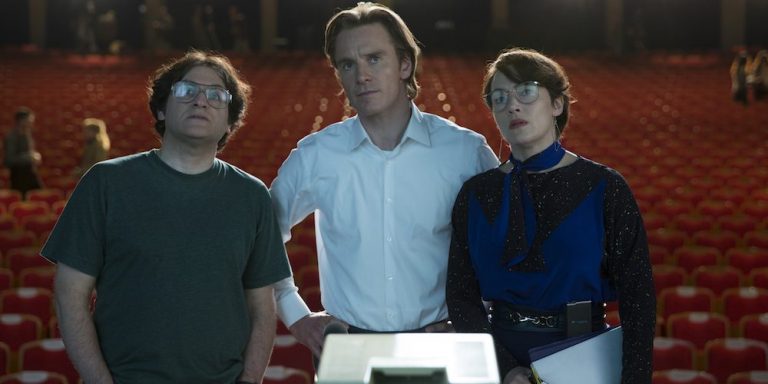
    Steve Jobs becomes even more impressive when you dig into the details of the production. Because of the three-act structure that really felt like a play, it was filmed in chronological order, which is already a feat in itself. It was also filmed in the actual theaters where the launches were held with people that attended them. It added to the energy of the already frenetic production.

    The three-act structure was bolstered with the decision to film each act in the aspect ratio of the time, giving it an authentic vintage feel. The 1986 intro was particularly fun with its blast of colors that remind us of the ever hopeless style of the 80s and approaching 90s. Despite the time period, it never feels like a period film. The topic is very much alive. Whether it’s because Jobs’ death was so recent or because Danny Boyle took note to make the film feel important doesn’t matter. What matters is that you feel a part of what is happening in the film. You feel Jobs’ urgency and that what he’s doing is important. Maybe you don’t realize it on a technical level, but on an emotional one you know that he cares. His genius is confusing, even to those people in the film, but you understand it because Sorkin wants you to understand it.

    Sorkin’s screenplay, as I’ve mentioned, is the lifeblood of Steve Jobs.It is truly electric to hear the actors spitting our dialogue a mile a minute without wavering. It’s elevated by the fact that the script doesn’t worry itself with characters’ motivations or emotional attachments. The dialogue tells the story, but the characters’ actions tell the heart. Instead of Jobs explaining why it is so important to break fire code and turn off the exit signs in the theater, his cantor and tone is what tells how important it is.

    01_09223333_c32bd1_2518799a


    What bogs down biopics so often is the fact that they include the information that doesn’t matter. Despite the huge amount of dialogue in the film, Sorkin only leaves the most important information. A major plot line of the movie is Jobs’ illegitimate daughter, who at the start he denies is his. Where most biopics would give all the backstory on when he met the mother and how he found out about his daughter, the movie skips all that and throws you straight into the action seamlessly.

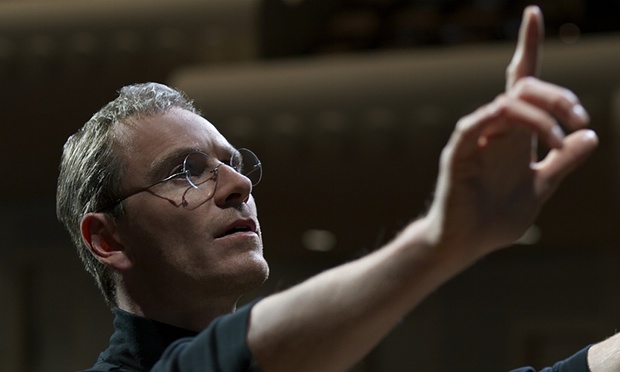
    That’s also why Michael Fassbender’s portrayal of Jobs is so incredible. He has proven time and time again his commitment to a role, however his career best comes in Steve Jobs. He’s so graceful in his portrayal of Jobs, but never for a moment feels as if he’s acting.

    While Fassbender really contributes as much to the success to the film as Boyle and Sorkin, the true heart lies in Kate Winslet who gives what I consider the best performance of her career. She transforms into her role both physically, vocally, and emotionally. Joanna Hoffman, Apple and NeXT’s marketing director, is arguably the only person Jobs will give in to. She grounds him with reason and reminds him that other people have feelings. When he sees people, who have IQs at genius levels, as idiots, she reminds them that they don’t have the confidence he does. She reminds him that not everything is based in numbers. If Jobs is the head of Apple, then Hoffman is the heart.

    [Tweet “#SteveJobs proves that style and substance aren’t mutually exclusive in a film.”]

    Steve Jobs is a film that I could watch over and over and still catch things I never saw the first time. From camera angles to staging, it’s a film that speaks on so many levels. It proves that style and substance aren’t mutually exclusive, they can live together in a film successfully. If you’re looking to get a “this happened, then this happened” telling of Steve Jobs’ life, then this isn’t the film you’ve been looking for. But if you want to watch a story about a complicated man who wanted to change the world, then Steve Jobs will meet and exceed your expectations.

    9/10

    Steve Jobs is available on DVD, Blu-Ray, and digital on Amazon!