Blog

  • Loving Movie Review — Joel Edgerton and Ruth Negga are quietly powerful

    Loving Movie Review — Joel Edgerton and Ruth Negga are quietly powerful

    Though unsentimental to a fault, Loving is a surprising and beautiful portrait of the reluctant revolutionaries, Richard and Mildred Loving

    Movies based on real events often fall into the trap of just showing plot point after plot point, often at the expense of real character development. Take The Theory of Everything or J. Edgar. However, when it goes right — see The Social Network or Malcolm X — it could be something truly amazing. In Jeff Nichols’ Loving, the entire movie is made up of the moments between the plot points. This is not a story about the case Loving v. Virginia. This is a story about Richard and Mildred Loving.

    Interest in the Lovings has been renewed with the legalization of gay marriage earlier this year. The Loving v. Virginia case was even cited in the majority opinion. As one-half of a gay interracial couple, I owe a lot to the Lovings. However, if I ever got the chance to thank them in person, I think they would shrug it off. The Lovings weren’t looking to change the world. When the film begins, they are just a couple excited that they are expecting their first child.


    Like any decent man in the 1950s, Richard asks Mildred to marry him. So, they hike up to Washington, D.C. to be wed. For them, even marriage is a modest affair. They didn’t even tell her mother and sister. However, as simple as they wanted their lives to be, it got a lot more complicated when the police broke into their home to arrest them for violating anti-miscegenation laws.

    Jeff Nichols is a master at knowing where to point his camera. Seemingly random shots like that of a group of men drinking around a table or two women hanging clothes take on a new meaning in this film. The former is a form of scathing judgment, the latter is a form of acceptance. It adeptly portrays the dark period of time in this country. However, that darkness is juxtaposed against the love story of the Lovings.

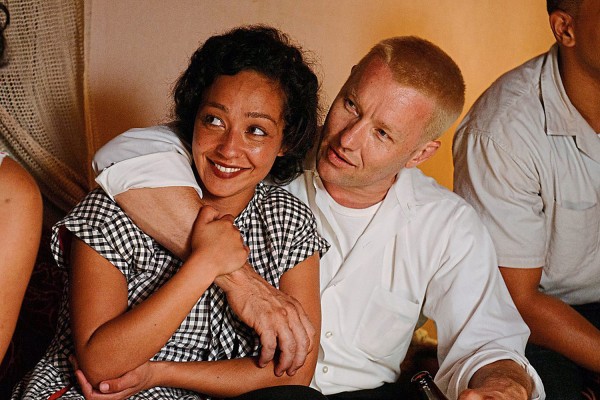
    For such a quiet movie, Loving moves at a lightning pace. We cover nearly two decades of the Lovings lives. Thanks to the incredible craft, particularly the costumes and editing, we feel like we are dropped into those periods. As we watch their children grow up and their case progress, we watch their everyday lives (with one too many bricklaying scenes — literal bricklaying). However, when there are more emotional scenes, Nichols adds the flair that he showed in Midnight Special earlier this year. One of those scenes show a photo shoot the Lovings did with time, which yielded one of the most famous photos of the couple:

    richard-mildred-loving

    My biggest criticism of the film is that it’s unsentimental, often to a fault. Sometimes you just want to yell at the screen and tell them to show some emotion. It was an interesting choice. The Loving story is ripe for big emotional reactions, grandstanding speeches, and difficult to watch scenes. Instead, Nichols finds emotion in the stolen glances and soft reactions.

    Without Ruth Ann Negga and Joel Edgerton in the role of the Lovings, the movie could have easily faltered. They perfected a chemistry that few on-screen pairs can achieve. Negga’s performance, in particular, is a revelation. She is an emotional powerhouse with such little dialogue. Scenes like when she discovers they’ve won are quietly powerful.


    Loving isn’t a film trying to be bigger than it is. Honestly, that’s how I think the Lovings would have wanted it. You can call them reluctant heroes or revolutionaries. What they really were was a married couple that wanted to live in their home state. The film could have tried to make a stand on the fundamental right to marry, but it’s not even a question that they felt they needed to answer. While in the film we do hear that they’re happy to help other couples like them, it isn’t a triumphant declaration. It was more of a nice sentiment. In the end, the struggle they went through could be justified in a single line that Richard directed at the Supreme Court: “tell them I love my wife.”


    8/10

    Get Loving on DVD, Blu-Ray, or digital on Amazon!

  • Demolition Movie Review — Jake Gyllenhaal shines in a dull movie

    Demolition Movie Review — Jake Gyllenhaal shines in a dull movie

    Demolition is an uneven, at best, arthouse film on grief that is all but saved by a strong Jake Gyllenhaal performance.

    I think it’s safe to call this the “emotionally disturbed” era of Jake Gyllenhaal’s career. Following career best performances in Enemy, Nightcrawler, and Prisoners, Gyllenhaal returns with yet another fantastic performance in Jean-Marc Vallee’s Demolition. This time, he plays Davis, an investment banker who deals with the fallout of his wife Heather’s (Heather Lind) death. In retrospect, this is actually a step back from his last few roles, which have been in genre films. However, the intensity and complexity of his performance stand. He proves yet again that he is one of the best actors working today. I wish I could be as positive about the film.

    Immediately following the death of his wife, Davis goes to a vending machine in the hospital to get a snack. However, his peanut M&Ms get stuck. This causes him to write a letter to the company that makes the vending machines to complain. This strikes up an interesting relationship with the customer service representative of the company, Karen (Naomi Watts). As the story progresses, Davis deals with his grief in an untraditional way. He begins to dismantle things – everything. Nothing, from his computer to the bathroom stalls in his office to his house, is safe. Eventually, his life becomes intertwined with Karen’s. He begins to form a close bond with her son Chris (Judah Lewis). All the while, he must deal with his Father-in-law and boss Phil Eastwood (Chris Cooper) as he attempts to understand Davis’ behavior.


    Jake Gyllenhaal in Demolition
    Jake Gyllenhaal as “Davis” in DEMOLITION. Photo Courtesy of Fox Searchlight. © 2016 Twentieth Century Fox Film Corporation All Rights Reserved

    The first act of Demolition is actually really strong. The dialogue, in particular, reminds me a lot of Aaron Sorkin. It’s fast, sharp, and riddled with brilliantly carried exposition. The first 20 minutes play like a montage of his adult life and marriage. It’s told with a witty cynicism that carries through the film. It also sets up an incredibly enigmatic character in Davis. At one point, he stands in front of the bathroom mirror and attempts to cry during the funeral. He – and we – are confused by his lack of grief. That’s really what we see for this part of the movie. His reaction to her death. It’s beautifully shot and edited. Jake Gyllenhaal even sells you on the character and his reactions.

    But here’s the issue with DemolitionThe first third and last twenty minutes together would make a really interesting arthouse film on grief. Though relying on cliches, the sharp Sorkin-esque dialogue and brilliant editing make for a darkly funny character study. However, the middle third and climax feel disconnected from the story. While I really appreciated the sentiment behind Naomi Watts’ character, the lack of real value of the character bogged down the flow. In addition, the character of the son felt unnecessary. That story arc felt like a distraction from the real purpose of the story. Had they connected that story more obviously – like have the son be the catalyst for his eventual acceptance of his wife’s death – then it would have been a stronger movie overall.


    However, as I alluded to before, the final 20 minutes of the movie nearly save it. Based on the first half, it’s the ending that we wanted all along. It’s just that the journey to that ending is misdirected. You don’t feel the emotional journey. You see a stitching of interesting shots and dialogue. It’s often the trap that many arthouse films fall into. It injects style without meaning. An arthouse film, in lieu of a goal, focuses on the thoughts and motivations of the characters. That doesn’t quite happen here. Compare that to Moonlightanother 2016 arthouse film, which is very intentional with its narrative and journey.

    I can’t tell you whether or not you’ll enjoy Demolition or not. It seems the response for it is sharply divided. But it really depends on your taste in films. You may pull more out of it than I did. However, I can say that if you’re looking for a really strong Jake Gyllenhaal performance and a few good laughs here and there, then give it a go.

    6/10

    Demolition is available on DVD, Blu-Ray, and Digital Download on Amazon!

  • Fences review — Viola Davis is an emotional powerhouse

    Fences review — Viola Davis is an emotional powerhouse

    Fences doesn’t take the opportunity to do anything cinematic with August Wilson’s classic source material, however, it does boast career-best performances by Viola Davis and Denzel Washington

    Troy Maxson (Denzel Washington) is one of the most complex characters to be committed to stage, and now film. No wonder it took James Earl Jones and Washington to portray his many layers properly on stage. In FencesAugust Wilson created a compelling character study of a larger than life man who is living in a world that doesn’t recognize him.

    Set in Pittsburgh in 1957, Fences follows Troy Maxson, a garbage man who spends each Friday — his payday — drinking with his co-worker and best friend Jim Bono (the great Stephen McKinley Henderson) and telling various stories ranging from his tangle with death to his abusive father. In particular, he dwells on his time as a star baseball player in the Negro Leagues. However, after aging out, he becomes bitter that he was never given the chance to play in the Majors — by the time the film takes place, Jackie Robinson has already broken the color barrier. This resentment coupled with his boisterous personality causes him to convince himself that everyone and everything are stacked against him. Even his wife, Rose (Viola Davis), who has steadily stood by him for years, and his son, Cory (Jovan Adepo), whose success in football brings back the strong memories of baseball in Troy, received a jolt of his rage.


    Washington plays Troy as a man who is forgotten in the world, but a huge force to the ones around him. For Troy, he is the lead of his story and never a supporting role in someone else’s — a fact that comes to haunt him in regards to his wife. For those closest to him — Rose, Cory, his grown son Lyons (Russell Hornsby) — Troy is the sun that they both revolve around and are threatened to be destroyed by if they fall out of orbit. The one person who has some emotional control over Troy is his brother Gabe (Mykelti Williams — he would have been a fantastic Best Supporting Actor contender at the Oscars), a World War II veteran who was mentally handicapped in the war. His innocence to the situations and Troy’s guilt about him is the only thing that gets to him. At one point, Bono says, “some people build fences to keep people out and other people build them to keep people in.” While it’s an unsubtle nod to the metaphor that is the title, it’s an important line that perfectly sums up Troy’s unspoken meshes and Rose’s attempt to assuage them. Wilson’s prose and dialogue remind us that playwrighting and screenwriting are two entirely different things. However, it’s lines like those that also remind us why plays are so powerful. They speak the simple truths that often feel out of place in film.

    Washington, who along with Davis won a Tony for the Play, stepped into the director’s chair to lead the same cast that he performed beside on stage — save for his son, who was played by a different actor in the play. His reverence for the material, which was written by August Wilson himself before his death in 2005, is apparent. He seemingly didn’t change a single word from the script, which is admirable but feels like he loses the chance to make something more cinematic. Of course, though, Wilson’s script and powerful language are more than enough to make up for any lack of cinematic flourish. If anything, it does more to support the material, which of course is the first job of a director. What he does do, is give each and every actor a place to flex their talents.

    Viola Davis in Fences
    Viola Davis in Fences

    Viola Davis still plays to the back of the house in the film. The now infamous “I’ve been standing with you” scene will go down as one of the best-acted scenes in history thanks to the emotional flood she is able to release. However, it’s the smaller moments, which make the case for the film, that makes her performance, as a whole, great. She carries the weight of her 18 years of marriage on her face. The look she makes when Troy does something to remind her of the terrible hubris that has defined his life and decisions. One day, when she received a life achievement award, her monologue scene will be the one that they include from this movie. However, you can remember her achievement in this film as one of the single greatest performances from beginning to end.

    While Fences begins as the story about a man that can’t help but absorb all the energy and attention around him, it ends as her story, one of a woman taking back the power she lost for all the years she spent with him. However, the themes run deeper than that. It, of course, touches on the societal issues of the time, but the more interesting, and affecting, is its commentary on parenthood. It asks how you give your children your strengths while protecting them from your weaknesses? How do you prepare your kids from the world and society when it’s constantly changing before your eyes? In the case of Troy, he can’t grasp the change, which is understandable considering the circumstances he lived in. However, it’s his stubbornness of not allowing Cory to grow and live that drives a wedge through his family. His stubbornness and pride is the shadow that follows him. In turn, Troy is the shadow that follows Cory.


    There’s nothing groundbreaking cinematically in Fences. Any opportunities Washington takes to go outside the setting of the play — the vast majority of the film takes place in his backyard and house — feel out of place. However, there’s no doubting that August Wilson’s play is one of the great American dramas to ever grace the stage. While it doesn’t translate perfectly to film, the performances and emotions do — multiple people, including my friend I was seeing it with, cried at the end. In the end, it’s a really important lesson to be mindful of the space you take up in your tiny slice of the world and to leave room for those around you. However, on a macro level, Fences speaks more to our issues today than many people would expect. As Denzel so beautifully put in his SAG speech, August Wilson use his 10-play “Pittsburgh Cycle” to tell the stories of African-Americans that are pushed into the margins of literature, theater, and film. Also, though, Fences portrays what could happen when society constantly denies you the opportunity to advance yourself or simply live.

    ★★★½ out of 5


    Fences is available on DVD, Blu-Ray, and digital on Amazon!

  • Jackie review — A haunting opus of grief in the public eye

    Jackie review — A haunting opus of grief in the public eye

    With a stellar performance by Natalie Portman, magnificent direction by Pablo Larraín, and groundbreaking screenplay, Jackie uncovers the woman behind the most iconic First Lady in history

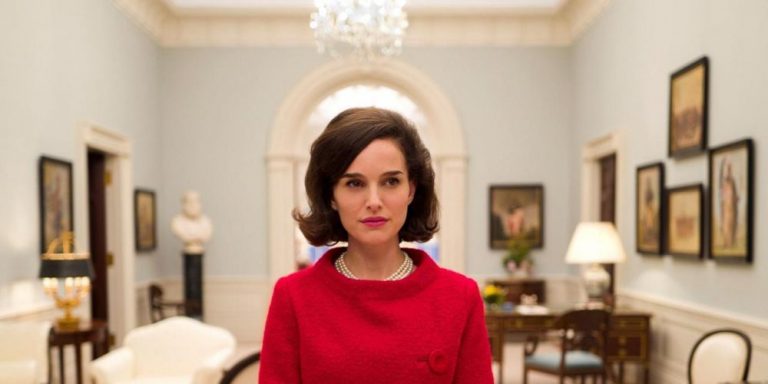
    Many movies try to give you an inside look at a famous figure. They try to show you the real person behind the mystery of their façade. However, very few understand their subject on an intimate level. The portrait that Chilean director Pablo Larraín painted with Jackie has so much color and life and emotion that it may be one of the greatest biopics ever committed to film. Taking place over the few days following the assassination of President John F. Kennedy, Jackie focuses on the precarious juggling act that Jackie Kennedy had to pull off in the wake of the darkest moments of her life. And while Larraín must be lauded for his accomplishments with the film, Natalie Portman’s tour-de-force performance as Jackie Kennedy, which will go down amongst the great performances of generation, drives the film to its satisfying and haunting end.

    In lesser hands, this movie could have been shrouded in melodrama and meaningless dialogue. Larraín doesn’t try to sanctify Jackie. He appreciates her for her flaws — her often self-contradictory decisions, changing performance for the public, press, and staff — and studies how they affected her decision-making. By framing the story from two different angles — Jackie speaking to an unnamed reporter (Billy Crudup) only a week after the events of November 22, 1963 and speaking to a priest (the late-great John Hurt) looking for guidance — we can see her from two completely different emotional states — anger and confusion — as she navigates the political and personal waters that come when a President and husband are killed.


    Even though the movie only shows events from the day of the assassination on — save for a few moments before and a recreation of her famous White House tour — Jackie taps into the mind of the third youngest First Lady from the moment she became a Kennedy. As she says in confidence to the priest, “I never wanted fame. I just became a Kennedy.” Her life as a First Lady is perfectly encapsulated in the week following her husband’s assassination. The movie is concerned with the juxtaposition between the performance she puts on for the public, the perception the public has of her, and the private life that she desperately wanted to keep shut. The Kennedys are one of the most enigmatic political dynasties our country has ever seen and Jackie may be the most mysterious member.

    Screenwriter Noah Oppenheim — who has only penned The Maze Runner and Allegiant before — pulled together the shattered pieces of Jackie Kennedy’s psyche and assembled them in a poetic non-linear narrative where each scene builds on the last. He doesn’t become distracted by the extraneous details of her marriage to JFK — though there are references — or life preceding her time in the White House. Instead, he concerns himself with how the incredible weight of being First Lady both prepared and disadvantaged her in this unimaginable situation. He brilliantly uses the 1962 TV special A Tour of the White House with Mrs. John F. Kennedy — which Larraín beautifully and meticulously reconstructs — to give viewers a taste of how Jackie was perceived by the public which, as she says, is as “some silly little debutante.” Using her discussion with the journalist, he lets her air out her unfiltered feelings about the assassination — which she vividly describes in tears before saying, “don’t think for one second I’m going to let you publish that” — and funeral. In these scenes, Jackie toes the line between another performance and pure emotional turmoil.

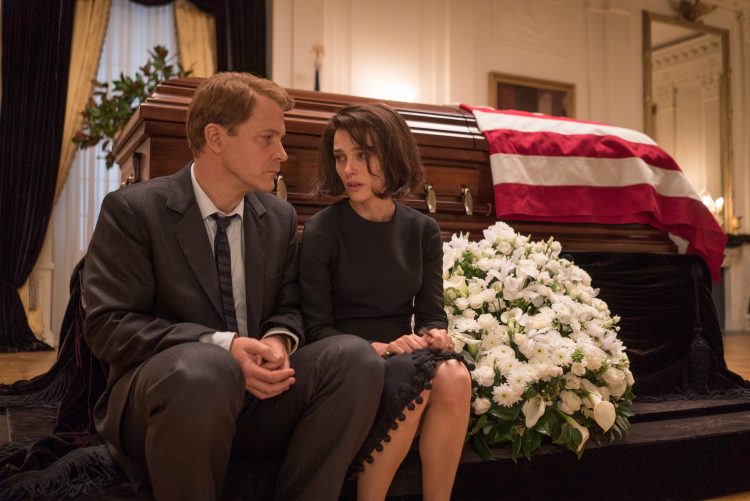
    Peter Sarsgaard and Natalie Portman in Jackie

    However, her reaction is understandable. Not only did she lose her husband in an incredibly violent way that she had to bear witness to, she has to explain to her kids why their father isn’t coming home, leave her home with no complete sense of what she’ll do next, and plan a funeral that will be watched by millions and attended by some of the highest-ranking people in the world. On top of that, she is asked questions and is pushed to fulfill certain agendas depending on the official without a single person asking how she is feeling. Oppenheim and Larraín often sneak in her anxiety of her future and legacy in the White House by including her fixation on Mary Todd Lincoln, who became destitute after her husband’s assassination.

    Between the non-linear structure constructed by editor Sebastián Sepúlveda, the unnerving score by the magnificent Mica Levy, and the singular yet classic cinematography of Stéphane Fontaine — he also shot the magnificent Elle and Captain FantasticJackie is an assemblage of eclectic artists that thrive under the vision of Larraín. However, what they all have in common is the way they’re meant to make you feel — distraught.

    No scene pulls together each of those elements and shows the pure brilliance of Jackie — for all its calculated storytelling and piercing dialogue — than a scene with no dialogue, no historical basis, and seemingly no point in the narrative structure. Late at night, Jackie dons her various and iconic dresses and twirls around her private wing in the White House listening to the Broadway cast recording of “Camelot” while drinking vodka and popping pills. It’s an astounding and courageous decision to portray a woman so revered by the country in a raw and emotional state. But it all goes back to the decision not to sanctify Jackie and instead show her as a woman with more weight on her shoulders than anyone should bear at one time.


    Almost no one could empathize and few could sympathize — Jackie’s confidant and secretary Nancy Tuckerman (a truly excellent Greta Gerwig) is the only one who comes close — with the situation that Jackie is in. Even JFK’s brother Bobby (Peter Sarsgaard, a standout among the supporting actors) has his own agenda to fulfill. Larraín and Oppenheim finally let Jackie be the star of her own life instead of a supporting role in someone else’s. If anything, the film is groundbreaking for that. However, Jackie is groundbreaking because, for the first time, a filmmaker could empathize with their subject on a level that has yet to be explored in their history. Jackie always hid behind the person she was in front of the camera or behind the role of the First Lady. Still, she wanted to leave her mark. She wanted to have a legacy. Well, for the first time I think that the extraordinary woman that she was had finally been exposed. At one point in the movie, she says, “I believe the characters we read on the page become more real than the men who stand beside us.” Well, whether the story is true or not, I believe that Jackie has shown us the woman who stood beside us.

    ★★★★★ out of 5


    Jackie is available for digital rental on Amazon!

  • Detroit review — A tense depiction of the 1967 riots

    Detroit review — A tense depiction of the 1967 riots

    Kathryn Bigelow delivers a tense and terrifying telling of the 1967 Detroit Riots with one of the strongest ensemble casts of the year.

    Kathryn Bigelow and Mark Boal have proven to be an infallible pair when it comes to portraying real-life war events — The Hurt Locker and Zero Dark Thirty are among the best movies of the century so far. But in their next collaboration, they went away from the present-day Middle East conflicts and turned their sights to the 1967 Detroit Riots, which came on the heels of similar riots in several cities across the country. Bigelow treats the film like a docudrama more than her others by intercutting scenes with footage and photos from the actual events. By filming with the shaky cam quality of the archival footage, Bigelow begins to blur the line between the film and the actual artifacts from 1967.


    In the macro sense, Bigelow is sure to give the story a time and place. Not just saying that it’s in Detroit in America in 1967, but about the rise of Detroit and how race plays into the city’s DNA. While the riots are obviously at the center of the movie, its focus is on one specific incident that took place in the middle of them at the Algiers Motel.

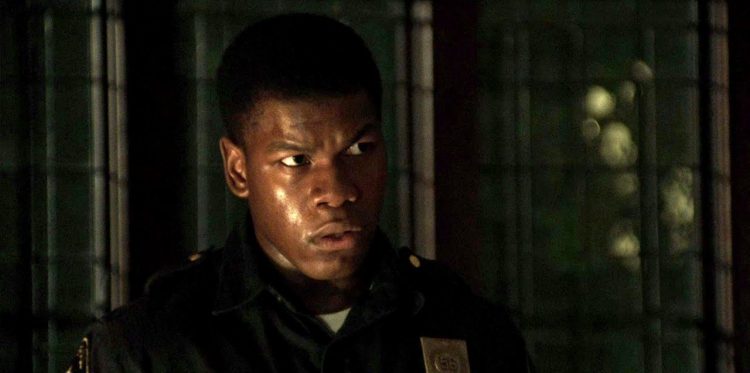
    Like the best screenwriters, which Mark Boal has proven that he is, the movie establishes the three main characters that we will follow. Larry Reed (Algee Smith, who does Oscar-caliber work) is the lead singer of The Dramatics, a Motown group that is on the up and up when the riots break out. When their gig gets broken up because the violence has escalated, Reed and his friend Fred take refuge in the Algiers. Meanwhile, Detroit police officer Philip Krauss guns down a looter simply getting groceries in broad daylight. After being chewed out by his superior, he’s let back out on the street with even more aggression than before. Lastly, Melvin Dismukes (John Boyega), a security guard tasked with guarding a grocery store during the riots, is in a unique position as a middleman between the law enforcement and the rioters. However, he finds that both sides have reasons to discount them.

    The Algiers Motel seems to be indifferent to the events surrounding it. Music is playing. People are dancing and having fun. However, nothing could prepare them for the nightmare that they are about to experience. Carl (Jason Mitchell, who makes the most of his small role), a guest in the motel, shoots a fake pistol filled with blanks at a National Guard outpost near the motel — the National Guard and State Police were called in to help control the riots. Convinced that there must be a sniper in the motel, several policemen, including Krauss, national guardsman, and Dismukes make their way into the hotel. The policemen gather up the guests, many of them teenagers, line them up against the wall and begin interrogating them to find either the gun or the shooter.

    From there, the movie becomes a horror movie that is one of the tensest experiences at the movies in years. Krauss, drunk with power, begins to torment the motel’s inhabitants to try and suss out where the “shots” came from. Poulter is absolutely terrifying as the dictator-esque officer. He begins to resemble Malcolm McDowell in A Clockwork Orange more and more as the hours tick by and he begins to physically and emotionally abuse the dozen or so in the motel.

    Those people include Larry, Fred, two white girls (Kaitlyn Dever and Hannah Murray), and Greene (Anthony Mackie, great here), a Vietnam war veteran. Bigelow doesn’t give a moment of relief during the entire incident. She holds tight on the actors’ faces to give a sense of claustrophobia. We get to see the incident from the perspective of the victims and the antagonists, which makes the impact even harder. The actions of the officers here are so clearly put on display that fear and hatred both make it into your mind. Even when national guardsman start to question the officer’s actions, they are reluctant to intervene for fear of suffering blowback. Bigelow gives incredible detail that makes you consider the incident from all angles. And all of them are terrifying.


    The last third moves at a slower pace than the first two and plays a lot like the closing text of another movie. It tells us where the story goes from there. It’s effective in the sense that it helps audiences feel the effects of systemic racism in our country and, mostly through Smith’s Larry Reed, the individual plights that black people feel at its hand. However, narratively the scenes are long-winded. In particular, courtroom scenes featuring John Krasinski as a defense lawyer for the police department feel out of place and could have easily been summed up in title text and still left an impact. The one aspect of the final act that does work is Larry Reed’s story.

    Detroit comes exactly 50 years after the actual events took place in 1967 and the movie makes you feel the outrage of the time. However, movies are as much about the timing as they are about the actual filmmaking. And Detroit comes at a time where that outrage is as high as ever. Whether or not Bigelow and Boal should have been the people to tell this story, what is up on the screen, at least for the middle third, is a breathtaking film experience that is incredibly affecting.

    ★★★½ out of 5


    Watch Detroit on Amazon!

  • Jurassic World Movie Review — Ridiculous, over-the-top, but damn entertaining

    Jurassic World Movie Review — Ridiculous, over-the-top, but damn entertaining

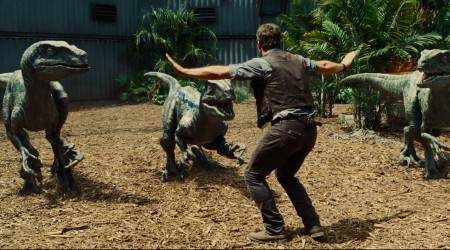
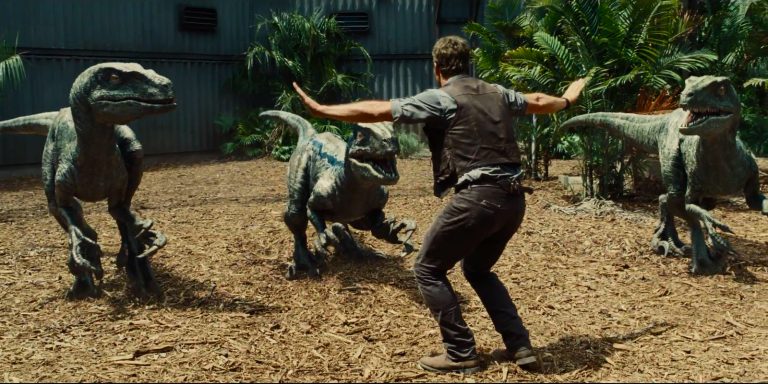
    film review jurassic world

    THIS REVIEW IS SPOILER FREE!

    Jurassic Park was the epitome of the summer blockbuster. It was big, it was loud, and it made a sh!t ton of money. So naturally, the sequel would one up that. And that it did. Not only was it bigger and louder, it also over compensated and roared (get ready for puns) to the biggest global box office opening of all time. Fitting seeing as its predecessor was the highest grossing movie of all time at the time of its release.

    However, other than in terms of money, bigger doesn’t necessarily mean better. This is inherently the problem with Jurassic World. Colin Trevorrow wanted everything to seem more epic. Granted, the park is open, which grants him the right to make everything more epic. But the grandeur of the movie isn’t the only thing that held it back from being great. There was a blurred vision that came with it too. It felt like Trevorrow wanted the film to be a comedy. Which probably isn’t surprising considering his only other directorial credit is a comedy.

    Despite the fact that his very modest comedy was miles off from the scale of Jurassic World, he was still able to realize a grand vision. Jurassic World, the actual park, is gorgeously created as a Disney-like theme park with attractions, stores, a tram, but instead of Shamu they have a giant Mesosaurus that would eat Shamu.

    History was changed a bit with this film. Trevorrow rightfully ignored the second and third movies in the franchise and created a world in which Jurassic World was a new attempt at bringing dinosaurs to the public. At this point in time the park has been open for 25 years and is actually doing well. However, when you make money you always want to be making more. Simon Masrani (Irfan Khan), who inherited the park personally from John Hammond, urges the scientists at Jurassic World to give the visitors something “bigger, louder, [with] more teeth” as Claire Dearing (Bryce Dallas Howard) says. Claire, a loyal corporate employee of the park, oversees all operations and spearheads the (bigger, louder, with more teeth) Indominus Rex, presented by Verizon Wireless. A fearsome mix of traits that make it the perfect predator. It’s what we’re supposed to fear, like the Raptors and T-Rex in the original.

    Apparently when the second and third movies were forgotten so was the outcome of the first. Stop messing with nature people!

    Read More: Top 10 Most Anticipated Movies of the Summer

    Following the natural order of things, it escapes and wreaks havoc on the park. However, this time the stakes are higher with over 20,000 people at risk. This makes for some incredible sequences including the Pterodactyl attack that’s shown in the trailer. That scene in particular is a great way to talk about my theory of the film. Instead of being a sequel to the original, I feel like the film is actually an homage to it, while also satirizing the modern day blockbuster. Every character feels like an archetype of one that you’d find in any other summer movie, but is rooted in a Jurassic Park character.

    Chris Pratt is the hero role that Dr. Alan Grant once played, who understands and sees the dinosaurs as Animals rather than “assets,” as Claire says. The kids, as usual, help forward the plot by going missing. However, this time we have a girl-obsessed teen (Nick Robinson) and dino-obsessed little brother (Ty Simpkins). Claire is more helpless than Ellie in the original, however she instead inherits the “terrible with kids” trait that Grant had.

    Pratt proves he is not just a one-hit wonder and continues his transformation into the matinee star that started with last summer’s Guardians of the Galaxy. His Indiana Jones epic action hero persona may not be the most inspired, but his charm is able to carry him past the stereotype to turn him into the a worthy leading man. Bryce Dallas Howard’s character goes through the biggest character arc in the film (which is not saying much) and though her material doesn’t give her much depth, she makes the most of what she is given.

    Though the original film had a similar characterization problem, it made up for it with thrilling sequences like the now iconic T-Rex attack and the Raptor kitchen scene. Unfortunately, we don’t get any of those epic scenes in this film. Yes, there are some gorgeously filmed action sequences, but none of them strike the same fear or anxiety that those aforementioned scenes did. Part of this stems from the fact that the majority of the action stays away from the main part of the park itself. Instead, each of the scenes involving the Indominus happens in isolation, which seemed like an odd choice.

    Despite my view of the film as a satire, there are a few storylines that bogged down an otherwise quick fire film. The beauty of the original is that you care for the kids simply because Alan doesn’t. They’re really not fleshed out characters, but rather used as a plot device to get Alan into the park to protect them and to develop his character. While the same is done in this film with Claire, the screenwriters made a half-assed attempt humanize the kids with a divorce subplot. I would have no problem with that, but they mentioned it once directly and indirectly in a scene with Judy Greer. Then, it’s never mentioned again and no implications are discussed, they literally act like the scene never happened.

    Read More: Film Review: “Mad Max: Fury Road”

    The other storyline that really could have been at least streamlined was the plot involving Dennis Nedr- I mean, Vic Hoskins (Vincent D’Onofrino). He spends most of the story trying to convince Chris Pratt to let him use the Raptors in war combat. While part of his storyline does become a pretty major point in the film, they didn’t have to meander on him for as much time as they did.

    As expected with a sequel produced years after the original, it’s rampant with references to the first film that are both fun and strong for the continuation of the series. Although, some of this feels more recycled than anything. In particular, John Williams’ iconic score sometimes feels cheap and lacks the magic it did when you first saw the expanse of the original park. Even the dinosaurs lack that magic. Not because “no one’s impressed by a dinosaur anymore” as the film points out, but because the heavy CGI is no where near as innovative or impressive as the puppetry in the original. That being said, you’ll leave the theater satisfied. If not for the film as whole, at least for the climactic final scene that is everything you wanted out of this movie. We wanted a popcorn flick that we can escape with, and that’s what we got.

  • Arrival Movie Review — One of the Best Sci-Fi Movies of the Decade

    Arrival Movie Review — One of the Best Sci-Fi Movies of the Decade

    Smart, impeccably made, with a phenomenal performance by Amy Adams, Arrival proves to be a high point in the science fiction genre

    Denis Villeneuve is a filmmaker that I thought could be one of the great auteurs of our generation (two of his films appeared on our list of the best thrillers of the decade). After blasting onto the American scene with the Oscar-nominated Incendies, he followed suit four films that all ended up in my top tens of their respective years. Prisoners was a dark ethical exploration of violence with deep emotional complexity. Then came a psychological thriller that begged for cinematic analysis with Enemy. Last year, he made a play for the mainstream with his critique of the drug war in Sicario. This year, he cemented his place as one of my favorite directors of all time with the masterpiece Arrival.

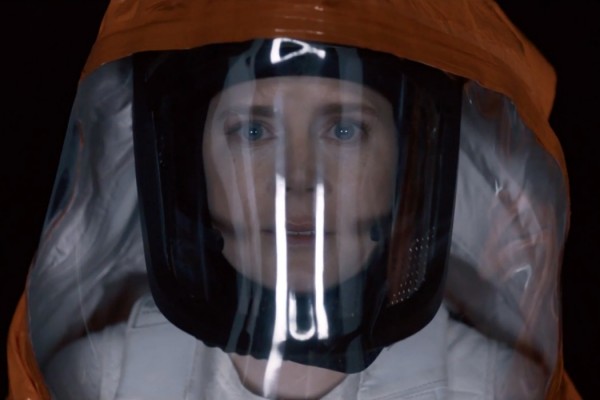
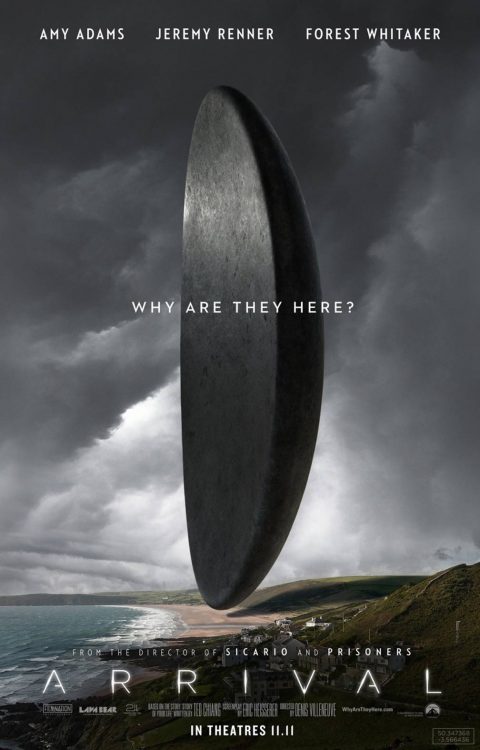
    Based on the short story Story of Your Life, Arrival begins with twelve egg-shaped UFOs positioning themselves around the globe in countries like the U.S., China, Russia, Sudan, and Pakistan. The biggest question surrounding our planet is answered: are we alone in the universe? However, once that question is answered another one emerges: what is their purpose on Earth? That is why the government — represented here by Colonel Weber (Laurence Fishbourne) and Agent Halpern (Michael Stuhlberg)— contacts linguist Louise Banks (Amy Adams).


    Every 18 hours, the door to the UFO, which they call the shell, opens. Banks along with Ian Donnelly (Jeremy Renner) must find a way to decode the visitor’s language and communicate with them before they attack or we do. As progress is made, foreign relations push Banks and Donnelly to the brink of their knowledge to speak with the beings before someone pulls that trigger.Arrival Movie Poster

    It’s hard to talk about this movie without spoiling the experience. So, I will say this. Arrival may become the pinnacle of sci-fi movies this decade, if not this century. Its complex plot is communicated beautifully to the audience without being condescending with a twist that ties the experience into a wholly satisfying conclusion.

    Check Out: 10 Best Thrillers of the Decade (so far)

    The first act of the film is Louise’s story. Everything we see is either of Louise or her point-of-view. Our emotions and thoughts are filtered through her. She is an observer at the beginning of the film. How is the world reacting? Villeneuve doesn’t go the easy route with a montage of news clips. We know what Louise knows. We see how she reacts and thus how the world reacts. As she’s brought onto the team that is making contact with the shell, the story is taken away from her. It becomes the world’s story. However, soon we realize that it’s not. It’s Louise’s story through and through. She is ingrained into the plot. Even as it gets more philosophical she anchors it in a humanistic way.


    Amy Adams is at the top of her game. It blows my mind that she still doesn’t have an Oscar after all these years. Her performance carries the emotional baggage of the entire film as well as the whole story. Renner is great here but really exists to support Adams. Outside of these performances, the steady and dark cinematography by Bradford Young finds such beautiful shots in the sets. Editor Joe Walker understands how to show audiences what they need to know rather than tell them. Lastly, Jóhann Jóhannsson — after last year’s Sicario — again scores a home run with his score that defies genre by pulling from both the horror and thriller genres.

    Sci-fi is a hard genre to pull off. Sci-fi with extraterrestrial life is even harder to. The few that make it to become classics like Contact. and Close Encounters of the Third Kind have one thing in common: the human condition. Are we alone in the universe? It’s a question that everyone has at one point pondered. How would we react? What would we do? That’s what Arrival is interested in. Specifically, it is interested in how we communicate. Language and Louise are at the center of this movie. The plot surrounds them and Villeneuve understands that. He understands how people consume movies. They don’t want to be told. They want to see. Arrival will challenge us to think and to question. And while we come away with answers, we also experience the stunning power of great filmmaking, great writing, and a great story. 9/10

    Arrival is available on DVD, blu-ray, and digital on Amazon!

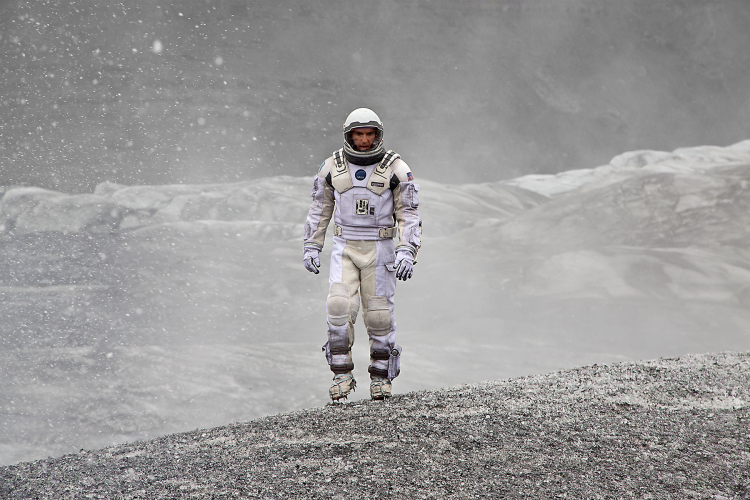
  • Interstellar Movie Review — Christopher Nolan’s most epic, but human movie yet

    Interstellar Movie Review — Christopher Nolan’s most epic, but human movie yet

    Interstellar is a visual masterpiece that has a human touch that propels it to greatness. It is perhaps one of the best space movies ever made.

    Christopher Nolan isn’t one known to be taciturn when it comes to his movies. Even his smaller movies like Momento have grand structures bolstering their simple plots. However, Interstellar is easily is first brush with the epic — unless you consider the full Dark Knight trilogy as one. On paper, it should not work. A sweeping narrative covering different times and worlds would be eaten up by audiences. That’s why Gravity found so much success financially and at the Oscars. But Nolan does something completely different with Interstellar. He introduces science in a way that isn’t watered down or ignored. His film, according to astrophysicists, is completely plausible. Though that fact makes the movie a hard one to digest for viewers, the end result is an incredible study of human nature and our desire to survive.

    Food is running out. The world is becoming overpopulated. The Yankees look nothing more than a high school baseball team. A crop blight is threatening the very existence of the human race. Nolan drops into this terrifyingly realistic future plagued with dust storms and the risk of the world simply ending within grasp. With this, the nation turns its attention to farmers and away from the sciences and engineers to save the world.

    Check Out: “Sleeping Giants” Book Review: A Unique, Engaging Sci-fi Thriller


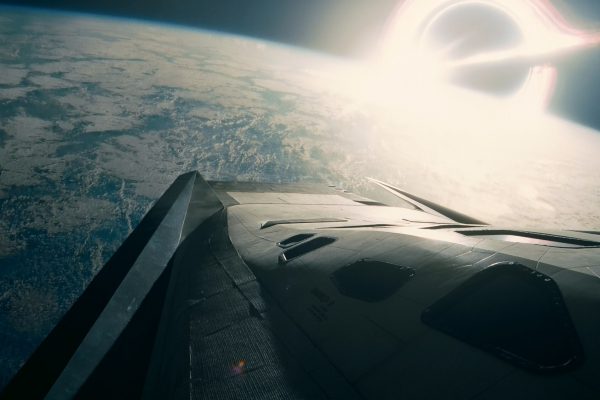
    However, Joseph Cooper (Matthew McConaughey) who was once a pilot for NASA, maintains his faith in STEM. After a dust storm, a mysterious gravitational disturbance leads him back to the formerly disbanded agency. He discovers that NASA, led by Dr. Brand (Nolan regular Michael Caine) and his daughter Dr. Amelia Brand (Anne Hathaway) have discovered a wormhole. “One system with three potential worlds,” as Amelia puts. it. Something, or someone, has given the human race a chance to live by presenting them with potential new planets to call home.

    Cooper is given the seemingly possible decision to leave his children forever, potentially, or save the humanity from extinction. Choosing the latter, he embarks into an incredible mission on the ship Endurance. He, along with Amelia, Dr. Doyle (Wes Bently), and Dr. Romilly (David Gyasi) set off to assess the three worlds to choose where to start a new civilization.

    Back on earth, Murphy Cooper (Jessica Chastain), who grows up while her father is gone, begins to help Dr. Brand determine the formula to get humans off of earth in a mass exodus.

    While wormholes and other worlds seem like the work of science fiction, the science is very real. Though throughout the movie it sometimes gets a little confusing, with a little thinking you can piece it together. Essentially, it’s the Neil DeGrasse Tyson of movies. The science is explained in a non-condescending way.

    interstellar movie review


    One of the most surprising elements of Interstellar is not the story or the science, but the sentimentality. It’s shockingly emotional and often heartbreaking. In fact, parts of it gutted me. Whether it’s surprising because of the director or the premise is anybody’s guess. However, the grasp it has on humanity is both refreshing and welcome. Especially in the science fiction genre, a human factor is usually missing. But Nolan and the screenplay exhibit human nature for all its beauty and destruction.

    We have an innate desire to survive. That’s why the people on earth in Interstellar begin to lose faith in the dream to leave the planet. They are thinking of how they can solve the problems on Earth. The very idea of the movie is thinking of a way to save our race. However, the movie explores the selfish motivations we also innately have. The way it is explored is surprising and devastating.

    But it’s not just the screenplay and direction that exudes that. The ensemble was tasked with accessing emotions that humans would actually feel in these situations. Overall, the entire cast is phenomenal. However, there are three standouts for me. The first is Matthew McConaughey. I think it’s very unfortunate that he won his Oscar for Dallas Buyers Club. Not to take away from that performance. His performance in Interstellar is an incredible meditation on one of the hardest questions for humans: how much will you sacrifice for the greater good. There is no better way to show this than when he is watching messages from his kids as the years go by. This is the best performance of his career.

    Check Out: “Arrival” Movie Review: One of the Best Sci-Fi Movies of the Decade


    The other two performances that stood out were the two actresses that portrayed Murph. Mackenzie Foy breaks any stigma surrounding child actors with a really naturalistic and heartbreaking performance. She has these knowing gazes that foreshadow the scientific curiosity that follows her throughout her life. Jessica Chastain is an incredible presence as the older Murph. She carries over the knowing gazes, but adds the emotional baggage of years of abandonment by Coop. It is easily one of her most memorable performances.

    Masterpiece isn’t a word I take lightly. I’ve said it in probably two reviews on this blog (Boyhood and Moonlight – the former I’m less inclined to continue using that phrase). However, I’d call Interstellar a masterpiece of filmmaking. It’s as grand as it is introspective and as grounded as it is existential. By the end of the nearly three-hour running time — it goes by in a flash — you feel as if you’ve experienced something that is so rarely captured on film. If not for the plot or performances, watch it for the stunning visuals that haven’t been seen on the silver screen since perhaps 2001: A Space Odyssey. I think a decade from now we’re going to look back and wonder how we fell asleep to such a grand and sweeping epic. 

    ★★★★★ out of 5


    Get Interstellar on DVD, Blu-Ray, or Digital on Amazon or stream for free with Amazon Prime!

  • Valerian and the City of a Thousand Planets review — A visually stunning mess

    Valerian and the City of a Thousand Planets review — A visually stunning mess

    Valerian and the City of a Thousand Planet boasts some strong visuals, but its muddled plot and lack of character stop it from taking off

    If I showed you an image from the colorful and bizarre world of Valerian and the City of a Thousand Planets, you might guess it’s one from Star Wars or Guardians of the Galaxy. You wouldn’t be far off since both properties pulled inspiration from the original French comic series Valerian and Laureline. Still, this adaptation by director Luc Besson has neither the tight plotting or exciting adventures of Star Wars nor the entertainingly bizarre humor of Guardians. Though visually and conceptually it comes close to the world’s of both franchises, in the end, Valerian and the City of a Thousand Planets results in a middle of the road space western. But it does have its virtues.

    Valerian begins with three enthralling scenes that for different reasons show why Luc Besson is one of the most stylistically interesting directors working today, for better or worse. We begin by seeing the creation of Alpha, which began as the International Space Station but has since expanded to include beings from thousands of planets. Through a montage set to David Bowie’s “Space Oddity”, we see new nations and species join the group over decades, always greeted by an ever-changing trio who welcome the beings with open arms. It’s simple, but effective filmmaking that sets the tone for the piece as a quirky space adventure, but also suggests a theme of cooperation among different groups of people. We’ll get to that.


    We then jump to an unknown planet populated by blueish-purplish aliens who live in beautiful harmony on a never-ending beach. The conceptualization and creation of this world is the type of visionary filmmaking we’ve come to expect from Besson. It’s a detailed and beautiful world that doesn’t need words for us to understand the people that inhabit it. Within moments, you know that this is a world untouched by civilization for the better. Though the design is gorgeous, the vast amount of CGI in the sequence — which almost seems like 100% — takes away from the impact. Even if it is stunningly done. That becomes a theme throughout the film. Soon, mysterious vessels begin falling from the sky and begin destroying the world, though it’s not an invasion. We quickly cut away from this world to meet Valerian (Dane DeHaan). For such a large cut of the movie, we aren’t given much payoff.

    Valerian and his partner Laureline (Cara Delevingne) are the best space agents in the World Space Federation and maybe lovers or dating. It’s not clear like much of the character development in the film. We meet them as they are about to embark on a mission at Big Market. A vast twisting bazaar that exists in a different dimension and can only be seen and touched if you wear a special helmet and gloves. And like the first alien world we’re introduced to, it’s grand and beautifully made and conceptualized. Valerian and Laureline are tasked with retrieving an item that’s being traded on the black market. The action set piece that ensues is truly an accomplishment in cinema. Taking place in multiple dimensions — we see Valerian in Big Market and Laureline in the “real world”, which is pretty much an empty lot — and spanning what seems like miles of this market, it’s a thrilling chase. But the movie never has another moment like it.

    Once the object is retrieved, they learn that a mysterious force has infected the center of Alpha. As the pair’s commander Commander Arün Filitt (Clive Owen) explains, troops have been sent to investigate, but never return. Owen doesn’t get much to do with his character, but he at least brings presence to the film. The aliens from the beginning of the movie return and kidnap Filitt and Valerian and Laureline are tasked with finding him.

    The problem that Valerian and the City of a Thousand Planet has plotwise is that it doesn’t really have a compelling plot pushing it forward. The blueish aliens are the central mystery and they are somehow connected to this mysterious force, but the movie doesn’t make an argument for us to really care about it. In terms of plot, after the three scenes at the beginning of the movie, we spend the time searching for three different characters that go missing. But they all feel like dead end plots that don’t seem to mean much in the end. Though, a side plot with Bubble (Rihanna), a shape-shifting blue blob of an alien, ends up being one of the most entertaining bits of the film. Even the climax feels like an anticlimax. There are no stakes and we really don’t care about the characters enough to be invested in their journey.


    That’s partially because of the casting of DeHaan. I believe he has the potential to be one of the great actors to come out of this generation. But his oddly affected Keanu Reeves-inspired performance just doesn’t work here. The same goes for his chemistry with Delevingne. She does her best with the material she has, but it’s a bit of a thankless role. The visuals are truly stunning. That’s something that I have to emphasize here. And the world is interesting. But unlike Guardians and Star Wars, we don’t get likable characters or compelling stories or even humor to help give the movie personality.

    I really wanted to like Valerian. And in the hands of a director that understands character a bit more, it might have been better. But trying it seems like Besson was too focused on creating interesting set pieces, that he forgot to contextualize them within a story, which ends up making them less affected. Somehow, Valerian is less than the sum of its parts. All the elements for a fun sci-fi romp are there — you can find them to better success in Thor: Ragnarok. But they just don’t add up. At the very least, we get an incredible Rihanna dance sequence that proves that she can really do it all.

    ★★½ out of 5


    Watch Valerian and the City of a Thousand Planets on Amazon!

  • Deepwater Horizon review — Visual effects shine through the mud and oil

    Deepwater Horizon review — Visual effects shine through the mud and oil

    Visually stunning and emotionally resonant, Deepwater Horizon is the kind of “based on a true story” movie that honors its subject, but is also eminently watchable.

    Disaster movies are already hard enough to pull off. But disaster movies based on a real event are even harder. You have to balance the expectations of the genre with reverence for the victims. United 93 is probably the most recent example of a movie that was actually able to successfully pull this off. Paul Greengrass isn’t concerned with the facts, though he certainly gets them all right. Instead he takes a humanistic approach in telling the story. While Peter Berg doesn’t quite reach those heights, Deepwater Horizon is a more than solid depiction of a horrific event that shows reverence for the victims and indicts those at fault.

    It’s pretty fantastic that the movie actually works. Not only is it a disaster movie based on a real event. It is probably one of the most highly publicized disasters in U.S. history this decade. Because of that, the audience has an opinion going into the movie. They have an idea of the facts. So, it was important for the movie to either present something new or to present it in an interesting way. Berg was able to do both.

    Deepwater Horizon tells the story of the worst oil industry disaster in U.S. history. It claimed the lives of 11 people and caused incalculable damage to the environment of the Gulf of Mexico. The movie follows the men and women aboard the oil rig Deepwater Horizon in the time just before and after the explosion.


    We are introduced to the members of the crew of the rig before they set off to board. This includes chief electronics technician Mike Williams (Mark Wahlberg), dynamic positioning officer Andrea Fleytas (Gina Rodriguez), and crew chief Jimmy Harrell (Kurt Russell), affectionately known as Mr. Jimmy. Berg uses the beginning of the movie to place the crew in their lives outside the rig. Mike “spends time” with his wife and helps his daughter with a project – a little expositional setup, but it’s actually kind of cute. Andrea tries to get her pet project Mustang to work. It’s all to serve the story and the real-life people behind it. Berg doesn’t forget that he’s telling someone’s story.

    Mark Wahlberg in Deepwater HorizonWhen we get on the rig, we are introduced to Donald Vidrine (John Malkovich), who is quickly established as the villain. In real life, it was determined that Vidrine was following orders from higher-ups at BP. However, in the movie, he is the representative of the entire company. Of course, this happens a lot to simplify a story. However, anyone that knows anything about this story knows that BP came away with a slap on the wrist and a divot in their earnings report. It’s a movie with something on its mind. That something is to remind people that the eleven deaths and billions of dollars in damages resulted in no change and no accountability from the company. The idea of corporate greed is not a new one. However, Deepwater Horizon shows the horrifying possibilites brought on by it.

    The first half of the movie largely sets up the chain of events and decisions that caused the disaster. I really appreciated the screenwriters’ care to not dumb down the events. They showed trust in the audience to understand the mechanics. Terms like PSI and negative pressure are thrown around but don’t feel like jargon. Actually, much of the first act feels almost like it could be a documentary. The movie takes care to give you detail by showing facts and labels on screen. However, it’s the dialogue that makes it shine. Screenwriters Matthew Michael Carnahan and Matthew Sand actually wrote dialogue the way that people speak. Conversations switch subjects and drift. Characters recall past events. It’s the kind of screenwriting we need more of.


    However, from the second that the rig actually blows, there is no stopping the momentum of the film. Peter Berg is able to create a caustic environment that makes you feel the heat of the fire and the power of the explosions. Visually the film is stunning. It is a new high in terms of photo-realistic effects. Balls of fire, dangerous jets of mud, and sudden jolts of pressure actually feel dangerous. That’s a hard thing to achieve in an action movie. It makes you feel like the characters are vulnerable. Granted, they are on a flaming glorified boat that is 46 miles off the coast.

    Mark Wahlberg gives a surprisingly strong performance here, which is something I never thought I’d say. Though for much of the movie he is the macho hero with near superman abilities. But when he is given the chance to emote, it’s heartbreaking. Another highlight is Kurt Russell as the stern crew chief who takes BP head on. However, John Malkovich as the sneering BP executive steals the entire movie. He’s the kind of slithery corporate puppet that is needed for the audience to direct its anger at. And though he might as well be a mustache twirling villain, it works. He’s performing to the back of the theater and the movie is all better for it.

    Deepwater Horizon is deeply entertaining, visually stunning, and emotional. Though it has its flaws, it also has moments of astonishment that show it for what it is: a technical achievement. The visual effects feat of the second half is reason enough to see it. However, it has a surprising emotional depth that makes it more than just a disaster movie. Even then, what makes it eminently rewatchable is this thrilling story that you can’t imagine being real.

    ★★★½ out of 5


    Deepwater Horizon is available on Blu-Ray and Digital HD on Amazon!

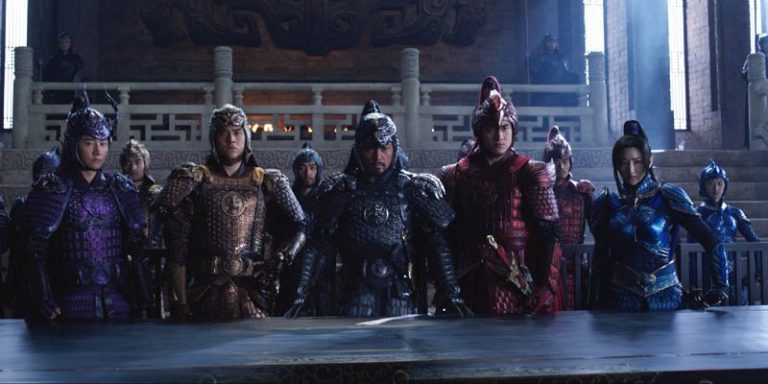
  • The Great Wall Movie Review — Whitewashing? No. Good? No. Well-Made? Yup.

    The Great Wall Movie Review — Whitewashing? No. Good? No. Well-Made? Yup.

    The Great Wall is well-made enough to forgive its narrative flaws and lackluster performance by Matt Damon

    Going into The Great Wall, expectations were both high and terribly low. Besides the whitewashing scandal — more on that later —  the trailer wasn’t well cut enough to truly ratchet up any excitement. However, the names behind the project were. No, not Matt Damon, god help us, but director Zhang Yimou brought a certain level of gravitas to the project. He is a three-time nominee for Best Foreign Language Film and is best known for House of Flying Daggers and Hero — many people consider the latter one of the most beautifully constructed movies ever made. So, with his first foray into English-language filmmaking, I was expecting a certain level of craft. He delivered, and then some. This is perhaps the best-crafted fantasy action movie since The Lord of the Rings Trilogy. One sequence even brings back memories of the famous Helm’s Deep battle in The Fellowship of the Ring. On the other hand, narratively the film is perhaps the dullest I’ve had to sit through recently.


    The Great Wall has come with countless myths and legends, as the opening text states, and the movie tells just one of them. William Garin (Matt Damon) and Pero Tovar (Pedro Pascal) are traders — or thieves — in China looking for fabled black powder. After being attacked by a mysterious beast, they stumble upon the wall and are taken prisoner. There they find a massive army preparing for some attack. However, the army isn’t human. Every 60 years — because 100 years is too long to wait — an army of lizard-like monsters called the Tao Tei emerge from a mountain and kill anything in their path to feed their queen. The wall was built to protect the capital city from attack.

    Jing Tian in The Great Wall
    Jing Tian in The Great Wall

    Once Garin and Tovar are captured, the first wave attacks arrive. Led by General Shao (Zhang Hanyu), the army — The Nameless Order — prepares to defend the wall. The members of the army wear different colored armor — blue, purple, or red — depending on their duty during the battle. From bungee cords to tar covered cannonballs launched from giant catapults to perfectly coordinated arrows, the army is well trained and moves as one. The sequence is easily the best of the movie and an incredible piece of filmmaking. The costume design by Mayes C. Rubeo is intricately put together but works best on a massive scale. The colors work together on screen to form a massive and colorful block against the harsh grays and browns of the wall and surrounding landscape. It’s hard to think of a movie whose work could surpass it this year. Conversely, the production design is more muted, but the detail is still there. The enormous and complex designs of the weapons are pulled right out of a fantasy-obsessed 11-year-old brain and are realized right before your eyes. The metal work on the swords, furniture, and to objects as small as candle holders is exquisite. It’s a shame that the movie couldn’t hold up to that first battle sequence.

    From there, it’s a steep downhill dive. While the visual style is great, the narrative just isn’t there. There’s no point in even going into it because there’s not much to nitpick at. It follows the usual formula of movies like this. And while Jing Tian as Commander Lin Mae is a really great lead, Damon’s performance — especially that kind of generalized European accent that switches between English and Irish — pulls you out of the movie instantly.


    To address the elephant in the room, I don’t believe this was a case of Hollywood whitewashing. Damon’s role is written for a westerner, which is integral to the plot. He is regularly out skilled and marvels at the army’s ability to work together — something that Commander Lin Mae points out he is not good at. Could this movie have been done without a western character in it? Yeah, probably. But it isn’t whitewashing.

    The Great Wall has a mighty fall from grace after the incredible first battle sequence. Even the final action set piece falls flat. But, as with every Zhang Yimou movie, it is fantastically well-made and produced, which certainly elevates it. If you’re looking for mindless action and ridiculously cheesy storylines that you can laugh at, then The Great Wall will fill that void. It’s a solid matinee watch and beautiful to look at.

    5/10

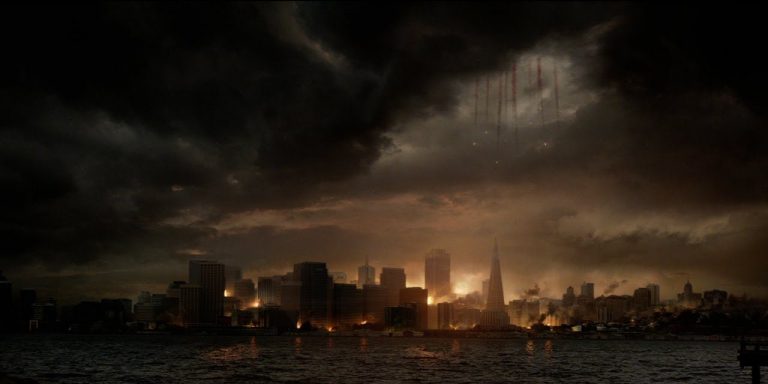
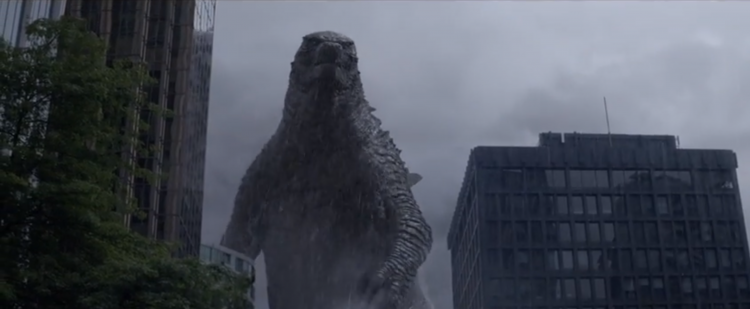
  • Godzilla (2014) Movie Review — A darker, visually stunning version of the classic monster flick

    Godzilla (2014) Movie Review — A darker, visually stunning version of the classic monster flick

    Gareth Edwards’ 2014 Godzilla is a darker, visually stunning version of the classic movie monster despite its issues

    With Kong: Skull Island out today, we thought it was the perfect opportunity to go back and review the first movie in the Legendary MonsterVerse, Gareth Edwards’ GodzillaNow, hopes weren’t exactly high following the trainwreck that was the 1998 film. However, with Edwards in the director’s chair, a little hope was restored. His first film, Monsters, showed a lot of restraint as the main characters navigated a post-apocalyptic world riddled with giant octopi — it’s much better than it sounds. However, when he does get to those action set pieces, he directs them gracefully and with sweeping camerawork. It was a refreshing break from the chaos we usually see in this genre. I’m looking at you Cloverfield. The world may be in chaos, but that doesn’t mean the filmmaking needs to be. While his work in Godzilla isn’t exactly as inspiring, it still cements itself as a solid summer blockbuster — perhaps one of the better ones — despite its clear flaws.

    The Godzilla universe is rooted in camp. From the iconic rubber suits from the 1954 version to Roland Emmerich’s 1998 film with its  — well, I’m not completely sure how to describe it. However, Edwards infuses this take with a darker tone that surprisingly suits it despite the fact that it’s about a 350-foot reptile. Unlike previous Godzilla movies, the 2014 version is actually concerned with plot and its lore, not just the action sequences. This time, Bryan Cranston plays Joe Brody, the lead engineer of a Japanese nuclear plant until it went into meltdown due to mysterious seismic activity. Years later, he gets arrested trying to return to the site to retrieve files to help him figure out what caused the meltdown. His son Ford (Aaron Taylor-Johnson), an explosive disposal officer for the Navy, goes to Japan to bail him out. Eventually, his father convinces him to help him break back into the quarantine zone. They are soon captured and brought to a secret facility where Project Monarch, led by Dr. Ishiro Serizawa (Ken Watanabe) and Dr. Vivienne Graham (Sally Hawkins), are analyzing a mysterious structure at the site of the nuclear plant. After several power failures, a giant moth-like creature dubbed MUTO — Massive Unidentified Terrestrial Organism — is released and is making its way to San Francisco. As he joins the military task force that is looking to stop the monster, Ford learns that in 1954 several nuclear bomb tests being conducted were actually an attempt to kill Godzilla or at least contain him. However, he has awakened with the release of the MUTO. As Dr. Serizawa says, “let them fight.” And fight they do.


    Gareth Edwards' Godzilla

    Unlike earlier Kaiju films, including 2013’s Pacific RimGodzilla revels in the moments between the all-out carnage of the monster-versus-monster battles that defines it. However, that is the reason the bloodthirsty monster movie fanboys detest this movie. They are the people who waged the question, “is there enough Godzilla in Godzilla?” Well, in my opinion, there is just enough. The battle sequences are fantastic and thriller and enough to save the desire for monster awesomeness that some will crave. But then there are moments of pure visual genius that outshine them. Specifically, there’s the highly publicized paratrooper sequence where flares create an incredible effect against the smokey backdrop of a destroyed San Francisco. Then, there’s a moment where we watch on with bated breath as a monster passes beneath a railroad bridge where some of our characters are hiding. There’s some incredible cinema tucked away in there.

    Screenwriter Max Borenstein makes it a point to humanize the movie by using characters that aren’t defined by the usual genre rules. However, as impressive as the cast is, the movie makes little use of them. The wonderful Oscar winner Juliette Binoche gets strong material that amounts to less than three minutes while Cranston barely gets to flesh out his character. Oscar nominees Sally Hawkins and Ken Watanabe are simply there to react to what’s happening while Elizabeth Olsen‘s role as Elle Brody becomes a plot device. Unfortunately, the only actor who gets any material to work with is Aaron Taylor-Johnson whose performance comes off as stiff and emotionless. There are cute attempts to make us care about the characters that simply fall flat and often push the film into cliche territory. Considering the movie is as well-constructed as it is, it’s easy to let that go and allow its visual brilliance to make up for it. In particular, the monster’s first clash in Honolulu and their final, epic showdown in San Francisco are among the best scenes in a monster movie in years.

    It’s clear that Edwards felt the pressure of the studio system in this movie. It often lets tip when a shot or line was put in because the studio thought it would make it more marketable — he certainly figured out how to balance the two with Rogue One. Like that movie, Godzilla is visually dazzling enough to remind you why Legendary chose Edwards to revive the franchise. While it has its problems — the most severe of which is Aaron Taylor-Johnson’s performance — you can forgive it because, well, it’s Godzilla fighting another giant monster. What more can you ask for?

    7.5/10

    Godzilla (2014) is available on DVD, Blu-Ray, and digital rental on Amazon!

  • Kong: Skull Island review — Too much Kong, not enough Skull Island

    Kong: Skull Island review — Too much Kong, not enough Skull Island

    Kong: Skull Island doesn’t live up to 2014’s Godzilla or the 2005 version King Kong, but the central action set piece is reason enough to see it.

    You know your movie has a problem when the most emotional image in your movie is of John C. Reilly holding a hot dog and beer watching the Cubs. However, the problems in Kong: Skull Island run deeper than that. The second movie in the Legendary MonsterVerse, yet another franchise that we didn’t know and probably don’t need, was preceded by Gareth Edwards’ 2014 film Godzilla. After being plucked from indie obscurity and trusted with a decades-old franchise, Edwards created a shockingly entertaining and well-crafted action piece with the film. The same thing happened with Kong director Jordan Vogt-Roberts, best known for The Kings of Summer, to lesser success. But that’s just the gamble you take with an untested director. Though I don’t think he’s going to be given a Star Wars movie the same way Edwards was, he certainly earns his stripes as an action director.


    Following Peter Jackson’s epic and often emotional 2005 film King Kong was always going to be a hard task for whatever director took it on. Instead of taking place in 1933, Kong: Skull Island begins in the 70s  at the tail end of the Vietnam war, which heavily influences the style of the movie. Bill Randa (John Goodman) and Houston Brooks (Corey Hawkins) charter a government expedition to explore the never visited Skull Island. The first 20 minutes of the movie are dedicated to assembling the team, which is a quick and surprisingly entertaining process. They hire former British Special Air Service Captain James Conrad (Tom Hiddleston) to guide the expedition. They are also escorted by a helicopter squadron, just about to go home from Vietnam, led by Lieutenant Preston Packard (Samuel L. Jackson). When they arrive on the island, they drop seismic charges under the guise
    of studying the geological structure of the island. Instead, they flush out a 100-foot tall gorilla. After Kong takes out all the helicopters, in an amazingly shot and directed sequence that certainly homages Apocolypse Now, the survivors must make their way to the extraction point on the north side of the island within three days while trying to survive the creatures living there.

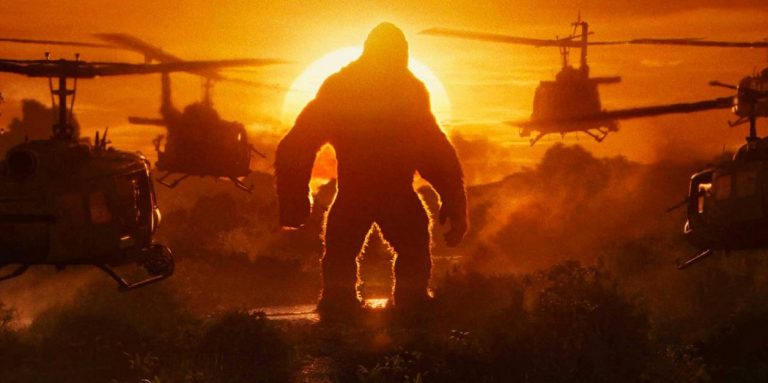
    The plot is tight and efficient, which is a change from the slower paced 2005 version. But where Godzilla withheld the title monster for as long as possible, Kong: Skull Island reveals its hand almost immediately by giving us a glimpse of the mythic beast. While that scene is exciting and beautifully realized — the highly publicized shot of the helicopters approaching Kong against a blazing sun is breathtaking onscreen — it gives you an instant high that is matched by the rest of the movie. All the action scenes following it feel dull in comparison. It’s a huge issue considering there’s not much outside of them that the film has to offer. Story wise, the movie integrates well into the universe — there are references to Monarch and stay for the post-credits scene — but it feels like a franchise starter instead of its own movie.


    Not only is the plot subpar, the characters feel like they’re made to die and the ones that have some purpose are so dull that you wouldn’t even care if they were gone. Mason Weaver (Brie Larson), a photojournalist looking to uncover a government conspiracy, is the closest we get to a charismatic character — she’s meant to step into the Naomi Watts character from the 2005 film — but we care about her because the film tells us to care about her. We get good performances from Samuel L. Jackson, Corey Hawkins, and John Goodman, but they aren’t given enough material to make a strong impression. The one character with an arc is Hank Marlow (John C. Reilly), a World War II fighter pilot who crash landed on the island 28 years before the expedition arrived. And while he gets some great laughs, it amounts to not much else.

    I enjoyed Kong: Skull Island enough to recommend it to B-movie lovers. If you were one of the people who felt jilted by the lack of Godzilla in Godzilla, then this movie is going to satisfy your tastes. If anything, that first action set pieces and the truly fantastic visual effects and cinematography are enough to recommend. But on the giant monster movie scale, it ranks above the 1998 Godzilla and below the 2005 King Kong, 2014 Godzilla, and even Pacific Rim. 

    ★★½ out of 5


    Kong: Skull Island is available on Digital HD on Amazon!

  • Wonder Woman review — Fun, entertaining, a solid summer blockbuster

    Wonder Woman review — Fun, entertaining, a solid summer blockbuster

    DC finally gets it right with Patty Jenkin’s Wonder Woman thanks to its tight direction, lighter tone, and star affirming performance by Gal Gadot.

    Finally, after nearly ten years of the Marvel Cinematic Universe and four years of the DC Extended Universe has a female superhero been featured as the lead. Not only that, they’ve paired her up with a female director! Gender equality in Hollywood is here! Right? Well, that’s a discussion for another time. But the fact that this is the first major studio superhero film directed by a woman has to be celebrated when talking about Wonder Woman, the fourth installment in the DC Extended Universe. And it’s good! It’s actually good! After three failed attempts to get the franchise off the ground, Patty Jenkins has finally been able to harness an iconic character in the DC pantheon and apply her to the superhero origin formula successfully. While she definitely adheres to the formula, especially since this is an origin story, Jenkins uses all the potential it has, which helps you forgive the movie for its flaws.


    However, many of those flaws carry over from the dour style established in the first two movies in the DCEU. Jenkins takes the parameters she has to work in and builds the film around an inspired performance by Gal Gadot. Although this is yet another origin story, it isn’t one that audiences are as familiar with as the ones for Batman or Superman. This gives Jenkins the freedom to shape the story as she sees fit. Though, she doesn’t stray too far from the source material. Young Diana is the princess of the island Themyskira, a hidden paradise populated by a society of all-female Amazons. The women were created by Zeus to protect men against the corruption of his son Ares, the god of war. Ares eventually fights with the gods before ultimately falling to Zeus. Unsure whether or not he’ll return, Zeus gives the woman a weapon that is capable of killing Ares — the god killer. Young Diana is desperate to train with the warrior Amazons including her aunt, General Antiope (Robin Wright, a standout in this section). However, her mother, Queen Hippoltya (Connie Nielsen) forbids her. Eventually, as Diana’s desire becomes too much, Hippoltya allows her to train. However, the one caveat is that Antiope must trainer her harder than any other warrior before her. The first act of this movie is extremely expositional, which makes it lag compared to later sections. However, Jenkins had the fortune of taking a less-known origin story and really bringing it to live. The vividness of Themyskira comes through in the costume and production design. And every woman from Gadot to the background actors bring the island to life.

    Later, an older Diana, after training extensively for years, watches a plane go down after crashing through the barrier that makes the island invisible to outsiders. Inside is Steve Trevor (Chris Pine), a U.S. Army captain who has been working as a spy against the Germans during World War I. Diana saves him, but not before German troops break through the barrier as well and begin to invade the island. This first battle sequence between the Amazons and the Germans gives us just a taste of Jenkins’ ability to direct action. And while she contends with Snyder’s speed-up/slow down style, she also gives the fight a clear narrative, not dissimilar to the way George Miller directed the action in Mad Max: Fury Road. After learning about the war and becoming convinced that Ares is behind it, Diana compels Trevor to take her to the battlefront to find Ares and kill him before more innocent people are. From the first scene they have together, Gadot and Pine display an incredible chemistry that really drives the emotional beats of the movie. Even with the comic tone of their first scenes, the connection is palpable.

    Gal Gadot in Wonder Woman

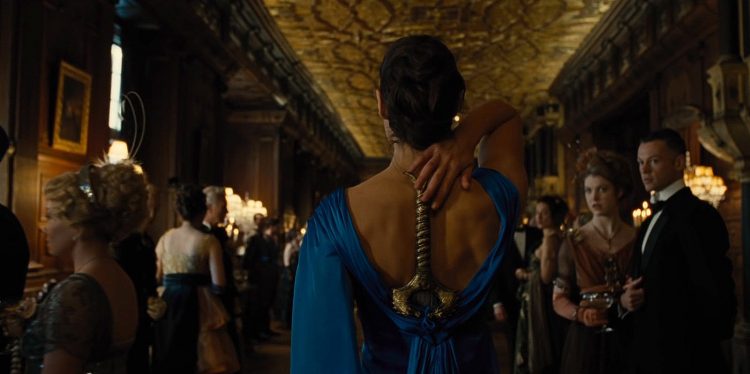
    The first third of the movie is shaky but impressive. However, the movie takes flight when the duo arrives in Jolly Ol’ London. Steve leaves Diana with his secretary Etta Candy (a truly delightful Lucy Davis) to get her into more appropriate clothing for the time. The comedy of manners trope has been used in superhero movies before, but it still works here and is fresh. Especially due to the fact that many of Diana’s comments to society are biting and true — her takedown of marriage is specifically memorable. Trevor approaches the Imperial War Cabinet with a journal that contains the notes of Isabel Maru aka Dr. Poison (Elena Anaya), who, along with Erich Ludendorff (Danny Huston), has developed a poisonous gas that they plan on using at the front of the war just as the armistice is about to be called. Most of the cabinet shrug off the threat saying that it is not going to happen because of the impending armistice. However, with the help of Sir Patrick Morgan (David Thewlis), Diana, Trevor, and his team — grifter Sameer (Saïd Taghmaoui), marksman Charlie (Ewen Bremner), and smuggler Chief (Eugene Brave Rock) — make their way to the western front to confront Maru and Ludendorff. I think the three men that make up Trevor’s team are a perfect example of why this movie works and the other DCEU movies don’t. Though their screen time is small, each makes an impact. Each matter. Each has a character that has emotional resonance in the story.

    Wonder Woman doesn’t reinvent the superhero genre. What it does is it shakes off the chains binding it to its franchise and the burden of creating the first installment in a series and instead becomes an actual movie with actual characters and actual conflict. This is something that has unfortunately eluded the DCEU until now. Not only that, the film actually has fun with its characters. The brooding and dark tone of Batman vs. Superman and Man of Steel is left behind for the light and colorful look that the Marvel movies have so successfully harnessed. While Jenkins’ direction is a huge reason for that, Gadot and Pine give performances that elevate the already solid material. Gadot exudes the hero that she is playing. She gives Diana an air of importance, but not self-importance. More importantly, her internal conflict is one of a hero and she sells it even when the script doesn’t. Pine, on the other hand, inhabits the sidekick/love interest role that has been filled by a woman in superhero movie perfectly. He lets Gadot drive the movie, but he gets his moments to make the audience laugh and swoon.


    I think the final twenty minutes of the movie loses the pace and smartness of the second act — the final act, in general, is rough around the edges plotwise. It turns into a less scattered version of the final battle in Man of Steel. The difference, though, which is a testament to Patty Jenkins, is that it takes time to give us character moments throughout the battle. After all, we spent an entire movie with them, getting to know about them, and caring about them. Jenkins doesn’t let the need for a final battle take away from that fact. It just shows that with good direction, even a formulaic superhero movie can be good. A prime example is the first major action sequence with Diana in full Wonder Woman garb. The fluidity of the action matched with the emotional swell of the moment makes it one of the most memorable superhero reveals in an MCU or DCEU movie. Gadot sells every move with a confidence that few actors would be able to exude while Jenkins captures her grace with bravado. That scene stays with you throughout the movie.

    Patty Jenkins has already made history with Wonder WomanHowever, it was an earned victory. She singlehandedly made a case for the DC extended universe to go on. She proved that you can make a successful movie with these properties that is also good. It’s a legitimately good movie. It doesn’t necessarily add anything new to the genre. You have to go back to The Dark Knight to find any original elements in a superhero movie. However, she adds a new flair to the familiar beats that make Wonder Woman one of the most exciting superhero movies in recent memory. It has its flaws. It is not infallible. But you can’t help but root for Diana and the characters on screen. The same way you can’t help but root for Jenkins. Still, she makes it easy to be on her side. Wonder Woman is a pure delight.

    ★★★½ out of 5


    Watch Wonder Woman on Amazon!

  • 2018 Screen Actors Guild Awards Nominations (Film) — Complete List

    2018 Screen Actors Guild Awards Nominations (Film) — Complete List

    The nominations for the 24th Annual Screen Actors Guild Awards were announced today!

    The Screen Actors Guild Awards or SAG awards are a key Oscar precursor, especially for Best Picture since no winner of that category has won without at least being nominated for Outstanding Cast in a Motion Picture. The SAG awards will air on January 21, 2018 on TNT and TBS at 8pm EST and will for the first time have a host, The Good Place‘s Kristen Bell.

    Here are the nominations for the 24th Screen Actors Guild Awards!

    Outstanding Performance by a Cast in a Motion Picture
    The Big Sick
    Get Out
    Lady Bird
    Mudbound
    Three Billboards Outside Ebbing, Missouri

    Outstanding Performance by a Male Actor in a Leading Role
    Timothée Chalamet, Call Me By Your Name
    James Franco, The Disaster Artist
    Daniel Kaluuya, Get Out
    Gary Oldman, Darkest Hour
    Denzel Washington, Roman J. Israel, Esq.


    Outstanding Performance by a Female Actor in a Leading Role
    Judi Dench, Victoria and Abdul
    Sally Hawkins, The Shape of Water
    Frances McDormand, Three Billboards Outside, Ebbing Missouri
    Margot Robbie, I, Tonya
    Saoirse Ronan, Lady Bird

    Outstanding Performance by a Male Actor in a Supporting Role
    Steve Carrell, Battle of the Sexes
    Willem Dafoe, The Florida Project
    Woody Harrelson, Three Billboards Outside Ebbing, Missouri
    Richard Jenkins, The Shape of Water
    Sam Rockwell, Three Billboards Outside Ebbing, Missouri

    Outstanding Performance by a Female Actor in a Supporting Role
    Mary J. Blige, Mudbound
    Hong Chau, Downsizing
    Holly Hunter, The Big Sick
    Allison Janney, I, Tonya
    Laurie Metcalf, Lady Bird

    Outstanding Performance by Stunt Ensemble in a Motion Picture
    Baby Driver
    Dunkirk
    Logan
    War of the Planet of the Apes
    Wonder Woman