Blog

  • ‘Haunt’ mini-review — Haunted houses are never fun

    ‘Haunt’ mini-review — Haunted houses are never fun

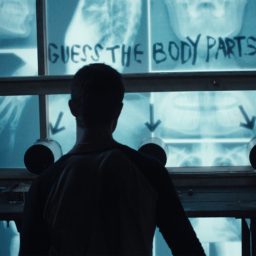
    In Haunt, a group of college students makes their way to a haunted house in the middle of nowhere seeking thrills — they get more than they bargained for.

    90-second review: I came into Haunt with a great deal of anticipation considering directors Scott Beck and Brian Woods just came off writing—and nearly getting nominated for an Oscar—for A Quiet Place. Not to mention the project was produced by horror maestro Eli Roth. And there are some traces of the talent that made their other projects successful. Unfortunately, covering those traces are layers and layers of bad choices.

    The conceit of Haunt isn’t a new one. Seeking thrills, a group of college students makes their way to the middle of nowhere to go through an extreme haunted house. Of course, as expected, it’s more than they bargained for as the dangers—and monsters—in the house are more real than they could ever imagine. Then, the movie turns into a fight for survival and escape reminiscent of 2015’s Green Room.

    However, one of the biggest problems with Haunt comes before they even get to the haunted house. We meet all our characters but learn nothing about them—save for some of Harper (Katie Stevens), the main protagonist. So, by the time they get picked off one by one, we don’t care about their fates. That could slide if the movie made the scares and haunts that they experience tense or exciting. To their credit, Beck and Woods do build suspense in some moments. But that suspense leads to little payoff too often. Overall, the plot, the characters, and the scares are underbaked. 

    There’s so much potential on the screen too. The design of the haunted house is intriguing and disorienting with wood-slat-lined halls leading to cramped tunnels and dark rooms littered with unseen dangers. If only the actual story were as inventive as the set design. 

    You can maybe derive some genre thrills out of the sticky situations — you’ll get that pun if you watch it — the characters get themselves into. There’s also some great gore and creature design. Still, Haunt is all bark and no bite. 

    Haunt is streaming on AMC+ via Prime Video.


    ADVERTISEMENT


    More movies, less problems


    Hey! I’m Karl. You can find me on Twitter and Letterboxd. I’m also a Tomatometer-approved critic.

    💌 Sign up for our weekly email newsletter with movie recommendations available to stream.


    ADVERTISEMENT

    haunt
    An image from the horror / thriller HAUNT, a Momentum Pictures release. Photo courtesy of Momentum Pictures.
  • 'The Night House' terrifies — Sundance review

    'The Night House' terrifies — Sundance review

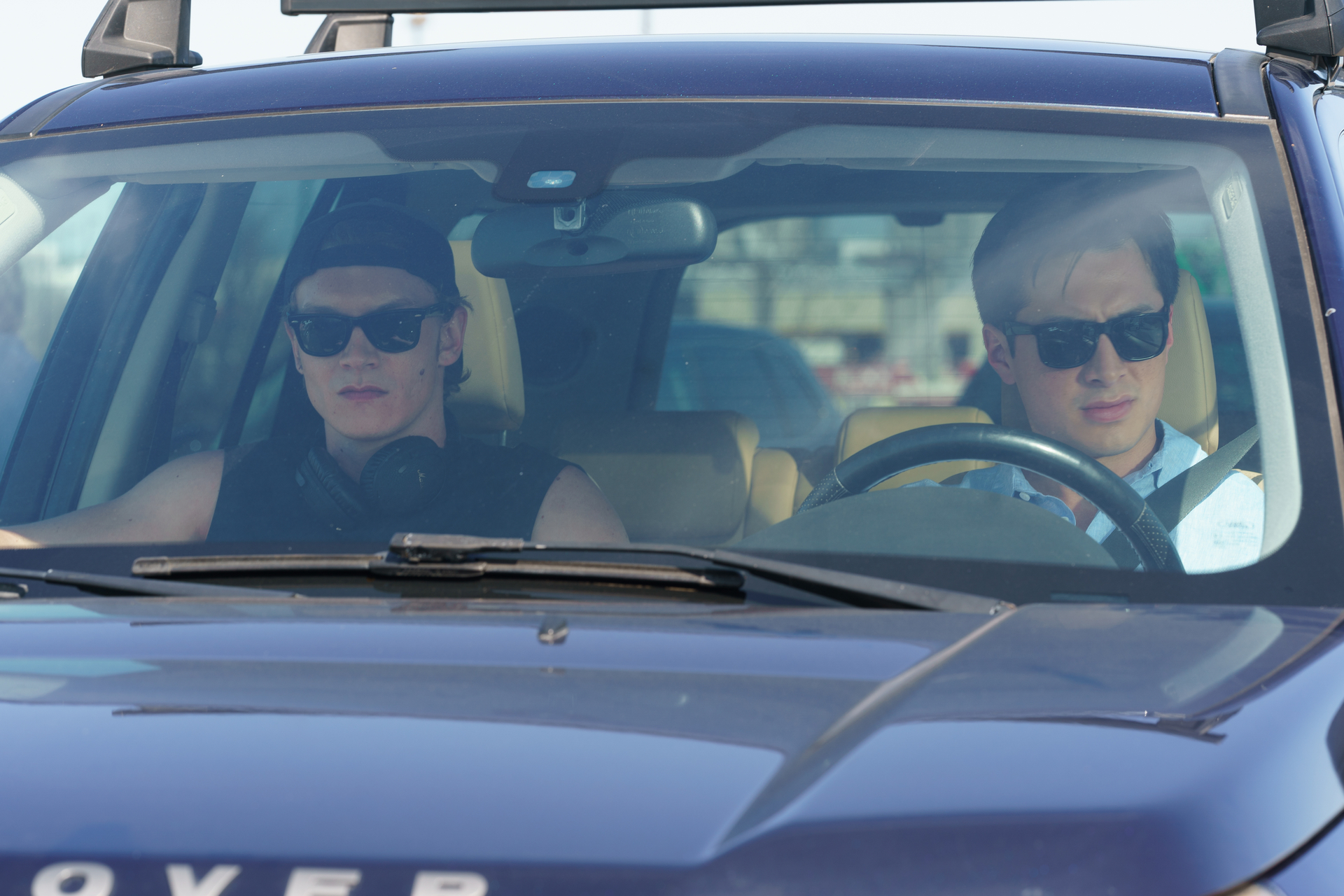
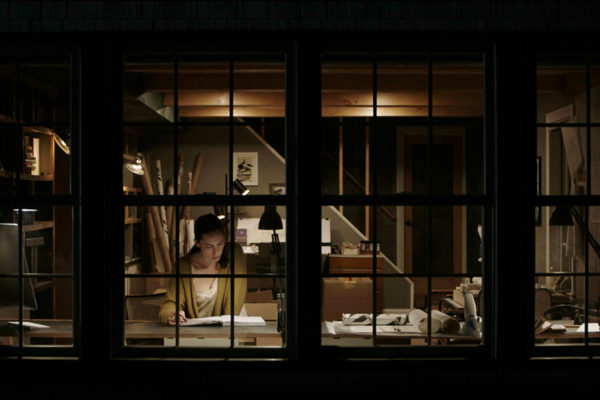
    Rebecca Hall plays a widow haunted by her dead husband in their lakehouse in The Night House

    The scares in The Night House come hard and fast, aided by director David Bruckner’s masterful grasp of a dread-filled atmosphere.

    See all our reviews from the 2020 Sundance Film Festival here.

    What does a house feel like when one of its inhabitants is gone? It feels empty. Incomplete. Cold. That’s the feeling that director David Bruckner’s new film The Night House, which premiered as part of the Midnight section of the 2020 Sundance Film Festival, gives off at the start as Beth (Rebecca Hall), a high school teacher, copes with the suicide of her husband Owen (Evan Jonigkeit). As she strolls through their lakeside home, built and designed by Owen, you can feel the vacant space. It probably doesn’t help that the home is filled with large windows opening into the darkness of the woods and lake. However, eventually, like Bruckner’s last film The Ritual, that feeling eventually gives way to a pervasive dread. 

    Owen’s suicide came as a surprise to many, but no one more than Beth. For her, Owen was her rock helping her through depression. Now that he’s gone she begins to self-destruct by drinking too much and pushing those close to her away including her friend and coworker Claire (Sarah Goldberg) and neighbor Mel (Vondie Curtis Hall). She, like many others who lose a loved one to suicide, feels confused and, more intensely, abandoned.

    💌 Sign up for our weekly email newsletter with movie recommendations available to stream.


    ADVERTISEMENT


    However, she’s not alone. One night she hears a heavy knocking at the door — this is where living in an all-glass house isn’t ideal. Then, the basement lights flip on. The next morning she’s not sure if it was real or a dream. Another night, she’s awoken by the stereo blaring her wedding song, startling the silent house. As the haunt becomes more intense with white-knuckling tension and well-earned effective jump scares, Beth starts to suspect her husband may have had secrets — dark secrets. 

    The screenplay, written by Ben Collins and Luke Piotrowski, begins to twist itself into a mystery that sometimes gets overly complicated for its own good — much like their last effort Super Dark Times. As Beth digs deeper she finds that her husband has books on the occult and photos of women that look like her on his computer. The mystery throws Beth into turmoil amidst the haunt. Rebecca Hall’s performance ranks among her best as she balances raw guttural emotions with Beth’s indignance. And while the story threatens to throw the movie off its rails, Bruckner’s strong grip on the mood and atmosphere keeps it on the rails — or keep it from sinking, rather. 

    When the movie finally shows its cards it’s generally satisfying. Without Bruckner’s presentation, I’m not sure how successful it would have been. Still, The Night House is a genuinely terrifying and haunting romp that will have you watching it through your fingers. The scares come so hard and fast and nearly every element is designed to scare you — from the smart production design to the smart, albeit loud, sound design. The entire movie is a maze that you feel trapped in, and that’s why horror fans will love it.


    ADVERTISEMENT


    More movies, less problems


    Hey! I’m Karl. You can find me on Twitter and Letterboxd. I’m also a Tomatometer-approved critic.

    💌 Sign up for our weekly email newsletter with movie recommendations available to stream.


    ADVERTISEMENT

  • ‘Halloween Ends’ is not a Halloween movie (and that’s a good thing) | movie review

    ‘Halloween Ends’ is not a Halloween movie (and that’s a good thing) | movie review

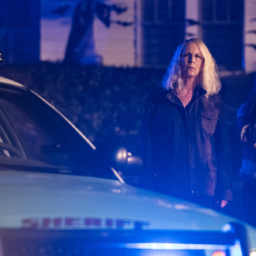
    Forty-four years after Laurie Strode survived Michael Myers’ massacre, she goes up against a familiar enemy in Halloween Ends.

    Halloween Ends shouldn’t work—and almost doesn’t. It’s an absurd and deeply weird interpolation of the Halloween lore that feels less like another installment and more like a story within its world—like Halloween III: Season of the Witch. However, the audacity to take a risk with its story—and to go so far as making it closer to a drama than a horror—is both admirable and surprisingly entertaining. “Fanboys” looking for the movie to up the gore and kills will be disappointed—and perhaps those looking for a satisfying conclusion to Laurie Strode’s saga will too. However, some, like me, will tune into its off-the-wall wavelength and find the good in it. Halloween Ends will divide audiences. However, it will also get people talking—for better or worse.

    Halloween Ends is so absurd and deeply weird that it’s impossible not to at least appreciate its audacity—something that so-called “fanboys” of the original are going to detest. However, as a critic that lists the original 1978 Halloween as one of my favorite movies of all time, I can say that I’m kinda obsessed with how Halloween Ends feels nothing like the rest of the series—like an interpolation of the story rather than a continuation. That’s no more apparent than the movie’s bold 10-minute cold open that begins a year after the events of Halloween Kills as we follow Corey (Rohan Campbell), a directionless young man babysitting the son of a wealthy family in Haddonfield, Illinois. After a few callbacks to the original—including a late-night TV showing of John Carpenter’s The Thing, dark closets, and a wide shot of Corey investigating outside the house—something happens. Something even more shocking than all the unnecessary gratuitous killings in the previous installment.

    Spoiler Alert in 3… 2… 1…


    ADVERTISEMENT


    When the child he is babysitting locks him in the attic, a panicked Corey attempts to kick down the door. What he doesn’t realize is the kid is just on the other side. When the door finally gives it flings the child over the banister crashing down three stories below just as his parents walk in. Cue the title sequence.

    Spoilers over.

    It was always a fool’s errand to continue Laurie Strode and Michael Myers’ saga in a way that respected John Carpenter’s vision for the original.

    That was no more apparent than with 2018’s “just fine” Halloween and 2021’s actively terrible Halloween Kills (evil died that night and so did all my hope). That’s because it’s a movie that was always successful in a vacuum and as an allegory. It was never meant to be a story that continued on—and it famously didn’t with the third installment Season of the Witch, which didn’t even feature Myers. It’s only appropriate that Halloween Ends use the same font for the title card as the third film since, although this does feature Myers, it feels more like its own self-contained story in the same world.

    Another couple years after the events of Corey’s babysitting mishap we catch up with Laurie Strode (Jamie Lee Curtis) sitting at a desk typing what sounds like a soliloquy about her life fighting Michael Myers—I couldn’t help but think of Diane Keaton crying at her laptop as she wrote her newest play in Something’s Gotta Give. She’s settled down in a house with her granddaughter Allyson (Andi Matichak) and attempts to live a normal life. But a city won’t quickly forget the murderous rampage of a supernatural-like serial killer. They also won’t forgive the woman that brought him into their town. Laurie, now labeled as the town “freakshow,” can’t go anywhere without somebody bringing Michael up in the same sentence. The same goes for Corey, who was acquitted of any wrongdoing, yet is still labeled a “psycho” by the town folk. Especially a group of cartoonishly unpleasant teens—who knew band geeks could be so vicious. However, Laurie sees more in him and after an altercation involving Corey, she orchestrates a meet-cute between him and Allyson.


    ADVERTISEMENT


    For nearly half of the runtime, other than the cold open, Halloween Ends plays like a family drama—and even a quirky romantic comedy—about misunderstood people navigating their trauma.

    We watch Corey and Allyson get closer as they bond over the feeling of being unwanted in the town but unable to leave—like Terrence Malick’s Badlands or Arthur Penn’s Bonnie and Clyde. However, at the same time, we also see a change in Corey as a series of incidents—another altercation with the group of teens, a Halloween party gone wrong, a run-in with Allyson’s ex—start to drive him to resent the town and its people. As Norman Bates infamously said, “we all go a little mad sometimes.” In a way, Halloween Ends is a villain origin story.

    You’ll notice I haven’t mentioned two things: Michael Myers and murders. That’s because the movie is more tactful in its approach to both—almost the polar opposite to Halloween Kills and more reminiscent of the original where the body count remained in the single digits. The marketing hasn’t hidden that Myers makes his return and faces off against Laurie, however, he isn’t the main focus of the movie. Instead, his influence (or shape), is the real villain of the movie. Or perhaps, what happens when you call someone a monster enough? Eventually, they become one. 


    ADVERTISEMENT


    Halloween Ends shouldn’t work—and in some ways doesn’t. As a conclusion to the 40-year Halloween saga it leaves a lot to be desired, even if Laurie does get her moment to face Michael.

    However, I’d rather a huge swing and miss than more of the same. Clearly that didn’t work in the last movie. At the very least, I was never less than entertained—whether intentionally or unintentionally—by the lunacy of it all. Did I ever expect there to be a Hallmark-channel version of a Halloween movie about shared trauma with a central romance plot? Definitely not. 


    ADVERTISEMENT


    More movies, less problems


    Hey! I’m Karl. You can find me on Twitter and Letterboxd. I’m also a Tomatometer-approved critic.

    💌 Sign up for our weekly email newsletter with movie recommendations available to stream.


    ADVERTISEMENT


  • ‘Hocus Pocus 2’ is 90s nostalgia done right | movie review

    ‘Hocus Pocus 2’ is 90s nostalgia done right | movie review

    Our three favorite witches are back in Hocus Pocus 2 as they try once again to beat the sunrise (and a group of meddling teens) to attain immortality.

    Like every other 90s kid, I grew up watching Kenny Ortega’s 1993 fantasy comedy Hocus Pocus every Halloween season. My sister and I would buy the Pillsbury precut spooky-themed sugar cookies, light up a fire, and settle in on the couch every year well into adulthood. I’d hazard a guess that we’ve seen the Sanderson Sisters resurrected in modern-day Salem more than I’ve seen any other movie. There’s real magic (pun intended) captured in the movie. It’s like capturing lightning in a bottle. A perfect spooky-not-scary tone, both intentionally and unintentionally hilarious lines, outlandish running gags, and three iconic performances from Bette Midler, Kathy Najimy, and Sarah Jessica Parker came together to make the perfect Halloween classic. To say Hocus Pocus 2 had a lot to live up to is an understatement. However, director Anne Fletcher and screenwriter Jen D’Angelo not only delivered a worthy sequel to the original. They also perfected the 90s nostalgia sequel.


    ADVERTISEMENT


    More often than not, sequels to 90s IP that we have nostalgia for fail—Space Jam: A New Legacy, Ghostbusters: Afterlife, Independence Day: Resurgence (they just love a subtitle).

    There are two reasons. First, because they try to mimic the original—whether out of reverence or an unsubtle attempt at leveraging our nostalgia for money—yet often misunderstand what we loved about it. Second, they try to one-up the original, again resulting in a misinterpretation of what made it good in the first place. Hocus Pocus 2, on the other hand, doesn’t ape the original. It doesn’t try to outdo it either. It completely understands the tongue-in-cheek tone and weaponized it in an updated way without feeling like a grab for relevancy.

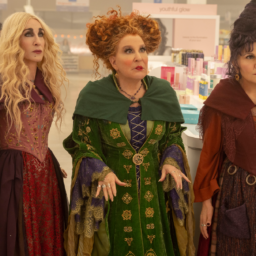
    At the same time, it expands the lore of the first movie as it opens with more backstory for our three favorite witches—Winnie (Midler), Mary (Najimy), and Sarah (Parker). We learn that from their youth they have been outcasts, albeit aimless. That is until Mother Witch (Hannah Waddington) gives them the famous booooOOOOOk that gives them their powers—while also warning them against using a magica maxima spell to become all-powerful. In the present day, we meet our own rambunctious group of outcasts, Becca (Whitney Peak), Izzy (Belissa Escobedo), and their recently estranged friend Cassie (Lilia Buckingham). However, unlike Max in the original film, Becca and Izzy are ostracized for being into the occult.

    Well, maybe the other students—including Cassie’s boyfriend Mike (Froy Guttierez)—are onto something.


    ADVERTISEMENT


    That’s because while performing a ritual for Becca’s birthday on sacred ground with a candle they’re gifted from Gilbert, owner of the Olde Salem Magic Shoppe in the Sandersons’ home, they accidentally resurrect the sisters… again. This time, though, they enter with a musical number. Like “I Put A Spell on You” from the original, they sing a version of Elton John’s “The Bitch Is Back” reworked as “The Witch is Back.” As Becca and Izzy are hiding watching the witches sing their song they wonder, “who are they performing for?” That question is answered when Mary suddenly appears beside them and says, “you!” In an attempt to save themselves from the sisters, the girls convince them they are actually 40, witches, and can help them get the souls of children.

    Of course, hijinks ensue. In what is easily my favorite scene of the movie and an instant classic, the Sanderson sisters take on all of our nemesis: a Walgreens.

    Just like the “black river” in the original, Winnie hilariously takes on the automatic door—”the gates parted for her,” she snarls in amazement when Becca walks through—before our young heroines convince the sisters that the beauty products have the souls of children in them to keep them youthful. As they start to eat the product, Sarah delivers my favorite line of the entire movie, “retinol, what a charming name for a child.” And while a lesser movie would try to hit the original’s jokes beat for beat, Hocus Pocus 2 creates its own gags and jokes—including lines I’m going to quote forever.

    However, what this also did is immediately signal to us that this isn’t going to just be a retread of the original’s plot. There’s added complexity including a revenge storyline involving the town’s mayor (Tony Hale), a coming-of-witch plot with Becca, and a reintroduction to our old friend Billy (Doug Jones). While the plot of the original was relatively simple, Hocus Pocus 2 expands the parameter of the world in new ways while maintaining its campy tone.


    ADVERTISEMENT


    ADVERTISEMENT


    That’s not to say there aren’t references back to the original like an onstage performance by the trio—complete with drag queen versions of them played by Kahmora Hall, Ginger Minj, and Kornbred—a trap set up by our teenage heroines, and the sisters’ unconventional broom choices (did Roomba have a sponsorship?). However, the movie doesn’t rely on them to keep the movie interesting. It forges its own way while allowing Bette Midler, Kathy Najimy, and Sarah Jessica Parker to have fun and live in these roles that have been so iconic in their careers.

    Hocus Pocus 2 is nostalgia done right because it doesn’t rely on our nostalgia to keep it afloat.

    Instead, it casts its own set of spells to bewitch us in the same way it did 30 years ago. Watching this movie with my sister decades older in her home in New York City (but still with the cookies) just felt right. Like it fits in with the same routine we’ve been doing for years. I already can’t imagine a Halloween without it. Call me a sap, but this was the sequel my inner child didn’t know it needed—but maybe it’s just really just a bunch of hocus pocus.


    ADVERTISEMENT


    More movies, less problems


    Hey! I’m Karl. You can find me on Twitter and Letterboxd. I’m also a Tomatometer-approved critic.

    💌 Sign up for our weekly email newsletter with movie recommendations available to stream.


    ADVERTISEMENT

  • ‘La La Land’ review: Singing through dreams and disappointments

    ‘La La Land’ review: Singing through dreams and disappointments

    La La Land heartbreakingly portrays the highs and lows of chasing dreams. Though packaged as a high-energy feel-good musical, it contains poignant notes that make it great.

    I didn’t like La La Land when I watched it. Frankly, I was disappointed. I was even shining off a spot in my top ten movies of the year for it. I love musicals and grew going to see Broadway shows. Singin’ In the Rain is one of my favorite movies of all time. Needless to say, I wanted to love this movie. So, when I walked out of the theater less than enthralled I was confused. I couldn’t bring myself to give it a score because I was so sure I missed something. As the week trudged on, I told people how disappointed I was in the movie. I couldn’t understand how it missed my expectations by so much.

    However, then I realized that the tune stuck in my head all week were the opening notes from “Another Day of Sun,” the movie’s opening number. So, I went on Spotify and played the soundtrack. I quickly realized how much I really loved the musical’s first half. But I couldn’t shake the feeling that the second half was a narrative misstep, even though the ending stuck with me. I gave the movie a score — I won’t tell you it, but it’s low — and carried on with my post-La La Land week. Then, I saw a tweet that had the Merriam-Webster definition of the term “La La Land”:

    “A euphoric dreamlike state detached from the harsher realities of life.”


    ADVERTISEMENT


    I smacked myself on the head for my stupidity. I realized that I, in fact, missed something. Finally, I was able to give La La Land a proper score (spoiler: it’s a lot higher than my initial one). But let’s backtrack for a second. Damian Chazelle, who directed Whiplash, my favorite movie of 2014, set out to make a movie-musical that transported audiences back to the genre’s heyday in the 40s and 50s. Though, he was careful to balance its timeless plot with the modern issues that face the artists of our generation.

    La La Land tells the story of aspiring actress Mia (Emma Stone). She, like so many people, followed her dreams of stardom to Los Angeles. However, she finds that success isn’t as easy to obtain as the movies say they are. We see her spend her time working at the Starbucks on the Warner Brothers’ studio lot between auditions that often don’t go well — the casting directors couldn’t care less, she’s just one of many of her “type”, someone walks in the room. However, her love for movies is what keeps her going.

    On the other side of things, Sebastian (Ryan Gosling) has dreams of his own. He hopes to own a jazz club one day. His love of jazz runs deep. When someone tells him that they don’t love jazz, like Mia, he sets out to make them appreciate it. However, he has his own problems. Mainly, as a character later in the movie says, jazz is dying… and he has no money. He spends his nights playing Christmas carols in a restaurant under the watchful eye of the owner (J.K. Simmons).


    ADVERTISEMENT


    The movie begins with an absolutely enthralling opening number that takes place on a freeway in the middle of Los Angeles. Yes, an actual freeway. The song, “Another Day of Sun,” perfectly sums up both the disappointment and allure of chasing dreams in a town where everyone is doing the exact same. In one magnificent take, which may possibly one of the best of all time, Chazelle sets the time and place in LA with free runners, salsa dancers, and even a trick bicycle rider in this tightly choreographed number. I don’t know how he was able to pull it off, but it is one of the most magnificent scenes committed to film this year.

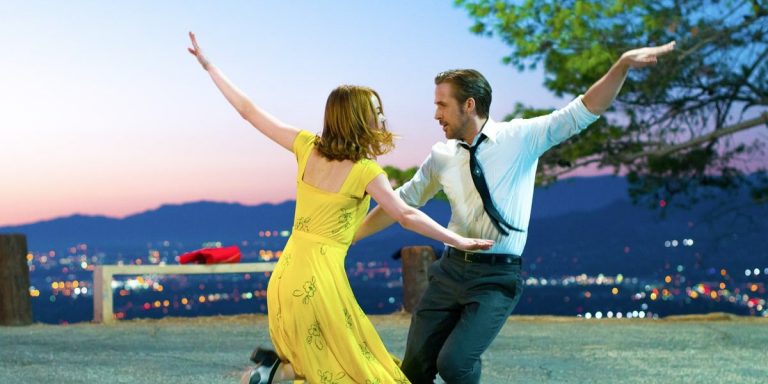
    As the film unfolds, we realize that Mia is still in the Honeymoon phase of living in LA. Every day is just another step towards her eventual ascension to the top. Sebastian, alternatively, believes that his true artistry is already there, but yet to be appreciated. When the two bump into each other — at first literally and then coincidentally throughout the movie — they are sure they’re not falling for each other. This is told through “A Lovely Night,” a classic Rogers-Astaire tap dance routine. However, slowly they realize that they are, in fact, falling for each other.

    The first half of the movie plays out like the musicals it’s based on. However, key decisions elevate it to an even higher level. A bright primary color motif is used in the costuming throughout, which gives it a whimsical quality. That coupled with the cinematography that makes strong use of lighting and color, shows us this city where anything is possible that Mia sees. It almost feels like the movie has a rhythm all its own apart from what’s happening on screen. Thanks to editor Tom Cross, who also cut Whiplash, La La Land moves at a lighting pace. That is until we get to Summer — the movie is split up into the four seasons.


    ADVERTISEMENT


    Slowly encouraging each other, Mia and Sebastian start to make moves towards their dreams. Mia, tired of waiting for her perfect part to come, starts to write a one-woman show. Sebastian, looking to raise money for his club, joins a band fronted by former classmate Keith (John Legend). By the time we get to this point the musical scenes start to become few. The bright colors that flooded the costumes and sets fade away. On my first viewing, this is where the movie lost me. I was confused as to why this bright and romantic musical faded away before my eyes. However, this is why the definition of “La La Land” snapped me back to reality. This was completely by design.

    The difference between the two parts is stark. However, it’s essential for Chazelle to suggest that the dreamlike stupor that both Mia and Sebastian were in is gone. Reality sets in, and you know what they say about reality. As they attempt to be together and follow their respective dreams, they learn how trying balancing both is. It all comes to a head in an incredibly emotional scene that is done completely in close-up, which pushes the actors to the edge of their abilities.

    It’s the distinction that I missed. Until I read the definition of the term “La La Land” I thought that the movie just made a tonal misstep. In reality, it was a genius shift from a movie about a couple’s passion for their crafts to one about alienation brought on by our generation’s attitude of never truly doing enough. La La Land is a brilliant study of an entire generation that wants to do it all. We want to be happy and successful and doing what we love. However, La La Land portrays the sad realities.


    ADVERTISEMENT


    As phenomenal as the craft is — nearly every shot, beat, and set is perfect — La La Land would be a lesser movie without Emma Stone and Ryan Gosling. Gosling, who I loved in The Nice Guys earlier this year, again proves his comedic ability. However, it’s his interplay with Stone that makes him great here. He’s there to support her. After all, at a certain point, this becomes her movie. But who is Ginger Rogers without Fred Astaire? Stone, on the other hand, gives one of the best performances of the year and makes it look easy. From perfect comedic timing to crushing the film’s 11 o’clock number, she is an emotional powerhouse. She proves that she is one of the best actresses of our generation. Their partnership and chemistry makes you swoon and then breaks your heart.

    La La Land isn’t going to be for everyone. Some are going to be expecting a straight musical like I did or not completely buy the walk and talk sequences. However, the magic of the on-screen musical will hook you from the beginning. At its core, it’s a romance for our generation. Passion, love, dreams, disappointments, and alienation are its themes. But it never tries to be bigger than it is. Like all the great romances, it starts with the central couple. Mia and Sebastian’s love is one that they need at that time and place. However, like so many modern lovers, the timing never seems right. While La La Land is escapist entertainment for a good chunk, its greatest parts lie in the realities, while not harsh, that plague our dreams. But hey, here’s to the fools who dream.


    ADVERTISEMENT


    More movies, less problems


    Hey! I’m Karl. You can find me on Twitter and Letterboxd. I’m also a Tomatometer-approved critic.

    💌 Sign up for our weekly email newsletter with movie recommendations available to stream.


    ADVERTISEMENT

  • Queer military drama ‘The Inspection’ asks and tells | TIFF review

    Queer military drama ‘The Inspection’ asks and tells | TIFF review

    A homeless young gay man enlists in the Marines as a way out of his struggle in The Inspection. As he goes through boot camp, he grapples with his masculinity and queerness.

    The Inspection is a deeply personal look into a queer Black man’s experience in Marine boot camp and how his struggles lead him to a deeper understanding of his identity. Writer-director Elegance Bratton never lingers on his characters’ misery. Instead, he focuses on their hope and strength. The result is a deeply felt and emotional but ultimately uplifting and entertaining character study of masculinity, queerness, and love. Anchored by an electrifying Oscar-worthy performance from Jeremy Pope, The Inspection is an electrifying introduction to a new voice.

    Among the many emotional scenes in The Inspection, a standout shows Ellis French (Jeremy Pope) comforting Ismail (Eman Esfandi), a fellow Marine recruit, when he breaks down in the bathroom in the midst of boot camp. Ismail, a practicing Muslim, sinks into the embrace of French, who is gay. As Ismail cries about wanting to be home, French stares out into the distance with tears slowly filling his eyes. Two people from two different worlds bonding over their shared trauma as outsiders in a world that is not built for them.


    ADVERTISEMENT


    When we first meet French, he’s staying in a homeless shelter in Trenton, New Jersey. And even then, we can see how writer-director Elegance Bratton is setting this story apart from others of its ilk. Throughout the movie, he never lingers on French’s misery. Rather, he focuses on his hope and strength. As he journeys into New York City to see his estranged mother (Gabrielle Union), we see him say goodbye to his group of friends—an split second insight into how queer friendship gets us through adveristy. We see it again as an elder gay man in the homeless shelter gives him advice “from an old queen to a young one.”

    That energy continues even when we learn that French’s mother strongly disapproves of his sexuality. We see this in actions instead of words—she covers her couch in newspaper before he sits, crucifixes hang on the walls of her small apartment. However, he’s not here to make amends. He’s here to tell her he’s made the decision to become a marine. There’s an odd glimmer of hope in his voice—but as we learn later, it wasn’t exactly a choice. “I’ve been taking care of myself since I was 16,” he tells Laurence Harvey (Raúl Castillo), a sergeant sympathetic to French’s struggles.

    When he arrives at boot camp in South Carolina, he’s greeted with a barrage of questions from the commander of the unit Leland Law (a towering Bokeem Woodbine) including whether or not they are or have been gay—as if it’s something that can just go away. From there, the movie turns into a Full Metal Jacket retelling set in the “don’t ask, don’t tell” era as the members of the unit are subjected to intense physical, mental, and emotional training—or is it abuse?


    ADVERTISEMENT


    While much of it is difficult to watch—Woodbine’s domineering performance easily strikes fear into your heart—the story never makes the pain a focus.

    Rather it’s meant to move the plot forward and characters along in their journey. When French’s queerness is exposed while in the group shower in a gorgeously directed neon-splashed sequence that perfectly captures the sensation of suppressed queer desire, the result is a beating from Harvey (McCaul Lombardi) and a group of recruits at the behest of Commander Law. But even in that brutal moment, Bratton somehow finds the humanity in the sequence—the conflict in Castro’s (Aaron Dominguez) face is a focus of the sequence.

    The movie continues to alternate between those trying moments and moments of victory. While Law—and the actual law of the land—dictate that French can’t be open with his sexuality, he also proves to his fellow recruits that not only is he more than his queerness but that he is more because of it. In a cheer inducing moment, French in preparation for his final evaluation paints the war paint on his face to look more like makeup on a drag queen than that of a soldier, to which Law chides, “French, only you could manage to f*g up war paint.” The audience went wild.


    ADVERTISEMENT


    Bratton, making his feature film directorial debut, based the story on his own life as a gay Marine recruit. And that personal angle to the story is apparent throughout.

    Through the breezy 104-minute runtime, he focuses on specific moments of his journey. The ones that when put together as a tapestry become a fully formed view of the man he becomes at the end of the movie. A man defiant in his queerness, even when it all seems against him. At times, that makes The Inspection seem formulaic. However, I see it as complete. It’s a movie from the perspective of a person that has figured it out. That has inspected his own life to find how his traumas have formed him. 

    In that way, The Inspection is a love letter to Bratton’s experience. That’s why despite his mother’s journey throughout the movie, which finds her at a very similar place to the start, the movie is dedicated to her. That’s the action of a person that is healing.


    ADVERTISEMENT


    More movies, less problems


    Hey! I’m Karl. You can find me on Twitter and Letterboxd. I’m also a Tomatometer-approved critic.

    💌 Sign up for our weekly email newsletter with movie recommendations available to stream.


    ADVERTISEMENT


  • ‘Aristotle and Dante Discover the Secrets of the Universe’ is YA movie goals | TIFF review

    ‘Aristotle and Dante Discover the Secrets of the Universe’ is YA movie goals | TIFF review

    Aristotle and Dante Discover the Secrets of the Universe follows two teen boys growing up in Texas in the 1980s as they uncover their identities through their friendship

    Aristotle and Dante Discover the Secrets of the Universe is what a young adult coming out story should be. Instead of creating a false idealistic world, director Aitch Alberto plants the movie firmly in something realistic, which makes the very personal journey each of the character’s makes all the more poignant. Max Pelayo and Reese Gonzales have perfect chemistry as Aristotle and Dante and make them feel lived in. Effortlessly charming and emotionally satisfying, Aristotle and Dante makes a grab for the heart and doesn’t let go. I also didn’t want it to.

    Notably, the 2012 young adult novel Aristotle and Dante Discover the Secrets of the Universe by Benjamin Alire Sáenz was written and released before the United States Supreme Court legalized same-sex marriage. It’s important to point out because queer media released before comes from a different perspective. A scrappier perspective. One where queer people had a mindset to to protect—and fight. For that reason, watching the movie of the same (very long) title feels like a breath of fresh air among the Love, Simon’s and Heartstoppers of the world. 


    ADVERTISEMENT


    Not that there is anything specifically wrong with either of those projects. They just live in an idealistic version of the queer experience. One where the glass ceiling has been shattered. Aristotle and Dante, on the other hand, takes steps to ground you in a time and place. That time and place: 1987 in El Paso, Texas. Specifically, summer. The hazy, warm cinematography by Akis Konstantakopoulos draws you into a sleepy daze as we meet Aristotle “Ari” Mendoza (Max Pelayo), a Mexican-American high schooler facing down the summer before his junior year the way he usually spends it: alone. That is until he meets Dante Quintana (Reese Gonzales), a fellow teen whose effervescent personality nearly makes him glow in the sun. At least that’s how Ari sees him when he first sees Dante at the pool.

    After Dante offers Ari swimming lessons, the pair become fast friends. It’s largely because Dante is in many ways a foil to Ari. He’s aggressively himself—flamboyant, open, excitable. On the other hand, Ari is trapped in his own silence—something that he chides his father (Eugenio Derbez) about. Dante comes from a wealthier family while Ari poorer. Dante’s parents Sam (Kevin Alejandro) and Soledad (Eva Longoria) are very open and expressive while Ari’s parents Jamie and Liliana (Verónica Falcón) are more subdued—reminiscent of the repression of feelings that many immigrant families display. However, Dante helps bring the real Ari out of himself. He helps him become interested in himself. 

    After a summer of days by the pool, camping trips, and more than one Dante rant about some book or painting, fates separate the two. Something that helps further separate Aristotle and Dante from other young adult stories. It allows the pair time to discover themselves on their own. Ari begins to find his place in his high school and solve the mystery of his parents—this generational trauma storyline is a bit underbaked and I would have loved to spend more time on it. We also see him gaining confidence in himself without Dante by his side. Many people observe that he’s beginning to look like a man. Something that further interrogates why that is a statement to be had.


    ADVERTISEMENT


    As the movie quickly moves through a year, we hear through letters Dante’s journey to understanding his sexuality. He tells Ari how he came to the conclusion after dating a girl and realizing that he was fantasizing about a boy instead. Gonzales is able to communicate his struggle and trepidation about coming out with his voiceover, which Pelayo reacts to with silent emotion. It’s what makes Aristotle and Dante such a successful book-to-movie adaptation. Director Aitch Alberto is okay to live in those introspective silences—something particularly important for a repressed character like Aristotle. 

    Coming out stories are difficult to pull off because they’re such singular experiences that differ from person to person. They’re largely an internal dialogue that we have to have (or not have) with ourselves. Yet, at this point, it feels like we’ve seen so many of the same versions. In that way, Aristotle and Dante Discover the Secrets of the Universe feels like a breath of fresh air—or a clear sky full of stars (with no light pollution). Most obviously because of the focus on two Latino characters—groundbreaking for a genre that is very white-washed. But more importantly because it doesn’t try to pretend that it’s a perfect experience. What it does say is that there is magic to be had—and that you can hold the universe in the palm of your hand. 


    ADVERTISEMENT


    More movies, less problems


    Hey! I’m Karl. You can find me on Twitter and Letterboxd. I’m also a Tomatometer-approved critic.

    💌 Sign up for our weekly email newsletter with movie recommendations available to stream.


    ADVERTISEMENT


  • ‘Don’t Worry Darling’ works (just barely) | movie review

    ‘Don’t Worry Darling’ works (just barely) | movie review

    Don’t Worry Darling follows a 50s housewife begins to suspect that the desert oasis that she and her husband call home may not be as idealistic as it appears

    I’m not going to talk specifically about all the well-documented drama around Don’t Worry Darling in this review (if you just emerged from an underground bunker, here’s a refresher). What I will say is I choose to believe Harry Styles spit on Chris Pine. However, the intrigue around the movie’s production and press tour do color my feelings about the movie. They don’t directly affect them, however, it does supply an explanation. That’s because I don’t think Don’t Worry Darling is a bad movie, as is often the case with projects with feuding creatives. There is a strong vision, and, at least half of the runtime, the movie delivers on that vision. But hearing that director Olivia Wilde was absent for part of the production explains why the vision was never completed. 


    ADVERTISEMENT


    Don’t Worry Darling isn’t exactly a fresh story—it very much feels like an amalgamation of The Stepford Wives, The Village, and an episode of Black Mirror. Refreshingly, though, the movie knows that. Instead of wasting some of its running time trying to trick you into thinking things are normal for the sake of its own magic trick, immediately you know something is off in its world. While Alice (Florence Pugh) and Jack Chambers (Harry Styles) seem like a young, happy couple living in an idyllic dessert company town in the 1950s, Wilde makes it clear with John Powell’s sinister score and quick cuts to a mysterious black-and-white film of synchronized swimmers that things aren’t as they seem. 

    Throughout the first half, tension is slowly ratcheted up as we learn more about the town of Victory, California. Wives wait at home as their husbands leave each day to work on some unspecified project, they’re not allowed to drive or leave town limits, and the town’s creator Frank (Chris Pine) is an omnipresent force in their lives. Of course, they’re also discouraged from asking questions. There’s a satirical quality to the perfect pastel-colored world that Wilde creates, which is punctuated by strong supporting performance from Kate Berlant and Gemma Chan. But it’s Margaret (a wildly underused Kiki Layne, who was last seen in The Old Guard and If Beale Street Could Talk) who starts to break down the illusion for Alice. 


    ADVERTISEMENT


    However, as impressive as that world-building is, what counts is what you do with it—and that’s where Don’t Worry Darling falters. In the second half of the film, after Alice for the first time acknowledges that something is amiss, the movie struggles to be compelling while leaving its sterling world-building patina behind. It’s partially a function of the twist, which you could honestly call during Frank’s first speech to the community about control and order. However, there are a few fun campy reveals (whether intentional or unintentional) that helped bolster the movie from complete boredom. 

    Much of my problem with the second half stems from the movie’s lack of direction (or a director). It felt as if each scene went a little too long yet never furthered the plot or added color to the characters. If the screenplay doesn’t fill in the gaps, it’s up to the director to—and if rumors are to be believed there might not have been one. It’s a shame because Pugh—who has never been less than magnificent in movies like Midsommar and Little Woman—does some of her best work in those scenes. A climactic dinner scene where things finally come out into the open is a particularly impressive acting showcase—and tests the limits of Styles’ acting ability.


    ADVERTISEMENT


    Florence Pugh famously said, “the nature of hiring the most famous pop star in the world, you’re going to have conversations like that.” Those conversations involved the explicit sex scenes scattered throughout the movie. And while Harry Styles’ most-famous-man-in-the-world persona works for some of the movie, when he plays outside of that type his skills as an actor are stretched to their absolute limits. Even my audience filled with Styles’ couldn’t help but laugh out loud at his more emotional moments. 


    ADVERTISEMENT


    More movies, less problems


    Hey! I’m Karl. You can find me on Twitter and Letterboxd. I’m also a Tomatometer-approved critic.

    💌 Sign up for our weekly email newsletter with movie recommendations available to stream.


    ADVERTISEMENT


  • ‘Empire of Light’ is more than a movie about movies | TIFF movie review

    ‘Empire of Light’ is more than a movie about movies | TIFF movie review

    Set on the moody southern coast of England in the 1980s, Empire of Light follows a lonely movie theater worker who finds herself in a whirlwind romance.

    There is something otherworldly about sitting in a movie theater. The artistry. The magic. That indescribable feeling we get when the lights begin to dim, and we go somewhere we’ve never been before. We’re not just entertained, but somehow reborn together. Those dazzling images on a huge silver screen. The sound that we can feel. Somehow, heartbreak feels good in a place like this (and I believe I’m the first person to ever describe the theater this way). Sam Mendes’s ninth feature film Empire of Light, which debuted at Telluride before crossing the border to the Toronto International Film Festival, bottles up this sentiment expressed so eloquently by Nicole Kidman in her AMC ads.

    Mendes—best known for American Beauty, Skyfall, and 1917—solutes cinema as he follows a group of employees working at a movie theater on the southern coast of 1980s Britain. At the center is  Hilary Small (Olivia Colman) a middle-aged concessions counter worker who struggles to find happiness selling popcorn, sweeping out theaters, and regularly jerking off her boss (Colin Firth). As the film progresses we learn that Hilary has previously suffered under bouts of depression and mania. Nevertheless, she returns to her job at the Empire, no matter how mundane, as the one constant in her life. 


    ADVERTISEMENT


    Eventually, however, Hilary’s existence—and the entire atmosphere of the Empire—are brightened by the arrival of a new ticket-taker called Stephen, played by the charming Michael Ward (who you may recognize from Steve McQueen’s Lovers Rock). Stephen is brimming with joie de vivre, and the entire staff is instantly smitten. He strikes up an unlikely friendship/romance with Hilary, he gets chummy with punk-rocker-turned-candy-girl Janine (Hannah Onslow), and even manages to endear himself to the curmudgeonly projectionist Norman (Toby Jones, who is as brilliant as always).

    Hilary and Stephen are two lonely misunderstood souls.

    She because of her age and mental health issues and he as a black man living in a predominately white community. They begin to fall in love, sneaking away to the abandoned second floor of the theater to hook up during shifts. While on the surface this romance may seem unlikely (and some have called it out as unrealistic), anyone who has ever felt adrift and isolated can relate to the yearning for connection and the unexpected places we often find it. 

    As the film swirls into its second act, their idyllic relationship is confronted by outside forces. Hilary’s mental health, the racial tensions of the UK and the rise of the skinhead movement, and confrontations with other employees of the theater all drag the pair back to a harsher reality than exists in their private alcoves. In a Lost in Translation sort of way, however, Empire of Light celebrates their starcrossed romance and the different kinds of relationships that we find comfort in. 


    ADVERTISEMENT


    In the least shocking news to come out of the fall festivals, Olivia Colman is breathtaking as Hilary, delivering a performance that probes new directions for her.

    Come Oscar nomination morning, she will undoubtedly be looking at her fourth nomination in five years. Michael Ward, while given a role that’s not quite as showy, exudes confidence and charm. You can so easily see why Hilary instantly falls for him, and he is every bit as deserving of an Oscar nomination—although his may be an uphill battle this season. 

    Mendes, who proved in 1917 that he knows how to harness the full breadth of the filmmaking craft to create a singular world, has done so again. Cinematographer Roger Deakins showcases his abilities as he breathtakingly captures the rundown Empire Theater. And theater itself, with its dilapidated second floor, is a triumph of set design. All those elements are elevated by Trent Reznor and Atticus Ross’s melancholic score. I’ve been constantly refreshing Spotify since the movie’s TIFF premiere in hopes that the piece played over Hilary’s euphoric movie-watching experience in the film’s final act has been released. 


    ADVERTISEMENT


    Some have called out the screenplay as the singular weak spot in this barrage of masterclass craftsmanship, but I’d argue that the loose threads contribute to the melancholy vignette quality of the film.

    This is not an overly finessed studio film, but one that does make some surprising and uncomfortable moves—and the conclusion is more satisfying for it. While it is certainly a “filmmaker loves films” movie that will appeal to the Academy, I do not think it is as pandering or commercial as the likes of Belfast, King Richard, or CODA. It’s a story of loneliness and the places we go (the beach, the cinema, romance, friendship) to find solace. 

    Perhaps as someone with a degree in English (I was salivating at theseveral full poem readings in the film) and a cinephile, I am an impartial judge. But I found Empire of Light to be extremely poignant—and was lowkey weeping for the last thirty minutes. It was my favorite film of the festival. As a little closeted gay boy growing up in an extremely conservative environment, I have vivid memories of going to see The Curious Case of Benjamin Button alone in theaters to find succor, and Empire of Light taps into that exact feeling. Nowhere has heartbreak ever felt better.


    Hey! I’m Matt. You can find me on Twitter here. I’m also a staff writer at Buzzfeed.


    ADVERTISEMENT


  • Jane Fonda and Lily Tomlin kill in ‘Moving On’ | TIFF movie review

    Jane Fonda and Lily Tomlin kill in ‘Moving On’ | TIFF movie review

    Jane Fonda and Lily Tomlin play a pair of old friends in Moving On preparing to murder their third best friend’s husband following her death. It’s a comedy, by the way.

    If there was ever a duo readymade to murder a sexist, egotistical, lying, hypocritical bigot, it would be Lily Tomlin and Jane Fonda. (If I had to add a third to the mix, it would be Dolly Parton, but I digress.) The 9 to 5 co-stars—who have been friends for decades, helmed Netflix’s Emmy-nominated sitcom Grace and Frankie, and faced off against Megyn Kelly regarding plastic surgery—are back together on the big screen in Moving On. The comedy, which premiered at the 2022 Toronto International Film Festival last week, reunites director Paul Weitz with Tomlin, who received a Golden Globe nom for Grandma

    The movie follows Claire (Fonda) and Evvie (Tomlin), two parts of a trio of estranged college besties who reunite at the funeral of their third BFF, Joyce. Of course things immediately take a turn for the worse when Claire informs Joyce’s grieving husband Howard (Malcolm McDowell) that she has come to do more than mourn–she has come to murder him (DUN DUN DUN). When Evvie arrives (stumbling onto the stage from behind a curtain halfway through the eulogy), she agrees to assist Claire on her homicidal mission.


    ADVERTISEMENT


    From the initial premise (“two old brawds try to whack their bestie’s evil hubby”), a whole slew of Grace and Frankie-esque hijinks follow.

    They try to buy a gun. When that doesn’t work, they try to nab one from a semi-senile resident in Evvie’s assisted living facility. Claire accosts Howard about the reasons she has for murdering him. Evvie interrupts the wake to unveil a few secrets about Joyce’s life that the family has tried to forget. And with every tender moment, such as Claire reconnecting with her ex-husband Ralph (Richard Roundtree), there are ridiculous ones like Evvie, whose driver’s license has been revoked, causing mass havoc via automobile to Los Angelinos. 

    If you are thinking to yourself, “Well that just sounds like the movie version of Grace and Frankie” you would not be wrong. But tell me, who among us doesn’t want a 90-minute, large-screen version of that show? This is sort of like the Downton Abbey movie if they just changed the names of Lady Mary and the Dowager Countess to Lady Claudette and her grandmother Maude—charming, delightful, and a lovely way to spend the afternoon.


    ADVERTISEMENT


    While often light and frother, about halfway through the film reveals the pair’s motive for murder spins atop a much deeper and more serious issue.

    And while the duo still spend time bribing people with bacon and shouting at homophobic strangers, both Tomlin and Fonda are given the room to stretch their dramatic acting chops. With one Tony, two Oscars, and eight Emmys between them, Fonda and Tomlin can certainly deliver in a drama just as well as a comedy, and the balance here in Paul Weitz’s script is calibrated perfectly. 

    Ultimately Moving On is a tale of the friendship and nostalgia shared between two women whose memories of youth are too strong for time (and evil men) to keep them apart. While tragedies in their personal lives may have driven a wedge between them, the weight of their experiences in college and those formative post-grad years where we stumble about the real world like clutzy baby deer, cannot be dismissed.


    ADVERTISEMENT


    Tomlin and Fonda, who are 83 and 84 respectively, are certainly not as spry as they once were, and there is a certain melancholy attached to watching two formidable actors move more slowly and handle objects with less precision than they once did. And while the characters are embracing who they once were, they are also grappling with the fact that they are losing skills (driving, playing the violin) that they once took for granted. As a viewer, you can’t help but preemptively mourn the days when these two beacons are gone. Luckily they have left behind a treasure trove of—dare I use the word—content for us to savor. 

    Moving On is not groundbreaking cinema, but it doesn’t need to be. Honestly, it’s the better for it.

    Moving On feels like reconnecting with old friends to reminisce about your best, funniest memories. It’s spending 90 minutes with two living legends who can deliver quippy one-liners and dramatic monologues with ease. There’s no better way to enjoy an afternoon than at the theater with these two, and I can’t wait to do it again. 

    Moving On premiered at the 2022 Toronto International Film Festival. It is currently seeking distribution.


    Hey! I’m Matt. You can find me on Twitter here. I’m also a staff writer at Buzzfeed.


    ADVERTISEMENT


  • ‘Kimi’ is a techno-thriller for the pandemic era | review and analysis

    ‘Kimi’ is a techno-thriller for the pandemic era | review and analysis


    ADVERTISEMENT


    Kimi follows a young tech worker is faced with a corporate conspiracy when she hears a crime through an Alexa-like smart speaker

    Where to watch Kimi:

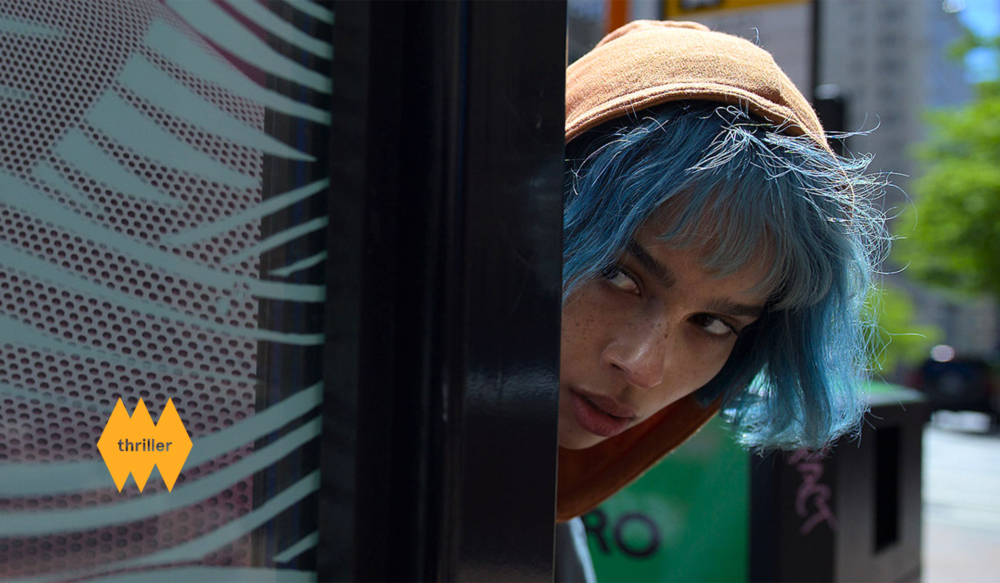
    There’s a scene in Kimi, the newest movie from Oscar-winning director Steven Soderbergh, when protagonist Angela (Zoë Kravitz) puts her AirPods on to drown out the sounds of her Seattle loft. It mirrored me in my New York City apartment watching the movie with my headphones to drown out the noise coming from the street — and my radiator. When she put her right earbud in, my right headphone went quiet. When she put on the left, my left went silent. It’s a small detail, but one that was crucial to my viewing experience.

    That was the moment I knew that Kimi was something special.

    First of all, for its immersive quality. Like it was made for me to watch it in my apartment with my headphones on immersed in the world. Second, unlike many movies made in the pandemic era, Kimi doesn’t shy away from living in that world. Actually, the pandemic helps drive the plot — a twist on the classic Rear Window-esque psychological thriller. Angela already suffered from agoraphobia from a previous assault that left her riddled with anxiety. You could imagine that a global pandemic didn’t help her mental state.


    ADVERTISEMENT


    Angela sticks to a rigid schedule. She eats breakfast, rides on her Peloton, checks in with her cute neighbor (Byron Bowers) who lives across that street. Soderbergh — known best for directing the Ocean’s Trilogy — catches the action as methodically as Angela is. She’s just as regimented when it comes to her job as a sort of quality assurance engineer for Kimi, an Alexa or Apple HomePod analog. Angela’s job is to analyze snippets of failed requests and correct the mistakes. However, one recording doesn’t sit right with her. Something sounds off. Sinister even.

    In another wondrous scene of immersive sound design, Angela slowly toys with the audio file— reminiscent of Gene Hackman in The Conversation — until she is able to clearly hear a woman being attacked. The discovery finally gives her a reason to leave her apartment when her boss (Rita Wilson) invites her in to share her discovery. However, these case isn’t as simple as a trip to the corporate office.

    In Angela’s apartment the camera is rigid, steady, and ordered but when it’s outside it becomes frenetic and unsteady with unnatural angles mirroring Angela’s state of mind. The jarring soundscape juxtaposed against the peace of the apartment is anxiety-inducing. It’s what Soderbergh is best at. Evoking the specific feeling he wants you to experience.


    ADVERTISEMENT


    Kravitz gives one of the best performances of her career as she portrays the panicked feeling of anxiety that many of us felt in the face of the pandemic. Trying to muster up the courage to go outside and meet her crush for breakfast, she dons her mask, grabs a handful of hand sanitizer packets, and slowly unlocks her door only to be met with the crushing feeling of panic that is so familiar. Soderbergh makes it so easy to empathize with her, something that similar movies — *cough*The Girl on the Train *cough* — fail to do.

    After Angela ventures out into the world, Kimi makes the transition to a full-blown thriller for its second half filled with corporate intrigue, paranoia-filled thrills, and a stunning villain turn from Jane the Virgin actor Jamie Camil before pivoting to a third act conclusion that might be too tidy but is certainly satisfying. It tracks with Soderbergh’s “post-retirement” era — he announced a retirement from filmmaking in 2015 but apparently got bored. His filmmaking is still as lean, mean, and effective as before. But he’s not looking to push his craft or genre further. He’s simply having fun and you can tell.

    Kimi grapples with many of today’s issues — information security, big tech, trauma, homelessness, civil unrest, pandemic anxiety — but it never overstays its welcome and never overstates its purpose. Soderbergh knows that this is a popcorn movie and it’s all the best for it. As we move into the post-pandemic era, it’ll be interesting to see how filmmakers grapple with our collective trauma. If Kimi is any indication, there are stories just waiting to be heard.


    ADVERTISEMENT


    More movies, less problems


    Hey! I’m Karl. You can find me on Twitter and Letterboxd. I’m also a Tomatometer-approved critic.

    💌 Sign up for our weekly email newsletter with movie recommendations available to stream.


    ADVERTISEMENT

  • ‘Barbarian’ is for the camp horror girlies | review

    ‘Barbarian’ is for the camp horror girlies | review

    Barbarian follows a woman staying in an Airbnb in a rough neighborhood of Detroit who gets more than she bargains for when she finds a man already staying there.

    Barbarian is B-movie camp. It feels like it’s from the same grotesque weird wicked world that Sam Raimi is operating in. The twists are surprising, scares genuinely frightening, and comedy sharp. See it in a theater with a crowd.

    Don’t read this review. Barbarian is a movie that is best enjoyed unspoiled. And when I say unspoiled, I really mean it. That’s not to say it can’t be enjoyed entirely knowing what it’s about. But where’s the fun in that? It’s like a magic trick. The same way magicians use misdirection, distractions, and spectacles to hide how a trick is done, director Zach Cregger tricks you into thinking the movie is one thing. But while he’s showing you his left hand is empty, his right is getting ready to shock you. And unless you’re a boring cynic, you want to be tricked.

    It’s the same way I felt about James Wan’s Malignant, which feels like a spiritual sister to Barbarian. Both movies mine the tropes and imagery of Giallo flicks—a genre of movies popularized in Italy that combine elements of suspense, horror, and psychological erotic thrillers. The result is a maximalist horror that never fails to shock you with its devilishly fun twists and keep you entertained with delicious camp. At any given moment you’re not sure whether to laugh, cry, or just lose your damn mind. I, and the rest of my audience, seemed to be doing all three. Grab a bowl of popcorn, your closest horror-loving friend, and go for a ride. 

    For those who aren’t going to heed my warning, I’ll try to keep the rest of this review relatively spoiler-free.


    ADVERTISEMENT


    The first act of Barbarian will feel familiar to horror fans, whether it’s the camera movements reminiscent of Leigh Whannel or John Carpenter-esque score.

    It’s almost as if Cregger wanted to prove that he’s done his horror homework before completely flipping the genre on its head. There’s an almost cozy feeling when Tess (Georgina Campbell) drives up to the front of an unassuming single-family home at night… in the middle of a rainstorm. Yeah horror fans, your alarm should be going off. If it wasn’t already, it should be blaring when Tess finds the key in the lockbox already gone. Even worse, when she calls the phone number on the faux-Airbnb listing, it goes to the voicemail of a home management company. However, her luck sees a turn—for the worse or better we’re not sure—when a man answers the door.

    Keith is tall and handsome, but has a bit of a creepy edge to him. Bill Skarsgard, best known for his terrific turn as Pennywise the Clown in It, is perfectly cast. His look alone perfectly exudes a charmingly endearing energy that is alluring, but creepy at the same time—it would confuse any sensible person’s stranger danger senses. His apologetic and kind tone gets Tess to accept his invite to share the space while she sorts out her housing situation. Skarsgard’s performance continues to toe the line between genuinely charming and creepily rehearsed—but whether there is more to him is unclear.


    ADVERTISEMENT


    The movie actively ratchets up the tension even as Tess’ fears are assuaged in a perfectly calculated slow burn that keeps you searching for the twist—trust me, you won’t find it.

    When Tess steps out of the house the next morning to go to the job interview she’s in town for, she sees the state of the neighborhood. The house she’s staying in is lovingly renovated, but the rest of the neighborhood is a dilapidated ghost town. All this setup eventually leads to Tess returning to the home and finding a hidden corridor in the basement out of the house.

    From there, the movie takes pivots to the grotesque, absurd, and downright batshit. But what I love is that it doesn’t feel the need to explain itself or its lore further than needed. Some would call those plot holes—I’d call it strategic information withholding. Barbarian almost makes itself immune to story criticism because it only gives you enough to piece your own background story together. The same goes for its potential social commentary. It could follow It Follows and Don’t Breathe in the Detroit-horror subgenre that touches on race and class. However, it never fully forms those ideas—but it doesn’t spend valuable time on them either.

    There is a #MeToo subplot that takes the movie to a new place from the first half—Justin Long makes an appearance that I wish was hidden in the marketing. And while the message may be obvious, it helps tie the absurdity into a satisfying character journey. Barbarian isn’t going to be for everyone. It’s like Sam Raimi movies or Giallo films. If you know you know. Like Evil Dead 2 or Malignant, Barbarian feels like it’s from the same grotesque weird wicked world where twists are surprising, scares genuinely frightening, and comedy sharp. See it in a theater with a crowd.


    ADVERTISEMENT


    More movies, less problems


    Hey! I’m Karl. You can find me on Twitter and Letterboxd. I’m also a Tomatometer-approved critic.

    💌 Sign up for our weekly email newsletter with movie recommendations available to stream.


    ADVERTISEMENT

  • ‘Orphan: First Kill’ is the campy sequel we didn’t know we needed | movie review

    ‘Orphan: First Kill’ is the campy sequel we didn’t know we needed | movie review

    Esther, the titular Orphan from 2009’s cult classic, makes her triumphant return in Orphan: First Kill, an origin story prequel that you didn’t know you needed.

    Orphan: First Kill doubles down on the original’s wacky premise to deliver a deliciously campy prequel that will please fans of the first movie and convert a few new ones. With each passing twist, and a pair of perfectly tuned-in performances from Isabelle Fuhrman and Julia Stiles, the movie delights, terrifies, and entertains from beginning to end. A camp cult classic in the making.

    One of my favorite memories growing up is watching silly B-horror movies with my older sister—I Know What You Did Last Summer, Fear Island, the Final Destination series. But one of our favorites was 2009’s Orphan. It was kind of silly in a self-serious way but legitimately creepy and scary. The exact type of horror movie that we could come back to whenever we needed a comfort watch. Of course, we were excited when we heard that a sequel was forthcoming, with the original Esther.

    From the opening moments, we were giddily soaking in the creepy atmosphere. But then, our excitement waned. For the first half of Orphan: First Kill, what we loved about the first movie was dialed too high—the dramatics, Esther’s creepiness, the gore. It wasn’t the movie we loved. But then the twist happened—that glorious twist that completely changed the way we were watching the movie and turned it into a campy classic that I could see us enjoying for years to come.


    ADVERTISEMENT


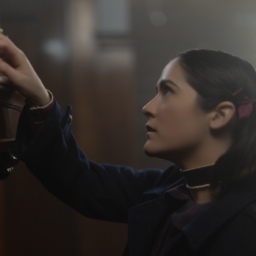
    The first half was also campy fun, but the game of expectations made it feel like a betrayal of the original. In retrospect, it only made sense for the movie to open that way. We remeet Leena (played again by Isabelle Fuhrman who is made to look 10 years old with the help of movie magic) in a mental institution in Estonia before the events of the first movie. As her doctor explains, she suffers from proportional dwarfism, a disease that causes her to look the same age even as her mind grows and develops. You could imagine how that would make a person go mad—and mad she does go. After escaping the institution with manipulation and hilariously brutal kills for a “ten-year-old,” Leena hatches a plan to get to America.

    Finding a missing girl to whom she holds a passing resemblance, Leena assumes her identity and poses as Esther Albright, the daughter of wealthy artist Allen (Rossif Sutherland) and his philanthropist wife Tricia (Julia Stiles). She concocts a kidnapping backstory, which would explain how she found herself in Estonia… with an accent. Over the coming weeks, “Esther” tries to assimilate into the family by piecing together fragments of the actual Esther’s life.


    ADVERTISEMENT


    What made Fuhrman’s performance in the original so iconic and terrifying—part of the reason why a sequel would only work with her—was her ability to make Esther just odd enough to put you on edge but not enough to convince you she isn’t anything but a creepy, but normal, child. In First Kill, her performance is dialed up to 11, which doesn’t work—until it does. Remember that twist I mentioned a bit ago? Without spoiling, it doubles down on the wackiness of the premise to deliver some of the highest gay shriek-inducing camp that includes a deliciously devilish performance from Julia Stiles.


    ADVERTISEMENT


    More movies, less problems


    Hey! I’m Karl. You can find me on Twitter and Letterboxd. I’m also a Tomatometer-approved critic.

    💌 Sign up for our weekly email newsletter with movie recommendations available to stream.


    ADVERTISEMENT

  • ‘Beast’ roars for your attention | movie review

    ‘Beast’ roars for your attention | movie review

    In Beast, a doctor and his two young daughters find themselves at the wrong end of a lion’s taste for vengeance as they become trapped in the South African bush

    Over the running time of Beast, wildlife biologist and animal sanctuary protector Martin (Sharlto Copley) remarks a few times that what is happening isn’t normal. That being a lion on a path of vengeance through the South African grasslands after his pride is killed by a group of poachers. Most lions will kill to eat and generally avoid humans. This one is doing the exact opposite, leaving bodies behind in his wake. Why? The movie doesn’t exactly tell us. Rather than wrapping some wild exposition about the lion being infected by radioactive waste dumped by a nearby nuclear plant, Beast spares us from the unnecessary details and delivers what we want: Man vs animal. In that way, at its core, it’s a perfect B-movie.

    However, it’s more than that largely thanks to director Baltasar Kormákur and actor Idris Elba who elevate the schlocky script into a surprisingly effective survival thriller. The details we do get are that Elba’s Dr. Nate Samuels recently lost his wife who he had separated shortly before. In the wake of her death, he brings his young daughters, teenager Meredith (Iyana Halley) and preteen Norah (Leah Sava Jeffries), to her home village in South Africa where Martin still works. After a magical encounter with a pride of lions that Martin has worked with since their youth, they come upon an abandoned village that looks to be on the wrong end of a vicious lion attack. From there, the movie roars to life.


    ADVERTISEMENT


    Thanks to Kormákur’s sense for suspense, Beast rarely gives you a minute to breathe. Through a series of single-shot long takes, the movie builds suspense until inevitably the antagonistic lion roars onto the screen. And despite it being done in complete CGI, the titular beast feels dangerous. In the movie’s first long shot, the camera follows the group as they arrive at a nearby village. As we sweep around following different characters, the discovery of multiple dead bodies sets our senses ablaze. When Norah temporarily goes missing, we follow Nate through a labyrinth of branches that further disorients our senses. The shot finally cuts when we find Norah who has discovered another body. And the games begin.

    Each ensuing encounter with the lion feels as impactful as the last. Elba’s bonafide movie star glow holds every frame and makes you believe the stakes—even when the beast isn’t on screen. The movie is careful not to overuse its villain, but there’s always a sense that it’s lurking within reach. That’s what makes Beast worth its lean 93 minute runtime. Even if the material isn’t Oscar-worthy, every actor and filmmaker is performing like it is.


    ADVERTISEMENT


    More movies, less problems


    Hey! I’m Karl. You can find me on Twitter and Letterboxd. I’m also a Tomatometer-approved critic.

    💌 Sign up for our weekly email newsletter with movie recommendations available to stream.


    ADVERTISEMENT


  • ‘Prey’ gives The Predator new life | movie review

    ‘Prey’ gives The Predator new life | movie review

    A young Native American woman in the 1700s hunts down a vicious other-worldly predator terrorizing her tribe’s land. Or is it hunting her?

    Prey proves that bigger isn’t always better. Though the sequels to the original Predator each try to one-up the last — most hilariously with the aptly named Predators — director Dan Trachtenberg does the exact opposite with his stripped-down period coming-of-age. He still keeps the fun energetic action that the franchise is known for — the eponymous predator retains all of its ridiculous and ever-advancing powers — but by setting it in the 1700s, the movie has to find innovative ways to keep the audience entertained — and it certainly does. Wrapped up in a poignant tale of female empowerment, Prey is a perfect popcorn blockbuster to turn your brain off to for a lean 90 minutes.

    We’ve seen many long-running franchises return in the past few years with varying degrees of success. On one end of the spectrum, we had Scream, a celebration and satirization of the very thing that made the original film a classic. Then there was Texas Chain Saw Massacre where the only successful change in this modernized version was removing the word “the” from the title. The main problem with Massacre was the filmmakers’ — or studios — attempts to make the movie bigger and bloodier than its predecessors. Instead of the original’s relatively sparse plot and sending, it opted to bend itself to trendy sensibilities in horror resulting in a maximalist incoherent mess. Prey, a reboot of the long-running Predator franchise, does the exact opposite.

    Prey doubles down on the original’s simple plot and characters and strips away any attempts at modernization. On the contrary, it sets the movie back in more primitive times.


    ADVERTISEMENT