
Tag: A24

  • ‘Queer’ is messy, mad and marvelous | review and analysis

    ‘Queer’ is messy, mad and marvelous | review and analysis

    Based on William S. Burroughs novel of the same name, Queer follows an American expat’s obsession with a young man he meets in 1950s Mexico City.

    This review was originally published out of the 2024 Toronto International Film Festival.

    Luca Guadagnino’s Queer is a mesmerizing and haunting exploration of desire, loneliness, and the search for connection. Set in 1950s Mexico City, the film follows Lee (Daniel Craig) as he navigates a complicated, obsessive relationship with Eugene (Drew Starkey). Through stunning cinematography, an evocative score, and an engaging, surreal narrative, Guadagnino and screenwriter Justin Kuritzkes deliver a thought-provoking, emotionally raw drama that speaks to queer longing, desire, and the transformative power of intimacy. Bold, challenging, and ultimately moving, Queer is not easily shaken.

    Queer is in limited release on Nov 27. It will be released nationwide on Dec 13 by A24.

    Anyone who claims to fully understand what William S. Burroughs is trying to tell us with his writing is either lying or on some really good drugs—and I’ll have what she’s having. Another filmmaker might have tried to smooth out the raw, jarring edges of Burroughs’s trademark sensibilities. But director Luca Guadagnino (Call Me By Your Name, Challengers) and screenwriter Justin Kuritzkes (Challengers) lean wholeheartedly into his idiosyncratic style, transposing his unsettling blend of mesmerizing horror and reality into something deeply affecting. And somehow, it’s also an aching romance about longing and desire. Amid the drug-addled maze of Burroughs’s thoughts, Guadagnino and Kuritzkes manage to find a thread—a profound one that, once pulled, unravels into a beautiful, moving drama that is, at its core, deeply… well, queer.


    ADVERTISEMENT


    Set in 1950s Mexico City, the film follows a community of American expatriates, many of whom are queer men, living in a lively enclave of bars where gossip flows as freely as the alcohol. Among them is Lee (Daniel Craig), a man who drifts through the streets in search of something—or someone. Lee’s haggard, drunken appearance and his self-destructive bravado are a stark contrast to Craig’s more notable roles as James Bond and Benoit Blanc. His presence often unsettles those around him. One man who crosses his path later notes to a friend that Lee can never just be friends with someone—it always turns sexual.

    Lee’s only friend, Joe (Jason Schwartzman), rambles about his various sexual exploits, most of which end in robbery, but Joe seems grateful for any company. Lee, on the other hand, is searching for something more meaningful. Though he’s clearly lonely, he seems incapable of breaking through his own emotional walls to form a real connection. Even after a one-night fling with a man at a bar (musician Omar Apollo), Lee is left feeling empty. Even assuming that the man slept with him for money. It’s that insecurity that keeps Lee from experiencing true intimacy. That is, until he spots Eugene Allerton (a sensational Drew Starkey) walking through the sultry streets. In stark contrast to Lee’s disheveled, unkempt appearance, Eugene is effortlessly cool—his tailored polo and well-fitting slacks clinging to his toned physique as passersby steal glances.


    ADVERTISEMENT


    Guadagnino and cinematographer Sayombhu Mukdeeprom beautifully capture the sweaty heat and energy of Mexico City’s bustling nights, imbuing the scenes with such textural detail that you can practically feel the heat on your skin. Eugene, however, seems impervious to the heat, and to everything else. Lee becomes obsessed with discovering who he is, and after exchanging a few furtive glances, he finally approaches Eugene one drunken night. While their conversations aren’t especially titillating, the tension between them is palpable, as if we’re just waiting for the space between them to collapse. At times, we see Lee’s ghostly hand reach out to touch Eugene, as though he’s willing himself to do so but can’t. As Eugene speaks (or listens to others speak), we catch Lee staring at him as if he’s trying to understand what’s going on beneath the surface.

    The first hour of the film moves at a pleasantly meandering pace, as Lee and Eugene oscillate between getting closer and drifting apart—having sex and then completely ignoring each other. It’s as if they both want to turn away from their desires while simultaneously giving in to them. It feels all too relatable to the queer experience—even now. While this dynamic could easily slip into melodrama, Guadagnino skillfully maintains a frenetic, sweltering energy, much like the city itself. This is all underscored by a melancholic score from Trent Reznor and Atticus Ross, with energetic needle drops ranging from Nirvana to Prince.


    ADVERTISEMENT


    As the story moves into its second half, Lee invites Eugene on a journey through South America in search of a mystical herb called yage, which is said to give the consumer telepathic abilities. This is where the film becomes more jumbled—perhaps intentionally, as Lee’s opioid addiction comes to the forefront. While the push and pull between the two men continues, the narrative loses some of its initial focus. Lee’s obsession with the herb seems linked to his desire to understand Eugene, himself, and perhaps his own queerness, but the journey to find it lacks the bite and momentum of the earlier parts of the film. That is, until they finally find the herb.

    In the film’s surreal and entrancing third act, the two men encounter Dr. Cotter (Lesley Manville), a kind of mad scientist living in the Amazon who studies indigenous plants, hunts for her and her partner’s food, and apparently trains their guard snake. Here, Lee learns that yage is more commonly known as ayahuasca, and he eventually persuades Cotter to let him and Eugene take it. The resulting sequence is a feverish, expressionistic dance that finally brings Lee and Eugene together in a moment of understanding. As Burroughs’s own words from his journals echo in the scene—“I’m not queer, I’m disembodied”—it adds an additional layer of meaning to this powerful, otherworldly encounter.


    ADVERTISEMENT


    At its heart, Queer is about queer loneliness, queer desire, and the queer desire to know we’re not alone. In the final moments, Lee faces his own loneliness. To borrow a line from Guadagnino’s Call Me By Your Name, “Is it better to speak or to die?” In that film, the character chooses to speak. Here, Lee suffers a kind of death—a raw, emotional moment that’s deeply impactful. It ultimately makes the film’s challenging journey worthwhile. Queer is a call for intimacy: to reach out, make yourself vulnerable, and let the space between you and others collapse. Because, in the end, where there may be rejection, there may also be acceptance.


    ADVERTISEMENT


    More movies, less problems


    Hey! I’m Karl. You can find me on Twitter and Letterboxd. I’m also a Tomatometer-approved critic.

    💌 Sign up for our weekly email newsletter with movie recommendations available to stream.


    ADVERTISEMENT


  • Florence Pugh and Andrew Garfield charm and fall in love in We Live In Time | TIFF 2024

    Florence Pugh and Andrew Garfield charm and fall in love in We Live In Time | TIFF 2024

    TIFF 2024 | Moving back and forth in their history, We Live In Time follows a couple through the ups and downs of life.

    Headlined by charming-than-ever performances by Florence Pugh and Andrew Garfield, We Live In Time is a surprisingly entertaining and funny rom-dramedy that is elevated by a smart non-linear structure and kinetic pace. It’ll warm your heart before tearing it into pieces.

    We Live In Time premiered at the 2024 Toronto International FIlm Festival. A24 will release the film on October 11.

    From their fateful meet cute (if you can consider near vehicular manslaughter one) to the birth of their child to a devastating diagnosis, We Live In Time floats back and forth through time to tell the story of Almut (Florence Pugh) and Tobias’s (Andrew Garfield) relationship. It’s a familiar story. Boy meets girl, boy falls for girl, boy and girl have ups and downs, then something threatens to tear them apart. You can, with some certainty, predict every story beat from start to finish.


    ADVERTISEMENT


    But two things set We Live in Time apart. The non-linear narrative, moved with swift pace thanks to John Crowley’s deft direction and Bryce Dessner’s twinkling score, tells you the ending before showing the journey. It lets you fall into step with the emotion of the story rather than the specifics of it. Second, the charisma and chemistry of Pugh and Garfield are impossible to resist and give Almut and Tobias so much lived-in life and voracity.

    As the movie unravels their pasts, we deepen our understanding of their decisions leaving us with an empathetic portrait of all stages of a relationship and what happens when you merge individuals with their separate ideologies, traumas and hopes into one. And while that might sound heavy, We Live In Time never feels overwrought. The emotions are real, but treated as simply a part of life rather than a plot point. Something that holds weight but because time marches on needs to fade away.


    ADVERTISEMENT


    Almut, a chef at the top of her game who at one point says she couldn’t imagine having a child, and Tobias, a corporate drone with a romantic heart and aspirations for family navigate the trickiness with cheer and humor. British playwright Nick Payne, who penned the screenplay, presupposes that life’s big struggles are best defeated with life’s little joys. In one of the best sequences, type A Tobias is tasked with helping Almut deliver their first child in a gas station bathroom. A trauma that is made better by their ability to laugh through life’s pains. It makes watching them go through it all the more enjoyable. 

    Follow the rest of our coverage of the festival here.


    ADVERTISEMENT


    More movies, less problems


    Hey! I’m Karl. You can find me on Twitter and Letterboxd. I’m also a Tomatometer-approved critic.

    💌 Sign up for our weekly email newsletter with movie recommendations available to stream.


    ADVERTISEMENT

  • ‘Past Lives’ and an uncertain future | review and analysis

    ‘Past Lives’ and an uncertain future | review and analysis

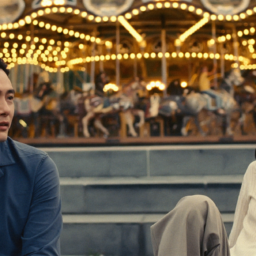
    Past Lives follows childhood crushes Na Young and Hae Sung who reconnect at various points over the ensuing three decades from Seoul to New York

    Though Past Lives is an epic in scope spanning decades at its core it’s a sweet intimate drama about how your past colors your present and often clouds your future. With irresistible “will-they-won’t-they” tension, sharp insights into how our past colors our present and clouds our future, and a trio of charming performances led by Greta Lee, it’s almost impossible to not fall for Past Lives.

    If you liked Past Lives, I recommend: Weekend, Aftersun

    I’ve been thinking about a monologue from Before Sunset, the second film in Richard Linklater’s masterpiece Before trilogy, recently. “Each relationship, when it ends, really damages me. I never fully recover. That’s why I’m very careful about getting involved because it hurts too much. Even getting laid! I actually don’t do that… I will miss the other person—the most mundane things.” Celine, played by Julie Delpy, continues, “I see in them little details, so specific to each of them, that move me, and that I miss, and… will always miss. You can never replace anyone, because everyone is made of such beautiful specific details.”

    This is also how Hae Sung (Teo Yoo), a Korean man who reconnects with his childhood crush after more than two decades, perhaps go through life in the same way — looking for meaning in every moment that makes up the fabric of our lives. How does each interaction, each success, each failure build us up (or tear us down) as a person — or change the trajectory of our lives? When a moment ends, can that really be it? Was it something meant to be contained to just that split second of my life? Does it really matter if it doesn’t mean more than just that split second? 


    ADVERTISEMENT


    Those are the questions in writer-director Celine Song’s debut feature Past Lives. An intimate character drama with the scale of a romantic epic, Song presupposes that looking to the past as a path for the future is a fool’s errand. And as time passes — rather than saying “12 Years Later,” Celine Song uses the title card “12 Years Pass” to remind us that life is still happening in those gaps — so do the people that filled these moments that at one time felt so meaningful.

    Past Lives is made up of these brief moments covering three eras in its protagonists’ lives — quick glimpses that come and go like a memory reminiscent of Charlotte Wells’ Aftersun. We were first introduced to Hae Sung and Na Young (Greta Lee) twenty-four years earlier in Seoul, Korea where they’re on the precipice of a life-altering moment as Na Young’s parents make the decision to immigrate to Canada leaving Hae Sung heartbroken. That isn’t before her mother sets them up on a date to make “good memories” for her. Little do they both know that that memory will cascade into something larger for them. An entire movie could be dedicated to just Na Young’s journey to Canada, but the brilliance of Song’s direction is she let’s lingering shots do the talking — like one of Na Young standing in a corner at her new school observing her new strange environment.

    Twelve years pass and Na Young, now going by her English name Nora, is a writer living in New York City — as a kid, she jokes about her dream of winning a Nobel Prize, and since moving that dream has “diminished” to winning a Pulitzer. Realizing that Hae Sung was looking for her years ago, she reaches out leading to a digital relationship that puts the years prior into perspective. Nora realizes how easily time can be halted by revisiting your past — something Past Lives puts a magnifying glass to — so she asks Hae Sung for a break in communication. But as so happens, weeks turn into months and months into years.

    Eventually, another twelve years pass and an older more established Nora is married to fellow writer Arthur (First Cow’s John Magaro). Meanwhile, Hae Sung has reached back out to say he’s planning a visit to New York which Arthur (half-jokingly) says is a ploy to win Nora back. What could possibly go wrong? Well, the beauty of Past Lives — and this is perhaps a spoiler — is that nothing does. Life isn’t quite as dramatic as we hope it to be as much as the fantasy scenarios we concoct in our heads are. It’s why the movie’s cheeky cold open where two people play my favorite game, “make up a backstory for strangers at a bar” is oddly a meta assessment of the trio’s story. As is Arthur’s lament to Nora that in this story he’s the “evil white American husband keeping you two apart.” Besides, that’s not the story Song is trying to tell.


    ADVERTISEMENT


    The movie covers themes as broad as the Asian diaspora and how leaving where you’re from forces you to change and adapt — but can also blur your sense of identity. Nora observes that her Korean is softening, but when she talks to Hae Sung she says she “feels more Korean.” However, Song dives even further into the individual experience. Rarely are we afforded the opportunity to reobserve the moments that form us into the person we are today. Some of us, like Hae Sung, fight desperately to hold onto it. Maybe his time with Nora was the last time things made sense. Others, like Nora, are in direct opposition to that feeling. She actively runs from it — maybe to assimilate, maybe to chase a future that she’s already formed for herself. The beauty of Past Lives is that it doesn’t assume either is wrong only that the only path is forward.

    Past Lives perhaps hits its themes too directly but the effect is never less than profound. The final moments, both devastating and triumphant, are miraculous — Greta Lee gives a star-is-born performance that begs not to be forgotten come awards season. For all three of our protagonists, a new chapter is opening — full of possibility, an old chapter is closing — healing old wounds and an entire story is being rewritten. Song’s screenplay, littered with beautifully simple yet deeply affecting insight, is simmering with romantic tension even if Past Lives isn’t quite a romance. Greta Lee, Teo Yoo and John Magaro play off of each other with astonishing realism that still mines the almost melodramatic (and slightly comedic) tone of Celine Song’s stage work for which she is known. The result is a charming, funny, and swoon-worthy 100-minute meditation that left me lightly sobbing on the way home.

    Past Lives reminds me of the ending question posed in Arrival, “if you could see your whole life from start to finish, would you change things?” If you were to ask Celine Song, I’d imagine she’d answer with a hearty “no.” Because the beauty of this lifetime is that it is your lifetime — even if you share it for brief glimpses with others. It is your reality.


    ADVERTISEMENT


    More movies, less problems


    Hey! I’m Karl. You can find me on Twitter and Letterboxd. I’m also a Tomatometer-approved critic.

    💌 Sign up for our weekly email newsletter with movie recommendations available to stream.


    ADVERTISEMENT

  • ‘Dream Scenario’ puts Nicolas Cage in an internet-age nightmare | review

    ‘Dream Scenario’ puts Nicolas Cage in an internet-age nightmare | review

    TIFF 2023 | A woefully average middle-aged professor garners overnight fame after he appears in the entire world’s dreams in Dream Scenario

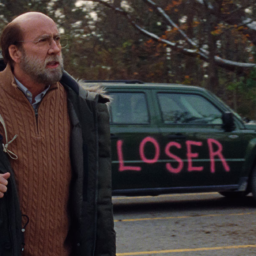
    Dream Scenario is exactly how Nicolas Cage should be spending his career: on bonkers wild swings like a comedic version of A Nightmare on Elm Street where Freddie is a normal average guy and his weapon is doing nothing. Hilarious, relevant and wonderfully weird, it is a reflection of the internet age, cancel culture and quickly our dreams for fame can turn into a nightmare.

    Dream Scenario premiered at the 2023 Toronto International Film Festival. A24 is distributing. Watch the trailer here.

    You might also like: The Menu, I’m Thinking of Ending Things, The Worst Person in the World

    Dream Scenario is like A Nightmare on Elm Street if dream demon Freddie Krueger was a boring average middle-aged man and instead of knives for hands his weapon was doing absolutely nothing. That’s the new high concept Norwegian director Kristoffer Borgli explores with his follow-up to his breakout film Sick of Myself, which satirically skewered social media influencer culture. He once again sets his sights on the vanity (and memeification) of the internet age with a simple conceit: what would happen if one guy started appearing in everyone’s dreams? And I mean everyone. 

    That guy is woefully unremarkable zoology professor Paul Matthews. His particular brand of awkward schlubby-ness that borders on creepiness could only be achieved by Nicolas Cage. During lunch with a former university classmate, where he attempts to get co-credit for an idea that is publishing a book, she asks, “Well how far along are you?” He retorts, “It’s just in the idea stage.” That’s how Paul’s life has been defined so far. What he’s not done. However, he’ll quickly find that “doing” might also be a nightmare.


    ADVERTISEMENT


    The following day, Paul starts to have weird encounters — his students whispering about him during class, a waitress having intense deja vu when he walks in, and an old flame mentioning he was in her dream the other night. While these all seem like coincidences, he starts to discover that he’s been in many people’s dreams… perhaps everyone’s. He finds his Facebook messages flooded with people telling him that he invaded their dreams. What was he doing in them? Absolutely nothing. As he hilariously fields questions from his students about their Paul dreams, they all have different conceits — running from a monster, trapped by alligators, an earthquake. What they have in common is Paul does nothing. He just stares or casually walks by. His aggressively normal demeanor — “that middle-aged bald guy with glasses” — is a hilarious juxtaposition to that absurd dream logic. 

    The movie’s plot and imagery evokes comparisons to Charlie Kaufman’s Eternal Sunshine of the Spotless Mind and I’m Thinking of Ending Things or David Lynch’s Twin Peaks: Fire Walk With Me. The pitch-black humor that Borgli achieves is so satisfying, especially when delivered by a self-aware tactician like Cage. Paul is woefully uninteresting in a way that only Cage, with his self-aware campy mannerisms and deadpan delivery, can make endearing. But Paul isn’t necessarily a hero, even if we are in some ways rooting for him and his overnight fame. 


    ADVERTISEMENT


    Like any person suddenly thrust into the spotlight, Paul strives to take advantage of his newfound fame to get momentum on his book on ant intelligence that he’s dubbed “ant-elligence.” When he’s courted by a creative agency (headed up by Michael Cera in a cheeky cameo) to manage his new public persona they pitch him on deals ranging from Sprite — “we’ll get everyone to dream of you with a Sprite” — to Obama — “one idea was to have Obama dream about you.” His meteoric rise feels akin to the sudden internet stardom that so many people achieve for doing essentially the bare minimum or in some cases absolutely nothing — memes like “Alex from Target” or “Saltbae” come to mind. It’s clearly Borgli’s intention considering what’s next.

    Suddenly, things take a turn for the worse and Dream Scenario takes a turn for the better (and the spooky). Instead of the benign creep standing idle while terrible nightmarish things happen to the dreamer, Paul becomes the nightmare. Much like Freddie Krueger in A Nightmare on Elm Street, Paul slashes, stabs and bludgeons his way through his hapless victims. The biggest difference is Paul is a person in the real world having to face the consequences of his actions (or lack thereof). From there, the movie turns into a send-up on cancel culture complete with insincere tear-ridden apologies, a hate-fueled internet mob, and, of course, a sorta-kinda-not-really redemption.


    ADVERTISEMENT


    Like Borgli’s breakout film Sick of Myself, Dream Scenario loses some of the (nightmare) fuel that drives it for much of its runtime. He creates this wonderfully off-kilter world with such ease and crafts an entertaining story to go along with it, but he’s not necessarily interested in taking things a step further. The movie is a reflection of our world rather than a critique of it and the satire is maybe better defined as parody — like a comedy sketch turned into a feature-length film. Despite that, and an odd third act turn that perhaps jumps the shark, you never fall out of the trance it puts you in.

    Even if it is driven by observation more than commentary — one hilarious turn after Paul’s cancellation is the alt-right and France standing as his last supporters — Dream Scenario is a satisfying excercise in the absurd that blessedly doesn’t feel self-important about what its chiding. It’s what I loved (and other’s despised) about The Menu. Like a dream you might forget the exact details of it but you wake up knowing the emotions you felt — and Dream Scenario will run you through the gamut.


    ADVERTISEMENT


    More movies, less problems


    Hey! I’m Karl. You can find me on Twitter and Letterboxd. I’m also a Tomatometer-approved critic.

    💌 Sign up for our weekly email newsletter with movie recommendations available to stream.


    ADVERTISEMENT


  • Nicolas Cage stalks people’s dreams in ‘Dream Scenario’ | Trailer & Release Date

    Nicolas Cage stalks people’s dreams in ‘Dream Scenario’ | Trailer & Release Date

    Nicolas Cage plays a boring middle-aged man propelled into fame when he appears in everyone’s dreams in the first trailer of Dream Scenario

    Nicolas Cage returns to the big screen (and the world’s dreams) in the first trailer for director Kristoffer Borgli’s Dream Scenario. The dark comedy is the Norwegian director’s second feature (and first in the English language) after his critically acclaimed Cannes-premiering debut Sick of Myself.

    In Dream Scenario, Cage plays a woefully average college professor who is propelled into fame (or infamy?) after he inexplicably appears in everyone’s dreams one night. However, he quickly learns that fame, for all its glitz and glam, is not all it’s cracked up to be.


    ADVERTISEMENT


    In his review, our critic called Dream ScenarioA Nightmare on Elm Street if dream demon Freddie Krueger was a boring average middle-aged man and instead of knives for hands his weapon was doing absolutely nothing.” Adding that it’s “hilarious, relevant and wonderfully weird, it is a reflection of the internet age, cancel culture and quickly our dreams for fame can turn into a nightmare.” Read our full review here.

    The movie also stars Julianne Nicholson, Michael Cera, Tim Meadows, Dylan Gelula, Dylan Baker and Kate Berlant and is produced by Hereditary‘s Ari Aster (so you know things are about to get wild).

    After a glowing reception at the 2023 Toronto International Film Festival, Dream Scenario will be released by A24 on November 10, 2023.

    Watch the first trailer for Dream Scenario here:

    When will Dream Scenario be released in the United States?

    Dream Scenario will be released in theaters on November 10, 2023.

    Who stars in Dream Scenario?

    Dream Scenario stars Nicolas Cage as Paul Matthews and features an ensemble cast that includes Julianne Nicholson, Michael Cera, Tim Meadows, Dylan Gelula, Dylan Baker and Kate Berlant.

    What movies are Dream Scenario similar to?

    Dream Scenario is similar to movies like Eternal Sunshine of the Spotless Mind, Punch-Drunk Love, I’m Thinking of Ending Things, and A Nightmare on Elm Street.

    More movies, less problems


    💌 Sign up for our weekly email newsletter with movie recommendations available to stream.


    ADVERTISEMENT


  • ‘X’ is a Texas Boogie Nights Massacre | movie review

    ‘X’ is a Texas Boogie Nights Massacre | movie review

    X follows a young group of aspiring filmmakers who travel to an isolated farm to film a porn. It doesn’t go well.

    X is a detailed and well-studied recreation of 70s exploitation B-movies and the Golden Age of the slasher genre, right down to the film grain. However, director Ti West does more than homage. He adds his own darkly comedic tone to mine some real laughs in between the carnage as well as a surprisingly complex pair of villains — which is why a prequel film has already been shot. Nostalgic cinematography, a tense Carpenter-esque score, and deliciously camp performances — particularly from Brittany Snow, Mia Goth, and Martin Henderson — make X a gloriously bloody and entertaining throwback. Like Boogie Nights by way of The Texas Chainsaw Massacre.

    X is now playing in theaters.

    The most fascinating thing about X is how straightforward it is. There are no tricks, no twists, no sudden genre shifts or gotcha moments, but that’s exactly what director Ti West intends. He’s not looking to reinvent the slasher genre, he wants to celebrate every single gritty bloody detail right down to the film grain — although The Texas Chainsaw Massacre is clearly his biggest inspiration. But that’s not to say he doesn’t have some tricks up his sleeves.

    The glorious The Cabin in the Woods, perhaps the most meta meta-horror movie that lovingly skewers the genre for its repetitive tropes, posits that the victims of slashers are being punished for their youth. Not just being young, but taking advantage of that youth. However, movies from the genre’s heyday in the 70s and 80s personify that punishment as an inhumane mysterious force — Michael Myers, Leatherface, Jason Voorhees. West subverts that trope and instead finds humanity in the antagonists. If anything, X’s villains are devastatingly human.


    ADVERTISEMENT


    But first, let’s go back to 1979. You know the setup. A group of six young people travels to an isolated part of Texas for a weekend of fun. Though, in a Boogie Nights-like twist the group isn’t just doing it for their own pleasure. They’re shooting an adult film to take advantage of the newly formed home video market. Maxine Minx (Mia Goth), in particular, is obsessed with being a star. Something her boyfriend and film’s producer Wayne (Martin Henderson) is convinced she’s destined for.

    Maxine’s co-stars Bobby-Lynne (Brittany Snow) and Jackson Hole (Scott Mescudi aka musician Kid Cudi), on the other hand, are more seasoned porno actors. Rounding out the group are the film’s director RJ (Owen Campbell) and his girlfriend Lorraine (Jenna Ortega), who are more conservative compared to their companions, especially Lorraine who didn’t even know what the project was.

    In an effort to keep costs low the group is shooting the film in the farmhouse on the isolated property of elderly couple Howard (Stephen Ure) and his wife Pearl (Goth, playing double duty in impressive old age makeup). West makes it clear that something is amiss with his chilling bloody cold open, the foreboding music by composers Tyler Bates and Chelsea Wolfe, and classic horror shots framing the villains with menace. We don’t get a clear view of Wayne or Pearl’s faces for some time.


    ADVERTISEMENT


    After some brilliant slow-burn tension building where we begin to learn a bit more about our characters, hell breaks loose. Or should I say, Pearl breaks loose and X pivots to being a full-blown slasher with all the blood and gore you could hope for. Still, West finds depths in its narrative while maintaining its horror elements. Maxine and Pearl feel like parallel stories running in two different timelines. Pearl could’ve been Maxine in an earlier life and Maxine could become Pearl. X presupposes that the real horror here is time. It highlights the brilliance of casting Mia Goth in both roles and the decision to film a prequel in tandem.

    As straightforward of an homage to 70s and 80s horror X is, it mines the thematic depths of youth, time, regret, sex, and the horror genre itself. Horror and porn are often lumped together as gratuitous and deviant as they deal with the taboo topics of sex and gore. West questions asks why that is the case with his narrative. Why do we find two people having sex on camera so alluring yet unacceptable (the same for violence)? The answer is the movie itself.


    ADVERTISEMENT


    More movies, less problems


    Hey! I’m Karl. You can find me on Twitter and Letterboxd. I’m also a Tomatometer-approved critic.

    💌 Sign up for our weekly email newsletter with movie recommendations available to stream.


    ADVERTISEMENT


  • ‘The Tragedy of Macbeth’ transports you to the Twilight Zone | movie review

    ‘The Tragedy of Macbeth’ transports you to the Twilight Zone | movie review

    Joel Coen adapts his version of The Tragedy of Macbeth as a minimalist psychological thriller with Denzel Washington and Frances McDormand taking on the borrowed robes of Macbeth and Lady Macbeth

    Where to watch The Tragedy of Macbeth:

    The Tragedy of Macbeth immediately justifies its existence by removing all markers of time and place. Director Joel Coen, tackling his first solo film after working with his brother Ethan as the Coen brothers, sets the play on minimalist sets of massive concrete walls, dresses the characters in abstract costumes, and captures the action in crisp black and white that makes it feel like the movie is taking place somewhere else entirely. Everything is impressionistic. We get just enough to give us the general time period but not enough to latch on to specifics. The effect is offputting but needed. This isn’t your grandma’s Shakespeare adaptation. 

    As much as we rolled our eyes at our English teachers as we analyzed nearly every Shakespeare play line by line, one has to admit that there’s a reason his work has endured and is still adapted today. There’s something so modern about his writing. His sardonic wit and peculiar surrealism fit in perfectly with A24’s singular brand of quirky but melancholic dramedies about the human condition — and that’s what Coen created here. 


    ADVERTISEMENT


    Macbeth, whose borrowed robes are taken up by Denzel Washington, and Lady Macbeth (Frances McDormand) fit in nicely in the indie studio’s pantheon of complicated anti-heroes — Spring Breakers’ Alien, Ex Machina’s Ava, or most aptly Uncut Gems’ Howard. And stylistically the film fits in too. There’s a sort of rhythm to it all where one scene bleeds into the next, sometimes literally. It has the fluid motion of a play but takes advantage of the full scope that film provides. It at equal times feels epic and intimate, sometimes too intimate. Even claustrophobic. 

    The foggy landscapes and cavernous spaces add to the eerie dread-filled atmosphere while the haunting soundscape, aided by Carter Burwell’s menacing score, pushes The Tragedy of Macbeth closer to the psychological horror that it is meant to be. You could not understand a single thing that leaves the actors’ mouths, and sometimes I didn’t, and still be swept up in the emotion of it all. Some of which could be attributed to the performances. 

    While Washington and McDormand do fine work with some of the most iconic monologues ever written — the dagger and damn spot monologues are chilling — it’s the supporting characters that make the greatest impact and make the movie eminently rewatchable. Kathryn Hunter, who plays all three witches using some clever cinematic flourishes, is a dominating presence. Her shapeshifting role, sometimes literally, finds her contorting her body, face, and even her voice in unnatural ways. Her performance, like much of the film, toes the line between a real human monster and a devilish creature. 


    ADVERTISEMENT


    Alex Hassell’s Ross, a side character with little impact in the text, finds a way to act as the chaotic neutral to Macbeth and Lady Macbeth’s chaotic evil. His sleek silhouette cinched at the waist, which is the peak of the movie’s costume design by Mary Zophres, slips in and out of corners and shadows like he’s a harbinger, and catalyst, for the dread that is to come. 

    There’s mysticism in all of Shakespeare’s works, even the ones based in history. Whereas other adaptations place magic in the real world, Coen lets magic set the tone for The Tragedy of Macbeth. The way it moves, the way it looks, and the way it feels is otherworldly. Like you’re dropped into the Twilight Zone in the 17th Century.


    ADVERTISEMENT


    More movies, less problems


    Hey! I’m Karl. You can find me on Twitter and Letterboxd. I’m also a Tomatometer-approved critic.

    💌 Sign up for our weekly email newsletter with movie recommendations available to stream.


    ADVERTISEMENT


    💌 Sign up for our weekly email newsletter with movie recommendations available to stream.


    ADVERTISEMENT


  • ‘Minari’ grapples with the American dream | Sundance movie review

    ‘Minari’ grapples with the American dream | Sundance movie review

    Minari follows a Korean-American family as the set down roots and builds a farm in rural Arkansas in the 1980s

    Minari is a beautifully told family drama about chasing the American dream and all the costs and beauty that entails. Terrifically acted by the entire cast, Minari is perhaps the best movie to come out of the 2020 Sundance Film Festival. 

    ▶︎ Minari is available to purchase on all platforms, including Prime Video.


    ADVERTISEMENT


    See all our reviews from the 2020 Sundance Film Festival here.

    I can’t begin to describe how it feels to have so many Asian-American stories being told through film in recent years. From Lulu Wang’s remarkable The Farewell to the delightful Crazy Rich Asians or John Cho in thriller Searching. It feels like each is more personal than the last, and Minari is yet another great entry in that canon. However, that’s not to discount it as just another film with Asian leads. It is singular in its story — it is partially based on director Lee Isaac Chung’s own life — and style.

    Set in1980s rural Arkansas (is that an oxymoron?) — the time period doesn’t really play into the narrative — Minari follows the Yi family as they pull up to their new home. The modest trailer, that’s missing stairs up to the front door, is set on a large plot of land with no neighbors in sight. The patriarch Jacob (Steven Yuen) is excited by the move from California, where he and his wife Monica (South Korean actress Yeri Han) made a living determining the gender of chickens (sexing is the technical term) for a decade. For him, this move represents a step forward as he’s determined to use the five-acre plot to build a farm and start a business. 

    Monica isn’t quite so ecstatic. All she sees is a waste of space, no community, and a house on wheels. She might have a point too. The couple has two kids, Anne (Noel Kate Cho), a young teen girl seemingly wise for her years, and a curious seven-year-old boy named David (Alan Kim) who is suffering from a heart murmur. Despite her begging and a blow-up argument between them that could marvel the one in Marriage Story, Jacob is adamant that this is where they need to be.

    They compromise by bringing Monica’s mother (Youn Yuh-Jung) over from Korea to care for the kids while they are at work. Soonja, who hasn’t seen her daughter for years, is exactly the foul-mouthed, sassy grandmother we all we wish we had. Upon her arrival, it’s clear that David is put off by her — he was born after they moved to the States. She’s not the picture of an American grandma. In addition to her crass language, she gifts him a Korean card game that involves gambling (he should learn early, she says), makes him drink a concoction including deer antlers and at one point makes them hike deep into the forest to plant minari, which is a Japanese herb. David also makes it a point to say she smells like Korea.


    ADVERTISEMENT


    💌 Sign up for our weekly email newsletter with movie recommendations available to stream.


    ADVERTISEMENT


    Minari director Lee Isaac Chung
    Lee Isaac Chung, director of Minari, an official selection of the U.S. Dramatic Competition at the 2020 Sundance Film Festival. Courtesy of Sundance Institute

    However, her presence does ease some of the tension between Jacob and Monica. Jacob has time to get his farm up and running with odd but well-meaning local Paul (Will Patton) and Monica starts to fall into a routine trying to make the house a home and practicing sexing so she can make more money to support the family. She’s particularly helped by her mother’s presence as outlined in a hilarious scene where her mom shows her all the food and spices she brought from Korea — Monica cries when she sees she brought chili powder. Still, the financial burden of supporting the farm and the constant worry about David’s health makes Monica question her husband’s priorities. 

    Though the plot sounds like it could tread into melodramatics it never actually gets there. There is so much warmth and life in Minari. Chung grounds the movie in something real — since it is his own experience. None of the characters feel like caricatures. Even larger-than-life Soonja and precocious David — their banter is a highlight. And though set in 1980s Arkansas, they experience little overt racism. Instead, we see them suffer from microaggressions, like Monica being called “cute” by some of her fellow church parishioners or a little girl asking Anne if any of the words she’s saying are real Korean words before launching into verbal diarrhea that includes the words “ching” and “chong.” None of it is done out of malice and instead ignorance.


    ADVERTISEMENT


    This is the Yi’s internal story. In particular, Minari explores identity in the face of struggle and change. Jacob and Monica came to the States to find a better life. Jacob still seeks that out. He feels he’s destined for something more. That he owes it to his family to be successful. However, that’s the very thing that hurts the family. Monica struggles to find a place in Jacob’s dream and in the town they settle in. Soonja learns how to be the “right” kind of grandmother for David. An Americanized one that bakes cookies and doesn’t teach him how to gamble. But most importantly, we see the movie largely through David who more than anything wants to be a “normal” kid, even if that’s not attainable.

    Minari is the kind of movie that wins you over with its sweetness and comedic edge — some of David and Soonja’s antics will have you in stitches — but keeps you in with its richly complex themes and characters. It’s an irresistible movie. I might even go as so far as to say that this is one of the great families in cinema.

    All of it is aided by Emile Mosseri’s (coming off last year’s The Last Black Man in San Francisco) dreamlike score and cinematographer Lachlan Milne warmly lit cinematography. Whether or not it’s meant to feel like a dream is up to Chung to explain. However, it feels like Minari is someone looking back on their life with sadness but ultimately fondness.

    The final scene escalates to great heights and ends with an emotional shot of the family that will leave you in tears of happiness. And in the moment before the movie cuts to black I realized how much I’d miss seeing these characters on the screen. I wish I could watch their lives continue to develop and watch them grow. That is how I know Minari is a great movie — perhaps a masterpiece of a family drama.


    ADVERTISEMENT


    More movies, less problems


    Hey! I’m Karl. You can find me on Twitter and Letterboxd. I’m also a Tomatometer-approved critic.

    💌 Sign up for our weekly email newsletter with movie recommendations available to stream.


    ADVERTISEMENT


    💌 Sign up for our weekly email newsletter with movie recommendations available to stream.


    ADVERTISEMENT