The final Oscars ceremony of the 2010s has wrapped up and it was one of the most, if not the most, exciting conclusions to an awards season ever.
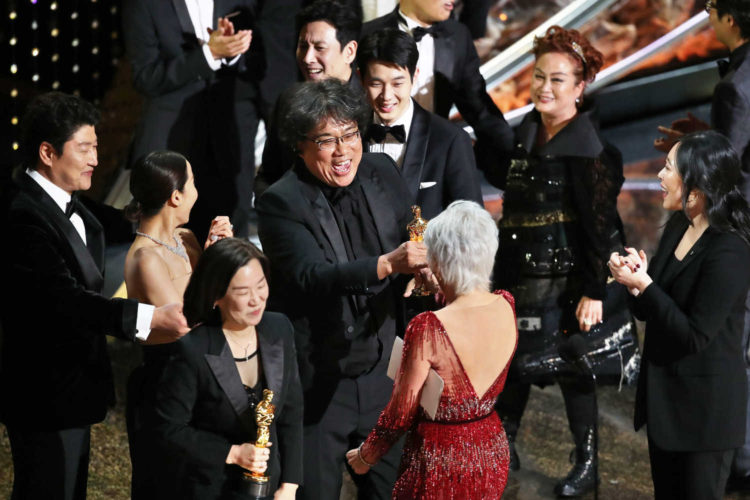
Parasite made Oscars history as the first film not in English to win Best Picture and the first South Korean film to win Best International Feature — it was also the first nominee. Not only that, Bong Joon-ho upset heavily favored frontrunner Sam Mendes for 1917 in Best Director and took home Best Original Screenplay‚ the first foreign-language film to win since Talk to Her seventeen years ago.
Reader, when I tell you I screamed. I might have scared my neighbors.
However, you have to consider the biggest context for last night’s Oscars. It is perhaps the largest step forward for the Academy and possibly a glimpse at the next decade of awards. Parasite’s historic win was at the expense of a type of movie we’ve all come to know as an “Oscar movie.” 1917 had everything going for it on paper. It was a technically-stunning war epic from a major studio directed by an industry veteran and Oscar winner himself. However, in the weeks before the ceremony, you could feel the momentum shifting, beginning with the Parasite actors’ upset at the Screen Actors Guild awards.
Barely avoiding #OscarsSoWhite
Jane Fonda present Bong Joon-ho’s Parasite with the Oscar for Best Picture.
However, that win also shows us that the Academy isn’t completely ready for change. Even though the film won Best Cast in a Motion Picture, none of the actors received individual nominations. Instead, save for Cynthia Ervio’s nomination in Best Actress for Harriet, all the acting nominees were white. This throws back to 2014 and 2015 when the #OscarsSoWhite controversy began. And while the Academy technically avoided that, Parasite was the only Best Picture nominee that showed any semblance of diversity.
Along with last year’s awards, it’s clear that as much as the Oscars are moving forward, there’s still a dying gasp of the old ways. Green Book, a regressive look at race in America, was last year’s Best Picture winner. On the other hand, Regina King won Best Supporting Actress for her sensitive portrayal of a black mother and Olivia Colman won Best Actress for a dark comedy playing the closeted queen of England. You could say we’re moving forward in fits and starts.
💌 Sign up for our weekly email newsletter with movie recommendations available to stream.
ADVERTISEMENT
How did Parasite pull it off?
We were left for the final moments of the ceremony to actually have some excitement in terms of winners. Every category went to either the frontrunner or runner-up. And just like in 2017, all four acting winners swept every single award. However, this could have been a symptom of the shortened season — we had about a month less for voting this year. Less time means fewer movies seen which means more of the same winners.
Still, just like 2016 when Moonlight upset La La Land, which almost had the same configuration of precursor wins as 1917, Parasite began to surge at just the right time by building momentum throughout the season rather than starting big like 1917 — which nabbed two surprise Golden Globe wins — and fizzling out.
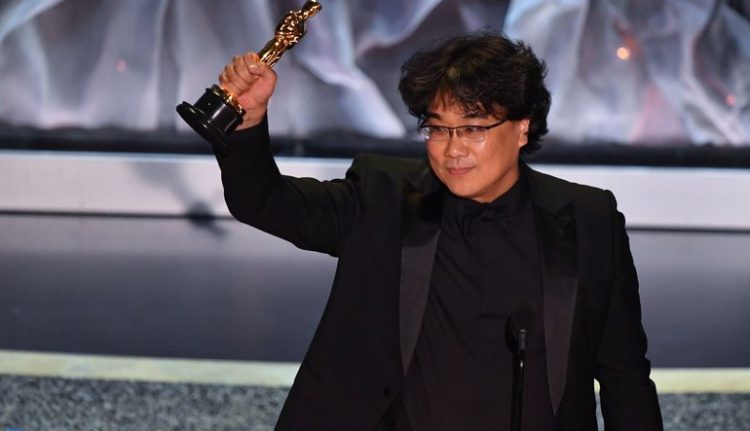
Bong Joon-ho won three Oscars for his film Parasite including Best Picture, Best Director, and Best Original Screenplay.
However, what’s more important to note is that Parasite likely would have won without the preferential ballot. The reason the Oscars switched to a ranked-choice voting system was an effort to award consensus rather than passion. Arguably, this is how Spotlight, Moonlight, The Shape of Water, and Green Book won their respective years. But with the all-out sweep that Parasite had, it feels more likely that it won in the first round with the most number one votes.
Does this mean that the preferential ballot is doing its job?
There’s been a lot of skepticism about how Best Picture is voted on, but the results from this decade are kind of undeniable. We’ve had some blips along the way — Green Book, Argo, and The King’s Speech most notably. However, it’s also led to some braver picks, as well. Only time will tell if this pattern holds.
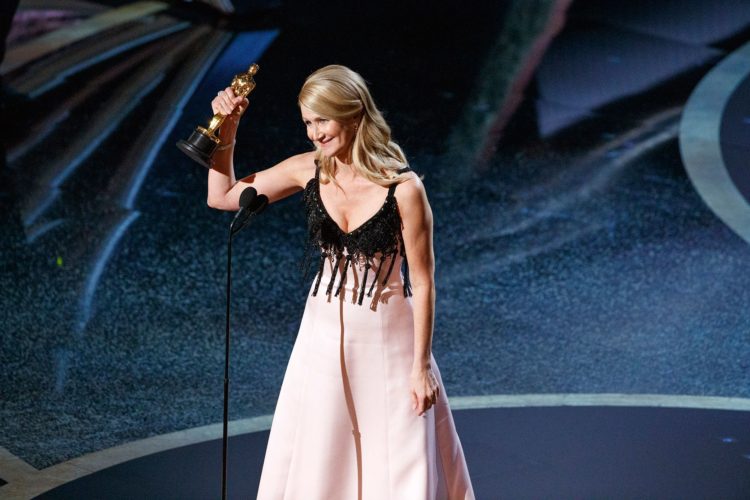
Laura Dern won her first Oscar for Best Supporting Actress for Noah Baumbach’s Marriage Story.
The slow to progress categories
We’re still waiting to see just how much diversifying the Academy voter base can change the winners. After all, the four acting winners were all veterans largely giving Oscar-y performances. Even more, the nominees were also less than inspired with easy interesting picks like Jennifer Lopez for Hustlers, Awkwafina and Zhao Shuhzen for The Farewell, and Lupita Nyong’g for Us being left out.
Even looking at the tech nominations, it’s clear that we’ve regressed slightly. Last year, Best Cinematography had three foreign language nominations, two of which were in black and white. This could be again caused by the shortened season. Only time will tell.
Streaming remains taboo
Netflix came into the night with two Best Picture nominations — Marriage Story and The Irishman with a combined 16 nominations, two Best Animated Feature nominations, two Best Documentary nominations and went home with just two.
After Roma‘s surprise loss last year and The Irishman‘s complete shutout, it’s not premature to say that it seems like the Oscars, unlike the Emmys, are less inclined to accept streaming services into their circle.
What does it all mean?
So, what has this decade at the Oscars taught us? Change is hard. Change is slow. But change is coming. In the 92 year history of the Academy Awards a non-English language film has never won Best Picture. One just did. A few years ago a movie with a gay main character never won Best Picture. Then, Moonlight did.
There is so much history to make. However, for one night, I was hopeful it could be.
After splitting with the Joker, Harley Quinn joins superheroes Black Canary, Huntress and Renee Montoya to save a young girl in Birds of Prey
Quick review: Birds of Prey has all of the chaotic energy that a movie about Harley Quinn should have packaged in a frenetic action-filled romp that’s impossible to resist.
Where to watch Birds of Prey: In theaters now
Birds of Prey (and the Fantabulous Emancipation of One Harley Quinn) has all of the chaotic energy that a movie about Harley Quinn should have. It’s often messy, sometimes over-the-top, confusing, laugh out loud funny, cringy, endearing, and somewhere beneath it all is the best DC extended universe movie thus far.
Harley Quinn (a pale, manic pixie dream girl Margot Robbie) was done largely wrong in the abysmal Suicide Squad where we were introduced to this universe’s version of the Joker. Not only was her character terribly one-note, but she also played nothing more than a second fiddle to other characters’ storylines — if you could even give the movie credit for having those. However, Birds of Prey is her movie. She even tells us that at the start.
Mercifully, at the beginning of the film Mr. J and Harley break up — she’s not taking it well. Her debaucherous and boozy relationship mourning ends with a colorful decimation of the chemical plant where she first jumped into a vat of acid to prove her devotion to Mr. J and took on the persona of the excitable Harley Quinn — affected New York accent and all.
And while she may find some closure in it, it also notifies all of Gotham City that she’s no longer under the Joker’s protection. That means everyone — and I mean everyone — is after her. That includes Roman Sionis (a deliciously camp Ewan McGregor), a crime lord whose trip for power went right through Helena Bertinelli’s (Mary Elizabeth Winstead) family — eventually, we learned she gave herself the name Huntress. She, trained as a master assassin, now seeks vengeance for her family’s deaths. But I, like the movie, am getting ahead of myself.
💌 Sign up for our weekly email newsletter with movie recommendations available to stream.
ADVERTISEMENT
Just like Harley, the movie’s plot, structure, and style is playful and erratic. We jump back and forth in time getting to know the women that will eventually form the eponymous Birds of Prey and how they’ll eventually come to work together. However, I’m reluctant to call this a team-up movie. There aren’t scenes where the women take a break to see that they’re not so different after all. The team-up is really a product of necessity, adding to this clever subversion of the superhero story.
The other two members of the birds are Renee Montoya (Rosie Perez), an underappreciated but talented detective in the Gotham City Police Department, and Dinah Laurel Lance or Black Canary (Jussie Smollett-Bell), a singer in Roman’s club who eventually is recruited as his driver. Through thoroughly entertaining sequences, we learn of each woman’s abilities and their reason’s for seeking emancipation from the men in their lives.
The more comic book movies stop being comic movies and start being about something else the better. Birds of Prey locks in on a feminist thematic consistency where women are underappreciated and often taken advantage of by men. Without being completely overt — looking at you Joker — it allows its characters to break free of those confines and eventually find each of the women peace.
Along the way, we are treated to a delightfully whacky performance by Robbie that keeps you locked in on the movie’s energetic pace and tone. Without her, it’s clear that Birds of Prey would not work. However, director Cathy Yan has to be credited with keeping the movie largely on the rails. It could have easily become unwieldy, instead, the plotting feels tight, even when the actual visuals on the screen go berzerk.
Not only that, the movie has some of the best action in a superhero movie in years. Easy to follow, but brutally beautiful to watch. It feels reminiscent of John Wick or Atomic Blonde. It’s impossible to not feel filled with adrenaline after watching the birds fight. Of course, they need to be fighting for something. In this case, they’re fighting for a teenage girl’s emancipation too. Cassandra Cain (newcomer Ella Jay Basco) has a bounty on her head after she pickpockets a diamond from Roman. And while that diamond might be a McGuffin, the journey that it inspires is full of purpose.
As crazy as Harley is, Robbie plays her with a shread of humanity that was once there. Birds of Prey is keenly aware that although it’s a superhero movie, it needs to be grounded in something. And because of that, it soars.
The 2020 Oscars are this Sunday, February 9th at 8pm on ABC. Here are predictions in every category.
This year, the Oscars have a chance to make history by awarding Best Picture to a foreign language film. Bong Joon-ho’s Parasitegoes into the night with six nominations. However, Jokerleads the night with eleven nominations while The Irishman, Once Upon a Time in Hollywood, and 1917all have ten.
Here’s who we think will win in each category.
Best Picture
Parasite could make history as the first film not in English to win Best Picture. However, it faces strong competition from 1917.
Like that past few years, Best Picture is easily the most competitive category thanks to the preferential ballot and the lack of a clear frontrunner. Every nominee has something for and against it, but I think we’ve really coalesced around three potential winners: 1917, Once Upon a Time in Hollywood, and Parasite.
1917 had the early momentum with wins at the Golden Globes, PGA, and DGA. Then momentum swung towards Parasite with an upset at the SAG awards and big wins at the WGA awards and BAFTA (for Best Original Screenplay) and ACE Eddie Awards (for Best Editing).
This reminds me a lot of the La La Land vs. Moonlight race. La La Land felt preordained, but something told me that momentum was shifting towards Moonlight — I proudly called that race correctly.
Will win: Parasite Could win: 1917 Should win: Parasite Should’ve been nominated: The Farewell
Best Director
One of the biggest locks of the night.
Will win: Sam Mendes, 1917 Could win: 1917 Should win: Parasite Should’ve been nominated: Celine Sciama, Portrait of a Lady on Fire
Best Actress
While the four acting races seem set, usually we see at least one upset. Renée Zellweger (Judy) is probably the most vulnerable frontrunner. She’s won before and is up against three contenders from Best Picture nominees. Usually, that would be a bigger deal, however Best Actress is a category where someone from a movie with few nominations could still win.
If she’s upset, Saoirse Ronan (Little Women) has the best chance. It’s her fourth nomination — she’s only 25! — and Little Women was clearly popular with the Academy. Still, I think Zellweger wins her second.
Will win: Renée Zellweger, Judy Could win: Saoirse Ronan, Little Women Should win: Saoirse Ronan, Little Women Should’ve been nominated: Lupita Nyong’o, Us
💌 Sign up for our weekly email newsletter with movie recommendations available to stream.
ADVERTISEMENT
Best Actor
Joaquin Phoenix is on track to win his first Academy Awards. He’s been nominated for Oscars for Gladiator and The Master.
After a disastrous Golden Globes speech, I thought Joaquin Phoenix (Joker) lost all momentum for the Oscars. However, after two stunning showings at the SAG Awards and BAFTAs, it’s all smooth sailing to his first Academy Award.
Will win: Joaquin Phoenix, Joker Could win: Adam Driver, Marriage Story Should win: Antonio Banderas, Pain and Glory Should’ve been nominated: Adam Sandler, Uncut Gems
Best Supporting Actress
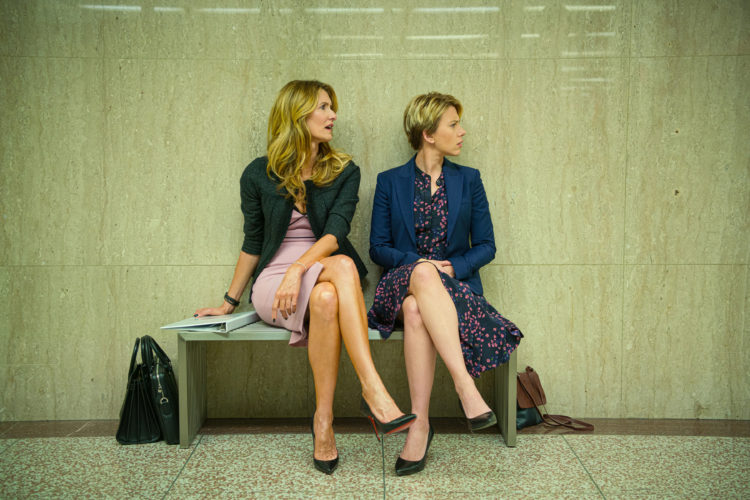
Laura Dern could finally win her first Oscar for Marriage Story, likely the only winner for the six time nominee.
The two supporting races are often where industry veterans who haven’t won get their due — this year is no exception. Laura Dern (Marriage Story) has a clear path to her first Oscar. Plus, it’ll be a way to honor Marriage Story, which looks unlikely to win any other of its nominations. If there is an upset, Scarlett Johansson (Jojo Rabbit) could win one of her two nominations this year here.
Will win: Laura Dern, Marriage Story Could win: Scarlett Johansson, Jojo Rabbit Should win: Florence Pugh, Little Women Should’ve been nominated: Jennifer Lopez, Hustlers
Best Supporting Actor
See above.
Will win: Brad Pitt, Once Upon a Time in Hollywood Could win: Joe Pesci, The Irishman Should win: Tom Hanks, A Beautiful Day in the Neighborhood Should’ve been nominated: Willem Dafoe, The Lighthouse
Best Original Screenplay
Will win: Parasite Could win: Once Upon a Time in Hollywood Should win: Knives Out Should’ve been nominated: The Farewell
Best Adapted Screenplay
Will win: Jojo Rabbit Could win: Little Women Should win: Little Women Should’ve been nominated: Avengers: Endgame
Best Cinematography
After waiting 14 nominations before finally winning, legendary cinematographer Roger Deakins is on track to win his second Oscar for 1917.
Will win: 1917 Could win: Joker Should win: The Lighthouse Should’ve been nominated: Portrait of a Lady on Fire
Best Film Editing
After a surprising upset at the ACE Eddie Awards, this is Parasite‘s award to lose. Ford v Ferraricould upset as it has the flashiest editing of them all, but this will be a key indicator of a Parasite Best Picture win.
Will win: Parasite Could win: Ford v Ferrari Should win: Parasite Should’ve been nominated: Apollo 11
Best Production Design
Another category that Parasitemight go through in its march to Best Picture. It’s rare that a contemporary movie wins here, though La La Land did it a few years ago. However, Neon has been putting a lot of marketing muscle behind this particular category. Still, Once Upon a Time in Hollywoodwon the Art Directors Guild award for best Period Film, which most often lines up with this category. It has the edge here.
Will win: Once Upon a Time in Hollywood Could win:Parasite Should win: Parasite Should’ve been nominated:Rocketman
Best Costume Design
Will win: Little Women Could win:Jojo Rabbit Should win: Little Women Should’ve been nominated:Knives Out
Best Makeup & Hairstyling
Will win: Bombshell Could win:Joker Should win: Maleficent: Mistress of Evil
Best Visual Effects
James Earl Jones as Mufasa and JD McCrary as Young Simba in THE LION KING. Credit: Disney Studios
A surprisingly light category this year, Best Visual Effects has oscillated between visual spectacles and subtler fare (Ex Machina and last year’s winner First Man, for example). However, more often than not, when there’s Best Picture nominee nominated, it wins. Which means 1917has the best chance.
Will win: 1917 Could win:The Irishman Should win: The Lion King Should’ve been nominated:Ad Astra
Best Sound Editing
Will win: Ford v Ferrari Could win:1917 Should win: Ford v Ferrari Should’ve been nominated:The Lighthouse
Best Sound Mixing
Will win: Ford v Ferrari Could win:1917 Should win: Ad Astra Should’ve been nominated:Hustlers
Best Original Score
As much as it pains me that Thomas Newman loses another Oscars, the love for Hildur Guðnadóttir’s Jokerscore is too great. With a Golden Globe and BAFTA under her belt, it’s her’s to lose.
Will win: Joker Could win:1917 Should win: 1917 Should’ve been nominated:Uncut Gems
Best Original Song
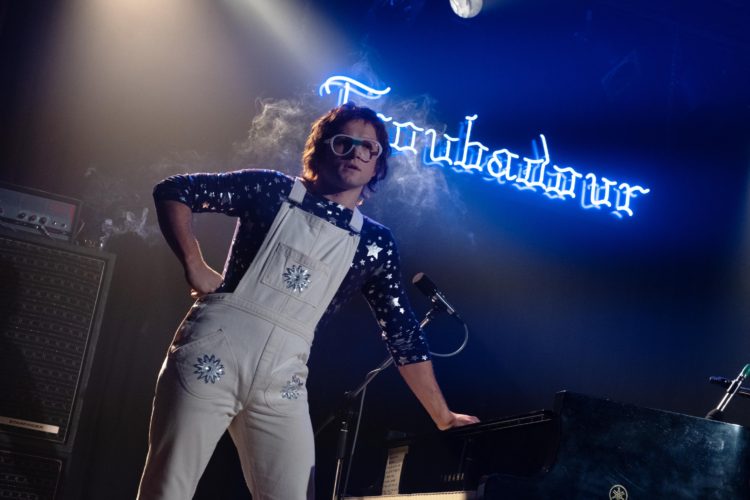
Taron Egerton as Elton John in Rocketman. Credit: Paramount Pictures.
Elton John and Bernie Taupin will get to accept just their second award together *ever* when they easily win for “(I’m Gonna) Love Me Again” from Rocketman.
Will win: “(I’m Gonna) Love Me Again”from Rocketman Could win: “Stand Up” from Harriet
Best International Feature
Will win: Parasite Could win:Pain and Glory Should win: Parasite Should’ve been nominated:Portrait of a Lady on Fire
Best Documentary Feature
Will win: For Sama Could win:Honeyland Should win: Honeyland Should’ve been nominated:Apollo 11
Best Animated Feature
This is one of the most competitive years for Best Animated Feature ever. Usually, there’s an easy pick — and usually, it’s the Pixar movie. However, every precursor has gone a different way. I’m still going to go with Toy Story 4, but don’t be surprised if it’s BAFTA winner Klaus.
Will win: Toy Story 4 Could win:Klaus Should win: I Lost My Body
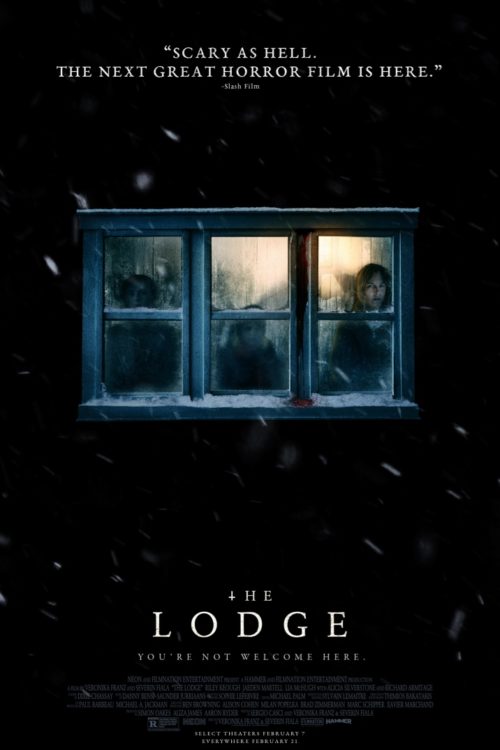
In The Lodge, Grace is tasked with taking care of future stepkids in a remote cabin where things slowly spiral into cold madness
Quick review: Despite well-drawn tension and a sense of pure frigid dread, the twists of the plot almost undo TheLodge. However, Riley Keough’s devastating performance and the bleak atmosphere keep the movie interesting.
Where to watch The Lodge: In theaters in New York and Los Angeles on Friday.
The Lodge, which premiered at last year’s Sundance Film Festival, feels similar to another horror that just premiered at this year’s Sundance, The Night House. Both movies rely on a dread-filled atmosphere that is relentlessly bleak and play thematically in the realm of grief and trauma. They also have the same issues. Despite a slow-burn plot that strikes just the right balance of mystery and horror, they eventually start getting a little too far into their own twists before becoming a little too incredulous to overlook.
Richard (Richard Armitage) maybe too bluntly tells his wife Laura (Alicia Silverstone), who is separated from, that they need to finalize their divorce so her can marry Grace (Riley Keough) much to their kids Aiden (Jaeden Martell) and Mia’s (Lia McHugh) dismay. Laura doesn’t take the news well. Some time later in an effort for the kids to get to know her, Richard suggests they go to the family’s isolated cabin, which is tucked away in a snowy tundra, where Grace will watch over them while he goes to work in the city without a car and no civilization for miles. A little suspension of disbelief is needed. Trust me, this isn’t the most unbelievable plot point.
Aiden and Mia are obviously not happy with the arrangement. Not only are they stuck with their future stepmom and was involved in the demise of their mother, Grace is also a former patient of Richard’s — keep that disbelief suspended — who is the only survivor of a religious cult that committed mass suicide. The kids are petrified to be around her and often shut themselves away.
What the movie does incredibly well is give us both sides of the narrative almost simultaneously. While we can see and feel the kid’s reluctance to accept this new woman into their lives, we also see Grace’s struggle to connect with them in the face of her past trauma and the person she’s replacing — the house is covered in religious totems from Laura.
💌 Sign up for our weekly email newsletter with movie recommendations available to stream.
ADVERTISEMENT
The movie then takes a shift towards The Innocents or The Shining as Laura begins to see and hear flashes from her past urging her to repent and even more sinister things going on in the house. First the power and the heat go off, then her beloved dog goes missing, then the food and jackets go missing. The assault of extraordinary happenings starts to push Laura towards the edge. She starts to sleepwalk, sometimes with a gun in her hand. She starts to confuse the kids for the bodies of her cult members. However, it’s when she finally steps off the edge that the movie starts its uncontrollable descent.
Though Ari Aster’s Hereditaryhadn’t been released by the time The Lodge was in production, it’s hard not to compare the two. Both begin with a traumatic and mine similar imagery — a creepy dollhouse, vaguely comedic funeral. However, The Lodge feels a lot less elegant than the assured and rhythmic style of Hereditary, which stays in the domain of arthouse.
Directors and co-writers Veronika Franz and Severin Faila (Sergio Casci was also a writer), who previously co-directed the similarly unnerving Goodnight Mommy, have a clear style. And while I wish it felt more singular, it serves the core story. The probably is that the plot becomes unwieldy and unrealistic, which clashes with their style. It almost needed Aster’s hyper-stylized touch for it to work.
However, there’s no denying just how effective the tension-building is in The Lodge. Like any great single location movie — The Shining comes to mind — it makes you feel trapped and like you yourself are losing your sanity. Keogh’s subtly complex performance, one of her best, needs to be credited, as well. However, the movie is in a bit too much of a rush to show you its work and just how “clever” it is. Though, that might be part of the appeal. It’s incredibly bleak. So bleak that I don’t know if I could watch it again. As it slowly approaches the edge, you need to make the decision whether to hang on or jump off with it. Whether you love or hate it hangs on that decision.
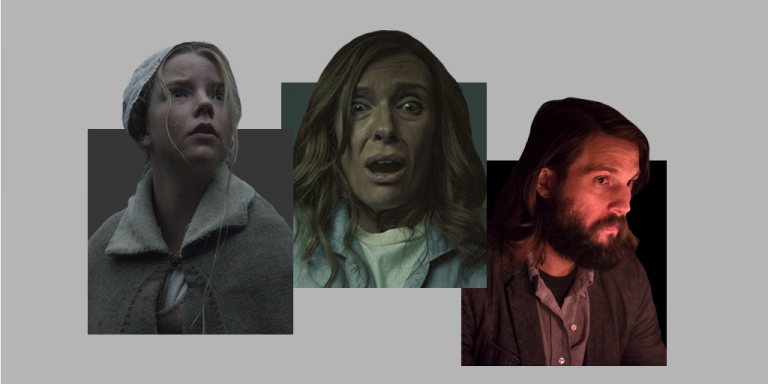
Slow burn horror movies done right can be some of the scariest movies in the genre. Here are some of our favorites!
Horror movies today rely on unsuspecting *JUMP SCARES* to entertain audiences. But we all know—at least you should—that a good horror movie is built on suspense and tension. That’s why some of the best horror movies are slow burn. These movies don’t tell you everything. Instead, they’re puzzles that you have to solve. And sometimes the terror is in what you can’t figure out.
From folk horror to ghost stories to slashers, here are some of my favorite slow burn horror movies!
What it’s about: Will (Logan Marshall-Greene) and his new girlfriend Kira (Emayatzy Corinealdi) are invited to his ex-wife (Tammy Blanchard) and her new husband’s (The Haunting at Hill House’s Michiel Huisman) house for a dinner with old friends. However, a reunion isn’t the only thing planned for the night.
Why it’s great: Of the movies on this list, Karyn Kusama’s The Invitationis arguably the most underrated. It is the definition of a slow burn. Really nothing happens in the plot until the last 25 minutes. But by then, you’ve run through all the possibilities for what’s actually going on in your head and you’re prepared to find out exactly what’s happening.
The amount of tension—both horror and emotional—that the movie builds before its conclusion is incredible. And any payoff would work. Still, it feels like the movie still picks the best possible ending—and the final shot is stunning.
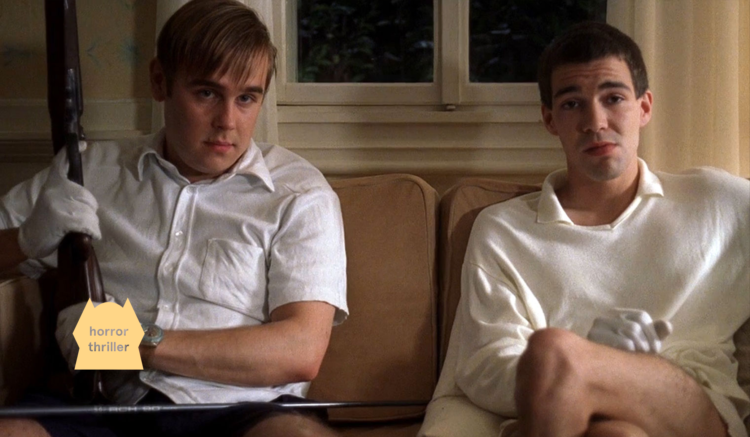
What it’s about: Georg (Ulrich Mühe), his wife Anna (Susanne Lothar), their son Georgie (Stefan Clapczynski), and their dog Rolfi arrive at their lakeside vacation home for a week of relaxation. However, when Paul (Arno Frisch) and Peter (Frank Giering) arrive, their weekend becomes anything but.
Why it’s great: Funny Games might be an uncomfortable experience, but it’s impossible to turn away from the screen once it gets going. The movie’s slow-burn pace never feels sluggish as Paul and Peter’s games become more sadistic and the family’s attempts at survival more fleeting.
It’s a lean and mean horror-thriller that clearly has more on its mind, but it’s never overindulgent. There’s also a shot-for-shot English remake directed by Haneke himself, which is just as good as the original. 109 mins.
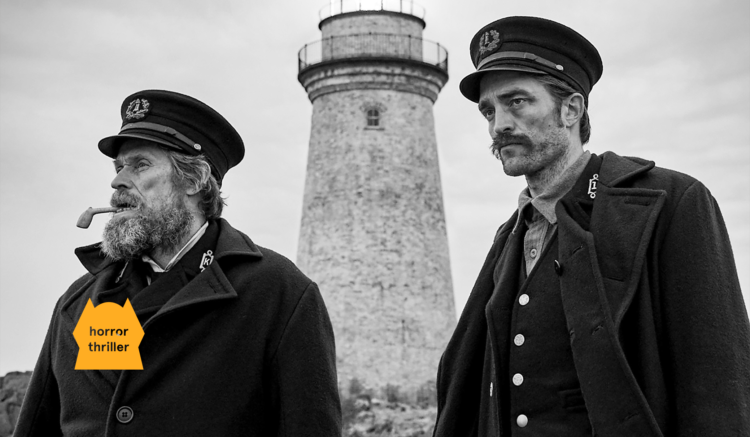
Here’s what it’s about: In the late 19th century, a lighthouse keeper (Willem Dafoe) and his assistant (Robert Pattinson) slowly descend into suspicion and madness as they become isolated on a tiny New England island by a storm.
Why you should watch it: Just like his breakthrough first feature The Witch, The Lighthouse is an immersive experience. Shot with stark black-and-white cinematography and presented in a glorious 1.19:1 aspect ratio, Robert Eggers throws you headfirst into the deep end of the late 19th century with every period detail intact — it’s almost unbelievable that the lighthouse was built for the film.
The layered sound and striking visuals make it feel like the movie is wrapping around you as the pair fall further into insanity. The story, compelling from beginning to end and aided by a career-best performance by Dafoe, challenges your perception of what is real before leaving you either perplexed or jaw-dropped. Just let it take you.
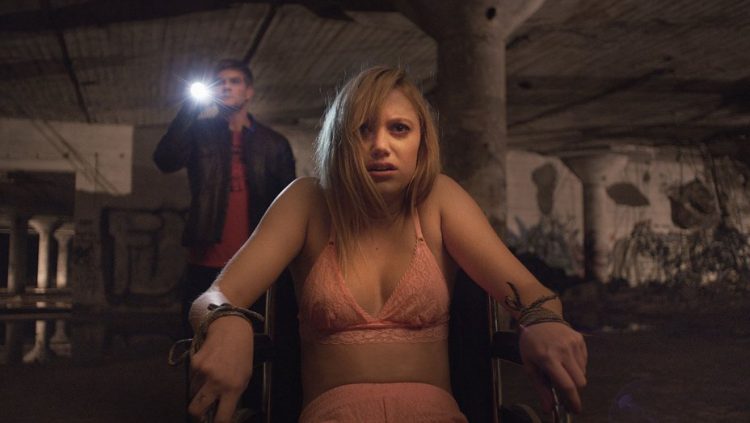
What it’s about: Jay (Maika Monroe) is a normal teenage girl who spends time at the pool and goes on dates. But after sleeping with a guy, she is tracked down by a mysterious entity that takes the form of anyone—a stranger or someone she knows—until “it” finally gets her.
Why it’s great: It Follows takes the classic slasher movie rule “never have sex” to the extreme. What’s really interesting about the movie is that it subverts a couple of different genres. It has the elements of a slasher movie and a ghost movie which makes the finished product something else entirely.
However, instead of jump scare prone ghosts or agile serial killer, the eponymous “it” is slow-moving and creeping in its pursuit of the teenagers. And unlike the other movies on this list, It Follows isn’t about uncovering a mystery—it’s about surviving.
There is also little jump scares, but the movie leverages creepy imagery to add to the tense atmosphere. Plus, Disasterpiece’s pulsing synth score makes every beat all the more intense.
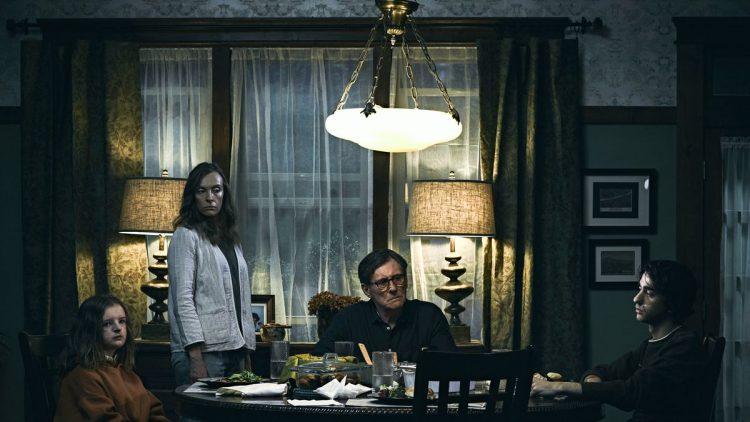
What it’s about: After the death of her mother, Annie (Toni Collette), her husband Steve (Gabriel Byrne), and their kids (Alex Wolff and Milly Shapiro) begin to uncover sinister secrets about their family.
Why it’s great: Hereditary is without qualification the scariest movie I saw in theaters. It’s also a horror fan’s dream. It’s a puzzle that you have to solve and unlike a lot of slow burn horror movies, it gives you the clues, you just have to find them.
Hereditary is also patient in its scares—in addition to its story. The horror set pieces are long drawn out and some you don’t even notice until a second look. That’s what makes this a masterpiece. It replaces jump scares with truly frightening imagery and an unsettling atmosphere.
Everything from the score to the production design to the sound design drip with evil. And it also has a smoldering family drama underneath it all. Not to mention one of the great horror performances from Toni Collette. It’s also one of our favorite movies of 2018.
What it’s about: It’s the 1980s, The Fixx is burning up the charts, there’s a full lunar eclipse, and Samantha (Jocelin Donahue) has a babysitting job at a mansion in the middle of nowhere. What can go wrong?
Why it’s great: The House of the Devil is a pitch-perfect homage to the satanic panic films of the 70s and 80s—think Rosemary’s Baby and The Omen—complete with camera zooms and freeze frames. Another thing it nails from the era is the slow burn.
You never truly know what’s going on in the movie until it lets you in on it. And I will warn you, this movie is the slowest of slow burns. It doesn’t give you much indication—or horror—for a good while. But the ending is worth the wait.
Plus, there’s bad 80s pop rock, feathered hair, and Sony Walkman. It’s all you can ask for.
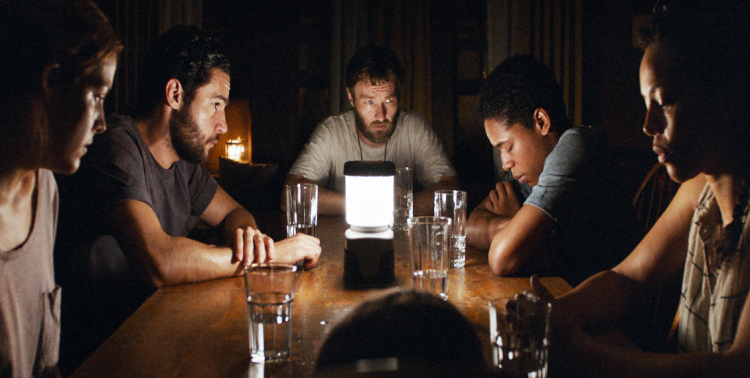
What it’s about: After a mysterious apocalyptic illness wipes out the population, a family (Joel Edgerton, Carmen Ejogo, and Kelvin Harrison Jr.) must battle the horrors outside the house—and some inside.
Why it’s great:It Comes at Nightsuffered from its marketing in its initial theatrical run. While it was being sold as an apocalypse horror, it was closer to a psychological thriller with truly unsettling moments.
Trey Edward Shults—who also directed the phenomenal Krisha—balances unnerving imagery with a slow burn story that isn’t about what’s going on the outside, but what’s going on on the inside.
The chilling final 20 minutes are the payoff of an emotional rollarcoaster where relationships are tested and trust is earned and lost.
💌 Sign up for our weekly email newsletter with movie recommendations available to stream.
ADVERTISEMENT
The Killing of a Sacred Deer (2017)
What it’s about: The Murphy Family, cardiovascular surgeon Steven (Colin Farrell), his wife Anna (Nicole Kidman), and his two kids (Raffey Cassidy and Sunny Suljic), become the fascination of a mysterious teen Martin (Barry Keoghan) who seems to be up to no good.
Why it’s great: Director Yorgos Lanthimos’ signature style—deadpan acting and generally nihilistic worldview—is sometimes hard to appreciate, but it applies so well to the psychological thriller The Killing of a Sacred Deer.
There is a sense of impending doom throughout the entire film as Martin’s increasingly nefarious plan falls into place. What makes him such a compelling villain is that you never truly know what he is up to. Neither does the Murphy Family—until it’s too late.
During the last act, Lanthimos’ style adds even more tense energy as a decision on the level of Sophie’s Choice is made. It’s darkly funny, suspenseful, and creepy. The perfect combination for a slow burn horror movie.
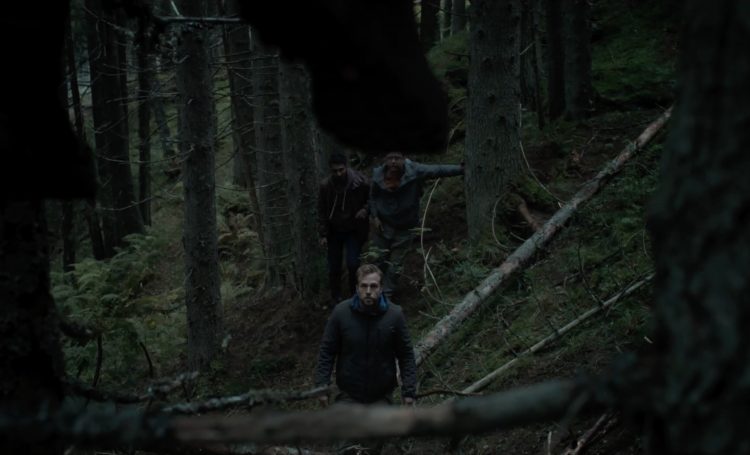
What it’s about: After a tragic incident, four friends reunite for a trip into the mountains and forests of Sweden. However, little do they know they’re not alone.
Why it’s great: A slow burn story is almost a requirement for a folk horror movie, and The Ritual is no exception. Though the story is one that we’ve seen before—it’s comparable to The Descent earlier on this list—The Ritual delves into incredibly interesting mythology.
While the group of friends ventures deeper into the forest—The Blair Witch Project-style—increasingly distressing and creepy occurrences build suspense until the movie finally reveals exactly what’s going on.
The Ritual is paced incredibly well and never lets any tension go. And while it might be the least original of the movies on this list, its execution makes for a perfect stormy movie night.
Where to stream it: The Ritual is streaming on Netflix.
ADVERTISEMENT
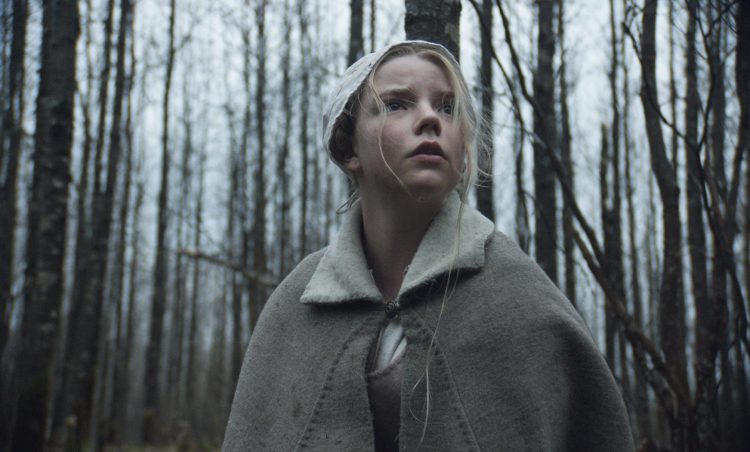
The Witch (2015)
What it’s about: In 1630s New England a devout Christian family is exiled from their settlement to live in the wilderness. All is well until weird occurrences start to make the family members question if they can trust each other.
Why it’s great: Described as a New England folktale, The Witch does a fantastic job of immersing you in the world—the old English, the perfect production design, stunning performances. It’s all ground setting for a chilling tale.
However, the slow burn doesn’t come from whether or not there is a witch, that question is answered relatively quickly. Instead, the mystery is who you can trust.
And the movie doesn’t give you a clear answer. But along the way, you encounter terrifying scenes from a creepy black goat to one of the most stunning exorcism scenes I’ve ever seen. Plus, there’s a fantastic performance by newly anointed scream queen Anya Taylor-Joy.
Where to stream it: The Witch is available to stream on Netflix and Prime Video! It’s also available to rent or buy.
ADVERTISEMENT
The Night House (2020)
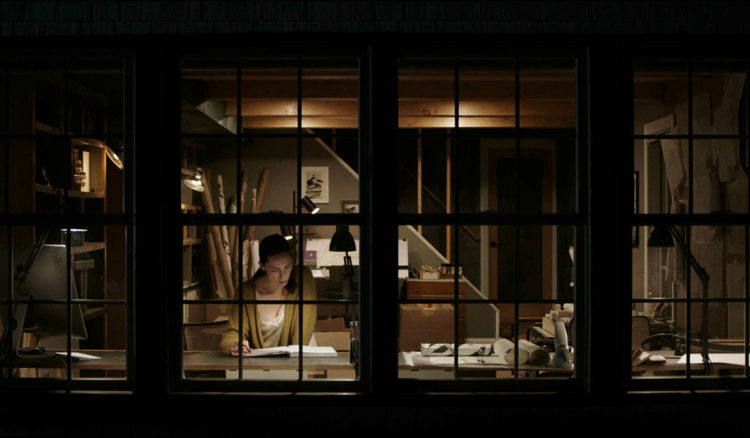
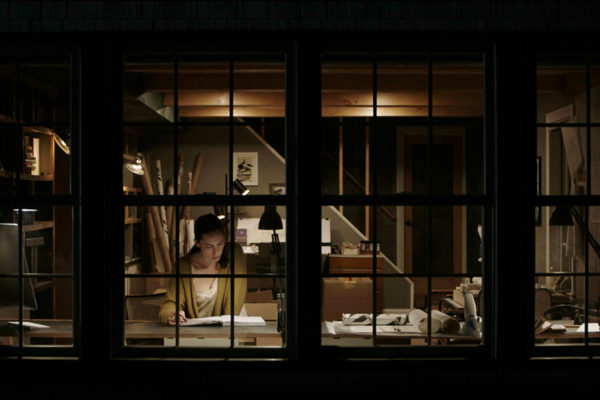
What does a house feel like when one of its inhabitants is gone? It feels empty. Incomplete. Cold. That’s the feeling that director David Bruckner’s new film The Night House, which premiered as part of the Midnight section of the 2020 Sundance Film Festival,gives off at the start as Beth (Rebecca Hall), a high school teacher, copes with the suicide of her husband Owen (Evan Jonigkeit). As she strolls through their lakeside home, built and designed by Owen, you can feel the vacant space. It probably doesn’t help that the home is filled with large windows opening into the darkness of the woods and lake. However, eventually, like Bruckner’s last film The Ritual, that feeling eventually gives way to a pervasive dread.
Herself follows a domestic abuse survivor and her two daughters as they literally rebuild their lives by building their own house
See all our reviews from the 2020 Sundance Film Festival here.
The opening scene of Phyllida Lloyd’s Irish drama Herself, which premiered in the World section at the 2020 Sundance Film Festival, features a devastating act of domestic violence that is difficult to watch. It’s made even more difficult considering Sandra’s (co-screenwriter Clare Dunne) children were there. It isn’t what you’d expect from the director that brought us Mamma Mia!, perhaps one of the most benign movies ever made. However, for the better, the movie begins to show incredible empathy and warmth in the face of such tragedy.
After the attack, Sandra separates from her husband Gary (Ian Lloyd Anderson) and moves her two young girls Molly (Molly McCann) and Emma (Ruby Rose O’Hara) into a hotel with the help of a women’s shelter. However, revealing a flaw in the system, Gary still has visitation rights and sees the girls on the weekend, much to Sandra’s dismay. Life has become a struggle for her. She’s working multiple cleaner jobs — at a bar and the house of a doctor suffering from an injured hip — looking for permanent housing for her and the girls, all the while with a broken hand.
💌 Sign up for our weekly email newsletter with movie recommendations available to stream.
ADVERTISEMENT
Incensed by the system’s inability to find her a permanent home and an offer of a plot of land on her property from Peggy (Harriet Walter), a doctor who Sandra’s mother worked for, Sandra makes the decision to build a house for her and her daughters. She finds a plan online and sets out to try to make her dreams come true. However, building a home on top of her other responsibilities and Gary breathing down her neck proves difficult. So, she seeks out the help of a contractor (Game of Thrones’ Conleth Hill) to help steer the project, which eventually attracts more volunteers.
We’ve seen this kind of story before. However, Herself differentiates itself by avoiding a lot of the pitfalls of this kind of empowerment story. Rarely does it wade into melodrama and instead remains relatively grounded. That’s partially thanks to Dunne’s massively winning performance as Sandra, who is defiant in the face of her obstacles but clearly overwhelmed — as most people would be. The screenplay that she co-wrote with Malcolm Campbell effectively build Sandra as a character while also giving us a chance to really understand the pitfalls of the system — both governmentally and societally — that make it difficult for her to get back onto her feet.
The movie has a deep understanding of the character’s plights and particularly how those plights make her stronger, but also how they sometimes defeat her. But in the face of it all Sandra persists with the help of those around her. The message of the movie is one of community, strength, and empowerment. And despite some questionable needle drops it never preaches that to you. Instead it gets its point across using its story. And what a story that is. It’s no wonder Amazon Studios acquired the film. It’s the kind of heartwarming project you want to sit on the couch and lose yourself to.
Palm Springs updates the time loop comedy as two wedding guests get stuck repeating the wedding day over and over again
Quick review: Palm Springs finds new life in the Groundhog Day-inspired time loop movie by bending the formula and finding both laughs and heart in a romantic comedy story anchored by great lead performance by Andy Samberg and Christin Milioti.
Where to watch Palm Springs: Streaming on Hulu.
Chloé Zhao makesNomadland‘s melancholic but hopeful story of nomads traversing the American West a stunningly complex character study of life on the margins of society.
★★★★
The time loop movie has been done countless times across multiple genres whether it’s sci-fi action Edge of Tomorrow, meta-horror Happy Death Day and, of course, the pioneering Bill Murray comedy Groundhog Day. It’s a genre in and of itself that seems like it couldn’t be made new again. However, director Max Barbakow finds something fresh with Palm Springs, his new sci-fi comedy produced by The Lonely Island (Andy Samberg, Akiva Schaffer and Dylan Sellers), that premiered at the 2020 Sundance Film Festival before being picked up by Neon and Hulu in a record-breaking $17 million distribution deal.
The movie opens to Nyles (Samberg) being awoken by his girlfriend Misty (Meredith Hagner), who is a bridesmaid in Tala (Camila Mendes) and Abe’s (Tyler Hochelin) wedding. He goes through the day with an airiness that could be perceived as arrogance at first — it’s Andy Samberg after all — that is eventually explained as prescient boredom. You see, Nyles has been through this day countless times. For all he knows, it could be millions. He knows what’s going to happen — and every version of what’s going to happen.
In this iteration of the day he saves Tala’s sister Sarah (Christin Milioti) from giving an embarrassing maid of honor speech that he’s seen her give numerous times by giving a speech of his own. That leads the two to hookup in the desert. However, they’re interrupted by something I’ll save for you to see on your own leading to a chase to a cave with a mysterious orange glow.
Sarah follows Nyles into the orange glow, despite all his efforts to stop her, leading her to become stuck in the same time loop as Nyles. This is the twist that makes Palm Springs feel fresh — two time loopers! That simple choice unlocks so many wonderful narrative moments from Sarah’s anger at Nyles for getting her stuck there, Nyles having to teach Sarah the rules of the world — it helps them avoid any clunky exposition, and the exploration of a relationship between two people literally stuck together by time and space.
💌 Sign up for our weekly email newsletter with movie recommendations available to stream.
ADVERTISEMENT
And seeing the debauchery the pair gets into without fear of consequences is a blast. From doing mushrooms in the desert to staging a Die Hard-inspired scene during the wedding — complete with bad Russian accents, a bomb in the wedding cake, and a hook for a hand. However, this is a romantic comedy and spending that much time with someone, even if time isn’t moving forward, is bound to bond people together.
While Palm Springs is certainly a playful romp, it has an engrossing plot and complete character arcs that are made even more interesting by the time loop. Sarah is the black sheep of her family, a constant screw up, who commits an unforgivable screw up during the wedding. Nyles is dealing with the nihilism of someone with no future and is slowly forgetting the past. We also learn that Nyles accidentally got another wedding guest named Roy (J.K Simmons in a hilarious but poignant role) stuck in the loop too. For all its ridiculousness and trademark Lonely Island shenanigans, the movie has a strong beating heart.
Milioti, who blew me away in the stage adaptation of Once before gaining recognition as the titular “mother” in How I Met Your Mother, finally gets the leading role she deserves and takes advantage of it. Her hilarious deadpan delivery makes gets nearly every line a laugh, however, it’s her irresistible charm that makes the character great. Samberg gives without question his greatest performance to date. His signature class clown persona is there — and, as always, he puts it to good use — however, he gets to flex his more dramatic character muscles here which results in a surprisingly heart-filled performance.
As the Palm String trudges forward through multiple upbeat montages that takes time to slow down and spend real time with the characters, it’s apparent this is something special. Not only is it hilarious with rarely a minute without a joke, it never gets repetitive or boring. Which is a feat considering the entire plot is about a single day repeating over and over again. It’s not surprising this sold for such a large sum because this feels like a classic broad romantic comedy in the making.
Minari follows a Korean-American family as the set down roots and builds a farm in rural Arkansas in the 1980s
Minari is a beautifully told family drama about chasing the American dream and all the costs and beauty that entails. Terrifically acted by the entire cast, Minari is perhaps the best movie to come out of the 2020 Sundance Film Festival.
▶︎ Minari is available to purchase on all platforms, including Prime Video.
ADVERTISEMENT
See all our reviews from the 2020 Sundance Film Festival here.
I can’t begin to describe how it feels to have so many Asian-American stories being told through film in recent years. From Lulu Wang’s remarkable The Farewellto the delightful Crazy Rich Asiansor John Cho in thriller Searching. It feels like each is more personal than the last, and Minari is yet another great entry in that canon. However, that’s not to discount it as just another film with Asian leads. It is singular in its story — it is partially based on director Lee Isaac Chung’s own life — and style.
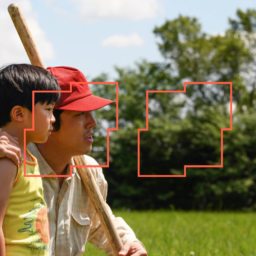
Set in1980s rural Arkansas (is that an oxymoron?) — the time period doesn’t really play into the narrative — Minari follows the Yi family as they pull up to their new home. The modest trailer, that’s missing stairs up to the front door, is set on a large plot of land with no neighbors in sight. The patriarch Jacob (Steven Yuen) is excited by the move from California, where he and his wife Monica (South Korean actress Yeri Han) made a living determining the gender of chickens (sexing is the technical term) for a decade. For him, this move represents a step forward as he’s determined to use the five-acre plot to build a farm and start a business.
Monica isn’t quite so ecstatic. All she sees is a waste of space, no community, and a house on wheels. She might have a point too. The couple has two kids, Anne (Noel Kate Cho), a young teen girl seemingly wise for her years, and a curious seven-year-old boy named David (Alan Kim) who is suffering from a heart murmur. Despite her begging and a blow-up argument between them that could marvel the one in Marriage Story, Jacob is adamant that this is where they need to be.
They compromise by bringing Monica’s mother (Youn Yuh-Jung) over from Korea to care for the kids while they are at work. Soonja, who hasn’t seen her daughter for years, is exactly the foul-mouthed, sassy grandmother we all we wish we had. Upon her arrival, it’s clear that David is put off by her — he was born after they moved to the States. She’s not the picture of an American grandma. In addition to her crass language, she gifts him a Korean card game that involves gambling (he should learn early, she says), makes him drink a concoction including deer antlers and at one point makes them hike deep into the forest to plant minari, which is a Japanese herb. David also makes it a point to say she smells like Korea.
ADVERTISEMENT
💌 Sign up for our weekly email newsletter with movie recommendations available to stream.
ADVERTISEMENT
Lee Isaac Chung, director of Minari, an official selection of the U.S. Dramatic Competition at the 2020 Sundance Film Festival. Courtesy of Sundance Institute
However, her presence does ease some of the tension between Jacob and Monica. Jacob has time to get his farm up and running with odd but well-meaning local Paul (Will Patton) and Monica starts to fall into a routine trying to make the house a home and practicing sexing so she can make more money to support the family. She’s particularly helped by her mother’s presence as outlined in a hilarious scene where her mom shows her all the food and spices she brought from Korea — Monica cries when she sees she brought chili powder. Still, the financial burden of supporting the farm and the constant worry about David’s health makes Monica question her husband’s priorities.
Though the plot sounds like it could tread into melodramatics it never actually gets there. There is so much warmth and life in Minari. Chung grounds the movie in something real — since it is his own experience. None of the characters feel like caricatures. Even larger-than-life Soonja and precocious David — their banter is a highlight. And though set in 1980s Arkansas, they experience little overt racism. Instead, we see them suffer from microaggressions, like Monica being called “cute” by some of her fellow church parishioners or a little girl asking Anne if any of the words she’s saying are real Korean words before launching into verbal diarrhea that includes the words “ching” and “chong.” None of it is done out of malice and instead ignorance.
ADVERTISEMENT
This is the Yi’s internal story. In particular, Minari explores identity in the face of struggle and change. Jacob and Monica came to the States to find a better life. Jacob still seeks that out. He feels he’s destined for something more. That he owes it to his family to be successful. However, that’s the very thing that hurts the family. Monica struggles to find a place in Jacob’s dream and in the town they settle in. Soonja learns how to be the “right” kind of grandmother for David. An Americanized one that bakes cookies and doesn’t teach him how to gamble. But most importantly, we see the movie largely through David who more than anything wants to be a “normal” kid, even if that’s not attainable.
Minari is the kind of movie that wins you over with its sweetness and comedic edge — some of David and Soonja’s antics will have you in stitches — but keeps you in with its richly complex themes and characters. It’s an irresistible movie. I might even go as so far as to say that this is one of the great families in cinema.
All of it is aided by Emile Mosseri’s (coming off last year’s The Last Black Man in San Francisco) dreamlike score and cinematographer Lachlan Milne warmly lit cinematography. Whether or not it’s meant to feel like a dream is up to Chung to explain. However, it feels like Minari is someone looking back on their life with sadness but ultimately fondness.
The final scene escalates to great heights and ends with an emotional shot of the family that will leave you in tears of happiness. And in the moment before the movie cuts to black I realized how much I’d miss seeing these characters on the screen. I wish I could watch their lives continue to develop and watch them grow. That is how I know Minari is a great movie — perhaps a masterpiece of a family drama.
Rebecca Hall plays a widow haunted by her dead husband in their lakehouse in The Night House
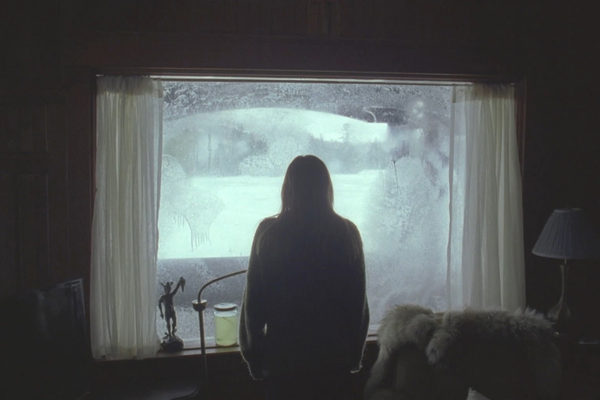
The scares in The Night House come hard and fast, aided by director David Bruckner’s masterful grasp of a dread-filled atmosphere.
See all our reviews from the 2020 Sundance Film Festival here.
What does a house feel like when one of its inhabitants is gone? It feels empty. Incomplete. Cold. That’s the feeling that director David Bruckner’s new film The Night House, which premiered as part of the Midnight section of the 2020 Sundance Film Festival,gives off at the start as Beth (Rebecca Hall), a high school teacher, copes with the suicide of her husband Owen (Evan Jonigkeit). As she strolls through their lakeside home, built and designed by Owen, you can feel the vacant space. It probably doesn’t help that the home is filled with large windows opening into the darkness of the woods and lake. However, eventually, like Bruckner’s last film The Ritual, that feeling eventually gives way to a pervasive dread.
Owen’s suicide came as a surprise to many, but no one more than Beth. For her, Owen was her rock helping her through depression. Now that he’s gone she begins to self-destruct by drinking too much and pushing those close to her away including her friend and coworker Claire (Sarah Goldberg) and neighbor Mel (Vondie Curtis Hall). She, like many others who lose a loved one to suicide, feels confused and, more intensely, abandoned.
💌 Sign up for our weekly email newsletter with movie recommendations available to stream.
ADVERTISEMENT
However, she’s not alone. One night she hears a heavy knocking at the door — this is where living in an all-glass house isn’t ideal. Then, the basement lights flip on. The next morning she’s not sure if it was real or a dream. Another night, she’s awoken by the stereo blaring her wedding song, startling the silent house. As the haunt becomes more intense with white-knuckling tension and well-earned effective jump scares, Beth starts to suspect her husband may have had secrets — dark secrets.
The screenplay, written by Ben Collins and Luke Piotrowski, begins to twist itself into a mystery that sometimes gets overly complicated for its own good — much like their last effort Super Dark Times. As Beth digs deeper she finds that her husband has books on the occult and photos of women that look like her on his computer. The mystery throws Beth into turmoil amidst the haunt. Rebecca Hall’s performance ranks among her best as she balances raw guttural emotions with Beth’s indignance. And while the story threatens to throw the movie off its rails, Bruckner’s strong grip on the mood and atmosphere keeps it on the rails — or keep it from sinking, rather.
When the movie finally shows its cards it’s generally satisfying. Without Bruckner’s presentation, I’m not sure how successful it would have been. Still, The Night House is a genuinely terrifying and haunting romp that will have you watching it through your fingers. The scares come so hard and fast and nearly every element is designed to scare you — from the smart production design to the smart, albeit loud, sound design. The entire movie is a maze that you feel trapped in, and that’s why horror fans will love it.
Never Rarely Sometimes Always follows a teen girl from a small town as she journies to New York to get an abortion
Quick review:Never Rarely Sometimes Always is a matter-of-factly told abortion drama that pulls no punches as it takes on the failings of our healthcare system — especially for women. In theaters March 13th.
See all our reviews from the 2020 Sundance Film Festival here.
Director Eliza Hittman’s filmography is just three films deep, but her matter-of-fact style is as assured as an auteur with decades under their belt. That isn’t more apparent than with her new movie Never Rarely Sometimes Always, which premiered at the 2020 Sundance Film Festival in Park City, Utah this week.
Hittman has a long history with Sundance going back to 2011 and her short Forever’s Gonna Start Tonight. Since then, all three of her films — It Felt Like Love and Beach Rats are the others — have premiered there — and it feels like the perfect setting. Though all of her movies have been set and filmed in New York City, they’re all connected by naturalistic acting, teen angst, and an unadorned presentation. All qualities that feel right for a festival cast against snowcapped mountains and far from the business
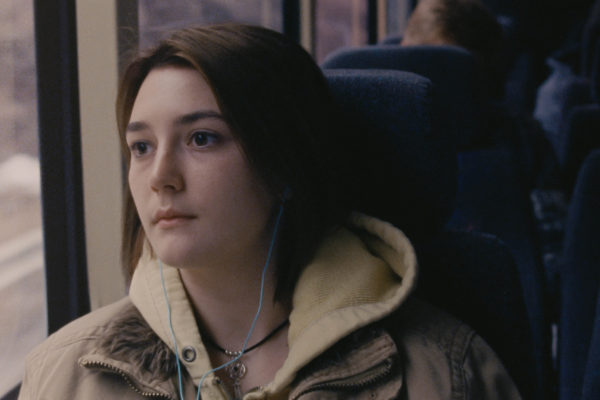
Like all her films, she follows a teen, this time a girl, undergoing a life-changing experience. Autumn (Sidney Flanigan), quiet but indignant, performs at her school’s talent show among singing trios and awkward musical theater numbers. The song she performs is about the pain and disappointments of love — we’ll soon learn that she’s pregnant and left to deal with it on her own, which makes the song all the more poignant.
💌 Sign up for our weekly email newsletter with movie recommendations available to stream.
ADVERTISEMENT
Her tiny Pennsylvania town clearly is not the progressive environment a teen in this situation would want to be in. When she goes to the local women’s clinic, the doctor, despite the best of intentions, clearly cautions against abortion as an option when Autumn shows interest. It’s clear from the brochures that only layout options that involve bringing the pregnancy to full term and an old video — probably on VHS — comparing abortion to murder.
Without many options in her small town, she and her cousin and best friend Skylar (Talia Ryder) make plans to travel to New York City to have the procedure despite their limited means. And this is when Never Rarely Sometimes Always really begins to come alive.
When the pair arrive in the city it’s clear they’re out of their depths as tasks as simple as buying a MetroCard seem impossible to them. Then again, isn’t it for everyone? They face several setbacks that are quietly thrown their way — Hittman isn’t one for melodramatics — that they get through using their strong and tender bond. Flanigan plays Autumn close to the chest with rarely a moment that she reveals her feelings. Ryder’s Skylar, on the other hand, is full of warmth and energy that often gets them through their situation. Their relationship is what keeps you invested in the film.
Hittman doesn’t preach. She simply lays out the facts of women’s access — or lack thereof — to healthcare in this country and sets juxtapositions to show just how ridiculous the process to get care is. It also shows the professionals following the law and those trying their best to work with it for the sake of the women affected. Along the way, toxic masculinity also sees its way around the pair with Autumn’s dad (Ryan Eggold) clearly having an unhealthy complex towards women and a young man (Théodore Pellerin), who offers to help the girls for a price.
However, nothing is as effective or impactful as the film’s title scene where a particularly helpful doctor runs through a series of required questions about Autumn’s past to which she has to answer never, rarely, sometimes, always. The scene plays out in a single fixed shot that never strays from Autumn’s face with Flanigan doing some incredible work. During the scene, we finally see Autumn show emotion while also explaining why she feels the need to always hide them.
Never Rarely Sometimes Always is more than an overwrought drama about abortion. It’s more measured than that. It knows what it’s trying to say and know that it doesn’t need to do much work to say it. With two incredibly strong lead performances — and a quick cameo by Sharon Van Etten as Autumn’s mom — and a well-structured and tight screenplay, Eliza Hittman has pieced together an essential drama that further challenges the institutions that restrict the most vulnerable people in our society. More than that, it’s an empathetic look being a teenage girl.
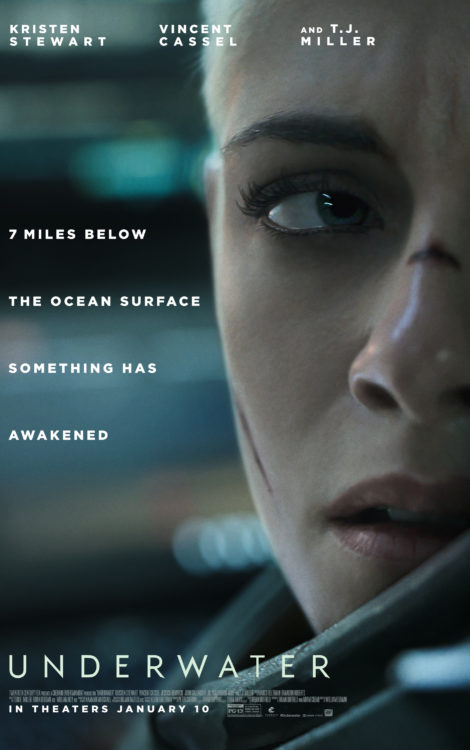
Underwater follows the crew members of a deep-sea drilling rig as their vessel begins to fail. However, the real danger is lurking in the darkness of the sea.
Quick review:Underwater is like if you took all the character development, world-building, and plot out of the original Alien and just left the horror bits — somehow it works.
We’ve seen Alien copycats before to varying degrees of success. From the great (The Descent) to the fine (Life) to the insulting (Inseminoid, anyone?). But at the very least, Underwater is keenly aware of its position. It’s an economical, mindless, Hollywood thrill ride. Exactly what you’d expect from a mid-January horror.
Just the shallow idea of a plot
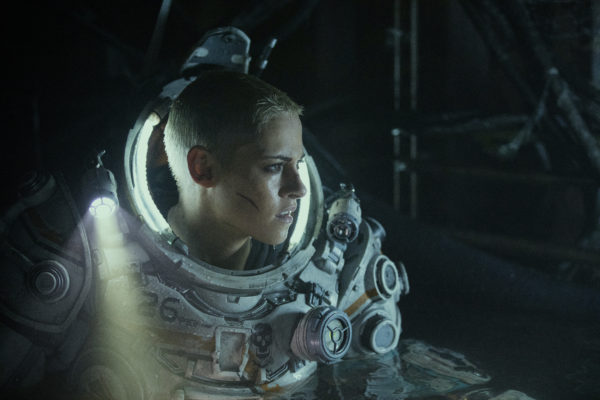
From the very beginning of the movie, you know that they aren’t fooling around. Without any exposition or pretense, we hop straight into a deep-sea drilling operation in the Marianas Trench — aka the deepest part of the Earth’s oceans. Norah Price (a short-haired platinum blonde Kristen Stewart) is preparing for bed when the entire rig begins to fail and cave in around her. Narrowly escaping a painful death by crushing, she and Rodrigo (Mamoudou Athie) another crew member make their way to the escape pod bay discovering another crew member (played by someone that doesn’t deserve to be mentioned) and the captain of the vessel (Vincent Cassel). They meet up with Emily (Jessica Henwick) and Liam (John Gallagher Jr.) in the bridge to form a plan of escape.
Not much of the plan makes sense and neither does the environment, but the movie doesn’t dwell on it. At just 95 minutes, it doesn’t have time to spend on needless things like a plot. The crew descends further down to the ocean floor to find another escape pod bay. However, before they can make it there they encounter something (or somethings) otherworldly that make their journey even more dangerous than it already is.
What you see is what you get with Underwater. Honestly, it’s refreshing. The scares are cheap but effective. The tension is derived solely from the environment — setting something under the sea or space is an easy way to build suspense. And the characters are really only made charming by the cast. But it’s so satisfying. It’s an elevated B-movie if such a thing even exists.
💌 Sign up for our weekly email newsletter with movie recommendations available to stream.
ADVERTISEMENT
There really isn’t a moment to relax and take in the environment or get used to any space. However, the surprisingly effective production design is essential to the movie’s success. The tight dank corridors are endless and imperfect — filled with pipes and grates and wires like Alien. It’s the perfect setting for the story.
The same goes for the bulky pressurized suits that are the only barrier between the crew and agonizing death at the hands of the depths of the ocean. The unreliability adds to the stakes.
Stewart, even when phoning it in, has just the right level of movie star appeal to lock you into the screen. Cassel and Henwick also do great work with their limited screentime. However, you can’t read too far into anything with Underwater. By design, it’s shallow. It’s a theme park of a movie, as Martin Scorsese would put it, and it works for that very reason.
Random thoughts ?
John Gallagher Jr. is incredibly underrated and should be a huge star by now. This movie wastes him.
The creature design is terrific, but the twist is jawdropping. Plus, the movie uses them sparingly enough to keep them interesting.
The first and last shots of Stewart are pure Hollywood hero shots.
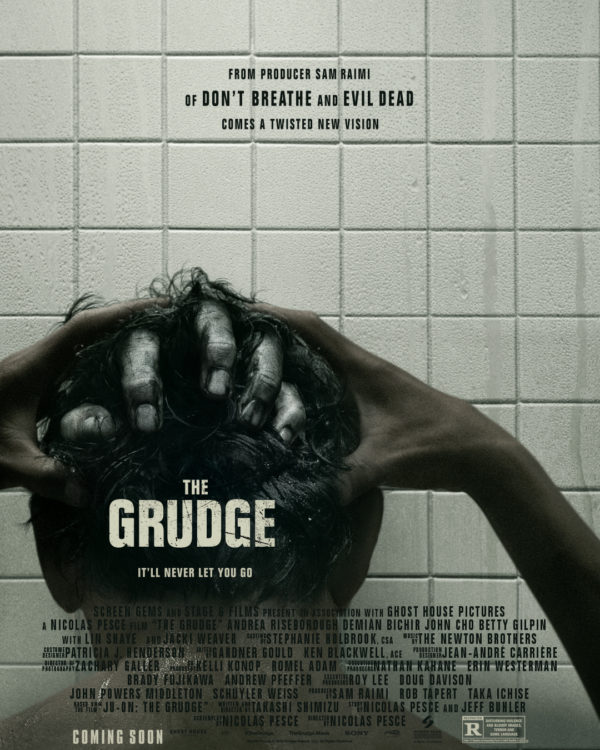
The Grudge is back for its third haunt as a Japanese curse haunts multiple families connected by one house.
Quick review:The Grudge is more horrifying than any horror movie — because it’s boring. The cheap scares and thin plot do nothing but… well, make you hold a grudge against it.
For the briefest of moments, I thought director Nicolas Pesce’s remake of The Grudge was going to be not terrible. I was sorely mistaken. Pesce directed the very solid and very disturbing Piercinglast year, which relied on a bleak tone and anxiety-inducing imagery to create a surprisingly effective horror. That, along with a strong cast, gave me hope that maybe he could make up for the dreadful — and not in a good way — 2004 American remake starring Sarah Michelle Geller. The opening moments proved to be all I needed to know otherwise.
Sticking to the script
Like the original 2002 Japanese version, Ju-On: The Grudge, and the 2004 American remake, this version of The Grudge is told as a non-linear narrative following various families who have encountered a vengeful spirit that is created when someone dies in the grip of extreme rage or sorrow. Anyone that crosses its path is killed and the curse is reborn to terrorize another unwitting victim.
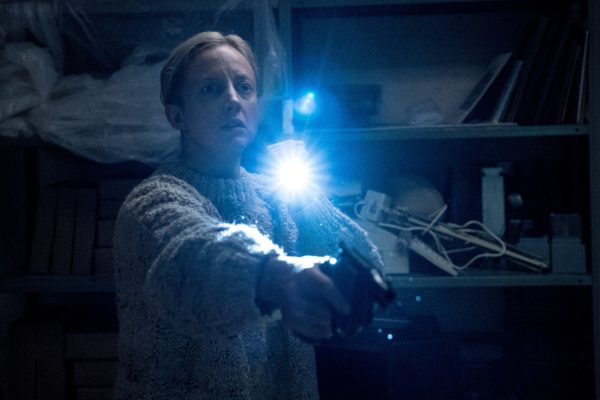
At the center of the film is Detective Muldoon (Andrea Riseborough) and her partner Detective Goodman (Demian Bichir) who discover the decomposed body of Lorna Moody (Jacki Weaver) in her car in the middle of the woods. That leads them to other connected murders that have taken place of several the past few years involving real estate agents and expecting parents Peter and Nina (John Cho and Betty Gilpin), elderly couple William and Faith (horror legend Lin Shaye and William Sadler), and a young mother (Tara Westwood).
As the plot gets going, it’s interesting enough. Pesce seems to be attracted to slow burns and other than the confounding cold open, he sticks to that pace. By the time we’re introduced to John Cho and Betty Gilpin’s characters and storyline— two of the actors I was most excited to see — we’re already deep into the mystery. Their scenes are easily the most successful narratively and often have the best scares.
However, even those scares feel empty.
💌 Sign up for our weekly email newsletter with movie recommendations available to stream.
ADVERTISEMENT
What you don’t know won’t hurt you
For all the flaws with the screenplay, it isn’t the main reason for the movie’s ineffectiveness. The scares leave a lot to be desired. Japanese horror — or J-horror — relies on two things: atmosphere and imagery. The former is often melancholic and full of dread. The latter is what makes J-horror the most terrifying movies. They’re less focused on the shock and instead look to unnerve. The biggest issue with The Grudge is that every scare is a jumpscare with no build — yet, they’re all predictable.
It also relies on the tired trope of something happening behind the characters that they can’t see. Then they turn around and it’s gone. That trick is good for a scare maybe once. However, nearly every scare uses that setup. It’s almost as if they didn’t feel there weren’t enough moments of horror, so they used them to fill the gaps.
Horror works because fear is a universal emotion. By removing the anticipation of a scare, you almost lose all of its effectiveness. Add flat characters and a thin plot and The Grudge is yet another in a long line of failed horror reboots.
Random thoughts ?
The final shot — and entire conclusion — basically comes out of nowhere. It’s almost like they forgot to write an ending and just threw something in.
One of the first shots of the movie is of the ghost. Note for future filmmakers: Make us want to and be terrified to see your monster. That means making us wait.
None of The Grudge movies are particularly good. So, why do we keep making them?
The entire cast actually does great work — especially Andrea Riseborough, John Cho, and Betty Gilpin.
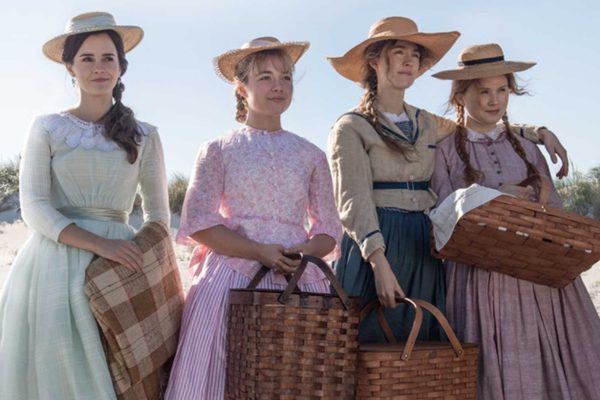
Greta Gerwig gives her take on Louisa May Alcott’s classic novel Little Women with a narrative twist and an all-star cast
Quick review: While Gerwig’s narrative risks don’t always payoff, Little Women thrives on a timeless story, great performances, and a strong beating heart.
There have been seven film adaptations of Louisa May Alcott’s classic novel Little Women with each one seemingly further modernizing the last take (Be Kind Rewind does a terrific breakdown of the four most notable versions). Of the modern auteurs working today, Greta Gerwig seemed like the perfect person to write and direct our generation’s version. And it’s clear in the film that she has so much admiration and respect for the novel. Like Rian Johnson’s take on Star Wars, that respect manifests itself as a loving subversion of the source material — a subversion that only someone with a deeper understanding of it could pull off successfully. And Gerwig almost nails it.
Retelling an old classic
So much of the brilliance of Gerwig’s Lady Birdcomes from the story’s tightly structured screenplay. In that movie, she plays with time. Opting to tell the story through short vignettes and montages rather than linger on any scene for too long. It’s a story choice that supports the central thesis of the film — that Lady Bird thinks she’s the main character of her own story, forgetting that she’s a supporting character in others’.
She carries over a similar structure to Little Women. Each scene from the present is cut in with a scene from the past — bringing the two halves of the novel together. Gerwig again doesn’t linger on any scene or storyline for too long — a detriment to the first half, which I’ll talk about later.
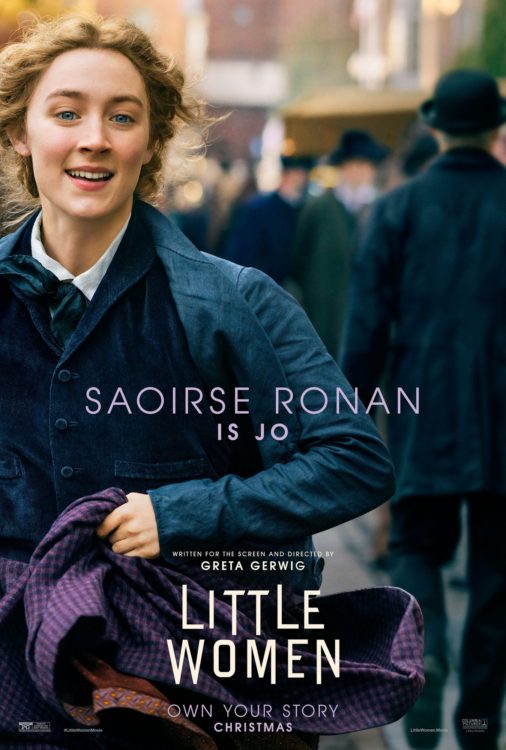
The movie follows Jo March (Saoirse Ronan following up her performance in Gerwig’s Lady Bird), a headstrong and fiercely independent writer making her way in the big city. Her younger sister Amy (a delightful Florence Pugh) is in Paris accompanied by her Aunt March (Meryl Streep) where she is studying painting. Meg, the oldest of the March sisters, is married with kids and still living in their Massachusetts hometown near their mother Marmie (Laura Dern). The youngest, Beth, has recently fallen ill, which brings Jo home and reckon with her past.
💌 Sign up for our weekly email newsletter with movie recommendations available to stream.
ADVERTISEMENT
Taking an emotional risk
By switching between past and present, Little Women almost becomes a memory play where we see the cause and effect of the events and decisions in the women’s lives simultaneously play out. In the past, we watch Jo flirt and fall in love with Laurie (Timothée Chalamet), the grandson of their wealthy neighbor (Chris Cooper). In the present scenes, we see that she doesn’t end up with Laurie and that he is in Europe where he runs into Amy. It’s a small change that has a large impact.
And while the structure itself helps set a melancholic tone and creates a more immediate emotional payoff, it also prevents us from getting to know the characters and see their relationships grow and change. It felt as if the emotional stakes were taken away from us. Or, at least, someone like me. Maybe if I’d been a fan of the book or previous adaptations — I didn’t watch the 1994 version before this one — I’d already have the emotional investment in the characters. Instead, I felt like I had to fill in the blanks and imagine what led each character to each specific moment.
Eventually, the rhythm of the movie made a bit more sense and after spending much of the first hour piecing together who the characters are and their relationships with each other, the second half felt so much easier and I started to see the fruits of Gerwig’s risk. Though, they came at a cost.
It’s a woman’s, woman’s, woman’s world
Gerwig is a perfect match for the material because, like Alcott, she subtly pushes against the boxes that society makes for women. The same goes for Ronan, who plays Jo with the same defiance that made her Lady Bird performance so terrific. However, pushing against that defiance is matters of the heart — towards her family and Laurie. It’s truly a millennial’s tale. How do you balance your ambition with the things that you want but can’t take along with you for the ride?
On the other end of things, Watson’s Meg is excited to fall into society’s ideal for womanhood. Somewhere in the middle, Pugh’s Amy wants both, driven partly from middle child syndrome. When the movie focuses on this quandary, it reaches its fullest potential. Though the relationship between the March sisters — the so-called little women — is the true heart.
March-ing to the beat of its own drum
Though the structure is the main reason I didn’t completely fall for Little Women, it was refreshing that it wasn’t a straight adaptation of the material. We need more directors and screenwriters to take the risk with existing IP. If we’re going to continue to get remake after reboot after remake, then at the very least we can have something slightly different. Something that marches to the beat of its own drum.
Little Women might be flawed, but it’s a movie with a timeless story that will embrace you. In the days since watching it, the story itself has grown on me and the characters have endeared themselves to me. It’s no wonder Hollywood is so attracted to telling it over and over again. I’m glad Gerwig got her shot. She cements herself as one of the most exciting storytellers working today.
From psychological to political, here are some of our favorite thrillers since 2020
What is a thriller?
The thriller genre is difficult to nail down because the genre itself is so broad. Where does the thriller genre end and horror begin? Are all action movies thrillers, but not all thrillers action movies? While the definition isn’t exact, there are a few constants: red herrings, plot twists, cliffhangers, and, of course, suspense.
After a shift towards
And without further ado, here are my favorite thrillers since 2010!
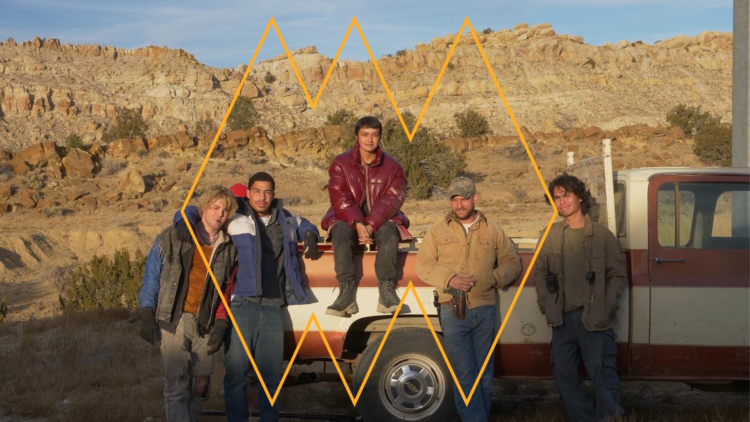
The cast of environmental thriller How to Blow Up a Pipeline. Courtesy of Neon.
What it’s about: A ragtag group of environmental activists race against the clock to sabotage an oil pipeline.
Why it’s great: In many ways, How to Blow Up a Pipeline is a classic heist thriller in the vein of Ocean’s 11 as we watch a group of prior strangers come together to pull off a seemingly impossible feat. Director Daniel Goldhaber uses every second of runtime to slowly ratchet up the tension as the crew sets their plan to blow up the eponymous pipeline in motion.
Using a clever non-linear narrative structure the movie feeds you new information about each of the characters and their dynamics to add color to their personal journeys and complications to the mission at hand. The result is a near real-time stunning and anxiety-inducing but deliciously entertaining eco thriller. Read my full review.
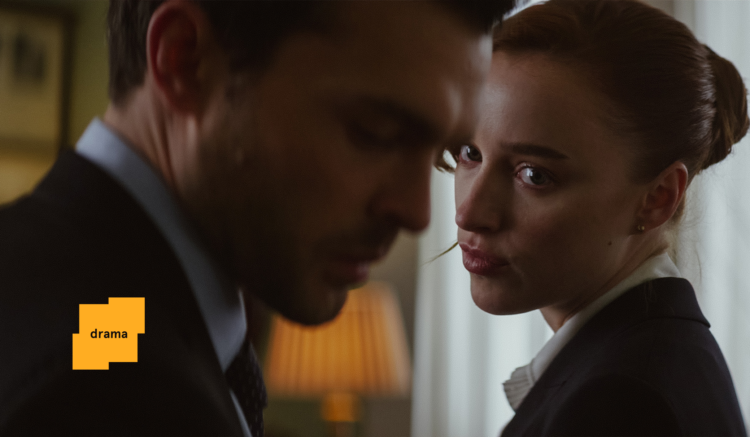
Phoebe Dynevor and Alden Ehrenreich appear in Fair Play by Chloe Domont, an official selection of the U.S. Dramatic Competition at the 2023 Sundance Film Festival. Courtesy of Sundance Institute.
What it’s about: Emily (Bridgerton’s Phoebe Dynevor) and Luke (Alden Ehrenreich) are a crazy, sexy, cool couple drunk (and horny) on their recent engagement that they have to keep secret since they work together at a highly competitive hedge fund firm. But when Emily is promoted over Luke, insecurity, competition and jealousy threaten to destroy their relationship.
ADVERTISEMENT
Why it’s great: Fair Play plays like a ticking time bomb as the couple’s relationship is put under the strain of Luke’s arrogance and Emily’s ambition.
It’s the balancing of those two threads that make the movie — particularly writer director Chloe Domont’s sharp screenplay — so impressive. At times, the movie is a corporate barnburner about Emily navigating her newfound success as a woman in an industry that is decidedly a boy’s club. In others, it’s a darkly funny psychosexual relationship drama about how deviations from the traditional gender dynamics can send men into a tailspin — let’s just say Luke probably loved Joker. And at its most satisfying, both worlds come careening together as the pair navigate the minefield of their relationship in the workplace.
Phoebe Dynevor and Alden Ehrenreich give powerhouse performances that give the melodrama some much needed gravitas. Cutthroat, sharp and entertaining as hell, Chloe Domont didn’t come to play. Read my full review.
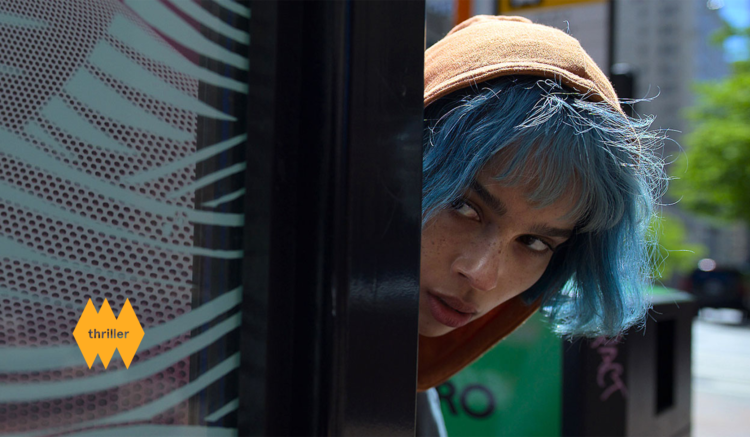
What it’s about: Angela (Zoë Kravitz), whose agoraphobia due to a prior trauma — and now exacerbated by the coronavirus pandemic — confines her to her apartment, works for a tech company monitoring the data from their smart speaker product Kimi (like an Alexa) for quality assurance. However, when one of the files she’s listening to sounds like a crime she’s faced with corporate red tape, conspiracy, and, her worst fear, going outside.
Why you should watch it:Kimi tells a story we’ve seen before — Rear Window and The Girl on the Train immediately come to mind. But Soderbergh throws in these tiny details that make it feel so relevant to our place and time.
ADVERTISEMENT
Like many people watching movies stuck at home, I had headphones on. In one scene, Angela puts on her AirPods to drown out the sound around her. When she puts her right earbud in, our right earbud goes silent. When she puts the left in, our left goes silent. It’s something that you might miss, but that small choice immerses you in this world that is so familiar.
When Angela goes outside for the first time, masked up with packets of hand sanitizer in her pockets, the camera switches from steady and deliberate to frenetic and chaotic as she’s faced with the anxiety of being around people. It elevates Kimi far past its thriller roots.
And sure, you can probably call many of the plot twists. But what Soderbergh constructed is a lean, mean, perfectly-paced thriller that recognizes the time that we’re in. Too many movies being made today ignore the pandemic and the past two years we’ve experienced. Instead, Soderbergh embraces it and uses it to his advantage to not reinvent the wheel but spin it at a different speed. Read my full review.
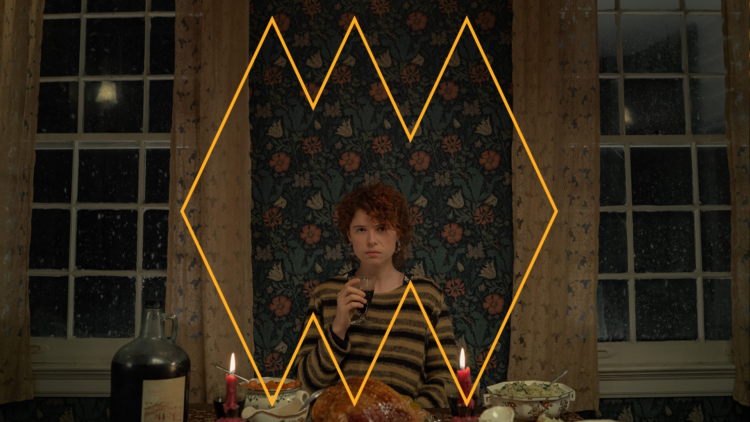
Jessie Buckley in I’m Thinking of Ending Things. Courtesy of Netflix.
What it’s about: A young woman (Jessie Buckley) is driving with her boyfriend (Jesse Plemmons) to meet his parents for the first time. There’s one problem, she’s thinking of ending things. When she meets his mother (Toni Collette) and father (David Thewlis) things go from odd to flat out weird as the world around her changes.
Why it’s great: Loneliness is a prison. The memories, regrets, and what-ifs of life become trapped on repeat in your head forming a blend of reality and fantasy in your psyche in an effort to fill the void of silence that it creates. In the time of the coronavirus pandemic that feeling may hit closer to home, which is why Charlie Kaufman’s I’m Thinking of Ending Things feels so effective as a psychological thriller.
The movie is a slow-burn of conversations that begin as a little off and then become full-tilt bizarre as the world around the couple goes from real to surreal. At the core, psychological thrillers should make you question exactly what is real. In I’m Thinking of Ending Things, the question isn’t what is real, it’s what is reality at all.
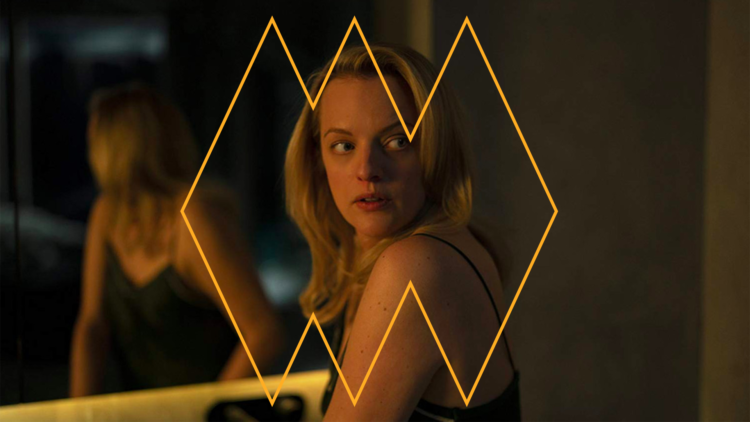
Elizabeth Moss in The Invisible Man. Courtesy of Universal Pictures.
What it’s about: After escaping her abusive tech tycoon boyfriend (Oliver Jackson-Cohen), Cecilia (Elizabeth Moss) thinks she’s finally free from his grasp. However, a vague threat from the past and a series of odd occurrences make her think that he’s watching her every move.
Why it’s great: There is so much to love about director Leigh Whannell’s reinvention of the 1933 original film The Invisible Man, but the best place to start is perhaps the reinvention itself. Instead of treading similar territory, Whannell tackled the very 21st century story of toxic relationships, gaslighting, and emotional abuse.
However, the way he brings about those themes is by combining innovate modern cinematic techniques with the old-fashioned staples of building the suspense. Without compromising its rich themes or depriving the audience of moments of terror to hang onto, Whannell is able to make an artfully made and emotional movie that feels auteur-driven but still made for the mainstream. Read my full review.
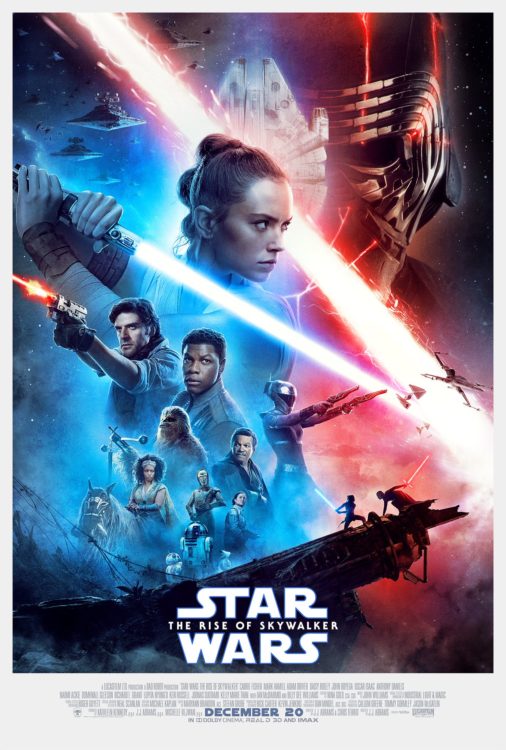
In the final installment of the sequel trilogy, J.J. Abrams wraps up the nine-episode Skywalker Saga as the Resistance faces the First Order one last time
Quick review: A series of poor story and character decisions take away any emotional impact The Rise of Skywalker could have, which ends the Skywalker Saga on a sour note.
There’s something very off about The Rise of Skywalker, the ninth and final film in the Skywalker Saga. It feels at equal times too big and too small, too overwrought and too emotionless, too fast and too slow. The movie, more than any other blockbuster this year and in the franchise, feels completely contrived. Like it was stitched together from disparate arguing ideas and landed on all of them and none of them at the same time.
From the opening scroll, it’s already apparent that the movie is trying to do too much. I’ll spare you the specific plot details, but one I can reveal off the bat since it’s the first thing on the screen, is that Emporer Palpatine (Ian McDiarmid) is alive and planning to (surprise surprise) take over the entire galaxy with his massive fleet of star destroyers.
Through a breezy montage, a perfect demonstration of how the movie is too fast in some parts and too slow in others, we learn that Kylo Ren (Adam Driver) has been looking for Palpatine to destroy any threat to his hold on the First Order. However, when he does find him, Palpatine promises him his entire fleet as long as Ren finds and kills Rey (Daisy Ridley). There, one plot thread set.
The second involves our new central trio of Rey, Fin (John Boyega), and Poe (Oscar Isaac), with the help of C-3PO (Anthony Daniels), BB-8, and Chewbacca (Joonas Suotamo), chasing several items around the galaxy to find the hidden planet where Palpatine’s fleet is preparing to attack. A timeline of 16 hours is set, but unlike The Last Jedi, which made us feel the urgency of the time crunch, The Rise of Skywalker feels meandering.
💌 Sign up for our weekly email newsletter with movie recommendations available to stream.
ADVERTISEMENT
The main problem is the script by director J.J. Abrams and Chris Terrio. It spends so much time setting new story directions, redefining characters and their relationships, and squeezing in an overstuffed plot that it doesn’t spend time being effective at telling a coherent story.
You can talk about nostalgia and fan service all you want — there is a good way to do that — but at its core The Rise of Skywalker is flawed. There’s no way to dismiss it as “for the fans” or “critic-proof.” Avengers: Endgamewas certainly for the fans, but managed to be a compelling movie at the same time by carefully structuring its script for maximum emotional payoff. All the moments of fan service here feel contrived and unearned.
There is more than one twist — some that should have truly been shocking — but the movie is never able to land them effectively because the build-up just isn’t there. Rian Johnson beautifully sets up the stakes for the third movie, but Abrams clearly wanted to go a different direction and instead wasted his time pulling emotion out of thin air.
If I sound overly critical it’s probably because I was really pulling for The Rise of Skywalker. I enjoy the Star Wars movies. I wanted to be satisfied at the end. But I couldn’t connect with anything. There’s a moment that should be as awe-inspiring as the Portals moment in Avengers: Endgame. Instead, it inspired a rolling groan from my audience. There was no build-up, no suspense, it just kind of happened. That’s the best way to describe the movie, it just happens. There’s nothing to experience and I want my star war to be an experience.
Random thoughts ?
The late Carrie Fisher appears in the film as General Leia Organa through scenes she filmed for The Force Awakens that were composited in. The effect is a bit off-putting. It’s clear her dialogue doesn’t completely fit the context of the scene and comes off as clunky. That being said, it’s probably the best we’d get.
Kelly Marie Tran‘s Rose Tico was largely relegated to the background in this film, which is really upsetting following her breakout in The Last Jedi. The character deserved more. She was the heart of the film.
There’s a brief kiss between two women, which marks the first queer characters in the franchise. And while it’s far too brief, it’s better than other publicized gay moments in other blockbusters. I’ll just continue with my assumption that Poe is gay.