Karl Delossantos

  • ‘Joker’ review — All clown, no bite

    ‘Joker’ review — All clown, no bite

    Joker reimagines the iconic Batman villain as a mentally ill, impoverished standup comedian.

    One-sentence review: Joker is well-made and full of interesting choices that all feel hollow when you consider what the movie is trying to say — the answer: not much.

    Details: ? Todd Phillips // ?? U.S. // ⏳ 122 minutes

    The cast: Joaquin Phoenix, Robert DeNiro, Zazie Beetz, Frances Conroy

    Where to watch Joker: Now playing in theaters.

    Joker is not a comic book movie. That’s not where it draws its inspirations from. Sure, The Joker is a comic book villain — maybe THE comic book villain — living in the fictional city of Gotham. However, director Todd Phillips is trying to emulate Martin Scorsese more than he is any version of a comic book movie we’ve seen before. Even Christopher Nolan’s darker and grittier Dark Knight series has nothing on Joker. But that’s part of the problem.

    Arthur Fleck (Joaquin Phoenix) can’t catch a break. He’s a clown for hire that has to deal with bullying everywhere he goes. In the opening scene, he’s jumped by a group of kids who beat him in an alleyway. Even in the locker room where he’s surrounded by other clowns he’s bullied. A lot of it comes from the fact that he’s mentally ill. Unfortunately, his actual condition is never discussed other than his inability to control his laughter, which often comes at inappropriate times.

    However, he has dreams of something greater than just being a clown. Arthur’s main goal is to be a standup comedian like his idol late-night talk show host Murray Franklin (Robert De Niro). De Niro’s inclusion here is a clear nod to Scorsese’s often overlooked 1983 film The King of Comedy, which also followed a celebrity-obsessed comedian trying to emulate his hero.

    One day, a co-worker gives Arthur a gun to protect himself from the people that bully him around. That’s how he ends up killing a trio of drunk wealthy wall street-types who jump him on the subway. The scene is masterful and full of tension as the lights of the subway flicker on and off as the men taunt Arthur. That killing sparks something in Arthur. Something darker. It also sparks anarchy in the city as the “poor” and “disenfranchised” use the man in clown makeup as their symbol of revolt.

    For all the discourse around Joker, I was expecting something truly abhorrent — for better or worse. What I was shocked to find is how little of a bite it has. All the moments of Joker’s infamous chaos feel so contrived that even if his actions are chaos for the sake of chaos, they have no impact. I don’t even think Phillips is completely sure why Arthur is the way he is. He’s not an incel or a misunderstood mentally ill person. He’s a character that someone thought would be cool.

    Joaquin Phoenix in Joker. Credit: Warner Bros. Pictures.

    It’s that juvenile perspective that really betrays Joker. What made Christopher Nolan’s take on the character so compelling — in addition to Heath Ledger’s stellar performance — is he was a mysterious force of evil. Not knowing his motivations made him all the more terrifying. In a way, Joker over explains the character’s reasons for being evil to the point that anything and everything he does is unsurprising.

    ⚠️ Slight spoiler alert.

    The great Zazie Beetz appears in the film as a young mother who lives a few doors down from Arthur. The two strike up a friendship despite Arthur’s clear oddities that carries throughout the film. In the end, it’s revealed that all his interactions with her were imagined. However, I think the movie would have been stronger if the friendship was real and the twist being Beetz’s character finding out that Arthur is a danger. It might not be as shocking or subversive, but it would at least ground the Joker in something rather than being a comic book villain in a gritty and realistic world.

    I’ve had such a hard time articulating what I thought about Joker, and that’s part of the problem. It’s a movie that thinks it’s more important, edgier, and more shocking than it is. It’s a shame because there are interesting ideas there. The movie needed a director more adept at thinking through those ides.

  • ‘Pain and Glory’ NYFF review — One of Almodóvar’s best

    ‘Pain and Glory’ NYFF review — One of Almodóvar’s best

    In Pain and Glory, a filmmaker reckons with his past when a screening of one of his films requires him to contact an actor he feuded with.

    One-sentence review: Pain and Glory is a colorful, funny and profound film where Pedro Almodóvar reckons with his past and career — featuring a career-best performance by Antonio Banderas.

    Details: ? Pedro Almodóvar // ?? Spain // ⏳ 113 minutes

    The cast: Antonio Banderas, Asier Etxeandia, Leonardo Sbaraglia, Nora Navas, Julieta Serrano, Penélope Cruz

    Where to watch Pain and Glory: In theaters October 4th.

    As Pain and Glory approached its final moments, I realized that I was entertained and delighted by the witty humor and charmed by Antonio Banderas’ career-best performance. However, I felt like something was missing. Then, the final shot happened and I — and the rest of the crowded press screening — broke into applause. I think it’s what director Pedro Almodóvar is best at. He hides his intentions until unleashing a perception shifting moment that forces you to reconsider the entire movie you just watched. Pain and Glory is no different — and it’s better for it. 

    Almodóvar takes a look back

    The movie follows Salvador Mallo (Banderas), a revered Spanish director who suffers from multiple physical and mental ailments that he describes over a psychedelic montage of graphics. These ailments have prevented him from putting out a movie in years. However, a local theater contacts him asking for him to do a Q&A at a screening of his movie Sabor, which has been remastered. Although, they also ask if he could ask the star of the film Alberto Crespo to attend as well. The only problem is the pair had a falling out and haven’t spoken for 30 years as Salvador was unhappy with his performance in the film — mirroring a similar situation Almodóvar had with Banderas. 

    pain and glory
    Nora Navas and Antonio Banderas in Pain and Glory. Credit: Sony Pictures Releasing International.

    They eventually meet and though there is awkwardness, they bond while smoking heroin, which helps Salvador manage his pain. Alberto agrees to do the Q&A and the pair set off on repairing their friendship. The scenes between the creative partners bristle with comic energy but are also laced with sadness and regret. As Almodóvar said after the screening, “everything is familiar to me.” Much of the film is pulled from moments in his life and you can feel him reckoning with those moments. 

    All the while, we see clips of Salvador’s poor childhood with his mother Jacinta (Penélope Cruz) where we learn about his love of cinema and realization of his sexuality — particularly his infatuation with a local handyman (César Vicente). The entire movie is filmed with bright blocks of color inhabiting the sets, costumes, and graphics. These flashback scenes have a more natural quality to them, although they’re also clean and specific, just like a memory. We’ll come back to this. 

    Balancing authenticity with his signature style

    A scene never rings false in Pain and Glory, even when they’re particularly humorous or ridiculous. If anything, that quirky quality is what makes each moment work. That and Banderas’ masterful performance. We first meet him sitting at the bottom of a pool — something Almodóvar mentions makes him recall various memories — and what we see is the movie star Banderas. The second he steps out, you see in his mannerisms, delivery, and expressions that he is inhabiting a character. One part Almodóvar and one part his own creation, possibly pulling from his own experiences.

    This year, various members of the old guard of filmmakers have released films that reckon with their own reputations and mortality — Quentin Tarantino’s Once Upon a Time in Hollywood and Martin Scorsese’s The Irishman, in particular. Pain and Glory, in my opinion, is the best of that group. It’s easily the most personal and assured, which is saying a lot when you’re talking about two of the most established filmmakers working today.

    Slight spoiler alert. 

    The final shot of the film returns to a scene we saw earlier where a young Salvador sleeps on a bench with his mother by his side. As the camera pulls out, we see a person holding an audio boom. Then, a man walks in with a clapboard. We learn that all the flashbacks were shots from a film Salvador was directing, a direct way of saying that this movie is Almodóvar coming to peace with his past. The brilliance of it can’t be understated. It establishes Pain and Glory as one of my favorite movies of the year. 

  • ‘The Irishman’ NYFF review — Scorsese’s tribute to Scorsese

    ‘The Irishman’ NYFF review — Scorsese’s tribute to Scorsese

    Based on a true story, a hitman for the mob looks back at his life and the events that shaped him in The Irishman.

    One-sentence review: The Irishman combines the meditative pace of Silence, the sharp humor and style of The Wolf of Wall Street, and the narrative of Martin Scorsese’s greatest gangster movies to form a self-reflective magnum opus.

    Details: ? Martin Scorsese // ?? U.S. // ⏳ 209 minutes

    The cast: Robert DeNiro, Joe Pesci, Al Pacino

    Where to watch The Irishman: In theaters November 2nd. On Netflix November 27.

    The Irishman feels like a culmination of all the films that came before it in Martin Scorsese’s filmography. You can piece it together from his various projects. It’s deliberately paced and meditative like Silence with a sharp sense of humor like The Wolf of Wall Street. The plot treads close to any of his classic gangster movies and it grapples with toxic masculinity like many of his movies, but Taxi Driver feels like the closest comparison. It feels like an epilogue to his storied career — but it also makes clear that Marty is far from being obsolete. 

    Getting the mob back together

    If the 2010s have shown us anything, it’s that Scorsese isn’t done experimenting and trying new things. As much as this feels like a Scorsese picture, it’s more like it’s influenced by his past work rather than trying to recreate it — even though it reunites him with old collaborators Robert DeNiro and Joe Pesci.

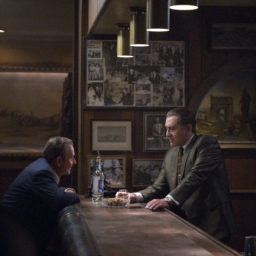
    The movie, stitched together by long-time editor Thelma Schoonmaker, follows Frank “The Irishman” Sheeran (DeNiro) as he recounts his life as a hitman for Russell Bufalino (Pesci) and his entire organization. The decades-spanning narrative, which required them to digitally de-age the actors, covers Sheeran’s beginning as a small-time criminal stealing meat off of butcher trucks to his fateful meeting Russell to his friendship with famed and bombastic labor union leader Jimmy Hoffa (Al Pacino).

    The Irishman
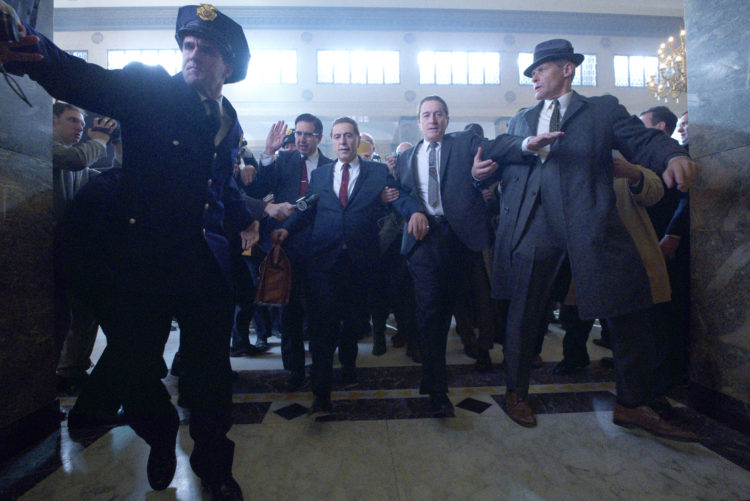
    THE IRISHMAN (2019) Ray Ramano (Bill Bufalino ) Al Pacino (Jimmy Hoffa) and Robert De Niro (Frank Sheeran)

    Brilliantly, the movie jumps around in time and feels like it rambles at times — just like you’d expect an old man to talk about the events in his life. The formlessness of the narrative is both an asset and a liability. An asset because it really feels like you’re talking to someone about their life. A liability because you do feel the 3 ½ hour runtime at points. 

    Balancing crime with comedy and character

    However, it is also often hilarious with killer (pun intended) timing that you’re able to get through the rough patches with ease. The movie especially shines when Sheeran becomes a confidant for Hoffa, who Pacino plays with all the bombast and energy you’d expect him to deliver in a Scorsese movie — shockingly, this is his first time working with the director. There’s plenty of wise guy talk, politicking between various groups, and mob-antics that go wrong and some that go right — everything you’d expect Scorsese to cover. It’s the way he covers it that makes The Irishman special. 

    Robert DeNiro hasn’t been this good in years in his role as Frank. And while many people were tepid on the decision to use the same actors to play characters over a span of decades, it pays off. It makes each character, especially Frank, feel lived in. You feel the toll of every sin he commits weight on him and on his daughter Peggy (a criminally underused Anna Paquin) as time goes by.

    It’s difficult to describe the plot because the movie is essentially structure-less, but the main throughline of the film is Frank’s relationships with Russell and Jimmy and his lack of a relationship with his family. In so many mob movies, including Scorsese’s, the men operate unchecked and without moral consequence. The Irishman attempts to reckon with the emotional impact of being in the mob. It’s a welcome change of pace late in the movie.

    The Irishman ends up being greater than the sum of its parts. It could have been easily cut down and end with the same effect, but each part in a vacuum works so well that it’s easy to overlook. Oddly, I think this movie will play well on Netflix versus a theater. It’s a movie that will immerse you either way.

  • ‘Ad Astra’ uses space travel as therapy | movie review

    ‘Ad Astra’ uses space travel as therapy | movie review

    Ad Astra follows an astronaut as he goes on an interstellar mission to undo the effects of his father’s failed mission 30 years earlier.

    Quick cut review: Ad Astra isn’t the thrilling space adventure it’s being marketed as — for good reason — and is instead a deepl moving meditation on emotional repression and the traumas that shape our lives.

    Science fiction is one of my favorite genres because the further you get from Earth and from what you know and understand to be true about our world, the more you have to grapple with your own humanity and the baggage that goes along with it. The best sci-fi movies understand that.

    Arrival is a meditation on grief. Interstellar explores the limitations — or lack thereof — of human connection. Blade Runner questions the very fabric of our humanity. However, none of those movies are quite as idiosyncratic as James Gray’s magnificent Ad Astra. If anything, this film has more in common with Apocolypse Now or The Tree of Life than any other sci-fi movie we’ve seen since 2001: A Space Odyssey.

    It’s the near future and space travel is as common as flying across the country — complete with overpriced snacks offered by the flight attendants. Major Roy McBride (Brad Pitt), a seasoned veteran of the United States Armed Forces branch operating in Space, has the remarkable ability to stay calm under the most stressful of circumstances. Not just calm, it’s noted that he never lets his heart rate rise above 80 BPM. When he’s thrown off an impossibly high structure jutting into space by an unexplained electrical pulse in the thrilling opening scene he never panics. Even as he tumbles to Earth disoriented and rained on with debris. 

    And as much as that’s an asset to his job, it’s a hindrance to most other parts of his life. His estranged wife Eve (Liv Tyler) — who we see in short flashes — cites his distance — both physical and emotional — as the main reason for their strained relationship. It’s fitting then that “ad astra” translates to “to the stars.” That’s where Roy finds his calm and where he escapes the milieu of life.

    After that mission, he’s informed by his superiors that the electrical pulse that nearly killed him is one of many — and they’re getting worse. They believe that they’re being caused by a past mission called “The Lima Project,” which his father Clifford (Tommy Lee Jones) commanded twenty-six years prior with the goal of finding extraterrestrial life. However, the mission ended in failure and none of the crew, including Clifford, were never heard from again.

    Though, for reasons unknown, Roy’s superiors believe that Clifford is still alive on the “Lima Project” base and may be able to stop the power surges before they destroy the entire solar system. However, the base has been unresponsive. So, they task Roy with venturing to the Moon and then Mars to relay a message to his father. 

    James Gray’s Ad Astra. Credit: Twentieth Century Fox.

    Along the way, Roy encounters different situations and people — including his father’s old associate (Donald Sutherland) and the director of the Mars base (a terrific Ruth Negga) — that challenges his belief in emotional repression. The entire movie is essentially through Roy’s internal monologue, giving us an almost procedural view of each event — even when they’re as exciting as fighting moon pirates and laboratory baboons. 

    However, it makes sense because Roy is so confused, conflicted, and frightened by emotions — particularly his own — that he’s robotic in his perceptions and actions. At one point he says, “we’re here and then we’re gone.” It’s that nihilistic world view that puts him at odds with most people around him.

    Admittedly, I watched Ad Astra at a particularly difficult time in my life where I’m dealing with the repercussions of being emotionally distant, which is why the movie was so impactful on me — as is the case with movies that are more meditations than narratives. I’ve always struggled to face the difficulties weighing me down, often opting to avoid them. If you don’t face them, you don’t have to be hurt by them.

    What Ad Astra presupposes is to heal the hurt in your life you have to lean further into them and eventually through them, as hard as that is. In one of the most stunning sequences of the film, Roy is in the middle of a two-month journey from Mars to Neptune. As he tolls the days away around the ship, his voice-over repeats “I am alone, I am selfish,” two phrases I’m incredibly familiar with — especially when I finally give in to my feelings.

    And as exciting as the movie gets, the plot is really a red herring to what Gray is truly trying to get at. There are well-choreographed action setpieces, scenes of pure terror and tension, however, it’s the moments when Roy has to deal with his own internal struggle that the movie makes the most sense. Actually, the movie almost makes no sense plotwise, but that’s not the point. 

    That will frustrate audiences. Especially since 20th Century Fox is marketing it as a movie closer to Gravity or The Martian. And if you separate the plot from the more meditative elements, you do have one of those movies. But Ad Astra has more on its mind. James Gray has more on his mind. And Pitt, better than he has been in years, understands that. 

    Grappling with your self is so difficult. It takes so much work to accept the things that shaped you — the people and events that made you who you are. The movie faces those things head-on. That’s why for me and Roy space travel is a form of therapy. For him, the act of getting further from Earth and closer to the source of his pain is a way to finally get over it. For me, it’s a guide of what to do to get better. In that way, Ad Astra is a wakeup call more than it is a movie. 


    ADVERTISEMENT


    More movies, less problems


    Hey! I’m Karl. You can find me on Twitter and Letterboxd. I’m also a Tomatometer-approved critic.

    💌 Sign up for our weekly email newsletter with movie recommendations available to stream.


    ADVERTISEMENT


    💌 Sign up for our weekly email newsletter with movie recommendations available to stream.


    ADVERTISEMENT


  • ‘Atlantics’ NYFF review — Transatlanticism in a movie

    ‘Atlantics’ NYFF review — Transatlanticism in a movie

    Atlantics follows a group of workers in Dakar as they leave the country by boat looking for a better life.

    One-sentence review: Atlantics has an intriguing enough story and Mati Diop manages some fascinating scenes of tension and emotion, but it lacks the narrative momentum for it to really take off.

    Details: ? Mati Diop // ?????? Senegal, France, Belgium // ⏳ 104 minutes

    The cast: Mame Bineta Sane, Amadou Mbow, Ibrahima Traoré

    Where to watch Atlantics: Playing at the New York Film Festival October 9th & 10th. Tickets here.

    Atlantics is a meditative movie. Director Mati Diop — who became the first black woman to compete for the Palme d’Or at the Cannes Film Festival this year — wasn’t afraid to go slow or make the story relatively slight considering where it could have gone. The end product is better and worse for it. 

    Atlantics takes place in Dakar, on the Atlantic coast of Senegal in West Africa, where a group of workers argues with the management of the construction project they’re working on. They haven’t been paid in months and they’re fed up. One of those workers, Souleiman (Ibrahima Traoré) sneaks away to meet up with his girlfriend Ada (Mame Bineta Sane) to try and tell her something, but she brushes him off and tells him to save it for when they meet up later that night. However, that meeting never happens.

    Ada, who is engaged to a wealthy man named Omar (Babacar Sylla), sneaks out to meet Souleiman at a local haunt. When she gets there, all she finds are women from whom she learns that the workers set off to sea to find work overseas in Spain. She’s heartbroken that Souleiman has left her and that she must marry Omar. However, one night during a celebration for the couple, a fire breaks out. Though no one is hurt, several witnesses said that it was Souleiman who set the fire, which Ada knows is impossible. Still, the detective assigned to the case (Amadou Mbow) is convinced that it is him. 

    Ibrahima Traoré and Mame Bineta Sane in Atlantics. Credit: NYFF.

    The movie is based on Diop’s own short documentary about Senegalese migrants voyaging overseas in search of work, which is something I wish the movie explored a little more. Much of the focus of the first part of the movie is table-setting. Mostly, establishing Ada as the main character and her struggle following Souleiman’s departure. However, it’s hard to connect with her — or feel sympathy for her — because we don’t get to spend much time with the couple. Their relationship isn’t explored except for a brief scene. 

    That’s the main crux of the problem with Atlantics. There is a rich story about migrant workers, class, and female oppression waiting to be tapped. However, Diop instead takes a more cerebral and meditative approach. The result is a first half that drags a bit before the real narrative starts kicking in. The movie takes an unexpected turn to the supernatural, which breathes new life into it. In a way, it feels akin to Olivier Assayas’ Personal Shopper as it explores magical realism. Unfortunately, where that movie is an effective meditation on grief, the themes in Atlantics feel muddled. 

    That all being said, where the movie ends up is interesting. The final few scenes feel so impactful and even emotional — particularly one set in a graveyard and one set in a beachside bar. Or at least feel like they could have been impactful if the preceding hour were better plotted. However, they do point to some real talent that Diop has had they been applied to a stronger screenplay. You can never criticize a movie for being a slow burn. However, you can criticize what it does with that pace. Atlantics doesn’t do quite enough. 

  • ‘Bacurau’ NYFF review — The weird western Tarantino never made

    ‘Bacurau’ NYFF review — The weird western Tarantino never made

    Set in a Brazillian village in the near future, Bacurau follows the inhabitants as they become the victims to a sinister set of events.

    One-sentence review: Bacurau is a wonderfully weird western that is as funny as it is hard hitting and thrilling.

    Details: ? Kleber Mendonça Filho & Juliano Dornelles // ?? Brazil // ⏳ 130 minutes

    The cast: Sônia Braga, Udo Kier, Bárbara Colen

    Where to watch Bacurau: Playing at the New York Film Festival October 1st & 2nd. Tickets here.

    The inhabitants of the small remote fictional Brazilian village Bacurau don’t know it yet, but they’re at the center of a sinister act of greed, racism, and privilege. There are signs of the impending events. One night dozens of horses stampede through the center of the town. Another night the truck that supplies the village with water arrives with bullet holes in its side. When one of the village’s leaders and teacher (Wilson Rabelo) goes to show his students where Bacurau is on a map, it’s missing. Oh, and there’s a UFO-shaped drone stalking people. 

    All the oddball energy extends to the cast of characters that call the village home. There’s the boozed-up doctor unafraid to speak her mind (Sônia Braga), an outlaw who can never turn his machismo off (Thomas Aquino), and a DJ who doesn’t have a radio station and instead just broadcasts on giant speakers for anyone to hear.

    The tone of Bacurau, which had its North American premiere at the 57th New York Film Festival, is so unexpectedly delightful. It’s like the weird western that Quentin Tarantino never made — perhaps even lighter and sillier than even Tarantino. There are so many subtle quips and observations from characters that make you want to delve even deeper into their inner lives and history — the movie might have taken inspiration from Bong Joon-ho’s work including his most recent work Parasite, also playing at the fest. It makes the ensuing events even more difficult to stomach.

    The community is tight-knit. Almost alarmingly so. They’re so wary of outsiders that even when the skeevy mayor (Thardelly Lima) pays a visit they all disperse as he tries to buy their affection with less than stellar gifts — books dropped off by garbage trucks, illegal prescription medicine, expired food. It’s a less-than-subtle indictment of Brazil’s current powers-that-be. However, directors Kleber Mendonça Filho & Juliano Dornelles make it a point to center the movie of the community. The inhabitants of Bacurau are the strong beating heart at its center.

    bacurau
    The cast of Bacurau.

    It would be extremely difficult to review Bacurau without revealing at least in some part where the movie leads. However, that’s also part of the fun. So, I will say this before diving further into details. This movie is a genre-bender. It’s a western, a satire, a comedy, an action movie, a mystery all rolled up into beautifully packaged — and wild — narrative. And it ends up nowhere you think it would.


    ADVERTISEMENT


    ⚠️ Light spoiler warning.

    Eventually, the villagers realize that something is amiss. Along with all the weird events happening, they discover some inhabitants murdered. It’s revealed that the village is about to be besieged by a group of heavily armed American tourists in a twist of The Most Dangerous Game or The Purge. Another inspiration, as evidenced by the score and opening credits, is John Carpenter’s Assault on Precinct 13.

    We get to know this group and their motivations as well as the villagers. And it’s laid out pretty bluntly that this is an allegory for colonialization, class warfare, and the current political climate in Brazil and throughout the world. Exploring those themes as a sendup of 70s westerns and exploitation movies is a brilliant decision.

    While a lot of the movie’s themes and its portrayal of the community and its lore, which in some parts nearly veer into fantasy, are so specific to Brazil. There are so many threads connecting it to what’s happening in the United States. In fact, the white tourists, who are clearly parodies of rural Americans, feel entitled to their “hunt” of the villagers. For them, it only makes sense.

    If I have one complaint about Bacurau it’s that, whether intentional or not, the filmmakers clearly outline — almost too clearly — the message they’re trying to get across. It’s almost propagandist. However, that is forgivable because they go so hard on the quirkiness and camp of it all. Bacurau is a pure, hilarious, violent, and surprising delight.


    ADVERTISEMENT


    More movies, less problems


    Hey! I’m Karl. You can find me on Twitter and Letterboxd. I’m also a Tomatometer-approved critic.

    💌 Sign up for our weekly email newsletter with movie recommendations available to stream.


    ADVERTISEMENT


  • ‘Brittany Runs a Marathon’ review — The title says it all

    ‘Brittany Runs a Marathon’ review — The title says it all

    Brittany Runs a Marathon follows an overweight and lonely New Yorker as she sets out to turn her life around by training for a marathon.

    One-sentence review: Brittany Runs a Marathon has enough charm, laughs, and wonderfully eclectic characters — especially Jillian Bell‘s eponymous Brittany — to get it past its weaker moments.

    Details: ? Paul Downs Colaizzo // ⏳ 103 minutes // ?? U.S.

    Cast: Jillian Bell, Michaela Watkins, Utkarsh Ambudkar, Lil Rel Howery, Micah Stock

    Where to watch Brittany Runs a Marathon: Now playing in theaters.

    Brittany Runs a Marathon plays like a marathon. It begins light on its feet and breezy. It’s filled with sharp observational humor and a completely endearing performance by Jillian Bell in the titular role. Halfway through the pace slows before nearly crumbling in the final stretch. However, the movie, the first for playwright Paul Downs Colaizzo — he based the screenplay on a friend’s similar experience — eventually does cross the finish line. 

    In the vein of I Feel Pretty starring Amy Schumer a few years ago — a more broadly comedic take on the same concept — Brittany Runs a Marathon follows the titular character as she takes steps to better her life. After an appointment with the doctor points out she’s technically obese, Brittany begins to spiral out of her already obstacle-filled life. She’s 27, single, broke, and seems to always get to the subway just as the doors close. It doesn’t help that her roommate Gretchen (Alice Lee) is an influencer with a seemingly perfect life.

    Eventually, though, Brittany is able to muster up the motivation to go on a run donning two bras, sweatpants, and a pair of high top chucks. And she does it, igniting a spark that drives her to get her life together. Her first step is to join a running club recommended by her neighbor Catherine (Michaela Watkins). There she meets Seth (Micah Stock), a dad intent on showing his young son that he can be as athletic as his other dad. Side note: it’s so refreshing to see a happy gay married couple where their sexuality isn’t a plot point. 

    Micah Stock and Jillian Bell in Brittany Runs a Marathon. Credit: Amazon Studios.

    Brittany’s second step is to get another job which comes in the form of a house/dog sitting gig that she shares with perennial slacker Jern (Utkarsh Ambudkar — a standout). However, Brittany’s transformation doesn’t just come physically as she sheds the pounds. Her attitude begins to change. At the beginning of the movie, she’s a typical class clown type who is never able to say anything in earnest. Everything she says is either a sarcastic quip or delivered in some offbeat way — it’s the main reason the first part of the movie works. 

    As a former fat kid, it’s easy to see that Brittany uses humor as a defense mechanism. While coming off as agreeable and funny, she also keeps people — including friends and potential suitors — at an arm’s length. For a time, the movie balances that commentary with the laughs and fun romps with supporting characters. Eventually, though, it gets overtaken by its commentary and stops being fun. There’s a third act tonal shift that is abrupt and markedly difficult to get through. It feels as if Collaizzo starts to write and direct too much.

    Though, thanks to Bell’s great performance, the movie mostly stays on track even when the plot gets unwieldy with one too many digressions. However, when Brittany Runs a Marathon sticks to Brittany… well, running a marathon, it moves with plenty of laughs and relatable commentary. I mean, you can never go wrong with a movie with the line, “it’s New York City, of course I’ve slept on a rat.”


    ADVERTISEMENT


    More movies, less problems


    Hey! I’m Karl. You can find me on Twitter and Letterboxd. I’m also a Tomatometer-approved critic.

    💌 Sign up for our weekly email newsletter with movie recommendations available to stream.


    ADVERTISEMENT


  • ‘Hustlers’ review — Everyone is hustling someone

    ‘Hustlers’ review — Everyone is hustling someone

    Hustlers follows a group of strippers as they hatch a plan to swindle money from their wealthy clientele.

    30-second review: Hustlers is an incredibly complex movie. Not only is it hilarious and charming, it delivers commentary on complicated themes of female relationships, the power dynamic between men and women, and the struggle of the working class. And it doesn’t betray either side. It never becomes uncompelling or unentertaining.

    Much of the credit for its success lies in director and writer Lorene Scafaria‘s understanding of the characters. They’re hilarious and fun to hang out with, but also lived in and realistic. There’s so much to latch onto. It also helps that Jennifer Lopez is doing some of the best work of her career and is worth of Oscar attention.

    Details: ? Lorene Scafaria // ?? U.S. // ⏰ 110 minutes

    Where to watch Hustlers: In theaters now.

    Hustlers is a heist movie that also pulls off its own heist as it follows a group of strippers led by Jennifer Lopez in her greatest role since the 90s. While the movie is as glitzy and sleek as you’d expect with enough jokes and gags to keep you entertained from beginning to end, there’s also a complex framework of themes working in the screenplay from female empowerment and relationships to financial irresponsibility and the power dynamic between men and women.

    It’s quite impressive how much director and writer Lorene Scafaria packs into the breezy 110-minute runtime — including cameos from Cardi B, Lizzo, and Usher. Still, you never feel like you’re missing out on any element. The movie is framed by an interview Destiny (Constance Wu coming off Crazy Rich Asians) is doing with a journalist (Julia Stiles) about her time as a stripper from 2007 through the financial crisis and its aftermath.

    The beginning of the movie is surprisingly subdued. Scafaria takes care not to fall into the various traps that most directors would when tackling a movie set in a strip club. She doesn’t imbue the lifestyle with extra glitz and glam and instead lets the characters talk for themselves. During that time we get to know shy but tough Destiny who was left to be cared by her grandmother as a child in Queens who is taken under the caring wing of Ramona, a veteran at the club they work at.

    There, they deal with all kinds of men as a breezy montage shows us — mostly various levels of Wall Street figures looking to escape the mundanity of their lives or to simply feel powerful. For a time, they lived like queens able to buy themselves expensive jewelry, pay for beautiful apartments, and, at least for Ramona, take care of her daughter.

    Ramona is a fascinating character study in herself — and Lopez’s performance only elevates her. She’s a woman of dichotomies. She’s both caring and unforgiving, emotional and hardened. You can see those complexities in Lopez’s performance — in the way she carries herself and the way she moves. When she walks through the club, you believe she rules the world.

    Jennifer Lopez and Constance Wu star in Hustlers. Credit: STX Films.

    Like all good things, though, it had to all come crashing down. During the economic downturn of 2008, Destiny has a daughter and is forced to stop stripping. However, even if she kept at it she wouldn’t make nearly as much money as much of the club’s clientele also lost their jobs in the crisis.

    That’s when Ramona, with the help of Destiny and two other girls from the club — Annabelle (Lili Reinhart) and Mercedes (a delightful Keke Palmer) — hatch a plan to hustle wealthy Wall Street men out of their money by using their charm to gain their trust before drugging them and running up huge tabs on their credit cards.

    The brilliance of that plan is that the men are so embarrassed by what they’ve done and what was done to them that they keep quiet. Pride is one of the most powerful weapons to use against those in power. It’s one of the many complex themes that Scafaria explores in her wonderfully layered screenplay that uses several tricks to tell the story — flashbacks and forwards, montages, switching perspectives.

    However, it’s the way she brings that screenplay to the screen that’s the real wonder. Hustlers is both stripped down (pun intended) and larger-than-life. She allows the movie to be entertaining and funny and delightful while also delivering emotional beats between characters that are raw, especially between Ramona and Destiny.

    I feel like I’ve let this movie down. It’s so difficult to explain what makes it so great because there is so much not on the surface that does it. There’s so much joy exuding from the screen along with the pressing moments. The characters and the world feel heightened and lived in. The characters are complex and charming and relatable. It’s a circus act of a movie. A nearly impossible feat that somehow works. It’s one of the best movies of the year.

  • ‘Haunt’ mini-review — Haunted houses are never fun

    ‘Haunt’ mini-review — Haunted houses are never fun

    In Haunt, a group of college students makes their way to a haunted house in the middle of nowhere seeking thrills — they get more than they bargained for.

    90-second review: I came into Haunt with a great deal of anticipation considering directors Scott Beck and Brian Woods just came off writing—and nearly getting nominated for an Oscar—for A Quiet Place. Not to mention the project was produced by horror maestro Eli Roth. And there are some traces of the talent that made their other projects successful. Unfortunately, covering those traces are layers and layers of bad choices.

    The conceit of Haunt isn’t a new one. Seeking thrills, a group of college students makes their way to the middle of nowhere to go through an extreme haunted house. Of course, as expected, it’s more than they bargained for as the dangers—and monsters—in the house are more real than they could ever imagine. Then, the movie turns into a fight for survival and escape reminiscent of 2015’s Green Room.

    However, one of the biggest problems with Haunt comes before they even get to the haunted house. We meet all our characters but learn nothing about them—save for some of Harper (Katie Stevens), the main protagonist. So, by the time they get picked off one by one, we don’t care about their fates. That could slide if the movie made the scares and haunts that they experience tense or exciting. To their credit, Beck and Woods do build suspense in some moments. But that suspense leads to little payoff too often. Overall, the plot, the characters, and the scares are underbaked. 

    There’s so much potential on the screen too. The design of the haunted house is intriguing and disorienting with wood-slat-lined halls leading to cramped tunnels and dark rooms littered with unseen dangers. If only the actual story were as inventive as the set design. 

    You can maybe derive some genre thrills out of the sticky situations — you’ll get that pun if you watch it — the characters get themselves into. There’s also some great gore and creature design. Still, Haunt is all bark and no bite. 

    Haunt is streaming on AMC+ via Prime Video.


    ADVERTISEMENT


    More movies, less problems


    Hey! I’m Karl. You can find me on Twitter and Letterboxd. I’m also a Tomatometer-approved critic.

    💌 Sign up for our weekly email newsletter with movie recommendations available to stream.


    ADVERTISEMENT


    haunt
    An image from the horror / thriller HAUNT, a Momentum Pictures release. Photo courtesy of Momentum Pictures.
  • ‘It Chapter Two’ review — Once a loser, always a loser

    ‘It Chapter Two’ review — Once a loser, always a loser

    It Chapter Two finds the members of the “Loser Club” returning to their hometown to face Pennywise one last time

    30-second review: Rather than adding onto and complementing the first movie, It Chapter Two feels bogged down by it. Director Andy Muschietti and screenwriter Gary Dauberman try to make the movie funnier, scarier, more intense, and more emotional. As a result, it’s none of those things.

    The movie returns to the playbook that made many of the set pieces in the first work and doubles down on each of those elements, which seems instinctive, but instead, it just means each scene is predictable. That coupled with the overreliance on CGI, formless structure, and execssive plotiness makes It Chapter Two an uninspiring conclusion.

    Where to watch It Chapter Two: Now playing in theaters.

    There’s a recurring joke in It Chapter Two surrounding the grown-up Bill (played by James McAvoyJaeden Martell plays him as a teen). After leaving Derry, he went on to become an author, eventually adapting his books into films. However, he’s constantly teased about not knowing how to end his stories. Well, this movie, which completes the story arc started in 2017’s It, has a similar problem.

    Andy Muschietti returns to direct the film, which takes place 27 years after the original. As we see in the first 45 minutes, each member of the self-proclaimed “Losers Club” have gone on to achieve relatively normal lives despite the trauma they experienced in their youth. As Mike (Isaiah Mustafa as an adult and Chosen Jacobs as a teen), who never left the town of Derry, Maine, tells them, the further you get from the town the more the memories fade away. But he remembers what happened to them — and it’s happening again.

    The first part of the movie is dedicated to Mike getting the gang back together, which includes Bill, his love interest Beverly (Jessica Chastain and Sophia Lillis), fouled-mouth jokester Richie (Bill Hader and Finn Wolfhard), former fat kid (and now hot) Ben (Jay Ryan and Jeremy Ray Taylor), hypochondriac Eddie (James Ransone and Jack Dylan Grazer), and Andy Bean and Wyatt Oleff as Stanley.

    While it’s all fun and games at first, Pennywise (Bill Skarsgard) quickly starts up his old tricks to torment the gang as they try to figure out how to defeat him. Old memories are rehashed and wounds are reopened as each of the “Losers” face their pasts. Each of them gets their moment. However, the movie doesn’t really explain why each of them needs one. Yes, they all have chips on their shoulder, but each character vignette feels more like a way of letting the starry cast each have their turn in the spotlight. It feels more like filler than an actual plot — which explains the unnecessarily bloated 169-minute runtime.

    it chapter two
    Isaiah Mustafa, Bill Hader, James McAvoy, Jessica Chastain, and Jay Ryan in It Chapter Two. Credit: Warner Bros. Pictures.

    Rather than adding onto and complementing the first movie, Chapter Two feels bogged down by it. Muschietti and screenwriter Gary Dauberman try to make the movie funnier, scarier, more intense, and more emotional. As a result, it’s none of those things. I liked the first movie quite a bit. Though it isn’t perfect, the plot is more focused and intentional, which makes each scene (and scare) more effective.

    Chapter Two returns to the playbook that made many of the set pieces in the first work and doubles down on each of those elements, which seems instinctive, but instead, it just means each scene is predictable. That coupled with the overreliance on CGI makes the movie completely devoid of horror.

    Because the middle section drags so much, the plot is stuffed into the first and last 45 minutes. However, there is so much plot — and so much exposition — that we never get a chance to reform the emotional bond with the characters that makes the first so successful. The end of Chapter Two, which should feel triumphant and bittersweet instead feels hollow.

    Hader and Ransone do some of the best work of the cast and get chances to flesh out their characters a bit more, especially Hader, though there is some subtext that is a little too subtle to be notable. The rest of the cast, however, never really connect.

    If you haven’t noticed, I haven’t mentioned Pennywise, the eponymous “It” much yet. And that’s because he’s less than his already scant screentime in the first movie. Skarsgard is so good in the role, but Muschietti is more obsessed with action-based setpieces than he is actual horror, so he never gets a proper chance to shine.

    To be honest, there’s so much more I can criticize and tear apart in It Chapter Two, but I’ll spare you and say this. Clearly, Muschietti had a long list of things he wanted to do and tackle in this movie — and he did all of it. Unfortunately, the movie didn’t need most of it.


    ADVERTISEMENT


    More movies, less problems


    Hey! I’m Karl. You can find me on Twitter and Letterboxd. I’m also a Tomatometer-approved critic.

    💌 Sign up for our weekly email newsletter with movie recommendations available to stream.


    ADVERTISEMENT


  • ‘The King of Comedy’ is Scorsese’s misunderstood masterpiece | movie review

    ‘The King of Comedy’ is Scorsese’s misunderstood masterpiece | movie review

    In their fifth collaboration, Martin Scorsese and Robert De Niro explore the lengths one man will go to be given a chance in The King of Comedy

    For a movie about a failed standup comedian, The King of Comedy difficult to watch. Rupert’s delusions of success are funny at first but then grow cringe-worthy — and then dangerous. But there’s a third act pivot that makes this one of my favorite Scorsese movies. It’s so subtle but brilliant. It changes our perception of the characters and their motivations and makes us question who we were rooting for all along

    Chloé Zhao makes Nomadland‘s melancholic but hopeful story of nomads traversing the American West a stunningly complex character study of life on the margins of society.


    Since Todd Phillips’ forthcoming movie Joker has clear influences from Martin Scorsese’s The King of Comedy — it even features Robert De Niro in a role similar to Jerry Lewis’ in the movie — I’m taking a look back at the 1983 satirical black comedy.

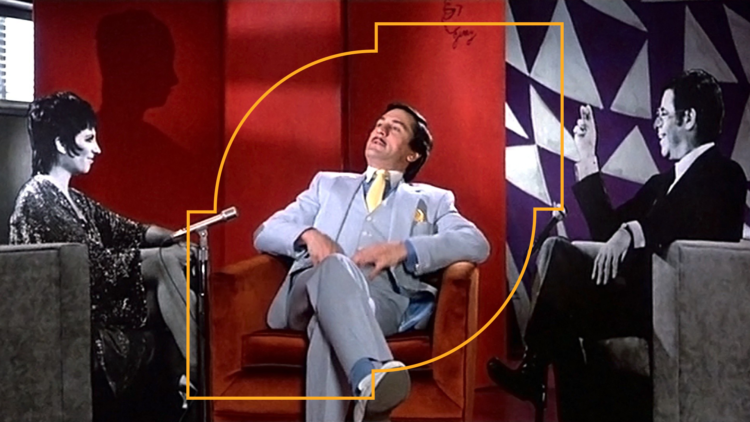
    I was ready to call Martin Scorsese’s The King of Comedy a great and underrated entry in his filmography, but I wasn’t ready to give it the masterpiece reevaluation that some critics have given it. Then, Jerry Langford (talk show legend Jerry Lewis playing a version of himself) stands in front of an electronics store with dozens of TVs tuned into Rupert Pupkin (Robert De Niro) performing a standup comedy set on Langford’s show.


    ADVERTISEMENT


    We never see Langford’s reaction to the set. We don’t need to. In that one sequence, Scorsese is changing our perception of what we watched in the preceding 90 minutes. I think this is what a lot of people get wrong about The King of Comedy. To me, it isn’t an indictment of celebrity or a cautionary tale about the tantalizing allure of fame. The way the ending is framed makes Pupkin an anti-hero — not dissimilar to Travis Bickle in Taxi Driver.

    The brilliance of the movie comes from Scorsese’s decision to make Pupkin the villain for most of the story. We’re never truly on his side. We’re really on no one’s side, which is why it’s an almost unpleasant experience to watch. Roger Ebert even said:

    It is frustrating to watch, unpleasant to remember, and, in its own way, quite effective.

    — Roger Ebert
    The King of Comedy
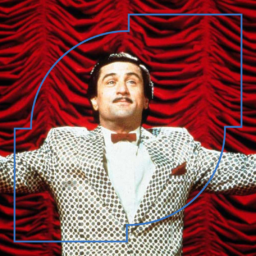
    Robert De Niro in The King of Comedy. Credit: 20th Century Fox.

    💌 Sign up for our weekly email newsletter with movie recommendations available to stream.


    ADVERTISEMENT


    But then, after all the awkwardness and cringe-worthy antics from Pupkin, we see him perform. At that moment — and the one with Langford in front of the electronics store — I understood that this isn’t a movie about celebrity or fame. It’s a movie about talent going unrecognized and the struggle of being a creative or performer.

    The obsession with celebrity and fame is explored with Sandra Bernhard‘s character of Masha, who is portrayed — a bit problematically — as someone with a mental illness, which drives her to stalk Langford. And her character looked at through the lens of the film, she’s actually a foil to Pupkin. She has no reason to be in Langford’s life other than a selfish one. Pupkin, on the other hand, has a reason and purpose, but still isn’t afforded the same opportunity.


    ADVERTISEMENT


    Scorsese’s longtime editor Thelma Schoonmaker does some clever work here stitching together Pupkin’s delusional conversations and interviews with Langford, showing us both reality and what’s in Pupkin’s mind. And her masterful work doesn’t stop there. Every scene feels important and intentional. Not a single second is wasted on anything else but the developments and information we need to see — a rarity, unfortunately.

    While Scorsese is a director that often likes to show his work on screen, this is one of his few movies that is driven by its screenplay. He lets the story speak for itself and shows restraint, which we haven’t seen from him in a while. It may never be the classic that Taxi Driver or Goodfellas is — this movie is slight in comparison — but The King of Comedy deserves a more respected place in the Scorsese canon.


    ADVERTISEMENT


    More movies, less problems


    Hey! I’m Karl. You can find me on Twitter and Letterboxd. I’m also a Tomatometer-approved critic.

    💌 Sign up for our weekly email newsletter with movie recommendations available to stream.


    ADVERTISEMENT


    💌 Sign up for our weekly email newsletter with movie recommendations available to stream.


    ADVERTISEMENT


  • ‘Good Boys’ mini-review — Good boys doing bad things

    ‘Good Boys’ mini-review — Good boys doing bad things

    Three tween boys ditch school and go on an adventure that involves drones, drugs, and a suspicious number of sex toys in Good Boys.

    90-second review: If movies like Superbad and Booksmart prove anything, it’s that watching uncool teens try to be cool is a comedy gold mine. Good Boys mines the same tropes for humor — the entire plot revolves around the main trio doing anything and everything to make it to their first spin-the-bottle kissing party. However, there’s also the added layer that they’re tweens and they still don’t understand how many things in the world work.

    One of those things is how to kiss. Then even look up “porn” in an attempt to learn and are hilariously horrified to learn that it doesn’t just involve kissing. So, Max (Jacob Tremblay who gave one of the best child performances in history in Room) comes up with a plan to use his father’s beloved drone to spy on his high schooler neighbor Hannah (Molly Gordon) — “she’s nymphomaniac, someone who has sex on land and sea,” he says — and hopefully, learn how to kiss. However, when Hannah and her friend Lilly (Midori Francis) capture the drone, hijinks ensue as the boys try to get it back, which involves a too-realistic sex doll, molly, a brawl in a frat house and more gags than you can keep track of

    However, the movie isn’t ridiculous. A lot of why it works is the incredibly low stakes of it all. However, for Max, who is determined to finally kiss his crush, Thor (Brady Noon), who wants to prove he’s cool by drinking a beer in front of the popular kids, and Lucas (Keith L. Williams — a standout), who simply doesn’t want to get in trouble, the stakes seem life or death.

    And even though each member of the “bean bag boys” — what the three eponymous good boys call their friend group — is given one characteristic and goal to run with for the whole movie, it works because the three young actors are so good at portraying each of those small struggles as something huge.

    It’s refreshing too that the humor, while crude, is never offensive or gross. Good Boys, like Booksmart this year, proves that a raunchy comedy can also be smart and thoughtful — there’s an underlying thread around whether the beanbag boys should be friends in the first place. And while this movie doesn’t quite reach greatness, it never has a moment where it’s not funny or entertaining. 

    Where to watch Good Boys: Now playing in theaters.


    ADVERTISEMENT


    More movies, less problems


    Hey! I’m Karl. You can find me on Twitter and Letterboxd. I’m also a Tomatometer-approved critic.

    💌 Sign up for our weekly email newsletter with movie recommendations available to stream.


    ADVERTISEMENT


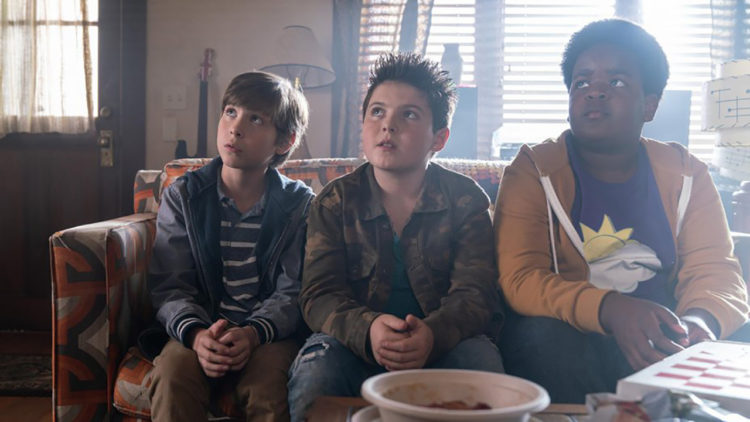
    Good Boys
    Jacob Tremblay, Brady Noon, and Keith L. Williams in Good Boys. Credit: Universal Pictures.
  • ‘Scary Stories to Tell in the Dark’ review — Nightmares brought to life

    ‘Scary Stories to Tell in the Dark’ review — Nightmares brought to life

    In the late 1960s, a group of teens finds a book that brings their nightmares to life in Scary Stories to Tell in the Dark, based on the book series of the same name.

    30-second review: Scary Stories to Tell in the Dark has the creature design that made producer Guillermo Del Toro‘s career such a success. Each one is nightmarish in their own right and are the real stars of the movie. It also helps that director André Øvredal knows how to direct a horror sequence filled with dread and tension.

    However, the movie spends way too much time unnecessarily fleshing out the period and its characters. A little character development never hurt anybody, but when it’s at the expense of the real goal of your movie — the scares — then you have a problem. The stories were brought to life with the same energy that made the book series they’re based on so iconic. The movie just needed a better frame for them.

    Where to watch Scary Stories to Play in the Dark: Now playing in theaters.

    Full review below ?

    There’s something so comfortable about the early scenes in Scary Stories to Tell in the Dark. Beginning on Halloween in 1968 in the small town of Mill Valley, Pennsylvania, the movie is quick to set a spooky atmosphere as the town prepares for the night. But in that atmosphere is the feeling of Halloween season. The same feeling that movies like Hocus Pocus or The Nightmare Before Christmas give off. You can almost feel the crisp fall air. Breathe that calm in. It doesn’t last long.

    We meet three friends — horror aficionado Stella (Zoe Colletti), buttoned-up rule follower Auggie (Gabriel Rush), and the clown of the group Chuck (Austin Zajur) — getting ready for Halloween night. They hatch a plan to get revenge on school bully Tommy Milner (Austin Abrams) that works but sets Tommy’s sights on revenge.

    The trio runs to a drive-in playing Night of the Living Dead and takes refuge in the car of a mysterious drifter named Ramón (Michael Garza). To thank him for saving them, they take him to a house where they tell him about the local legend Sarah Bellows. The Bellows family, who founded the town and owned the town’s mill, locked Sarah away in a secret room, neglecting her. There, she spent her days spinning up scary stories (to tell in the dark) filled with ghouls and monsters.

    After another encounter with Tommy, the four teens, along with Chuck’s sister Ruth (Natalie Ganzhorn) leave the house. However, Stella makes the fatal mistake most horror movie characters make — she takes Sarah’s book of scary stories with her. This decision awakens Sarah’s spirit, who in turn sends a barrage of nightmarish creatures to kill each of the teens one by one — writing their fate into the book (in blood). Turning into Final Destination with Guillermo Del Toro-esque monsters — he also produced the film — Scary Stories to Tell in the Dark is almost exactly what you hope it would be, but gets distracted.

    Scary Stories to Tell in the Dark
    Natalie Ganzhorn in Scary Stories to Tell in the Dark. Credit: CBS Films/Lionsgate.

    There is so much good to be found in the movie. First of all, the creature designs — directly inspired by Stephen Gammell’s iconic illustrations for the book series — are appropriately grotesque and disturbing. Even just an image of some of them is enough to inspire chills — particularly the scarecrow Harold and the Jangly Man. Plus, director André Øvredal proves yet again after his chilling English-language debut The Autopsy of Jane Doe that he knows how to direct a terrifying and tense horror setpiece.

    However, like that movie, Scary Stories to Tell in the Dark gets so caught up in its plot that the scares end up feeling like an afterthought and lose their effectiveness. Each of the stories that are adapted in the movie has enough creeps on their own to work for a moment, but screenwriters Dan and Kevin Hageman try so hard to flesh out the world and characters that they lose sight of the actual goal of the movie — to be scary.

    The movie spends a lot of time establishing itself in the time period — there are mentions of the impending presidential election between Richard Nixon and Hubert Humphry and the Vietnam War — and fleshing out the characters. However, neither of those things add anything to the movie. Hearing about Stella’s mother leaving or Ramón’s secret past are just distractions, even if Colletti and Garza do well with the material.

    I almost wish that the movie just kept the anthology nature of the short stories and had each of them as standalone chapters. At least then we’d have consistent scares throughout to latch onto instead of having filler padding the running time. That’s not to say the movie is unentertaining. It has its moments. Maybe it’ll more effective as a Halloween movie to play in the background rather than a horror to appreciate.


    ADVERTISEMENT


    More movies, less problems


    Hey! I’m Karl. You can find me on Twitter and Letterboxd. I’m also a Tomatometer-approved critic.

    💌 Sign up for our weekly email newsletter with movie recommendations available to stream.


    ADVERTISEMENT


  • ‘The Perfection’ review — Cello from the other side

    ‘The Perfection’ review — Cello from the other side

    The Perfection follows two students of a renowned music academy whose first encounter leads to sinister results.

    30-second review: The Perfection‘s first half portends a sharp and tense psychological thriller with two committed performances by Allison Williams and Logan Browning as the former and current star students of a prestigious music academy respectively. But one poorly executed twist followed by another takes away any goodwill the movie builds in its genuinely well-constructed setup.

    While the rest of the movie could be an entertaining and campy descent into madness, its reliance on several plot and character reversal makes it more tiring than enjoyable. It’s unfortunate because there’s some real craft on display and the two leads give committed performances.

    Where to watch The Perfection: Now streaming on Netflix.

    Full review below ?

    The best psychological thrillers make you want more and then don’t give it to you — at least until they earn it and you’re begging for it. Look at Karyn Kusama’s masterful The Invitation, which spends almost its entire running time subtly changing your perception of its true nature before letting you have it.

    And The Perfection does that for a time — but then it continues. The first 45 minutes are a campy descent into chaos as a former child prodigy Charlotte Willmore (Allison Williams) reunites with her mentor Anton Bachoff (Steven Weber) in Shanghai to help him pick his next star pupil.

    Years earlier, Charlotte was that star pupil before being forced to drop out of the Bachoff Academy of Music — where she was studying cello — to care for her ailing mother. With her mother now passed, she’s looking to be back in the fold. In Shanghai, where three young girls are in the final round of the competition, Charlotte meets Bachoff’s current star Lizzie (Logan Browning).

    Lizzie has fame, fortune, and even a giant billboard where she’s endorsing vodka — because that’s what cellists do — and Charlotte isn’t quiet about her adoration for her. However, in a subversion of expectations, Lizzie is just as much a fan of Charlotte — she even flirts with her as they judge the competition.

    The Perfection
    Logan Browning and Allison Williams in The Perfection. Credit: Netflix.

    The pair, at the behest of Anton, play a duet together shot and cut with the same attraction and intensity the pair seem to share. As the duet crescendos — both Browning and Williams learned how to play the cello for the movie — scenes of the pair drinking and dancing are cut in before they sleep together in a drunken haze. The next morning, they’re all smiles. Although, Lizzie has a bad hangover that Charlotte suggests clearing it with ibuprofen and hair of the dog.

    Lizzie invites Charlotte on her off-the-beaten-path journey into the rural western part of the country — she accepts. However, after boarding the bus, Lizzie’s sickness turns from a bad hangover to something worse. Is it the mysterious stomach flu that has been going around? Was she poisoned? Was she cursed? Truthfully, the movie had me gripped.

    The scenes aboard the bus are filled with tension as Lizzie becomes violently ill and desperate for reprieve. Director Richard Shepard does a terrific job of masking the true intentions of the characters and makes the scenes as disorienting as Lizzie feels. Williams and, in particular, Browning are terrific and incredibly believable as two young women feeling alone and terrified in a foreign country without access to any help. And then all that tension is deflated in one decision.

    The movie literally rewinds itself and replays to fill in the gaps. The places where you were left guessing now leave no room for interpretation and the second half continues this trend. As the twists and turns get even more egregious the movie just becomes a chore to watch. It’s unfortunate because the final beat is actually chilling and portends what could have been. A lighter touch would have been welcome.

    As Sheila O’Malley pointed out in her review, The Perfection brings up an interesting conversation about spoilers — and also that this movie should have a strong trigger warning for sexual abuse and rape. For me, I think that you should be able to review and recommend — or not recommend — a movie without having to reveal any spoilers. However, when a movie, like The Perfection, relies too heavily on its twists and turns that you can’t properly critique it, then it’s probably not a good movie.


    ADVERTISEMENT


    More movies, less problems


    Hey! I’m Karl. You can find me on Twitter and Letterboxd. I’m also a Tomatometer-approved critic.

    💌 Sign up for our weekly email newsletter with movie recommendations available to stream.


    ADVERTISEMENT


  • ‘Ready or Not’ is the wedding night from hell | review

    ‘Ready or Not’ is the wedding night from hell | review

    Ready or Not follows a bride being hunted by her in-laws through their Victorian mansion as part of a dark family ritual. Hilarity ensues.

    30-second review: Diabolically funny, violent and bloody, Ready or Not is a takedown of wealthy elites who’d rather die before losing their fortunes. And like Get Out and You’re Next before it, it’s so satisfying to watch — as diabolical as that is. However, it’s not sadistic. The movie is careful to spell out why the Le Domas family — who made their riches through a gaming “dominion” and maybe something darker — deserves what’s coming to them.

    And while the sharp script filled with zingers and hilariously incompetent villains and smart direction certainly help, it’s Samara Weaving‘s funny, raw, and surprisingly emotional performance that elevates the movie past its genre trappings. Still, the movie uses those genre trappings to great success. Now, does anyone know how to use a crossbow?

    Where to watch Ready or Not: Now playing in theaters.

    Like the Oscar-winning Get Out and the criminally underrated You’re Next, Matt Bettinelli-Olpin and Tyler Gillett’s Ready or Not is buoyed by the fact that it’s diabolically entertaining to watch rich people suffer — especially because of their own greed.

    The movie isn’t sadistic by any measure — sure it’s bloody, violent and devilishly comedic. But the Le Domas family — who are rich off of the gaming “dominion” as estranged son Alex (Mark O’Brien) puts it — deserves everything they’re about to get. But we’ll get to that.

    Alex is back at the family’s sprawling estate to marry the love of his life, Grace (Samara Weaving). And while he’s always been ashamed of his oddball family, he’s intent on giving Grace — a foster child — the family she’s never had. That’s really all she wants, even when Alex and his alcoholic brother Daniel (a better-than-ever Adam Brody) jokingly chide her for being after their fortune — she’s not.

    After a beautiful ceremony, the Le Domas patriarch Tony (Henry Czerny) explains to Grace that to complete her initiation into the family she needs to play a simple game at the stroke of midnight. Daniel’s wife Charity (Elyse Levesque) had to play chess and Emilie Le Domas’ (Melanie Scrofano) husband Fitch (Kristian Bruun) had to play Old Maid.

    Ready or Not
    Samara Weaving in the film READY OR NOT. Photo by Eric Zachanowich. © 2019 Twentieth Century Fox Film Corporation All Rights Reserved

    However, when it’s revealed through an elaborate puzzle box that Grace has to play hide-and-seek the mood of the room darkens and Alex is visibly uncomfortable. That’s because while Grace roams the dark passages of the victorian mansion looking for a hiding place, each member of the family is being armed with weapons from the family’s history and are tasked with tracking her down and killing her before dawn or else they’ll lose their fortune — and perhaps even more.

    From there, Ready or Not turns into a delightfully cruel game of hide and seek as the family bumbles their way through every nook and cranny of the house looking for Grace. Unfortunately for them, the coked Emilie seems better at accidentally killing the help than finding Grace, Daniel is drunkenly uninterested, and Fitch has to watch a YouTube video to even figure out how to use his crossbow.

    All the while, Grace is sad, pissed-off, and in pure disbelief at her situation. And watching Samara Weaving simply say “fuck” is one of the movie’s many delights — the movie will be having you say the same thing too. Her performance keeps us grounded even as the premise gets more twisted and the ridiculousness of the rest of the characters is cranked up.

    The real beauty of Ready or Not is in its structure. The Le Domas family is turned up to campy levels of incompetence as they fear the one thing worse than death — losing their money. It’s hilarious to watch their desperation as Grace slips from their grasp time and time again — it’s almost slapstick. On the other hand, Grace’s journey is darker and planted in horror — think of it as an inverted slasher. Both parts together make for a pitch-black comedy that his lean, mean and ready to take you for a ride.

    And remember when I mentioned that the family deserves everything coming at them? Well, that’s what makes Ready or Not so satisfying. It’s a skewering — both literally and figuratively — of the greediness of the 1% at the hands of a person that came from nothing — and all the while dressed in a dirty and tattered wedding dress and old high tops. If that’s not American, then I don’t know what is.


    ADVERTISEMENT


    More movies, less problems


    Hey! I’m Karl. You can find me on Twitter and Letterboxd. I’m also a Tomatometer-approved critic.

    💌 Sign up for our weekly email newsletter with movie recommendations available to stream.


    ADVERTISEMENT


    💌 Sign up for our weekly email newsletter with movie recommendations available to stream.


    ADVERTISEMENT