
Karl Delossantos

  • ‘Velvet Buzzsaw’ review — The art world, satire, and horror collide

    ‘Velvet Buzzsaw’ review — The art world, satire, and horror collide

    Velvet Buzzsaw has trouble balancing its satirical and horror elements, which results in an interesting, but unsatisfying Netflix original. 

    Velvet Buzzsaw doesn’t become the movie we want it to be until the last 30 minutes. That’s when it starts working effectively as an art-world satire and horror-thriller. The rest, though, has a hard time striking a balance between too. So much so that it strikes exactly the wrong balance.

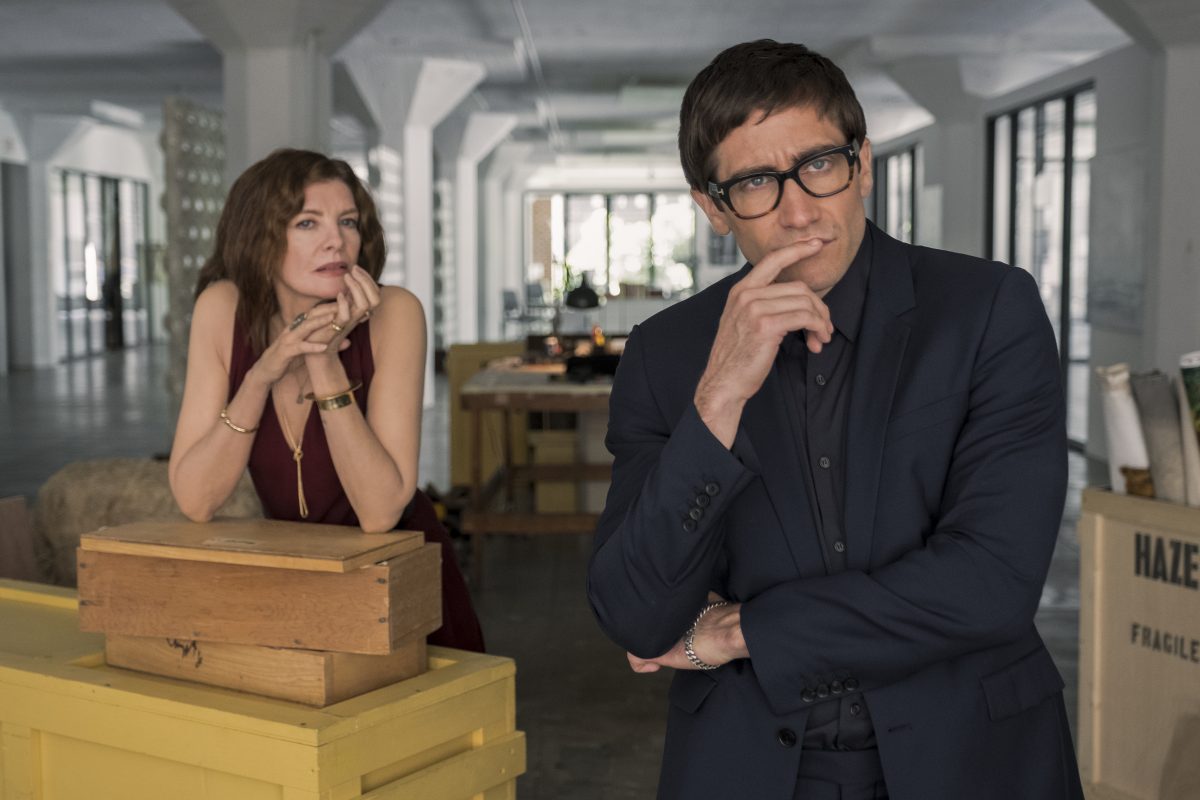
    However, there are interesting elements. The film reunites director and writer Dan Gilroy with Jake Gyllenhaal who plays Morf, a highly respected Los Angeles art critic, and Rene Russo as no-nonsense gallery owner Rhodora, both of whom he worked with in his film debut Nightcrawler.

    With Velvet Buzzsaw, he trades the dark and shadowy crime underbelly of Los Angeles with the colorful and chic world of the art community. Everything is brightly lit, incredibly crisp, and fully saturated. And that’s a problem. Not only does it not create the tense atmosphere the movie sorely lacks, but it’s also a poorly shot movie. The cinematography is reminiscent of a CW primetime soap.
    Velvet Buzzsaw
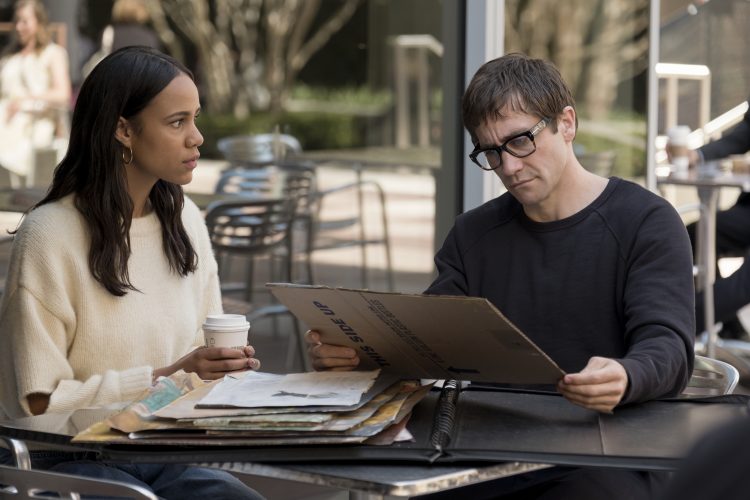
    Zawe Ashton and Jake Gyllenhaal in VELVET BUZZSAW

    What keeps it at least somewhat afloat is the intriguing plot. After discovering her neighbor dead in the hallway of her apartment building, art agent Josephina (Zawe Ashton) ventures into his apartment to find hundreds of pieces of artwork — some haunting and some disturbing. She takes them to Morf who confirms that they are all masterworks and should be worth millions.

    It’s discovered that the artist was a man with a troubled past named Vetril Dease. Catching wind of the incredible portfolio, Rhodora convinces Josephina to let her sell the pieces in her gallery where they quickly become a popular fixture and sweep through the LA art scene.

    However, these aren’t just paintings. They’re cursed. Anyone that profited from them is dying in increasingly horrific ways. No one seems safe. There’s gallery worker Bryson (Billy Magnussen of Game Night fame), another art gallery owner Jon Dondon (Tom Sturridge), Morf’s art curator assistant Gretchen (Toni Collette coming off Hereditary), and Rhodora’s latest client Damrish (Daveed Diggs) who are all at risk.

    All the while, Gilroy attempts a cutting satire of the often pretentious and self-involved community of high-end art. While it gets some good digs in that remind us just how silly art can be — there are incredible one-liners like “a bad review is better than sinking into the great glut of anonymity” and “critique is so limiting and emotionally draining” — it doesn’t really poke at anything we didn’t already know.
    Velvet Buzzsaw
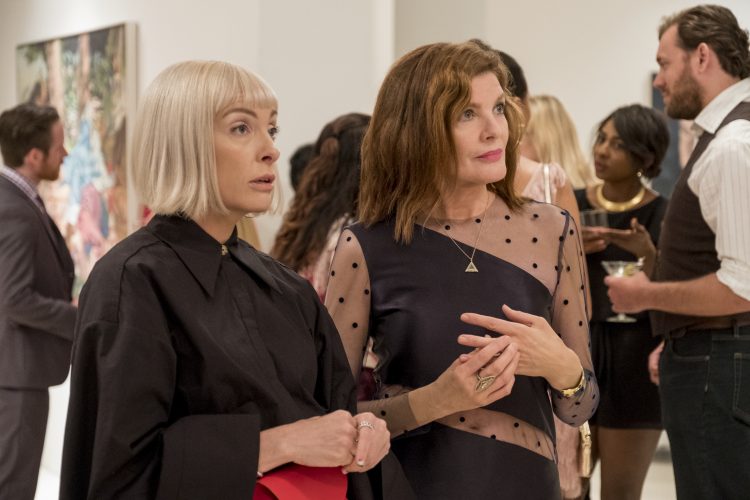
    Toni Collette and Rene Russo in VELVET BUZZSAW

    On the horror side of things, Gilroy fails to create much suspense or scares. The death scenes are interesting and reminiscent of the Final Destination series, but none are surprising or shocking. A large part of that is because the plot never truly gets off the ground. Morf spends some time investigating the mysterious artist Dease to try and unravel the mystery of the paintings, but it’s a subplot when it should truly be the main plot.  Instead, we spend time on the relationship between the bisexual Morf and Josephina and intrigue around the ownership of the paintings.

    That leads to the biggest problem Velvet Buzzsawhas. It’s filled with cold and pretentious LA art people that are hard to care about, including Gyllenhaal’s Morf who comes the closest to being a protagonist. Without an audience surrogate or relatable character at the center, it’s hard to even care about what’s happening the characters. There’s an attempt to make young assistant Coco (Natalia Dyer) that character, but she ends up not being used that way.

    It’s frustrating considering the caliber of the actors in the cast and the intriguing premise. That being said, Gilroy mines enough ridiculous observations and stray one-liners about the LA art world that make it an entertaining enough watch. However, I think it had the potential to be great. With a name like Velvet Buzzsaw, I wasn’t expecting anything less.

    Where to stream Velvet Buzzsaw: Available to stream on Netflix.
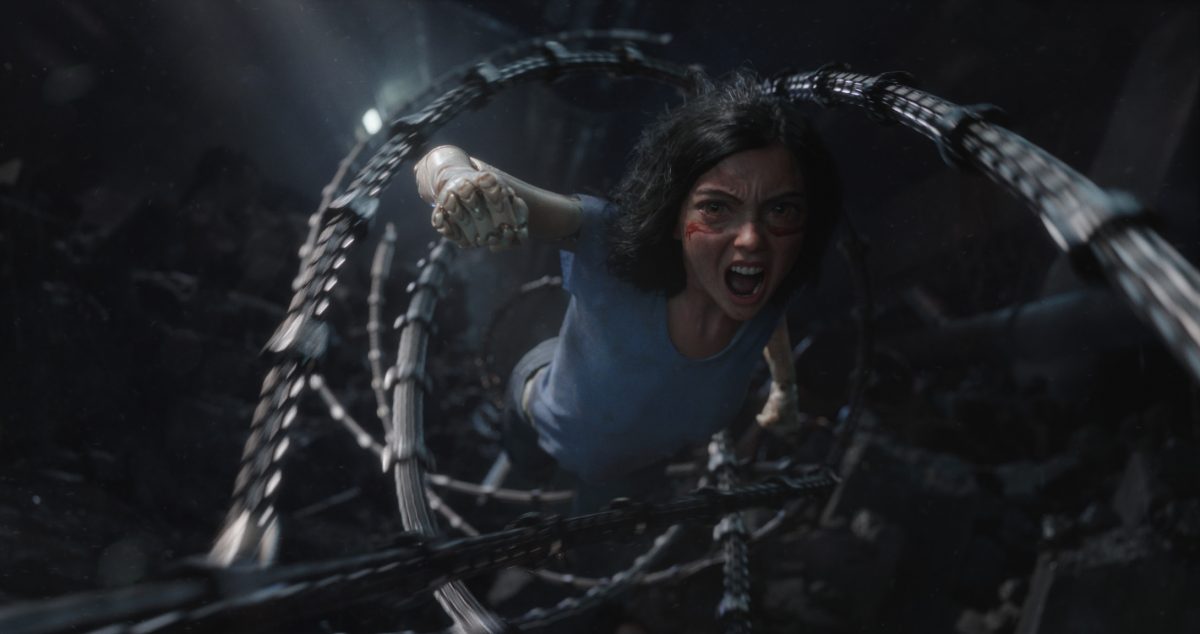
  • ‘Alita: Battle Angel’ review — A messy, but fun cyberpunk sci-fi adventure

    ‘Alita: Battle Angel’ review — A messy, but fun cyberpunk sci-fi adventure

    Alita: Battle Angel boasts exhilarating action scenes and a breakout performance by Rosa Salazar, but buckles under the weight of its complex plot.

    Alita: Battle Angel gets one very important thing right: robots fighting. Director Robert Rodriguez — best known for the Spy Kids and Sin City franchises — knows how to direct an action scene. Even though they’re hyper-stylized with seemingly endless slow-motion CG shots, all of the setpieces have forward momentum, grounding in character, and are easy to follow — no Bourne Identity shaky camera to be found.

    That’s why he was the perfect fit to tackle the long-gestating adaptation of Yukito Kishiro’s classic manga Battle Angel Alita. Taking place in the 26th Century as the cheeky opening logos set, Alita: Battle Angel follows a disembodied core — think of it as a brain and heart in one — who is found and given a new body by Dr. Ido (Christoph Waltz). With no memory of the post-apocalyptic world she wakes up in or her name, Dr. Ido names her Alita.

    Rosa Salazar plays the cyborg heroine through a surprisingly strong motion-capture performance that translates her facial expressions and emotions vividly. Much of the first 30 minutes is dedicated to world building. We’re introduced to a cyberpunk version of Earth where many people have been fused with machinery and dream to make it to Zalem — a utopia floating above their crumbling city.

    The world is fantastically realized. From the costumes to the production design to the character design, every detail feels perfectly drawn out.

    However, for all the great directing and visuals on display, Alita has one very obvious flaw — and it’s a flaw one of the movie’s contributor brings to all his movies. That contributor is James Cameron and the flaw is the screenplay. As is evident in every screenplay he’s written — Avatar and Titanic being the most notable — Cameron completely overthinks every aspect of the story. That’s why Alita is inundated with clunky exposition throughout the entire running time.

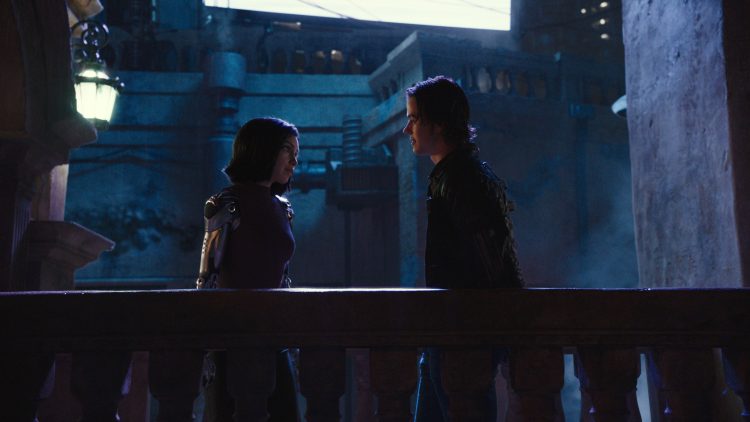
    ALITA: BATTLE ANGEL
    Keean Johnson (left) and Rosa Salazar (center) in Twentieth Century Fox’s ALITA: BATTLE ANGEL. Photo Credit: Courtesy Twentieth Century Fox.

    It’s a delight to watch Alita play the role of the girl in an alien world discovering new things — she takes a bite of an Orange peel! And she’s never had chocolate! But the attempt to also introduce the main characters and get the plot of the ground end up derailing any of the goodwill being built up from Salazar’s stellar performance.

    Eventually, Alita meets Hugo (Keean Johnson), a fully human boy who teaches her the ropes of Earth. He also helps her piece together the mystery of her past. But it’s not all fun and games.

    Alita learns that Dr. Ido is also a hunter-warrior — a league of dangerous bounty hunters who will do anything to collect their payment. After following him out one night, Alita and Ido are attacked by a group of cyborgs who almost kill Ido. However, out of nowhere, Alita fights (and destroys) them using an incredible fighting technique and astonishing strength.

    It catches the eye of Vector (Mahershala Ali) — a man who rigs Motorball combat matches (think of it as roller derby with robots) — who is being used a vessel for Nova — the man who controls Zalem and keeps a close eye on Earth. He takes notice of Alita and wants her dead, to which he tasks the massive cyborg Grewishka (Jackie Earle Haley) with.

    There are multiple intersecting storylines including one involving another hunter-warrior cyborg called Zapan (If Beale Street Could Talk’s Ed Skrein — quite good here) and Ido’s ex-wife Dr. Chiren (Jennifer Connelly — the best of the supporting cast), but it all ends up being incredibly muddled as the screenplay switches and loses focus constantly.

    ALITA: BATTLE ANGEL
    Rosa Salazar (Alita) and Keean Johnson (Hugo) star in Twentieth Century Fox’s ALITA: BATTLE ANGEL. Photo Credit: Courtesy Twentieth Century Fox.

    When the movie is focused on Alita and her journey of self-discovery in the face of real danger from Nova and Grewishka, it works. Unfortunately, that journey is often cast to the side.

    A lot of the emotional core of the movie falls to the relationship between Hugo and Alita. Salazar does her best with the material — a lot of which feels forced. Johnson, on the other hand, stumbles often and doesn’t make a compelling romantic or heroic lead. Because of that, there’s a lack of chemistry between the pair that sucks the life out of any character development — we’re being told they care for each other instead of being shown.

    If Alita: Battle Angel stopped thinking and just delivered great robot fighting action with a simple, but compelling, plot, it would be a fantastic exercise in sci-fi instead of an over-complicated mess. I appreciate so much of what Rodriguez is doing. He should have been allowed to let his imagination run wild. Instead, it felt like he kept getting dragged back down to Earth by the screenplay.

    Alita: Battle Angel comes out a little bit better than the similarly high-concept sci-fi action-adventure Valerian and the City of a Thousand Planets mostly thanks to Salazar’s performance and Rodriguez’s masterful handling of the action sequences. I think it bodes well for a sequel that won’t be burdened with world building. This is a great story. It’s just not told the way it deserves.

    Alita: Battle Angel will be in theaters on February 14th.

  • ‘Piercing’ review — A twisted homage to 70s horror

    ‘Piercing’ review — A twisted homage to 70s horror

    Piercing is a twisted watch that will completely satisfy genre fans and polarize mainstream audiences — but that’s why it works (mostly).

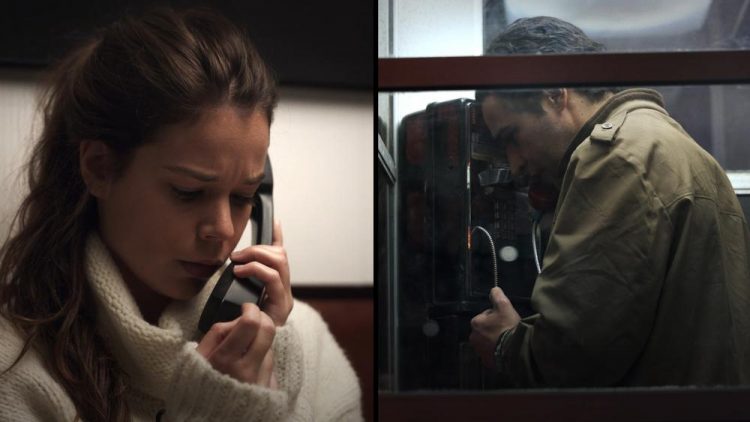
    Piercing — based on Japanese novelist Ryū Murakami’s book of the same name — feels so familiar. It has story elements of American Psycho and tinge of Phantom Thread while boasting stylistic flourishes reminiscent of 70s horror movies like Carrie and Suspiria— down to the horn-infused score, split-screens, and breezy music montages.

    That isn’t to say that it’s not original. Piercing brings all those elements together as a lean, entertaining genre romp that is a bit hollow in its story and themes, but stunning in execution. 

    Reed (It Comes at Night‘s Christopher Abbott) is an unassuming family man with a beautiful wife Mona (Laia Costa) and adorable newborn. However, like Patrick Bateman, Reed has impulses to kill. He frighteningly hovers an ice pick inches away from his daughter but resists. Instead, he finds another way to relieve his urges. 

    Piercing movie
    Christopher Abbott as Reed in Universal Pictures Content Group’s horror film PIERCING.  Photo courtesy of Universal Pictures Content Group.

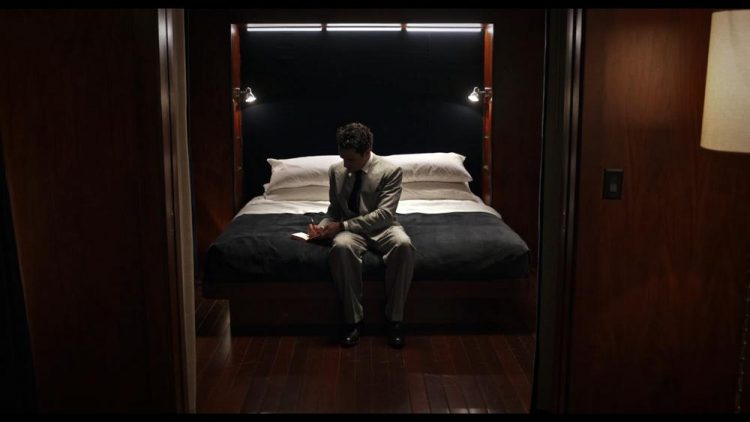
    Reed meticulously plans a murder under the guise of a business trip. Director Nicholas Pesce — following up his black-and-white The Eyes of My Mother — does a phenomenal job evoking the very specific era in film. The shadowy cinematography by Zack Galler perfectly underscores the film’s mysterious game of erotic cat-and-mouse.

    We watch as Reed gets to a hotel room to plan, set-up, and rehearse his murder of a prostitute. Did I mention this is a dark comedy? Abbott perfectly plays the part of an awkward psychopath meticulously planning every move — with added sound effects — of his crime. 

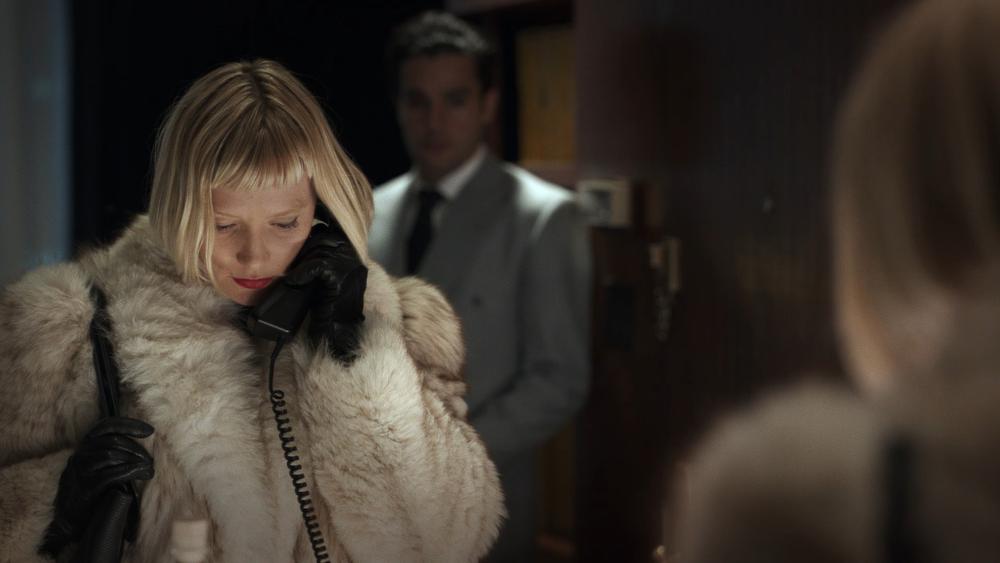
    However, for all his planning, he couldn’t plan going up against Jackie (Mia Wasikowska), a prostitute with nefarious motivations of her own. The tension — cut through with darkly funny laughs — is gloriously built up in the first half and pays off sublimely in the disturbing and gory second half.

    Piercing movie
    (L-R) Laia Costa as Mona and Christopher Abbott as Reed in Universal Pictures Content
    Group’s horror film PIERCING. Photo courtesy of Universal Pictures Content Group.

    Wasikowska has carved a glorious niche for herself in dark, brooding horror-thrillers like Stoker, Crimson Peak, and Only Lovers Left Alive. She continues to do great work here playing the crazy counterpart to Abbott’s straight man — but still crazy — Reed. 

    If anything, the biggest criticism of the movie is that it doesn’t give either actor enough time to build the characters and their relationship beyond what is on the page. It frustratingly ends right as we’re starting to get a feel for what the movie has in store for them.

    And while some themes of control and dominance are able to find their way through, the movie is more hallow that it thinks it is. 

    However, it’s hard to complain when at just 81 minutes, Piercing is a twisted watch that will completely satisfy genre fans. It’s a movie designed to be polarizing — think Darren Aronofsky’s mother! — but it’s an exciting risk by an interesting new voice in horror. 

    Where to watch Piercing: Playing in limited release on February 1st. Also available to rent or buy on Prime Video and


    ADVERTISEMENT


    More movies, less problems


    Hey! I’m Karl. You can find me on Twitter and Letterboxd. I’m also a Tomatometer-approved critic.

    💌 Sign up for our weekly email newsletter with movie recommendations available to stream.


    ADVERTISEMENT


  • ‘Glass’ review — Wild, ambitious, and confounding

    ‘Glass’ review — Wild, ambitious, and confounding

    Glass is a wildly ambitious conclusion to M. Night Shyamalan’s Unbreakable trilogy that succeeds and fails in many ways. 

    Glass — the finale of M. Night Shyamalan’s surprise Unbreakable trilogy — is ambitious and wild. It works completely in some aspects and fails in others. But I’m glad that it exists. Shyamalan took the initiative and self-financed the film, but it’s the kind of risky movie that I want to see coming from studios.

    After the critical reevaluation of the original Unbreakable that has pushed it to become the #filmtwitter default pick for M. Night Shyamalan’s best film and Split’s surprise twist of being in the same universe as Unbreakable, it was only natural that Shyamalan finished his comic book film series as a trilogy.

    Though, that begs the question of whether or not a third film was actually necessary. Unbreakable is driven by the mystery of whether or not David Dunn (Bruce Willis reprising his role) is actually a superhero — spoiler: the answer is a resounding yes — and Split works completely in a vacuum as a kidnapping thriller. So, what’s the point of merging the two?

    I’m not sure Shyamalan even knows the answer to that other than that it would be cool to have David Dunn — now known as “The Overseer” — go up against James McAvoy’s “The Beast” introduced in Split. The result is a muddled but interesting story that could have been tightened up as the pacing revs up and slows down throughout.

    Glass picks up 19 years after the events of Unbreakable and three weeks after the events of Split. David Dunn, with the help of his son Joseph (Spencer Treat Clark reprising his role from the original), is continuing his work as a vigilante in Philadelphia. With superhuman strength, near invincibility, and the ability to sense evildoings in people past, he is a proper superhero.

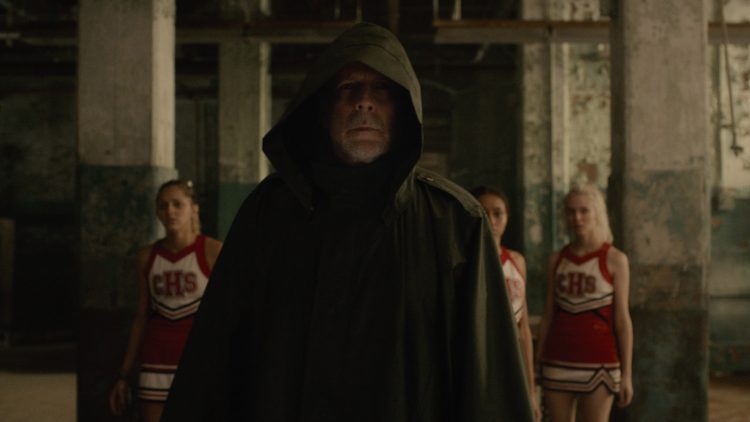
    Elsewhere, Kevin Wendell Crumb (James McAvoy) — the body that houses 24 distinct personalities including a nefarious group called “The Horde” and a human-animal called “The Beast” — has taken four cheerleaders for a sacrifice.

    Dunn tracks “The Horde” to an old factory after weeks of searching. After releasing the cheerleaders he goes head to head with “The Beast” in a near perfect matchup. However, they’re soon incapacitated and taken by Dr. Ellie Staple (Sarah Paulson) and a SWAT team.

    There is so much to admire about the movie. For the first act, Shyamalan essentially gives you want you wanted — an Unbreakable and Split crossover with David Dunn going up against “The Horde.” It’s the kind of white-knuckle suspense that he does so well.

    From the cold open where David incapacitates a pair of neighborhood hooligans who knock out people for fun to Joseph helping him track down “The Horde” to the warehouse brawl, Shyamalan reminds us why he was such a successful director in the first place. It’s kinetic and tense and scary. So when Dr. Staple takes over the movie it’s a jarring switch.

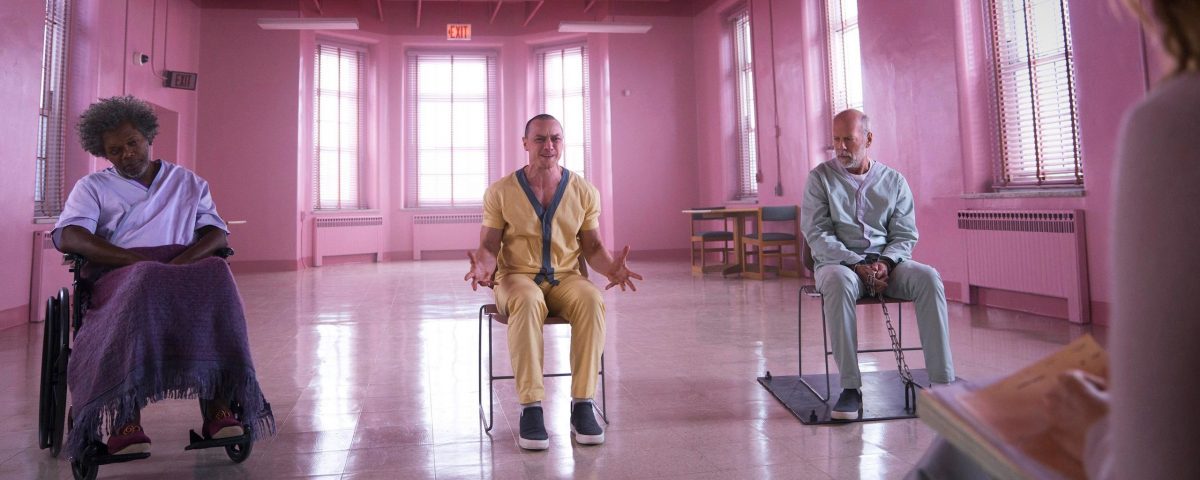
    David and “The Horde” are locked in a high-security mental institution — David in a room that would flood him with water (his one weakness) if he tried to escape and “The Horde” with a flashing light that incapacitates them and switches the personality in control.

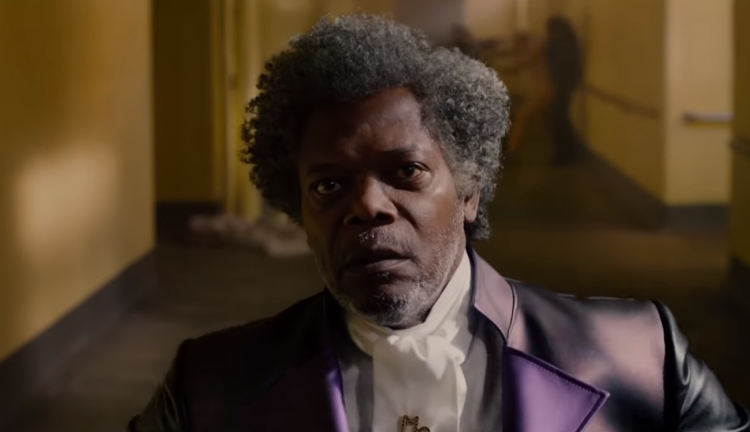
    Also in the facility is Elijah Price — aka Mr. Glass — who was David’s arch-nemesis in Unbreakable. However, he has been heavily sedated and unresponsive for years. Though his mother Mrs. Price (Charlayne Woodard — fantastic here) still tries to visit him.

    Glass movie
    Samuel L. Jackson in M. Night Shyamalan’s GLASS

    We learn that Dr. Stapler is a specialist in people with the specific delusion of being a superhero and was given three days to convince the trio that they don’t actually have powers. So, much of this section of the movie — the largest section — is monologuing about the very nature of superheroes. Glass continues to explore the mythology started in the first movie about comic books being records of the remarkable things that people can actually do.

    More interestingly, though, it forces David and “The Horde” to actually reconsider their importance in the world. They truly question whether they are just normal people with very specific traumas. The movie becomes a dance between Dr. Staple, “The Horde,” David, and Mr. Glass — who might be more aware than he lets on.

    The plot stalls in a way that will divide audiences. Truthfully, it didn’t entirely work for me. But it completely worked for my boyfriend. And I can see how someone would be completely taken with the movie. The pacing didn’t work for me, but all the punches it was taking landed.

    The final act is something of a marvel. What the movie pulls off is quite a stunner, which is why I end up being more positive on the movie as a whole than negative. Glass is not structured like a movie “should” be, but it somehow still builds towards a satisfying finale involving Joseph, Mrs. Price, and Split’s Casey Cooke (the great Anya Taylor-Joy). Let’s just say that Shyamalan still knows how to pull off a twist — or a couple.

    I owe Glass another viewing. It’s ridiculous and ambitious and unexpected, which are all reasons why I didn’t connect with it this time around. I have a feeling knowing what I’m getting into will make me understand it more. Either way, whatever you think of M. Night Shyamalan, you have to appreciate what he’s done here. He maybe doesn’t have all the skills to pull something off, but he certainly has the guts. And sometimes that’s all it takes.

    Glass is in theaters now.

  • 2019 Oscars Final Predictions

    2019 Oscars Final Predictions

    Despite the mess that is the 2019 Oscars, it is refreshing to have a season that feels unpredictable. Best Picture is still up in the air as is Best Supporting Actress while there is room for upsets in nearly every category. As a lifelong Oscar fan, it’s always more excited to not know who’s going to win come Sunday night. 

    Here are my predictions in ever category:

    Best Picture

    Will Win: BlacKkKlansman
    Could Win: Roma or Green Book
    Should Win: Roma or Black Panther

    I’m taking a big swing in this category. While BlacKkKlansman hasn’t won a major prize, it was nominated every where it needed to be. People love and respect Spike Lee. I think this is going to do really well on the preferential ballot. As long as Roma or Green Book don’t win on a first round then I think this is your Best Picture winner. 

    Best Actress

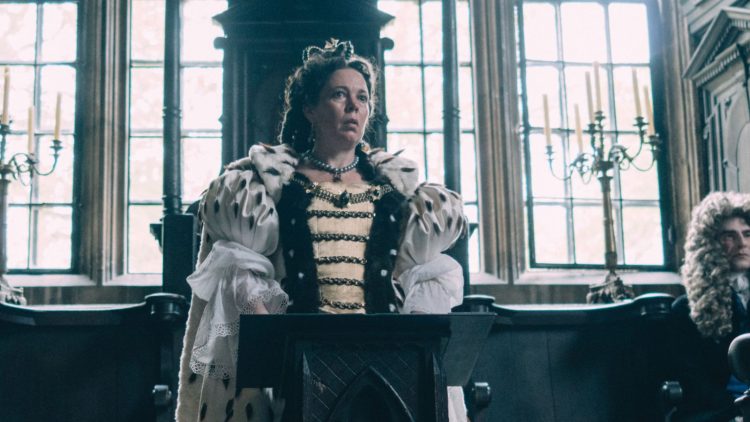
    Olivia Coleman as Queen Anne in THE FAVOURITE

    The nominees:

    • Glenn Close, The Wife
    • Olivia Coleman, The Favourite
    • Lady Gaga, A Star is Born
    • Melissa McCarthy, Can You Ever Forgive Me?
    • Yalitza Aparicio, Roma

    Will Win: Glenn Close, The Wife
    Could Win: Olivia Coleman, The Favourite
    Should Win: Olivia Coleman, The Favourite

    Glenn Close will finally end her 37-year losing streak when she wins her first Oscar for The Wife. There is the *tiniest* chance that BAFTA winner Olivia Coleman wins for her performance Queen Ann in The Favourite

    Best Actor

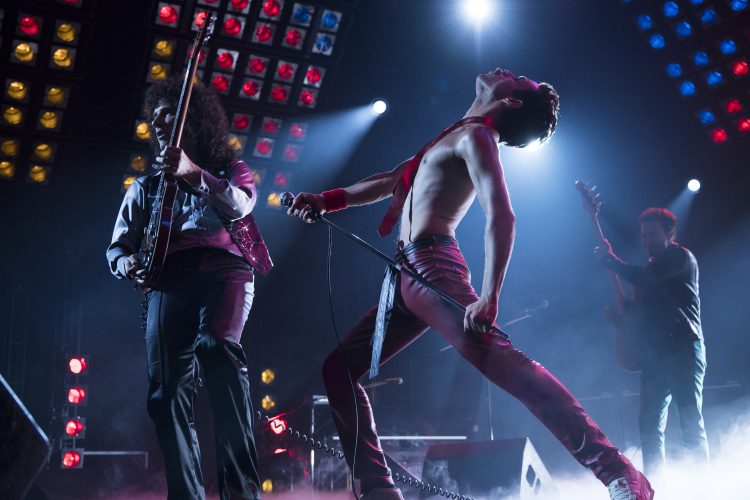
    Rami Malek in BOHEMIAN RHAPSODY

    The nominees:

    • Christian Bale, Vice
    • Rami Malek, Bohemian Rhapsody
    • Bradley Cooper, A Star is Born
    • Willem Dafoe, At Eternity’s Gate
    • Viggo Mortensen, Green Book

    Will win: Rami Malek, Bohemian Rhapsody
    Could win: Christian Bale, Vice
    Should win: Bradley Cooper, A Star is Born

    Although Christian Bale won the Golden Globe and Critics Choice awards for his performance as Dick Cheney in Vice, I think the real challenger to clear frontrunner Rami Malek is Bradley Cooper. For better or worse, he’s been in the news a lot and if voters want to award A Star is Born outside of Best Original Song, this would be the place to do it. 

    Continue Reading

    Pages: 1 2 3

  • ‘All These Small Moments’ review — Sweet and simple family-in-crisis drama

    ‘All These Small Moments’ review — Sweet and simple family-in-crisis drama

    All These Small Moments is a charming, well-acted New York City coming-of-age set against a family-in-crisis drama.

    There’s something so charming and idealistic about movies set in New York City. There’s a different kind of energy that they give off. Something homey. All These Small Moments is no exception. It’s a testament to first-time director Melissa Miller Costanzo. The movie feels lived in — the central family’s cluttered Brooklyn brownstone feels real and intimate.

    All These Small Moments follows the Sheffield family. Teenager Howie (Brendan Meyer) and his younger brother Simon (Sam McCarthy) have been noticing that their parents — Carla (Sixteen Candles and The Breakfast Club legend Molly Ringwald) and Tom (Spotlight’s Brian d’Arcy James) — have been sleeping separately.

    Like any parents with the best intentions, they try to maintain an air of normalcy for their kids even though things clearly aren’t. As a coping mechanism, Howie has become infatuated with a woman — we eventually learn her name is Odessa (Jemima Kirke) — he sees every morning on the bus. One day, he ditches school to follow her. What he finds unsettles him — his father in a cafe with another woman.

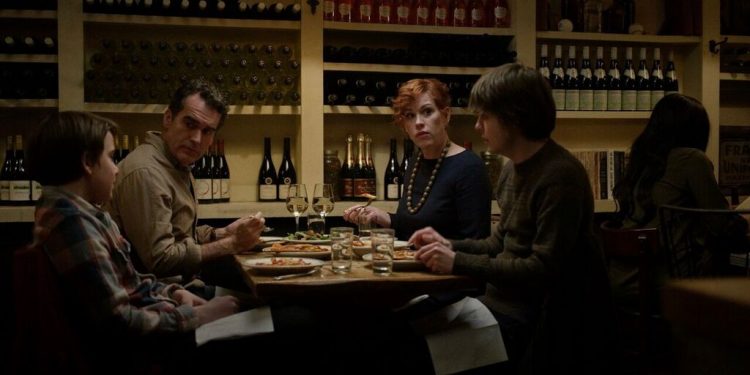
    Sam McCarthy, Brian d’Arcy James, Molly Ringwald, and Brendan Meyer in ALL THESE SMALL MOMENTS.

    From there, the movie unfolds as a familiar coming-of-age story of a kid dealing with the typical teenage angst issues against his parents’ crumbling marriage. It’s never melodramatic, though. It has all the feelings we’ve come to love from a light-hearted New York City drama — all the sentimentality, cynical humor, and longing.

    Miller Costanzo has a focused and classic style that makes the little moments in All These Small Moments work — the brothers sharing the bathroom sink, their parents arguing over asking a waiter for bread at a restaurant.

    Like Lady Bird, the movie is built as a series of vignettes that follows the characters growing and changing. Each scene building on the last to complete a portrait.

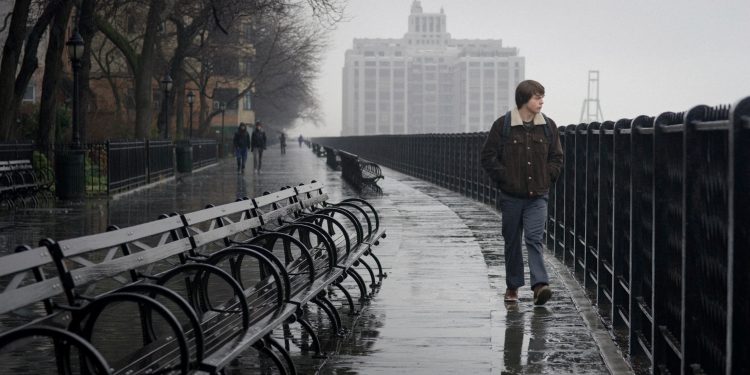
    Brendan Meyer in ALL THESE SMALL MOMENTS.

    If anything, the movie’s biggest issue is that it’s too controlled. Unlike Lady Bird and other successful recent teen coming-of-age movies like The Edge of Seventeen and Eighth Grade, there are never those moments when you can feel real life happening on screen.

    In particular, there are cut-ins to Carla and Tom in marriage counseling that ring a bit false and scenes between Howie and Lindsay (Harley Quinn Smith) — a classmate he verbally spars with often — are more whimsical than real.

    All These Small Moments hits a lot of the beats you’d expect of a movie with this plot — the kids listening to their parents argue on the stairs, a young teen infatuated with an older woman — and some you don’t expect. Still, it’s a solid enough family and coming-of-age drama that shows a lot of promise for a new director.

    Where to watch All these Small Moments: Available to rent or buy on Prime Video or 

  • ‘Beyond the Night’ review — An engrossing supernatural mystery thriller

    ‘Beyond the Night’ review — An engrossing supernatural mystery thriller

    Beyond the Night is an engrossing thriller filled with strong characters and an intruging central mystery that keeps you guessing. 

    Beyond the Night is a dark slow-burning supernatural thriller set in a small coal-mining town in rural Pennsylvania. It’s the perfect setting for the movie’s mystery to be set against. The gray, frozen landscape adds to the tense atmosphere as does the fact that seemingly everyone and their grandma owns a gun — this is an important note.

    A lot of the movie reminded me of Jeff Nichols’ Midnight Special — down to the 80s-soaked synth score and the story of a father doing everything in his power to protect his son who is displaying supernatural abilities.

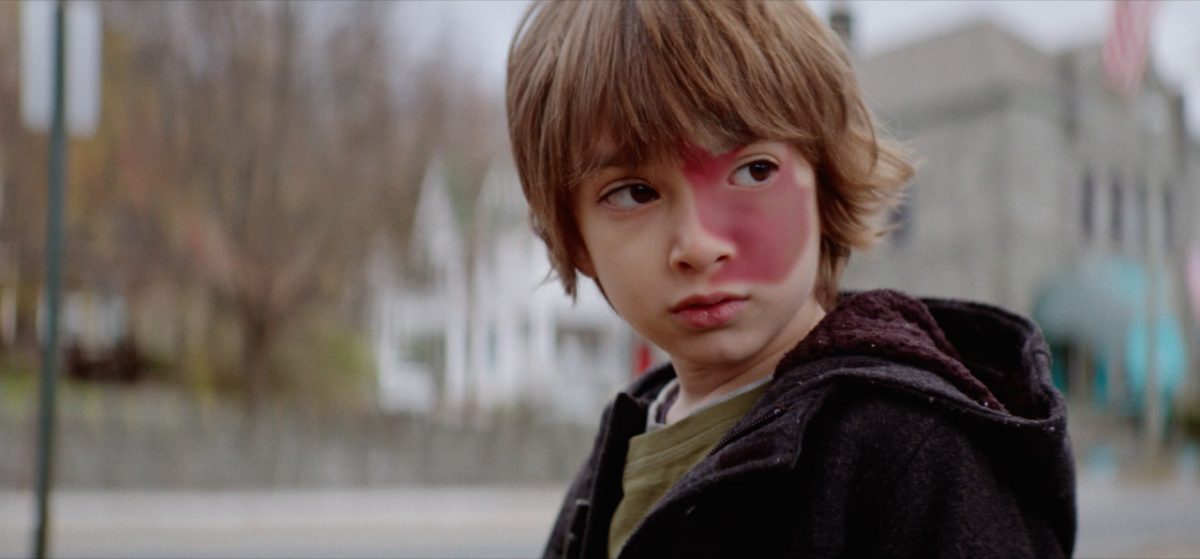
    However, the movie is more grounded than it sounds. Ray (Zane Holtz — quite good here) is an army man who returns to Philadelphia after his wife is killed in a car accident leaving him to take care of their son Lawrence (Azhy Robertson) — who is marked with a port-wine stain over the left side of his face.

    Ray isn’t equipped to take care of Lawrence. Granted, Lawrence has his behavioral quirks to go along with his birthmark — he often sings random notes to himself and lashes out at precisely the wrong moments.

    Beyond the Night
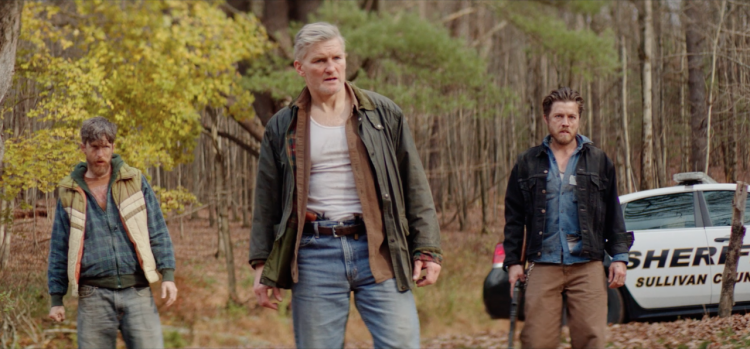
    Chance Kelly in BEYOND THE NIGHT.

    Ray often losses his patients with Lawrence and becomes frustrated with him. However, he has his moments as a father. At one point, a woman in a store sees Lawrence and says to her daughter, “don’t look at it, baby girl.” Like any parent, Ray takes a tire iron to their windshield. Not exactly parent of the year material, but Lawrence certainly appreciates it.

    The father and son move to Ray’s hometown in rural Pennsylvania where they both deal with their grief with the support of Ray’s sister and town deputy Caroline (The Invitation’s Tammy Blanchard — fantastic as always).

    To complicate matters, Lawrence begins to exhibit even stranger behavior than usual — staring at random people and things — and eventually causes a stir when he mentions the name July Rain to a woman at his mother’s funeral reception, which causes the woman to storm out.

    Ray learns that July is a 15-year-old girl who went missing years prior and whose case — despite Caroline’s and Sheriff Hirsch’s (Skipp Sudduth) best efforts. He is convinced that his son must have heard the name from someone else. But then, Lawrence begins to recite information he should not know. Confused and fearful — July’s father was local redneck thug Bernie (Chance Kelly) — Ray and Caroline team up with child psychologist Dr. Sheryl Bomont (Enid Graham) to unravel the mystery.

    Director and writer Jason Noto drew inspiration from Denis Villeneuve’s (Arrival) films Prisoners and Enemy. And that is obvious. Beyond the Night is a slow unraveling mystery that gives you the pieces to solve it throughout. And while it’s not as smart as those films — I found that the movie gives you too much — it’s a wholly effective and well-directed thriller.

    Beyond the Night
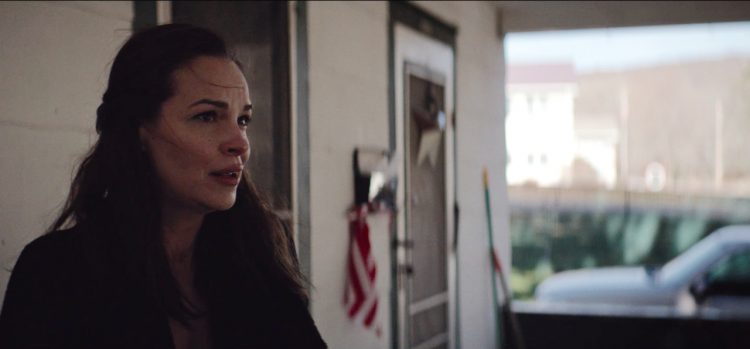
    Tammy Blanchard in BEYOND THE NIGHT.

    A lot of that comes from the well-drawn characters — particularly the supporting cast. Blanchard’s Caroline is torn between duty to her brother and duty to her job, which leads to an interesting internal conflict.

    Neal Huff portrays the town’s pastor whose storyline deals with faith and all the complexities that come with it. Not to mention Chance Kelly’s menacing performance as a local gangster who is terrifying, but given moments of humanity specifically around his daughter.

    I think there are some mistakes as can be expected from a debut. The plot doesn’t always flow well and sometimes some information is unclear. But the style is there. Noto gets his point across well enough. If anything, I wish the lean 98-minute running-time was expanded so we could explore the characters and story more.

    Beyond the Night’s greatest virtue is its characters. And the father-son relationship at its core is a major driver of that. Ray’s growth as a father throughout is the main propulsive point of the film. While the mystery is what makes the movie interesting, that relationship is what makes it engrossing.

    Beyond the Night is now playing in limited release.

  • ‘Velvet Buzzsaw’ trailer — Jake Gyllenhaal is an art critic going mad

    ‘Velvet Buzzsaw’ trailer — Jake Gyllenhaal is an art critic going mad

    Jake Gyllenhaal plays an art critic that is haunted by an artist’s work (literally) in the trailer for Dan Gilroy’s Velvet Buzzsaw.

    Velvet Buzzsaw reunites Jake Gyllenhaal with his Nightcrawler director Dan Gilroy and co-star Rene Russo. Here’s the plot description:

    Velvet Buzzsaw is a thriller set in the contemporary art world scene of Los Angeles, where big money artists and mega-collectors pay a high price when art collides with commerce.

    Netflix

    I was a huge fan of Nightcrawler. It was one of my favorite movies of 2015 and features Gyllenhaal’s best performance — he was egregiously snubbed at the Oscars (still mad).

    While that movie was essentially a neo-noir crime thriller, Velvet Buzzsaw looks like it’s delving a bit into horror. It makes sense considering there were a lot of horror elements in Nightcrawler — Lou Bloom, Gyllenhaal’s character, was truly terrifying at points. 

    Gyllenhaal thrives when he’s playing characters falling into madness/obsession — Nightcrawler, ZodiacPrisoners — which bodes well for the movie

    It also helps that he’s joined by a stacked supporting cast including Daveed DiggsStranger Things’ Natalia DyerBird Box‘s John Malkovich, and the current reigning queen of horror Toni Collette — following up her stunning performance in last year’s Hereditary

    Velvet Buzzsaw has a lot going for it.

    It will be released on Netflix on February 1st. It will have its world premiere at the Sundance Film Festival.

  • 2019 Golden Globes Predictions — Film

    2019 Golden Globes Predictions — Film

    The Golden Globes, the first televised awards of the season, are this Sunday. Here are our predictions for every film category.

    The first major awards show of the season, the Golden Globes, is this Sunday! Vice leads all films—drama and musical or comedy—with 6 nominations including Best Motion Picture — Musical or Comedy.

    Not far behind is Oscar favorites The Favourite (with nominations for all three leading actresses), Green Book, and A Star is Born (including nominations for Lady Gaga and Bradley Cooper).

    If our predictions are right, Vice and A Star is Born will lead with 3 wins apiece.


    Best Actress in a Motion Picture — Drama

    The nominees:

    • Glenn Close, The Wife
    • Lady Gaga, A Star is Born
    • Nicole Kidman, Destroyer
    • Melissa McCarthy, Can You Ever Forgive Me?
    • Rosamund Pike, A Private War

    Will Win: Lady Gaga, A Star is Born

    Could Win: Glenn Close, The Wife

    Should Win: Lady Gaga, A Star is Born

    With her main Oscar rivals Olivia Colman (The Favourite) and Emily Blunt (Mary Poppins Returns) in the Comedy or Musical category, Lady Gaga (A Star is Born) has an easy path to the win.

    Best Actor in a Motion Picture — Drama

    The nominees:

    Will Win: Rami Malek, Bohemian Rhapsody

    Could Win: Bradley Cooper, A Star is Born

    Should Win: Bradley Cooper, A Star is Born

    The Golden Globes love a musical performance, and this category has two—the reason they’re not in the comedy or musical category is because the studios opted to submit the films as dramas. This race is a toss-up between Rami Malek’s energetic portrayal of Freddie Mercury in Bohemian Rhapsody and Bradley Cooper’s southern drenched alcoholic country star in A Star is Born.

    The Globes—unlike most critics—loved Bohemian Rhapsody, so I think Malek has the edge.

    Best Motion Picture — Drama

    The nominees:

    Will Win: A Star is Born

    Could Win: BlacKkKlansman

    Should Win: If Beale Street Could Talk

    Though it’s been a bit dormant during critics season, this is A Star is Born’s chance to shine. Plus, the Golden Globes always go with the Oscar frontrunner. If there is an upset, Spike Lee’s BlacKkKlansman—it overperformed in nominations—is the most likely to pull it off.

    (more…)
  • 'Vice' is an angry movie that isn’t sure what it’s angry about — movie review

    'Vice' is an angry movie that isn’t sure what it’s angry about — movie review

    Vice follows Dick Cheney’s precipitous rise to power and his everlasting effect on American politics

    Quick review: Vice tries to grapple with the second Bush’s years in office through Dick Cheney but ends up with nothing to show for its efforts.

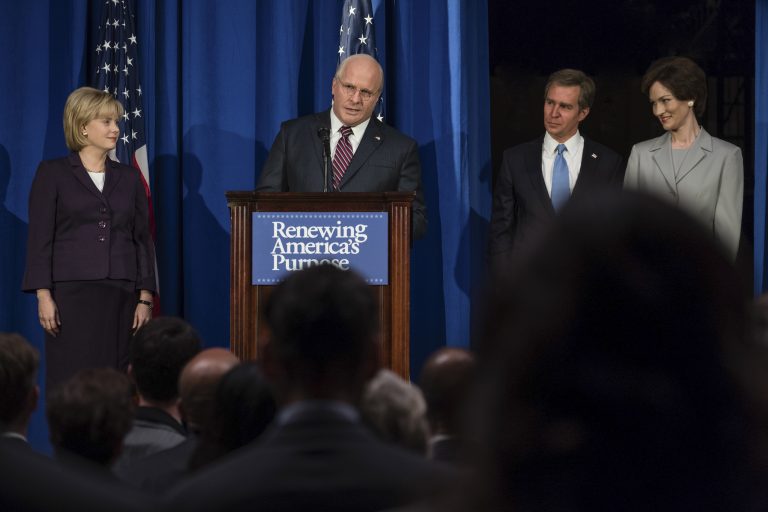
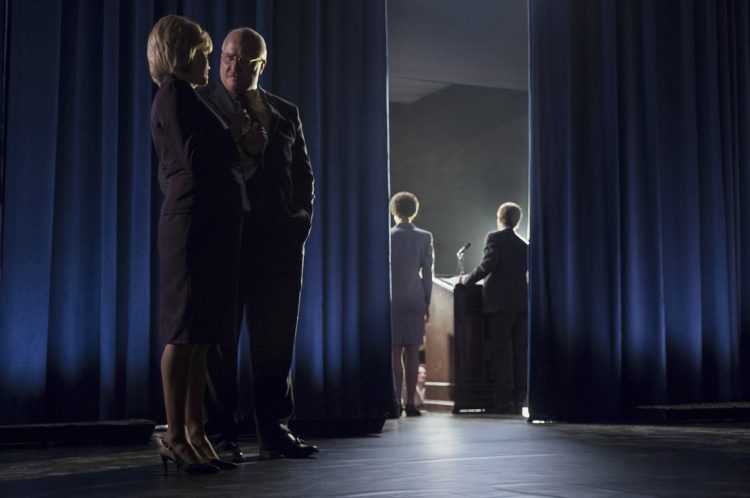
    Vice ends with Dick Cheney (Christian Bale under a heavy amount of makeup) turning to the camera and saying, “You chose me. And I did what you asked.” Then the movie’s end credits are played over “America” from West Side Story. It’s an infuriating end to a movie that had its issues but wasn’t completely a miss until it let on that it had no idea what it was trying to say.

    Sit through the end credits. Then witness the movie’s full-hearted reprehensible attempt at a BlacKkKlansman style “but this is happening today” coda that is meant to tie the movie together.

    💌 Sign up for our weekly email newsletter with movie recommendations available to stream.


    ADVERTISEMENT


    Never in cinematic history has a movie so stunningly tear itself apart in less than 30 seconds — the final 30 seconds, no less.

    Dick Cheney changed the world when he came to power in the second Bush administration as the Vice President. Our current terrifying political environment didn’t start in 2016. It’s been this way for nearly two decades.

    After a surprisingly typical biopic opening act that follows Cheney from his short time at Yale that ended with him dropping out to his stint blue collar worker that gets too drunk after his shift to an intern for Don Rumsfeld (Steve Carell) to the White House Chief of Staff to the Secretary of Defense under Bush senior to the Vice President to George W. Bush (Sam Rockwell following up his Oscar win for Three Billboards Outside Ebbing, Missouri).

    What all these experiences have in common is that Cheney, driven by his Lady Macbeth-like wife Lynne (standout Amy Adams), is that he fails up. The section isn’t incredibly inspired.

    Vice
    Amy Adams (left) as Lynne Cheney and Christian Bale (right) as Dick Cheney in Adam McKay’s VICE, an Annapurna Pictures release. Credit : Matt Kennedy / Annapurna Pictures 2018 © Annapurna Pictures, LLC. All Rights Reserved.

    The whole story is framed by a mysterious narrator (Jesse Plemons, who was a scene-stealer in Game Night earlier this year) who talks straight to the camera and has all the bells and whistles director Adam McKay used in his Oscar-winning The Big Short — hyperactive visual cut-ins, breaking the fourth wall, quick montages through history. It is a satire after all.

    But about 40 minutes in, Vice makes a clear pivot to make Dick Cheney the clear villain of the story. But shouldn’t he always have been? Even after this pivot, though, the movie doesn’t always make clear its point-of-view. It tells us a lot about the Bush/Cheney years — the Florida recount, 9/11, the invasion of Iraq — but doesn’t give us any material or insights to grapple with what happened. Instead, it satirizes those actions.

    The story of Dick Cheney is a hard one to make funny because the implications of his story are dead serious — something the movie tries to say in the final minutes. It doesn’t help either that Cheney becomes completely opaque in the second half. We never know why he’s doing anything. Neither does McKay.

    “You chose me. And I did what you asked.” Adam McKay’s version of “you reap what you sow.” Even though Vice attempts to villainize Cheney, its final beats blame us — the citizens of this country. Not the system that puts men like Cheney in power. It blames us. But we didn’t choose you to tell this story, McKay. This isn’t what we asked for.

  • ‘Dumplin” review — Beauty pageants, self-love, and drag queens

    ‘Dumplin” review — Beauty pageants, self-love, and drag queens

    Dumplin’ is the cinematic equivalent of comfort food. It’s warm, filling, satisfying, and exactly what you’d expect, but that’s why it works.

    Dumplin’ fills a feel-good movie shaped void in 2018. And while it doesn’t completely subvert the formula it applies it incredibly well to this touching coming-of-age story of self-love directed by Anne Fletcher—best known for directing the 2009 romantic-comedy The Proposal.

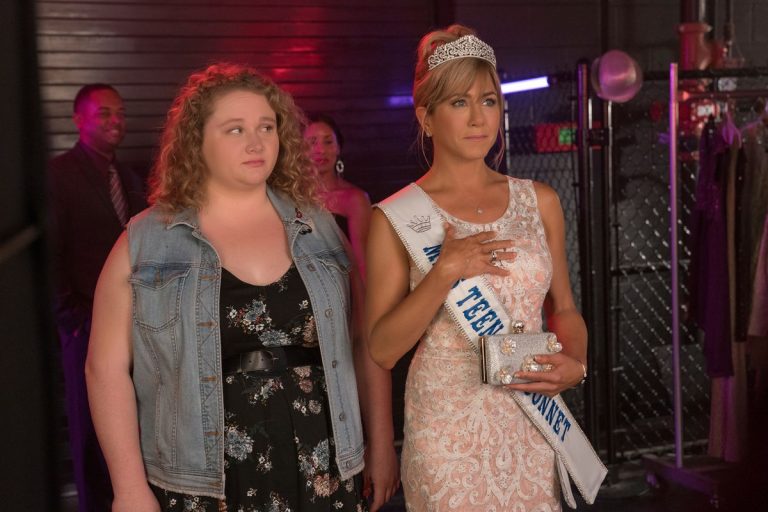
    Based on the Julie Murphy novel of the same name, Dumplin’ follows Willowdean “Will” Dickson (Danielle MacDonald), the daughter of 1991 Miss Teen Bluebonnet and current director of the pageant Rosie  Dickson (Jennifer Aniston), as she navigates life in her mother’s shadow.

    While her mom is a mini-celebrity in their small Texas town, people are shocked to find that the overweight and unglamorous Will is Rosie’s daughter. However, Will finds strength from her late aunt Lucy—she instilled confidence in Will through their shared love of Dolly Parton (her music is a big reason why the movie works)—and her best friend Ellen (Lady Bird’s Odeya Rush—quite good here).

    After being suspended for defending a fellow overweight girl named Millie (Maddie Baillio), Will decides to sign-up for the Miss Teen Bluebonnet Pageant as both an act of defiance against her mom who was absent from her upbringing and in support of her aunt Lucy, who wanted to try out when she was 16 but didn’t.

    The first act is the kind of breezy setup that makes these kinds of movies so enjoyable to watch. Every character is carefully etched from the aloof Rosie and the enthusiastic Millie to the edgy feminist Hannah (Bex Taylor-Klaus)—she also joins the pageant in protest—to the steadfast Will.

    Dumplin'
    Danielle Macdonald in Netflix’s Dumplin’

    However, it also diverts from the formula a bit. Will’s romantic storyline with her love interest Bo (Luke Benward) reaches a climactic point early on in the movie as does her relationship with Ellen. Plus, the movie focuses primarily on the dynamics between Rosie and Will—who is called Dumplin’ by her mother much to her dismay—and Will’s inner struggle towards self-love.

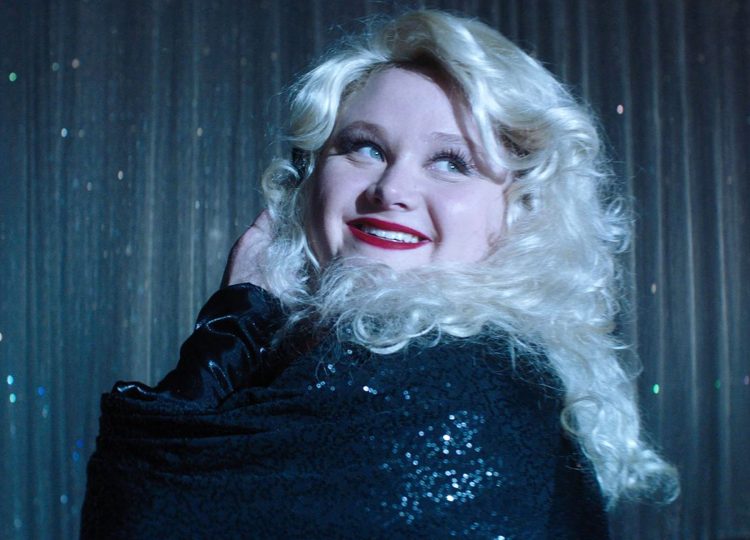
    It’s fitting that a lot of the growth in the character of Will comes from her interactions with a group of drag queens—Rhea Ranged (Harold Perrineau) and RuPaul’s Drag Race alum Ginger Minj—since so much about the art form comes from self-love.

    However, the second act of the film meanders a bit and the final act, while completely uplifting and satisfying—reverts to the formula that we know. But that’s okay.

    Dumplin’ is cinematic comfort food. It’s warm, filling, satisfying, and exactly what you expect. Here and there it surprises you—particuarly the strong performances from Aniston and Macdonald, who is having a great year between this and Bird Box—but overall it works because you know the story and can call its shots.

    Netflix is becoming a powerhouse in these types of movies. Just this year they had To All the Boys I’ve Loved Before and Set it Up as examples of entertaining crowd-pleasing fare. Dumplin’ is yet another sequenced and southern fried feather in its cap.

    Dumplin’ is now streaming on Netflix.

  • ‘Vox Lux’ review — A hollow pop musical drama

    ‘Vox Lux’ review — A hollow pop musical drama

    Vox Lux has an interesting story and visuals, but its lack of focus and uneven characters leave it little more than a hollow pop musical drama.
    Where to watch Vox Lux: Streaming on Hulu. Available to buy or rent on Prime Video.

    Vox Lux has too many ideas it’s trying to grapple with that it ends up not having any ideas. In a year where musical dramas A Star is Born and Bohemian Rhapsody topped the box office and awards conversation, Vox Lux had to do a lot to stand out. And it definitely does from those two other movies—for the wrong reasons

    Actor turned director Brady Corbet—Vox Lux is his second feature after The Childhood of a Leader—begins the movie tackling the very real issue of mass shooting in the United States. Celeste Montgomery (played as a teen by Raffey Cassidy) is sitting in her music class when a fellow student brandishing a gun barges in and shoots their teacher.

    Celeste tries to reason with him to no avail. And he shoots everyone in the classroom. She’s injured, but alive. Slowly recovers from a spinal injury and sings at the memorial for the victims. From there, as told by a voiceover by Willem Dafoe, Celeste is thrown into a whirlwind and we watch her grow into a full-blown pop star—with the help of her manager (Jude Law) and publicist (Jennifer Ehle).

    This first “act” has some pacing issues and Cassidy can’t seem to commit to a character choice—she alternates from shy and reserved to motivated and mature. It feels like a lot of the inconsistency comes from the movie’s attempt to lead us to act two Celeste, played by Natalie Portman—trying to continue her winning streak following Jackie and Annihilation.

    Some fifteen years later, Celeste is a pop star making her comeback. After years of partying and getting into trouble, it seems that she is both done with her public life and conceding to it. The movie tries to comment on the nature of being a celebrity, but its focus on politics, the social environment, and other issues of the day—there are interludes into 9/11 and social media and press—it never quite gets there.

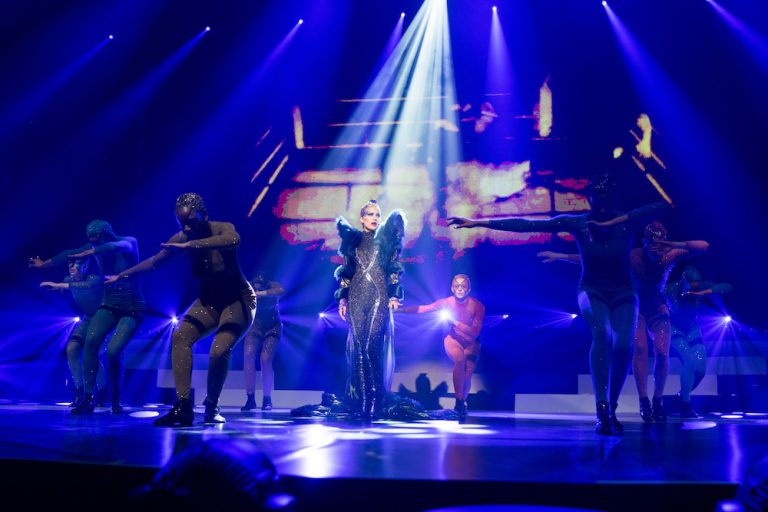
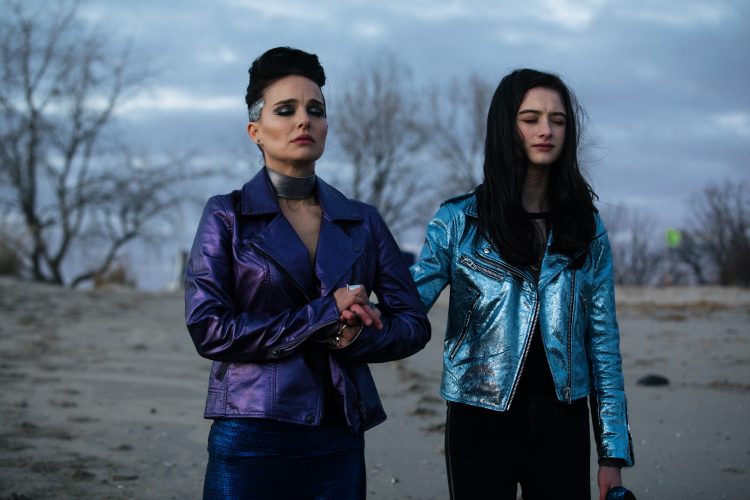
    Vox Lux
    Natalie Portman and Raffey Cassidy in Vox Lux

    Vox Lux’s main issue is that it feels like it starts every scene with “in this day and age,” and at some points characters even say that. It does so much to be “woke” and cultured that at some points it feels like it’s doing it to be relevant.

    It’s unfortunate considering there is a place among the Bohemian Rhapsody’s and A Star is Born’s of the world. It doesn’t have the magic or romance of either of those movies. Vox Lux is about the cold realities of life—it’s almost nihilistic. It would have been interesting to explore stardom from that angle. But the movie has other preoccupations.

    Those preoccupations are also why Portman’s portrayal of Celeste feels so disconnected from Cassidy’s. Portman’s version is tired of the world and wants to make sure the world knows it. It would have worked if the first act built to that, but it doesn’t.

    Vox Lux has an interesting enough story with a unique perspective, but Corbet’s screenplay really lets the movie down. He’s an interesting director, but without someone to rein his ideas in the movie becomes a bit of a mess.

    There are moments of clarity. Specifically in Celeste’s relationship with her older sister Ellie (Stacy Martin) and her daughter (also played by Cassidy), but because of the other ideas, those plotlines are underbaked. Just give A Star is Born another go instead.


    ADVERTISEMENT


    More movies, less problems


    Hey! I’m Karl. You can find me on Twitter and Letterboxd. I’m also a Tomatometer-approved critic.

    💌 Sign up for our weekly email newsletter with movie recommendations available to stream.


    ADVERTISEMENT


  • ‘The Last Resort’ review — The 1970s Jewish senior citizen mecca of Miami Beach

    ‘The Last Resort’ review — The 1970s Jewish senior citizen mecca of Miami Beach

    The Last Resort explores 1970s Miami Beach, when it was a mecca for Jewish retirees, through the photographs of Andy Sweet.

    Before becoming the Miami Beach we all know, where Spring Breakers lost their inhibitions and where gay men found paradise in the 90s, the town was a mecca for senior citizens, predominantly Jewish, who called the small island home.

    As one of the interviewees in documentary The Last Resort, which tracks the growth and decline of the population in the 70s, says, “it was a colorful town, full of colorful people, and it was all fun.”

    Many of the citizens of Miami Beach at the time were once seasonal visitors from New York, who eventually fell in love with the warm weather, beautiful beaches, and the fact that it was a town filled with people like them. People with similar struggles and life experience could commiserate and feel safe.

    The Last Resort, directed by Dennis Scholl and Kareem Tabsch, explores Miami Beach’s transition from a plantation to the South’s Atlantic City before eventually becoming a haven in the 1970s for these Jewish retirees—many of whom were Holocaust survivors. 

    The lives of the citizens were captured in vivid color by Andy Sweet and Gary Monroe, a couple of young and ambitious photographers who embarked on a project titled, “The Miami Beach Photographic Project,” which would go on to last 10 years.

    The Last Resort

    What makes The Last Resort so successful in translating the energy Miami Beach in the 70s is truly in Andy Sweet’s magnificent work. The vibrant colors and framing of the subjects communicate so much life, especially juxtaposed against Monroe’s black and white photos.

    The movie is made up of these images, which on their own are interesting enough to hold your attention for the lean 70-minute running time.

    Through interviews with Jewish historians, Certain Women filmmaker and Miami Beach resident Kelly Reinhardt, Andy Sweet’s sister, and Gary Monroe, we piece together the rise and fall of Miami Beach as a sanctuary for these Jewish retirees as changing demographics pushed them out of the area—the movie explores this with heavy emotions.

    The last part of the movie deals with Andy Sweet’s life, his eventual murder as a result of those changing demographics, and its effect on Monroe. I think this focus feels disparate from the beginning of the film. Both halves end up working, but it also feels as if we could have gotten more from each storyline.

    Still, The Last Resort is an enjoyable walk through a fascinating time in history from the perspective of an incredibly talented photographer. It makes his fate all the more tragic.

    The Last Resort will be released at Quad Cinemas and the Marlene Meyerson JCC in New York City on December 21st.

    Karl’s rating:

  • 10 Best Movies of 2018

    10 Best Movies of 2018

    2018 has been a stellar year for movies. From the return of the romantic comedy to another golden year in horror, here are the 10 best movies of 2018.

    After what seemed to be an unbeatable year for movies in 2017, along came 2018 to challenge it. And unlike last year, 2018 gave us great movies from genres spanning from action like Mission: Impossible — Fallout and Black Panther and gut-busting comedies like Finnish heavy metal comedy Heavy Trip and Game Night to thrillers like Searching and Calibre.

    And 2018 also had its fair share of surprises. Paul Feig’s dark comedy soap A Simple Favor was an unexpected gem and Netflix’s To All the Boys I’ve Loved Before captured critics and audiences alike with its irresistible charm.

    Of course, there were a fair share of disappointments like the return of Michael Myers in Halloween and the Steven Spielberg’s Ready Player One, but more often than not, there were more pleasant surprises.

    As usual, it was nearly impossible to choose what, in my opinion, were the 10 best movies of 2018 (you can see my ranking of every movie I saw this year here). However, I went with my heart on these choice and I’m proud of the list I compiled.

    To start of, here are the movie that just missed my top 10.

    Honorable Mentions (#20-10) — Click here to skip to the top 10!

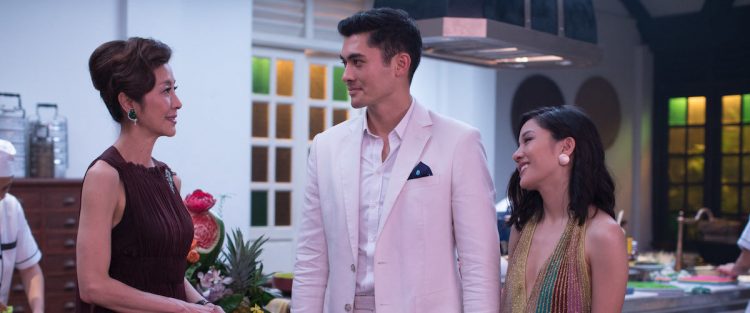
    20. Crazy Rich Asians: Without completely subverting the romantic comedy formula, Crazy Rich Asians is entertaining with a strong point-of-view, and is a compelling commentary Asian parenthood.

    19. Thoroughbreds: An incredibly assured debut feature character study about sociopathy and the nature versus nurture debate. However, what makes the movie great is its chilling final scene.

    18. Leave No Trace: Unexpectedly, Leave No Trace isn’t the survivalist drama that it looks to be. Instead, it’s a character study about a man whose fears and anxieties trap his daughter in a life of his choosing.

    Michelle Yeoh, Henry Golding, and Constance Wu in Crazy Rich Asians

    17. Incredibles 2: Picking up right where the original left off, this movie delves into even deeper themes of parenthood and challenging expectations while also remaining an entertaining superhero blockbuster.

    16. Suspiria: Disturbing, creepy, and upsetting, this remake of the classic 70s film of the same name has some of the best horror set pieces of the year and improves on the original’s plot.

    15. BlacKkKlansman: A funny and heartbreaking biopic that is a striking political piece that comments on the polarized political environment and the rise of white supremacists. 

    14. Bad Times at the El Royale: A sweeping, subversive homage to the 60s noir that is character-driven, thrilling, and keeps you guessing from beginning to end. It also features one of the best movie ensembles of the year.

    Regina Hall in Support the Girls

    13. First Man: A gorgeously shot, subversive biopic about Neil Armstrong and his obsession with making it to the moon. It’s a technical marvel and features one of the great “woman behind the man” performances from Claire Foy.

    12. Support the Girls: Regina Hall’s empathetic performance is what elevates this movie to greatness as does the beautiful mundanity of its day-in-the-life plot.

    11. The Favourite: Weird, absurd, and hilarious, this movie is the perfect intersection of period costume drama and Yorgos Lanthimos’ odd sensibilities to deliver an entertaining and surprisingly profound comedy of manners.

    NEXT PAGE: The Top Ten

    Pages: 1 2

  • ‘If Beale Street Could Talk’ review — An intimate and political love story

    ‘If Beale Street Could Talk’ review — An intimate and political love story

    If Beale Street Could Talk is gorgeous, powerful, stunningly crafted, and another masterpiece from Barry Jenkins.

    If Beale Street Could Talk is a love story at its core the same way that Moonlight, director Barry Jenkins’ last film, is. It makes sense considering Jenkins excels at everything you need to make a good romance. He nails communicating intimacy on screen, often using delicious close-ups of faces and people touching.

    And like Moonlight, If Beale Street Could Talk is cast against a melancholic theme that tests the relationship. In Moonlight, the main character fights against his own identity and the circumstances of his coming-of-age as a queer black man. In If Beale Street Could Talk, the challenges are more tangible. 

    The main couple, sweet perfume counter clerk Tish (Kiki Layne) and swoon-worthy woodworker Fonny (Stephan James), have known each other since childhood. Through Tish’s gentle voiceover we learn about their love story and how it developed from friendship to something more. However, Fonny is in trouble. 

    He is accused by a white cop (an extremely creepy Ed Skrein) of raping a Puerto Rican woman named Victoria Rogers (Emily Rios). With only Tish and an old friend Daniel (Brian Tyree Henry in a masterful one scene performance) with a criminal record as his alibi, Tish must work to free him.

    It wasn’t always easy for the couple as the movie shows — it’s structured as a series of vignettes from their relationship sprinkled between moments from the present, which is 1970s Harlem.

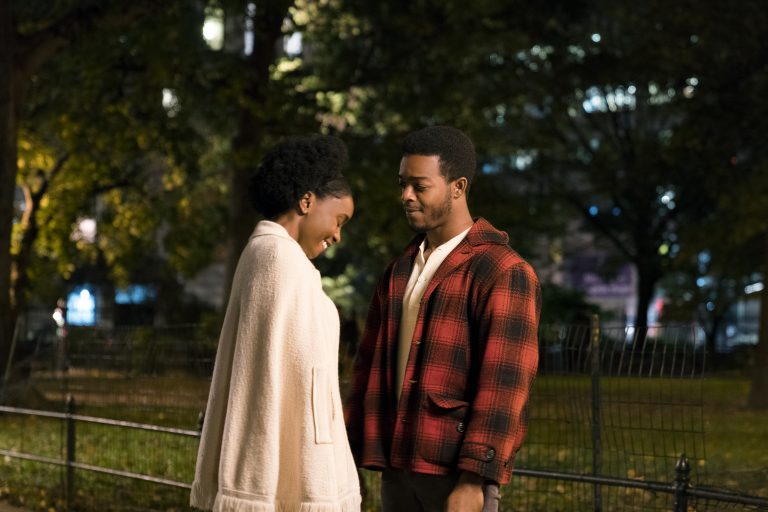
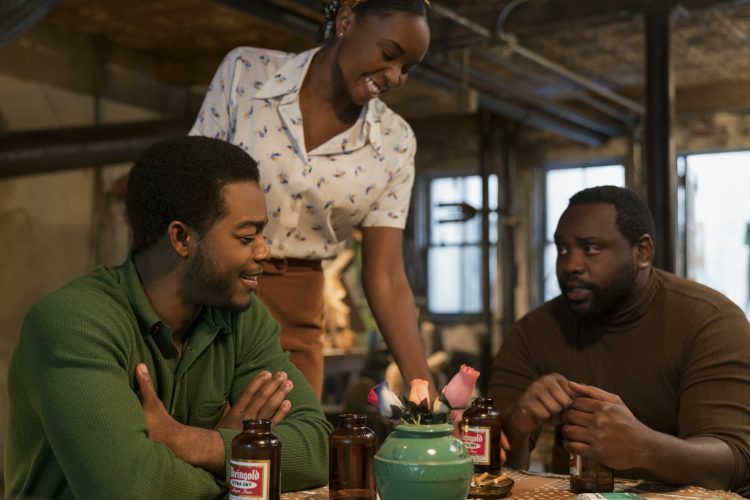
    If Beale Street Could Talk
    Stephan James as Fonny, KiKi Layne as Tish, and Brian Tyree Henry as Daniel Carty star in Barry Jenkins’ IF BEALE STREET COULD TALK, an Annapurna Pictures release.

    The first 30 minutes are dedicated to Tish trying to tell her family that she and Fonny are expecting a child. Her mother Sharon (Regina King) is warm and supportive. And after an initial shock, so are her father Joseph (Coleman Domingo) and sister Ernestine (Teyonah Parris). But, she is also tasked with telling Fonny’s deeply religious mother (Aunjanue Ellis).

    That first scene is a masterful practice in acting and staging supported by Jenkins’ generous screenplay — based off of James Baldwin’s novel of the same name. It all feels like a stage play with actors navigating the space in relation to each other and changing positions as the power in the scene ebbs and flows. 

    If Jenkins is best at anything it’s his ability to communicate emotion and power without words. In another scene, Fonny and Tish prepare to have sex for the first time. The music in the background drops out to make way for the sound of rain as we watch their bodies intertwine. It’s a powerful and emotional scene dripping with intimacy.

    Moonlight grappled with the themes of care — for oneself and others — and love. Often that care and love were represented by a safe space. If Beale Street Could Talk deals with that same idea. What is a safe space for a black person? Well, the movie answers that with its opening quote:

    “Every black person born in America was born on Beale Street, born in the black neighborhood of some American city, whether in Jackson, Mississippi or in Harlem, New York. Beale Street is our legacy.”

    James Baldwin

    What is so heartbreaking about If Beale Street Could Talk is that it presupposes that those safe spaces are almost impossible to find in America.

    If Beale Street Could Talk
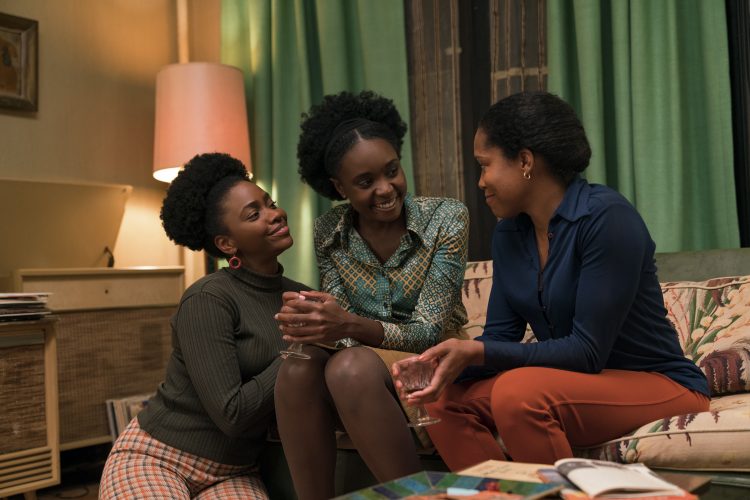
    (l to r.) Teyonah Parris as Ernestine, KiKi Layne as Tish, and Regina King as Sharon star in Barry Jenkins’ IF BEALE STREET COULD TALK, an Annapurna Pictures release.

    There are pockets where it exists — a grocery store where an elderly woman defends Tish and Fonny from a racist cop or an old warehouse where the Jewish landlord (Dave Franco) is willing to rent to the couple — but largely those places are vanishing. Fonny and Tish’s story acts as the conduit to explore that theme and their love story is what makes that exploration so effective.

    The film is pieced together like a memory — it’s edited by Joi McMillon and Nat Sanders, the Oscar-nominated editors of Moonlight — and Nicholas Britell’s score — also a collaborator on Moonlight — is a melancholic piece with notes of hope and yearning — the best score of the year. All those elements come together to create a masterwork of mood.

    Like his last film, Jenkins and casting director Cindy Tolan pieced together a flawless group of actors. Kiki Layne and Stephen James are both marvelous discoveries who possess so much chemistry with each other that it’s nearly impossible to resist falling for them as a couple.

    However, it’s the supporting cast that standout. Particularly, Coleman Domingo is a strong but sentimental steady hand, and Regina King — worthy of an Oscar — has a show-stopping segment set in Puerto Rico that cements her performance as one of the best of the year.

    If Beale Street Could Talk has so many moving parts that make it work. However, the core of its success is the main couple’s story. Not just the story to get Fonny freed but their love story — a beautiful black love story that we should be seeing more of. Gorgeous, powerful, and stunningly crafted, If Beale Street Could Talk is another masterpiece from Barry Jenkins.

    If Beale Street Could Talk will be in theaters on December 14th.

    Karl’s rating: