Here is a round-up of three films competing for the Palme d’Or at the 2022 Cannes Film Festival: Boy From Heaven, The Eight Mountains, EO
Boy From Heaven
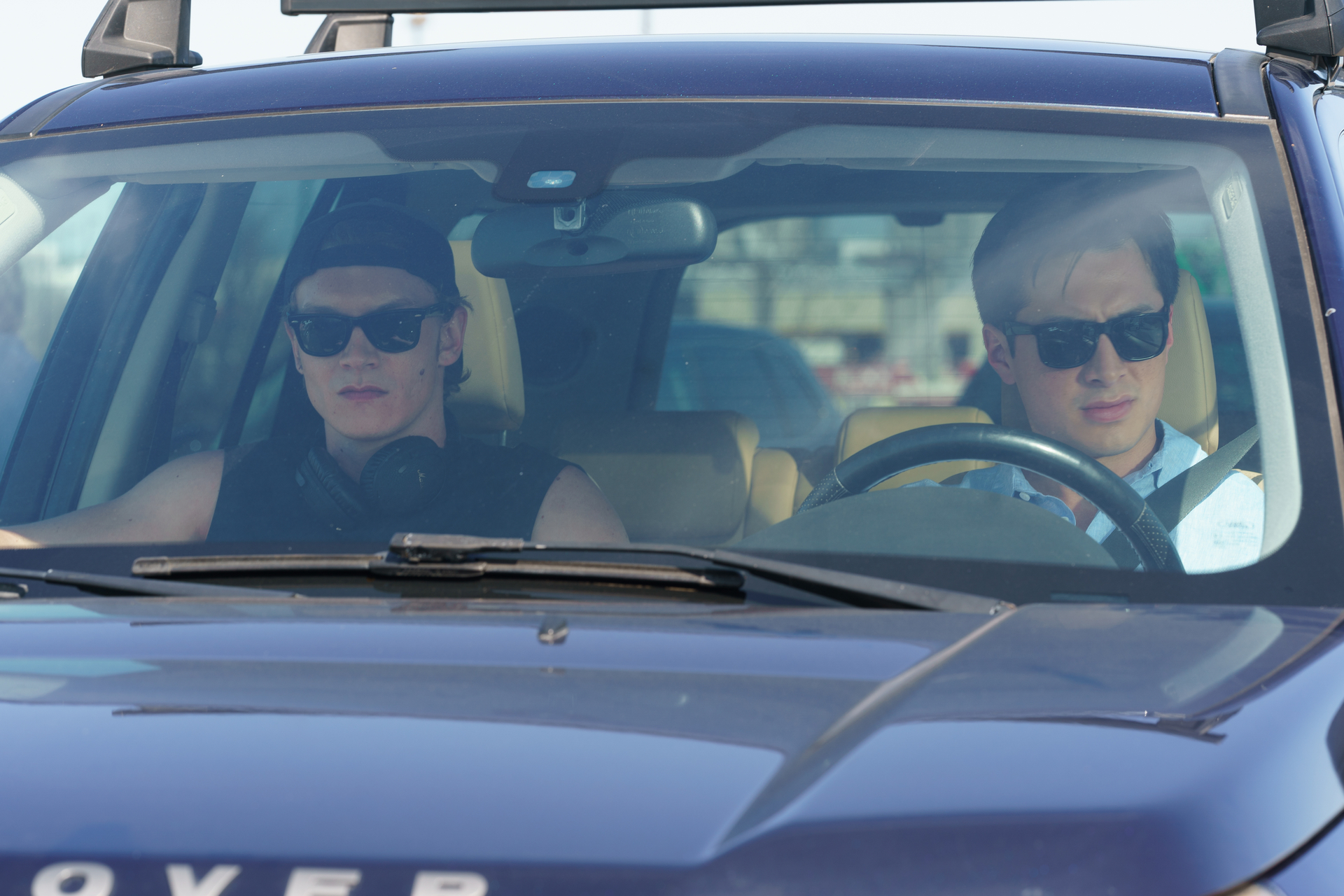
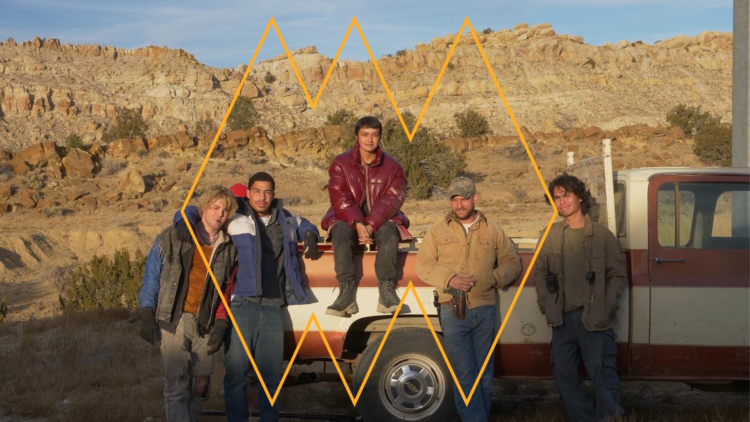
Tawfeek Barhom in Boy From Heaven, which is competing for the Palme d’Or at the Cannes Film Festival. Image Credit: Atmo Rights AB
Boy From Heaven follows young student Adam (Tawfeek Barhom) as he attends Al-Azhar University, the most prestigious Islamic educational institution in the world. The school, which he’s attending on a state scholarship, takes him far from his small fishing town to the bustling metropolis of Cairo. However, plans are in motion in the shadowy corridors after the grand imam, the head of the university and the most influential religious figure in the country dies in front of the school. Looking to install a leader that is in their best interests, state security colonel Ibrahim (Fares Fares) recruits a reluctant Adam to help their cause from the inside.
If this sounds like a story you’ve seen before, then you’re right. A thriller following a young reluctant recruit tasked with spying from within an organization isn’t new. However, what director Tarik Saleh proves is that a story can be fresh and new with a change of setting and perspective. Saleh directs the film with a methodical slow-burn pace that keeps you hooked with every new revelation as Adam’s position puts him into further danger. With each progressive scene, the Hitchcockian influences become even clearer as suspicion and paranoia slowly increase. At just over two hours, it’s surprisingly one of the shorter titles at the 2022 Cannes Film Festival, but never for a moment does it lag.
Though the story may be familiar, the world it takes in, at least to me, is foreign. Saleh tackles the sensitive subject of Egypt’s separation of church and state or lack thereof. The political maneuvering of the state almost completely conflicts with the religion’s “if God wills” teaching. By the movie’s end, the title Boy from Heaven almost feels tongue-in-cheek as Adam’s fate lies in the hand of earthly forces. Newcomer Tawfeek Barhom gives a committed performance of a boy asked to grow up and face the harsh realities of a culture he’s loved as he reluctantly fights for survival. It is one of the best performances of the festival.
ADVERTISEMENT
The Eight Mountains
Alessandro Borghi and Luca Marinelli in The Eight Mountains, which is competing for the Palme d’Or at the Cannes Film Festival. Courtesy of Festival du Cannes.
The logline for Felix van Groeningen and Charlotte Vandermeersch’s The Eight Mountains (Le otto montagne in the original Italian) of the friendship between two men that over the years reignites in a remote Alpine village could conjure up comparisons to movies like Into the Wild, Wild, or Brokeback Mountain. However, unlike any of those movies, The Eight Mountains starts at the bottom of an incline but never climbs it.
I had the same problem with Groeningen’s previous film Beautiful Boy as I did this. The craft is undoubtedly beautiful, the score from Daniel Norgren and cinematography from Ruben Impens in particular, but underneath it’s empty. It is nothing but an emotionless exploration of self-identity that doesn’t do anything to actually unpack it. Gratuitous voiceover and a collection of unremarkable scenes are meant to stir some empathy for the characters. Instead, those scenes reek of self-importance. The movie tells us to care instead of showing us why.
It’s unfortunate considering the autobiography of the same name it is based on is regarded highly for its intimacy and perspective. In place of that intimacy, Groeningen and Vandermeersch opted for aesthetics that keep us at an arm’s length from the characters. Perhaps it’s because they themselves don’t understand the story they are telling. Themes of memory, regret, friendship, and loneliness crop up. But once we begin to explore those trails they disappear. For example, when the film’s protagonist Pietro (well-acted by Luca Marinelli) ventures to Nepal to find himself after a loss, he explains in voiceover what he felt, but we never visualize it. We’re told to trust his word that he’s a better person, that he found love, that he understands his life somehow. But it’s impossible to trust someone that we aren’t taught to care for.
Maybe others will be affected by The Eight Mountains. Maybe it’s a journey I haven’t needed to take. But frankly, I’m not sure that Pietro took the journey either — like the equivalent of reading a self-help book instead of going to therapy.
ADVERTISEMENT
Eo
An image from Eo, which is competing for the Palme d’Or at the 75th Cannes Film Festival
EO, which is competing for the Palme d’Or,doesn’t have a plot, little dialogue and, oh, the protagonist is a depressed donkey that may or may not wish he was a horse, but this weird little movie is irresistible. Sure, its lead is a donkey, but this movie is as human as it gets as we watch him journey away from home and back again. And just like Mr. Frodo, he experiences a wide array of people at their best but mostly at their worst.
Polish director Jerzy Skolimowski, who has been a blind spot for me until now, doesn’t over personify his character though. He’ll close in on Eo after a significant event or have him react to something in some way. But he makes clear that he is an animal. That’s not to say he doesn’t care for him. The whole point of the movie is to mine empathy for Eo while also exploring the human world, particularly the conflict in it.
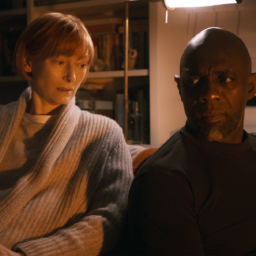
Tilda Swinton plays an academic who frees a Djinn (Idris Elba) from centuries-long imprisonment and is granted three wishes in Three Thousand Years of Longing.
George Miller has never made the same movie twice in his storied career and Three Thousand Years of Longing is no exception. The movie is a visual feast as it hops across millenniums to tell the story of how a Djinn (Idris Elba) found his way into the hands of a lonely academic (Tilda Swinton). Elba’s grainy baritone voice over the lush visuals that Miller renders with the same imaginative spectacle that he did Fury Road draws you in and underlines the movie’s power of storytelling theme. However, whenever the movie trails from that thread and explores that potential romance between Swinton and Elba’s characters the spell is broken. Stories have power, but stories are only as good as their ending. Three Thousand Years of Longing needed one more wish.
Three Thousand Years of Longing is about a genie—or more specifically, a Djinn—and his worst enemy: an intellectual. Many of the myths we know about the concept of a genie tell us that they’re tricksters looking to leave their hapless “master” worse off than before. In that way, they’re cautionary tales. Interestingly, the Djinn at the center of George Miller’s newest film—played by Idris Elba—does the opposite. More than anything, he wants Alithea (Tilda Swinton), the scholar traveling through Istanbul who frees him, to make the right wishes. Still, this is a cautionary tale. One of love and loneliness rather than greed.
ADVERTISEMENT
It’s been seven years since Australian director Miller premiered Mad Max: Fury Road at the Cannes Film Festival and reminded us why he is one of the greatest directors working today, especially in the fantasy genre. Naturally, his return to the festival was one of the most anticipated movie premieres of the year—mine included. With a blank check from the incredible critical and awards success of Fury Road, I was anticipating nothing but the most impressive world-building wrapped in a visual spectacle that has to be seen to believe. Instead, Three Thousand Years of Longing left me yearning for much more like the characters at its center.
Alithea, a dedicated and eccentric scholar, journies to foreign lands to speak about her theories of how fantastical stories in our history have been rendered obsolete by science and now relegated to the pages of comic books. However, science can’t quite explain away the visions of ghosts of history haunt her including one of King Solomon who seems a bit angry at Alithea’s presentation at a conference. After exploring Istanbul with a colleague, she comes across an odd glass bottle. Warped, lined with a swirling blue design, and, of course, sealed shut.
ADVERTISEMENT
When she returns to her hotel room, the bespeckled Alithea inadvertently opens the bottle while cleaning it with her electric toothbrush. A thick dark mist envelopes her hotel room to reveal an enormous Djinn, a ghostlike creature from Arabian mythology but is used interchangeably with a genie in the movie. Elba’s hulking figure and striking face coupled with prosthetic pointed ears and yellow eyes make for a striking effect. He reveals to Alithea that he’s been imprisoned for hundreds of years and that now he owes her three wishes for setting him free.
Alithea, the ever-analyzing historian that she is knows from mythology that these wishes rarely turn out well and refuses. Djinn, sent into a frenzy, cautions that if she does not make her wishes nothing good could come of it recalling how it is what caused his imprisonment for the second time. He reveals to Alithea that he has been imprisoned three times over the past three thousand years.
So begins Three Thousand Years of Longing’s ode to storytelling as Djinn recounts in poetically-written narration his journey through millennia. From the Queen of Sheba (Aamito Lagum) to a poor concubine during the age of the Ottoman Empire, Miller brings each encounter to life as vivid magical landscapes that quite literally shimmer on the screen. However, we’re not given time to luxuriate in each world. This is a story that Djinn is telling us. As with all orally passed down stories, there are gaps as it jumps from moment to moment rarely letting the emotions of the events to seep through. It’s like there’s a barrier between the storyteller and the audience—it’s why Three Thousand Years often feels cold.
ADVERTISEMENT
Based on B.S. Ayatt’s short story The Djinn in the Nightingale’s Eye, Three Thousand Years of Longing feels like a blank check movie in that most studios wouldn’t immediately greenlight a $60 million fantasy romance told mostly in voiced-over flashbacks. You’d expect an epic. However, the movie feels slight because of its structure—especially compared to Fury Road. Though, that slightness is a benefit to the second half of the movie, which shifts—somewhat abruptly—from epic fantasy to a quiet romance.
There are two key ingredients to make a romance work: chemistry and overcoming adversity. Unfortunately, neither work here. Not to the fault of Elba or Swinton, who as always give masterful performances. Particularly Elba who has to literally portray three thousand years of longing and trauma—something he carries on his face throughout the movie. The movie structurally doesn’t give us the chance to fall for the characters as they fall for each other as we switch back and forth between times and places. We don’t have a reason to root for Djinn and Alithea’s love story by the time the movie focuses in on it. It’s a shame since the part of the story is what would have it work. Despite Djinn’s warnings and Alithea’s logic, they still fall into the same traps that Djinn has seen for millennia. It implies that matters of the heart are often clouded because it’s our nature as humans. However, Miller is never able to consummate that theme and the story.
There’s magic to be had in Three Thousand Years of Longing. And if you know Miller’s work—Mad Max, Babe, Happy Feet, The Witches of Eastwick—you know that you’re going to see and feel it. The world he builds is nothing less than spectacle. But behind the sparkling vivid imagery is emptiness. Ironically, the movie leaves us longing for more. More character, more emotion, more humanity. What made Fury Road such a monumental achievement was its ability to consummate a genre story with deeply complex human themes. Three Thousand Years frankly fails on both accounts. Well, here’s hoping for the Furiosa movie.
Hirokazu Kore-eda follows a group of misfits that form a would-be family as they trek across Korea to sell a recently “abandoned” baby in Broker
Hirokazu Kore-eda’s Broker is at once a heartwarming cheeky road-trip comedy and a heartbreaking drama of misunderstood misfits that continues his exploration of the meaning of family that he began with his 2018 Palme d’Or winning drama Shoplifters. Though the movie’s slight crime narrative keeps the plot moving, it’s the irresistible and charming cast of characters that keep you engaged — particularly Song Kang-ho’s would-be patriarch Sang-hyeon and Lee Ji-eun’s (better known as singer-songwriter IU) flawed yet complex young mother So-young. Each character and performance feels like an actual person that lived a full life before the movie begins and Kore-eda finds those complexities as they continue to develop during the movie’s breezy running time.
Broker is premiering at the 2022 Cannes Film Festival.Neon acquired the movie for U.S. distribution prior to the festival.
At the start of Broker, we see So-young (Lee Ji-Eun, better known as popstar IU) leave her baby outside a “baby box,” a drop-off point where would-be mothers can leave their unwanted baby in safe hands. Some people would say that she was abandoning her child. But as police sergeant Soo-jin (Bae Doona) puts it later, So-young was protecting her baby. That is a theme throughout Hirokazu Kore-eda’s Palme d’Or competing drama, which premiered at the 2022 Cannes Film Festival. What is perceived as an act of selfishness by some could in fact be an act of love.
ADVERTISEMENT
It’s a similar theme to Kore-eda’s last movie, the Palme-winning Shoplifters, which presupposed that chosen families bonded by similar life experiences or trauma are stronger than those by blood.
However, Broker expands on that to explore the idea that families are only as strong as your actions to protect them. If it sounds like grounds for sentimentality, then you would be right. Kore-eda is a bit of a master when it comes to balancing sweetness with the realities of the world. And if Shoplifters and Broker are any indications he’s most interested in exploring them through complicated characters whose reasonings may not immediately seem just.
Such is the case with the titular “brokers” of the movie — Sang-hyeon (Parasite’s Song Kang-ho and Dong-soo (Gang Dong-won) — who take babies from the baby box of a church and sells them to desperate families for the highest price. One of those babies is So-young’s Woo-sung who Sang-hyeon and Dong-soo feel they can sell despite his thin eyebrows — a fact that is hilariously brought up often. We’ll learn more about why the brokers feel just in their actions, even if it’s not their conscious reason. But that’s the beauty of Broker, Kore-eda fills his script with so many moments of empathy that it’s easy to understand such complex characters.
Eventually, in a surprising change of heart, So-young comes back for Woo-sung. However, because of a technicality she no longer has parental rights to him. Instead, the broker pair convinces her to let them find him a family. The ever street-smart So-young instead uses the opportunity to ensure that Woo-sung goes to a home that deserves him rather than just any family with enough money to buy a baby.
ADVERTISEMENT
Though the entire cast is effortlessly charming with characters that feel lived-in with fully formed pasts and looking towards the future, it’s Song Kang-ho’s would-be patriarch Sang-hyeon and IU’s So-young that are the heart of the movie.
While larger plot machinations come into play including a criminal investigation run by detectives Soo-jin and Lee, the movie’s main focus is each character’s (including the investigators) relationship with their past — and the fight to become more than it. Sang-hyeon, who has an ex-wife and daughter, is seemingly never able to connect with them and is seen as flighty and inconsistent. On the other hand, So-young harbors a secret that gives her pause to start a family with Woo-sung. Though it sounds ripe for manufactured overwrought sentimentality, it never strays into melodrama.
In the most impactful scene in the movie on the precipice of their time together, So-young turns off the light in their hotel room — as to not have to face each member of their ragtag family — and says, “thank you for being born” to each one. There are no waterworks (except from me and the audience), no dramatic declarations, just five people in a room grateful to have found each other. The scene is earned rather than muscled in to pry a few tears from the audience.
Kore-eda understands that drama can be warm without unearned emotionalism. Broker may be charming and slightly heightened, but like any good tale, it’s based in something fully human.
Like Shoplifter before it, Broker doesn’t have an easy ending. Possibly not even one that you’d consider happy. As much as the movie is a serotonin booster and heartstrings-tugger, Kore-eda always finds his way back to the ground level. While this new family that we’ve come to love over a two-hour period may not get a happily ever after, they certainly get a “and life goes on” ending. Taken with Shoplifter, its spiritual prequel, Broker is a promise that although life has its ebbs and flows and happiness is fleeting, there is a way to survive it. And that way to survive is with each other.
A group of billionaires on a private yacht cruise have their world turned upside down when a catastrophic event strikes in Triangle of Sadness
Triangle of Sadness is a two-and-a-half-hour joke-a-minute biting satire of the rich and class that keeps you guessing in every scene. And despite having jokes like an extended 10-minute puke scene, it’s a well-studied character study about people of privilege and how they would react with it taken away. The cast of characters that ranges from a capitalist Russian oligarch, a drunk Yacht captain, and two dating models are perfectly wrought parodies of the rich that you miss hanging out with after the final credits roll. I could have watched it for hours.
Triangle of Sadness is premiering at the 2022 Cannes Film Festival. Update: Neon has acquired the film for distribution later this year
A few times during Triangle of Sadness, Swedish director Ruben Östlund’s Palme d’Or-competing film at the 2022 Cannes Film Festival, we see and hear “everyone’s equal.” But nothing is quite as ironic as that phrase being splashed up on screens at a high fashion runway show or uttered on a luxury cruise targeted at billionaires and influencers. That’s Östlund’s intention. Every one of his films takes aim at something wrong in our society by taking people in power and with privilege and putting them in situations that take them away: an avalanche in Force Majeure, a leaked video in The Square, and now a catastrophe on a yacht in Triangle of Sadness.
But what he was exploring in his prior two films he perfected in Triangle of Sadness. The result is one of the best comedies in years.
ADVERTISEMENT
The movie is split into three parts plus a prologue where we meet model Carl (Harris Dickinson) on a casting call where he’s hilariously told to relax his “triangle of sadness” aka the wrinkles between your eyebrows when you scrunch your face. “Maybe a little botox will help,” says one of the casting directors. Then, part one, titled “Carl and Yaya” begins.
Yaya (Charlbi Dean), a high fashion runway model, and Carl are at dinner when the check comes which she ignores until his hand barely grazes it and she thanks him for paying. This sets off a night-long argument about the principle of paying for dinner — something every couple has experienced at one point or another. Taken as its own short film, part one would be a perfect deconstruction of relationships where currency comes in power given and taken. More than once it’s mentioned that Carl makes less than Yaya but he also points out that it’s not about the money but the principle.
ADVERTISEMENT
We later catch up with them in part two, “The Yacht.” Carl and Yaya are among the passengers on a luxury yacht cruise that plays like a seabound version of Upstairs Downstairs where we spend time with the various ridiculous (and ridiculously rich) passengers and the staff that serves them led an overly ambitious and eager to please cruise director (Vicki Berlin). The part fully becomes a broad comedy as the cast of characters increasingly show how out of touch they are with the real world. Among them are war profiteers proud of their business, a capitalist Russian oligarch and his wife who insists the staff stop work and go for a swim, and the cruise’s drunk captain (Woody Harrelson).
If the first part and cold open were closer to satire, this part is a purely broad comedy with hilarious introductions to the most out-of-touch rich people, a storm-laden drunken dinner, and a ridiculous 15-minute gross-out gag that’s like Titanic with more puking. Particularly hilarious is Harrelson’s Tom, a self-proclaimed socialist, and Dimitry (Zlatko Burić), a capitalist Russian tycoon, having a healthy commiseration of ideologies loudly and drunkenly broadcast over the ship’s PA system.
ADVERTISEMENT
I’m not sure I want to tell you where the movie ends up. Part of the fun is the unexpected turn that it takes for its third and final part that sees the social system turned on its head as Gloria (Dolly de Leon), the Filipino toilet manager of the ship, finds herself in a new position of power. Let’s just say it’s like an episode of Survivor without the film crew. The hyjinks continue as the movie romps its way to a perfect ambiguous conclusion fit for its characters. By the movie’s end, I was sad that I wouldn’t be able to see more of them. I could have watched it for hours more.
Triangle of Sadness comes after a long run of “eat the rich” movies from Get Out to Parasite. While both of those movies have their fun, there is a darkness at their center. The value that Östlund brings to the genre is a lack of self-seriousness. Rich people are out of touch. We know that. He’s not interested in adding the message. He’s here to have fun and take the piss out of deplorable rich people (among other bodily fluids). If Triangle of Sadness proves anything it’s that the broad comedy is not dead.
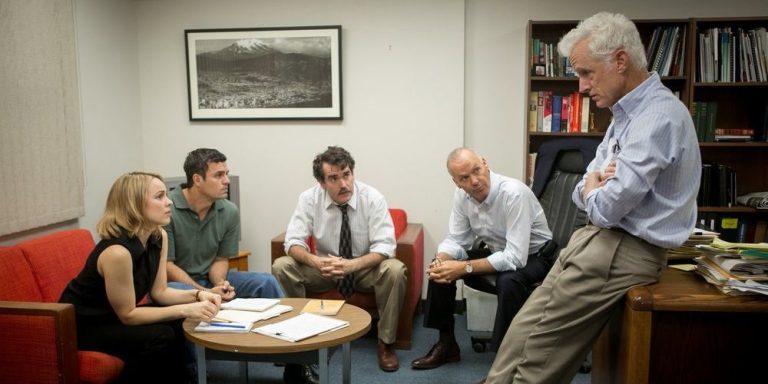
About thirty minutes into Spotlight, Boston Globe reporters Sacha Pfeiffer (Rachel McAdams) and Michael Rezendes (Mark Ruffalo) speak to two of the victims of abuse at the hand of Catholic priests belonging to the Archdiocese of Boston. The two separate interviews are interwoven, one amplifying the message of the other. And in the background — both literally and figuratively — is the Church. It’s scenes like these where Spotlight transforms from an engrossing journalistic slow burn into a marvelous empathetic piece of humanity.
ADVERTISEMENT
Spotlight, directed by Todd McCarthy, tells the story of the Pulitzer Prize-winning investigation into the Boston Catholic Church scandal. Headed by Walter “Robby” Robinson (Michael Keaton), the Boston Globe Spotlight team explore the cover-up of over 90 cases of sexual abuse and molestation of children by Catholic priests.
While Spotlight is a feat of classic screenwriting that harkens back to the days of All the President’s Men or Network, McCarthy’s subtle direction is what amplifies it to greatness.
In frames and in dialogue, the Church’s power is feared and felt. The movie emphasizes: The Church is Boston and Boston is the Church. As attorney Mitch Garabedian (Stanley Tucci) says, “if it takes a village to raise a child, it takes a village to abuse one.” Moments of pure tension — the ones that bring the film alive — are brought about by the invisible power of the Church and the survivor’s trauma. And while their experience is central, it never feels exploitative.
Unlike the inaptly named film Truth from the same year, Spotlight feels like it’s after the truth, just as much as the journalists at its center.
ADVERTISEMENT
Using natural lighting, imperfect takes, and casting actors according to their strengths gives the movie a cinéma vérité feel that is all the more affecting.
McCarthy leaves dramatic moments to characters rather than formulating the plot around shocking reveals or twists.
The entire ensemble — which Open Road has stressed in their campaign, the word ensemble — is at their career bests. John Slattery is perfect in his follow-up to Mad Men in a role that may feel similar but allows him to flex a muscle he’s been honing for the years the show has been on air. And while Michael Keaton and Mark Ruffalo have been receiving the bulk of the acclaim of the actors on the Spotlight team, Rachel McAdams steals the… well, spotlight. Controlled and assured, her performance is an anchoring calm that lets the story take the forefront.
ADVERTISEMENT
And that’s what makes Tom McCarthy’s direction so smart. Its restraint allows its subject to shine. The performances give it the time it deserves. Instead of dramatics, Spotlight feels so character driven.
Spotlight tells the story that started the story. In today’s media environment, the role of the press has been both challenged yet as important as ever. The reverence that the movie has for the journalistic process is not only admirable but essential. It goes against anything that we’ve been forced to understand in film nowadays — bigger, louder, more tears, less emotion. However, Spotlight finds itself the best when the script doesn’t try, the actors don’t act, and camera just follows. Spotlight stays with you, if not for the film, at least for the truths that it uncovers.
It reminds us that we deserve the truth, it just takes someone (or someones) to uncover it.
From psychological to political, here are some of our favorite thrillers since 2020
What is a thriller?
The thriller genre is difficult to nail down because the genre itself is so broad. Where does the thriller genre end and horror begin? Are all action movies thrillers, but not all thrillers action movies? While the definition isn’t exact, there are a few constants: red herrings, plot twists, cliffhangers, and, of course, suspense.
After a shift towards
And without further ado, here are my favorite thrillers since 2010!
The cast of environmental thriller How to Blow Up a Pipeline. Courtesy of Neon.
What it’s about: A ragtag group of environmental activists race against the clock to sabotage an oil pipeline.
Why it’s great: In many ways, How to Blow Up a Pipeline is a classic heist thriller in the vein of Ocean’s 11 as we watch a group of prior strangers come together to pull off a seemingly impossible feat. Director Daniel Goldhaber uses every second of runtime to slowly ratchet up the tension as the crew sets their plan to blow up the eponymous pipeline in motion.
Using a clever non-linear narrative structure the movie feeds you new information about each of the characters and their dynamics to add color to their personal journeys and complications to the mission at hand. The result is a near real-time stunning and anxiety-inducing but deliciously entertaining eco thriller. Read my full review.
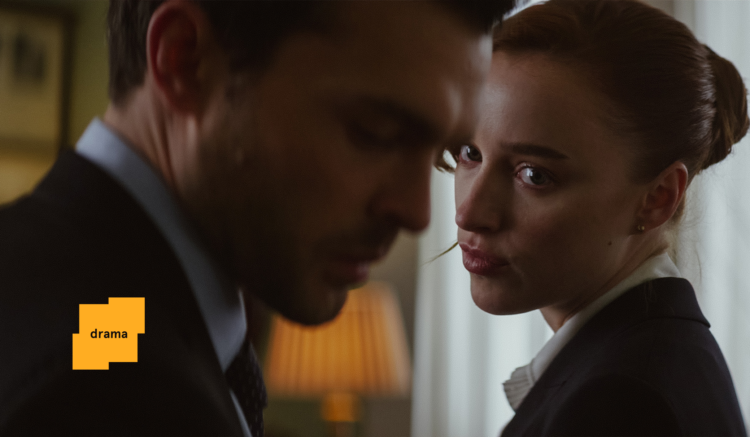
Phoebe Dynevor and Alden Ehrenreich appear in Fair Play by Chloe Domont, an official selection of the U.S. Dramatic Competition at the 2023 Sundance Film Festival. Courtesy of Sundance Institute.
What it’s about: Emily (Bridgerton’s Phoebe Dynevor) and Luke (Alden Ehrenreich) are a crazy, sexy, cool couple drunk (and horny) on their recent engagement that they have to keep secret since they work together at a highly competitive hedge fund firm. But when Emily is promoted over Luke, insecurity, competition and jealousy threaten to destroy their relationship.
ADVERTISEMENT
Why it’s great: Fair Play plays like a ticking time bomb as the couple’s relationship is put under the strain of Luke’s arrogance and Emily’s ambition.
It’s the balancing of those two threads that make the movie — particularly writer director Chloe Domont’s sharp screenplay — so impressive. At times, the movie is a corporate barnburner about Emily navigating her newfound success as a woman in an industry that is decidedly a boy’s club. In others, it’s a darkly funny psychosexual relationship drama about how deviations from the traditional gender dynamics can send men into a tailspin — let’s just say Luke probably loved Joker. And at its most satisfying, both worlds come careening together as the pair navigate the minefield of their relationship in the workplace.
Phoebe Dynevor and Alden Ehrenreich give powerhouse performances that give the melodrama some much needed gravitas. Cutthroat, sharp and entertaining as hell, Chloe Domont didn’t come to play. Read my full review.
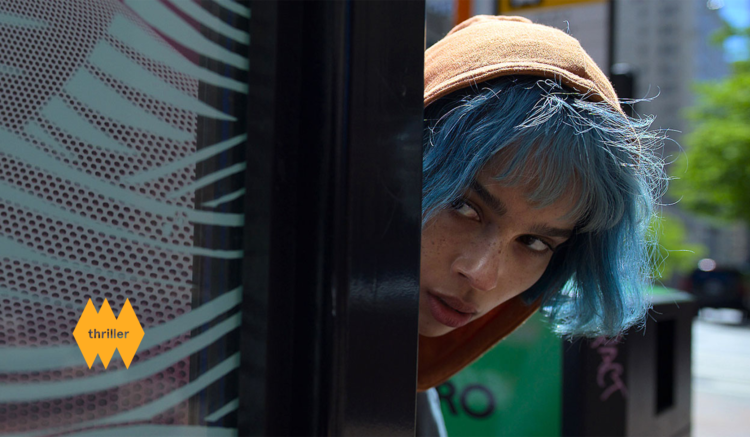
What it’s about: Angela (Zoë Kravitz), whose agoraphobia due to a prior trauma — and now exacerbated by the coronavirus pandemic — confines her to her apartment, works for a tech company monitoring the data from their smart speaker product Kimi (like an Alexa) for quality assurance. However, when one of the files she’s listening to sounds like a crime she’s faced with corporate red tape, conspiracy, and, her worst fear, going outside.
Why you should watch it:Kimi tells a story we’ve seen before — Rear Window and The Girl on the Train immediately come to mind. But Soderbergh throws in these tiny details that make it feel so relevant to our place and time.
ADVERTISEMENT
Like many people watching movies stuck at home, I had headphones on. In one scene, Angela puts on her AirPods to drown out the sound around her. When she puts her right earbud in, our right earbud goes silent. When she puts the left in, our left goes silent. It’s something that you might miss, but that small choice immerses you in this world that is so familiar.
When Angela goes outside for the first time, masked up with packets of hand sanitizer in her pockets, the camera switches from steady and deliberate to frenetic and chaotic as she’s faced with the anxiety of being around people. It elevates Kimi far past its thriller roots.
And sure, you can probably call many of the plot twists. But what Soderbergh constructed is a lean, mean, perfectly-paced thriller that recognizes the time that we’re in. Too many movies being made today ignore the pandemic and the past two years we’ve experienced. Instead, Soderbergh embraces it and uses it to his advantage to not reinvent the wheel but spin it at a different speed. Read my full review.
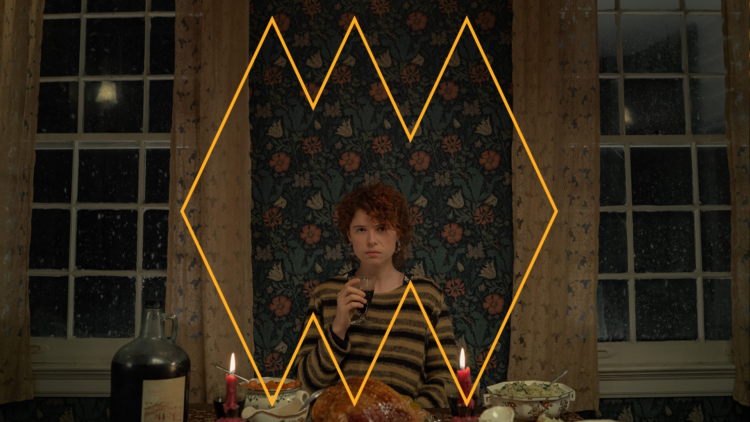
Jessie Buckley in I’m Thinking of Ending Things. Courtesy of Netflix.
What it’s about: A young woman (Jessie Buckley) is driving with her boyfriend (Jesse Plemmons) to meet his parents for the first time. There’s one problem, she’s thinking of ending things. When she meets his mother (Toni Collette) and father (David Thewlis) things go from odd to flat out weird as the world around her changes.
Why it’s great: Loneliness is a prison. The memories, regrets, and what-ifs of life become trapped on repeat in your head forming a blend of reality and fantasy in your psyche in an effort to fill the void of silence that it creates. In the time of the coronavirus pandemic that feeling may hit closer to home, which is why Charlie Kaufman’s I’m Thinking of Ending Things feels so effective as a psychological thriller.
The movie is a slow-burn of conversations that begin as a little off and then become full-tilt bizarre as the world around the couple goes from real to surreal. At the core, psychological thrillers should make you question exactly what is real. In I’m Thinking of Ending Things, the question isn’t what is real, it’s what is reality at all.
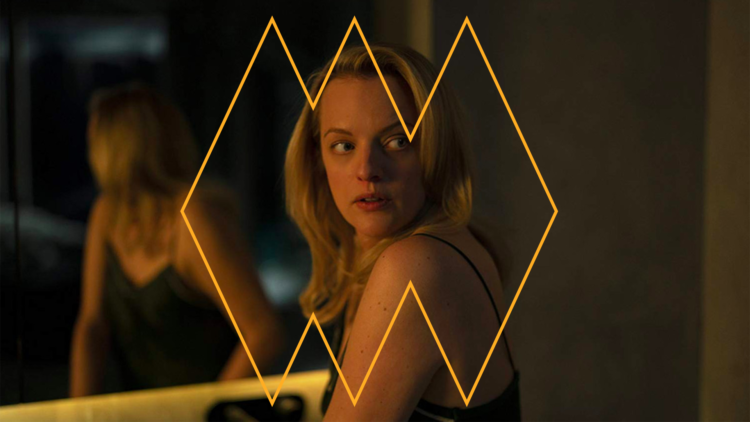
Elizabeth Moss in The Invisible Man. Courtesy of Universal Pictures.
What it’s about: After escaping her abusive tech tycoon boyfriend (Oliver Jackson-Cohen), Cecilia (Elizabeth Moss) thinks she’s finally free from his grasp. However, a vague threat from the past and a series of odd occurrences make her think that he’s watching her every move.
Why it’s great: There is so much to love about director Leigh Whannell’s reinvention of the 1933 original film The Invisible Man, but the best place to start is perhaps the reinvention itself. Instead of treading similar territory, Whannell tackled the very 21st century story of toxic relationships, gaslighting, and emotional abuse.
However, the way he brings about those themes is by combining innovate modern cinematic techniques with the old-fashioned staples of building the suspense. Without compromising its rich themes or depriving the audience of moments of terror to hang onto, Whannell is able to make an artfully made and emotional movie that feels auteur-driven but still made for the mainstream. Read my full review.
This week, we analyze romantic drama Past Lives and discuss how it explores race, the immigrant experience and challenges the concept of a soulmate
Hey! We’re Karl and Ana. Best friends, writers and movie obsessives that love to analyze (overanalyze?) movies. In Movie Therapy, we take a movie that we love and explore its story and themes to understand what it means to us (and maybe you). This week we analyze Past Lives. Spoilers are abound so proceed with caution.
For the best experience, we recommend you read on desktop. This conversation has been edited and condensed.
Karl Delossantos Hello! 👋 Welcome to the first edition of Movie Therapy, a series where my co-movie over-analyzer Ana Toro and I discuss a movie to understand what it means to us (and maybe you). Today, we’re analyzing the meaning behind Celine Song’s Oscar-nominated drama Past Lives. Shameless plug: you can read my review here.
Hello, Ana! Ready to overthink?
Ana Toro Yes! Our specialty!
Karl I want to start this discussion at the very end of the movie. We watch Nora (Greta Lee) and Hae Sung’s (Teo Yoo) emotional goodbye. As she walks back towards her home and husband Arthur (John Magaro) in the East Village (in my home neighborhood!) Nora begins to cry. How do you interpret that moment?
Ana I think she’s mourning the past – what could have been. In that moment she witnesses a chapter closing. And though it’s the rational thing to want closure, it tends to bring an unexpected amount of pain.
Karl It’s interesting because it feels like she spends a lot of the movie only looking forward. Even when she does look back in the second act when they reconnect over Skype she quickly realizes that it’s something that’s “holding her back” even if it’s not necessarily the case. But I think because she never allowed herself to confront where she’s come from, she’s never had to close the chapter… until that scene.
But at the same time, she’s where she’s always wanted to be. And if you ask me, where she belongs. Something we might disagree about.
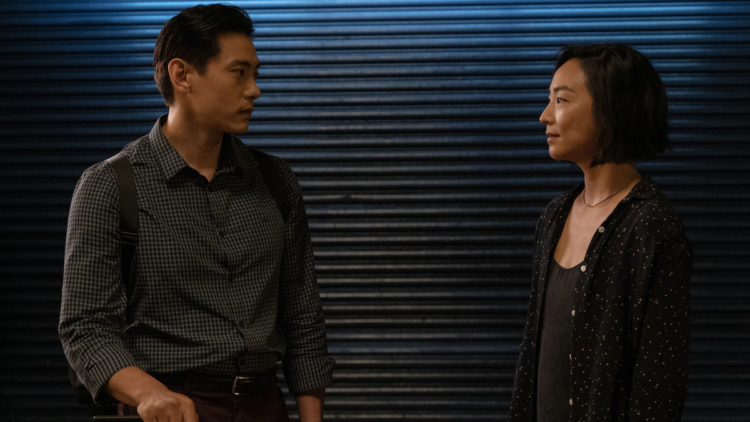
Teo Yoo and Greta Lee in Past Lives. Courtesy of A24.
Ana Haha yes! I mean, the brilliance of this movie is that it is so subtle and nuanced that it really does reflect back at you whatever your current beliefs, or point of views are. When I watched it the first time with you, I was very much in a place in my life where I was looking back to the past, and towards someone from the past specifically. I’m pretty nostalgic by nature, so this wasn’t out of character for me, and I definitely sympathized the most with Hae Sung’s character… to the point where you’ll remember that I was pretty accusatory towards Arthur’s character, believing him to not be right for Nora, and insisting that she should look towards the past to move forward, and be the version of herself that she had left behind.
Karl Projecting, essentially.
ADVERTISEMENT
Ana Exactly. When I watched it a second time I was definitely in a more calm place in my life, having had a bit more closure and feeling a lot more present in my day to day life. So of course, I was more neutral while watching the narrative play out, and I realized that the end wasn’t a tragedy, but rather something beautiful, an acceptance of the past and the present. Nora’s outburst was a catharsis, not necessarily something bad, or more meaningful than it was.
Karl Yeah when we first watched it we were the closest we’ve ever been to arguing in our friendship over whether Hae Sung or Arthur was her soulmate. And perhaps the answer is that soulmates don’t actually exist. At least in the very black-and-white sense that most people think about them.
“Which is interesting because the movie constantly brings up the concept of soulmates, and it’s a recurring motif / theme of the movie so it’s almost like a red herring.“
Ana Which is interesting because the movie constantly brings up the concept of soulmates, and it’s a recurring motif (if not the outright theme!) of the movie. It keeps the viewer guessing as to who she’s going to choose – who is the actual soulmate. For such a quiet movie this is the biggest source of tension that drives the film forward. It almost feels like holding your breath, until the very end when they say goodbye.
Karl Yeah. I mean, the movie is structured like a romance. The direct comparison a lot of people have been making is to the Before trilogy. A series of movies that we love. And in a lot of ways, they are similar in that they talk about the seeming randomness of romance that is actually clouded in fate.
ADVERTISEMENT
Ana It’s like the Before trilogy but happening all at once!
Karl 💯
This might be the time to note too that the writer-director Celine Song based the character of Nora in some part on herself and is currently married to the equivalent of Arthur. Her husband Justin Kuritzkes is a white writer that she lives with in New York. And ironically wrote Challengerswhich is another movie about a love triangle. Maybe they’re dropping hints.
Ana That absolutely changed everything for me. I almost couldn’t believe that in some ways we were given the answer to such an open ended mystery in Past Lives. To me it means that she chooses Arthur in the end! Because he represented her present, and her future. How did you feel when you found that out? Did it change the movie at all for you, or am I reading too much into fiction and its likeness to reality?
Karl I think you can’t not think it’s connected in some way. But unlike you I was always on the side that Arthur is who she should be with. Right now, at least. I think hearing that just affirmed that for me. I went through a pretty big breakup a few years ago and since then I’ve felt very much how Nora felt. Looking forward. Working on my career. Moving myself up and out of my current circumstances.
But I did have times where I thought, “what is this all for?”
Ana I think that’s the thing that we’re meant to be feeling at the end of the movie though – we aren’t ever going to be sure if something is the right choice or not. There are ways to justify any decision or relationship – Arthur and Nora could have in-yun, but so could Hae Sung and Nora. This concept is even poked at by Hae Sung and Arthur during their conversation at the bar: maybe they’re the ones that have the multiple layers of in-yun! There’s truly no way to know, so we just have to accept whatever choice is made.
Karl It makes me wonder whether Past Lives is almost an exercise to assuage the uncertainty of whether you made the right decision.
Ana That makes me wonder a lot about her intentions for making this film, and how much of it she admits to being autobiographical. It’s a beautiful film regardless, but I think it does bring up questions as to how much art resembles life, and if the film’s narrative should stand alone regardless of what she has revealed during the press circuit.
“Nora and Hae Sung are in many ways in opposition to each other. He stayed in Korea, she moved to Canada and then New York. He followed his head to a technical career. She followed her heart to the arts. He’s living in the culture he grew up in and she’s grounding herself in a new one.“
ADVERTISEMENT
Karl As a viewer the first time without that background I think we still picked up what Song was struggling with. Nora and Hae Sung are in many ways in opposition to each other. He stayed in Korea, she moved to Canada and then New York. He followed his head to a technical career. She followed her heart to the arts. He’s living in the culture he grew up in and she’s grounding herself in a new one.
Which is funny when we learn that Arthur is learning Korean to understand her better. Oddly, I think I also related to Arthur, as well.
Ana I know I’m being superficial and too focused on aesthetics and a simplistic romantic worldview, but I just have to say: it is so unfair that Greta Lee and Teo Yoo are the most beautiful people in the world, with chemistry in this movie that is off the charts, inhabiting a film that comes across as aesthetic visual ASMR, and we don’t actually get to see them profess their love to each other. It’s inevitable to root for the beautiful couple with perfect bone structure, that are also childhood sweethearts, separated by fate. But I guess that’s the expectation we’re meant to be pushing up against.
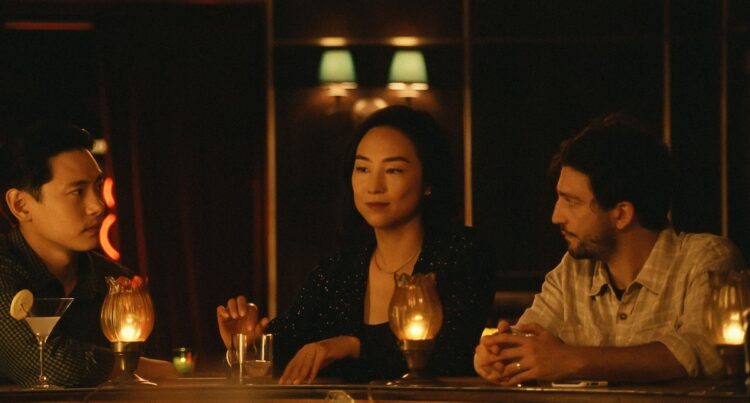
Teo Yoo, Greta Lee and John Magaro in Past Lives. Courtesy of A24.
Karl The bone structure!! Cut from marble both of them.
Ana No like, they were made to be on camera.
Karl But I think this was an intentional decision. We get all these very superficial indications that Arthur is just some average white guy. The book he authored in the movie is called “Boner” for God’s sake!
ADVERTISEMENT
Ana WITH A JEFF KOONS BALLOON SCULPTURE ON THE COVER. Nothing screams out more “mediocre white man” that fumbled his way to the top more than that. I’m sorry, I’ll relax, but my art history minor clocked that immediately and I am of the belief that every single choice in a film is intentional. So why add that? This would be my question to Celine Song if I were to ever attend a Q&A with her.
Karl #Arthur4Lyfe <3
Ana Rethinking our friendship as we speak. I’d leave the conversation if I wasn’t digitally chained to this chat.
Karl I just knew this would end in an argument. But then we see his relationship with Nora and I think there’s a real love there. That scene in the bedroom before they’re about to go to sleep is oddly the centerpiece of the movie.
Ana Karl. No it is not. It is a movie full of beautiful set pieces, and him trying to say fried chicken in Korean is not the one.
“They never express their full feelings. Which is, as an Asian-American, a very real thing. Whereas Arthur is so willing to vocalize the way he feels in that moment. And he delivers for me the most potent line of the movie: ‘You make my life so much bigger. I’m just wondering if I do the same.’”
ADVERTISEMENT
Karl I think I find that scene so refreshing because Hae Sung and Nora often talk around each other. They never express their full feelings. Which is, as an Asian-American, a very real thing. Whereas Arthur is so willing to vocalize the way he feels in that moment. And he delivers for me the most potent line of the movie: “You make my life so much bigger. I’m just wondering if I do the same.”
For Nora, Arthur does make her life bigger. For Hae Sung, Nora makes his life bigger. But I’m not sure he does the inverse. And that’s why Past Lives feels as much about the transient experience (I’m intentionally not saying immigrant here) as it is this specific romance.
Arthur even calls out in a different story he’d be the villain. Though, you certainly think he is. But he’s not. He’s the third protagonist, if anything.
Ana I’m curious as to why you won’t say immigrant! To me this movie really does encapsulate the immigrant experience. Immigrating is all about that central theme, captured by that same line you just mentioned: what makes your world bigger? Does staying in Korea make your world bigger, or smaller? If you feel like you’ve outgrown a place, and like you can grow so much more outside of it, that’s why you immigrate. So you don’t live an entire life unsatisfied, feeling stuck, and wondering “what if”. Just like you would with a past lover – places can encapsulate the same feeling of lost potential, and wanting more. Nora’s parents, even though her dad was successful filmmaker, knew they could have bigger lives for themselves and their daughters abroad, and so they did.
Hae Sung goes to China for the same reason, it’ll expand his work opportunities. After visiting New York, temporarily making his world that much bigger — literally, does he then seek job options abroad? Maybe! Maybe that’s his smile at the end of the movie — he sees a bigger world for himself thanks to Nora. Maybe not a life with her, but his own future, which he can now literally visualize since Nora paved the way, but he’s also free to pursue, without any attachments (at least romantic) in Korea, or New York.
Karl While I do think it definitely touches on the immigrant experiences and uses it to explore about the sensation you’re describing it feels like with a lot the movie it paints in broader strokes as to allow as many people as possible to relate to it. So what you were about outgrowing a place. That doesn’t necessarily have to tie to leaving your specific country. I left New Jersey to move to New York City and that small of a move still felt like my world was expanding. But I think it could be as simple as just leaving the path that is predestined for you. Hae Sung follows the very pragmatic Korean expectation of living with your parents until you’re married, going to school so you can find a stable job. Even going to China was in service of that mission. But that isn’t specifically the immigrant experience, which is why I used the word transient. Maybe transplant might even be more appropriate.
I think if Past Lives was about the immigrant experience then that first section when they were kids wouldn’t have jumped to 12 years later right when she was about to start her life in Canada.
Ana Fair! Totally understand what you mean, and agree that transplant is a better word. Though in an interview with Deadline, Celine Song does say that while the movie is objectively true to her immigrant experience, she does want people to relate to her story even if their experience is moving from St. Louis to L.A., for example. But this is getting into the weeds of how we define immigrants and transplants.
Karl To wrap this up, because this chat is now over 2000 words, I have one last question: which character (or combination of) do you relate to most and why?
I’ll start with my favorite character… Arthur. Muahaha 😈.
Ana Is he really your favorite?
Karl I love them all for different reasons. I think part of it is my affinity for John Magaro who I’ve loved since First Cow. A movie you have to watch since I know your affinity for cows. And I think he has the dialogue that felt most potent to me in a lot of cases.
I guess I feel like I’m a mix of all three of them in a way. I have the good boy aversion to risk like Hae Sung, the headstrong ambition of Nora and the insecurities of Arthur. And perhaps I’ve felt more Arthur recently than Hae Sung or Nora.
ADVERTISEMENT
Ana I agree, I mean I think the beauty of this movie is that it is up to interpretation, and you could see yourself as any of them depending on your current circumstance, or play out a different reality where you, as Nora, does get into the car with Hae Sung at the end. In my first watch with you, pining for an ex-love, I was fully in Hae Sung’s shoes, living in the past, remembering everything and not moving forward. Now I feel a bit more self-assured about the present and my future, like Nora. But through this conversation I’ve actually had a pretty potent realization —
Karl Ahhh a movie therapy breakthrough!
“The reason I was so put off by Nora and Arthur’s relationship (and why I reactively took Hae Sung’s side at first) was that it reminded me of my own relationships and the insecurities I’ve had in them…”
Ana The reason I was so put off by Nora and Arthur’s relationship (and why I reactively took Hae Sung’s side at first) was that it reminded me of my own relationships and the insecurities I’ve had in them, especially regarding having a white partner as a Colombian that I was afraid would never understand my native language, or my immigrant experience.
Karl Yeah I completely get where you’re coming from. It’s something you become so aware of too as you get older and our understanding of race evolves.
Ana In my early twenties and the immaturity that comes with that time of my life, I definitely felt misunderstood and didn’t have the tools or mental stability to have those conversations about my culture, without feeling…
Karl Without feeling immediately defensive about your feelings.
Ana Exactly! It’s a shame, because I do think that relationship could have had a future if we had met later on in life, when I had actually come to terms with my own immigrant experience and that it doesn’t mean I had to explicitly date someone that came from where I came from — they simply had to love me in spite of our differences, and make a true, honest effort, like Arthur does with Nora.
Seung Min Yim and Seung Ah Moon in Past Lives. Courtesy of A24.
Karl And granted we went to a predominantly white college, which I think made all those differences all the more obvious. Same with how Nora found herself in a place so different and foreign from what she knew.
I also had a white boyfriend around that time.
Ana Oh, I remember!
Karl Haha it was a time!! But something he did that I appreciated was take the time to understand where I was coming from in our relationship. We had a lot of conversations about how we could come off as an interracial Asian/White couple. Like cue the colonizer jokes (often from me…). And it angered him that we would be seen that way but I think he eventually understood is that’s a fact of my life. And that understanding was enough. He didn’t have to solve it. But just know about it.
Maybe that’s why I appreciated Nora and Arthur’s relationship. Particularly the discussion they have mid-way through the movie. All Arthur wanted to do is understand where she comes from — even if she was resistant to look back at her own life.
ADVERTISEMENT
Ana That’s lovely! Yeah I definitely was so insecure during that time, that I became a victim and my own worst enemy when it came to having those conversations. But you live and you learn. Which is funny, this is that same relationship I was wondering about right as we watched Past Lives together, and I was thinking, what if things had been different? What if it all took place now?
I remember that day so distinctly: we were having a reflective day, one of those very beautiful fall days where the city and the light is perfect, and it’s unseasonably warm, but you can still pull off a nice fall outfit. The first of our college friend group turned 30 that day, and we met up with her at a cafe. And I remember thinking that we all felt content about where we were in life at that moment. Naturally, that day fell apart in spectacular fashion for me, but we met up again at the end of it.
Karl And while we were walking I think I remember saying we should watch Past Lives because (1) it’s the kind of movie we love. Melancholic. Introspective. Poetic. And (2) it’s so meditative and poetic that I figured it’d calm you down.
Ana It both calmed me down and sent me spiraling, thank you.
Karl The Karl special.
Ana So we were primed to think about our past, present, and futures that day, and me particularly, to imagine a different reality of a life that could have been. It was the perfect film to watch and it highlighted exactly where I was in that moment in my life.
Karl And it helped us both look at our lives at that moment as this long journey. We both separately post-pandemic went on these journeys that took us away from our comfort zones. The movie looks back and explores the many decisions we make to get to a certain point. But it also emphasizes that it is a necessary exercise to move forward and understand you are in the right place. To bring it back to the movie, Nora and Hae Sung on the street with Arthur waiting for her at their apartment was the right place.
And perhaps that place for us was on my couch in the East Village eating a sweet treat watching a movie.
Ana And that place is also here right now with you. I feel like we unearthed some pretty vital and new realizations despite having talked about this movie non stop since we first watched it, and you talking around the plot for months while I gathered up the will to watch it with you. This has been surprisingly cathartic, but I guess that was the point! Thank you, as always, for these conversations. ❤️
Dune: Part Two finds would-be messiah Paul Atreides on a revenge mission that may take him to the dark side of Arrakis
Dune: Part Two is a visceral masterpiece and one of the best science fiction movies ever made. Besides delivering a visually impressive assault on all the senses, it’s also a riveting political thriller and character study that struggles with morality, religion and power. Director Denis Villeneuve guides every facet of the movie—costumes, production design, visual effects, sound—to the very top of its craft.
Dune: Part Two is a The Empire Strikes Back or The Return of the King-level event. A science fiction classic in the making that’ll inspire the next generation of science fiction and fantasy films. Denis Villeneuve continues his unblemished filmography.
Dune: Part Two is in theaters March 1.
From the opening throngs of Hans Zimmer‘s score and saturated rust-colored first shot of the desert planet Arrakis, it’s impossible not to feel immediately transported. Like you were shot out of a rocket straight into a sand dune—ironic because we first encounter our protagonist (?) buried hiding in the sand. That’s partially thanks to director Denis Villeneuve‘s skillful world-building in the first half of the story that brings a detailed view of the future set out in Frank Herbert’s novel of the same name. But what sets Dune: Part Two apart is its absolute audacity of vision that often has your heart skipping a beat.
ADVERTISEMENT
Like the moment when a group of Harkonnen soldiers leap and gracefully float from a sand dune to a rocky plateau to escape an incoming sandworm. Villeneuve makes the moment one of effortless wonder. Like what is happening in front of us is completely normal and the most incredible feat we’ve ever seen before us—partially because it is.
There are countless moments like that throughout Dune: Part Two. There is the breathless battle sequence where suspected messiah Paul Atreides (Timothée Chalamet) and Chani (Zendaya) along with the desert-born Freman people take down a Harkonnen-held spice mining operation or Paul’s jaw-dropping and anxiety-inducing wormriding rite of passage that involves… well, riding a giant sandworm. Both sequences feel like an assault on every one of your senses. It’s like you can feel the grains of sand whipping by your face when an army of Fremen-ridden sandworms blast through a sandstorm to the apparently inaccessible southern hemisphere of the planet.
ADVERTISEMENT
It’s almost impossible not to overstate Villeneuve’s absolute cinematic achievement. It is perhaps the most visually impressive movie I’ve ever seen—a visual and auditory spectacle that is at times difficult to comprehend in the same way that I imagine audiences felt when seeing Star Wars or 2001: A Space Odyssey for the first time.
And just when you didn’t think it could surprise you any more, it introduces you to the black-and-white Harkonnen world as it explore the sadistic but intoxicating villain Feyd-Rautha Harkonnen (Austin Butler is a terrifying scene stealer in a role that proves that Elvis wasn’t a fluke).
Admittedly, I’ve never read Frank Herbert’s book nor seen David Lynch’s much-maligned 1984 adaptation. And after watching the first part of Villeneuve’s adaptation I was confused why this story had to be retold. The story of Paul, an aristocracy-born and bred white man, tapped to lead an oppressed people against his own enemies wasn’t only formulaic but reductive. Hadn’t we advanced past the white savior narrative? So when Dune: Part Two takes a turn to the morally grey area I wasn’t just enthralled, I was impressed.
ADVERTISEMENT
Throughout the movie, Paul is resistant to the label messiah. Not because of some internal imposter syndrome, but because he is prescient of the potential outcome if he embraces the label. That isn’t a new concept. What does feel fresh is the social and political implications of a messiah—or at the very least a leader that people see as the only way out. Dune: Part Two tackles the moral-quandary from many different angles.
There’s the one of Paul who sees it as both a strategic blessing in his mission of revenge against the people that betrayed his family—mainly the Emperor (Christopher Walken) and Vladimir Harkonnen (Stellan Skarsgård)—and a curse that would betray his closest confidant Chani. There’s his mother Lady Jessica (Rebecca Ferguson who continues her enthralling complex performance) who works on behalf of the Bene Gesserit, a group that aligns itself with those that could best help their pursuit of power. There’s the aristocratic elite, the Emperor and his daughter Princess Irulan (Florence Pugh), who are playing for their own relentless pursuit. And then there’s the Fremen, split into two groups. One that is seeing the messiah as their way out of struggle—particularly Stilgar (Javier Bardem)—and the other that see him as a threat to their pursuit of freedom.
In the middle is Chani, who wants to believe in the good she sees in Paul but worries that her infatuation is clouding her better judgement for her people. Zendaya has for years been bubbling to the surface as one of the great new talents of her generation. Dune: Part Two cements her movie star status.
ADVERTISEMENT
With interwoven plots that involve a meddling mastermind fetus, intergenerational feuds and a social and political game of colonization and power, it could have been easy for Dune: Part Two to buckle under the weight of its ambitions—it’s the reason Lynch’s movie and John Harrison’s miniseries adaptations failed. Instead, Villenueve finds a balance between engrossing political thriller and epic science fiction action that grabs for heart and mind and doesn’t let up through its entire surprisingly breezy runtime.
Dune: Part Two in many ways is the classic blockbuster spectacle with its intense battle sequences, ever unfolding world and characters that are held up as heroes. But the way it subverts the hero’s journey, in a way that angered many in The Last Jedi, is what makes it a classic-in-the-making that feels like it has the gravitas of The Empire Strikes Back or The Return of the King. Like those movies, I could see Dune: Part Two inspiring the next generation of great science fiction and fantasy stories. It is that singular. It is that impressive. It is that awe-inspiring.
Dune: Part Two is a once-in-a-generation cinematic event that you do not want to miss. Will you follow the call?
How to Have Sex follows a trio of friends on a drunken debauched island holiday that leads to trouble
How to Have Sex subverts the 2000s-era raunchy sex comedy to deliver a sobering holiday drama with a melancholic realistic edge. Despite being set in the present, it has a nostalgic quality as it mines the many complicated feelings we experience as we come of age. Isolation, joy, anxiety, hope, fear, longing. As the movie takes its dark turn, it becomes even more piercing in its exploration of girlhood. With Mia McKenna-Bruce‘s heartbreaking performance as its strong beating heart it is much more than another teen movie.
How to Have Sex is now playing in limited release.
The plot and structure of Molly Manning-Walker’s How to Have Sex closely resembles a 2000s-era raunchy sex comedy where the goal is to get laid — think Superbad or The Hangover (or more recently Bottoms, which subverts the genre). But this is no off-the-wall broad comedy — though there are certainly hijinks, jokes, and drinking. Lots and lots of drinking. Manning-Walker grounds the movie in realism to the point that it’s essentially a mumblecore drama where you’re slipping in and out of very specific moments in the character’s lives. The effect is dizzying, entertaining, terrifying and in equal parts uplifting and heartbreaking — the best movie of the year so far.
ADVERTISEMENT
When we first meet our trio of friends Tara (Mia McKenna-Bruce), Skye (Lara Peake) and Em (Enva Lewis) they are the picture-perfect Essex messes — think Love Island: High School Edition. They’re boisterous, brash and have a weekend away with no parents in the Greek party town of Malia. Tara seems like the firebrand of the group and never shirks an opportunity to “woo” at the slightest luxury of the trip. However, we quickly learn that behind their bravado the girls are just insecure teens.
Manning-Walker captures their debaucherous nights out like any good party movie with thumping bass and flashing neon lights giving way to the girls throwing up after drinking from a comically large fishbowl. But what it quickly sets up is the caring dynamic between the trio — something that we’ll see tested through the movie. As much as our first impression portrays the girls as wildly carefree to a fault, we’re able to empathize with their youthful joy. It’s something that Manning-Walker captures so vividly.
ADVERTISEMENT
It’s something that Tara particularly exudes. Behind all her surface confidence is her insecurity around being a virgin, something Skye and Em are working to change. Which is why when they meet their balcony neighbors Badger (Shaun Thomas) and Paddy (Samuel Bottomley) they see the opportunity for Tara. It’s what careens the story from joyful friendship dramedy to something darker. However, How to HaveSex keeps much of its comedic edge. “Romeo, Romeo, for where is you?” Skye says when they first spot Badger on the balcony neighboring theirs.
Where she felt like an assured woman at the start of the movie, Tara becomes a shy girl when she meets the new group. It doesn’t help either that Skye clearly likes Badger and is jealous of the sweet attention he gives to Tara — who would have thought a man with his name tattooed across his chest would be so swoon-worthy! Meanwhile, Em hits it off with their queer friend Amber (Laura Ambler) adding to Tara’s isolation. The dynamic feels so familiar and relatable. Like being at a party you don’t want to be at. Manning-Walker so deftly captures the feeling with the bright dance music making way to a drowning high-pitched buzzing and the bright neon lights becoming blinding. It’s an assault on the senses. Like a cinematic anxiety attack.
ADVERTISEMENT
It puts us firmly in Tara’s point-of-view so when things turn from uncomfortable to downright trouble we’re right there with her. We feel what she’s feeling. At the center of the story are Tara’s relationship dynamics, particularly with Skye, Badger and Paddy. And they all represent different facets of the coming-of-age trope. Though Skye is her best friend, she tends to project her own insecurities onto Tara. In a drunken slip-up, she embarrassingly reveals to the group that Tara is still a virgin. While she shrugs it off as an accident, it’s clearly a sleight. Paddy is a classic f-boy — who hilariously gets an unfetching tattoo on the trip (I don’t want to know how) — who constantly negs Tara but sees himself as a hero. In opposition, Badger makes her feel nothing but comfortable. It’s that dichotomy of gender dynamics that makes How to Have Sex profound.
How to Have Sex feels like a coming-of-age classic-in-the-making. Despite being set in the present, it has a nostalgic quality as it mines the many complicated feelings we experience as we come of age. Isolation, joy, anxiety, hope, fear, longing. As the movie takes its dark turn, it becomes even more piercing in its exploration of girlhood. Anchored by Mia McKenna-Bruce‘s masterful heartbreaking performance, the movie finds a strong beating heart making it so much more than another teen movie. While it’s not a message movie, it reflects hard truths in the world — and the beautiful things we find to combat them — to remind us we are not alone at the party.
Plus One follows two best friends — and potential love interests — as they try to survive a dreaded summer full of weddings.
The romantic-comedy works best when it’s character-driven and has a fresh perspective, both of which Plus One has. However, it also helps that the movie is so incredibly funny and filled with sharp one-liners delivered with precision by the leads Maya Erskine and Jack Quaid. But it’s Erskine who really steals the show. That’s thanks to first-time feature directors Jeff Chan and Andrew Rhymer putting trust in their actors’ instincts and allowing them to nail every moment.
The narrative does drag towards the third act and falls into some genre cliches. But for the most part, Plus One is a hilarious and, dare I say, relatable take on the classic romantic comedy formula with enough gags to keep you hooked from beginning to end.
Between subversive mainstream hits like Crazy Rich Asians and Love, Simon and a seemingly never-ending parade of Netflix movies including To All the Boys I’ve Loved Before and Set it Up, it’s clear that the romantic comedy is making its triumphant comeback.
And a new entry in the genre, Plus One — which made its world premiere at the Tribeca Film Festival — is the perfect middle ground between those two groups of films. Directing and screenwriting duo Jeff Chan and Andrew Rhymer tackle a familiar rom-com story by not treating it like a story at all. They let their characters take the lead — and what characters they are.
Alice (Maya Erskine) and Ben (Jack Quaid) are decade-long friends who are going through the all too familiar — and dreaded — wedding season single. Alice recently broke up with her long-term boyfriend Nate and Ben has trouble committing. And as anyone that has gone through wedding season stag knows, it sucks.
So, just like many other rom-coms, the two hatch out a plan. They will be each other’s plus-ones to every wedding they have to attend that summer — ten in total. From there, the movie is essentially split into chapters, each beginning with the always cringy toast delivered awkwardly by a maid of honor, best man, or parent.
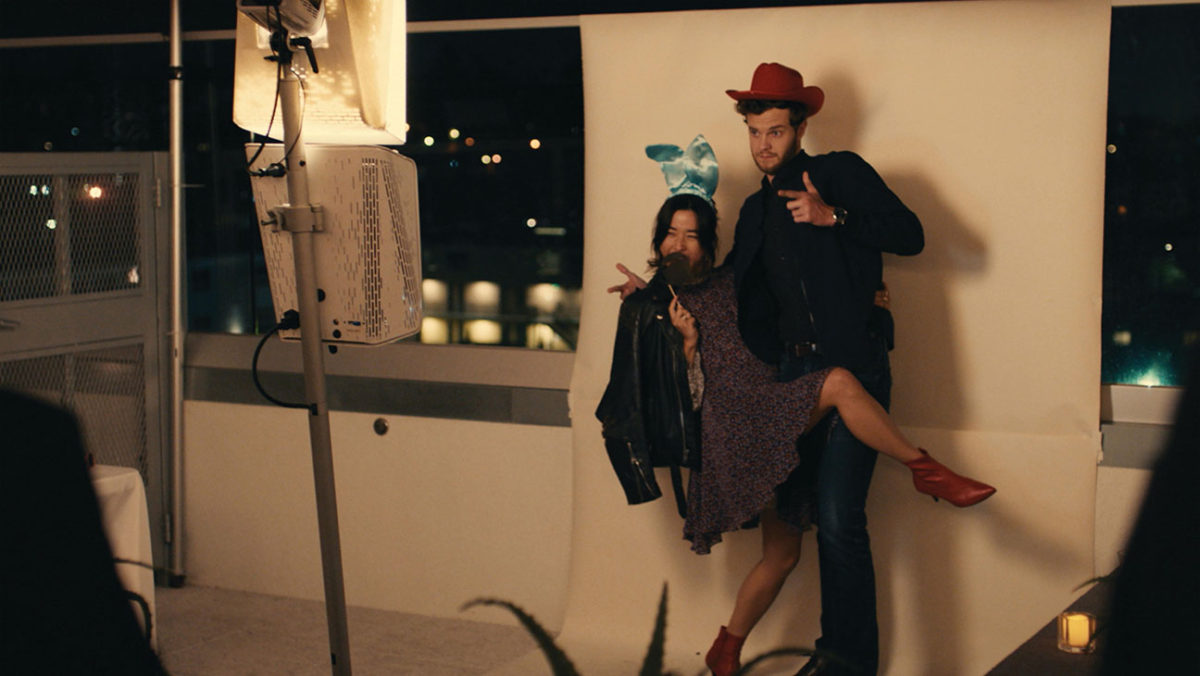
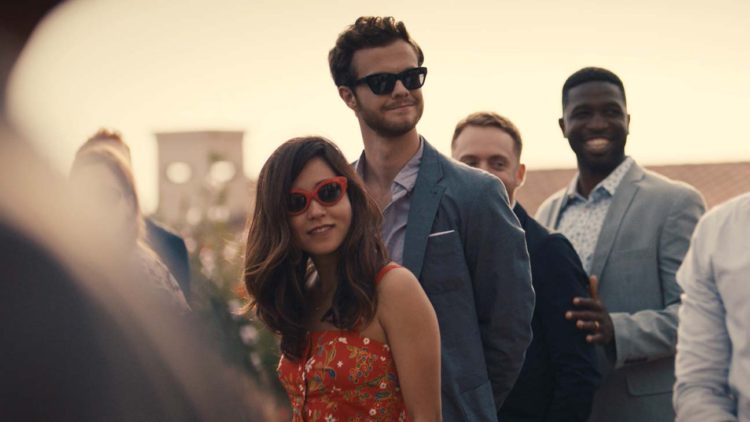
Maya Erskine and Jack Quaid in Plus One. Credit: RLJE Films.
You know the story from there. The pair who are all too perfect each other — sharp-tongued and brash Alice keeps the endearingly awkward and sensitive Ben grounded — skirt around being in an actual relationship until they finally give into their feelings. Eventually, things go awry putting their happily-ever-after at risk. It’s a formula that has worked for decades (including in When Harry Met Sally, which starred Quaid’s mother Meg Ryan).
Where Plus One freshens up the formula is its main characters. Specifically, Erskine’s stellar performance — with an assist from the sharp and witty screenplay — is filled quick-fire comedic barbs delivered with precision timing and physical humor that can only be achieved when a director allows their actors to just go with it. And when the dramatic scenes come, she nails them with a powerful intensity without losing what makes the character admirable.
If anything, the movie’s biggest fault is focusing the third act on Ben’s commitment issues rather than Alice. His story is familiar. Her’s is not. Especially since she comes from an Asian-American family presented in a way that we don’t often see in film — like any other family. There are small nods to the cultural nuances that I, as a first-generation Asian-American, couldn’t help but smile at. This is why diversity in film is important.
Plus One works best when it’s just Ben and Alice squaring off in hilarious and sharp banter that is underscored by the romantic tension between them — a late-night argument about cuddling and Alice giving feedback on Ben’s best man speech are highlights. Quaid keeps up with Erskine as his drier delivery matches up perfectly with her harsher tone. They’re both basically classic twenty-something archetypes — and that’s not necessarily a bad thing.
It’s authentic and, dare I say, relatable. We don’t like talking about our feelings so we put on sarcastic armor instead of dealing with it. The problems with Plus One come up when it starts dealing with it, but you have to commend it for trying. Come for the diner tilapia, stay for cemetery sex.
Modern classic Mean Girls returns in musical form to the big screen after a hit Broadway run. So fetch.
Mean Girls, the movie based on the musical based on the movie, doesn’t do much to convince us why it exists. While it does its best to update the story for a chronically online Gen Z audience, it never feels much more than a fresh coat of paint on a perfectly good wall. While the musical numbers are fetch (yes, it’s happening!) and show stopping performances, particularly by Auliʻi Cravalho and JacquelSpivey as Janis and Damian, keep the movie a fun time it isn’t the instant classic of the original plastics. You can’t sit with us.
Mean Girls is in theaters now. It will premiere on Paramount+ later this year.
To talk about Mean Girls, the new movie based on the Broadway stage musical based on the 2004 movie of the same name, we have to talk about the Great White Way’s recent obsession with movie-to-musical adaptations. We’ve been moving towards a world where billionaire studio executives see existing intellectual property as an untapped goldmine. And while movie remakes / reboots / requels (looking at your Halloween and Scream) are typically hit-or-miss with varying excuses for their existence, stage musicals haven’t quite come to the same realization – speaking exclusively of non-musical movies becoming stage musicals. There are past exceptions, of course, like Legally Blonde or Grey Gardens, but the modern state of the genre — Back to the Future, New York, New York — is grim.
ADVERTISEMENT
Mean Girls the musical is a perfect example. It takes a beloved property that is already nearly as stylized as a musical and simply overlays songs on top of its key moments.
If you’ve somehow missed out on the original, the story follows Cady Heron (Angourie Rice), North Shore High School’s newest student who has returned to the States after being homeschooled in South Africa. What she discovers is high school is perhaps wilder than the savanna. Art freaks / “too gay to function” dynamic duo Janis (Auli’i Cravalho) and Damien (Jacquel Spivey) take Cady under their wing just for her to catch the eye of the school’s popular clique “The Plastics” consisting of aloof Gretchen (Bebe Wood), airhead Karen (Avantika) and queen bee Regina George (Renee Rapp).
But when Cady’s crush on Regina’s ex-boyfriend Aaron Samuels (Christopher Briney) gets out, a war of gossip, crushes and buses ensues.
To justify the existence of songs in the universe, directors Samantha Jayne and Arturo Perez Jr. stage many as fantasy sequences taking place in the mind of characters. Some of these sequences are incredibly effective. Janis (Auli’i Cravalho) and Damien’s (Jacquel Spivey) “Revenge Party” is staged as a pastel-splashed revenge montage and Regina George’s “Someone Gets Hurt” is turned into a dark, twisted party anthem that feel true to the nature of a movie musical. Others like “Stupid with Love” feel more contrived.
ADVERTISEMENT
In adapting the movie to a musical and back into a movie, Tina Fey, who penned all three versions of the story, had to sacrifice some of the impact of the original’s best moments to fit in the musical moments.
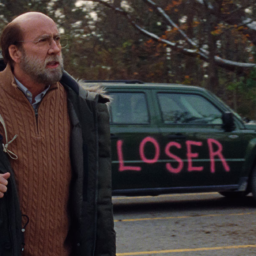
For example, Regina’s iconic “get in loser” line comes as the button of a song feels like an afterthought and Damien’s “you go, Glen Coco” gets lost in the shuffle of a musical montage. Other lines like “stop trying to make fetch happen” don’t feel as natural in the brighter more positive movie musical than the original. In adding music to Mean Girls, it also loses some of its bite.
While the original movie wasn’t exactly complex, the characters felt like lived in specimens with a life before the we pick up the story and one that continues after. Perhaps it’s the innate dissonance you get when translating something for the stage onto screen, but I think there’s something more afoot. Mean Girls the movie the musical the movie feels more like a list of plot points rather than a full story. It leans too heavily on your prior knowledge of the plot and the characters. It’s no wonder that the most rewarding moments are the ones where we get to see characters like Cravalho’s Janis, Spivey’s Damien or Wood’s Gretchen step outside the bounds of the original story.
ADVERTISEMENT
On the other hand, characters like Cady and Regina feel like they are too closely chained to the original while striving to become something new — a tension that results in an uneven performances.
While a skilled musical tactician like Rapp is able to find her moments — her performance of Regina’s soliloquy “Watch the World Burn” is standing ovation worthy — Rice gets lost.
Is there a way to bring Mean Girls to a new generation? Perhaps. Social media, TikTok, viral trends and Gen Z lingo are abound in the movie. But it never feels more than a whole lot of unnecessary business piled on top of a perfectly good story. Even the brightest moments feel fleeting. The original was subversive and ahead-of-its-time. This already feels dated. If you’re looking for the Mean Girls for a new generation, just watch Bottoms.
Past Lives follows childhood crushes Na Young and Hae Sung who reconnect at various points over the ensuing three decades from Seoul to New York
Though Past Lives is an epic in scope spanning decades at its core it’s a sweet intimate drama about how your past colors your present and often clouds your future. With irresistible “will-they-won’t-they” tension, sharp insights into how our past colors our present and clouds our future, and a trio of charming performances led by Greta Lee, it’s almost impossible to not fall for Past Lives.
I’ve been thinking about a monologue from Before Sunset, the second film in Richard Linklater’s masterpiece Before trilogy, recently. “Each relationship, when it ends, really damages me. I never fully recover. That’s why I’m very careful about getting involved because it hurts too much. Even getting laid! I actually don’t do that… I will miss the other person—the most mundane things.” Celine, played by Julie Delpy, continues, “I see in them little details, so specific to each of them, that move me, and that I miss, and… will always miss. You can never replace anyone, because everyone is made of such beautiful specific details.”
This is also how Hae Sung (Teo Yoo), a Korean man who reconnects with his childhood crush after more than two decades, perhaps go through life in the same way — looking for meaning in every moment that makes up the fabric of our lives. How does each interaction, each success, each failure build us up (or tear us down) as a person — or change the trajectory of our lives? When a moment ends, can that really be it? Was it something meant to be contained to just that split second of my life? Does it really matter if it doesn’t mean more than just that split second?
ADVERTISEMENT
Those are the questions in writer-director Celine Song’s debut feature Past Lives. An intimate character drama with the scale of a romantic epic, Song presupposes that looking to the past as a path for the future is a fool’s errand. And as time passes — rather than saying “12 Years Later,” Celine Song uses the title card “12 Years Pass” to remind us that life is still happening in those gaps — so do the people that filled these moments that at one time felt so meaningful.
Past Lives is made up of these brief moments covering three eras in its protagonists’ lives — quick glimpses that come and go like a memory reminiscent of Charlotte Wells’ Aftersun. We were first introduced to Hae Sung and Na Young (Greta Lee) twenty-four years earlier in Seoul, Korea where they’re on the precipice of a life-altering moment as Na Young’s parents make the decision to immigrate to Canada leaving Hae Sung heartbroken. That isn’t before her mother sets them up on a date to make “good memories” for her. Little do they both know that that memory will cascade into something larger for them. An entire movie could be dedicated to just Na Young’s journey to Canada, but the brilliance of Song’s direction is she let’s lingering shots do the talking — like one of Na Young standing in a corner at her new school observing her new strange environment.
Twelve years pass and Na Young, now going by her English name Nora, is a writer living in New York City — as a kid, she jokes about her dream of winning a Nobel Prize, and since moving that dream has “diminished” to winning a Pulitzer. Realizing that Hae Sung was looking for her years ago, she reaches out leading to a digital relationship that puts the years prior into perspective. Nora realizes how easily time can be halted by revisiting your past — something Past Lives puts a magnifying glass to — so she asks Hae Sung for a break in communication. But as so happens, weeks turn into months and months into years.
Eventually, another twelve years pass and an older more established Nora is married to fellow writer Arthur (First Cow’s John Magaro). Meanwhile, Hae Sung has reached back out to say he’s planning a visit to New York which Arthur (half-jokingly) says is a ploy to win Nora back. What could possibly go wrong? Well, the beauty of Past Lives — and this is perhaps a spoiler — is that nothing does. Life isn’t quite as dramatic as we hope it to be as much as the fantasy scenarios we concoct in our heads are. It’s why the movie’s cheeky cold open where two people play my favorite game, “make up a backstory for strangers at a bar” is oddly a meta assessment of the trio’s story. As is Arthur’s lament to Nora that in this story he’s the “evil white American husband keeping you two apart.” Besides, that’s not the story Song is trying to tell.
ADVERTISEMENT
The movie covers themes as broad as the Asian diaspora and how leaving where you’re from forces you to change and adapt — but can also blur your sense of identity. Nora observes that her Korean is softening, but when she talks to Hae Sung she says she “feels more Korean.” However, Song dives even further into the individual experience. Rarely are we afforded the opportunity to reobserve the moments that form us into the person we are today. Some of us, like Hae Sung, fight desperately to hold onto it. Maybe his time with Nora was the last time things made sense. Others, like Nora, are in direct opposition to that feeling. She actively runs from it — maybe to assimilate, maybe to chase a future that she’s already formed for herself. The beauty of Past Lives is that it doesn’t assume either is wrong only that the only path is forward.
Past Lives perhaps hits its themes too directly but the effect is never less than profound. The final moments, both devastating and triumphant, are miraculous — Greta Lee gives a star-is-born performance that begs not to be forgotten come awards season. For all three of our protagonists, a new chapter is opening — full of possibility, an old chapter is closing — healing old wounds and an entire story is being rewritten. Song’s screenplay, littered with beautifully simple yet deeply affecting insight, is simmering with romantic tension even if Past Lives isn’t quite a romance. Greta Lee, Teo Yoo and John Magaro play off of each other with astonishing realism that still mines the almost melodramatic (and slightly comedic) tone of Celine Song’s stage work for which she is known. The result is a charming, funny, and swoon-worthy 100-minute meditation that left me lightly sobbing on the way home.
Past Lives reminds me of the ending question posed in Arrival, “if you could see your whole life from start to finish, would you change things?” If you were to ask Celine Song, I’d imagine she’d answer with a hearty “no.” Because the beauty of this lifetime is that it is your lifetime — even if you share it for brief glimpses with others. It is your reality.
TIFF 2023 | A woefully average middle-aged professor garners overnight fame after he appears in the entire world’s dreams in Dream Scenario
Dream Scenario is exactly how Nicolas Cage should be spending his career: on bonkers wild swings like a comedic version of A Nightmare on Elm Street where Freddie is a normal average guy and his weapon is doing nothing. Hilarious, relevant and wonderfully weird, it is a reflection of the internet age, cancel culture and quickly our dreams for fame can turn into a nightmare.
Dream Scenariopremieredat the 2023Toronto International Film Festival. A24 is distributing.Watch the trailer here.
Dream Scenario is like A Nightmare on Elm Street if dream demon Freddie Krueger was a boring average middle-aged man and instead of knives for hands his weapon was doing absolutely nothing. That’s the new high concept Norwegian director Kristoffer Borgli explores with his follow-up to his breakout film Sick of Myself, whichsatirically skewered social media influencer culture. He once again sets his sights on the vanity (and memeification) of the internet age with a simple conceit: what would happen if one guy started appearing in everyone’s dreams? And I mean everyone.
That guy is woefully unremarkable zoology professor Paul Matthews. His particular brand of awkward schlubby-ness that borders on creepiness could only be achieved by Nicolas Cage. During lunch with a former university classmate, where he attempts to get co-credit for an idea that is publishing a book, she asks, “Well how far along are you?” He retorts, “It’s just in the idea stage.” That’s how Paul’s life has been defined so far. What he’s not done. However, he’ll quickly find that “doing” might also be a nightmare.
The following day, Paul starts to have weird encounters — his students whispering about him during class, a waitress having intense deja vu when he walks in, and an old flame mentioning he was in her dream the other night. While these all seem like coincidences, he starts to discover that he’s been in many people’s dreams… perhaps everyone’s. He finds his Facebook messages flooded with people telling him that he invaded their dreams. What was he doing in them? Absolutely nothing. As he hilariously fields questions from his students about their Paul dreams, they all have different conceits — running from a monster, trapped by alligators, an earthquake. What they have in common is Paul does nothing. He just stares or casually walks by. His aggressively normal demeanor — “that middle-aged bald guy with glasses” — is a hilarious juxtaposition to that absurd dream logic.
The movie’s plot and imagery evokes comparisons to Charlie Kaufman’s Eternal Sunshine of the Spotless Mind and I’m Thinking of Ending Things or David Lynch’s Twin Peaks: Fire Walk With Me. The pitch-black humor that Borgli achieves is so satisfying, especially when delivered by a self-aware tactician like Cage. Paul is woefully uninteresting in a way that only Cage, with his self-aware campy mannerisms and deadpan delivery, can make endearing. But Paul isn’t necessarily a hero, even if we are in some ways rooting for him and his overnight fame.
ADVERTISEMENT
Like any person suddenly thrust into the spotlight, Paul strives to take advantage of his newfound fame to get momentum on his book on ant intelligence that he’s dubbed “ant-elligence.” When he’s courted by a creative agency (headed up by Michael Cera in a cheeky cameo) to manage his new public persona they pitch him on deals ranging from Sprite — “we’ll get everyone to dream of you with a Sprite” — to Obama — “one idea was to have Obama dream about you.” His meteoric rise feels akin to the sudden internet stardom that so many people achieve for doing essentially the bare minimum or in some cases absolutely nothing — memes like “Alex from Target” or “Saltbae” come to mind. It’s clearly Borgli’s intention considering what’s next.
Suddenly, things take a turn for the worse and Dream Scenario takes a turn for the better (and the spooky). Instead of the benign creep standing idle while terrible nightmarish things happen to the dreamer, Paul becomes the nightmare. Much like Freddie Krueger in A Nightmare on Elm Street, Paul slashes, stabs and bludgeons his way through his hapless victims. The biggest difference is Paul is a person in the real world having to face the consequences of his actions (or lack thereof). From there, the movie turns into a send-up on cancel culture complete with insincere tear-ridden apologies, a hate-fueled internet mob, and, of course, a sorta-kinda-not-really redemption.
Like Borgli’s breakout film Sick of Myself, Dream Scenario loses some of the (nightmare) fuel that drives it for much of its runtime. He creates this wonderfully off-kilter world with such ease and crafts an entertaining story to go along with it, but he’s not necessarily interested in taking things a step further. The movie is a reflection of our world rather than a critique of it and the satire is maybe better defined as parody — like a comedy sketch turned into a feature-length film. Despite that, and an odd third act turn that perhaps jumps the shark, you never fall out of the trance it puts you in.
Even if it is driven by observation more than commentary — one hilarious turn after Paul’s cancellation is the alt-right and France standing as his last supporters — Dream Scenario is a satisfying excercise in the absurd that blessedly doesn’t feel self-important about what its chiding. It’s what I loved (and other’s despised) about The Menu. Like a dream you might forget the exact details of it but you wake up knowing the emotions you felt — and Dream Scenario will run you through the gamut.
TIFF 2023 | Origin follows an author’s pursuit of the roots of oppression against the backdrop of her own personal struggles
In adapting the nonfiction book Caste: The Origins of Our Discontents by Pulitzer Prizer winner Isabel Wilkerson, Ava DuVernay set out to unpack a complex topic that recontextualizes our conception of race and oppression that spans centuries and societies. It’s no small feat, especially for a book as well-researched and intellectual as Wilkerson’s. How does she tackle something this epic in scale? She shrinks it down to its smallest element: humans. Instead of following the idea, she follows Wilkerson’s journey (played by Aunjanue Ellis-Taylor) to understand it — from present-day Florida to the Jim Crow South to late 19th century India. But first, DuVernay wants us to understand Isabelle herself.
ADVERTISEMENT
Origin begins in the shadow of the murder of Trayvon Martin (Miles Frost), which DuVernay sensitively recreates through the chilling 911 call that stunned the nation. Like all of us, the story rocks Isabelle who is courted by a former colleague to write an article on the shooting. However, we see that Isabelle’s mind is elsewhere. Her mother (Emily Yancy) makes the decision to move into an assisted-living facility and while Isabelle’s husband Brett (Jon Bernthal) supports her, she feels guilt and regret. In these early scenes, we often see Isabelle framed against the sky (the film’s stunning cinematography is by Matthew J. Lloyd) like she’s floating untethered from the ground. She is at an impasse.
That’s when the unthinkable happens. Losing her husband and mother in quick succession throws Isabelle into grief. Poetically translated onto the screen to helps us understand how an incident with a plumber (Nick Offerman) sporting a “Make American Great Again” hat throws her back into work. Using her grief and anger as a motivator, she’s dives head-first into her work trying to find answers to impossible questions. But that insatiable appetite for knowledge and eye for patterns is nothing short of gripping to watch. Like the greatest journalism movies — Spotlight, All the President’s Men — Origin moves with swiftness driven by an urgency to solve the mystery. However, unlike those movies the mystery is at the very core of our world.
ADVERTISEMENT
To help us fully understand Isabelle’s thoughts, we hear excerpts from Caste played over reenactments of three historical threads. In the first, we follow German man August (Finn Wittrock) and Jewish woman Irma (Victoria Pedretti), who defied rule in Nazi-era Germany. From there, we connect with a pair of Black anthropologists (Isha Blacker and Jasmine Cephas-Jones) who after witnessing the rise of the Nazi party in Germany embed themselves in the Jim Crow South to investigate the racial divide. Lastly, in an Eat, Pray, Love-like trip to India, Isabelle uncovers the caste system and subordination of the Dalit people.
Each of these threads weave into a tapestry that form Isabelle’s argument: racism and oppression are not synonymous. Oppression exists with or without race. By analyzing each of these disparate systems of oppression, she supports her argument. Cycling between these asides, scenes from Isabelle’s past, and her present research, Origin pieces together a puzzle of our world and Isabelle’s place in it.
ADVERTISEMENT
For some, Origin may come off as pedantic. In communicating Wilkerson’s work for a broad audience, DuVernay over-explains herself. Taken as each individual element, the movie could feel more like an issues documentary than an effective narrative. But taken as a sum of its parts, Origin is a dazzling epic of large ideas and the smallness of those affected by them. Two moments emotionally drive the movie’s real purpose. In one, a small Black boy celebrating a win with his little league team is denied entry to a whites-only pool. Eventually, the lifeguard allows him to enter the pool on the condition he remains on a pool float and doesn’t touch the water. As his white teammates look on with confusion the lifeguard moves the boy around the pool on a float. Like the shots of Isabelle against the cast blue sky, the boy himself is floating in space. Untethered and unable to move unless moved.
The second moment is the movie’s watershed moment — Ellis-Taylor’s most exhilarating moment as an actress. As Isabelle, thousands of miles away in India, speaks on the phone to her ailing cousin and confidant Marion (Niecy Nash-Betts in a stellar supporting turn) she asks her to “cover me.” For me, It invoked “I’ll Cover You,” a song from musical Rent where a character and his lover promise to protect each other. In that emotional conversation on distant two points on the globe, Isabelle finds her grounding. Origin, for all its sweeping thoughts, can be simply distilled to that one very human idea. Connection, to the past or our present, tethers us to our humanity. An experience that is as universal as the connection between two people.
Actor-turned-director Anna Kendrick and first-time director Noora Niasari screened their new movies at the 2023 Toronto International Film Festival
Anna Kendrick, best known as an actress in the Pitch Perfect franchise and A Simple Favor, takes the director’s chair for the first time with her thriller Woman of the Hour. Meanwhile, first-time director Noora Niasari adapts her childhood in the drama Shayda.
Tony Hale, Anna Kendrick and Daniel Zovatto in Woman of the Hour. Courtesy of TIFF.
Anna Kendrick is first-time director of the hour with Woman of the Hour, a taut and effective thriller
As an actress, Anna Kendrick (Pitch Perfect, A Simple Favor) is known for her bubbly wry personality behind a thousand watt smile that oozes charisma. It makes the tense and terrifying opening sequences of her directorial debut Woman of the Hour all the more surprising. It has more in common with David Fincher’s Zodiac than any of her onscreen appearances. However, the bizarre true story of a serial killer’s appearance on 70s dating show The Dating Game is a match for her sensibilities as an actress — and apparently as a director.
Kendrick plays Cheryl Bradshaw, a failed actress in LA whose agent gets her onto an episode of The Match Game. Little does she know Rodney Alcala (Daniel Zovatto, Don’t Breathe), one of the three eligible bachelors she has to pick from, murdered five woman prior to his appearance. Oscillating between intense suspenseful scenes depicting Alcala’s past crimes throughout the 70s and darkly comedic clips from the show — where Kendrick gets to flash her signature wry humor — Woman of the Hour is a tight and engrossing thriller that strikes a balance between respecting the victims and faithfully recreating what transpired.
While actors-turned-directors often take a “more is more” approach — as if they have something to prove —Kendrick has astounding control over the atmosphere, mood and pacing of the movie. She never sensationalizes any of the killings and even her directorial flourishes — a quick cut or audio dropping out — are small but effective. She allows the story to direct the style rather than the other way around. At a lean 94 minutes, Woman of the Hour is as efficient as they come but doesn’t sacrifice impact. If this movie is any indication, Anna Kendrick is going to be the director of the hour.
Zar Amir Ebrahimi and Selina Zahednia in Shayda. Courtesy of TIFF.
Sweet and engrossing Australian drama Shayda gives Zar Amir Ebrahimi another stellar acting showcase
Ever since seeing Zar Amir Ebrahimi in her Best Actress-winning performance in Holy Spider at the Cannes Film Festival I was fascinated by what she would do next — and she did disappoint. Australian drama Shayda takes the form of a familiar domestic violence drama in the vein of Sleeping with the Enemy or Enough but has the added element of an immigrant story. Ebrahimi plays the titular character, an Iranian immigrant living in a women’s shelter with her daughter Mona (Selina Zahednia) in 1980s Australia.
We learn through a heartbreaking monologue where Shayda prepares to fight for custody of her daughter what drove her to finally leave her abusive husband (Osamah Sami). Ebrahimi’s performance is staggering. Rather than letting the emotion out in a watershed moment, it feels like she’s held it in so long it simple begins to seep out. So much of the success of Shayda falls on her performance that continually transforms as the movie progresses. While the subject could be overwhelming, first-time writer-director Noora Niasari, who based the story on her own childhood, relishes in the moments of joy rather than lingering on those of pain.
While the movie doesn’t completely transform the formula of this kind of movie, the pure fact that the story is about an Iranian woman and immigrant makes it a compelling watch. Niasari explores the tension between celebrating and participating in your culture while doing something that goes against it. Shayda doesn’t offer any answers or proclamations, it simply seeks to make you feel what it is like to live in that tension. In the end, Shayda is uplifting, engrossing and heartwarming.
Shaydais playing at the 2023 Toronto International Film Festival.Sony Pictures Classics will release the film later this year.