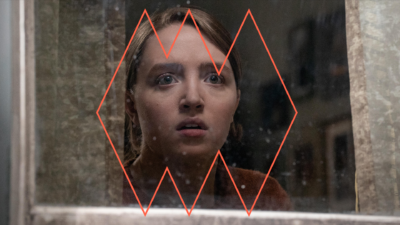
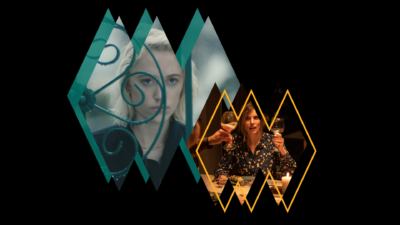
Plus One follows two best friends — and potential love interests — as they try to survive a dreaded summer full of weddings.
The romantic-comedy works best when it’s character-driven and has a fresh perspective, both of which Plus One has. However, it also helps that the movie is so incredibly funny and filled with sharp one-liners delivered with precision by the leads Maya Erskine and Jack Quaid. But it’s Erskine who really steals the show. That’s thanks to first-time feature directors Jeff Chan and Andrew Rhymer putting trust in their actors’ instincts and allowing them to nail every moment.
The narrative does drag towards the third act and falls into some genre cliches. But for the most part, Plus One is a hilarious and, dare I say, relatable take on the classic romantic comedy formula with enough gags to keep you hooked from beginning to end.
Between subversive mainstream hits like Crazy Rich Asians and Love, Simon and a seemingly never-ending parade of Netflix movies including To All the Boys I’ve Loved Before and Set it Up, it’s clear that the romantic comedy is making its triumphant comeback.
And a new entry in the genre, Plus One — which made its world premiere at the Tribeca Film Festival — is the perfect middle ground between those two groups of films. Directing and screenwriting duo Jeff Chan and Andrew Rhymer tackle a familiar rom-com story by not treating it like a story at all. They let their characters take the lead — and what characters they are.
Alice (Maya Erskine) and Ben (Jack Quaid) are decade-long friends who are going through the all too familiar — and dreaded — wedding season single. Alice recently broke up with her long-term boyfriend Nate and Ben has trouble committing. And as anyone that has gone through wedding season stag knows, it sucks.
So, just like many other rom-coms, the two hatch out a plan. They will be each other’s plus-ones to every wedding they have to attend that summer — ten in total. From there, the movie is essentially split into chapters, each beginning with the always cringy toast delivered awkwardly by a maid of honor, best man, or parent.
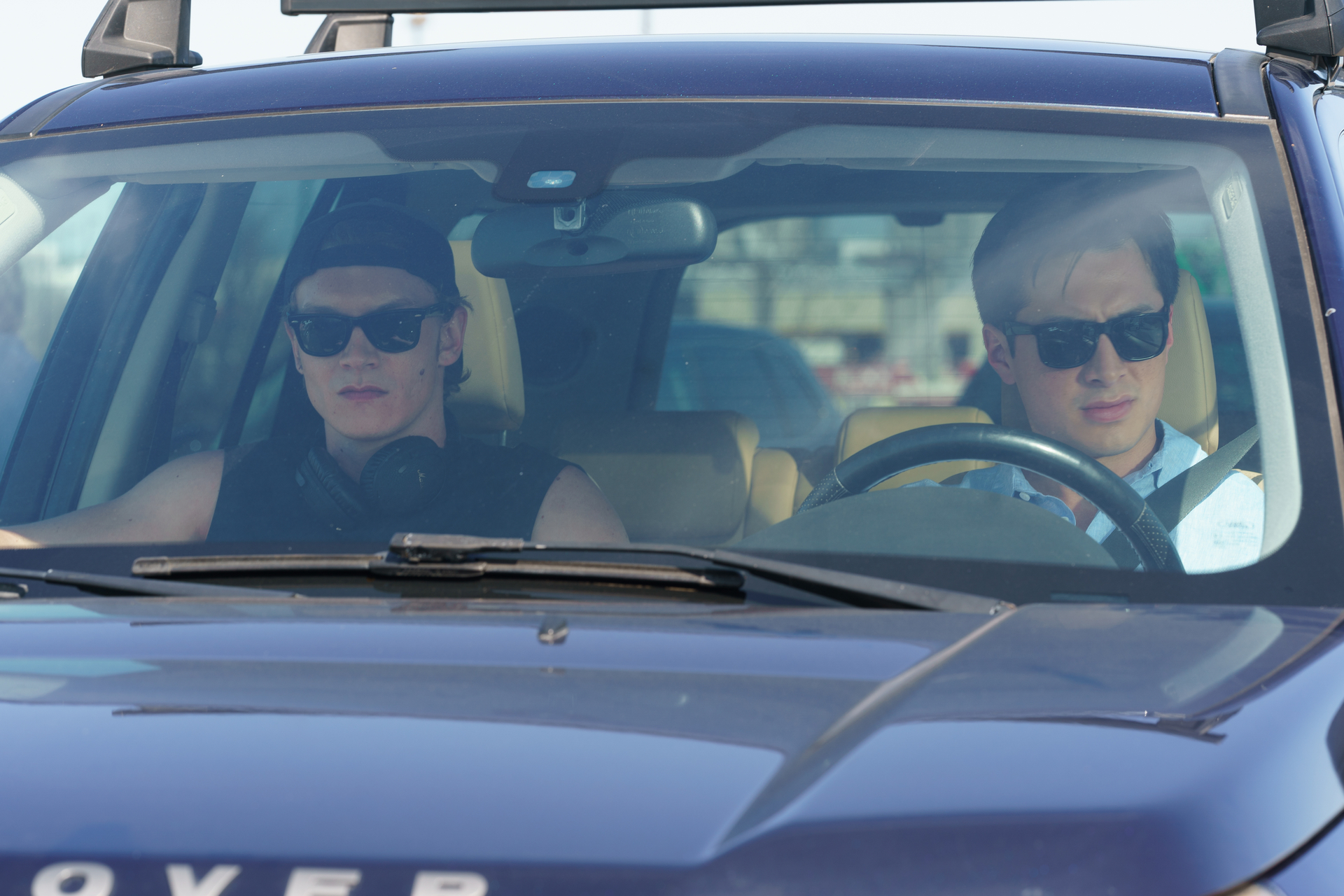
Maya Erskine and Jack Quaid in Plus One. Credit: RLJE Films.
You know the story from there. The pair who are all too perfect each other — sharp-tongued and brash Alice keeps the endearingly awkward and sensitive Ben grounded — skirt around being in an actual relationship until they finally give into their feelings. Eventually, things go awry putting their happily-ever-after at risk. It’s a formula that has worked for decades (including in When Harry Met Sally, which starred Quaid’s mother Meg Ryan).
Where Plus One freshens up the formula is its main characters. Specifically, Erskine’s stellar performance — with an assist from the sharp and witty screenplay — is filled quick-fire comedic barbs delivered with precision timing and physical humor that can only be achieved when a director allows their actors to just go with it. And when the dramatic scenes come, she nails them with a powerful intensity without losing what makes the character admirable.
If anything, the movie’s biggest fault is focusing the third act on Ben’s commitment issues rather than Alice. His story is familiar. Her’s is not. Especially since she comes from an Asian-American family presented in a way that we don’t often see in film — like any other family. There are small nods to the cultural nuances that I, as a first-generation Asian-American, couldn’t help but smile at. This is why diversity in film is important.
Plus One works best when it’s just Ben and Alice squaring off in hilarious and sharp banter that is underscored by the romantic tension between them — a late-night argument about cuddling and Alice giving feedback on Ben’s best man speech are highlights. Quaid keeps up with Erskine as his drier delivery matches up perfectly with her harsher tone. They’re both basically classic twenty-something archetypes — and that’s not necessarily a bad thing.
It’s authentic and, dare I say, relatable. We don’t like talking about our feelings so we put on sarcastic armor instead of dealing with it. The problems with Plus One come up when it starts dealing with it, but you have to commend it for trying. Come for the diner tilapia, stay for cemetery sex.
Italian summers, forbidden love and longing. Here is a playlist inspired by the 2017 romance Call Me By Your Name.
Welcome to Re-Play, a column where one of our writers curates a playlist based on a movie, TV show, experience or any part of life.Find the playlist for you here.
The first time I watched Call Me By Your Name was in the middle of a tough breakup during a harsh winter in New York City, all of which I immediately forgot about the moment that the dreamy opening credits rolled. It wasn’t until I stepped out of the theater, that it hit me that I wasn’t actually living in an Italian summer – I was in the middle of Manhattan, and it was still February, but I was a little less alone in my heartbreak, and feeling some semblance of hope again. If anything, I felt so raw and underwent such a catharsis while watching the film, that it took me a few seconds longer to adapt to my actual surroundings. I was amazed that a director could capture not just a place’s heat and lush environment, but also the feelings of love and loss in their tenderness, fragility, excitement, and fear. For a while, despite the stubborn chill surrounding me, I couldn’t get what I had just seen and felt out of my head, and I wanted to preserve that feeling in whatever way I could. So, as I tend to do, I created a playlist.
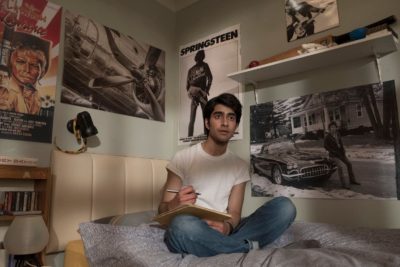
The music in Call Me By Your Name is just as important as its visual choices, making it a film that pulses and moves forward with its soundtrack, whether it’s the hazy intensity of a Talking Heads needle drop or quieter motifs from the score during intimate moments. In almost every other scene, Elio is seen listening to, playing, or transcribing music, not to mention the various references to music videos of the time, concerts, dance breaks, and posters from contemporary bands lining Elio’s (and Oliver’s) bedroom. Director Luca Guadagnino said that he wanted the film to be enveloped in a narrator’s voice, for which he chose Sufjan Stevens, whose original songs in each of the movie’s three acts help provide musical cues to amplify the story.
If the music in the movie’s soundtrack acts as a narrator, for this playlist, I chose songs that could also narrate the film through their lyrics. I set out to tell a similar story in 49 minutes and capture the youth, the longing, and the nostalgia of the 80s, just as Luca Guadagnino achieved for me in the middle of a Manhattan winter.
I also wanted to tell a story of heartbreak, with the first half of the playlist full of bright summer yearning, which later cascades into songs I associate with breakups, though hopefully by it’s end conveys that same bittersweet grief and gratitude that the final scene of the movie does for me. After all, this movie, like life, is about highs and lows, beginnings and endings, and finding the courage to want to experience the full spectrum of life and love.
And I don’t want to let a moment pass Running circles in my mind, circles in my mind “Call you later”, Something that you forget
Waiting on the dial tone Maybe I’ll just let it go Here I am, been waiting on you far too long
With its jangly guitars and twinkling pop melodies, this song is a fun and hopeful start to the story. However, the lyrics point to issues under the surface of an obsessive summer romance: “I don’t want to let a moment pass, running circles in my mind.” Ultimately, there are miscommunications and hints at an unrequited romance: “waiting on a dial tone, wanting to call it quits.”
Upon rewatches, I sympathize more with Marcia’s character. I like to think this is sung from her perspective, since she is by Elio’s side before Oliver comes to visit that summer — she even watches Oliver’s entrance with Elio in the movie’s first scenes. Her character loved and waited for Elio for “far too long,” expecting something of him that he couldn’t ultimately give her.
ADVERTISEMENT
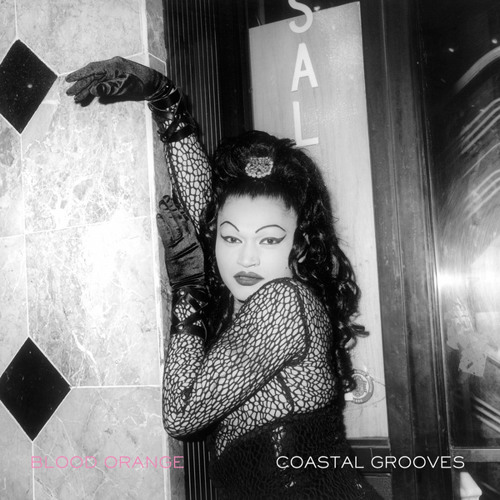
“Forget It” – Blood Orange
I feel unique Not yet complete
And your steaming eyes fall on me Poor me Poor you Poor us A fuss, a fight So I sat outside, outside
If the last song was Marcia’s point of view, then here is Elio’s perspective of their fling. This song is about lust and a couple in discord: a confused narrator insists that he isn’t his partner’s savior. This differs from what Marcia wants to hear as she’s caught up in a situation she wants more from. The truth is that Elio’s attentions are diverted elsewhere with the introduction of Oliver, and he’s not the one for her.
“W Longing” – Porches
I get high Alone tonight And I ask myself If you could be mine
I hold my breath, motionless My lungs pink with black air
This song begins Elio and Oliver’s romance, from the initial tension and discord to the nerves sparked by a crush nearby. This song concerns pools, getting high, dancing, wondering, and longing.
The song’s lyrics also mirror the question at the crux of Elio and Oliver’s affair, which they’re both asking to be confirmed to each other: “Tell me what you wanna hear, I want you to hear it”
“Peach Pit” – Peach Pit
Lift back and see the darkness hid Swallowed up and angled in Looking back at sweetness dim
Ripe June had leaf and shady friend The cool air is gone again
It’s been a long season through All this rotting fruit with you
Of course, I had to include a song titled “Peach Pit.” It’s good that it works as perfectly as it does, narratively and sonically. This is a moody, sweet song sung in soft refrains describing a nostalgia for summer love and the deeper feelings and foreboding of an inevitable ending. Nostalgia always colors everything sweeter, but the time of peaches hanging on branches is gone, and all that’s left is summer fruit on the ground; everything that ripens must eventually fall, signaling that even summer romances that seem to last forever must end.
ADVERTISEMENT
“Olive Boy“ – Reptaliens
We don’t have to know Anyone at all Anyone at all Draw the blinds back slow Sun fades in our room Two begin to bloom
This song – another dreamy bedroom pop project – asks if the relationship being formed between two lovers is reciprocal and affirms that nothing else matters as long as they have each other. There’s a daydreaminess to the lyrics that set the scene in a bedroom, blinds being drawn back so the night can last longer, and they can shut out the world’s reality for a while longer.
And a little nod to the movie’s title in the chorus: “Is that cool with you? That I wanna call your name?”
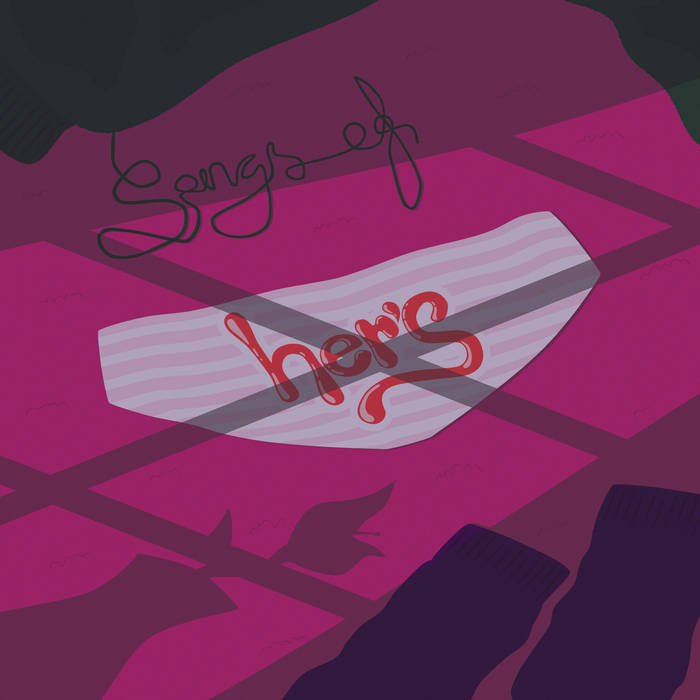
“Cool with You” – Her’s
Feeling sick Sinking ship The sun goes through your window It shatters on your pillow
Mustard skin Olive man Who are you when you’re at home Are you the same when you’re alone
Hopefully, these songs all have a clear sonic connection so far: they’re synthpop, analog, retro, and reminiscent of the 80s, with soft, lovelorn vocals. All of these could soundtrack an alternate version of the movie or be the background music choice for a Gen-Z-esque fan cam. This song is another bedroom pop project, whose grainy, retro style creates a hazy drug-infused scene about a boy who cries and feels sick as he wakes up – similar to Elio, high off of new experiences but feeling lovesick with the amount of new emotions he’s trying to make sense of.
“I Don’t Know You” – The Marías
There’s a weight in my bed Where you laid and you said “I don’t know you”
If we tried to retrace Would it show on my face? And remind you I don’t mind you
This is a nostalgic and sultry song about a couple’s experience filled with uncertainty and wonder whether the other person truly knows the singer. Despite being together, there are still some doubts and tension between them and a question about whether the other person is just as invested:
“I’m hardly unsatisfied, You’re not heels over head, But darling, There’s a weight in my bed”
Similarly, Elio and Oliver are finally together, but Elio still doubts whether Oliver is just as compromised in the relationship as he is.
“I Love You So” – The Walters
You’re everything I want, but I can’t deal with all your lovers You’re saying I’m the one, but it’s your actions that speak louder
Giving me love when you are down and need another I’ve gotta get away and let you go, I’ve gotta get over
I love you so (ooh-oh)
This song is about gathering the courage to let someone go after discovering that the other person has a life and lovers beyond their relationship. It’s about a shattering loss and heartbreak but still loving someone so much and searching for the determination to move on from them:
“I’m gonna pack my things and leave you behind
This feeling’s old, and I know that I’ve made up my mind.”
I see this song from Oliver’s point of view. He realizes that he must leave Elio at the end of the summer, and nothing can change his mind.
ADVERTISEMENT
“Trust the Tension” – Drowners
A bookshelf organized just by the color of the spines Has enough time quite elapsed for me to call you mine?
Well now you know That I’ll learn to trust the tension And I’ll learn to let things go But if you plan on leaving Please just fucking go
I find that this song can fit Elio’s point of view of the coming end of the relationship: he hopes that if Oliver plans on leaving, he should go and not drag things out. Here he battles all the stages of letting off the relationship: wondering if enough time has passed to call Oliver his, then realizing that he needs to learn to let go, and then more confident: “Yeah, if you plan on leaving, Please just fucking go”
“Heart Swells/Pacific Daylight Time” – Los Campesinos
I don’t want to sound trite but you were perfect The way you look could seriously make nature dysmorphic I wish that you would kiss me ’til the point of paralysis The way I flail my arms in front of you, it just embarrasses I’ll never turn my body clock back And think about the things I’m glad I left out Some things are best left unsaid
To me, this song parallels the movie’s climax: the heartbreak. Saying goodbye at the train station, the tension building, the train and Oliver departing, everything falling apart. Then follows a tenderness, a yearning for the love and the memory of the relationship, and everything left unsaid.
This moody song with stilted vocals has always felt emotionally packed to me. It also has a particular build: it starts slowly, and all the instrumentation comes together simultaneously.
There is an initial chaotic feedback of electric guitars (which foreshadows the climax of the song later on), followed by an acoustic guitar that softly marks the rhythm. Horns then appear in the background, and with the addition of a distorted electric guitar, and a twinkling piano, it all soon fades into a wall of noise as the fuzzy vocals start in the first part of the song (Heart Swells). The lyrics here describe happy memories within a relationship, as then builds to the conclusion of a breakup, knowing they’ll never be the same after that experience: “Sleep well, I feel you’ve ruined me forever”
The instruments hit their final, discordant note, and the song shifts to Part 2 (Pacific Daylight Time), a sunny and bright instrumental with a loud, steady drum that marks the rhythm this time. More precise, more conventional vocals now express longing and desire for that person, but a decisiveness about how they’ll never regret that time together, despite everything left unsaid: “I’ll never turn my body clock back, And think about the things I’m glad I left out”
The song stops abruptly after more feedback, static, and disconnected vocals. Everything ended before its time, but it was beautiful, and even if the memory gets distorted, it’s all okay for now.
ADVERTISEMENT
“I’ve Been Thinking Too Hard” – Yellow Days
I, I don’t know what’s right anymore The sea flooded and the rain poured I’m conditioned to survive Just I need to be alive I’ve got intuition on my side Just to ease that paranoid mind I’ve cried tears ocean-wide Just to ease that pain inside
Here’s when we reach my favorite part of a movie full of favorite moments: Elio’s dad’s speech.
The song features an intro and outro by Alan Watts that asks the listener to find the ever-elusive peace in a man’s soul. His reassuring voice takes me straight to the scene where Elio’s dad helps him navigate his immense grief at the loss of Oliver and insists that this pain is Something to hold dear because it signifies a great love. This song is a break from the rest of the playlist – an outside perspective, an authoritative but empathetic voice breaking through the emotions and innermost dialogue of the narrative.
“Vacation“ – Florist
But at least I know that the world is spinning when we’re tangled in the bedsheets And at least I know that my mom is breathing when we talk on the phone And at least I know that my house won’t burn down Down to the ground Or maybe it will
This song is a soft and sweet epilogue to this playlist and matches the epilogue that we’re given in the movie. Its lyrics reflect on an idyllic past: simple pleasures, bike rides, Christmas lights, and the small delights of a family vacation, which the singer is still determining if she can enjoy the same way anymore.
The song describes childhood and the loss of innocence as they head into adulthood. Despite the initial nostalgia, the song is ultimately realistic, with the singer believing that anything could happen, both good and bad, and that she can still view things with hope, as she did once as a child while accepting that things don’t last forever.
Similarly, at the movie’s end, Elio is seemingly content but still carries grief about the past, which he remembers after his phone call with Oliver. But he finds the peace that comes with catharsis and accepts the ending of something beautiful that wasn’t meant to last.
Modern classic Mean Girls returns in musical form to the big screen after a hit Broadway run. So fetch.
Mean Girls, the movie based on the musical based on the movie, doesn’t do much to convince us why it exists. While it does its best to update the story for a chronically online Gen Z audience, it never feels much more than a fresh coat of paint on a perfectly good wall. While the musical numbers are fetch (yes, it’s happening!) and show stopping performances, particularly by Auliʻi Cravalho and JacquelSpivey as Janis and Damian, keep the movie a fun time it isn’t the instant classic of the original plastics. You can’t sit with us.
Mean Girls is in theaters now. It will premiere on Paramount+ later this year.
To talk about Mean Girls, the new movie based on the Broadway stage musical based on the 2004 movie of the same name, we have to talk about the Great White Way’s recent obsession with movie-to-musical adaptations. We’ve been moving towards a world where billionaire studio executives see existing intellectual property as an untapped goldmine. And while movie remakes / reboots / requels (looking at your Halloween and Scream) are typically hit-or-miss with varying excuses for their existence, stage musicals haven’t quite come to the same realization – speaking exclusively of non-musical movies becoming stage musicals. There are past exceptions, of course, like Legally Blonde or Grey Gardens, but the modern state of the genre — Back to the Future, New York, New York — is grim.
ADVERTISEMENT
Mean Girls the musical is a perfect example. It takes a beloved property that is already nearly as stylized as a musical and simply overlays songs on top of its key moments.
If you’ve somehow missed out on the original, the story follows Cady Heron (Angourie Rice), North Shore High School’s newest student who has returned to the States after being homeschooled in South Africa. What she discovers is high school is perhaps wilder than the savanna. Art freaks / “too gay to function” dynamic duo Janis (Auli’i Cravalho) and Damien (Jacquel Spivey) take Cady under their wing just for her to catch the eye of the school’s popular clique “The Plastics” consisting of aloof Gretchen (Bebe Wood), airhead Karen (Avantika) and queen bee Regina George (Renee Rapp).
But when Cady’s crush on Regina’s ex-boyfriend Aaron Samuels (Christopher Briney) gets out, a war of gossip, crushes and buses ensues.
To justify the existence of songs in the universe, directors Samantha Jayne and Arturo Perez Jr. stage many as fantasy sequences taking place in the mind of characters. Some of these sequences are incredibly effective. Janis (Auli’i Cravalho) and Damien’s (Jacquel Spivey) “Revenge Party” is staged as a pastel-splashed revenge montage and Regina George’s “Someone Gets Hurt” is turned into a dark, twisted party anthem that feel true to the nature of a movie musical. Others like “Stupid with Love” feel more contrived.
ADVERTISEMENT
In adapting the movie to a musical and back into a movie, Tina Fey, who penned all three versions of the story, had to sacrifice some of the impact of the original’s best moments to fit in the musical moments.
For example, Regina’s iconic “get in loser” line comes as the button of a song feels like an afterthought and Damien’s “you go, Glen Coco” gets lost in the shuffle of a musical montage. Other lines like “stop trying to make fetch happen” don’t feel as natural in the brighter more positive movie musical than the original. In adding music to Mean Girls, it also loses some of its bite.
While the original movie wasn’t exactly complex, the characters felt like lived in specimens with a life before the we pick up the story and one that continues after. Perhaps it’s the innate dissonance you get when translating something for the stage onto screen, but I think there’s something more afoot. Mean Girls the movie the musical the movie feels more like a list of plot points rather than a full story. It leans too heavily on your prior knowledge of the plot and the characters. It’s no wonder that the most rewarding moments are the ones where we get to see characters like Cravalho’s Janis, Spivey’s Damien or Wood’s Gretchen step outside the bounds of the original story.
ADVERTISEMENT
On the other hand, characters like Cady and Regina feel like they are too closely chained to the original while striving to become something new — a tension that results in an uneven performances.
While a skilled musical tactician like Rapp is able to find her moments — her performance of Regina’s soliloquy “Watch the World Burn” is standing ovation worthy — Rice gets lost.
Is there a way to bring Mean Girls to a new generation? Perhaps. Social media, TikTok, viral trends and Gen Z lingo are abound in the movie. But it never feels more than a whole lot of unnecessary business piled on top of a perfectly good story. Even the brightest moments feel fleeting. The original was subversive and ahead-of-its-time. This already feels dated. If you’re looking for the Mean Girls for a new generation, just watch Bottoms.
Past Lives follows childhood crushes Na Young and Hae Sung who reconnect at various points over the ensuing three decades from Seoul to New York
Though Past Lives is an epic in scope spanning decades at its core it’s a sweet intimate drama about how your past colors your present and often clouds your future. With irresistible “will-they-won’t-they” tension, sharp insights into how our past colors our present and clouds our future, and a trio of charming performances led by Greta Lee, it’s almost impossible to not fall for Past Lives.
I’ve been thinking about a monologue from Before Sunset, the second film in Richard Linklater’s masterpiece Before trilogy, recently. “Each relationship, when it ends, really damages me. I never fully recover. That’s why I’m very careful about getting involved because it hurts too much. Even getting laid! I actually don’t do that… I will miss the other person—the most mundane things.” Celine, played by Julie Delpy, continues, “I see in them little details, so specific to each of them, that move me, and that I miss, and… will always miss. You can never replace anyone, because everyone is made of such beautiful specific details.”
This is also how Hae Sung (Teo Yoo), a Korean man who reconnects with his childhood crush after more than two decades, perhaps go through life in the same way — looking for meaning in every moment that makes up the fabric of our lives. How does each interaction, each success, each failure build us up (or tear us down) as a person — or change the trajectory of our lives? When a moment ends, can that really be it? Was it something meant to be contained to just that split second of my life? Does it really matter if it doesn’t mean more than just that split second?
ADVERTISEMENT
Those are the questions in writer-director Celine Song’s debut feature Past Lives. An intimate character drama with the scale of a romantic epic, Song presupposes that looking to the past as a path for the future is a fool’s errand. And as time passes — rather than saying “12 Years Later,” Celine Song uses the title card “12 Years Pass” to remind us that life is still happening in those gaps — so do the people that filled these moments that at one time felt so meaningful.
Past Lives is made up of these brief moments covering three eras in its protagonists’ lives — quick glimpses that come and go like a memory reminiscent of Charlotte Wells’ Aftersun. We were first introduced to Hae Sung and Na Young (Greta Lee) twenty-four years earlier in Seoul, Korea where they’re on the precipice of a life-altering moment as Na Young’s parents make the decision to immigrate to Canada leaving Hae Sung heartbroken. That isn’t before her mother sets them up on a date to make “good memories” for her. Little do they both know that that memory will cascade into something larger for them. An entire movie could be dedicated to just Na Young’s journey to Canada, but the brilliance of Song’s direction is she let’s lingering shots do the talking — like one of Na Young standing in a corner at her new school observing her new strange environment.
Twelve years pass and Na Young, now going by her English name Nora, is a writer living in New York City — as a kid, she jokes about her dream of winning a Nobel Prize, and since moving that dream has “diminished” to winning a Pulitzer. Realizing that Hae Sung was looking for her years ago, she reaches out leading to a digital relationship that puts the years prior into perspective. Nora realizes how easily time can be halted by revisiting your past — something Past Lives puts a magnifying glass to — so she asks Hae Sung for a break in communication. But as so happens, weeks turn into months and months into years.
Eventually, another twelve years pass and an older more established Nora is married to fellow writer Arthur (First Cow’s John Magaro). Meanwhile, Hae Sung has reached back out to say he’s planning a visit to New York which Arthur (half-jokingly) says is a ploy to win Nora back. What could possibly go wrong? Well, the beauty of Past Lives — and this is perhaps a spoiler — is that nothing does. Life isn’t quite as dramatic as we hope it to be as much as the fantasy scenarios we concoct in our heads are. It’s why the movie’s cheeky cold open where two people play my favorite game, “make up a backstory for strangers at a bar” is oddly a meta assessment of the trio’s story. As is Arthur’s lament to Nora that in this story he’s the “evil white American husband keeping you two apart.” Besides, that’s not the story Song is trying to tell.
ADVERTISEMENT
The movie covers themes as broad as the Asian diaspora and how leaving where you’re from forces you to change and adapt — but can also blur your sense of identity. Nora observes that her Korean is softening, but when she talks to Hae Sung she says she “feels more Korean.” However, Song dives even further into the individual experience. Rarely are we afforded the opportunity to reobserve the moments that form us into the person we are today. Some of us, like Hae Sung, fight desperately to hold onto it. Maybe his time with Nora was the last time things made sense. Others, like Nora, are in direct opposition to that feeling. She actively runs from it — maybe to assimilate, maybe to chase a future that she’s already formed for herself. The beauty of Past Lives is that it doesn’t assume either is wrong only that the only path is forward.
Past Lives perhaps hits its themes too directly but the effect is never less than profound. The final moments, both devastating and triumphant, are miraculous — Greta Lee gives a star-is-born performance that begs not to be forgotten come awards season. For all three of our protagonists, a new chapter is opening — full of possibility, an old chapter is closing — healing old wounds and an entire story is being rewritten. Song’s screenplay, littered with beautifully simple yet deeply affecting insight, is simmering with romantic tension even if Past Lives isn’t quite a romance. Greta Lee, Teo Yoo and John Magaro play off of each other with astonishing realism that still mines the almost melodramatic (and slightly comedic) tone of Celine Song’s stage work for which she is known. The result is a charming, funny, and swoon-worthy 100-minute meditation that left me lightly sobbing on the way home.
Past Lives reminds me of the ending question posed in Arrival, “if you could see your whole life from start to finish, would you change things?” If you were to ask Celine Song, I’d imagine she’d answer with a hearty “no.” Because the beauty of this lifetime is that it is your lifetime — even if you share it for brief glimpses with others. It is your reality.
TIFF 2023 | A woefully average middle-aged professor garners overnight fame after he appears in the entire world’s dreams in Dream Scenario
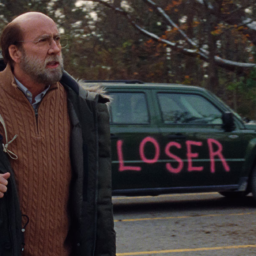
Dream Scenario is exactly how Nicolas Cage should be spending his career: on bonkers wild swings like a comedic version of A Nightmare on Elm Street where Freddie is a normal average guy and his weapon is doing nothing. Hilarious, relevant and wonderfully weird, it is a reflection of the internet age, cancel culture and quickly our dreams for fame can turn into a nightmare.
Dream Scenariopremieredat the 2023Toronto International Film Festival. A24 is distributing.Watch the trailer here.
Dream Scenario is like A Nightmare on Elm Street if dream demon Freddie Krueger was a boring average middle-aged man and instead of knives for hands his weapon was doing absolutely nothing. That’s the new high concept Norwegian director Kristoffer Borgli explores with his follow-up to his breakout film Sick of Myself, whichsatirically skewered social media influencer culture. He once again sets his sights on the vanity (and memeification) of the internet age with a simple conceit: what would happen if one guy started appearing in everyone’s dreams? And I mean everyone.
That guy is woefully unremarkable zoology professor Paul Matthews. His particular brand of awkward schlubby-ness that borders on creepiness could only be achieved by Nicolas Cage. During lunch with a former university classmate, where he attempts to get co-credit for an idea that is publishing a book, she asks, “Well how far along are you?” He retorts, “It’s just in the idea stage.” That’s how Paul’s life has been defined so far. What he’s not done. However, he’ll quickly find that “doing” might also be a nightmare.
The following day, Paul starts to have weird encounters — his students whispering about him during class, a waitress having intense deja vu when he walks in, and an old flame mentioning he was in her dream the other night. While these all seem like coincidences, he starts to discover that he’s been in many people’s dreams… perhaps everyone’s. He finds his Facebook messages flooded with people telling him that he invaded their dreams. What was he doing in them? Absolutely nothing. As he hilariously fields questions from his students about their Paul dreams, they all have different conceits — running from a monster, trapped by alligators, an earthquake. What they have in common is Paul does nothing. He just stares or casually walks by. His aggressively normal demeanor — “that middle-aged bald guy with glasses” — is a hilarious juxtaposition to that absurd dream logic.
The movie’s plot and imagery evokes comparisons to Charlie Kaufman’s Eternal Sunshine of the Spotless Mind and I’m Thinking of Ending Things or David Lynch’s Twin Peaks: Fire Walk With Me. The pitch-black humor that Borgli achieves is so satisfying, especially when delivered by a self-aware tactician like Cage. Paul is woefully uninteresting in a way that only Cage, with his self-aware campy mannerisms and deadpan delivery, can make endearing. But Paul isn’t necessarily a hero, even if we are in some ways rooting for him and his overnight fame.
ADVERTISEMENT
Like any person suddenly thrust into the spotlight, Paul strives to take advantage of his newfound fame to get momentum on his book on ant intelligence that he’s dubbed “ant-elligence.” When he’s courted by a creative agency (headed up by Michael Cera in a cheeky cameo) to manage his new public persona they pitch him on deals ranging from Sprite — “we’ll get everyone to dream of you with a Sprite” — to Obama — “one idea was to have Obama dream about you.” His meteoric rise feels akin to the sudden internet stardom that so many people achieve for doing essentially the bare minimum or in some cases absolutely nothing — memes like “Alex from Target” or “Saltbae” come to mind. It’s clearly Borgli’s intention considering what’s next.
Suddenly, things take a turn for the worse and Dream Scenario takes a turn for the better (and the spooky). Instead of the benign creep standing idle while terrible nightmarish things happen to the dreamer, Paul becomes the nightmare. Much like Freddie Krueger in A Nightmare on Elm Street, Paul slashes, stabs and bludgeons his way through his hapless victims. The biggest difference is Paul is a person in the real world having to face the consequences of his actions (or lack thereof). From there, the movie turns into a send-up on cancel culture complete with insincere tear-ridden apologies, a hate-fueled internet mob, and, of course, a sorta-kinda-not-really redemption.
Like Borgli’s breakout film Sick of Myself, Dream Scenario loses some of the (nightmare) fuel that drives it for much of its runtime. He creates this wonderfully off-kilter world with such ease and crafts an entertaining story to go along with it, but he’s not necessarily interested in taking things a step further. The movie is a reflection of our world rather than a critique of it and the satire is maybe better defined as parody — like a comedy sketch turned into a feature-length film. Despite that, and an odd third act turn that perhaps jumps the shark, you never fall out of the trance it puts you in.
Even if it is driven by observation more than commentary — one hilarious turn after Paul’s cancellation is the alt-right and France standing as his last supporters — Dream Scenario is a satisfying excercise in the absurd that blessedly doesn’t feel self-important about what its chiding. It’s what I loved (and other’s despised) about The Menu. Like a dream you might forget the exact details of it but you wake up knowing the emotions you felt — and Dream Scenario will run you through the gamut.
TIFF 2023 | Origin follows an author’s pursuit of the roots of oppression against the backdrop of her own personal struggles
In adapting the nonfiction book Caste: The Origins of Our Discontents by Pulitzer Prizer winner Isabel Wilkerson, Ava DuVernay set out to unpack a complex topic that recontextualizes our conception of race and oppression that spans centuries and societies. It’s no small feat, especially for a book as well-researched and intellectual as Wilkerson’s. How does she tackle something this epic in scale? She shrinks it down to its smallest element: humans. Instead of following the idea, she follows Wilkerson’s journey (played by Aunjanue Ellis-Taylor) to understand it — from present-day Florida to the Jim Crow South to late 19th century India. But first, DuVernay wants us to understand Isabelle herself.
ADVERTISEMENT
Origin begins in the shadow of the murder of Trayvon Martin (Miles Frost), which DuVernay sensitively recreates through the chilling 911 call that stunned the nation. Like all of us, the story rocks Isabelle who is courted by a former colleague to write an article on the shooting. However, we see that Isabelle’s mind is elsewhere. Her mother (Emily Yancy) makes the decision to move into an assisted-living facility and while Isabelle’s husband Brett (Jon Bernthal) supports her, she feels guilt and regret. In these early scenes, we often see Isabelle framed against the sky (the film’s stunning cinematography is by Matthew J. Lloyd) like she’s floating untethered from the ground. She is at an impasse.
That’s when the unthinkable happens. Losing her husband and mother in quick succession throws Isabelle into grief. Poetically translated onto the screen to helps us understand how an incident with a plumber (Nick Offerman) sporting a “Make American Great Again” hat throws her back into work. Using her grief and anger as a motivator, she’s dives head-first into her work trying to find answers to impossible questions. But that insatiable appetite for knowledge and eye for patterns is nothing short of gripping to watch. Like the greatest journalism movies — Spotlight, All the President’s Men — Origin moves with swiftness driven by an urgency to solve the mystery. However, unlike those movies the mystery is at the very core of our world.
ADVERTISEMENT
To help us fully understand Isabelle’s thoughts, we hear excerpts from Caste played over reenactments of three historical threads. In the first, we follow German man August (Finn Wittrock) and Jewish woman Irma (Victoria Pedretti), who defied rule in Nazi-era Germany. From there, we connect with a pair of Black anthropologists (Isha Blacker and Jasmine Cephas-Jones) who after witnessing the rise of the Nazi party in Germany embed themselves in the Jim Crow South to investigate the racial divide. Lastly, in an Eat, Pray, Love-like trip to India, Isabelle uncovers the caste system and subordination of the Dalit people.
Each of these threads weave into a tapestry that form Isabelle’s argument: racism and oppression are not synonymous. Oppression exists with or without race. By analyzing each of these disparate systems of oppression, she supports her argument. Cycling between these asides, scenes from Isabelle’s past, and her present research, Origin pieces together a puzzle of our world and Isabelle’s place in it.
ADVERTISEMENT
For some, Origin may come off as pedantic. In communicating Wilkerson’s work for a broad audience, DuVernay over-explains herself. Taken as each individual element, the movie could feel more like an issues documentary than an effective narrative. But taken as a sum of its parts, Origin is a dazzling epic of large ideas and the smallness of those affected by them. Two moments emotionally drive the movie’s real purpose. In one, a small Black boy celebrating a win with his little league team is denied entry to a whites-only pool. Eventually, the lifeguard allows him to enter the pool on the condition he remains on a pool float and doesn’t touch the water. As his white teammates look on with confusion the lifeguard moves the boy around the pool on a float. Like the shots of Isabelle against the cast blue sky, the boy himself is floating in space. Untethered and unable to move unless moved.
The second moment is the movie’s watershed moment — Ellis-Taylor’s most exhilarating moment as an actress. As Isabelle, thousands of miles away in India, speaks on the phone to her ailing cousin and confidant Marion (Niecy Nash-Betts in a stellar supporting turn) she asks her to “cover me.” For me, It invoked “I’ll Cover You,” a song from musical Rent where a character and his lover promise to protect each other. In that emotional conversation on distant two points on the globe, Isabelle finds her grounding. Origin, for all its sweeping thoughts, can be simply distilled to that one very human idea. Connection, to the past or our present, tethers us to our humanity. An experience that is as universal as the connection between two people.
Actor-turned-director Anna Kendrick and first-time director Noora Niasari screened their new movies at the 2023 Toronto International Film Festival
Anna Kendrick, best known as an actress in the Pitch Perfect franchise and A Simple Favor, takes the director’s chair for the first time with her thriller Woman of the Hour. Meanwhile, first-time director Noora Niasari adapts her childhood in the drama Shayda.
Tony Hale, Anna Kendrick and Daniel Zovatto in Woman of the Hour. Courtesy of TIFF.
Anna Kendrick is first-time director of the hour with Woman of the Hour, a taut and effective thriller
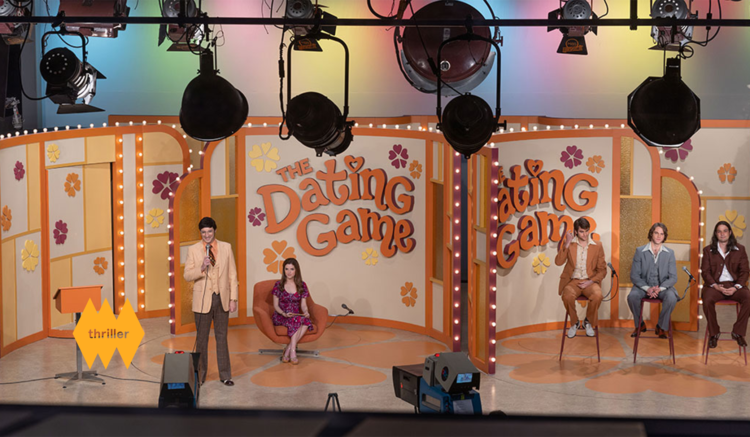
As an actress, Anna Kendrick (Pitch Perfect, A Simple Favor) is known for her bubbly wry personality behind a thousand watt smile that oozes charisma. It makes the tense and terrifying opening sequences of her directorial debut Woman of the Hour all the more surprising. It has more in common with David Fincher’s Zodiac than any of her onscreen appearances. However, the bizarre true story of a serial killer’s appearance on 70s dating show The Dating Game is a match for her sensibilities as an actress — and apparently as a director.
Kendrick plays Cheryl Bradshaw, a failed actress in LA whose agent gets her onto an episode of The Match Game. Little does she know Rodney Alcala (Daniel Zovatto, Don’t Breathe), one of the three eligible bachelors she has to pick from, murdered five woman prior to his appearance. Oscillating between intense suspenseful scenes depicting Alcala’s past crimes throughout the 70s and darkly comedic clips from the show — where Kendrick gets to flash her signature wry humor — Woman of the Hour is a tight and engrossing thriller that strikes a balance between respecting the victims and faithfully recreating what transpired.
While actors-turned-directors often take a “more is more” approach — as if they have something to prove —Kendrick has astounding control over the atmosphere, mood and pacing of the movie. She never sensationalizes any of the killings and even her directorial flourishes — a quick cut or audio dropping out — are small but effective. She allows the story to direct the style rather than the other way around. At a lean 94 minutes, Woman of the Hour is as efficient as they come but doesn’t sacrifice impact. If this movie is any indication, Anna Kendrick is going to be the director of the hour.
Zar Amir Ebrahimi and Selina Zahednia in Shayda. Courtesy of TIFF.
Sweet and engrossing Australian drama Shayda gives Zar Amir Ebrahimi another stellar acting showcase
Ever since seeing Zar Amir Ebrahimi in her Best Actress-winning performance in Holy Spider at the Cannes Film Festival I was fascinated by what she would do next — and she did disappoint. Australian drama Shayda takes the form of a familiar domestic violence drama in the vein of Sleeping with the Enemy or Enough but has the added element of an immigrant story. Ebrahimi plays the titular character, an Iranian immigrant living in a women’s shelter with her daughter Mona (Selina Zahednia) in 1980s Australia.
We learn through a heartbreaking monologue where Shayda prepares to fight for custody of her daughter what drove her to finally leave her abusive husband (Osamah Sami). Ebrahimi’s performance is staggering. Rather than letting the emotion out in a watershed moment, it feels like she’s held it in so long it simple begins to seep out. So much of the success of Shayda falls on her performance that continually transforms as the movie progresses. While the subject could be overwhelming, first-time writer-director Noora Niasari, who based the story on her own childhood, relishes in the moments of joy rather than lingering on those of pain.
While the movie doesn’t completely transform the formula of this kind of movie, the pure fact that the story is about an Iranian woman and immigrant makes it a compelling watch. Niasari explores the tension between celebrating and participating in your culture while doing something that goes against it. Shayda doesn’t offer any answers or proclamations, it simply seeks to make you feel what it is like to live in that tension. In the end, Shayda is uplifting, engrossing and heartwarming.
Shaydais playing at the 2023 Toronto International Film Festival.Sony Pictures Classics will release the film later this year.
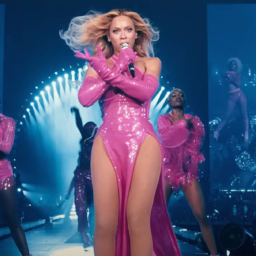
Renaissance: A Film by Beyoncé takes us onstage and behind the scenes of her record-breaking tour with intimate vignettes that uncover how the show and album came together.
The nearly three-hour concert documentary epic weaves personal narratives and impressive concert footage to give us an intimate glimpse into the literal blood, sweat and tears that go into creating a show of this magnitude and the love, joy and respect that go into creating an artist like Beyoncé. Renaissance: A Film by Beyoncé isn’t just a record of a concert, it’s a complete story of one of the greatest artists of our generation. And it is completely befitting of a woman of her stature.
Renaissance: A Film by Beyoncé is in theaters now.
The brilliance of Renaissance: A Flim by Beyoncé, a nearly three-hour epic concert documentary, becomes clear just 25 minutes in. And despite the reputation (say hey) Ms. Carter has made for herself as a perfectionist, a moment of imperfection stands out. As we catapult from “Cozy” into Beyhive-favorite “Alien Superstar” the audio suddenly cuts out — and no, it’s not yet time for the mute challenge. Ironic considering the song starts with, “Please do not be alarmed, remain calm / Do not attempt to leave the dance floor.” We are unmoved. If anything we’re stunned. We see as the crew, donned in shimmering silver jumpsuits jump into action. Beyoncé is unphased and even decides to gag the crowd by changing her outfit during the short three-minute interruption.
ADVERTISEMENT
She rises again from the stage in a new silver stunner and the number continues, perhaps even stronger than before. The scene is preceded by the first of several interludes that dive into a facet of the tour, the Renaissance album, or Beyoncé herself. In this vignette, she explains the logistics of putting together a concert of this scale. She emphasizes the sheer magnitude of the staff from the dancers to the lighting technicians to the army of workers putting the stage together by hand — and points out that she didn’t want them to be hidden hence the silver jumpsuits. The explanation gives the audio mishap more dimension and complexity because we understand how close to failure the show could be at any moment.
Unlike other concert documentaries like Talking Heads’s Stop Making Sense or Taylor Swift’s recent The Eras Tour, Renaissance doesn’t aim to immerse you into the live show. Though it certainly does.
We’ll get to that. Instead, it aims to add meaning to it. It weaves together the personal narratives behind its various moving parts and the literal blood, sweat and tears that went into producing it. It makes the highly impressive performance numbers all the more impactful.
In another vignette, we spend time with Blue Ivy Carter. At just 11 years old she asks her parents to perform on stage. It’s already a scary enough prospect for any tween, let alone the offspring of Beyoncé and Jay-Z. Despite initial pushback, especially from Beyoncé herself who experienced first-hand the stage at such a young age (albeit at a much smaller scale), they agree. Much has been made on social media of Blue’s appearance and dance break set to “My Power” off of The Gift. It’s something that she talks candidly to the camera about. After her first appearance, the internet wasn’t entirely kind. Instead of letting it get to her, she talks about how it empowered her to continue on and to improve herself. It connects perfectly to the song itself:
“Keep it locked in a safe Don’t make me get back to my ways My power, they’ll never take”
It’s that profound mirroring that makes the structure of Renaissance so satisfying.
ADVERTISEMENT
And while all of this documentary filmmaking is impressive, you come to Renaissance for a show. And a show you will see.
For any souls lucky enough to experience it in person know that Beyoncé performs like no other. The kinetic choreography feels like it plays with the camera as much as it plays with the crowd. There are even moments when dancers will flourish directly to the camera making the audience feel like they’re seeing something unique to the film. The songs of Renaissance are propulsive as is. Still, the way the show mixes each into the next creates an unstoppable momentum that is some of the most impressive concert documentary filmmaking ever.
To add even more to the elegant chaos, each number showcases the various looks that Beyoncé and her dancers donned across the fifty-six shows of the tour with quick match cuts that mirror this iconic bit of editing magic from Homecoming. The effect is overwhelming and doesn’t just communicate the audacity of having different costumes for each show, it makes the musical numbers more than just a capturing of the show rather a time-jumping montage of the sheer epicness of the tour.
ADVERTISEMENT
The interstitial vignettes cover themes as small as Beyoncé’s connection with her hometown Houston — including a trip to Frenchy’s — and Blue Ivy’s crusade to have the song “Diva” included in full — a hilarious cut from her rant to the performance in the concert is a highlight — to larger societal themes like being a working mother or how vogue and ballroom impacted the creation of the album and show. However, one stands out. Before “Heated” (get your fans out), Beyoncé and her mother Tina Knowles talk about the real-life Uncle Johnny who inspired the now-iconic line, “Uncle Johnny made my dress, the cheap spandex she looks a mess.”
Johnathan “Johnny” Williams was Beyoncé’s uncle. An openly gay black man living with HIV. Tina opens up about their time as young adults partying and designing clothes, laying rhinestones down on fabric one by one. The emotional story adds color to what exactly Renaissance is. It’s a celebration of queer Black joy inspired by her Uncle Johnny. However, it more broadly speaks to who Beyoncé has become as an artist.
She is so often revered as larger-than-life, and in many ways she is. With this film, she tells us that while she’s able to communicate these concepts epically, they all originate from completely human experiences.
And the tour, despite its perceived perfection, was born out of real human blood, sweat and tears. But also love, joy and respect for those who came before. Renaissance is a love letter. It’s a three-hour sweat-your-ass-off-until-you-forget-your-troubles-romp that will go down as one of the greatest concert documentaries of all time.
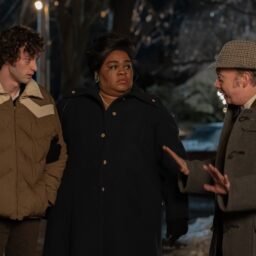
A curmudgeonly professor, troublemaking student and kitchen manager are forced to spend winter break in an isolated boarding school. But they find warmth and family in the cold in The Holdovers.
While The Holdovers conjures warm and nostalgic storytelling with its ’70s found family spirit and trio of outstanding performances — especially Da’Vine Joy Randolph — its emotional impact is stunted by its fractured focus.
The Holdovers is in theaters now.
The Holdovers channels the spirit of the ’70s, particularly the warm embrace of nostalgia nestled within the found family genre. The characters, already fractured, navigate the challenges of Christmas cheer — which only adds more layers to their brokenness.
They’re in a state of inertia. Each of them, burdened with clichéd labels they’re desperate to escape from: a grieving mother, a privileged student indifferent to his privilege, and an unlikeable teacher unable to break free from the isolation imposed by his reputation as an old trout. It’s only when the three collide as the last inhabitants of a prestigious New England boarding school over winter break that they begin to move forward, to open up their wounds, to unravel their hardened cocoons.
Paul Giamatti plays the rigid and uptight history teacher Paul Hunham whose profession has taken up the majority of his life. His performance is of a breathing, walking corpse. A scrupulous academic afraid of social interactions and relentless in eliciting collective groans from his students due to his hard-ass professorial attitude.
ADVERTISEMENT
Giamatti’s physicality is a canvas of exaggeration, with his abnormal eyes, unkempt body, and a supposedly turgid scent that reflects his decay. He brings to mind the wicked monsters of the ’50s or the rugged cowboys from the golden age of westerns. Giamatti’s character, initially grizzled, undergoes a heartfelt metamorphosis, but The Holdovers presents enough elements to plant the idea that redemption might be a distant prospect for him.
Dominic Sessa devours each scene he’s in as Angus Tully, a bright but troublemaking student. Sessa flips the tables on the smug arrogance of his character and lets loose a sensitivity that eludes most young actors his age. After learning that his mother has planned a honeymoon with his new stepfather, leaving him all alone for Christmas amidst the lifeless refrigerator of Barton, it’s a desolate holiday season for him.
Under the care of Hunham inside the fortress that is the Barton campus, Angus battles his insecurities and often fights fellow holdovers, including the sharply annoying Teddy (brought to life with crisp, prickly behavior by Brady Hepner). But we also get softer moments that show Angus’ more thoughtful side. His penchant for piano playing until the break of dawn and his empathetic interactions with a homesick boarding school roommate draw us into his pensive personality.
But the standout of the film is, without question, Da’vine Joy Randolph’s compelling and rueful turn as Mary Lamb, the cafeteria administrator, who grieves the loss of her Barton alumnus son in the Vietnam War. Randolph, usually known for her comedic roles in The Lost City and Only Murders in the Building, anchors the narrative without resorting to melodrama and encapsulates the film’s emotional warmth inspiring the awareness of life’s privileges to the others.
ADVERTISEMENT
Unapologetically direct, she shares advice to her unexpected Barton companions embodying the role of a mother whose sorrow none of the characters could ever comprehend. It pains me that Mary’s character felt underexplored, especially when the movie’s theme revolves heavily around loss. Mary lost her son, Angus lost his father, and Paul, well, Paul has lost his sense of self. It would be low hanging fruit for the film to see Mary and Angus forge a connection through this shared familial grief, but for some reason, The Holdovers never reaches the full potential of that relationship.
Instead, Paul and Angus find themselves in a tango of authority and defiance. They see themselves in each other, yielding moments of genuine comedy amidst thematic echoes that, albeit, the film smirkingly repeats over and over again. The acting carries the pair’s dynamic into the promised land because the material is quite uncomplicated (especially if you’ve seen ‘70s films).
The more nuanced storytelling nugget was Mary, who’s only ever presented as the more reasonable adult figure to Angus rather than Paul. Yet, when the film’s seemingly lone narrative innovation is ushered in, it feels like a half-hearted commitment. Mary development happens off-screen, as if quickly careening us away lest the heavy details detract from Angus and Paul.
But the thing is, Mary’s story has some bearing on Angus and Paul. Robbing us of her moments with them and how that bleeds into her family or her contemplating her past makes her story feel like it’s only scratching the surface. Randolph is phenomenal in her performance as Mary. There’s a sense of fluidity in her stillness, and within her bereavement lies a captivating resilience. How does she move on from her son’s death and move on as her own person? What does forging connections look like with privileged people who cannot bear to understand you and feel your pain?
ADVERTISEMENT
The Holdovers gives enough answers to these intriguing questions, yet it falters in delivering the necessary impact to justify them. Mary moves on, off-camera, while we’re following along Angus and Paul’s journey. The insight and development the pair share is assumed to have been shared by Mary too, but the film doesn’t do enough to earn that. My favorite moment involves a subtle passage of time that shows how Mary begins to feel at peace with the grief that has enveloped her. It’s all done with wordless eloquence as the camera gracefully glides through a bedroom space, revealing Randolph’s vulnerability and strength. It’s a touching moment that the film unceremoniously brushes over, despite it being the ace up its sleeve.
Perhaps a story with more emphasis on Randolph’s character is wishful thinking, but for most of the film she felt separated in key moments when proximity with Angus or even Paul felt like the more inspired choice. Alexander Payne’s direction is serene and his choice of soundtrack is undeniably evocative of the era, but in a year where Aunjanue Ellis-Taylor (Origin) and Charleen McClure (All Dirt Roads Taste of Salt) have brought to life inimitable portrayals of African-American women at odds with the cruelty of the world, Randolph’s character and the underseen stories of grieving mothers in the ‘70s deserves to have a more nuanced concentration rather than just deferring to the warm embrace of nostalgia.
Newfest 2023 | In Netflix’s new biopic, Colman Domingo plays civil rights activist Bayard Rustin as he plans the March on Washington in just eight weeks
Thanks to a focused storyline and sensational theatrical performance by Colman Domingo, Rustin largely transcends the typical biopic formula to deliver a satisfying account of Bayard Rustin’s formation of the March on Washington. While George C. Wolfe’s kinetic direction keeps you engrossed in the story, a light screenplay doesn’t allow us to explore the complexities of a Black queer man at the forefront of the civil rights movement.
Rustin had its New York City premiere at the 2023 New York LGBTQ+ Film Festival.
Bayard Rustin, the unsung hero of the civil rights movement, is finally given his flowers in Netflix’s new biopic directed by George C. Wolfe (Ma Rainey’s Black Bottom) as it hones in on the eight week dash to plan the now historic March on Washington for Jobs and Freedom. It’s not surprising if you didn’t know who Rustin was before. His involvement in the civil rights movement was often relegated to the background since he was one of the few gay men to be out in the 1960s. However, Rustin doesn’t shy away from it.
There’s something about a biopic that just works that is so satisfying. It’s the perfect combination of an interesting but unsung subject and a specific story told with enough of a singular vision to transcend past conventional biopic trappings — and Rustin, for the most part, finds the right formula. By focusing in on the planning for the March on Washington and Rustin’s impulses to live life as an out and proud gay man with the spotlight encroaching on him gives the movie focus where other biopics feel unnecessarily packed.
George C. Wolfe’s deft direction fueled by saxophonist and composer Branford Marsalis‘s kinetic score keeps you engrossed in the story while constantly introducing new characters that weave the tapestry of the near-impossible feat of organizing the largest peaceful protest in history. To carve out storylines for a figure as massive as Rev. Dr. Martin Luther King, Jr. (Aml Ameen) as well as an invisible figure of the movement like Rustin’s lover Tom (Gus Halper in an impressive supporting turn) and mine sympathy for both is nearly as impressive. However, if those supporting performances are the blood of the movie, Colman Domingo‘s performance as Bayard Rustin is the strong beating heart.
Domingo is nothing short of sensational. A theatrical rendering of a man that in many ways was larger than life living in a world that sought to dull his shine — both from those against him and on his side. Despite his preference for collaboration, as seen in a charming scene where he begins the seeds of the march with a good ol’ fashioned brainstorm, he seems to be fighting for his voice to be heard constantly. Partially because his panache was itself seen as a sort of protest, but also because with any movement egos can quickly get in the way. With politicians, the NAACP and activists, there was as much division in the movement as there was outside. What Julian Breece and Oscar winner Dustin Lance Black‘s screenplay attempts to explore is how Rustin was able to coalesce those ideas into what is now seared into our country’s consciousness.
ADVERTISEMENT
Rustin‘s greatest flaw is that it tends to shy away from his flaws to begin with. There are moments where it begins to probe Rustin’s penchant for distraction (often of the male variety) and rigidity in vision, but it never goes as far as to criticize him. Rustin’s inner turmoil will bubble its way to the surface in fits and starts, but often the movie will cut away just before it gives us any sort of real insight. It’s why the stakes never feel great.
While that makes the movie less successful as a portrait of Bayard Rustin, as an account of his involvement in the planning of the March on Washington it is a satisfying jaunt. It feels like a lost peace of history finally brought to the surface as it doesn’t shy away from Rustin’s queerness. In fact, it centers it in a way we don’t often see in mainstream biopics (*couch*Bohemian Rhapsody*cough*). Coupled with Colman Domingo’s charismatic performance, Rustin is an easy biopic — for both better and worse — that is easy to find yourself lost in.
Sundance 2023 | Fair Play follows a happy couple that is thrown into turmoil when one of them is promoted at the financial firm they work at
Fair Play is a corporate barn burner and relationship psychosexual drama that’s thrilling as it is brutally precise in its study of power, sex, attraction, and ambition. Phoebe Dynevor & Alden Ehrenreich give powerhouse performances as a dueling couple that let work and power seep into their lives. Cutthroat, sharp, and entertaining as hell, writer-director Chloe Domont didn’t come to play.
All is fair in love and work. At least that’s what aspiring power couple Emily (Phoebe Dynevor) and Luke (Alden Ehrenreich) would probably tell you.
When we first meet them, they are the picturesque young couple twirling their way through the dance floor of Luke’s brother’s wedding. Their chemistry is palpable, especially when their steamy sex scene in the bathroom ends in a very un-steamy way. They simply laugh off the blunder. One semi-accidental marriage proposal later and the now-engaged couple is on the floor of their Chinatown apartment awoken by their 4:30am alarm that rattles them to start their day. Where they were messy and carefree in the scene before, they go about their morning routine with near-precision — perfectly brewing their espresso, Emily tying her hair into a tight bun, Luke donning a crisp white button down. They leave and go their separate ways only to find each other again in the elevator of the hedge fund firm they both work for.
Since they’re both low-level analysts, they keep their relationship secret — it’s something anyone would use for leverage in the cutthroat industry. That doesn’t stop them from listening in on the conversations that float in-and-out of earshot — we too hear snippets of the workplace banter. One particular statement catches Emily’s attention: Luke is on-deck to replace the recently fired portfolio manager who we watched nearly go postal in an earlier scene — “thought he was gonna jump,” one of the analysts emotionlessly quips. When Emily tells Luke what she’s heard, he’s almost drunk on the news — and horny. The pair have hot-and-heavy sex to celebrate, but writer-director Chloe Domont isn’t out to make an erotic thriller and we’ll soon realize this.
After Emily receives a 2am phone call from one of their superiors, she rushes over to an exclusive club down a sketchy alleyway to find Campbell (Eddie Marsan), the firm’s CEO, waiting for her to offer her the recently opened portfolio manager role. Domont presents the scene almost like a horror movie where Emily is the prey and Campbell is the predator. It highlights the power imbalance between the two — the fact that he could get her to meet him in the dead of the night (and despite Luke’s protests) only furthers that. When she returns to the apartment, she relays the news to Luke with near dread. But where his reaction to the news that he could be promoted was euphoria, it’s decidedly measured for Emily. And as much as he tries to convince her that he’s happy for her success, you can see the pain in his face as Emily walks into her new office separated by a wall of glass as if to tease those outside of it.
ADVERTISEMENT
From there, Fair Play turns into a ticking time bomb as the couple’s relationship is put under the strain of Luke’s arrogance and Emily’s ambition.
It’s the balancing of those two threads that make the movie — particularly Dupont’s sharp screenplay — so impressive. At times, the movie is a corporate barnburner about Emily navigating her newfound success as a woman in an industry that is decidedly a boy’s club. In others, it’s a psychosexual relationship drama about how deviations from the traditional gender dynamics can send men into a tailspin — let’s just say Luke probably loved Joker. And at it’s most satisfying, both worlds come careening together as the pair navigate the minefield of their relationship in the workplace.
Dumont throws situations at the character to deepen the cracks in the foundation of their relationship that eventually turn into a canyon. Like when Luke makes a bad call an investment and sends Emily scrambling to fix his mistake, he cannot take blame for his actions just as he can’t praise Emily for her successful attempt to avert disaster. When she receives a bonus of $525k for her quick work, she types out a text asking Luke if he wants to “staycation” at a fancy hotel before adding… “my treat,” and then quickly deleting it.
It’s the tension between Luke’s grasp for the power of his masculinity — Ehrenreich plays his descent into arrogant patriarchy-fueled madness with the gusto of a Golden Age Hollywood star — and Emily’s careful tiptoeing around his ego that drive the thrills of Fair Play as well as its devilishly fun sparing that keep you engaged through every minute of its spry two-hour runtime.
In its final minutes, Fair Play takes a massive swing that will turn some viewers off but leave most satisfied with its conclusion. Dumont isn’t precious about the movie’s core themes of power and privilege, specifically when it comes to gender dynamics in relationships and the workplace. She’s as transparent as the office’s glass walls. But that’s what makes Fair Play such an entertaining watch despite its high tension.
Nope follows two siblings that become convinced that UFOs are visiting their ranch to abduct horses. Seeing a path to fortune, they set out to capture it on video.
Nope is Jordan Peele’s Jaws. A chopped, screwed, and depraved homage to the summer blockbuster with stunning anxiety-inducing, white-knuckled suspense pieces that had my heart racing. Peele’s loving hate letter to the blockbuster is his most ambitious project to date that forces us to question our obsession with spectacle. Wildly creative, constantly twisting and turning, masterfully crafted with Oscar-worthy sound design, Nope is a worthy follow-up to Get Out and Us.
Jordan Peele has had perhaps the most prolific run for a new director in the last decade. Get Outhis debut film became a cultural phenomenon and garnered Best Picture and Director nominations at the Oscars in addition to a win for Best Original Screenplay. His win felt like the coronation of an exciting new auteur, which was further evident with his equally terrific sophomore movie Us. How does a director of that caliber top himself? Enter his latest movie Nope, Peele’s most ambitious, off-the-wall, and deranged movie yet. Like a studio gave him a blank check and asked no further questions—best indicated by the movie’s chilling cold open the features a bloodied sitcom set sitting lifeless except for a motionless body and a chimpanzee who seems to be the culprit of the carnage.
ADVERTISEMENT
After the relatively modest narratives of his first two movies, Nope ups the scale to an astronomical degree—to a near blockbuster size.
Interestingly, the closest analog to Peele’s career thus far is Steven Spielberg, who created the modern-day blockbuster. Coincidentally—or not since nothing seems to be a coincidence with him—Nope is Peele’s Jaws. Or at least an homage to it and the many other summer blockbusters that followed. Though the movie is packed full of references from Close Encounters of the Third Kind and Jurassic Park to Twister and War of the Worlds to Signs and Creature from the Black Lagoon it is every bit as original and electrifying as Get Out and Us. Watching it felt the way I imagined audiences felt the first time watching any of those classics—at least if my shrieking friend next to me was any indication.
Though the movie pulls from a lot of corners, Nope is another story of humans and the curiosity—and invasiveness—that plagues them. Think Creature from the Black Lagoon, which inspired Jaws. At the center of the movie are siblings OJ (Oscar winner Daniel Kaluuya) and Emerald Haywood (Keke Palmer), the co-owners of a ranch in California that specializes in horses for entertainment. Following the sudden death of their father, a reluctant OJ runs the ranch while Emerald dreams of doing something bigger.
(from left) OJ Haywood (Daniel Kaluuya), Angel Torres (Brandon Perea) and Emerald Haywood (Keke Palmer) in Nope, written, produced and directed by Jordan Peele.
That something bigger reveals itself to be really big when the pair become convinced that a UFO has been visiting their ranch to abduct their horses.
One night, all electrical devices on the ranch suddenly stop working. And right as the lights dim, an unearthly sound blankets the vast landscape. Right then, a mysterious cloud produces an isolated tornado to snatch up one of the horses. Seeing a way out of financial ruin, OJ and Emerald set out to capture evidence of the phenomenon with the help of electronics store employee Angel (Brandon Perea). After a genuinely frightening night with fake and real frights, the trio determines that the UFO is sitting in a cloud perched just over a ridge by the ranch waiting for its opportunity to take its prey. Realizing they’re in over their heads, they enlist the help of cinematographer Antlers Holst (Michael Wincott) who dreams of capturing the impossible.
The comparisons to Jaws are clear. A ragtag group of locals on a mission to “capture” an unpredictable, menacing, and deadly wild animal. OJ and Emerald are equivalent to Police Chief Martin Brody, Angel to oceanographer Matt Hooper, and Antlers to fisherman Quint. There’s even a scene where Antlers quotes the song “One-Eyed, One-Horned Flying Purple People Eater” in a tongue-in-cheek homage to Quint’s famous USS Indianapolis monologue. But just when you think you know where Nope is going, it finds a way to surprise you—like with a subplot involving Jupe Park (Steven Yeun) and an infamous incident on the sitcom he starred in as a child involving the cold open chimpanzee.
ADVERTISEMENT
While all of Peele’s movies have been horror, Nope might be the most frightening to date.
Though there is comedy to cut through some of the tension, Peele steps on the gas and doesn’t let up for the 135-minute running time. The creeping sense of dread, real danger, and suspense kept my pulse racing the entire time. In particular, a stellar sequence—the best of the movie—that sees the UFO attacking the ranch in an action setpiece mashup of War of the Worlds and Jurassic Park may have taken a few years off of my life. It highlights the movie’s immersive and dominating sound design—which more than deserves attention from the Oscars.
There are twists and turns in the narrative, but what keeps you engaged is the movie’s increasingly intense setpieces that tie together threads of horror, sci-fi, action, and comedy perfectly. Nope is Peele firing on absolutely every cylinder masterfully using Michael Abels’ cinematic score, Hoyte van Hoytema’s sweeping cinematography, and Nicholas Monsour’s editing to hit you with setpieces that feel equal parts grand, intimate, and dangerous.
With Nope, Peele weaponizes the tropes and iconography of summer blockbusters to criticize both the genre and our relationship to spectacle.
What are the themes in Nope?
Get Out and Us became phenomenons because of the cultural discourse they sparked. Peele weaponized genre movies to reach a broad audience to then explore deep societal themes. Nope is a meta deconstruction of the summer blockbuster. Much like The Cabin in the Woods was a loving hate letter to the horror genre, Nope is meant to criticize our fascination with spectacle—the subplot following Steven Yeun’s character reinforces this. In the face of disaster or tragedy, why is our first instinct as a society to exploit it for fame or fortune? Yeun’s Jupe keeps an entire room in the wild wild west theme park he owns dedicated to the incident—one that should be traumatizing for him. Instead, he exploits it.
And despite the threat that the UFO poses, the OJ and Emmerald do everything in their power to capture it on video. Despite its danger, they can’t look away. Perhaps the theme isn’t as devastating as those of race and class that were explored in Get Out and Us, but Peele commits to exploring it just as deeply.
ADVERTISEMENT
Nope is an imperfect movie, but its ambition vastly outweighs any nitpicks with the plot or characters.
Daniel Kaluuya and Keke Palmer give wholly committed performances that feel lived in. The characters are defined by their past baggage. Palmer, in particular, eats every scene with her emotional and expressive physicality. However, I wish that more time was dedicated to the siblings and their relationship to make the movie’s payoff all the more impactful. In general, I think the characters are underdeveloped. Whether purposefully or by design I’m not sure. At the very least, I was charmed by them but didn’t feel the emotional attachment I felt to Kaluuya’s Chris in Get Out or Lupita Nyong’o’s Adelaide in Us.
Nope in itself is a spectacle that deserves to be seen and heard on the big screen.
In his copped-and-screwed version of a summer blockbuster, Jordan Peele makes us question why we can’t look away. Why are we so easily drawn in by a spectacle—both on screen and in the real world? Why is it so hard to look away from disaster? In the opening shot of Nope, there is a curious phenomenon happening amongst the carnage. You might notice it, you might not. With that shot, Peele is asking us why we’re not looking deeper? Why are we so distracted by tragedy that we can’t see the wonder around it? Interestingly, it was impossible to stop looking at Nope on the screen. It’s a spectacle through and through. The movie isn’t challenging us to look away, but instead look deeper. You might be surprised by what you find.
Nicolas Cage plays a boring middle-aged man propelled into fame when he appears in everyone’s dreams in the first trailer of Dream Scenario
Nicolas Cage returns to the big screen (and the world’s dreams) in the first trailer for director Kristoffer Borgli’s Dream Scenario. The dark comedy is the Norwegian director’s second feature (and first in the English language) after his critically acclaimed Cannes-premiering debut Sick of Myself.
In Dream Scenario, Cage plays a woefully average college professor who is propelled into fame (or infamy?) after he inexplicably appears in everyone’s dreams one night. However, he quickly learns that fame, for all its glitz and glam, is not all it’s cracked up to be.
ADVERTISEMENT
In his review, our critic called Dream Scenario “A Nightmare on Elm Street if dream demon Freddie Krueger was a boring average middle-aged man and instead of knives for hands his weapon was doing absolutely nothing.” Adding that it’s “hilarious, relevant and wonderfully weird, it is a reflection of the internet age, cancel culture and quickly our dreams for fame can turn into a nightmare.” Read our full review here.
The movie also stars Julianne Nicholson, Michael Cera, Tim Meadows, Dylan Gelula, Dylan Baker and Kate Berlant and is produced by Hereditary‘s Ari Aster (so you know things are about to get wild).
After a glowing reception at the 2023 Toronto International Film Festival, Dream Scenario will be released by A24 on November 10, 2023.
When will Dream Scenario be released in the United States?
Dream Scenario will be released in theaters on November 10, 2023.
Who stars in Dream Scenario?
Dream Scenario stars Nicolas Cage as Paul Matthews and features an ensemble cast that includes Julianne Nicholson, Michael Cera, Tim Meadows, Dylan Gelula, Dylan Baker and Kate Berlant.
What movies are Dream Scenario similar to?
Dream Scenario is similar to movies like Eternal Sunshine of the Spotless Mind, Punch-Drunk Love, I’m Thinking of Ending Things,and A Nightmare on Elm Street.
Bottoms follows two deeply uncool high school girls that create a self-defense club with the hope of wooing their cheerleader crushes
Emma Seligman’s vision of high school in Bottoms is equal parts satiric and surreal. Like if Luis Buñel directed The Breakfast Club or Andrei Tarkovsky directed Clueless. The pure absurdity of Bottoms is something to marvel at. Like the movie’s tagline suggests — “a movie about empowering women (the hot ones)” — it’s completely aware of the near-parody that it is. And thanks to Ayo Edebiri and Rachel Sennott’s performances that cement them even further as our brightest rising stars, Bottoms rides on top for most of its runtime.
To explain Bottoms, I need to spoil it just a tiny bit. The final shot of the movie, a baroque painting if I’ve ever seen one, pulls from a classic 90s / early aughts high school comedy trope. The school football team triumphantly raises the school’s quarterback. Students rush the field dancing with joy. Our best friend protagonists make up and hold each other.
However, a few added details make this unlike any high school comedy we’ve seen. The field is littered with incapacitated (and possibly dead) players and our ragtag group of protagonists are covered in blood (both their own and others’). In the background, a tree burns after recently being blown up with a homemade device. Welcome to the wonderfully weird and wacky world of writer/director Emma Seligman‘s Bottoms.
Seligman’s vision of high school in Bottoms is equal parts satiric and surreal. Like if Luis Buñel directed The Breakfast Club or Andrei Tarkovsky directed Clueless. It’s a tricky tone that Rachel Sennott and Ayo Edebiri nail with perfectly pitched performances as woefully lame high schoolers PJ and Josie. All they need is a mission. And like any good high school raunchy comedy, this mission involves getting laid: “Do you want to be the only girl virgin at Sarah Lawrence?” Best friends that stick together get laid together. At least that’s their prerogative.
There’s two hang ups to this plan. First, the school doesn’t like them. As they say, “they don’t hate us because we’re gay, they hate us because we’re the ugly, untalented gays.” Second, the objects of both of their affections, Josie’s crush Isabel (Havana Rose Liu) and PJ’s crush Britt (Kaia Gerber, most recently seen in Babylon), are the school’s it-girl cheerleaders who quite literally float in and out of scenes in slow motion.
If things weren’t complicated enough, Isabel’s boyfriend is the school’s star quarterback Jeff (a scene-stealing Nicholas Galitzine following his breakout performance in Red, White & Royal Blue— talk about range) who is treated like a god amongst men and who his teammates, specifically Tim (Miles Fowler), will do anything for. In the cafeteria, the team is literally seated like they’re in The Last Supper except Jeff is Jesus and the rest of the team are his disciples.
Which is why when PJ and Josie mistakenly “run over” Jeff with their car, the school turns even more against them. “Damn I got ‘F—-t #2’ this time,” PJ remarks at the graffiti scrawled on their lockers. Their plan to clear their names (and maybe get some one-on-one time with their crushes) is to start a self defense club where girls at the school can learn to protect themselves and like talk… and stuff. The plan is a little unclear. Despite what its trailer suggests, Bottoms is more of a hangout movie than it is driven by an actual plot. A cheating scandal, murder plot and “yeah Hazel, let’s do terrorism” later and we find ourselves in the final act not completely sure how we got there.
Bottoms is laugh a minute from hilarious one-liners delivered with charmingly awkward precision (“I was gonna study for Mr. G’s ‘Women Murdered in History’ test”) to visual gags (a spring breakers-inspired crime montage set to “Total Eclipse of the Heart”). However, that is just as much a detriment to the movie as it is an asset. While the delightfully off-kilter tone and surrealist touches make for an entertaining romp, the movie sacrifices plot momentum and character development in its wake putting more in line with a high school movie parody a la Not Another Teen Movie. That would be fine if Seligman’s screenplay stayed committed to the movie’s farcical nature. It gets a little too close to being profound in a way that took me out of the carefully built world. Thankfully it sticks the landing (on a pineapple juice-soaked football field).
The pure absurdity of Bottoms is something to marvel at. Like the movie’s tagline suggests — “a movie about empowering women (the hot ones)” — it’s completely aware of the near-parody that it is. And thanks to Sennott and Edebiri’s performances that cement them even further as our brightest rising stars, Bottoms rides on top for most of its runtime.
ADVERTISEMENT
Instead of a full story, I look at the movie as a series of vignettes of high school awkwardness and cranked-up satirical world-building — aided by a stellar supporting cast with standouts Marshawn Lynch as a problematic history teacher (“Feminism… what is it?” scrawled on the board), Ruby Cruz as well-meaning classmate Hazel who doesn’t completely understand sarcasm, and Galitzine’s Jeff whose cartoonish portrayal of a high school quarterback steals ever scene he’s in with even the slightest facial expression. The 2000s parody film may be dead (Scary Movie, you will always be famous) but Bottoms is born from it — a devilishly weird and demented baby.
Ira Sachs’s Passages tracks the misadventures of a married gay film director as his affair with a woman implodes his marriage.
Passages follows a narcissistic director who can’t stand when people in his real life don’t follow the script he’s written in his head (i.e. every sad Brooklyn boy who’s “working on a script”). Writer-director Ira Sachs crafts a sharp and incisive movie about gay men, relationships and the entanglements we find ourselves in.
When we first meet German filmmaker Tomas (Franz Rogowski, who we last saw in the underrated Great Freedom), he is directing the final scene of his latest movie. We watch him as he instructs an actor to enter the scene down a flight of stairs. Then he makes him do it again… and again. Each time he notices something else wrong with the way he enters the scene—he’s swinging his arms oddly, he’s walking without intention. We’ll see Tomas do something similar throughout Passages, which premiered at the 2023 Sundance Film Festival, except this time to the people in his life. That is expecting them to act one way—the way that is best for him and his wants—and getting frustrated when they don’t follow the script he’s written for them in his head.
The primary victim of his special brand of narcissism is his long-suffering soft-spoken husband Martin (Ben Whishaw).
And as much as Tomas’s abrasiveness grates him, he stays by his side—something we see with all couples but feels precisely penetrating for gay couples. Writer-director Ira Sachs understands the gravitational pull of a man like Tomas—his confidence imbues a charm and magnetism—but he also knows that with gravity things eventually come crashing to the ground. And often, Tomas is the incendiary of his own (satisfying) demise.
When he meets teacher Agathe (Adèle Exarchopoulos) out at the club after a day of shooting, he’s just been slighted by Martin who chooses to go home rather than dance with him (the nerve!). His response, to sleep with Agathe and then return home to very openly and boastfully say, “I slept with a woman last night.” What reaction does he want out of Martin—disgust, jealousy, anger, admiration? Whatever it is, he doesn’t get it, which furthers his resolve to pursue Agathe. After one of another one of their trists Tomas professes his love for her. She responds, bluntly but without malice, “you say it when it works for you.”
ADVERTISEMENT
It’s that direct but rich with subtext dialogue that makes Passages such a fascinating watch despite its uncomplicated appearance.
Sachssays so much about its protagonist without saying much at all. We never get to see Tomas’s work nor his marriage to Martin prior to its immolation—we see just a narrow sliver of his life. However, the portrait of an egomaniacal artist who lets the bounds of his artistry seep into his personal life is vivid—similar to definitely real and not fictional composer Lydia Tár.
The movie transforms into a triangle then a quadrangle of entanglements as Tomas pursues his relationship with Agathe and Martin moves on with fellow writer Ahmad (Erwan Kepoa Falé). There are arguments, unexpected twists, Tomas’ inability to let people live a moment of their lives without thinking of him, and sex. Sachs directs these sex scenes with vigor, passion, and pure eroticism. However, it’s not just for exploitative show. For someone like Tomas, sex, passion, and desire—and admiration—are mistaken for love. But what he truly loves is the attention—as a Leo, I feel read. Ragowski is astounding in his ability to be a self-absorbed monster, but have us crave his presence on screen—like a trainwreck you can’t seem to turn away from.
Eventually, the magnetism that draws people to Tomas begins to repulse them and the gravity that kept them in orbit becomes weaker.
Essentially, his life goes off script and he’s not good at improv. While Passages could have easily relied to melodramatics, Sachs keeps each character and interaction grounded. No line of dialogue feels ingenuine, even when they’re loaded guns that rip through each character. “I want my life back,” one character says. It’s perhaps the first genuine thing anyone says in the movie—other than a barnburner dinner scene featuring Caroline Chaniolleau as Agathe’s mother and Ahmad’s final requiem. Ira Sachs introduces us to the characters of Passages when their lives intersect and tangle into a mess of complications. By the end, Whishaw, whose remarkable portrayal of a gay man finding his strength and independence, untangles the knot and leaves us (and Tomas) flooded with emotion.